Peripheral Neuropathies
Dr Sarah Dawson, 31st July 2014
Aims
• Define neuropathy
• Describe different neuropathies and identify common
disease patterns
• List a differential diagnosis for each type of neuropathy
What is neuropathy?
Peripheral neuropathy
(PN) is damage or
disease affecting nerves
• may impair sensation,
movement, gland or
organ function, or other
aspects of health,
depending on the type
of nerve affected.
Classification
• Mononeuropathy
• Mononeuritis multiplex
• Polyneuropathy
• Autonomic neuropathy
• Neuritis
Name that neuropathy
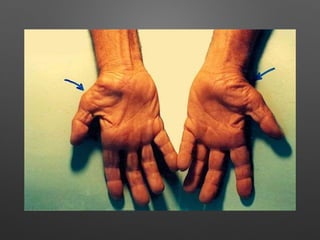
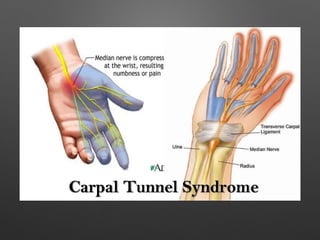
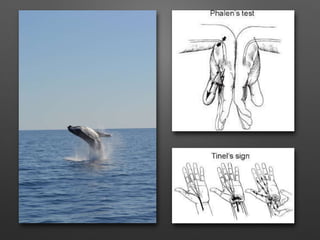
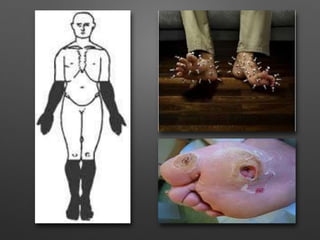
Mononeuropathies
• Affects one nerve
• Direct injury to a nerve,
ischemia, or inflammation.
• likely that the cause is a
physical compression, localized
trauma or infection
• e.g. carpal tunnel, cubital tunnel
• "pins-and-needles" sensation of
one's "foot falling asleep"
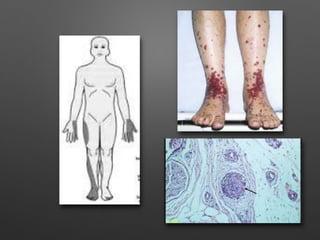
Mononeuritis multiplex
• Simultaneous or sequential involvement of individual noncontiguous nerves,
• either partially or completely,
• evolving over days to years
• asymmetric
• Typically presenting with acute or subacute loss of sensory and motor function of
individual nerves
• May also cause pain
• deep, aching pain
• worse at night
• frequently in the lower back, hip, or leg
• In diabetes typically encountered as acute, unilateral, severe thigh pain followed by
anterior muscle weakness and loss of knee reflex.
Causes
• Diabetes Mellitus
• Vasculitides
• polyarteritis nodosa,
• Wegener's granulomatosis,
• Churg–Strauss syndrome
• Immune-mediated disease
• Rheumatoid
• SLE
• Infections
• leprosy
• lyme disease
• HIV
• sarcoidosis, amyloidosis
• cryoglobulinemia
• chemicals, e.g trichloroethylene and dapsone
• Jellyfish (rare)
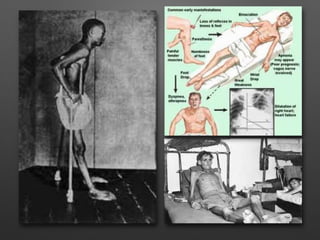
Back to…
name that neuropathy
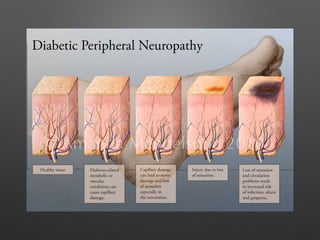
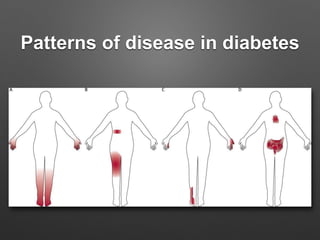
Patterns of disease in diabetes
Polyneuropathy
•Affects many nerve cells
in various parts of the
body
•Symmetrical
•Progresses slowly
•Caused by processes
affecting the whole body
Disease Patterns
• D istalaxonopathy e.g. diabetes, impaired glucose tolerance, alcohol
• the cell bodies of neurons remain intact
• axons are affected in proportion to their length.
• symptoms occur first and most severely in the feet.
• Myelinopathy aka Demyelinating disease e.g. Gullain Barre Syndrome
• myelin sheath around axons is damaged
• affects the ability of the axons to conduct electrical impulses
• Neuronopathy affects the cell bodies of neurones directly
• motor neurones (e.g. motor neurone disease)
• sensory neurones (sensory neuronopathy e.g. Herpes Zoster or
dorsal root ganglionopathy).
Other causes axonopathy
• Metabolic disturbance- diabetes
• Renal failure
• Connective tissue disease
• Toxins eg alcohol
• Malnutrition/ Vitamin deficiencies
• Infections e.g. Lyme disease
• Drugs (especially chemo)
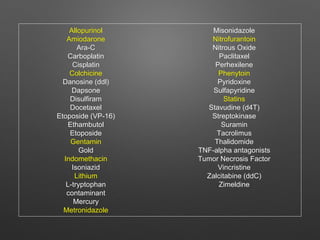
Allopurinol
Amiodarone
Ara-C
Carboplatin
Cisplatin
Colchicine
Danosine (ddl)
Dapsone
Disulfiram
Docetaxel
Etoposide (VP-16)
Ethambutol
Etoposide
Gentamin
Gold
Indomethacin
Isoniazid
Lithium
L-tryptophan
contaminant
Mercury
Metronidazole
Misonidazole
Nitrofurantoin
Nitrous Oxide
Paclitaxel
Perhexilene
Phenytoin
Pyridoxine
Sulfapyridine
Statins
Stavudine (d4T)
Streptokinase
Suramin
Tacrolimus
Thalidomide
TNF-alpha antagonists
Tumor Necrosis Factor
Vincristine
Zalcitabine (ddC)
Zimeldine
Autonomic neuropathy
• Most commonly in latter stages DM
• Symptoms
• Urinary-incontinence or retention
• GI tract: dysphagia, abdominal pain, nausea,
vomiting, malabsorption, fecal incontinence,
gastroparesis, diarrhoea, constipation
• CVS disturbances of heart rate orthostatic
hypotension, inadequate increase of heart
rate on exertion
• Resp impairments in the signals associated
with regulation of breathing and gas exchange
(central sleep apnea, hypopnea, bradypnea).[5]
Also hypoglycemia unawareness, genital
impotence, sweat disturbances
Last chance to name that
neuropathy!
Neuritis
inflammation of a nerve
(mononeuritis)
or
the peripheral nervous
system (polyneuritis)
Causes
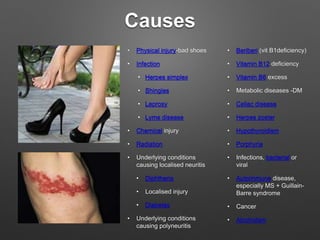
• Physical injury-bad shoes
• Infection
• Herpes simplex
• Shingles
• Leprosy
• Lyme disease
• Chemical injury
• Radiation
• Underlying conditions
causing localised neuritis
• Diphtheria
• Localised injury
• Diabetes
• Underlying conditions
causing polyneuritis
• Beriberi (vit B1deficiency)
• Vitamin B12 deficiency
• Vitamin B6 excess
• Metabolic diseases -DM
• Celiac disease
• Herpes zoster
• Hypothyroidism
• Porphyria
• Infections, bacterial or
viral
• Autoimmune disease,
especially MS + Guillain-
Barre syndrome
• Cancer
• Alcoholism
Summary
• Neuropathy has several different
patterns
• Early identification of pattern
helps target diagnosis, which in
turn influences management
• Diabetes may present with many
different disease patterns
• Causes are diverse from
metabolic processes, infection,
nutritional deficits, autoimmune
disease, drugs, toxins and more
Thank you

Neuropathies

  • 1.
    Peripheral Neuropathies Dr SarahDawson, 31st July 2014
  • 2.
    Aims • Define neuropathy •Describe different neuropathies and identify common disease patterns • List a differential diagnosis for each type of neuropathy
  • 3.
    What is neuropathy? Peripheralneuropathy (PN) is damage or disease affecting nerves • may impair sensation, movement, gland or organ function, or other aspects of health, depending on the type of nerve affected.
  • 4.
    Classification • Mononeuropathy • Mononeuritismultiplex • Polyneuropathy • Autonomic neuropathy • Neuritis
  • 5.
  • 9.
    Mononeuropathies • Affects onenerve • Direct injury to a nerve, ischemia, or inflammation. • likely that the cause is a physical compression, localized trauma or infection • e.g. carpal tunnel, cubital tunnel • "pins-and-needles" sensation of one's "foot falling asleep"
  • 11.
    Mononeuritis multiplex • Simultaneousor sequential involvement of individual noncontiguous nerves, • either partially or completely, • evolving over days to years • asymmetric • Typically presenting with acute or subacute loss of sensory and motor function of individual nerves • May also cause pain • deep, aching pain • worse at night • frequently in the lower back, hip, or leg • In diabetes typically encountered as acute, unilateral, severe thigh pain followed by anterior muscle weakness and loss of knee reflex.
  • 12.
    Causes • Diabetes Mellitus •Vasculitides • polyarteritis nodosa, • Wegener's granulomatosis, • Churg–Strauss syndrome • Immune-mediated disease • Rheumatoid • SLE • Infections • leprosy • lyme disease • HIV • sarcoidosis, amyloidosis • cryoglobulinemia • chemicals, e.g trichloroethylene and dapsone • Jellyfish (rare)
  • 14.
  • 17.
  • 18.
    Polyneuropathy •Affects many nervecells in various parts of the body •Symmetrical •Progresses slowly •Caused by processes affecting the whole body
  • 19.
    Disease Patterns • Distalaxonopathy e.g. diabetes, impaired glucose tolerance, alcohol • the cell bodies of neurons remain intact • axons are affected in proportion to their length. • symptoms occur first and most severely in the feet. • Myelinopathy aka Demyelinating disease e.g. Gullain Barre Syndrome • myelin sheath around axons is damaged • affects the ability of the axons to conduct electrical impulses • Neuronopathy affects the cell bodies of neurones directly • motor neurones (e.g. motor neurone disease) • sensory neurones (sensory neuronopathy e.g. Herpes Zoster or dorsal root ganglionopathy).
  • 20.
    Other causes axonopathy •Metabolic disturbance- diabetes • Renal failure • Connective tissue disease • Toxins eg alcohol • Malnutrition/ Vitamin deficiencies • Infections e.g. Lyme disease • Drugs (especially chemo)
  • 21.
    Allopurinol Amiodarone Ara-C Carboplatin Cisplatin Colchicine Danosine (ddl) Dapsone Disulfiram Docetaxel Etoposide (VP-16) Ethambutol Etoposide Gentamin Gold Indomethacin Isoniazid Lithium L-tryptophan contaminant Mercury Metronidazole Misonidazole Nitrofurantoin NitrousOxide Paclitaxel Perhexilene Phenytoin Pyridoxine Sulfapyridine Statins Stavudine (d4T) Streptokinase Suramin Tacrolimus Thalidomide TNF-alpha antagonists Tumor Necrosis Factor Vincristine Zalcitabine (ddC) Zimeldine
  • 22.
    Autonomic neuropathy • Mostcommonly in latter stages DM • Symptoms • Urinary-incontinence or retention • GI tract: dysphagia, abdominal pain, nausea, vomiting, malabsorption, fecal incontinence, gastroparesis, diarrhoea, constipation • CVS disturbances of heart rate orthostatic hypotension, inadequate increase of heart rate on exertion • Resp impairments in the signals associated with regulation of breathing and gas exchange (central sleep apnea, hypopnea, bradypnea).[5] Also hypoglycemia unawareness, genital impotence, sweat disturbances
  • 23.
    Last chance toname that neuropathy!
  • 25.
    Neuritis inflammation of anerve (mononeuritis) or the peripheral nervous system (polyneuritis)
  • 26.
    Causes • Physical injury-badshoes • Infection • Herpes simplex • Shingles • Leprosy • Lyme disease • Chemical injury • Radiation • Underlying conditions causing localised neuritis • Diphtheria • Localised injury • Diabetes • Underlying conditions causing polyneuritis • Beriberi (vit B1deficiency) • Vitamin B12 deficiency • Vitamin B6 excess • Metabolic diseases -DM • Celiac disease • Herpes zoster • Hypothyroidism • Porphyria • Infections, bacterial or viral • Autoimmune disease, especially MS + Guillain- Barre syndrome • Cancer • Alcoholism
  • 27.
    Summary • Neuropathy hasseveral different patterns • Early identification of pattern helps target diagnosis, which in turn influences management • Diabetes may present with many different disease patterns • Causes are diverse from metabolic processes, infection, nutritional deficits, autoimmune disease, drugs, toxins and more
  • 28.

Editor's Notes

  • #11 Mononeurtitis multiplex Vasculitis A sural nerve biopsy from a patient with mononeuritis multiplex and systemic lupus shows the sural nerve (arrow head) on the left and an adjacent arteriole (arrow) with an inflammatory infiltrate and occluded lumen consistent with vasculitis.
  • #18 The following patterns of nerve injury are shown in the figure: distal symmetrical polyneuropathy (DSP), small-fibre predominant neuropathy, and treatment-induced neuropathy (A); radiculoplexopathy and radiculopathy (B); mononeuropathy and mononeuritis multiplex (C); and autonomic neuropathy and treatment-induced neuropathy (D).