Trauma Teams
CME 24/8/18
DR. F LEE
Objectives
 Definition
 Statistics
 Trauma Call in Charlies
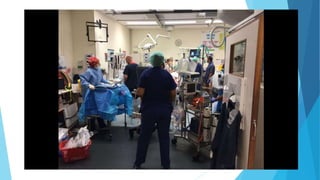
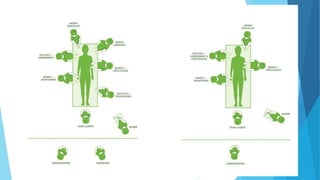
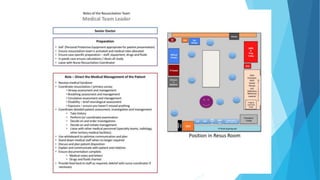
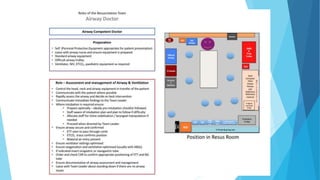
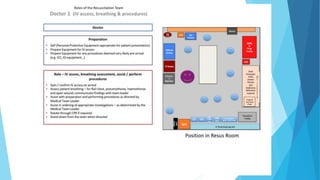
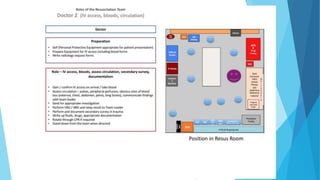
 Understanding Trauma Team Roles
 Trauma Mindset
 Tools and Techniques
Definition
 A trauma team is a multidisciplinary group of healthcare workers who
collectively work together on the assessment and treatment of those who are
severely injured
 The ATLS is designed for individual doctors to safely look after a multiply
injured patient, however:
 Tasks are performed in sequence i.e. 'vertical organization' and is the least
efficient method of proceeding. ‘Horizontal organization‘, where a team
approach is employed, has been shown significant reductions in resuscitation times
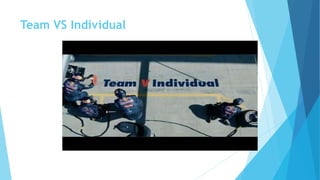
Pit Crew Explained
Team VS Individual
WA State Trauma
Registry Report 2015
MORTALITY/MORBIDITY
 total of 110 deaths in 2015, with Head
Injury and Brain Death as the combined
major cause of death (51%), haemorrhage
(11%)
 687/713 major traumas (96.3%) were
blunt traumas (including burns
admissions), with 11.6% mortality rate
 mortality rate 35.1% critically injured
patients (ISS 41-75) VS minor trauma
patients 0.5%
 Overall, there were 84 major trauma
deaths (ISS >15) (11.7%) VS Mortality
rates for national average major trauma
deaths (ISS >12) 9%.
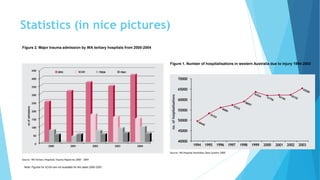
Statistics (in nice pictures)
Figure 2. Major trauma admission by WA tertiary hospitals from 2000-2004
Note: Figures for sCGH are not available for the years 2000-2001.
Figure 1. Number of hospitalisations in western Australia due to injury 1994-2003
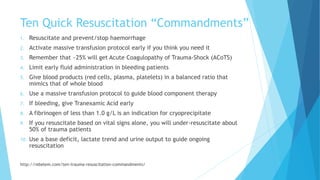
Ten Quick Resuscitation “Commandments”
1. Resuscitate and prevent/stop haemorrhage
2. Activate massive transfusion protocol early if you think you need it
3. Remember that ~25% will get Acute Coagulopathy of Trauma-Shock (ACoTS)
4. Limit early fluid administration in bleeding patients
5. Give blood products (red cells, plasma, platelets) in a balanced ratio that
mimics that of whole blood
6. Use a massive transfusion protocol to guide blood component therapy
7. If bleeding, give Tranexamic Acid early
8. A fibrinogen of less than 1.0 g/L is an indication for cryoprecipitate
9. If you resuscitate based on vital signs alone, you will under-resuscitate about
50% of trauma patients
10. Use a base deficit, lactate trend and urine output to guide ongoing
resuscitation
http://rebelem.com/ten-trauma-resuscitation-commandments/
Trauma Leader Mindset
 STAY CALM! Master and control yourself
 Communicate well – give explicit instructions!
 Control the Environment and Team
 Prepare the Room
 Right drugs, right equipment, right team
 Master the patient and the scenario
 Be thorough with your primary and secondary surveys
 Employ the OODA Loop (Observe, Orientate, Decide, Action)
 Create Stop Points
 Designated team leader seeks input but makes final decision
 Mutual trust and respect between all members
 Talk to family and team after
http://www.emdocs.net/mindset-resuscitationist-organizing-room/
Effective Communication
 shared mental model:
 Creating a shared model of the patient’s situation allows personnel from differing backgrounds to
understand both the clinical and logistical implications of the case
 Ensures that:
 team members are familiar with one another’s roles and responsibilities;
 that they are able to anticipate the needs of other team members,
 and have a high level of adaptive capacity
 breaks down boundaries between individuals with varying levels of experience
 reduce the perception of a power differential between outside specialists
 prevents individual team members veering off on counterproductive tangents.
 A way of doing this is to brief the team prior to the patient’s arrival
Briefing the team
 team leader should gather the team and brief them before the trauma patient arrives
 aim of the briefing is to:
 allocate individual roles (for example, airway doctor/nurse)
 allocate tasks to be completed before the patient arrives (for example, draw up drugs, prepare for a
chest drain insertion, pre-notification of radiology/blood bank/theatre)
 create a shared mental model of the patient’s current status as well as the anticipated plan and final
destination
 create awareness of potential issues and how they might be dealt with (anticipate the ‘what if?’
scenario)
 allow the team to ask questions and clarify any issues before the patient arrives
Tacit vs explicit communication
 Tacit communication is implied communication where the intention is never
actually stated
 Explicit communication is clear and specific (who, what, where, when,
how) and allow for questions to avoid errors and critical incidences
 Be Aware! In times of high stress, communication often shifts from an explicit
to a tacit form which leads to missed information and poorer outcomes
 One technique that can help avoid this is closed-loop communication
Closed-loop communication
 Explicit instructions from team leader (Who, What, Where, When, How)
should be acknowledged and then state when it is done
 This allows for clarification of requests if needed and avoids errors of
omission
Closed loop communication has been shown to reduce error rates by
removing ambiguity from instructions, allowing clarification, and improve
awareness
 Important that the team leader also uses eye contact when making requests,
allowing for non-verbal as well as verbal clarification
 The leader doesn’t bark orders but should be concise and clear in their
language in order to get the task done
Handover
 ISBAR
Identify: Who are you and what is your role? Patient identifiers (at least
three)
Situation: What is going on with the patient?
Background: What is the clinical background/context?
Assessment: What do you think the problem is?
Recommendation: What would you recommend? Identify risks – patient and
occupational health and safety; assign and accept responsibility
accountability
Graded assertiveness
 Teaching people to speak up and creating the dynamic where they can express
their concerns is a key safety factor
 Occasionally the team members may not agree with the leader’s management plan
or the team leader may go silent/be cognitively stuck
 Members can use this as an opportunity to practice graded assertiveness that can
allow anyone to challenge any action or behaviour that they think is inappropriate
 One way to remember it is to use the PACE mnemonic:
Probe: ‘Do you know that…?’
Alert: ‘Can we go back to the start and repeat the primary survey?’
Challenge: ‘Please stop what you are doing while we check …’
Emergency: ‘Stop what you are doing and put down the scalpel.’
 No one team member should be afraid to point out a risk, a concern or an
actual or potential error
Five-step advocacy
 An alternative approach is the advocacy approach:
1. Get attention – ‘Excuse me, doctor!’
2. Raise your concern – ‘There is no end-tidal CO2 trace.’
3. State the problem as you see it – ‘I’m concerned that the intubation was
unsuccessful.’
4. Suggest a solution – ‘Why don’t we remove the ETT and go back to bagging
the patient?’
5. Obtain an agreement – ‘Does that sound like a safe thing to do?’
References
http://www.rph.wa.gov.au/~/media/Files/Hospitals/RPH/PDFs/wa-state-trauma-
report-2015.ashx
http://scghed.com/2015/10/cme-81015-trauma-resuscitation/
http://scghed.com/2016/03/roles-in-the-resuscitation-room/
http://www.emdocs.net/mindset-resuscitationist-organizing-room/
http://rebelem.com/ten-trauma-resuscitation-commandments/
http://www.trauma.org/archive/resus/traumateam.html
Department of Health Western Australia (2007). Trauma system and services Report of
the Trauma Working Group. Perth. Western Australia.
https://trauma.reach.vic.gov.au/guidelines/teamwork-and-communication
Roles and Responsibilities of the Trauma Team. Nottingham University Hospitals.
Updated November 2010

Trauma teams

  • 1.
  • 2.
    Objectives  Definition  Statistics Trauma Call in Charlies  Understanding Trauma Team Roles  Trauma Mindset  Tools and Techniques
  • 3.
    Definition  A traumateam is a multidisciplinary group of healthcare workers who collectively work together on the assessment and treatment of those who are severely injured  The ATLS is designed for individual doctors to safely look after a multiply injured patient, however:  Tasks are performed in sequence i.e. 'vertical organization' and is the least efficient method of proceeding. ‘Horizontal organization‘, where a team approach is employed, has been shown significant reductions in resuscitation times
  • 4.
  • 5.
  • 6.
    WA State Trauma RegistryReport 2015 MORTALITY/MORBIDITY  total of 110 deaths in 2015, with Head Injury and Brain Death as the combined major cause of death (51%), haemorrhage (11%)  687/713 major traumas (96.3%) were blunt traumas (including burns admissions), with 11.6% mortality rate  mortality rate 35.1% critically injured patients (ISS 41-75) VS minor trauma patients 0.5%  Overall, there were 84 major trauma deaths (ISS >15) (11.7%) VS Mortality rates for national average major trauma deaths (ISS >12) 9%.
  • 7.
    Statistics (in nicepictures) Figure 2. Major trauma admission by WA tertiary hospitals from 2000-2004 Note: Figures for sCGH are not available for the years 2000-2001. Figure 1. Number of hospitalisations in western Australia due to injury 1994-2003
  • 16.
    Ten Quick Resuscitation“Commandments” 1. Resuscitate and prevent/stop haemorrhage 2. Activate massive transfusion protocol early if you think you need it 3. Remember that ~25% will get Acute Coagulopathy of Trauma-Shock (ACoTS) 4. Limit early fluid administration in bleeding patients 5. Give blood products (red cells, plasma, platelets) in a balanced ratio that mimics that of whole blood 6. Use a massive transfusion protocol to guide blood component therapy 7. If bleeding, give Tranexamic Acid early 8. A fibrinogen of less than 1.0 g/L is an indication for cryoprecipitate 9. If you resuscitate based on vital signs alone, you will under-resuscitate about 50% of trauma patients 10. Use a base deficit, lactate trend and urine output to guide ongoing resuscitation http://rebelem.com/ten-trauma-resuscitation-commandments/
  • 17.
    Trauma Leader Mindset STAY CALM! Master and control yourself  Communicate well – give explicit instructions!  Control the Environment and Team  Prepare the Room  Right drugs, right equipment, right team  Master the patient and the scenario  Be thorough with your primary and secondary surveys  Employ the OODA Loop (Observe, Orientate, Decide, Action)  Create Stop Points  Designated team leader seeks input but makes final decision  Mutual trust and respect between all members  Talk to family and team after http://www.emdocs.net/mindset-resuscitationist-organizing-room/
  • 18.
    Effective Communication  sharedmental model:  Creating a shared model of the patient’s situation allows personnel from differing backgrounds to understand both the clinical and logistical implications of the case  Ensures that:  team members are familiar with one another’s roles and responsibilities;  that they are able to anticipate the needs of other team members,  and have a high level of adaptive capacity  breaks down boundaries between individuals with varying levels of experience  reduce the perception of a power differential between outside specialists  prevents individual team members veering off on counterproductive tangents.  A way of doing this is to brief the team prior to the patient’s arrival
  • 19.
    Briefing the team team leader should gather the team and brief them before the trauma patient arrives  aim of the briefing is to:  allocate individual roles (for example, airway doctor/nurse)  allocate tasks to be completed before the patient arrives (for example, draw up drugs, prepare for a chest drain insertion, pre-notification of radiology/blood bank/theatre)  create a shared mental model of the patient’s current status as well as the anticipated plan and final destination  create awareness of potential issues and how they might be dealt with (anticipate the ‘what if?’ scenario)  allow the team to ask questions and clarify any issues before the patient arrives
  • 20.
    Tacit vs explicitcommunication  Tacit communication is implied communication where the intention is never actually stated  Explicit communication is clear and specific (who, what, where, when, how) and allow for questions to avoid errors and critical incidences  Be Aware! In times of high stress, communication often shifts from an explicit to a tacit form which leads to missed information and poorer outcomes  One technique that can help avoid this is closed-loop communication
  • 21.
    Closed-loop communication  Explicitinstructions from team leader (Who, What, Where, When, How) should be acknowledged and then state when it is done  This allows for clarification of requests if needed and avoids errors of omission Closed loop communication has been shown to reduce error rates by removing ambiguity from instructions, allowing clarification, and improve awareness  Important that the team leader also uses eye contact when making requests, allowing for non-verbal as well as verbal clarification  The leader doesn’t bark orders but should be concise and clear in their language in order to get the task done
  • 22.
    Handover  ISBAR Identify: Whoare you and what is your role? Patient identifiers (at least three) Situation: What is going on with the patient? Background: What is the clinical background/context? Assessment: What do you think the problem is? Recommendation: What would you recommend? Identify risks – patient and occupational health and safety; assign and accept responsibility accountability
  • 23.
    Graded assertiveness  Teachingpeople to speak up and creating the dynamic where they can express their concerns is a key safety factor  Occasionally the team members may not agree with the leader’s management plan or the team leader may go silent/be cognitively stuck  Members can use this as an opportunity to practice graded assertiveness that can allow anyone to challenge any action or behaviour that they think is inappropriate  One way to remember it is to use the PACE mnemonic: Probe: ‘Do you know that…?’ Alert: ‘Can we go back to the start and repeat the primary survey?’ Challenge: ‘Please stop what you are doing while we check …’ Emergency: ‘Stop what you are doing and put down the scalpel.’  No one team member should be afraid to point out a risk, a concern or an actual or potential error
  • 24.
    Five-step advocacy  Analternative approach is the advocacy approach: 1. Get attention – ‘Excuse me, doctor!’ 2. Raise your concern – ‘There is no end-tidal CO2 trace.’ 3. State the problem as you see it – ‘I’m concerned that the intubation was unsuccessful.’ 4. Suggest a solution – ‘Why don’t we remove the ETT and go back to bagging the patient?’ 5. Obtain an agreement – ‘Does that sound like a safe thing to do?’
  • 25.
    References http://www.rph.wa.gov.au/~/media/Files/Hospitals/RPH/PDFs/wa-state-trauma- report-2015.ashx http://scghed.com/2015/10/cme-81015-trauma-resuscitation/ http://scghed.com/2016/03/roles-in-the-resuscitation-room/ http://www.emdocs.net/mindset-resuscitationist-organizing-room/ http://rebelem.com/ten-trauma-resuscitation-commandments/ http://www.trauma.org/archive/resus/traumateam.html Department of HealthWestern Australia (2007). Trauma system and services Report of the Trauma Working Group. Perth. Western Australia. https://trauma.reach.vic.gov.au/guidelines/teamwork-and-communication Roles and Responsibilities of the Trauma Team. Nottingham University Hospitals. Updated November 2010