Peripheral neuropathy
Dr Prabha Adhikari
Professor and HOD Geriatric Medicine
Yenepoya Medical College
Yenepoya deemed to be university
Typical case
• Meet Mr Monappa who complains of leg weakness, ataxia,
numb feet and sharp sudden pain at nights which is shock
like pain since 2 years
• Romberg`s Positive
• He has wasting of interrossei and unable to grip chappals
,clawing of feet .
• His sensation for touch ,vibration are absent upto knee
• Pain and temperature decreased in feet
• His bed clothes also cause pain for him
• He is a diabetic for the last 15 years on OHA and refusing to
take insulin
• He begs for sedatives ………………….
Questions
• What is the diagnosis ?
• What type of neuropathy is it ?
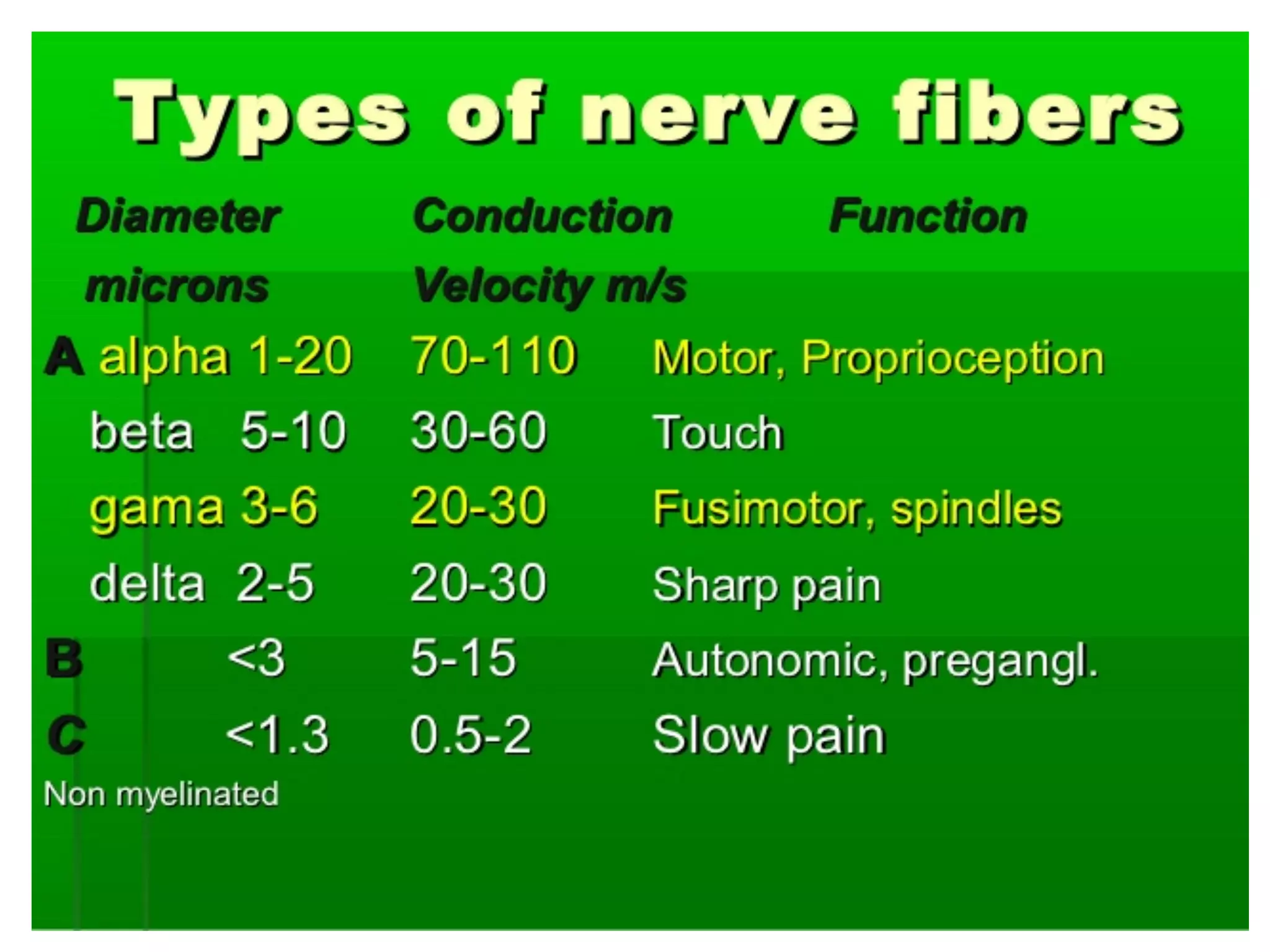
• What types of nerve fibers are involved ?
• What are the 5 questions you need to ask to
make a complete diagnosis of neuropathy and
its type?
Lesson plan
• Open class with a case
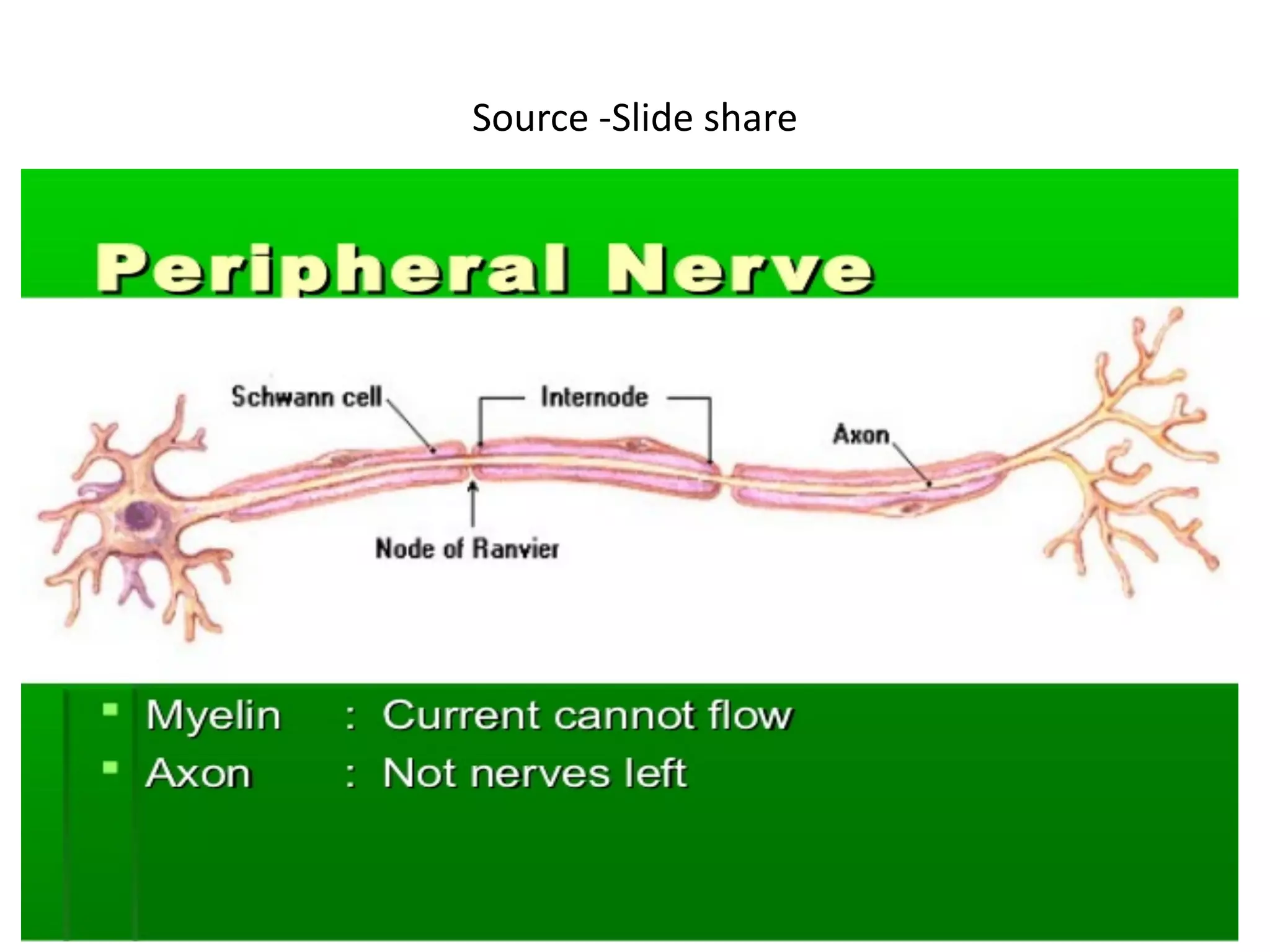
• Over view on Anatomy and Physiology of peripheral nerve
to answer questions
• Defnition and 5 question approach
• Aetiology ,
• Clinical features ,importance of peripheral nerve thickening
Observe sural nerve biopsy
• Autonomic neuropathy
• Classify severity of diabetic neuropathy
• Investigations
• Value of NCV and nerve biopsy and findings
Source -Slide share
Peripheral neuropathy
• Definition –Diseases of the peripheral nerve
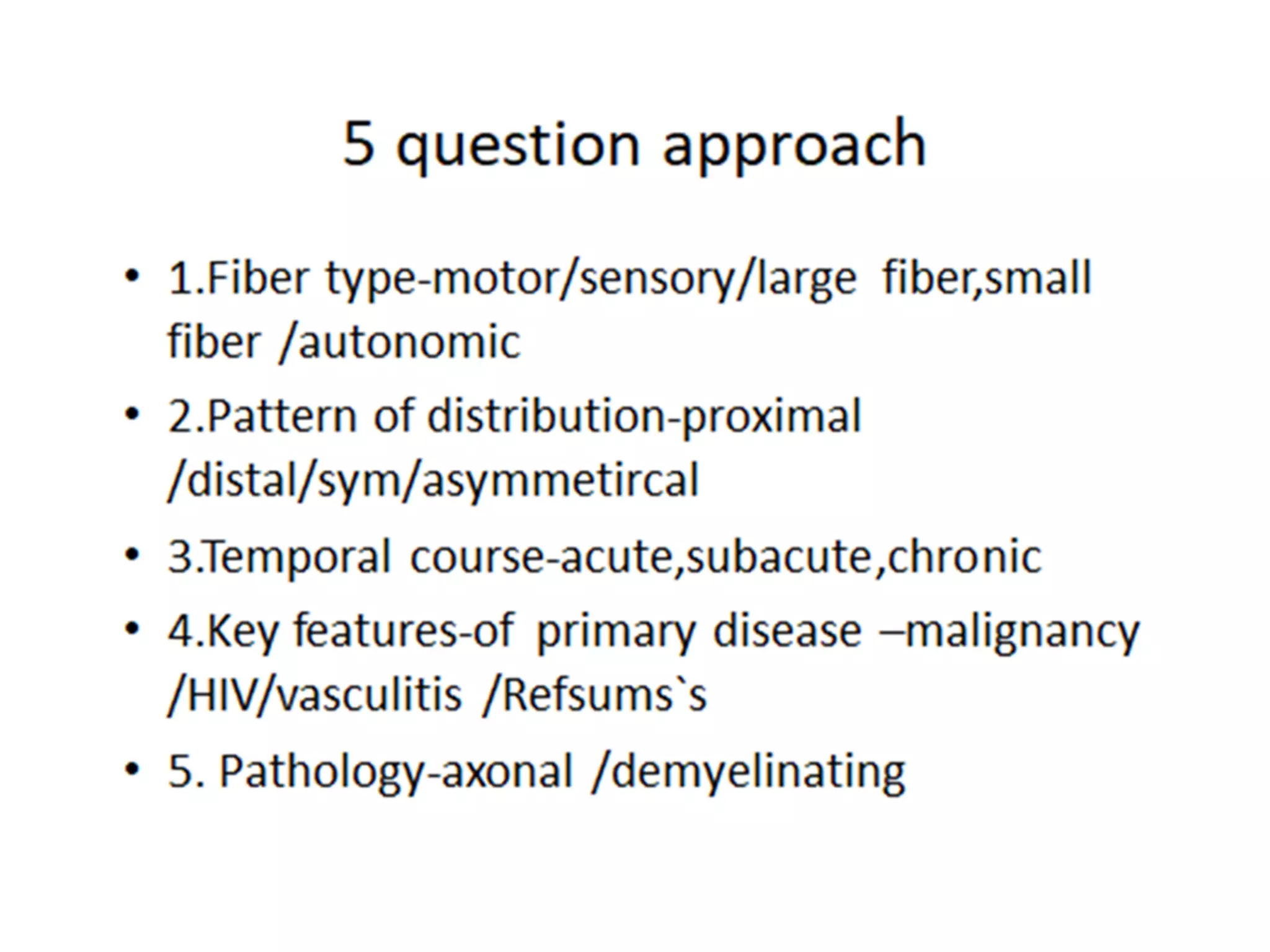
• 5 Question approach
1.Which are the fibers?
2.Where in the body –distribution
3.When did it start ?temporal
4.Any other features of primary disease ?
5.How did it happen –Pathology
.
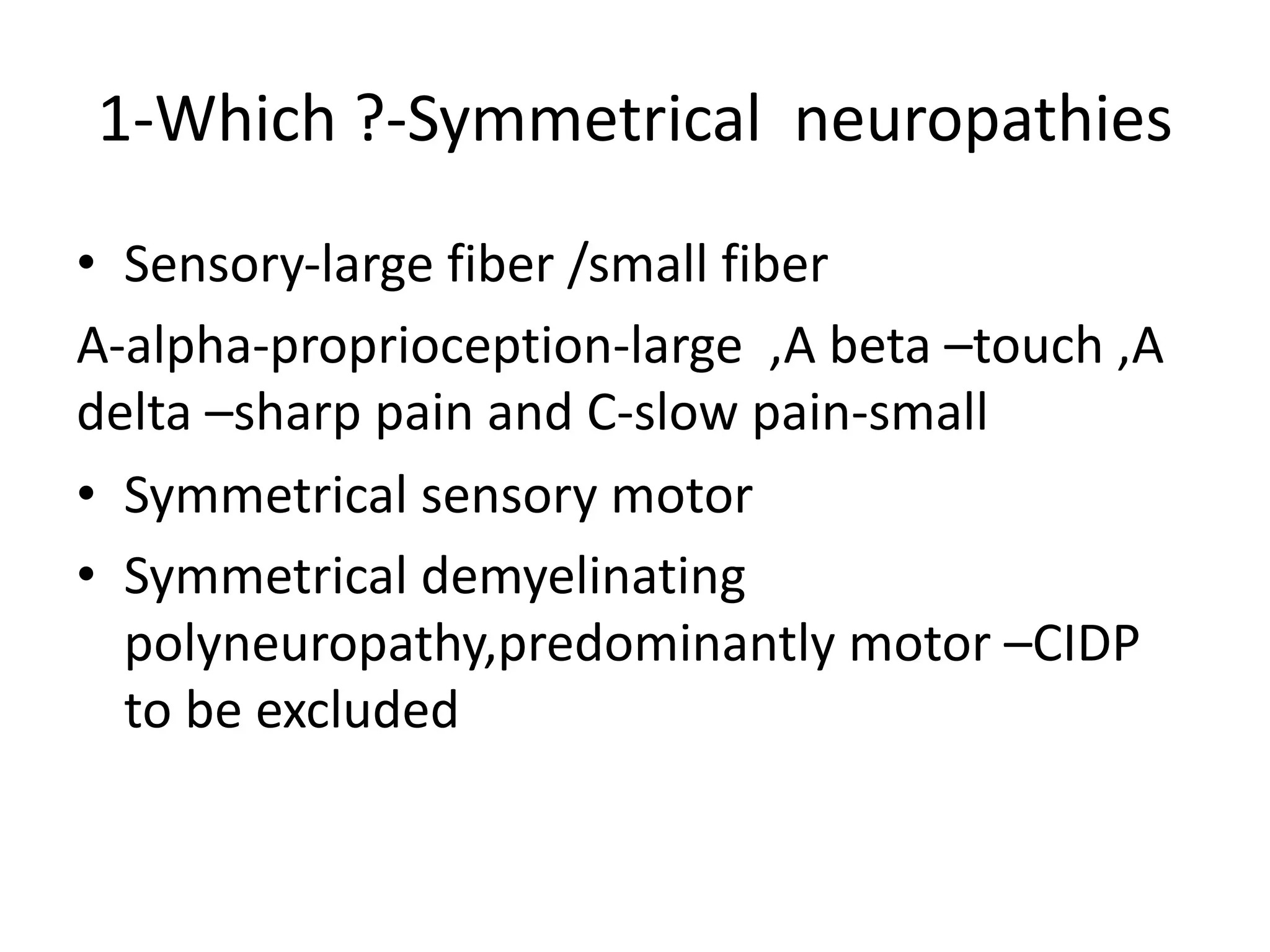
1-Which ?-Symmetrical neuropathies
• Sensory-large fiber /small fiber
A-alpha-proprioception-large ,A beta –touch ,A
delta –sharp pain and C-slow pain-small
• Symmetrical sensory motor
• Symmetrical demyelinating
polyneuropathy,predominantly motor –CIDP
to be excluded
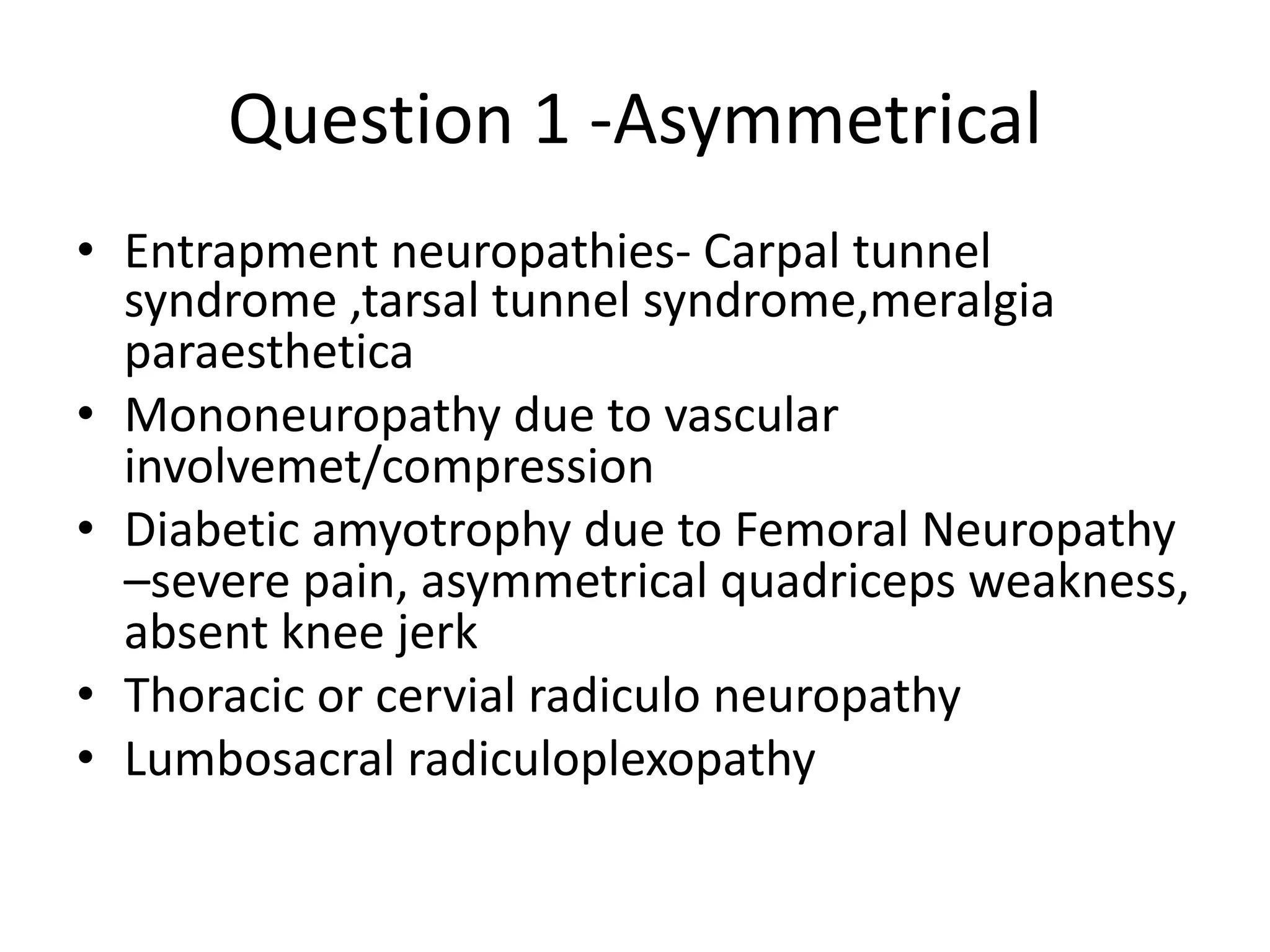
Question 1 -Asymmetrical
• Entrapment neuropathies- Carpal tunnel
syndrome ,tarsal tunnel syndrome,meralgia
paraesthetica
• Mononeuropathy due to vascular
involvemet/compression
• Diabetic amyotrophy due to Femoral Neuropathy
–severe pain, asymmetrical quadriceps weakness,
absent knee jerk
• Thoracic or cervial radiculo neuropathy
• Lumbosacral radiculoplexopathy
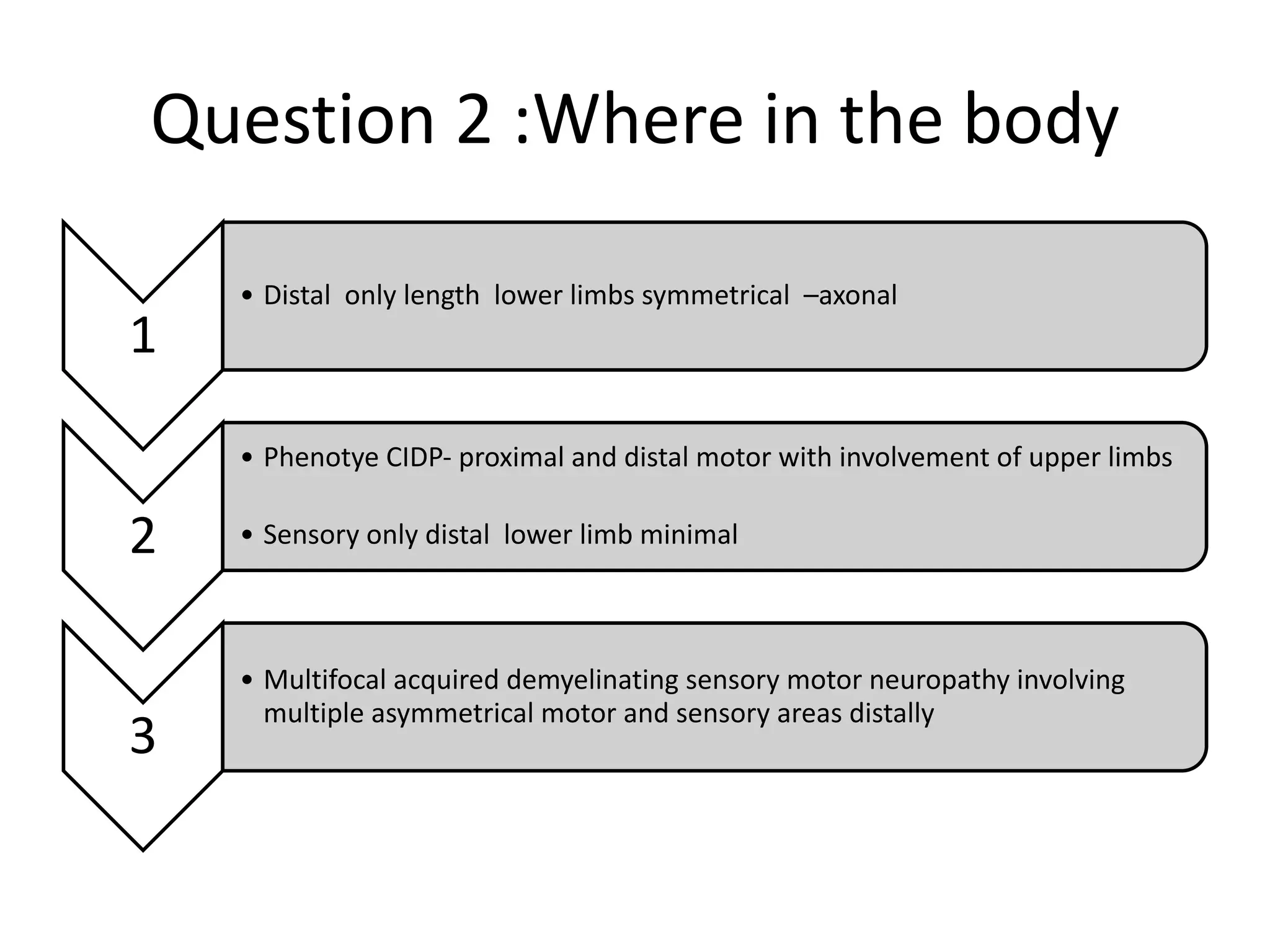
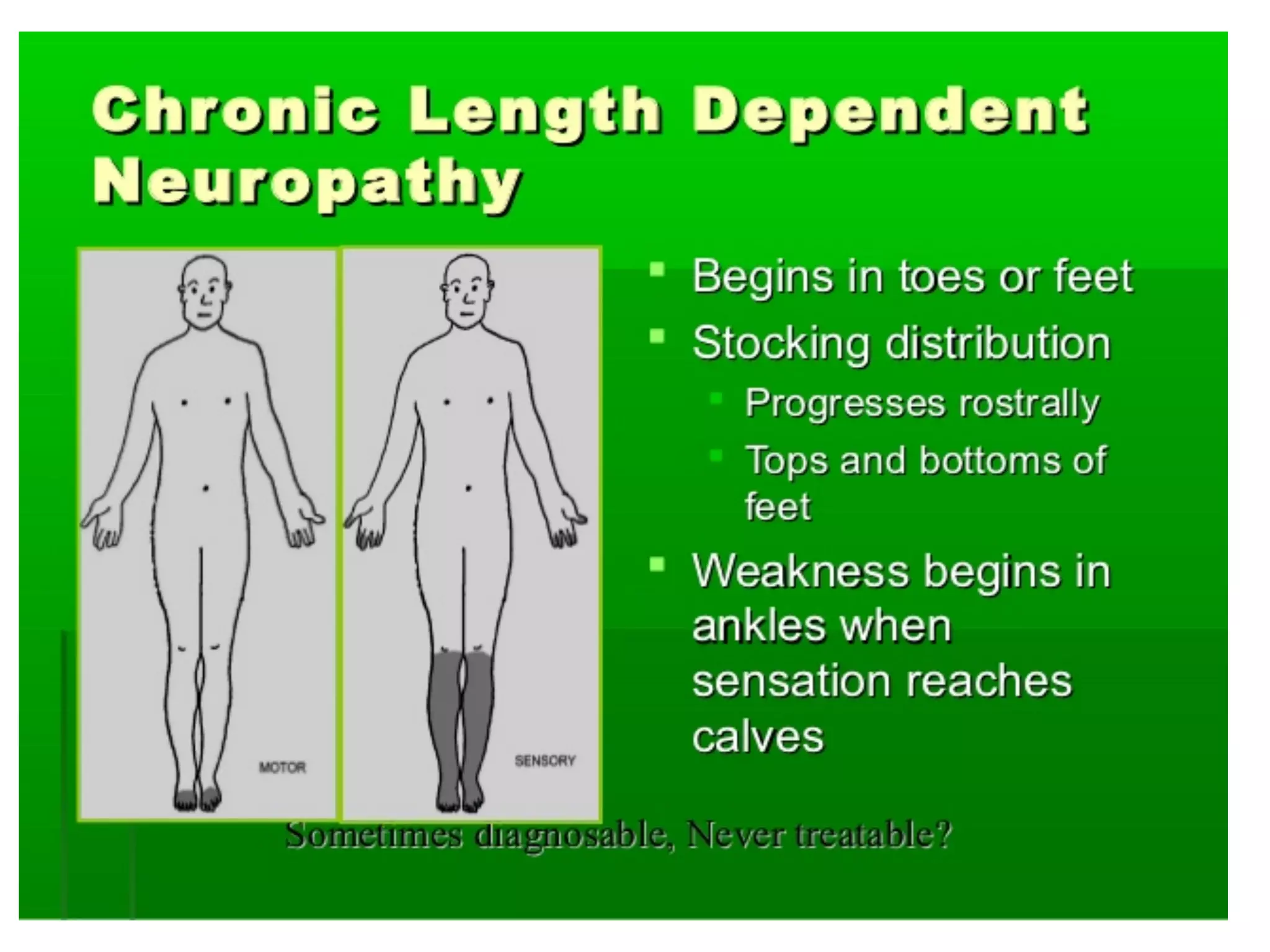
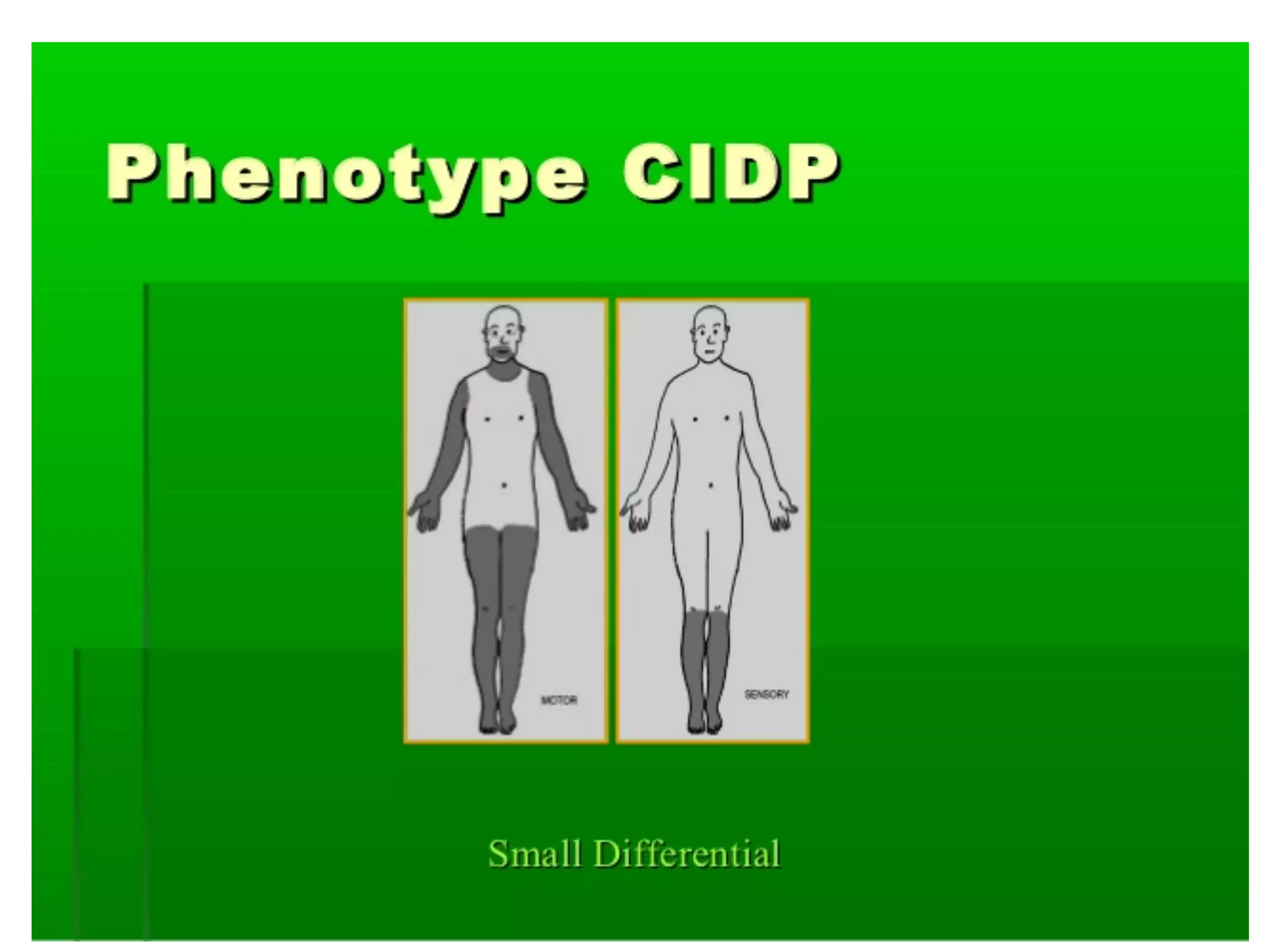
Question 2 :Where in the body
1
• Distal only length lower limbs symmetrical –axonal
2
• Phenotye CIDP- proximal and distal motor with involvement of upper limbs
• Sensory only distal lower limb minimal
3
• Multifocal acquired demyelinating sensory motor neuropathy involving
multiple asymmetrical motor and sensory areas distally
Multi focal acquired demyelinating
sensory and motor neuropathy
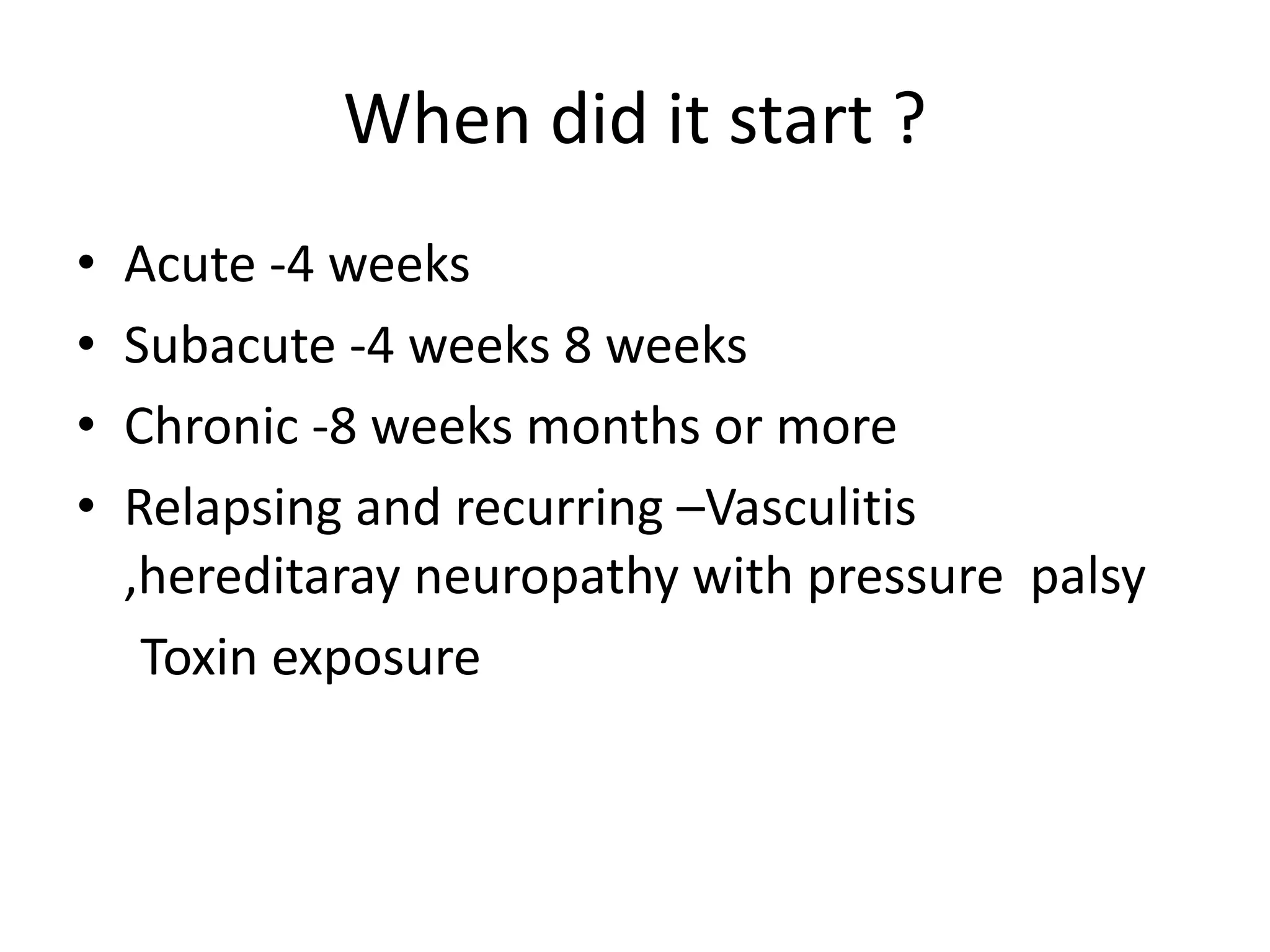
When did it start ?
• Acute -4 weeks
• Subacute -4 weeks 8 weeks
• Chronic -8 weeks months or more
• Relapsing and recurring –Vasculitis
,hereditaray neuropathy with pressure palsy
Toxin exposure
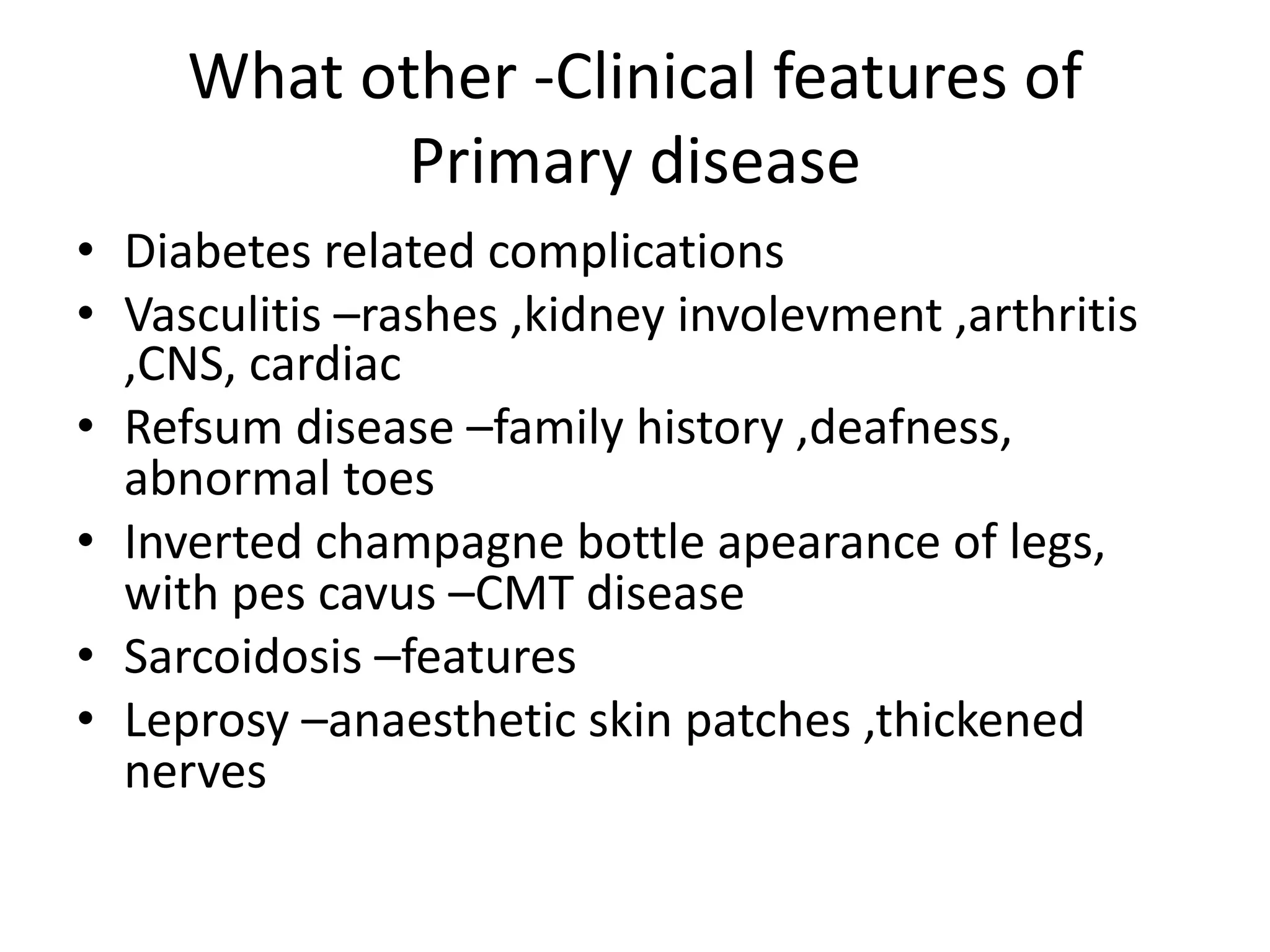
What other -Clinical features of
Primary disease
• Diabetes related complications
• Vasculitis –rashes ,kidney involevment ,arthritis
,CNS, cardiac
• Refsum disease –family history ,deafness,
abnormal toes
• Inverted champagne bottle apearance of legs,
with pes cavus –CMT disease
• Sarcoidosis –features
• Leprosy –anaesthetic skin patches ,thickened
nerves
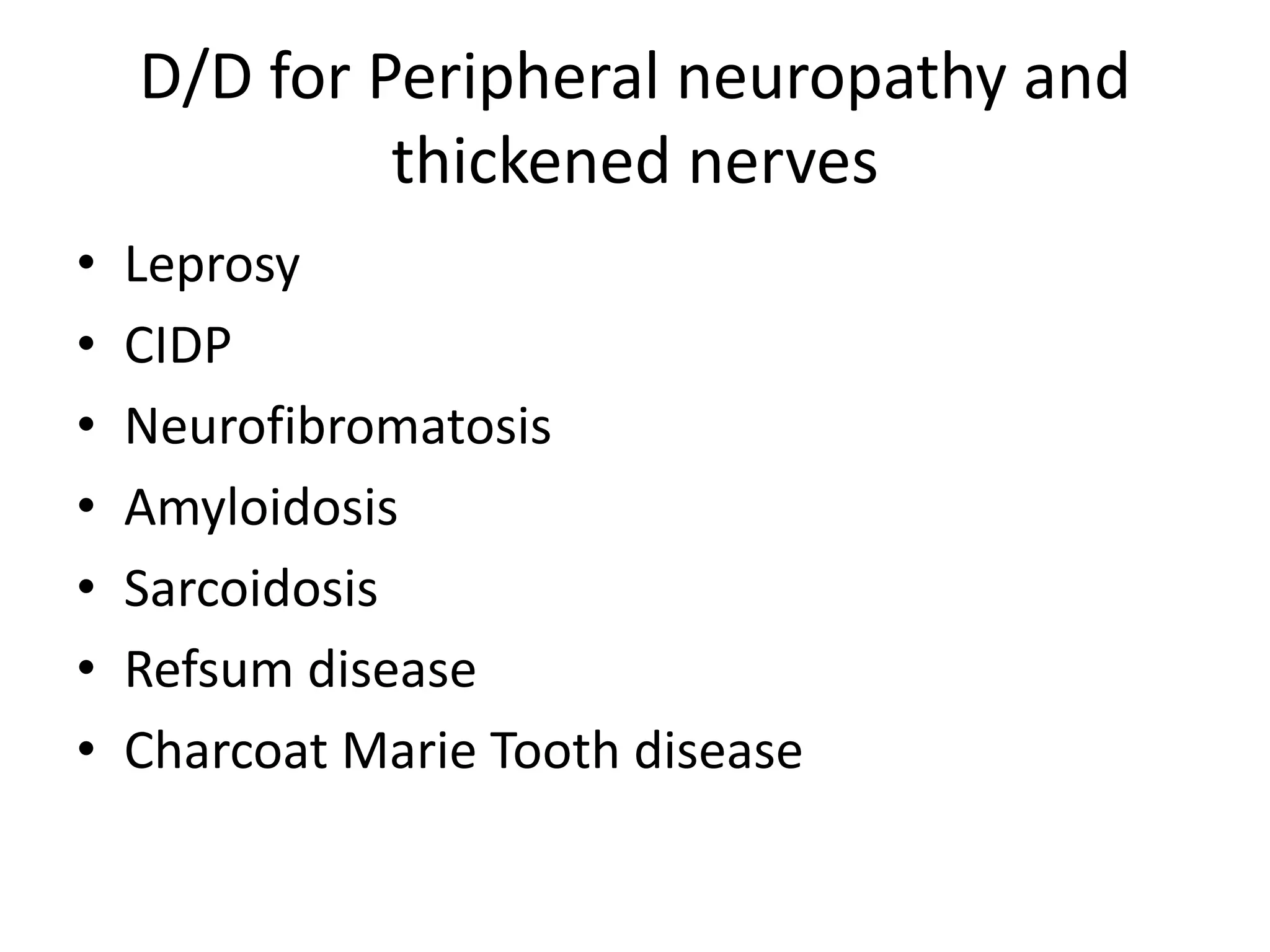
D/D for Peripheral neuropathy and
thickened nerves
• Leprosy
• CIDP
• Neurofibromatosis
• Amyloidosis
• Sarcoidosis
• Refsum disease
• Charcoat Marie Tooth disease
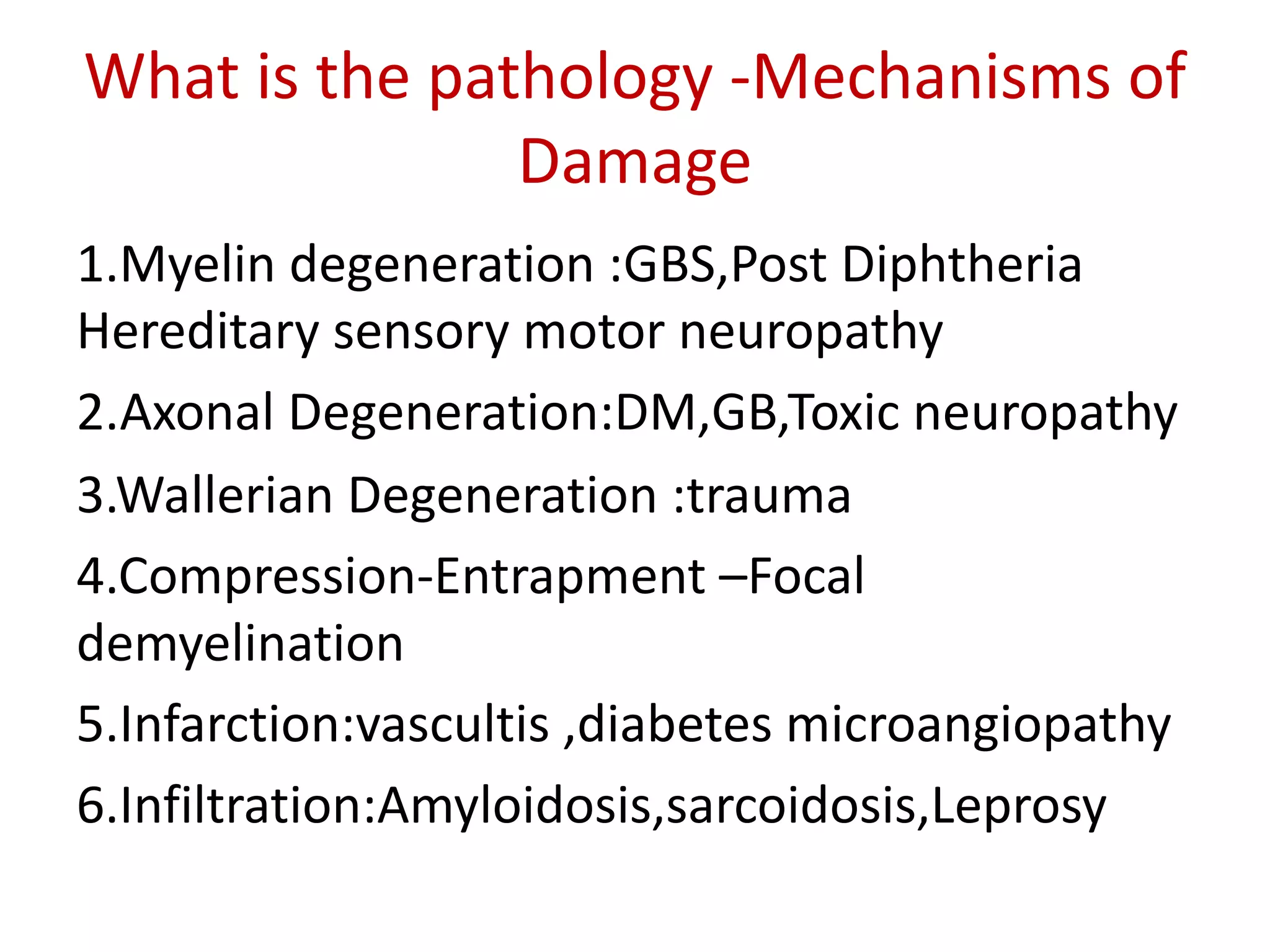
What is the pathology -Mechanisms of
Damage
1.Myelin degeneration :GBS,Post Diphtheria
Hereditary sensory motor neuropathy
2.Axonal Degeneration:DM,GB,Toxic neuropathy
3.Wallerian Degeneration :trauma
4.Compression-Entrapment –Focal
demyelination
5.Infarction:vascultis ,diabetes microangiopathy
6.Infiltration:Amyloidosis,sarcoidosis,Leprosy
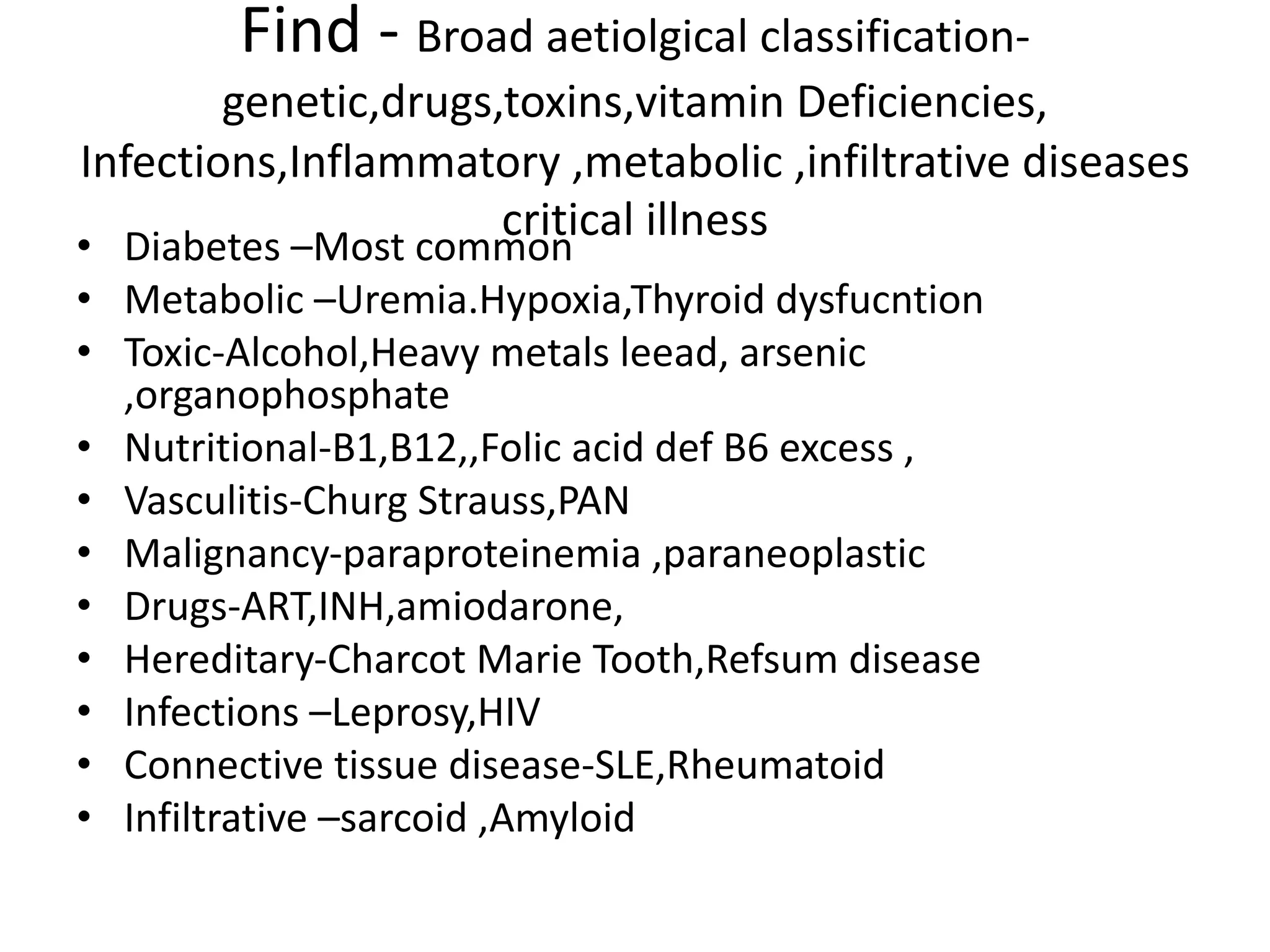
Find - Broad aetiolgical classification-
genetic,drugs,toxins,vitamin Deficiencies,
Infections,Inflammatory ,metabolic ,infiltrative diseases
critical illness
• Diabetes –Most common
• Metabolic –Uremia.Hypoxia,Thyroid dysfucntion
• Toxic-Alcohol,Heavy metals leead, arsenic
,organophosphate
• Nutritional-B1,B12,,Folic acid def B6 excess ,
• Vasculitis-Churg Strauss,PAN
• Malignancy-paraproteinemia ,paraneoplastic
• Drugs-ART,INH,amiodarone,
• Hereditary-Charcot Marie Tooth,Refsum disease
• Infections –Leprosy,HIV
• Connective tissue disease-SLE,Rheumatoid
• Infiltrative –sarcoid ,Amyloid
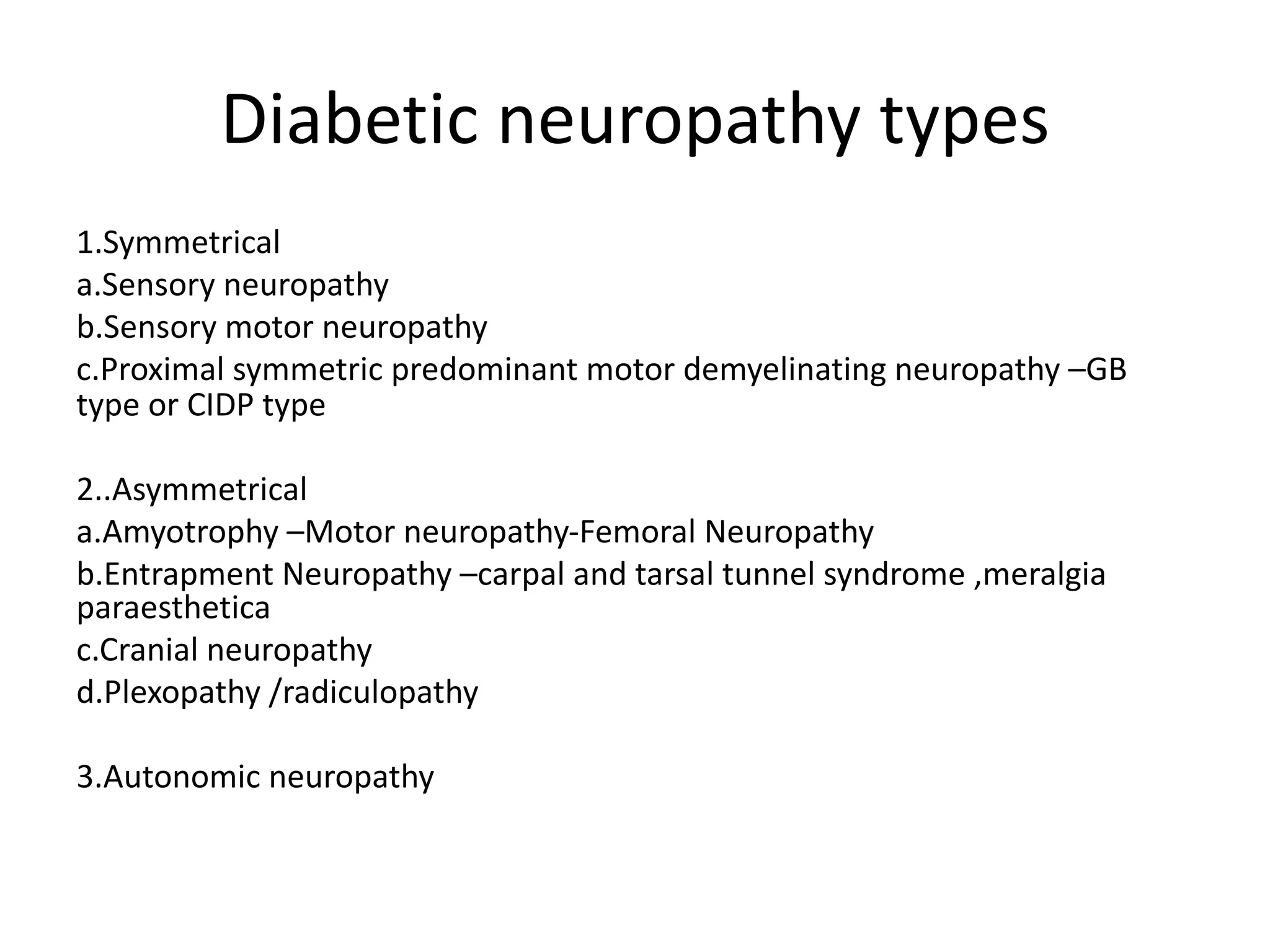
Diabetic neuropathy types
1.Symmetrical
a.Sensory neuropathy
b.Sensory motor neuropathy
c.Proximal symmetric predominant motor demyelinating neuropathy –GB
type or CIDP type
2..Asymmetrical
a.Amyotrophy –Motor neuropathy-Femoral Neuropathy
b.Entrapment Neuropathy –carpal and tarsal tunnel syndrome ,meralgia
paraesthetica
c.Cranial neuropathy
d.Plexopathy /radiculopathy
3.Autonomic neuropathy
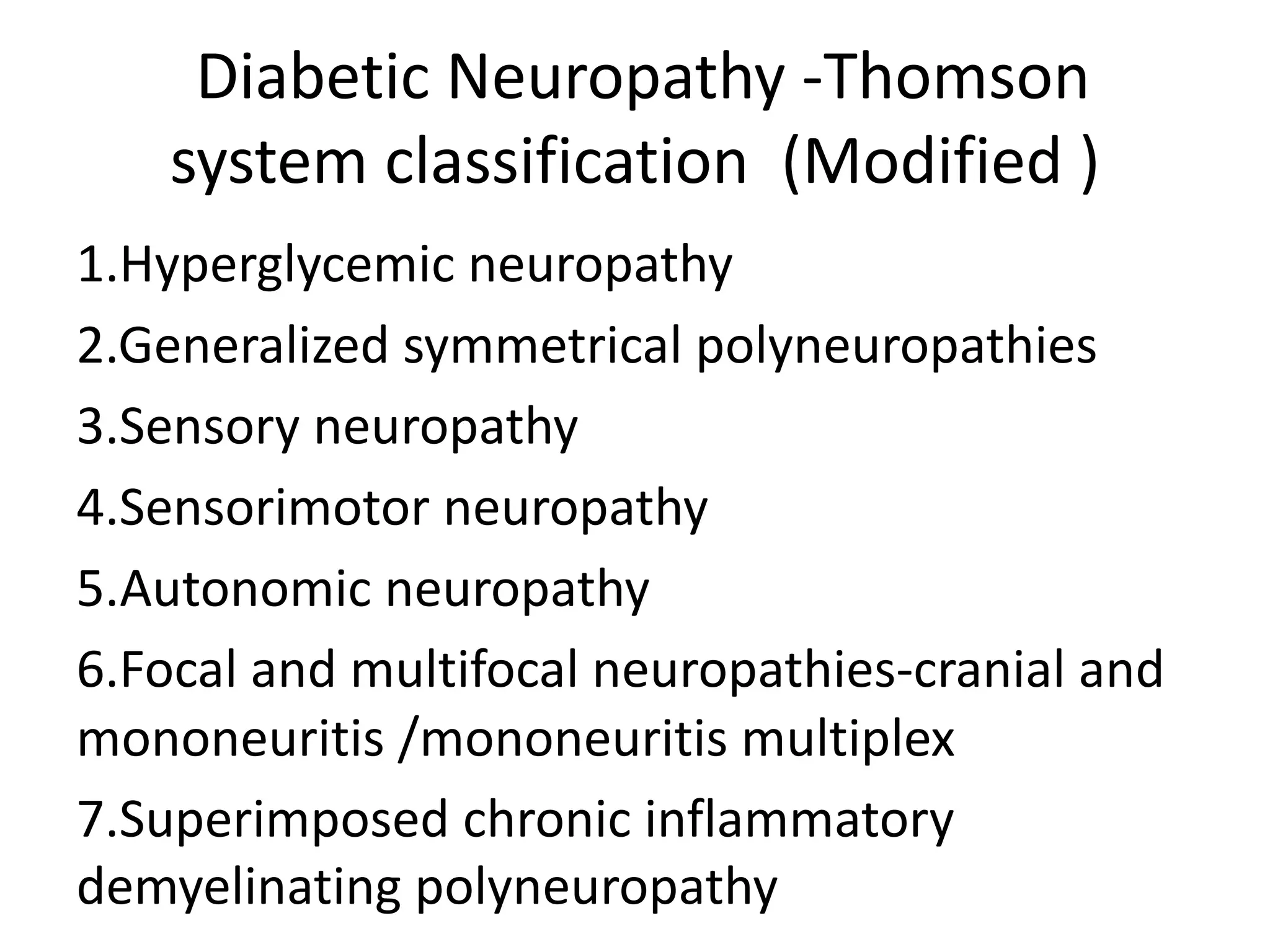
Diabetic Neuropathy -Thomson
system classification (Modified )
1.Hyperglycemic neuropathy
2.Generalized symmetrical polyneuropathies
3.Sensory neuropathy
4.Sensorimotor neuropathy
5.Autonomic neuropathy
6.Focal and multifocal neuropathies-cranial and
mononeuritis /mononeuritis multiplex
7.Superimposed chronic inflammatory
demyelinating polyneuropathy
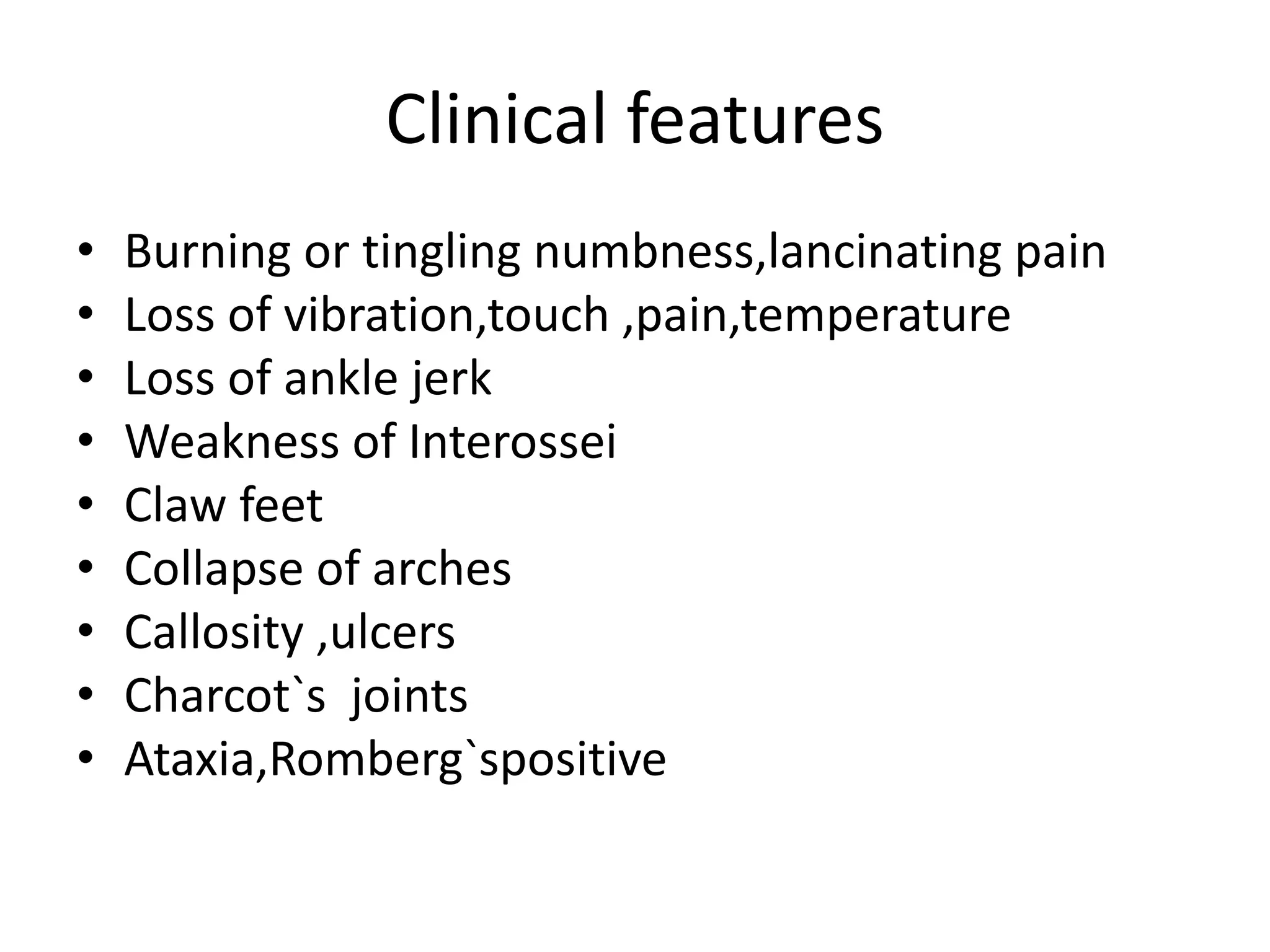
Clinical features
• Burning or tingling numbness,lancinating pain
• Loss of vibration,touch ,pain,temperature
• Loss of ankle jerk
• Weakness of Interossei
• Claw feet
• Collapse of arches
• Callosity ,ulcers
• Charcot`s joints
• Ataxia,Romberg`spositive
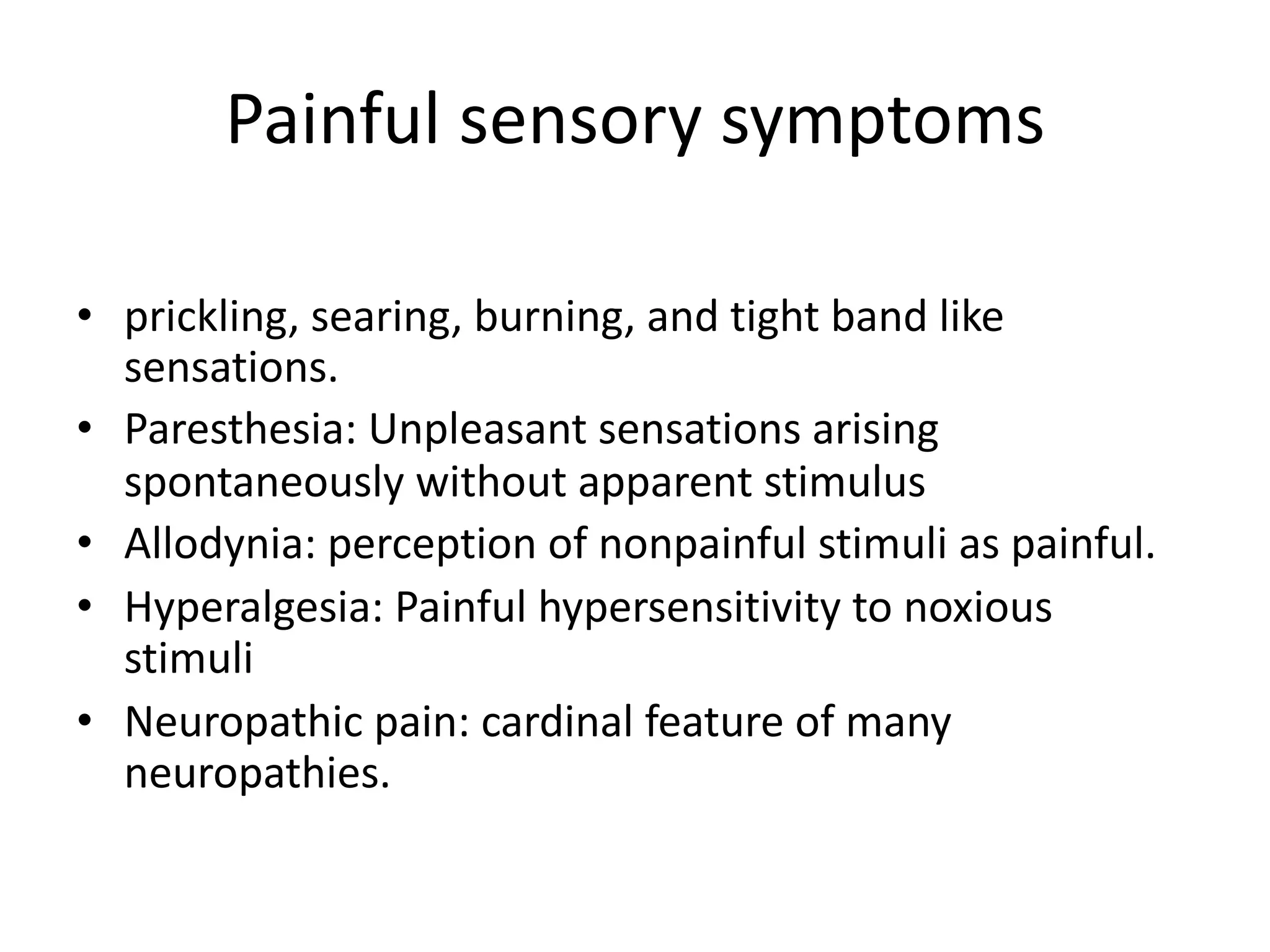
Painful sensory symptoms
• prickling, searing, burning, and tight band like
sensations.
• Paresthesia: Unpleasant sensations arising
spontaneously without apparent stimulus
• Allodynia: perception of nonpainful stimuli as painful.
• Hyperalgesia: Painful hypersensitivity to noxious
stimuli
• Neuropathic pain: cardinal feature of many
neuropathies.
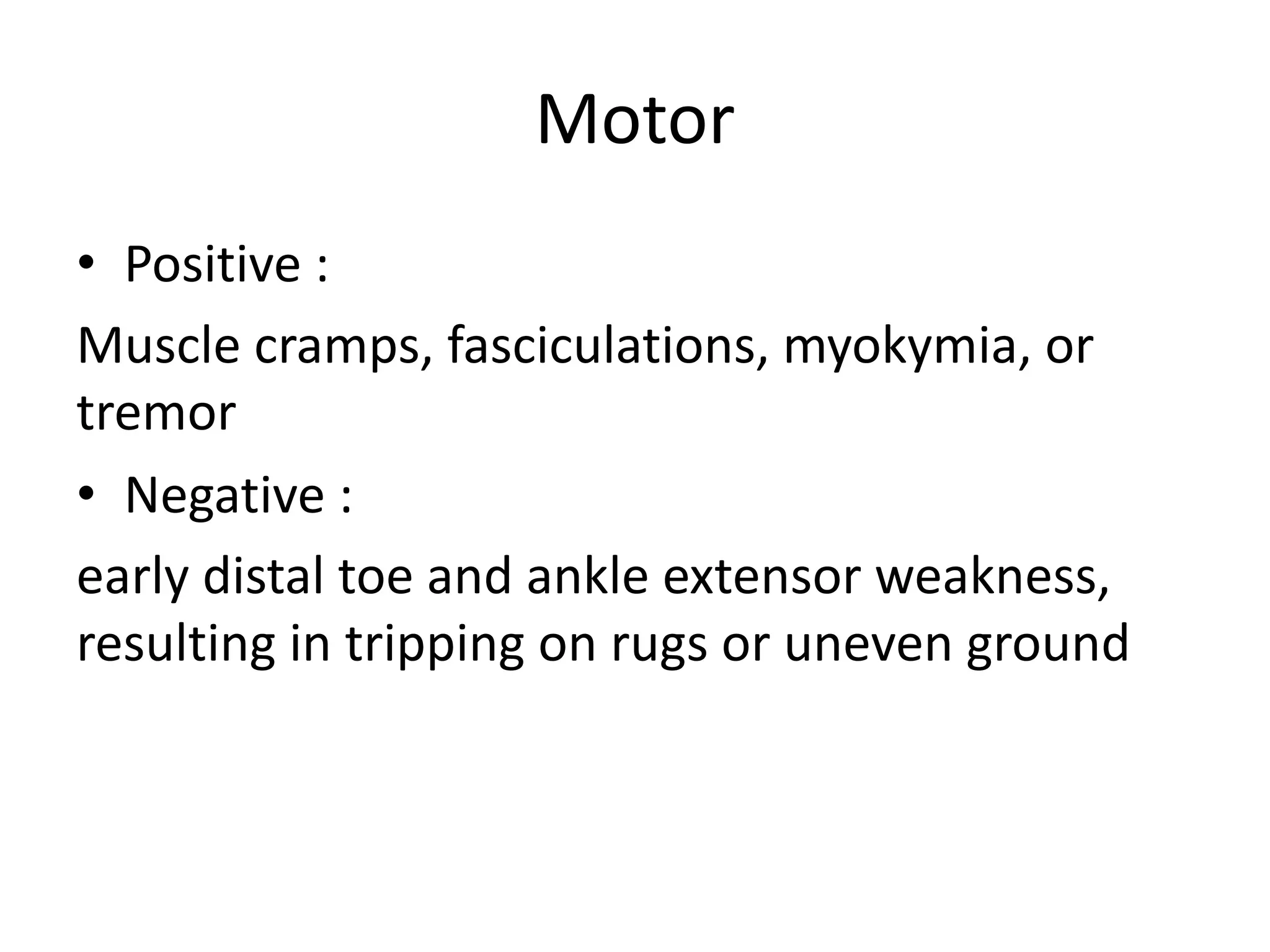
Motor
• Positive :
Muscle cramps, fasciculations, myokymia, or
tremor
• Negative :
early distal toe and ankle extensor weakness,
resulting in tripping on rugs or uneven ground
Autonomic neuropathy
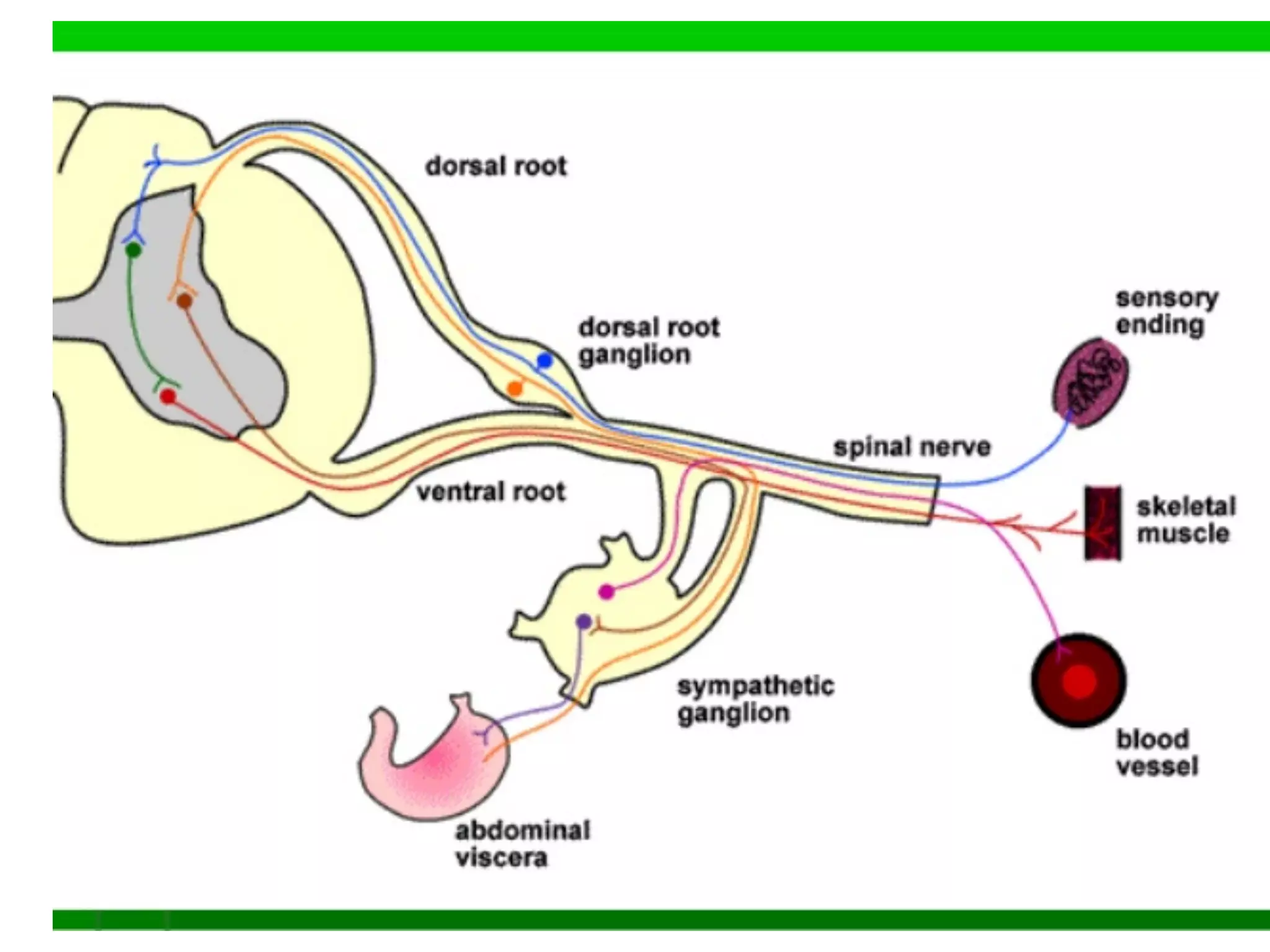
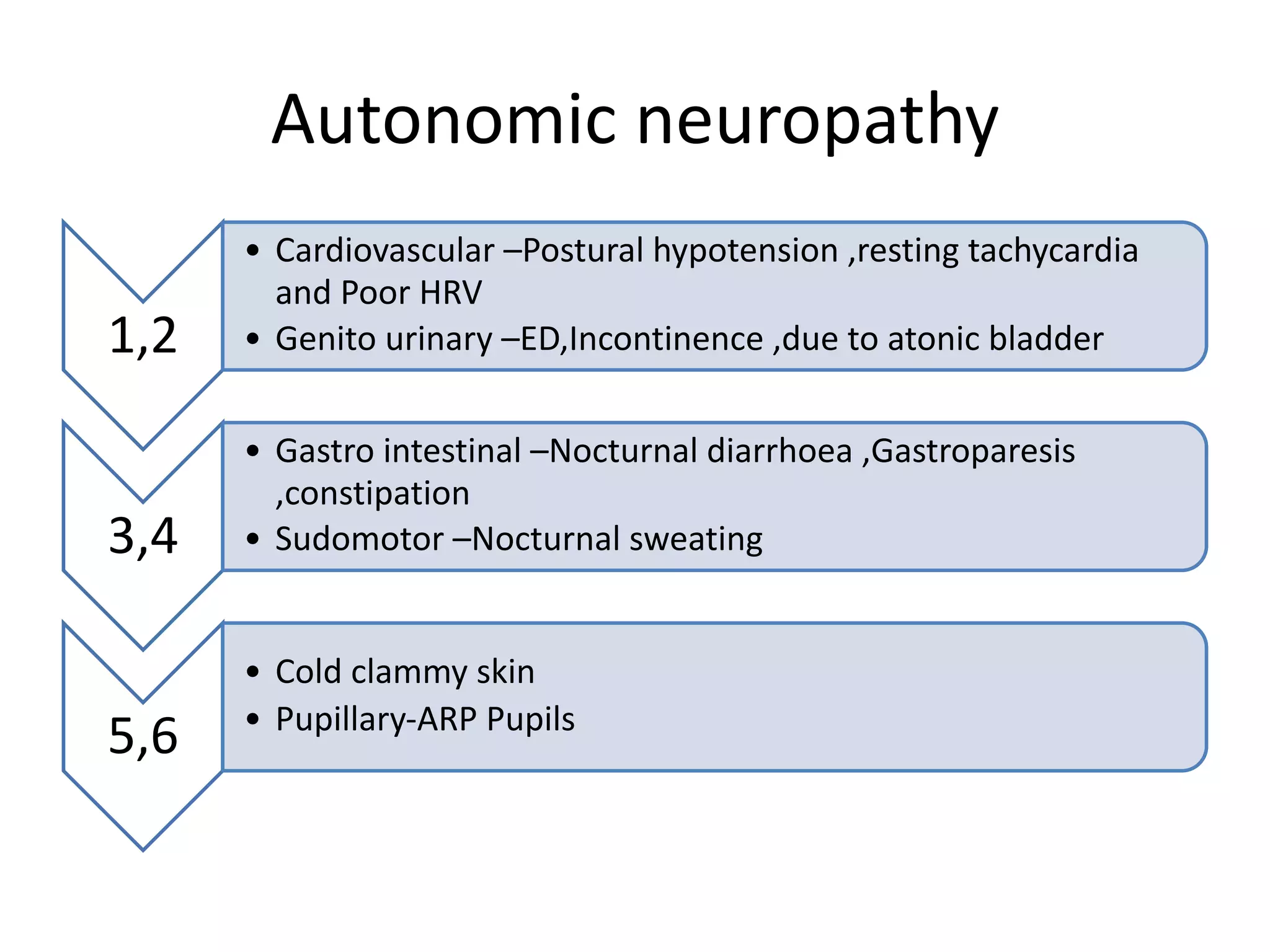
1,2
• Cardiovascular –Postural hypotension ,resting tachycardia
and Poor HRV
• Genito urinary –ED,Incontinence ,due to atonic bladder
3,4
• Gastro intestinal –Nocturnal diarrhoea ,Gastroparesis
,constipation
• Sudomotor –Nocturnal sweating
5,6
• Cold clammy skin
• Pupillary-ARP Pupils
Mono Neuropathy
• Focal involvement of a single nerve and
implies a local process:
• Direct trauma
• Compression or
• Entrapment
• Vascular lesions
• Neoplastic compression
• Infiltration
Mononeuropathy multiplex
• Simultaneous /sequential damage to multiple
noncontiguous nerves.
• Hansen's disease (leprosy)
• Ischemia caused by vasculitis
• Microangiopathy in diabetes mellitus
• Inflitration : Infectious, granulomatous,
leukemic, or neoplastic infiltration and
sarcoidosis.
Causes of axonal Neuropathy-
polyneuropathy• Metabolic: DM, CRF
• Drugs & Toxins: Alcohol, Vincristine, Phenytoin, TOCP,
Organophosporus, Statins
• Infections: Leprosy, HIV, Borreliosis
• Connective tissue/Vasculitic: Sjogern’s syndrome;
SLE; MCTD, RA
• Paraneoplastic: CA lung,ovary
• Inherited: CMT 2; CMT-X
• Vitamin deficiency: B12, Folate; Cobalamin, Vit E
• Endocrine: Hypothyroidism
• Paraproteinemia; Waldenstrom’s macroglobulinemia;
MGUS; POEMS syndrome
Neuropathies with Facial Nerve
Involvement
• Guillain-Barré syndrome
• Chronic inflammatory demyelinating
Polyneuropathy
• Lyme disease
• Sarcoidosis
• HIV
Autonomic dysfunction
• Diabetes
• GBS
• Amyloid sensorimotorpolyneuropathy
• Sjogren’s related neuropathies,
• Paraneoplastic
• HSAN
Investigations
• FPG, Hemoglobin A1c
• Complete blood count and
haeatology
• RFT/LFT
• Vitamin B-12 and folate levels
• Thyroid function tests
• Erythrocyte sedimentation rate
• C-reactive protein
• ANA,Heavy metal screen
• Serum electrophoresis
• Anti-SSA and SSB antibodies
• Rheumatoid factor
• Paraneoplastic antibodies
• Genetic screens
• Electro physiology
• Nerve Biopsy
• Autoantibodies
Electrodiagnostic testing-needed
1.assists in characterizing the neuropathic process as
sensory, motor or sensorimotor (What?).
2, Electrodiagnostic testing helps characterize a
neuropathy as primarily demyelinating, primarily axonal,
or mixed demyelinating and axonal(pathology )
3.help localize the neuropathic process (the “where”-
symmetrical, asymmetrical, proximal, distal, localization
to roots, plexus, nerve, radiculoplexopathy,
radiculoneuropathy)
4.help gauge the severity of neuropathy; help assess
treatment response
Axonal degeneration
• Most common pathological reaction of peripheral
nerve
• Caused by :Systemic metabolic disorders, toxin
exposure, and some inherited neuropathies
• Also called dying-back or length-dependent
neuropathy:
• The myelin sheath breaks down along with the
axon in a process that starts at the most distal
part of the nerve fiber and progresses toward the
nerve cell body.
Demyelinating neuropathies
• Relative sparing of temperature and pinprick sensation +
• 1.Early generalized loss of reflexes (large fiber,
predominantly motor neuropathy; immune mediated;
acute-subacute)
• 2.Disproportionately mild muscle atrophy but DTRs affected
• 3.Presence of proximal and distal weakness (P>D/P=D;
universal DTRs involvement)
• 4.Neuropathic tremor (Anti MAG-IgM paraproteinemic
neuropathy- CIDP like)
• 5. Palpably enlarged nerves
• 6. CSF Albumino cytologic dissociation
Sensitivity and specificity of clinical
tests and biothesiometer
• Tuning fork: 87-99% (sensitivity); 1-19% (specificity)
• 10 G Coarse monofilament: 16% (sensitivity); 64%
(specificity)
• 1 G Fine monofilament: 73% (sensitivity); 87%
(specificity)
• Biothesiometer: 61-80% (sensitivity); 64-76%
(specificity)
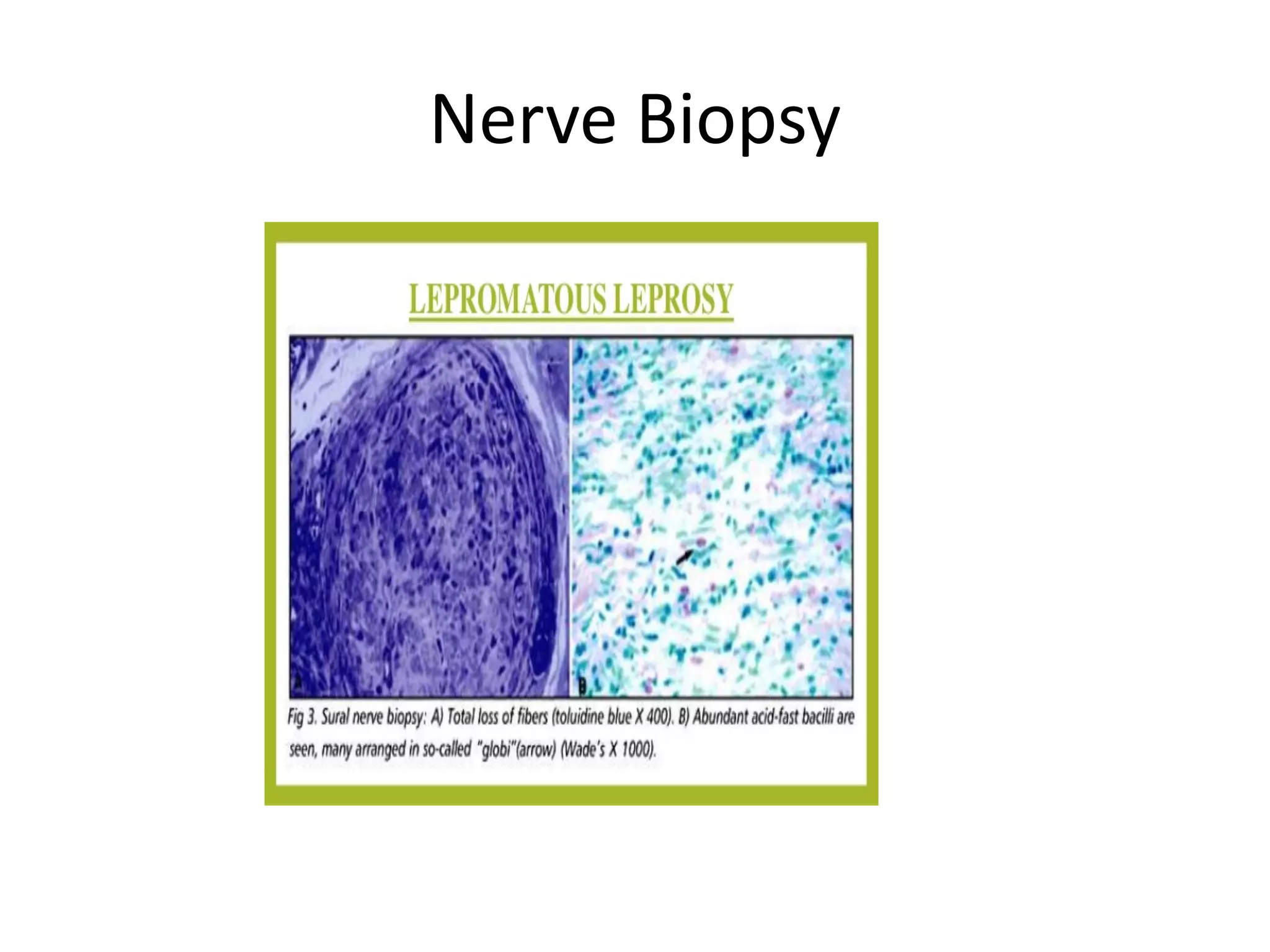
Nerve Biopsy
• In vasculitis, amyloid neuropathy, leprosy, CIDP,
Inherited disorders of myelin, and rare axonopathies
• The Sural nerve is selected most commonly
• The superficial peroneal nerve – alternative;
:advantage of allowing simultaneous biopsy of the
peroneus brevis muscle through the same incision.
• This combined nerve and muscle biopsy procedure
increases the yield of identifying suspected vasculitis
Neuropathies + Serum Autoantibodies
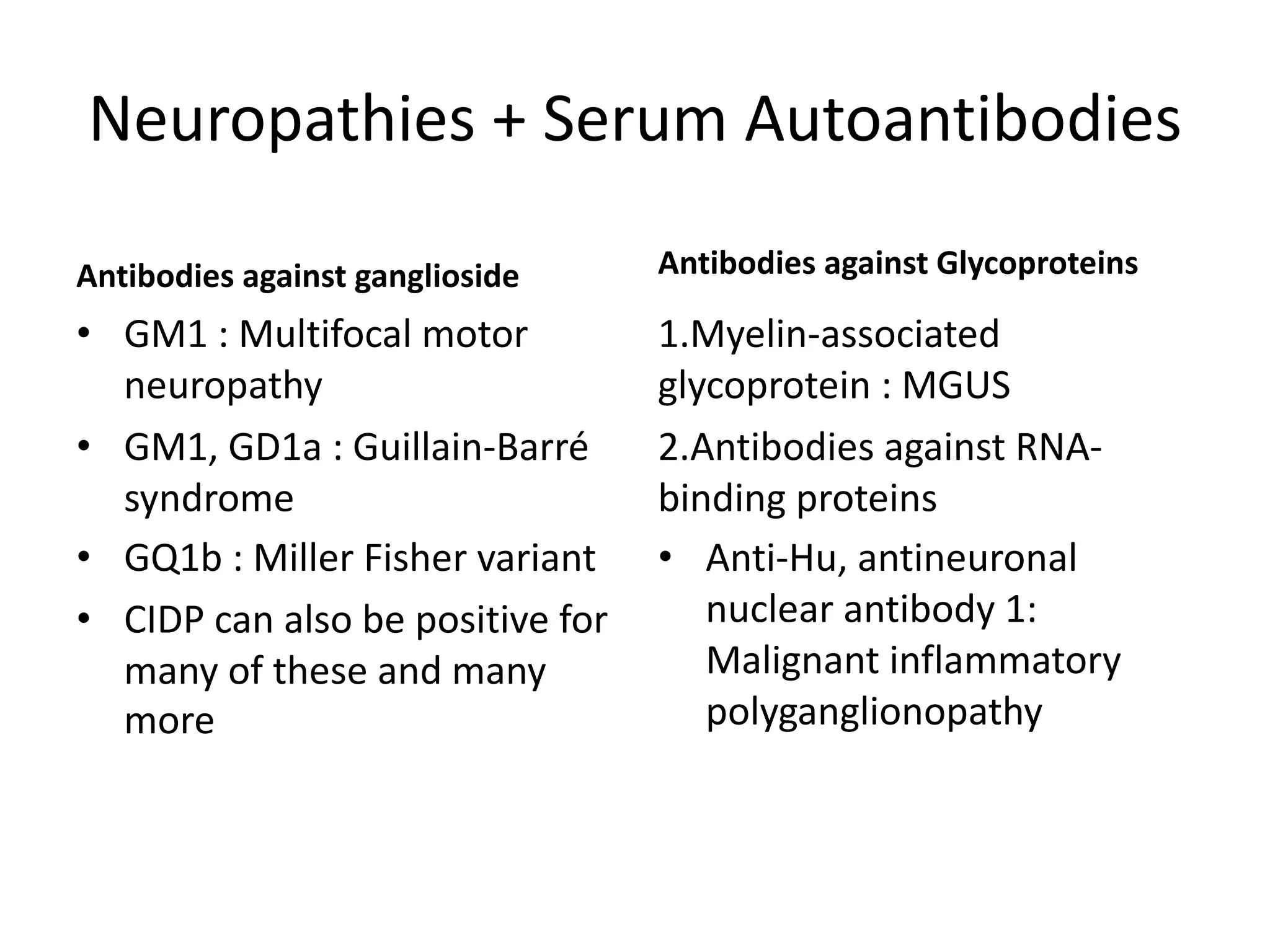
Antibodies against ganglioside
• GM1 : Multifocal motor
neuropathy
• GM1, GD1a : Guillain-Barré
syndrome
• GQ1b : Miller Fisher variant
• CIDP can also be positive for
many of these and many
more
Antibodies against Glycoproteins
1.Myelin-associated
glycoprotein : MGUS
2.Antibodies against RNA-
binding proteins
• Anti-Hu, antineuronal
nuclear antibody 1:
Malignant inflammatory
polyganglionopathy
Nerve Biopsy
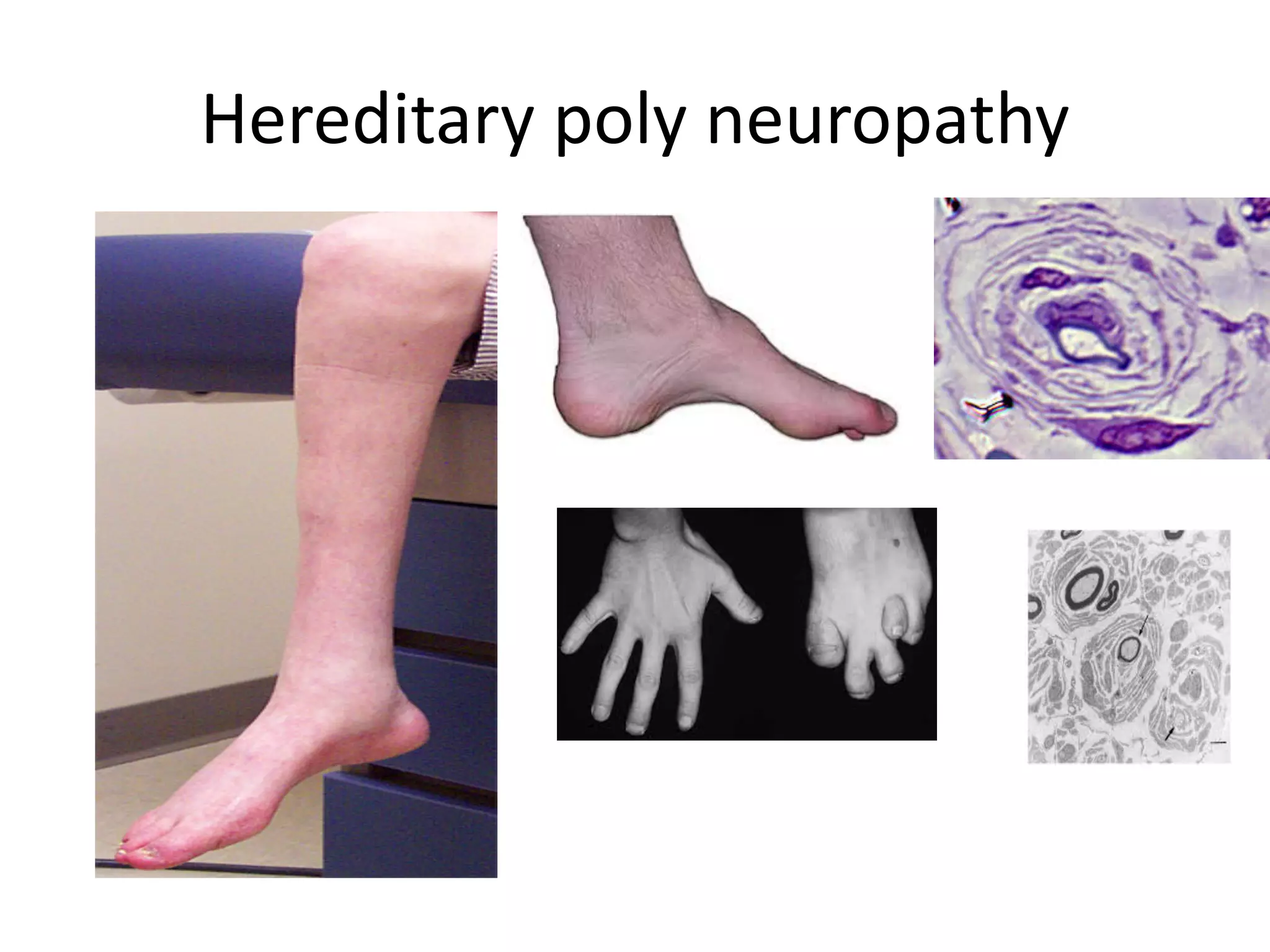
Hereditary poly neuropathy
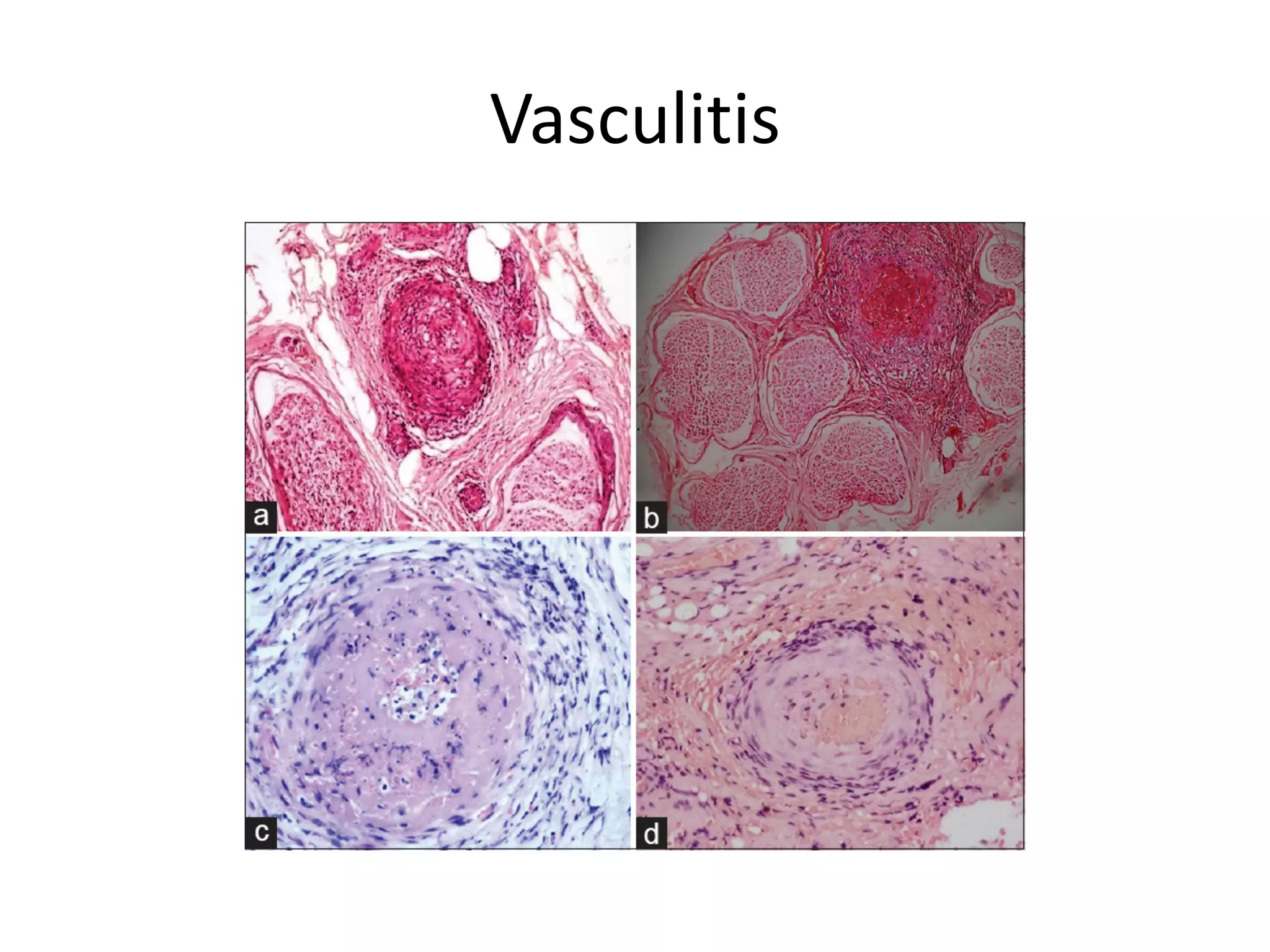
Vasculitis
Diabetic neuropathy defintion
• the presence of symptoms and/or signs of
peripheral nerve dysfunction in people with
diabetes after exclusion of other causes."
Staging of diabeteic neuropathy
• NO - No neuropathy
• N1a - Signs but no symptoms of neuropathy
• N2a - Symptomatic mild diabetic polyneuropathy; sensory,
motor, or autonomic symptoms; patient is able to heel-walk
• N2b - Severe symptomatic diabetic polyneuropathy; patient
is unable to heel-walk)
• N3 - Disabling diabetic polyneuropathy
Complications of neuropathy
• Neuropathies cause pain and balance issues
severely decrease patients' quality of life
(QOL).
• the secondary complications (eg, falls, foot
ulcers, cardiac arrhythmias, and ileus) are
even more serious and can lead to fractures,
amputations, and even death in patients with
DM
Nerve conduction studies
• Conventional NCV testing includes
measurement of the speed of both motor and
sensory conduction. The amplitude of the
distal response is also measured. The proximal
component of conduction can be investigated
with H-reflex (S1 root) or F-wave (motor
pathways only) response.
EMG Indicated in
• distal muscles in cases of generalized
neuropathy and entrapment
• in the proximal limb muscles in amyotrophy
• limb muscles in suspected radiculopathy.
NCV-Distal sensorimotor neuropathy
• . have reduced or absent sensory nerve action
potentials, especially in the legs.
• With progression of neuropathy, compound
motor action potential amplitudes may also
be reduced
• Abnormalities may be observed in the hands.
NCV-Distal symmetrical neuropathy
• Conduction velocities are normal range or
• Only mildly slowed.
• If conduction velocities are less than 70% of
the lower limit of normal, or if conduction
block ,suspect demyelination and CIDP.
• Focal slowing of conduction velocity at
common sites of entrapment may diagnose
CTS, tarsal Tunnel S etc
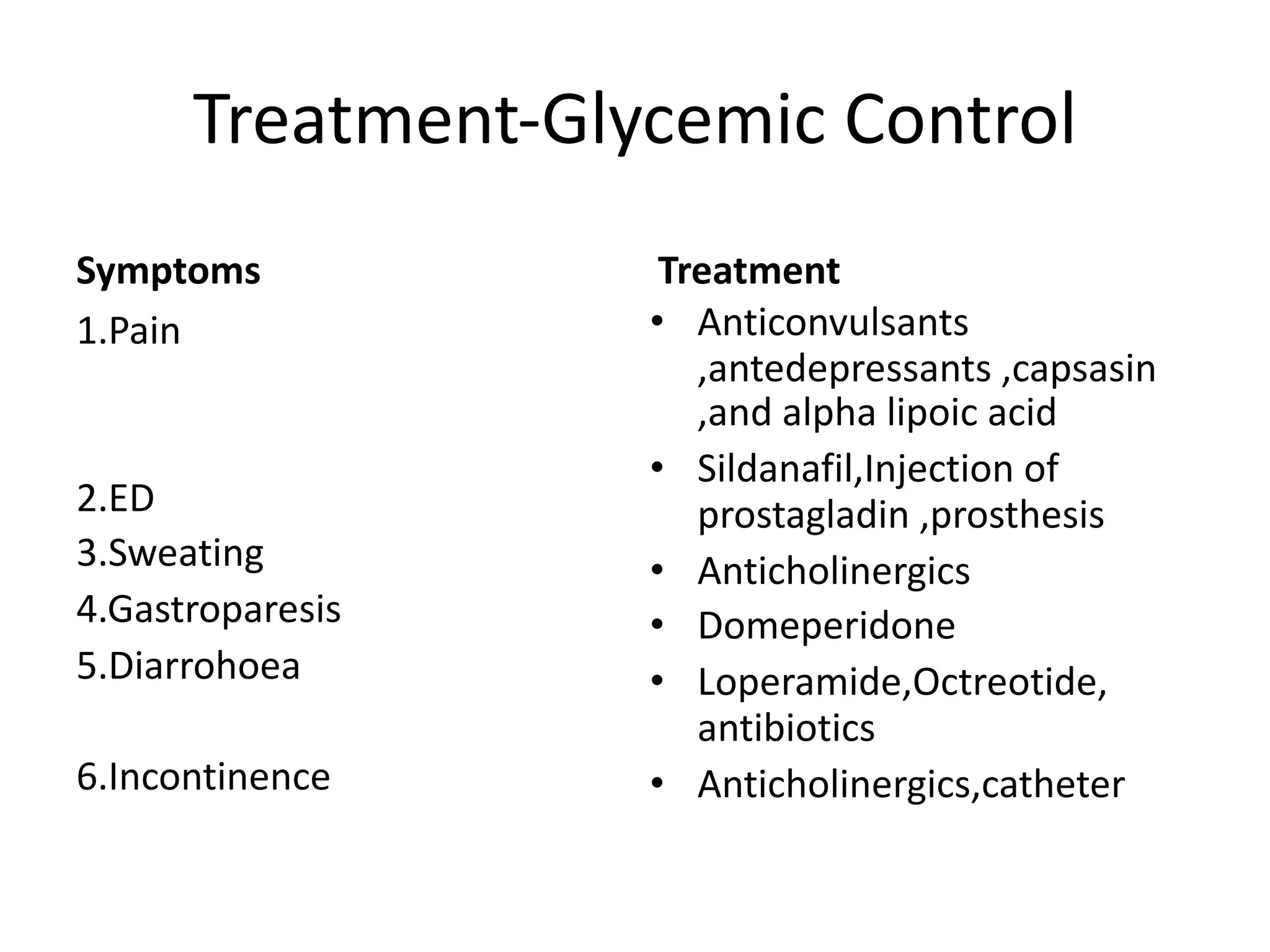
Treatment-Glycemic Control
Symptoms
1.Pain
2.ED
3.Sweating
4.Gastroparesis
5.Diarrohoea
6.Incontinence
Treatment
• Anticonvulsants
,antedepressants ,capsasin
,and alpha lipoic acid
• Sildanafil,Injection of
prostagladin ,prosthesis
• Anticholinergics
• Domeperidone
• Loperamide,Octreotide,
antibiotics
• Anticholinergics,catheter
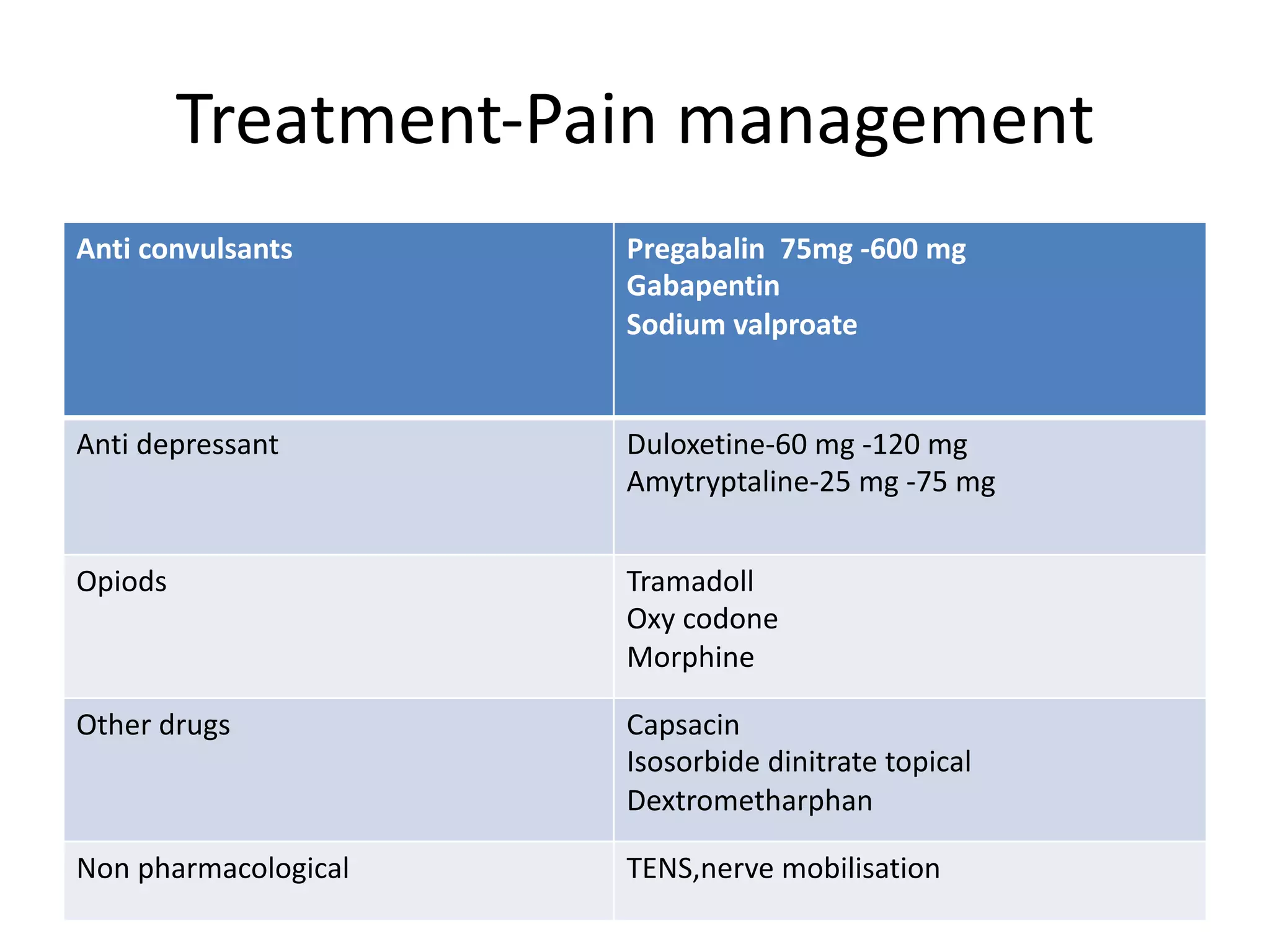
Treatment-Pain management
Anti convulsants Pregabalin 75mg -600 mg
Gabapentin
Sodium valproate
Anti depressant Duloxetine-60 mg -120 mg
Amytryptaline-25 mg -75 mg
Opiods Tramadoll
Oxy codone
Morphine
Other drugs Capsacin
Isosorbide dinitrate topical
Dextrometharphan
Non pharmacological TENS,nerve mobilisation
Treatment
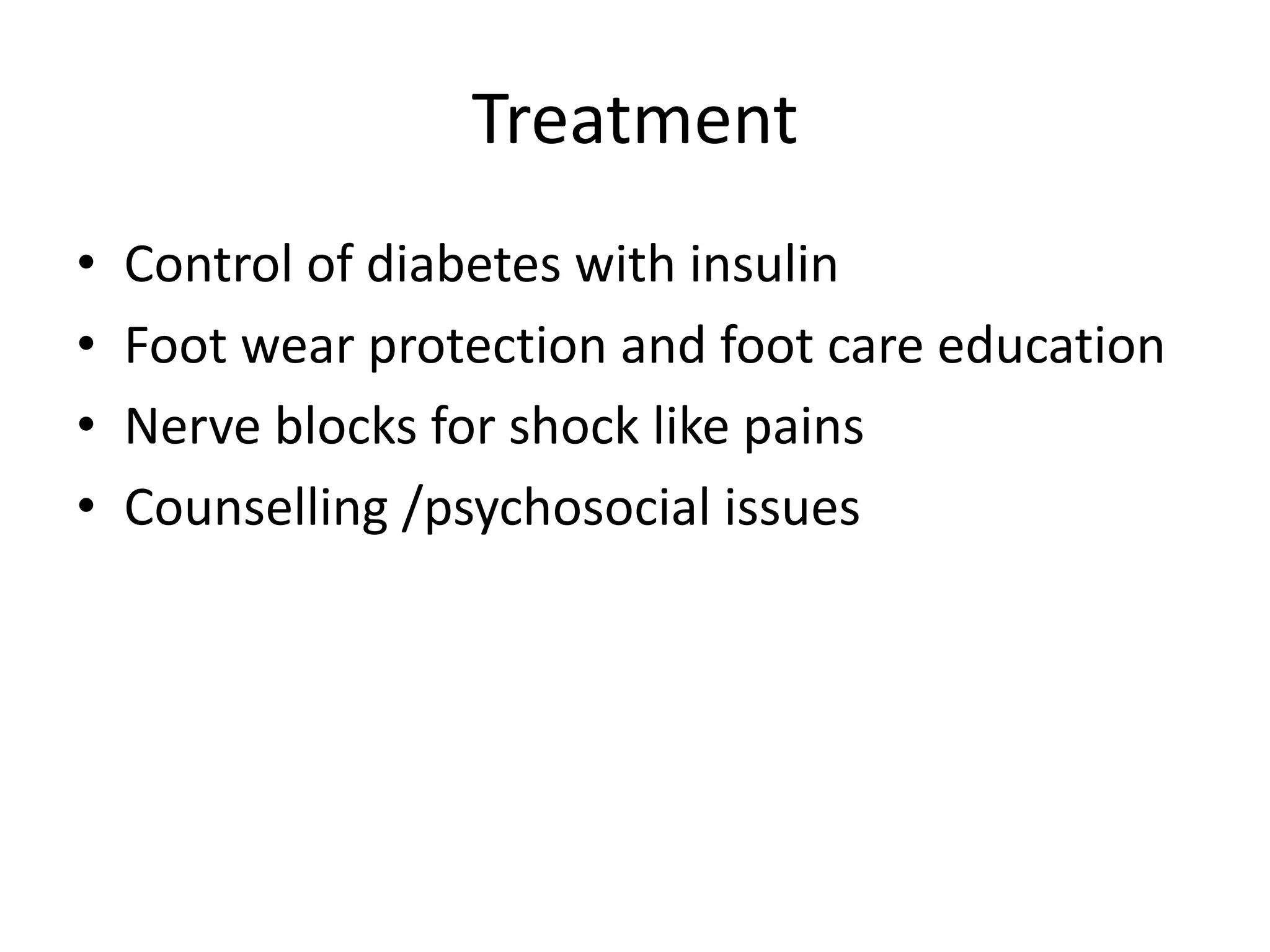
• Control of diabetes with insulin
• Foot wear protection and foot care education
• Nerve blocks for shock like pains
• Counselling /psychosocial issues
Typical case
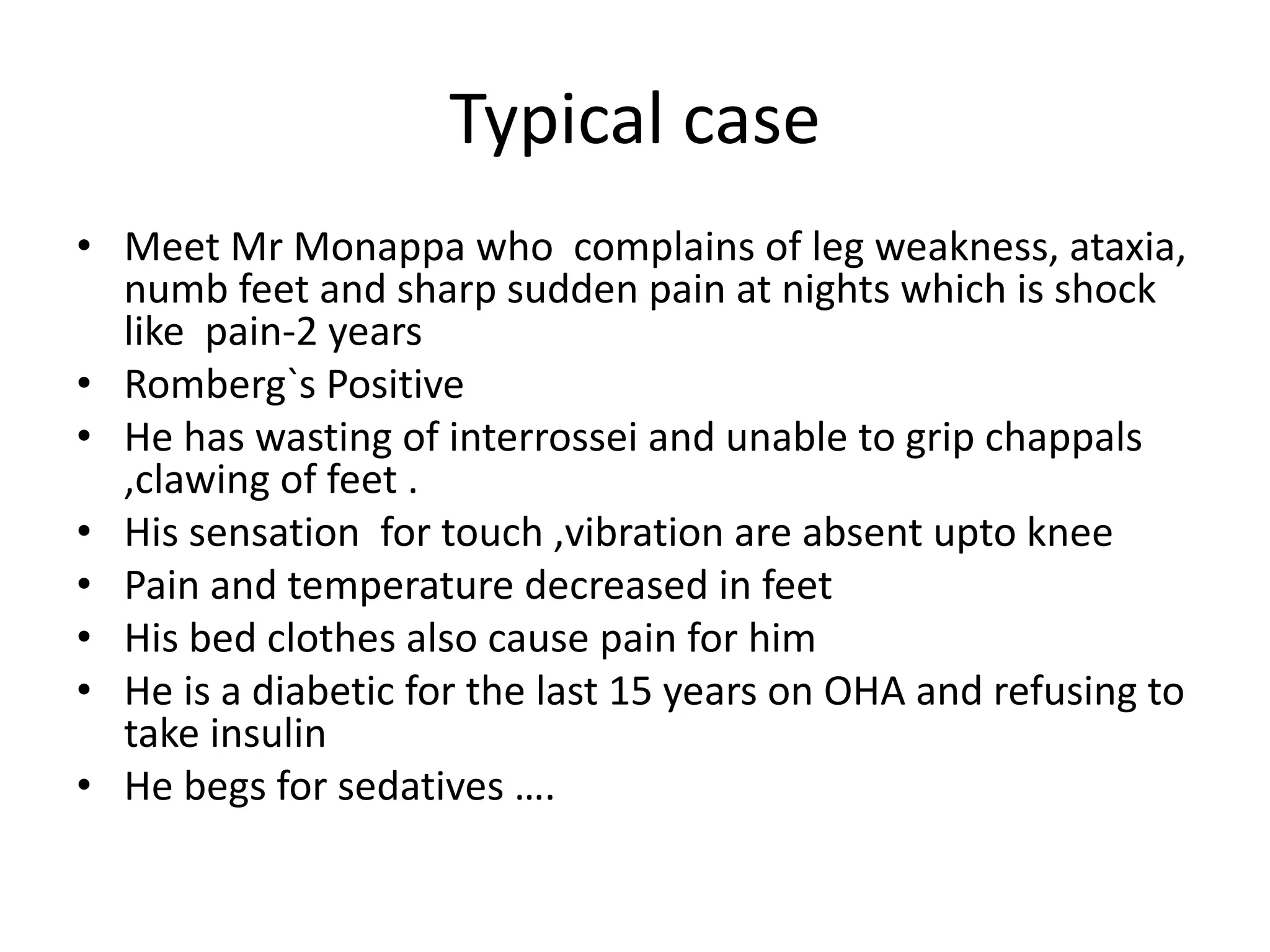
• Meet Mr Monappa who complains of leg weakness, ataxia,
numb feet and sharp sudden pain at nights which is shock
like pain-2 years
• Romberg`s Positive
• He has wasting of interrossei and unable to grip chappals
,clawing of feet .
• His sensation for touch ,vibration are absent upto knee
• Pain and temperature decreased in feet
• His bed clothes also cause pain for him
• He is a diabetic for the last 15 years on OHA and refusing to
take insulin
• He begs for sedatives ….
Final diagnosis
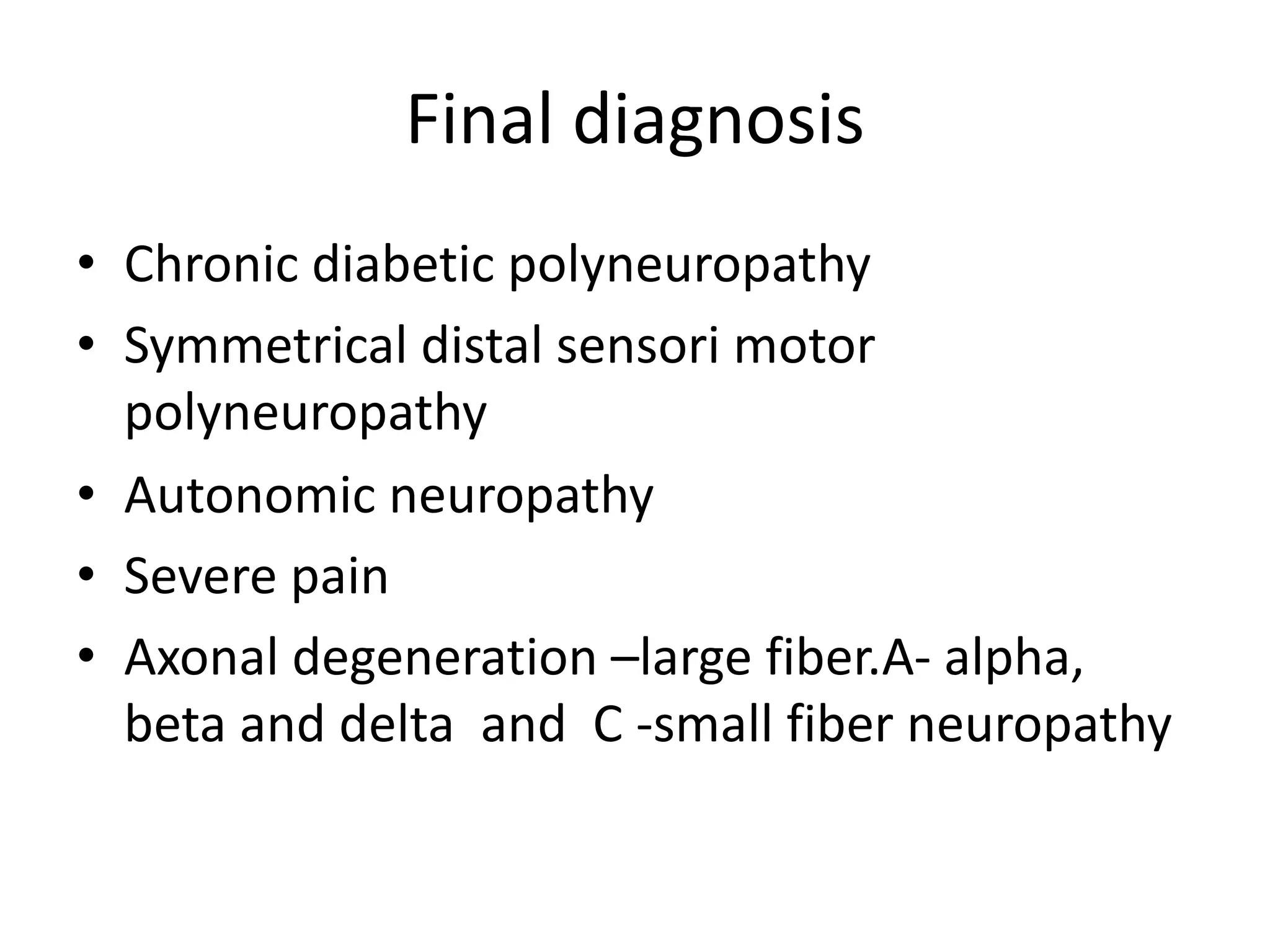
• Chronic diabetic polyneuropathy
• Symmetrical distal sensori motor
polyneuropathy
• Autonomic neuropathy
• Severe pain
• Axonal degeneration –large fiber.A- alpha,
beta and delta and C -small fiber neuropathy
Home work
• Observe a video of sural nerve biopsy
• Read all about CIDP and Hereditary poly
neuropathy types and clinical features
References
Davidson`s Principles and practice of medicine
23rd edition
Harrison`s text book of Medicine
UptoDate
E medicine –Medscape
Slide share –pictures
Thank You

Approach to Peripheral neuropathy

  • 1.
    Peripheral neuropathy Dr PrabhaAdhikari Professor and HOD Geriatric Medicine Yenepoya Medical College Yenepoya deemed to be university
  • 2.
    Typical case • MeetMr Monappa who complains of leg weakness, ataxia, numb feet and sharp sudden pain at nights which is shock like pain since 2 years • Romberg`s Positive • He has wasting of interrossei and unable to grip chappals ,clawing of feet . • His sensation for touch ,vibration are absent upto knee • Pain and temperature decreased in feet • His bed clothes also cause pain for him • He is a diabetic for the last 15 years on OHA and refusing to take insulin • He begs for sedatives ………………….
  • 3.
    Questions • What isthe diagnosis ? • What type of neuropathy is it ? • What types of nerve fibers are involved ? • What are the 5 questions you need to ask to make a complete diagnosis of neuropathy and its type?
  • 4.
    Lesson plan • Openclass with a case • Over view on Anatomy and Physiology of peripheral nerve to answer questions • Defnition and 5 question approach • Aetiology , • Clinical features ,importance of peripheral nerve thickening Observe sural nerve biopsy • Autonomic neuropathy • Classify severity of diabetic neuropathy • Investigations • Value of NCV and nerve biopsy and findings
  • 5.
  • 8.
    Peripheral neuropathy • Definition–Diseases of the peripheral nerve • 5 Question approach 1.Which are the fibers? 2.Where in the body –distribution 3.When did it start ?temporal 4.Any other features of primary disease ? 5.How did it happen –Pathology .
  • 10.
    1-Which ?-Symmetrical neuropathies •Sensory-large fiber /small fiber A-alpha-proprioception-large ,A beta –touch ,A delta –sharp pain and C-slow pain-small • Symmetrical sensory motor • Symmetrical demyelinating polyneuropathy,predominantly motor –CIDP to be excluded
  • 11.
    Question 1 -Asymmetrical •Entrapment neuropathies- Carpal tunnel syndrome ,tarsal tunnel syndrome,meralgia paraesthetica • Mononeuropathy due to vascular involvemet/compression • Diabetic amyotrophy due to Femoral Neuropathy –severe pain, asymmetrical quadriceps weakness, absent knee jerk • Thoracic or cervial radiculo neuropathy • Lumbosacral radiculoplexopathy
  • 12.
    Question 2 :Wherein the body 1 • Distal only length lower limbs symmetrical –axonal 2 • Phenotye CIDP- proximal and distal motor with involvement of upper limbs • Sensory only distal lower limb minimal 3 • Multifocal acquired demyelinating sensory motor neuropathy involving multiple asymmetrical motor and sensory areas distally
  • 15.
    Multi focal acquireddemyelinating sensory and motor neuropathy
  • 16.
    When did itstart ? • Acute -4 weeks • Subacute -4 weeks 8 weeks • Chronic -8 weeks months or more • Relapsing and recurring –Vasculitis ,hereditaray neuropathy with pressure palsy Toxin exposure
  • 17.
    What other -Clinicalfeatures of Primary disease • Diabetes related complications • Vasculitis –rashes ,kidney involevment ,arthritis ,CNS, cardiac • Refsum disease –family history ,deafness, abnormal toes • Inverted champagne bottle apearance of legs, with pes cavus –CMT disease • Sarcoidosis –features • Leprosy –anaesthetic skin patches ,thickened nerves
  • 18.
    D/D for Peripheralneuropathy and thickened nerves • Leprosy • CIDP • Neurofibromatosis • Amyloidosis • Sarcoidosis • Refsum disease • Charcoat Marie Tooth disease
  • 19.
    What is thepathology -Mechanisms of Damage 1.Myelin degeneration :GBS,Post Diphtheria Hereditary sensory motor neuropathy 2.Axonal Degeneration:DM,GB,Toxic neuropathy 3.Wallerian Degeneration :trauma 4.Compression-Entrapment –Focal demyelination 5.Infarction:vascultis ,diabetes microangiopathy 6.Infiltration:Amyloidosis,sarcoidosis,Leprosy
  • 20.
    Find - Broadaetiolgical classification- genetic,drugs,toxins,vitamin Deficiencies, Infections,Inflammatory ,metabolic ,infiltrative diseases critical illness • Diabetes –Most common • Metabolic –Uremia.Hypoxia,Thyroid dysfucntion • Toxic-Alcohol,Heavy metals leead, arsenic ,organophosphate • Nutritional-B1,B12,,Folic acid def B6 excess , • Vasculitis-Churg Strauss,PAN • Malignancy-paraproteinemia ,paraneoplastic • Drugs-ART,INH,amiodarone, • Hereditary-Charcot Marie Tooth,Refsum disease • Infections –Leprosy,HIV • Connective tissue disease-SLE,Rheumatoid • Infiltrative –sarcoid ,Amyloid
  • 21.
    Diabetic neuropathy types 1.Symmetrical a.Sensoryneuropathy b.Sensory motor neuropathy c.Proximal symmetric predominant motor demyelinating neuropathy –GB type or CIDP type 2..Asymmetrical a.Amyotrophy –Motor neuropathy-Femoral Neuropathy b.Entrapment Neuropathy –carpal and tarsal tunnel syndrome ,meralgia paraesthetica c.Cranial neuropathy d.Plexopathy /radiculopathy 3.Autonomic neuropathy
  • 22.
    Diabetic Neuropathy -Thomson systemclassification (Modified ) 1.Hyperglycemic neuropathy 2.Generalized symmetrical polyneuropathies 3.Sensory neuropathy 4.Sensorimotor neuropathy 5.Autonomic neuropathy 6.Focal and multifocal neuropathies-cranial and mononeuritis /mononeuritis multiplex 7.Superimposed chronic inflammatory demyelinating polyneuropathy
  • 23.
    Clinical features • Burningor tingling numbness,lancinating pain • Loss of vibration,touch ,pain,temperature • Loss of ankle jerk • Weakness of Interossei • Claw feet • Collapse of arches • Callosity ,ulcers • Charcot`s joints • Ataxia,Romberg`spositive
  • 24.
    Painful sensory symptoms •prickling, searing, burning, and tight band like sensations. • Paresthesia: Unpleasant sensations arising spontaneously without apparent stimulus • Allodynia: perception of nonpainful stimuli as painful. • Hyperalgesia: Painful hypersensitivity to noxious stimuli • Neuropathic pain: cardinal feature of many neuropathies.
  • 25.
    Motor • Positive : Musclecramps, fasciculations, myokymia, or tremor • Negative : early distal toe and ankle extensor weakness, resulting in tripping on rugs or uneven ground
  • 26.
    Autonomic neuropathy 1,2 • Cardiovascular–Postural hypotension ,resting tachycardia and Poor HRV • Genito urinary –ED,Incontinence ,due to atonic bladder 3,4 • Gastro intestinal –Nocturnal diarrhoea ,Gastroparesis ,constipation • Sudomotor –Nocturnal sweating 5,6 • Cold clammy skin • Pupillary-ARP Pupils
  • 27.
    Mono Neuropathy • Focalinvolvement of a single nerve and implies a local process: • Direct trauma • Compression or • Entrapment • Vascular lesions • Neoplastic compression • Infiltration
  • 28.
    Mononeuropathy multiplex • Simultaneous/sequential damage to multiple noncontiguous nerves. • Hansen's disease (leprosy) • Ischemia caused by vasculitis • Microangiopathy in diabetes mellitus • Inflitration : Infectious, granulomatous, leukemic, or neoplastic infiltration and sarcoidosis.
  • 29.
    Causes of axonalNeuropathy- polyneuropathy• Metabolic: DM, CRF • Drugs & Toxins: Alcohol, Vincristine, Phenytoin, TOCP, Organophosporus, Statins • Infections: Leprosy, HIV, Borreliosis • Connective tissue/Vasculitic: Sjogern’s syndrome; SLE; MCTD, RA • Paraneoplastic: CA lung,ovary • Inherited: CMT 2; CMT-X • Vitamin deficiency: B12, Folate; Cobalamin, Vit E • Endocrine: Hypothyroidism • Paraproteinemia; Waldenstrom’s macroglobulinemia; MGUS; POEMS syndrome
  • 30.
    Neuropathies with FacialNerve Involvement • Guillain-Barré syndrome • Chronic inflammatory demyelinating Polyneuropathy • Lyme disease • Sarcoidosis • HIV
  • 31.
    Autonomic dysfunction • Diabetes •GBS • Amyloid sensorimotorpolyneuropathy • Sjogren’s related neuropathies, • Paraneoplastic • HSAN
  • 32.
    Investigations • FPG, HemoglobinA1c • Complete blood count and haeatology • RFT/LFT • Vitamin B-12 and folate levels • Thyroid function tests • Erythrocyte sedimentation rate • C-reactive protein • ANA,Heavy metal screen • Serum electrophoresis • Anti-SSA and SSB antibodies • Rheumatoid factor • Paraneoplastic antibodies • Genetic screens • Electro physiology • Nerve Biopsy • Autoantibodies
  • 33.
    Electrodiagnostic testing-needed 1.assists incharacterizing the neuropathic process as sensory, motor or sensorimotor (What?). 2, Electrodiagnostic testing helps characterize a neuropathy as primarily demyelinating, primarily axonal, or mixed demyelinating and axonal(pathology ) 3.help localize the neuropathic process (the “where”- symmetrical, asymmetrical, proximal, distal, localization to roots, plexus, nerve, radiculoplexopathy, radiculoneuropathy) 4.help gauge the severity of neuropathy; help assess treatment response
  • 34.
    Axonal degeneration • Mostcommon pathological reaction of peripheral nerve • Caused by :Systemic metabolic disorders, toxin exposure, and some inherited neuropathies • Also called dying-back or length-dependent neuropathy: • The myelin sheath breaks down along with the axon in a process that starts at the most distal part of the nerve fiber and progresses toward the nerve cell body.
  • 35.
    Demyelinating neuropathies • Relativesparing of temperature and pinprick sensation + • 1.Early generalized loss of reflexes (large fiber, predominantly motor neuropathy; immune mediated; acute-subacute) • 2.Disproportionately mild muscle atrophy but DTRs affected • 3.Presence of proximal and distal weakness (P>D/P=D; universal DTRs involvement) • 4.Neuropathic tremor (Anti MAG-IgM paraproteinemic neuropathy- CIDP like) • 5. Palpably enlarged nerves • 6. CSF Albumino cytologic dissociation
  • 36.
    Sensitivity and specificityof clinical tests and biothesiometer • Tuning fork: 87-99% (sensitivity); 1-19% (specificity) • 10 G Coarse monofilament: 16% (sensitivity); 64% (specificity) • 1 G Fine monofilament: 73% (sensitivity); 87% (specificity) • Biothesiometer: 61-80% (sensitivity); 64-76% (specificity)
  • 37.
    Nerve Biopsy • Invasculitis, amyloid neuropathy, leprosy, CIDP, Inherited disorders of myelin, and rare axonopathies • The Sural nerve is selected most commonly • The superficial peroneal nerve – alternative; :advantage of allowing simultaneous biopsy of the peroneus brevis muscle through the same incision. • This combined nerve and muscle biopsy procedure increases the yield of identifying suspected vasculitis
  • 38.
    Neuropathies + SerumAutoantibodies Antibodies against ganglioside • GM1 : Multifocal motor neuropathy • GM1, GD1a : Guillain-Barré syndrome • GQ1b : Miller Fisher variant • CIDP can also be positive for many of these and many more Antibodies against Glycoproteins 1.Myelin-associated glycoprotein : MGUS 2.Antibodies against RNA- binding proteins • Anti-Hu, antineuronal nuclear antibody 1: Malignant inflammatory polyganglionopathy
  • 39.
  • 40.
  • 41.
  • 42.
    Diabetic neuropathy defintion •the presence of symptoms and/or signs of peripheral nerve dysfunction in people with diabetes after exclusion of other causes."
  • 43.
    Staging of diabeteicneuropathy • NO - No neuropathy • N1a - Signs but no symptoms of neuropathy • N2a - Symptomatic mild diabetic polyneuropathy; sensory, motor, or autonomic symptoms; patient is able to heel-walk • N2b - Severe symptomatic diabetic polyneuropathy; patient is unable to heel-walk) • N3 - Disabling diabetic polyneuropathy
  • 44.
    Complications of neuropathy •Neuropathies cause pain and balance issues severely decrease patients' quality of life (QOL). • the secondary complications (eg, falls, foot ulcers, cardiac arrhythmias, and ileus) are even more serious and can lead to fractures, amputations, and even death in patients with DM
  • 45.
    Nerve conduction studies •Conventional NCV testing includes measurement of the speed of both motor and sensory conduction. The amplitude of the distal response is also measured. The proximal component of conduction can be investigated with H-reflex (S1 root) or F-wave (motor pathways only) response.
  • 46.
    EMG Indicated in •distal muscles in cases of generalized neuropathy and entrapment • in the proximal limb muscles in amyotrophy • limb muscles in suspected radiculopathy.
  • 47.
    NCV-Distal sensorimotor neuropathy •. have reduced or absent sensory nerve action potentials, especially in the legs. • With progression of neuropathy, compound motor action potential amplitudes may also be reduced • Abnormalities may be observed in the hands.
  • 48.
    NCV-Distal symmetrical neuropathy •Conduction velocities are normal range or • Only mildly slowed. • If conduction velocities are less than 70% of the lower limit of normal, or if conduction block ,suspect demyelination and CIDP. • Focal slowing of conduction velocity at common sites of entrapment may diagnose CTS, tarsal Tunnel S etc
  • 49.
    Treatment-Glycemic Control Symptoms 1.Pain 2.ED 3.Sweating 4.Gastroparesis 5.Diarrohoea 6.Incontinence Treatment • Anticonvulsants ,antedepressants,capsasin ,and alpha lipoic acid • Sildanafil,Injection of prostagladin ,prosthesis • Anticholinergics • Domeperidone • Loperamide,Octreotide, antibiotics • Anticholinergics,catheter
  • 50.
    Treatment-Pain management Anti convulsantsPregabalin 75mg -600 mg Gabapentin Sodium valproate Anti depressant Duloxetine-60 mg -120 mg Amytryptaline-25 mg -75 mg Opiods Tramadoll Oxy codone Morphine Other drugs Capsacin Isosorbide dinitrate topical Dextrometharphan Non pharmacological TENS,nerve mobilisation
  • 51.
    Treatment • Control ofdiabetes with insulin • Foot wear protection and foot care education • Nerve blocks for shock like pains • Counselling /psychosocial issues
  • 52.
    Typical case • MeetMr Monappa who complains of leg weakness, ataxia, numb feet and sharp sudden pain at nights which is shock like pain-2 years • Romberg`s Positive • He has wasting of interrossei and unable to grip chappals ,clawing of feet . • His sensation for touch ,vibration are absent upto knee • Pain and temperature decreased in feet • His bed clothes also cause pain for him • He is a diabetic for the last 15 years on OHA and refusing to take insulin • He begs for sedatives ….
  • 53.
    Final diagnosis • Chronicdiabetic polyneuropathy • Symmetrical distal sensori motor polyneuropathy • Autonomic neuropathy • Severe pain • Axonal degeneration –large fiber.A- alpha, beta and delta and C -small fiber neuropathy
  • 54.
    Home work • Observea video of sural nerve biopsy • Read all about CIDP and Hereditary poly neuropathy types and clinical features
  • 55.
    References Davidson`s Principles andpractice of medicine 23rd edition Harrison`s text book of Medicine UptoDate E medicine –Medscape Slide share –pictures
  • 56.