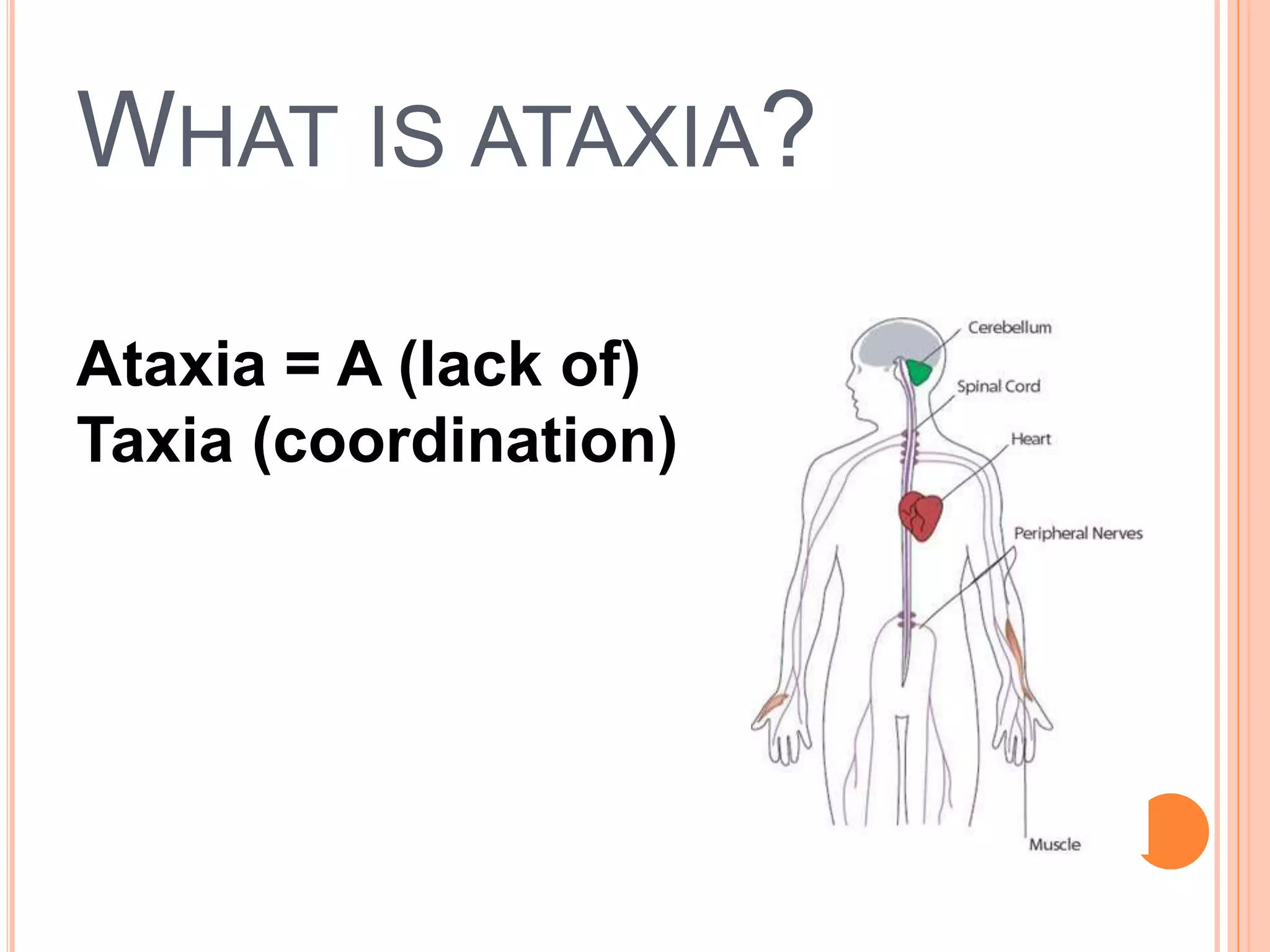
Friedreich's ataxia is a rare, autosomal recessive disorder characterized by progressive damage to the nervous system, leading to gait disturbances, speech issues, and potential heart disease and diabetes, with an incidence of 1 in 50,000. The condition is caused by mutations in the fxn gene, resulting in reduced production of the protein frataxin, essential for mitochondrial function, while the length of a specific GAA trinucleotide repeat in the gene correlates with symptom onset and severity. Diagnosis often involves physical examinations, reflex tests, and genetic testing, with treatment requiring a multidisciplinary approach including medications, physiotherapy, and management of complications.