Margarita Correa MD, FAAPMR Physical Medicine and Rehabilitation   Physical Medicine Institute Clermont, FL www.physmedi.com
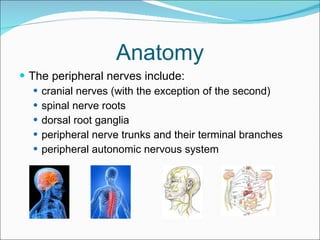
Anatomy The peripheral nerves include: cranial nerves (with the exception of the second) spinal nerve roots dorsal root ganglia peripheral nerve trunks and their terminal branches peripheral autonomic nervous system
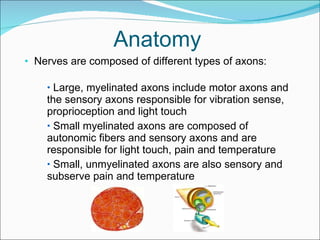
Anatomy Nerves are composed of different types of axons:  Large, myelinated axons include motor axons and the sensory axons responsible for vibration sense, proprioception and light touch  Small myelinated axons are composed of autonomic fibers and sensory axons and are responsible for light touch, pain and temperature Small, unmyelinated axons are also sensory and subserve pain and temperature
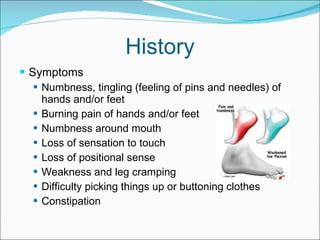
History Symptoms Numbness, tingling (feeling of pins and needles) of hands and/or feet  Burning pain of hands and/or feet Numbness around mouth  Loss of sensation to touch  Loss of positional sense Weakness and leg cramping  Difficulty picking things up or buttoning clothes Constipation
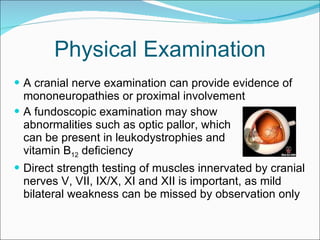
Physical Examination A cranial nerve examination can provide evidence of mononeuropathies or proximal involvement A fundoscopic examination may show  abnormalities such as optic pallor, which  can be present in leukodystrophies and  vitamin B 12  deficiency  Direct strength testing of muscles innervated by cranial nerves V, VII, IX/X, XI and XII is important, as mild bilateral weakness can be missed by observation only
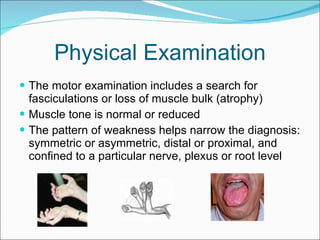
Physical Examination The motor examination includes a search for fasciculations or loss of muscle bulk (atrophy)  Muscle tone is normal or reduced The pattern of weakness helps narrow the diagnosis: symmetric or asymmetric, distal or proximal, and confined to a particular nerve, plexus or root level
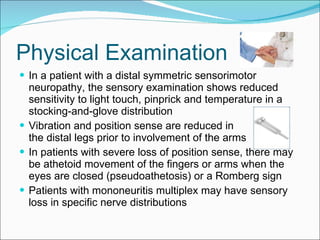
Physical Examination In a patient with a distal symmetric sensorimotor neuropathy, the sensory examination shows reduced sensitivity to light touch, pinprick and temperature in a stocking-and-glove distribution Vibration and position sense are reduced in  the distal legs prior to involvement of the arms  In patients with severe loss of position sense, there may be athetoid movement of the fingers or arms when the eyes are closed (pseudoathetosis) or a Romberg sign Patients with mononeuritis multiplex may have sensory loss in specific nerve distributions
Physical Examination Deep tendon reflexes are reduced or  absent  A bilateral foot drop may result in a  steppage gait in which the patient must  lift the knees very high in order to clear  the toes  Proximal weakness results in an inability  to squat or to rise unassisted from a chair Severe, longstanding neuropathy  can result in trophic changes including  kyphoscoliosis, pes cavus, loss of hair  in affected areas or ulceration
Physical Examination Affected autonomic fibers: orthostatic  hypotension without a compensatory  rise in heart rate  Respiratory rate and vital capacity should be evaluated in Guillain-Barré syndrome to assess for respiratory compromise The presence of lymphadenopathy, hepatomegaly or splenomegaly, and skin lesions may provide evidence of systemic disease Pale transverse bands in the nail beds,  parallel to the lunula (Mees' lines) suggest  arsenic poisoning
Laboratories The most common presentation is distal symmetric sensorimotor neuropathy, i.e. diabetes mellitus Initial evaluation should include: fasting serum glucose (FBS) glycosylated hemoglobin (A1C) blood urea nitrogen (BUN) creatinine (Cr) complete blood cell count (CBC) erythrocyte sedimentation rate (ESR) urinalysis vitamin B 12,  folate TSH levels
Autoantibodies to Peripheral Nerves Antigens Anti-Asialo-GM1 ganglioside neuropathy  Anti-GD1a ganglioside neuropathy Anti-GD1b ganglioside neuropathy Anti-GM1 ganglioside neuropathy Anti-GM2 ganglioside neuropathy Anti-GQ1b ganglioside neuropathy  Anti-MAG/SGPG neuropathy  Anti-sulfatide neuropathy Asialo GM1 antibody GD1a antibody GD1b antibody  GM1 antibody  GM2 antibody  GQ1b antibody MAG/SGPG antibody Sulfatide antibody
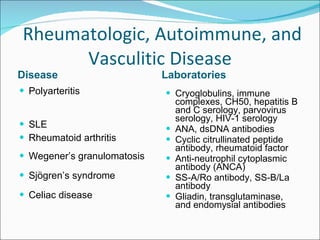
  Rheumatologic, Autoimmune, and Vasculitic Disease Disease Laboratories Polyarteritis SLE Rheumatoid arthritis Wegener’s granulomatosis Sjögren’s syndrome Celiac disease Cryoglobulins, immune complexes, CH50, hepatitis B and C serology, parvovirus serology, HIV-1 serology  ANA, dsDNA antibodies  Cyclic citrullinated peptide antibody, rheumatoid factor  Anti-neutrophil cytoplasmic antibody (ANCA)  SS-A/Ro antibody, SS-B/La antibody  Gliadin, transglutaminase, and endomysial antibodies
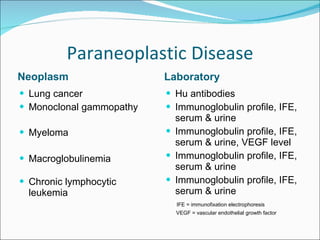
Paraneoplastic Disease Neoplasm Laboratory Lung cancer Monoclonal gammopathy Myeloma Macroglobulinemia Chronic lymphocytic leukemia Hu antibodies Immunoglobulin profile, IFE, serum & urine  Immunoglobulin profile, IFE, serum & urine, VEGF level  Immunoglobulin profile, IFE, serum & urine  Immunoglobulin profile, IFE, serum & urine IFE = immunofixation electrophoresis VEGF = vascular endothelial growth factor
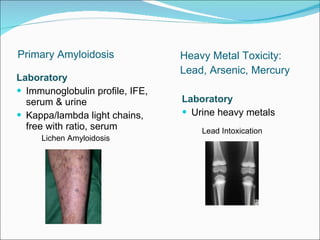
Primary Amyloidosis Heavy Metal Toxicity: Lead, Arsenic, Mercury Laboratory Immunoglobulin profile, IFE, serum & urine  Kappa/lambda light chains, free with ratio, serum Lichen Amyloidosis Laboratory Urine heavy metals Lead Intoxication
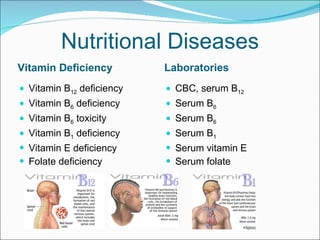
Nutritional Diseases Vitamin Deficiency Laboratories Vitamin B 12  deficiency Vitamin B 6  deficiency Vitamin B 6  toxicity Vitamin B 1  deficiency Vitamin E deficiency Folate deficiency CBC, serum B 12   Serum B 6   Serum B 6   Serum B 1   Serum vitamin E  Serum folate
Infectious and Inflammatory Disease Infectious Agent Laboratories AIDS Lyme disease Herpes zoster Cytomegalovirus Hepatitis B Hepatitis C Parvovirus Sarcoidosis HIV-1 antibody  Borrelia burgdorferi  antibodies (total, IgG, IgM)  Varicella zoster antigen and antibodies (IgG, IgM)  CMV antigen and antibodies (IgG, IgM)  HBs antigen, HBc antibodies (IgG, IgM)  Hepatitis C antibody  Parvovirus antibody  Angiotensin converting enzyme
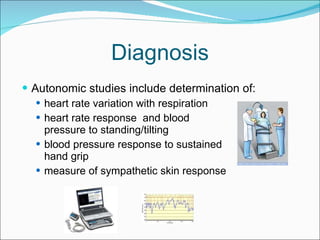
Diagnosis Autonomic studies include determination of: heart rate variation with respiration heart rate response  and blood  pressure to standing/tilting blood pressure response to sustained  hand grip measure of sympathetic skin response
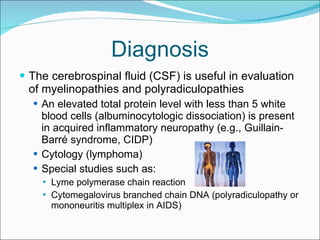
Diagnosis The cerebrospinal fluid (CSF) is useful in evaluation of myelinopathies and polyradiculopathies An elevated total protein level with less than 5 white blood cells (albuminocytologic dissociation) is present in acquired inflammatory neuropathy (e.g., Guillain-Barré syndrome, CIDP) Cytology (lymphoma) Special studies such as: Lyme polymerase chain reaction Cytomegalovirus branched chain DNA (polyradiculopathy or mononeuritis multiplex in AIDS)
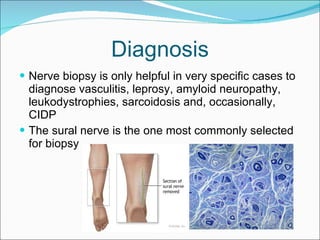
Diagnosis Nerve biopsy is only helpful in very specific cases to diagnose vasculitis, leprosy, amyloid neuropathy, leukodystrophies, sarcoidosis and, occasionally, CIDP The sural nerve is the one most commonly selected for biopsy
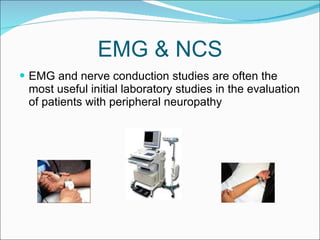
EMG & NCS EMG and nerve conduction studies are often the most useful initial laboratory studies in the evaluation of patients with peripheral neuropathy
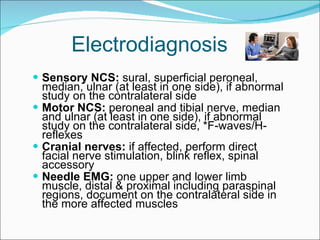
Electrodiagnosis Sensory NCS:  sural, superficial peroneal, median, ulnar (at least in one side), if abnormal study on the contralateral side Motor NCS:  peroneal and tibial nerve, median and ulnar (at least in one side), if abnormal study on the contralateral side, *F-waves/H-reflexes Cranial nerves:  if affected, perform direct facial nerve stimulation, blink reflex, spinal accessory  Needle EMG:  one upper and lower limb muscle, distal & proximal including paraspinal regions, document on the contralateral side in the more affected muscles
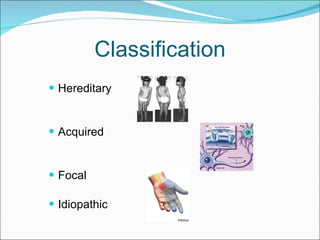
Classification Hereditary Acquired Focal Idiopathic
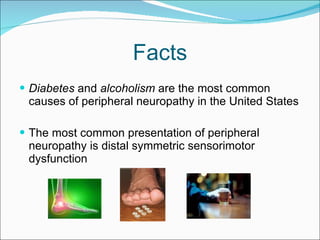
Facts Diabetes  and  alcoholism  are the most common causes of peripheral neuropathy in the United States The most common presentation of peripheral neuropathy is distal symmetric sensorimotor dysfunction
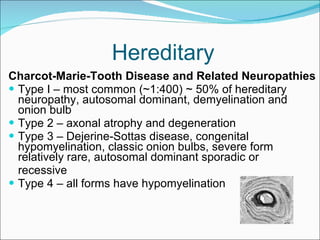
Hereditary Charcot-Marie-Tooth Disease and Related Neuropathies Type I – most common (~1:400) ~ 50% of hereditary neuropathy, autosomal dominant, demyelination and onion bulb  Type 2 – axonal atrophy and degeneration Type 3 – Dejerine-Sottas disease, congenital hypomyelination, classic onion bulbs, severe form  relatively rare, autosomal dominant sporadic or  recessive Type 4 – all forms have hypomyelination
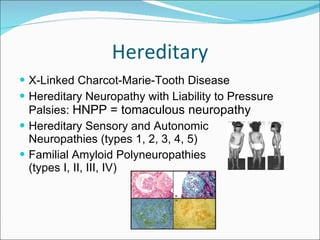
Hereditary X-Linked Charcot-Marie-Tooth Disease Hereditary Neuropathy with Liability to Pressure Palsies:  HNPP = tomaculous neuropathy Hereditary Sensory and Autonomic  Neuropathies (types 1, 2, 3, 4, 5) Familial Amyloid Polyneuropathies  (types I, II, III, IV)
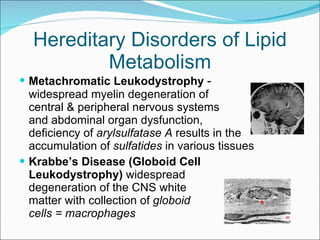
Hereditary Disorders of Lipid Metabolism Metachromatic Leukodystrophy  -  widespread myelin degeneration of  central & peripheral nervous systems  and abdominal organ dysfunction,  deficiency of  arylsulfatase A  results in the accumulation of  sulfatides  in various tissues Krabbe’s Disease (Globoid Cell  Leukodystrophy)  widespread  degeneration of the CNS white  matter with collection of  globoid  cells = macrophages
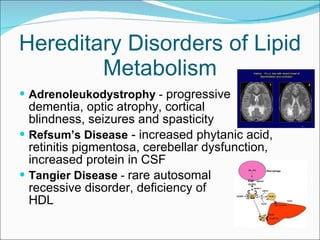
Hereditary Disorders of Lipid Metabolism Adrenoleukodystrophy  -  progressive  dementia, optic atrophy, cortical  blindness, seizures and spasticity Refsum’s Disease   - increased phytanic acid, retinitis pigmentosa, cerebellar dysfunction, increased protein in CSF Tangier Disease  -  rare autosomal  recessive disorder, deficiency of  HDL
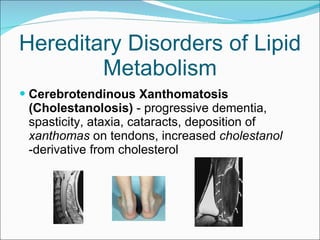
Hereditary Disorders of Lipid Metabolism Cerebrotendinous Xanthomatosis (Cholestanolosis)  - progressive dementia, spasticity, ataxia, cataracts, deposition of  xanthomas  on tendons, increased  cholestanol  -derivative from cholesterol
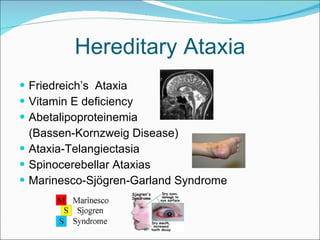
Hereditary Ataxia Friedreich’s  Ataxia Vitamin E deficiency Abetalipoproteinemia  (Bassen-Kornzweig Disease) Ataxia-Telangiectasia Spinocerebellar Ataxias Marinesco-Sjögren-Garland Syndrome
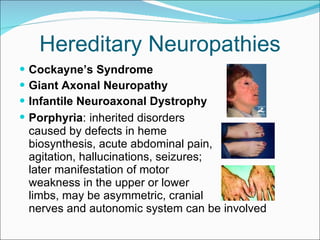
Hereditary Neuropathies Cockayne’s Syndrome Giant Axonal Neuropathy Infantile Neuroaxonal Dystrophy Porphyria :   inherited disorders  caused by defects in heme  biosynthesis, acute abdominal pain,  agitation, hallucinations, seizures;  later manifestation of motor  weakness in the upper or lower  limbs, may be asymmetric, cranial  nerves and autonomic system can be involved
Acquired Neuropathies Immune-Mediated  Polyneuropathies Neuropathies Associated with  Infections Neuropathies Associated with  Endocrinopathies Neuropathies Associated with  Systemic Diseases Neuropathies Associated with  Malignancies Toxic  Neuropathies Neuropathies Related to  Nutritional Deficiencies Chronic Idiopathic Sensory or Sensorimotor Polyneuropathy
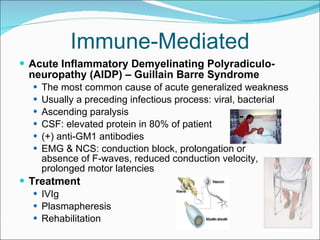
Immune-Mediated Acute Inflammatory Demyelinating Polyradiculo-neuropathy (AIDP) – Guillain Barre Syndrome The most common cause of acute generalized weakness Usually a preceding infectious process: viral, bacterial Ascending paralysis  CSF: elevated protein in 80% of patient (+) anti-GM1 antibodies EMG & NCS: conduction block, prolongation or  absence of F-waves, reduced conduction velocity, prolonged motor latencies Treatment IVIg Plasmapheresis Rehabilitation
CIDP Chronic Acquired Demyelinating Polyneuropathies Chronic Inflammatory Demyelinating Polyneuropathies (CIDP) Distal Acquired Demyelinating Symmetric (DADS) Multifocal Acquired Demyelination Sensory and Motor Neuropathy (MADSAM) Multifocal Motor Neuropathy (MMN)
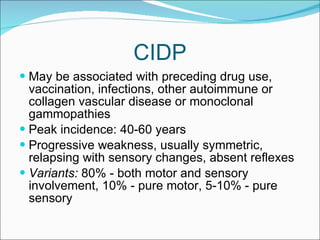
CIDP May be associated with preceding drug use, vaccination, infections, other autoimmune or collagen vascular disease or monoclonal gammopathies  Peak incidence: 40-60 years Progressive weakness, usually symmetric, relapsing with sensory changes, absent reflexes  Variants:  80% - both motor and sensory involvement, 10% - pure motor, 5-10% - pure sensory
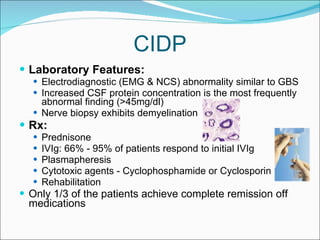
CIDP Laboratory Features:  Electrodiagnostic (EMG & NCS) abnormality similar to GBS Increased CSF protein concentration is the most frequently abnormal finding (>45mg/dl)  Nerve biopsy exhibits demyelination Rx:  Prednisone IVIg: 66% - 95% of patients respond to initial IVIg  Plasmapheresis Cytotoxic agents - Cyclophosphamide or Cyclosporin Rehabilitation  Only 1/3 of the patients achieve complete remission off medications
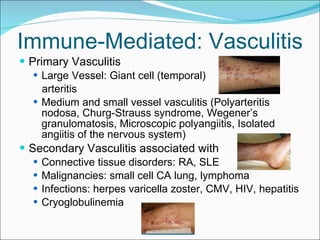
Immune-Mediated: Vasculitis Primary Vasculitis Large Vessel: Giant cell (temporal)  arteritis Medium and small vessel vasculitis (Polyarteritis nodosa, Churg-Strauss syndrome, Wegener’s granulomatosis, Microscopic polyangiitis, Isolated angiitis of the nervous system) Secondary Vasculitis associated with Connective tissue disorders: RA, SLE Malignancies: small cell CA lung, lymphoma Infections: herpes varicella zoster, CMV, HIV, hepatitis  Cryoglobulinemia
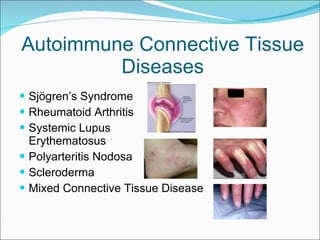
Autoimmune Connective Tissue Diseases Sjögren’s Syndrome Rheumatoid Arthritis Systemic Lupus  Erythematosus Polyarteritis Nodosa Scleroderma Mixed Connective Tissue Disease
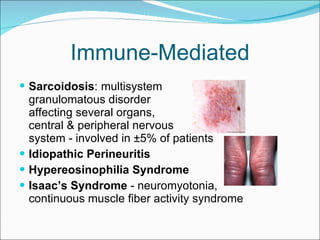
Immune-Mediated Sarcoidosis :   multisystem  granulomatous disorder  affecting several organs,  central & peripheral nervous  system - involved in ±5% of patients Idiopathic Perineuritis Hypereosinophilia Syndrome Isaac’s Syndrome  - neuromyotonia,  continuous muscle fiber activity syndrome
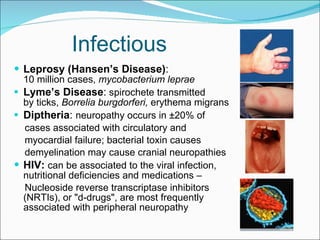
Infectious Leprosy (Hansen’s Disease) :   10 10 million cases,  mycobacterium leprae Lyme’s Disease :  spirochete transmitted  by ticks,  Borrelia burgdorferi,  erythema migrans Diptheria :  neuropathy occurs in ±20% of  cases associated with circulatory and  myocardial failure; bacterial toxin causes  demyelination may cause cranial neuropathies HIV:  can be associated to the viral infection,  nutritional deficiencies and medications –  Nucleoside reverse transcriptase inhibitors  (NRTIs), or "d-drugs", are most frequently  associated with peripheral neuropathy
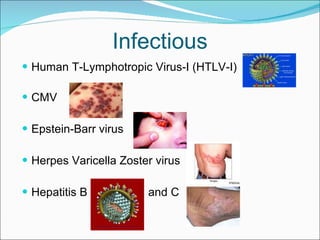
Infectious Human T-Lymphotropic Virus-I (HTLV-I) CMV Epstein-Barr virus Herpes Varicella Zoster virus Hepatitis B  and C
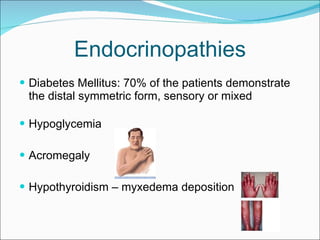
Endocrinopathies Diabetes Mellitus: 70% of the patients demonstrate the distal symmetric form, sensory or mixed Hypoglycemia Acromegaly Hypothyroidism – myxedema deposition
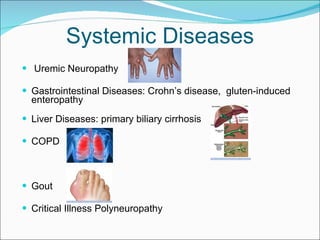
Systemic Diseases Uremic Neuropathy Gastrointestinal Diseases: Crohn’s disease,  gluten-induced enteropathy Liver Diseases: primary biliary cirrhosis COPD Gout Critical Illness Polyneuropathy
Malignancies Paraneoplastic Neuropathies : anti-Hu syndrome Cryptogenic Sensory or Sensorimotor Polyneuropathy : 29% related to Gastric  malignancy   Neuropathies Related to Tumor Infiltration : neurofibromatosis, local infiltration by tumor tissue  Noninfiltrative Neuropathies Associated with Lymphoproliferative Disorders and Monoclonal Gammopathies
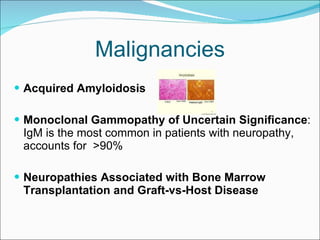
Malignancies Acquired Amyloidosis Monoclonal Gammopathy of Uncertain Significance :   IgM is the most common in patients with neuropathy, accounts for  >90% Neuropathies Associated with Bone Marrow Transplantation and Graft-vs-Host Disease
Toxic Neuropathies Chemotherapy :  anti-nucleosides, vincristine, cisplatin, paclitaxel and the podophyllotoxins Other medications : amiodarone, chloroquine, sulfa medications, vitamin B6 intoxication  Industrial and Environmental Agents : hexacarbon inhalation Heavy Metal Intoxication : arsenic, lead, mercury Ethanol :  alcoholism - 30% of all cases of generalized polyneuropathy
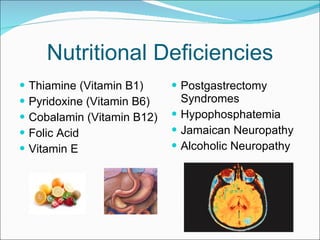
Nutritional Deficiencies Thiamine (Vitamin B1) Pyridoxine (Vitamin B6) Cobalamin (Vitamin B12) Folic Acid Vitamin E Postgastrectomy Syndromes Hypophosphatemia Jamaican Neuropathy Alcoholic Neuropathy
Focal Peripheral Neuropathies Median Nerve – carpal tunnel syndrome, AIN Ulnar nerve – cubital tunnel syndrome Radial Nerve – radial tunnel syndrome, PIN Peroneal Nerve – fibular head, drop foot Tibial Nerve – tarsal tunnel syndrome Cranial neuropathies: trigeminal, facial, recurrent and superior laryngeal – vagus, phrenic, spinal accessory, hypoglossal
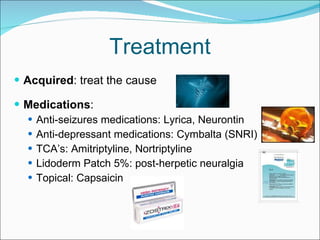
Treatment Acquired : treat the cause Medications : Anti-seizures medications: Lyrica, Neurontin Anti-depressant medications: Cymbalta (SNRI) TCA’s: Amitriptyline, Nortriptyline Lidoderm Patch 5%: post-herpetic neuralgia Topical: Capsaicin
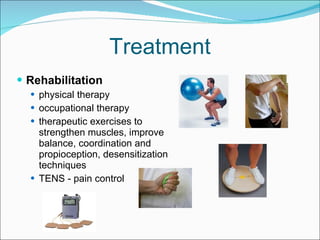
Treatment Rehabilitation physical therapy occupational therapy  therapeutic exercises to strengthen muscles, improve balance, coordination and propioception, desensitization techniques TENS - pain control
References Asbury AK, Thomas PK.  Peripheral nerve disorders  2. Oxford: Butterworth Heinemann Ltd; 1995. Bollensen E, Schipper HI, Steck AJ. Motor neuropathy with activity of monoclonal IgM antibody to GD1a ganglioside.  J Neurol . 1989;236:353-355. Chiba A, Kusunoki S, Obata H, et al. Serum anti-GQ1b antibodies are associated with ophthalmoplegia in Miller-Fisher syndrome and Guillaine-Barre syndrome.  Neurology . 1993;43:1911-1917. Duane GC, Farrer RG, Dalakas MC, et al. Sensory neuropathy associated with immunoglobulin M to GD1b ganglioside.  Ann Neurol.  1992;31:683-685. Dyck PJ, Thomas PK, Griffin JW, et al.  Peripheral Neuropathy , 3rd Ed. Philadelphia: WB Saunders; 1993. Kelly JJ Jr, Kyle RA, Miles JM, et al. The spectrum of peripheral neuropathy in myeloma.  Neurology . 1981;31:24-31. Kelly JJ Jr, Kyle RA, Obrien PC, et al. The prevalence of monoclonal gammopathy in peripheral neuropathy.  Neurology . 1981;31:1480-1483. Kinsella LJ, Lange DJ, Trojaborg W, et al. The clinical and electrophysiological correlates of elevated anti-GM1 antibody titers.  Neurology . 1994;44:1278-1282. Kyle RA, Greip PR. Amyoloidosis (AL): clinical and laboratory features of 229 cases.  Mayo Clin Proc . 1983;58:665-683. Latov N. Pathogenesis and therapy of neuropathies associated with monoclonal gammopathies.  Ann Neurol.  1995;37(S1):S32-42. Latov N, Steck AJ. Neuropathies associated with glycoconjugate antibodies and IgM monoclonal gammopathies. In: Asbury A, Thomas PK (eds).  Peripheral Nerve Disorders II . Boston: Butterworth-Heinemann;1995:153-173. Ogino M, Orazio N, Latov N. IgG anti-GM1 antibodies from patients with acute motor neuropathy are predominantly of the IgG1 and IgG3 subclasses.  J Neuroimmunol . 1995; 58:77-80. Pestronk A, Li F, Griffin J, et al. Polyneuropathy syndromes associated with serum antibodies to sulfatide and myelin associated glycoprotein.  Neurology . 1991; 41:357-362. van den Berg LH, Hays AP, Nobile-Orazio E, et al. Anti-MAG and anti-SGPG antibodies in neuropathy.  Muscle Nerve . 1996;19:637-643.
Thanks ! www.ninds.nih.gov/disorders/peripheralneuropathy www.neuropathy.org www.diabetes.org www.foundationforpn.org

Peripheral Neuropathy an overview

  • 1.
    Margarita Correa MD,FAAPMR Physical Medicine and Rehabilitation Physical Medicine Institute Clermont, FL www.physmedi.com
  • 2.
    Anatomy The peripheralnerves include: cranial nerves (with the exception of the second) spinal nerve roots dorsal root ganglia peripheral nerve trunks and their terminal branches peripheral autonomic nervous system
  • 3.
    Anatomy Nerves arecomposed of different types of axons: Large, myelinated axons include motor axons and the sensory axons responsible for vibration sense, proprioception and light touch Small myelinated axons are composed of autonomic fibers and sensory axons and are responsible for light touch, pain and temperature Small, unmyelinated axons are also sensory and subserve pain and temperature
  • 4.
    History Symptoms Numbness,tingling (feeling of pins and needles) of hands and/or feet Burning pain of hands and/or feet Numbness around mouth Loss of sensation to touch Loss of positional sense Weakness and leg cramping Difficulty picking things up or buttoning clothes Constipation
  • 5.
    Physical Examination Acranial nerve examination can provide evidence of mononeuropathies or proximal involvement A fundoscopic examination may show abnormalities such as optic pallor, which can be present in leukodystrophies and vitamin B 12 deficiency Direct strength testing of muscles innervated by cranial nerves V, VII, IX/X, XI and XII is important, as mild bilateral weakness can be missed by observation only
  • 6.
    Physical Examination Themotor examination includes a search for fasciculations or loss of muscle bulk (atrophy) Muscle tone is normal or reduced The pattern of weakness helps narrow the diagnosis: symmetric or asymmetric, distal or proximal, and confined to a particular nerve, plexus or root level
  • 7.
    Physical Examination Ina patient with a distal symmetric sensorimotor neuropathy, the sensory examination shows reduced sensitivity to light touch, pinprick and temperature in a stocking-and-glove distribution Vibration and position sense are reduced in the distal legs prior to involvement of the arms In patients with severe loss of position sense, there may be athetoid movement of the fingers or arms when the eyes are closed (pseudoathetosis) or a Romberg sign Patients with mononeuritis multiplex may have sensory loss in specific nerve distributions
  • 8.
    Physical Examination Deeptendon reflexes are reduced or absent A bilateral foot drop may result in a steppage gait in which the patient must lift the knees very high in order to clear the toes Proximal weakness results in an inability to squat or to rise unassisted from a chair Severe, longstanding neuropathy can result in trophic changes including kyphoscoliosis, pes cavus, loss of hair in affected areas or ulceration
  • 9.
    Physical Examination Affectedautonomic fibers: orthostatic hypotension without a compensatory rise in heart rate Respiratory rate and vital capacity should be evaluated in Guillain-Barré syndrome to assess for respiratory compromise The presence of lymphadenopathy, hepatomegaly or splenomegaly, and skin lesions may provide evidence of systemic disease Pale transverse bands in the nail beds, parallel to the lunula (Mees' lines) suggest arsenic poisoning
  • 10.
    Laboratories The mostcommon presentation is distal symmetric sensorimotor neuropathy, i.e. diabetes mellitus Initial evaluation should include: fasting serum glucose (FBS) glycosylated hemoglobin (A1C) blood urea nitrogen (BUN) creatinine (Cr) complete blood cell count (CBC) erythrocyte sedimentation rate (ESR) urinalysis vitamin B 12, folate TSH levels
  • 11.
    Autoantibodies to PeripheralNerves Antigens Anti-Asialo-GM1 ganglioside neuropathy Anti-GD1a ganglioside neuropathy Anti-GD1b ganglioside neuropathy Anti-GM1 ganglioside neuropathy Anti-GM2 ganglioside neuropathy Anti-GQ1b ganglioside neuropathy Anti-MAG/SGPG neuropathy Anti-sulfatide neuropathy Asialo GM1 antibody GD1a antibody GD1b antibody GM1 antibody GM2 antibody GQ1b antibody MAG/SGPG antibody Sulfatide antibody
  • 12.
    Rheumatologic,Autoimmune, and Vasculitic Disease Disease Laboratories Polyarteritis SLE Rheumatoid arthritis Wegener’s granulomatosis Sjögren’s syndrome Celiac disease Cryoglobulins, immune complexes, CH50, hepatitis B and C serology, parvovirus serology, HIV-1 serology ANA, dsDNA antibodies Cyclic citrullinated peptide antibody, rheumatoid factor Anti-neutrophil cytoplasmic antibody (ANCA) SS-A/Ro antibody, SS-B/La antibody Gliadin, transglutaminase, and endomysial antibodies
  • 13.
    Paraneoplastic Disease NeoplasmLaboratory Lung cancer Monoclonal gammopathy Myeloma Macroglobulinemia Chronic lymphocytic leukemia Hu antibodies Immunoglobulin profile, IFE, serum & urine Immunoglobulin profile, IFE, serum & urine, VEGF level Immunoglobulin profile, IFE, serum & urine Immunoglobulin profile, IFE, serum & urine IFE = immunofixation electrophoresis VEGF = vascular endothelial growth factor
  • 14.
    Primary Amyloidosis HeavyMetal Toxicity: Lead, Arsenic, Mercury Laboratory Immunoglobulin profile, IFE, serum & urine Kappa/lambda light chains, free with ratio, serum Lichen Amyloidosis Laboratory Urine heavy metals Lead Intoxication
  • 15.
    Nutritional Diseases VitaminDeficiency Laboratories Vitamin B 12 deficiency Vitamin B 6 deficiency Vitamin B 6 toxicity Vitamin B 1 deficiency Vitamin E deficiency Folate deficiency CBC, serum B 12 Serum B 6 Serum B 6 Serum B 1 Serum vitamin E Serum folate
  • 16.
    Infectious and InflammatoryDisease Infectious Agent Laboratories AIDS Lyme disease Herpes zoster Cytomegalovirus Hepatitis B Hepatitis C Parvovirus Sarcoidosis HIV-1 antibody Borrelia burgdorferi antibodies (total, IgG, IgM) Varicella zoster antigen and antibodies (IgG, IgM) CMV antigen and antibodies (IgG, IgM) HBs antigen, HBc antibodies (IgG, IgM) Hepatitis C antibody Parvovirus antibody Angiotensin converting enzyme
  • 17.
    Diagnosis Autonomic studiesinclude determination of: heart rate variation with respiration heart rate response and blood pressure to standing/tilting blood pressure response to sustained hand grip measure of sympathetic skin response
  • 18.
    Diagnosis The cerebrospinalfluid (CSF) is useful in evaluation of myelinopathies and polyradiculopathies An elevated total protein level with less than 5 white blood cells (albuminocytologic dissociation) is present in acquired inflammatory neuropathy (e.g., Guillain-Barré syndrome, CIDP) Cytology (lymphoma) Special studies such as: Lyme polymerase chain reaction Cytomegalovirus branched chain DNA (polyradiculopathy or mononeuritis multiplex in AIDS)
  • 19.
    Diagnosis Nerve biopsyis only helpful in very specific cases to diagnose vasculitis, leprosy, amyloid neuropathy, leukodystrophies, sarcoidosis and, occasionally, CIDP The sural nerve is the one most commonly selected for biopsy
  • 20.
    EMG & NCSEMG and nerve conduction studies are often the most useful initial laboratory studies in the evaluation of patients with peripheral neuropathy
  • 21.
    Electrodiagnosis Sensory NCS: sural, superficial peroneal, median, ulnar (at least in one side), if abnormal study on the contralateral side Motor NCS: peroneal and tibial nerve, median and ulnar (at least in one side), if abnormal study on the contralateral side, *F-waves/H-reflexes Cranial nerves: if affected, perform direct facial nerve stimulation, blink reflex, spinal accessory Needle EMG: one upper and lower limb muscle, distal & proximal including paraspinal regions, document on the contralateral side in the more affected muscles
  • 22.
  • 23.
    Facts Diabetes and alcoholism are the most common causes of peripheral neuropathy in the United States The most common presentation of peripheral neuropathy is distal symmetric sensorimotor dysfunction
  • 24.
    Hereditary Charcot-Marie-Tooth Diseaseand Related Neuropathies Type I – most common (~1:400) ~ 50% of hereditary neuropathy, autosomal dominant, demyelination and onion bulb Type 2 – axonal atrophy and degeneration Type 3 – Dejerine-Sottas disease, congenital hypomyelination, classic onion bulbs, severe form relatively rare, autosomal dominant sporadic or recessive Type 4 – all forms have hypomyelination
  • 25.
    Hereditary X-Linked Charcot-Marie-ToothDisease Hereditary Neuropathy with Liability to Pressure Palsies: HNPP = tomaculous neuropathy Hereditary Sensory and Autonomic Neuropathies (types 1, 2, 3, 4, 5) Familial Amyloid Polyneuropathies (types I, II, III, IV)
  • 26.
    Hereditary Disorders ofLipid Metabolism Metachromatic Leukodystrophy - widespread myelin degeneration of central & peripheral nervous systems and abdominal organ dysfunction, deficiency of arylsulfatase A results in the accumulation of sulfatides in various tissues Krabbe’s Disease (Globoid Cell Leukodystrophy) widespread degeneration of the CNS white matter with collection of globoid cells = macrophages
  • 27.
    Hereditary Disorders ofLipid Metabolism Adrenoleukodystrophy - progressive dementia, optic atrophy, cortical blindness, seizures and spasticity Refsum’s Disease - increased phytanic acid, retinitis pigmentosa, cerebellar dysfunction, increased protein in CSF Tangier Disease - rare autosomal recessive disorder, deficiency of HDL
  • 28.
    Hereditary Disorders ofLipid Metabolism Cerebrotendinous Xanthomatosis (Cholestanolosis) - progressive dementia, spasticity, ataxia, cataracts, deposition of xanthomas on tendons, increased cholestanol -derivative from cholesterol
  • 29.
    Hereditary Ataxia Friedreich’s Ataxia Vitamin E deficiency Abetalipoproteinemia (Bassen-Kornzweig Disease) Ataxia-Telangiectasia Spinocerebellar Ataxias Marinesco-Sjögren-Garland Syndrome
  • 30.
    Hereditary Neuropathies Cockayne’sSyndrome Giant Axonal Neuropathy Infantile Neuroaxonal Dystrophy Porphyria : inherited disorders caused by defects in heme biosynthesis, acute abdominal pain, agitation, hallucinations, seizures; later manifestation of motor weakness in the upper or lower limbs, may be asymmetric, cranial nerves and autonomic system can be involved
  • 31.
    Acquired Neuropathies Immune-Mediated Polyneuropathies Neuropathies Associated with Infections Neuropathies Associated with Endocrinopathies Neuropathies Associated with Systemic Diseases Neuropathies Associated with Malignancies Toxic Neuropathies Neuropathies Related to Nutritional Deficiencies Chronic Idiopathic Sensory or Sensorimotor Polyneuropathy
  • 32.
    Immune-Mediated Acute InflammatoryDemyelinating Polyradiculo-neuropathy (AIDP) – Guillain Barre Syndrome The most common cause of acute generalized weakness Usually a preceding infectious process: viral, bacterial Ascending paralysis CSF: elevated protein in 80% of patient (+) anti-GM1 antibodies EMG & NCS: conduction block, prolongation or absence of F-waves, reduced conduction velocity, prolonged motor latencies Treatment IVIg Plasmapheresis Rehabilitation
  • 33.
    CIDP Chronic AcquiredDemyelinating Polyneuropathies Chronic Inflammatory Demyelinating Polyneuropathies (CIDP) Distal Acquired Demyelinating Symmetric (DADS) Multifocal Acquired Demyelination Sensory and Motor Neuropathy (MADSAM) Multifocal Motor Neuropathy (MMN)
  • 34.
    CIDP May beassociated with preceding drug use, vaccination, infections, other autoimmune or collagen vascular disease or monoclonal gammopathies Peak incidence: 40-60 years Progressive weakness, usually symmetric, relapsing with sensory changes, absent reflexes Variants: 80% - both motor and sensory involvement, 10% - pure motor, 5-10% - pure sensory
  • 35.
    CIDP Laboratory Features: Electrodiagnostic (EMG & NCS) abnormality similar to GBS Increased CSF protein concentration is the most frequently abnormal finding (>45mg/dl) Nerve biopsy exhibits demyelination Rx: Prednisone IVIg: 66% - 95% of patients respond to initial IVIg Plasmapheresis Cytotoxic agents - Cyclophosphamide or Cyclosporin Rehabilitation Only 1/3 of the patients achieve complete remission off medications
  • 36.
    Immune-Mediated: Vasculitis PrimaryVasculitis Large Vessel: Giant cell (temporal) arteritis Medium and small vessel vasculitis (Polyarteritis nodosa, Churg-Strauss syndrome, Wegener’s granulomatosis, Microscopic polyangiitis, Isolated angiitis of the nervous system) Secondary Vasculitis associated with Connective tissue disorders: RA, SLE Malignancies: small cell CA lung, lymphoma Infections: herpes varicella zoster, CMV, HIV, hepatitis Cryoglobulinemia
  • 37.
    Autoimmune Connective TissueDiseases Sjögren’s Syndrome Rheumatoid Arthritis Systemic Lupus Erythematosus Polyarteritis Nodosa Scleroderma Mixed Connective Tissue Disease
  • 38.
    Immune-Mediated Sarcoidosis : multisystem granulomatous disorder affecting several organs, central & peripheral nervous system - involved in ±5% of patients Idiopathic Perineuritis Hypereosinophilia Syndrome Isaac’s Syndrome - neuromyotonia, continuous muscle fiber activity syndrome
  • 39.
    Infectious Leprosy (Hansen’sDisease) : 10 10 million cases, mycobacterium leprae Lyme’s Disease : spirochete transmitted by ticks, Borrelia burgdorferi, erythema migrans Diptheria : neuropathy occurs in ±20% of cases associated with circulatory and myocardial failure; bacterial toxin causes demyelination may cause cranial neuropathies HIV: can be associated to the viral infection, nutritional deficiencies and medications – Nucleoside reverse transcriptase inhibitors (NRTIs), or "d-drugs", are most frequently associated with peripheral neuropathy
  • 40.
    Infectious Human T-LymphotropicVirus-I (HTLV-I) CMV Epstein-Barr virus Herpes Varicella Zoster virus Hepatitis B and C
  • 41.
    Endocrinopathies Diabetes Mellitus:70% of the patients demonstrate the distal symmetric form, sensory or mixed Hypoglycemia Acromegaly Hypothyroidism – myxedema deposition
  • 42.
    Systemic Diseases UremicNeuropathy Gastrointestinal Diseases: Crohn’s disease, gluten-induced enteropathy Liver Diseases: primary biliary cirrhosis COPD Gout Critical Illness Polyneuropathy
  • 43.
    Malignancies Paraneoplastic Neuropathies: anti-Hu syndrome Cryptogenic Sensory or Sensorimotor Polyneuropathy : 29% related to Gastric malignancy Neuropathies Related to Tumor Infiltration : neurofibromatosis, local infiltration by tumor tissue Noninfiltrative Neuropathies Associated with Lymphoproliferative Disorders and Monoclonal Gammopathies
  • 44.
    Malignancies Acquired AmyloidosisMonoclonal Gammopathy of Uncertain Significance : IgM is the most common in patients with neuropathy, accounts for >90% Neuropathies Associated with Bone Marrow Transplantation and Graft-vs-Host Disease
  • 45.
    Toxic Neuropathies Chemotherapy: anti-nucleosides, vincristine, cisplatin, paclitaxel and the podophyllotoxins Other medications : amiodarone, chloroquine, sulfa medications, vitamin B6 intoxication Industrial and Environmental Agents : hexacarbon inhalation Heavy Metal Intoxication : arsenic, lead, mercury Ethanol : alcoholism - 30% of all cases of generalized polyneuropathy
  • 46.
    Nutritional Deficiencies Thiamine(Vitamin B1) Pyridoxine (Vitamin B6) Cobalamin (Vitamin B12) Folic Acid Vitamin E Postgastrectomy Syndromes Hypophosphatemia Jamaican Neuropathy Alcoholic Neuropathy
  • 47.
    Focal Peripheral NeuropathiesMedian Nerve – carpal tunnel syndrome, AIN Ulnar nerve – cubital tunnel syndrome Radial Nerve – radial tunnel syndrome, PIN Peroneal Nerve – fibular head, drop foot Tibial Nerve – tarsal tunnel syndrome Cranial neuropathies: trigeminal, facial, recurrent and superior laryngeal – vagus, phrenic, spinal accessory, hypoglossal
  • 48.
    Treatment Acquired :treat the cause Medications : Anti-seizures medications: Lyrica, Neurontin Anti-depressant medications: Cymbalta (SNRI) TCA’s: Amitriptyline, Nortriptyline Lidoderm Patch 5%: post-herpetic neuralgia Topical: Capsaicin
  • 49.
    Treatment Rehabilitation physicaltherapy occupational therapy therapeutic exercises to strengthen muscles, improve balance, coordination and propioception, desensitization techniques TENS - pain control
  • 50.
    References Asbury AK,Thomas PK. Peripheral nerve disorders 2. Oxford: Butterworth Heinemann Ltd; 1995. Bollensen E, Schipper HI, Steck AJ. Motor neuropathy with activity of monoclonal IgM antibody to GD1a ganglioside. J Neurol . 1989;236:353-355. Chiba A, Kusunoki S, Obata H, et al. Serum anti-GQ1b antibodies are associated with ophthalmoplegia in Miller-Fisher syndrome and Guillaine-Barre syndrome. Neurology . 1993;43:1911-1917. Duane GC, Farrer RG, Dalakas MC, et al. Sensory neuropathy associated with immunoglobulin M to GD1b ganglioside. Ann Neurol. 1992;31:683-685. Dyck PJ, Thomas PK, Griffin JW, et al. Peripheral Neuropathy , 3rd Ed. Philadelphia: WB Saunders; 1993. Kelly JJ Jr, Kyle RA, Miles JM, et al. The spectrum of peripheral neuropathy in myeloma. Neurology . 1981;31:24-31. Kelly JJ Jr, Kyle RA, Obrien PC, et al. The prevalence of monoclonal gammopathy in peripheral neuropathy. Neurology . 1981;31:1480-1483. Kinsella LJ, Lange DJ, Trojaborg W, et al. The clinical and electrophysiological correlates of elevated anti-GM1 antibody titers. Neurology . 1994;44:1278-1282. Kyle RA, Greip PR. Amyoloidosis (AL): clinical and laboratory features of 229 cases. Mayo Clin Proc . 1983;58:665-683. Latov N. Pathogenesis and therapy of neuropathies associated with monoclonal gammopathies. Ann Neurol. 1995;37(S1):S32-42. Latov N, Steck AJ. Neuropathies associated with glycoconjugate antibodies and IgM monoclonal gammopathies. In: Asbury A, Thomas PK (eds). Peripheral Nerve Disorders II . Boston: Butterworth-Heinemann;1995:153-173. Ogino M, Orazio N, Latov N. IgG anti-GM1 antibodies from patients with acute motor neuropathy are predominantly of the IgG1 and IgG3 subclasses. J Neuroimmunol . 1995; 58:77-80. Pestronk A, Li F, Griffin J, et al. Polyneuropathy syndromes associated with serum antibodies to sulfatide and myelin associated glycoprotein. Neurology . 1991; 41:357-362. van den Berg LH, Hays AP, Nobile-Orazio E, et al. Anti-MAG and anti-SGPG antibodies in neuropathy. Muscle Nerve . 1996;19:637-643.
  • 51.
    Thanks ! www.ninds.nih.gov/disorders/peripheralneuropathywww.neuropathy.org www.diabetes.org www.foundationforpn.org