Choosing Wisely
Dr Matthew Skinner
General/ID Physician
14th June 2018
Outline
• Cases to consider:
– Why that antibiotic?
– What would change a choice?
– Where to look when stuck
– Best use of ID service
Presenting Complaint
• 41 year old ♀
• 7 days of dry cough with fevers, rigors &
sweats
• 3 weeks of lethargy, myalgias & low grade
fevers
• GP prescribed amoxycillin 10 days prior →
presumed chest infection
Emergency Department
• Febrile
• Further examination reported as normal
• Clear chest x-ray
• Urinalysis unremarkable
• Presumptive diagnosis → undifferentiated
viral illness
• Discharged home
Next Day
• 15-minute episode of central chest pain:
– Occurred at rest
– Associated mild dyspnoea
– No radiation
– Pain was neither pleuritic nor positional
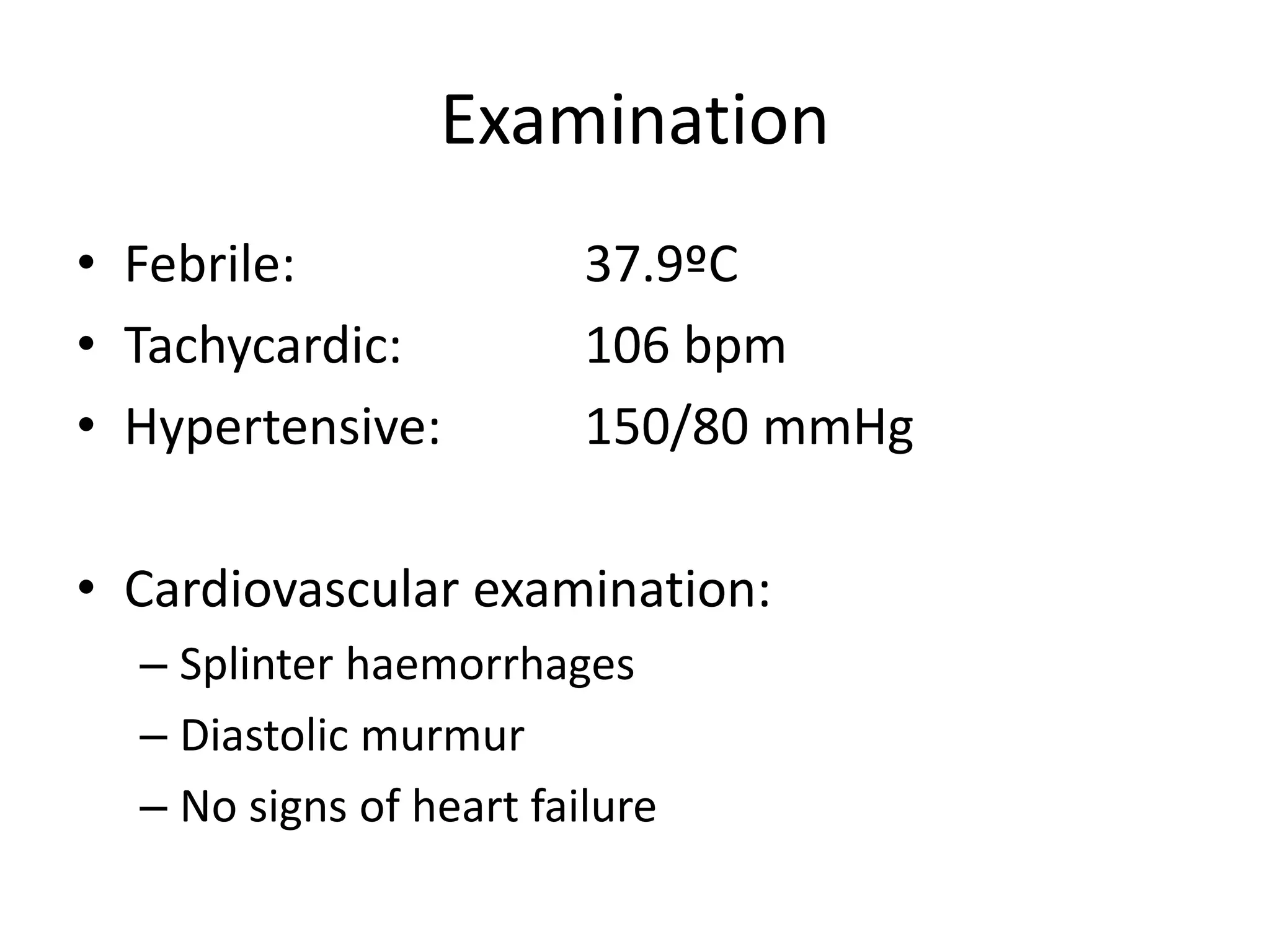
Examination
• Febrile: 37.9ºC
• Tachycardic: 106 bpm
• Hypertensive: 150/80 mmHg
• Cardiovascular examination:
– Splinter haemorrhages
– Diastolic murmur
– No signs of heart failure
Initial Tests
• FBE: Hb 108; WCC 13.4; NΦ 11.1; Plt 415
• U&E: Na+ 136; K+ 3.9; Ur 3.1; Cr 56
• LFTs: albumin 39; bilirubin 8; ALT 71; AlkP
141; γGT 230
• CRP: 250
• ESR: 108
• Troponin T <0.01
• ECG normal
Further History
• Migrated from Philippines >20 years:
– Last visited at Christmas
• Married with 2 young children
• Mental health care nurse
• Non-smoker & no alcohol
• No recreational intravenous drug use, tattoos
or body piercings
Further History
• Her husband had been diagnosed & treated
for gonococcal urethritis a month prior with
ciprofloxacin
• She received ciprofloxacin prophylaxis at that
time (all tests negative)
Investigations
• Two further sets of blood cultures were sent
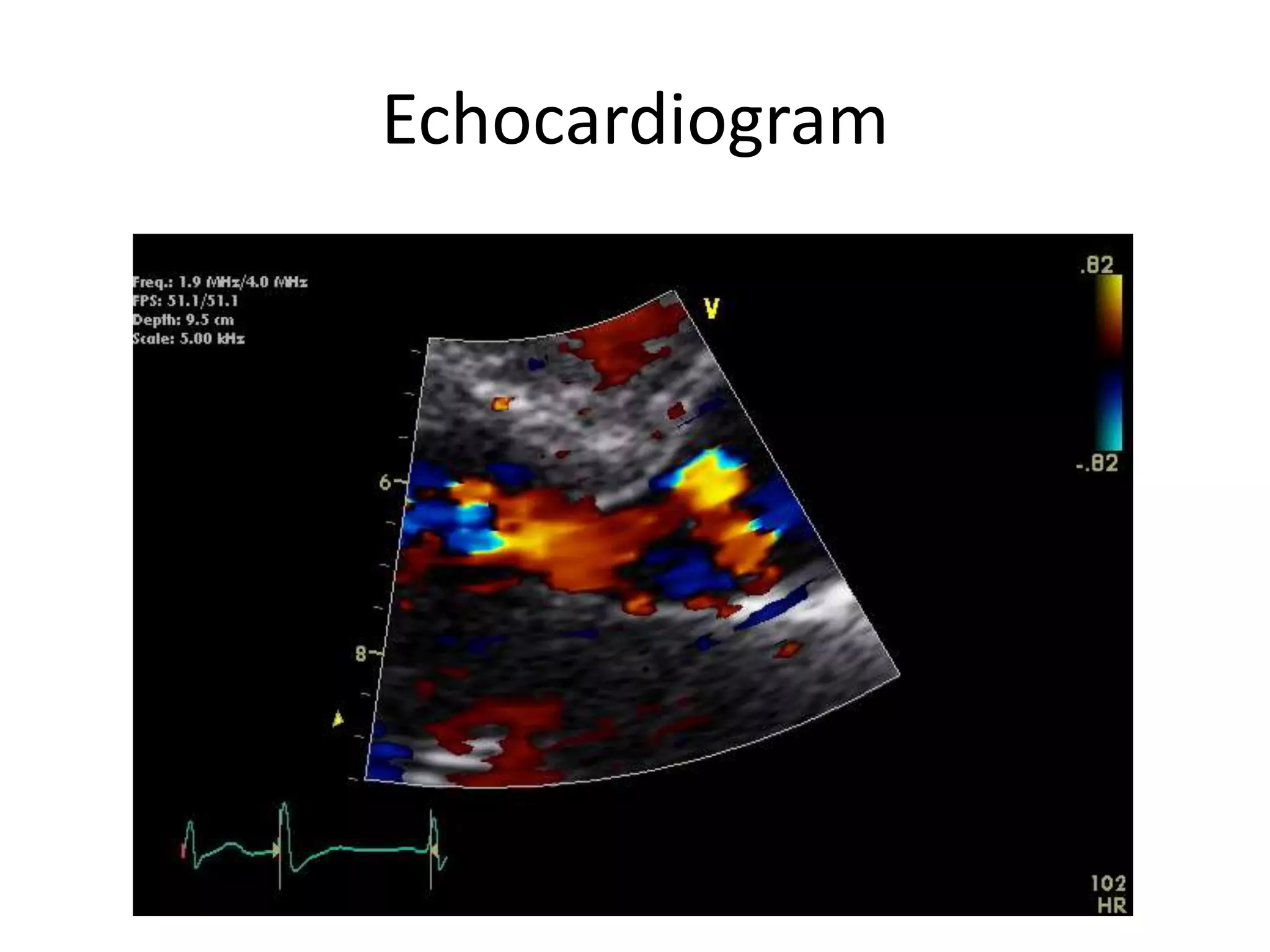
• Transthoracic echocardiogram performed
Echocardiogram
Echocardiogram
Empiric Treatment
• Infective endocarditis:
– Flucoxacillin 2g IV QID
– Ceftriaxone 2g IV daily
• Stat dose of azithromycin 1g oral to cover
possible concurrent chlamydial infection
Blood Cultures
• 2 days later → 2 aerobic blood cultures positive for
Neisseria gonorrhoeae
• Therapy rationalised to 2g IV ceftriaxone daily
Treatment
• Excellent clinical response:
– Defervescence, night sweat resolution
– Normalisation of inflammatory markers
• Discharged to HITH after a week of inpatient
therapy:
– Total antibiotic course 18 days
– Screening for STIs negative
3 Weeks Later
• Admitted to hospital:
– Exertional dyspnoea → rest
– Significant functional limitations
– Torrential aortic regurgitation
Repeat Echocardiogram
Outcome
• Aortic valve replacement:
– No growth from valve tissue
– Peri-operative prophylaxis with ceftriaxone
• Discharged home 10 days post procedure:
– Cardiology, cardiothoracic and infectious diseases
follow-up
Follow Up
• Husband re-treated for Neisseria gonorrhoeae
(repeat test negative)
• 3 month review:
– STI serology negative (husband & wife)
– Clinically well
– No warfarin complications
HEADACHE & FEVER
• A 33 year old lady presented to the ED with
one day of headache, fever and rigor.
• Examination was normal except for a fever of
39ºC
• Investigations revealed neutrophilia and
raised CRP. Blood culture was positive
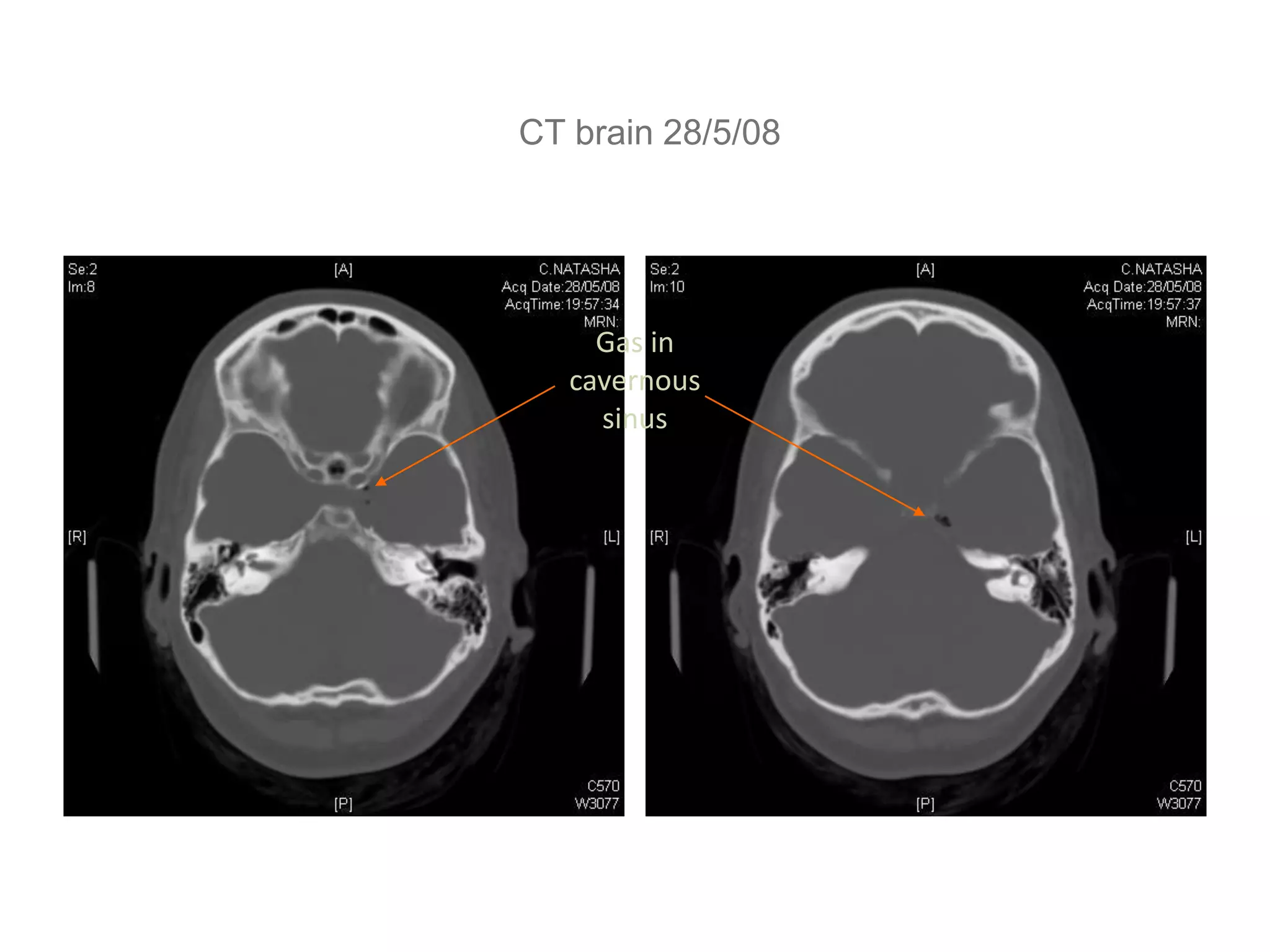
• Her CT scan is shown
• What does it show?
• What could the organism be?
CT brain 28/5/08
Gas in
cavernous
sinus
CT bone windows
28/5/08
Sphenoid
sinusutis
Gas in
cavernous
sinus
CT brain 28/5/08
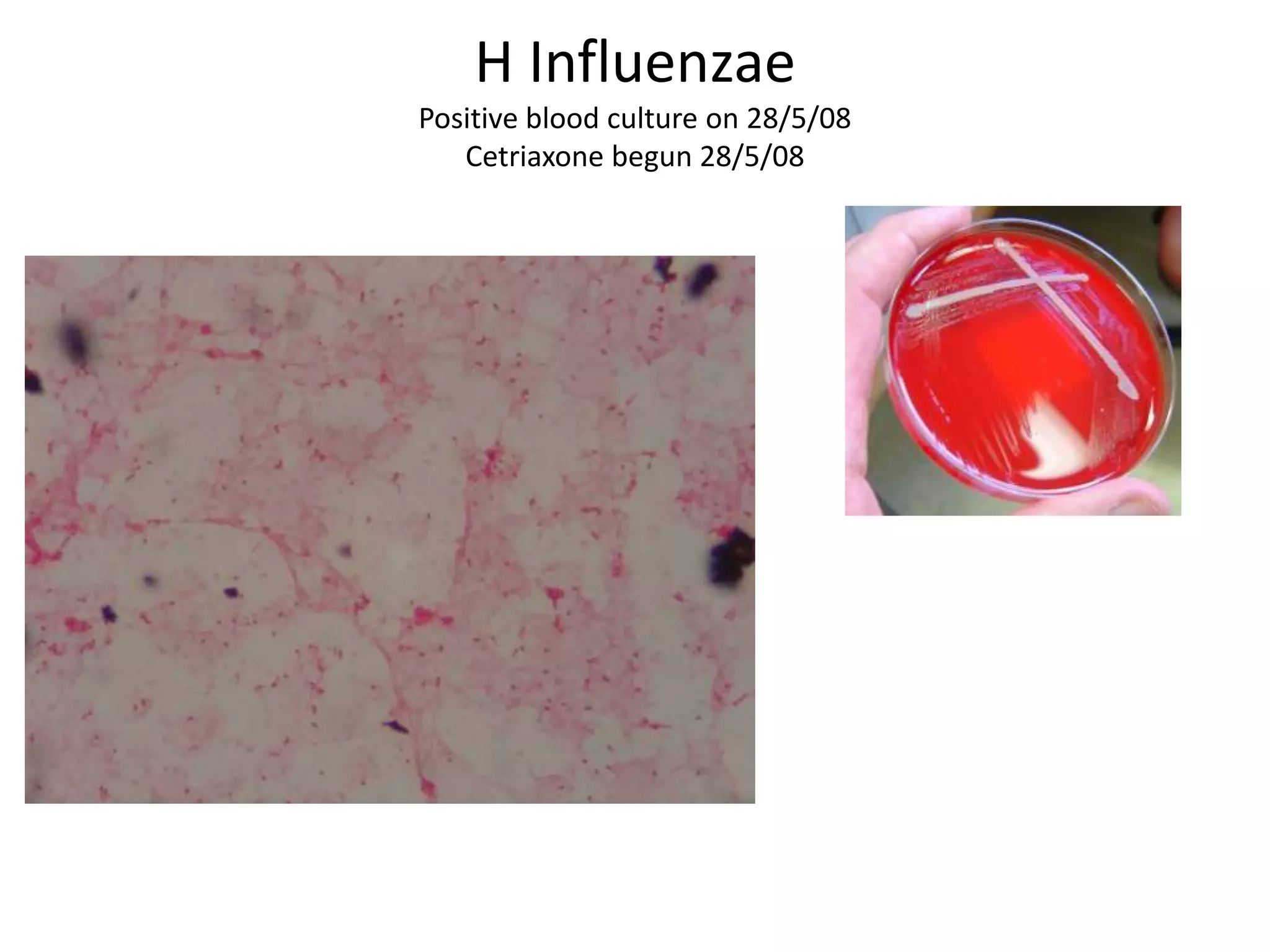
H Influenzae
Positive blood culture on 28/5/08
Cetriaxone begun 28/5/08
Haemophilus influenzae
CULTURE
Note - the satellitism around the staph streak
- XV factors
- sensitivities
The next day after IV ceftriaxone the gas
had gone – 29/5/08
Sphenoid
sinusutis
The next day after IV ceftriaxone the gas
had gone – 29/5/08
The next day after IV ceftriaxone the gas
had gone – 29/5/08
PROGRESS
• She responded quickly and was discharged
home on 14 days of ciprofloxacin.
• Note the followup CT scan – all clear.
Followup CT scan
Cellulitis
• This 39 year old man presented with fever,
rigors and “cellulitis” over his right shin.
• Fevers continued on treatment and he
developed a collection which was drained
twice.
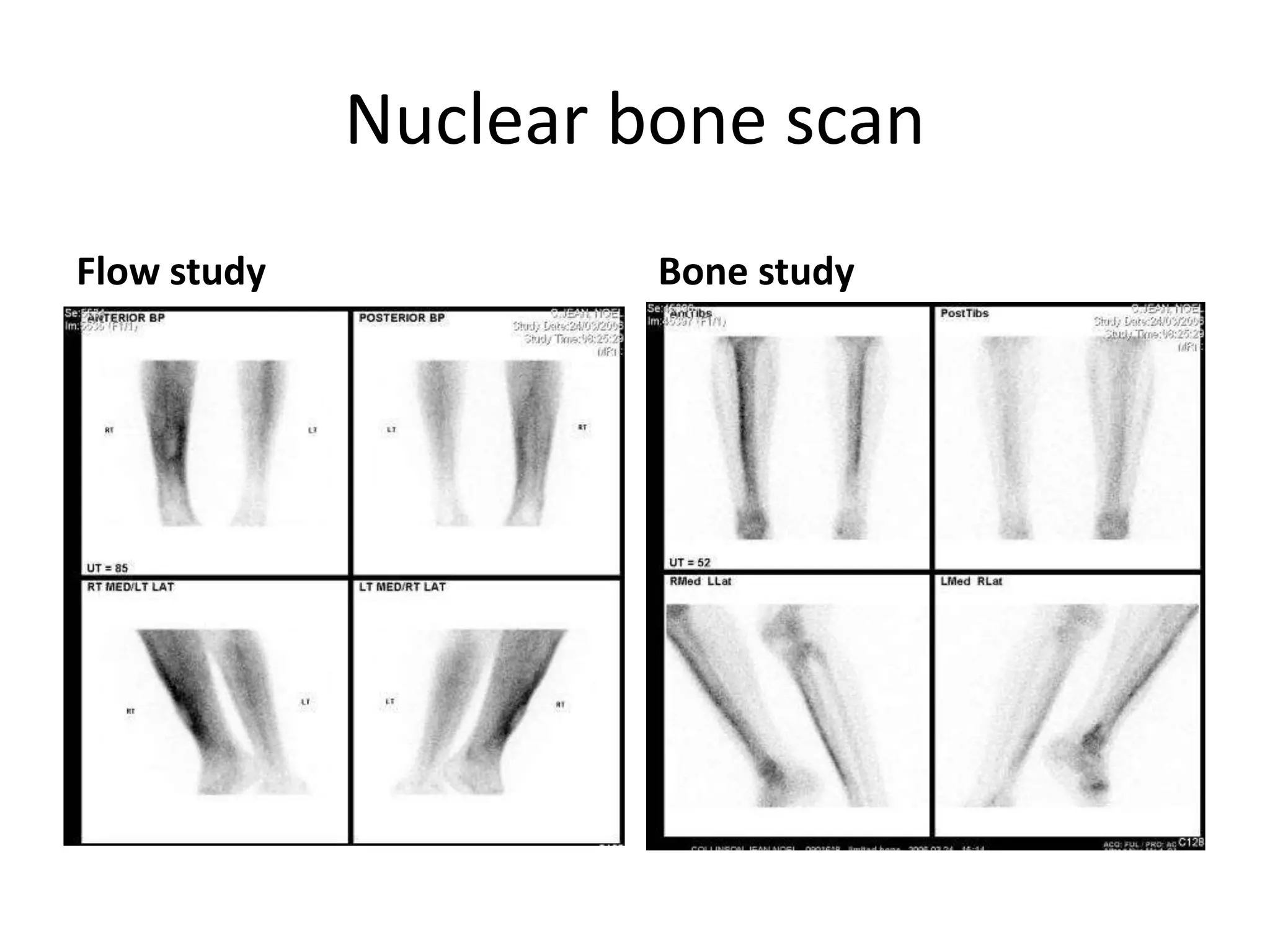
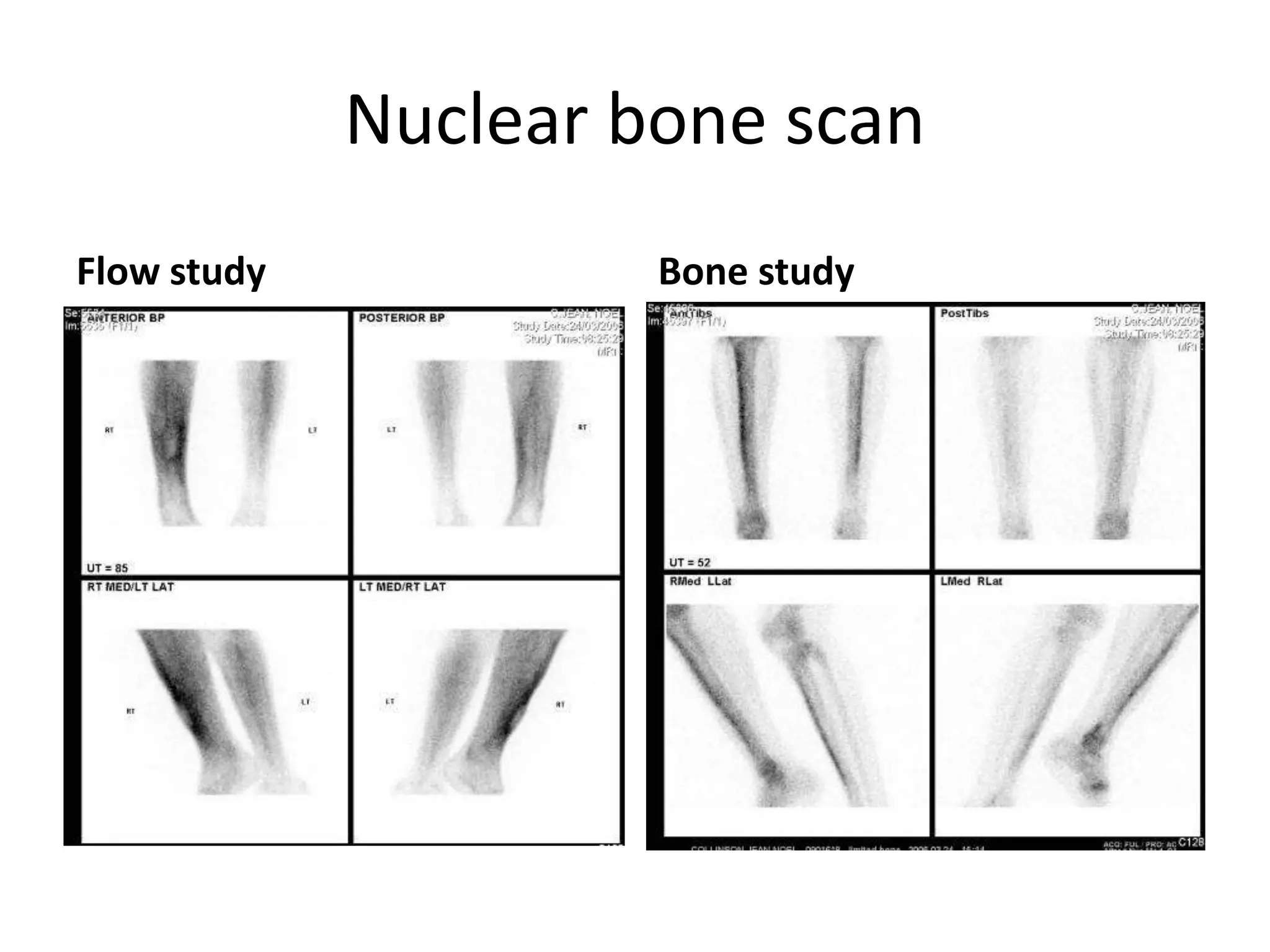
• What does the bone scan show?
• What is the organism?
Nuclear bone scan
Flow study Bone study
An unusual cellulitis
• This 39 year old man presented to casualty with
fever, rigors and “cellulitis” over his right shin
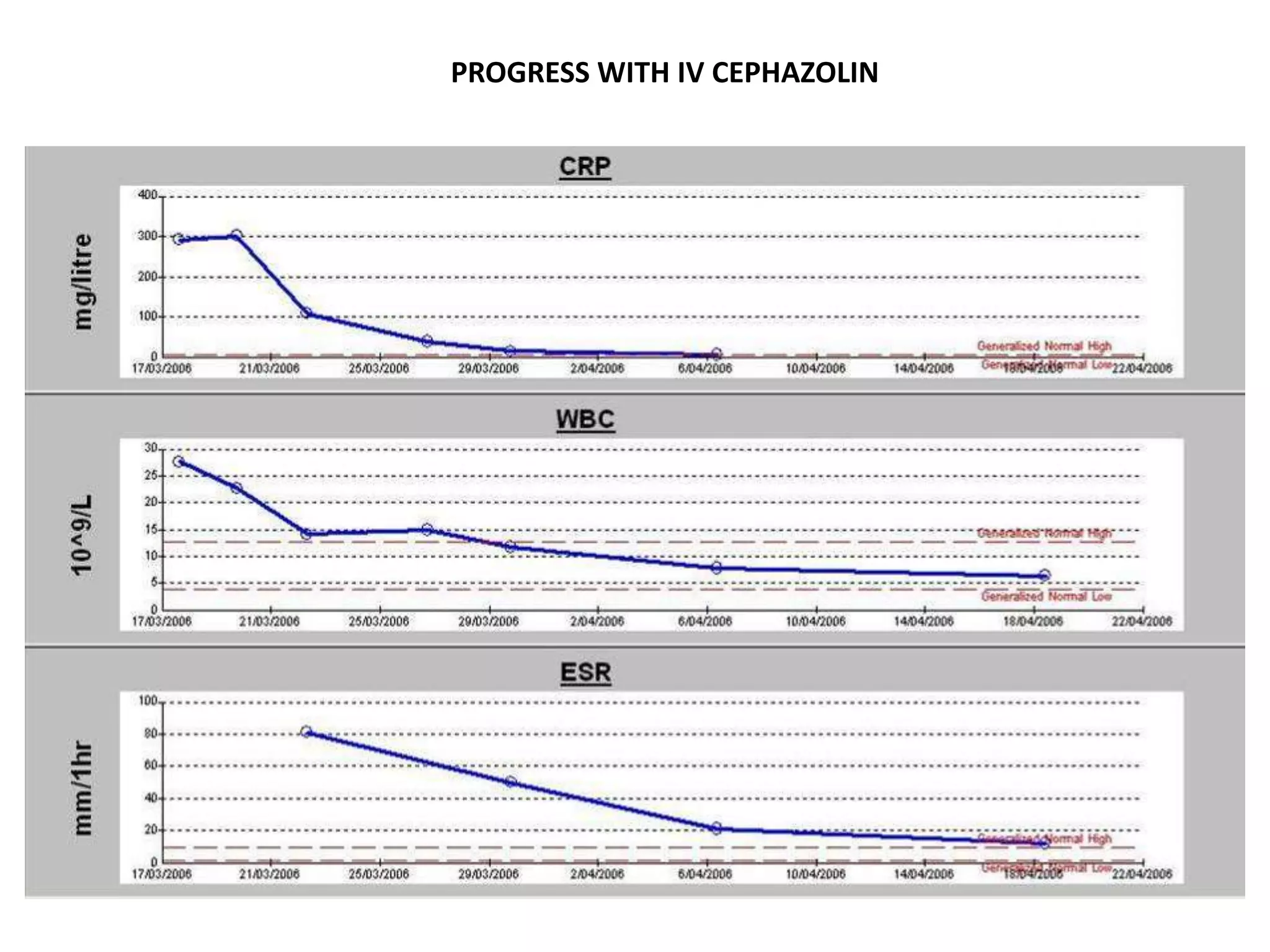
• He was treated with IV cephazolin on HITH
• Fevers continued on treatment and he developed a
collection which was drained twice as an outpatient
• A bone scan showed the collection but no
osteomyelitis
• Group C streptococcus was isolated twice
Beta haemolysis
Group C strep
Nuclear bone scan
Flow study Bone study
PROGRESS WITH IV CEPHAZOLIN
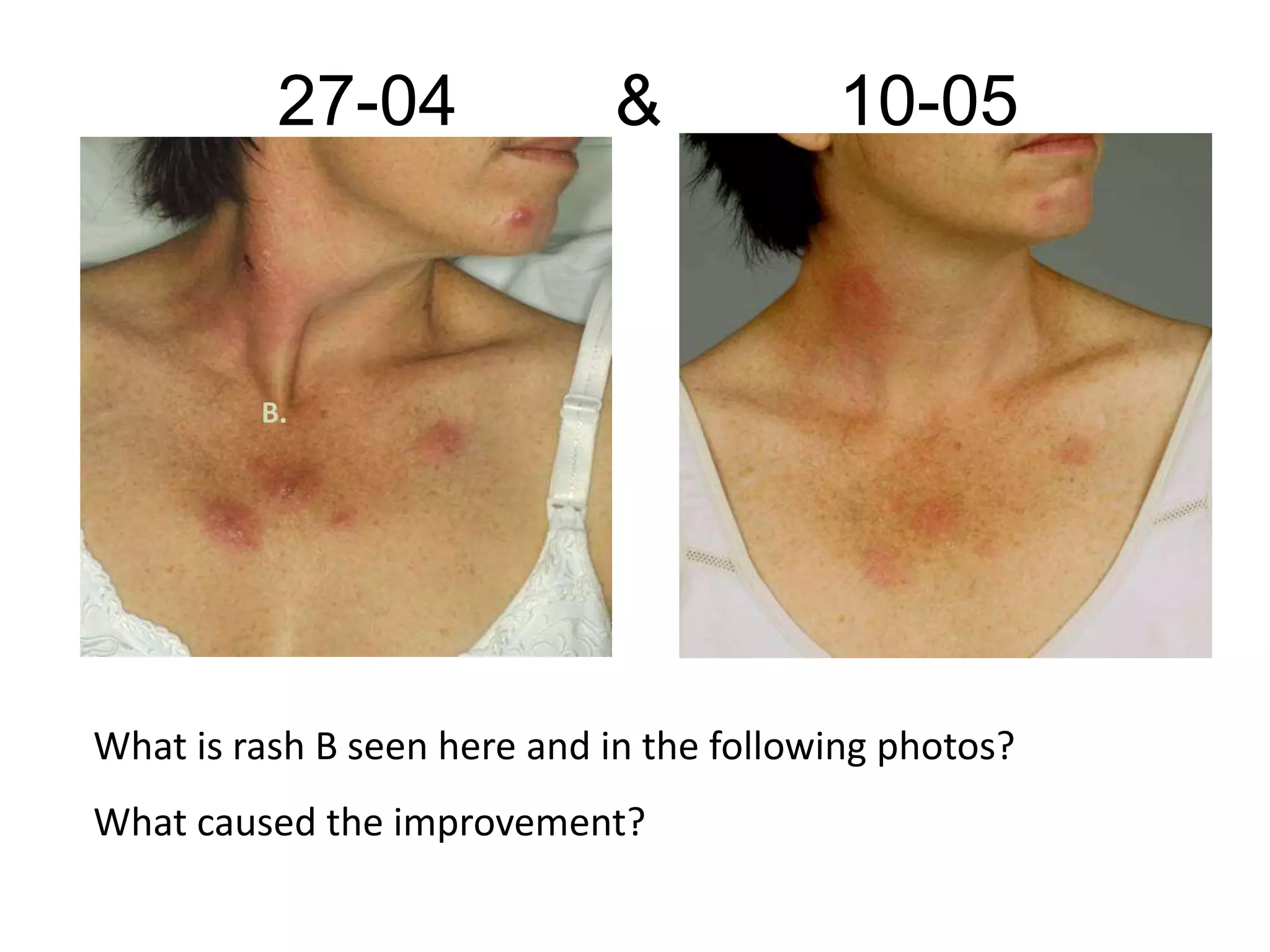
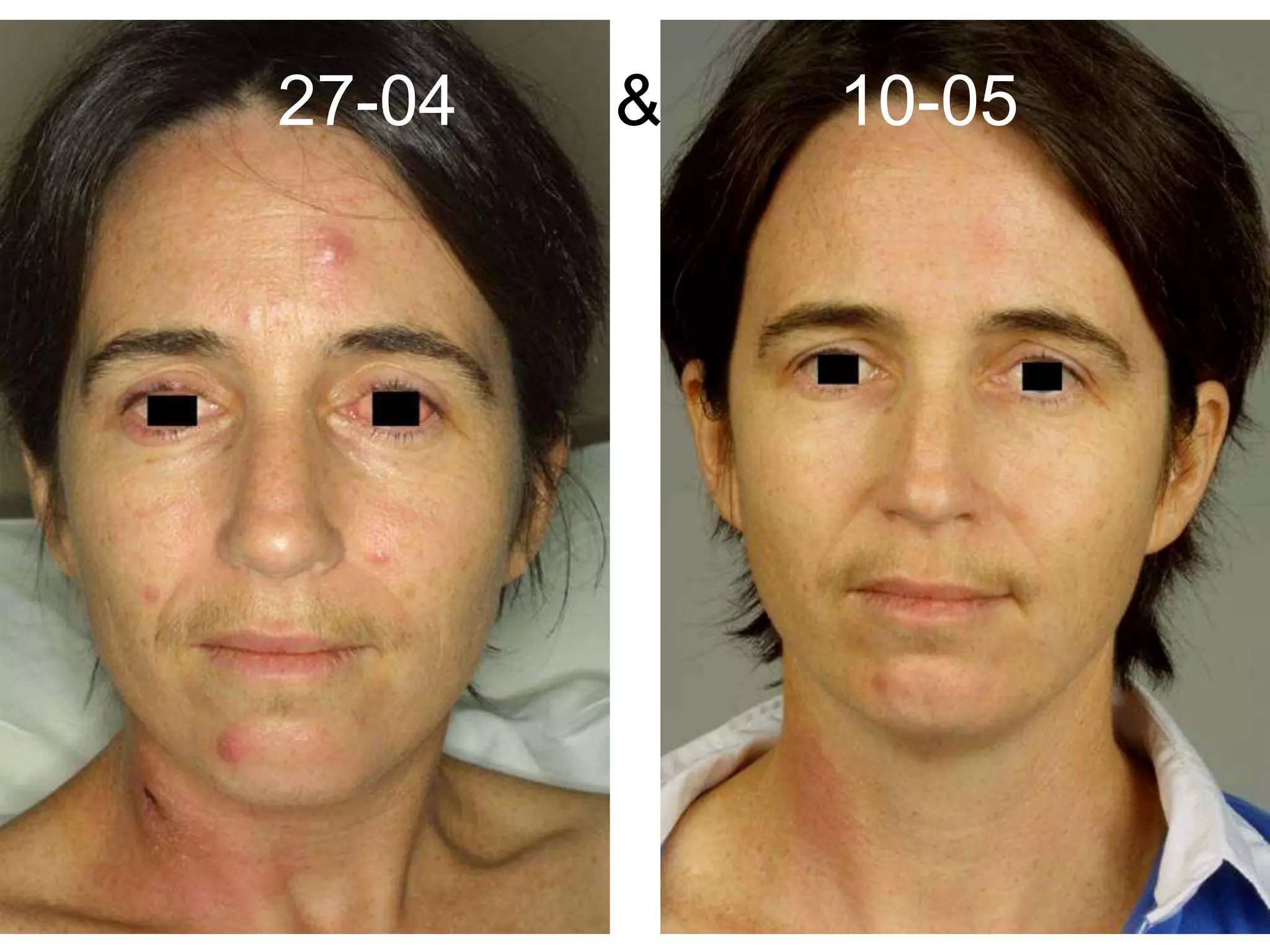
AN UNUSUAL RASH
• This lady cut her foot on coral and sustained a
local infection
• Cultures were not helpful and she was slow to
respond to broad spectrum antibiotics
• Subsequently she developed rash elsewhere as
shown
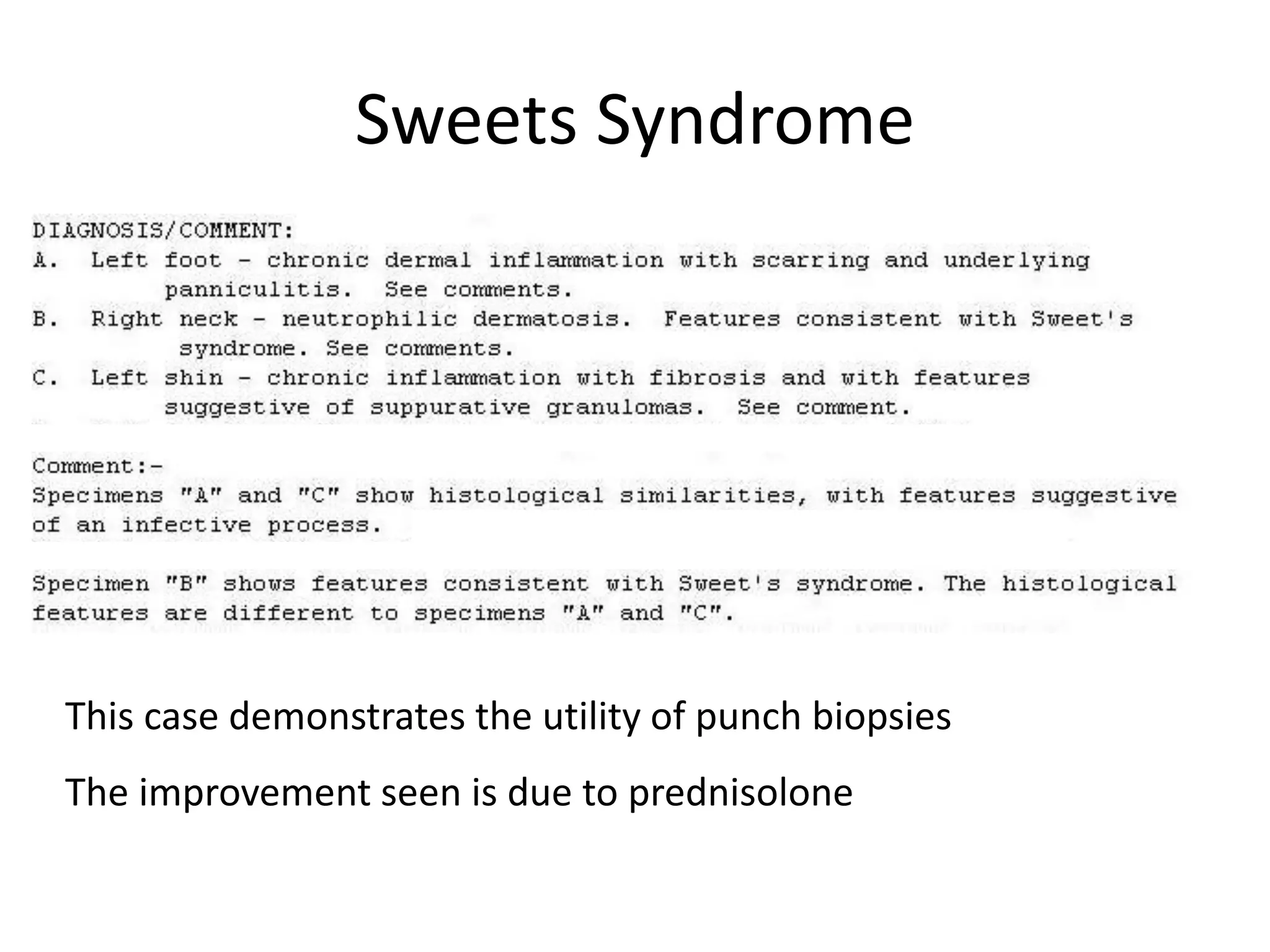
• Punch biopsies were taken and results are shown
• Photos are shown 2 weeks apart
520_547 Pt EM AH1088925
27-04-05 & 10-05-05
27-04 & 10-05
A.
520_547 Pt EM AH1088925
27-04-05 & 10-05-05
27-04 & 10-05
A.
27-04 & 10-05
C.
27-04 & 10-05
B.
What is rash B seen here and in the following photos?
What caused the improvement?
27-04 & 10-05
27-04 & 10-05
27-04
27-04 & 10-05
Sweets Syndrome
This case demonstrates the utility of punch biopsies
The improvement seen is due to prednisolone
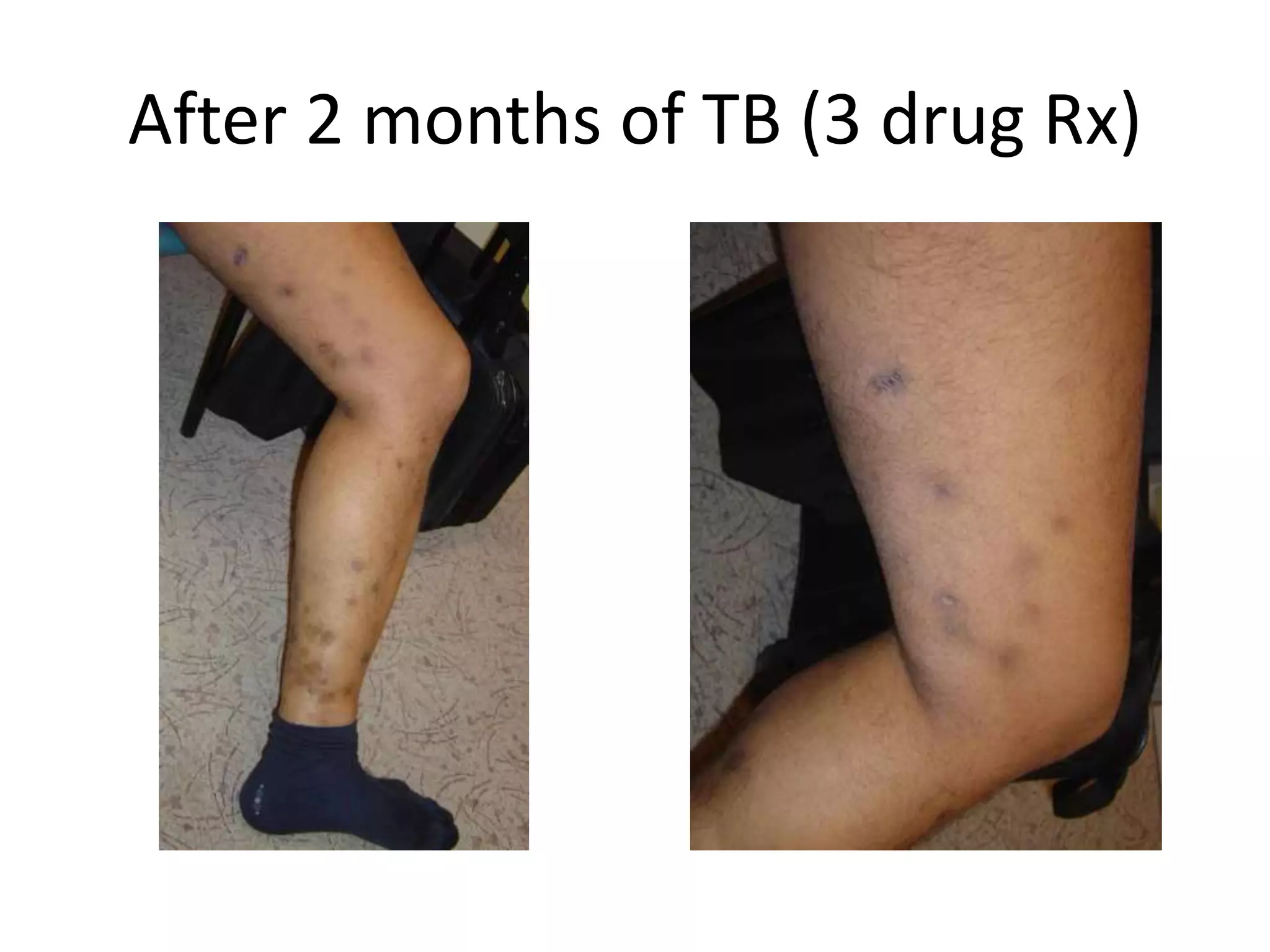
Case
• This 32 year old man from India presented
with painful nodules on both legs as shown
• They had been present for 4 weeks
• He was not unwell
26/04: Tender & painful
26/4: Tender & painful
Spot Diagnosis
• What is this ?
– Erythema nodosum
– Sporotrichosis
– Mycobacterium marinum
– Erythema induratum
– Mycobacterium leprae
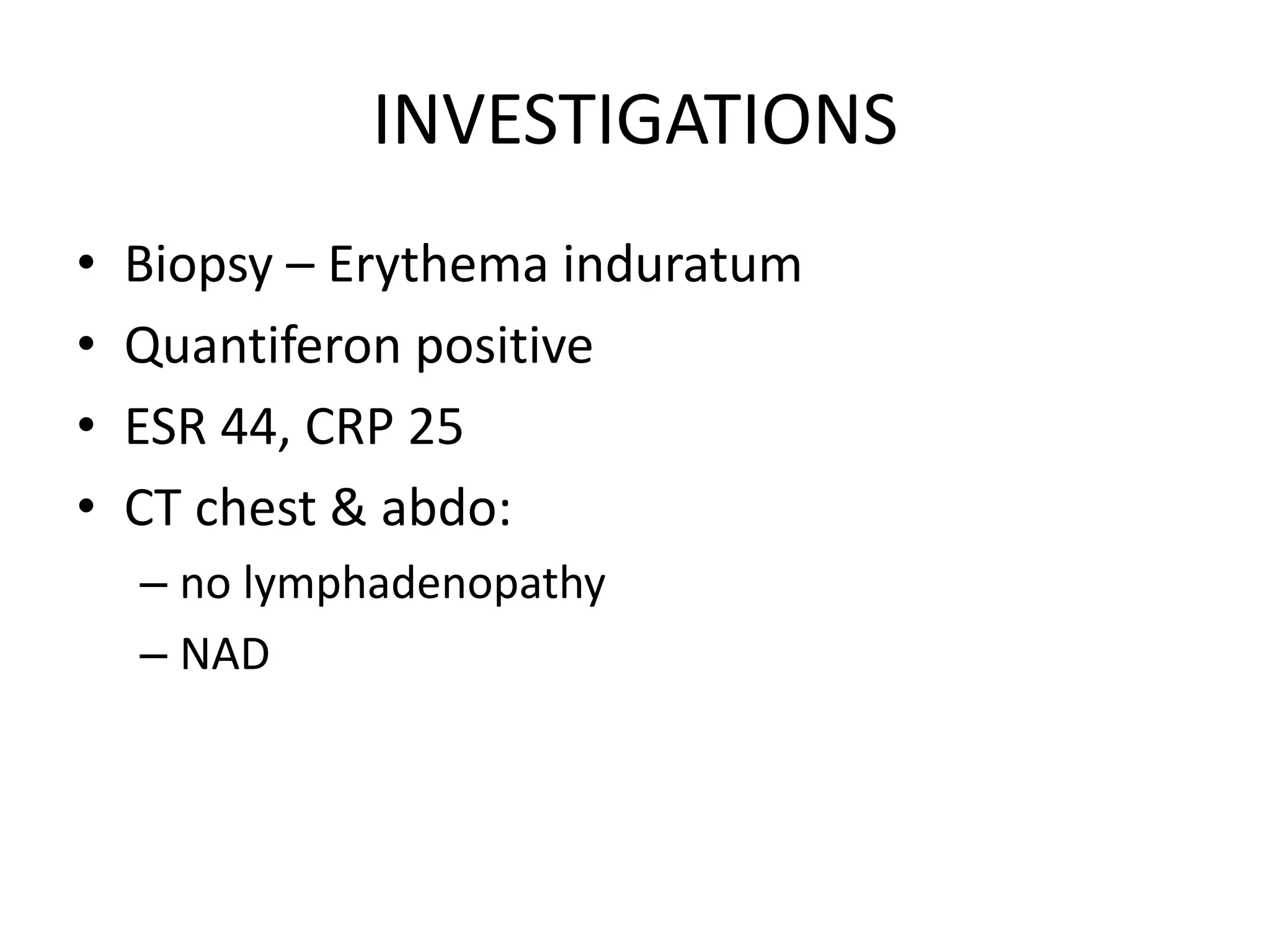
INVESTIGATIONS
• Biopsy – Erythema induratum
• Quantiferon positive
• ESR 44, CRP 25
• CT chest & abdo:
– no lymphadenopathy
– NAD
Erythema Induratum
• Nodular panniculitis (erythema induratum) — Nodular
panniculitis, also called erythema induratum, Bazin disease,
and nodular vasculitis, is the primary alternative diagnosis
in patients with inflammatory nodules of less than eight
weeks duration involving the legs.
• Some case series report clinical distinctions between
nodular vasculitis and EN, with the former more commonly
involving the posterior aspects of the legs, and more prone
to ulceration and recurrence than EN.
• Other series, however, have indicated considerable overlap
between the clinical appearances of these entities.
• Primary tuberculosis is a leading cause of nodular vasculitis.
Nodules on the legs. A clinical, histological and immunohistological study of
82 patients representing different types of nodular panniculitis. AUNiemi KM;
Forstrom L; Hannuksela M; Mustakallio KK; Salo OP SOActa Derm Venereol
1977;57(2):145-54.
• Eighty-two cases of nodular panniculitis of the legs were examined clinically, histologically and
immunohistologically.
• Clinically the cases could be divided into four groups: typical erythema nodosum (ENty) (35 cases),
erythema nodosum migrans (ENmi) (11 cases), erythema induratum (EI) (11 cases) and the
remaining 25 cases not consistent with the others as "non-definite panniculitis" (NDP).
• The main histological categories were septal panniculitis and lobular panniculitis, the former
including erythema nodosum, both typical and migrans, the latter EI and NDP.
• Lobular panniculitis was divided into three subgroups in which the most prominent histological
features were epithelioid cell granuloma, vasculitis and palissading granuloma, respectively.
• Immunoglobulins in the vessel walls were found in 5 of the 46 cases of erythema nodosum, in 19 of
the 36 EI and NDP cases and, in the histological groups in 4 of the 43 cases of septal panniculitis and
in 19 of the 35 cases of lobular panniculitis, respectively.
• Fibrin was found in the walls of the papillary capillaries and deep dermal vessels in the majority of
cases of lobular panniculitis.
• In EI and NDP the follow-up time was 40 months, on average.
• Twenty-two patients were treated with antituberculous drugs, 15 became symptomless, as did 5 of
the 12 patients who were not treated at all.
Beginning of TB (3 drug Rx)
After 2 months of TB (3 drug Rx)
Note the improvement after 2 months
of TB treatment
Case
• 28 year old Australian woman
• PHx dermatitis
• Visiting Thailand after return from Switzerland
(12/09/06-24/09/06)
• Bangkok(3)-Ko Tang(4)-Bangkok(1)-Ko PiPi(4)-
Bangkok(1); arrived Thailand 24/09/06 left
06/10/06
• No IVDU but sexual contact in Switzerland
• No malaria prophylaxis, no typhoid vaccine
• HepA/HepB vaccinated
• Recalls mosquito bites
• October 1, arrival in Ko PiPi
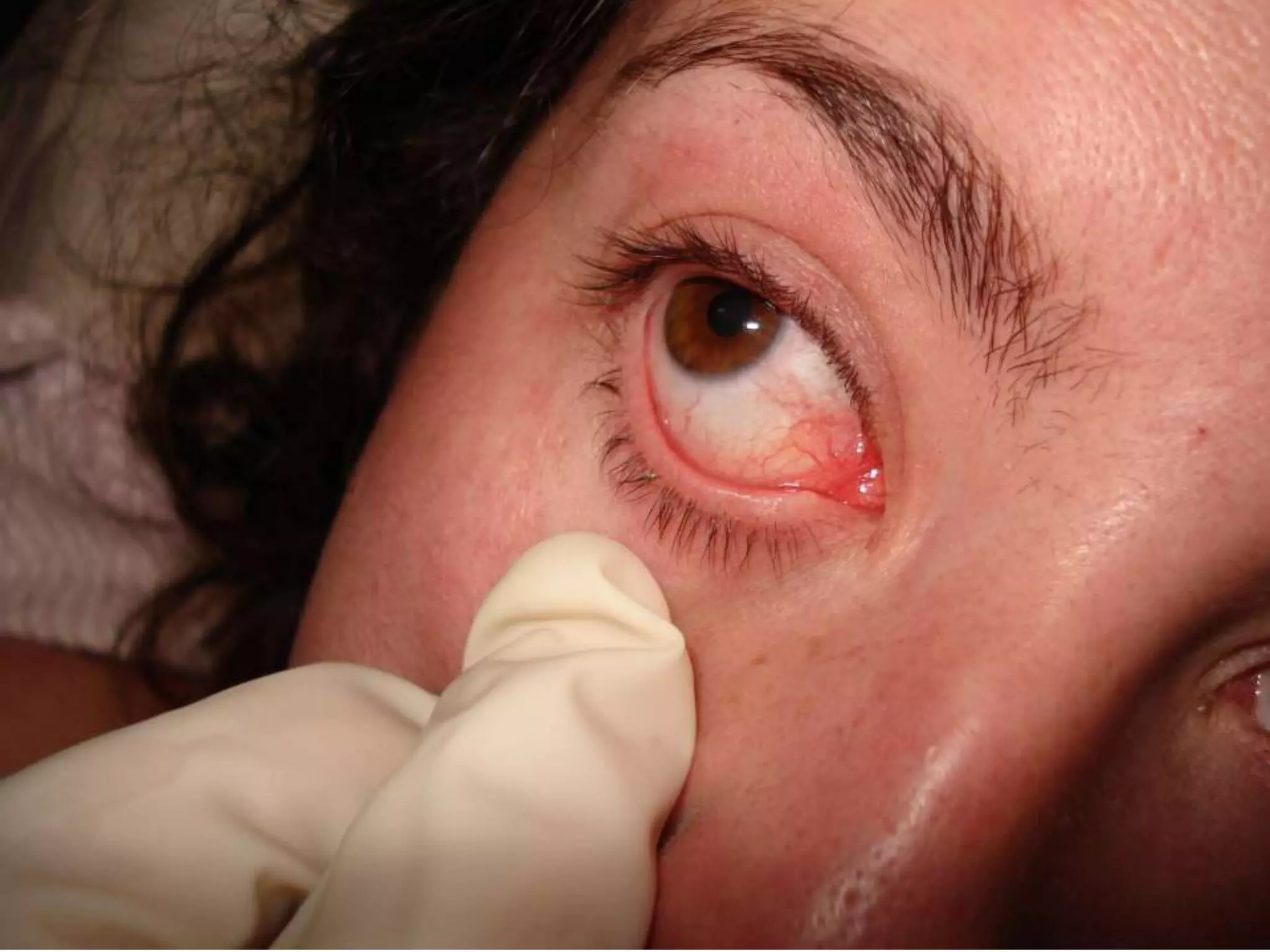
• Unwell with dry cough temperatures,
rhinorrhoea and conjunctivitis (01/10)
• Stayed in bed
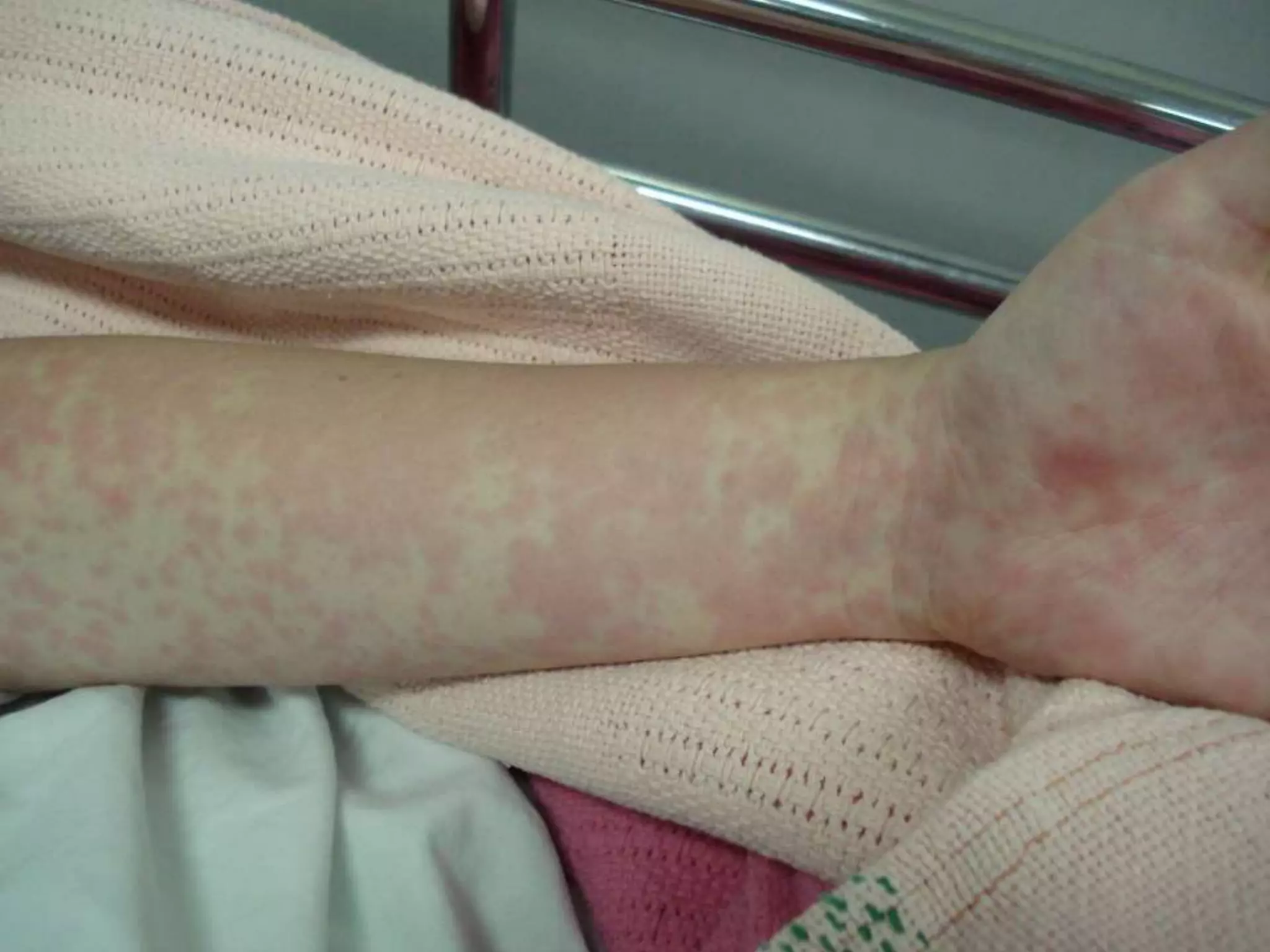
• D+2 - facial/palmar rash
• D+5 - truncal macular-papular rash
• Returned to Bangkok October 6
• Attended doctor at airport, im amoxycillin
• Boarded plane for Melbourne???
• Arrived late 06 October; quarantined
• Avian influenza excluded on history
• Alfred Hospital 0050 October 07
• Side room 0055
• Ward 7west 07/10 1224 (N 95 mask transit)
• Cough and rash predominant features
• EUC NAD
• ALT 108, CRP 45, Hb 138, WCC 3.28, Neut
2.65, Lym 0.26, N Coags
• BCs, Malaria T+T/ICT, dengue serology
• Stool spec, Nose and throat swabs
• Temperature 39ºC
• Normotensive
• Tachycardic
• Conjunctival injection
• Lacrimation
• Flushed
• Hepatosplenomegaly
• Coalescing rash on face
• Diffuse non-blanching, non-pruritic rash on
arms, legs and trunk
• Palmar involvement
Case
• WHAT IS THIS ILLNESS?
• HOW WOULD YOU DIAGNOSE IT?
• HOW WOULD YOU TREAT HER?
0582884
Impression
• Measles
• Rubella
• Enterovirus
• Rickettsial illness
• Influenza
• Adenovirus
• Dengue fever
• Syphilis
• Typhoid fever
• Malaria
• Drug reaction
Recalled 1 x vaccination for “MMR” in year six
• Blood cultures –ve
• Malaria T+T + ICT –ve
• EBV IgG +ve, CMV IgG –ve, Rubella IgG >400,
Influenza A+B <10, Adenovirus IgG 2,560, GpB
Arbovirus IgG –ve, syphilis serolgy –ve; Hep A IgG
+ve, IgM –ve, HepB sAg –ve, sAb 770, HepCAb -ve
• HSV-1 PCR +ve from mouth ulcer
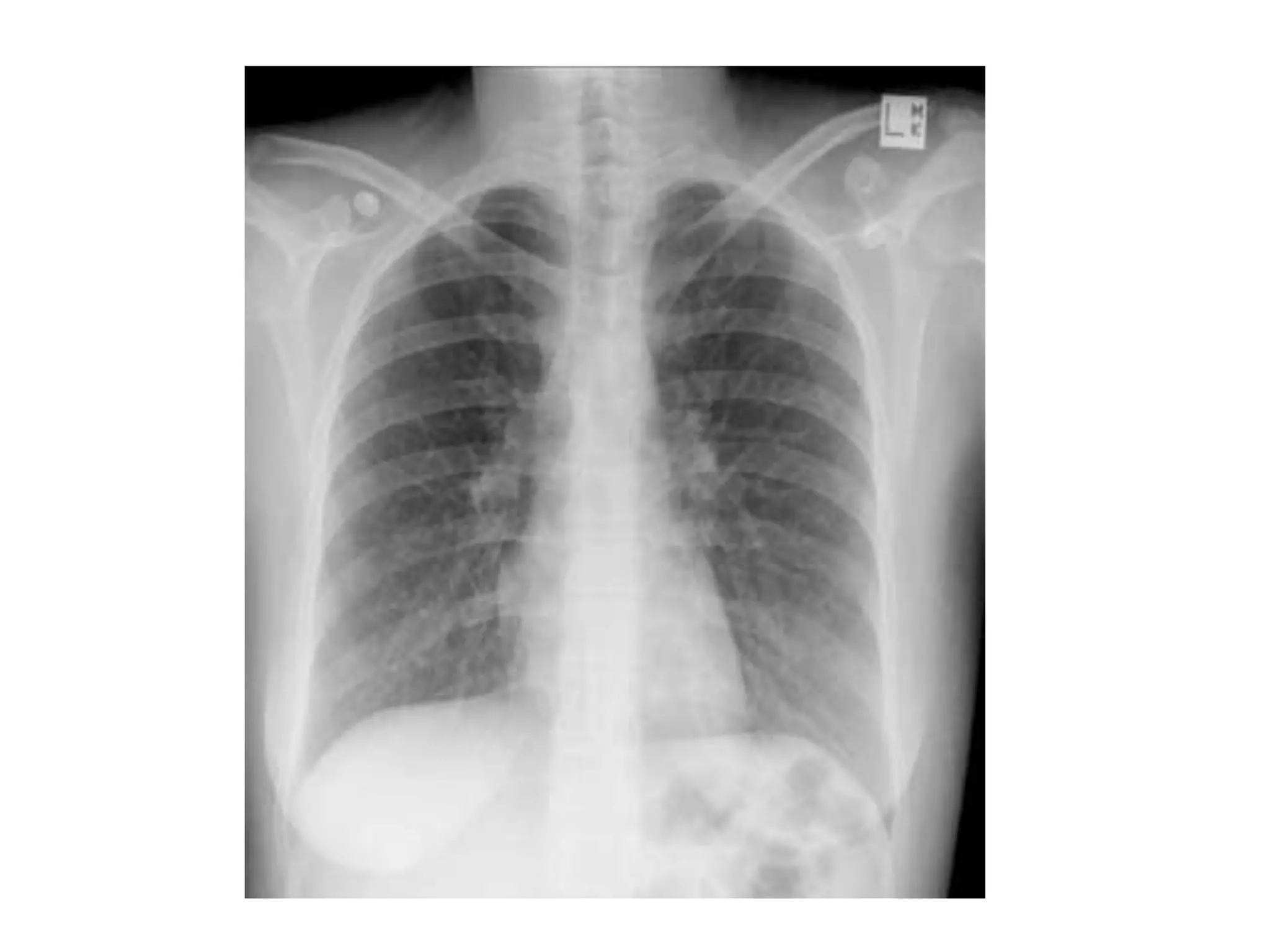
• Throat/Nose swabs RSV/measles PCR +ve
• Measles IgG + IgM +ve
Diagnosis and course
• Measles suspected
• Atypical features
– Rash day 2-3
– Antibiotics
– History of vaccination
• Notified 09 October 48 hours after
admission
• Diagnosis; Measles and RSV infection
without pneumonitis
Diagnosis and course
• 5 days in hospital
• Recovery of symptoms with supportive treatment
• Neutropenia to 0.42 on day 2 resolved
• Discharged home, well at follow up
• Subsequently identified as genotype D5
• Health Department initiated contact tracing
• No major contacts at Alfred (rash >4 days)
Measles
• Paramyxovirus genus Morbillivirus
• RNA virus with 6 structural proteins, 3 complexed to
RNA and three with the viral envelope
• Short survival time (<2hrs in air)
• Highly infectious
• Respiratory droplets
• Infectious from prodrome (3-5 days prior to rash
appearance) and for 4 days after the rash appearance
• Incubation period 10-14 days
• Prodrome; fever, cough, coryza,
conjunctivitis
• Rash begins on face and upper neck then
becomes generalised
• Otitis media (severe) in 7%
• Bronchopneumonia in 6%
• Encephalitis 2-10/10,000 cases (mortality
10-15% with 15-40% having severe
permanent neurological sequaelae
Koplik spots
• Subacute sclerosing panencephalitis (SSPE)
1/100,000 cases; fatal with progressive brain
damage
• Complications more common in chronically ill and
very young children
• 1976-2000 98 deaths in Australia, more than
diphtheria, tetanus, pertussis and poliomyelitis
combined
• 2001 91% of children aged 2 had been vaccinated
• 2 doses of MMR at 12 months and at 4 years of
age
• Adults born during or post 1966 should have two
doses
Who not to worry about
• Children aged 1-4 with one dose of vaccine
• Persons over 4 and born since 1966 with
documented evidence of 2 doses of a measles
containing vaccine
• Persons before 1966
Conclusions
• Sporadic outbreaks require prompt identification and
containment
• Presentation can vary
• Majority of cases “imported”
• Beware those born since 1966
• Conjunctivitis, corzya, cough and fever are hallmark
features
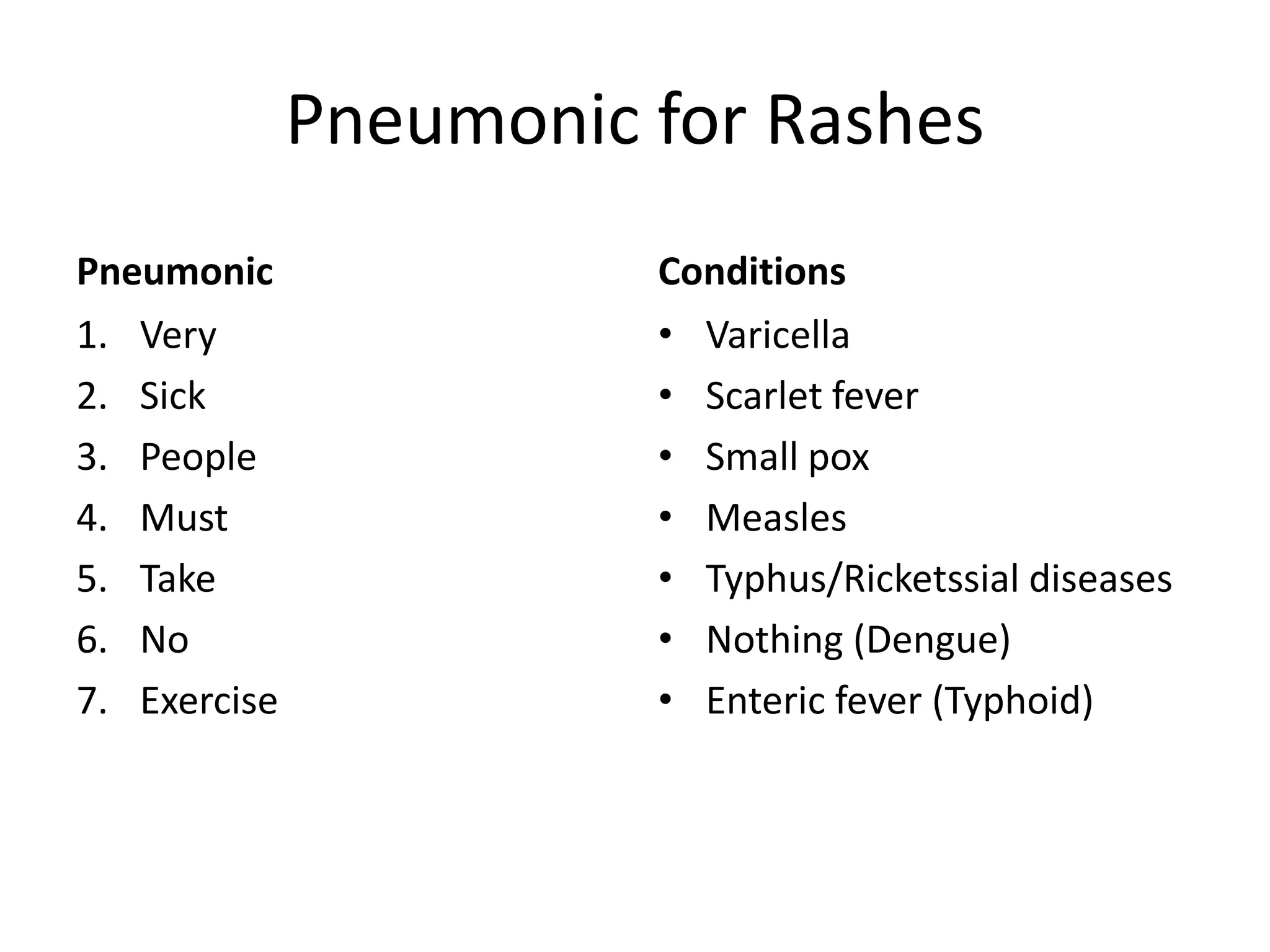
Pneumonic for Rashes
Pneumonic
1. Very
2. Sick
3. People
4. Must
5. Take
6. No
7. Exercise
Conditions
• Varicella
• Scarlet fever
• Small pox
• Measles
• Typhus/Ricketssial diseases
• Nothing (Dengue)
• Enteric fever (Typhoid)
Case
• 41 y.o. ♂, returned traveller from Bali, sent in
by GP to the ED with fever and rash:
– Unwell since Day 3 returning
– Presented to GP on Day 8 after returned
Presenting Complaint
• Day 1 of illness:
– Coryza symptoms
– Tiredness, malaise
– Mild intermittent headache
• Day 3 of illness:
– Mild “red watery eyes” ? Conjunctivitis
• Day 5 of illness:
– Fever 38˚C – No sweats/rigors
– New rash: Started on trunk, spread centrifugally
to upper and lower limbs
Presenting Complaint
• System review:
– No cough, SOB, chest pain
– No sore throat
– No photophobia, neck stiffness
– No nausea, vomiting
– No diarrhoea, abdominal pain
– No urinary symptoms
Travel History
• Travelled to Bali with family for 2/52:
– No malaria prophylaxis / travel vaccines
– Visited rural Bali
– Travelled by car around Bali
– Stayed in villa, consumed restaurant food
– Admitted few mosquito bites
– No zoonosis exposure
– No fresh water swimming
– Denied unprotected sexual intercourse & IVDU
– Everyone was well throughout the trip
Additional History
• PHx: nil
• Medications: nil
• Allergies: NKA
• SHx:
– Originated from Russia
– Work as a scientist in a
local university
– Wife currently 33/40
pregnant
– Daughter 3y.o. – well
– Non-smoker, no ETOH, no
recreational drug use
– Unsure of immunisation
status
Examination
General
• Looked well
• Haemodynamically stable:
– BP 120/75
– HR 88
– RR 16
– SaO2 98% RA
– Afebrile
Organ Specific
• Head & neck:
– Occipital & cervical
lymphadenopathy
– No Koplik spots
• Cardiovascular – unremarkable
• Respiratory – unremarkable
• abdominal – unremarkable
• No arthralgia
Examination
• Generalised, blanching
maculopapular
erythematous rash
• Predominantly on
upper torso, but
involved face, upper
and lower limbs
DDx
Fever on returned traveller
• Malaria
• Dengue
• Typhoid
• Respiratory infections:
URTI / Influenza / pneumonia
• Gastroenteritis
• Amoebic liver abscess
• Incubation period / Dx / Mx
Investigations
• FBE 147 / 3.24 / 140:
– Neutrophils 1.83
– Lymphocytes 0.89
• Malaria thick & thin films
– negative
• Blood culture – no growth
• UEC & LFT normal
• Respiratory viruses PCR –
negative
• MSU – NAD
Serology:
• EBV:
– IgM negative
• Measles:
– IgM negative
– IgG positive
• Rubella:
– IgM positive
– IgG negative
Management
• Home isolation – for another day (4 days
after rash onset)
• Wife: 33/40 pregnant
–Congenital Rubella Syndrome – transmission
depends on timing of infection
–Has been adequately vaccinated
–No treatment needed
• Daughter – Due for 2nd MMR
• Department of Health notification
Clinical manifestation:
• Can be asymptomatic
• Prodromal symptoms: (1-5 days)
–Malaise
–Low grade fever
–Lymphadenopathy (post cervical/occipital)
• Rash (3-5 days)
–There is variation in the progression, extent,
and duration of the rubella exanthem
Rubella
Measles
Photos from Fairfield Hospital slide collection
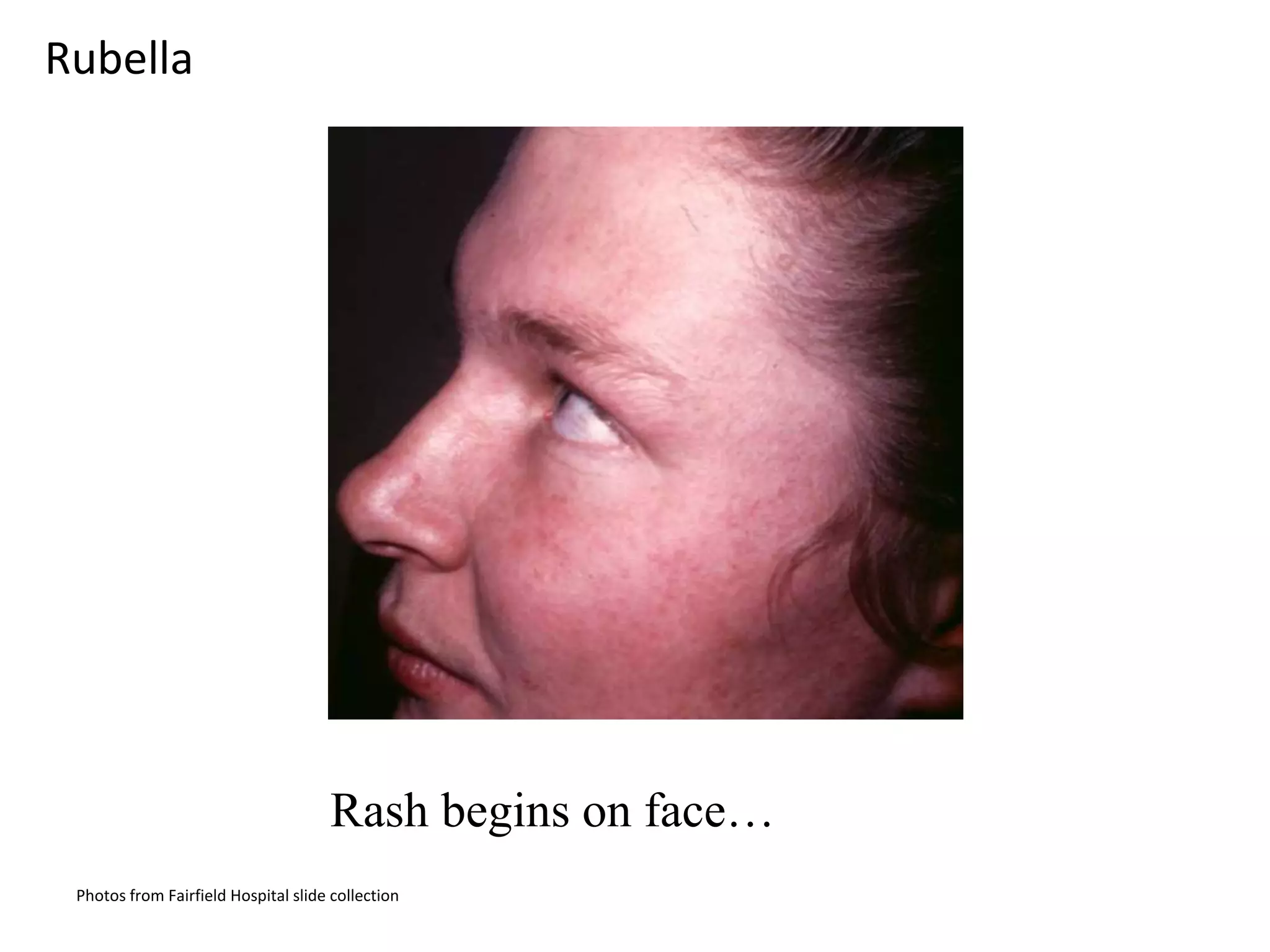
Rash begins on face…
Rubella
Photos from Fairfield Hospital slide collection
Then, spreading down
the body centrifugally.
Rubella
Photos from Fairfield Hospital slide collection
And to other parts of the
body.
Rubella
Photos from Fairfield Hospital slide collection
Management
• Isolation
• DHS notification & Contact tracing
• Pregnancy
Rubella prevention: Vaccines
• 2 types:
– MMR vaccine
– Monovalent Rubella vaccine
• Principal aim: Prevent Congenital Rubella
Syndrome
• Target:
– All children – at 12 & 18 months
– Women of child bearing age
– Post-partum seronegative women
– Adolescent & adult males
- born after 1966 – need 2 doses of MMR if no
documented vaccination record
– Healthcare worker & people working with children
Case
• 35 yr old reserve bank manager
• In Nukualofa (Tonga) for 3 days 5-8 March
• Became ill on 12th March
• Fevers, headache, sore eyes, back ache, Joint
aches
• Admitted to The Alfred on 13th March
• Later developed a rash
1179838
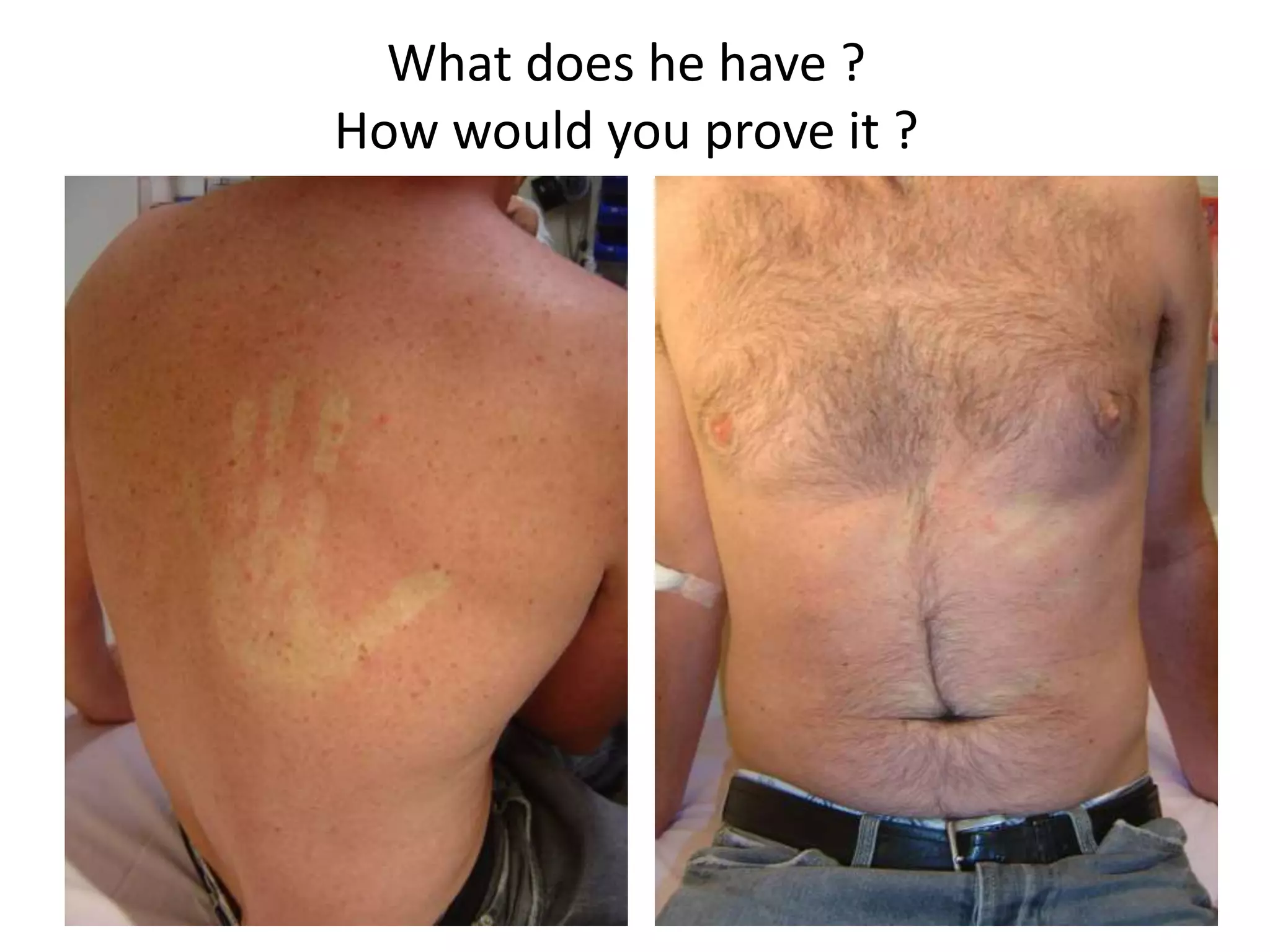
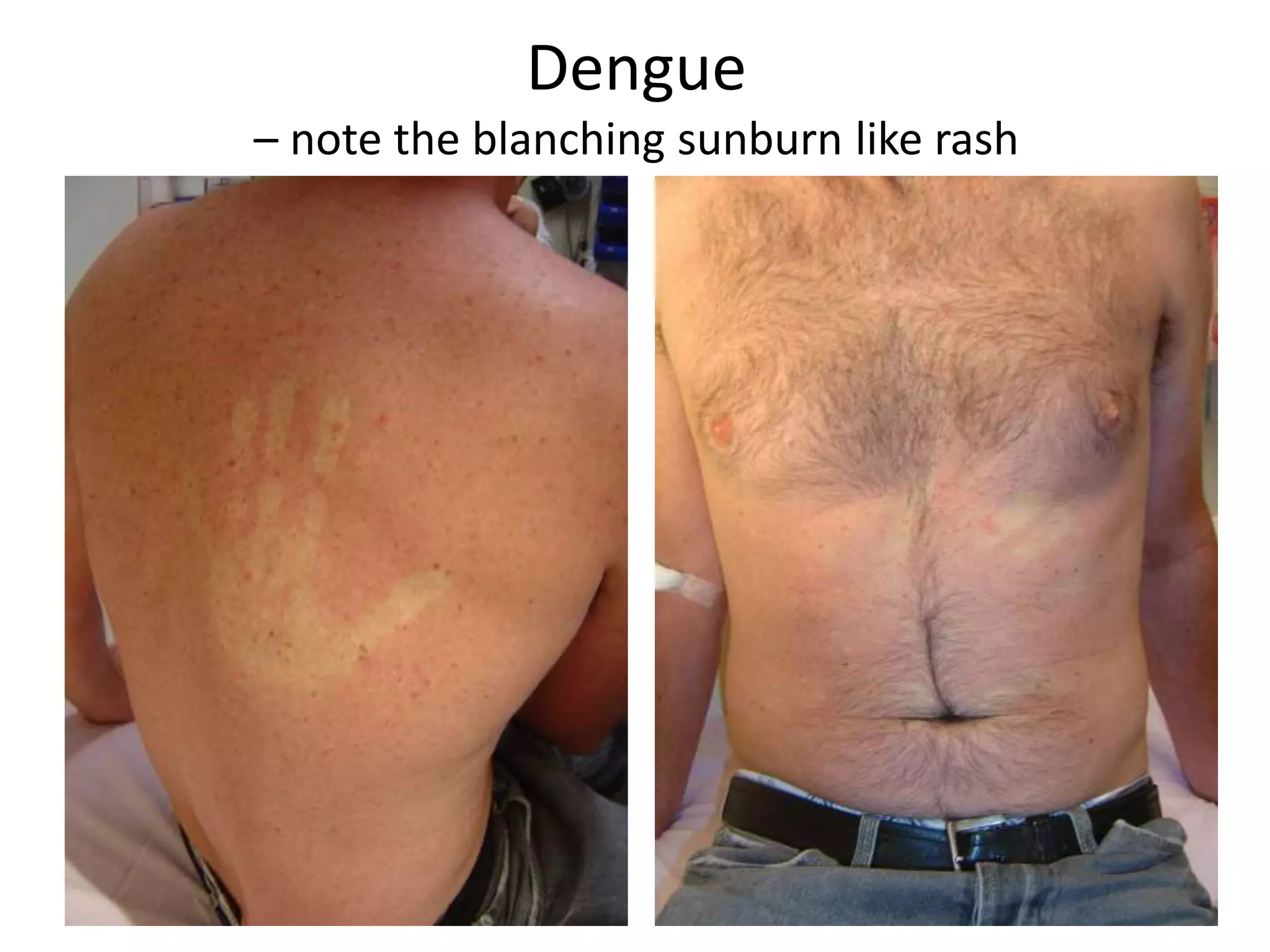
What does he have ?
How would you prove it ?
Dengue fever
• 35 yr old reserve bank manager
• In Nukualofa (Tonga) for 3 days 5-8 March
• Bitten by mosquitoes
• Became ill on 12th March
• Fevers, headache, sore eyes, back ache, joint aches
• Admitted to The Alfred on 13th March
• Later developed a rash
• Lethargy took 5 weeks to resolve
1179838
Dengue
– note the blanching sunburn like rash
Case
• This 29 yr old lady presented with a rash on her
left foot 4 weeks after returning from Thailand
• Travel included Bangkok and coastal areas
including swimming
• The rash was itchy and changing daily
• She had tried topical medication with no help
Questions
• What is the diagnosis?
• What organism(s) cause this?
• What would you treat her with?
CUTANEOUS LARVA MIGRANS
• Cutaneous larva migrans
• Usually due to Ancylostoma braziliense (dog
and cat hookworm )
• Treatment: Albendazole or ivermectin
Case
• This young man has spent a few months in the
tropics.
• He presented with this rash.
• Skin scrapings were taken – what does he
have?
• How would you treat him?
Malassezia furfur
• M. furfur is a yeast - appearance of “spaghetti and
meatballs” is diagnostic. Culture is difficult (olive oil needed )
• It causes pityriasis versicolor or tinea versicolor. Rarely can
cause catheter related sepsis related to TPN or intralipid.
• Treatment is with selsun shampoo topically or an azole
cream.
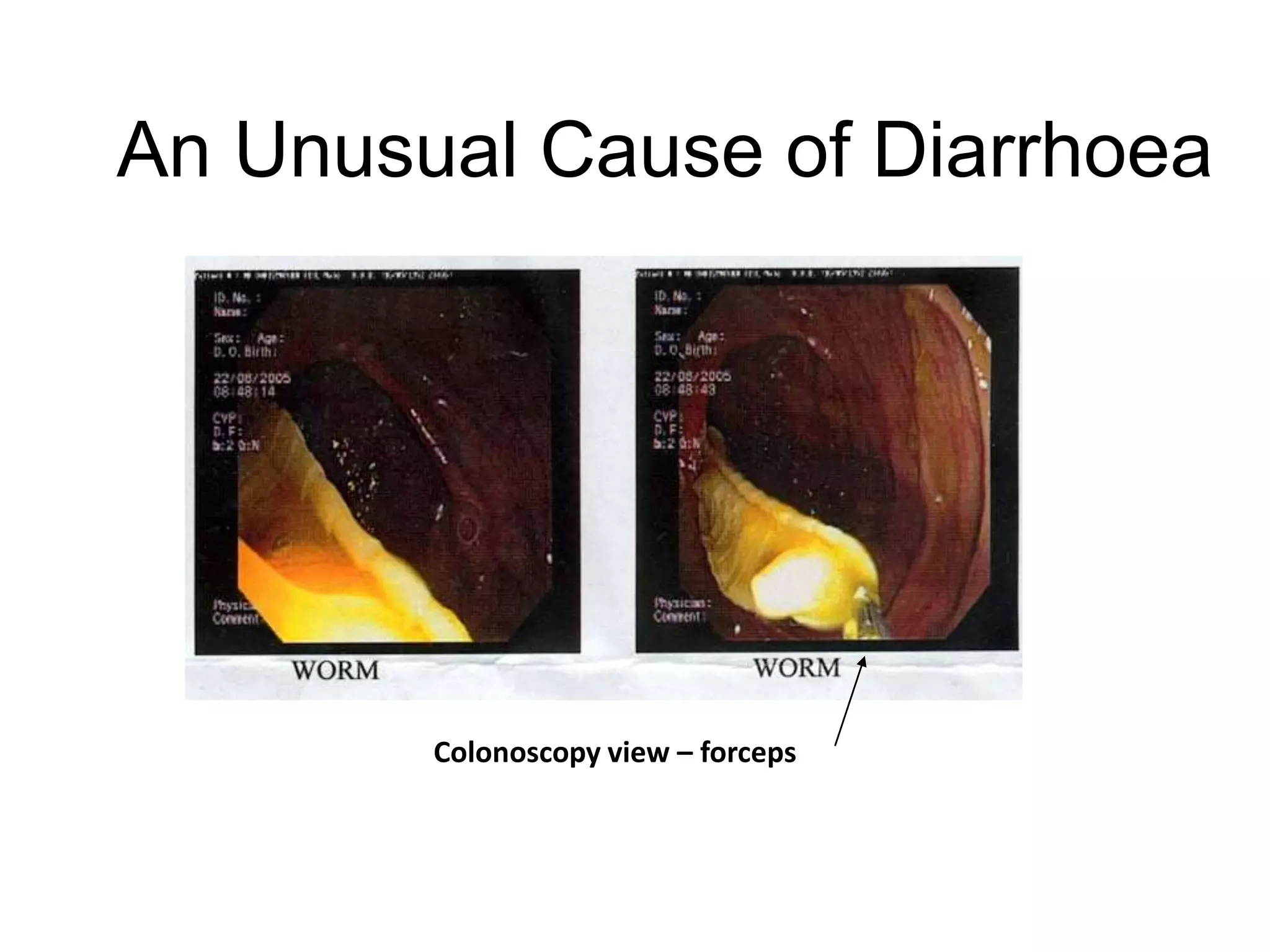
An Unusual Cause of Diarrhoea
• A 41 yr old man with chronic diarrhoea and
abdominal discomfort for 9 years was referred
for a colonoscopy.
• At colonoscopy a worm was found emerging
from the terminal ileum.
• With “tugging” a small segment was removed
but the private lab could not identify the
parasite.
An Unusual Cause of Diarrhoea
Colonoscopy view – forceps
An Unusual Cause of Diarrhoea
• After praziquantel the worm was expelled into
the toilet and brought to The Alfred for
identification.
• The patient later admitted to having
symptoms for 9 years since visiting Japan!
Eggs
• Worm - ~ 2 metres long
• Eggs
Eggs – high power
• DIPHYLLOBOTHRIASIS: FISH TAPEWORM — Fish tapeworm infections are due to
parasites of the Diphyllobothrium species. Different species are endemic in various parts
of the world. The most common species worldwide is D. latum. It is seen predominantly
in northern Europe and Japan but has also been reported from many other countries.
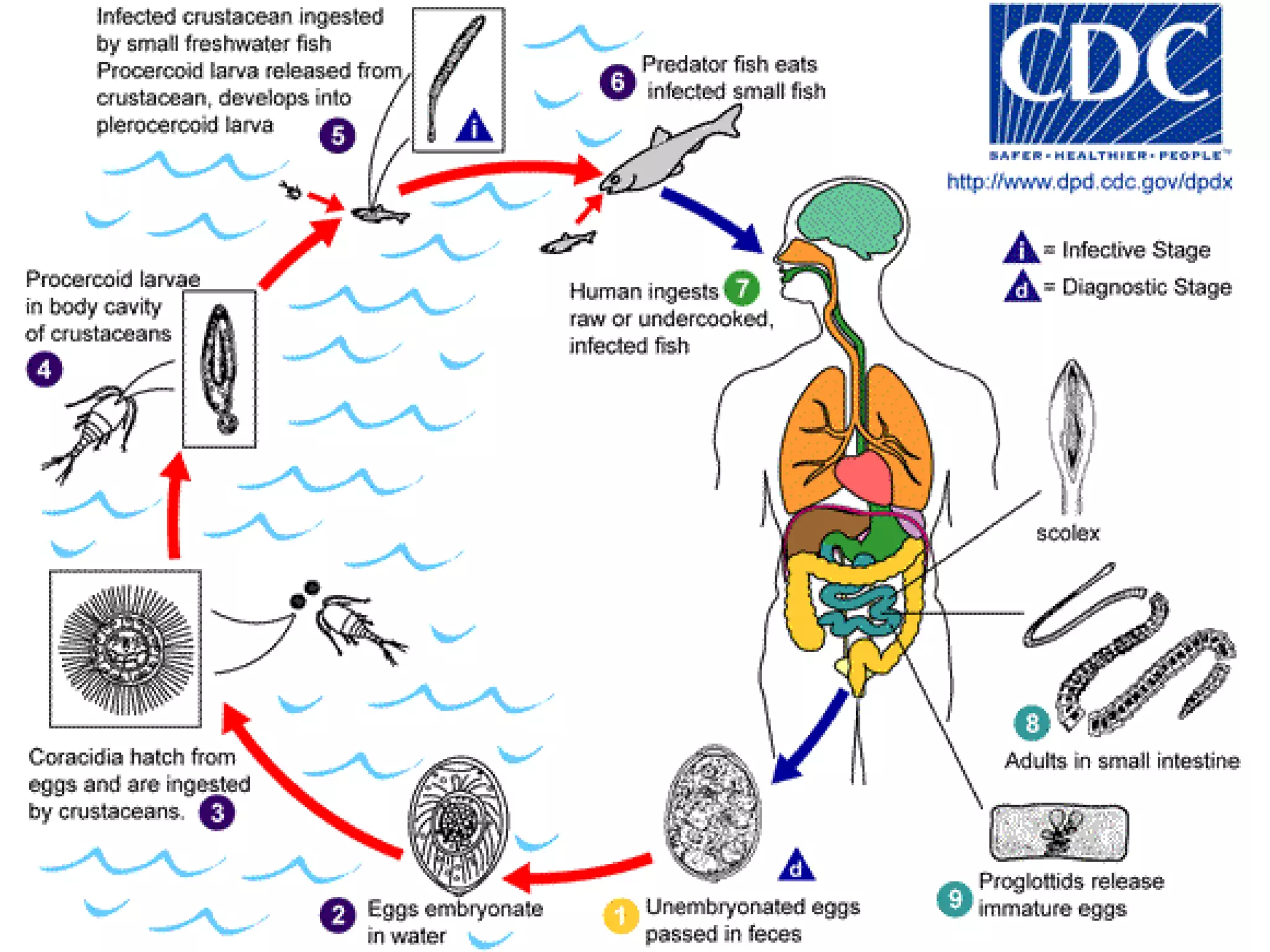
• Life cycle — Humans are the main definitive host for D. latum and the most important
reservoir of infection. However, some other Diphyllobothrium species primarily infect
birds or mammals and are less common causes of human infection.
• As with Taeniasis, the adult parasites live in the human intestinal tract, and eggs and
proglottids are passed in the faeces. These tapeworms can be very large, measuring up
to 12 m and containing 3000 to 4000 proglottids. When eggs are discharged into
freshwater (D. latum and most other species) or marine water (D. pacificum), they hatch
and release motile embryos which are ingested by minute waterfleas (first intermediate
hosts). Following ingestion by larger crustaceans and fish (second intermediate hosts),
these motile embryos develop into larvae (known as sparganum or plecocercoid larvae),
which are infectious to humans. When raw or undercooked infected fish and crustaceans
are eaten, these larvae are ingested; development into an adult tapeworm in the human
intestine completes the life cycle.
• Many freshwater fish can transmit D. latum infection. People who eat various forms of
raw fish, such as sushi, sashimi, and ceviche, are at risk of infection. Infection is often
associated with raw salmon.
• Passage of eggs begins approximately one month after ingestion of the contaminated
fish (the prepatent period). Each tapeworm can produce more than one million eggs per
day, but egg passage can be intermittent. Eggs are passed from the adult fish tapeworm
via a midline uterine pore. The adult tapeworm survives for approximately 10 years in
the human GI tract.
• Clinical symptoms — Most individuals with diphyllobothriasis are asymptomatic. A
proglottid can occasionally be regurgitated or passed in the faeces, but this occurs less
commonly than with Taenia species. Nonspecific symptoms that have been attributed
to infection include fatigue, diarrhoea, numbness, dizziness, and allergic symptoms.
Mechanical obstruction of the intestine can occasionally occur if there are several
worms that become entangled.
• Vitamin B12 deficiency — The classical manifestation of infection with D. latum is
megaloblastic anaemia due to vitamin B12 deficiency. D. latum has a unique affinity for
vitamin B12 and therefore competes with the host for absorption. Deficiency develops
particularly if the host already has marginal B12 levels before acquiring the infection.
• It has been reported that approximately 40 percent of infected individuals have low
B12 levels but that only 2 percent actually develop anaemia . If the B12 deficiency is
severe, pancytopenia, glossitis, dyspnea, and neurologic abnormalities (subacute
combined spinal and peripheral nerve degeneration) can develop.
• A peripheral eosinophilia of 5 to 10 percent may occur in some infected patients.
• Diagnosis — Megaloblastic anaemia and B12 deficiency can be a clue to the diagnosis
of diphyllobothriasis.
• Microscopy — The definitive diagnosis is made by finding characteristic eggs in the
stools or occasionally by finding evacuated segments of proglottids.
Differential Morphology of Cestodes: Eggs
Species Size Shape Colour Stage Specific
Features
Taenia saginata,
T. solium
35 μm
31-43 μm
Spherical
with thick
striated shell
Walnut
brown
Embryonated
6-hooked
oncosphere
Proglottids
or scoleces
for
speciation
Hymenolepsis
nana
47x37 μm
40-60 x 30-50 μm
Ovoid with 2
distinct
membranes
Colourless Embryonated
6-hooked
oncosphere
Polar
filaments
Diphyllobothrium
latum
66x44 μm
58-76 x 40-51 μm
Oval or
ellipsoidal
with
operculum
Yellow to
brown
Unembryonated Resembles
hookworm
egg
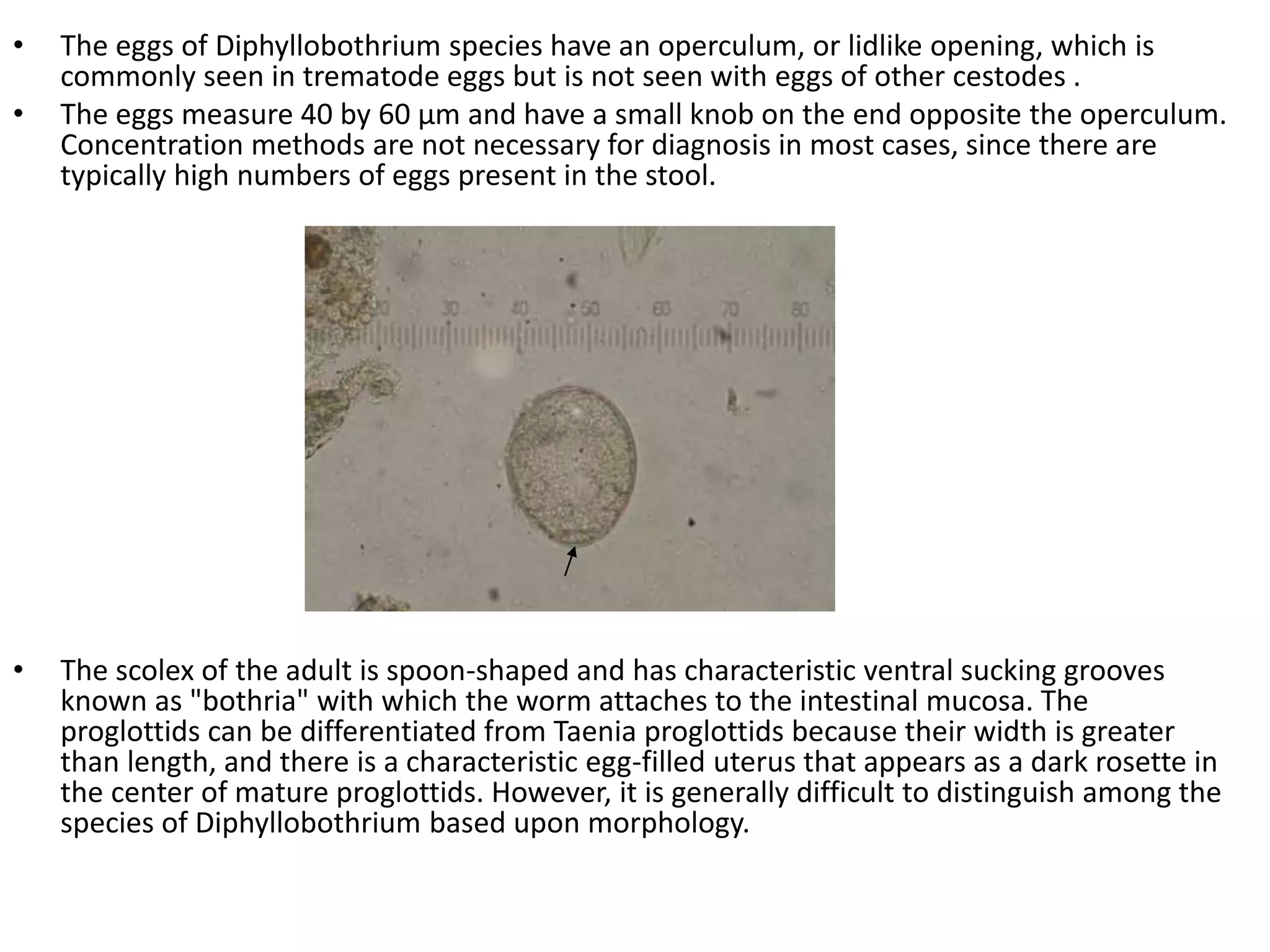
• The eggs of Diphyllobothrium species have an operculum, or lidlike opening, which is
commonly seen in trematode eggs but is not seen with eggs of other cestodes .
• The eggs measure 40 by 60 µm and have a small knob on the end opposite the operculum.
Concentration methods are not necessary for diagnosis in most cases, since there are
typically high numbers of eggs present in the stool.
• The scolex of the adult is spoon-shaped and has characteristic ventral sucking grooves
known as "bothria" with which the worm attaches to the intestinal mucosa. The
proglottids can be differentiated from Taenia proglottids because their width is greater
than length, and there is a characteristic egg-filled uterus that appears as a dark rosette in
the center of mature proglottids. However, it is generally difficult to distinguish among the
species of Diphyllobothrium based upon morphology.
• TREATMENT — The first line treatment for all of these tapeworm infections is
praziquantel. Praziquantel — Praziquantel is a synthetic heterocyclic isoquinolone-
pyrazine derivative.
• Mechanism of action — Praziquantel induces ultrastructural changes in the
teguments of parasites, resulting in increased permeability to calcium ions. Calcium
ions accumulate in the parasite cytosol, leading to muscular contractions and
ultimate paralysis of adult worms . By damaging the tegument membrane,
praziquantel also exposes parasite antigens to host immune responses . These
effects lead to dislodgement of worms from their intestinal sites and subsequent
expulsion by peristalsis.
• Dosing based upon species of tapeworms — Different doses of praziquantel are
required for different species :
• 5 to 10 mg/kg in a single dose is administered for taeniasis (T. saginata and T.
solium) and diphyllobothriasis; efficacy is >95 percent.
Results of therapy — After treatment, the proximal parts of the tapeworms
disintegrate. Gravid proglottids can release eggs as they are being destroyed.
Because praziquantel kills adult worms but not eggs, precautions should be taken to
prevent autoinfection, laboratory-acquired infection, or dissemination to others,
particularly for T. solium.
• For treatment of tapeworms to successfully result in cure, the scolex must be
destroyed and eliminated, since a residual scolex can result in regrowth of the entire
tapeworm. With large tapeworms such as Taenia and diphyllobothrium species,
intact or disintegrating segments and eggs may be passed for several days. Following
therapy, stools should be rechecked for eggs at one month to document cure.

Choosing Wisely - Rational Antibiotic Usage

  • 1.
    Choosing Wisely Dr MatthewSkinner General/ID Physician 14th June 2018
  • 2.
    Outline • Cases toconsider: – Why that antibiotic? – What would change a choice? – Where to look when stuck – Best use of ID service
  • 3.
    Presenting Complaint • 41year old ♀ • 7 days of dry cough with fevers, rigors & sweats • 3 weeks of lethargy, myalgias & low grade fevers • GP prescribed amoxycillin 10 days prior → presumed chest infection
  • 4.
    Emergency Department • Febrile •Further examination reported as normal • Clear chest x-ray • Urinalysis unremarkable • Presumptive diagnosis → undifferentiated viral illness • Discharged home
  • 5.
    Next Day • 15-minuteepisode of central chest pain: – Occurred at rest – Associated mild dyspnoea – No radiation – Pain was neither pleuritic nor positional
  • 6.
    Examination • Febrile: 37.9ºC •Tachycardic: 106 bpm • Hypertensive: 150/80 mmHg • Cardiovascular examination: – Splinter haemorrhages – Diastolic murmur – No signs of heart failure
  • 7.
    Initial Tests • FBE:Hb 108; WCC 13.4; NΦ 11.1; Plt 415 • U&E: Na+ 136; K+ 3.9; Ur 3.1; Cr 56 • LFTs: albumin 39; bilirubin 8; ALT 71; AlkP 141; γGT 230 • CRP: 250 • ESR: 108 • Troponin T <0.01 • ECG normal
  • 8.
    Further History • Migratedfrom Philippines >20 years: – Last visited at Christmas • Married with 2 young children • Mental health care nurse • Non-smoker & no alcohol • No recreational intravenous drug use, tattoos or body piercings
  • 9.
    Further History • Herhusband had been diagnosed & treated for gonococcal urethritis a month prior with ciprofloxacin • She received ciprofloxacin prophylaxis at that time (all tests negative)
  • 10.
    Investigations • Two furthersets of blood cultures were sent • Transthoracic echocardiogram performed
  • 11.
  • 12.
  • 13.
    Empiric Treatment • Infectiveendocarditis: – Flucoxacillin 2g IV QID – Ceftriaxone 2g IV daily • Stat dose of azithromycin 1g oral to cover possible concurrent chlamydial infection
  • 14.
    Blood Cultures • 2days later → 2 aerobic blood cultures positive for Neisseria gonorrhoeae • Therapy rationalised to 2g IV ceftriaxone daily
  • 15.
    Treatment • Excellent clinicalresponse: – Defervescence, night sweat resolution – Normalisation of inflammatory markers • Discharged to HITH after a week of inpatient therapy: – Total antibiotic course 18 days – Screening for STIs negative
  • 16.
    3 Weeks Later •Admitted to hospital: – Exertional dyspnoea → rest – Significant functional limitations – Torrential aortic regurgitation
  • 17.
  • 18.
    Outcome • Aortic valvereplacement: – No growth from valve tissue – Peri-operative prophylaxis with ceftriaxone • Discharged home 10 days post procedure: – Cardiology, cardiothoracic and infectious diseases follow-up
  • 19.
    Follow Up • Husbandre-treated for Neisseria gonorrhoeae (repeat test negative) • 3 month review: – STI serology negative (husband & wife) – Clinically well – No warfarin complications
  • 20.
    HEADACHE & FEVER •A 33 year old lady presented to the ED with one day of headache, fever and rigor. • Examination was normal except for a fever of 39ºC • Investigations revealed neutrophilia and raised CRP. Blood culture was positive • Her CT scan is shown • What does it show? • What could the organism be?
  • 21.
    CT brain 28/5/08 Gasin cavernous sinus
  • 22.
  • 23.
  • 24.
    H Influenzae Positive bloodculture on 28/5/08 Cetriaxone begun 28/5/08
  • 25.
    Haemophilus influenzae CULTURE Note -the satellitism around the staph streak - XV factors - sensitivities
  • 26.
    The next dayafter IV ceftriaxone the gas had gone – 29/5/08 Sphenoid sinusutis
  • 27.
    The next dayafter IV ceftriaxone the gas had gone – 29/5/08
  • 28.
    The next dayafter IV ceftriaxone the gas had gone – 29/5/08
  • 29.
    PROGRESS • She respondedquickly and was discharged home on 14 days of ciprofloxacin. • Note the followup CT scan – all clear.
  • 30.
  • 31.
    Cellulitis • This 39year old man presented with fever, rigors and “cellulitis” over his right shin. • Fevers continued on treatment and he developed a collection which was drained twice. • What does the bone scan show? • What is the organism?
  • 35.
    Nuclear bone scan Flowstudy Bone study
  • 36.
    An unusual cellulitis •This 39 year old man presented to casualty with fever, rigors and “cellulitis” over his right shin • He was treated with IV cephazolin on HITH • Fevers continued on treatment and he developed a collection which was drained twice as an outpatient • A bone scan showed the collection but no osteomyelitis • Group C streptococcus was isolated twice
  • 40.
  • 41.
    Nuclear bone scan Flowstudy Bone study
  • 42.
    PROGRESS WITH IVCEPHAZOLIN
  • 43.
    AN UNUSUAL RASH •This lady cut her foot on coral and sustained a local infection • Cultures were not helpful and she was slow to respond to broad spectrum antibiotics • Subsequently she developed rash elsewhere as shown • Punch biopsies were taken and results are shown • Photos are shown 2 weeks apart
  • 44.
    520_547 Pt EMAH1088925 27-04-05 & 10-05-05 27-04 & 10-05 A.
  • 45.
    520_547 Pt EMAH1088925 27-04-05 & 10-05-05 27-04 & 10-05 A.
  • 46.
  • 47.
    27-04 & 10-05 B. Whatis rash B seen here and in the following photos? What caused the improvement?
  • 48.
  • 49.
  • 50.
  • 51.
  • 52.
    Sweets Syndrome This casedemonstrates the utility of punch biopsies The improvement seen is due to prednisolone
  • 53.
    Case • This 32year old man from India presented with painful nodules on both legs as shown • They had been present for 4 weeks • He was not unwell
  • 54.
  • 55.
  • 56.
    Spot Diagnosis • Whatis this ? – Erythema nodosum – Sporotrichosis – Mycobacterium marinum – Erythema induratum – Mycobacterium leprae
  • 57.
    INVESTIGATIONS • Biopsy –Erythema induratum • Quantiferon positive • ESR 44, CRP 25 • CT chest & abdo: – no lymphadenopathy – NAD
  • 58.
    Erythema Induratum • Nodularpanniculitis (erythema induratum) — Nodular panniculitis, also called erythema induratum, Bazin disease, and nodular vasculitis, is the primary alternative diagnosis in patients with inflammatory nodules of less than eight weeks duration involving the legs. • Some case series report clinical distinctions between nodular vasculitis and EN, with the former more commonly involving the posterior aspects of the legs, and more prone to ulceration and recurrence than EN. • Other series, however, have indicated considerable overlap between the clinical appearances of these entities. • Primary tuberculosis is a leading cause of nodular vasculitis.
  • 59.
    Nodules on thelegs. A clinical, histological and immunohistological study of 82 patients representing different types of nodular panniculitis. AUNiemi KM; Forstrom L; Hannuksela M; Mustakallio KK; Salo OP SOActa Derm Venereol 1977;57(2):145-54. • Eighty-two cases of nodular panniculitis of the legs were examined clinically, histologically and immunohistologically. • Clinically the cases could be divided into four groups: typical erythema nodosum (ENty) (35 cases), erythema nodosum migrans (ENmi) (11 cases), erythema induratum (EI) (11 cases) and the remaining 25 cases not consistent with the others as "non-definite panniculitis" (NDP). • The main histological categories were septal panniculitis and lobular panniculitis, the former including erythema nodosum, both typical and migrans, the latter EI and NDP. • Lobular panniculitis was divided into three subgroups in which the most prominent histological features were epithelioid cell granuloma, vasculitis and palissading granuloma, respectively. • Immunoglobulins in the vessel walls were found in 5 of the 46 cases of erythema nodosum, in 19 of the 36 EI and NDP cases and, in the histological groups in 4 of the 43 cases of septal panniculitis and in 19 of the 35 cases of lobular panniculitis, respectively. • Fibrin was found in the walls of the papillary capillaries and deep dermal vessels in the majority of cases of lobular panniculitis. • In EI and NDP the follow-up time was 40 months, on average. • Twenty-two patients were treated with antituberculous drugs, 15 became symptomless, as did 5 of the 12 patients who were not treated at all.
  • 60.
    Beginning of TB(3 drug Rx)
  • 61.
    After 2 monthsof TB (3 drug Rx)
  • 62.
    Note the improvementafter 2 months of TB treatment
  • 63.
    Case • 28 yearold Australian woman • PHx dermatitis • Visiting Thailand after return from Switzerland (12/09/06-24/09/06) • Bangkok(3)-Ko Tang(4)-Bangkok(1)-Ko PiPi(4)- Bangkok(1); arrived Thailand 24/09/06 left 06/10/06 • No IVDU but sexual contact in Switzerland • No malaria prophylaxis, no typhoid vaccine • HepA/HepB vaccinated • Recalls mosquito bites
  • 64.
    • October 1,arrival in Ko PiPi • Unwell with dry cough temperatures, rhinorrhoea and conjunctivitis (01/10) • Stayed in bed • D+2 - facial/palmar rash • D+5 - truncal macular-papular rash • Returned to Bangkok October 6 • Attended doctor at airport, im amoxycillin • Boarded plane for Melbourne??? • Arrived late 06 October; quarantined
  • 65.
    • Avian influenzaexcluded on history • Alfred Hospital 0050 October 07 • Side room 0055 • Ward 7west 07/10 1224 (N 95 mask transit) • Cough and rash predominant features • EUC NAD • ALT 108, CRP 45, Hb 138, WCC 3.28, Neut 2.65, Lym 0.26, N Coags • BCs, Malaria T+T/ICT, dengue serology • Stool spec, Nose and throat swabs
  • 66.
    • Temperature 39ºC •Normotensive • Tachycardic • Conjunctival injection • Lacrimation • Flushed • Hepatosplenomegaly • Coalescing rash on face • Diffuse non-blanching, non-pruritic rash on arms, legs and trunk • Palmar involvement
  • 76.
    Case • WHAT ISTHIS ILLNESS? • HOW WOULD YOU DIAGNOSE IT? • HOW WOULD YOU TREAT HER?
  • 77.
  • 78.
    Impression • Measles • Rubella •Enterovirus • Rickettsial illness • Influenza • Adenovirus • Dengue fever • Syphilis • Typhoid fever • Malaria • Drug reaction Recalled 1 x vaccination for “MMR” in year six
  • 79.
    • Blood cultures–ve • Malaria T+T + ICT –ve • EBV IgG +ve, CMV IgG –ve, Rubella IgG >400, Influenza A+B <10, Adenovirus IgG 2,560, GpB Arbovirus IgG –ve, syphilis serolgy –ve; Hep A IgG +ve, IgM –ve, HepB sAg –ve, sAb 770, HepCAb -ve • HSV-1 PCR +ve from mouth ulcer • Throat/Nose swabs RSV/measles PCR +ve • Measles IgG + IgM +ve
  • 80.
    Diagnosis and course •Measles suspected • Atypical features – Rash day 2-3 – Antibiotics – History of vaccination • Notified 09 October 48 hours after admission • Diagnosis; Measles and RSV infection without pneumonitis
  • 81.
    Diagnosis and course •5 days in hospital • Recovery of symptoms with supportive treatment • Neutropenia to 0.42 on day 2 resolved • Discharged home, well at follow up • Subsequently identified as genotype D5 • Health Department initiated contact tracing • No major contacts at Alfred (rash >4 days)
  • 82.
    Measles • Paramyxovirus genusMorbillivirus • RNA virus with 6 structural proteins, 3 complexed to RNA and three with the viral envelope • Short survival time (<2hrs in air) • Highly infectious • Respiratory droplets • Infectious from prodrome (3-5 days prior to rash appearance) and for 4 days after the rash appearance
  • 83.
    • Incubation period10-14 days • Prodrome; fever, cough, coryza, conjunctivitis • Rash begins on face and upper neck then becomes generalised • Otitis media (severe) in 7% • Bronchopneumonia in 6% • Encephalitis 2-10/10,000 cases (mortality 10-15% with 15-40% having severe permanent neurological sequaelae
  • 84.
  • 85.
    • Subacute sclerosingpanencephalitis (SSPE) 1/100,000 cases; fatal with progressive brain damage • Complications more common in chronically ill and very young children • 1976-2000 98 deaths in Australia, more than diphtheria, tetanus, pertussis and poliomyelitis combined • 2001 91% of children aged 2 had been vaccinated • 2 doses of MMR at 12 months and at 4 years of age • Adults born during or post 1966 should have two doses
  • 86.
    Who not toworry about • Children aged 1-4 with one dose of vaccine • Persons over 4 and born since 1966 with documented evidence of 2 doses of a measles containing vaccine • Persons before 1966
  • 87.
    Conclusions • Sporadic outbreaksrequire prompt identification and containment • Presentation can vary • Majority of cases “imported” • Beware those born since 1966 • Conjunctivitis, corzya, cough and fever are hallmark features
  • 88.
    Pneumonic for Rashes Pneumonic 1.Very 2. Sick 3. People 4. Must 5. Take 6. No 7. Exercise Conditions • Varicella • Scarlet fever • Small pox • Measles • Typhus/Ricketssial diseases • Nothing (Dengue) • Enteric fever (Typhoid)
  • 89.
    Case • 41 y.o.♂, returned traveller from Bali, sent in by GP to the ED with fever and rash: – Unwell since Day 3 returning – Presented to GP on Day 8 after returned
  • 90.
    Presenting Complaint • Day1 of illness: – Coryza symptoms – Tiredness, malaise – Mild intermittent headache • Day 3 of illness: – Mild “red watery eyes” ? Conjunctivitis • Day 5 of illness: – Fever 38˚C – No sweats/rigors – New rash: Started on trunk, spread centrifugally to upper and lower limbs
  • 91.
    Presenting Complaint • Systemreview: – No cough, SOB, chest pain – No sore throat – No photophobia, neck stiffness – No nausea, vomiting – No diarrhoea, abdominal pain – No urinary symptoms
  • 92.
    Travel History • Travelledto Bali with family for 2/52: – No malaria prophylaxis / travel vaccines – Visited rural Bali – Travelled by car around Bali – Stayed in villa, consumed restaurant food – Admitted few mosquito bites – No zoonosis exposure – No fresh water swimming – Denied unprotected sexual intercourse & IVDU – Everyone was well throughout the trip
  • 93.
    Additional History • PHx:nil • Medications: nil • Allergies: NKA • SHx: – Originated from Russia – Work as a scientist in a local university – Wife currently 33/40 pregnant – Daughter 3y.o. – well – Non-smoker, no ETOH, no recreational drug use – Unsure of immunisation status
  • 94.
    Examination General • Looked well •Haemodynamically stable: – BP 120/75 – HR 88 – RR 16 – SaO2 98% RA – Afebrile Organ Specific • Head & neck: – Occipital & cervical lymphadenopathy – No Koplik spots • Cardiovascular – unremarkable • Respiratory – unremarkable • abdominal – unremarkable • No arthralgia
  • 95.
    Examination • Generalised, blanching maculopapular erythematousrash • Predominantly on upper torso, but involved face, upper and lower limbs
  • 96.
    DDx Fever on returnedtraveller • Malaria • Dengue • Typhoid • Respiratory infections: URTI / Influenza / pneumonia • Gastroenteritis • Amoebic liver abscess • Incubation period / Dx / Mx
  • 97.
    Investigations • FBE 147/ 3.24 / 140: – Neutrophils 1.83 – Lymphocytes 0.89 • Malaria thick & thin films – negative • Blood culture – no growth • UEC & LFT normal • Respiratory viruses PCR – negative • MSU – NAD Serology: • EBV: – IgM negative • Measles: – IgM negative – IgG positive • Rubella: – IgM positive – IgG negative
  • 98.
    Management • Home isolation– for another day (4 days after rash onset) • Wife: 33/40 pregnant –Congenital Rubella Syndrome – transmission depends on timing of infection –Has been adequately vaccinated –No treatment needed • Daughter – Due for 2nd MMR • Department of Health notification
  • 99.
    Clinical manifestation: • Canbe asymptomatic • Prodromal symptoms: (1-5 days) –Malaise –Low grade fever –Lymphadenopathy (post cervical/occipital) • Rash (3-5 days) –There is variation in the progression, extent, and duration of the rubella exanthem
  • 100.
    Rubella Measles Photos from FairfieldHospital slide collection
  • 101.
    Rash begins onface… Rubella Photos from Fairfield Hospital slide collection
  • 102.
    Then, spreading down thebody centrifugally. Rubella Photos from Fairfield Hospital slide collection
  • 103.
    And to otherparts of the body. Rubella Photos from Fairfield Hospital slide collection
  • 104.
    Management • Isolation • DHSnotification & Contact tracing • Pregnancy
  • 105.
    Rubella prevention: Vaccines •2 types: – MMR vaccine – Monovalent Rubella vaccine • Principal aim: Prevent Congenital Rubella Syndrome • Target: – All children – at 12 & 18 months – Women of child bearing age – Post-partum seronegative women – Adolescent & adult males - born after 1966 – need 2 doses of MMR if no documented vaccination record – Healthcare worker & people working with children
  • 106.
    Case • 35 yrold reserve bank manager • In Nukualofa (Tonga) for 3 days 5-8 March • Became ill on 12th March • Fevers, headache, sore eyes, back ache, Joint aches • Admitted to The Alfred on 13th March • Later developed a rash
  • 107.
    1179838 What does hehave ? How would you prove it ?
  • 108.
    Dengue fever • 35yr old reserve bank manager • In Nukualofa (Tonga) for 3 days 5-8 March • Bitten by mosquitoes • Became ill on 12th March • Fevers, headache, sore eyes, back ache, joint aches • Admitted to The Alfred on 13th March • Later developed a rash • Lethargy took 5 weeks to resolve
  • 109.
    1179838 Dengue – note theblanching sunburn like rash
  • 110.
    Case • This 29yr old lady presented with a rash on her left foot 4 weeks after returning from Thailand • Travel included Bangkok and coastal areas including swimming • The rash was itchy and changing daily • She had tried topical medication with no help
  • 114.
    Questions • What isthe diagnosis? • What organism(s) cause this? • What would you treat her with?
  • 115.
    CUTANEOUS LARVA MIGRANS •Cutaneous larva migrans • Usually due to Ancylostoma braziliense (dog and cat hookworm ) • Treatment: Albendazole or ivermectin
  • 116.
    Case • This youngman has spent a few months in the tropics. • He presented with this rash. • Skin scrapings were taken – what does he have? • How would you treat him?
  • 120.
    Malassezia furfur • M.furfur is a yeast - appearance of “spaghetti and meatballs” is diagnostic. Culture is difficult (olive oil needed ) • It causes pityriasis versicolor or tinea versicolor. Rarely can cause catheter related sepsis related to TPN or intralipid. • Treatment is with selsun shampoo topically or an azole cream.
  • 121.
    An Unusual Causeof Diarrhoea • A 41 yr old man with chronic diarrhoea and abdominal discomfort for 9 years was referred for a colonoscopy. • At colonoscopy a worm was found emerging from the terminal ileum. • With “tugging” a small segment was removed but the private lab could not identify the parasite.
  • 122.
    An Unusual Causeof Diarrhoea Colonoscopy view – forceps
  • 123.
    An Unusual Causeof Diarrhoea • After praziquantel the worm was expelled into the toilet and brought to The Alfred for identification. • The patient later admitted to having symptoms for 9 years since visiting Japan!
  • 124.
    Eggs • Worm -~ 2 metres long
  • 125.
  • 126.
  • 127.
    • DIPHYLLOBOTHRIASIS: FISHTAPEWORM — Fish tapeworm infections are due to parasites of the Diphyllobothrium species. Different species are endemic in various parts of the world. The most common species worldwide is D. latum. It is seen predominantly in northern Europe and Japan but has also been reported from many other countries. • Life cycle — Humans are the main definitive host for D. latum and the most important reservoir of infection. However, some other Diphyllobothrium species primarily infect birds or mammals and are less common causes of human infection. • As with Taeniasis, the adult parasites live in the human intestinal tract, and eggs and proglottids are passed in the faeces. These tapeworms can be very large, measuring up to 12 m and containing 3000 to 4000 proglottids. When eggs are discharged into freshwater (D. latum and most other species) or marine water (D. pacificum), they hatch and release motile embryos which are ingested by minute waterfleas (first intermediate hosts). Following ingestion by larger crustaceans and fish (second intermediate hosts), these motile embryos develop into larvae (known as sparganum or plecocercoid larvae), which are infectious to humans. When raw or undercooked infected fish and crustaceans are eaten, these larvae are ingested; development into an adult tapeworm in the human intestine completes the life cycle. • Many freshwater fish can transmit D. latum infection. People who eat various forms of raw fish, such as sushi, sashimi, and ceviche, are at risk of infection. Infection is often associated with raw salmon. • Passage of eggs begins approximately one month after ingestion of the contaminated fish (the prepatent period). Each tapeworm can produce more than one million eggs per day, but egg passage can be intermittent. Eggs are passed from the adult fish tapeworm via a midline uterine pore. The adult tapeworm survives for approximately 10 years in the human GI tract.
  • 129.
    • Clinical symptoms— Most individuals with diphyllobothriasis are asymptomatic. A proglottid can occasionally be regurgitated or passed in the faeces, but this occurs less commonly than with Taenia species. Nonspecific symptoms that have been attributed to infection include fatigue, diarrhoea, numbness, dizziness, and allergic symptoms. Mechanical obstruction of the intestine can occasionally occur if there are several worms that become entangled. • Vitamin B12 deficiency — The classical manifestation of infection with D. latum is megaloblastic anaemia due to vitamin B12 deficiency. D. latum has a unique affinity for vitamin B12 and therefore competes with the host for absorption. Deficiency develops particularly if the host already has marginal B12 levels before acquiring the infection. • It has been reported that approximately 40 percent of infected individuals have low B12 levels but that only 2 percent actually develop anaemia . If the B12 deficiency is severe, pancytopenia, glossitis, dyspnea, and neurologic abnormalities (subacute combined spinal and peripheral nerve degeneration) can develop. • A peripheral eosinophilia of 5 to 10 percent may occur in some infected patients. • Diagnosis — Megaloblastic anaemia and B12 deficiency can be a clue to the diagnosis of diphyllobothriasis. • Microscopy — The definitive diagnosis is made by finding characteristic eggs in the stools or occasionally by finding evacuated segments of proglottids.
  • 130.
    Differential Morphology ofCestodes: Eggs Species Size Shape Colour Stage Specific Features Taenia saginata, T. solium 35 μm 31-43 μm Spherical with thick striated shell Walnut brown Embryonated 6-hooked oncosphere Proglottids or scoleces for speciation Hymenolepsis nana 47x37 μm 40-60 x 30-50 μm Ovoid with 2 distinct membranes Colourless Embryonated 6-hooked oncosphere Polar filaments Diphyllobothrium latum 66x44 μm 58-76 x 40-51 μm Oval or ellipsoidal with operculum Yellow to brown Unembryonated Resembles hookworm egg
  • 131.
    • The eggsof Diphyllobothrium species have an operculum, or lidlike opening, which is commonly seen in trematode eggs but is not seen with eggs of other cestodes . • The eggs measure 40 by 60 µm and have a small knob on the end opposite the operculum. Concentration methods are not necessary for diagnosis in most cases, since there are typically high numbers of eggs present in the stool. • The scolex of the adult is spoon-shaped and has characteristic ventral sucking grooves known as "bothria" with which the worm attaches to the intestinal mucosa. The proglottids can be differentiated from Taenia proglottids because their width is greater than length, and there is a characteristic egg-filled uterus that appears as a dark rosette in the center of mature proglottids. However, it is generally difficult to distinguish among the species of Diphyllobothrium based upon morphology.
  • 132.
    • TREATMENT —The first line treatment for all of these tapeworm infections is praziquantel. Praziquantel — Praziquantel is a synthetic heterocyclic isoquinolone- pyrazine derivative. • Mechanism of action — Praziquantel induces ultrastructural changes in the teguments of parasites, resulting in increased permeability to calcium ions. Calcium ions accumulate in the parasite cytosol, leading to muscular contractions and ultimate paralysis of adult worms . By damaging the tegument membrane, praziquantel also exposes parasite antigens to host immune responses . These effects lead to dislodgement of worms from their intestinal sites and subsequent expulsion by peristalsis. • Dosing based upon species of tapeworms — Different doses of praziquantel are required for different species : • 5 to 10 mg/kg in a single dose is administered for taeniasis (T. saginata and T. solium) and diphyllobothriasis; efficacy is >95 percent. Results of therapy — After treatment, the proximal parts of the tapeworms disintegrate. Gravid proglottids can release eggs as they are being destroyed. Because praziquantel kills adult worms but not eggs, precautions should be taken to prevent autoinfection, laboratory-acquired infection, or dissemination to others, particularly for T. solium. • For treatment of tapeworms to successfully result in cure, the scolex must be destroyed and eliminated, since a residual scolex can result in regrowth of the entire tapeworm. With large tapeworms such as Taenia and diphyllobothrium species, intact or disintegrating segments and eggs may be passed for several days. Following therapy, stools should be rechecked for eggs at one month to document cure.