Dr. Parag Moon 
Senior resident 
Dept of neurology 
GMC Kota
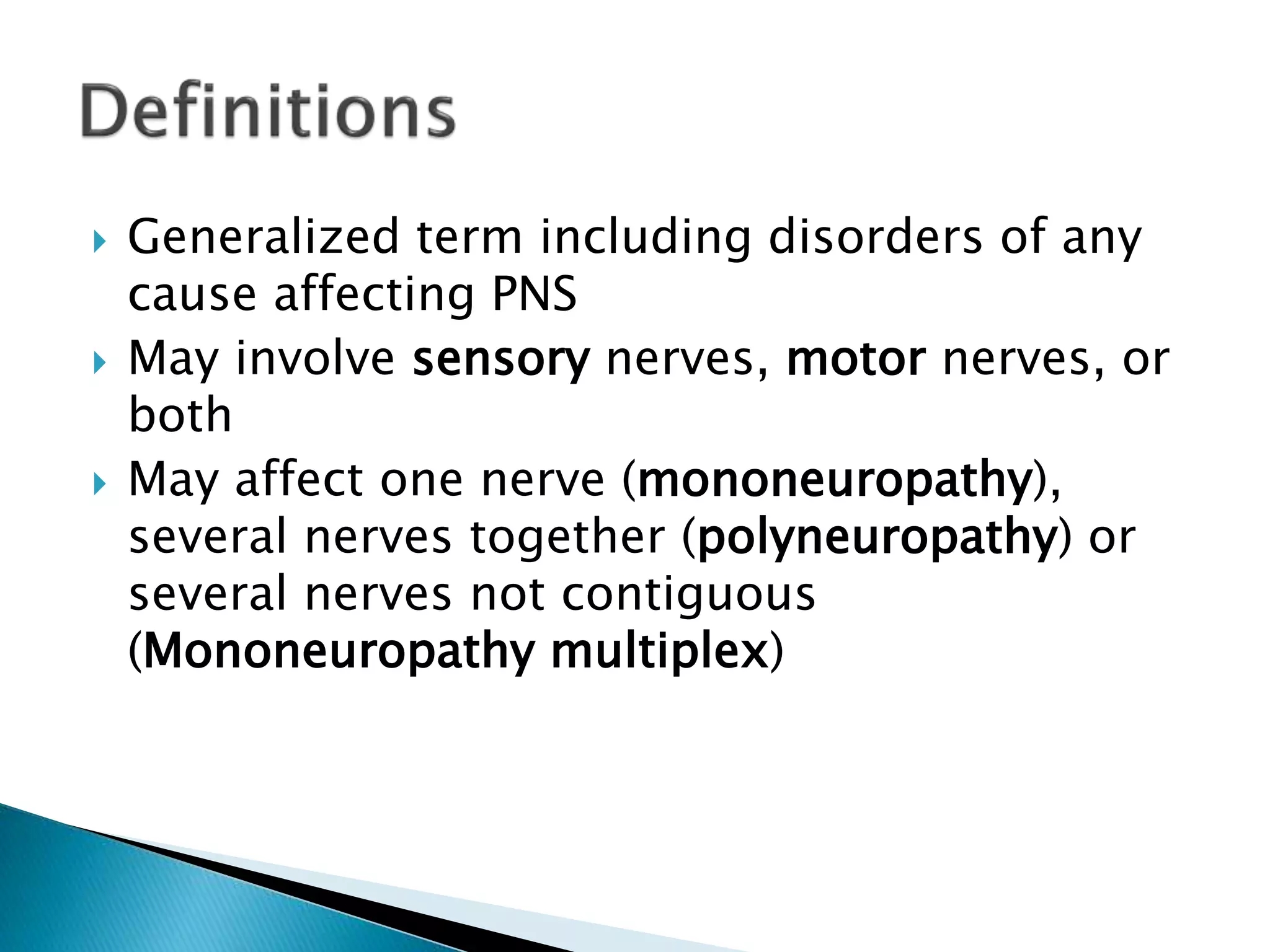
 Generalized term including disorders of any 
cause affecting PNS 
 May involve sensory nerves, motor nerves, or 
both 
 May affect one nerve (mononeuropathy), 
several nerves together (polyneuropathy) or 
several nerves not contiguous 
(Mononeuropathy multiplex)
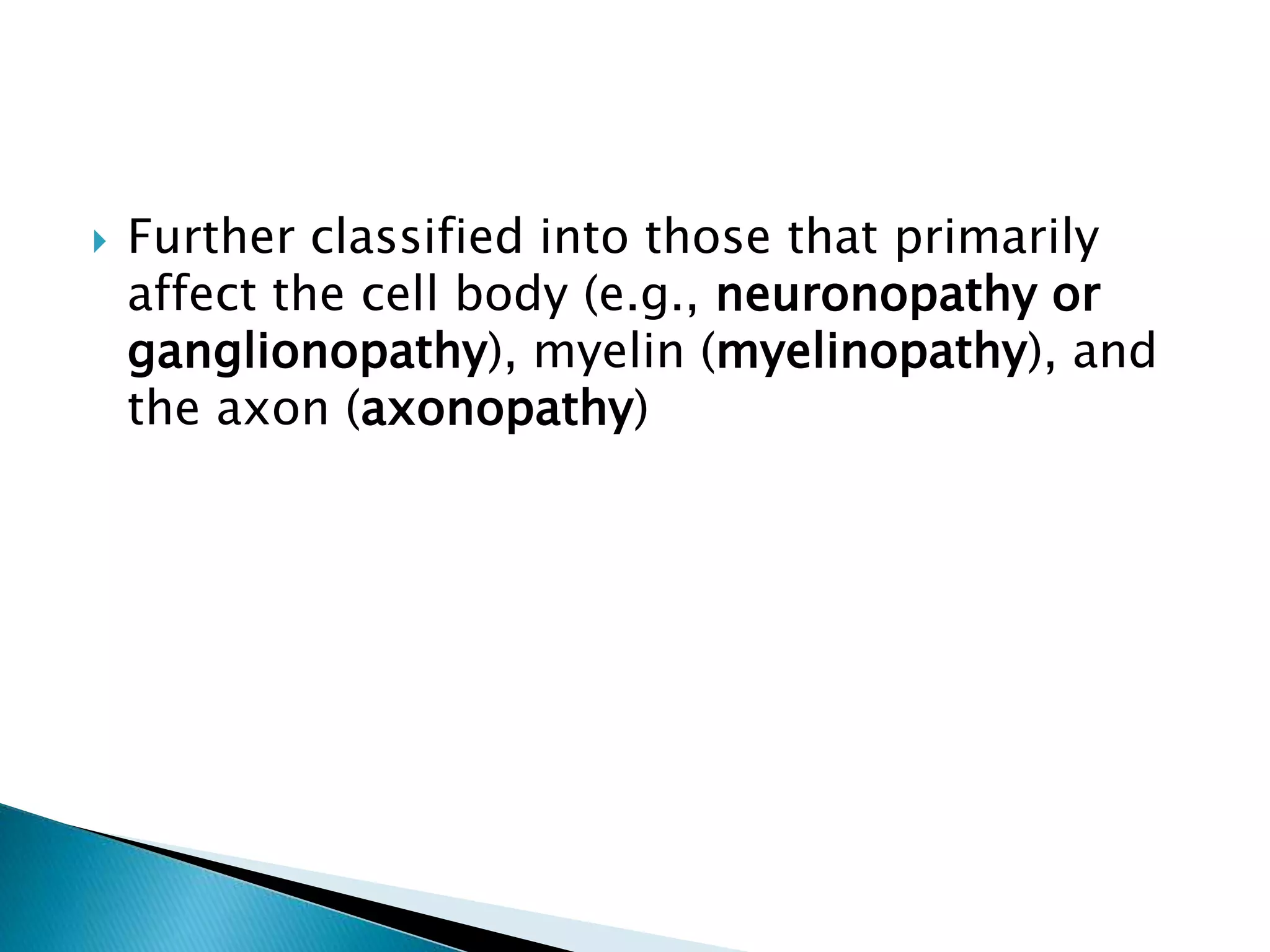
 Further classified into those that primarily 
affect the cell body (e.g., neuronopathy or 
ganglionopathy), myelin (myelinopathy), and 
the axon (axonopathy)
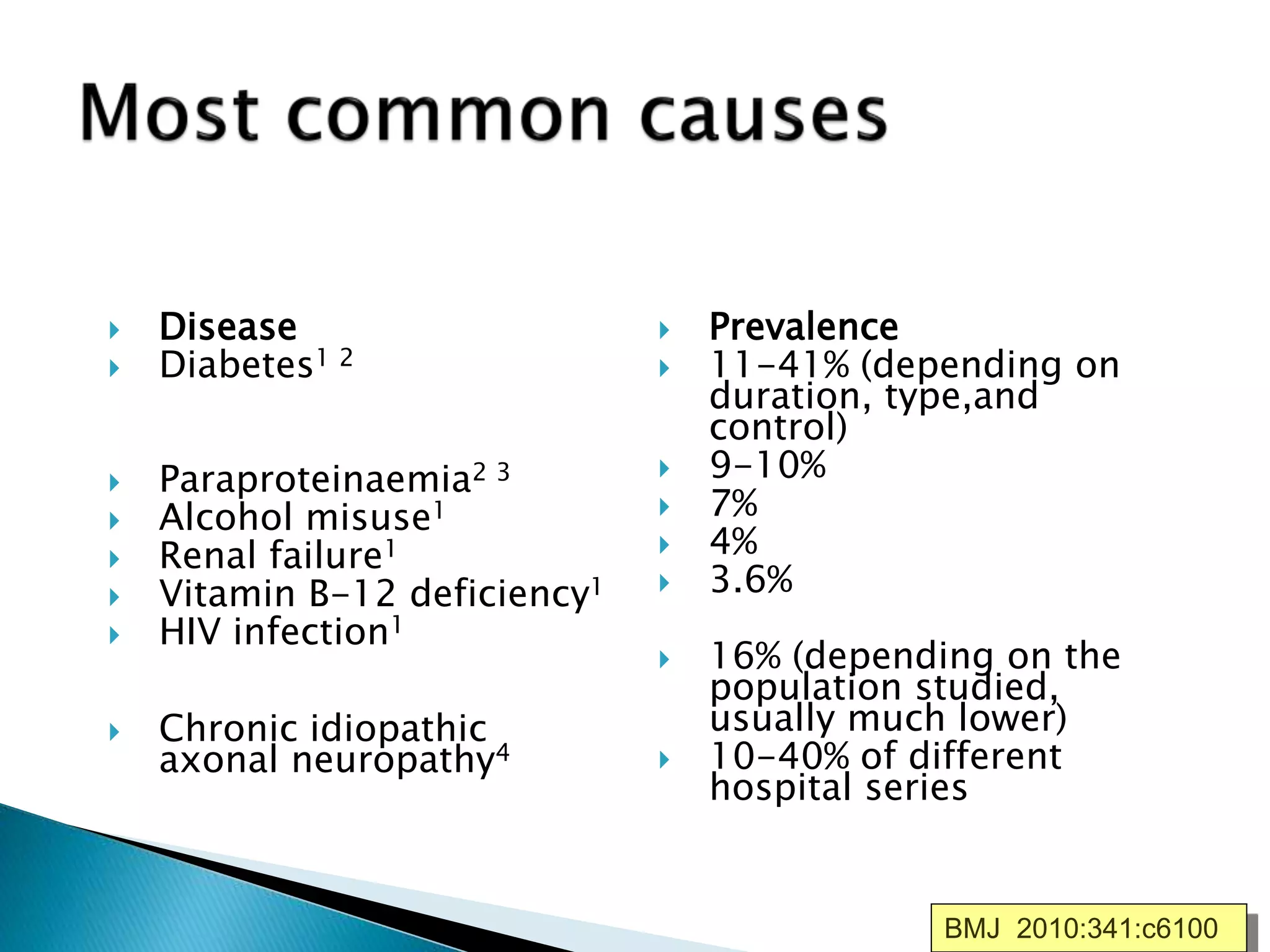
 Disease 
 Diabetes1 2 
 Paraproteinaemia2 3 
 Alcohol misuse1 
 Renal failure1 
 Vitamin B-12 deficiency1 
 HIV infection1 
 Chronic idiopathic 
axonal neuropathy4 
 Prevalence 
 11-41% (depending on 
duration, type,and 
control) 
 9-10% 
 7% 
 4% 
 3.6% 
 16% (depending on the 
population studied, 
usually much lower) 
 10-40% of different 
hospital series 
BMJ 2010:341:c6100
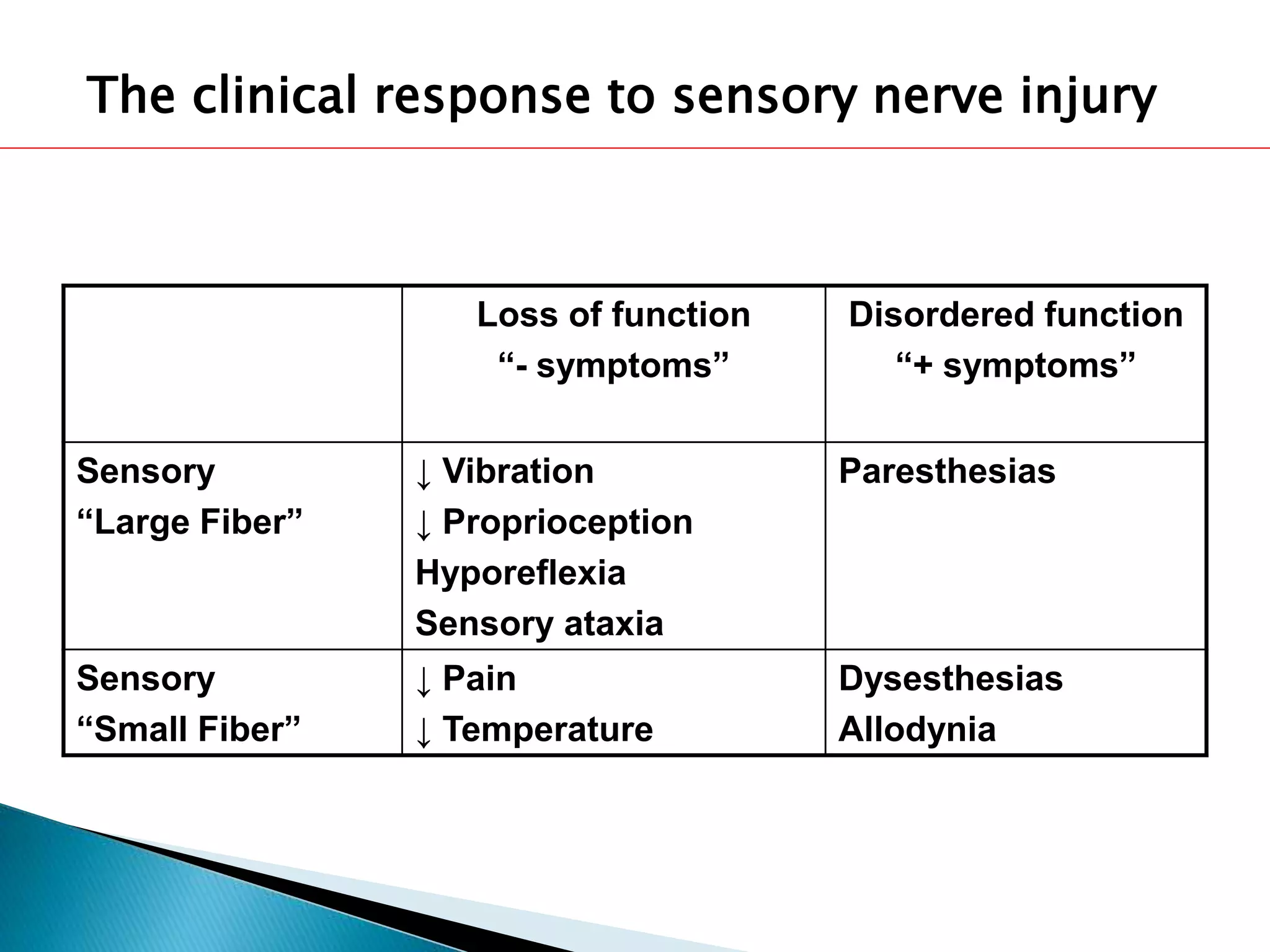
The clinical response to sensory nerve injury 
Loss of function 
“- symptoms” 
Disordered function 
“+ symptoms” 
Sensory 
“Large Fiber” 
↓ Vibration 
↓ Proprioception 
Hyporeflexia 
Sensory ataxia 
Paresthesias 
Sensory 
“Small Fiber” 
↓ Pain 
↓ Temperature 
Dysesthesias 
Allodynia
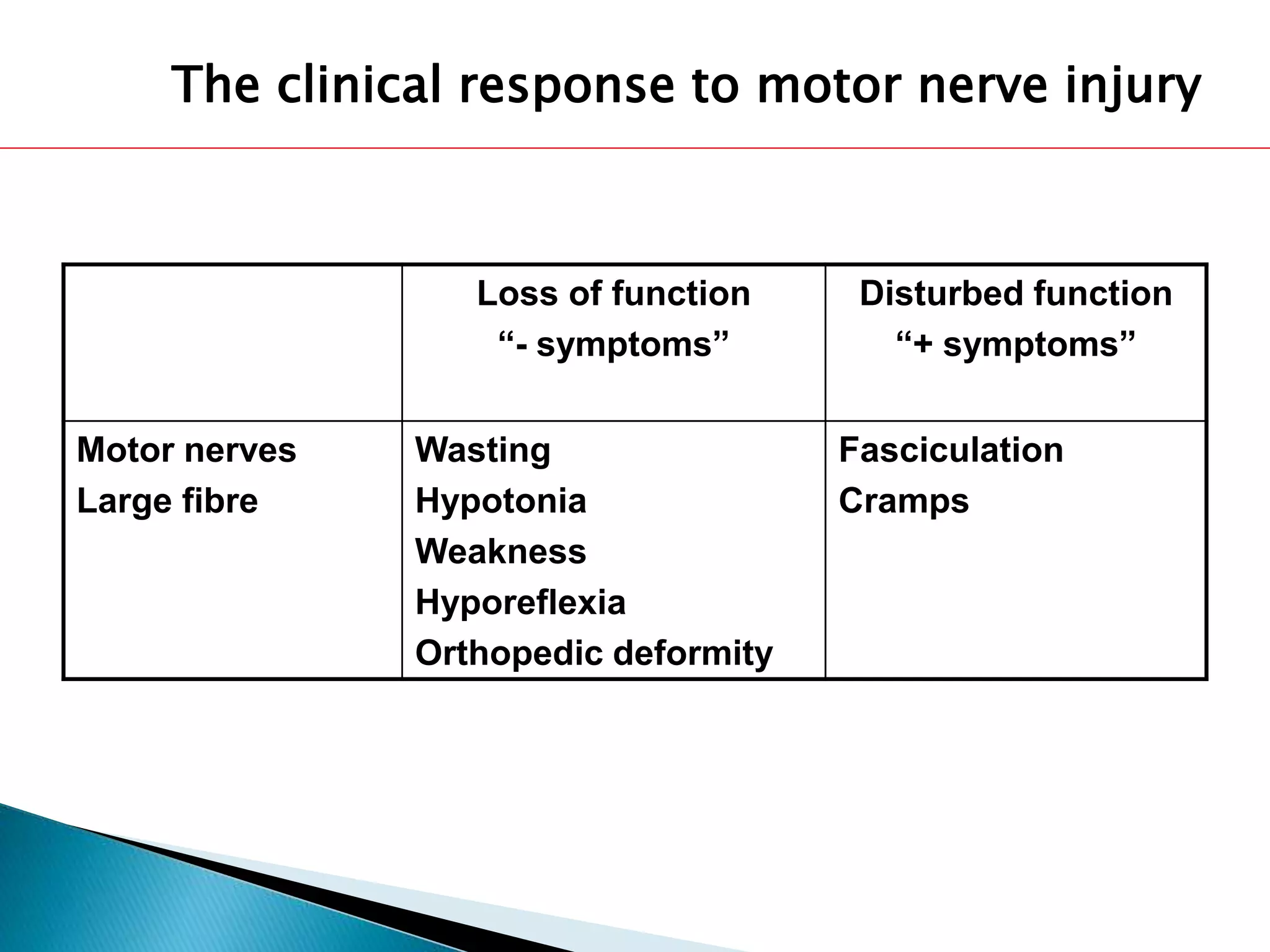
The clinical response to motor nerve injury 
Loss of function 
“- symptoms” 
Disturbed function 
“+ symptoms” 
Motor nerves 
Large fibre 
Wasting 
Hypotonia 
Weakness 
Hyporeflexia 
Orthopedic deformity 
Fasciculation 
Cramps
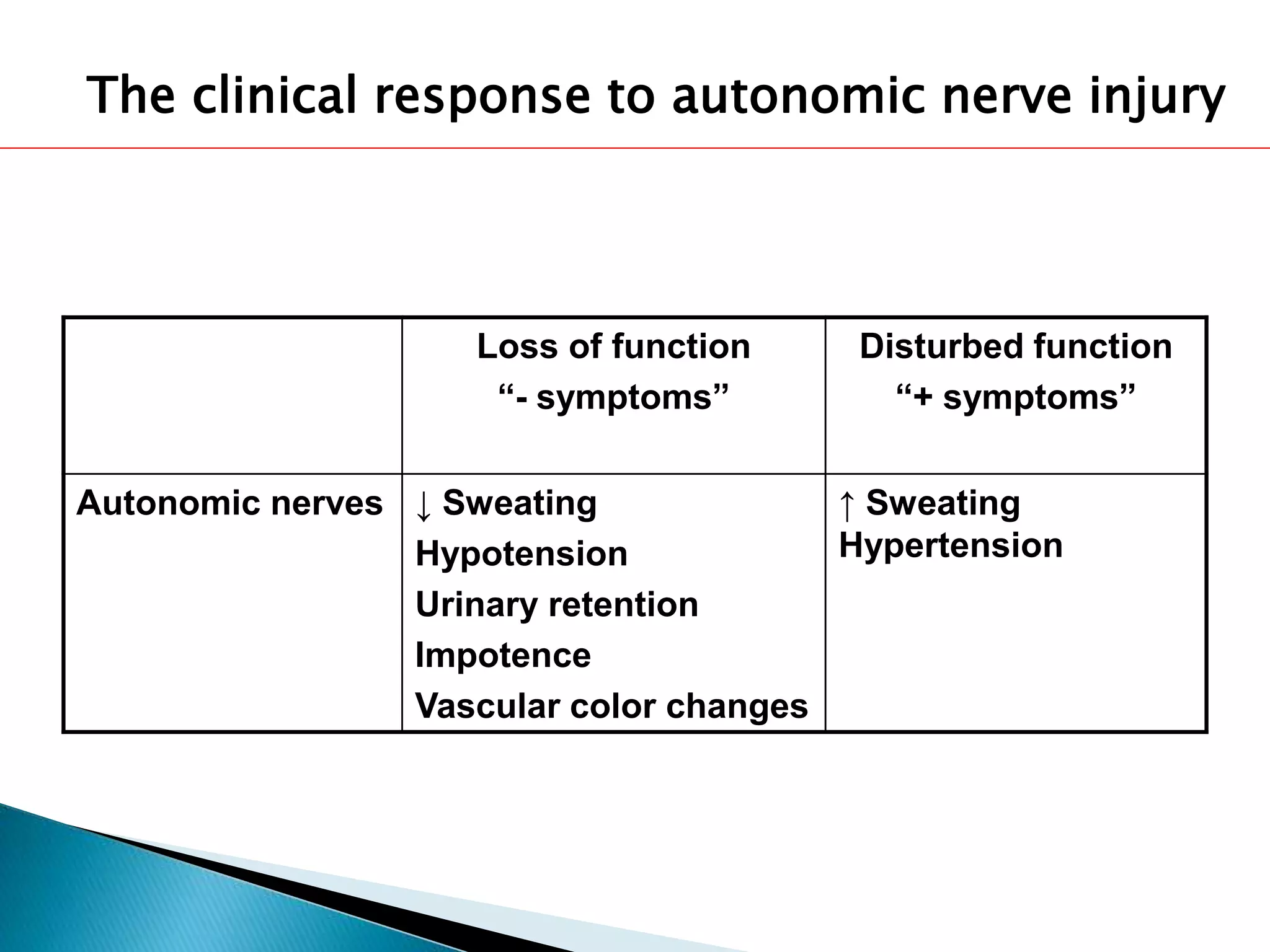
The clinical response to autonomic nerve injury 
Loss of function 
“- symptoms” 
Disturbed function 
“+ symptoms” 
Autonomic nerves ↓ Sweating 
Hypotension 
Urinary retention 
Impotence 
Vascular color changes 
↑ Sweating 
Hypertension
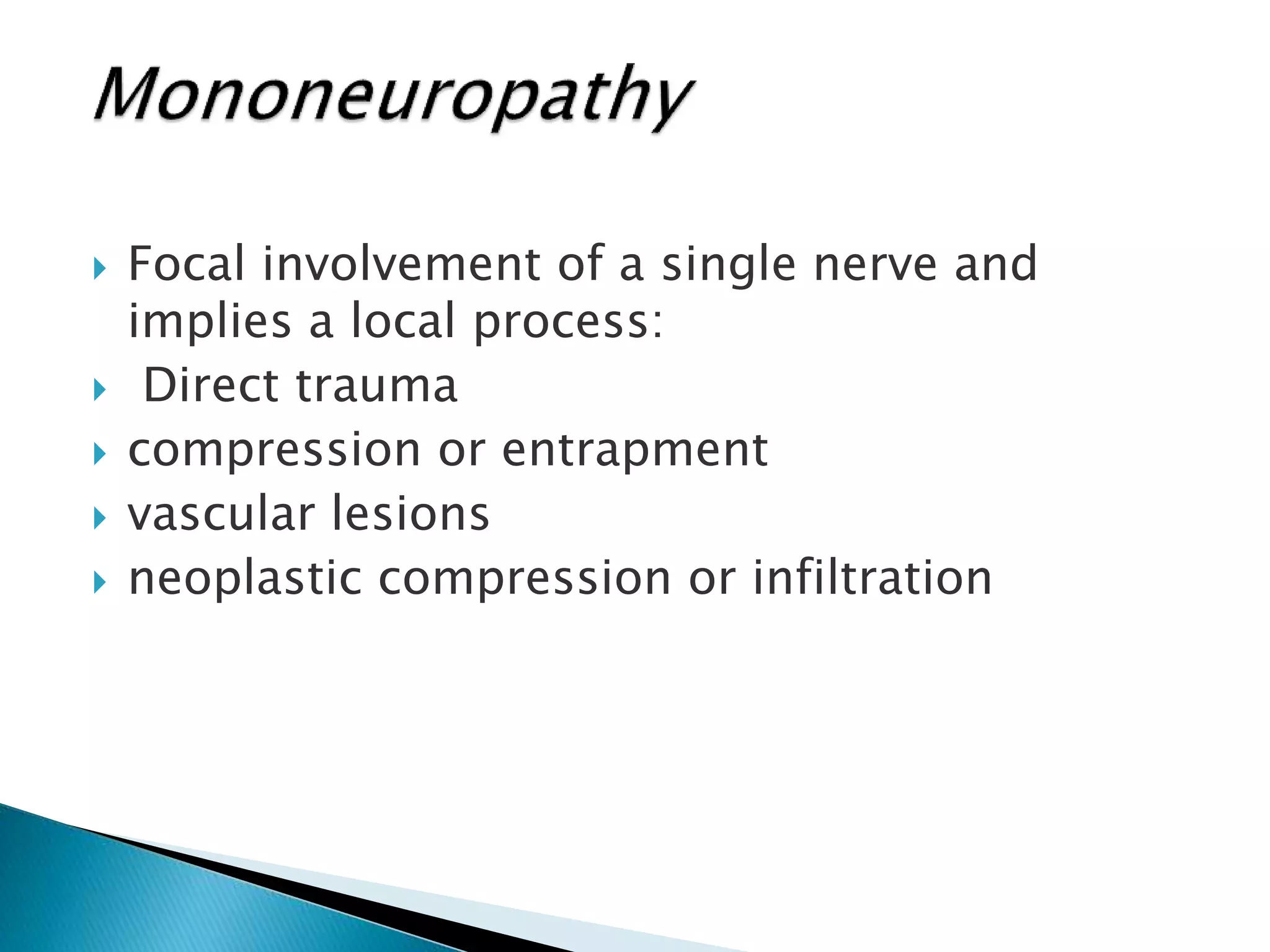
 Focal involvement of a single nerve and 
implies a local process: 
 Direct trauma 
 compression or entrapment 
 vascular lesions 
 neoplastic compression or infiltration
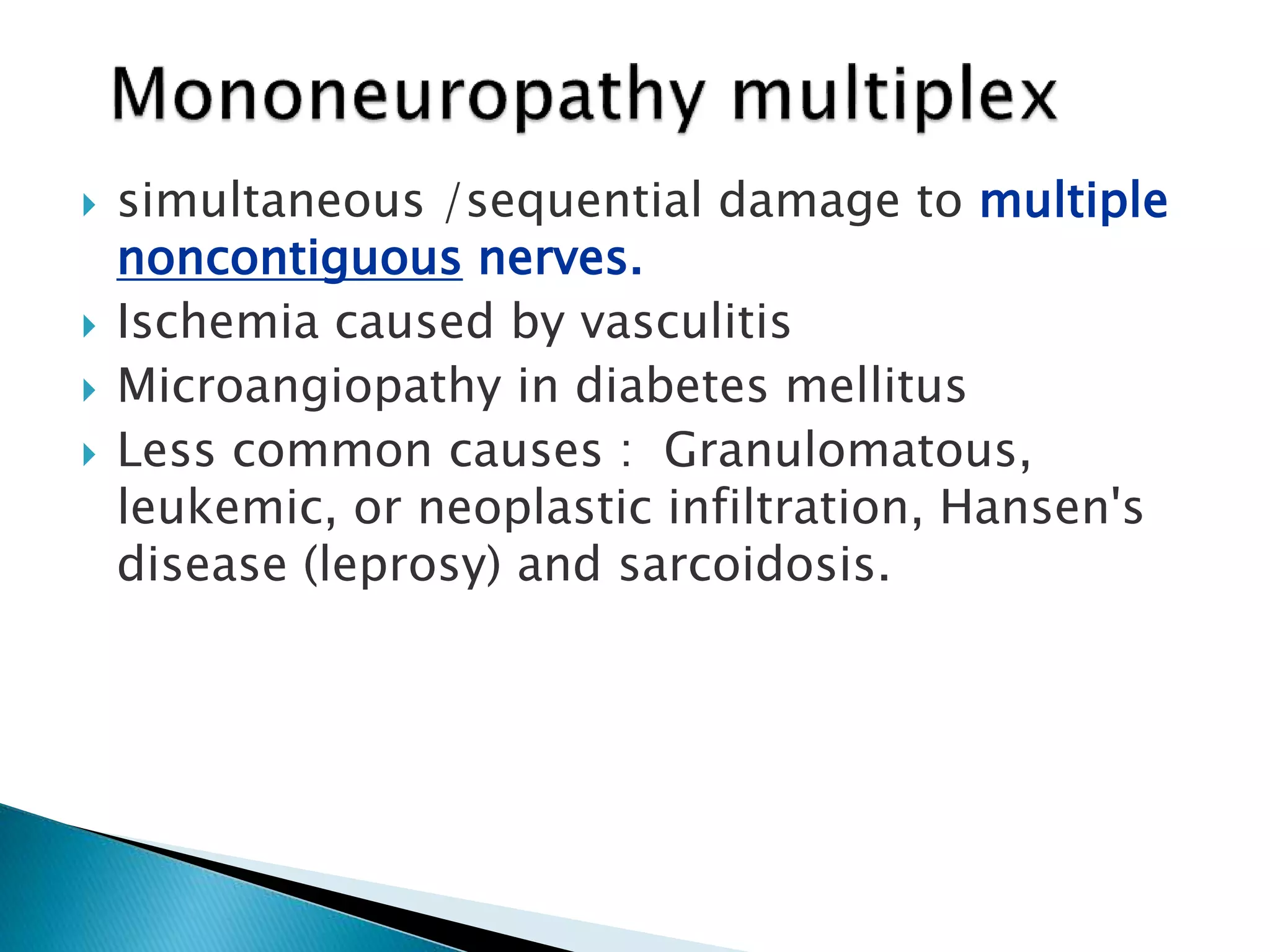
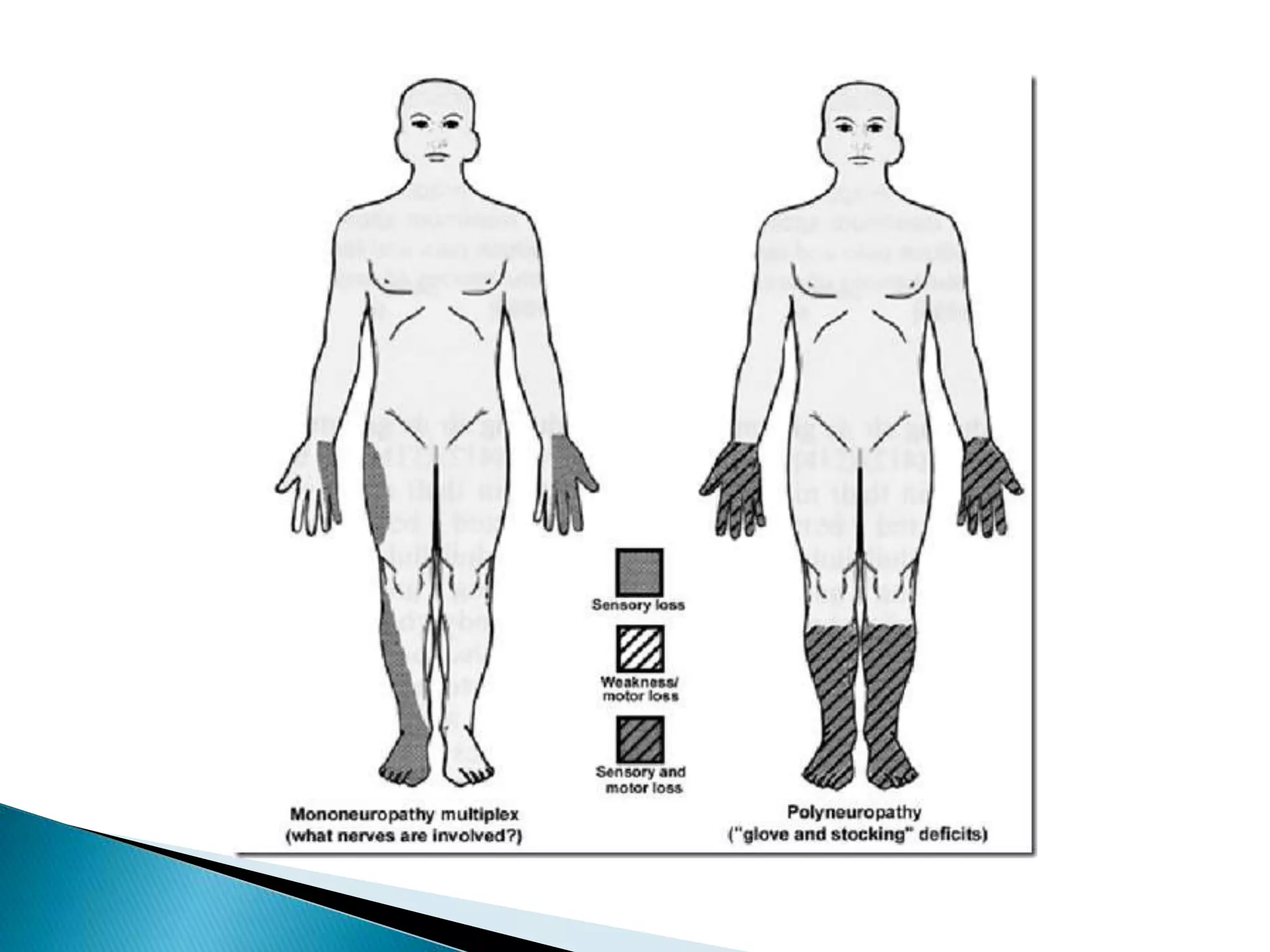
 simultaneous /sequential damage to multiple 
noncontiguous nerves. 
 Ischemia caused by vasculitis 
 Microangiopathy in diabetes mellitus 
 Less common causes : Granulomatous, 
leukemic, or neoplastic infiltration, Hansen's 
disease (leprosy) and sarcoidosis.
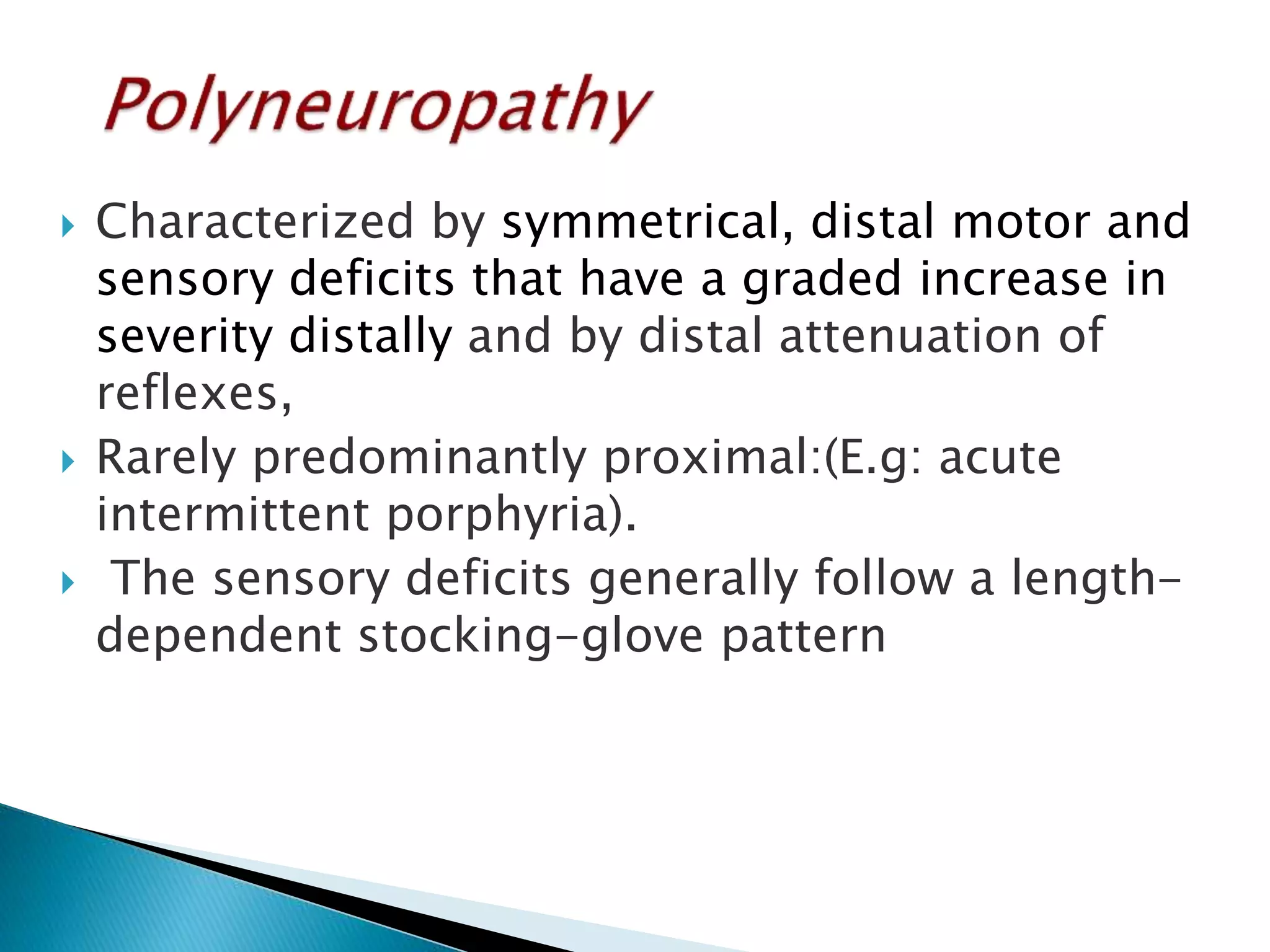
 Characterized by symmetrical, distal motor and 
sensory deficits that have a graded increase in 
severity distally and by distal attenuation of 
reflexes, 
 Rarely predominantly proximal:(E.g: acute 
intermittent porphyria). 
 The sensory deficits generally follow a length-dependent 
stocking-glove pattern
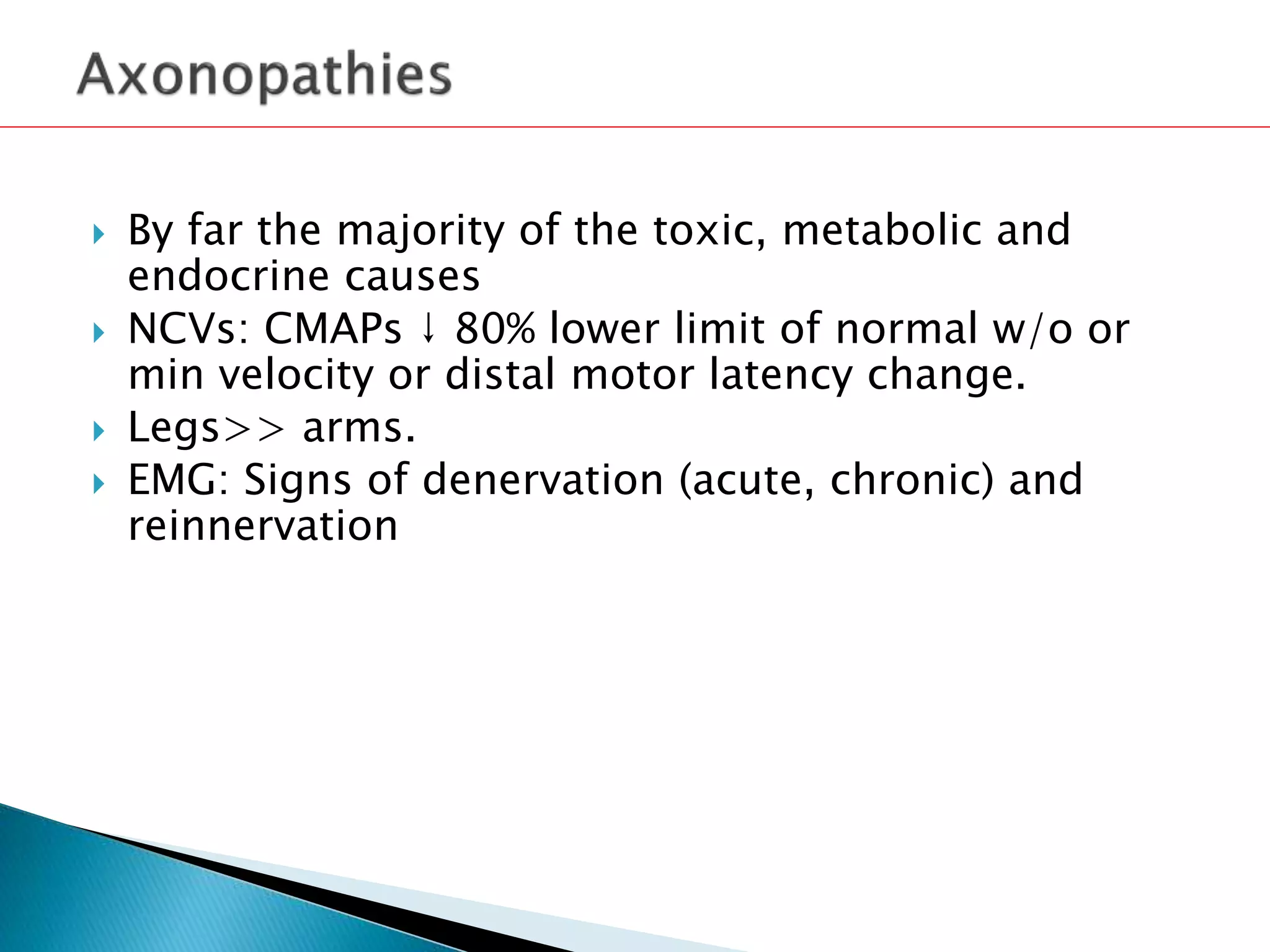
 By far the majority of the toxic, metabolic and 
endocrine causes 
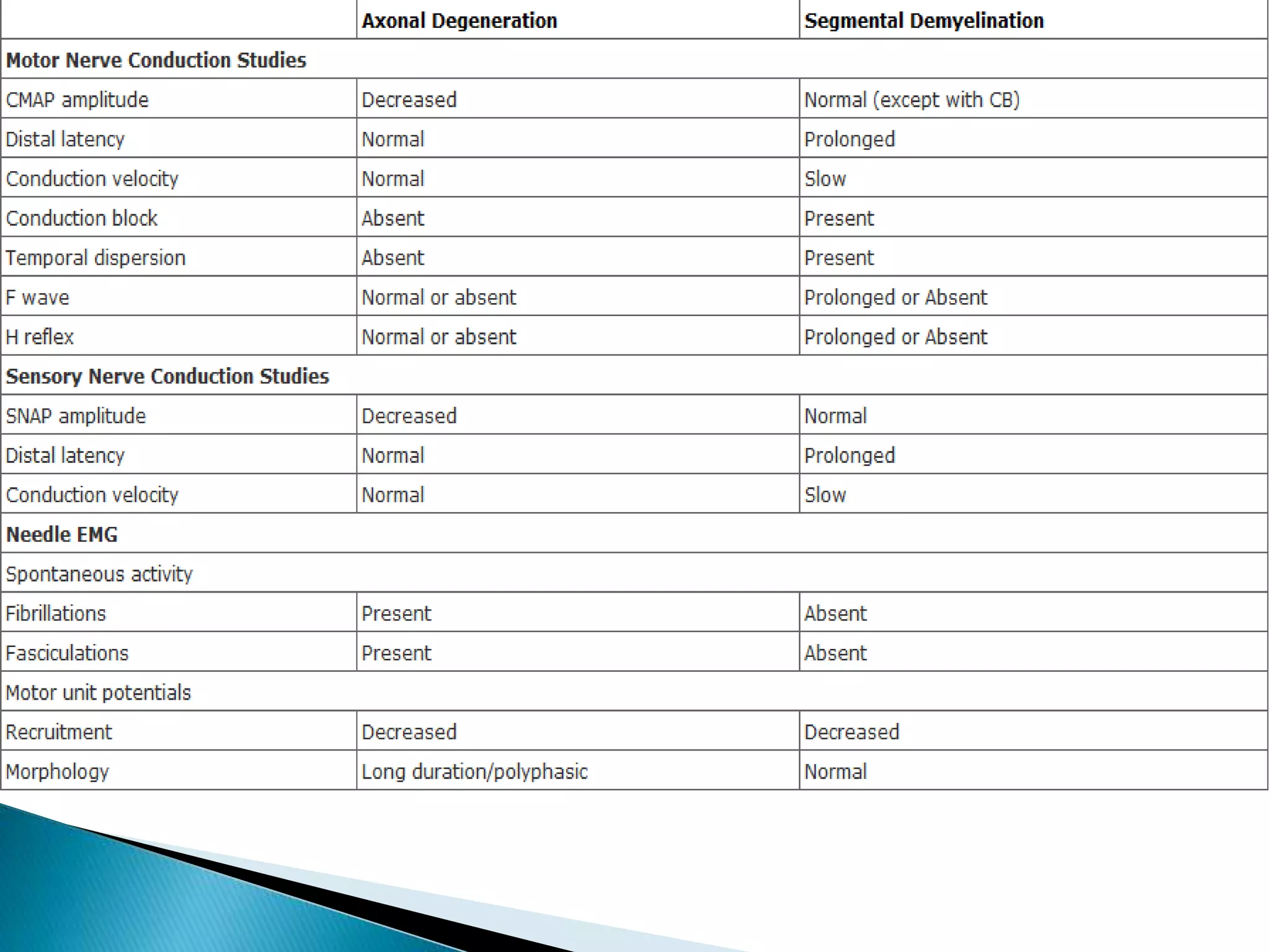
 NCVs: CMAPs ↓ 80% lower limit of normal w/o or 
min velocity or distal motor latency change. 
 Legs>> arms. 
 EMG: Signs of denervation (acute, chronic) and 
reinnervation
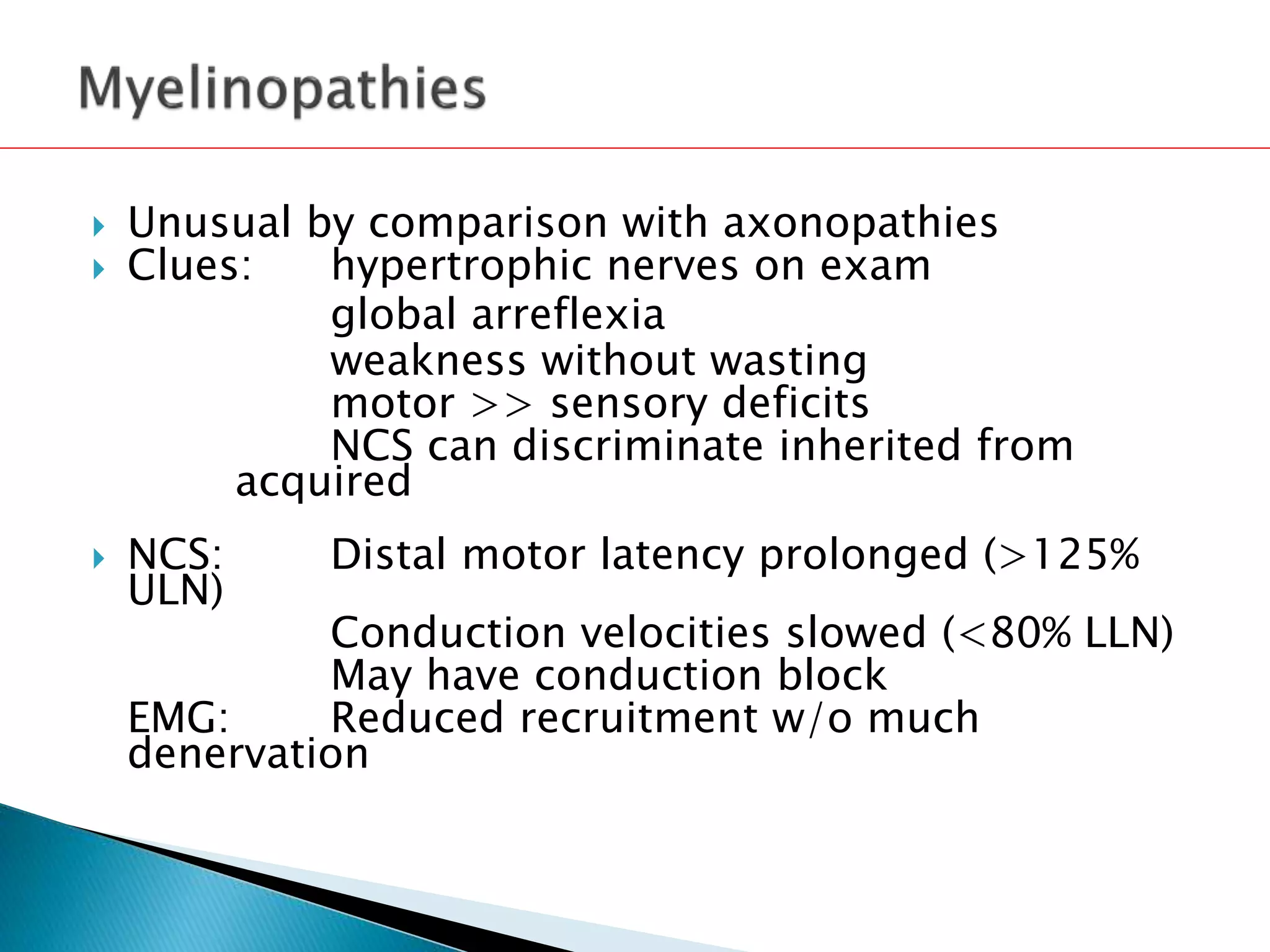
 Unusual by comparison with axonopathies 
 Clues: hypertrophic nerves on exam 
global arreflexia 
weakness without wasting 
motor >> sensory deficits 
NCS can discriminate inherited from 
acquired 
 NCS: Distal motor latency prolonged (>125% 
ULN) 
Conduction velocities slowed (<80% LLN) 
May have conduction block 
EMG: Reduced recruitment w/o much 
denervation
 DM 
•Weight loss, malaise, and anorexia. 
 hypothyroidism 
 chronic renal failure 
 liver disease 
 intestinal 
malabsorption 
 malignancy 
 connective tissue 
diseases 
 [HIV] 
 drug use 
 Vitamin B6 toxicity 
 alcohol and dietary 
habits
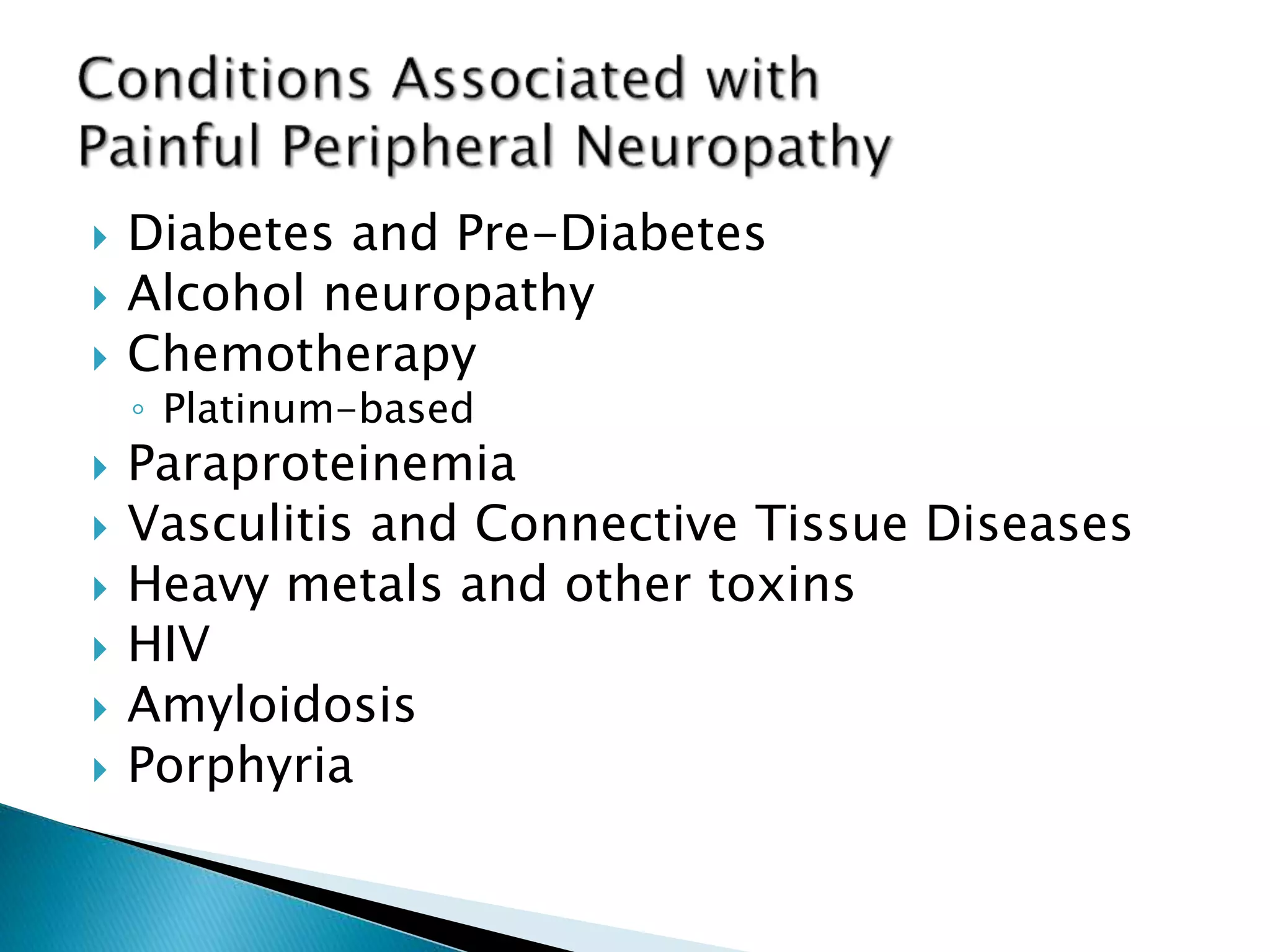
 Diabetes and Pre-Diabetes 
 Alcohol neuropathy 
 Chemotherapy 
◦ Platinum-based 
 Paraproteinemia 
 Vasculitis and Connective Tissue Diseases 
 Heavy metals and other toxins 
 HIV 
 Amyloidosis 
 Porphyria
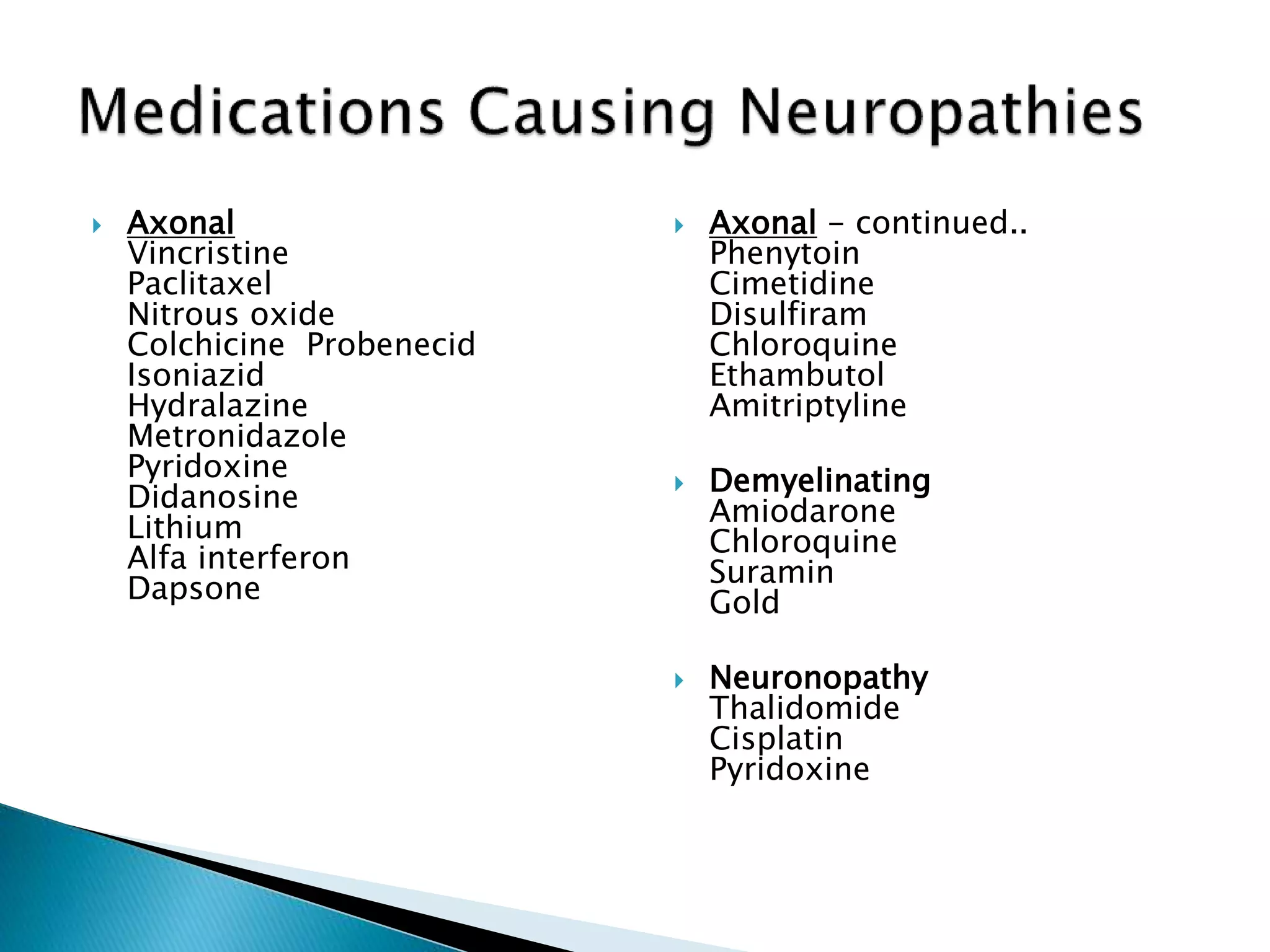
 Axonal 
Vincristine 
Paclitaxel 
Nitrous oxide 
Colchicine Probenecid 
Isoniazid 
Hydralazine 
Metronidazole 
Pyridoxine 
Didanosine 
Lithium 
Alfa interferon 
Dapsone 
 Axonal - continued.. 
Phenytoin 
Cimetidine 
Disulfiram 
Chloroquine 
Ethambutol 
Amitriptyline 
 Demyelinating 
Amiodarone 
Chloroquine 
Suramin 
Gold 
 Neuronopathy 
Thalidomide 
Cisplatin 
Pyridoxine
◦ Guillain-Barré syndrome 
◦ Chronic inflammatory demyelinating 
polyradiculoneuropathy 
◦ Diabetes mellitus 
◦ Porphyria 
◦ Osteosclerotic myeloma 
◦ Waldenstrom's macroglobulinemia 
◦ Monoclonal gammopathy of undetermined significance 
◦ Acute arsenic polyneuropathy 
◦ Lymphoma 
◦ Diphtheria 
◦ HIV/AIDS 
◦ Lyme disease 
◦ Hypothyroidism 
◦ Vincristine (Oncovin, Vincosar PFS) toxicity
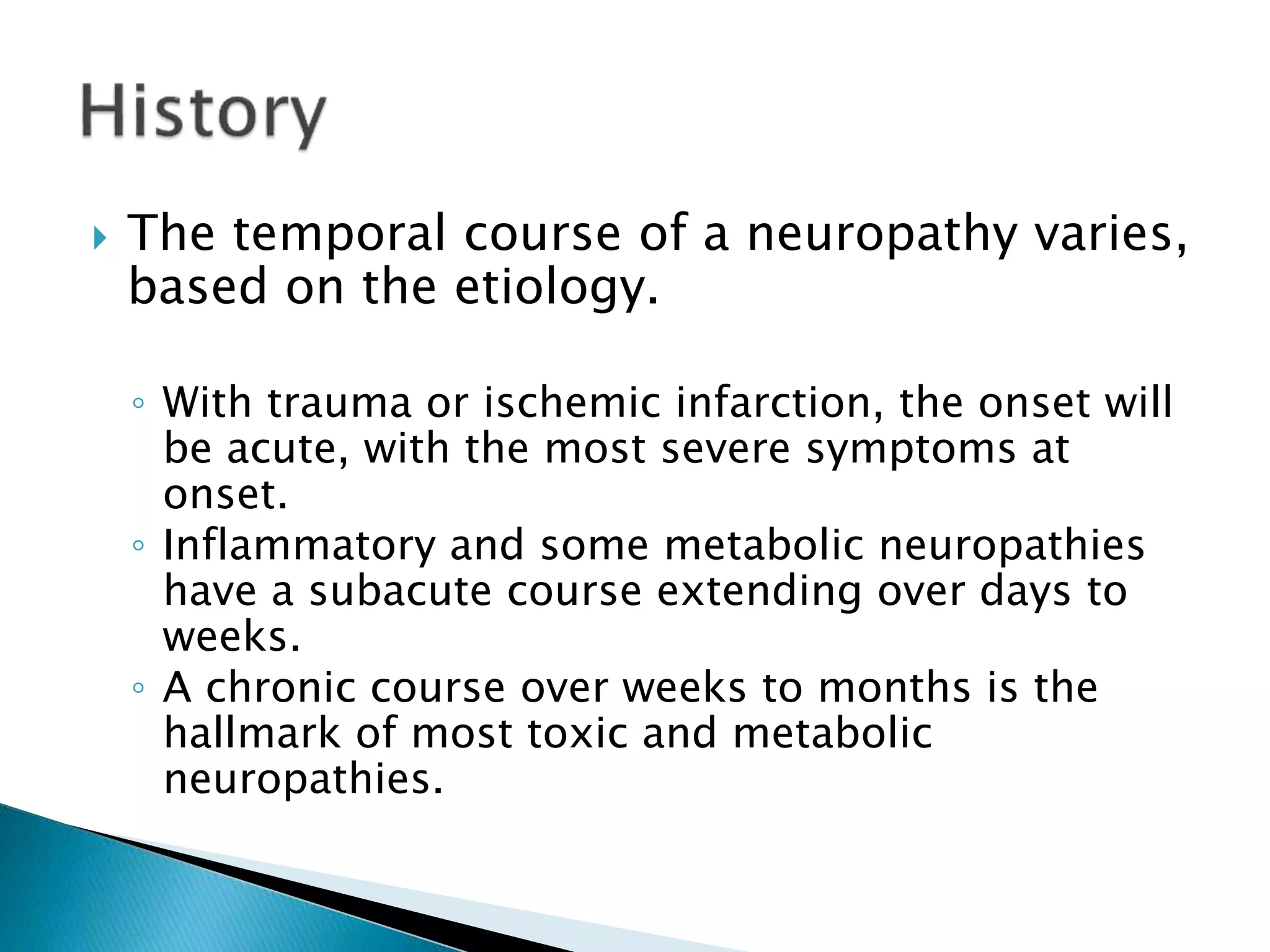
 The temporal course of a neuropathy varies, 
based on the etiology. 
◦ With trauma or ischemic infarction, the onset will 
be acute, with the most severe symptoms at 
onset. 
◦ Inflammatory and some metabolic neuropathies 
have a subacute course extending over days to 
weeks. 
◦ A chronic course over weeks to months is the 
hallmark of most toxic and metabolic 
neuropathies.
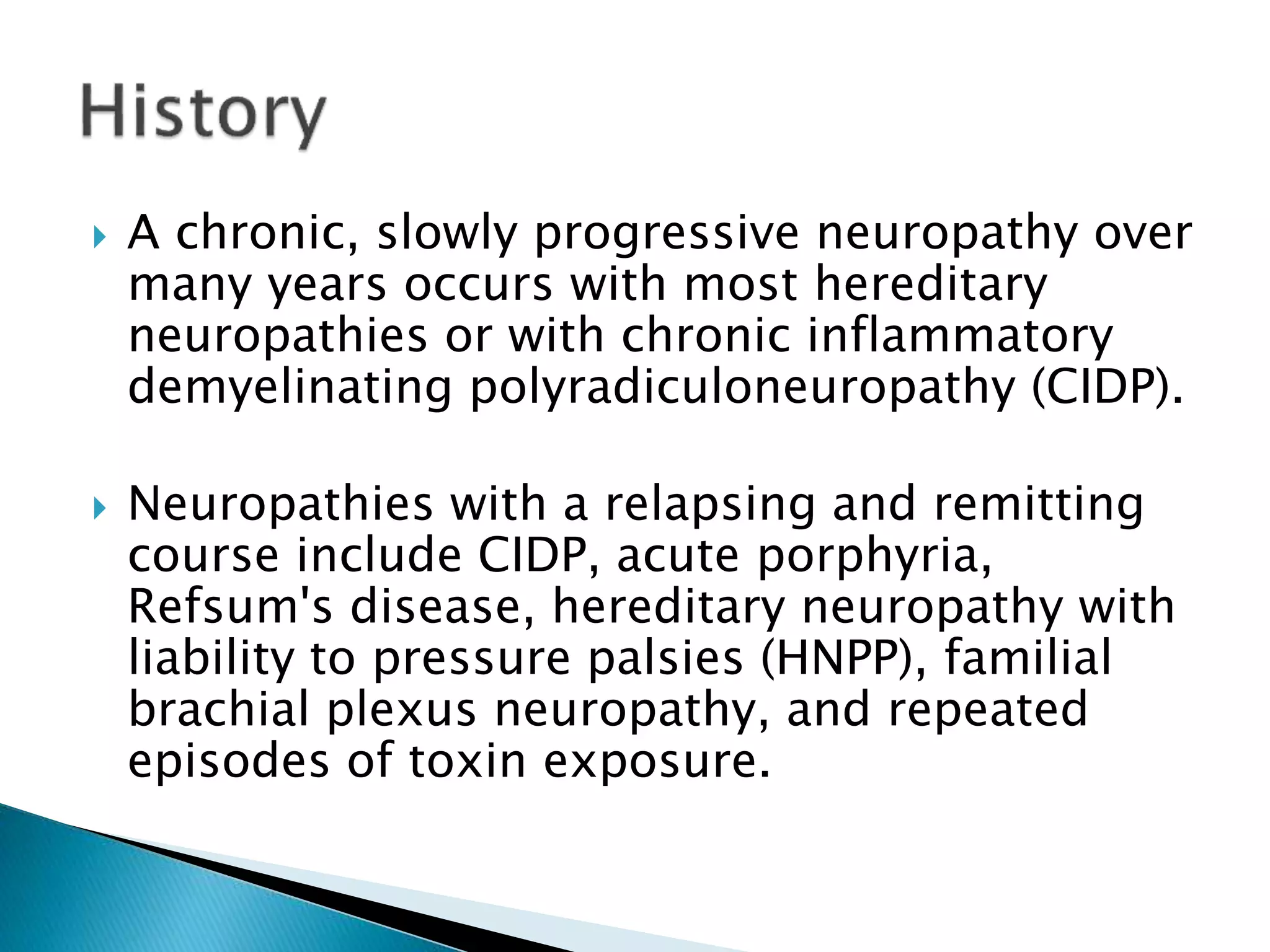
 A chronic, slowly progressive neuropathy over 
many years occurs with most hereditary 
neuropathies or with chronic inflammatory 
demyelinating polyradiculoneuropathy (CIDP). 
 Neuropathies with a relapsing and remitting 
course include CIDP, acute porphyria, 
Refsum's disease, hereditary neuropathy with 
liability to pressure palsies (HNPP), familial 
brachial plexus neuropathy, and repeated 
episodes of toxin exposure.
 Ischemic neuropathies often have pain as a 
prominent feature. 
 Small-fiber neuropathies often present with 
burning pain, lightning-like or lancinating 
pain, aching, or uncomfortable paresthesias 
(dysesthesias).
 Dying-back (distal symmetric axonal) 
neuropathies initially involve the tips of the 
toes and progress proximally in a stocking-glove 
distribution.
 Peripheral neuropathy can present as restless 
leg syndrome. 
 Proximal involvement may result in difficulty 
climbing stairs, getting out of a chair, lifting 
and bulbar involvement can also be seen
 The clinical assessment should include: 
◦ careful past medical history, looking for systemic 
diseases that can be associated with neuropathy, 
such as diabetes or hypothyroidism.
 All patients should be questioned regarding 
◦ HIV risk factors 
◦ diet (nutrition) 
◦ vitamin use (especially B6) 
◦ possibility of a tick bite (Lyme disease) 
◦ Constitutional symtoms (malignancy)
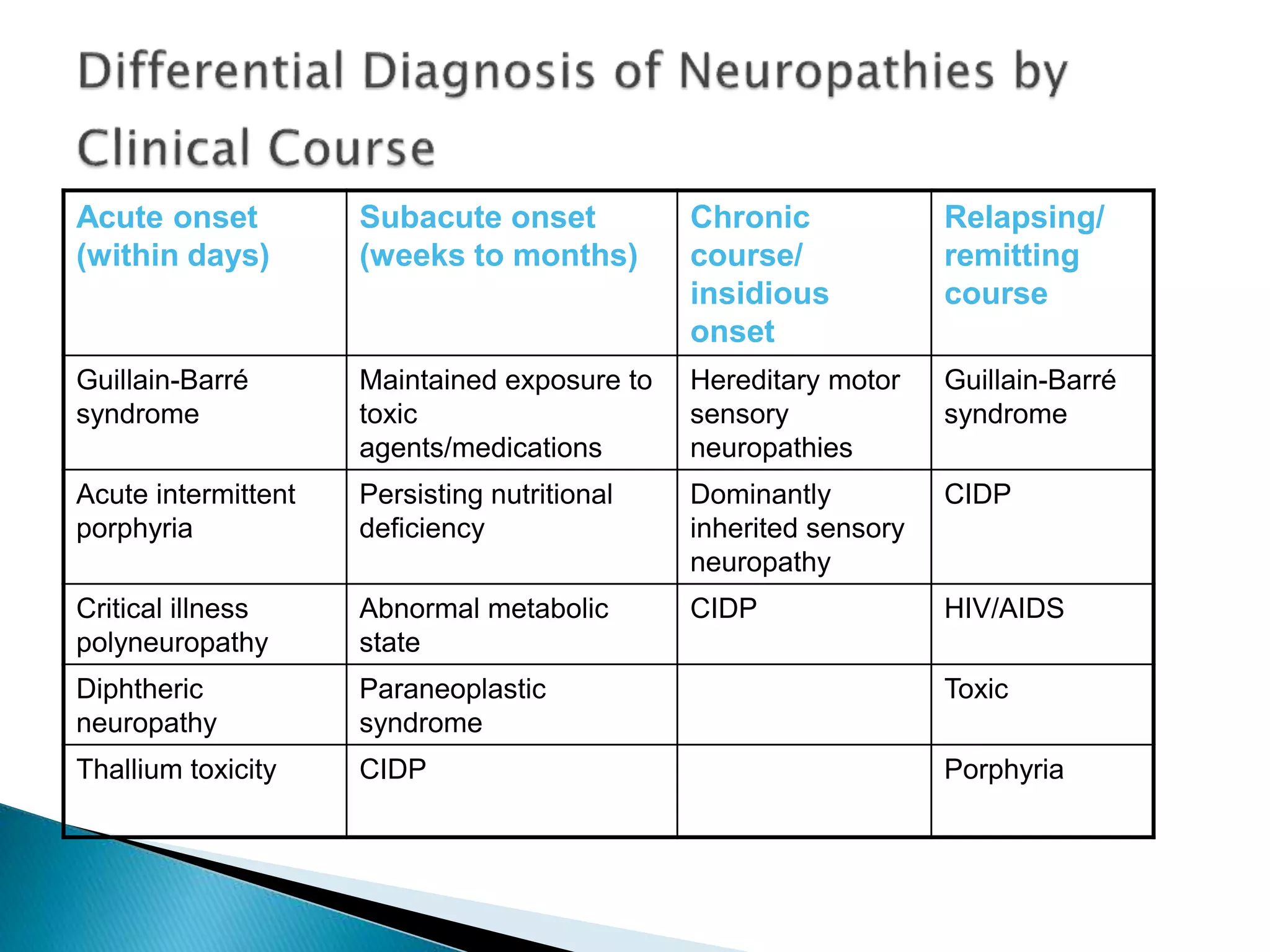
Acute onset 
(within days) 
Subacute onset 
(weeks to months) 
Chronic 
course/ 
insidious 
onset 
Relapsing/ 
remitting 
course 
Guillain-Barré 
syndrome 
Maintained exposure to 
toxic 
agents/medications 
Hereditary motor 
sensory 
neuropathies 
Guillain-Barré 
syndrome 
Acute intermittent 
porphyria 
Persisting nutritional 
deficiency 
Dominantly 
inherited sensory 
neuropathy 
CIDP 
Critical illness 
polyneuropathy 
Abnormal metabolic 
state 
CIDP HIV/AIDS 
Diphtheric 
neuropathy 
Paraneoplastic 
syndrome 
Toxic 
Thallium toxicity CIDP Porphyria
 A cranial nerve examination can provide 
evidence of mononeuropathies. 
 Funduscopic examination may show 
abnormalities such as optic pallor, which can 
be present in leukodystrophies and vitamin 
B12 deficiency.
 Thickened nerves
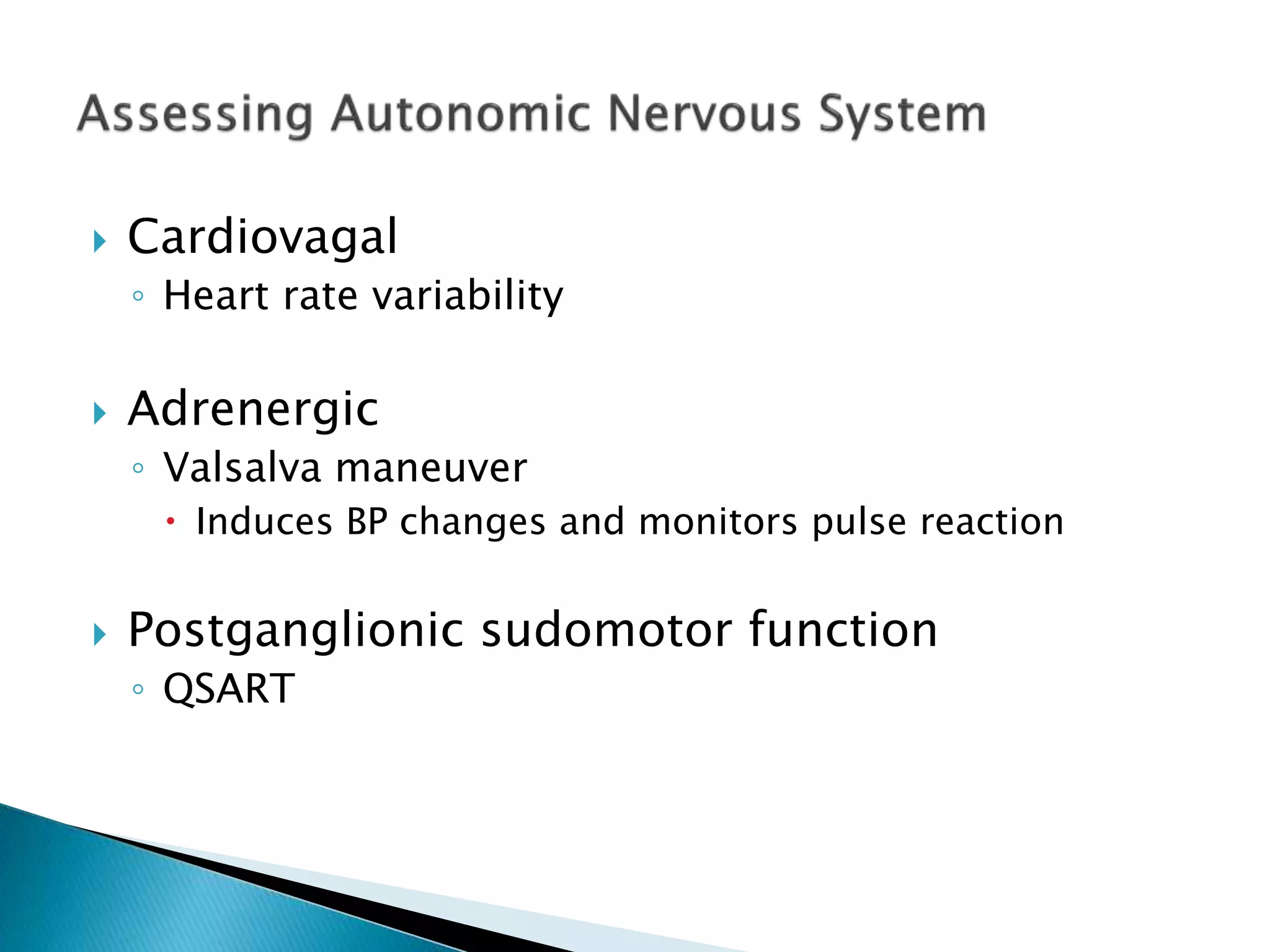
 Cardiovagal 
◦ Heart rate variability 
 Adrenergic 
◦ Valsalva maneuver 
 Induces BP changes and monitors pulse reaction 
 Postganglionic sudomotor function 
◦ QSART
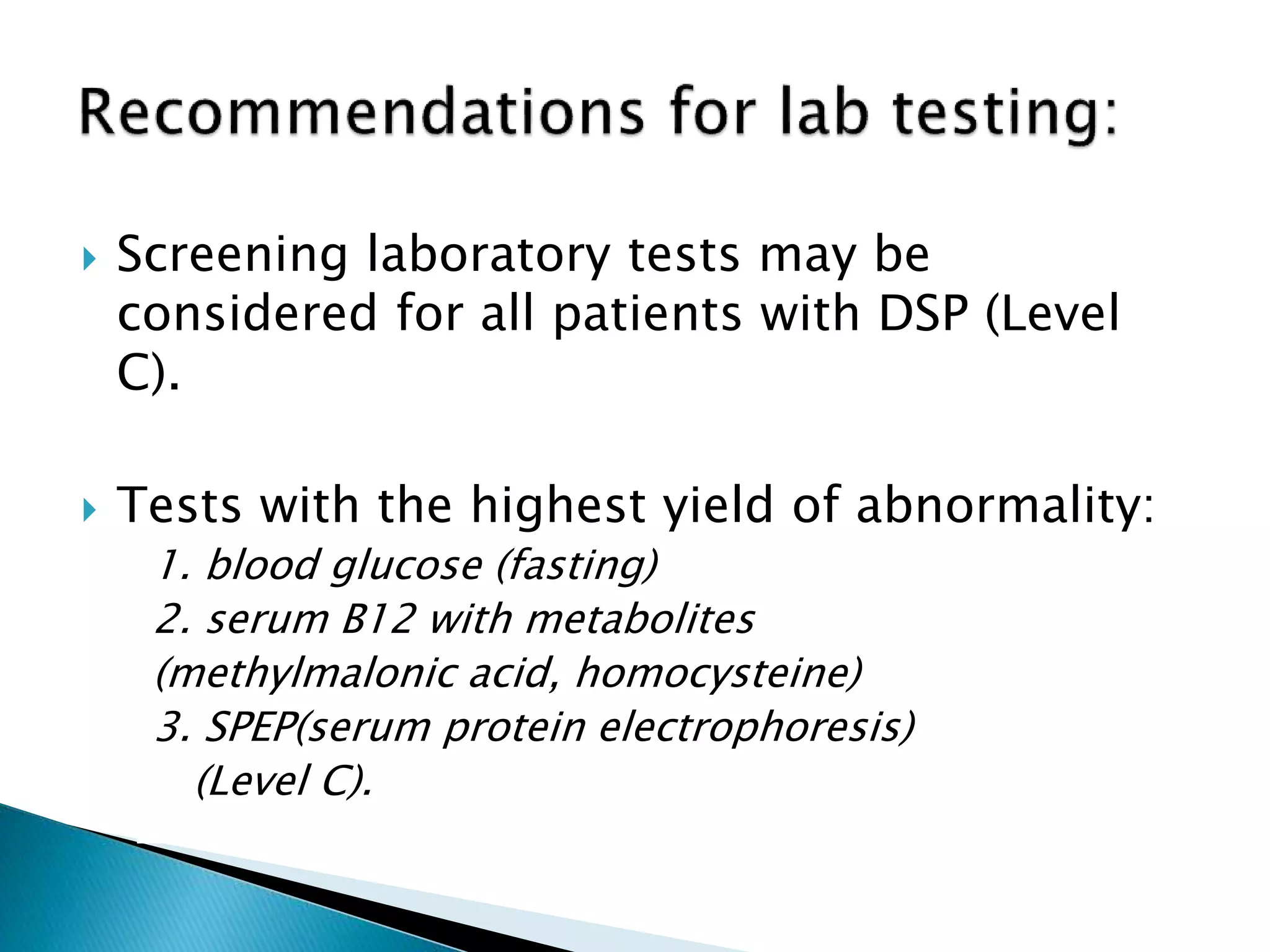
 Screening laboratory tests may be 
considered for all patients with DSP (Level 
C). 
 Tests with the highest yield of abnormality: 
1. blood glucose (fasting) 
2. serum B12 with metabolites 
(methylmalonic acid, homocysteine) 
3. SPEP(serum protein electrophoresis) 
(Level C).
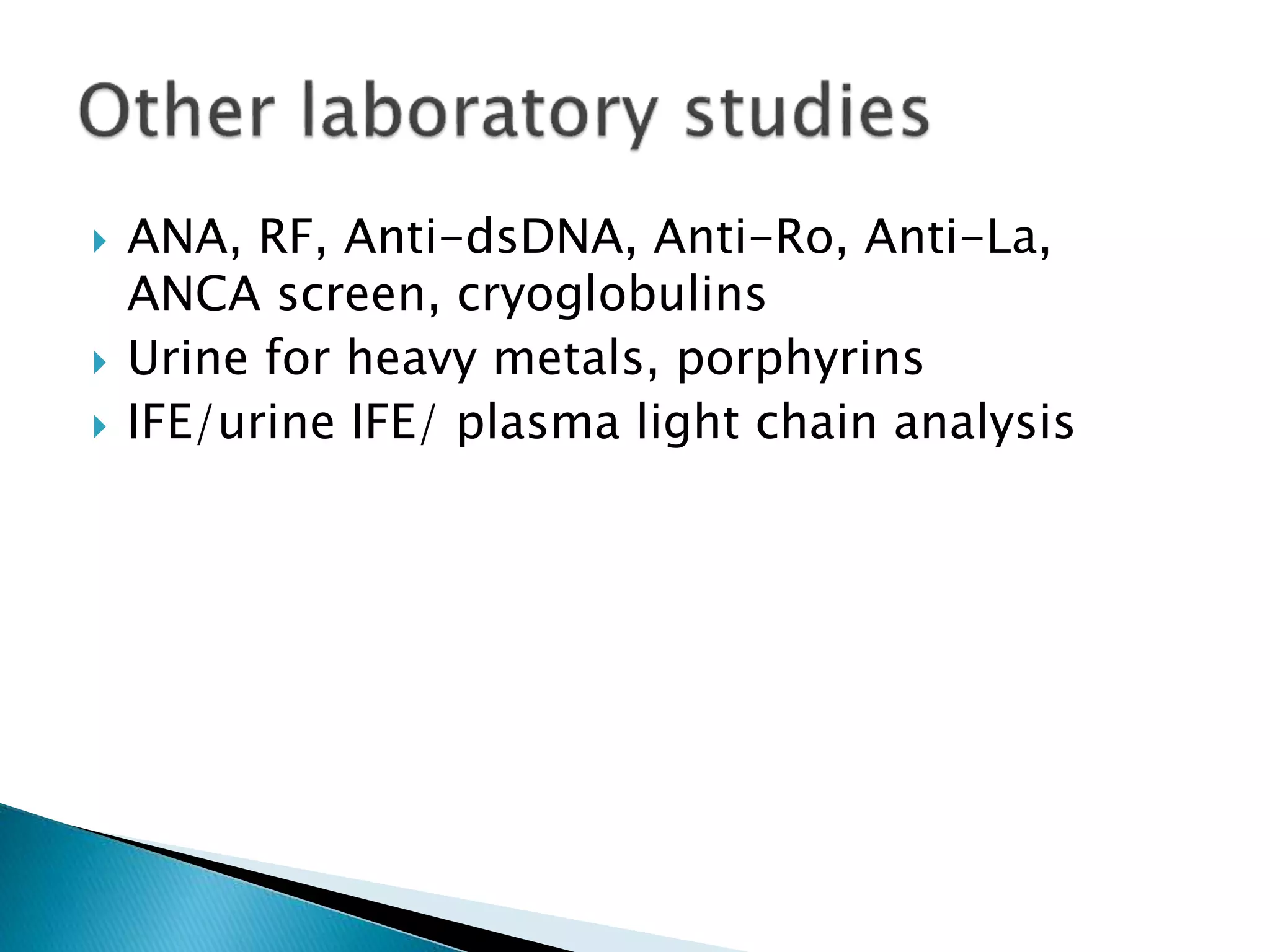
 ANA, RF, Anti-dsDNA, Anti-Ro, Anti-La, 
ANCA screen, cryoglobulins 
 Urine for heavy metals, porphyrins 
 IFE/urine IFE/ plasma light chain analysis
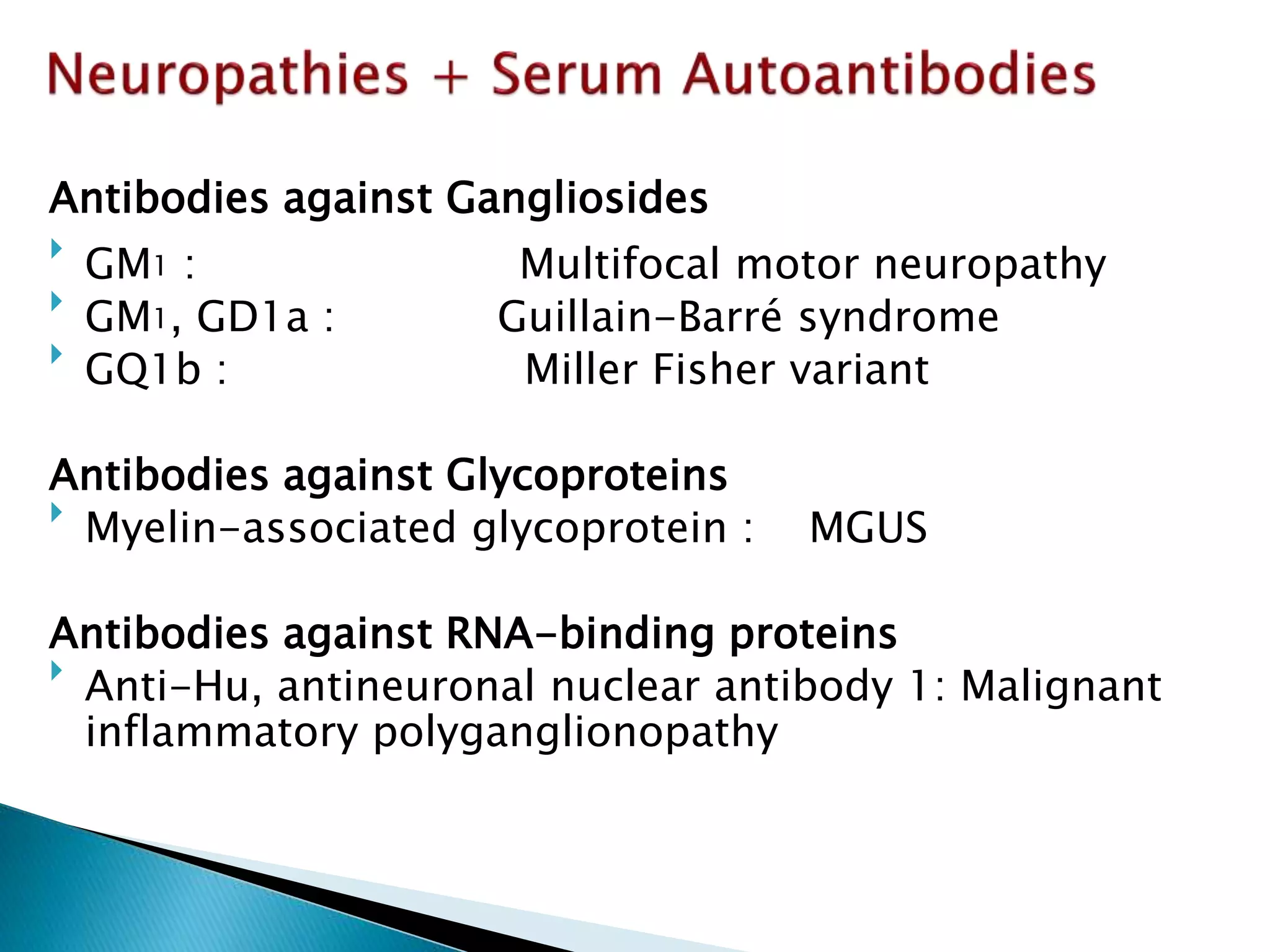
Antibodies against Gangliosides 
 
GM1 : Multifocal motor neuropathy 
 
GM1, GD1a : Guillain-Barré syndrome 
 
GQ1b : Miller Fisher variant 
Antibodies against Glycoproteins 
 
Myelin-associated glycoprotein : MGUS 
Antibodies against RNA-binding proteins 
 
Anti-Hu, antineuronal nuclear antibody 1: Malignant 
inflammatory polyganglionopathy
 (1) Confirming the presence of neuropathy, 
 (2) Locating focal nerve lesions, 
 (3) Nature of the underlying nerve pathology
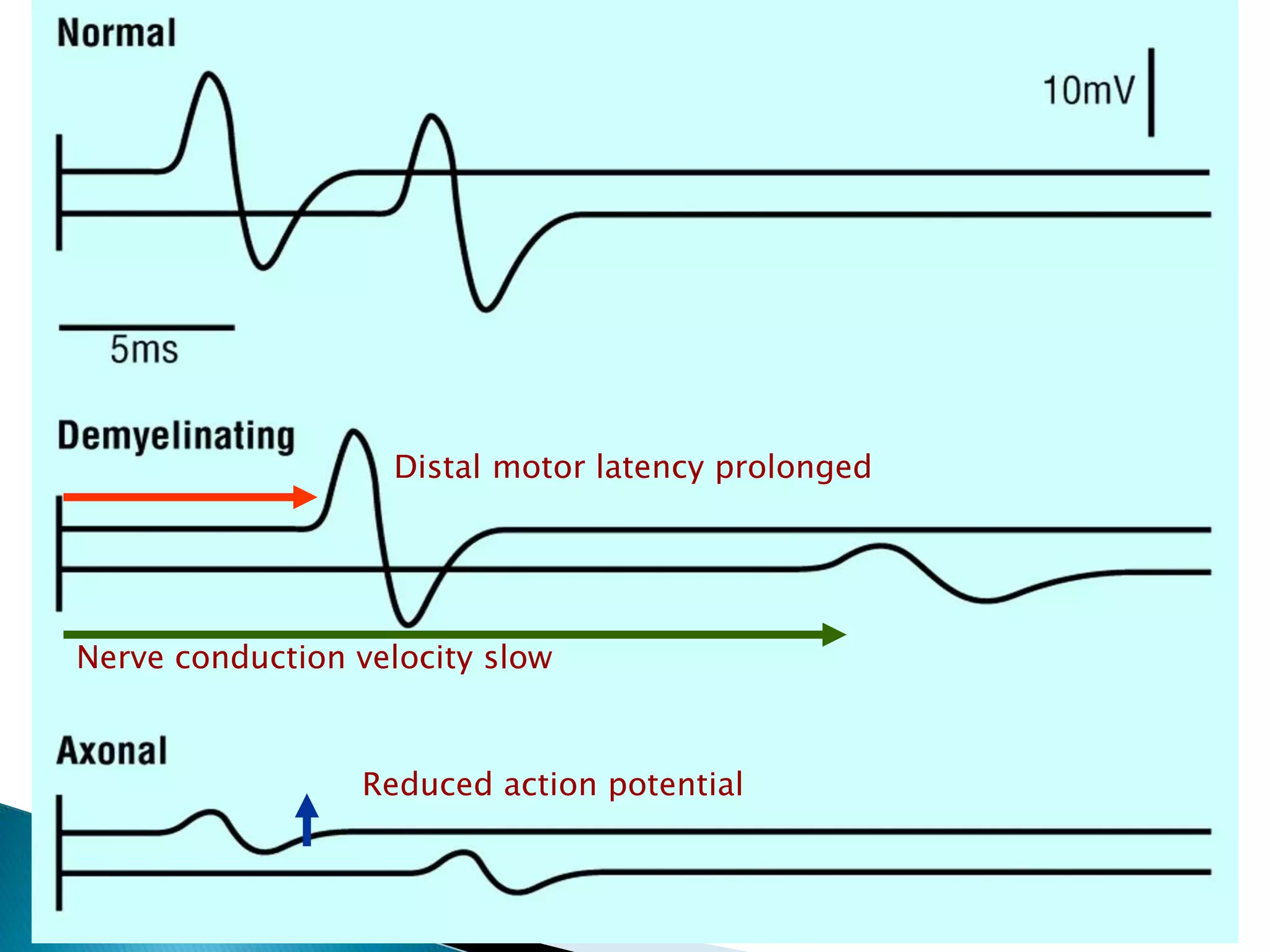
Distal motor latency prolonged 
Nerve conduction velocity slow 
Reduced action potential
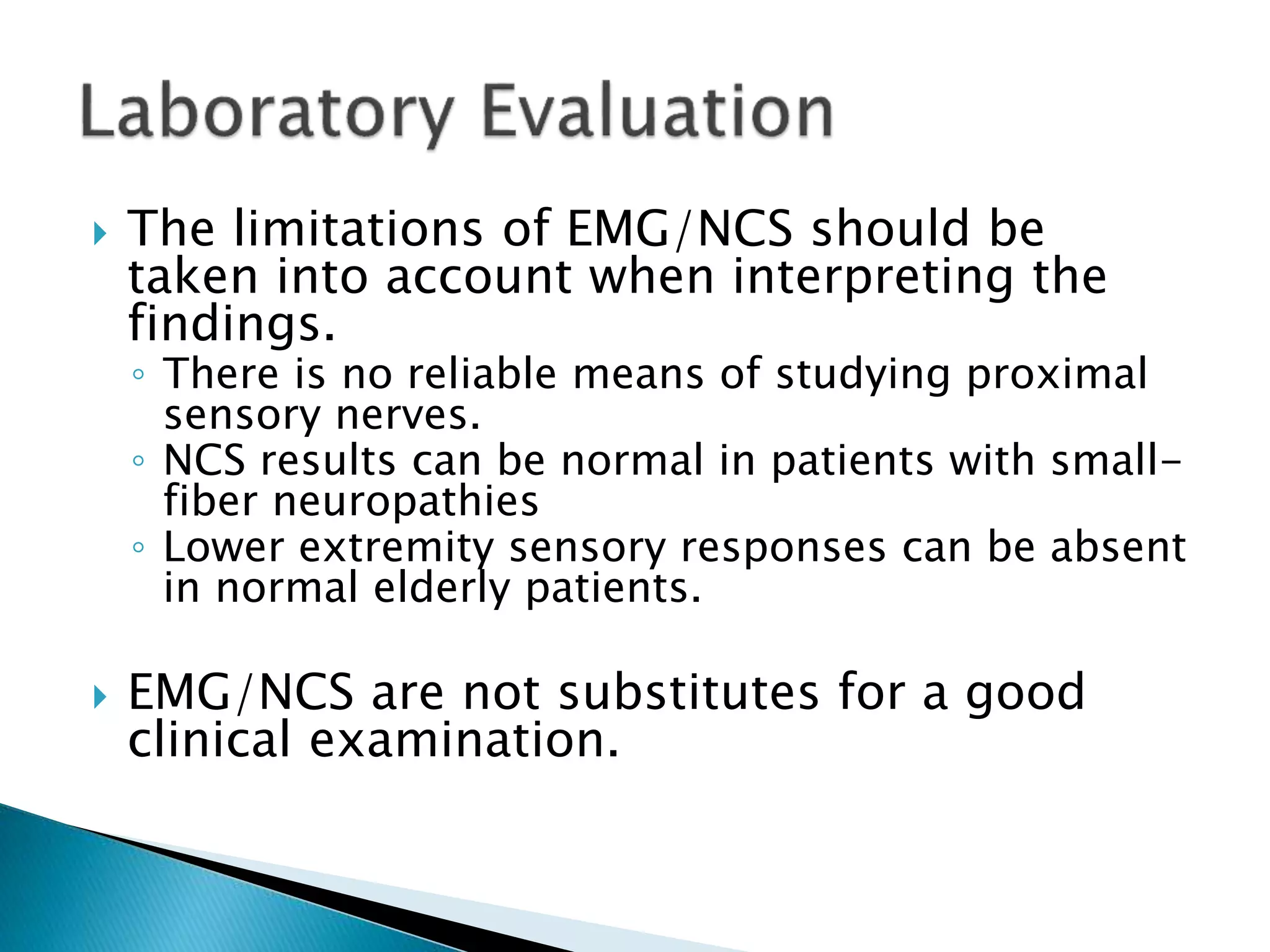
 The limitations of EMG/NCS should be 
taken into account when interpreting the 
findings. 
◦ There is no reliable means of studying proximal 
sensory nerves. 
◦ NCS results can be normal in patients with small-fiber 
neuropathies 
◦ Lower extremity sensory responses can be absent 
in normal elderly patients. 
 EMG/NCS are not substitutes for a good 
clinical examination.
 In vasculitis, amyloid neuropathy, leprosy, CIDP, 
Inherited disorders of myelin, and rare 
axonopathies 
 The Sural nerve is selected most commonly 
 The superficial peroneal nerve – alternative; 
:advantage of allowing simultaneous biopsy of 
the peroneus brevis muscle through the same 
incision. 
 This combined nerve and muscle biopsy 
procedure increases the yield of identifying 
suspected vasculitis
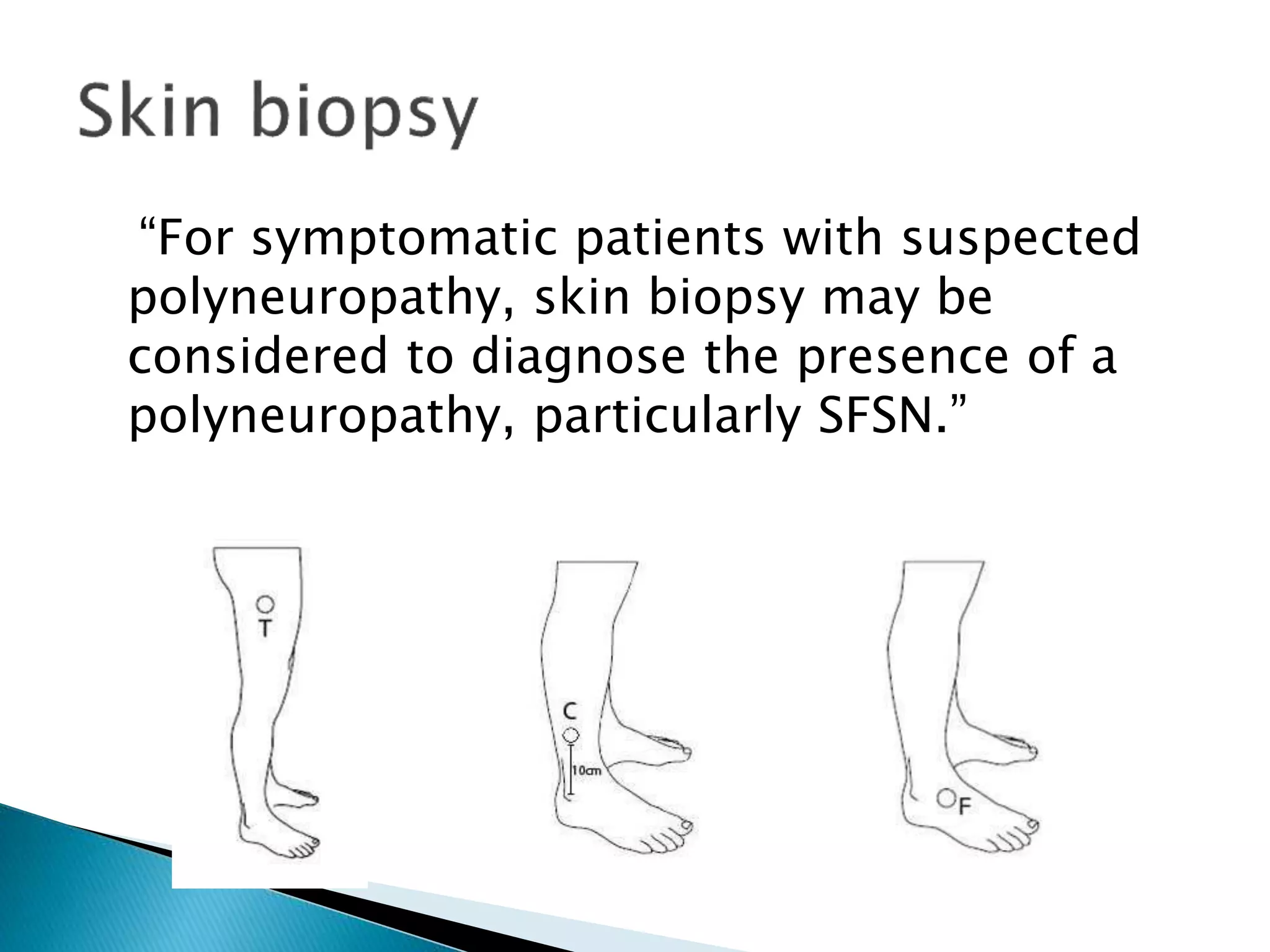
“For symptomatic patients with suspected 
polyneuropathy, skin biopsy may be 
considered to diagnose the presence of a 
polyneuropathy, particularly SFSN.”
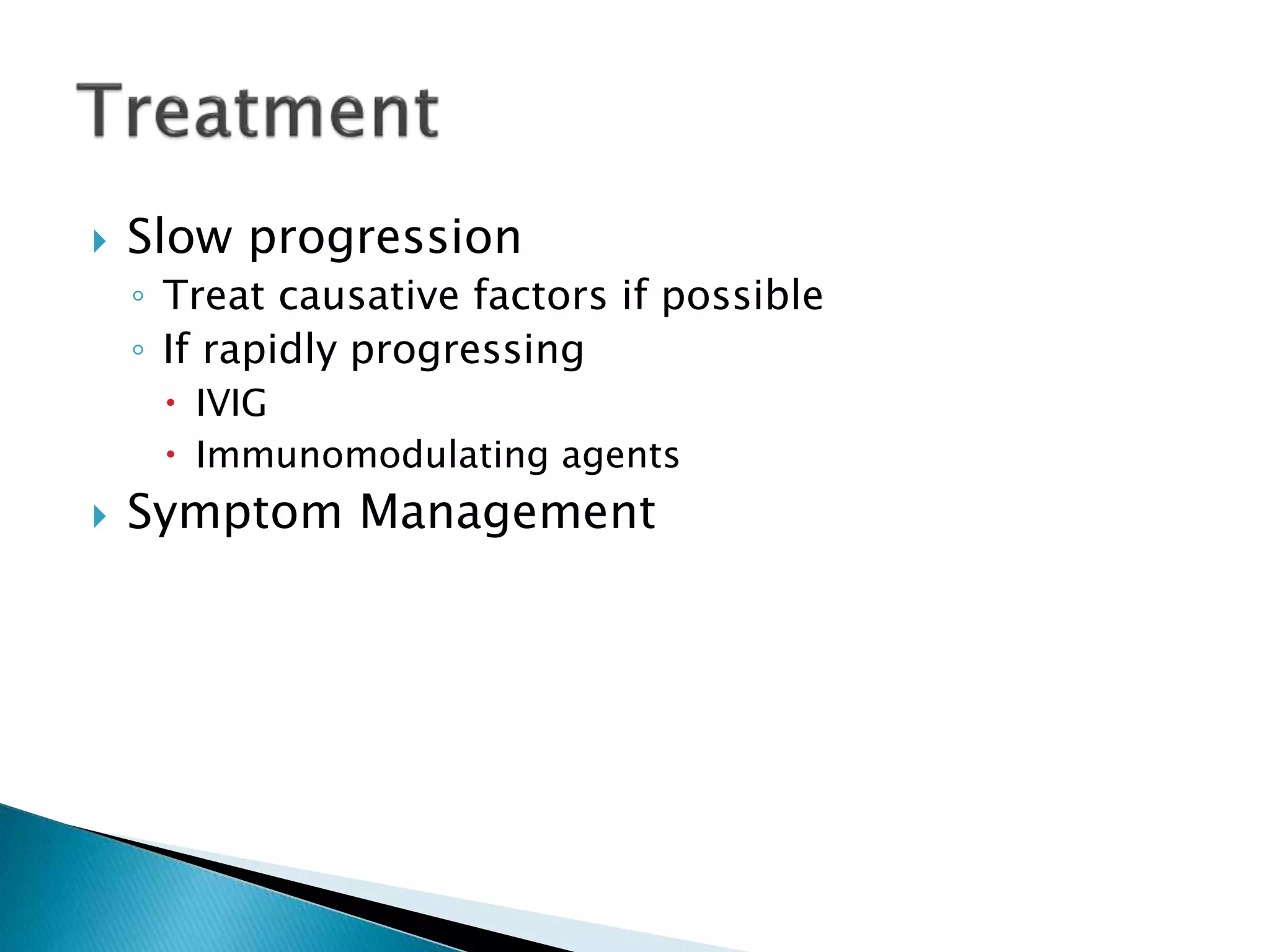
 Slow progression 
◦ Treat causative factors if possible 
◦ If rapidly progressing 
 IVIG 
 Immunomodulating agents 
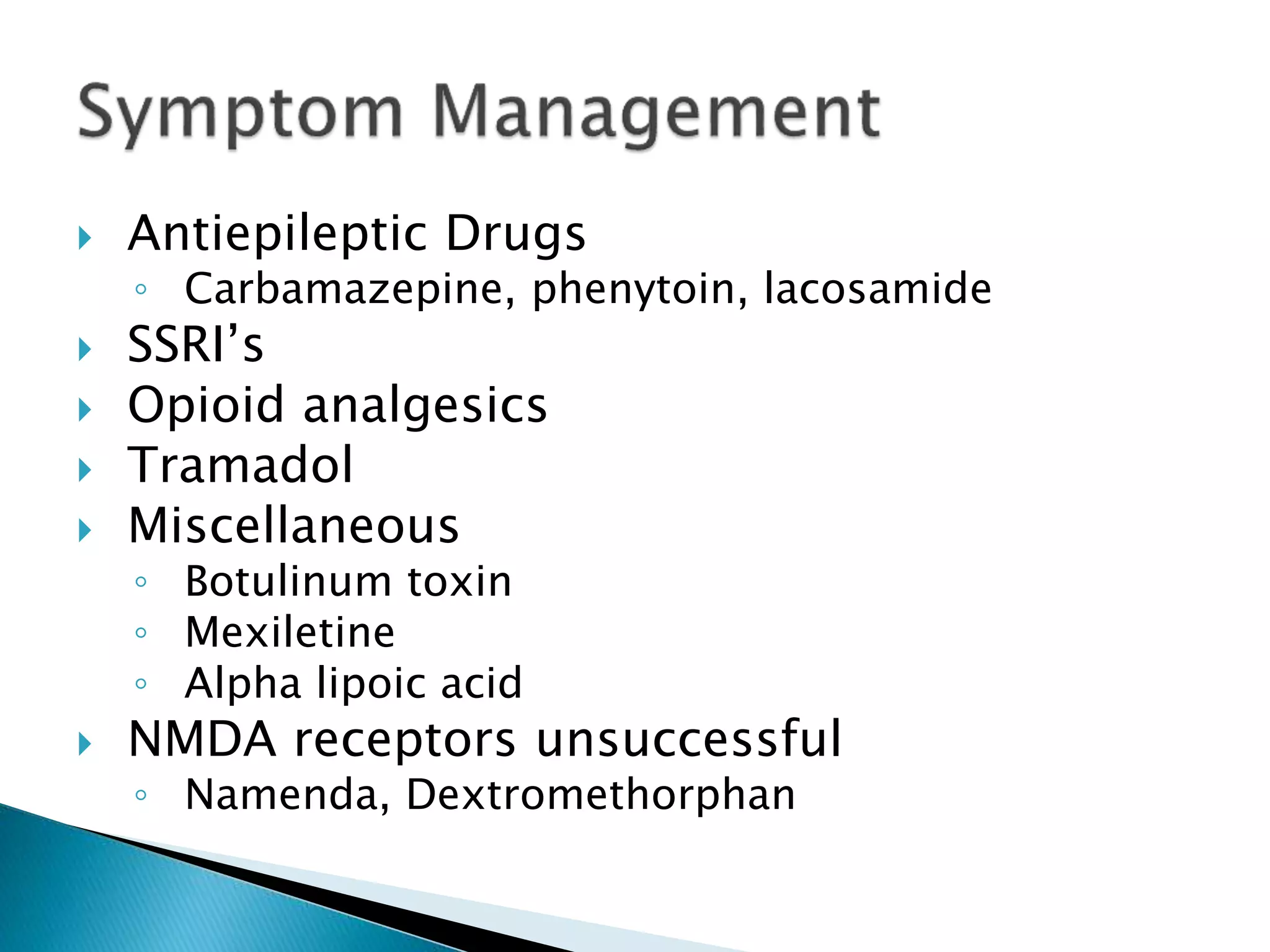
 Symptom Management
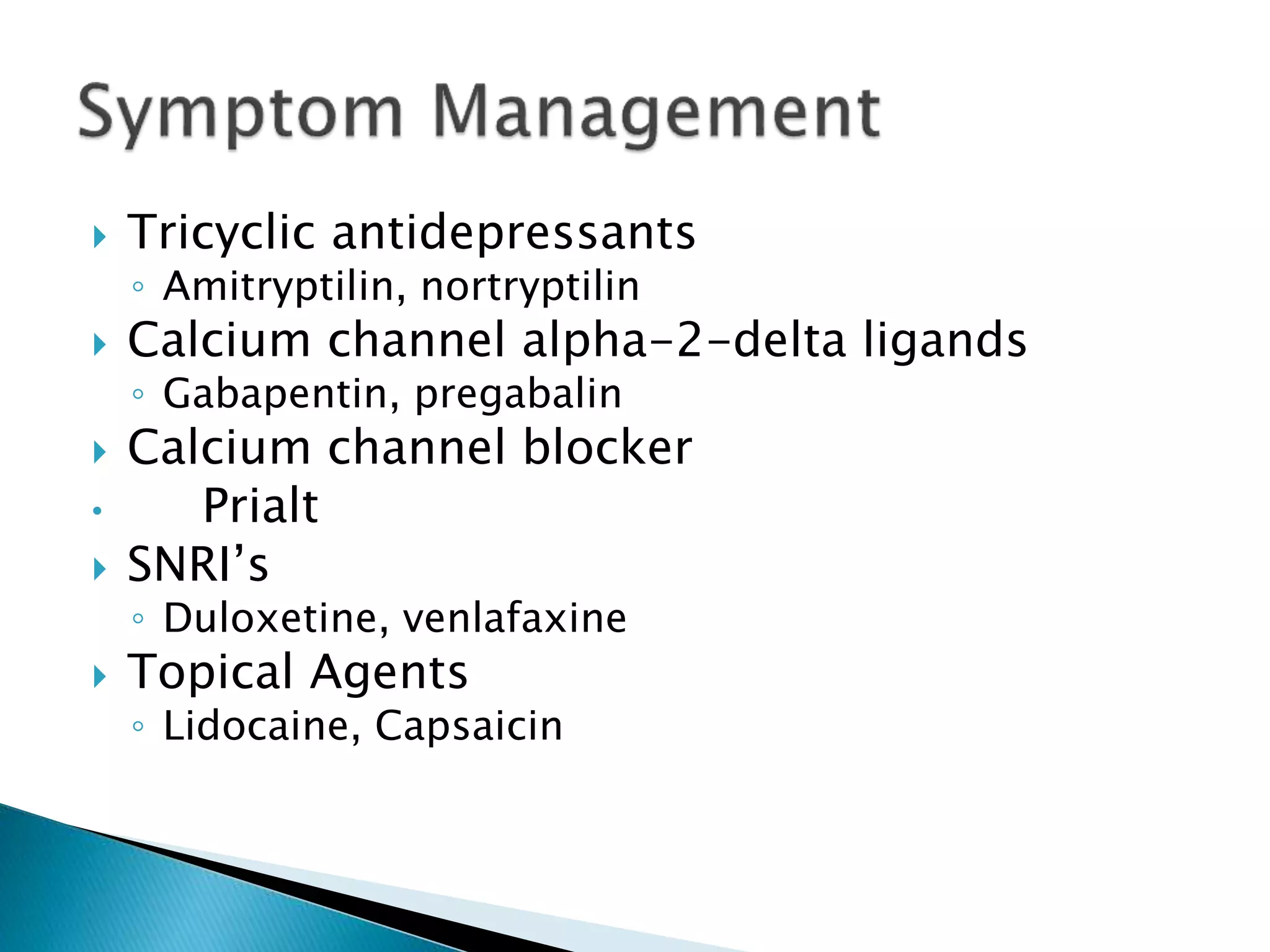
 Tricyclic antidepressants 
◦ Amitryptilin, nortryptilin 
 Calcium channel alpha-2-delta ligands 
◦ Gabapentin, pregabalin 
 Calcium channel blocker 
• Prialt 
 SNRI’s 
◦ Duloxetine, venlafaxine 
 Topical Agents 
◦ Lidocaine, Capsaicin
 Antiepileptic Drugs 
◦ Carbamazepine, phenytoin, lacosamide 
 SSRI’s 
 Opioid analgesics 
 Tramadol 
 Miscellaneous 
◦ Botulinum toxin 
◦ Mexiletine 
◦ Alpha lipoic acid 
 NMDA receptors unsuccessful 
◦ Namenda, Dextromethorphan
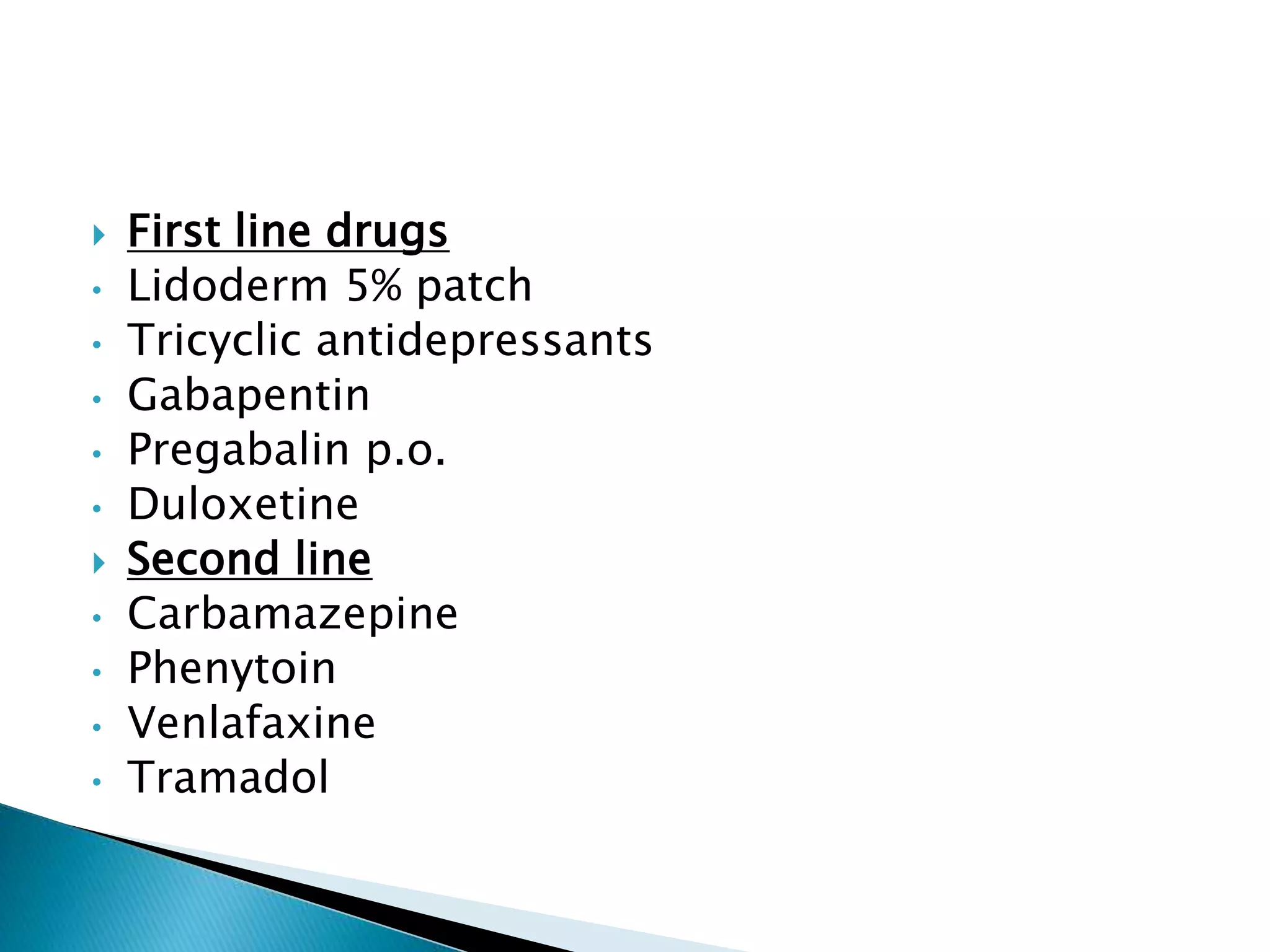
 First line drugs 
• Lidoderm 5% patch 
• Tricyclic antidepressants 
• Gabapentin 
• Pregabalin p.o. 
• Duloxetine 
 Second line 
• Carbamazepine 
• Phenytoin 
• Venlafaxine 
• Tramadol
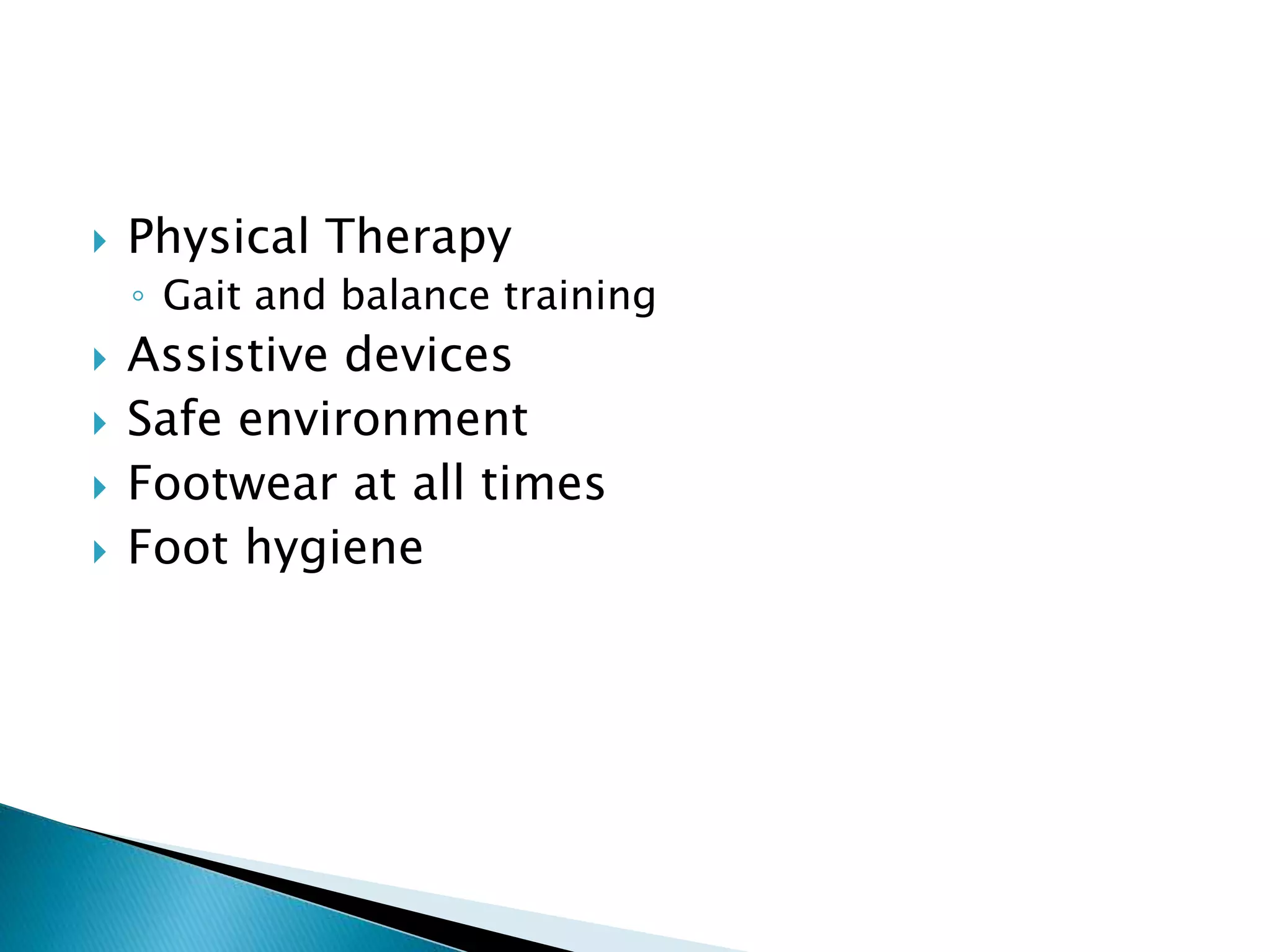
 Physical Therapy 
◦ Gait and balance training 
 Assistive devices 
 Safe environment 
 Footwear at all times 
 Foot hygiene
Thanks
 Clinical Approach to Peripheral Neuropathy: 
Anatomic Localization and Diagnostic Testing 
Adina R. Alport et al : Continuum Lifelong 
Learning Neurol 2012;18(1):13–38. 
 An Approach to the Evaluation of Peripheral 
Neuropathies;Mark B. Bromberg; SEMINARS IN 
NEUROLOGY/VOLUME 30, NUMBER 4 2010

Approach to peripheral neuropathy

  • 1.
    Dr. Parag Moon Senior resident Dept of neurology GMC Kota
  • 2.
     Generalized termincluding disorders of any cause affecting PNS  May involve sensory nerves, motor nerves, or both  May affect one nerve (mononeuropathy), several nerves together (polyneuropathy) or several nerves not contiguous (Mononeuropathy multiplex)
  • 3.
     Further classifiedinto those that primarily affect the cell body (e.g., neuronopathy or ganglionopathy), myelin (myelinopathy), and the axon (axonopathy)
  • 4.
     Disease Diabetes1 2  Paraproteinaemia2 3  Alcohol misuse1  Renal failure1  Vitamin B-12 deficiency1  HIV infection1  Chronic idiopathic axonal neuropathy4  Prevalence  11-41% (depending on duration, type,and control)  9-10%  7%  4%  3.6%  16% (depending on the population studied, usually much lower)  10-40% of different hospital series BMJ 2010:341:c6100
  • 5.
    The clinical responseto sensory nerve injury Loss of function “- symptoms” Disordered function “+ symptoms” Sensory “Large Fiber” ↓ Vibration ↓ Proprioception Hyporeflexia Sensory ataxia Paresthesias Sensory “Small Fiber” ↓ Pain ↓ Temperature Dysesthesias Allodynia
  • 6.
    The clinical responseto motor nerve injury Loss of function “- symptoms” Disturbed function “+ symptoms” Motor nerves Large fibre Wasting Hypotonia Weakness Hyporeflexia Orthopedic deformity Fasciculation Cramps
  • 7.
    The clinical responseto autonomic nerve injury Loss of function “- symptoms” Disturbed function “+ symptoms” Autonomic nerves ↓ Sweating Hypotension Urinary retention Impotence Vascular color changes ↑ Sweating Hypertension
  • 8.
     Focal involvementof a single nerve and implies a local process:  Direct trauma  compression or entrapment  vascular lesions  neoplastic compression or infiltration
  • 9.
     simultaneous /sequentialdamage to multiple noncontiguous nerves.  Ischemia caused by vasculitis  Microangiopathy in diabetes mellitus  Less common causes : Granulomatous, leukemic, or neoplastic infiltration, Hansen's disease (leprosy) and sarcoidosis.
  • 10.
     Characterized bysymmetrical, distal motor and sensory deficits that have a graded increase in severity distally and by distal attenuation of reflexes,  Rarely predominantly proximal:(E.g: acute intermittent porphyria).  The sensory deficits generally follow a length-dependent stocking-glove pattern
  • 12.
     By farthe majority of the toxic, metabolic and endocrine causes  NCVs: CMAPs ↓ 80% lower limit of normal w/o or min velocity or distal motor latency change.  Legs>> arms.  EMG: Signs of denervation (acute, chronic) and reinnervation
  • 13.
     Unusual bycomparison with axonopathies  Clues: hypertrophic nerves on exam global arreflexia weakness without wasting motor >> sensory deficits NCS can discriminate inherited from acquired  NCS: Distal motor latency prolonged (>125% ULN) Conduction velocities slowed (<80% LLN) May have conduction block EMG: Reduced recruitment w/o much denervation
  • 18.
     DM •Weightloss, malaise, and anorexia.  hypothyroidism  chronic renal failure  liver disease  intestinal malabsorption  malignancy  connective tissue diseases  [HIV]  drug use  Vitamin B6 toxicity  alcohol and dietary habits
  • 19.
     Diabetes andPre-Diabetes  Alcohol neuropathy  Chemotherapy ◦ Platinum-based  Paraproteinemia  Vasculitis and Connective Tissue Diseases  Heavy metals and other toxins  HIV  Amyloidosis  Porphyria
  • 20.
     Axonal Vincristine Paclitaxel Nitrous oxide Colchicine Probenecid Isoniazid Hydralazine Metronidazole Pyridoxine Didanosine Lithium Alfa interferon Dapsone  Axonal - continued.. Phenytoin Cimetidine Disulfiram Chloroquine Ethambutol Amitriptyline  Demyelinating Amiodarone Chloroquine Suramin Gold  Neuronopathy Thalidomide Cisplatin Pyridoxine
  • 21.
    ◦ Guillain-Barré syndrome ◦ Chronic inflammatory demyelinating polyradiculoneuropathy ◦ Diabetes mellitus ◦ Porphyria ◦ Osteosclerotic myeloma ◦ Waldenstrom's macroglobulinemia ◦ Monoclonal gammopathy of undetermined significance ◦ Acute arsenic polyneuropathy ◦ Lymphoma ◦ Diphtheria ◦ HIV/AIDS ◦ Lyme disease ◦ Hypothyroidism ◦ Vincristine (Oncovin, Vincosar PFS) toxicity
  • 22.
     The temporalcourse of a neuropathy varies, based on the etiology. ◦ With trauma or ischemic infarction, the onset will be acute, with the most severe symptoms at onset. ◦ Inflammatory and some metabolic neuropathies have a subacute course extending over days to weeks. ◦ A chronic course over weeks to months is the hallmark of most toxic and metabolic neuropathies.
  • 23.
     A chronic,slowly progressive neuropathy over many years occurs with most hereditary neuropathies or with chronic inflammatory demyelinating polyradiculoneuropathy (CIDP).  Neuropathies with a relapsing and remitting course include CIDP, acute porphyria, Refsum's disease, hereditary neuropathy with liability to pressure palsies (HNPP), familial brachial plexus neuropathy, and repeated episodes of toxin exposure.
  • 24.
     Ischemic neuropathiesoften have pain as a prominent feature.  Small-fiber neuropathies often present with burning pain, lightning-like or lancinating pain, aching, or uncomfortable paresthesias (dysesthesias).
  • 25.
     Dying-back (distalsymmetric axonal) neuropathies initially involve the tips of the toes and progress proximally in a stocking-glove distribution.
  • 26.
     Peripheral neuropathycan present as restless leg syndrome.  Proximal involvement may result in difficulty climbing stairs, getting out of a chair, lifting and bulbar involvement can also be seen
  • 27.
     The clinicalassessment should include: ◦ careful past medical history, looking for systemic diseases that can be associated with neuropathy, such as diabetes or hypothyroidism.
  • 28.
     All patientsshould be questioned regarding ◦ HIV risk factors ◦ diet (nutrition) ◦ vitamin use (especially B6) ◦ possibility of a tick bite (Lyme disease) ◦ Constitutional symtoms (malignancy)
  • 29.
    Acute onset (withindays) Subacute onset (weeks to months) Chronic course/ insidious onset Relapsing/ remitting course Guillain-Barré syndrome Maintained exposure to toxic agents/medications Hereditary motor sensory neuropathies Guillain-Barré syndrome Acute intermittent porphyria Persisting nutritional deficiency Dominantly inherited sensory neuropathy CIDP Critical illness polyneuropathy Abnormal metabolic state CIDP HIV/AIDS Diphtheric neuropathy Paraneoplastic syndrome Toxic Thallium toxicity CIDP Porphyria
  • 30.
     A cranialnerve examination can provide evidence of mononeuropathies.  Funduscopic examination may show abnormalities such as optic pallor, which can be present in leukodystrophies and vitamin B12 deficiency.
  • 31.
  • 32.
     Cardiovagal ◦Heart rate variability  Adrenergic ◦ Valsalva maneuver  Induces BP changes and monitors pulse reaction  Postganglionic sudomotor function ◦ QSART
  • 33.
     Screening laboratorytests may be considered for all patients with DSP (Level C).  Tests with the highest yield of abnormality: 1. blood glucose (fasting) 2. serum B12 with metabolites (methylmalonic acid, homocysteine) 3. SPEP(serum protein electrophoresis) (Level C).
  • 34.
     ANA, RF,Anti-dsDNA, Anti-Ro, Anti-La, ANCA screen, cryoglobulins  Urine for heavy metals, porphyrins  IFE/urine IFE/ plasma light chain analysis
  • 35.
    Antibodies against Gangliosides  GM1 : Multifocal motor neuropathy  GM1, GD1a : Guillain-Barré syndrome  GQ1b : Miller Fisher variant Antibodies against Glycoproteins  Myelin-associated glycoprotein : MGUS Antibodies against RNA-binding proteins  Anti-Hu, antineuronal nuclear antibody 1: Malignant inflammatory polyganglionopathy
  • 36.
     (1) Confirmingthe presence of neuropathy,  (2) Locating focal nerve lesions,  (3) Nature of the underlying nerve pathology
  • 38.
    Distal motor latencyprolonged Nerve conduction velocity slow Reduced action potential
  • 39.
     The limitationsof EMG/NCS should be taken into account when interpreting the findings. ◦ There is no reliable means of studying proximal sensory nerves. ◦ NCS results can be normal in patients with small-fiber neuropathies ◦ Lower extremity sensory responses can be absent in normal elderly patients.  EMG/NCS are not substitutes for a good clinical examination.
  • 40.
     In vasculitis,amyloid neuropathy, leprosy, CIDP, Inherited disorders of myelin, and rare axonopathies  The Sural nerve is selected most commonly  The superficial peroneal nerve – alternative; :advantage of allowing simultaneous biopsy of the peroneus brevis muscle through the same incision.  This combined nerve and muscle biopsy procedure increases the yield of identifying suspected vasculitis
  • 41.
    “For symptomatic patientswith suspected polyneuropathy, skin biopsy may be considered to diagnose the presence of a polyneuropathy, particularly SFSN.”
  • 42.
     Slow progression ◦ Treat causative factors if possible ◦ If rapidly progressing  IVIG  Immunomodulating agents  Symptom Management
  • 43.
     Tricyclic antidepressants ◦ Amitryptilin, nortryptilin  Calcium channel alpha-2-delta ligands ◦ Gabapentin, pregabalin  Calcium channel blocker • Prialt  SNRI’s ◦ Duloxetine, venlafaxine  Topical Agents ◦ Lidocaine, Capsaicin
  • 44.
     Antiepileptic Drugs ◦ Carbamazepine, phenytoin, lacosamide  SSRI’s  Opioid analgesics  Tramadol  Miscellaneous ◦ Botulinum toxin ◦ Mexiletine ◦ Alpha lipoic acid  NMDA receptors unsuccessful ◦ Namenda, Dextromethorphan
  • 45.
     First linedrugs • Lidoderm 5% patch • Tricyclic antidepressants • Gabapentin • Pregabalin p.o. • Duloxetine  Second line • Carbamazepine • Phenytoin • Venlafaxine • Tramadol
  • 46.
     Physical Therapy ◦ Gait and balance training  Assistive devices  Safe environment  Footwear at all times  Foot hygiene
  • 48.
  • 49.
     Clinical Approachto Peripheral Neuropathy: Anatomic Localization and Diagnostic Testing Adina R. Alport et al : Continuum Lifelong Learning Neurol 2012;18(1):13–38.  An Approach to the Evaluation of Peripheral Neuropathies;Mark B. Bromberg; SEMINARS IN NEUROLOGY/VOLUME 30, NUMBER 4 2010