Peripheral neuropathy
Introduction
• Nerves can be subdivided into three major classes: large myelinated, small
myelinated, and small unmyelinated
• Sensory fibers may be any of the three types: Large-diameter sensory fibers
for proprioception and vibratory & smaller-diameter myelinated and
unmyelinated fibers transmit pain and temperature sensation
• Peripheral neuropathies are further classified into those that primarily
affect the cell body (e.g., neuronopathy or ganglionopathy), myelin
(myelinopathy), and the axon (axonopathy).
General approach
 In approaching a patient with a neuropathy, the clinician has three main goals
(1) identify where the lesion is,
(2) identify the cause, and
(3) determine the proper treatment.
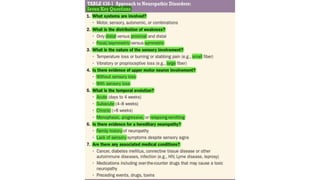
 While gathering this information, seven key questions are asked
Patterns of neuropathic
disorders
Approach to peripheral
neuropathy
An algorithm work flow
Electrodiagnostic studies
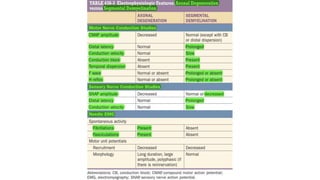
• NCS are most helpful in classifying a neuropathy as due to axonal
degeneration or segmental demyelination
• Low-amplitude potentials with relatively preserved distal latencies,
conduction velocities, and late potentials, along with fibrillations on
needle EMG, suggest an axonal neuropathy
EDx
• Slow conduction velocities, prolonged distal latencies and late
potentials, relatively preserved amplitudes, and the absence of
fibrillations on needle EMG imply a primary demyelinating
neuropathy
• Nonuniform slowing of conduction velocity, conduction block, or
temporal dispersion further suggests an acquired demyelinating
neuropathy (e.g., GBS or CIDP)
EDx
• Autonomic studies are used to assess small myelinated (A-delta) or
unmyelinated (C) nerve fiber involvement
• Such testing includes heart rate response to deep breathing, heart
rate, and blood pressure response to both the Valsalva maneuver and
tilt-table testing and quantitative sudomotor axon reflex testing
Other important laboratory information
• Complete blood count,
• Serum electrolytes and
• tests of renal and hepatic function,
• fasting blood glucose (FBS), hemaglobin (Hb) A1c,
• Urinalysis,
• Thyroid function tests, B12, folate,
• Erythrocyte sedimentation rate (ESR), rheumatoid factor, antinuclear
antibodies (ANA), serum
• Protein electrophoresis (SPEP) and immunoelectrophoresis or
immunofixation, and urine for Bence Jones protein
• Heavy metal screen (if indicated via history and examination)
Nerve biopsy
• The sural nerve is most commonly biopsied because it is a pure
sensory nerve and biopsy will not result in loss of motor function.
• In suspected vasculitis, a combination biopsy of a superficial peroneal
nerve (pure sensory) and the underlying peroneus brevis muscle
obtained from a single small incision increases the diagnostic yield
Skin biopsy
• Skin biopsies are sometimes used to diagnose a small-fiber
neuropathy
• The density of these nerve fibers is reduced in patients with small-
fiber neuropathies in whom NCS and routine nerve biopsies are often
normal
Acquired neuropathies
• PRIMARY OR AL AMYLOIDOSIS
• DIABETIC NEUROPATHY
• HYPOTHYROIDISM
• SJÖGREN’S SYNDROME
• RHEUMATOID ARTHRITIS
• SYSTEMIC LUPUS ERYTHEMATOSUS
• SYSTEMIC SCLEROSIS (SCLERODERMA)
• MIXED CONNECTIVE TISSUE DISEASE (MCTD)
Acquired neuropathy
• HYPEREOSINOPHILIC SYNDROME
• CELIAC DISEASE (GLUTEN-INDUCED ENTEROPATHY OR NONTROPICAL
SPRUE)
• INFLAMMATORY BOWEL DISEASE
• UREMIC NEUROPATHY
• CHRONIC LIVER DISEASE
• CRITICAL ILLNESS POLYNEUROPATHY
• LEPROSY (HANSEN’S DISEASE)
Acquired neuropathy
• LYME DISEASE
• DIPHTHERITIC NEUROPATHY
• HUMAN IMMUNODEFICIENCY VIRUS
• HERPES VARICELLA-ZOSTER VIRUS
• CYTOMEGALOVIRUS
• EPSTEIN-BARR VIRUS
• HEPATITIS VIRUSES
Neuropathies associated with malignancies
• Patients with malignancy can develop neuropathies due to
(1) a direct effect of the cancer by invasion or compression of the nerves,
(2) remote or paraneoplastic effect,
(3) a toxic effect of treatment,
(4) as a consequence of immune compromise caused by immunosup-pressive
medications
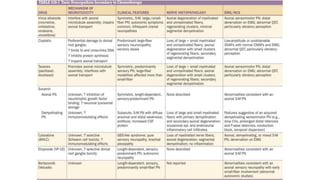
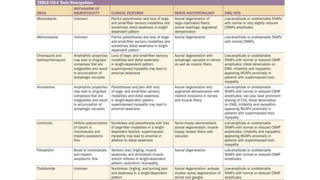
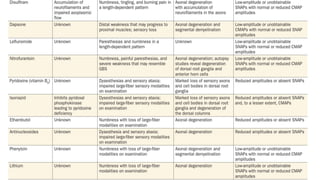
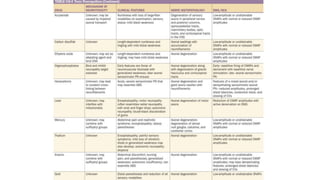
Toxic neuropathies
Nutritional neuropathies
• COBALAMIN (VITAMIN B12)
• THIAMINE DEFICIENCY
• VITAMIN E DEFICIENCY
• VITAMIN B6 DEFICIENCY
• PELLAGRA (NIACIN DEFICIENCY)
• COPPER DEFICIENCY
• NEUROPATHY ASSOCIATED WITH GASTRIC SURGERY
CRYPTOGENIC (IDIOPATHIC) SENSORY AND
SENSORIMOTOR POLYNEUROPATHY
• Cryptogenic (idiopathic) sensory and sensorimotor polyneuropathy
(CSPN) is a diagnosis of exclusion, established after a careful medical,
family, and social history; neurologic examination; and directed
laboratory testing.
• Therapy primarily involves the control of neuropathic pain if present
• Even though there is no treatment is available that can reverse an
idiopathic distal peripheral neuropathy, the prognosis is good
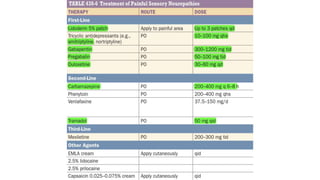
Treatment of painful sensory
neuropathies
Thank you

Peripheral Neuropathy

  • 1.
  • 2.
    Introduction • Nerves canbe subdivided into three major classes: large myelinated, small myelinated, and small unmyelinated • Sensory fibers may be any of the three types: Large-diameter sensory fibers for proprioception and vibratory & smaller-diameter myelinated and unmyelinated fibers transmit pain and temperature sensation • Peripheral neuropathies are further classified into those that primarily affect the cell body (e.g., neuronopathy or ganglionopathy), myelin (myelinopathy), and the axon (axonopathy).
  • 3.
    General approach  Inapproaching a patient with a neuropathy, the clinician has three main goals (1) identify where the lesion is, (2) identify the cause, and (3) determine the proper treatment.  While gathering this information, seven key questions are asked
  • 5.
  • 7.
  • 9.
    Electrodiagnostic studies • NCSare most helpful in classifying a neuropathy as due to axonal degeneration or segmental demyelination • Low-amplitude potentials with relatively preserved distal latencies, conduction velocities, and late potentials, along with fibrillations on needle EMG, suggest an axonal neuropathy
  • 10.
    EDx • Slow conductionvelocities, prolonged distal latencies and late potentials, relatively preserved amplitudes, and the absence of fibrillations on needle EMG imply a primary demyelinating neuropathy • Nonuniform slowing of conduction velocity, conduction block, or temporal dispersion further suggests an acquired demyelinating neuropathy (e.g., GBS or CIDP)
  • 12.
    EDx • Autonomic studiesare used to assess small myelinated (A-delta) or unmyelinated (C) nerve fiber involvement • Such testing includes heart rate response to deep breathing, heart rate, and blood pressure response to both the Valsalva maneuver and tilt-table testing and quantitative sudomotor axon reflex testing
  • 13.
    Other important laboratoryinformation • Complete blood count, • Serum electrolytes and • tests of renal and hepatic function, • fasting blood glucose (FBS), hemaglobin (Hb) A1c, • Urinalysis, • Thyroid function tests, B12, folate, • Erythrocyte sedimentation rate (ESR), rheumatoid factor, antinuclear antibodies (ANA), serum • Protein electrophoresis (SPEP) and immunoelectrophoresis or immunofixation, and urine for Bence Jones protein • Heavy metal screen (if indicated via history and examination)
  • 14.
    Nerve biopsy • Thesural nerve is most commonly biopsied because it is a pure sensory nerve and biopsy will not result in loss of motor function. • In suspected vasculitis, a combination biopsy of a superficial peroneal nerve (pure sensory) and the underlying peroneus brevis muscle obtained from a single small incision increases the diagnostic yield
  • 15.
    Skin biopsy • Skinbiopsies are sometimes used to diagnose a small-fiber neuropathy • The density of these nerve fibers is reduced in patients with small- fiber neuropathies in whom NCS and routine nerve biopsies are often normal
  • 16.
    Acquired neuropathies • PRIMARYOR AL AMYLOIDOSIS • DIABETIC NEUROPATHY • HYPOTHYROIDISM • SJÖGREN’S SYNDROME • RHEUMATOID ARTHRITIS • SYSTEMIC LUPUS ERYTHEMATOSUS • SYSTEMIC SCLEROSIS (SCLERODERMA) • MIXED CONNECTIVE TISSUE DISEASE (MCTD)
  • 17.
    Acquired neuropathy • HYPEREOSINOPHILICSYNDROME • CELIAC DISEASE (GLUTEN-INDUCED ENTEROPATHY OR NONTROPICAL SPRUE) • INFLAMMATORY BOWEL DISEASE • UREMIC NEUROPATHY • CHRONIC LIVER DISEASE • CRITICAL ILLNESS POLYNEUROPATHY • LEPROSY (HANSEN’S DISEASE)
  • 18.
    Acquired neuropathy • LYMEDISEASE • DIPHTHERITIC NEUROPATHY • HUMAN IMMUNODEFICIENCY VIRUS • HERPES VARICELLA-ZOSTER VIRUS • CYTOMEGALOVIRUS • EPSTEIN-BARR VIRUS • HEPATITIS VIRUSES
  • 19.
    Neuropathies associated withmalignancies • Patients with malignancy can develop neuropathies due to (1) a direct effect of the cancer by invasion or compression of the nerves, (2) remote or paraneoplastic effect, (3) a toxic effect of treatment, (4) as a consequence of immune compromise caused by immunosup-pressive medications
  • 20.
  • 25.
    Nutritional neuropathies • COBALAMIN(VITAMIN B12) • THIAMINE DEFICIENCY • VITAMIN E DEFICIENCY • VITAMIN B6 DEFICIENCY • PELLAGRA (NIACIN DEFICIENCY) • COPPER DEFICIENCY • NEUROPATHY ASSOCIATED WITH GASTRIC SURGERY
  • 26.
    CRYPTOGENIC (IDIOPATHIC) SENSORYAND SENSORIMOTOR POLYNEUROPATHY • Cryptogenic (idiopathic) sensory and sensorimotor polyneuropathy (CSPN) is a diagnosis of exclusion, established after a careful medical, family, and social history; neurologic examination; and directed laboratory testing. • Therapy primarily involves the control of neuropathic pain if present • Even though there is no treatment is available that can reverse an idiopathic distal peripheral neuropathy, the prognosis is good
  • 27.
    Treatment of painfulsensory neuropathies
  • 29.