Downloaded 286 times
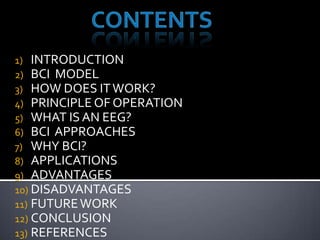
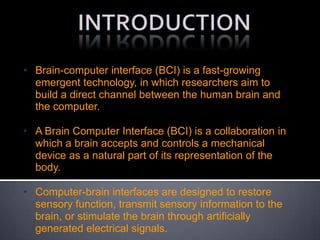
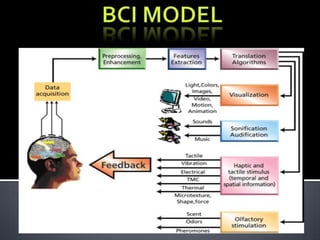
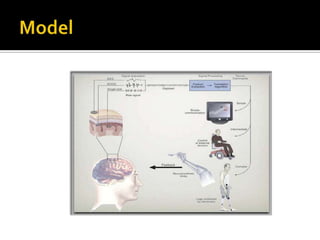
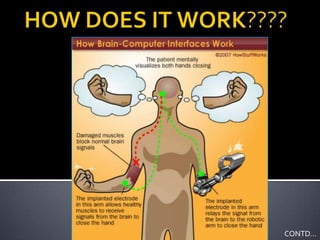
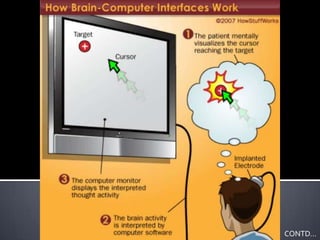
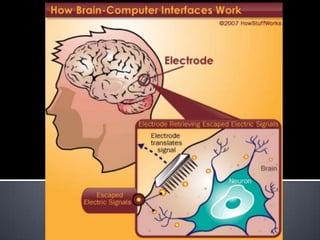
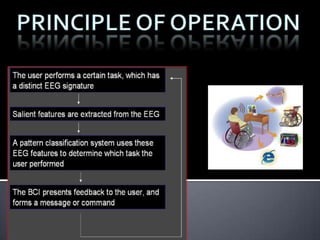
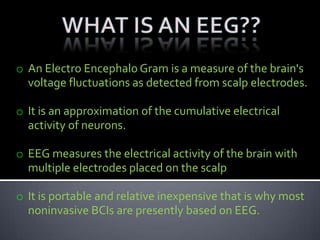
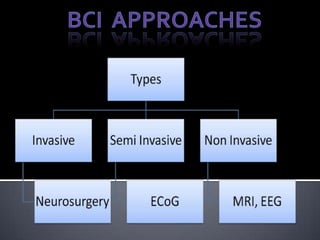
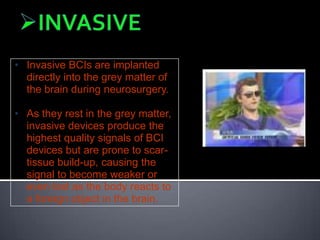
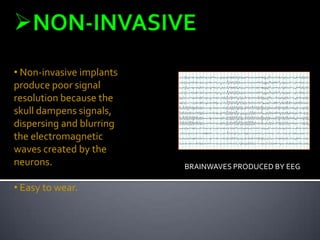
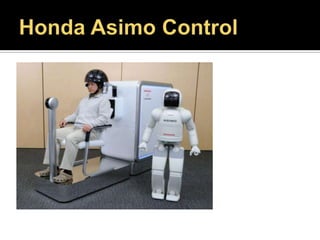
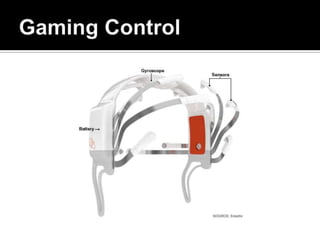
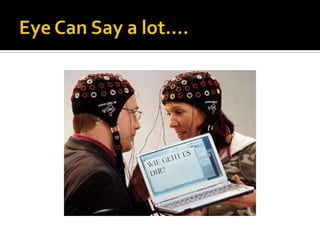
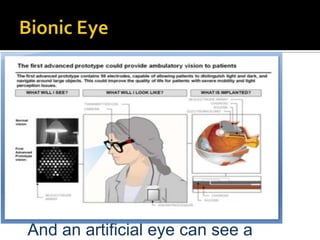
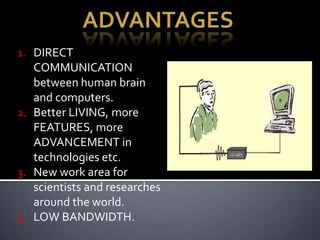




This document discusses brain-computer interfaces (BCI). It begins with an introduction and overview of BCI models, principles of operation, EEGs, approaches, applications and advantages. It then discusses the history and development of BCIs from algorithms in the 1970s to current projects decoding brain signals in monkeys and humans. The document outlines invasive, non-invasive and semi-invasive BCI approaches and their signals. Applications discussed include assisting paralyzed patients and enhancing devices. Challenges include training and costs. The document concludes that BCI is a promising emerging technology that could improve lives and lead to advances in areas like machine control, virtual reality, and human enhancement through continued research.


