Downloaded 283 times





This document provides a short introduction to brain-computer interfaces (BCI). It defines BCI as a direct communication pathway between the brain and an external device. The history of BCI is discussed, including early EEG recordings in the 1920s and animal studies in the 1970s-1980s. The document describes the different types of BCI as invasive, partially invasive, and non-invasive. It focuses on EEG as the most studied non-invasive method and discusses its use in commercial BCI systems and challenges in translating brain signals to device control. Hands-on examples with Neurosky and Necomimi BCI devices are presented to demonstrate current applications.
Overview of BCI, including definitions, history, and types of interfaces.
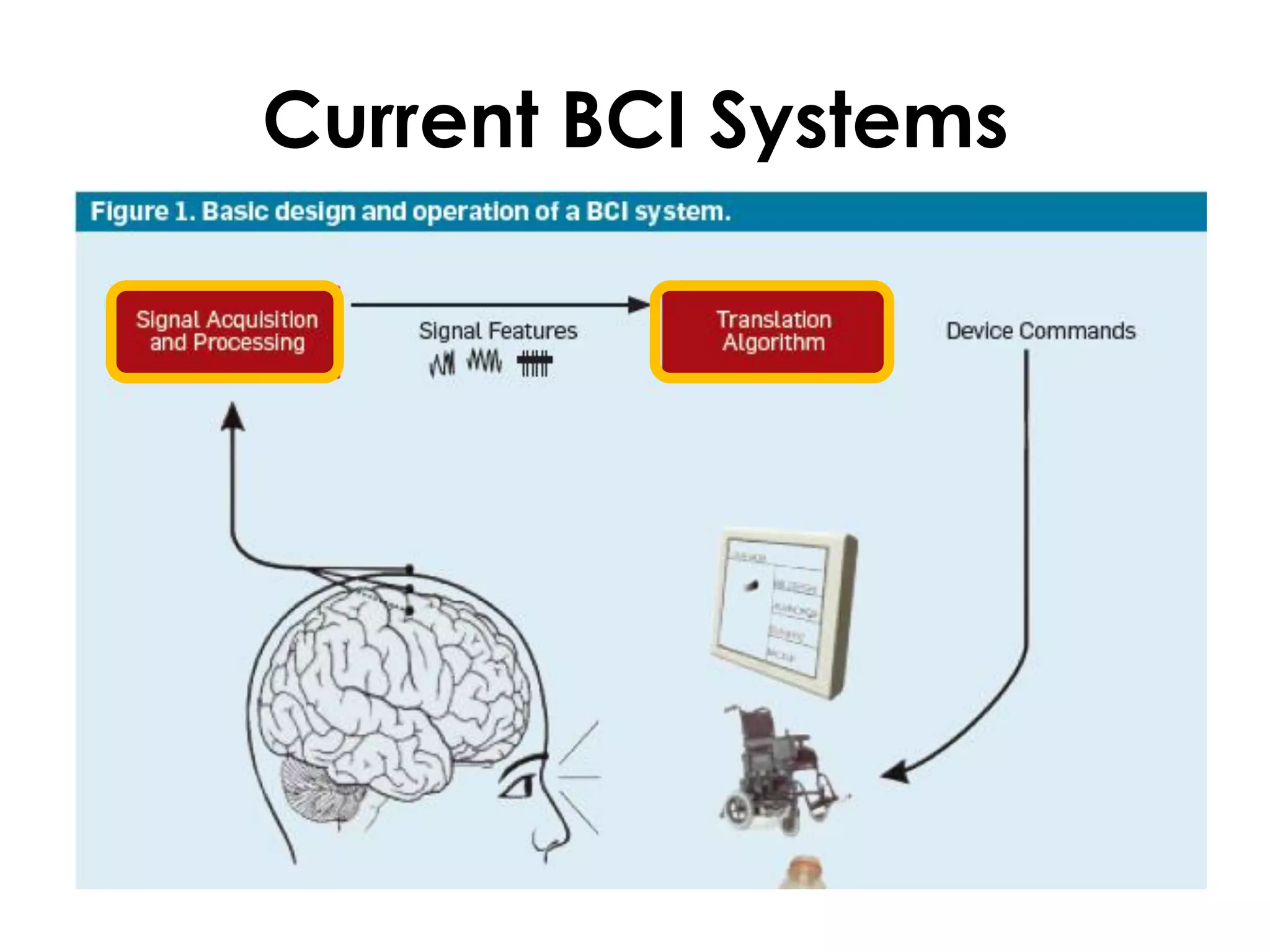
BCI is a direct communication pathway between the brain and external devices, known as mind-machine or brain-machine interface.
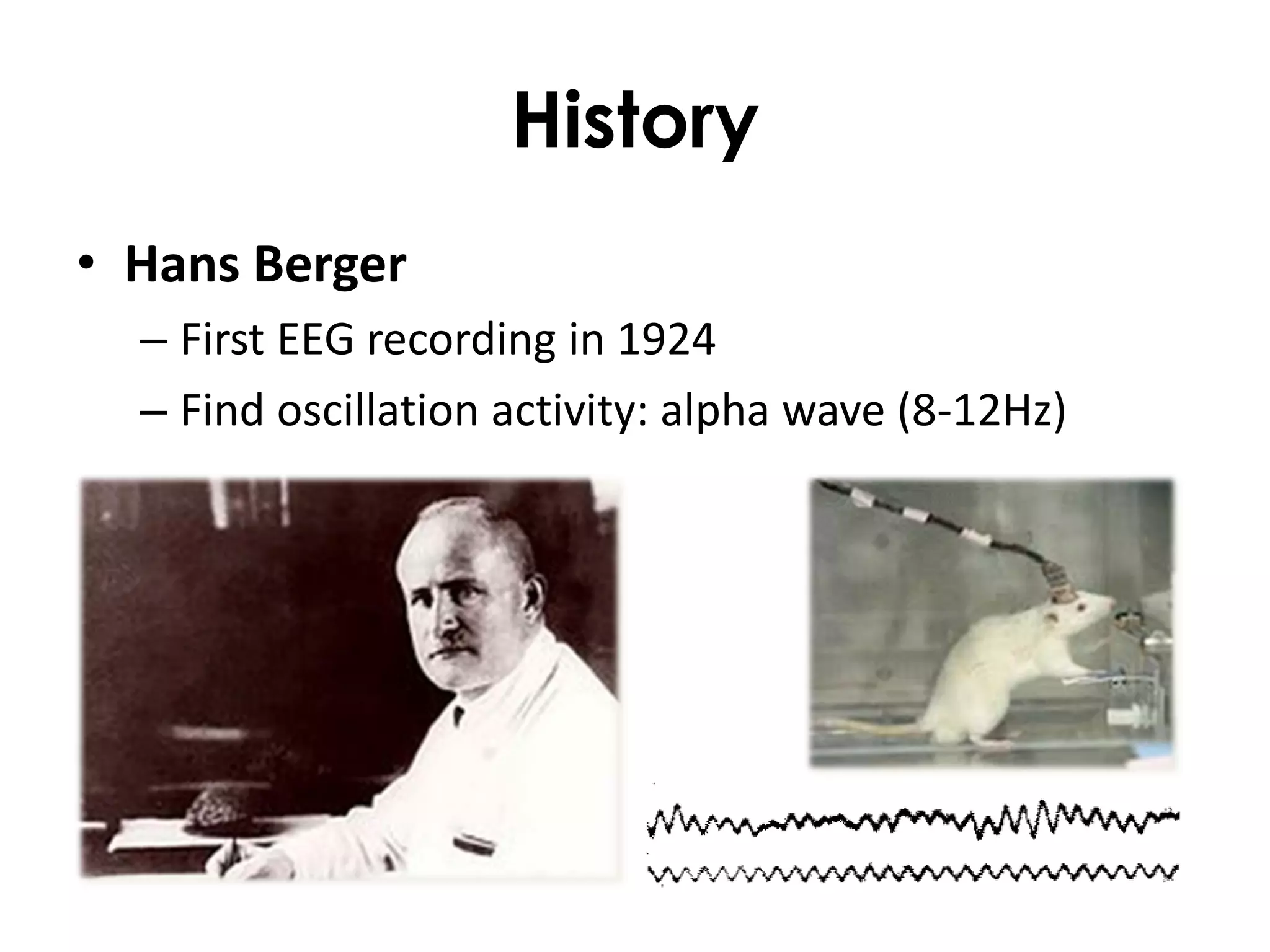
First EEG by Hans Berger in 1924; key animal studies in the 1970s and 1980s at Universities of Washington and Johns Hopkins.
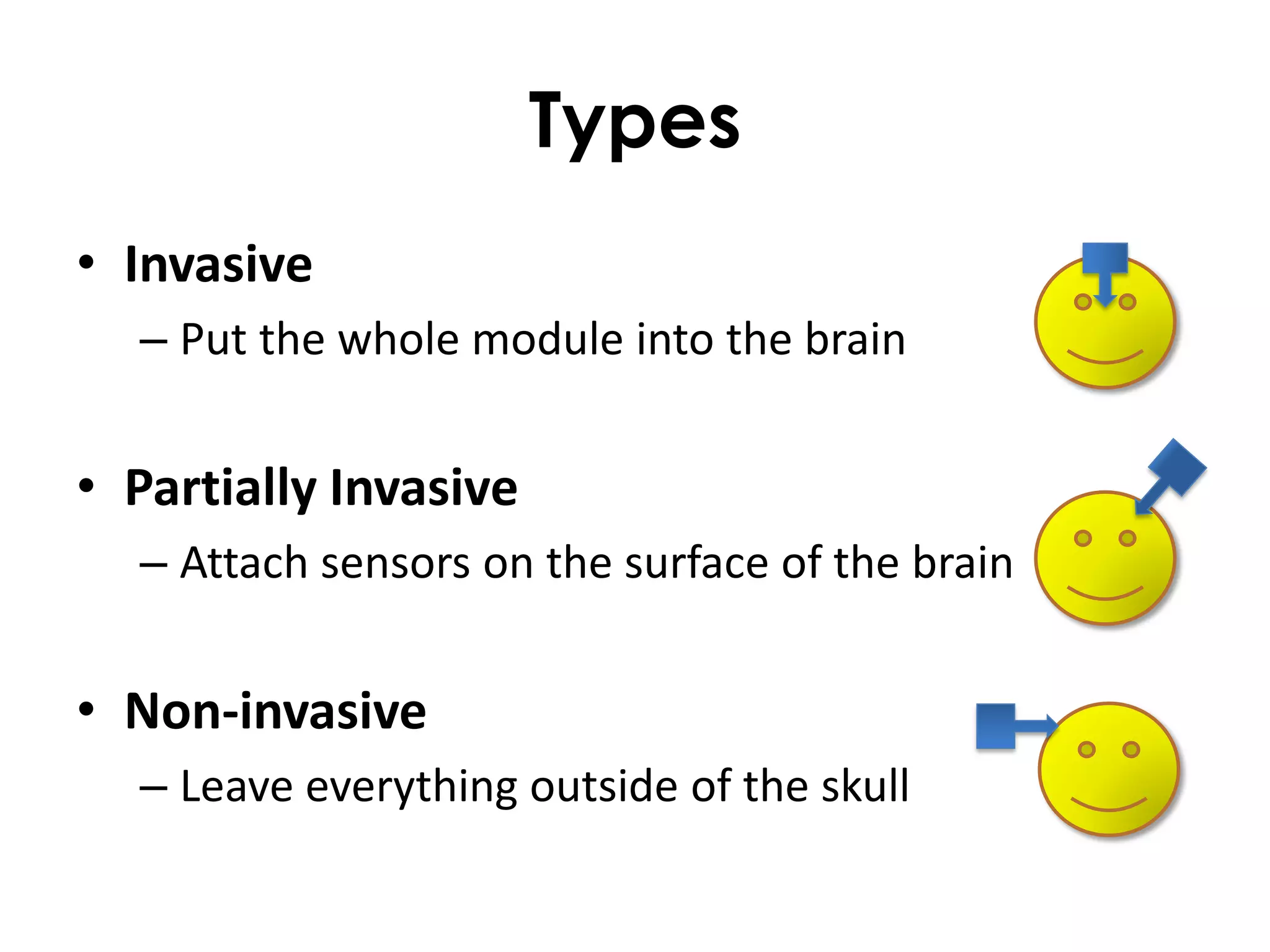
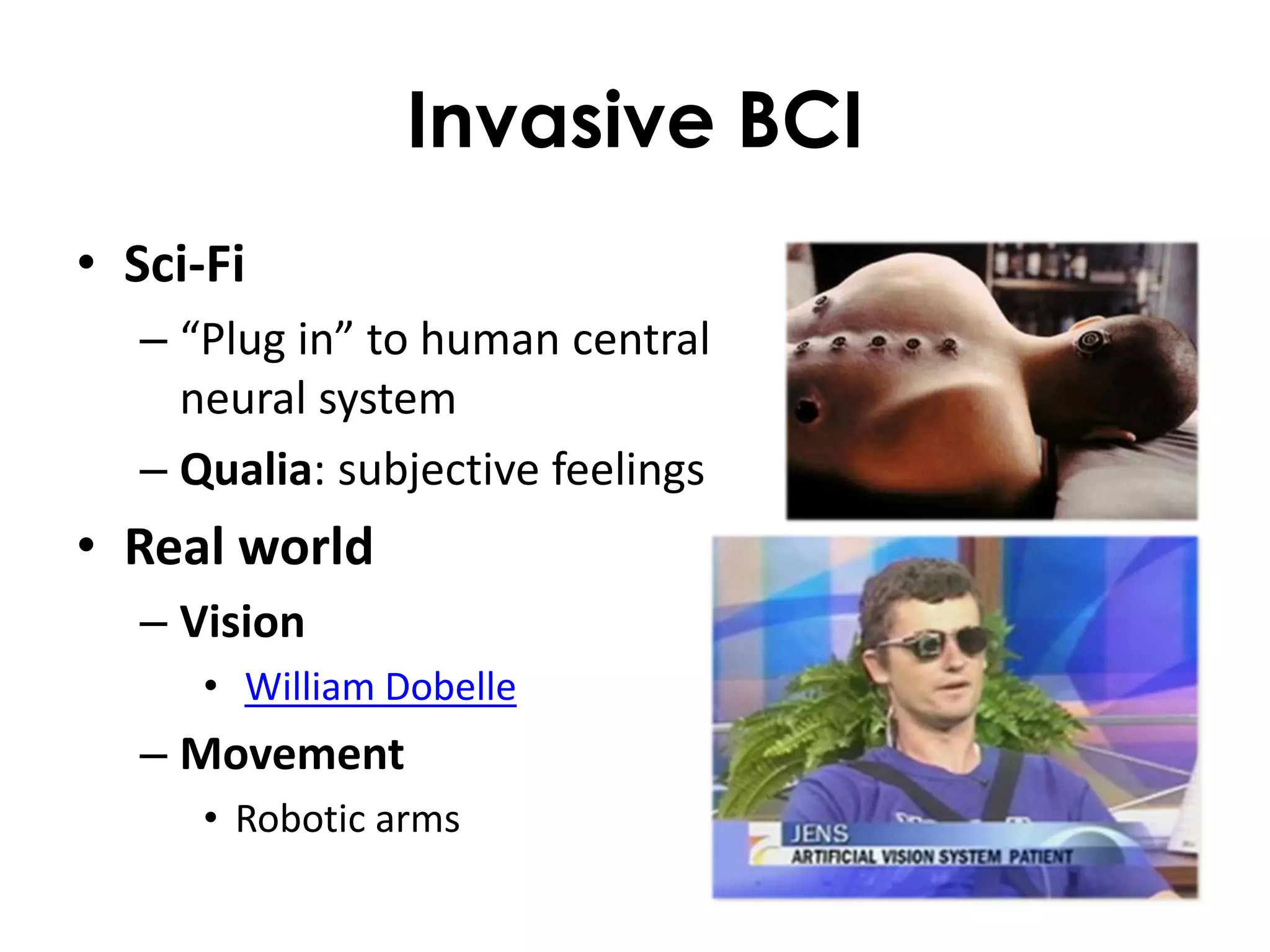
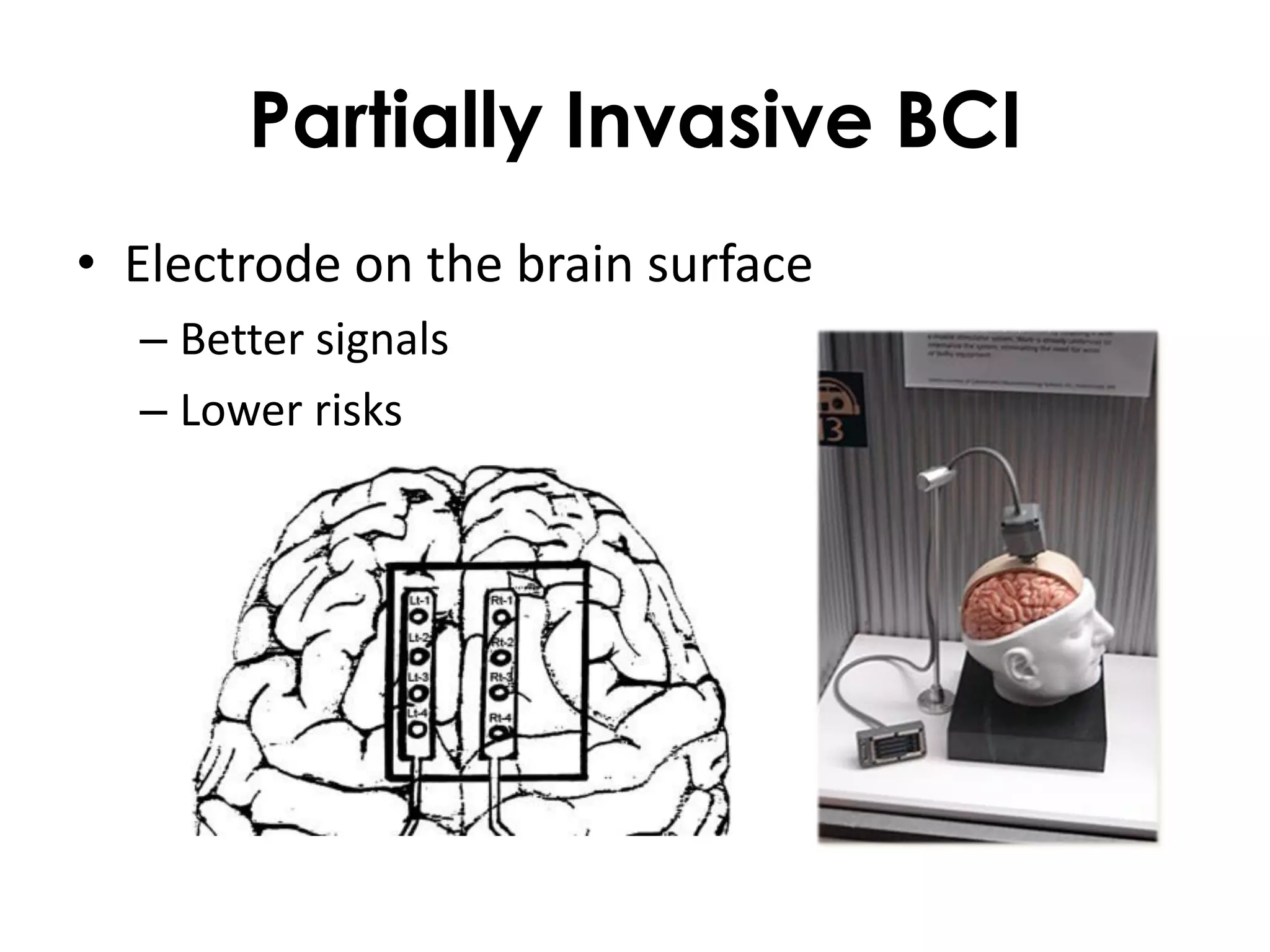
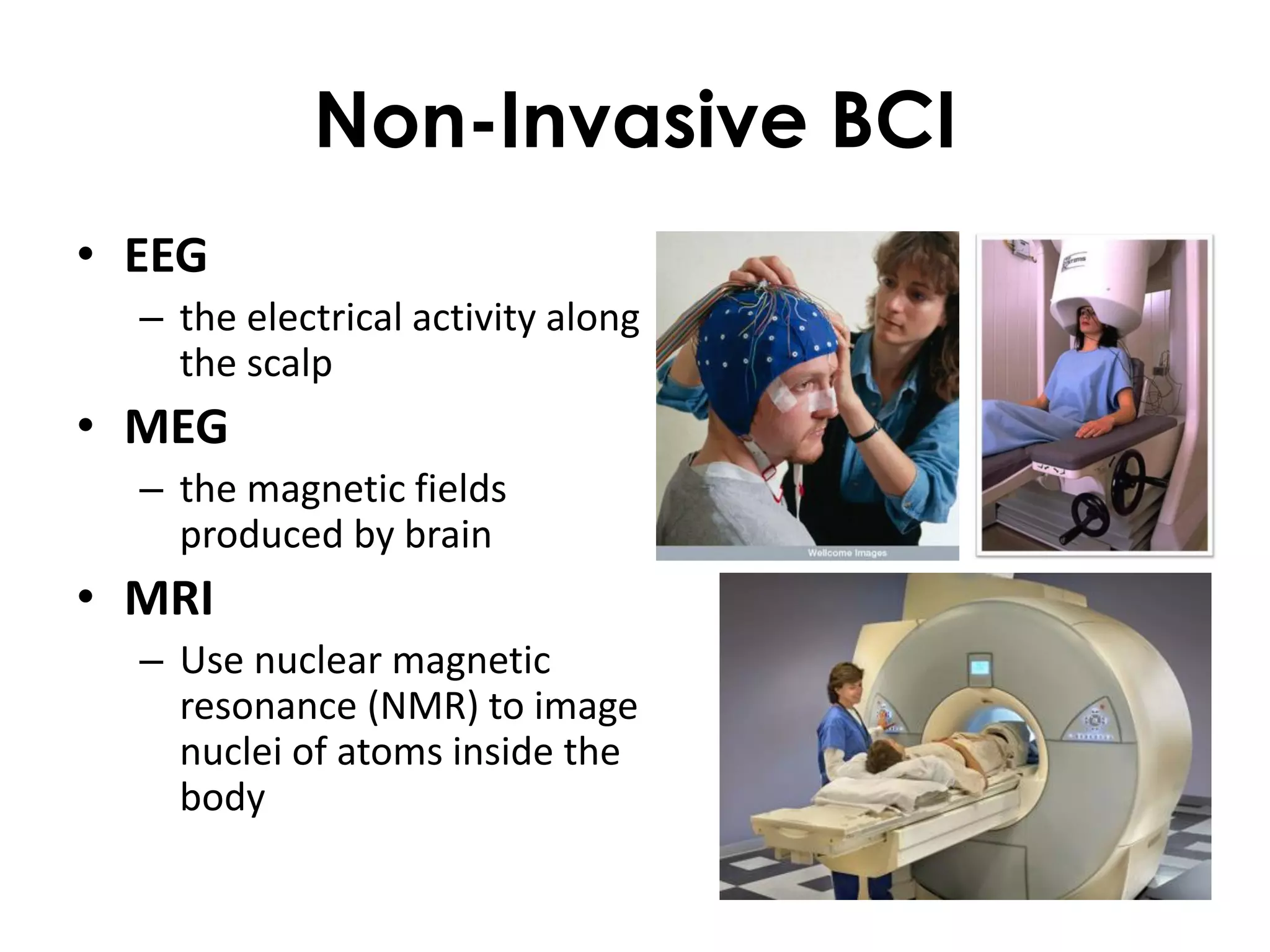
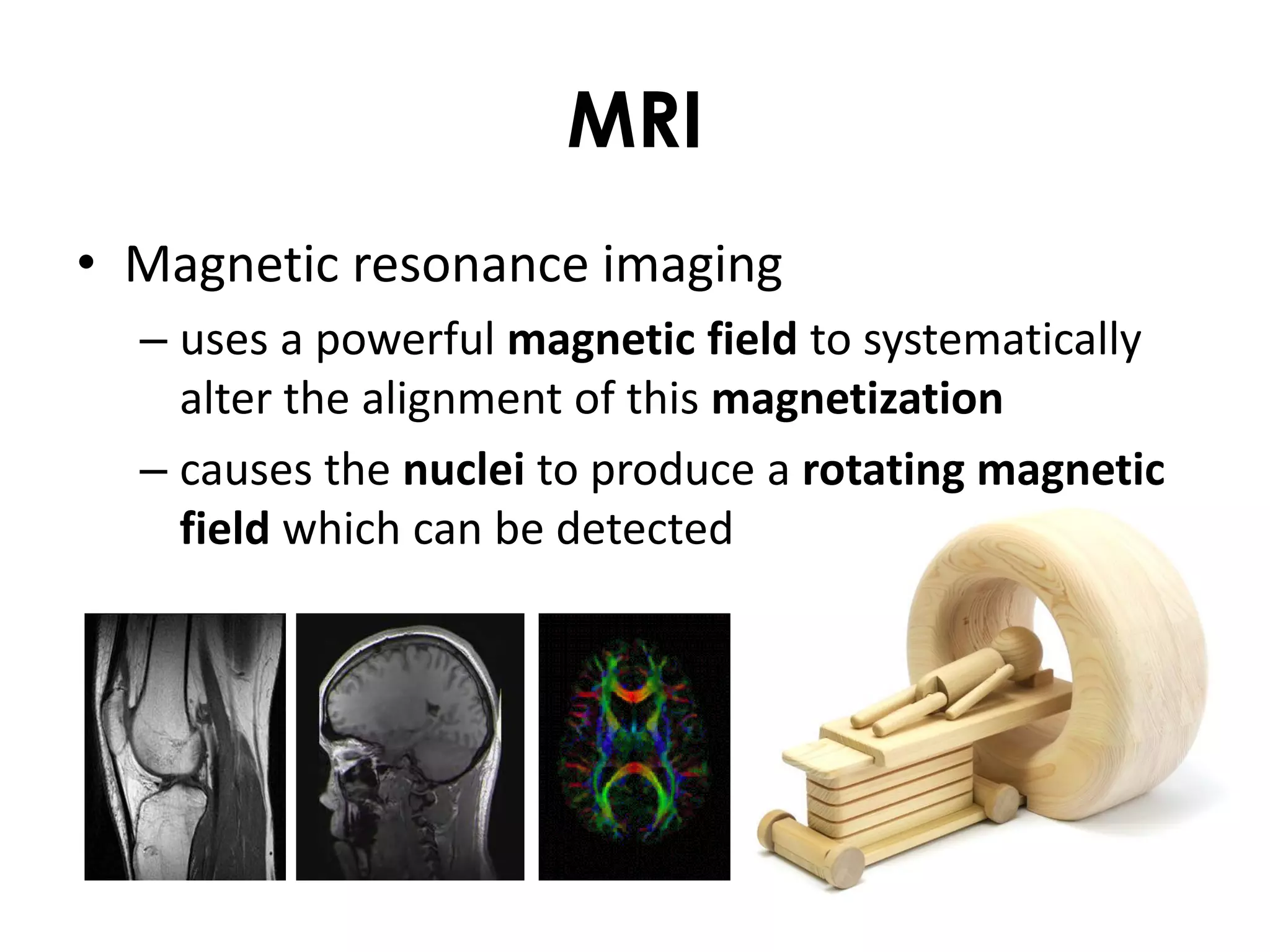
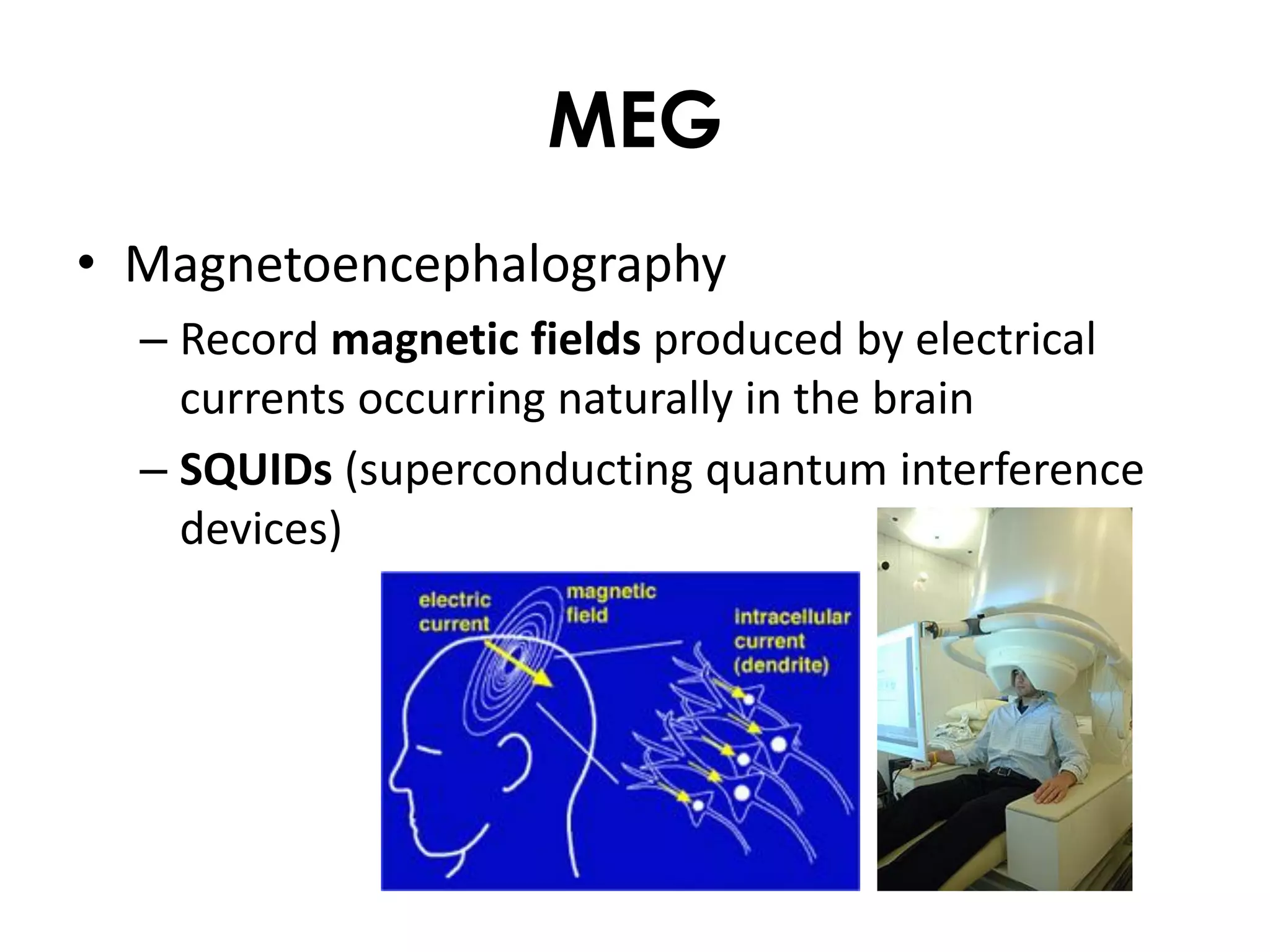
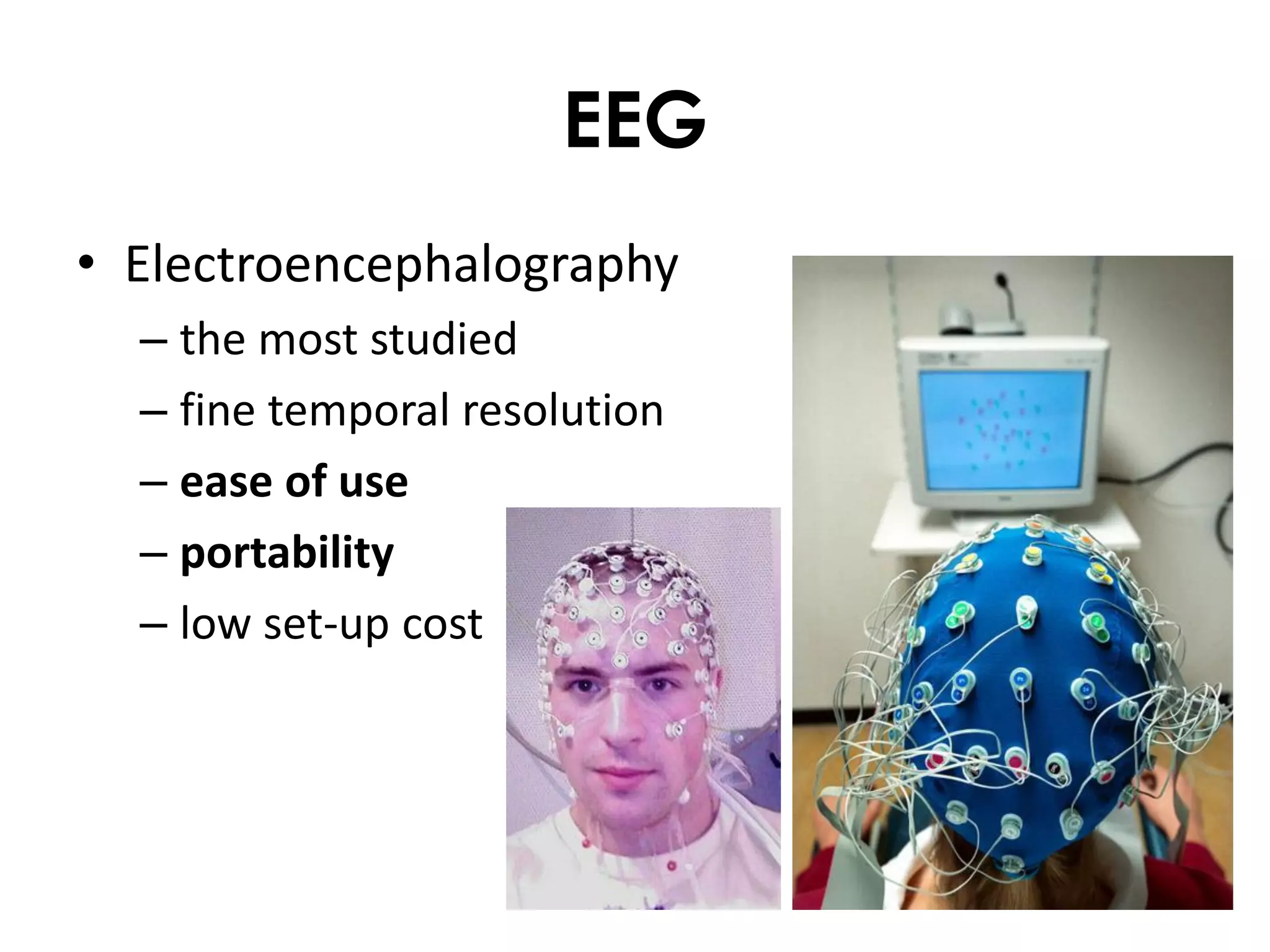
Covers invasive, partially invasive, and non-invasive BCIs, detailing methods and technologies such as EEG, MEG, MRI.
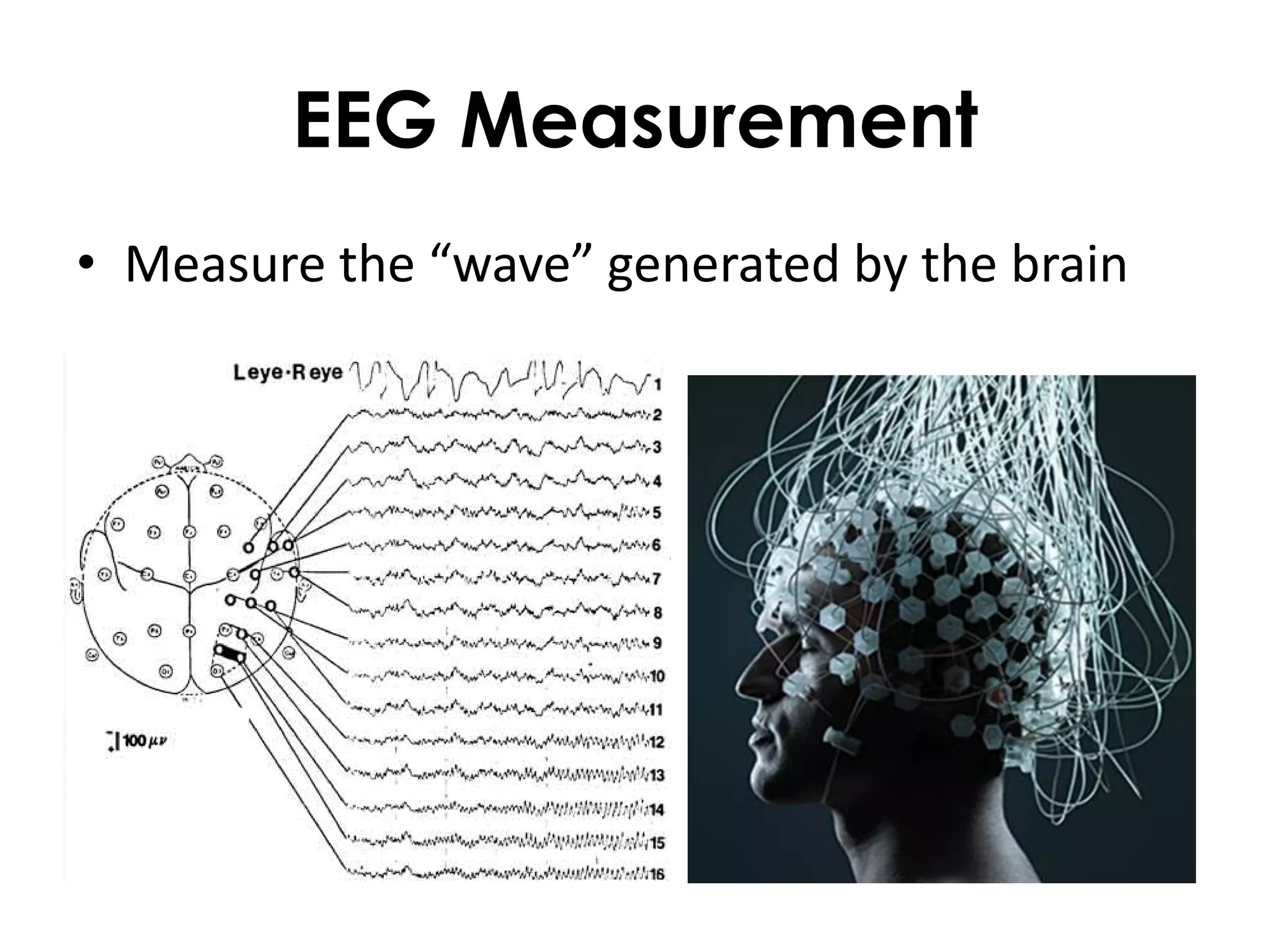
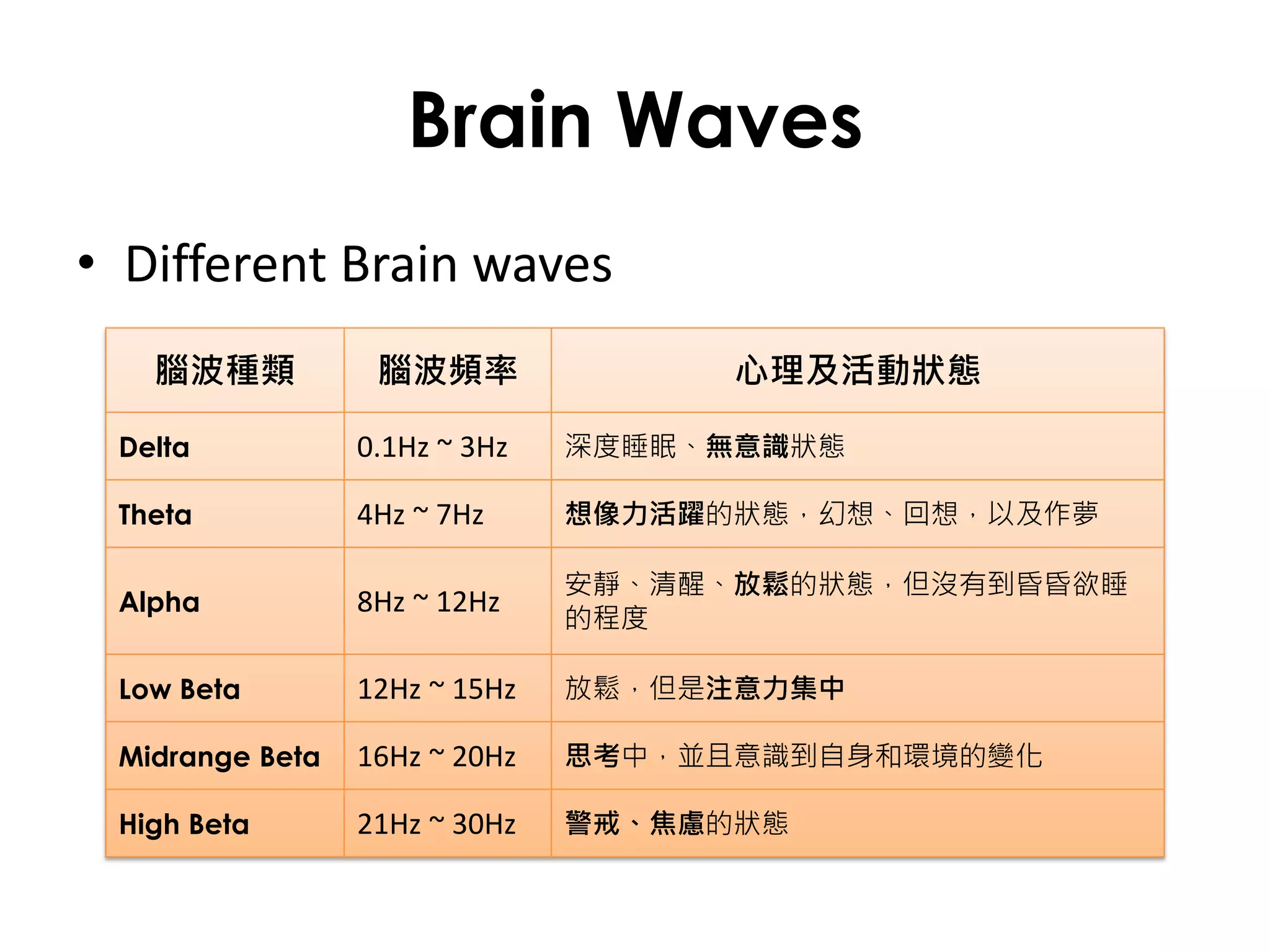
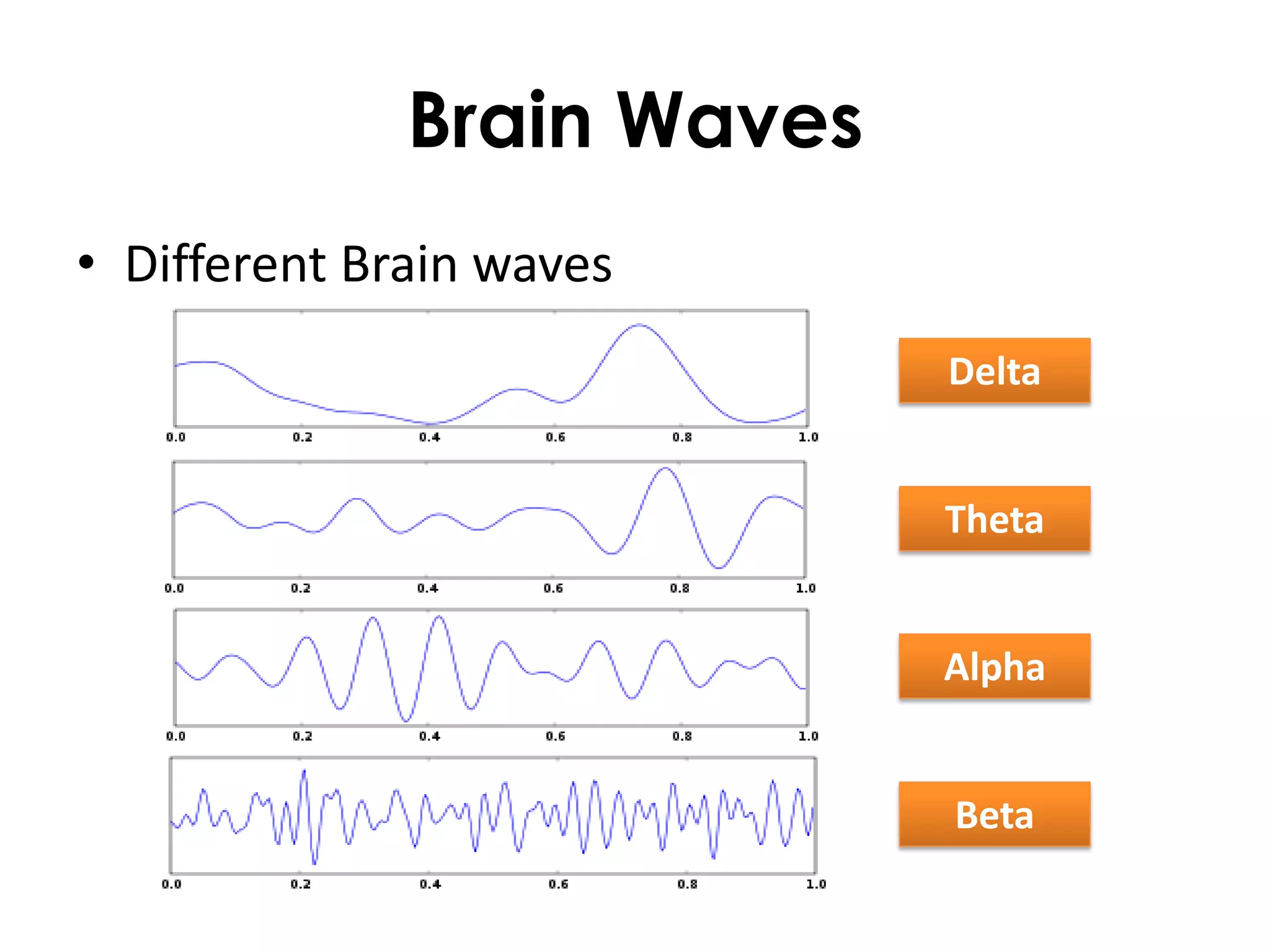
Details of EEG technology, explaining brain wave types—Delta, Theta, Alpha, and Beta—and their corresponding mental states.
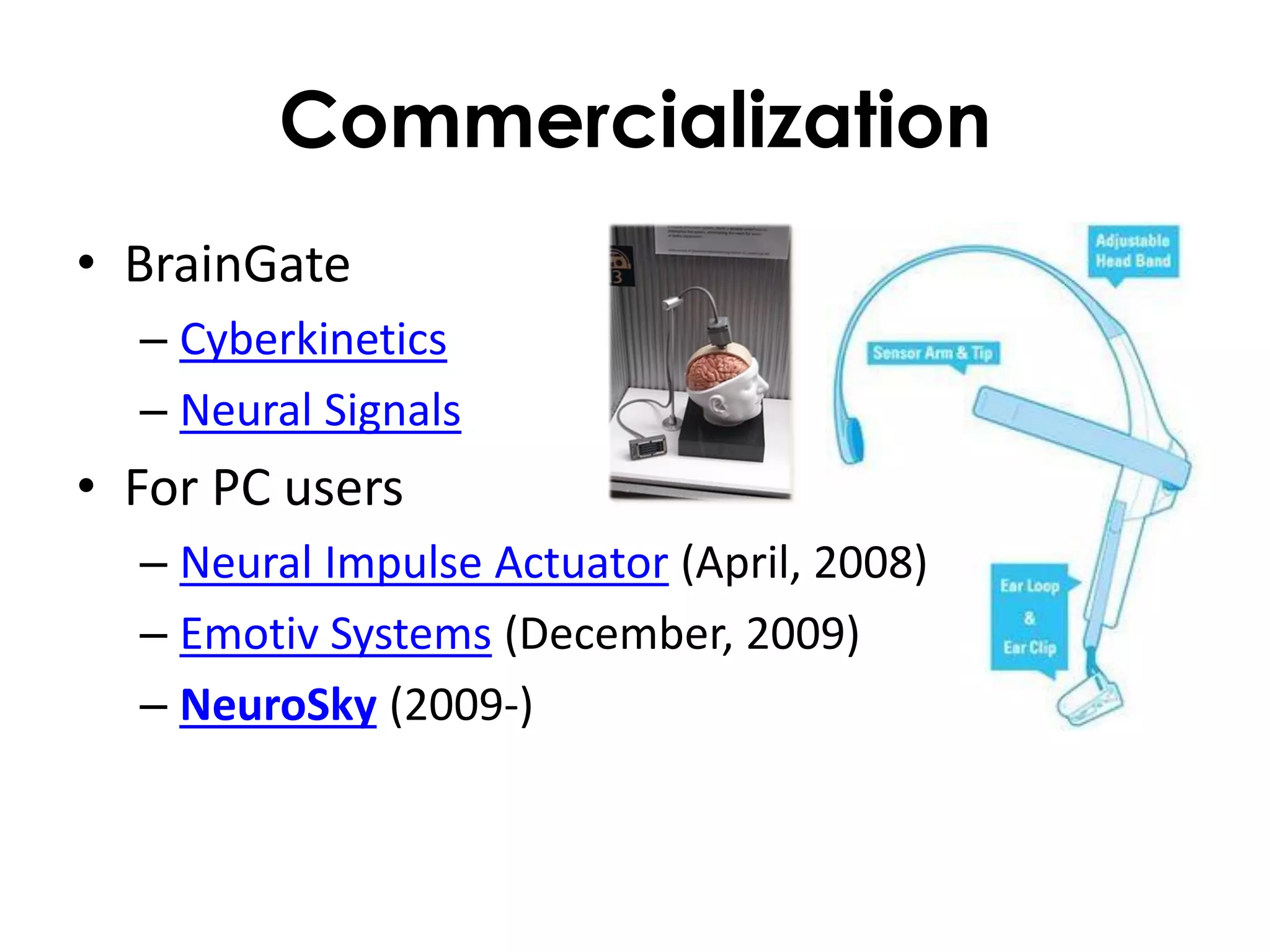
Commercial products like BrainGate and software developments by companies including Neural Impulse Actuator and NeuroSky.
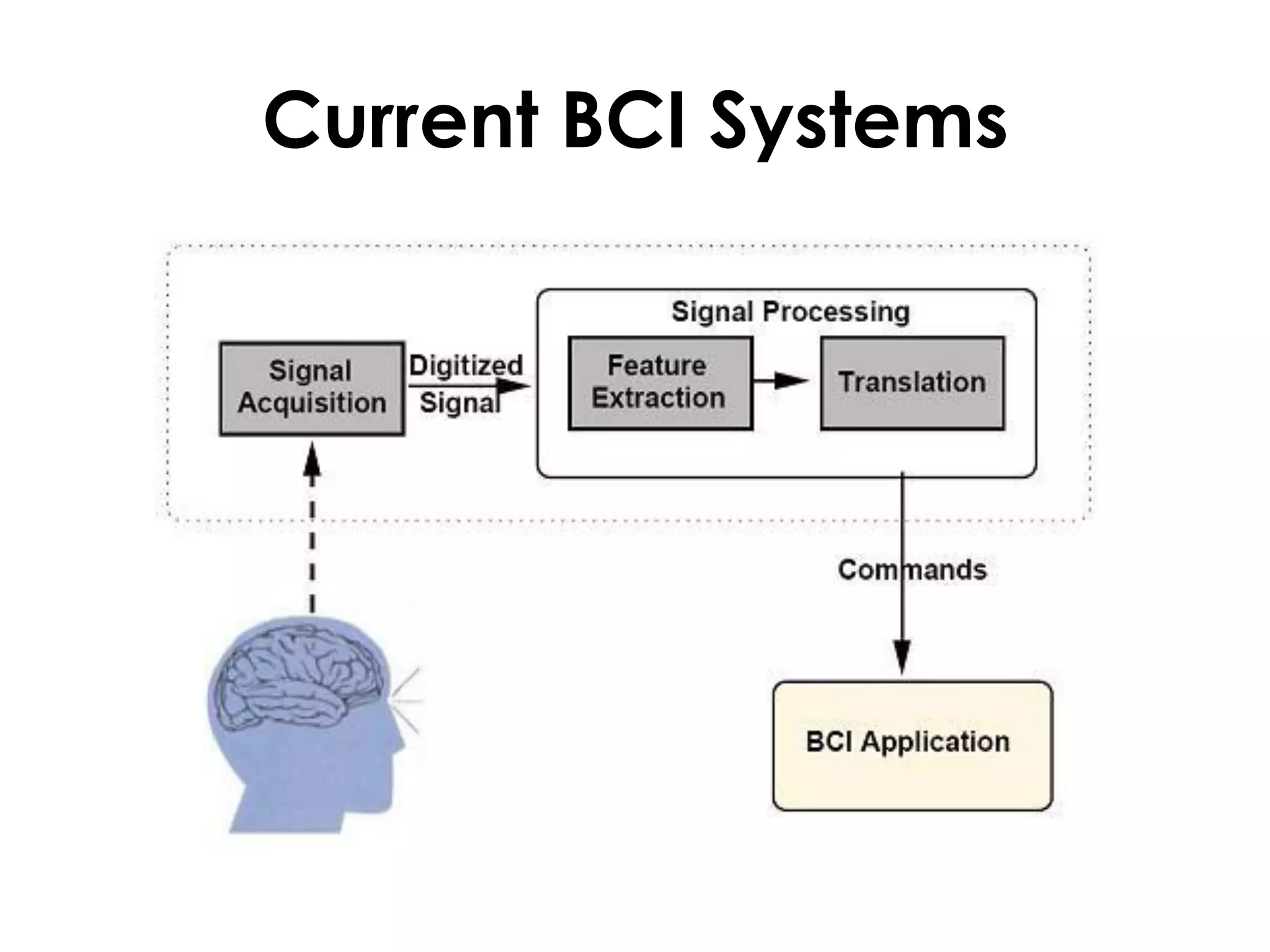
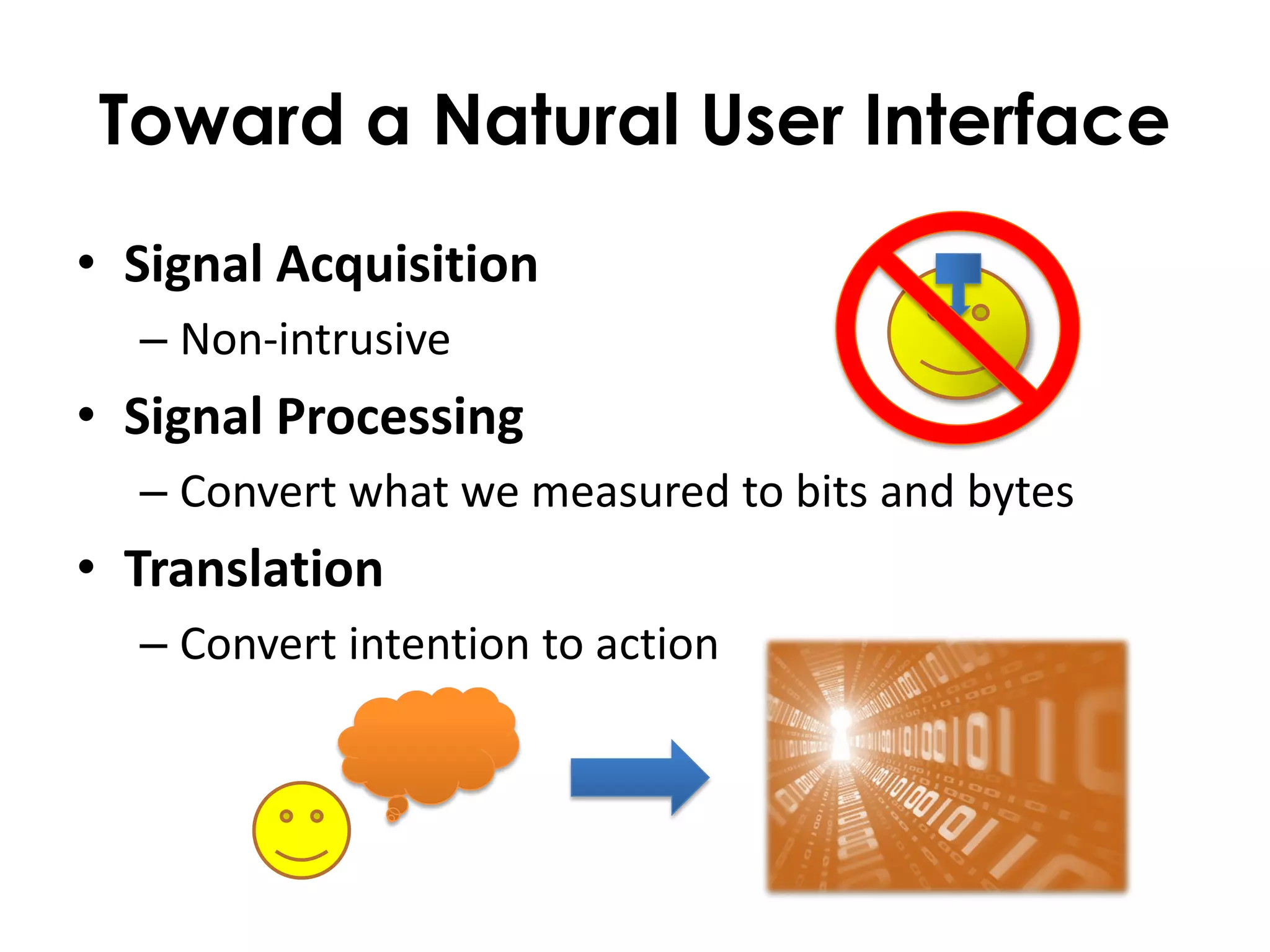
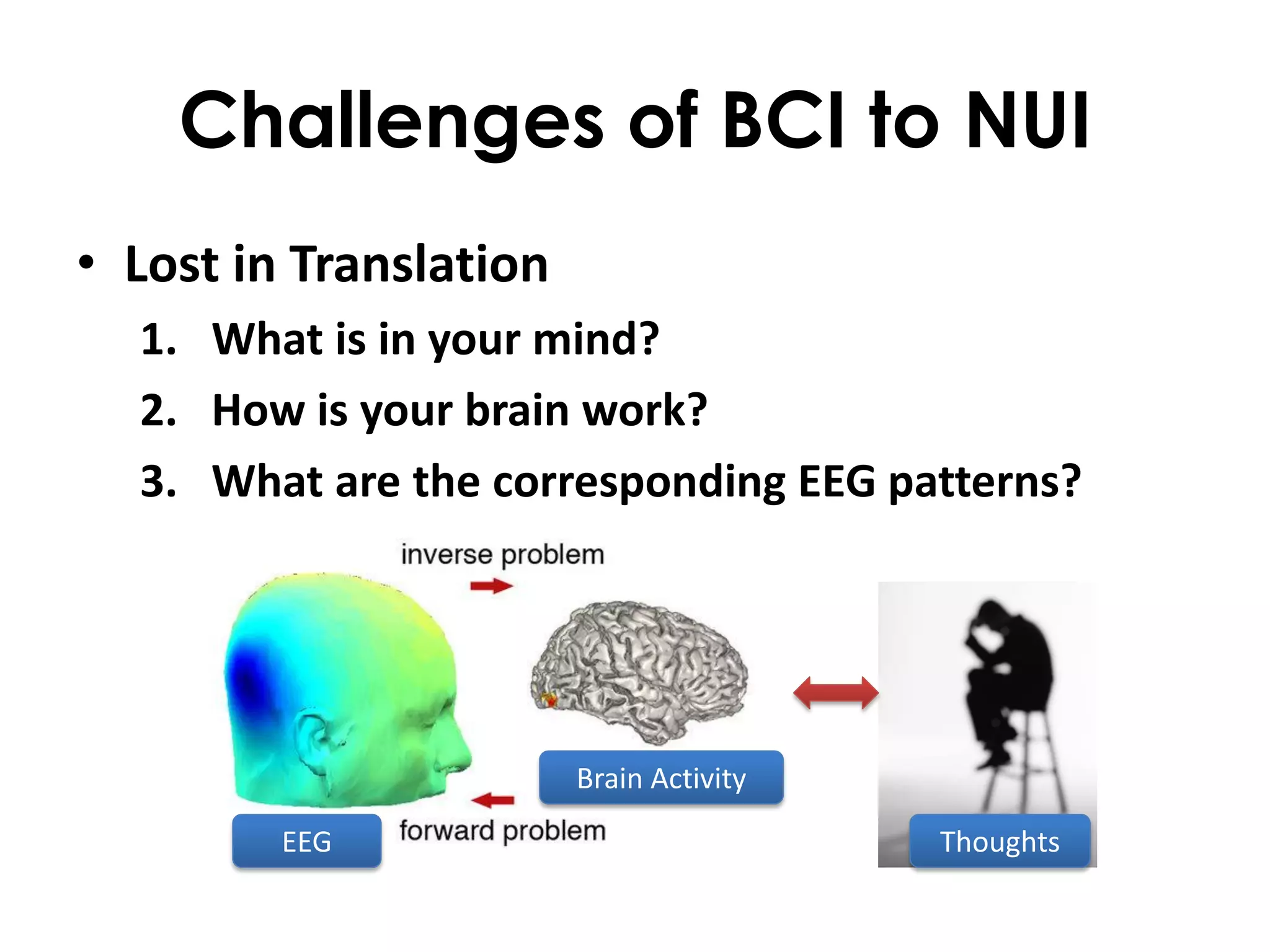
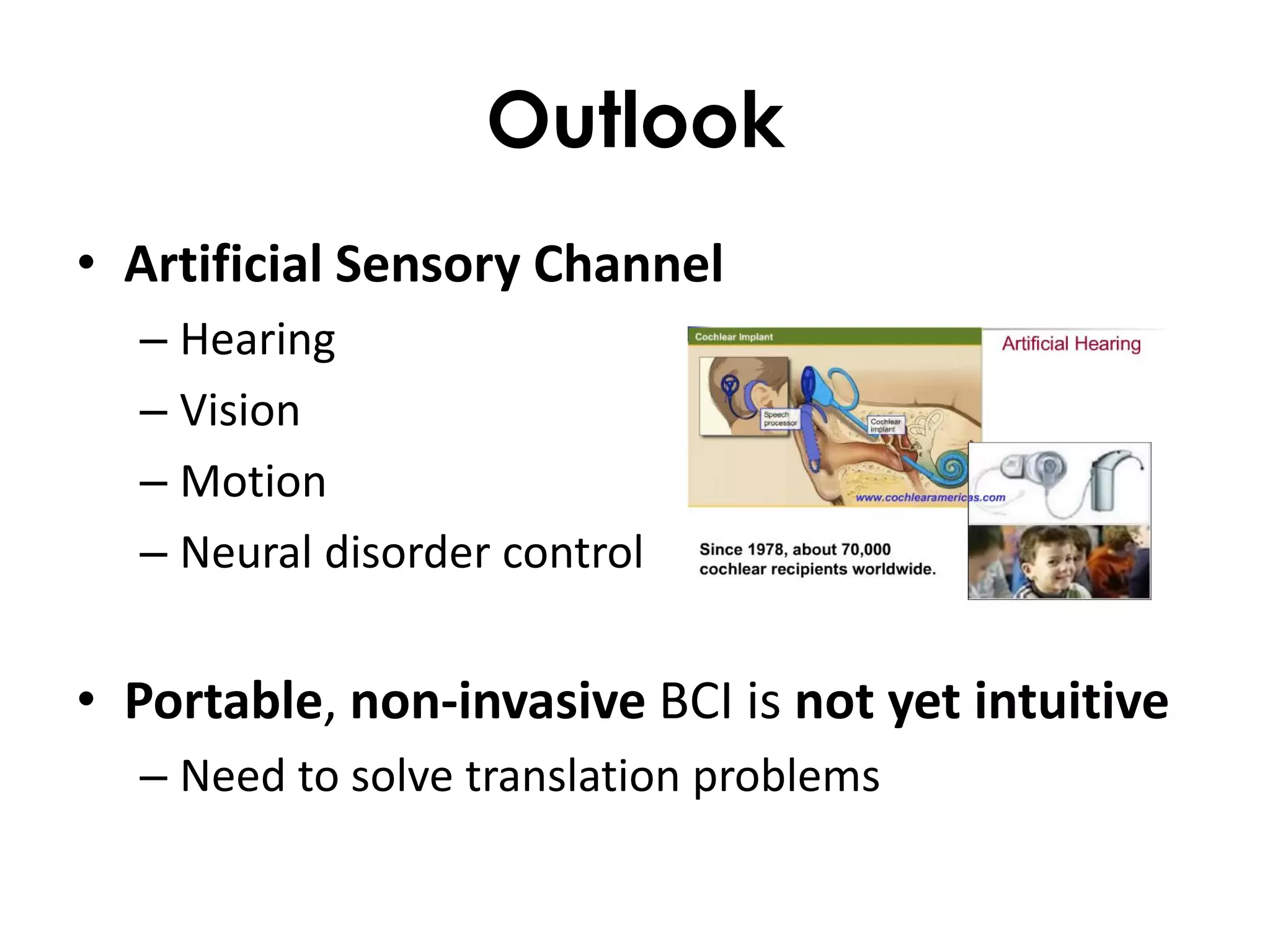
Obstacles in translating brain signals to actions and the aim for a natural user interface.
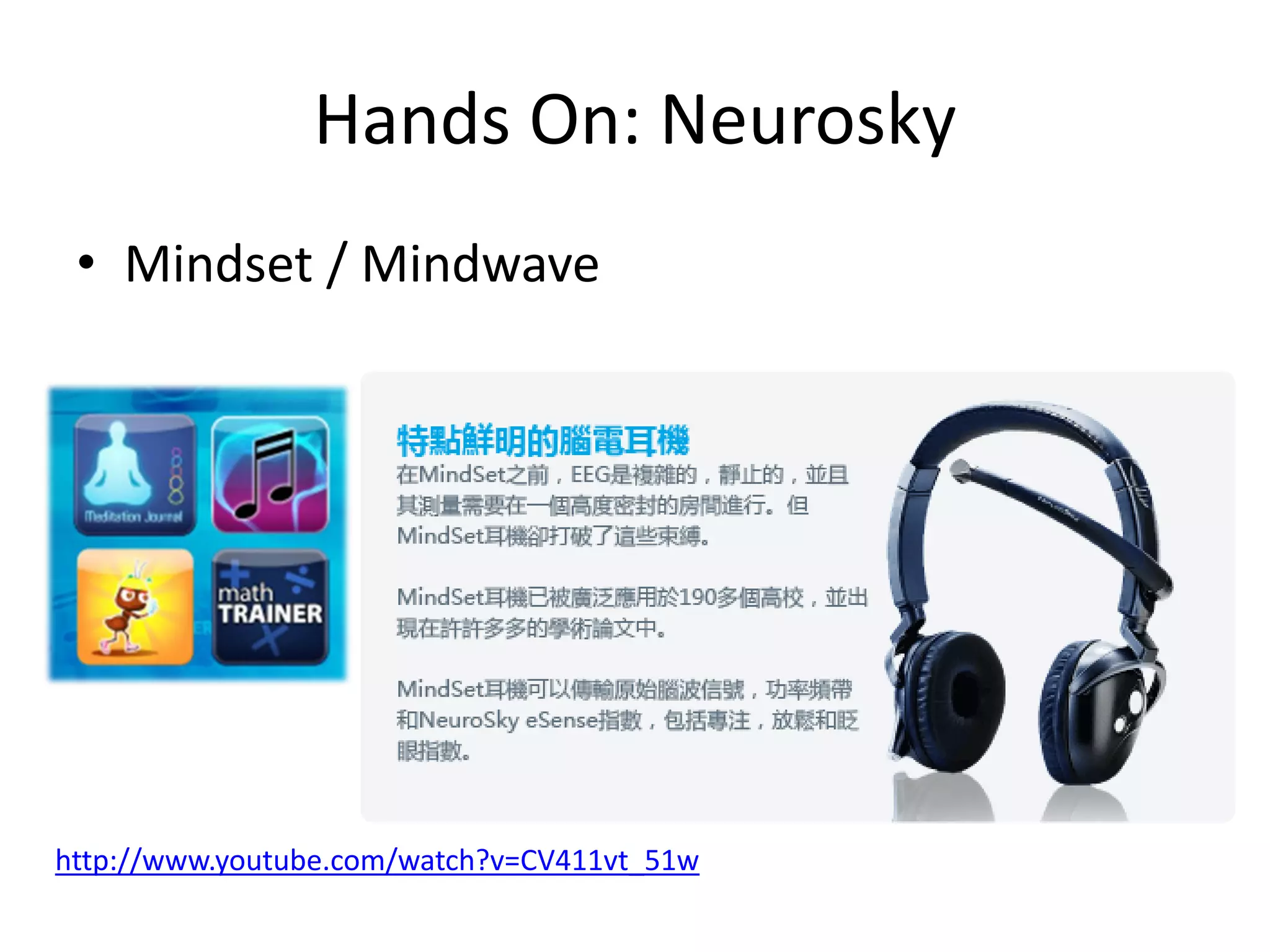
Hands-on experiences with BCI applications like Tan Le's demonstration, Neurosky devices, and Neurowear's Necomimi.
Final note of appreciation and closure of the presentation.


