Brain–computer interface

Presented By
V.Koushik
10B81A0428

1
What is Brain-Computer
Interface(BCI)?
• Brain-computer interface (BCI) is a fast-growing emergent
technology, in which researchers aim to build a direct channel
between the human brain and the computer.
• A Brain Computer Interface (BCI) is a collaboration in which
electro-physical signals are passed and controls a mechanical
device as a natural part of its representation of the body.
• It is also known as Direct Neural Interface (DNI) & Brain –
Machine Interface (BMI).

2
History
•

•
•

Hans Berger is the scientist who discover the electrical activity
of the human brain and developed the
electroencephalography (EEG).
In 1924 Berger was the first to record human brain activity by
means of EEG
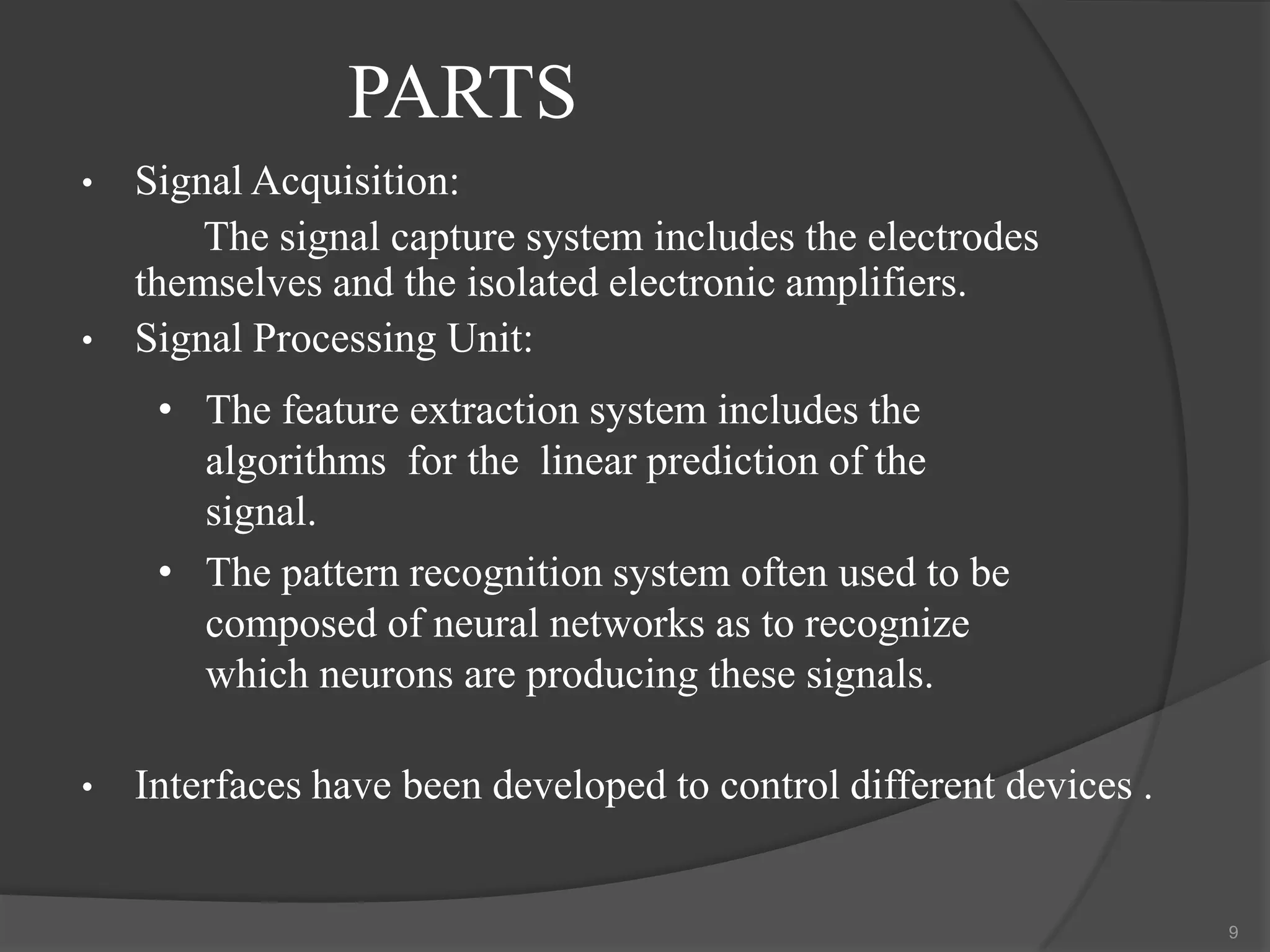
One wave he identified was the alpha wave (8–13 Hz), also
known as Berger's wave.

•

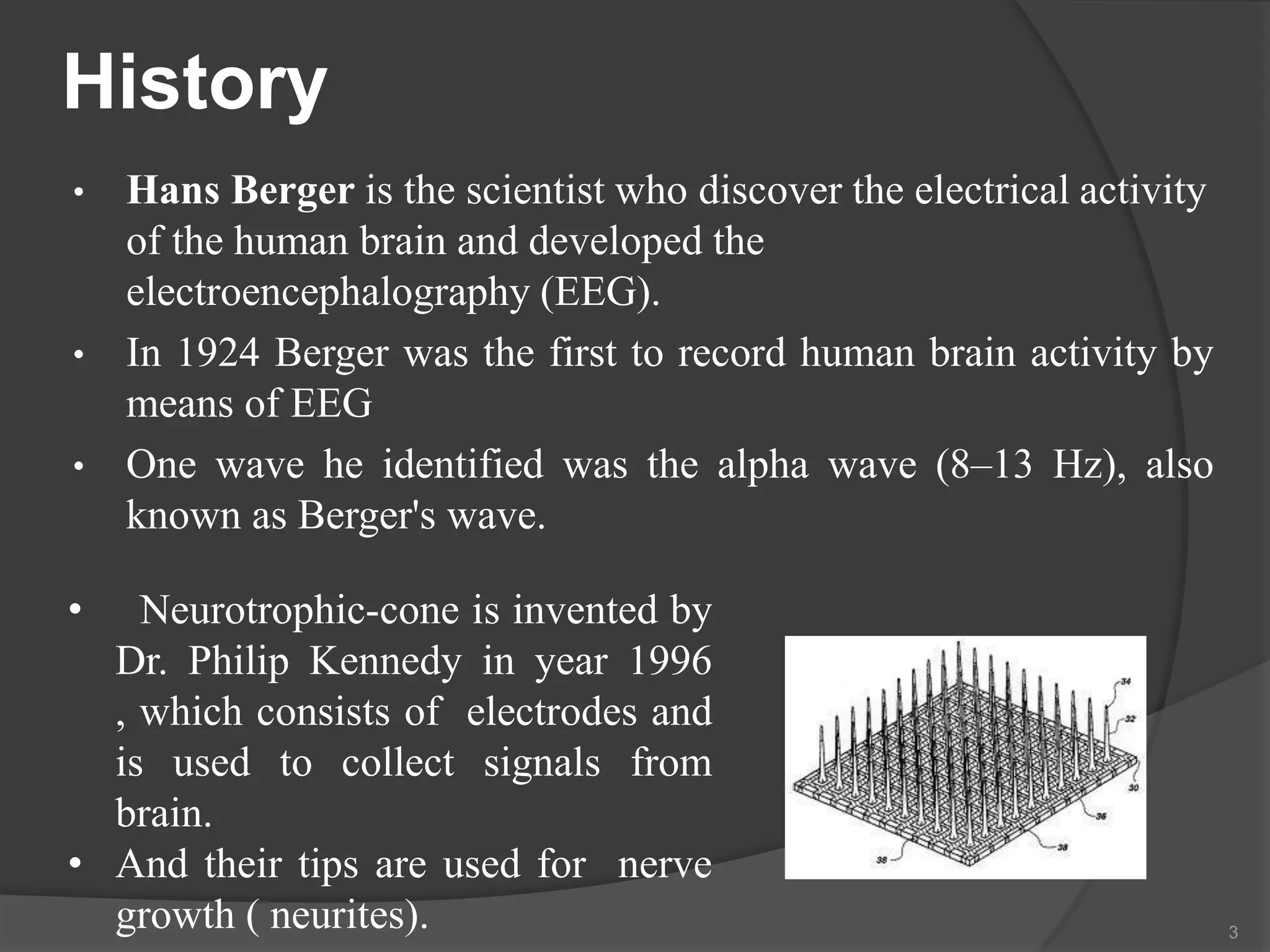
Neurotrophic-cone is invented by
Dr. Philip Kennedy in year 1996
, which consists of electrodes and
is used to collect signals from
brain.
• And their tips are used for nerve
growth ( neurites).

3
BCI Research On Animals:
Rats first
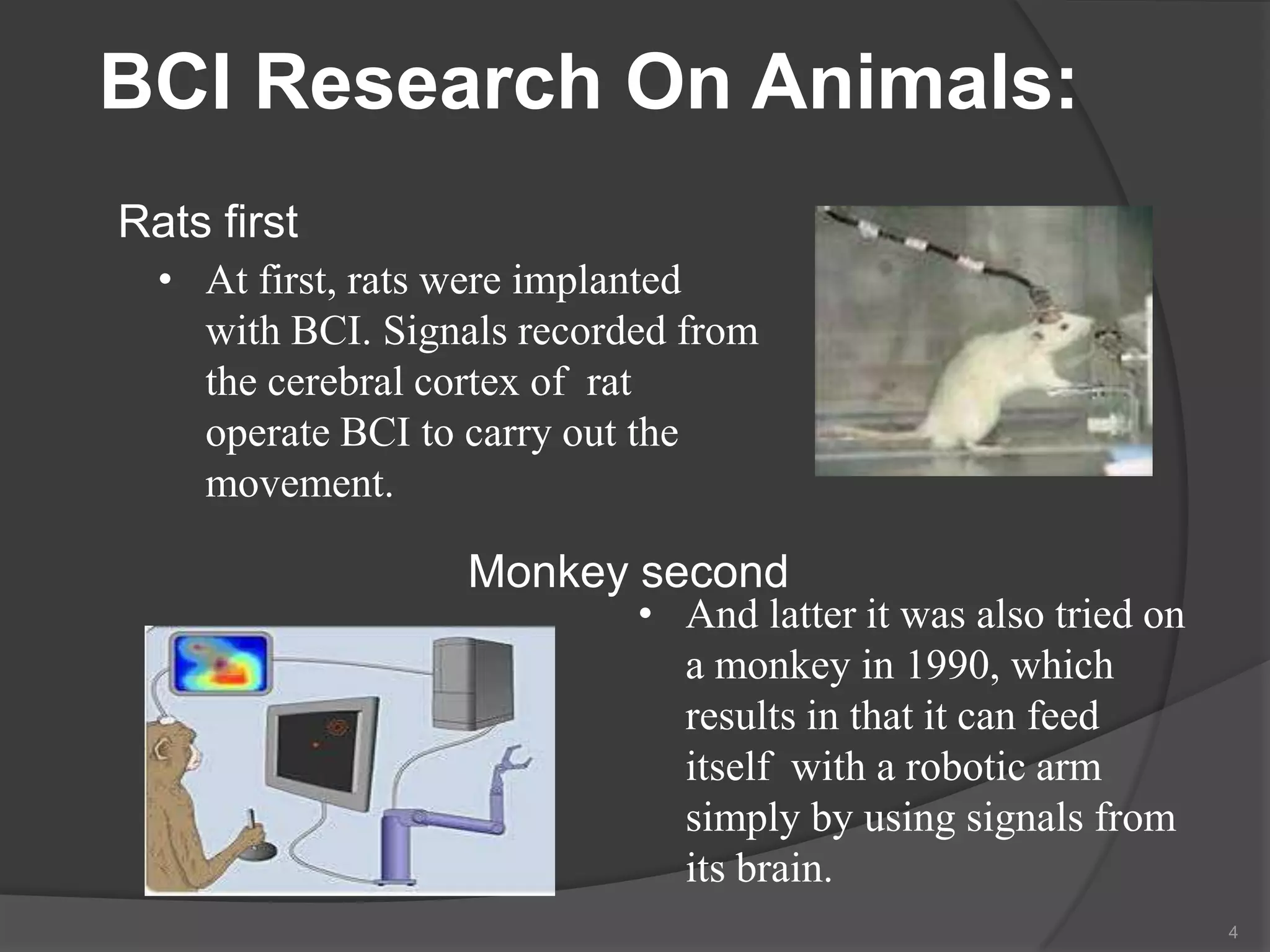
• At first, rats were implanted
with BCI. Signals recorded from
the cerebral cortex of rat
operate BCI to carry out the
movement.

Monkey second

• And latter it was also tried on
a monkey in 1990, which
results in that it can feed
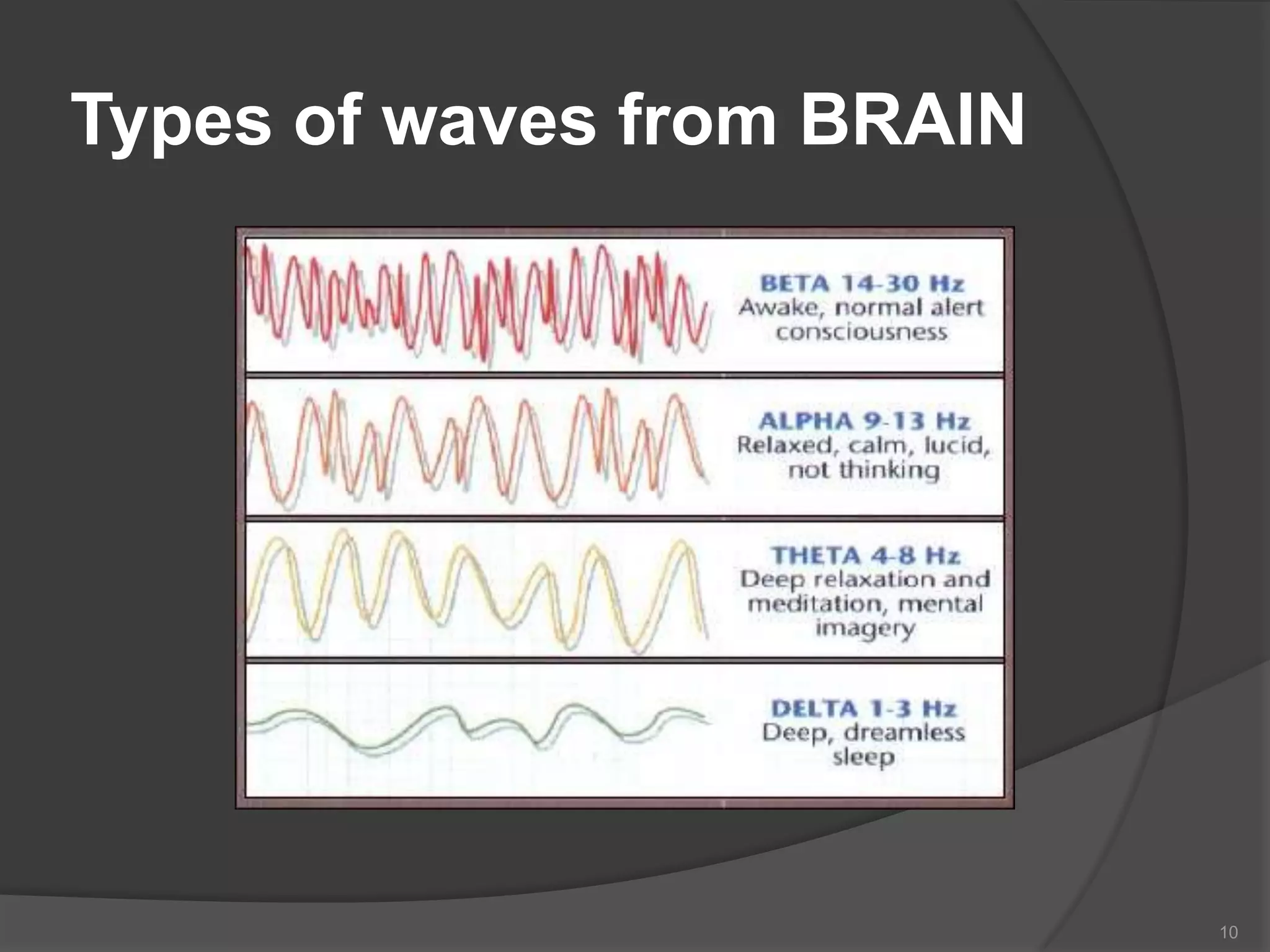
itself with a robotic arm
simply by using signals from
its brain.
4
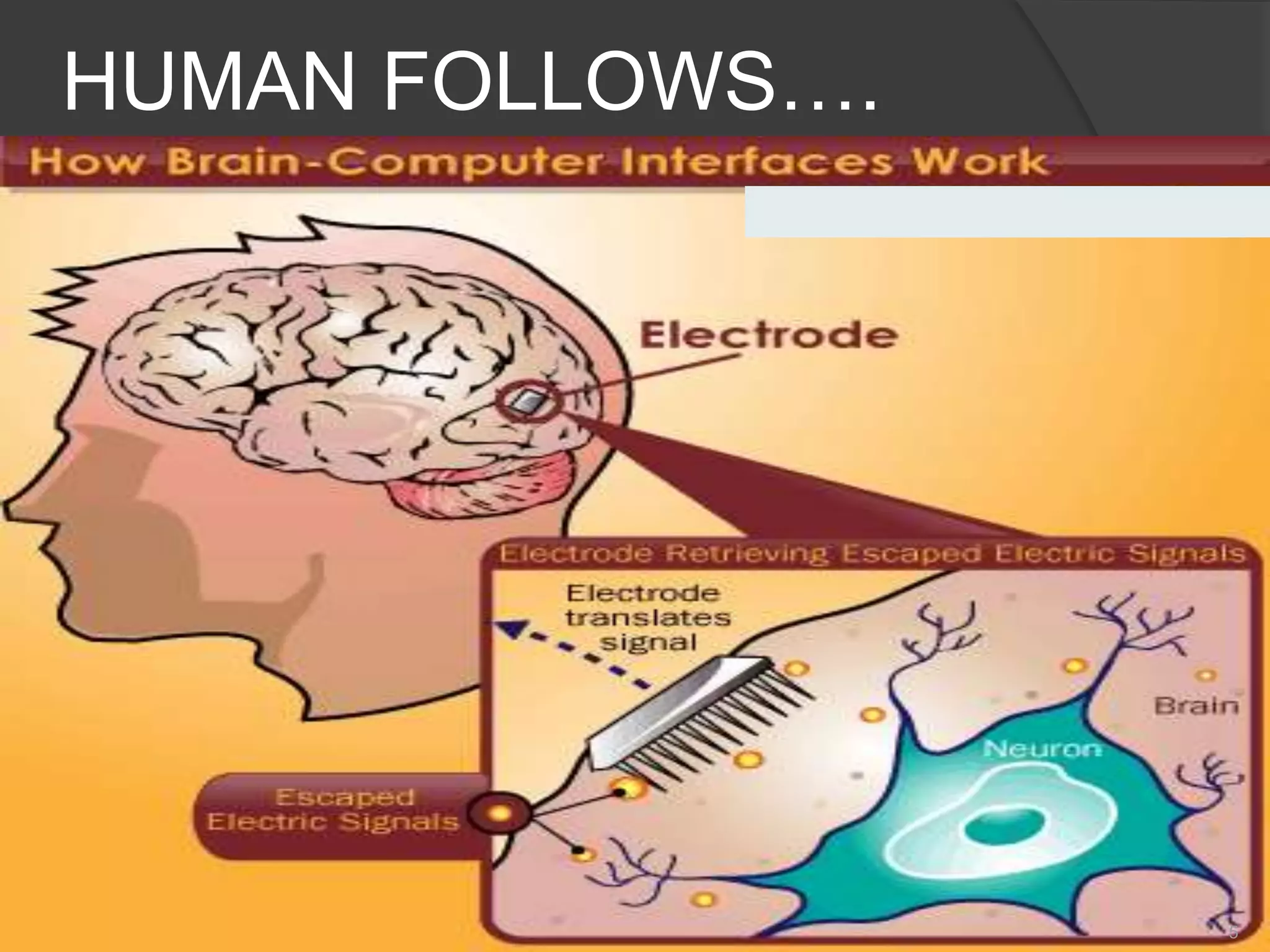
HUMAN FOLLOWS….

5
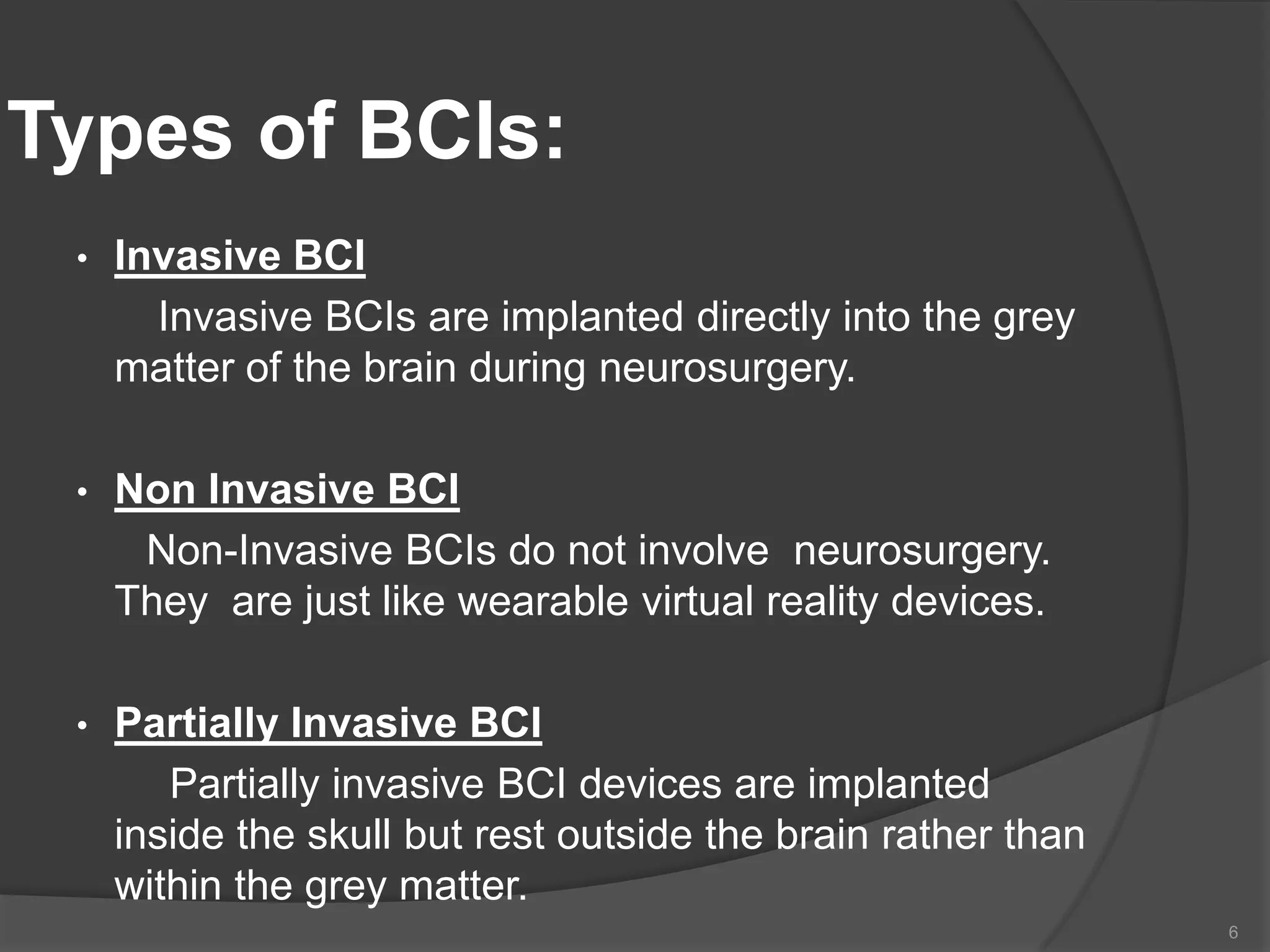
Types of BCIs:
•

Invasive BCI
Invasive BCIs are implanted directly into the grey
matter of the brain during neurosurgery.

•

Non Invasive BCI
Non-Invasive BCIs do not involve neurosurgery.
They are just like wearable virtual reality devices.

•

Partially Invasive BCI
Partially invasive BCI devices are implanted
inside the skull but rest outside the brain rather than
within the grey matter.
6
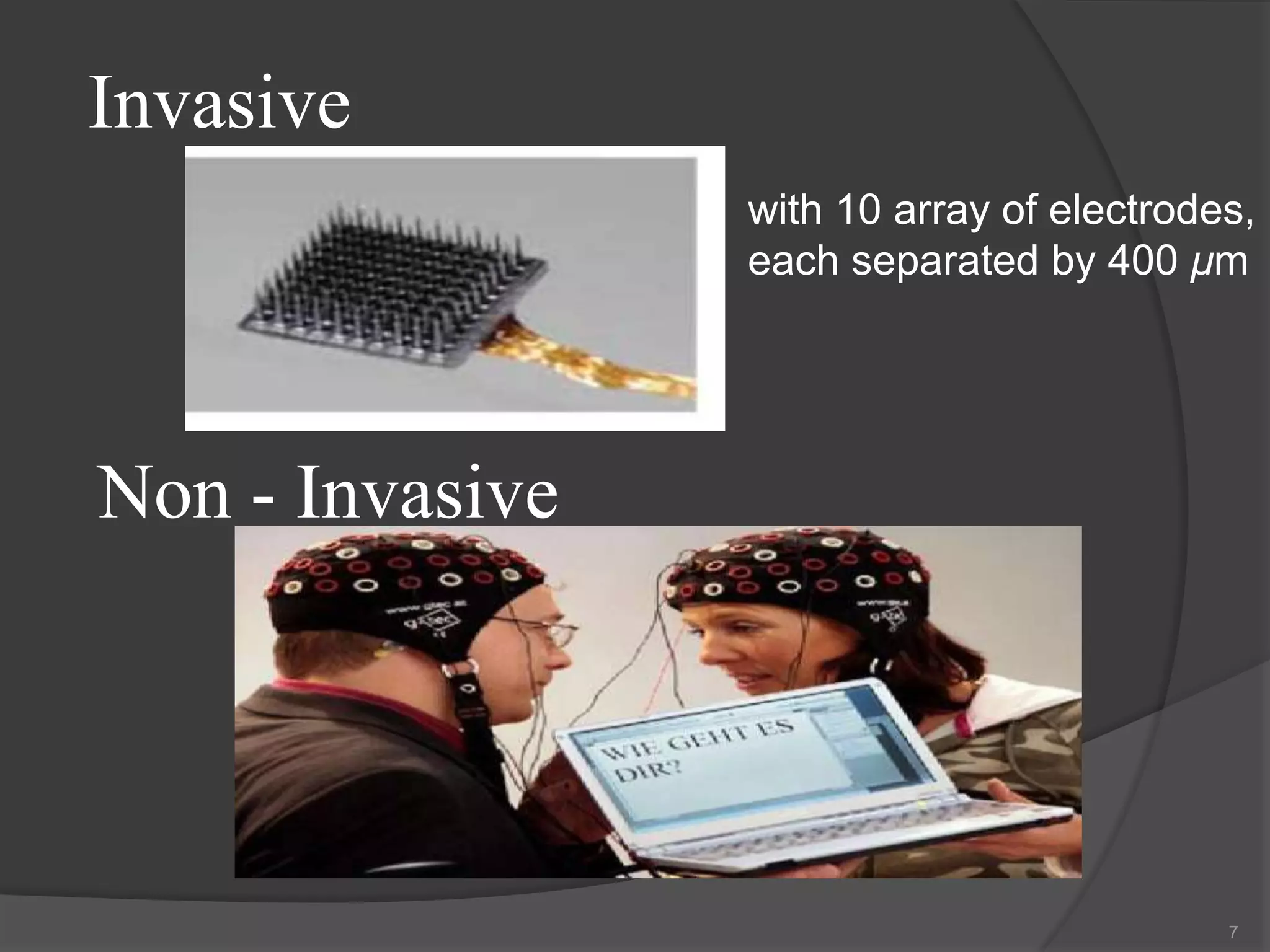
Invasive
with 10 array of electrodes,
each separated by 400 μm

Non - Invasive

7
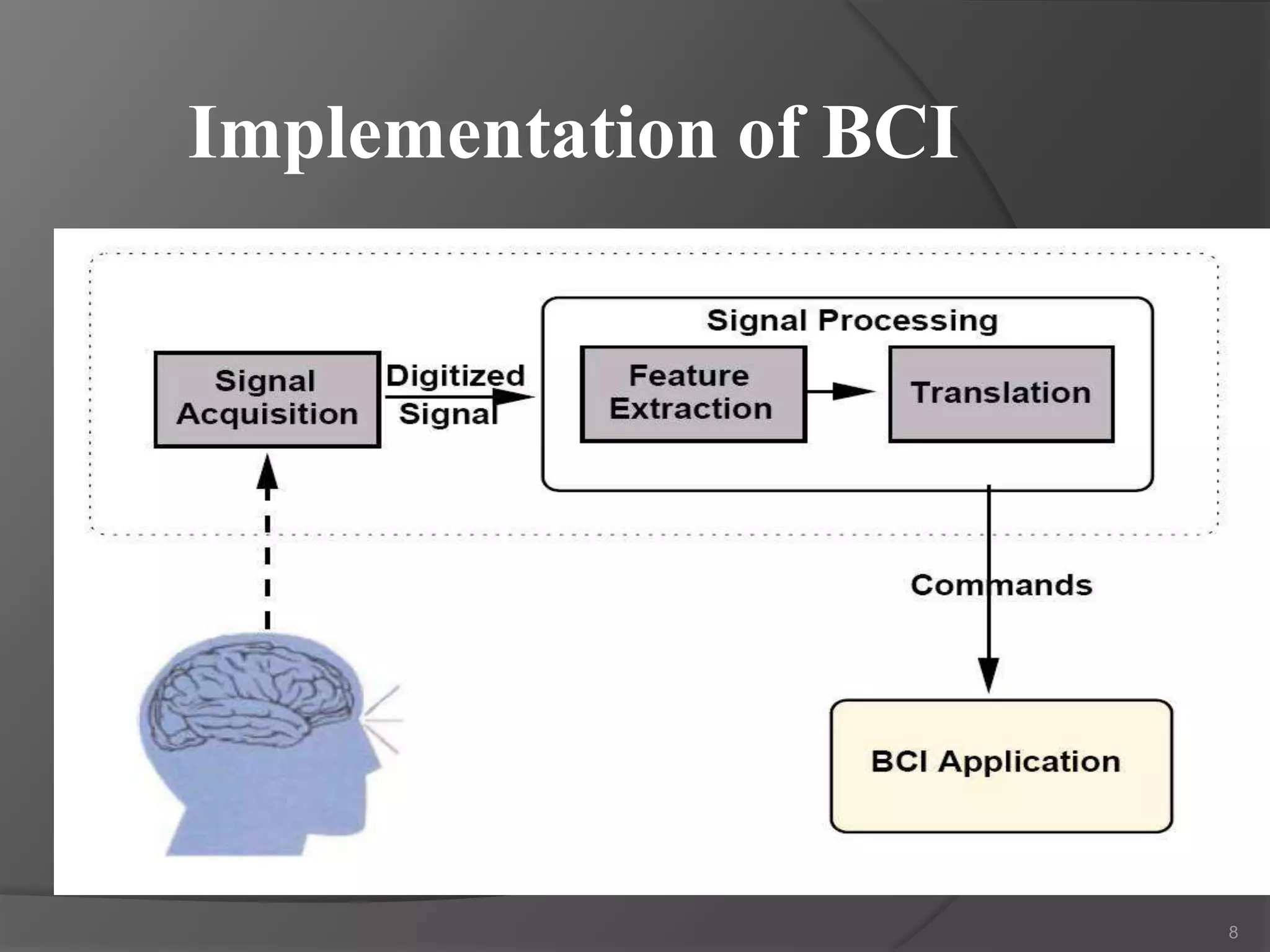
Implementation of BCI

8
PARTS
•

•

Signal Acquisition:
The signal capture system includes the electrodes
themselves and the isolated electronic amplifiers.
Signal Processing Unit:
• The feature extraction system includes the
algorithms for the linear prediction of the
signal.
• The pattern recognition system often used to be
composed of neural networks as to recognize
which neurons are producing these signals.

•

Interfaces have been developed to control different devices .

9
Types of waves from BRAIN

10
11
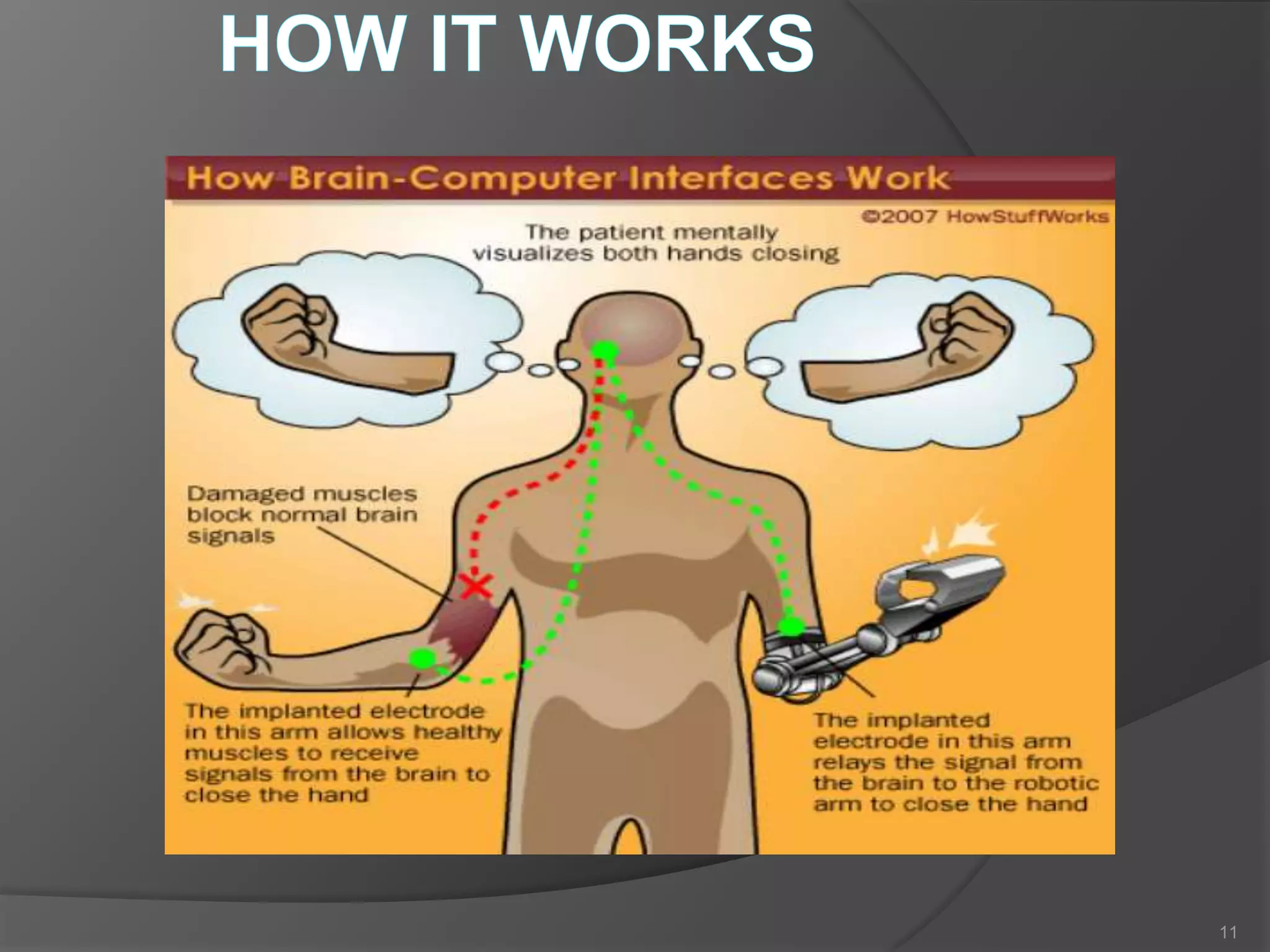
Bionic Eye

12
Output Device
•

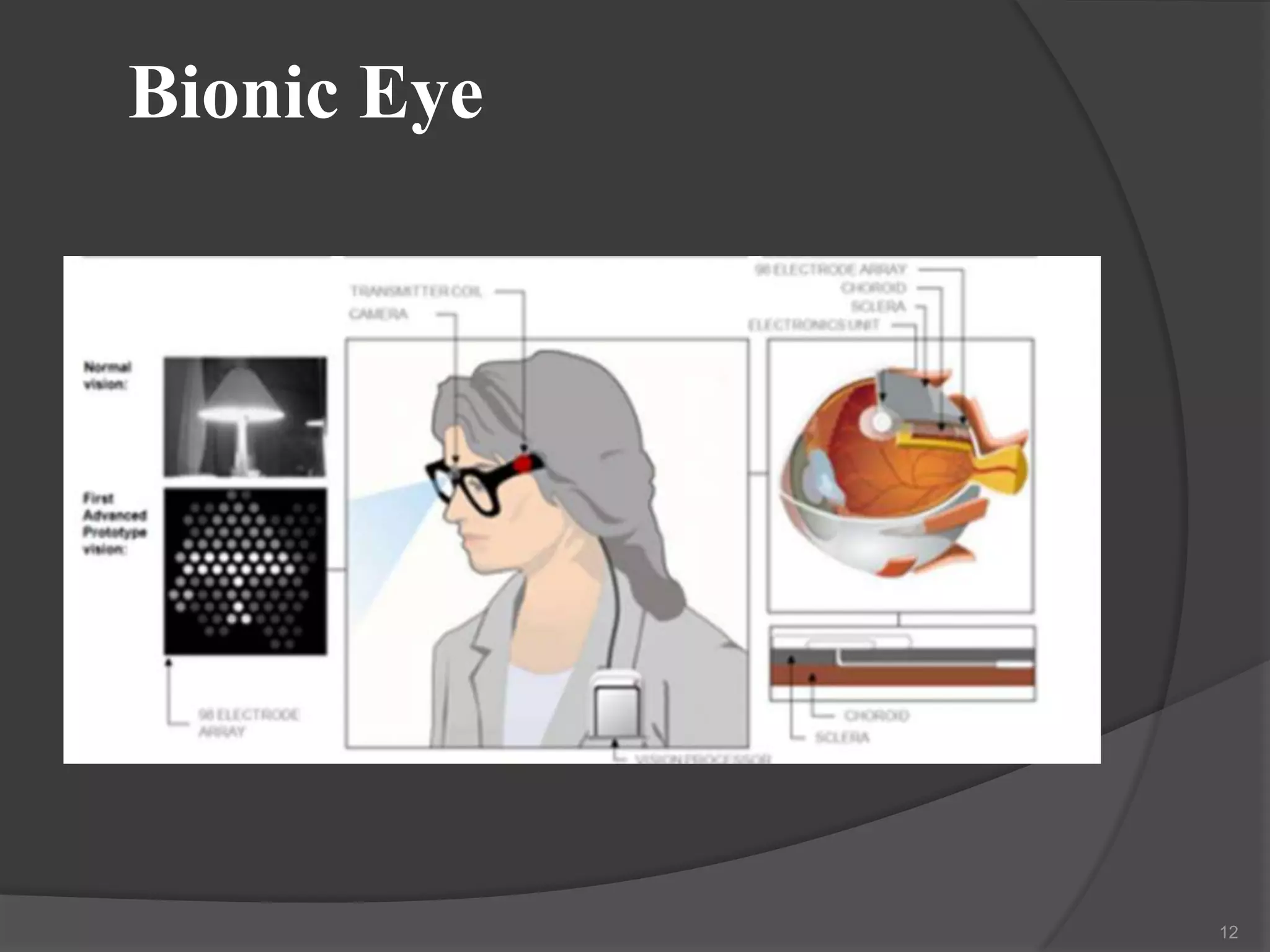
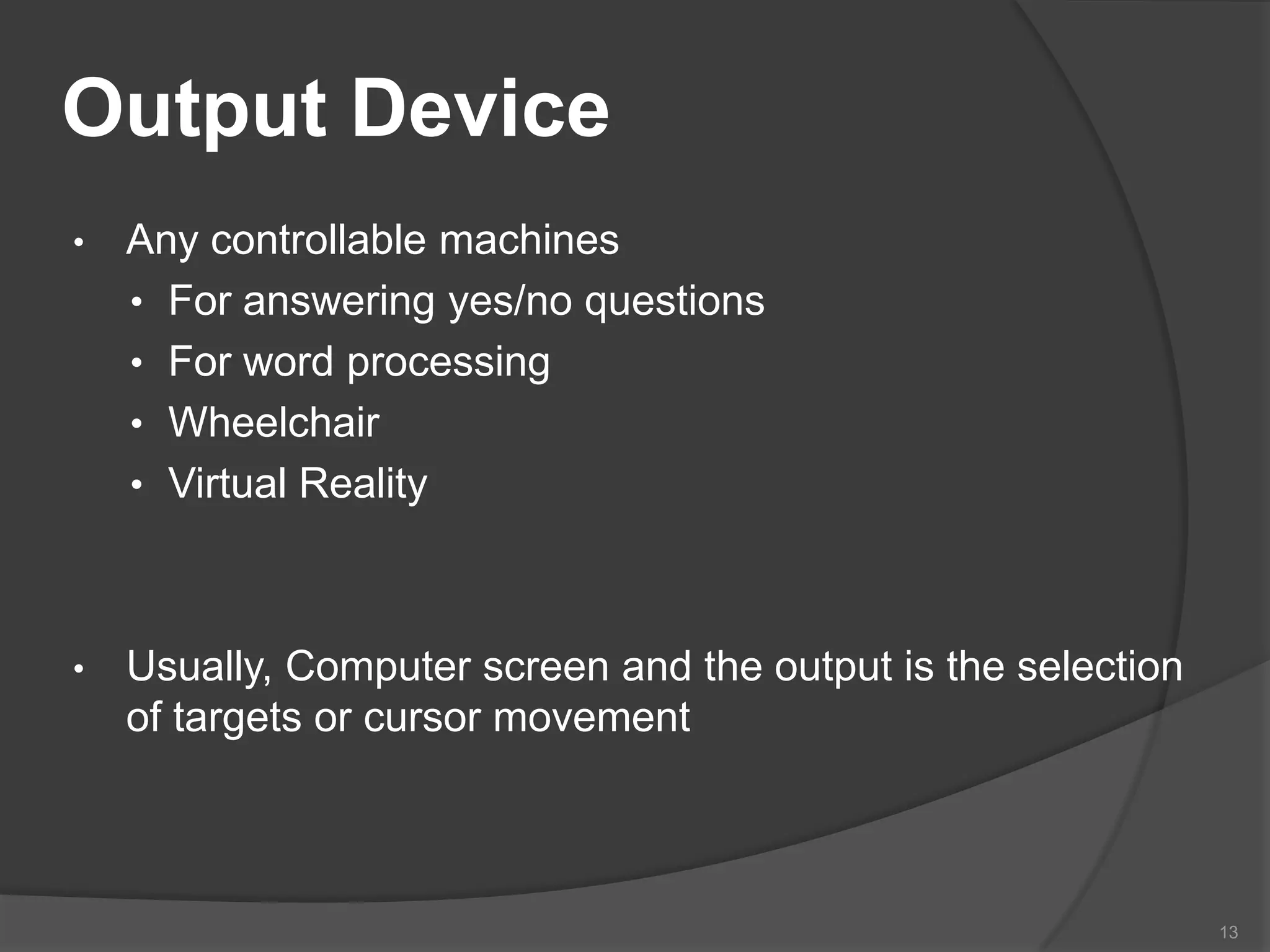
Any controllable machines
• For answering yes/no questions
• For word processing
• Wheelchair
• Virtual Reality

•

Usually, Computer screen and the output is the selection
of targets or cursor movement

13
APPLICATIONS
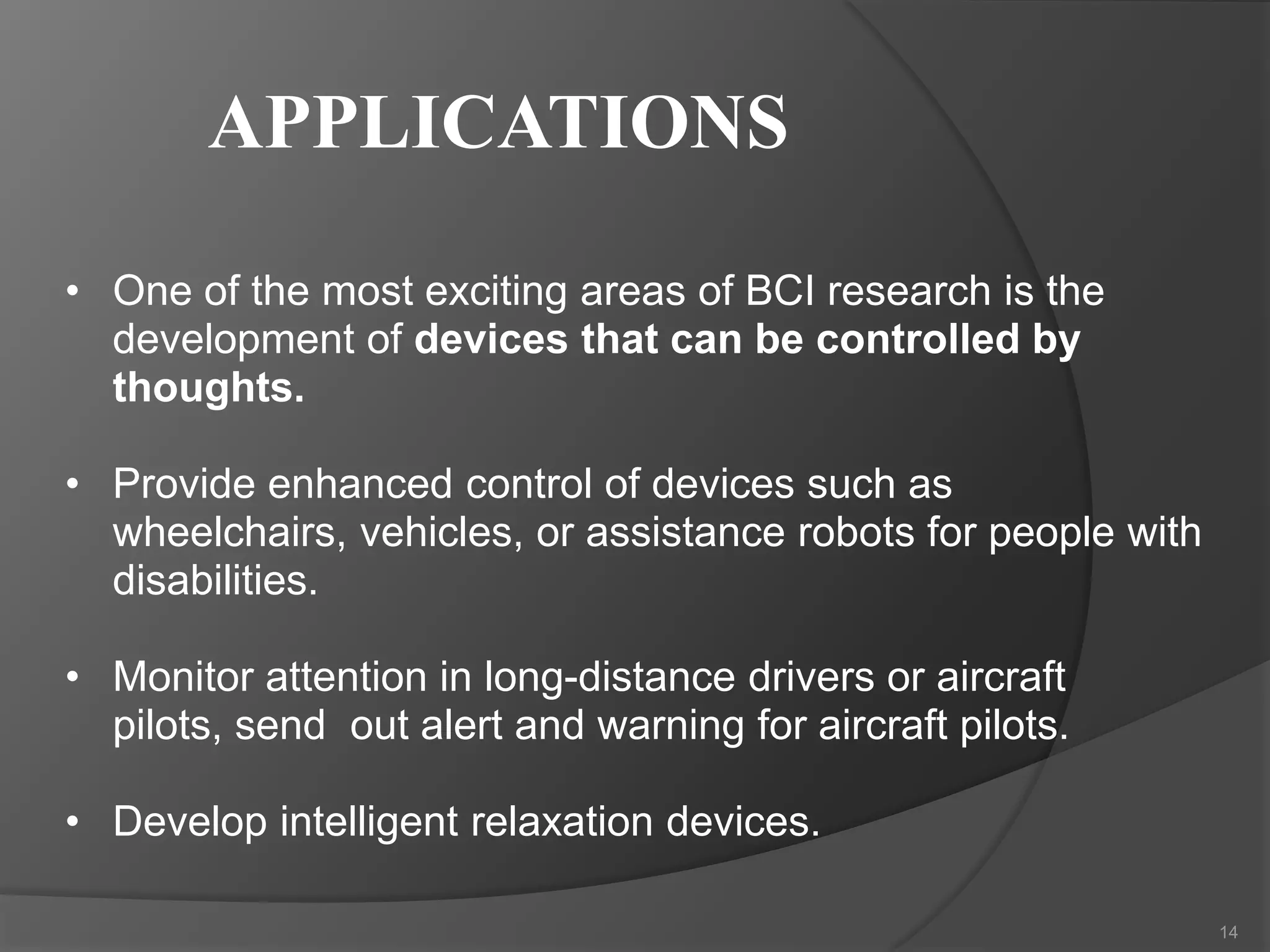
• One of the most exciting areas of BCI research is the
development of devices that can be controlled by
thoughts.
• Provide enhanced control of devices such as
wheelchairs, vehicles, or assistance robots for people with
disabilities.
• Monitor attention in long-distance drivers or aircraft
pilots, send out alert and warning for aircraft pilots.
• Develop intelligent relaxation devices.
14
APPLICATIONS(cont.)
•

•
•
•
•

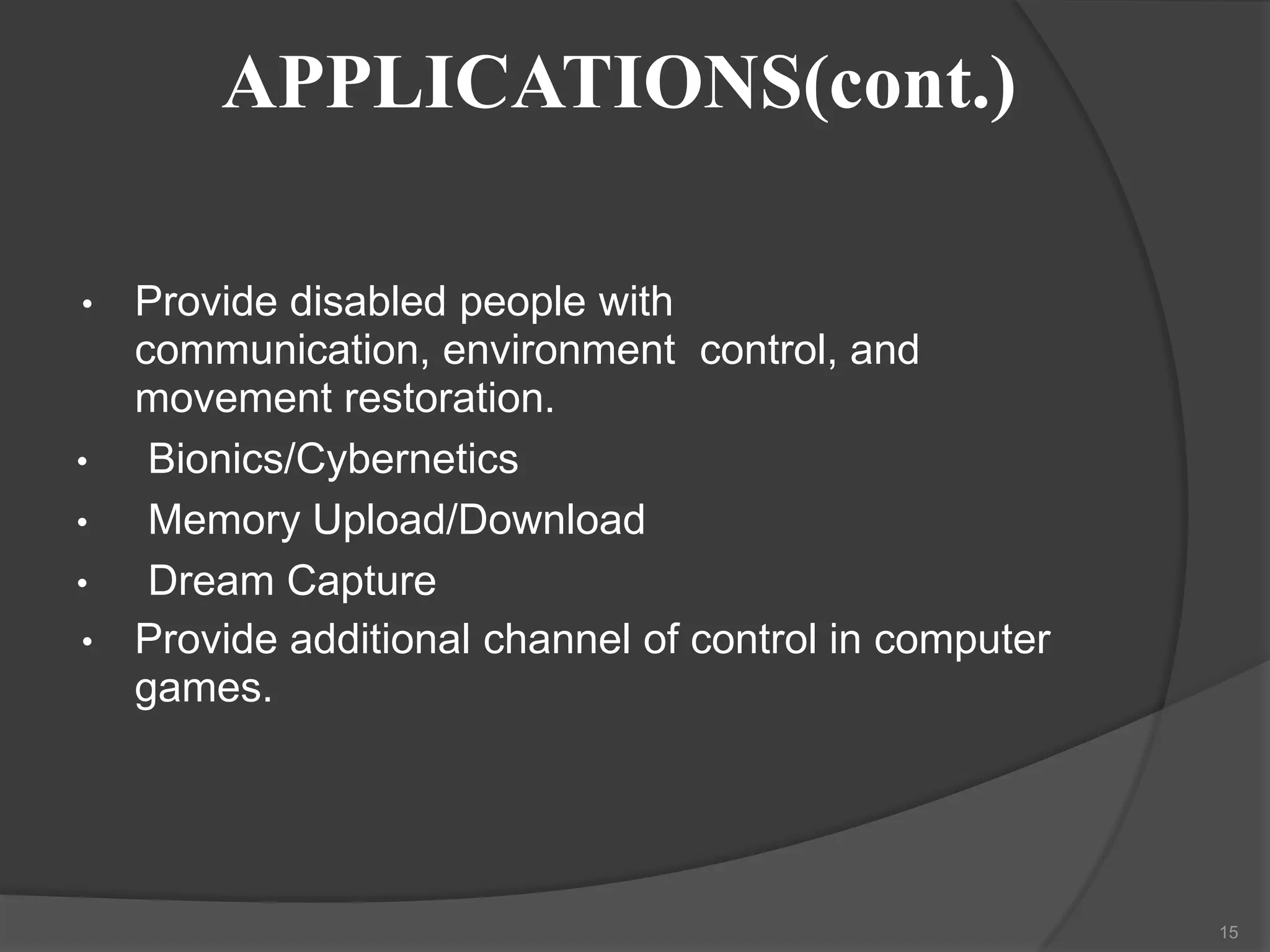
Provide disabled people with
communication, environment control, and
movement restoration.
Bionics/Cybernetics
Memory Upload/Download
Dream Capture
Provide additional channel of control in computer
games.

15
Limitations
•

•

•

•

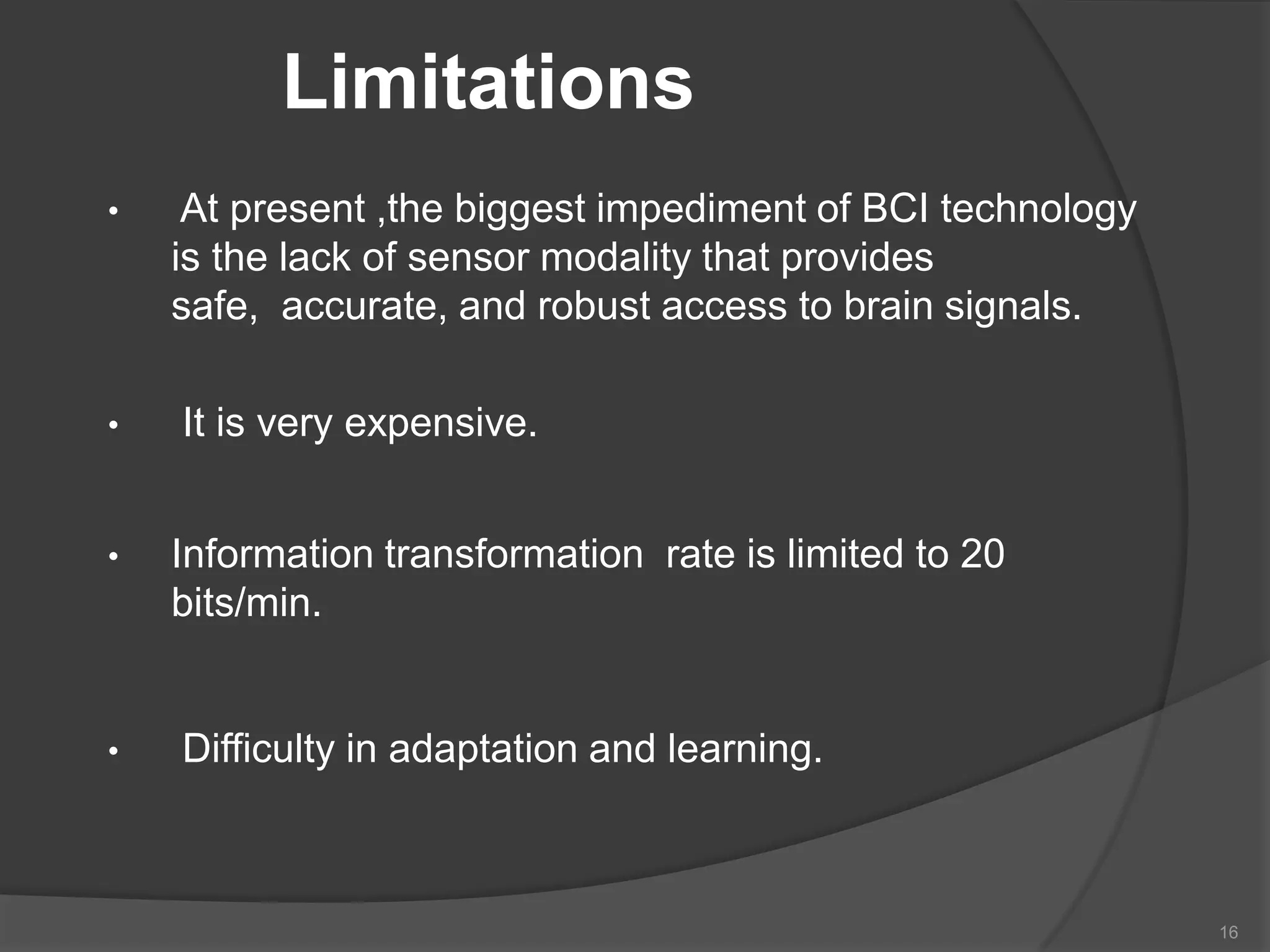
At present ,the biggest impediment of BCI technology
is the lack of sensor modality that provides
safe, accurate, and robust access to brain signals.
It is very expensive.
Information transformation rate is limited to 20
bits/min.

Difficulty in adaptation and learning.

16
Future Concerns
• Recently in Aug 2013, brain-to-brain non-invasive
interface has been created by researchers at the
University of Washington. The researchers are already
looking at a two-way system, to allow for a more
“equitable” telepathic link between the two human
brains.

• The laser would be focussed on a single neuron and the
neuron’s reflectance is measured by a separate sensor.
• When the neuron fires, the light pattern and wavelength
it reflects would change slightly This would allow the
researchers to monitor a single neuron and require less
contact with the tissue.
17
CONCLUSION
• A potential therapeutic tool.
• BCI is an advancing technology promising paradigm shift in
areas
like
Machine
Control,
Human
Enhancement, Virtual, reality and etc. So, it’s potentially
high impact technology.
• Several potential applications of BCI hold promise for
rehabilitation and improving performance, such as treating
emotional disorders (for example, depression or
anxiety),easing chronic pain, and overcoming movement
disabilities due to stroke.
• Will enable us to achieve singularity very soon.
18
19

Brain computer interface

  • 1.
  • 2.
    What is Brain-Computer Interface(BCI)? •Brain-computer interface (BCI) is a fast-growing emergent technology, in which researchers aim to build a direct channel between the human brain and the computer. • A Brain Computer Interface (BCI) is a collaboration in which electro-physical signals are passed and controls a mechanical device as a natural part of its representation of the body. • It is also known as Direct Neural Interface (DNI) & Brain – Machine Interface (BMI). 2
  • 3.
    History • • • Hans Berger isthe scientist who discover the electrical activity of the human brain and developed the electroencephalography (EEG). In 1924 Berger was the first to record human brain activity by means of EEG One wave he identified was the alpha wave (8–13 Hz), also known as Berger's wave. • Neurotrophic-cone is invented by Dr. Philip Kennedy in year 1996 , which consists of electrodes and is used to collect signals from brain. • And their tips are used for nerve growth ( neurites). 3
  • 4.
    BCI Research OnAnimals: Rats first • At first, rats were implanted with BCI. Signals recorded from the cerebral cortex of rat operate BCI to carry out the movement. Monkey second • And latter it was also tried on a monkey in 1990, which results in that it can feed itself with a robotic arm simply by using signals from its brain. 4
  • 5.
  • 6.
    Types of BCIs: • InvasiveBCI Invasive BCIs are implanted directly into the grey matter of the brain during neurosurgery. • Non Invasive BCI Non-Invasive BCIs do not involve neurosurgery. They are just like wearable virtual reality devices. • Partially Invasive BCI Partially invasive BCI devices are implanted inside the skull but rest outside the brain rather than within the grey matter. 6
  • 7.
    Invasive with 10 arrayof electrodes, each separated by 400 μm Non - Invasive 7
  • 8.
  • 9.
    PARTS • • Signal Acquisition: The signalcapture system includes the electrodes themselves and the isolated electronic amplifiers. Signal Processing Unit: • The feature extraction system includes the algorithms for the linear prediction of the signal. • The pattern recognition system often used to be composed of neural networks as to recognize which neurons are producing these signals. • Interfaces have been developed to control different devices . 9
  • 10.
    Types of wavesfrom BRAIN 10
  • 11.
  • 12.
  • 13.
    Output Device • Any controllablemachines • For answering yes/no questions • For word processing • Wheelchair • Virtual Reality • Usually, Computer screen and the output is the selection of targets or cursor movement 13
  • 14.
    APPLICATIONS • One ofthe most exciting areas of BCI research is the development of devices that can be controlled by thoughts. • Provide enhanced control of devices such as wheelchairs, vehicles, or assistance robots for people with disabilities. • Monitor attention in long-distance drivers or aircraft pilots, send out alert and warning for aircraft pilots. • Develop intelligent relaxation devices. 14
  • 15.
    APPLICATIONS(cont.) • • • • • Provide disabled peoplewith communication, environment control, and movement restoration. Bionics/Cybernetics Memory Upload/Download Dream Capture Provide additional channel of control in computer games. 15
  • 16.
    Limitations • • • • At present ,thebiggest impediment of BCI technology is the lack of sensor modality that provides safe, accurate, and robust access to brain signals. It is very expensive. Information transformation rate is limited to 20 bits/min. Difficulty in adaptation and learning. 16
  • 17.
    Future Concerns • Recentlyin Aug 2013, brain-to-brain non-invasive interface has been created by researchers at the University of Washington. The researchers are already looking at a two-way system, to allow for a more “equitable” telepathic link between the two human brains. • The laser would be focussed on a single neuron and the neuron’s reflectance is measured by a separate sensor. • When the neuron fires, the light pattern and wavelength it reflects would change slightly This would allow the researchers to monitor a single neuron and require less contact with the tissue. 17
  • 18.
    CONCLUSION • A potentialtherapeutic tool. • BCI is an advancing technology promising paradigm shift in areas like Machine Control, Human Enhancement, Virtual, reality and etc. So, it’s potentially high impact technology. • Several potential applications of BCI hold promise for rehabilitation and improving performance, such as treating emotional disorders (for example, depression or anxiety),easing chronic pain, and overcoming movement disabilities due to stroke. • Will enable us to achieve singularity very soon. 18
  • 19.