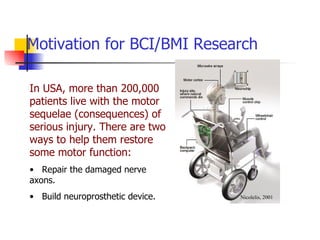
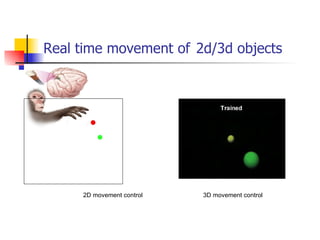
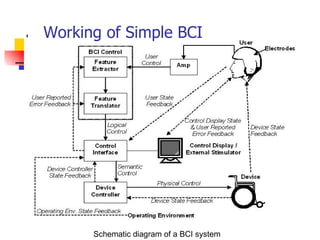
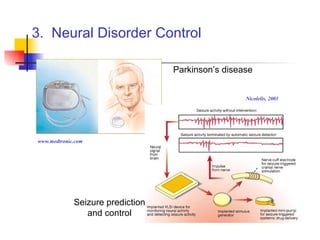
1. A brain-computer interface (BCI) allows direct communication between the brain and external devices, helping people with motor impairments and providing new functionality.
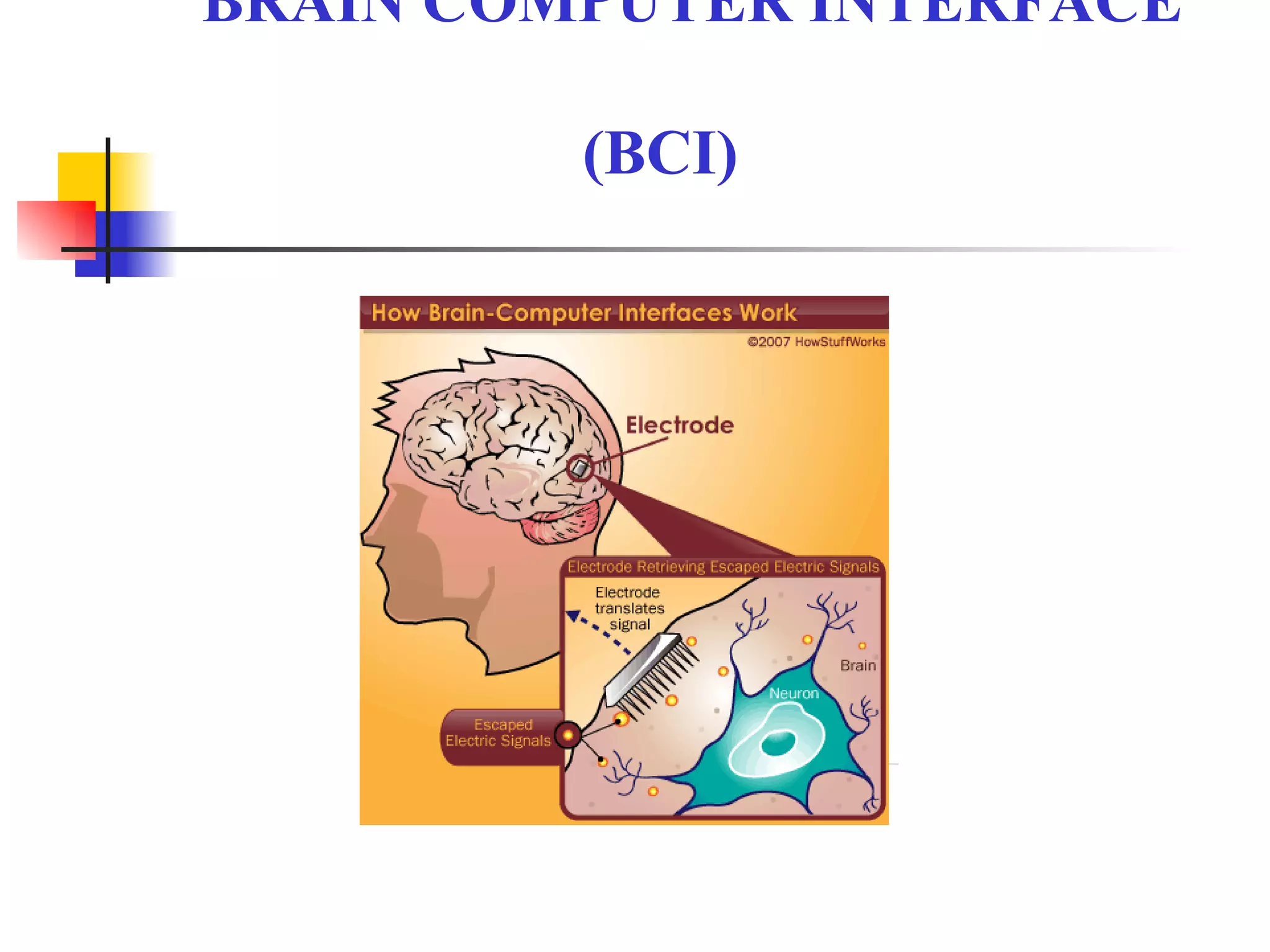
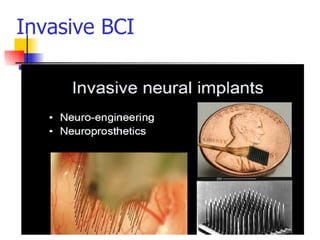
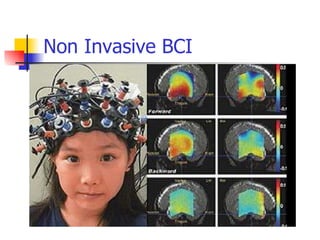
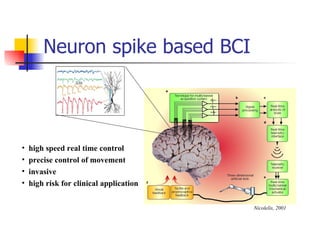
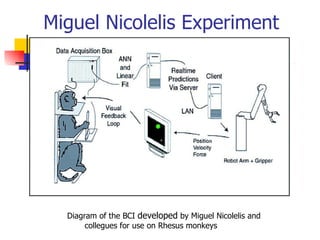
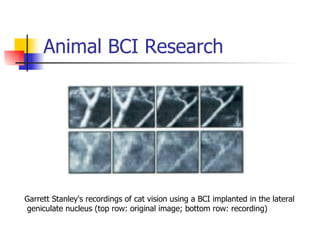
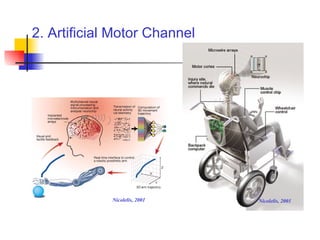
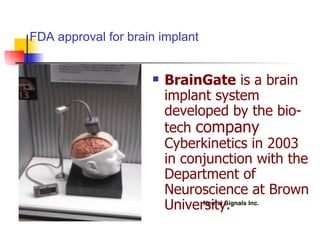
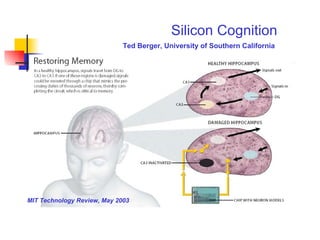
2. BCI can be invasive, using implants in the brain to detect high-quality signals, but these are prone to scar tissue buildup. Non-invasive BCIs use neuroimaging techniques but produce poorer signals.
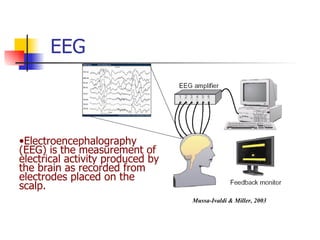
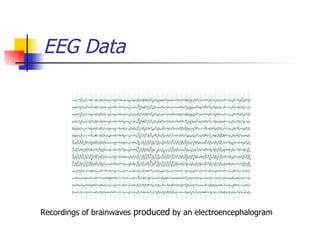
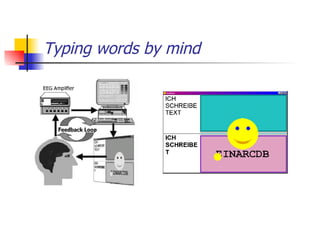
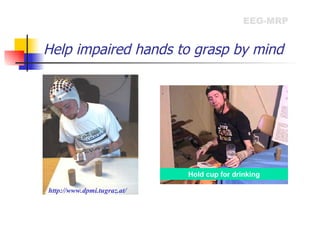
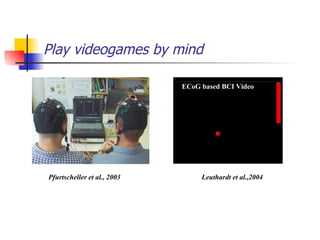
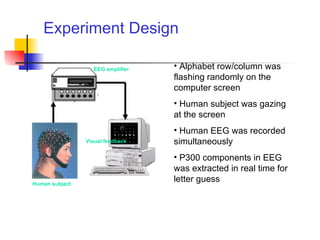
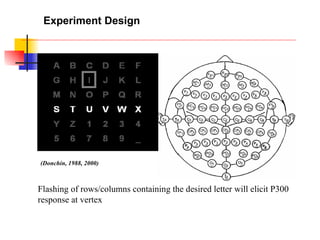
3. Experiments have used EEG to detect brainwaves and allow people to type or control devices through thought. As detection techniques improve, BCI could provide more alternatives for people to interact with their environment.