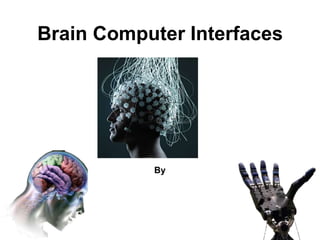
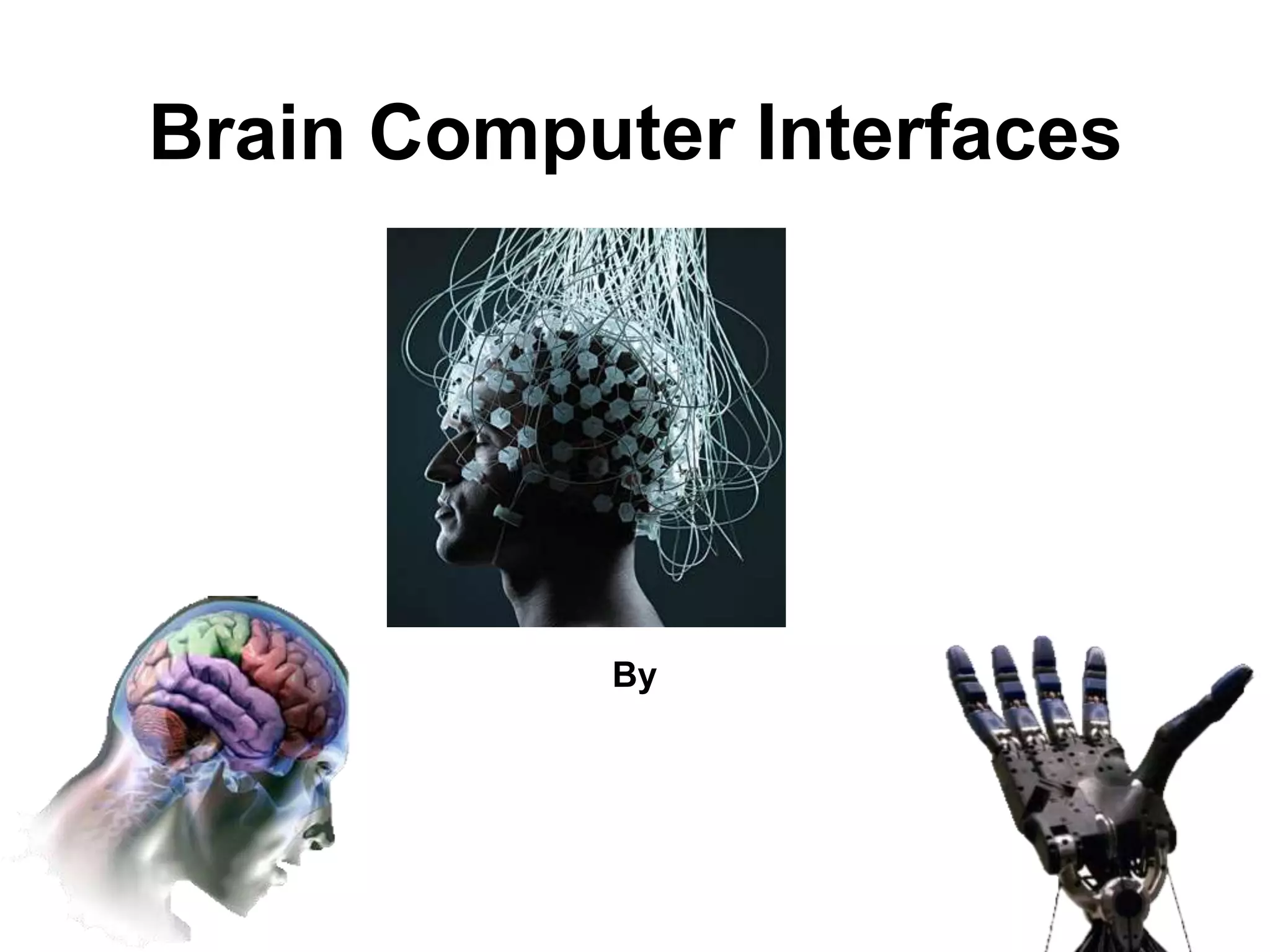
Brain Computer Interfaces
By
You can make it with BCI !
Introduction
• Brain-computer interface (BCI) is a fast-growing emergent technology, in
which researchers aim to build a direct channel between the human brain
and the computer.
• A Brain Computer Interface (BCI) is a collaboration in which a brain accepts
and controls a mechanical device as a natural part of its representation of
the body.
• Computer-brain interfaces are designed to restore sensory
function, transmit sensory information to the brain, or stimulate the brain
through artificially generated electrical signals.
Introduction
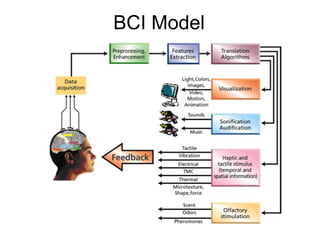
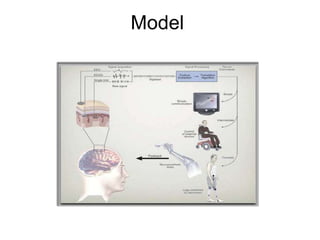
BCI Model
Model
Early work
• Algorithms to reconstruct movements from motor cortex neurons, which
control movement, were developed in 1970s.
• The first Intra-Cortical Brain-Computer Interface was built by implanting
electrodes into monkeys.
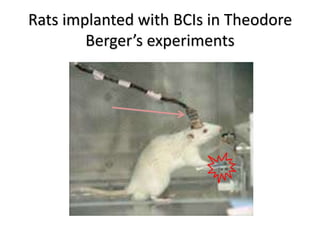
• After conducting initial studies in rats during the 1990s, researchers
developed Brain Computer Interfaces that decoded brain activity in
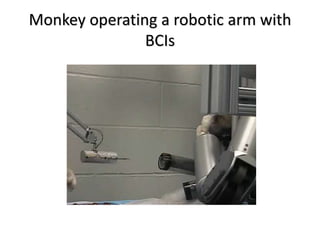
monkeys and used the devices to reproduce movements in monkeys and
used the devices to reproduce monkey movements in robotic arms.
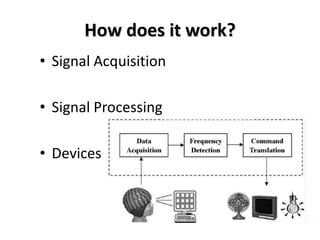
How does it work?
• Signal Acquisition
• Signal Processing
• Devices
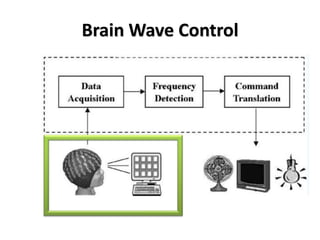
Brain Wave Control
Brain Wave Control
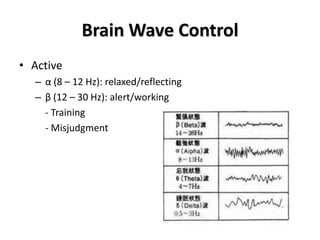
• Active
– α (8 – 12 Hz): relaxed/reflecting
– β (12 – 30 Hz): alert/working
- Training
- Misjudgment
Brain Wave Control
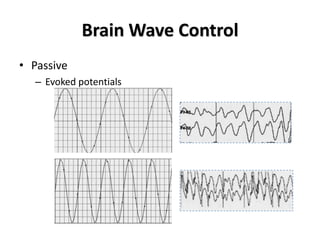
• Passive
– Evoked potentials
Data Acquisition
• Invasive BCIs
• Non-Invasive BCIs
• Partially-Invasive BCIs
• Wireless BCIs
Invasive BCIs
• Implanted: grey matter
• Signals: highest quality
• Scar-tissue build-up
• Target:
– repairing damaged sight
– providing new functionality to persons with
paralysis
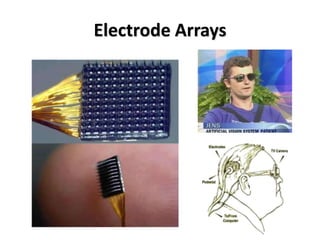
• Artificial Vision System
Electrode Arrays
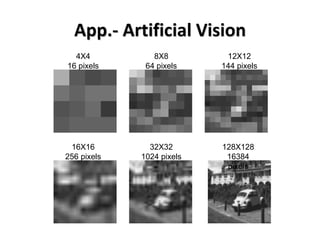
App.- Artificial Vision
4X4
16 pixels
8X8
64 pixels
12X12
144 pixels
16X16
256 pixels
32X32
1024 pixels
128X128
16384
pixels
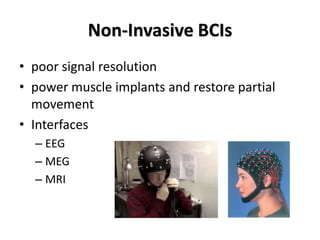
Non-Invasive BCIs
• poor signal resolution
• power muscle implants and restore partial
movement
• Interfaces
– EEG
– MEG
– MRI
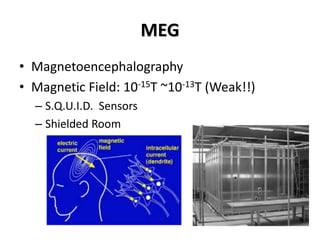
MEG
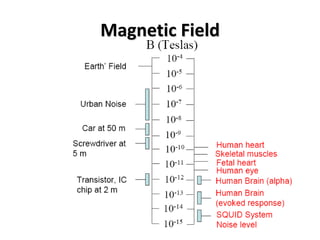
• Magnetoencephalography
• Magnetic Field: 10-15T ~10-13T (Weak!!)
– S.Q.U.I.D. Sensors
– Shielded Room
Magnetic Field
Partially-Invasive BCIs
• Implanted: skull
• lower risk of forming scar-tissue in the brain
• Signal quality between invasive BCIs & non-
invasive BCIs
Wireless BCIs
• More practical
• Embedding multiple chips
– More complicated thoughts
• Transmission with RF
• key requirement: keep the heat down
Wireless BCIs
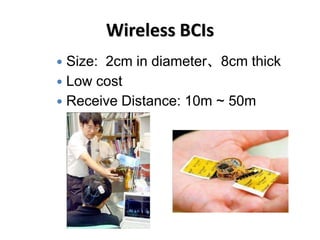
 Size: 2cm in diameter、8cm thick
 Low cost
 Receive Distance: 10m ~ 50m
Examples of BCI
Rats implanted with BCIs in Theodore
Berger’s experiments
Monkey operating a robotic arm with
BCIs
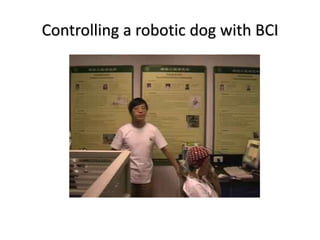
Controlling a robotic dog with BCI
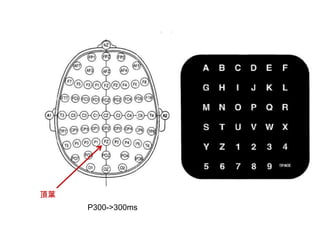
A man operates the computer with his EEG
P300->300ms
頂葉
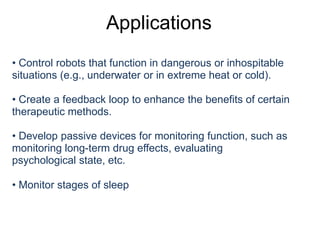
Applications
• Control robots that function in dangerous or inhospitable
situations (e.g., underwater or in extreme heat or cold).
• Create a feedback loop to enhance the benefits of certain
therapeutic methods.
• Develop passive devices for monitoring function, such as
monitoring long-term drug effects, evaluating
psychological state, etc.
• Monitor stages of sleep
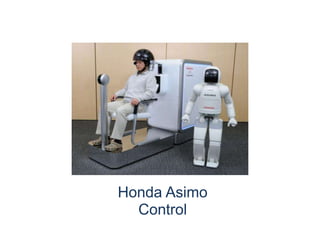
Honda Asimo
Control
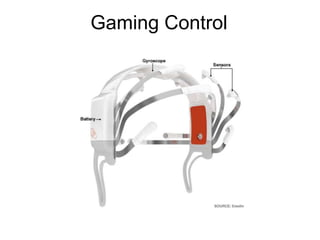
Gaming Control
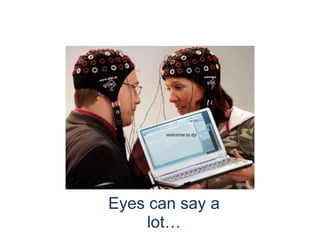
Eyes can say a
lot…
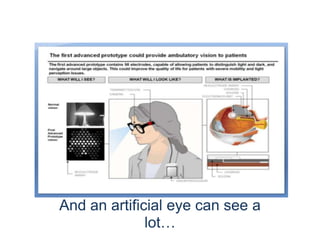
Bionic Eye
And an artificial eye can see a
lot…
Advantages of BCI:
Eventually, this technology could:allow paralyzed people to control prosthetic
limbs with their mind
transmit visual images to the mind of a blind person, allowing them to see
transmit auditory data to the mind of a def person, allowing them to hear
allow gamers to control video games with their minds
allow a mute person to have their thoughts displayed and spoken by a computer
Disadvantages of BCI:
Research is still in beginning stages

The current technology is crude
Ethical issues may prevent its development
Electrodes outside of the skull can detect very few electric signals from the brain
Electrodes placed inside the skull create scar tissue in the brain
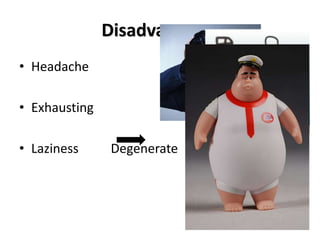
Disadvantages
• Headache
• Exhausting
• Laziness Degenerate
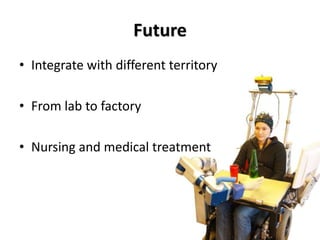
Future
• Integrate with different territory
• From lab to factory
• Nursing and medical treatment
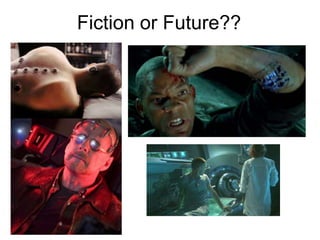
Fiction or Future??
Conclusion
• A potential therapeutic tool.
• BCI is an advancing technology promising paradigm shift in
areas like Machine Control, Human Enhancement, Virtual
reality and etc. So, it’s potentially high impact technology.
• Several potential applications of BCI hold promise for
rehabilitation and improving performance, such as treating
emotional disorders (for example, depression or anxiety),
easing chronic pain, and overcoming movement disabilities due
to stroke.
• Will enable us to achieve singularity very soon.
• Intense R&D in future to attain intuitive efficiency.
Thank You!

Brain computer interfaces

  • 1.
  • 3.
    You can makeit with BCI !
  • 4.
    Introduction • Brain-computer interface(BCI) is a fast-growing emergent technology, in which researchers aim to build a direct channel between the human brain and the computer. • A Brain Computer Interface (BCI) is a collaboration in which a brain accepts and controls a mechanical device as a natural part of its representation of the body. • Computer-brain interfaces are designed to restore sensory function, transmit sensory information to the brain, or stimulate the brain through artificially generated electrical signals. Introduction
  • 5.
  • 6.
  • 7.
    Early work • Algorithmsto reconstruct movements from motor cortex neurons, which control movement, were developed in 1970s. • The first Intra-Cortical Brain-Computer Interface was built by implanting electrodes into monkeys. • After conducting initial studies in rats during the 1990s, researchers developed Brain Computer Interfaces that decoded brain activity in monkeys and used the devices to reproduce movements in monkeys and used the devices to reproduce monkey movements in robotic arms.
  • 8.
    How does itwork? • Signal Acquisition • Signal Processing • Devices
  • 9.
  • 10.
    Brain Wave Control •Active – α (8 – 12 Hz): relaxed/reflecting – β (12 – 30 Hz): alert/working - Training - Misjudgment
  • 11.
    Brain Wave Control •Passive – Evoked potentials
  • 12.
    Data Acquisition • InvasiveBCIs • Non-Invasive BCIs • Partially-Invasive BCIs • Wireless BCIs
  • 13.
    Invasive BCIs • Implanted:grey matter • Signals: highest quality • Scar-tissue build-up • Target: – repairing damaged sight – providing new functionality to persons with paralysis • Artificial Vision System
  • 14.
  • 15.
    App.- Artificial Vision 4X4 16pixels 8X8 64 pixels 12X12 144 pixels 16X16 256 pixels 32X32 1024 pixels 128X128 16384 pixels
  • 16.
    Non-Invasive BCIs • poorsignal resolution • power muscle implants and restore partial movement • Interfaces – EEG – MEG – MRI
  • 17.
    MEG • Magnetoencephalography • MagneticField: 10-15T ~10-13T (Weak!!) – S.Q.U.I.D. Sensors – Shielded Room
  • 18.
  • 19.
    Partially-Invasive BCIs • Implanted:skull • lower risk of forming scar-tissue in the brain • Signal quality between invasive BCIs & non- invasive BCIs
  • 20.
    Wireless BCIs • Morepractical • Embedding multiple chips – More complicated thoughts • Transmission with RF • key requirement: keep the heat down
  • 21.
    Wireless BCIs  Size:2cm in diameter、8cm thick  Low cost  Receive Distance: 10m ~ 50m
  • 22.
  • 23.
    Rats implanted withBCIs in Theodore Berger’s experiments
  • 24.
    Monkey operating arobotic arm with BCIs
  • 25.
  • 26.
    A man operatesthe computer with his EEG
  • 27.
  • 28.
    Applications • Control robotsthat function in dangerous or inhospitable situations (e.g., underwater or in extreme heat or cold). • Create a feedback loop to enhance the benefits of certain therapeutic methods. • Develop passive devices for monitoring function, such as monitoring long-term drug effects, evaluating psychological state, etc. • Monitor stages of sleep
  • 29.
  • 30.
  • 31.
    Eyes can saya lot…
  • 32.
    Bionic Eye And anartificial eye can see a lot…
  • 33.
    Advantages of BCI: Eventually,this technology could:allow paralyzed people to control prosthetic limbs with their mind transmit visual images to the mind of a blind person, allowing them to see transmit auditory data to the mind of a def person, allowing them to hear allow gamers to control video games with their minds allow a mute person to have their thoughts displayed and spoken by a computer Disadvantages of BCI: Research is still in beginning stages The current technology is crude Ethical issues may prevent its development Electrodes outside of the skull can detect very few electric signals from the brain Electrodes placed inside the skull create scar tissue in the brain
  • 34.
  • 35.
    Future • Integrate withdifferent territory • From lab to factory • Nursing and medical treatment
  • 36.
  • 37.
    Conclusion • A potentialtherapeutic tool. • BCI is an advancing technology promising paradigm shift in areas like Machine Control, Human Enhancement, Virtual reality and etc. So, it’s potentially high impact technology. • Several potential applications of BCI hold promise for rehabilitation and improving performance, such as treating emotional disorders (for example, depression or anxiety), easing chronic pain, and overcoming movement disabilities due to stroke. • Will enable us to achieve singularity very soon. • Intense R&D in future to attain intuitive efficiency.
  • 39.

Editor's Notes

  • #5 Brain -Computer Interface -Direct Neural Interface or Brain-Machine Interface Direct communication pathway between a brain and an external device.Research on BCIs began in the 1970s at the University of California Los Angeles