Ecosystems Each and All As I spoke beneath my feet The ground-pine curled its pretty wreath, Running over the club-moss burrs; I inhaled the violet's breath; Around me stood the oaks and firs; Pine-cones and acorns lay on the ground; Over me soared the eternal sky, Full of light and of deity; Again I saw, again I heard, The rolling river, the morning bird;-- Beauty through my senses stole; I yielded myself to the perfect whole.  - Ralph Waldo Emerson
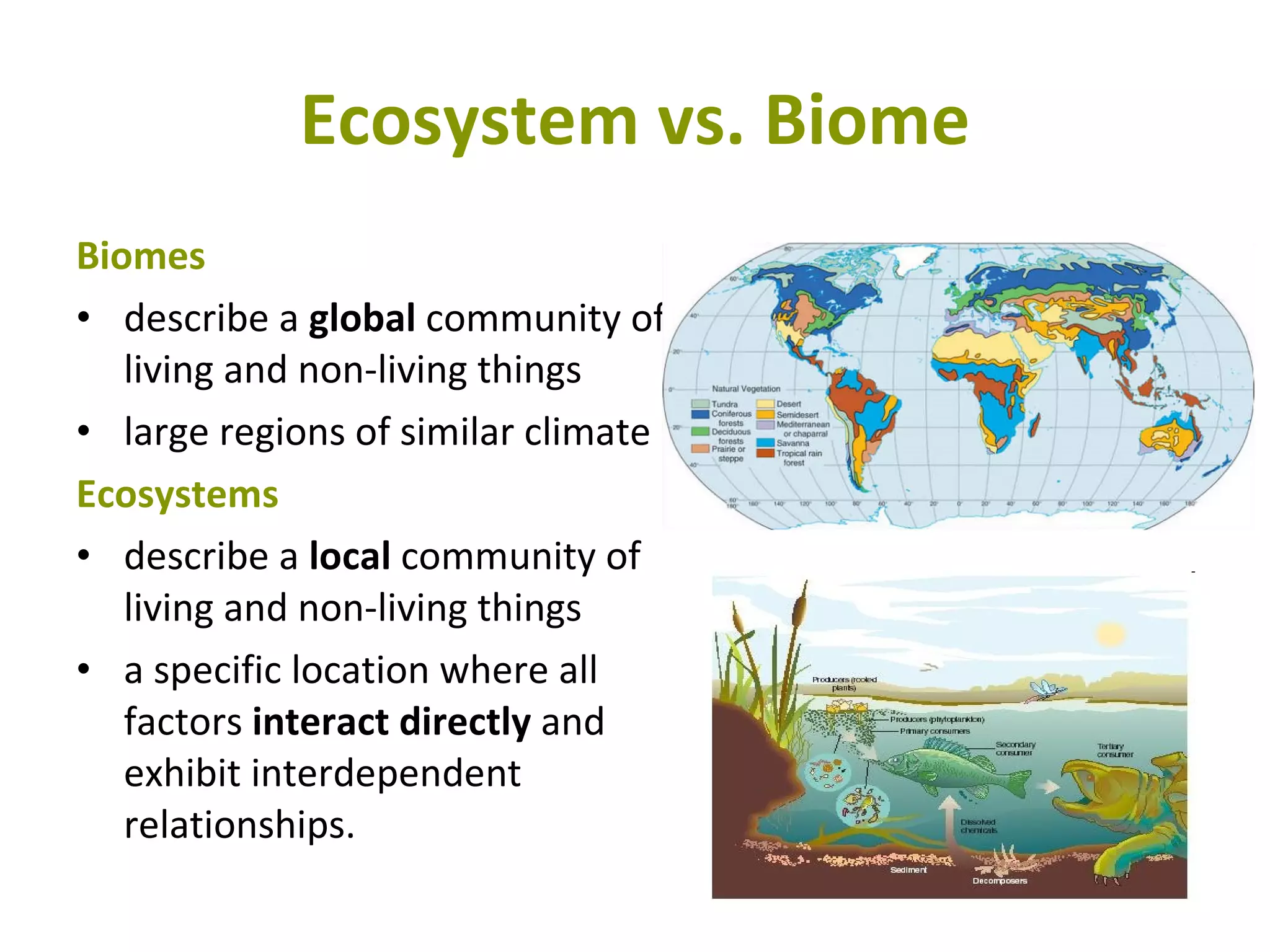
Ecosystem vs. Biome Biomes describe a  global  community of living and non-living things large regions of similar climate Ecosystems describe a  local  community of living and non-living things  a specific location where all factors  interact directly  and exhibit interdependent relationships.
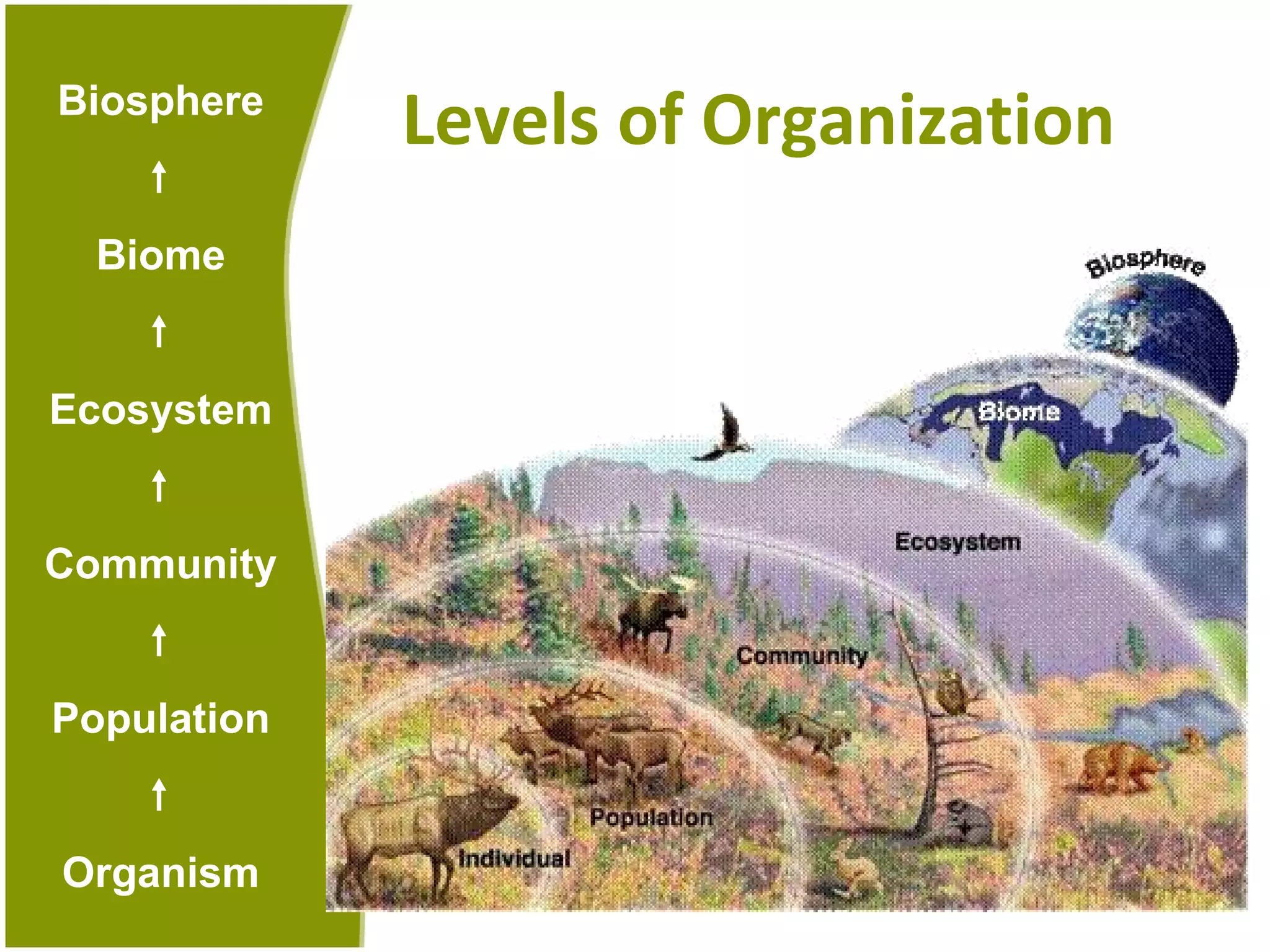
Levels of Organization Biosphere  Biome  Ecosystem  Community  Population  Organism
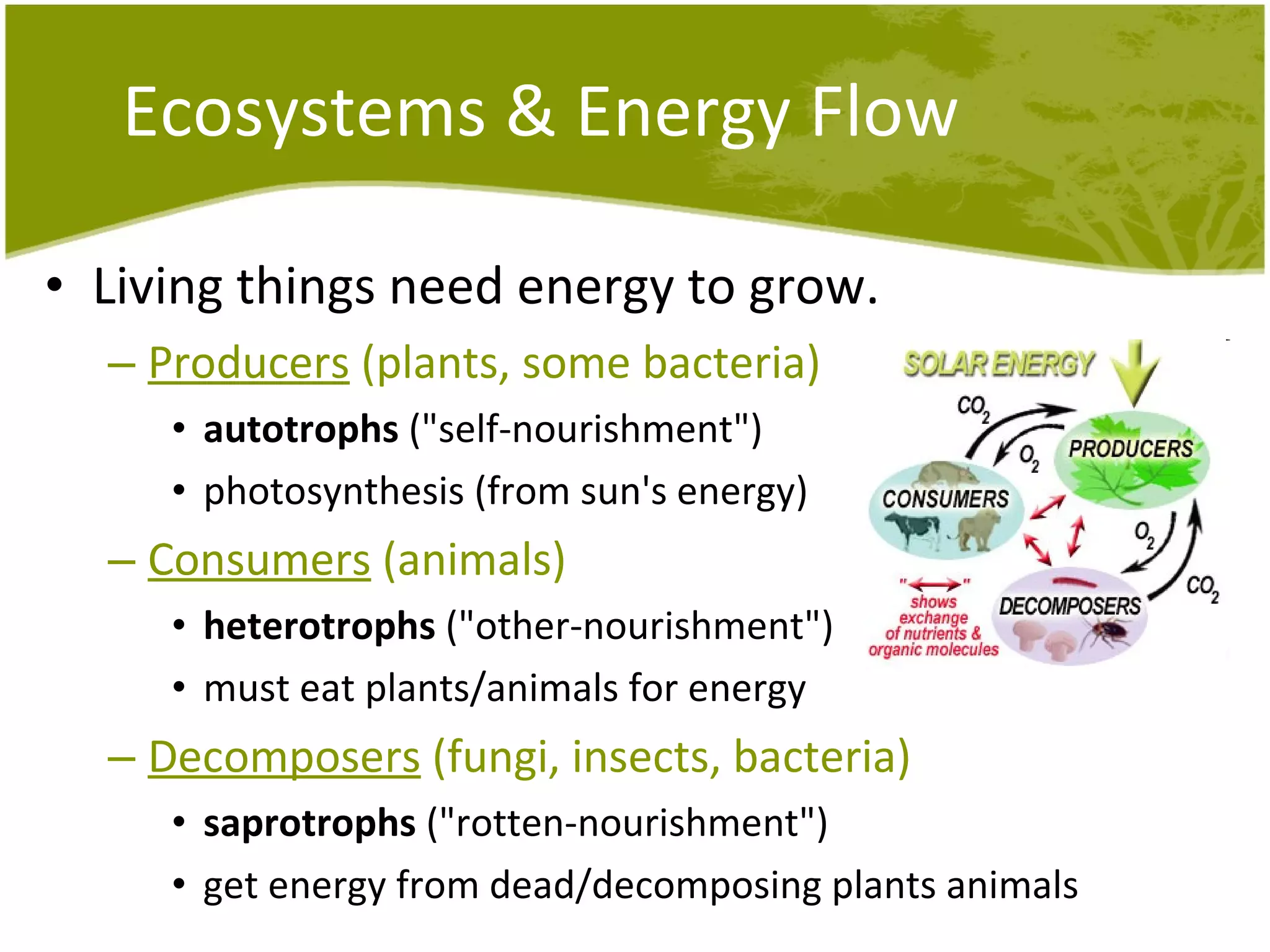
Ecosystems & Energy Flow Living things need energy to grow. Producers  (plants, some bacteria) autotrophs  ("self-nourishment") photosynthesis (from sun's energy) Consumers  (animals) heterotrophs  ("other-nourishment") must eat plants/animals for energy Decomposers  (fungi, insects, bacteria) saprotrophs  ("rotten-nourishment")  get energy from dead/decomposing plants animals
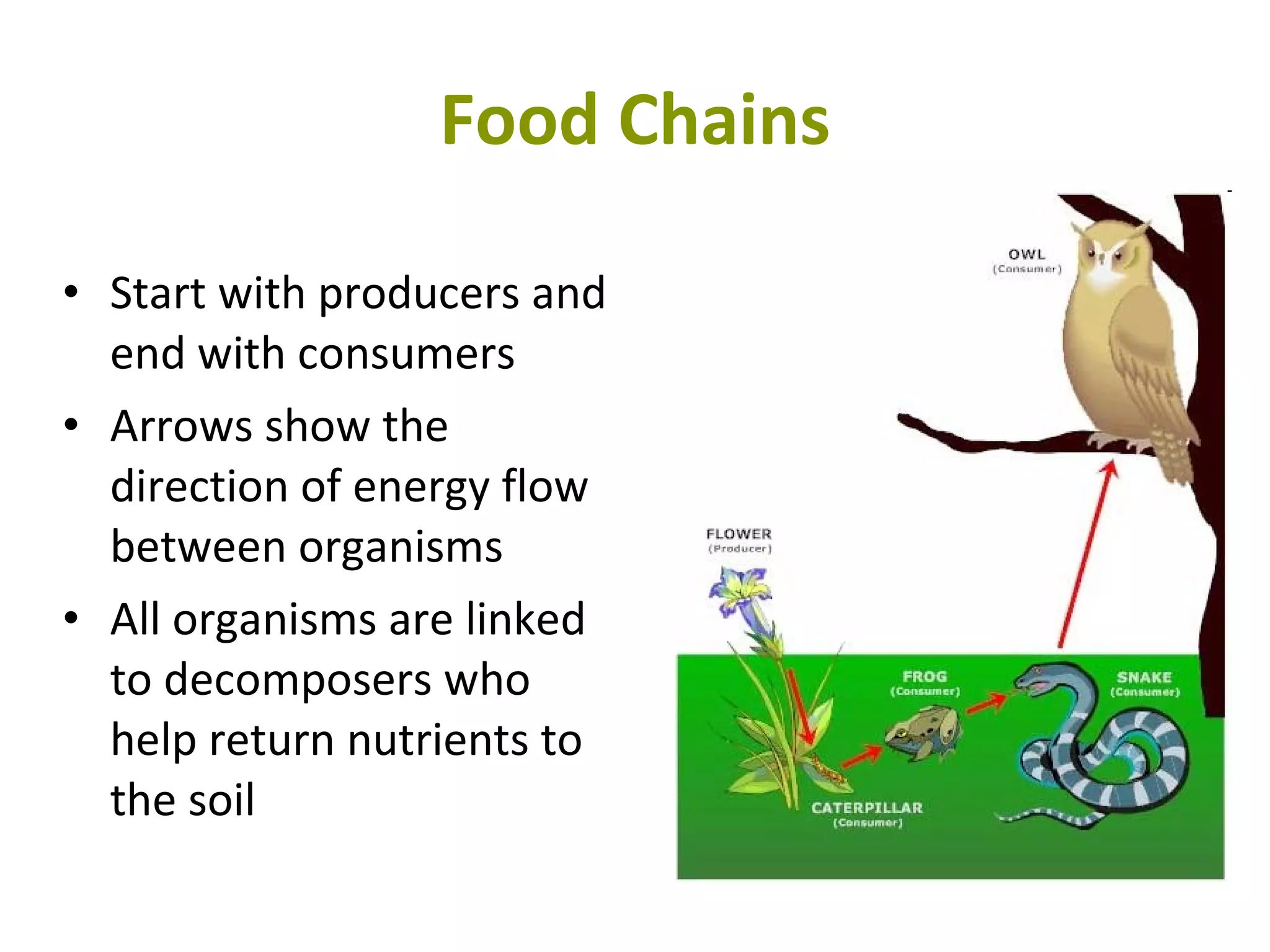
Food Chains Start with producers and end with consumers Arrows show the direction of energy flow between organisms All organisms are linked to decomposers who help return nutrients to the soil
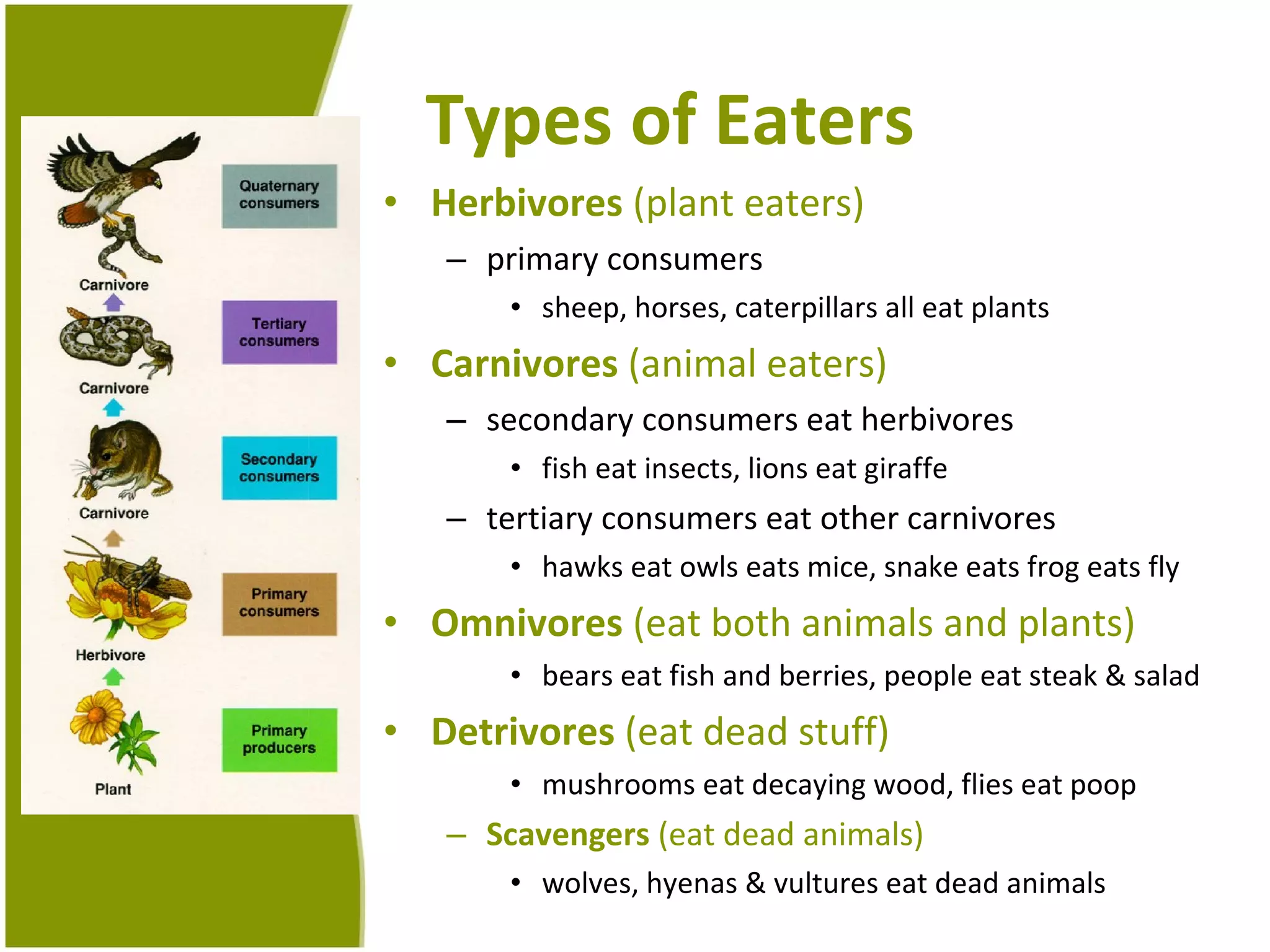
Types of Eaters Herbivores  (plant eaters) primary consumers sheep, horses, caterpillars all eat plants Carnivores  (animal eaters) secondary consumers eat herbivores fish eat insects, lions eat giraffe tertiary consumers eat other carnivores hawks eat owls eats mice, snake eats frog eats fly Omnivores  (eat both animals and plants) bears eat fish and berries, people eat steak & salad Detrivores  (eat dead stuff) mushrooms eat decaying wood, flies eat poop  Scavengers  (eat dead animals) wolves, hyenas & vultures eat dead animals
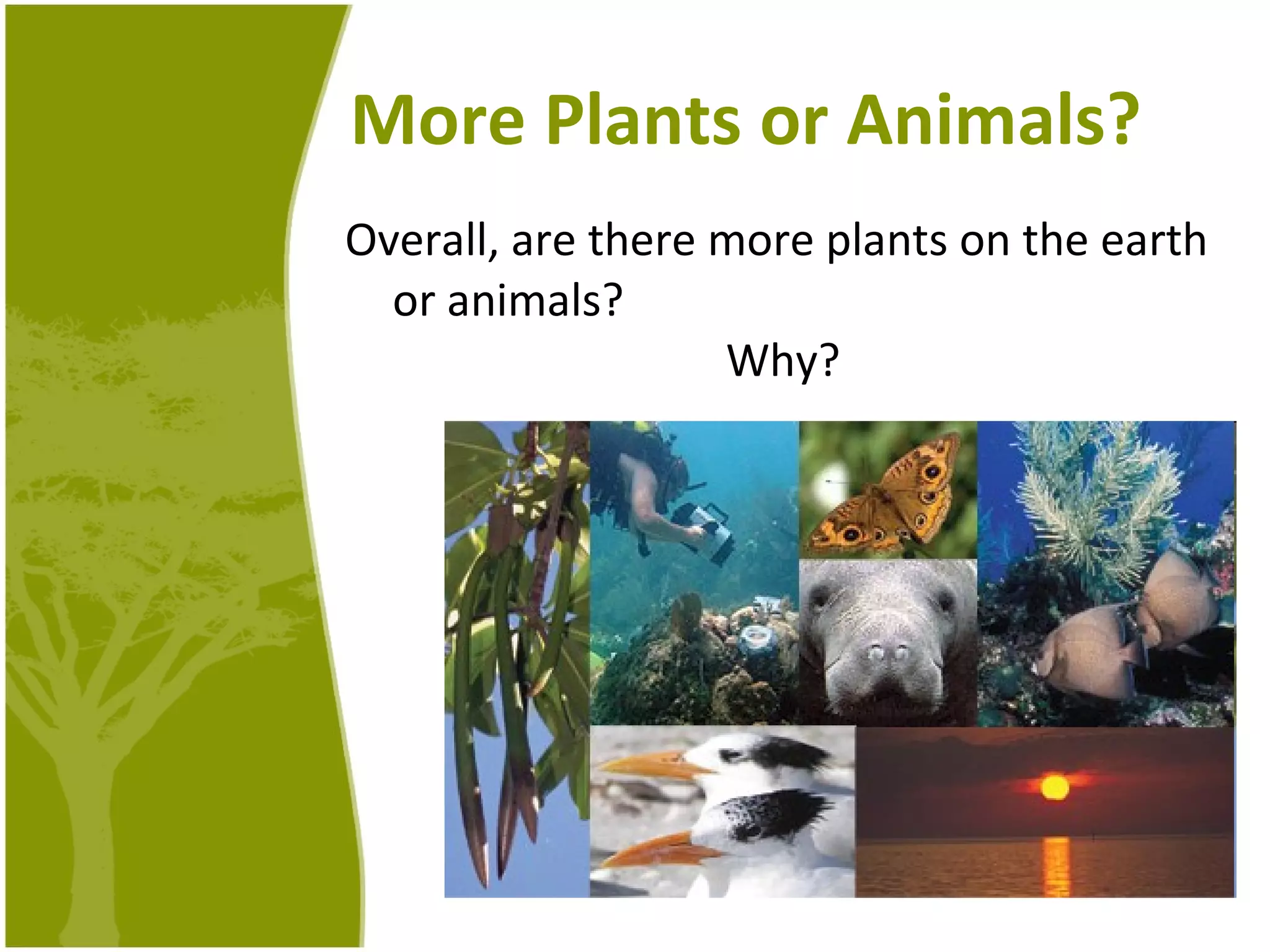
More Plants or Animals? Overall, are there more plants on the earth or animals? Why?
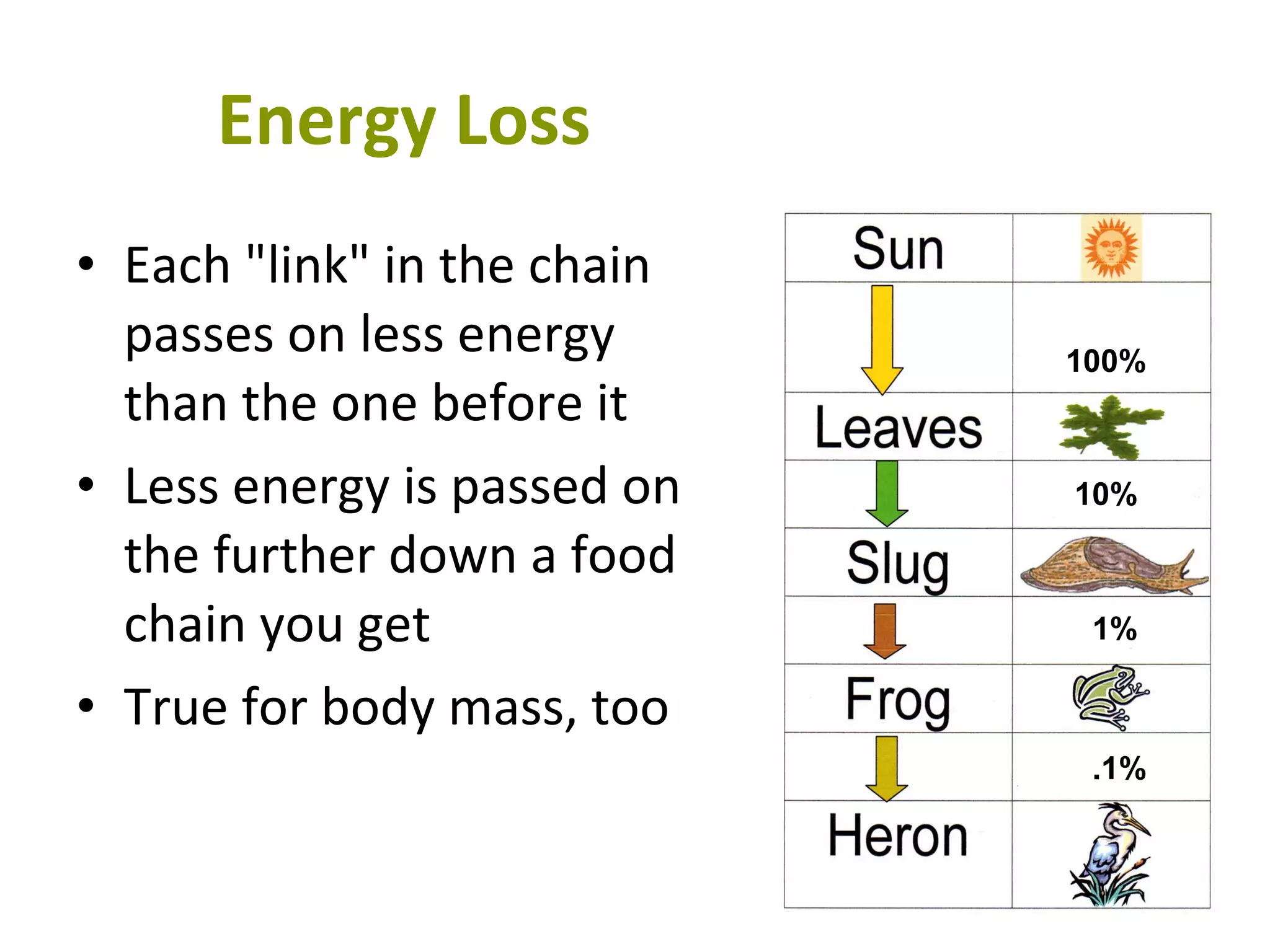
Energy   Loss Each "link" in the chain passes on less energy than the one before it Less energy is passed on the further down a food chain you get True for body mass, too 100% 10% 1% .1%
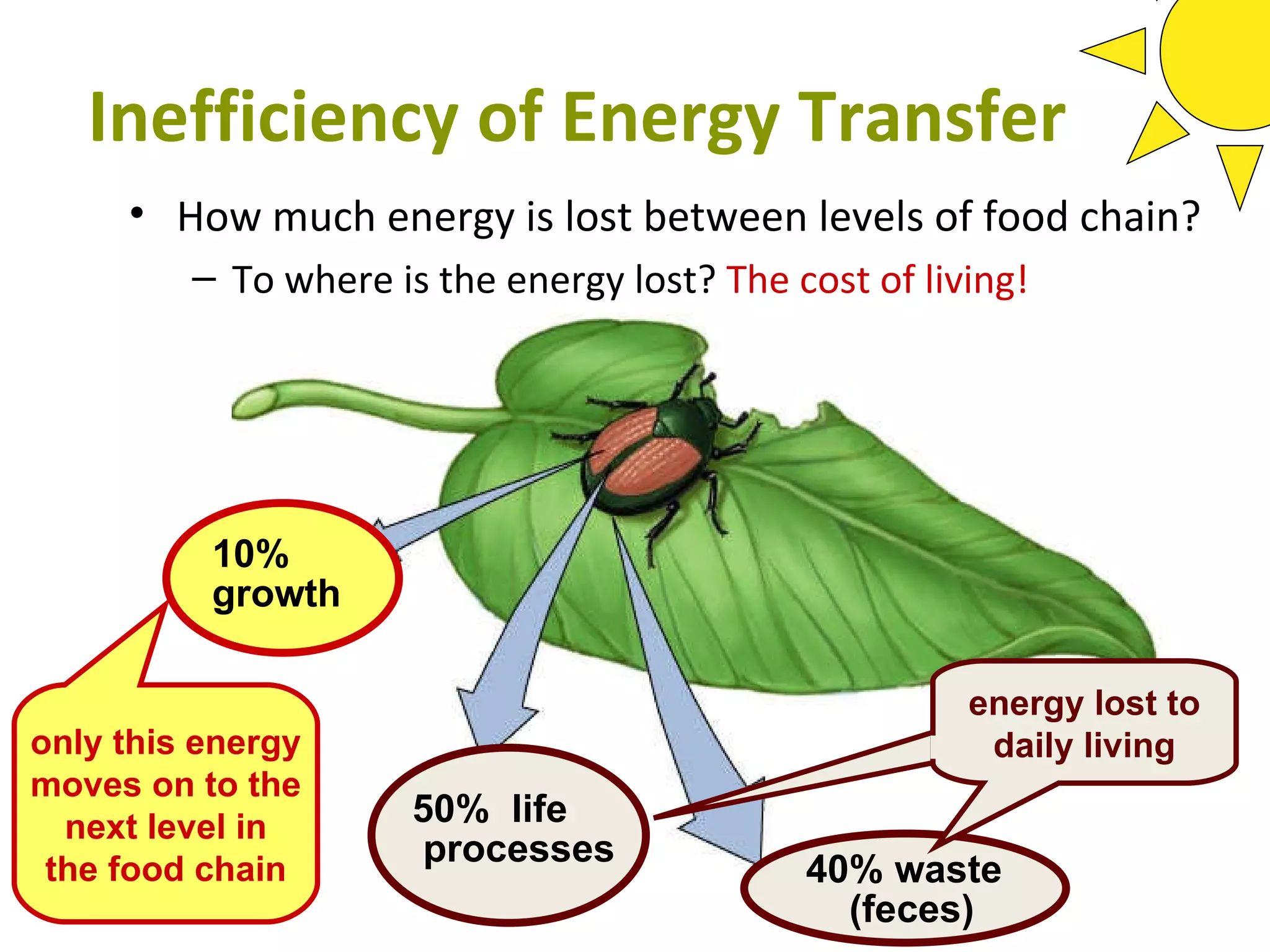
Inefficiency of Energy Transfer How much energy is lost between levels of food chain? To where is the energy lost?  The cost of living! only this energy moves on to the  next level in  the food chain 10% growth 40% waste (feces) 50%  life processes energy lost to daily living energy lost to daily living
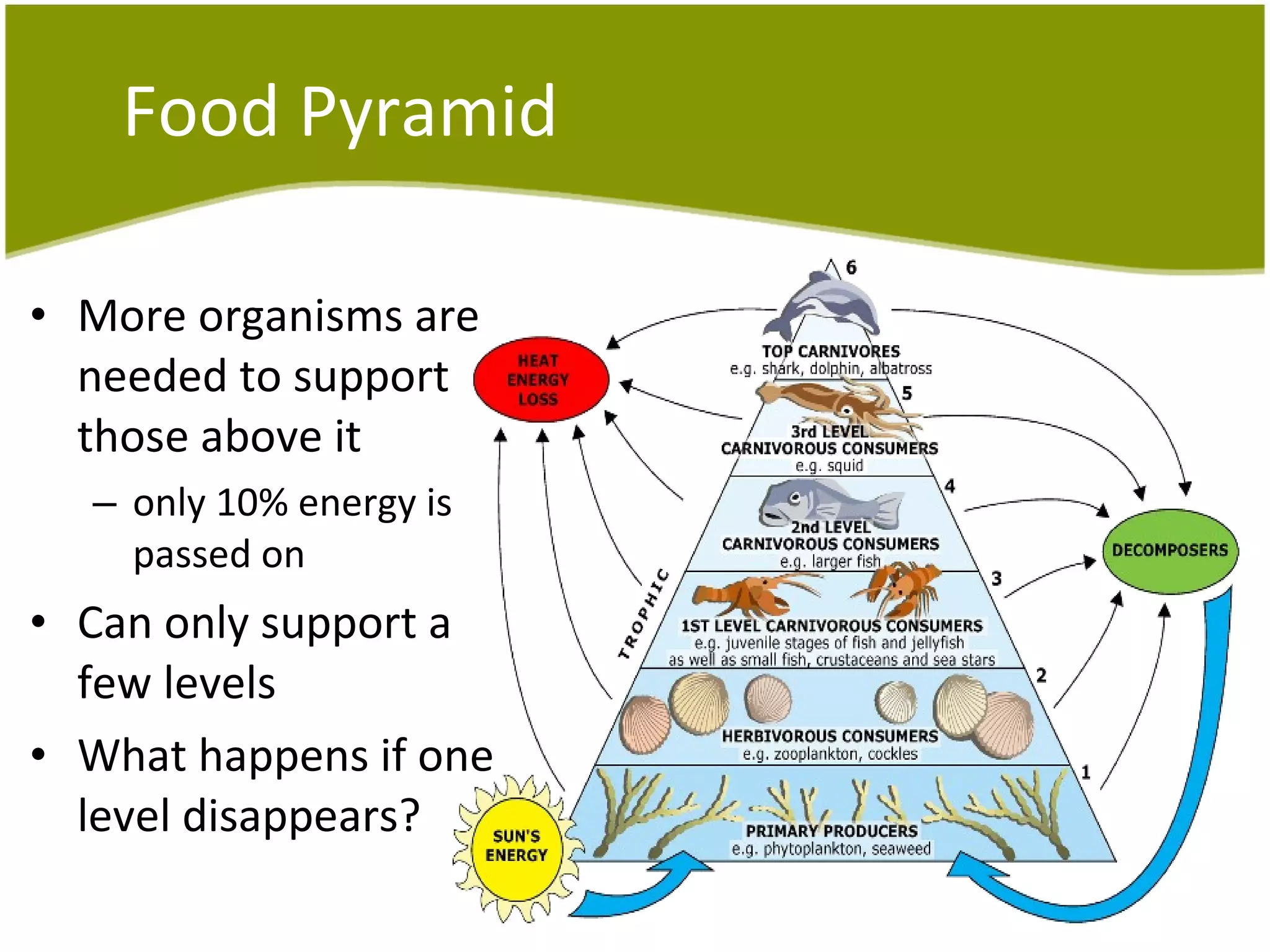
Food Pyramid More organisms are needed to support those above it only 10% energy is passed on Can only support a few levels  What happens if one level disappears?
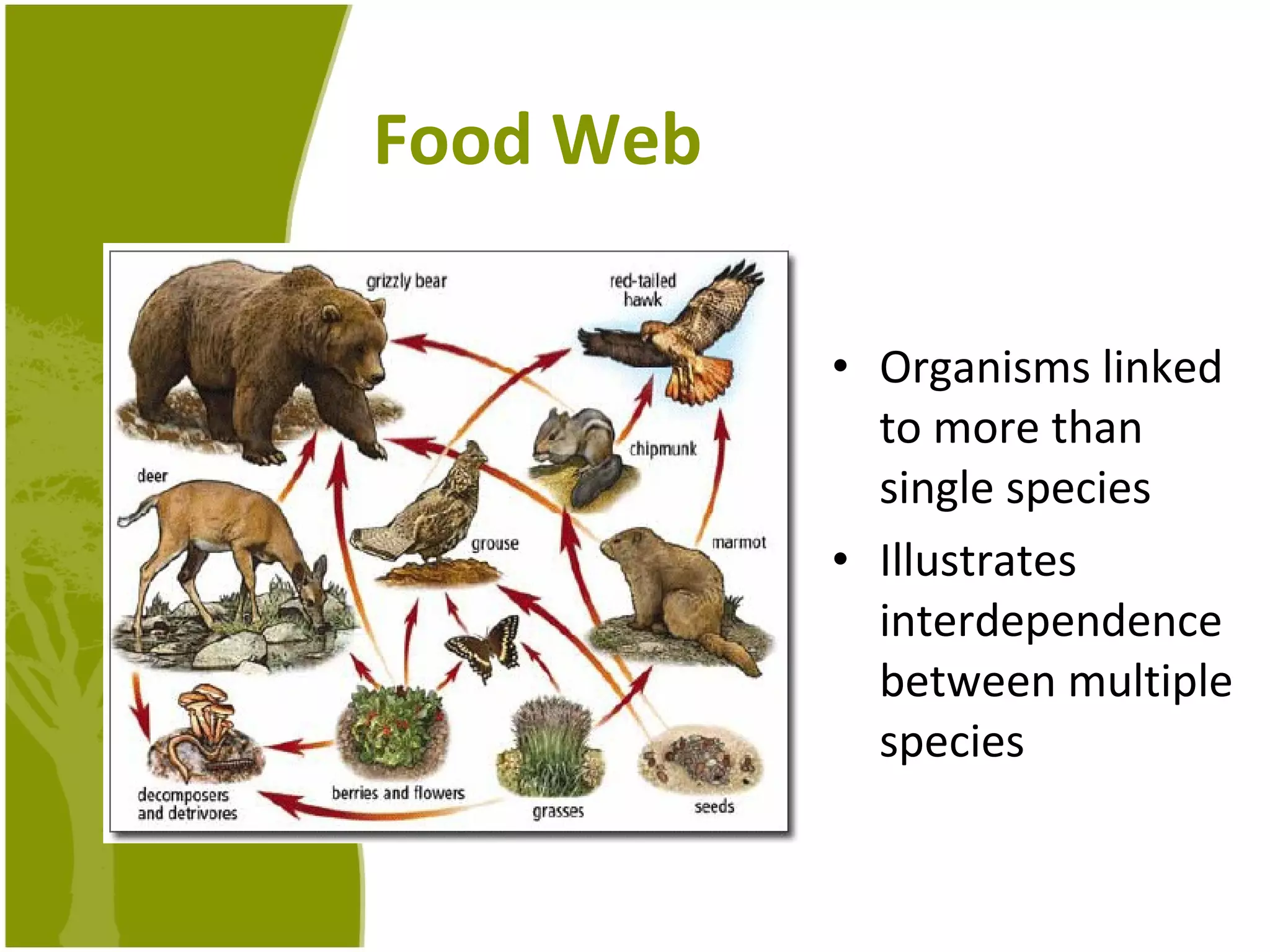
Food Web Organisms linked to more than single species   Illustrates interdependence between multiple species
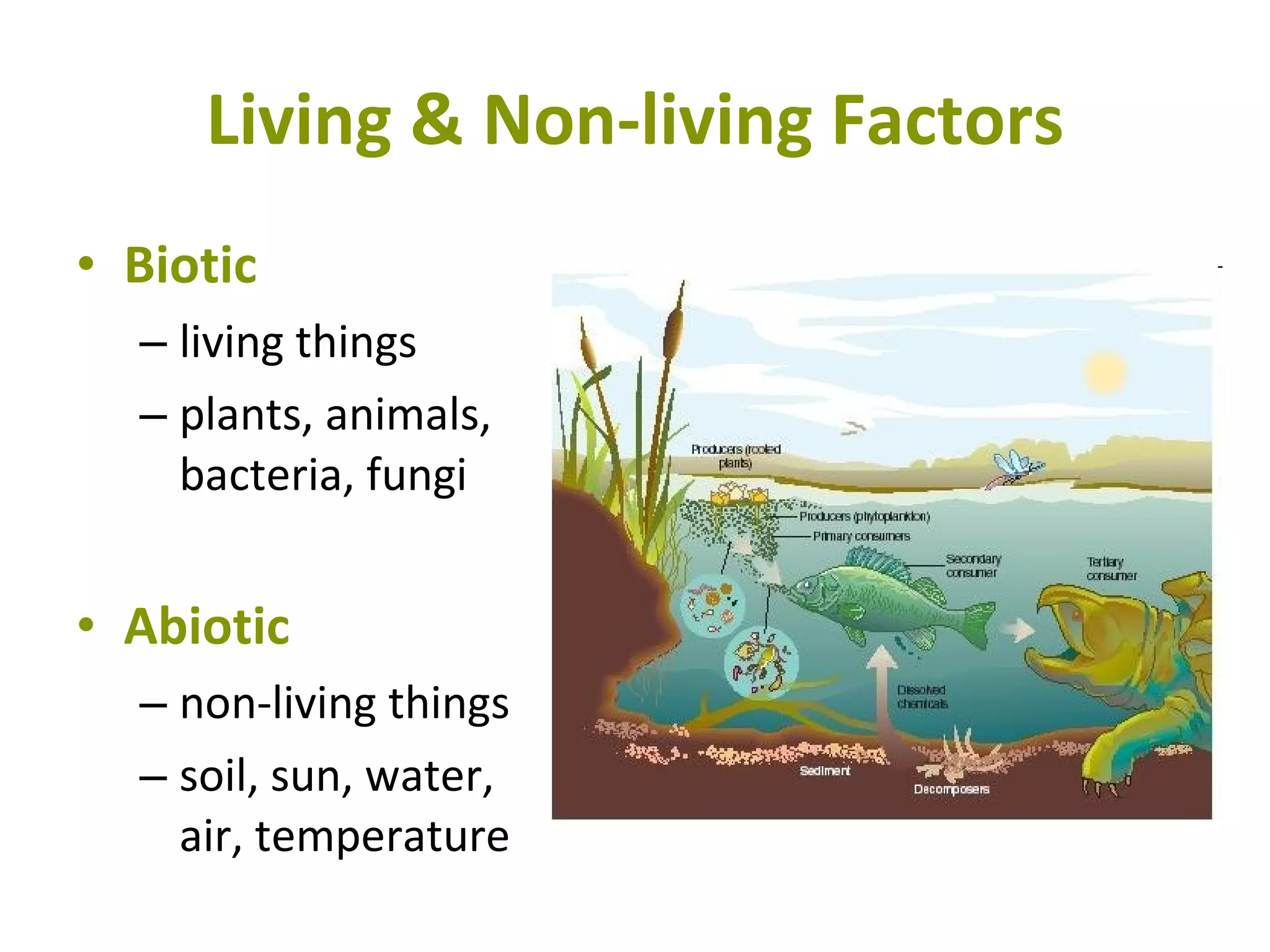
Living & Non-living Factors Biotic   living things plants, animals, bacteria, fungi Abiotic   non-living things soil, sun, water, air, temperature
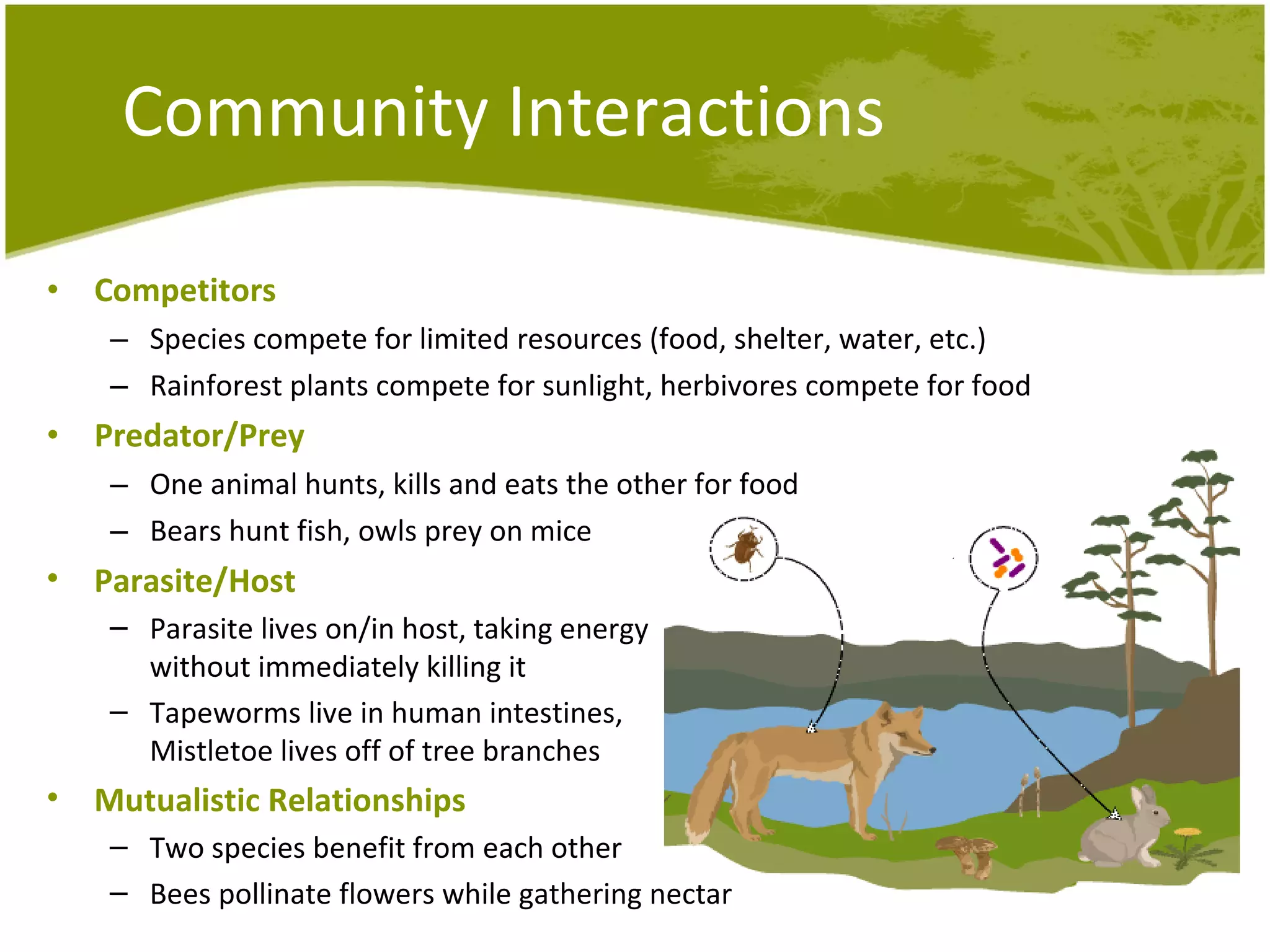
Competitors Species compete for limited resources (food, shelter, water, etc.)  Rainforest plants compete for sunlight, herbivores compete for food   Predator/Prey One animal hunts, kills and eats the other for food Bears hunt fish, owls prey on mice Community Interactions Parasite/Host Parasite lives on/in host, taking energy without immediately killing it  Tapeworms live in human intestines, Mistletoe lives off of tree branches Mutualistic Relationships Two species benefit from each other  Bees pollinate flowers while gathering nectar

Ecosystems

  • 1.
    Ecosystems Each andAll As I spoke beneath my feet The ground-pine curled its pretty wreath, Running over the club-moss burrs; I inhaled the violet's breath; Around me stood the oaks and firs; Pine-cones and acorns lay on the ground; Over me soared the eternal sky, Full of light and of deity; Again I saw, again I heard, The rolling river, the morning bird;-- Beauty through my senses stole; I yielded myself to the perfect whole. - Ralph Waldo Emerson
  • 2.
    Ecosystem vs. BiomeBiomes describe a global community of living and non-living things large regions of similar climate Ecosystems describe a local community of living and non-living things a specific location where all factors interact directly and exhibit interdependent relationships.
  • 3.
    Levels of OrganizationBiosphere  Biome  Ecosystem  Community  Population  Organism
  • 4.
    Ecosystems & EnergyFlow Living things need energy to grow. Producers (plants, some bacteria) autotrophs ("self-nourishment") photosynthesis (from sun's energy) Consumers (animals) heterotrophs ("other-nourishment") must eat plants/animals for energy Decomposers (fungi, insects, bacteria) saprotrophs ("rotten-nourishment") get energy from dead/decomposing plants animals
  • 5.
    Food Chains Startwith producers and end with consumers Arrows show the direction of energy flow between organisms All organisms are linked to decomposers who help return nutrients to the soil
  • 6.
    Types of EatersHerbivores (plant eaters) primary consumers sheep, horses, caterpillars all eat plants Carnivores (animal eaters) secondary consumers eat herbivores fish eat insects, lions eat giraffe tertiary consumers eat other carnivores hawks eat owls eats mice, snake eats frog eats fly Omnivores (eat both animals and plants) bears eat fish and berries, people eat steak & salad Detrivores (eat dead stuff) mushrooms eat decaying wood, flies eat poop Scavengers (eat dead animals) wolves, hyenas & vultures eat dead animals
  • 7.
    More Plants orAnimals? Overall, are there more plants on the earth or animals? Why?
  • 8.
    Energy Loss Each "link" in the chain passes on less energy than the one before it Less energy is passed on the further down a food chain you get True for body mass, too 100% 10% 1% .1%
  • 9.
    Inefficiency of EnergyTransfer How much energy is lost between levels of food chain? To where is the energy lost? The cost of living! only this energy moves on to the next level in the food chain 10% growth 40% waste (feces) 50% life processes energy lost to daily living energy lost to daily living
  • 10.
    Food Pyramid Moreorganisms are needed to support those above it only 10% energy is passed on Can only support a few levels What happens if one level disappears?
  • 11.
    Food Web Organismslinked to more than single species Illustrates interdependence between multiple species
  • 12.
    Living & Non-livingFactors Biotic living things plants, animals, bacteria, fungi Abiotic non-living things soil, sun, water, air, temperature
  • 13.
    Competitors Species competefor limited resources (food, shelter, water, etc.) Rainforest plants compete for sunlight, herbivores compete for food Predator/Prey One animal hunts, kills and eats the other for food Bears hunt fish, owls prey on mice Community Interactions Parasite/Host Parasite lives on/in host, taking energy without immediately killing it Tapeworms live in human intestines, Mistletoe lives off of tree branches Mutualistic Relationships Two species benefit from each other Bees pollinate flowers while gathering nectar

Editor's Notes

  • #2 I thought the sparrow's note from heaven, Singing at dawn on the alder bough; I brought him home, in his nest, at even; He sings the song, but it cheers not now, For I did not bring home the river and sky;-- He sang to my ear, -- they sang to my eye . The delicate shells lay on the shore; The bubbles of the latest wave Fresh pearls to their enamel gave, And the bellowing of the savage sea Greeted their safe escape to me. I wiped away the weeds and foam, I fetched my sea-born treasures home; But the poor, unsightly, noisome things Had left their beauty on the shore With the sun and the sand and the wild uproar. As I spoke beneath my feet The ground-pine curled its pretty wreath, Running over the club-moss burrs; I inhaled the violet's breath; Around me stood the oaks and firs; Pine-cones and acorns lay on the ground; Over me soared the eternal sky, Full of light and of deity; Again I saw, again I heard, The rolling river, the morning bird;-- Beauty through my senses stole; I yielded myself to the perfect whole.
  • #4 biosphere All the Earth's ecosystems considered as a single, self-sustaining unit. biome A large community of plants and animals that occupies a distinct climate region. ecosystem A community of organisms together with their physical environment, viewed as a system of interacting and interdependent relationships and including such processes as the flow of energy through trophic levels and the cycling of chemical elements and compounds through living and nonliving components of the system. community A group of organisms or populations living and interacting with one another in a particular environment. The organisms in a community affect each other's abundance, distribution, and evolutionary adaptation. population A group of individuals of the same species occupying a particular geographic area.
  • #6 Flower makes energy from the sun, which feeds the caterpillar, which becomes food for the frog, who feeds the snake who becomes the owl's next dinner.
  • #8 Think about how many trees, bushes, flowers and blades of grass cover the earth. Now include all the algae and seaweed in the oceans. Consider all the animals, fish, plankton and insects in the world.
  • #9 When a deer gobbles up a broccoli plant in my mom's garden, how much of the plant's energy is passed on? True for mass also - only 10% of plant mass eaten becomes a part of the organism that eats it.
  • #10 life processes : cellular respiration, movement, digestion, other life functions (brain impulses, circulation, cell division, etc.)
  • #14 Symbiosis = two species that live together in close relationship. Can be parasitic, mutualistic, neutral or commensal (birds nest in trees - one benefits and the other is unaffected) Other symbiotic organisms: Oxpecker eats lice & other parasitic insects off the backs of oxen, zebra and rhinos; Clown fish lives within anemone, eating leftovers; ants protect acacia trees by stinging herbivores while trees provide nectar to the ant; barnacles attach to jaws of whales; beneficial microbes in human gut Pathogens = parasites that cause an illness or disease. Ticks are parasites, but they don't cause an infectious disease. Bacteria cause infections that allow the pathogen to reproduce, ultimately killing the host.