WHAT ARE ROCKS?
Types of rocks
The 3 types are:
Igneous
Sedimentary
Metamorphic
Igneous rocks
 Igneous rocks are formed from molten rock
called magma. They are mostly crystalline
(made up of interlocking crystals) and usually
very hard to break. E.g. granite, basalt,
andesite.
Basalt
The formation of igneous rocks
magma
volcano
Extrusive
igneous rocks are
cooled quickly
so small crystals
form (e.g. basalt).
Intrusive
igneous rocks are
cooled more
slowly so large
crystals form
(e.g. granite).
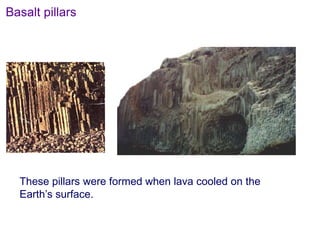
Basalt pillars
These pillars were formed when lava cooled on the
Earth’s surface.
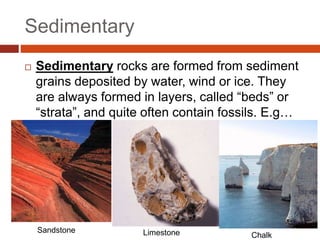
Sedimentary
 Sedimentary rocks are formed from sediment
grains deposited by water, wind or ice. They
are always formed in layers, called “beds” or
“strata”, and quite often contain fossils. E.g…
Sandstone Limestone Chalk
The formation of sedimentary rocks
These were formed from layers of sediment
which were squeezed together.
new
deposits
layers of
sediments
getting
older
sea/lake/river
land
rivers
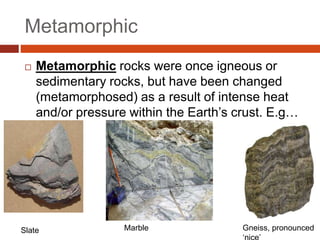
Metamorphic
 Metamorphic rocks were once igneous or
sedimentary rocks, but have been changed
(metamorphosed) as a result of intense heat
and/or pressure within the Earth’s crust. E.g…
Slate Marble Gneiss, pronounced
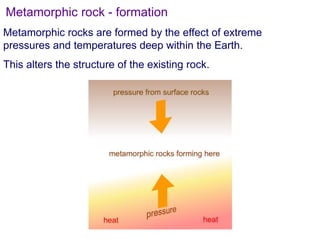
Metamorphic rocks are formed by the effect of extreme
pressures and temperatures deep within the Earth.
This alters the structure of the existing rock.
Metamorphic rock - formation
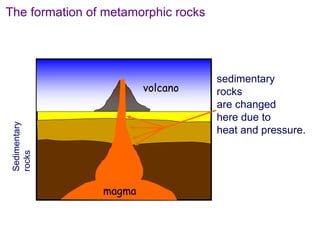
The formation of metamorphic rocks
magma
sedimentary
rocks
are changed
here due to
heat and pressure.
volcano
Continent collision causes metamorphism and
huge folds like this one in Scotland.
Metamorphic rocks
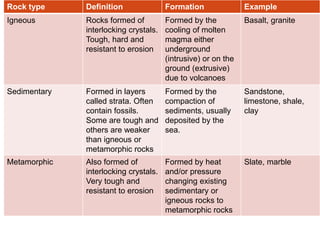
Rock type Definition Formation Example
Igneous Rocks formed of
interlocking crystals.
Tough, hard and
resistant to erosion
Formed by the
cooling of molten
magma either
underground
(intrusive) or on the
ground (extrusive)
due to volcanoes
Basalt, granite
Sedimentary Formed in layers
called strata. Often
contain fossils.
Some are tough and
others are weaker
than igneous or
metamorphic rocks
Formed by the
compaction of
sediments, usually
deposited by the
sea.
Sandstone,
limestone, shale,
clay
Metamorphic Also formed of
interlocking crystals.
Very tough and
resistant to erosion
Formed by heat
and/or pressure
changing existing
sedimentary or
igneous rocks to
metamorphic rocks
Slate, marble
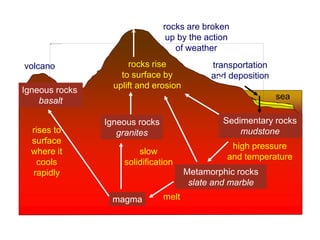
sea
volcano
rocks are broken
up by the action
of weather
magma
slow
solidification
high pressure
and temperature
transportation
and deposition
rises to
surface
where it
cools
rapidly
melt
rocks rise
to surface by
uplift and erosion
Igneous rocks
basalt
Igneous rocks
granites
magma
Metamorphic rocks
slate and marble
Sedimentary rocks
mudstone
sea
volcano
Igneous rocks
basalt
Igneous rocks
granites
rocks rise
to surface by
uplift and erosion
rocks are broken
up by the action
of weather
magma
Metamorphic rocks
slate and marble
Sedimentary rocks
mudstone
slow
solidification
high pressure
and temperature
transportation
and deposition
rises to
surface
where it
cools
rapidly
melt
Homework:
Task – imagine you are a rock, describe your
journey through the rock cycle.
Things to include:
 Are you an igneous, metamorphic or
sedimentary rock?
 What type of rock are you e.g. granite,
limestone.
Rock Types

Rock Types

  • 1.
  • 2.
    Types of rocks The3 types are: Igneous Sedimentary Metamorphic
  • 4.
    Igneous rocks  Igneousrocks are formed from molten rock called magma. They are mostly crystalline (made up of interlocking crystals) and usually very hard to break. E.g. granite, basalt, andesite. Basalt
  • 5.
    The formation ofigneous rocks magma volcano Extrusive igneous rocks are cooled quickly so small crystals form (e.g. basalt). Intrusive igneous rocks are cooled more slowly so large crystals form (e.g. granite).
  • 6.
    Basalt pillars These pillarswere formed when lava cooled on the Earth’s surface.
  • 7.
    Sedimentary  Sedimentary rocksare formed from sediment grains deposited by water, wind or ice. They are always formed in layers, called “beds” or “strata”, and quite often contain fossils. E.g… Sandstone Limestone Chalk
  • 8.
    The formation ofsedimentary rocks These were formed from layers of sediment which were squeezed together. new deposits layers of sediments getting older sea/lake/river land rivers
  • 9.
    Metamorphic  Metamorphic rockswere once igneous or sedimentary rocks, but have been changed (metamorphosed) as a result of intense heat and/or pressure within the Earth’s crust. E.g… Slate Marble Gneiss, pronounced
  • 10.
    Metamorphic rocks areformed by the effect of extreme pressures and temperatures deep within the Earth. This alters the structure of the existing rock. Metamorphic rock - formation
  • 11.
    The formation ofmetamorphic rocks magma sedimentary rocks are changed here due to heat and pressure. volcano
  • 12.
    Continent collision causesmetamorphism and huge folds like this one in Scotland. Metamorphic rocks
  • 13.
    Rock type DefinitionFormation Example Igneous Rocks formed of interlocking crystals. Tough, hard and resistant to erosion Formed by the cooling of molten magma either underground (intrusive) or on the ground (extrusive) due to volcanoes Basalt, granite Sedimentary Formed in layers called strata. Often contain fossils. Some are tough and others are weaker than igneous or metamorphic rocks Formed by the compaction of sediments, usually deposited by the sea. Sandstone, limestone, shale, clay Metamorphic Also formed of interlocking crystals. Very tough and resistant to erosion Formed by heat and/or pressure changing existing sedimentary or igneous rocks to metamorphic rocks Slate, marble
  • 14.
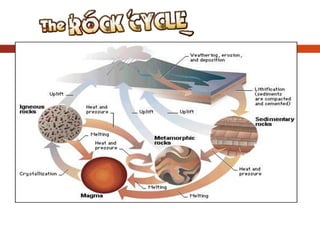
    sea volcano rocks are broken upby the action of weather magma slow solidification high pressure and temperature transportation and deposition rises to surface where it cools rapidly melt rocks rise to surface by uplift and erosion Igneous rocks basalt Igneous rocks granites magma Metamorphic rocks slate and marble Sedimentary rocks mudstone
  • 15.
    sea volcano Igneous rocks basalt Igneous rocks granites rocksrise to surface by uplift and erosion rocks are broken up by the action of weather magma Metamorphic rocks slate and marble Sedimentary rocks mudstone slow solidification high pressure and temperature transportation and deposition rises to surface where it cools rapidly melt
  • 16.
    Homework: Task – imagineyou are a rock, describe your journey through the rock cycle. Things to include:  Are you an igneous, metamorphic or sedimentary rock?  What type of rock are you e.g. granite, limestone.