Made By
Mohd Farhan
B.Sc. Hons Geology
University of Delhi

 Soil is a mixture of organic
matter, minerals, gases, liquids, and organisms that
together support life. Earth's body of soil is
the pedosphere, which has four important functions:
it is a medium for plant growth; it is a means
of water storage, supply and purification; it is a
modifier of Earth's atmosphere; it is a habitat for
organisms; all of which, in turn, modify the soil.
DEFINITION

 Soil formation, or pedogenesis, is the combined
effect of physical, chemical, biological
and anthropogenic processes working on soil parent
material. Soil is said to be formed when organic
matter has accumulated and colloids are washed
downward, leaving deposits of clay, humus, iron
oxide, carbonate, and gypsum, producing a distinct
layer called the B horizon.
Soil-Forming Processes
 Alluvial soils
 Black (or Regur soil)
 Red soils
 Laterite soils
 Arid and desert soils
 Saline and alkaline soils
Types of soil

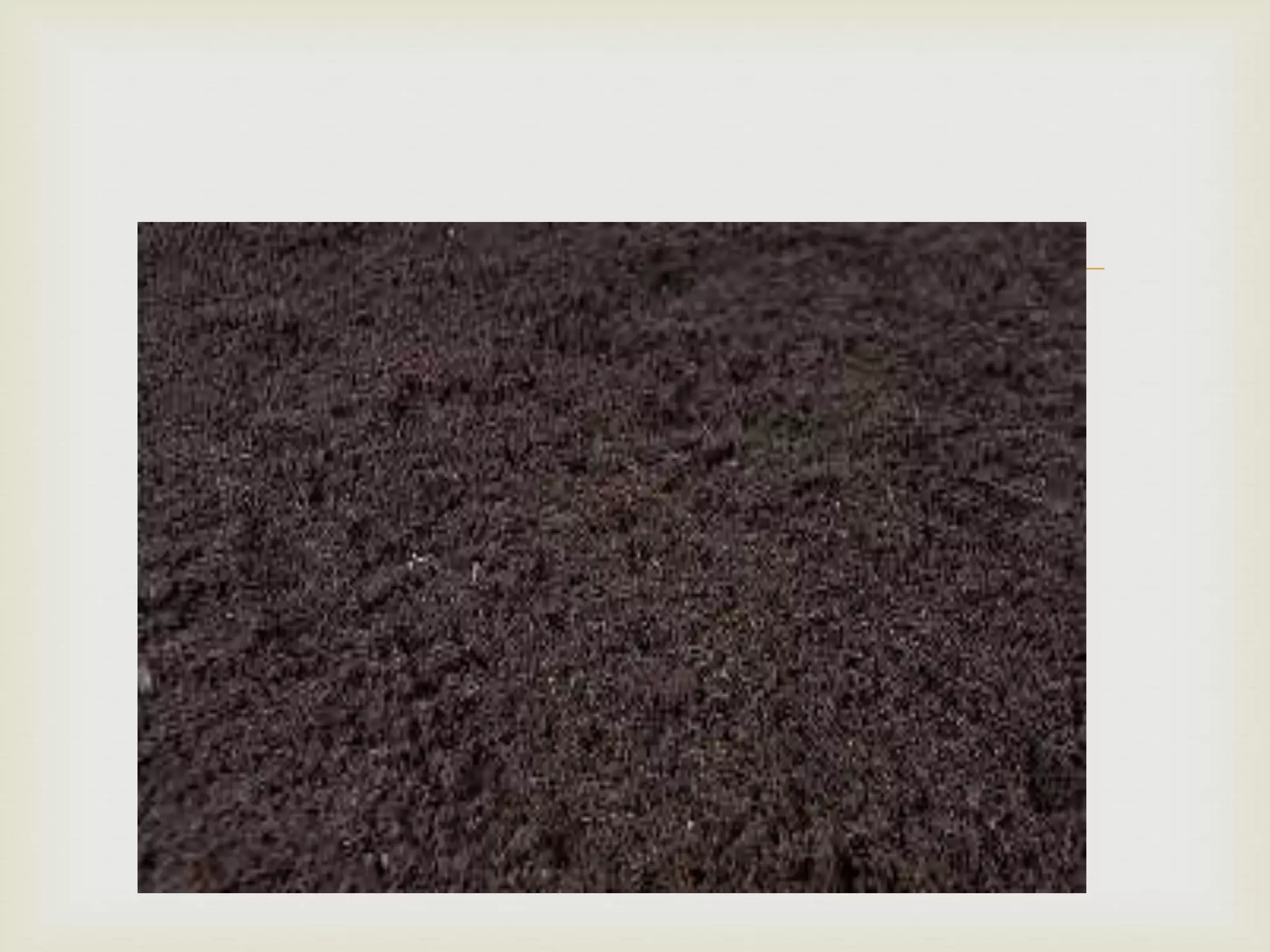
 A fine
grained fertile soil deposited by water flowing over f
lood plains or in river beds
 Mainly found in the plains of Gujarat, Punjab,
Haryana, UP, Bihar, Jharkhand etc.
 Potash and Lime rich
 Large variety of rabi and kharif crops such as wheat,
rice, sugarcane, cotton, jute etc
Alluvial Soil


 Black soil can be defined as the organic and
inorganic materials on the surface of the Earth that
provides the medium for plant growth".
 Deccan plateau- Maharashtra, Madhya Pradesh,
Gujarat, Andhra Pradesh,Tamil Nadu, Valleys of
Krishna and Godavari.
 Lime, Iron, Magnesia and Alumina, Potash rich.
 Cotton, sugarcane, jowar, tobacco, wheat, rice etc.
Black soil


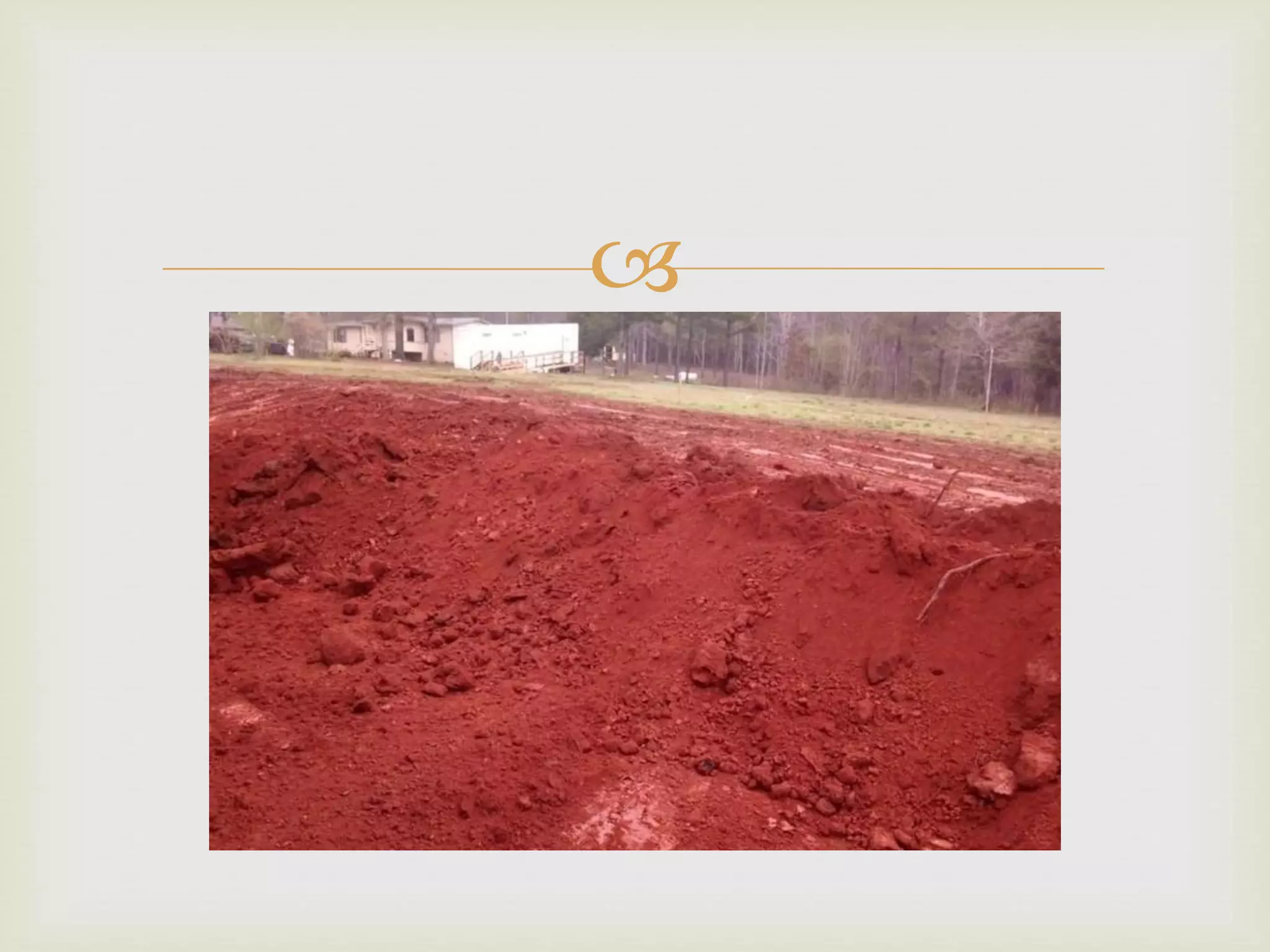
Red soil is a type of soil that develops in a
warm, temperate, moist climate
under deciduous or mixed forest, having thin
organic and organic-mineral layers overlying
a yellowish-brown leached layer resting on
an illuvium red layer.
Eastern and southern part of the deccan
plateau, Orissa, Chattisgarh and southern
parts of the middle Ganga plain
Iron and Potash rich.
Red soil


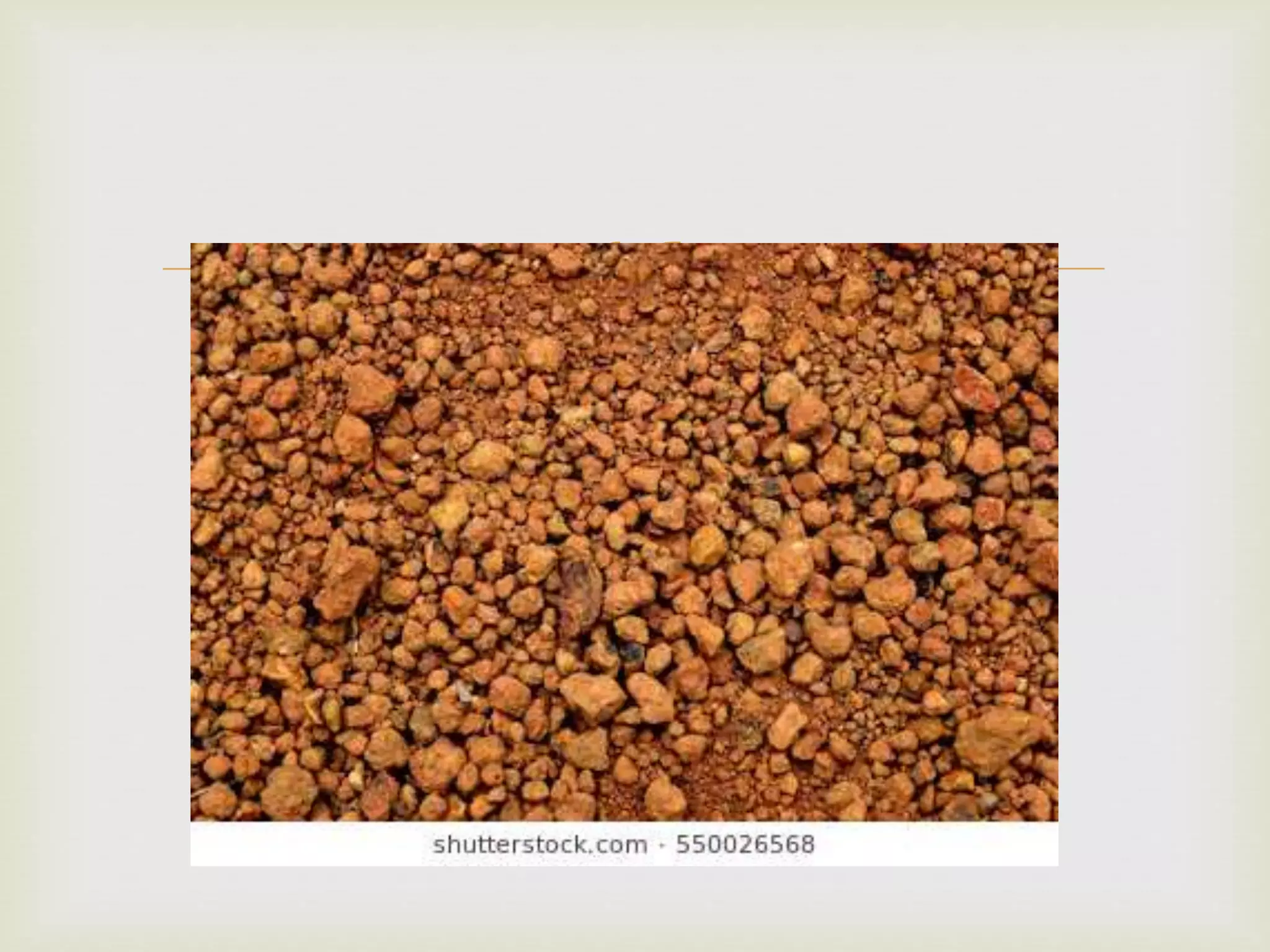
 Laterite is a soil and rock type rich
in iron and aluminium, and is commonly considered
to have formed in hot and wet tropical areas. Nearly
all laterites are of rusty-red coloration, because of
high iron oxide content.
 Karnataka, Kerala, Tamilnadu, Madhya Pradesh,
Assam and Orissa hills.
 Iron oxide and potash rich
 Cashewnuts, tea, coffee, rubber
Laterite soils


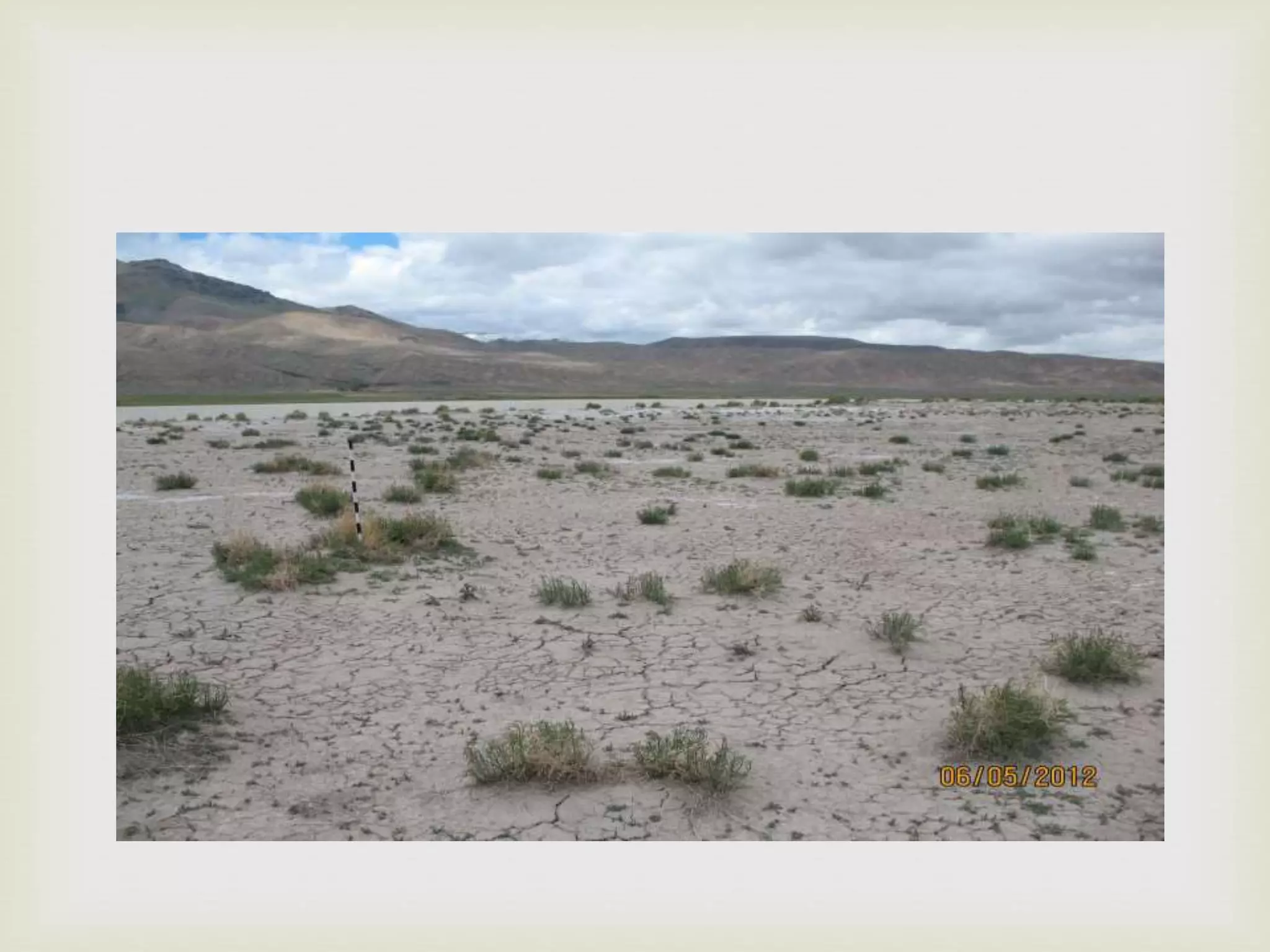
 Desert soil is mostly sandy soil (90–95%) found in
low-rainfall regions.
 Western Rajastan, north Gujarat and southern
Punjab
 Soluble salts, phosphate rich
 Only drought resistant and salt tolerant crops such
as barley, rape, cotton, millets maize and pulses
Arid and desert soils


 Saline soils contain an excess of sodium salts, but its
colloidal material is not yet sodiumised.
 In the case of alkali soils, the exchange complex
contains appreciable quantities of exchangeable
sodium. Such soils may or may not contain excess
salts.
 Western Gujarat, deltas of eastern coast, Sunderban
areas of West Bengal, Punjab and Haryana
 Sodium, Potassium, Magnesium rich
 Unfit for agriculture
Saline and alkaline soils

Jazak Allah Khair

Type Of Soil

  • 1.
    Made By Mohd Farhan B.Sc.Hons Geology University of Delhi
  • 2.
      Soil isa mixture of organic matter, minerals, gases, liquids, and organisms that together support life. Earth's body of soil is the pedosphere, which has four important functions: it is a medium for plant growth; it is a means of water storage, supply and purification; it is a modifier of Earth's atmosphere; it is a habitat for organisms; all of which, in turn, modify the soil. DEFINITION
  • 3.
      Soil formation,or pedogenesis, is the combined effect of physical, chemical, biological and anthropogenic processes working on soil parent material. Soil is said to be formed when organic matter has accumulated and colloids are washed downward, leaving deposits of clay, humus, iron oxide, carbonate, and gypsum, producing a distinct layer called the B horizon. Soil-Forming Processes
  • 4.
     Alluvial soils Black (or Regur soil)  Red soils  Laterite soils  Arid and desert soils  Saline and alkaline soils Types of soil
  • 5.
      A fine grainedfertile soil deposited by water flowing over f lood plains or in river beds  Mainly found in the plains of Gujarat, Punjab, Haryana, UP, Bihar, Jharkhand etc.  Potash and Lime rich  Large variety of rabi and kharif crops such as wheat, rice, sugarcane, cotton, jute etc Alluvial Soil
  • 6.
  • 7.
      Black soilcan be defined as the organic and inorganic materials on the surface of the Earth that provides the medium for plant growth".  Deccan plateau- Maharashtra, Madhya Pradesh, Gujarat, Andhra Pradesh,Tamil Nadu, Valleys of Krishna and Godavari.  Lime, Iron, Magnesia and Alumina, Potash rich.  Cotton, sugarcane, jowar, tobacco, wheat, rice etc. Black soil
  • 8.
  • 9.
     Red soil isa type of soil that develops in a warm, temperate, moist climate under deciduous or mixed forest, having thin organic and organic-mineral layers overlying a yellowish-brown leached layer resting on an illuvium red layer. Eastern and southern part of the deccan plateau, Orissa, Chattisgarh and southern parts of the middle Ganga plain Iron and Potash rich. Red soil
  • 10.
  • 11.
      Laterite isa soil and rock type rich in iron and aluminium, and is commonly considered to have formed in hot and wet tropical areas. Nearly all laterites are of rusty-red coloration, because of high iron oxide content.  Karnataka, Kerala, Tamilnadu, Madhya Pradesh, Assam and Orissa hills.  Iron oxide and potash rich  Cashewnuts, tea, coffee, rubber Laterite soils
  • 12.
  • 13.
      Desert soilis mostly sandy soil (90–95%) found in low-rainfall regions.  Western Rajastan, north Gujarat and southern Punjab  Soluble salts, phosphate rich  Only drought resistant and salt tolerant crops such as barley, rape, cotton, millets maize and pulses Arid and desert soils
  • 14.
  • 15.
      Saline soilscontain an excess of sodium salts, but its colloidal material is not yet sodiumised.  In the case of alkali soils, the exchange complex contains appreciable quantities of exchangeable sodium. Such soils may or may not contain excess salts.  Western Gujarat, deltas of eastern coast, Sunderban areas of West Bengal, Punjab and Haryana  Sodium, Potassium, Magnesium rich  Unfit for agriculture Saline and alkaline soils
  • 16.
  • 17.