SOIL DEFINITION BY
VARIOUS AUTHORS
Soil refers to the loose surface of the earth as
identified from the original rocks and minerals
from which it is derived through weathering
process.
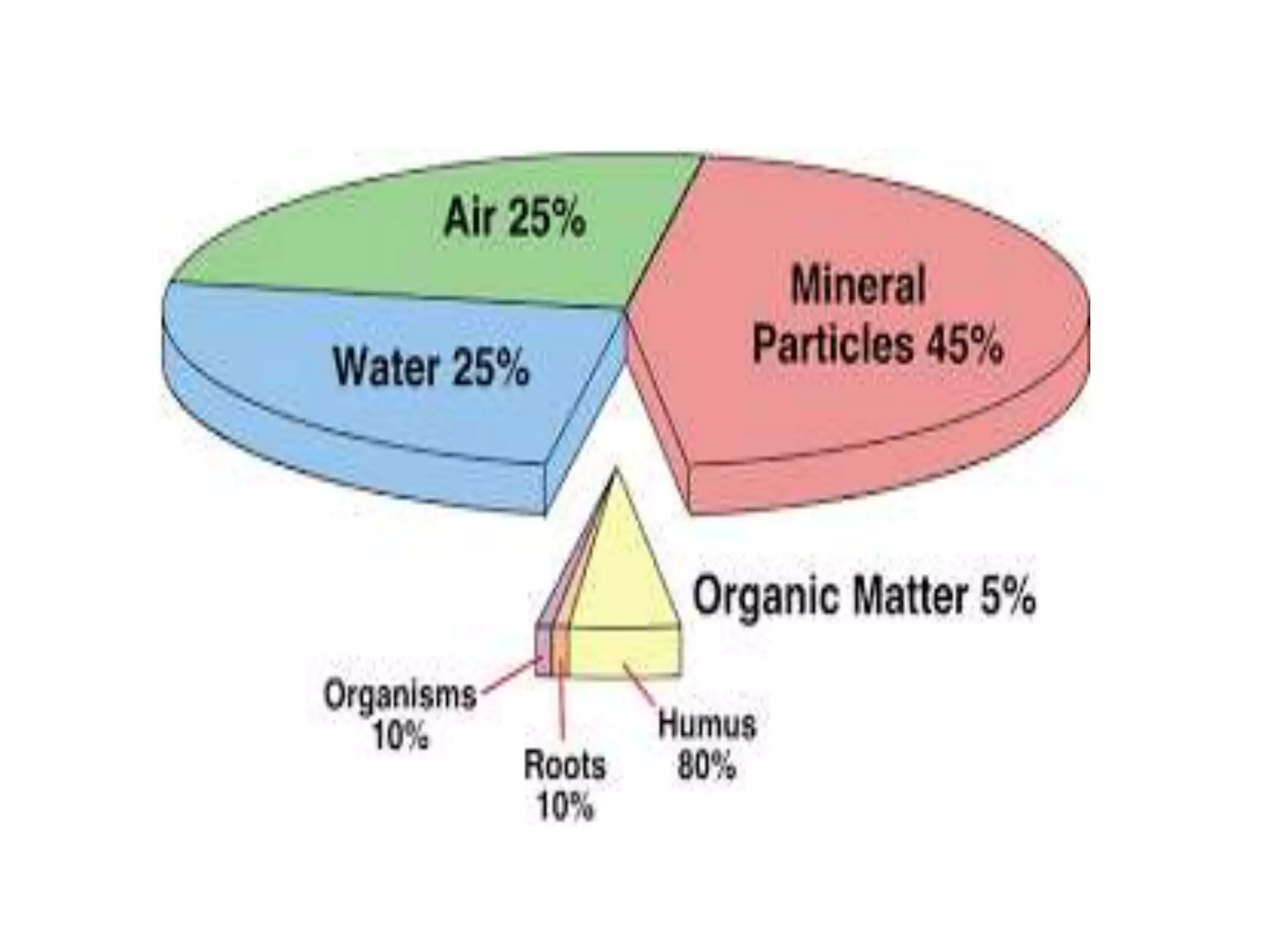
A complex mixture of mineral matter, organic
matter, water, and air.
Whitney (1892)
Soil is a nutrient bin which
supplies all the nutrients
required for plant growth.
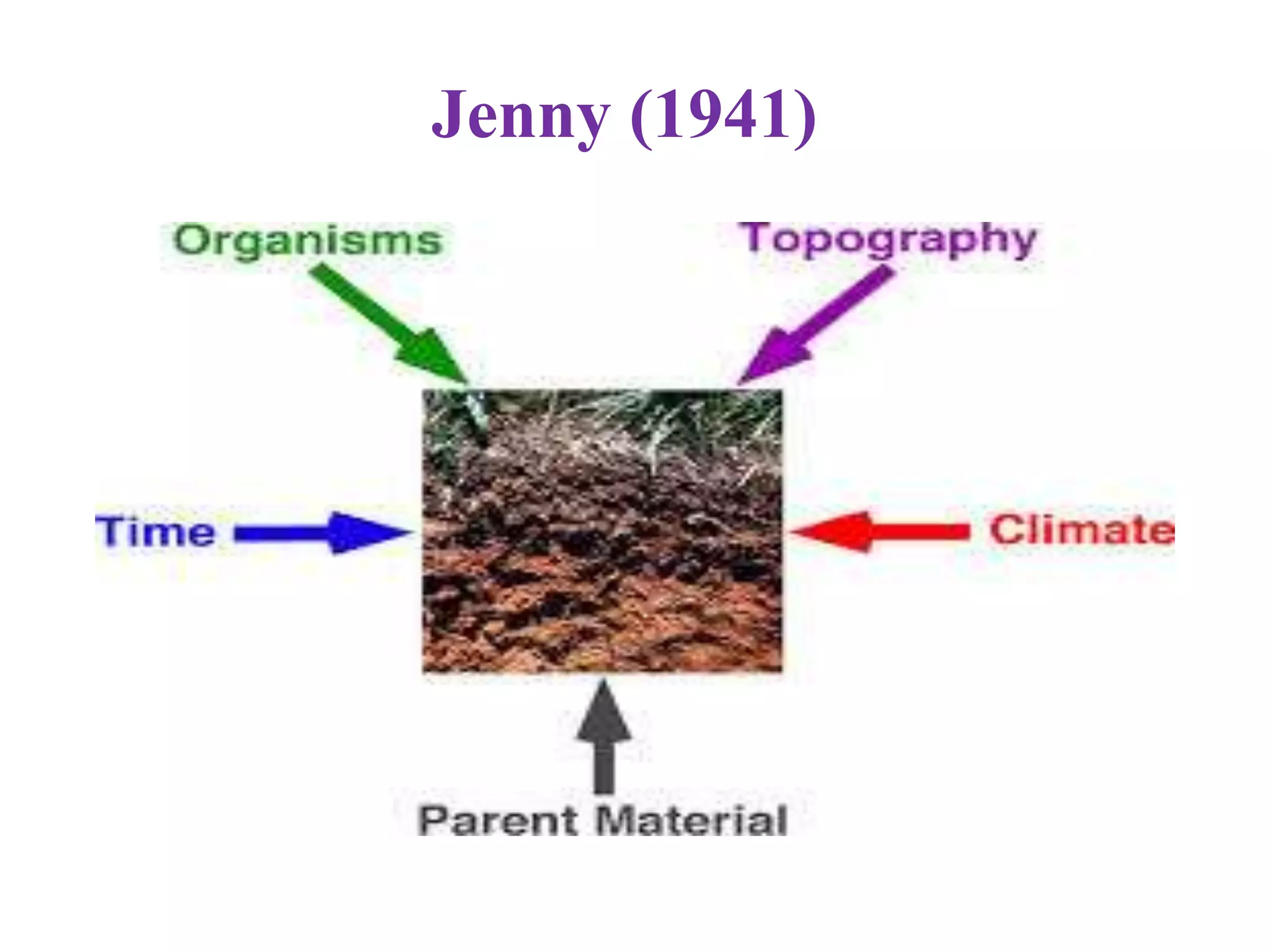
Jenny (1941)
Soil is a naturally occurring body that
has been formed due to combined influence of
climate and living organisms acting on parent
material as conditioned by relief over a period
of time.
Ruffin and Simonson (1968)
Soil is a mixture of Earth’s uppermost
mantle of weathered rock and organic matter.
Dr. W.E.H. Blum
Soils not only serve for agriculture and
forestry, but also for filtering, buffering and
transformation activities between the
atmosphere and the ground water, protecting
the food chain and drinking water against
pollution and biodiversity.
J.S.Kanwar
As soil provides nutrients, water, air
and anchorage and supports life on Earth, it
can be called as Soul of Infinite Life (SOIL).
Byers, et al., Formation of Soil, 1938*
Soils are natural media for the growth
of plants. They are mixtures of fragmented
and partly or wholly weathered rocks and
minerals, organic matter, water, and air, in
greatly varying proportions, and have more or
less distinct layers or horizons developed
under the influence of climate and living.
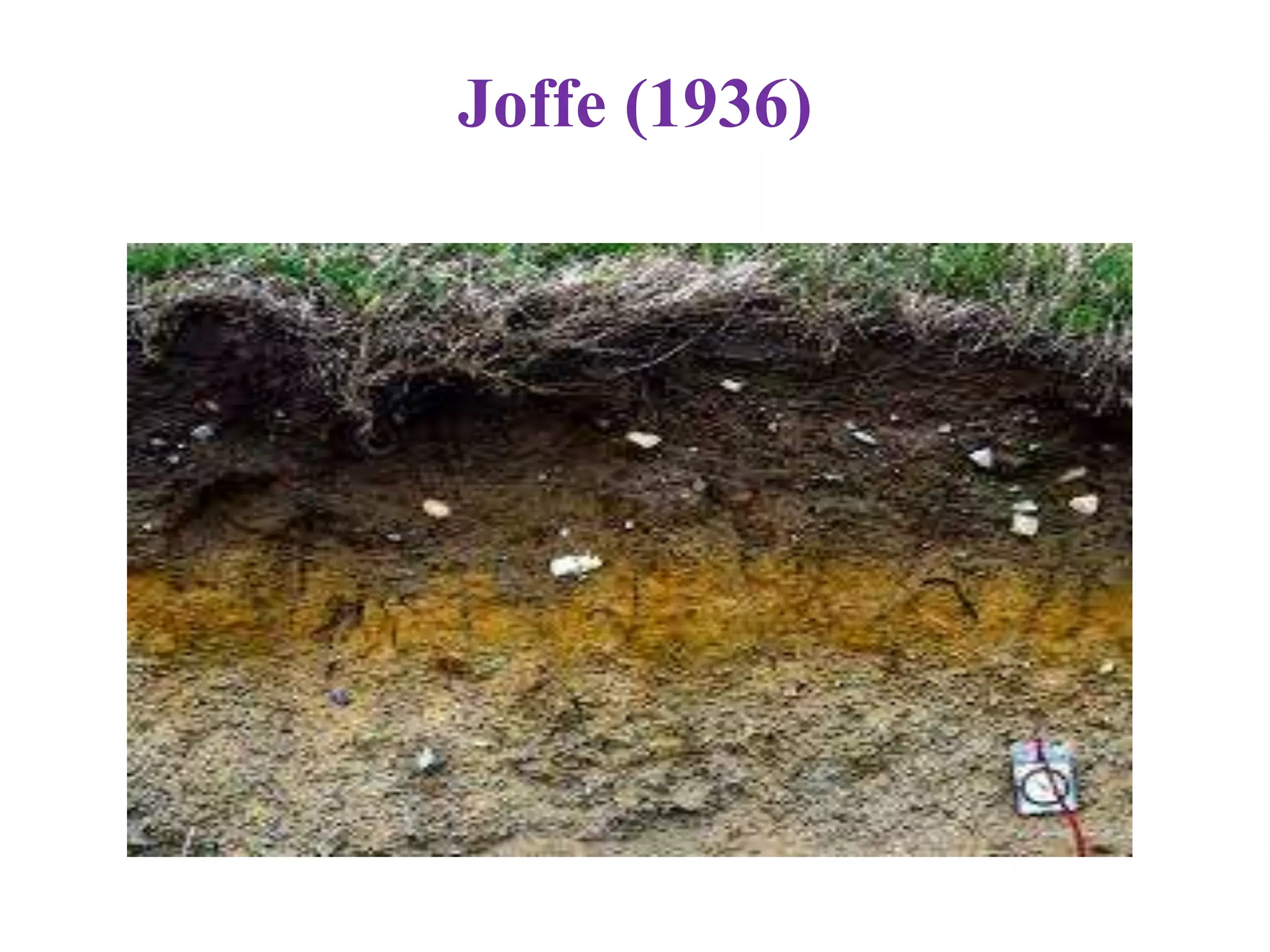
Joffe (1936)
“Soil is a natural body of mineral and
organic constituents differentiated into horizons -
usually unconsolidated - of variable depth which
differs among themselves as well as from the
underlying parent material in morphology,
physical makeup, chemical properties and
composition and biological characteristics”.
Dokuchaiev (1900)
Russian scientist - Father of soil science
Soil is a natural body composed of mineral
and organic constituents, having a definite
genesis and a distinct nature of its own.
THANK YOU

Soil definition by various authors

  • 1.
  • 2.
    Soil refers tothe loose surface of the earth as identified from the original rocks and minerals from which it is derived through weathering process. A complex mixture of mineral matter, organic matter, water, and air.
  • 4.
  • 5.
    Soil is anutrient bin which supplies all the nutrients required for plant growth.
  • 6.
  • 7.
    Soil is anaturally occurring body that has been formed due to combined influence of climate and living organisms acting on parent material as conditioned by relief over a period of time.
  • 8.
    Ruffin and Simonson(1968) Soil is a mixture of Earth’s uppermost mantle of weathered rock and organic matter.
  • 9.
    Dr. W.E.H. Blum Soilsnot only serve for agriculture and forestry, but also for filtering, buffering and transformation activities between the atmosphere and the ground water, protecting the food chain and drinking water against pollution and biodiversity.
  • 10.
    J.S.Kanwar As soil providesnutrients, water, air and anchorage and supports life on Earth, it can be called as Soul of Infinite Life (SOIL).
  • 11.
    Byers, et al.,Formation of Soil, 1938* Soils are natural media for the growth of plants. They are mixtures of fragmented and partly or wholly weathered rocks and minerals, organic matter, water, and air, in greatly varying proportions, and have more or less distinct layers or horizons developed under the influence of climate and living.
  • 12.
  • 13.
    “Soil is anatural body of mineral and organic constituents differentiated into horizons - usually unconsolidated - of variable depth which differs among themselves as well as from the underlying parent material in morphology, physical makeup, chemical properties and composition and biological characteristics”.
  • 14.
    Dokuchaiev (1900) Russian scientist- Father of soil science Soil is a natural body composed of mineral and organic constituents, having a definite genesis and a distinct nature of its own.
  • 16.