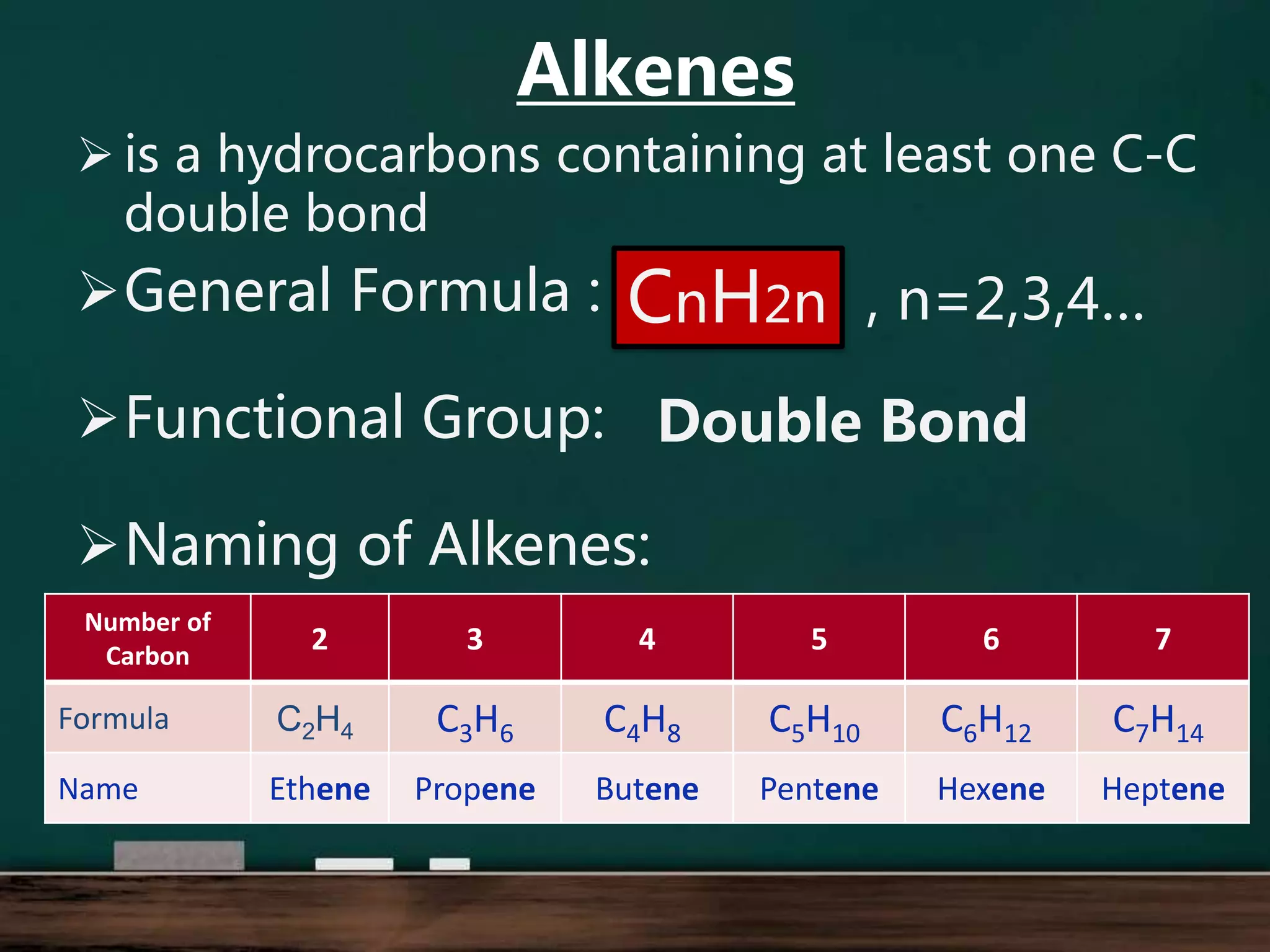
 is a hydrocarbons containing at least one C-C
double bond
General Formula :
Functional Group:
Naming of Alkenes:
CnH2n
Number of
Carbon
2 3 4 5 6 7
Formula C2H4 C3H6 C4H8 C5H10 C6H12 C7H14
Name Ethene Propene Butene Pentene Hexene Heptene
Double Bond
, n=2,3,4…
Alkenes
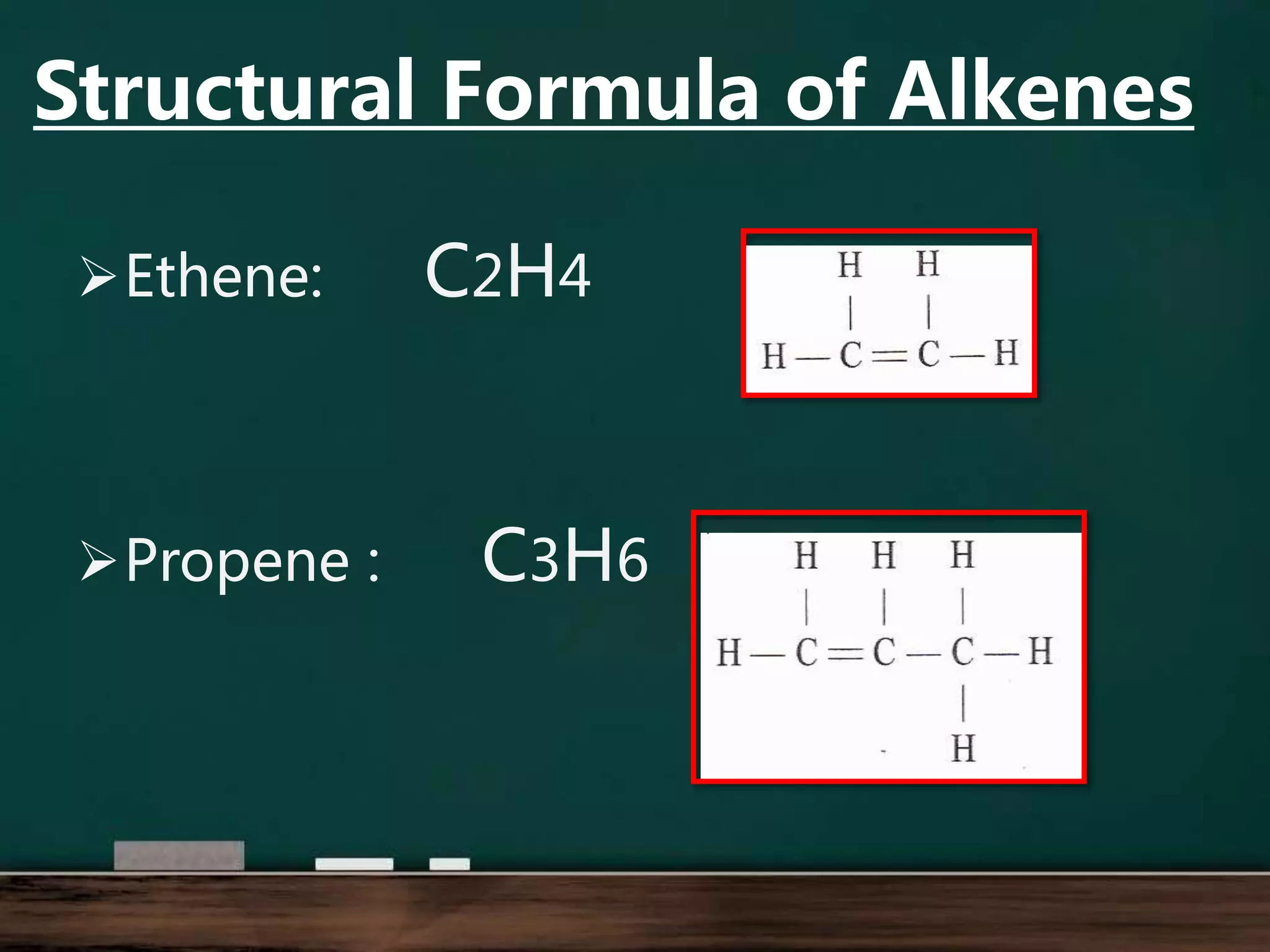
Structural Formula of Alkenes
Ethene: C2H4
Propene : C3H6
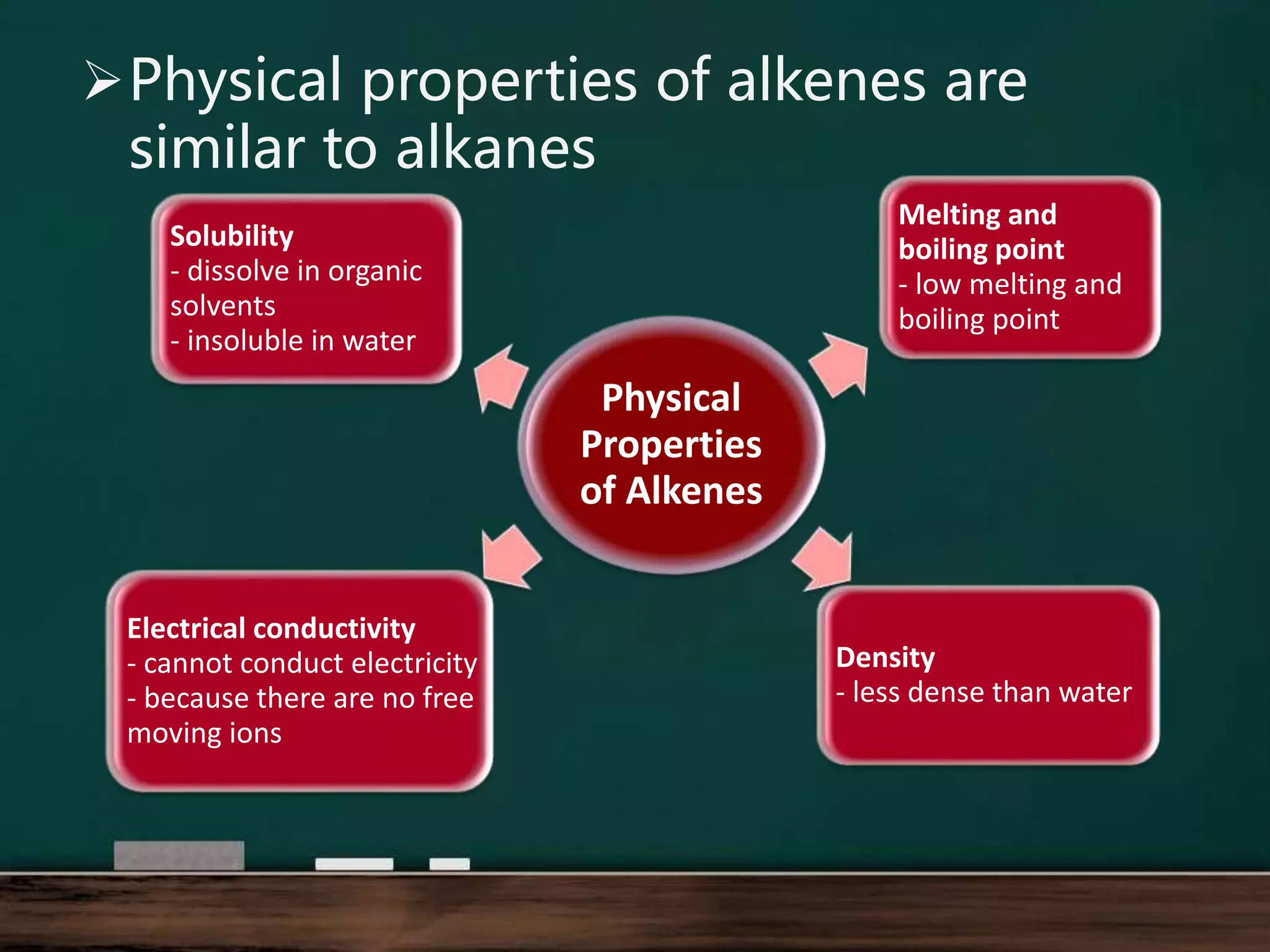
Physical properties of alkenes are
similar to alkanes
Physical
Properties
of Alkenes
Solubility
- dissolve in organic
solvents
- insoluble in water
Melting and
boiling point
- low melting and
boiling point
Density
- less dense than water
Electrical conductivity
- cannot conduct electricity
- because there are no free
moving ions
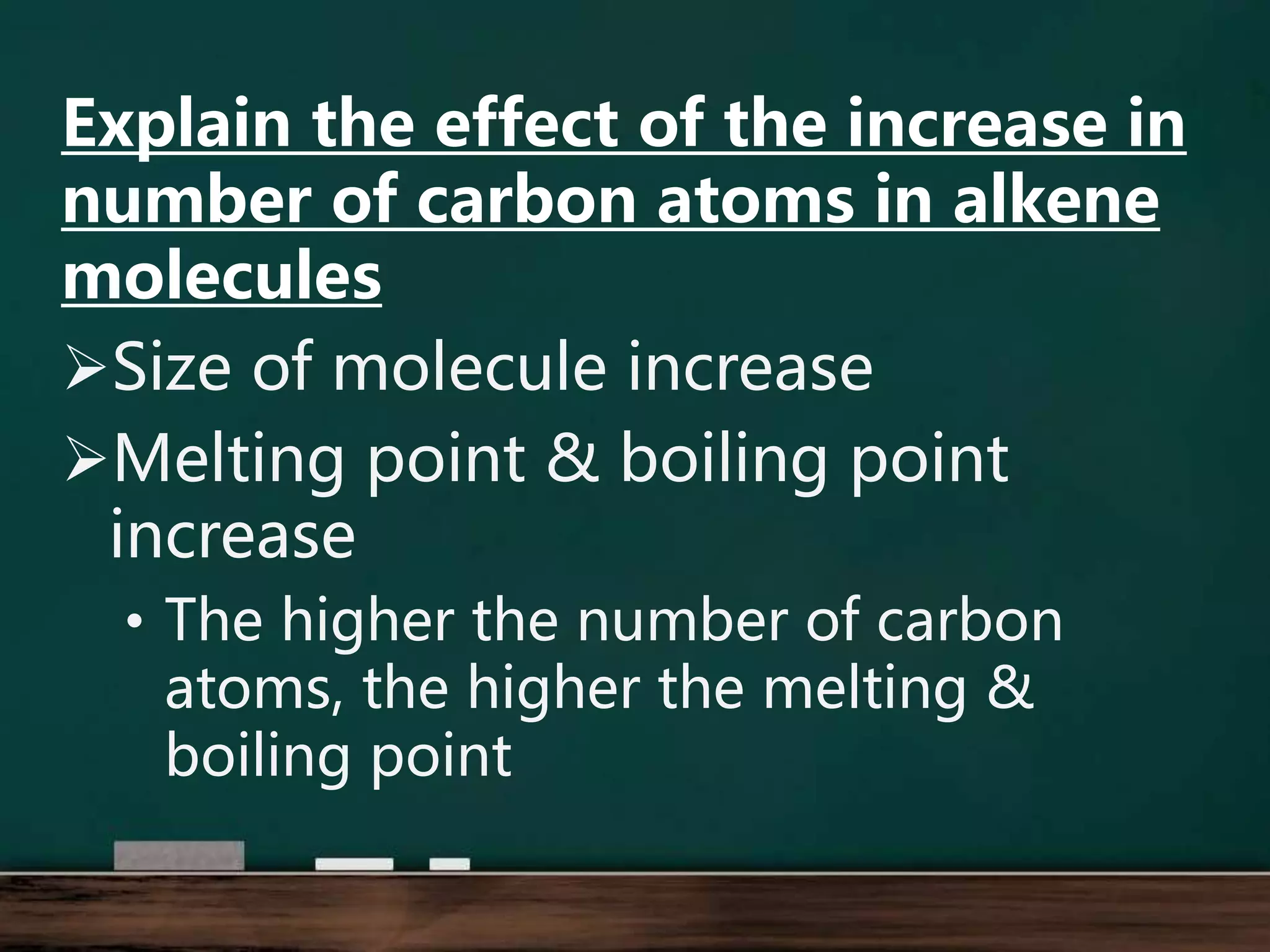
Explain the effect of the increase in
number of carbon atoms in alkene
molecules
Size of molecule increase
Melting point & boiling point
increase
• The higher the number of carbon
atoms, the higher the melting &
boiling point
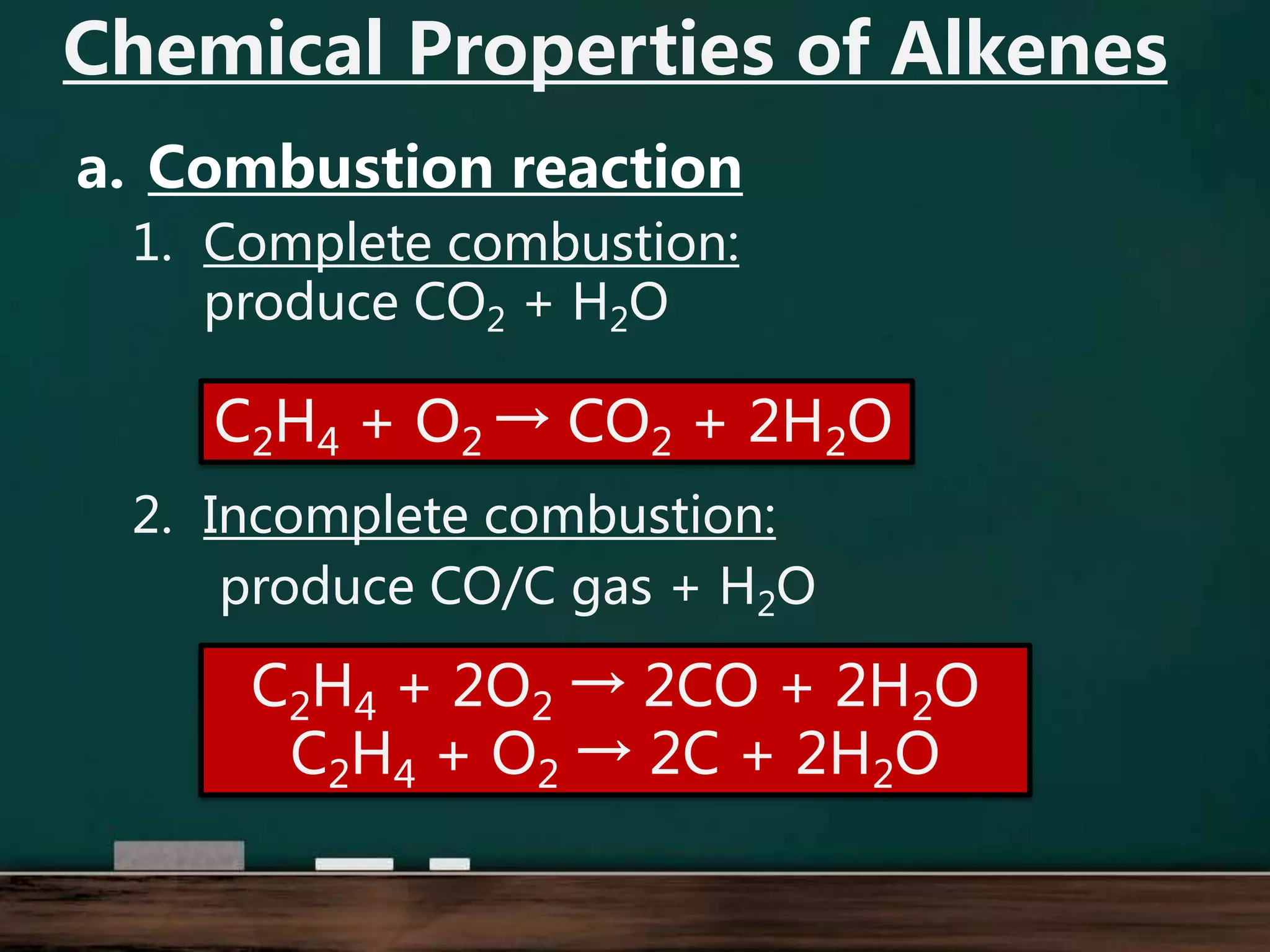
a. Combustion reaction
1. Complete combustion:
produce CO2 + H2O
2. Incomplete combustion:
produce CO/C gas + H2O
C2H4 + O2 → CO2 + 2H2O
C2H4 + 2O2 → 2CO + 2H2O
C2H4 + O2 → 2C + 2H2O
Chemical Properties of Alkenes
b. Addition reaction
1. Hydrogenation
 Alkenes react with hydrogen at 180 °C at presence
of nickel/platinum (catalyst) to produce alkanes
2. Hydration
 Alkenes reacts with steam, H2O at 300 °C and 60 atm
in the presence of concentrated H3PO4 (as catalyst)
to produce alcohol
3. Addition of hydrogen halides – HX
 Hydrogen halides: Hydrogen chloride, HCl
hydrogen bromide, HBr or hydrogen iodide, HI
 Alkenes reacts with hydrogen halide, HX at room
temperature to produce haloalkane.
C2H4 + HCl → C2H5Cl
Ethene react with hydrogen chloride
produces chloroethane.
Ethene react with hydrogen bromide
produces bromoethane.
Ethene react with hydrogen
iodide produces iodoethane.
4. Addition of hydroxyl group
 Alkenes react with acidified potassium manganate(VII),
KMnO4 to produce diol compound
C2H4 + [O] + H2O → C2H4 (OH)2
or
 Used to test for the presence of a C-C double bond
5. Halogenation
 No catalyst or ultraviolet is needed
 Alkenes react with halogen at room temperature
in the presence of tetrachloromethane, CCl4
C2H4 + Cl2 → C2H4Cl2
C4H8 + Br2 → C4H8Br2
 Used to test for the presence of a C-C double bond
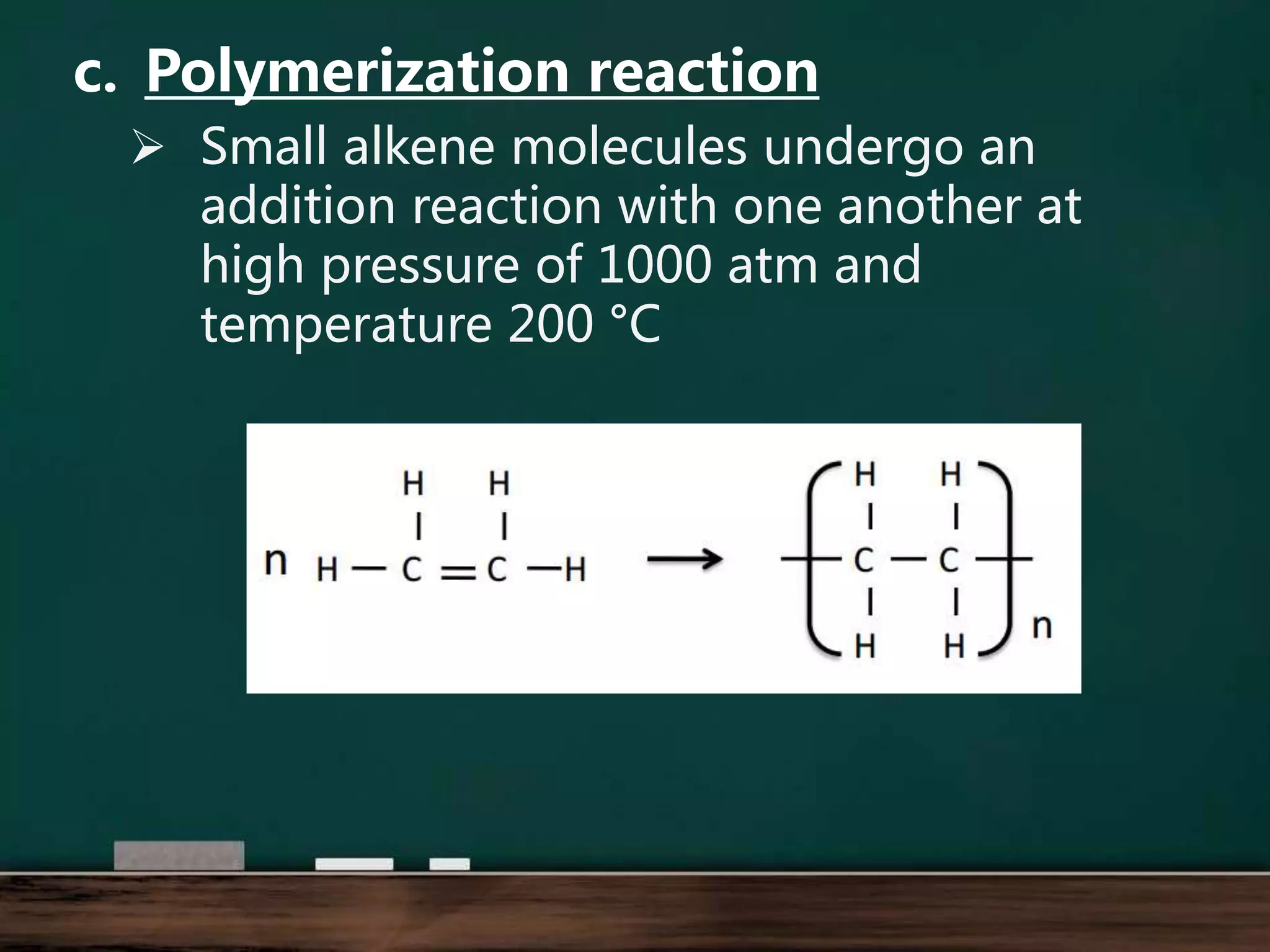
c. Polymerization reaction
 Small alkene molecules undergo an
addition reaction with one another at
high pressure of 1000 atm and
temperature 200 °C
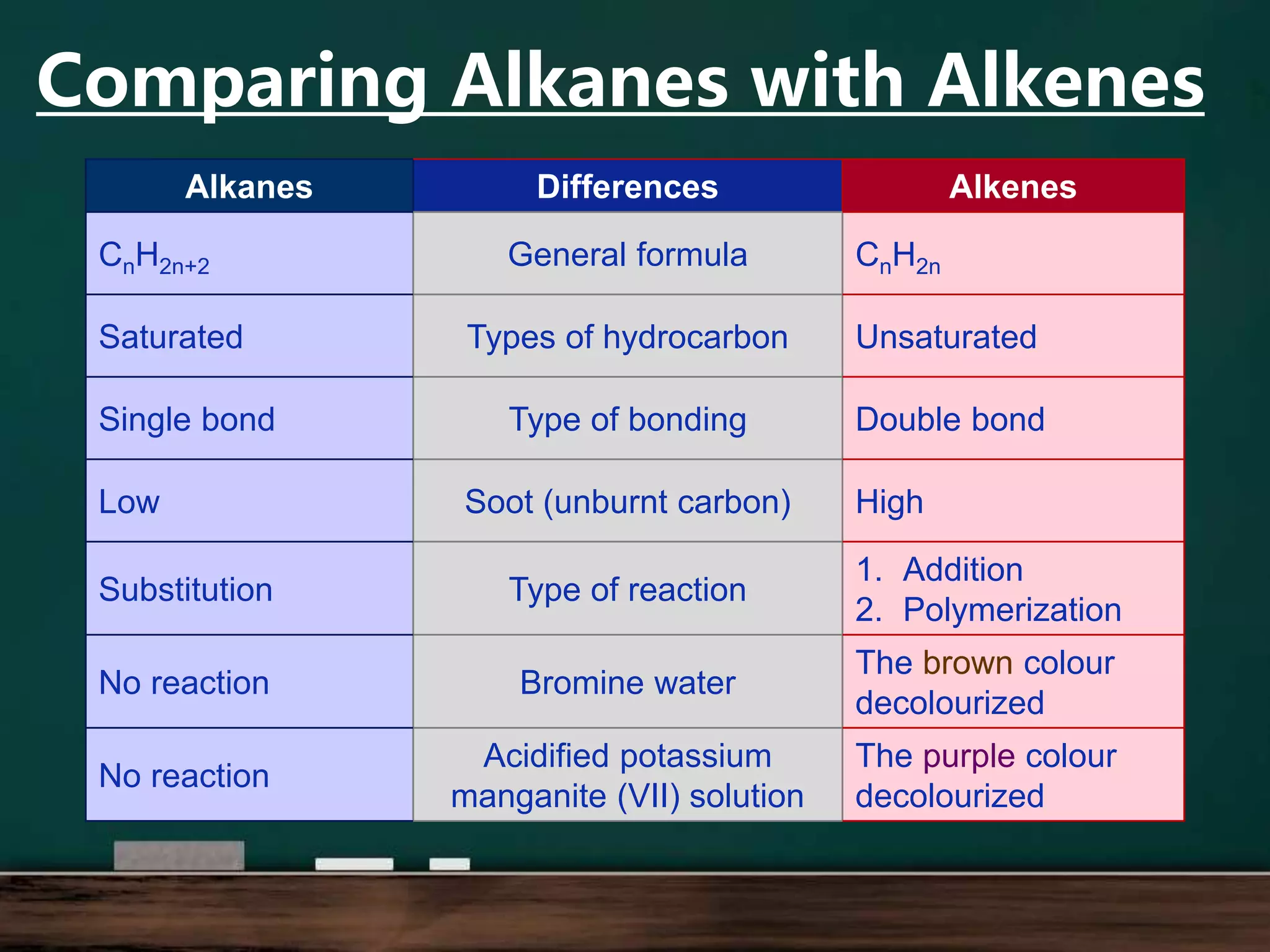
Alkanes Differences Alkenes
CnH2n+2 General formula CnH2n
Saturated Types of hydrocarbon Unsaturated
Single bond Type of bonding Double bond
Low Soot (unburnt carbon) High
Substitution Type of reaction
1. Addition
2. Polymerization
No reaction Bromine water
The brown colour
decolourized
No reaction
Acidified potassium
manganite (VII) solution
The purple colour
decolourized
Comparing Alkanes with Alkenes
 Isomers are compounds with the same molecular
formula but different structural formula.
 Isomerism is the existence of two or more compounds
that have the same molecular formula but different
structural formulae.
 Isomers have different physical properties because they
have different molecular structures.
 However, isomers have the same chemical properties
because they belong to the same homologous series.
Isomerism
Examples of two isomers of butane
The 2 molecules have same molecular formula
but different structural formulae

Alkene

  • 1.
     is ahydrocarbons containing at least one C-C double bond General Formula : Functional Group: Naming of Alkenes: CnH2n Number of Carbon 2 3 4 5 6 7 Formula C2H4 C3H6 C4H8 C5H10 C6H12 C7H14 Name Ethene Propene Butene Pentene Hexene Heptene Double Bond , n=2,3,4… Alkenes
  • 2.
    Structural Formula ofAlkenes Ethene: C2H4 Propene : C3H6
  • 3.
    Physical properties ofalkenes are similar to alkanes Physical Properties of Alkenes Solubility - dissolve in organic solvents - insoluble in water Melting and boiling point - low melting and boiling point Density - less dense than water Electrical conductivity - cannot conduct electricity - because there are no free moving ions
  • 4.
    Explain the effectof the increase in number of carbon atoms in alkene molecules Size of molecule increase Melting point & boiling point increase • The higher the number of carbon atoms, the higher the melting & boiling point
  • 5.
    a. Combustion reaction 1.Complete combustion: produce CO2 + H2O 2. Incomplete combustion: produce CO/C gas + H2O C2H4 + O2 → CO2 + 2H2O C2H4 + 2O2 → 2CO + 2H2O C2H4 + O2 → 2C + 2H2O Chemical Properties of Alkenes
  • 6.
    b. Addition reaction 1.Hydrogenation  Alkenes react with hydrogen at 180 °C at presence of nickel/platinum (catalyst) to produce alkanes
  • 7.
    2. Hydration  Alkenesreacts with steam, H2O at 300 °C and 60 atm in the presence of concentrated H3PO4 (as catalyst) to produce alcohol
  • 8.
    3. Addition ofhydrogen halides – HX  Hydrogen halides: Hydrogen chloride, HCl hydrogen bromide, HBr or hydrogen iodide, HI  Alkenes reacts with hydrogen halide, HX at room temperature to produce haloalkane. C2H4 + HCl → C2H5Cl Ethene react with hydrogen chloride produces chloroethane. Ethene react with hydrogen bromide produces bromoethane. Ethene react with hydrogen iodide produces iodoethane.
  • 9.
    4. Addition ofhydroxyl group  Alkenes react with acidified potassium manganate(VII), KMnO4 to produce diol compound C2H4 + [O] + H2O → C2H4 (OH)2 or  Used to test for the presence of a C-C double bond
  • 10.
    5. Halogenation  Nocatalyst or ultraviolet is needed  Alkenes react with halogen at room temperature in the presence of tetrachloromethane, CCl4 C2H4 + Cl2 → C2H4Cl2 C4H8 + Br2 → C4H8Br2  Used to test for the presence of a C-C double bond
  • 11.
    c. Polymerization reaction Small alkene molecules undergo an addition reaction with one another at high pressure of 1000 atm and temperature 200 °C
  • 12.
    Alkanes Differences Alkenes CnH2n+2General formula CnH2n Saturated Types of hydrocarbon Unsaturated Single bond Type of bonding Double bond Low Soot (unburnt carbon) High Substitution Type of reaction 1. Addition 2. Polymerization No reaction Bromine water The brown colour decolourized No reaction Acidified potassium manganite (VII) solution The purple colour decolourized Comparing Alkanes with Alkenes
  • 13.
     Isomers arecompounds with the same molecular formula but different structural formula.  Isomerism is the existence of two or more compounds that have the same molecular formula but different structural formulae.  Isomers have different physical properties because they have different molecular structures.  However, isomers have the same chemical properties because they belong to the same homologous series. Isomerism
  • 14.
    Examples of twoisomers of butane The 2 molecules have same molecular formula but different structural formulae