Unsaturated
Hydrocarbons:
ALKENES
RONIELENE M. ABUG
Organic Chemistry
Central Philippines State University - Main Campus
Table of contents.
01 | Properties 02 | Structure
03 |
Nomenclature
04 | Reactions
05 | Uses or
Application
06 | Activity
Alkenes
 are a class of unsaturated hydrocarbons characterized by at least one
carbon-carbon double bond.
 classified as unsaturated hydrocarbons (compounds with double or triple
carbon - carbon bonds that enable them to add up hydrogen atoms)
 also called as olefins (compound made up of hydrogen and carbon that
contains one or more pairs of carbon atoms linked by a double bond)
 Mathematically, this can be indicated by the following general formula:
CnH2n
PROPERTIES
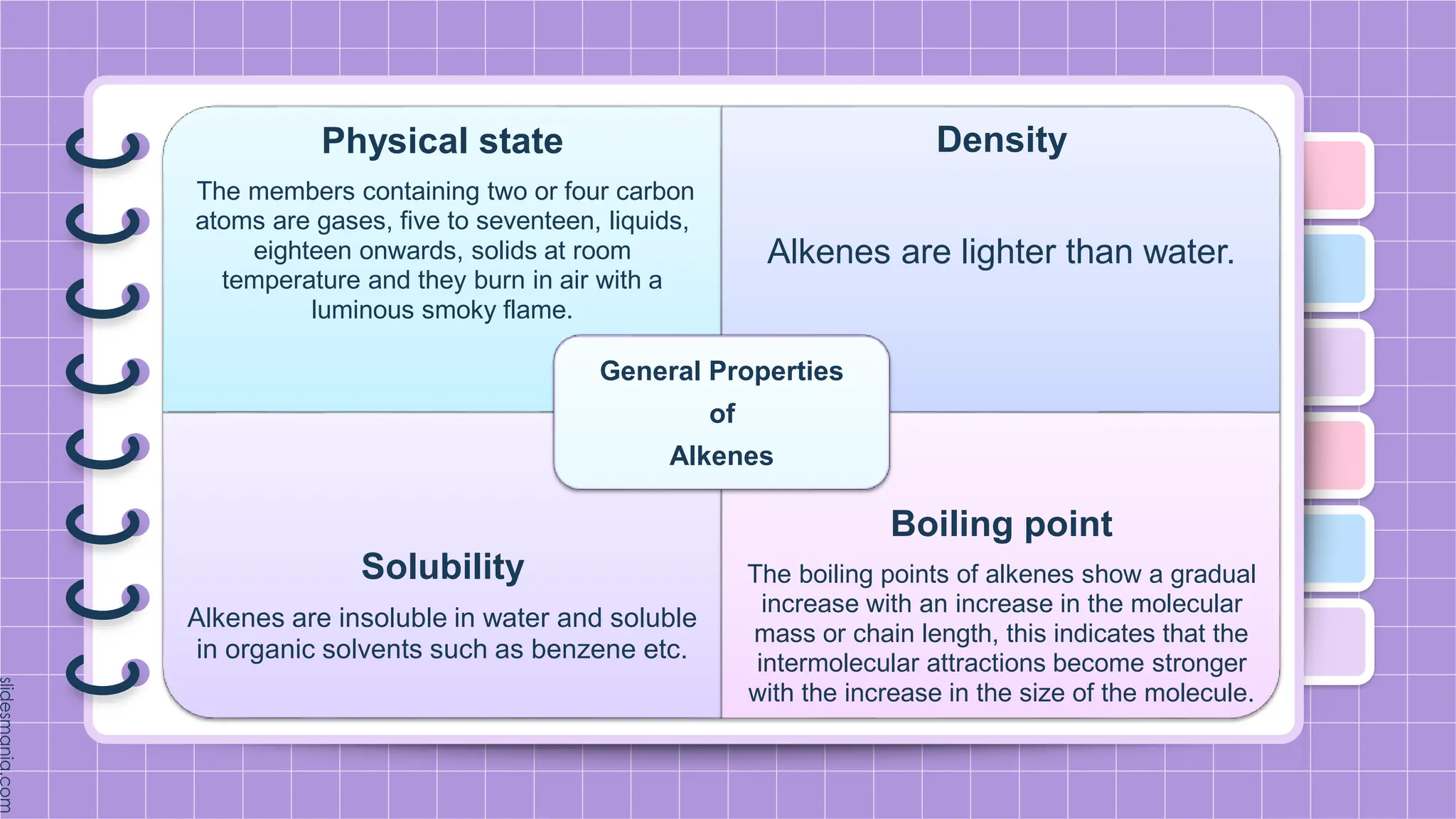
Physical state
The members containing two or four carbon
atoms are gases, five to seventeen, liquids,
eighteen onwards, solids at room
temperature and they burn in air with a
luminous smoky flame.
Density
Alkenes are lighter than water.
Solubility
Alkenes are insoluble in water and soluble
in organic solvents such as benzene etc.
Boiling point
The boiling points of alkenes show a gradual
increase with an increase in the molecular
mass or chain length, this indicates that the
intermolecular attractions become stronger
with the increase in the size of the molecule.
General Properties
of
Alkenes
Physical Properties of Alkenes
 Alkenes exist naturally in all three states. The first four alkenes are gases, and the next
thirtteen are liquids. Alkenes higher than these are all solids.
 All alkenes are insoluble in water, due to the weak van der Waal forces.
 But alkenes are soluble in organic solvents like benzene or acetone because here the van der
Waal forces will be replaced by new ones, making alkenes fully soluble.
 The boiling points of alkenes depend on their molecular structure. The bigger their molecular
chain the higher the boiling points. So the higher alkenes have very high boiling points
 The polarity of alkenes will depend on their functional groups
Chemical Properties of Alkenes
 Alkenes belong to the family of hydrocarbons containing a double bond between
carbon-carbon atoms.
 Alkenes are less stable than alkanes and more stable than alkynes.
 Alkenes exist in all three solid-liquid and gaseous states.
 Alkenes are less soluble in water due to weak Van-Der-Waal forces
 The boiling point of alkenes depends on the molecular structure, the longer the
molecular chain, the higher will be its boiling point.
 Functional groups are responsible for the polarity of alkenes.
STRUCTURE
The structure of alkenes
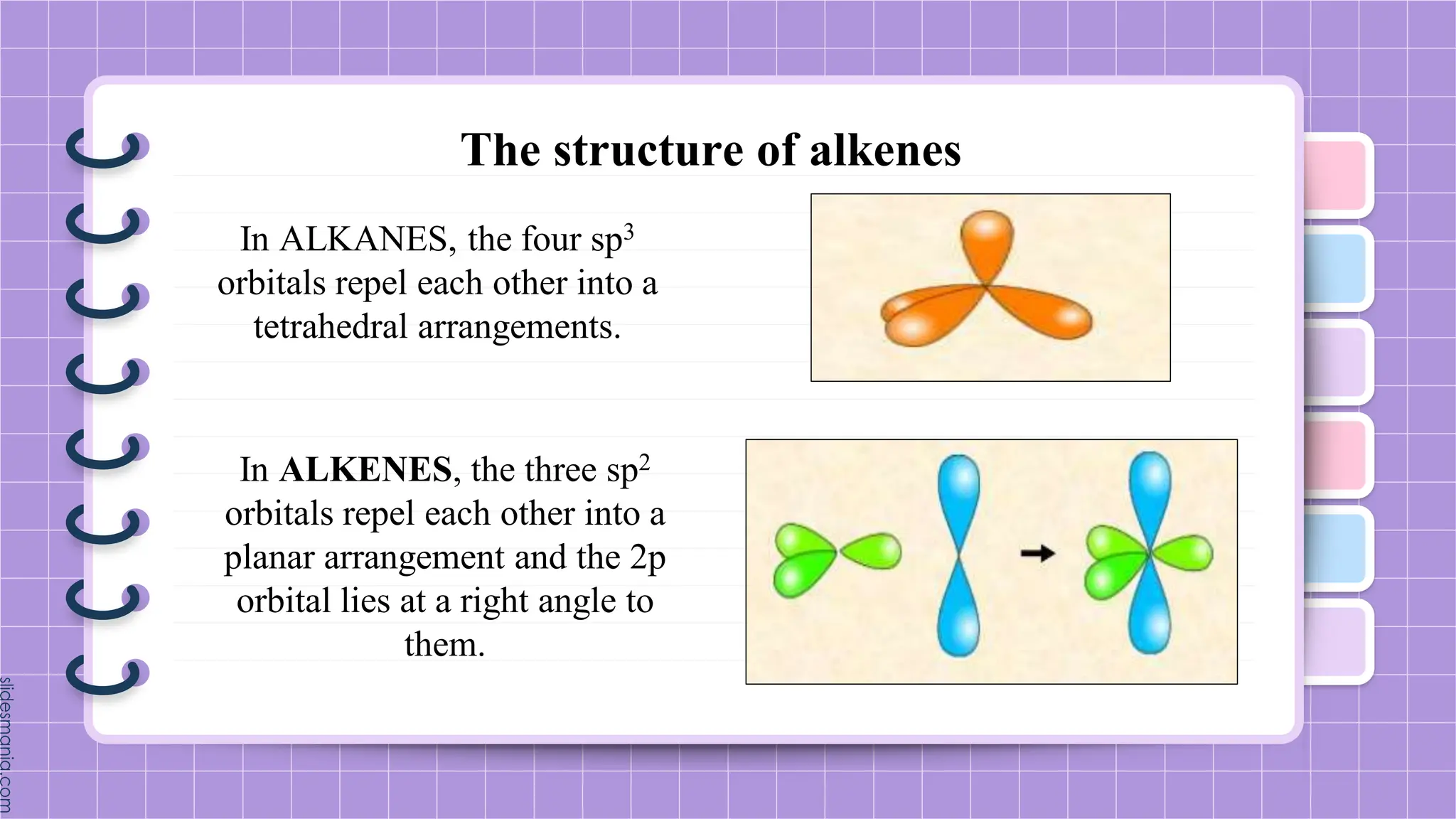
In ALKANES, the four sp3
orbitals repel each other into a
tetrahedral arrangements.
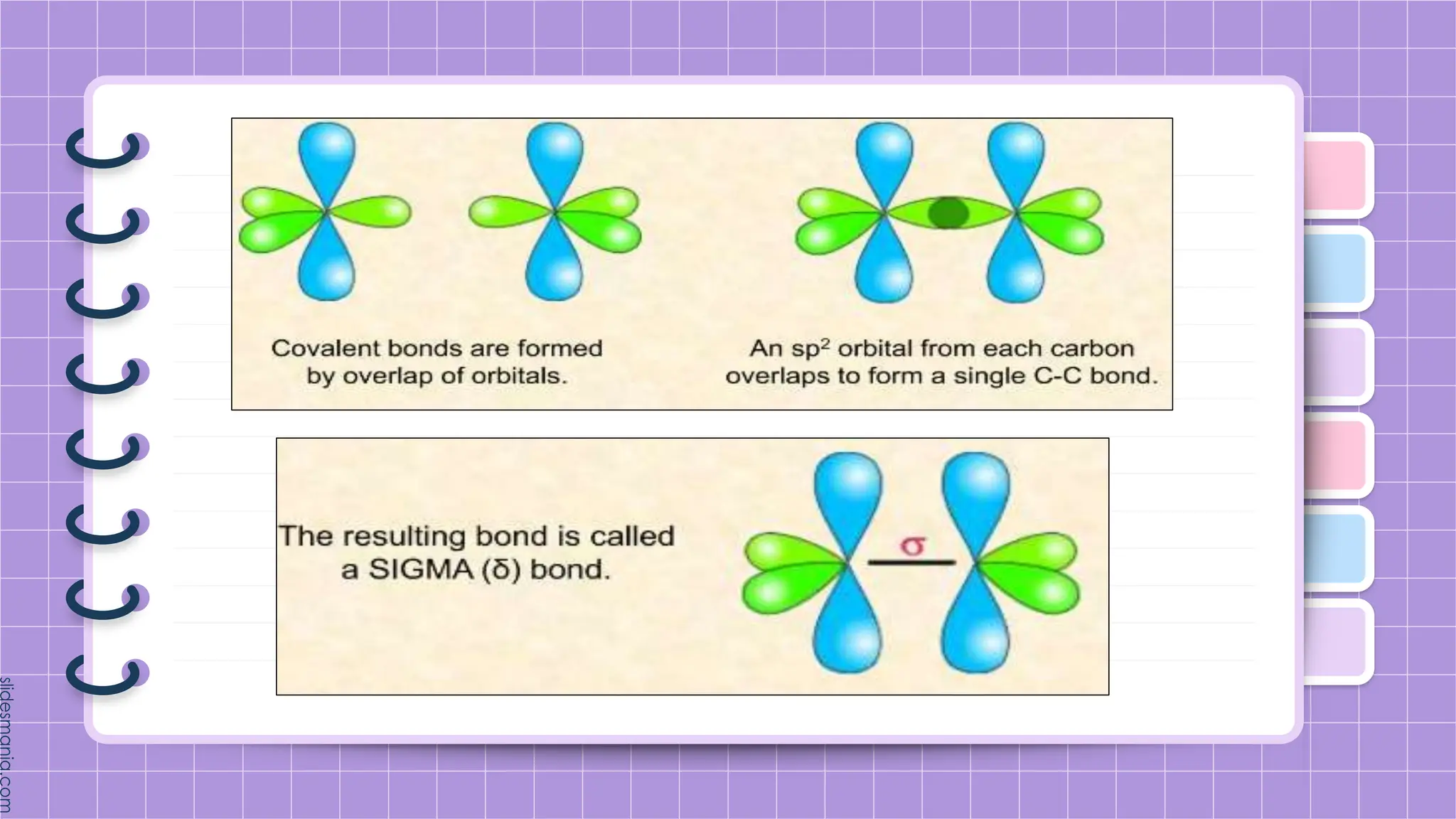
In ALKENES, the three sp2
orbitals repel each other into a
planar arrangement and the 2p
orbital lies at a right angle to
them.
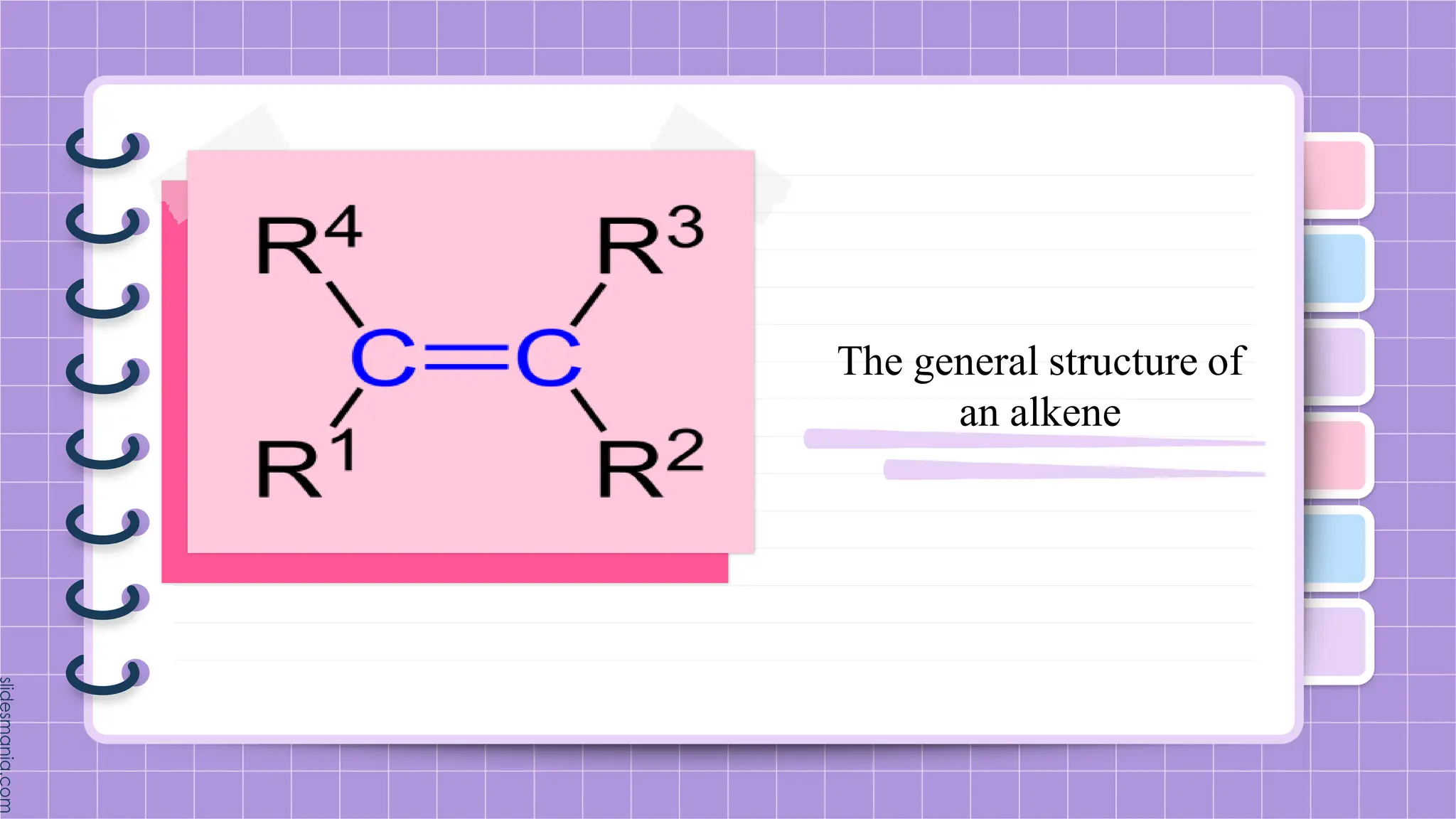
The general structure of
an alkene
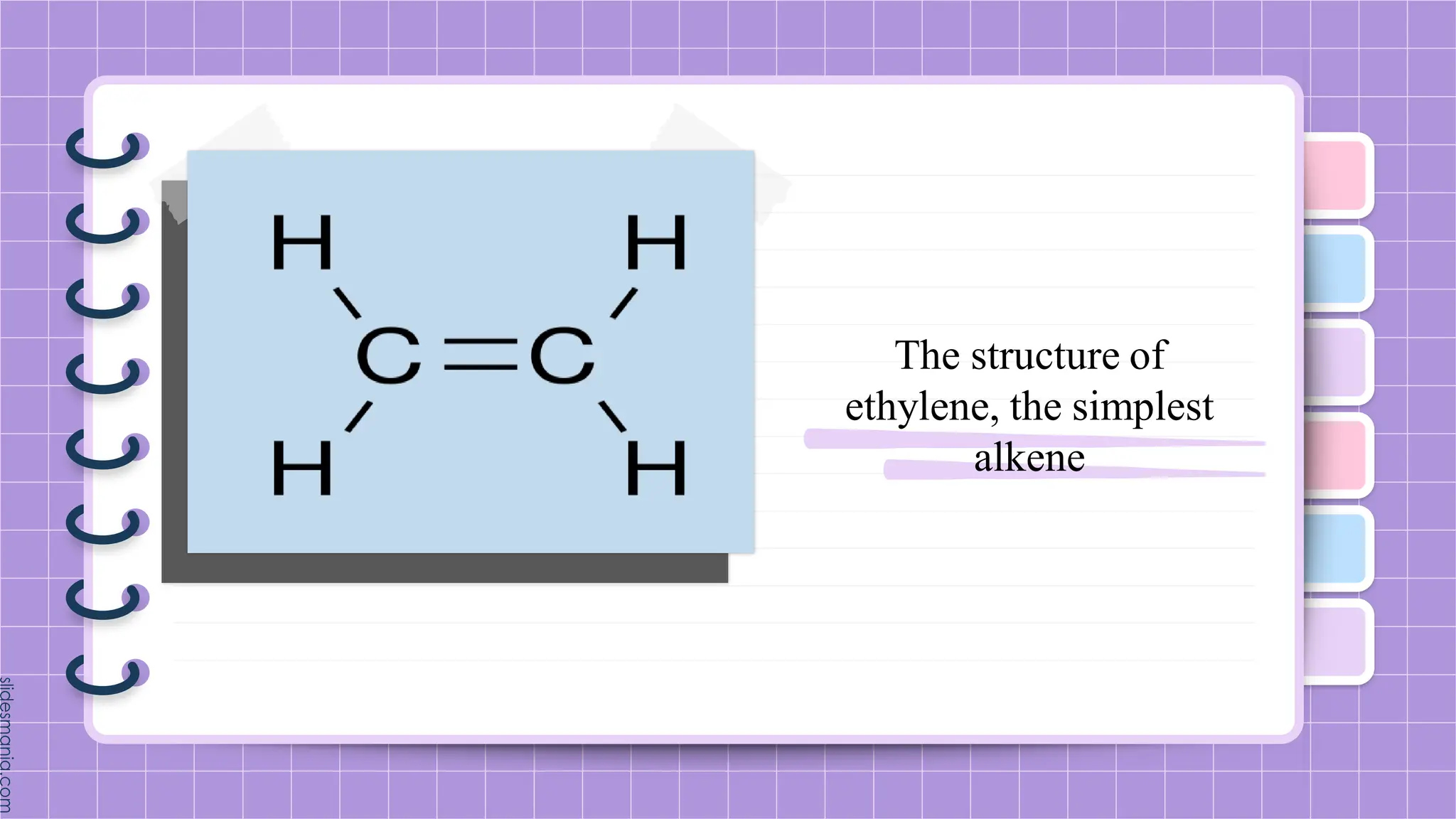
The structure of
ethylene, the simplest
alkene
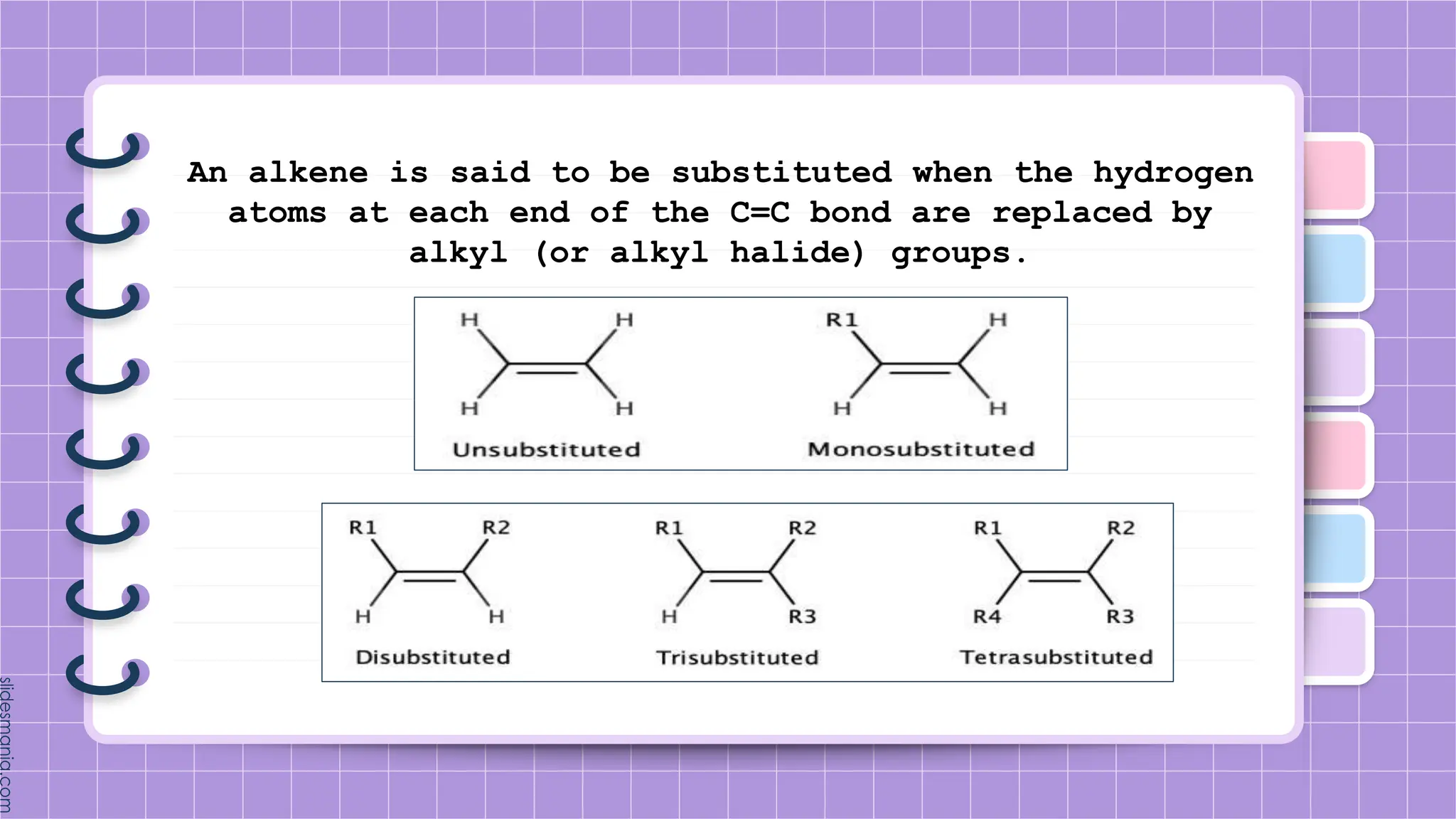
An alkene is said to be substituted when the hydrogen
atoms at each end of the C=C bond are replaced by
alkyl (or alkyl halide) groups.
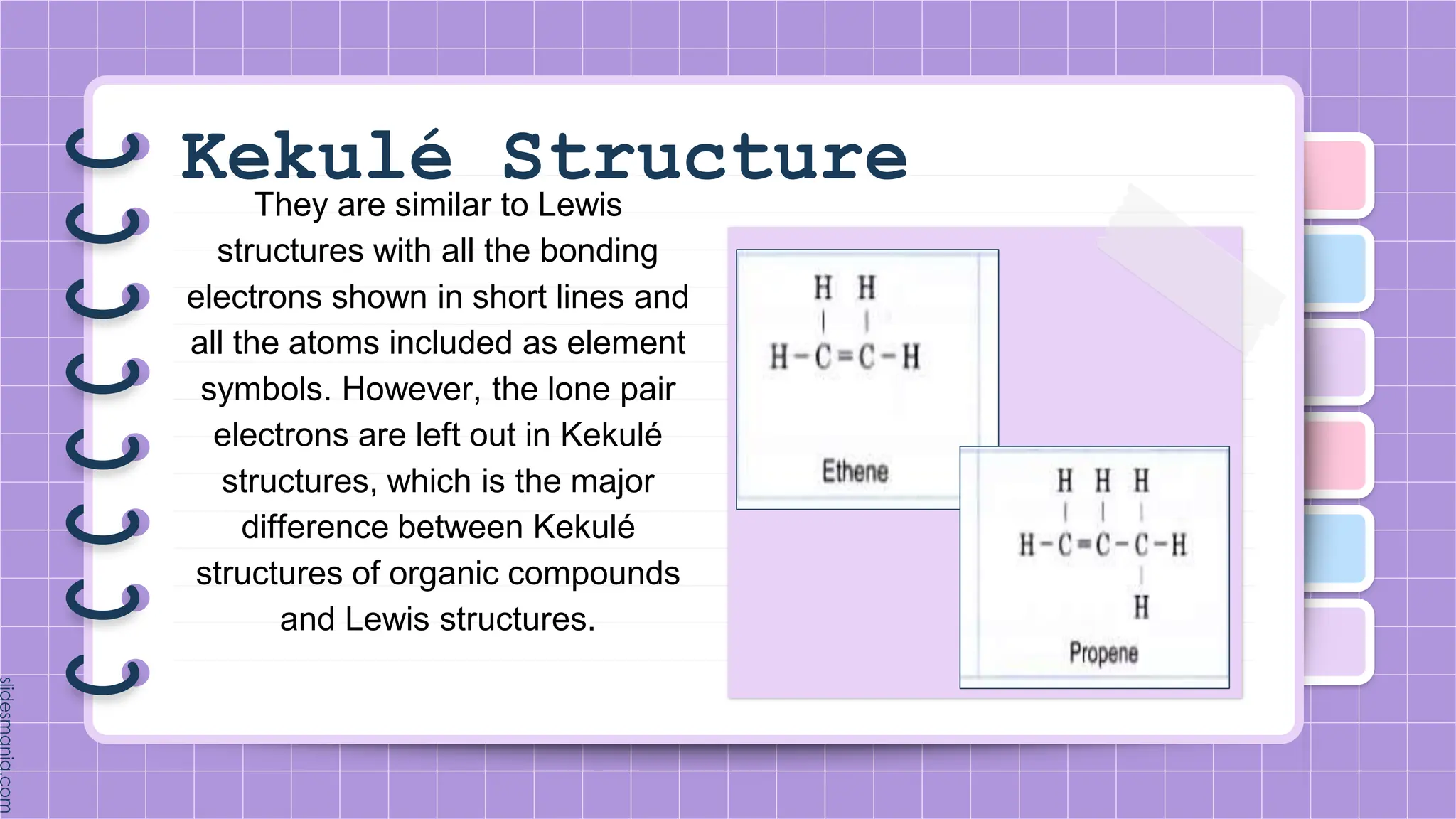
Kekulé Structure
They are similar to Lewis
structures with all the bonding
electrons shown in short lines and
all the atoms included as element
symbols. However, the lone pair
electrons are left out in Kekulé
structures, which is the major
difference between Kekulé
structures of organic compounds
and Lewis structures.
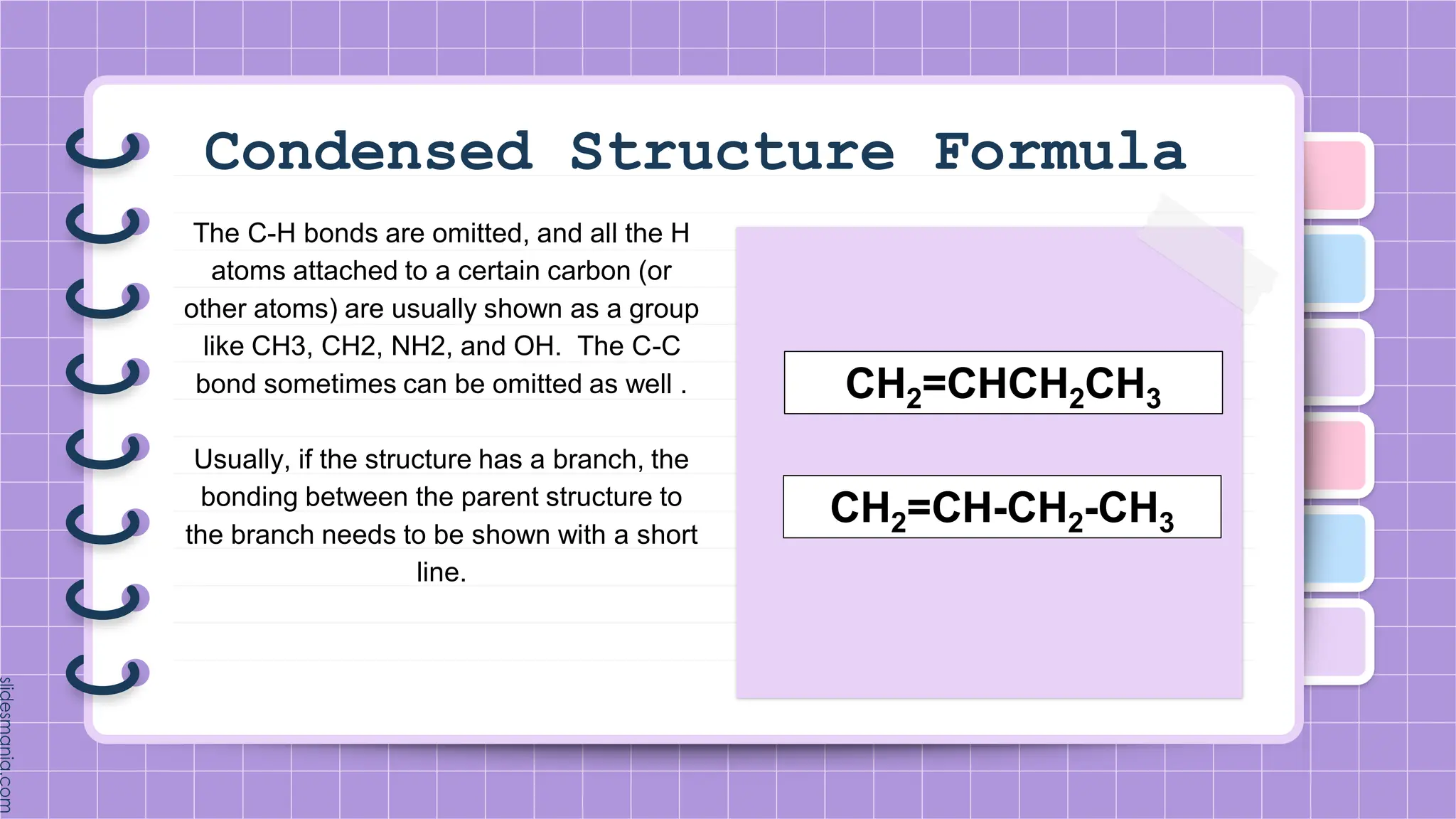
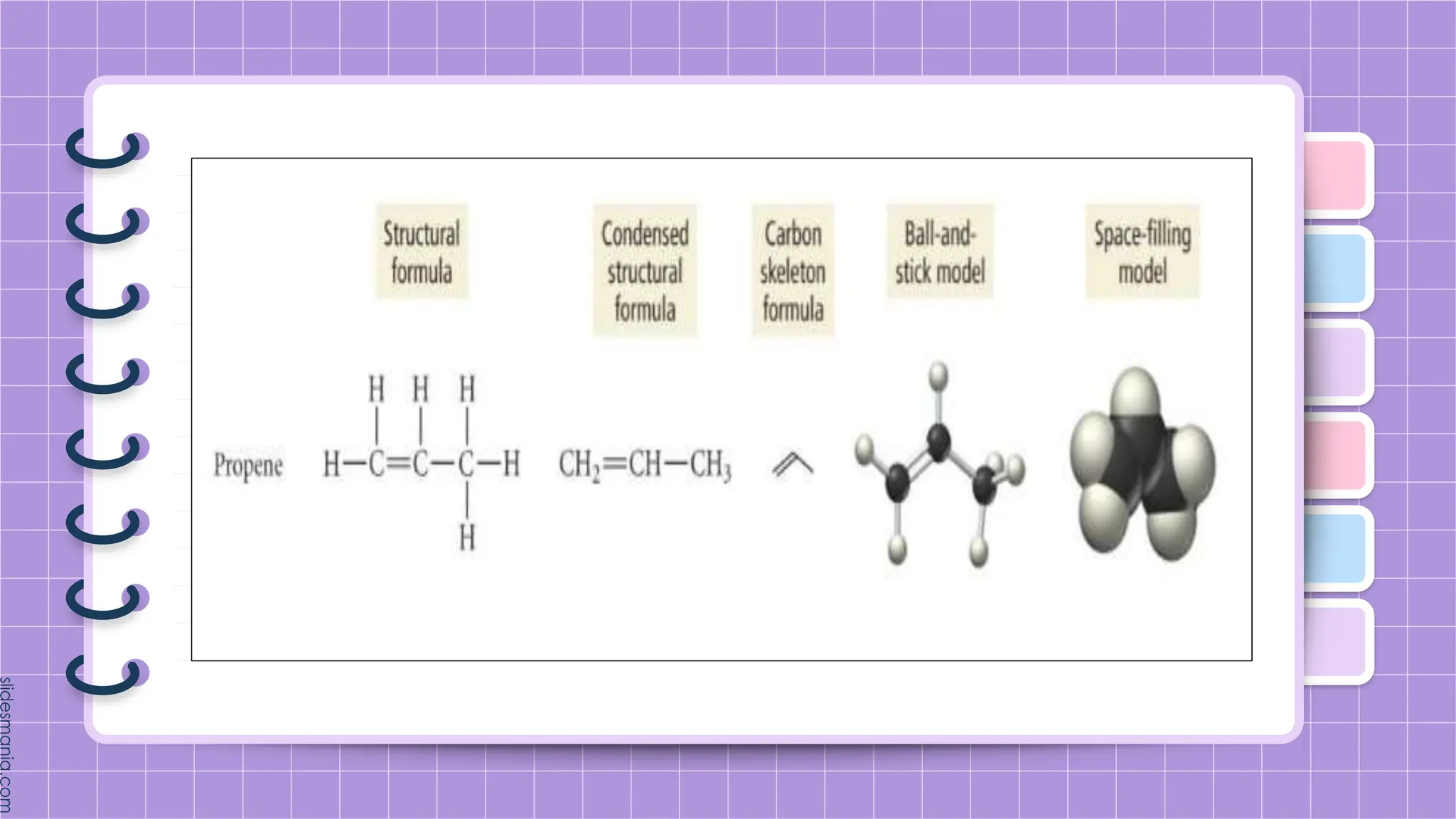
Condensed Structure Formula
The C-H bonds are omitted, and all the H
atoms attached to a certain carbon (or
other atoms) are usually shown as a group
like CH3, CH2, NH2, and OH. The C-C
bond sometimes can be omitted as well .
Usually, if the structure has a branch, the
bonding between the parent structure to
the branch needs to be shown with a short
line.
CH2=CHCH2CH3
CH2=CH-CH2-CH3
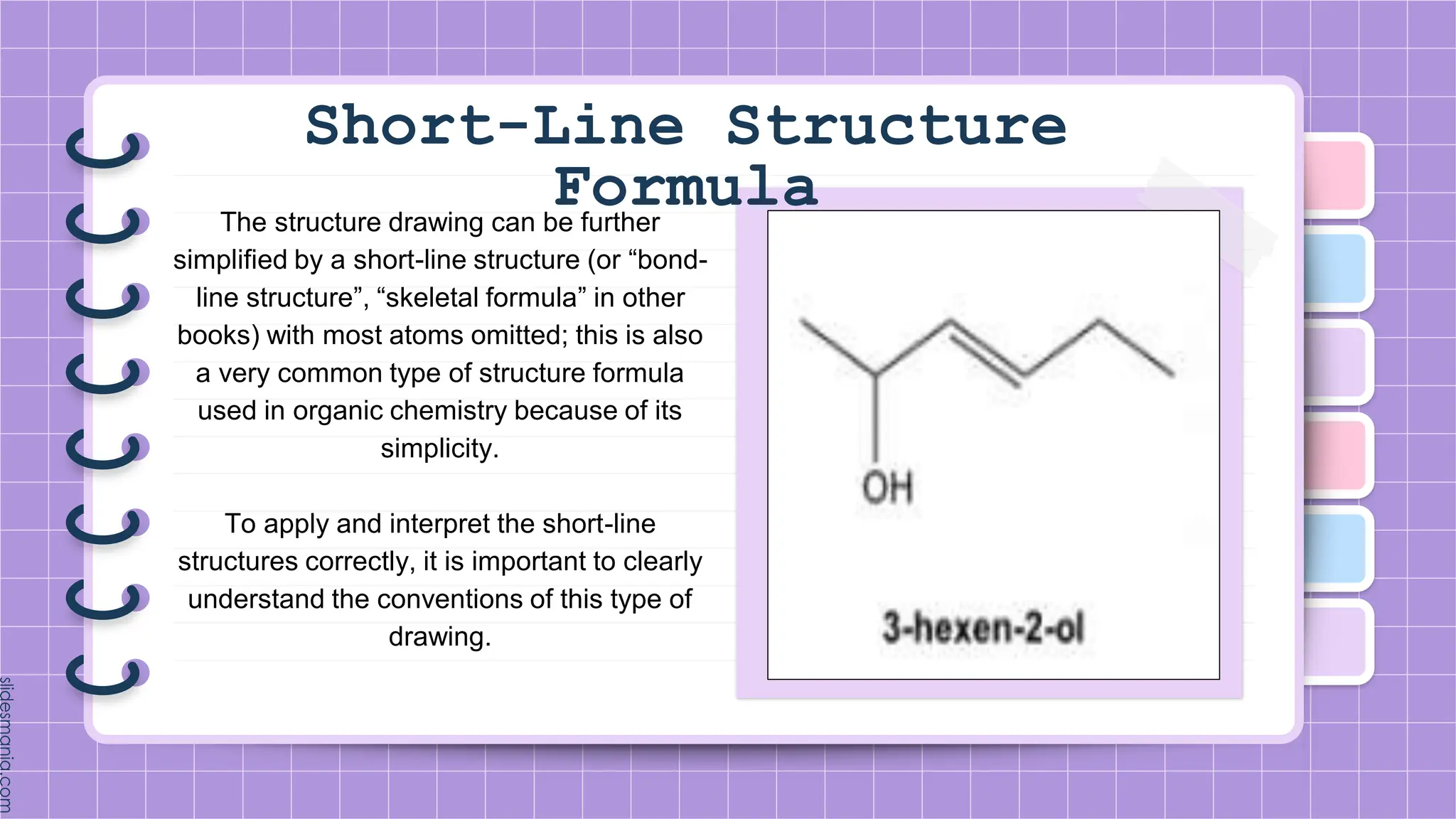
Short-Line Structure
Formula
The structure drawing can be further
simplified by a short-line structure (or “bond-
line structure”, “skeletal formula” in other
books) with most atoms omitted; this is also
a very common type of structure formula
used in organic chemistry because of its
simplicity.
To apply and interpret the short-line
structures correctly, it is important to clearly
understand the conventions of this type of
drawing.
NOMENCLATURE
Did you know?
There are two ways of naming alkanes!
1. Common/Trivial name system
2. IUPAC Nomenclature
(International Union of Pure and Applied Chemistry)
Common/Trivial name system
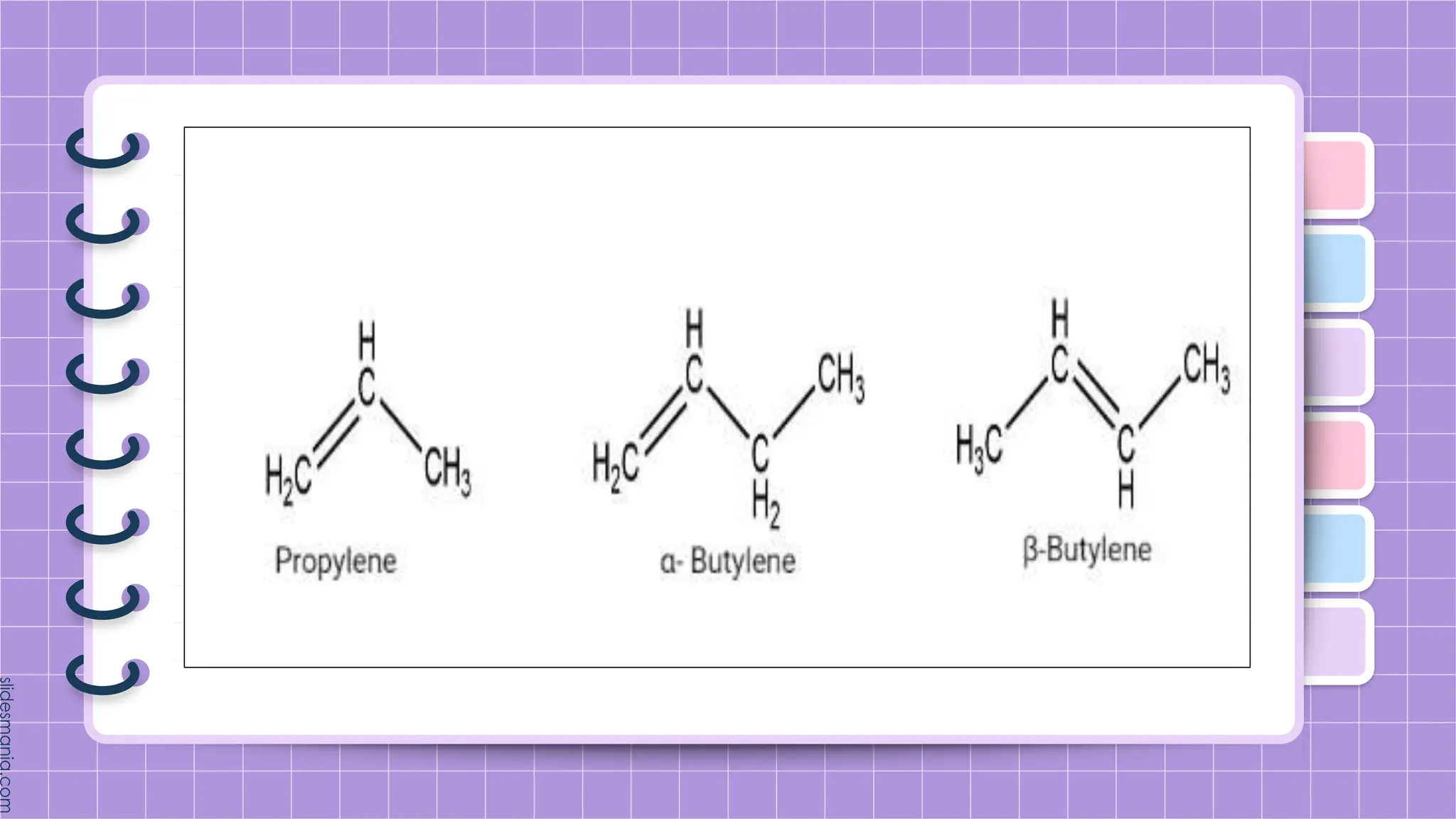
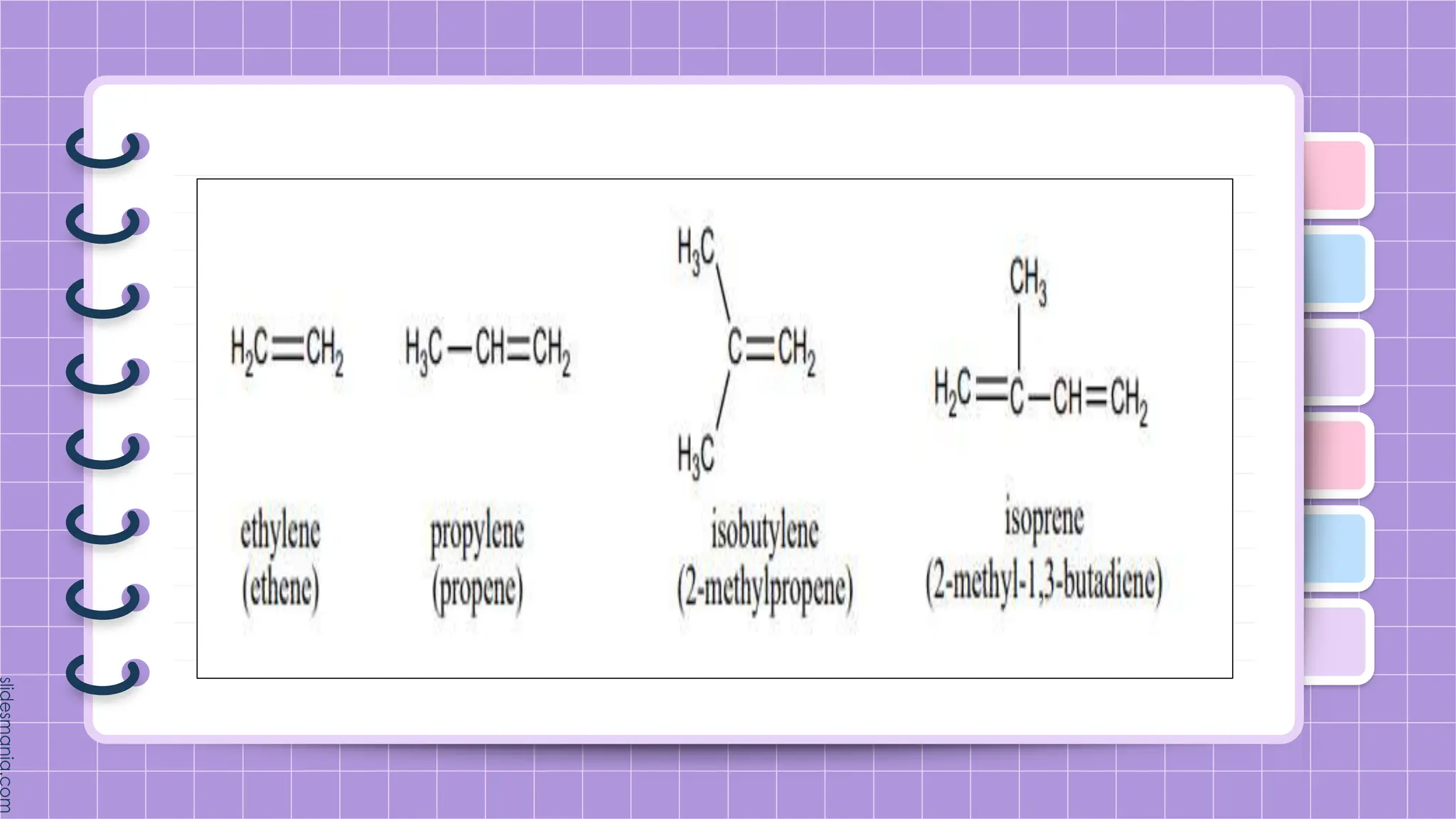
In this system, alkanes are named by changing
the ending “ane” of corresponding alkanes by
“ylene”.
The position of the double bond is indicated by Greek
letters α,β,γ etc
The first member of the homologous series of
alkenes is: CH2 known as methene, but has a very
short life.
01
02
03
IUPAC Nomenclature
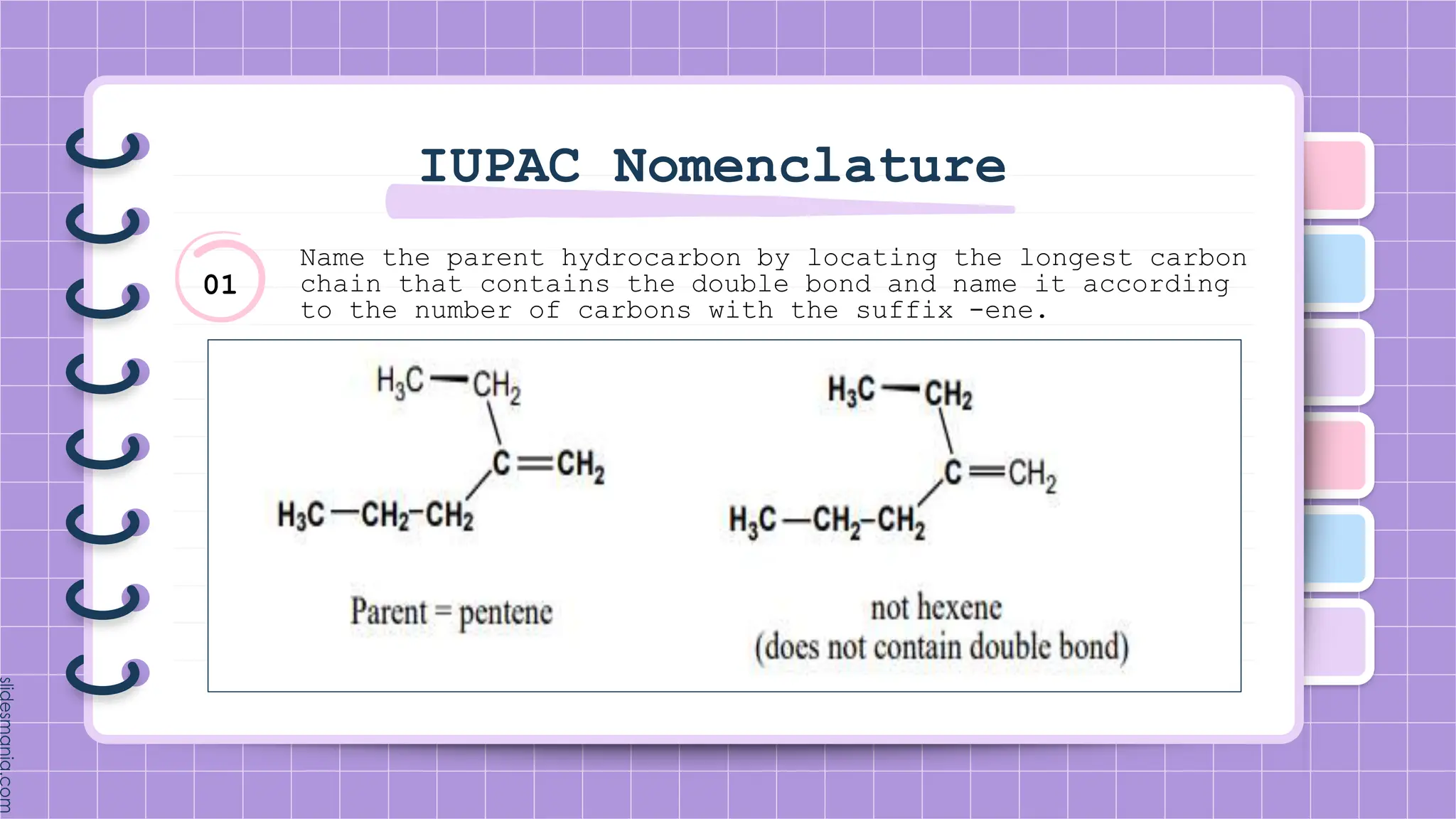
Name the parent hydrocarbon by locating the longest carbon
chain that contains the double bond and name it according
to the number of carbons with the suffix -ene.
01
02
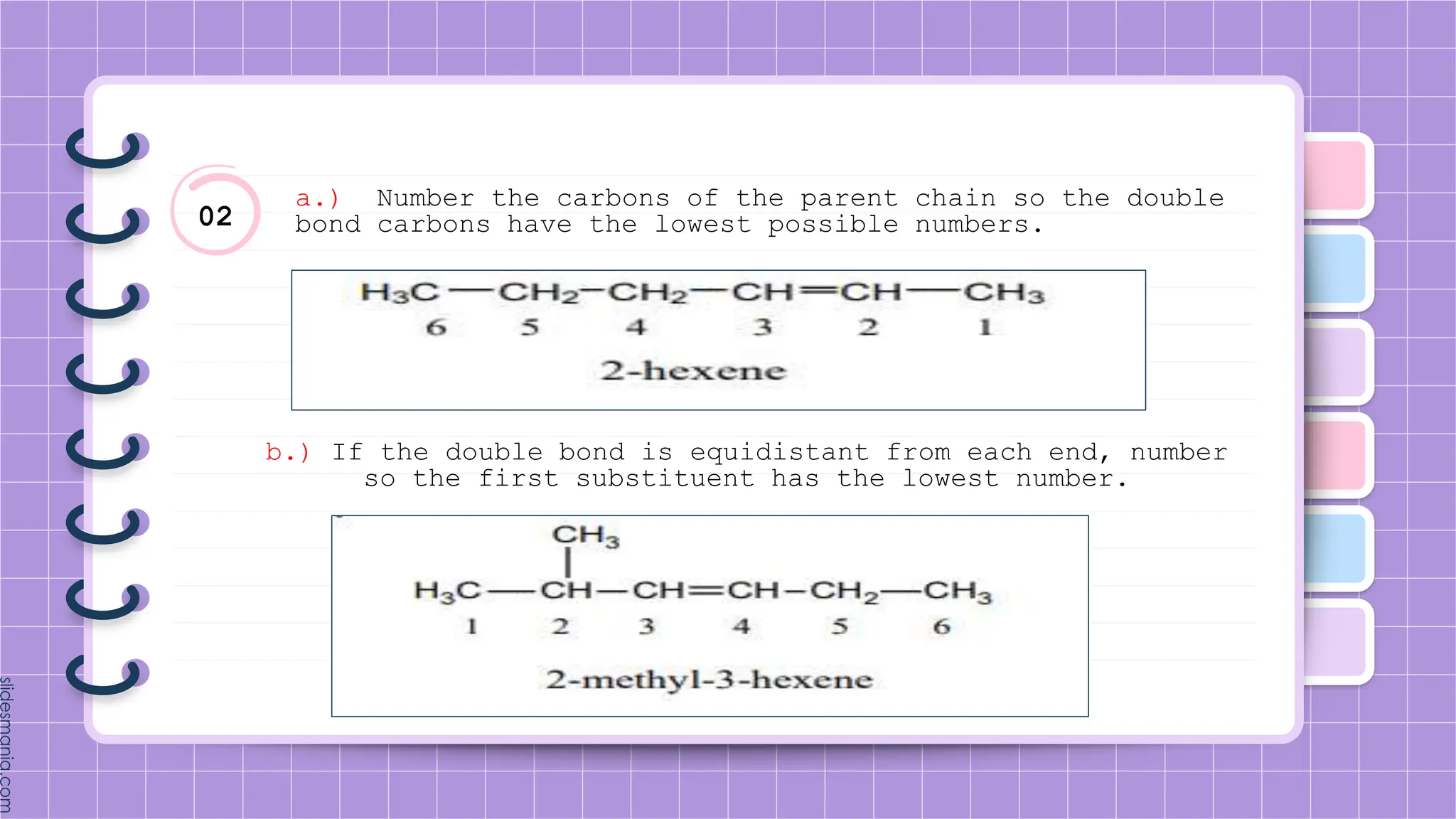
a.) Number the carbons of the parent chain so the double
bond carbons have the lowest possible numbers.
b.) If the double bond is equidistant from each end, number
so the first substituent has the lowest number.
03
04
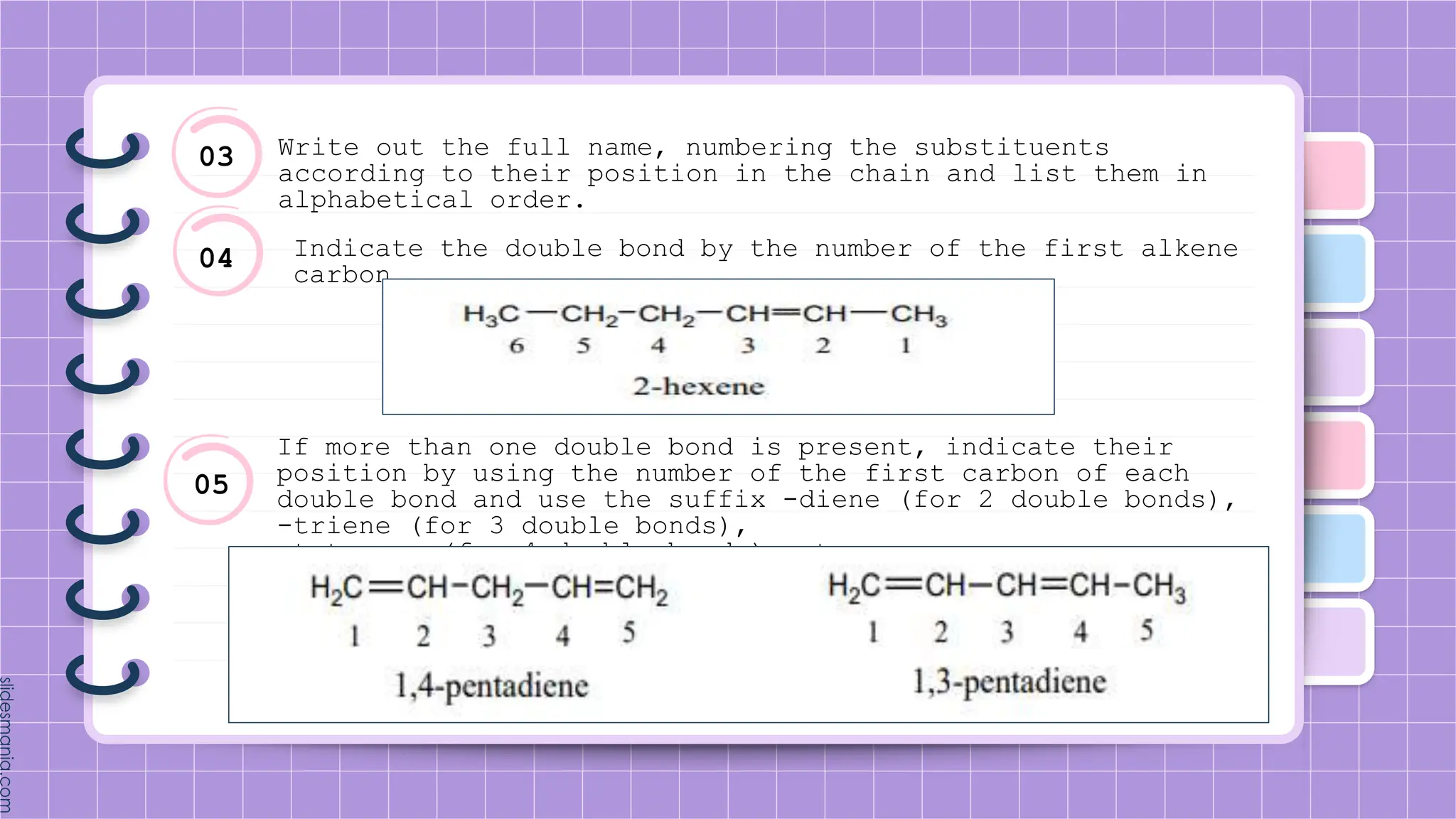
Write out the full name, numbering the substituents
according to their position in the chain and list them in
alphabetical order.
Indicate the double bond by the number of the first alkene
carbon.
05
If more than one double bond is present, indicate their
position by using the number of the first carbon of each
double bond and use the suffix -diene (for 2 double bonds),
-triene (for 3 double bonds),
-tetraene (for 4 double bonds), etc.
06
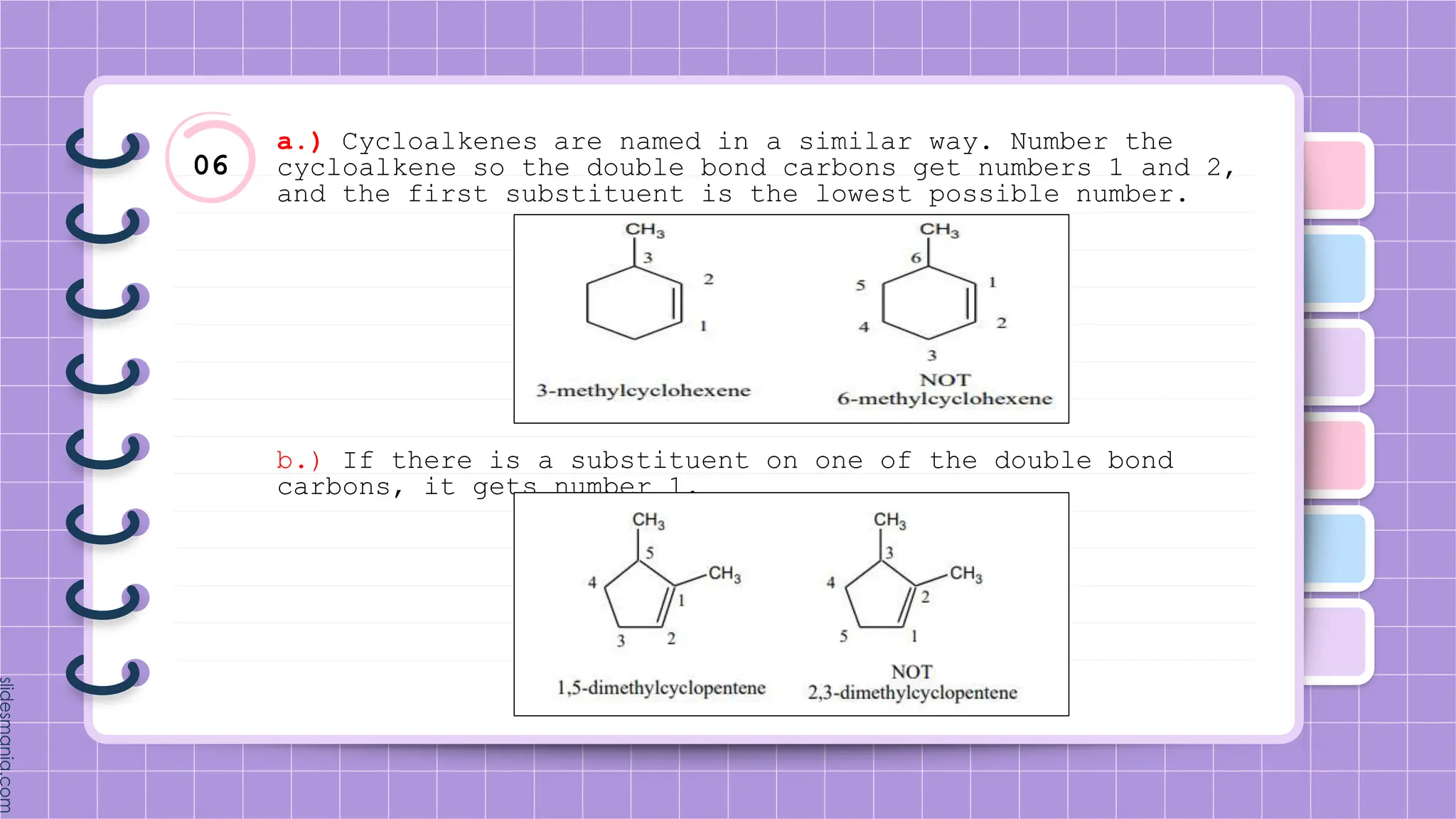
a.) Cycloalkenes are named in a similar way. Number the
cycloalkene so the double bond carbons get numbers 1 and 2,
and the first substituent is the lowest possible number.
b.) If there is a substituent on one of the double bond
carbons, it gets number 1.
REACTIONS
01
Addition reactions of
alkenes
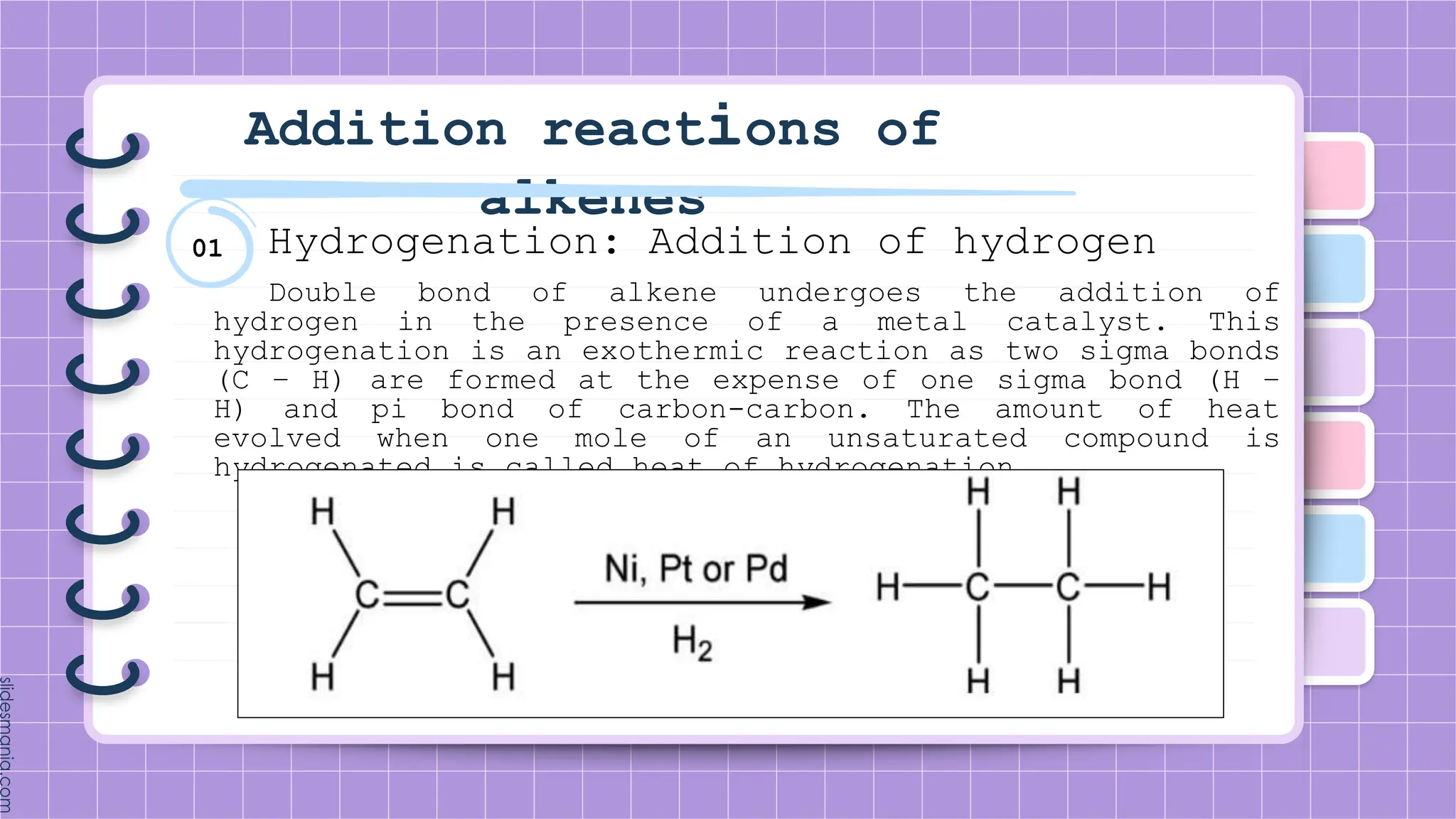
Hydrogenation: Addition of hydrogen
Double bond of alkene undergoes the addition of
hydrogen in the presence of a metal catalyst. This
hydrogenation is an exothermic reaction as two sigma bonds
(C – H) are formed at the expense of one sigma bond (H –
H) and pi bond of carbon-carbon. The amount of heat
evolved when one mole of an unsaturated compound is
hydrogenated is called heat of hydrogenation.
02 Electrophilic addition reactions of
alkenes
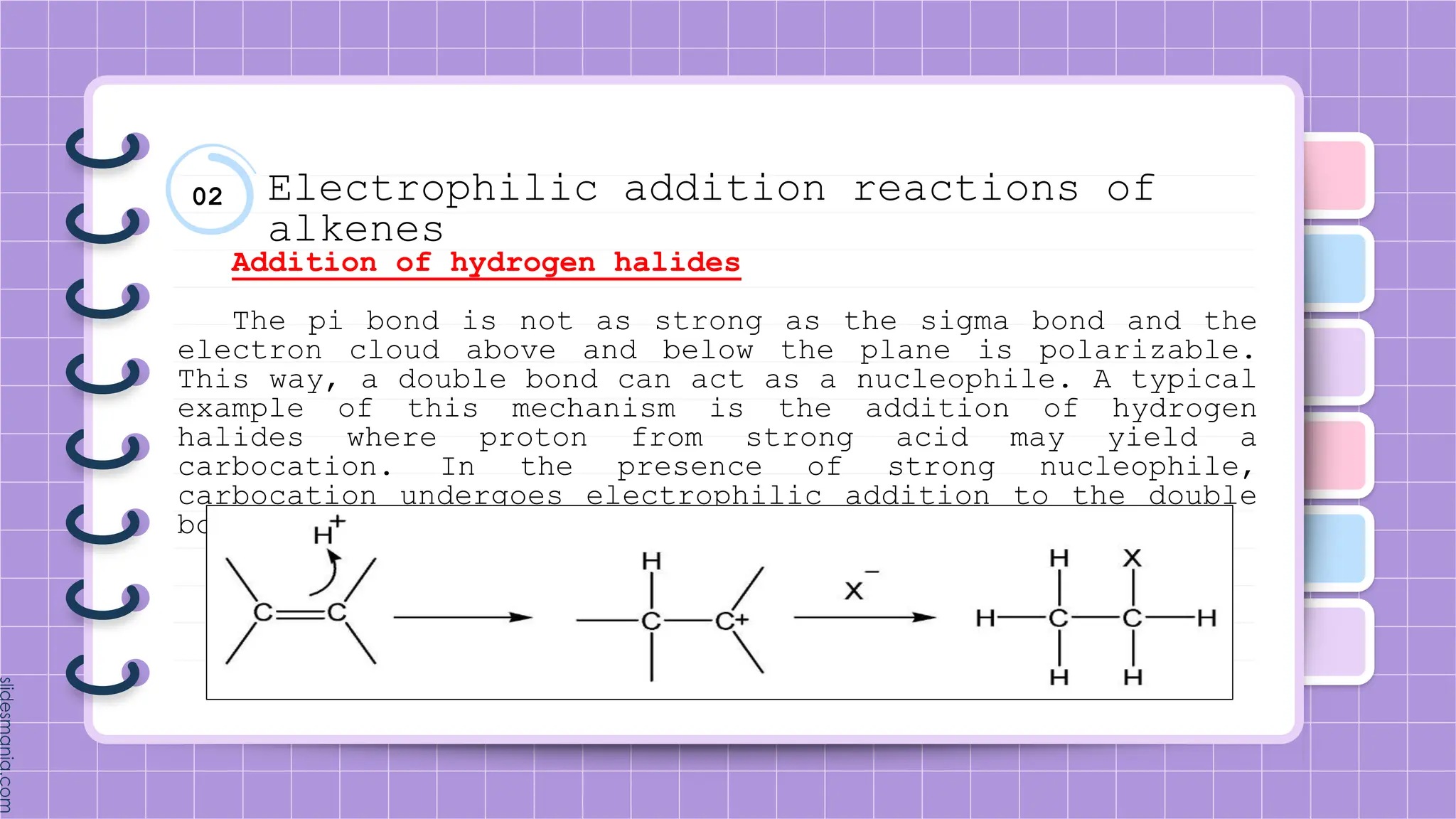
Addition of hydrogen halides
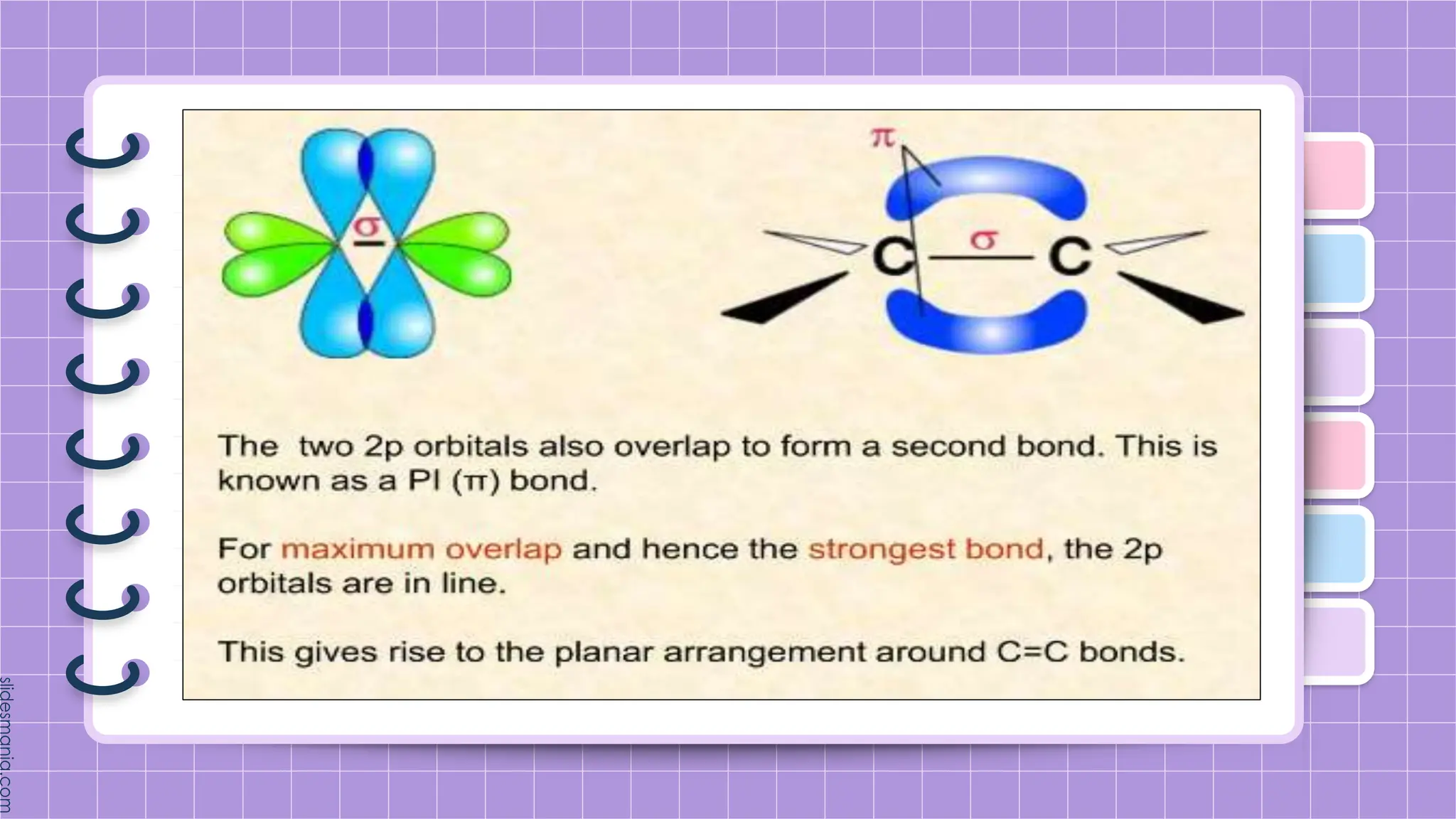
The pi bond is not as strong as the sigma bond and the
electron cloud above and below the plane is polarizable.
This way, a double bond can act as a nucleophile. A typical
example of this mechanism is the addition of hydrogen
halides where proton from strong acid may yield a
carbocation. In the presence of strong nucleophile,
carbocation undergoes electrophilic addition to the double
bond site.
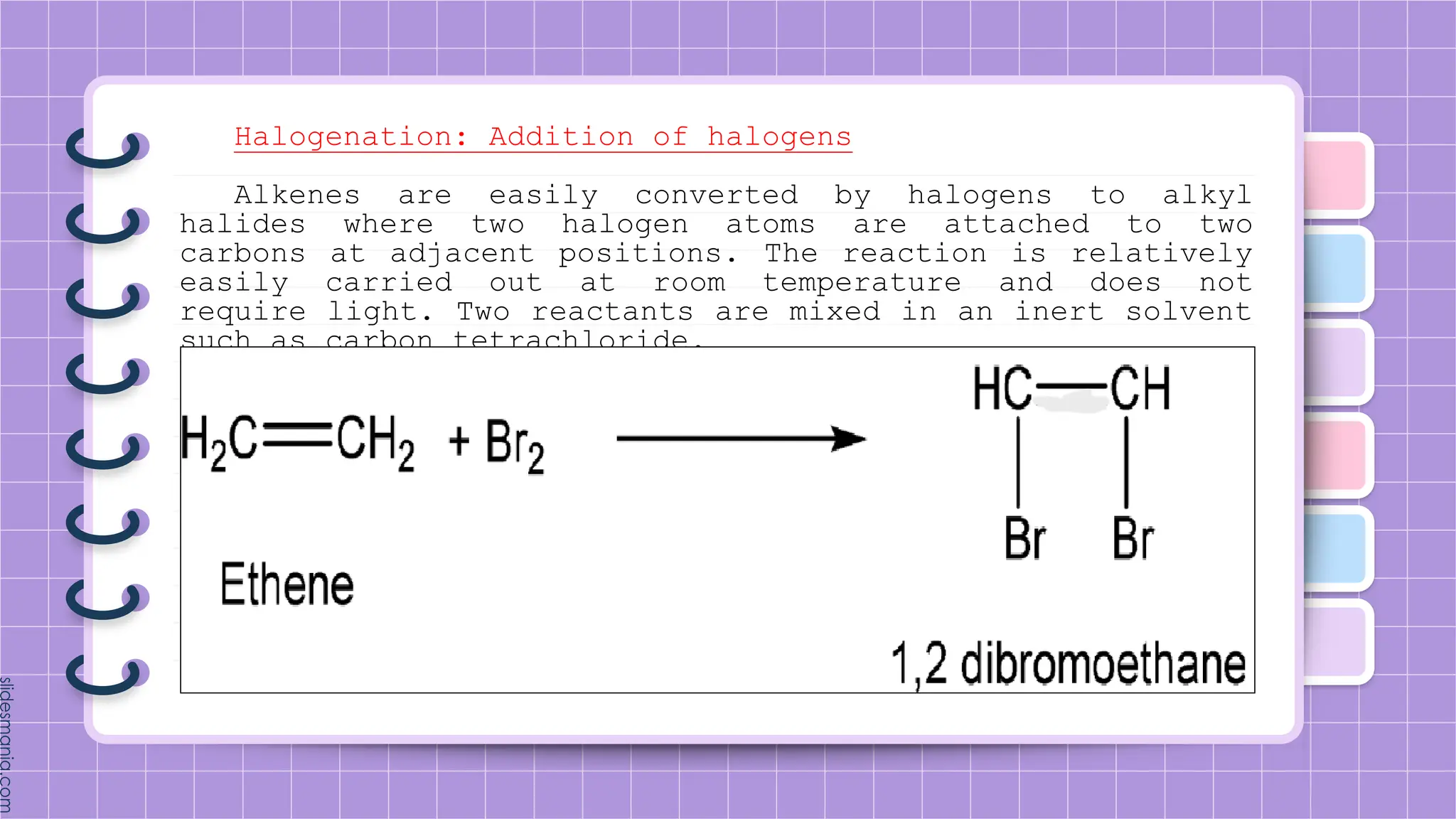
Halogenation: Addition of halogens
Alkenes are easily converted by halogens to alkyl
halides where two halogen atoms are attached to two
carbons at adjacent positions. The reaction is relatively
easily carried out at room temperature and does not
require light. Two reactants are mixed in an inert solvent
such as carbon tetrachloride.
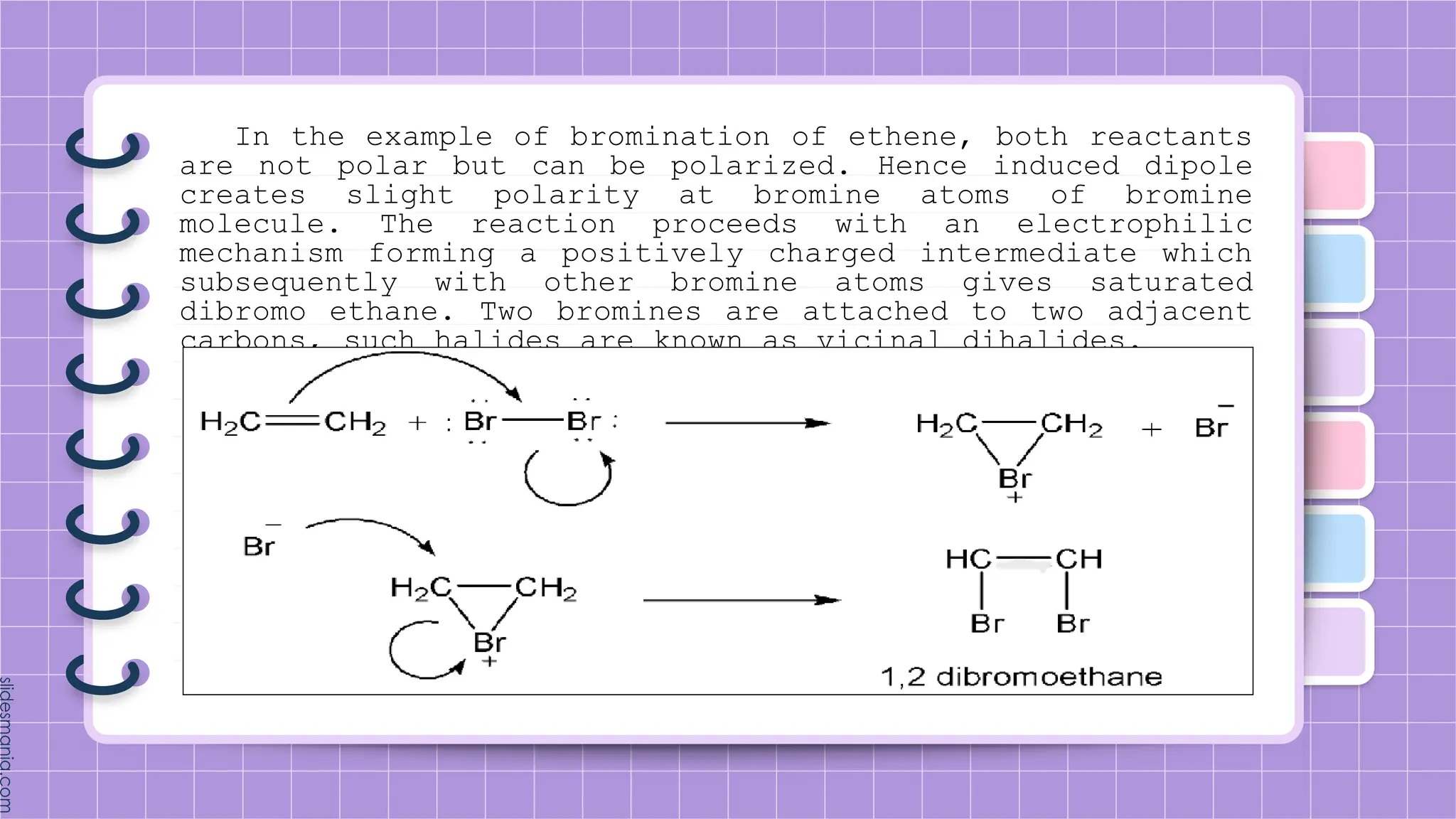
In the example of bromination of ethene, both reactants
are not polar but can be polarized. Hence induced dipole
creates slight polarity at bromine atoms of bromine
molecule. The reaction proceeds with an electrophilic
mechanism forming a positively charged intermediate which
subsequently with other bromine atoms gives saturated
dibromo ethane. Two bromines are attached to two adjacent
carbons, such halides are known as vicinal dihalides.
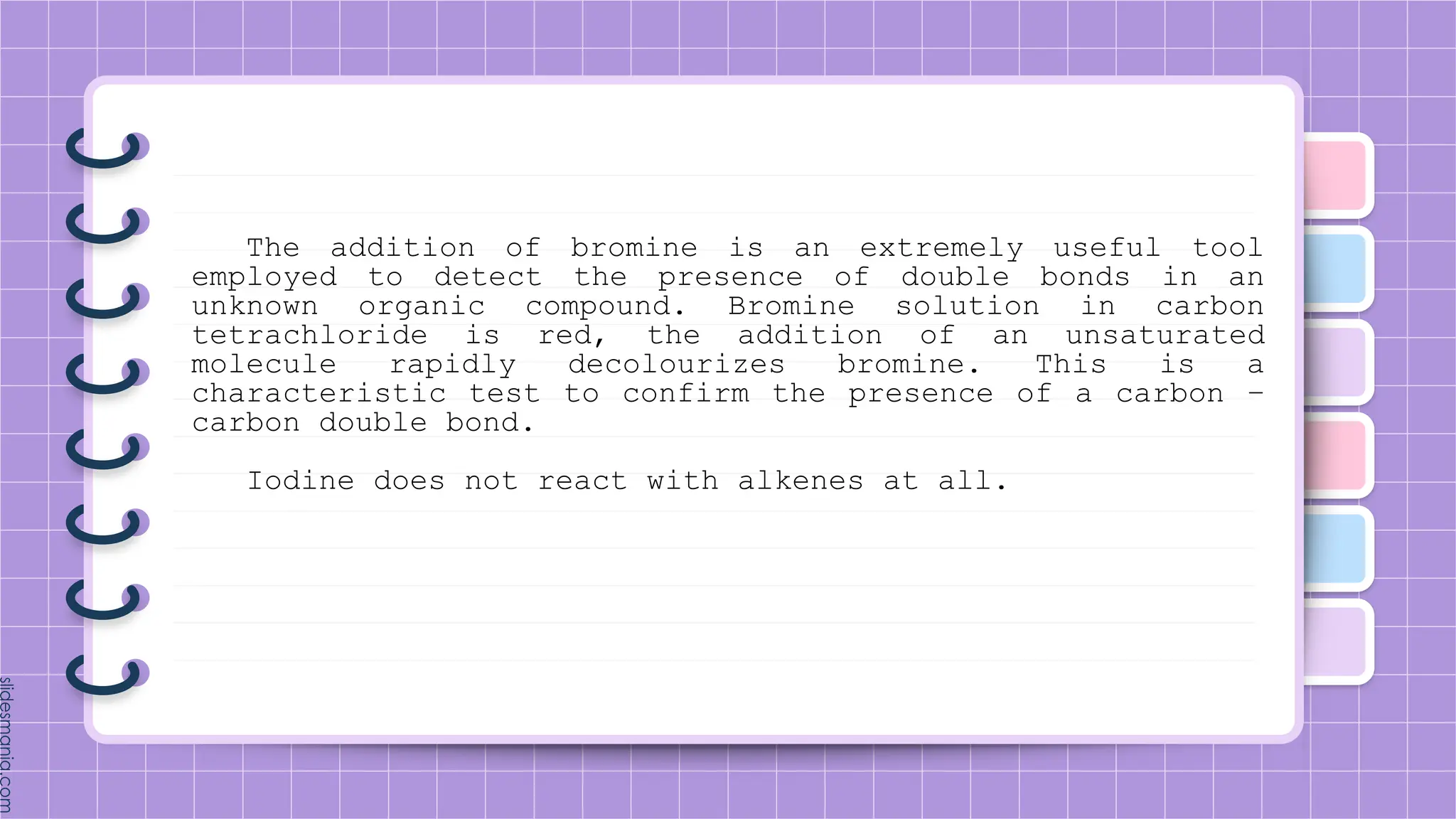
The addition of bromine is an extremely useful tool
employed to detect the presence of double bonds in an
unknown organic compound. Bromine solution in carbon
tetrachloride is red, the addition of an unsaturated
molecule rapidly decolourizes bromine. This is a
characteristic test to confirm the presence of a carbon –
carbon double bond.
Iodine does not react with alkenes at all.
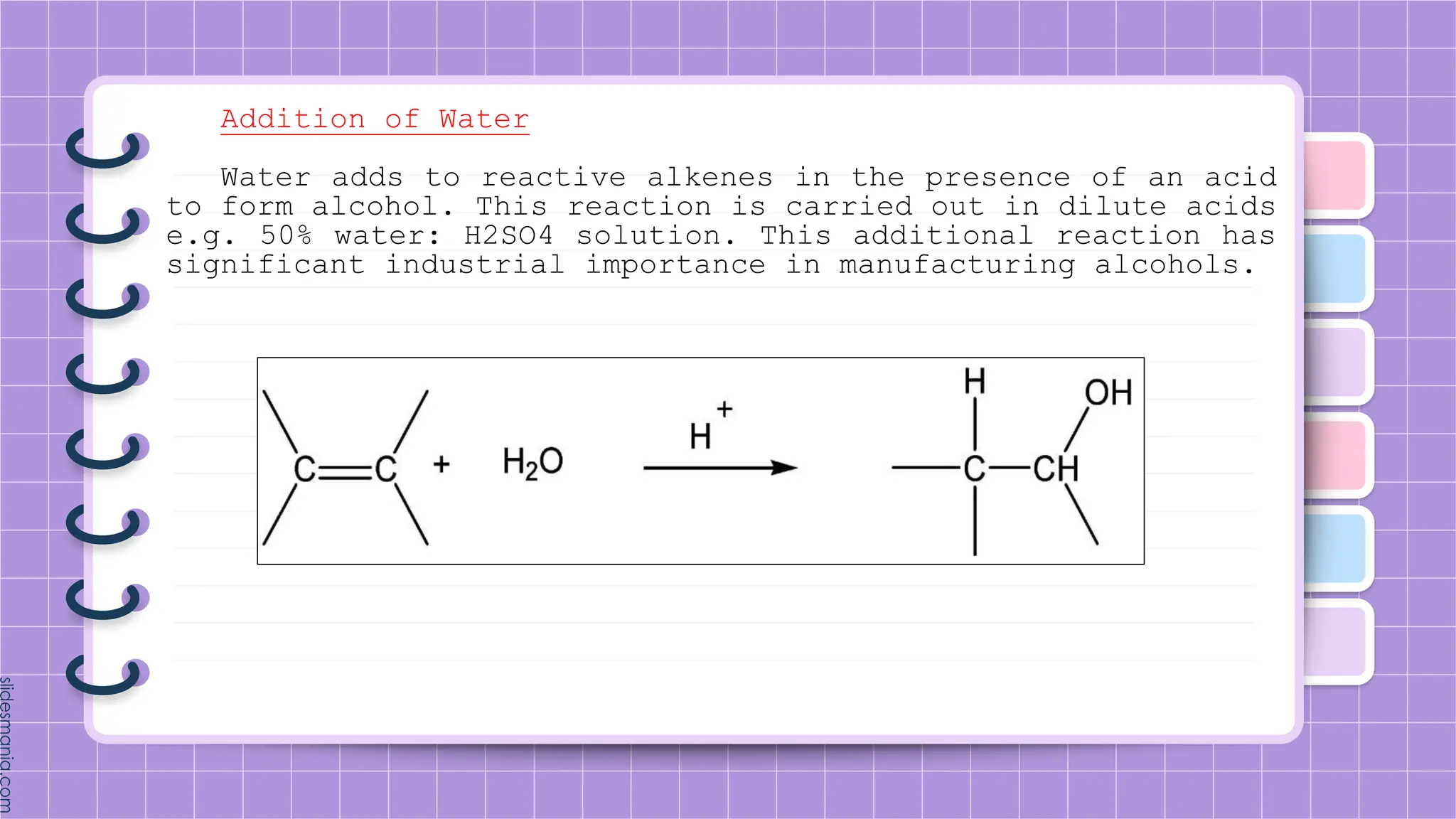
Addition of Water
Water adds to reactive alkenes in the presence of an acid
to form alcohol. This reaction is carried out in dilute acids
e.g. 50% water: H2SO4 solution. This additional reaction has
significant industrial importance in manufacturing alcohols.
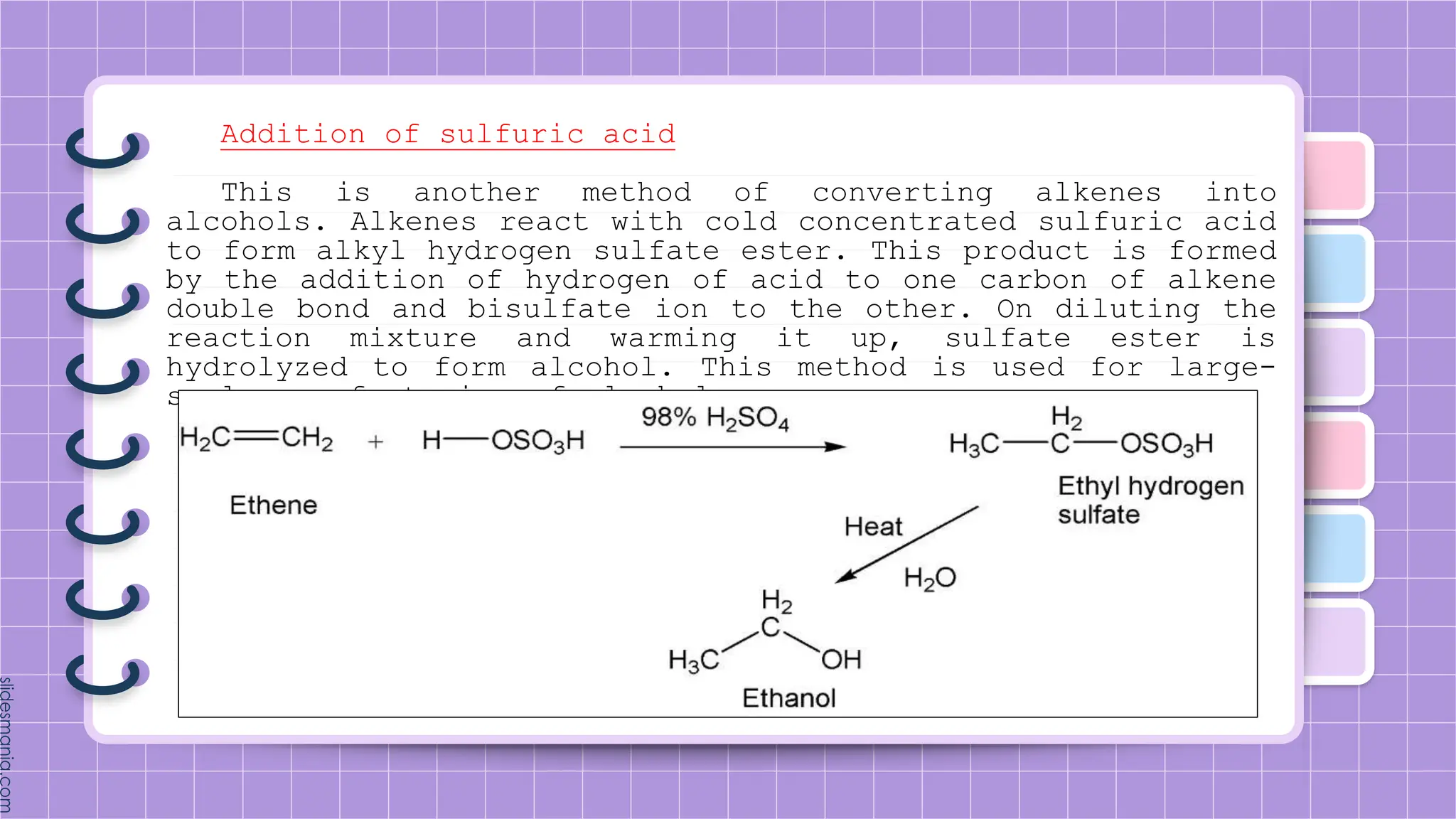
Addition of sulfuric acid
This is another method of converting alkenes into
alcohols. Alkenes react with cold concentrated sulfuric acid
to form alkyl hydrogen sulfate ester. This product is formed
by the addition of hydrogen of acid to one carbon of alkene
double bond and bisulfate ion to the other. On diluting the
reaction mixture and warming it up, sulfate ester is
hydrolyzed to form alcohol. This method is used for large-
scale manufacturing of alcohols.
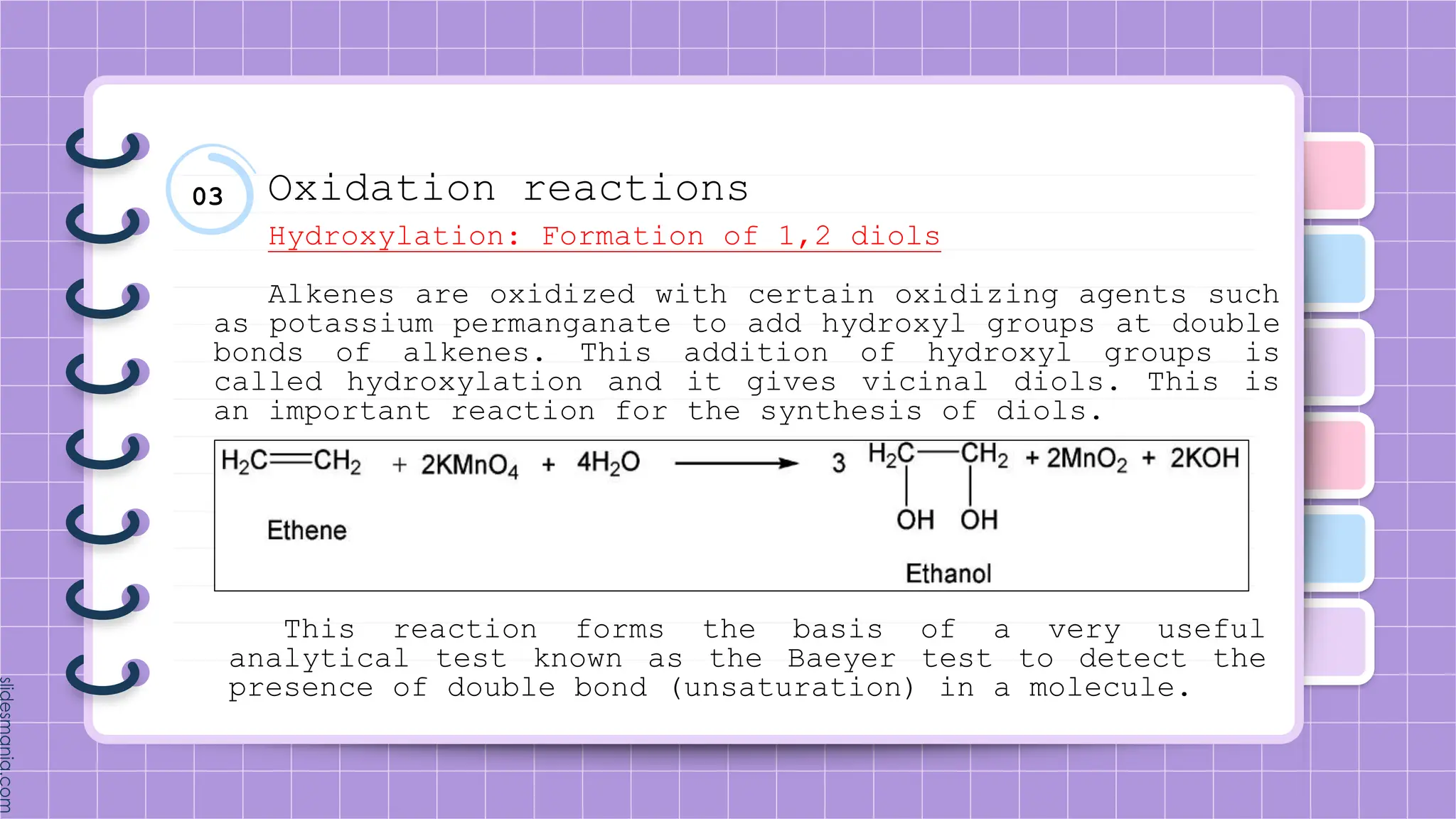
03 Oxidation reactions
Hydroxylation: Formation of 1,2 diols
Alkenes are oxidized with certain oxidizing agents such
as potassium permanganate to add hydroxyl groups at double
bonds of alkenes. This addition of hydroxyl groups is
called hydroxylation and it gives vicinal diols. This is
an important reaction for the synthesis of diols.
This reaction forms the basis of a very useful
analytical test known as the Baeyer test to detect the
presence of double bond (unsaturation) in a molecule.
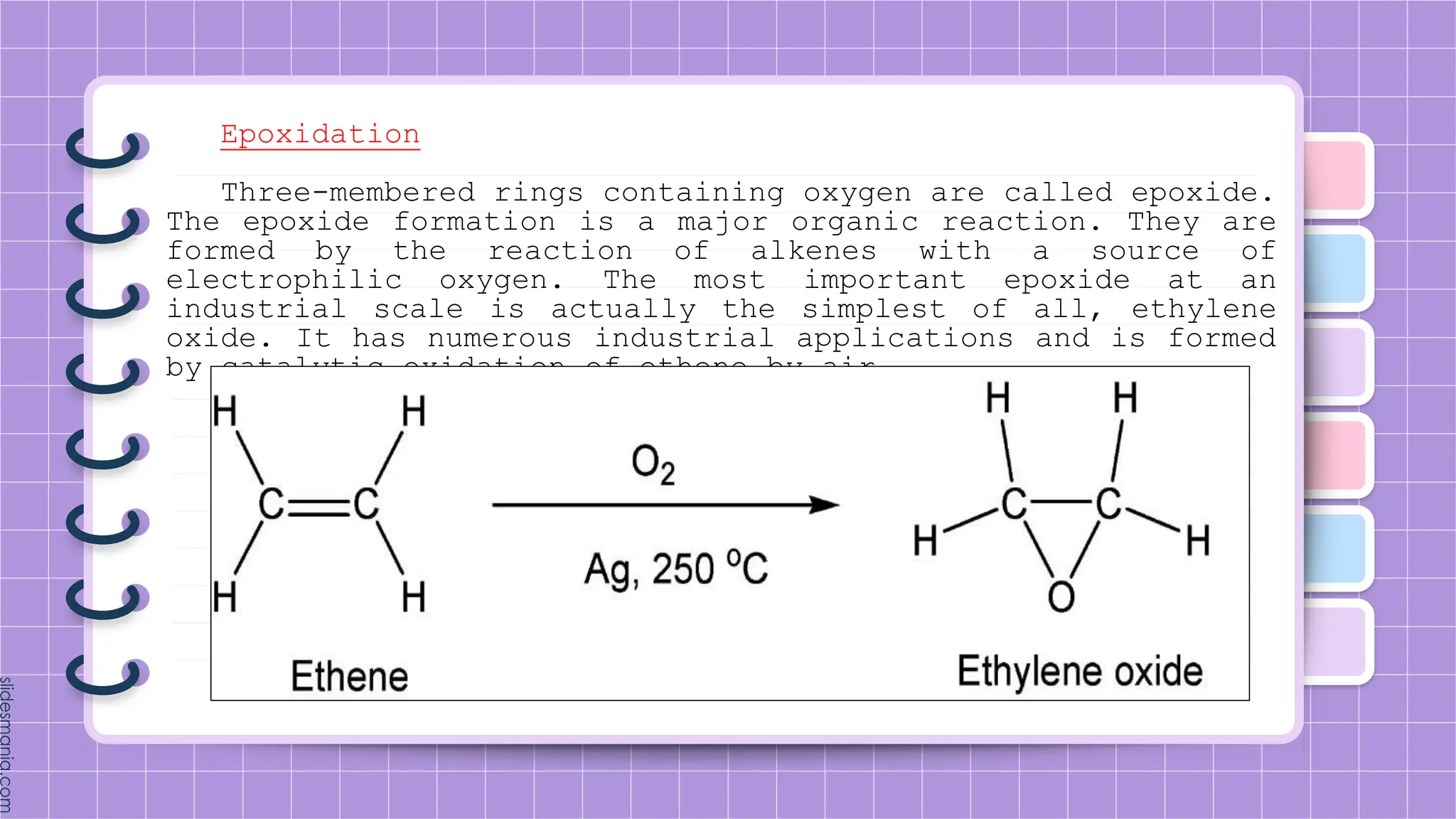
Epoxidation
Three-membered rings containing oxygen are called epoxide.
The epoxide formation is a major organic reaction. They are
formed by the reaction of alkenes with a source of
electrophilic oxygen. The most important epoxide at an
industrial scale is actually the simplest of all, ethylene
oxide. It has numerous industrial applications and is formed
by catalytic oxidation of ethene by air.
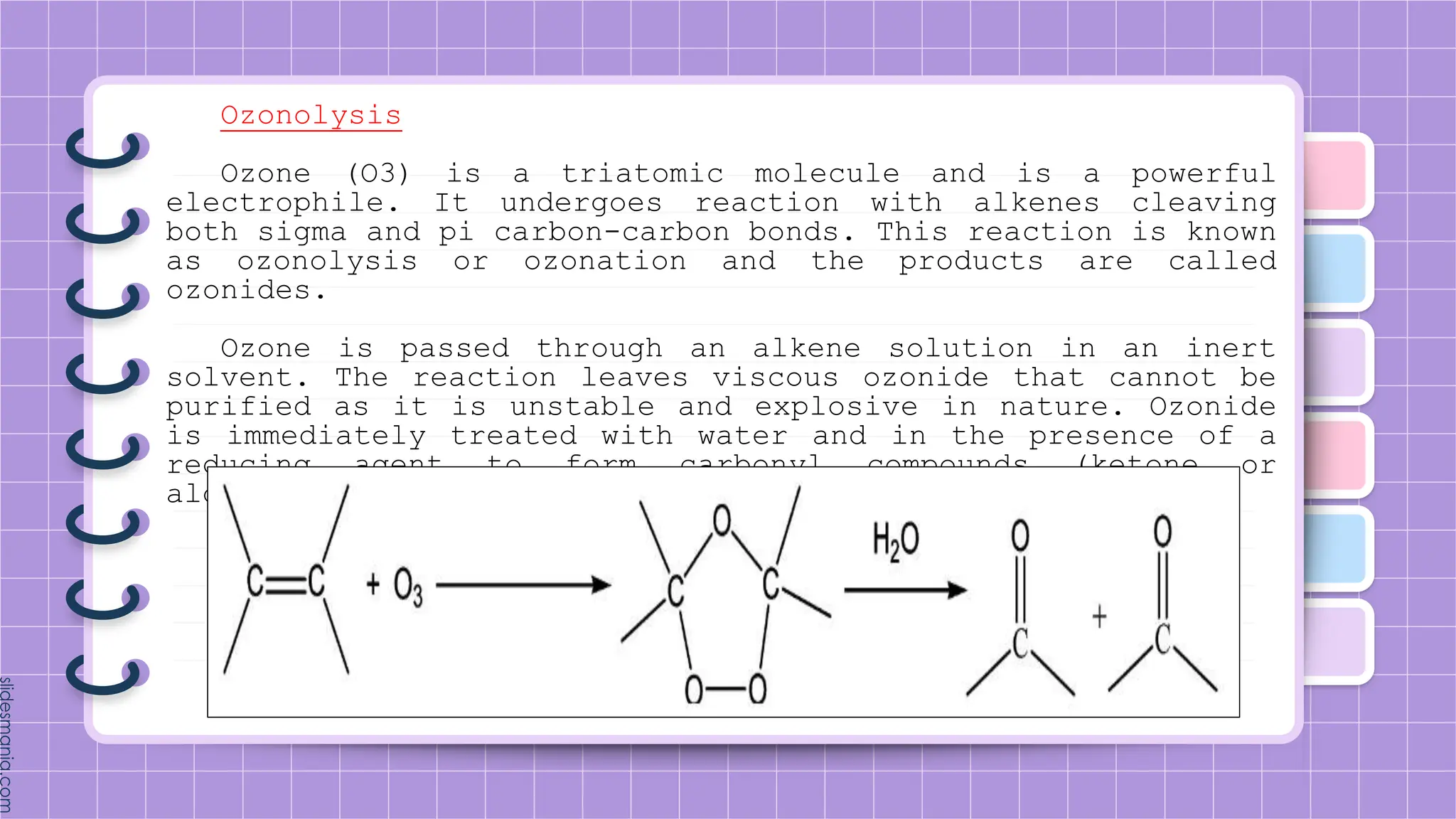
Ozonolysis
Ozone (O3) is a triatomic molecule and is a powerful
electrophile. It undergoes reaction with alkenes cleaving
both sigma and pi carbon-carbon bonds. This reaction is known
as ozonolysis or ozonation and the products are called
ozonides.
Ozone is passed through an alkene solution in an inert
solvent. The reaction leaves viscous ozonide that cannot be
purified as it is unstable and explosive in nature. Ozonide
is immediately treated with water and in the presence of a
reducing agent to form carbonyl compounds (ketone or
aldehyde).
04 Polymerization
Polymerization is a chemical reaction where small units
or groups combine together to make a bigger molecular
material. The small sub-units (or building blocks) are
called monomers while the resultant bigger molecular
weight material is called polymer and the process is
called polymerization. During polymerization, thousands of
monomers unite together to make a very large molecule.
Ethene is an important feedstock for the synthesis of
various polymers in the chemical industry. PVC and PE are
commonly known words in our everyday life. PVC stands for
polyvinyl chloride while PE is polyethylene. Both are
plastics and are in use around us.
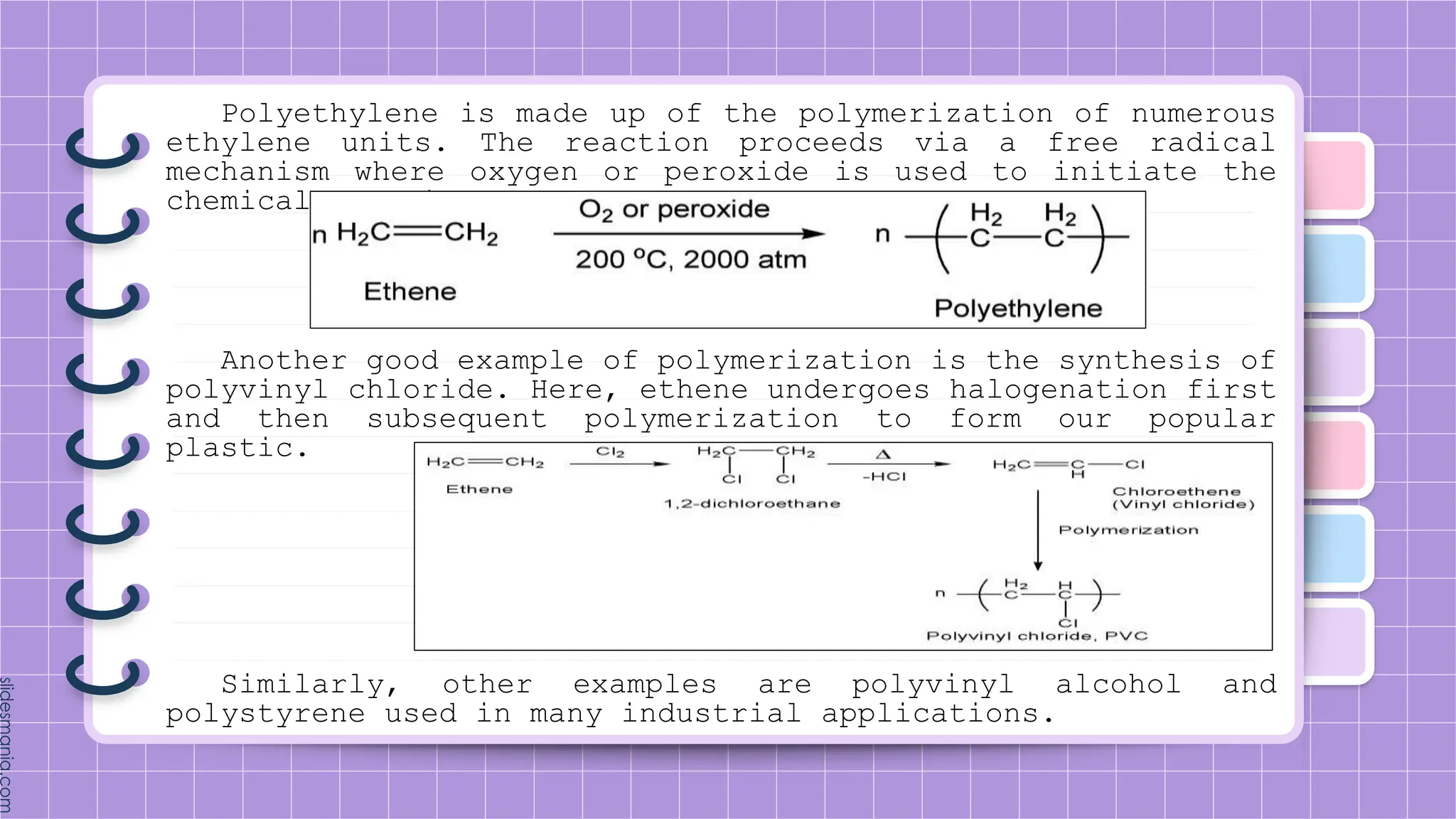
Polyethylene is made up of the polymerization of numerous
ethylene units. The reaction proceeds via a free radical
mechanism where oxygen or peroxide is used to initiate the
chemical reaction.
Another good example of polymerization is the synthesis of
polyvinyl chloride. Here, ethene undergoes halogenation first
and then subsequent polymerization to form our popular
plastic.
Similarly, other examples are polyvinyl alcohol and
polystyrene used in many industrial applications.
USES/APPLICATION
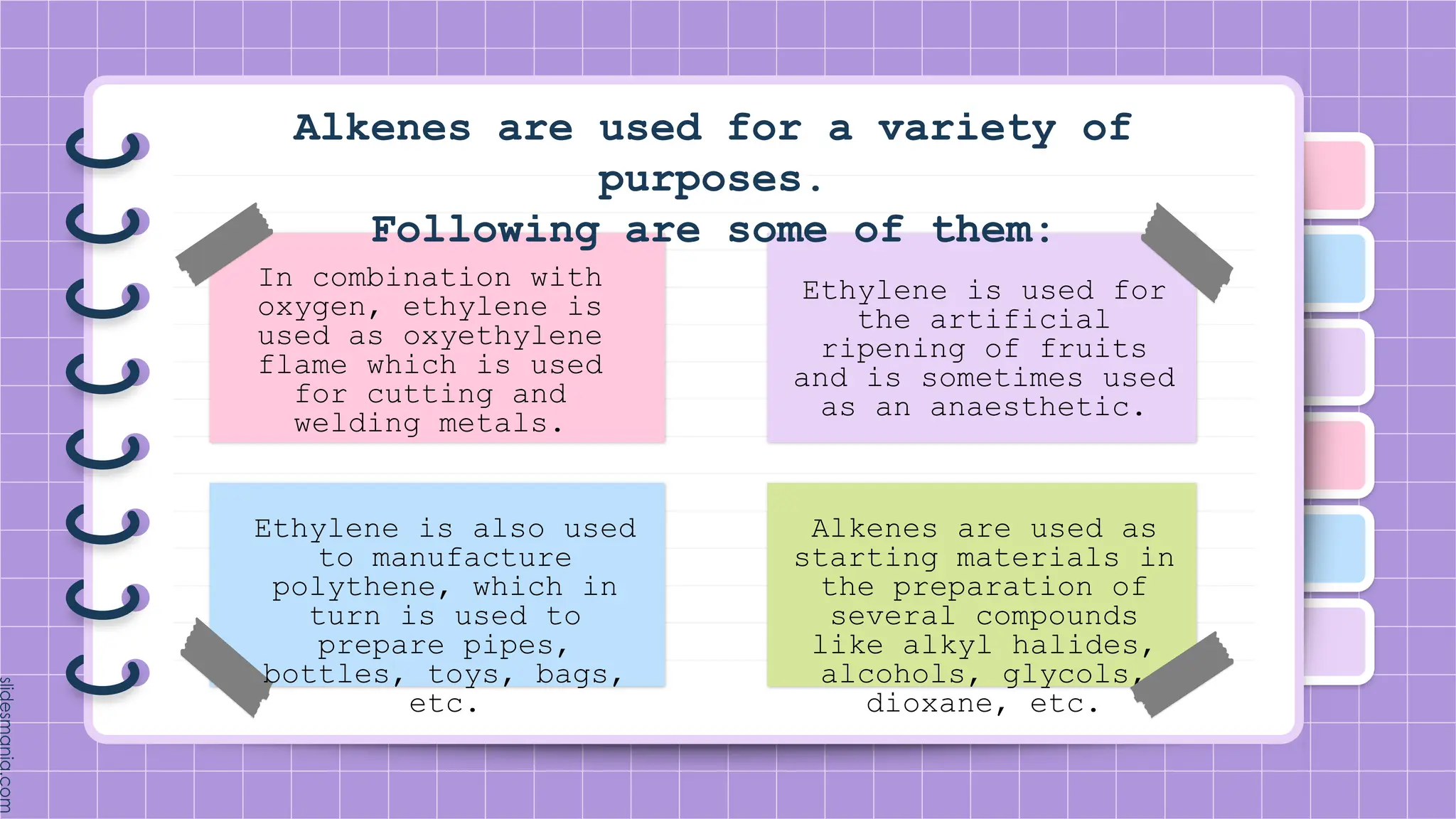
Alkenes are used for a variety of
purposes.
Following are some of them:
In combination with
oxygen, ethylene is
used as oxyethylene
flame which is used
for cutting and
welding metals.
Ethylene is also used
to manufacture
polythene, which in
turn is used to
prepare pipes,
bottles, toys, bags,
etc.
Ethylene is used for
the artificial
ripening of fruits
and is sometimes used
as an anaesthetic.
Alkenes are used as
starting materials in
the preparation of
several compounds
like alkyl halides,
alcohols, glycols,
dioxane, etc.
Ethene on
polymerization
gives
polyethylene, a
well-known
plastic.
Limonene, containing
two carbon-carbon
double bonds, is
responsible for the
smell of lemons and
oranges.
Ethene is also
responsible for the
germination of seeds,
flower maturation and
ripening of fruits
(e.g. tomatoes).
β−phellandrene
is present in
eucalyptus oil
It also plays an important role in our
everyday life.
Natural rubber is
obtained from a basic
unit, isoprene, which
contains two carbon-
carbon, double bonds.
The orange-pink
colour of carrot is
due to the presence
of β−carotene
that contains eleven
carbon-carbon double
bonds.
Many edible oils
consist of fatty
acids that have one
or more carbon-carbon
double bonds (e.g.
oleic acid).
The flavour of ginger
is due to the
presence of
zingiberene, which
contains three
carbon-carbon double
bonds.
The skin of an apple
contains a compound
known as α−farnesene,
which contains four
carbon-carbon double
bonds.
β−carotene decomposes to form
vitamin A, which undergoes a number
of chemical reactions in presence of
light which is responsible for the
ocular activity.
The chemistry of
vision of all
animals is
closely related
to the chemistry
of Alkenes.
ACTIVITY
1. Briefly describe the
properties of alkenes.
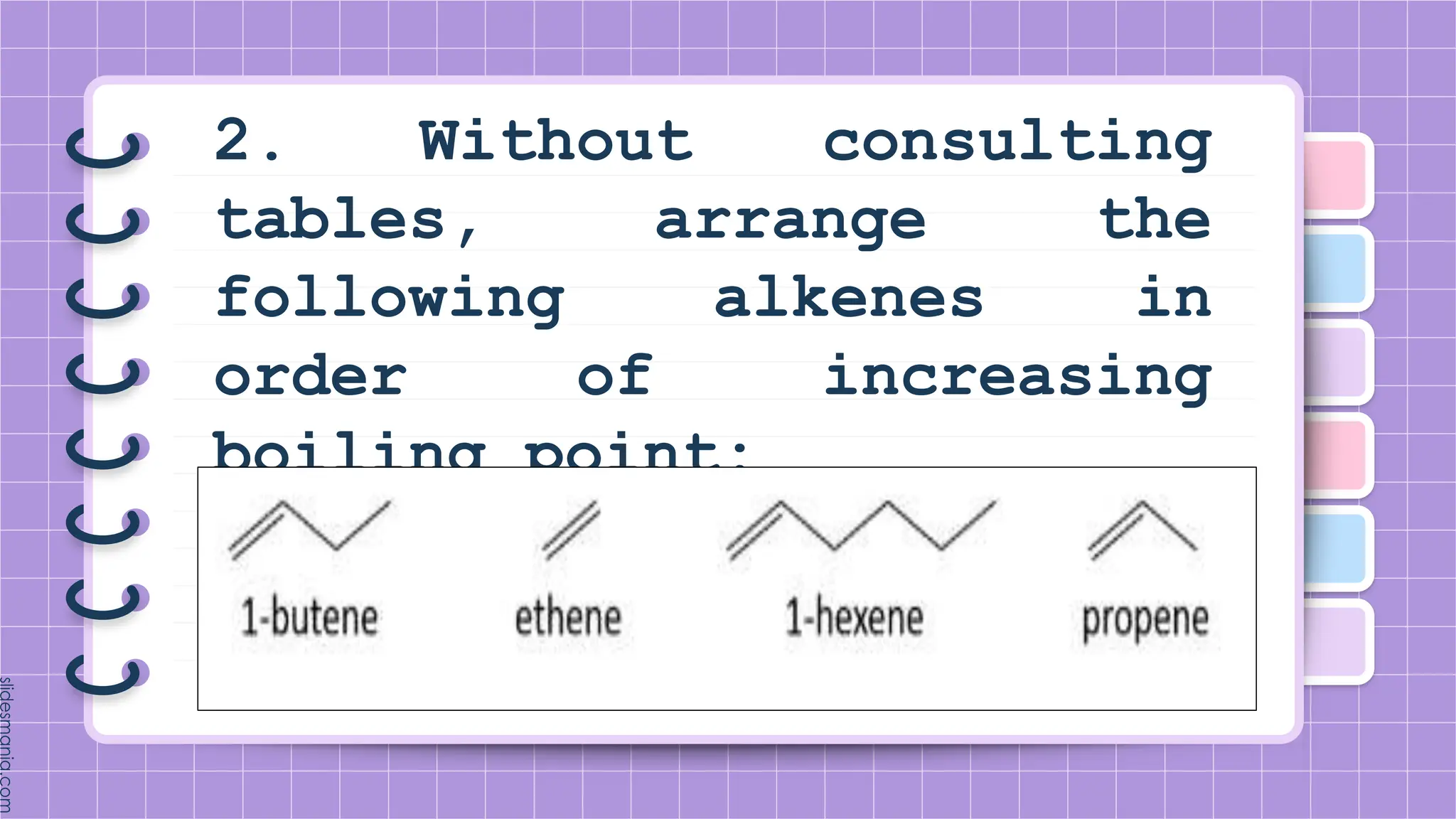
2. Without consulting
tables, arrange the
following alkenes in
order of increasing
boiling point:
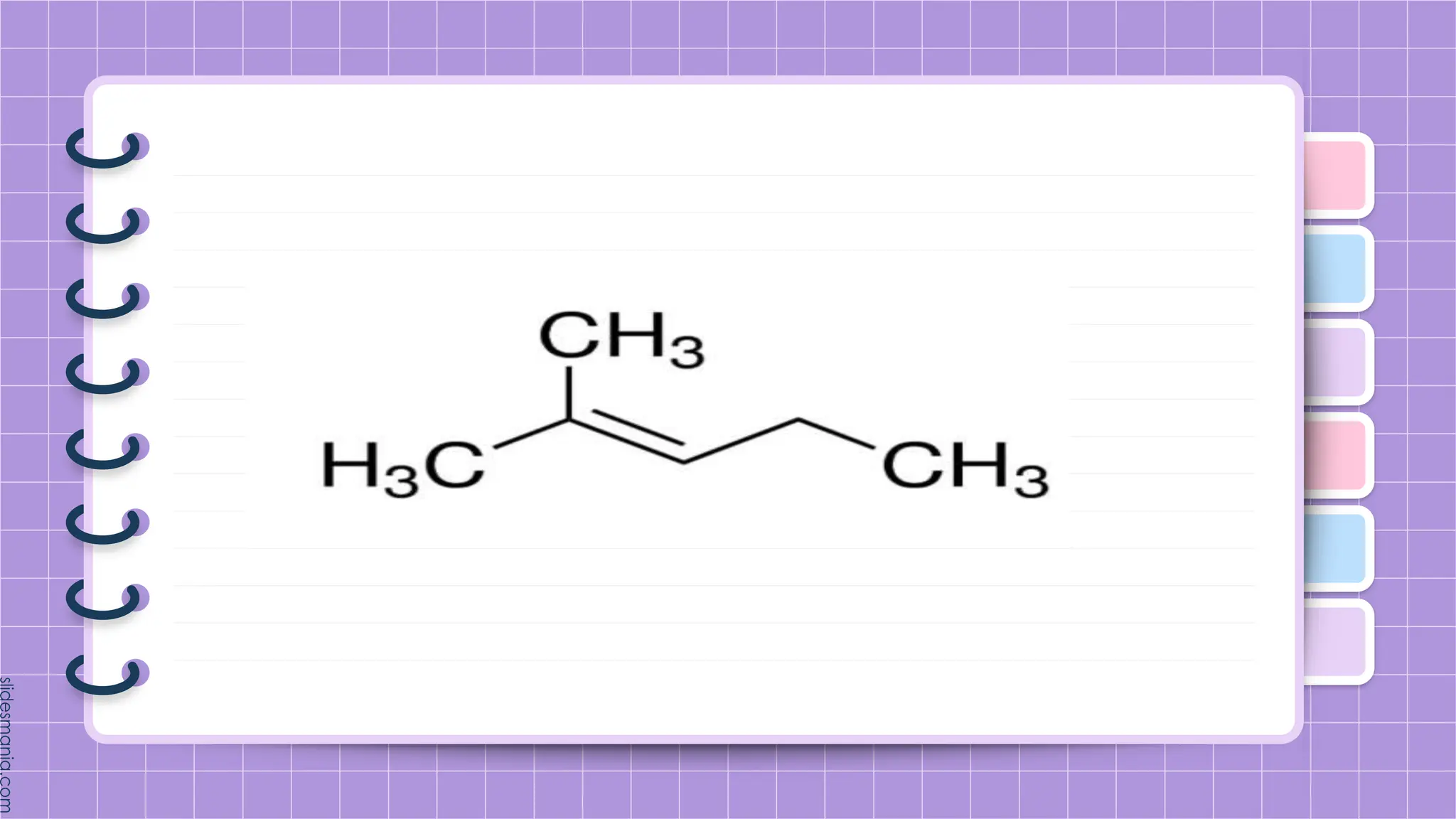
3.Draw the structure
for
2-methyl-2-pentene
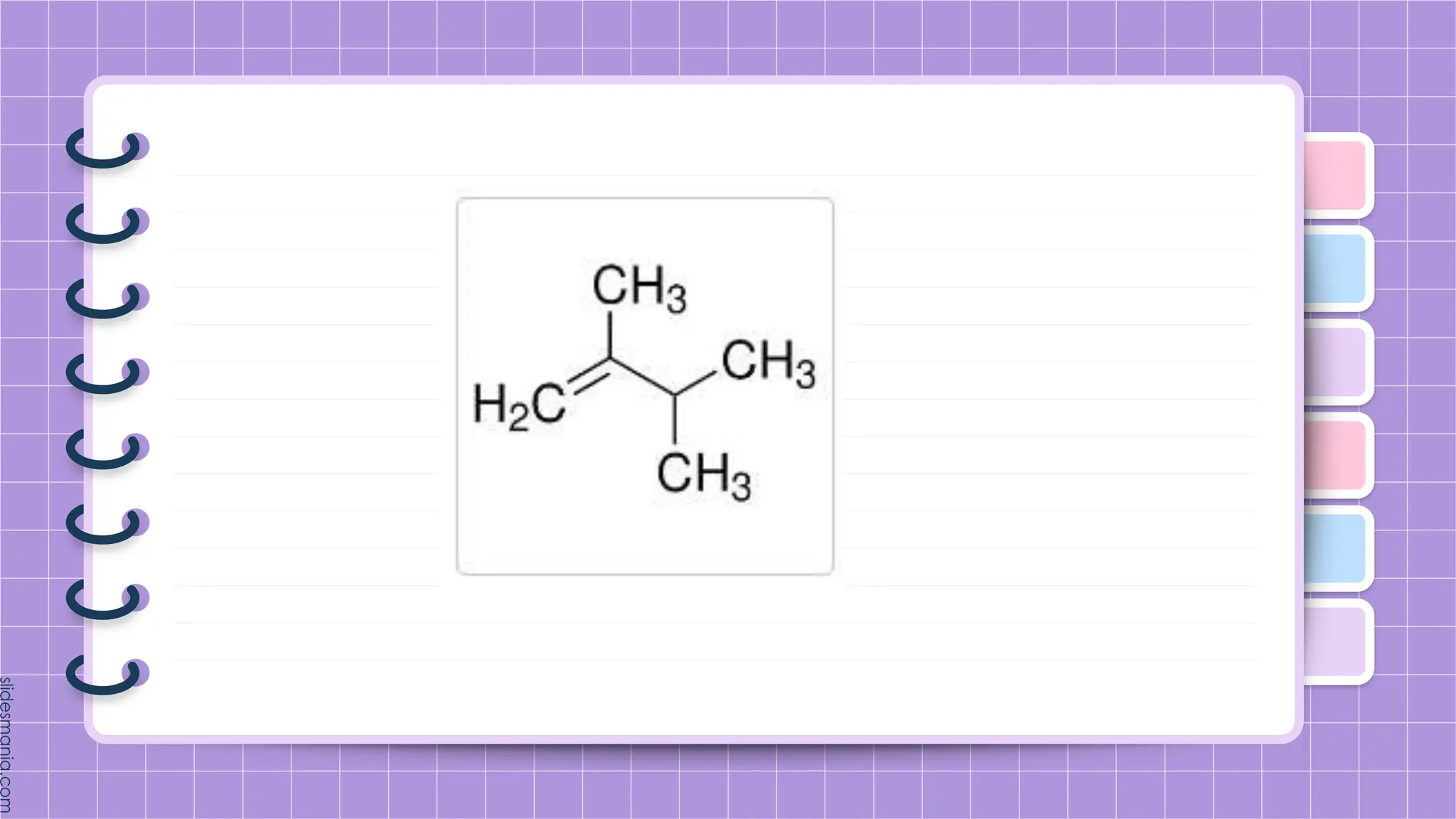
4.Draw the structure
for
2,3-dimethyl-1-
butene
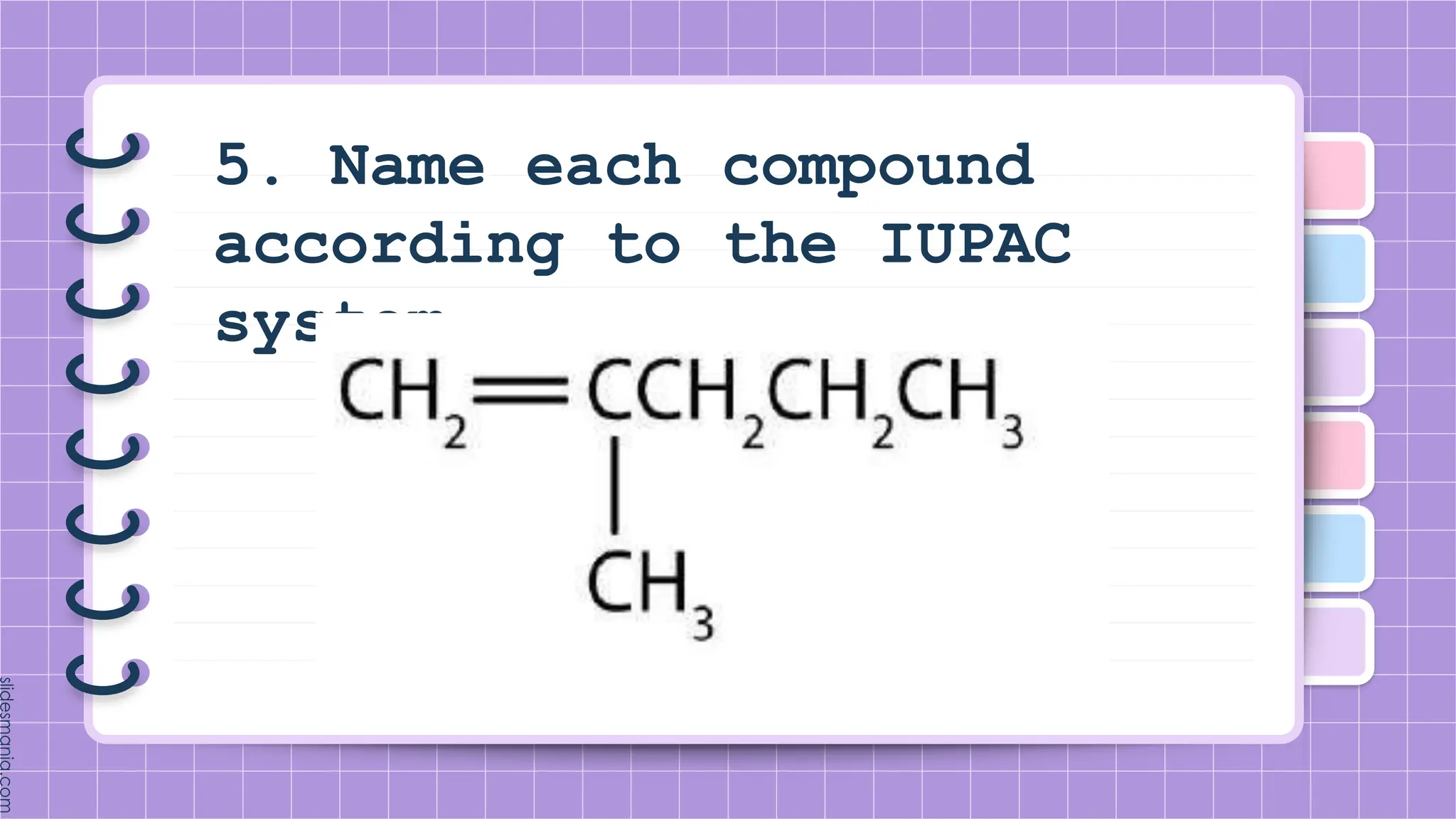
5. Name each compound
according to the IUPAC
system.
Uses/Application of
ALKENES
Thank you!

ALKENES and it Functional Groups Compund

  • 1.
    Unsaturated Hydrocarbons: ALKENES RONIELENE M. ABUG OrganicChemistry Central Philippines State University - Main Campus
  • 2.
    Table of contents. 01| Properties 02 | Structure 03 | Nomenclature 04 | Reactions 05 | Uses or Application 06 | Activity
  • 3.
    Alkenes  are aclass of unsaturated hydrocarbons characterized by at least one carbon-carbon double bond.  classified as unsaturated hydrocarbons (compounds with double or triple carbon - carbon bonds that enable them to add up hydrogen atoms)  also called as olefins (compound made up of hydrogen and carbon that contains one or more pairs of carbon atoms linked by a double bond)  Mathematically, this can be indicated by the following general formula: CnH2n
  • 4.
  • 5.
    Physical state The memberscontaining two or four carbon atoms are gases, five to seventeen, liquids, eighteen onwards, solids at room temperature and they burn in air with a luminous smoky flame. Density Alkenes are lighter than water. Solubility Alkenes are insoluble in water and soluble in organic solvents such as benzene etc. Boiling point The boiling points of alkenes show a gradual increase with an increase in the molecular mass or chain length, this indicates that the intermolecular attractions become stronger with the increase in the size of the molecule. General Properties of Alkenes
  • 6.
    Physical Properties ofAlkenes  Alkenes exist naturally in all three states. The first four alkenes are gases, and the next thirtteen are liquids. Alkenes higher than these are all solids.  All alkenes are insoluble in water, due to the weak van der Waal forces.  But alkenes are soluble in organic solvents like benzene or acetone because here the van der Waal forces will be replaced by new ones, making alkenes fully soluble.  The boiling points of alkenes depend on their molecular structure. The bigger their molecular chain the higher the boiling points. So the higher alkenes have very high boiling points  The polarity of alkenes will depend on their functional groups
  • 7.
    Chemical Properties ofAlkenes  Alkenes belong to the family of hydrocarbons containing a double bond between carbon-carbon atoms.  Alkenes are less stable than alkanes and more stable than alkynes.  Alkenes exist in all three solid-liquid and gaseous states.  Alkenes are less soluble in water due to weak Van-Der-Waal forces  The boiling point of alkenes depends on the molecular structure, the longer the molecular chain, the higher will be its boiling point.  Functional groups are responsible for the polarity of alkenes.
  • 8.
  • 9.
    The structure ofalkenes In ALKANES, the four sp3 orbitals repel each other into a tetrahedral arrangements. In ALKENES, the three sp2 orbitals repel each other into a planar arrangement and the 2p orbital lies at a right angle to them.
  • 12.
  • 13.
    The structure of ethylene,the simplest alkene
  • 14.
    An alkene issaid to be substituted when the hydrogen atoms at each end of the C=C bond are replaced by alkyl (or alkyl halide) groups.
  • 15.
    Kekulé Structure They aresimilar to Lewis structures with all the bonding electrons shown in short lines and all the atoms included as element symbols. However, the lone pair electrons are left out in Kekulé structures, which is the major difference between Kekulé structures of organic compounds and Lewis structures.
  • 16.
    Condensed Structure Formula TheC-H bonds are omitted, and all the H atoms attached to a certain carbon (or other atoms) are usually shown as a group like CH3, CH2, NH2, and OH. The C-C bond sometimes can be omitted as well . Usually, if the structure has a branch, the bonding between the parent structure to the branch needs to be shown with a short line. CH2=CHCH2CH3 CH2=CH-CH2-CH3
  • 17.
    Short-Line Structure Formula The structuredrawing can be further simplified by a short-line structure (or “bond- line structure”, “skeletal formula” in other books) with most atoms omitted; this is also a very common type of structure formula used in organic chemistry because of its simplicity. To apply and interpret the short-line structures correctly, it is important to clearly understand the conventions of this type of drawing.
  • 19.
  • 20.
    Did you know? Thereare two ways of naming alkanes! 1. Common/Trivial name system 2. IUPAC Nomenclature (International Union of Pure and Applied Chemistry)
  • 21.
    Common/Trivial name system Inthis system, alkanes are named by changing the ending “ane” of corresponding alkanes by “ylene”. The position of the double bond is indicated by Greek letters α,β,γ etc The first member of the homologous series of alkenes is: CH2 known as methene, but has a very short life. 01 02 03
  • 24.
    IUPAC Nomenclature Name theparent hydrocarbon by locating the longest carbon chain that contains the double bond and name it according to the number of carbons with the suffix -ene. 01
  • 25.
    02 a.) Number thecarbons of the parent chain so the double bond carbons have the lowest possible numbers. b.) If the double bond is equidistant from each end, number so the first substituent has the lowest number.
  • 26.
    03 04 Write out thefull name, numbering the substituents according to their position in the chain and list them in alphabetical order. Indicate the double bond by the number of the first alkene carbon. 05 If more than one double bond is present, indicate their position by using the number of the first carbon of each double bond and use the suffix -diene (for 2 double bonds), -triene (for 3 double bonds), -tetraene (for 4 double bonds), etc.
  • 27.
    06 a.) Cycloalkenes arenamed in a similar way. Number the cycloalkene so the double bond carbons get numbers 1 and 2, and the first substituent is the lowest possible number. b.) If there is a substituent on one of the double bond carbons, it gets number 1.
  • 28.
  • 29.
    01 Addition reactions of alkenes Hydrogenation:Addition of hydrogen Double bond of alkene undergoes the addition of hydrogen in the presence of a metal catalyst. This hydrogenation is an exothermic reaction as two sigma bonds (C – H) are formed at the expense of one sigma bond (H – H) and pi bond of carbon-carbon. The amount of heat evolved when one mole of an unsaturated compound is hydrogenated is called heat of hydrogenation.
  • 30.
    02 Electrophilic additionreactions of alkenes Addition of hydrogen halides The pi bond is not as strong as the sigma bond and the electron cloud above and below the plane is polarizable. This way, a double bond can act as a nucleophile. A typical example of this mechanism is the addition of hydrogen halides where proton from strong acid may yield a carbocation. In the presence of strong nucleophile, carbocation undergoes electrophilic addition to the double bond site.
  • 31.
    Halogenation: Addition ofhalogens Alkenes are easily converted by halogens to alkyl halides where two halogen atoms are attached to two carbons at adjacent positions. The reaction is relatively easily carried out at room temperature and does not require light. Two reactants are mixed in an inert solvent such as carbon tetrachloride.
  • 32.
    In the exampleof bromination of ethene, both reactants are not polar but can be polarized. Hence induced dipole creates slight polarity at bromine atoms of bromine molecule. The reaction proceeds with an electrophilic mechanism forming a positively charged intermediate which subsequently with other bromine atoms gives saturated dibromo ethane. Two bromines are attached to two adjacent carbons, such halides are known as vicinal dihalides.
  • 33.
    The addition ofbromine is an extremely useful tool employed to detect the presence of double bonds in an unknown organic compound. Bromine solution in carbon tetrachloride is red, the addition of an unsaturated molecule rapidly decolourizes bromine. This is a characteristic test to confirm the presence of a carbon – carbon double bond. Iodine does not react with alkenes at all.
  • 34.
    Addition of Water Wateradds to reactive alkenes in the presence of an acid to form alcohol. This reaction is carried out in dilute acids e.g. 50% water: H2SO4 solution. This additional reaction has significant industrial importance in manufacturing alcohols.
  • 35.
    Addition of sulfuricacid This is another method of converting alkenes into alcohols. Alkenes react with cold concentrated sulfuric acid to form alkyl hydrogen sulfate ester. This product is formed by the addition of hydrogen of acid to one carbon of alkene double bond and bisulfate ion to the other. On diluting the reaction mixture and warming it up, sulfate ester is hydrolyzed to form alcohol. This method is used for large- scale manufacturing of alcohols.
  • 36.
    03 Oxidation reactions Hydroxylation:Formation of 1,2 diols Alkenes are oxidized with certain oxidizing agents such as potassium permanganate to add hydroxyl groups at double bonds of alkenes. This addition of hydroxyl groups is called hydroxylation and it gives vicinal diols. This is an important reaction for the synthesis of diols. This reaction forms the basis of a very useful analytical test known as the Baeyer test to detect the presence of double bond (unsaturation) in a molecule.
  • 37.
    Epoxidation Three-membered rings containingoxygen are called epoxide. The epoxide formation is a major organic reaction. They are formed by the reaction of alkenes with a source of electrophilic oxygen. The most important epoxide at an industrial scale is actually the simplest of all, ethylene oxide. It has numerous industrial applications and is formed by catalytic oxidation of ethene by air.
  • 38.
    Ozonolysis Ozone (O3) isa triatomic molecule and is a powerful electrophile. It undergoes reaction with alkenes cleaving both sigma and pi carbon-carbon bonds. This reaction is known as ozonolysis or ozonation and the products are called ozonides. Ozone is passed through an alkene solution in an inert solvent. The reaction leaves viscous ozonide that cannot be purified as it is unstable and explosive in nature. Ozonide is immediately treated with water and in the presence of a reducing agent to form carbonyl compounds (ketone or aldehyde).
  • 39.
    04 Polymerization Polymerization isa chemical reaction where small units or groups combine together to make a bigger molecular material. The small sub-units (or building blocks) are called monomers while the resultant bigger molecular weight material is called polymer and the process is called polymerization. During polymerization, thousands of monomers unite together to make a very large molecule. Ethene is an important feedstock for the synthesis of various polymers in the chemical industry. PVC and PE are commonly known words in our everyday life. PVC stands for polyvinyl chloride while PE is polyethylene. Both are plastics and are in use around us.
  • 40.
    Polyethylene is madeup of the polymerization of numerous ethylene units. The reaction proceeds via a free radical mechanism where oxygen or peroxide is used to initiate the chemical reaction. Another good example of polymerization is the synthesis of polyvinyl chloride. Here, ethene undergoes halogenation first and then subsequent polymerization to form our popular plastic. Similarly, other examples are polyvinyl alcohol and polystyrene used in many industrial applications.
  • 41.
  • 42.
    Alkenes are usedfor a variety of purposes. Following are some of them: In combination with oxygen, ethylene is used as oxyethylene flame which is used for cutting and welding metals. Ethylene is also used to manufacture polythene, which in turn is used to prepare pipes, bottles, toys, bags, etc. Ethylene is used for the artificial ripening of fruits and is sometimes used as an anaesthetic. Alkenes are used as starting materials in the preparation of several compounds like alkyl halides, alcohols, glycols, dioxane, etc.
  • 43.
    Ethene on polymerization gives polyethylene, a well-known plastic. Limonene,containing two carbon-carbon double bonds, is responsible for the smell of lemons and oranges. Ethene is also responsible for the germination of seeds, flower maturation and ripening of fruits (e.g. tomatoes). β−phellandrene is present in eucalyptus oil It also plays an important role in our everyday life.
  • 44.
    Natural rubber is obtainedfrom a basic unit, isoprene, which contains two carbon- carbon, double bonds. The orange-pink colour of carrot is due to the presence of β−carotene that contains eleven carbon-carbon double bonds. Many edible oils consist of fatty acids that have one or more carbon-carbon double bonds (e.g. oleic acid). The flavour of ginger is due to the presence of zingiberene, which contains three carbon-carbon double bonds.
  • 45.
    The skin ofan apple contains a compound known as α−farnesene, which contains four carbon-carbon double bonds. β−carotene decomposes to form vitamin A, which undergoes a number of chemical reactions in presence of light which is responsible for the ocular activity. The chemistry of vision of all animals is closely related to the chemistry of Alkenes.
  • 46.
  • 47.
    1. Briefly describethe properties of alkenes.
  • 48.
    2. Without consulting tables,arrange the following alkenes in order of increasing boiling point:
  • 49.
  • 51.
  • 53.
    5. Name eachcompound according to the IUPAC system.
  • 54.
  • 55.