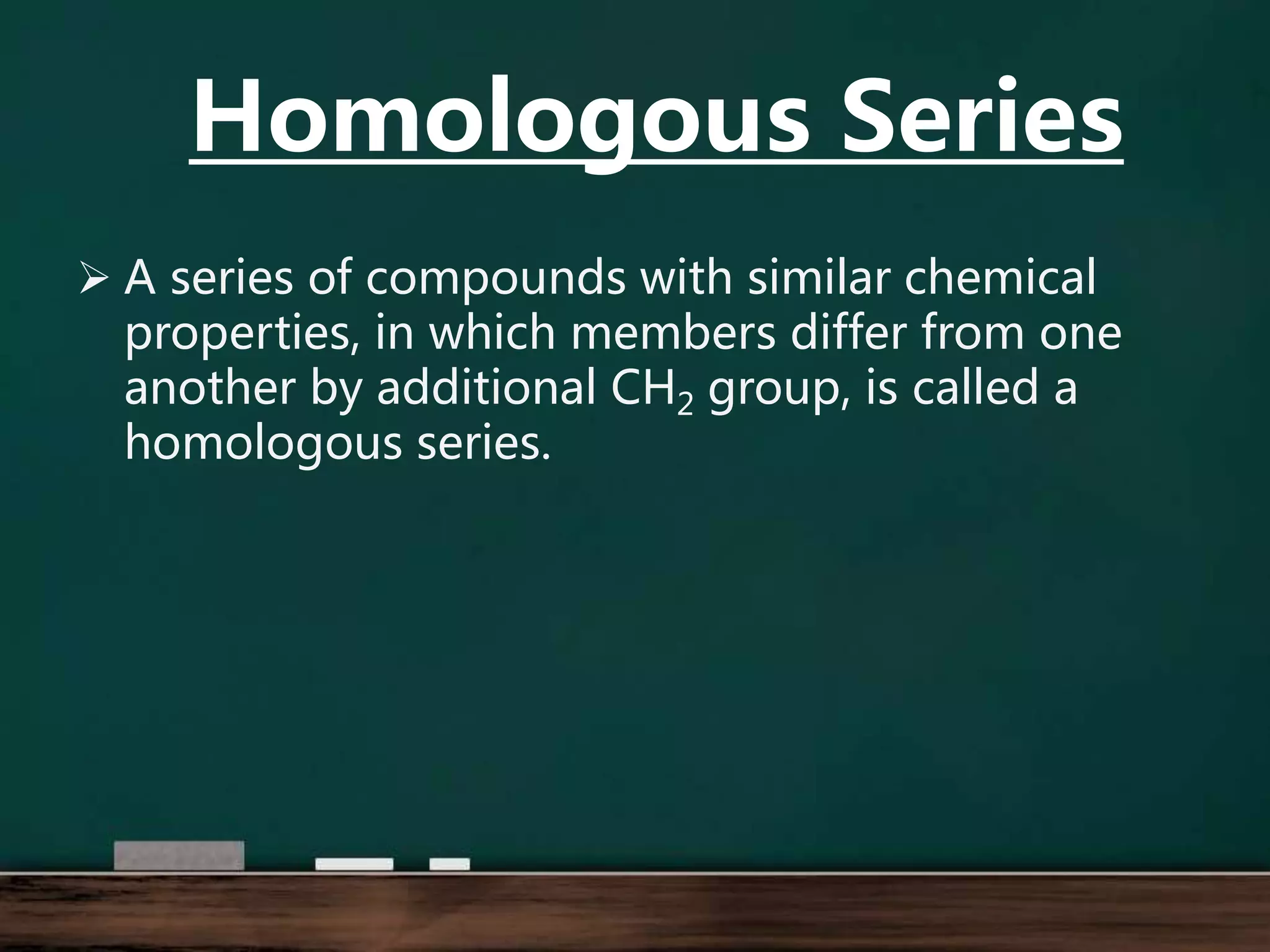
 A series of compounds with similar chemical
properties, in which members differ from one
another by additional CH2 group, is called a
homologous series.
Homologous Series
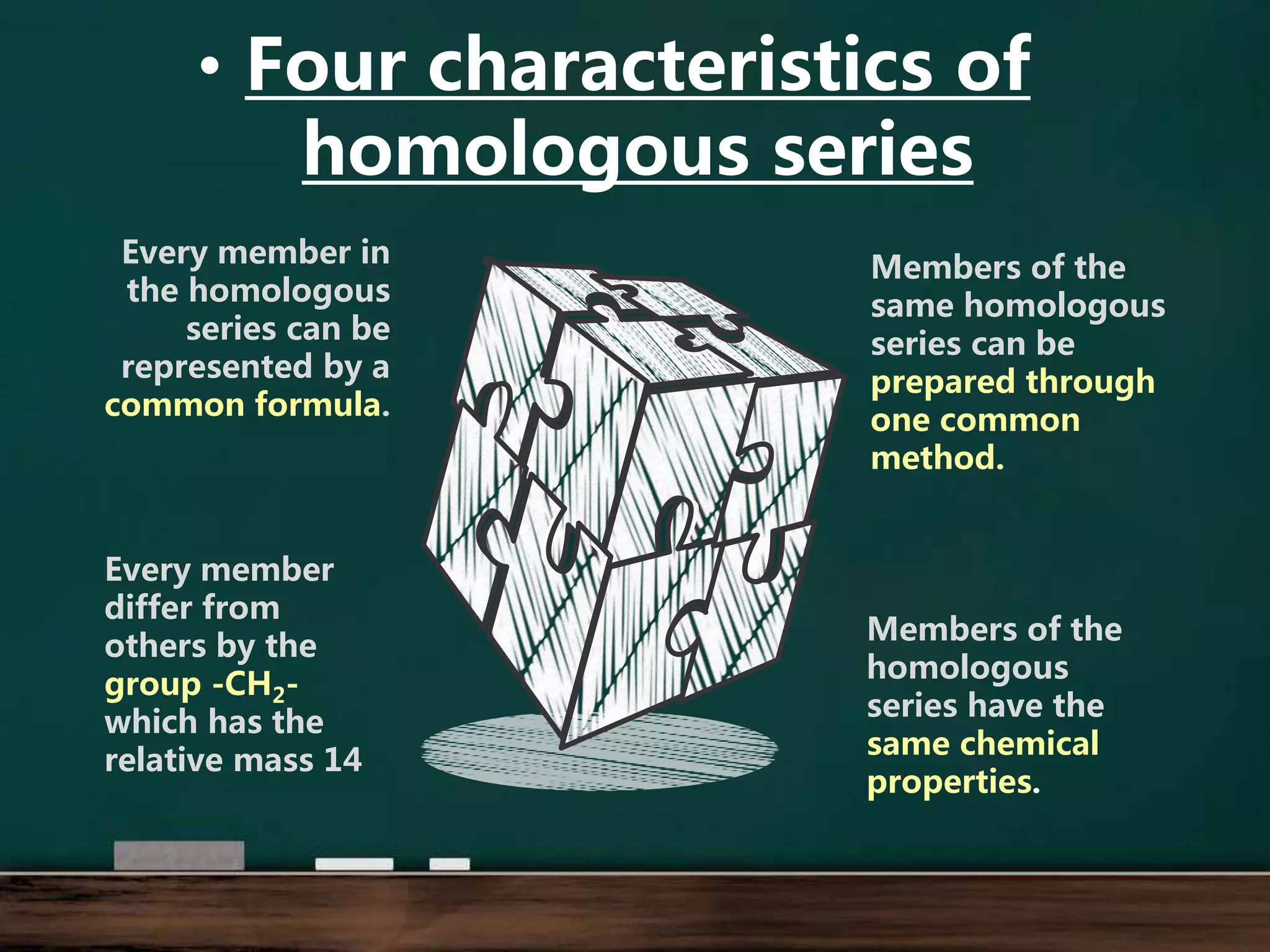
Members of the
same homologous
series can be
prepared through
one common
method.
Members of the
homologous
series have the
same chemical
properties.
Every member in
the homologous
series can be
represented by a
common formula.
Every member
differ from
others by the
group -CH2-
which has the
relative mass 14
• Four characteristics of
homologous series
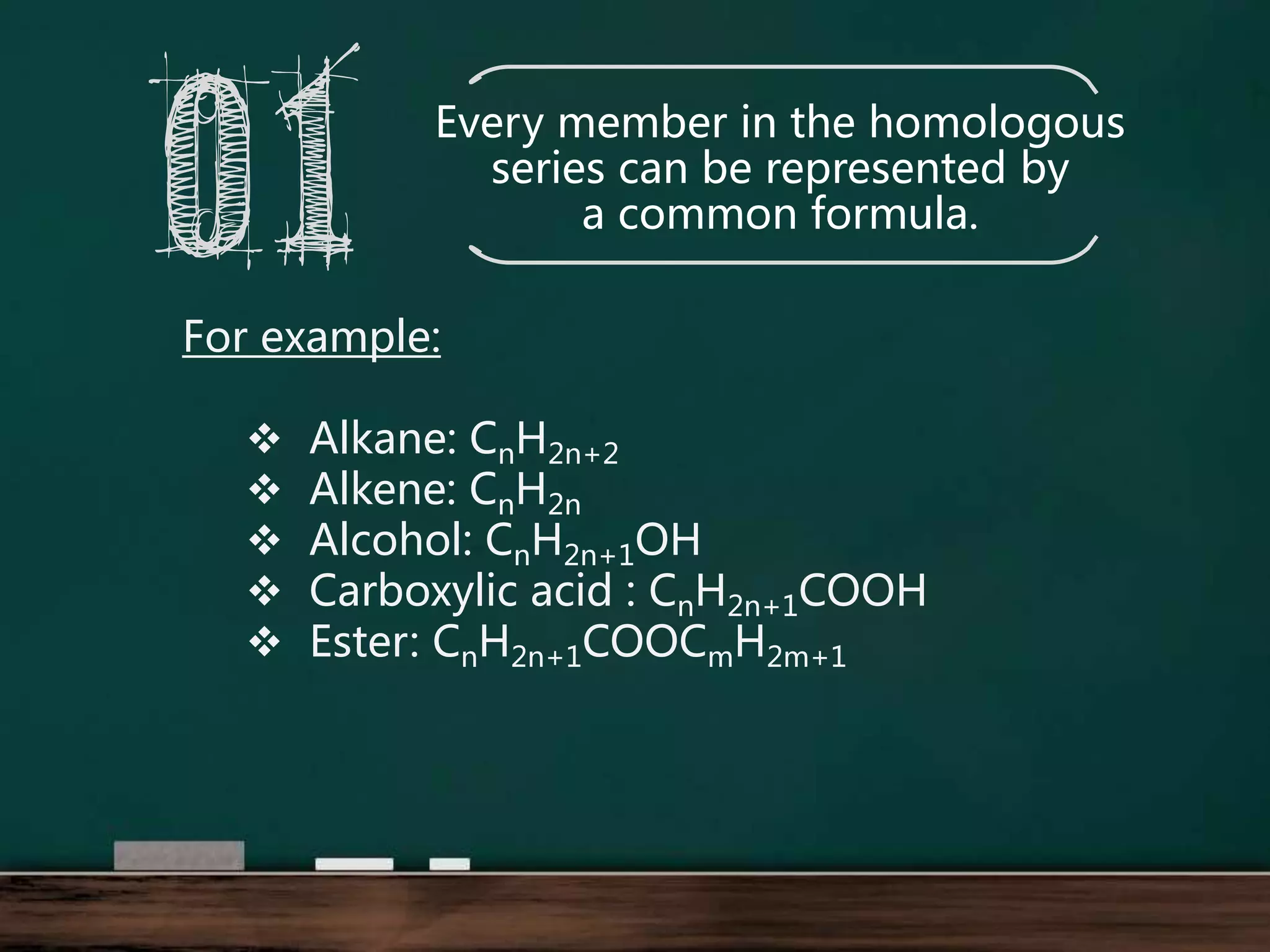
Every member in the homologous
series can be represented by
a common formula.
For example:
 Alkane: CnH2n+2
 Alkene: CnH2n
 Alcohol: CnH2n+1OH
 Carboxylic acid : CnH2n+1COOH
 Ester: CnH2n+1COOCmH2m+1
Every member differ from others
by the group -CH2- which has the
relative mass 14.
For example:
Members of the same homologous
series can be prepared through one
common method.
For example:
All alkenes can be prepared by dehydration of
relevant alcohols.
 Preparing ethene (Dehydration of ethanol)
C2H5OH → C2H4 + H2O
 Preparing propene (Dehydration of propanol)
C3H7OH → C3H6 + H2O
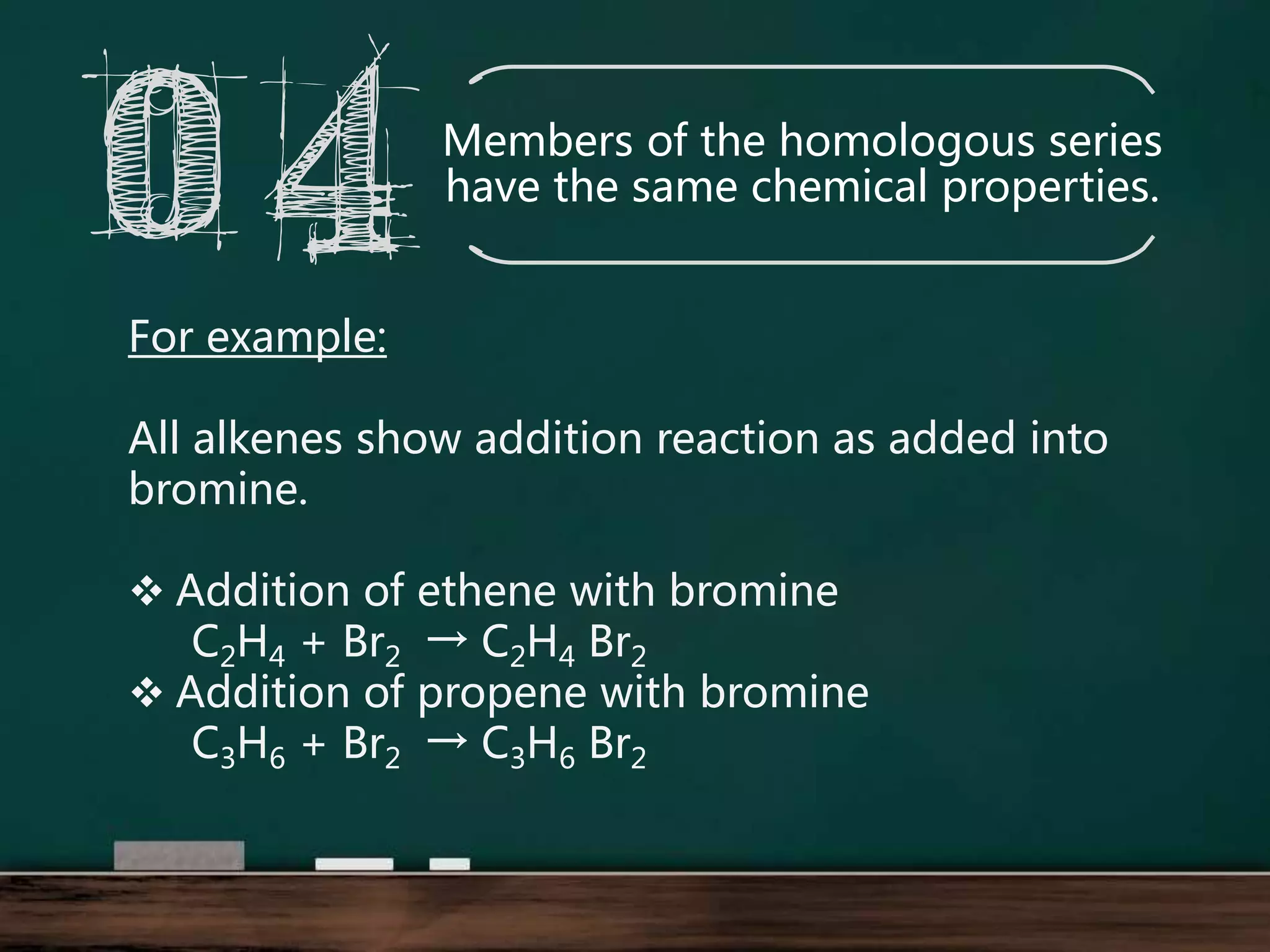
Members of the homologous series
have the same chemical properties.
For example:
All alkenes show addition reaction as added into
bromine.
 Addition of ethene with bromine
C2H4 + Br2 → C2H4 Br2
 Addition of propene with bromine
C3H6 + Br2 → C3H6 Br2
Alkane
Alkene
Alcohol
Carboxylic acid
Ester
Homologous Series

Homologous series

  • 1.
     A seriesof compounds with similar chemical properties, in which members differ from one another by additional CH2 group, is called a homologous series. Homologous Series
  • 2.
    Members of the samehomologous series can be prepared through one common method. Members of the homologous series have the same chemical properties. Every member in the homologous series can be represented by a common formula. Every member differ from others by the group -CH2- which has the relative mass 14 • Four characteristics of homologous series
  • 3.
    Every member inthe homologous series can be represented by a common formula. For example:  Alkane: CnH2n+2  Alkene: CnH2n  Alcohol: CnH2n+1OH  Carboxylic acid : CnH2n+1COOH  Ester: CnH2n+1COOCmH2m+1
  • 4.
    Every member differfrom others by the group -CH2- which has the relative mass 14. For example:
  • 5.
    Members of thesame homologous series can be prepared through one common method. For example: All alkenes can be prepared by dehydration of relevant alcohols.  Preparing ethene (Dehydration of ethanol) C2H5OH → C2H4 + H2O  Preparing propene (Dehydration of propanol) C3H7OH → C3H6 + H2O
  • 6.
    Members of thehomologous series have the same chemical properties. For example: All alkenes show addition reaction as added into bromine.  Addition of ethene with bromine C2H4 + Br2 → C2H4 Br2  Addition of propene with bromine C3H6 + Br2 → C3H6 Br2
  • 7.