Topic 9.3 
3.3.2 Transformers
Transformers 
● A transformer is an electrical device that can convert an 
alternating electrical supply at one voltage to a different 
(higher or lower) voltage. 
● Transformers that increase voltage are said to be step-up 
transformers. 
● Transformers that decrease voltage are said to be step-down 
transformers.
Transformers 
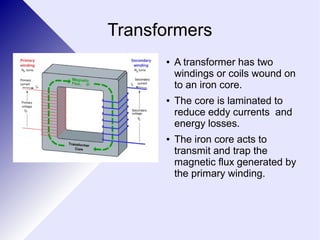
● A transformer has two 
windings or coils wound on 
to an iron core. 
● The core is laminated to 
reduce eddy currents and 
energy losses. 
● The iron core acts to 
transmit and trap the 
magnetic flux generated by 
the primary winding.
Transformers 
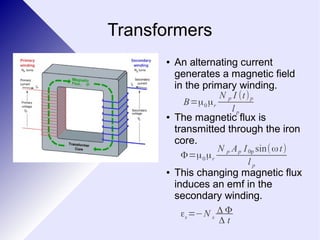
● An alternating current 
generates a magnetic field 
in the primary winding. 
B=μ0μr 
N p I (t)p 
l p 
● The magnetic flux is 
transmitted through the iron 
core. 
Φ=μ0μr 
N p Ap I0p sin(ωt) 
l p 
● This changing magnetic flux 
induces an emf in the 
secondary winding. 
εs=−N s 
Δ Φ 
Δ t
Transformers 
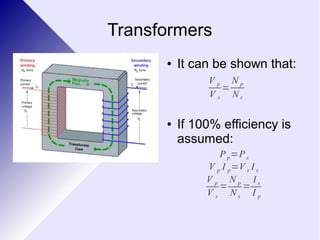
● It can be shown that: 
V p 
V s 
= 
N p 
Ns 
● If 100% efficiency is 
assumed: 
Pp=Ps 
V p I p=V s I s 
V p 
N V = 
p 
s 
Ns 
= 
I s 
I p
Transformers and Energy 
● A transformer works using the principle of 
conservation of energy. 
● The energy flowing into the primary coil flows 
must flow out of the transformer 
● This is mostly in the form of electrical energy from 
the secondary coil.
Transformer Losses 
● A real transformer is not 100% efficient. 
● Eddy currents are formed in the iron core due to 
induction. This is minimised by laminating the iron 
core to reduce the area of induction and hence the 
size of the induced current. 
● Winding resistance. The windings of the 
transformer are usually made of thick copper to 
reduce heating and loses to a minimum 
● Hysteresis losses are caused when magnetising 
and demagnetising the iron core. This causes 
heating and energy loss.
Laminating 
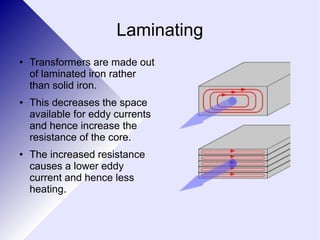
● Transformers are made out 
of laminated iron rather 
than solid iron. 
● This decreases the space 
available for eddy currents 
and hence increase the 
resistance of the core. 
● The increased resistance 
causes a lower eddy 
current and hence less 
heating.
Transformer Problems 
● A step-up transformer converts 10kV into 
400kV for transmission. If the primary coil has 
200Turns, how may turns are on the secondary 
coil? 
● A transformer converts 240V into 5V to charge 
an iPod. The secondary coil has 400T, how 
many turns are on the primary coil?
Transformer Problems 
● A particular transformer is 95% efficient and is 
designed to turn 240V into 12V and a maximum 
current of 5A. The primary winding has 1000T. 
● How many turns are on the secondary coil? 
● What current flows in the primary coil when the 
transformer is running at maximum power?
Using Transformers 
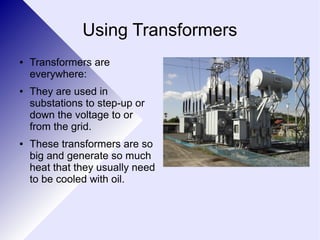
● Transformers are 
everywhere: 
● They are used in 
substations to step-up or 
down the voltage to or 
from the grid. 
● These transformers are so 
big and generate so much 
heat that they usually need 
to be cooled with oil.
Using Transformers 
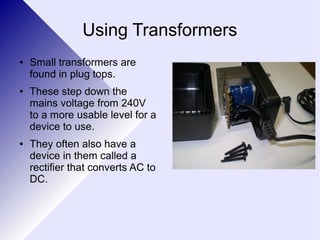
● Small transformers are 
found in plug tops. 
● These step down the 
mains voltage from 240V 
to a more usable level for a 
device to use. 
● They often also have a 
device in them called a 
rectifier that converts AC to 
DC.
Rectifier 
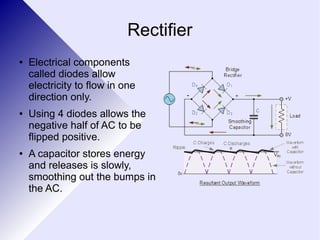
● Electrical components 
called diodes allow 
electricity to flow in one 
direction only. 
● Using 4 diodes allows the 
negative half of AC to be 
flipped positive. 
● A capacitor stores energy 
and releases is slowly, 
smoothing out the bumps in 
the AC.
Why are Transformers useful for 
Society? 
● Transformers allow for voltage to be changed at 
will to suit a particular application. 
● Transformers increase efficiency for power 
transmission. 
● The use of transformers allows more efficient 
AC generators to be used. 
● The output of a transformer can be converted to 
DC as required using only 5 components.

3.3.2 transformers

  • 1.
    Topic 9.3 3.3.2Transformers
  • 2.
    Transformers ● Atransformer is an electrical device that can convert an alternating electrical supply at one voltage to a different (higher or lower) voltage. ● Transformers that increase voltage are said to be step-up transformers. ● Transformers that decrease voltage are said to be step-down transformers.
  • 3.
    Transformers ● Atransformer has two windings or coils wound on to an iron core. ● The core is laminated to reduce eddy currents and energy losses. ● The iron core acts to transmit and trap the magnetic flux generated by the primary winding.
  • 4.
    Transformers ● Analternating current generates a magnetic field in the primary winding. B=μ0μr N p I (t)p l p ● The magnetic flux is transmitted through the iron core. Φ=μ0μr N p Ap I0p sin(ωt) l p ● This changing magnetic flux induces an emf in the secondary winding. εs=−N s Δ Φ Δ t
  • 5.
    Transformers ● Itcan be shown that: V p V s = N p Ns ● If 100% efficiency is assumed: Pp=Ps V p I p=V s I s V p N V = p s Ns = I s I p
  • 6.
    Transformers and Energy ● A transformer works using the principle of conservation of energy. ● The energy flowing into the primary coil flows must flow out of the transformer ● This is mostly in the form of electrical energy from the secondary coil.
  • 7.
    Transformer Losses ●A real transformer is not 100% efficient. ● Eddy currents are formed in the iron core due to induction. This is minimised by laminating the iron core to reduce the area of induction and hence the size of the induced current. ● Winding resistance. The windings of the transformer are usually made of thick copper to reduce heating and loses to a minimum ● Hysteresis losses are caused when magnetising and demagnetising the iron core. This causes heating and energy loss.
  • 8.
    Laminating ● Transformersare made out of laminated iron rather than solid iron. ● This decreases the space available for eddy currents and hence increase the resistance of the core. ● The increased resistance causes a lower eddy current and hence less heating.
  • 9.
    Transformer Problems ●A step-up transformer converts 10kV into 400kV for transmission. If the primary coil has 200Turns, how may turns are on the secondary coil? ● A transformer converts 240V into 5V to charge an iPod. The secondary coil has 400T, how many turns are on the primary coil?
  • 10.
    Transformer Problems ●A particular transformer is 95% efficient and is designed to turn 240V into 12V and a maximum current of 5A. The primary winding has 1000T. ● How many turns are on the secondary coil? ● What current flows in the primary coil when the transformer is running at maximum power?
  • 11.
    Using Transformers ●Transformers are everywhere: ● They are used in substations to step-up or down the voltage to or from the grid. ● These transformers are so big and generate so much heat that they usually need to be cooled with oil.
  • 12.
    Using Transformers ●Small transformers are found in plug tops. ● These step down the mains voltage from 240V to a more usable level for a device to use. ● They often also have a device in them called a rectifier that converts AC to DC.
  • 13.
    Rectifier ● Electricalcomponents called diodes allow electricity to flow in one direction only. ● Using 4 diodes allows the negative half of AC to be flipped positive. ● A capacitor stores energy and releases is slowly, smoothing out the bumps in the AC.
  • 14.
    Why are Transformersuseful for Society? ● Transformers allow for voltage to be changed at will to suit a particular application. ● Transformers increase efficiency for power transmission. ● The use of transformers allows more efficient AC generators to be used. ● The output of a transformer can be converted to DC as required using only 5 components.