Introduction
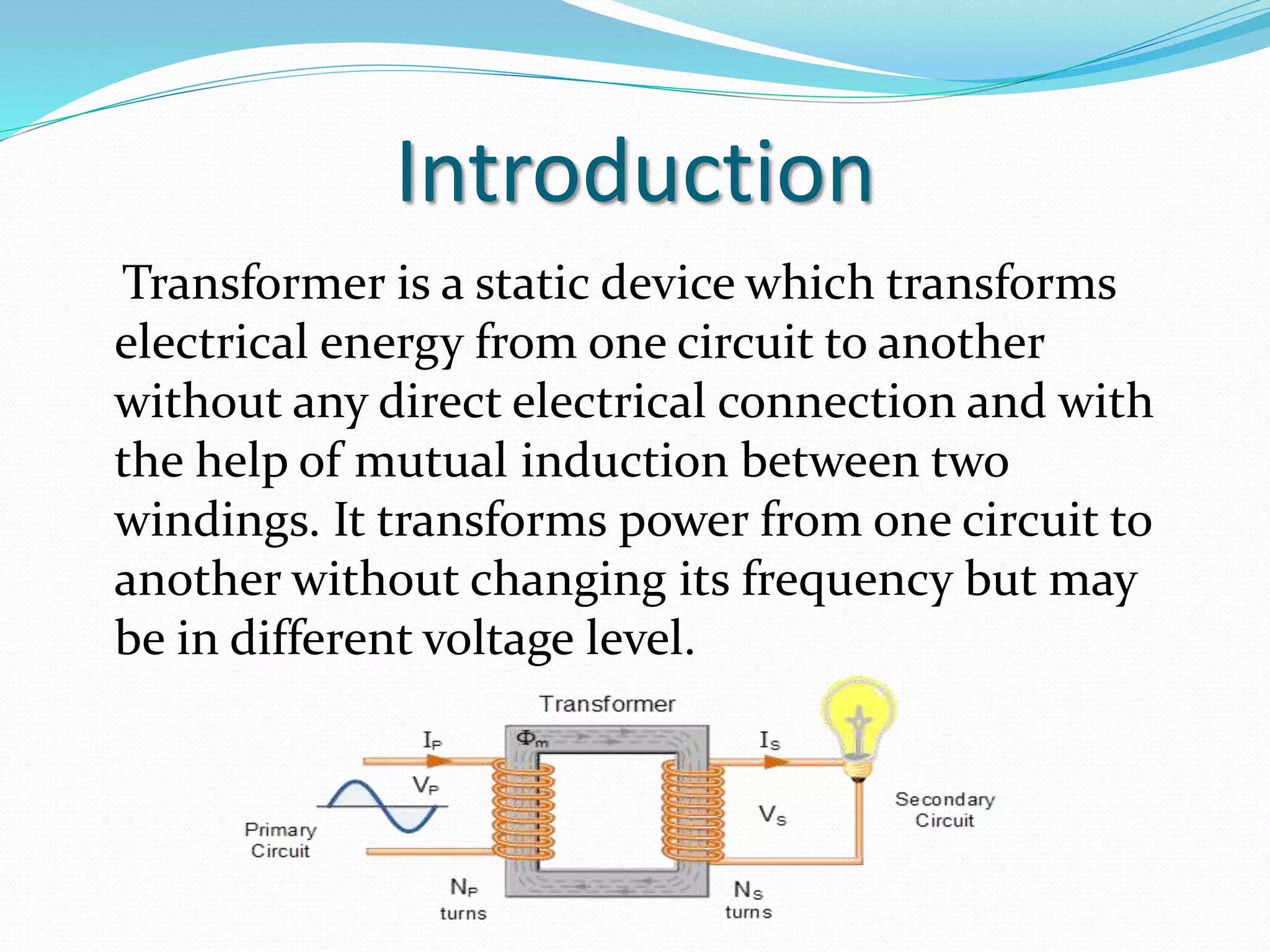
Transformer is a static device which transforms
electrical energy from one circuit to another
without any direct electrical connection and with
the help of mutual induction between two
windings. It transforms power from one circuit to
another without changing its frequency but may
be in different voltage level.
Principle
 The main principle of transformer is mutual
induction formed between two coils.
 A transformer basically is very simple electro-
magnetic passive electrical device that works on
the principle of Faraday’s law of induction by
converting electrical energy from one value to
another….
Mutual Induction
 When current in the primary coil changes being
alternating in nature, a changing magnetic field is
produced and is associated with the secondary coil
through the soft iron core.
 Hence magnetic flux linked with the secondary coil
changes.
 Which induces e.m.f. in the secondary.
 This is known as mutual induction.
Purpose of transformer
 The main purpose of transformer is either to step up
(or) step down the input input a.c power.
Transformer
Step up
Transformer
Step down
Transformer
Structure
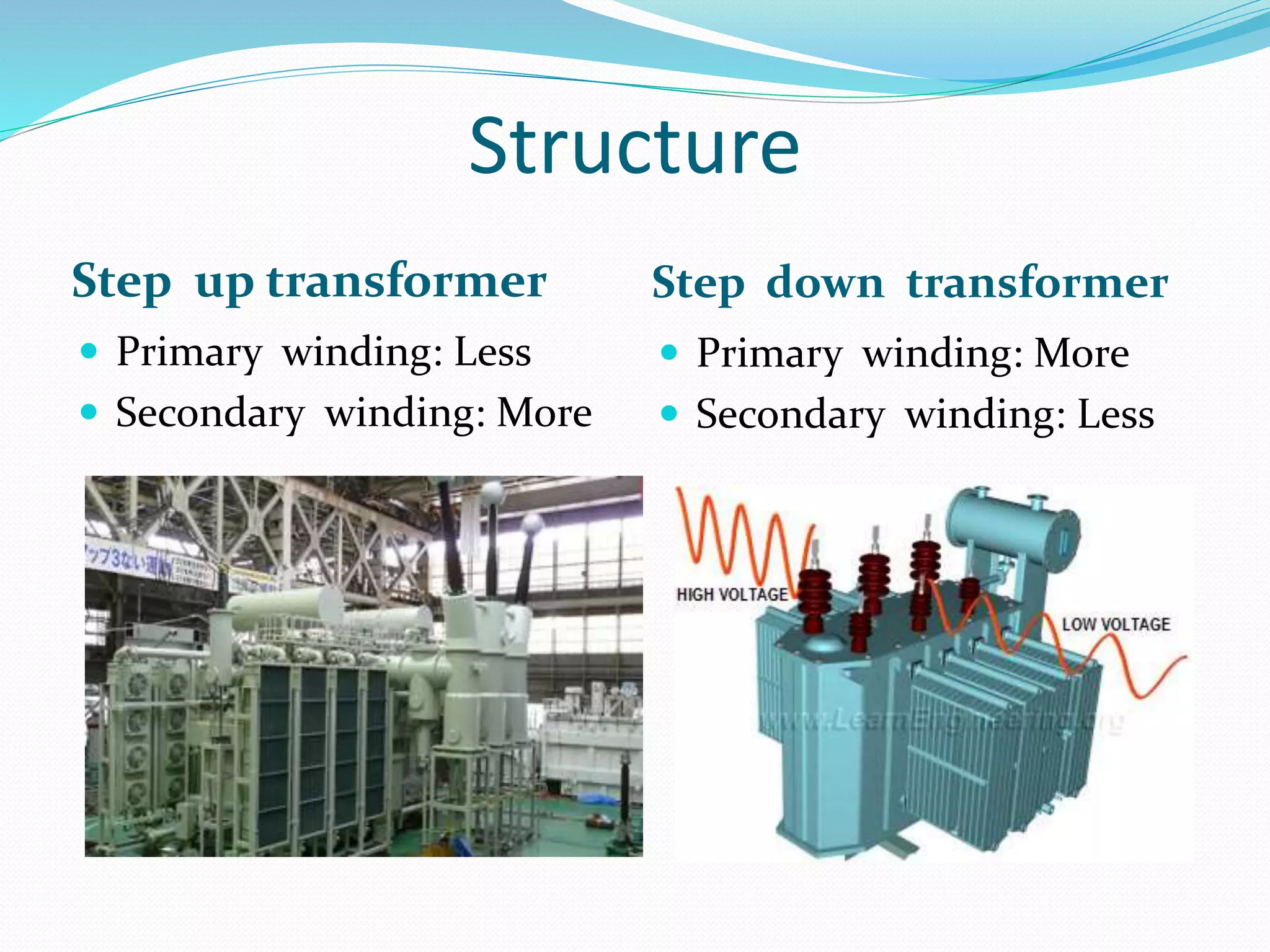
Step up transformer Step down transformer
 Primary winding: Less
 Secondary winding: More
 Primary winding: More
 Secondary winding: Less
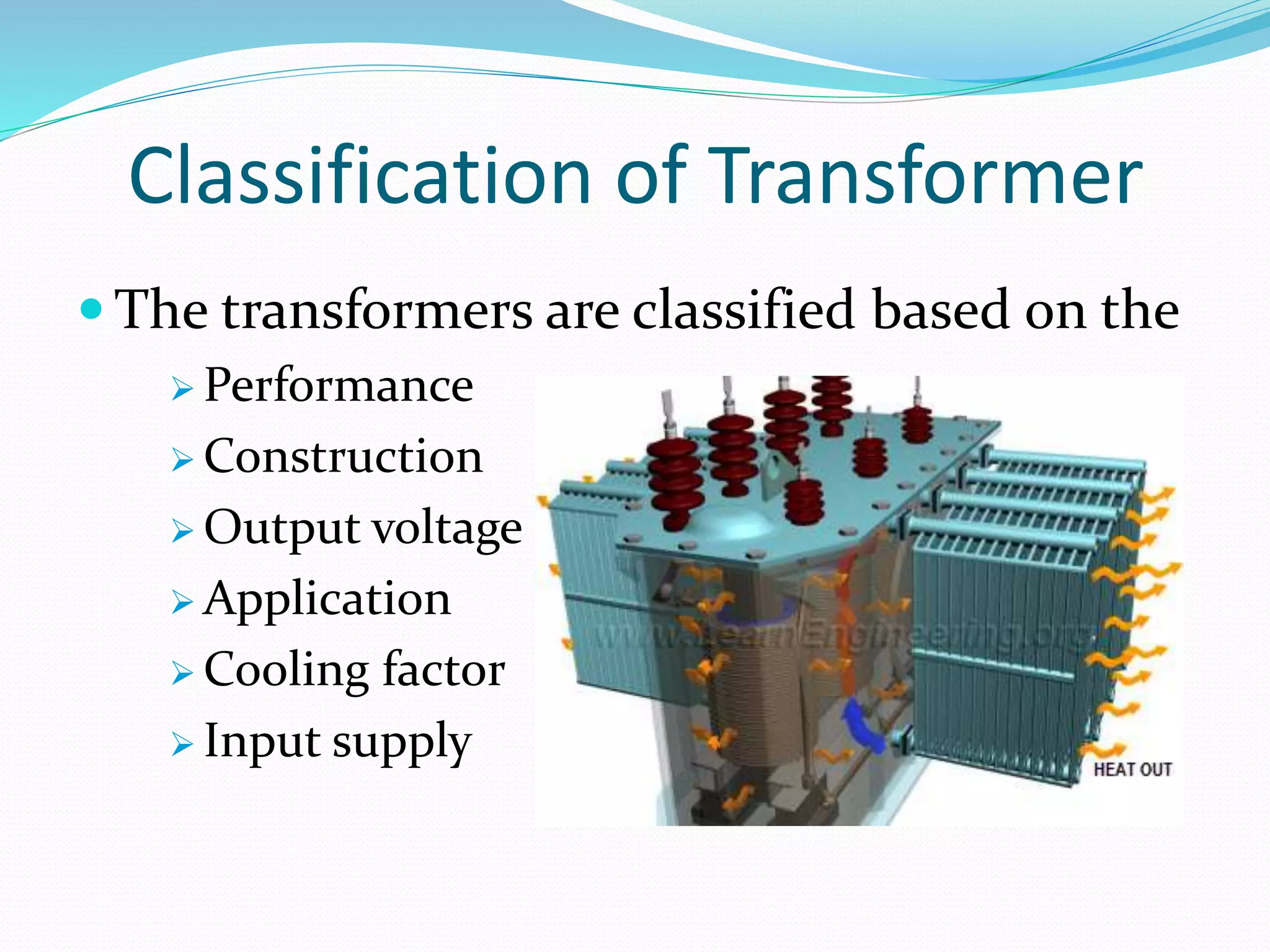
Classification of Transformer
 The transformers are classified based on the
 Performance
 Construction
 Output voltage
 Application
 Cooling factor
 Input supply
 Based on performance
 Power Transformer(transmission&distribution)
 Current Transformer(instrument transformer)
 Potential Transformer(instrument transformer
Based on construction
 core type transformer
 Shell type transformer
 Berry type transformer
 Based on output voltage
 Step up transformer
 Step down transformer
 Auto transformer
Based on application
Welding transformer
Furnace transformer
 Based on cooling factor
 Duct type transformer
 Oil immersed
Based on input supply
 Single phase transformer
 Three phase transformer
Ideal transformer
Zero leakage flux:
-Fluxes produced by the primary and secondary
currents are confined within the core
The windings have no resistance:
- Induced voltages equal applied voltages
The core has infinite permeability
- Reluctance of the core is zero
- Negligible current is required to establish
magnetic flux
Loss-less magnetic core
- No hysteresis or eddy currents
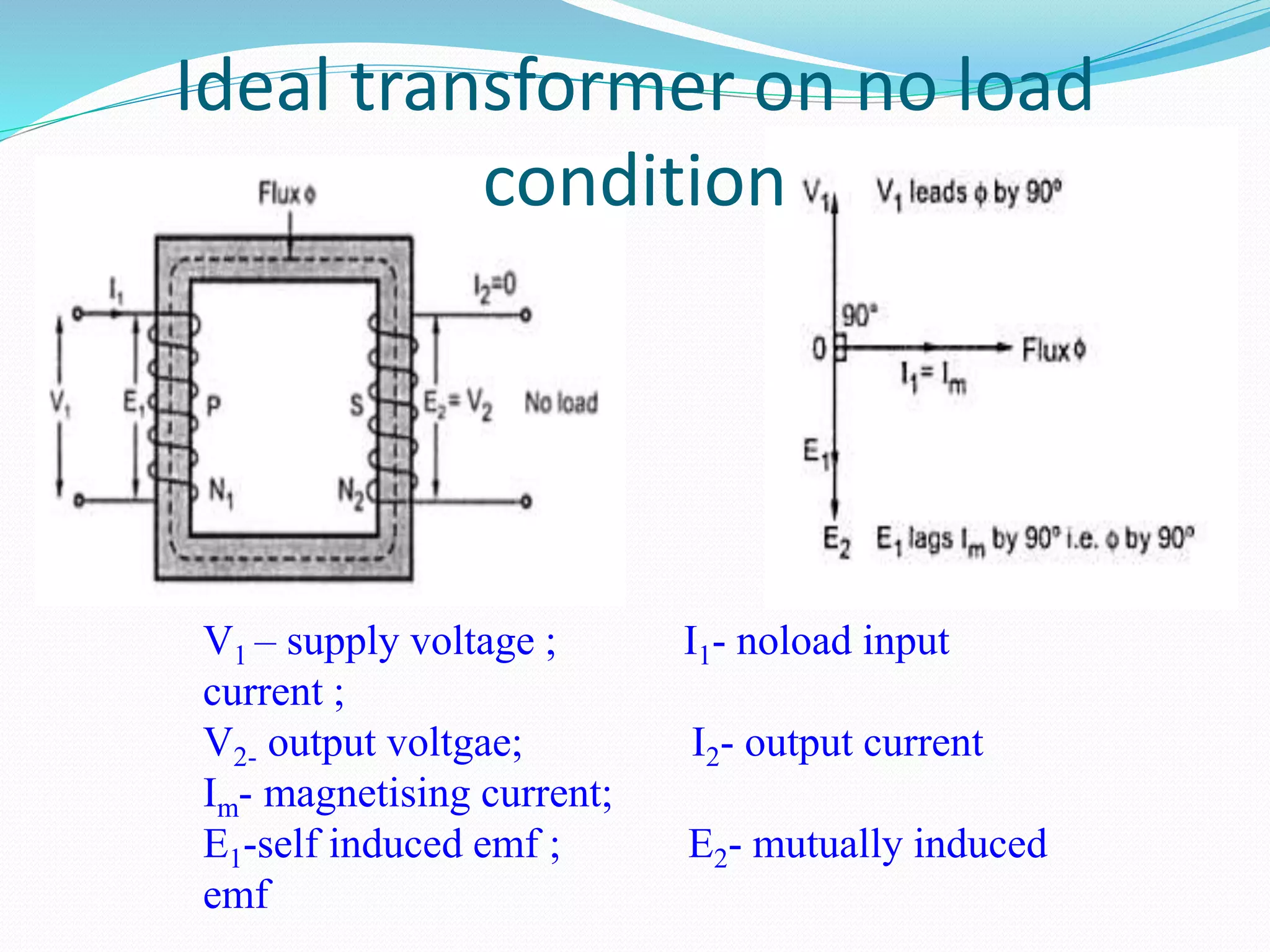
V1 – supply voltage ; I1- noload input
current ;
V2- output voltgae; I2- output current
Im- magnetising current;
E1-self induced emf ; E2- mutually induced
emf
Ideal transformer on no load
condition
Practical Transformer
 Normally ,it produces both hysteresis and eddy
current loss. when it’s subjected to alternating
flux.
 To control this losses.........
 High grade silicon steel for hysteresis loss
 The core is designed with a thin limination for
eddy current loss.
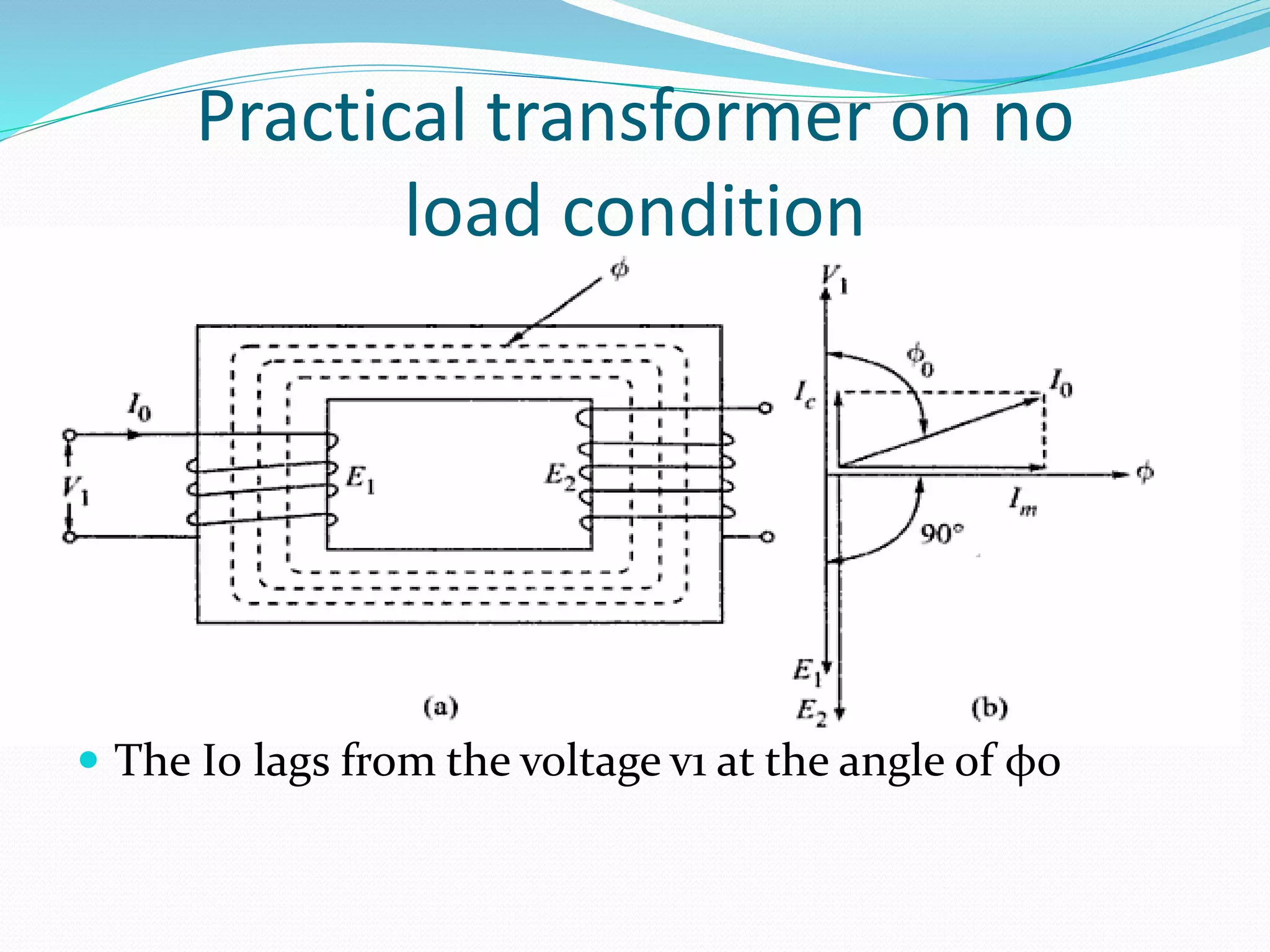
Practical transformer on no
load condition
 The I0 lags from the voltage v1 at the angle of φ0
Transformer on load condition
 Connecting a external device to the secondary side
of the transformer is known as loaded condition.
 When the current I2 flows through the secondary
side the magnitude and phase of I2 is determined
by the load
 At inductive load:I2 lags V2
 At capacitance load :I2 leads V2
 At resistive load :I2 in phase with V2
 The secondary coil creates a flux called as φ2 this
generated flux opposes the main flux formed in the
core. This kind of mmf is known as demagnetising
ampere-turn.
 Due to this the main flux gets reduced. So ,the induced
e.m.f in the primary coil as gets reduced.
Tertiary winding
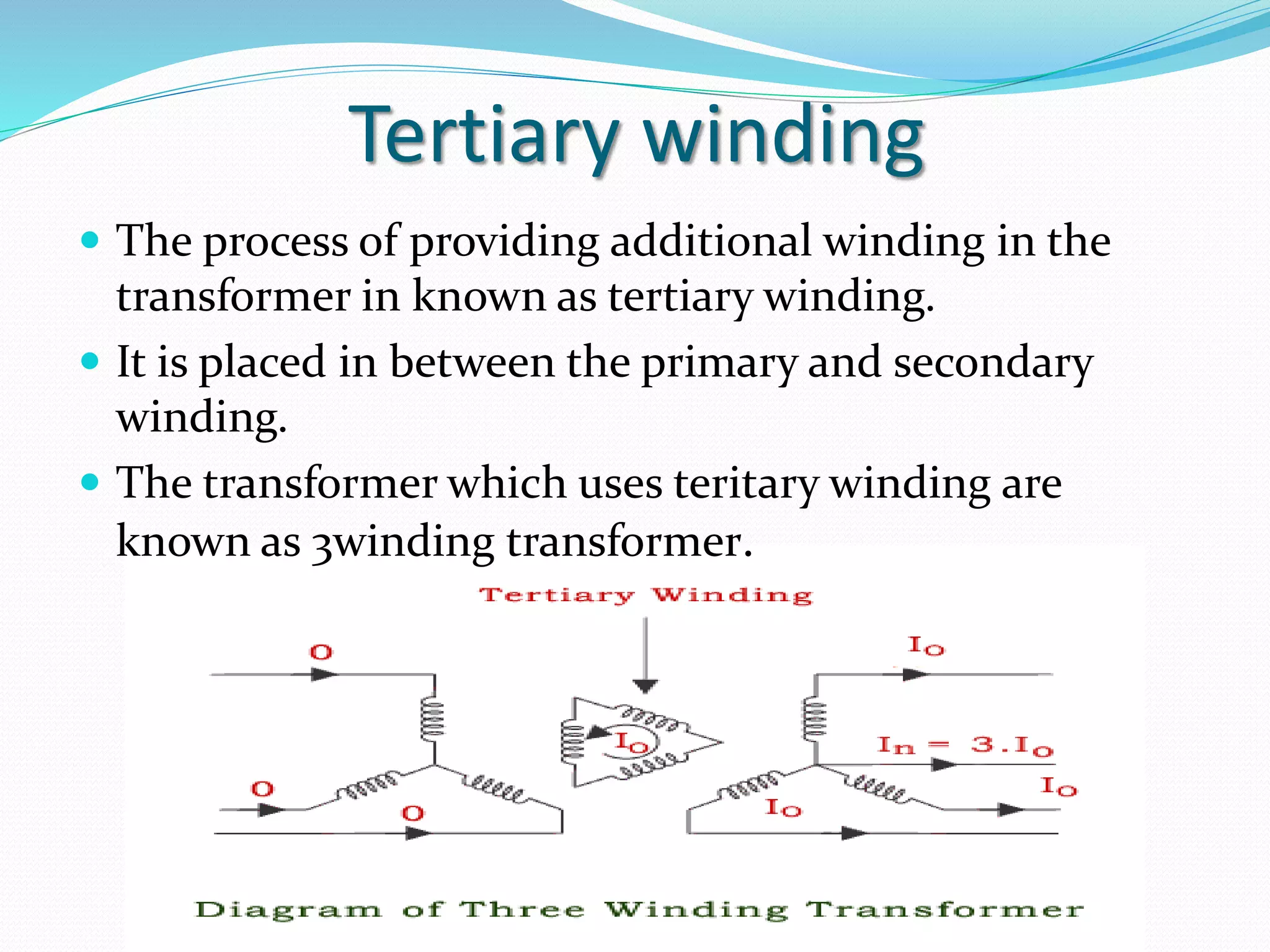
 The process of providing additional winding in the
transformer in known as tertiary winding.
 It is placed in between the primary and secondary
winding.
 The transformer which uses teritary winding are
known as 3winding transformer.
Principle
 The third winding is connected in a delta structure.
 The principle of this winding is to be when a fault
occurs in the primary and secondary winding.
 During the time of fault, there is a large imbalance in
the phase voltage so to equalise this problem tertiary
winding is used and the current is being circulated.
 In this condition to avoid overheating copper is
used.
Purpose of tertiary winding
 The main purpose of tertiary winding is to supply
additional load to the secondary side of the
transformer.
 It’s used as voltage coil in the testing transformer.
 Interconnection of different voltage system into a
single supply is known as three winding
transformer.
Stabilization of 3 winding
transformer
Usage
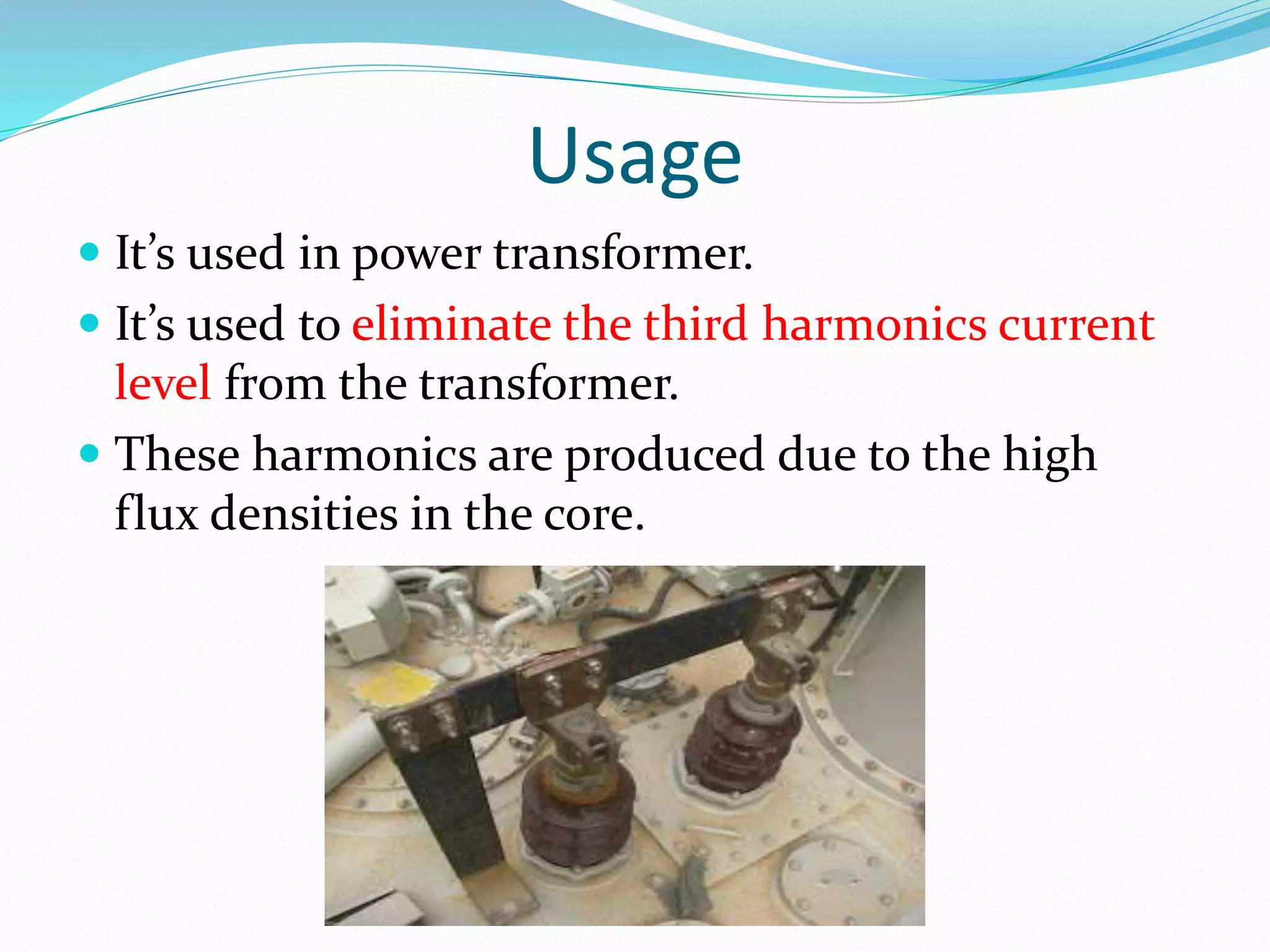
 It’s used in power transformer.
 It’s used to eliminate the third harmonics current
level from the transformer.
 These harmonics are produced due to the high
flux densities in the core.
Advantages of tertiary
winding
 It reduces the unbalancing in the primary coil.
 It redistributes the flow of fault current.
 The supplied load are in different voltage level. To
satisfy this the load is taken from the terinary
winding.
 It is designed in the form of delta.
Disadvantages of tertiary
winding
 The construction of tertiary winding is very difficult
when compared to the normal transformer.
 It requires large amount of copper to the heating
level in the transformer.
 It occupies huge area for the placement of the
transformer.
Transformer

Transformer

  • 2.
    Introduction Transformer is astatic device which transforms electrical energy from one circuit to another without any direct electrical connection and with the help of mutual induction between two windings. It transforms power from one circuit to another without changing its frequency but may be in different voltage level.
  • 3.
    Principle  The mainprinciple of transformer is mutual induction formed between two coils.  A transformer basically is very simple electro- magnetic passive electrical device that works on the principle of Faraday’s law of induction by converting electrical energy from one value to another….
  • 4.
    Mutual Induction  Whencurrent in the primary coil changes being alternating in nature, a changing magnetic field is produced and is associated with the secondary coil through the soft iron core.  Hence magnetic flux linked with the secondary coil changes.  Which induces e.m.f. in the secondary.  This is known as mutual induction.
  • 5.
    Purpose of transformer The main purpose of transformer is either to step up (or) step down the input input a.c power. Transformer Step up Transformer Step down Transformer
  • 6.
    Structure Step up transformerStep down transformer  Primary winding: Less  Secondary winding: More  Primary winding: More  Secondary winding: Less
  • 7.
    Classification of Transformer The transformers are classified based on the  Performance  Construction  Output voltage  Application  Cooling factor  Input supply
  • 8.
     Based onperformance  Power Transformer(transmission&distribution)  Current Transformer(instrument transformer)  Potential Transformer(instrument transformer Based on construction  core type transformer  Shell type transformer  Berry type transformer
  • 9.
     Based onoutput voltage  Step up transformer  Step down transformer  Auto transformer Based on application Welding transformer Furnace transformer
  • 10.
     Based oncooling factor  Duct type transformer  Oil immersed Based on input supply  Single phase transformer  Three phase transformer
  • 11.
    Ideal transformer Zero leakageflux: -Fluxes produced by the primary and secondary currents are confined within the core The windings have no resistance: - Induced voltages equal applied voltages The core has infinite permeability - Reluctance of the core is zero - Negligible current is required to establish magnetic flux Loss-less magnetic core - No hysteresis or eddy currents
  • 12.
    V1 – supplyvoltage ; I1- noload input current ; V2- output voltgae; I2- output current Im- magnetising current; E1-self induced emf ; E2- mutually induced emf Ideal transformer on no load condition
  • 13.
    Practical Transformer  Normally,it produces both hysteresis and eddy current loss. when it’s subjected to alternating flux.  To control this losses.........  High grade silicon steel for hysteresis loss  The core is designed with a thin limination for eddy current loss.
  • 14.
    Practical transformer onno load condition  The I0 lags from the voltage v1 at the angle of φ0
  • 15.
    Transformer on loadcondition  Connecting a external device to the secondary side of the transformer is known as loaded condition.  When the current I2 flows through the secondary side the magnitude and phase of I2 is determined by the load  At inductive load:I2 lags V2  At capacitance load :I2 leads V2  At resistive load :I2 in phase with V2
  • 16.
     The secondarycoil creates a flux called as φ2 this generated flux opposes the main flux formed in the core. This kind of mmf is known as demagnetising ampere-turn.  Due to this the main flux gets reduced. So ,the induced e.m.f in the primary coil as gets reduced.
  • 17.
    Tertiary winding  Theprocess of providing additional winding in the transformer in known as tertiary winding.  It is placed in between the primary and secondary winding.  The transformer which uses teritary winding are known as 3winding transformer.
  • 18.
    Principle  The thirdwinding is connected in a delta structure.  The principle of this winding is to be when a fault occurs in the primary and secondary winding.  During the time of fault, there is a large imbalance in the phase voltage so to equalise this problem tertiary winding is used and the current is being circulated.  In this condition to avoid overheating copper is used.
  • 19.
    Purpose of tertiarywinding  The main purpose of tertiary winding is to supply additional load to the secondary side of the transformer.  It’s used as voltage coil in the testing transformer.  Interconnection of different voltage system into a single supply is known as three winding transformer.
  • 20.
    Stabilization of 3winding transformer
  • 22.
    Usage  It’s usedin power transformer.  It’s used to eliminate the third harmonics current level from the transformer.  These harmonics are produced due to the high flux densities in the core.
  • 23.
    Advantages of tertiary winding It reduces the unbalancing in the primary coil.  It redistributes the flow of fault current.  The supplied load are in different voltage level. To satisfy this the load is taken from the terinary winding.  It is designed in the form of delta.
  • 24.
    Disadvantages of tertiary winding The construction of tertiary winding is very difficult when compared to the normal transformer.  It requires large amount of copper to the heating level in the transformer.  It occupies huge area for the placement of the transformer.