OPEN CIRCUIT & SHORT CIRCUIT 
TEST ON TRANSFORMER 
PREPAIRED BY: 
MANAVAR MILAN
INTRODUCTION 
• Necessity of testing 
• Open circuit test 
• Short circuit test 
• Advantages 
• Application
NECESSITY OF TESTING 
• In transformer and other equipment have 
input and output. Hence how to we find the 
performance of transformer and other 
equipment…..? 
• We have a solution even we will find the loss 
of transformer so we can easily find the all 
parameters of transformer like, we can find 
iron loss, cu loss, impedance, no load current, 
short circuit current and efficiency.
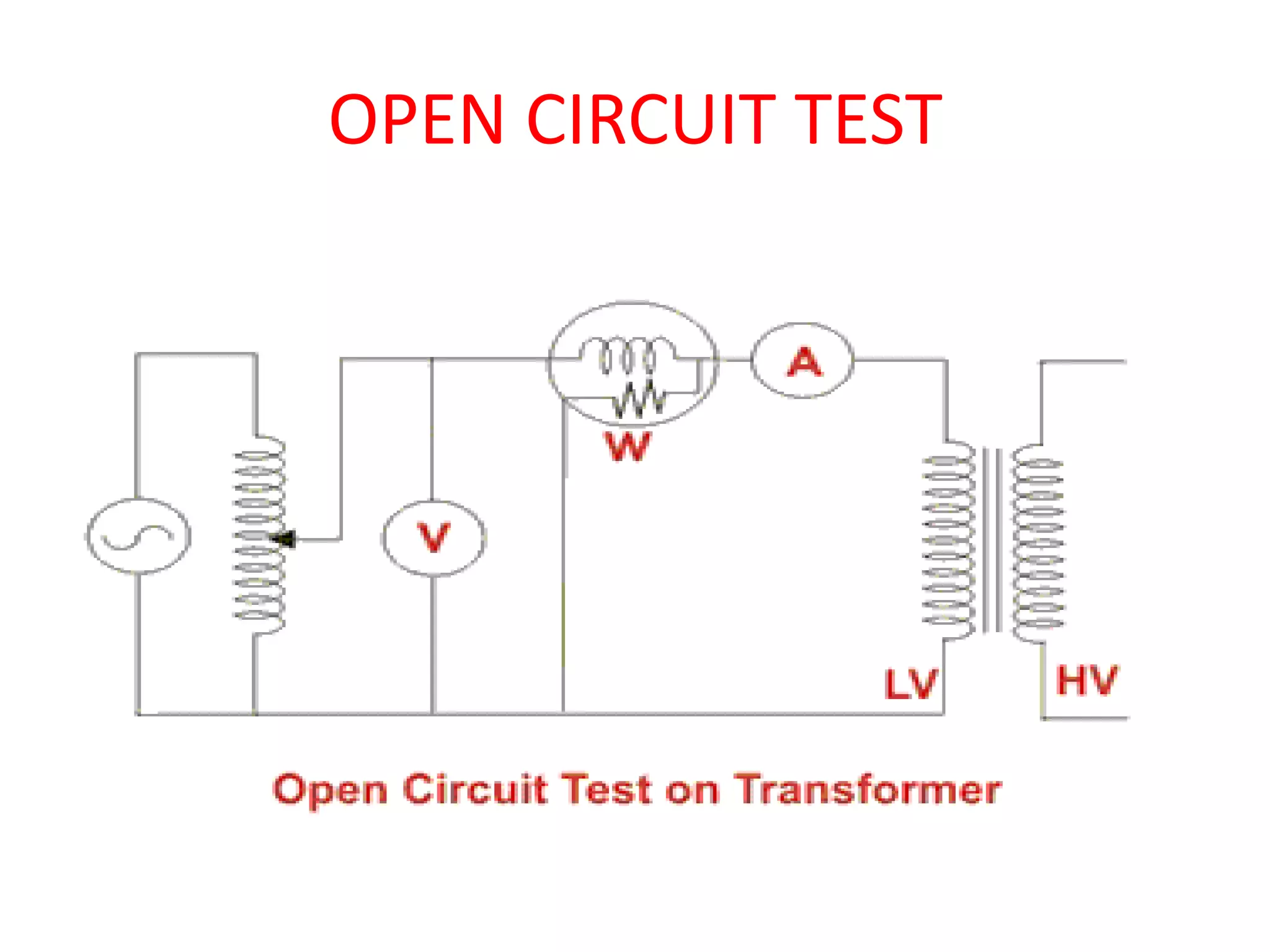
OPEN CIRCUIT TEST
HOW TO MEASURE O.C. TEST 
1. To connect Wattmeter in primary side. 
2. To connect Ammeter in series of phase. 
3. To connect Voltmeter in parallel of primary 
side. 
4. We will open the Secondary side. 
5. We will give the supply primary side for the 
measurement of iron losses.
• The purpose of this test is to find the no-load loss 
or core loss. 
• A wattmeter, voltmeter and an ammeter are 
connected in low voltage side. 
• Secondary side of transformer we will keep open. 
• We give the normal voltage applied to the 
primary, normal flux will be set up in the core, 
hence normal iron losses will occur which are 
recorded by the wattmeter.
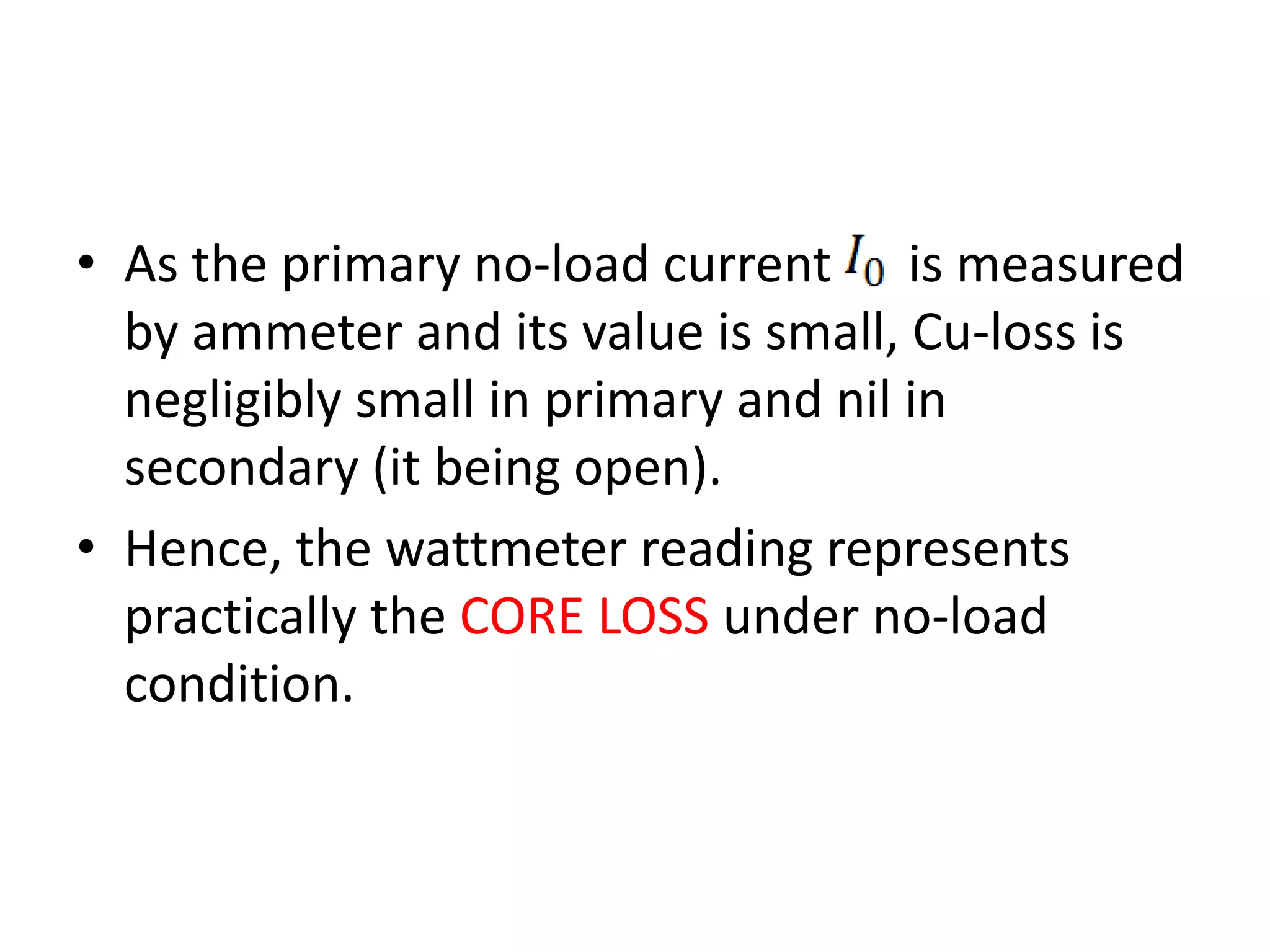
• As the primary no-load current is measured 
by ammeter and its value is small, Cu-loss is 
negligibly small in primary and nil in 
secondary (it being open). 
• Hence, the wattmeter reading represents 
practically the CORE LOSS under no-load 
condition.
• Sometimes a high resistance voltmeter is 
connected across the secondary. The reading 
of the voltmeter gives the induced e.m.f. in 
the secondary winding.
SHORT CIRCUIT TEST
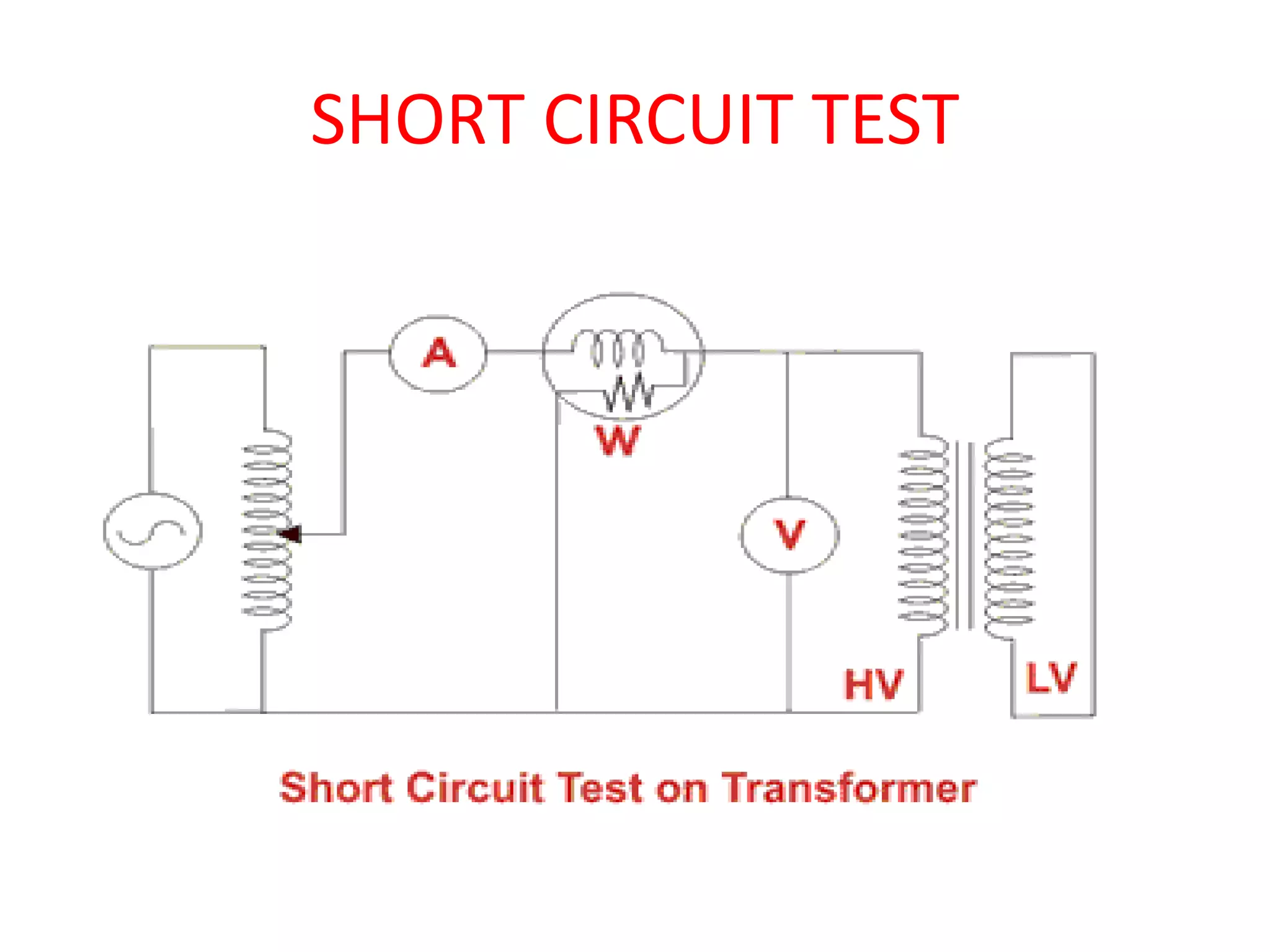
HOW TO MEASURE S.C. TEST 
1. To connect the wattmeter primary side 
2. To connect the Ammeter in series of primary 
side 
3. To connect the Voltmeter in parallel of 
primary side 
4. Short the secondary side using thick 
conductor 
5. Now give the small voltage supply for the 
measurement of Cu-losses.
• A wattmeter, voltmeter and an ammeter are 
connected in high voltage side. 
• The low voltage side of transformer is short 
circuited. 
• The applied voltage is a small percentage of the 
normal voltage. 
• Hence the core losses are very small with the 
result of the wattmeter reading represent the 
full-load CU-LOSS or loss for the whole 
transformer .
ADVANTAGES 
• No require for extra load 
• This test are very economical and convenient, 
because they furnish the required information 
without actually loading the transformer.
APPLICATION 
• By using open circuit test we can measure the 
loss of no-load losses means that iron losses. 
• By using short circuit test we can measure the 
loss of full-load losses means that Cu-losses. 
• We can find the efficiency by using of iron 
losses and cu-losses.
THANK YOU

open circuit and short circuit test on transformer

  • 1.
    OPEN CIRCUIT &SHORT CIRCUIT TEST ON TRANSFORMER PREPAIRED BY: MANAVAR MILAN
  • 2.
    INTRODUCTION • Necessityof testing • Open circuit test • Short circuit test • Advantages • Application
  • 3.
    NECESSITY OF TESTING • In transformer and other equipment have input and output. Hence how to we find the performance of transformer and other equipment…..? • We have a solution even we will find the loss of transformer so we can easily find the all parameters of transformer like, we can find iron loss, cu loss, impedance, no load current, short circuit current and efficiency.
  • 4.
  • 5.
    HOW TO MEASUREO.C. TEST 1. To connect Wattmeter in primary side. 2. To connect Ammeter in series of phase. 3. To connect Voltmeter in parallel of primary side. 4. We will open the Secondary side. 5. We will give the supply primary side for the measurement of iron losses.
  • 6.
    • The purposeof this test is to find the no-load loss or core loss. • A wattmeter, voltmeter and an ammeter are connected in low voltage side. • Secondary side of transformer we will keep open. • We give the normal voltage applied to the primary, normal flux will be set up in the core, hence normal iron losses will occur which are recorded by the wattmeter.
  • 7.
    • As theprimary no-load current is measured by ammeter and its value is small, Cu-loss is negligibly small in primary and nil in secondary (it being open). • Hence, the wattmeter reading represents practically the CORE LOSS under no-load condition.
  • 8.
    • Sometimes ahigh resistance voltmeter is connected across the secondary. The reading of the voltmeter gives the induced e.m.f. in the secondary winding.
  • 9.
  • 10.
    HOW TO MEASURES.C. TEST 1. To connect the wattmeter primary side 2. To connect the Ammeter in series of primary side 3. To connect the Voltmeter in parallel of primary side 4. Short the secondary side using thick conductor 5. Now give the small voltage supply for the measurement of Cu-losses.
  • 11.
    • A wattmeter,voltmeter and an ammeter are connected in high voltage side. • The low voltage side of transformer is short circuited. • The applied voltage is a small percentage of the normal voltage. • Hence the core losses are very small with the result of the wattmeter reading represent the full-load CU-LOSS or loss for the whole transformer .
  • 12.
    ADVANTAGES • Norequire for extra load • This test are very economical and convenient, because they furnish the required information without actually loading the transformer.
  • 13.
    APPLICATION • Byusing open circuit test we can measure the loss of no-load losses means that iron losses. • By using short circuit test we can measure the loss of full-load losses means that Cu-losses. • We can find the efficiency by using of iron losses and cu-losses.
  • 14.