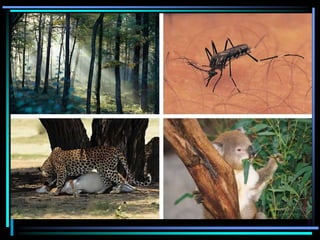
A review of what you’ve learned
about cells and living organisms


Prokaryotic Cell

•no nucleus
•has cell wall
Eukaryotic Cell

•has DNA
contained in
nucleus
 Autotrophs  capture the light energy from sunlight
and convert it to chemical energy they use for food.

Heterotrophs must get energy by eating
 autotrophs or other heterotrophs.
   •Carnivores
   •Herbivores
   •Omnivores

 Decomposers are heterotrophs that recycle dead
organisms by breaking them down.
• Taxonomy is the science of grouping
and naming organisms.
  Groups organisms based on similarities

• Classification the grouping of
information or objects based on
similarities.
•We only know about a fraction of the organisms that
exist or have existed on Earth.

•Taxonomists give a unique scientific name to each
species they know about, whether it’s alive today or
extinct.

•The scientific name comes from one of two “dead”
languages – Latin or ancient Greek.

•Why use a dead language?
Devil Cat
Ghost Cat
Mountain Lion
Puma
Florida Panther
•There are at least 50 common names for
 the cat shown on the previous slides.

•Common names vary according to region.

•Soooo……why use a scientific name?
     There are about 1.5 million species already
     named

     Scientists estimate between 2 and 100 million
     species that haven’t been discovered yet
Binomial Nomenclature

  •developed by Carolus Linnaeus

  •a two-name system for writing scientific names.

  •The genus name is written first (always Capitalized).

  •The species name is written second (never capitalized).

  •Both words are italicized if typed or underlined if hand written.

  •Example: Felis concolor or F. concolor

  1. Which is the genus? The species?
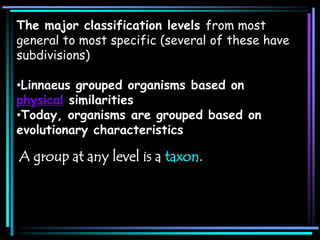
The major classification levels from most
general to most specific (several of these have
subdivisions)

•Linnaeus grouped organisms based on
physical similarities
•Today, organisms are grouped based on
evolutionary characteristics

A group at any level is a taxon.
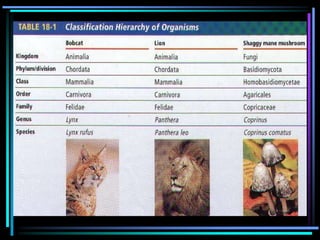
Categories within Kingdoms

 Kingdoms are divided into groups called phyla
  Phyla are subdivided into classes
    Classes are subdivided into orders
      Orders are subdivided into families
        Families are divided into genera
           Genera contain closely related species
               Species is unique

Remember: King Philip came over for George’s sword.
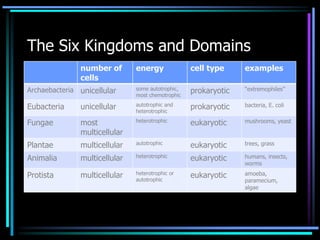
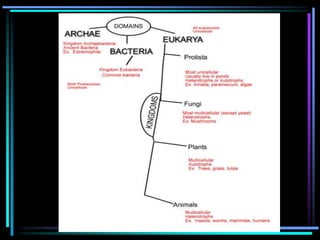
The Six Kingdoms and Domains
               number of       energy              cell type     examples
               cells
Archaebacteria unicellular     some autotrophic,   prokaryotic   “extremophiles”
                               most chemotrophic

Eubacteria     unicellular     autotrophic and
                               heterotrophic
                                                   prokaryotic   bacteria, E. coli


Fungae         most            heterotrophic       eukaryotic    mushrooms, yeast

               multicellular
Plantae        multicellular   autotrophic         eukaryotic    trees, grass

Animalia       multicellular   heterotrophic       eukaryotic    humans, insects,
                                                                 worms

Protista       multicellular   heterotrophic or
                               autotrophic
                                                   eukaryotic    amoeba,
                                                                 paramecium,
                                                                 algae
The Dichotomous Key

• A key is a device for easily and quickly identifying
 an unknown organism.

• The dichotomous key is the most widely used type
in biological sciences.

• The user is presented with a sequence of choices
between two statements, couplets, based on
characteristics of the organism. By always making
the correct choice, the name of the organism will be
revealed.
A. one pair of wings

1.
     B. Two pairs of wings
Modern Taxonomy


Phylogeny, the evolutionary history of an organism, is
the cornerstone of a branch of biology called systematic
taxonomy.

Systematics, as systematic taxonomy is commonly called,
is the study of the evolution of biological diversity.
A phylogenetic tree is a family tree
that shows a hypothesis about the
evolutionary relationships thought to
exist among groups of organisms. It
does not show the actual evolutionary
history of organisms.
Phylogenetic trees are usually based on a
combination of these lines of evidence:
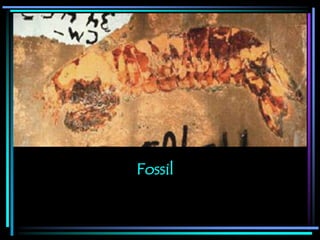
  Fossil record
  Morphology-deals with physical
  structures and organs (like arms)
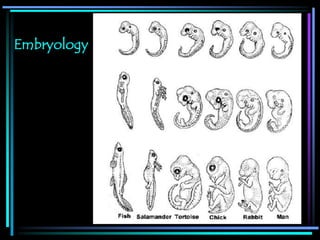
  Embryological patterns of
  development
  Chromosomes and DNA
Fossil
Morphology
homologous = same
Convergent Evolution
These animals have evolved similar adaptations for
obtaining food because they occupy similar niches.
What can you infer about their phylogeny from their
geographic locations?
Convergent evolution leads to……….

Analogous Structures -
•Traits that are morphologically and
functionally similar even though there is
no common ancestor.
Embryology
Cladistics - is a relatively new system
of phylogenetics classification that
uses shared derived characters to
establish evolutionary relationships.

A derived character is a feature that
apparently evolved only within the
group under consideration.
A phylogenetic tree based on a
cladistic analysis is called a
cladogram.

What derived character is shared by
all the animals on the cladogram on
the next slide?
Taxonomy ppt

  • 2.
    A review ofwhat you’ve learned about cells and living organisms Prokaryotic Cell •no nucleus •has cell wall
  • 3.
  • 4.
     Autotrophs capture the light energy from sunlight and convert it to chemical energy they use for food. Heterotrophs must get energy by eating autotrophs or other heterotrophs. •Carnivores •Herbivores •Omnivores  Decomposers are heterotrophs that recycle dead organisms by breaking them down.
  • 6.
    • Taxonomy isthe science of grouping and naming organisms. Groups organisms based on similarities • Classification the grouping of information or objects based on similarities.
  • 7.
    •We only knowabout a fraction of the organisms that exist or have existed on Earth. •Taxonomists give a unique scientific name to each species they know about, whether it’s alive today or extinct. •The scientific name comes from one of two “dead” languages – Latin or ancient Greek. •Why use a dead language?
  • 8.
  • 9.
  • 10.
  • 11.
  • 12.
  • 13.
    •There are atleast 50 common names for the cat shown on the previous slides. •Common names vary according to region. •Soooo……why use a scientific name? There are about 1.5 million species already named Scientists estimate between 2 and 100 million species that haven’t been discovered yet
  • 14.
    Binomial Nomenclature •developed by Carolus Linnaeus •a two-name system for writing scientific names. •The genus name is written first (always Capitalized). •The species name is written second (never capitalized). •Both words are italicized if typed or underlined if hand written. •Example: Felis concolor or F. concolor 1. Which is the genus? The species?
  • 15.
    The major classificationlevels from most general to most specific (several of these have subdivisions) •Linnaeus grouped organisms based on physical similarities •Today, organisms are grouped based on evolutionary characteristics A group at any level is a taxon.
  • 16.
    Categories within Kingdoms Kingdoms are divided into groups called phyla Phyla are subdivided into classes Classes are subdivided into orders Orders are subdivided into families Families are divided into genera Genera contain closely related species Species is unique Remember: King Philip came over for George’s sword.
  • 18.
    The Six Kingdomsand Domains number of energy cell type examples cells Archaebacteria unicellular some autotrophic, prokaryotic “extremophiles” most chemotrophic Eubacteria unicellular autotrophic and heterotrophic prokaryotic bacteria, E. coli Fungae most heterotrophic eukaryotic mushrooms, yeast multicellular Plantae multicellular autotrophic eukaryotic trees, grass Animalia multicellular heterotrophic eukaryotic humans, insects, worms Protista multicellular heterotrophic or autotrophic eukaryotic amoeba, paramecium, algae
  • 20.
    The Dichotomous Key •A key is a device for easily and quickly identifying an unknown organism. • The dichotomous key is the most widely used type in biological sciences. • The user is presented with a sequence of choices between two statements, couplets, based on characteristics of the organism. By always making the correct choice, the name of the organism will be revealed.
  • 22.
    A. one pairof wings 1. B. Two pairs of wings
  • 23.
    Modern Taxonomy Phylogeny, theevolutionary history of an organism, is the cornerstone of a branch of biology called systematic taxonomy. Systematics, as systematic taxonomy is commonly called, is the study of the evolution of biological diversity.
  • 24.
    A phylogenetic treeis a family tree that shows a hypothesis about the evolutionary relationships thought to exist among groups of organisms. It does not show the actual evolutionary history of organisms.
  • 26.
    Phylogenetic trees areusually based on a combination of these lines of evidence: Fossil record Morphology-deals with physical structures and organs (like arms) Embryological patterns of development Chromosomes and DNA
  • 27.
  • 28.
  • 29.
  • 30.
    Convergent Evolution These animalshave evolved similar adaptations for obtaining food because they occupy similar niches. What can you infer about their phylogeny from their geographic locations?
  • 31.
    Convergent evolution leadsto………. Analogous Structures - •Traits that are morphologically and functionally similar even though there is no common ancestor.
  • 33.
  • 34.
    Cladistics - isa relatively new system of phylogenetics classification that uses shared derived characters to establish evolutionary relationships. A derived character is a feature that apparently evolved only within the group under consideration.
  • 35.
    A phylogenetic treebased on a cladistic analysis is called a cladogram. What derived character is shared by all the animals on the cladogram on the next slide?