Index Introduction Kingdom Monera Kingdom Protista Kingdom Fungi Kingdom Plantae Kingdom Animalia Done By
 
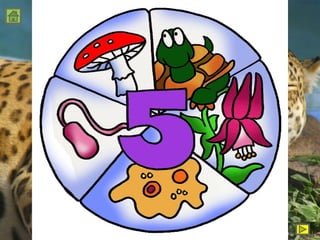
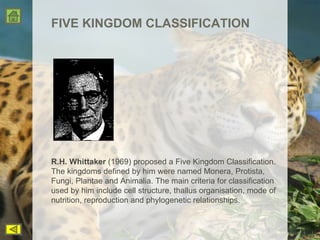
FIVE KINGDOM CLASSIFICATION R.H. Whittaker  (1969) proposed a Five Kingdom Classification. The kingdoms defined by him were named Monera, Protista, Fungi, Plantae and Animalia. The main criteria for classification used by him include cell structure, thallus organisation, mode of nutrition, reproduction and phylogenetic relationships.
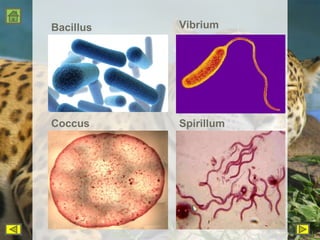
KINGDOM  MONERA Bacteria are the sole members of the Kingdom Monera. They are the most abundant micro-organisms. Bacteria are grouped under four categories based on their shape:  The spherical  Coccus  , The rod-shaped  Bacillus  , The comma-shaped  Vibrium  , And  The spiral  Spirillum  .
Bacillus Coccus Vibrium Spirillum
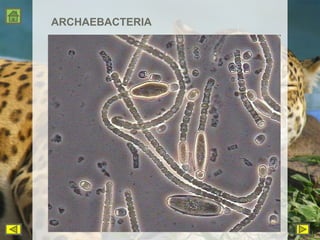
ARCHAEBACTERIA
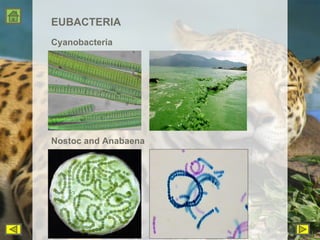
EUBACTERIA Cyanobacteria Nostoc and Anabaena
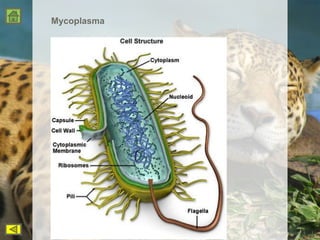
Mycoplasma
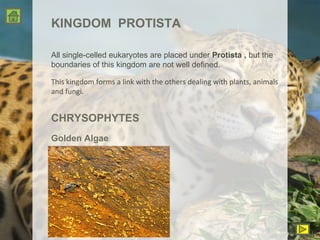
KINGDOM  PROTISTA All single-celled eukaryotes are placed under  Protista ,  but the boundaries of this kingdom are not well defined. This kingdom forms a link with the others dealing with plants, animals and fungi. CHRYSOPHYTES Golden Algae
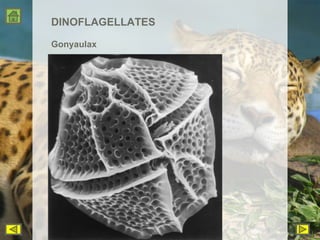
DINOFLAGELLATES Gonyaulax
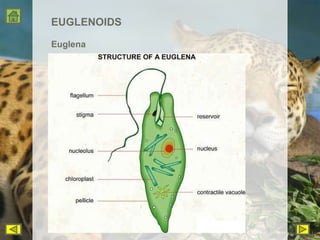
EUGLENOIDS Euglena
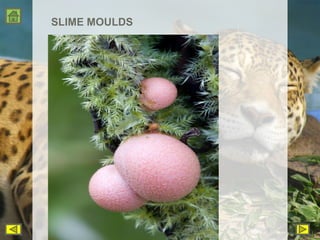
SLIME MOULDS
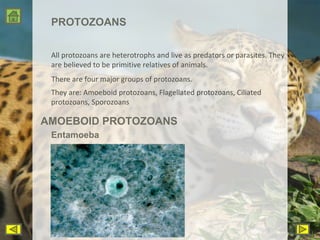
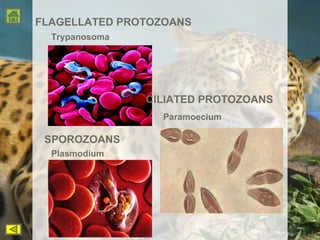
PROTOZOANS All protozoans are heterotrophs and live as predators or parasites. They are believed to be primitive relatives of animals. There are four major groups of protozoans. Entamoeba They are: Amoeboid protozoans, Flagellated protozoans, Ciliated protozoans, Sporozoans AMOEBOID PROTOZOANS
Trypanosoma Paramoecium Plasmodium SPOROZOANS FLAGELLATED PROTOZOANS CILIATED PROTOZOANS
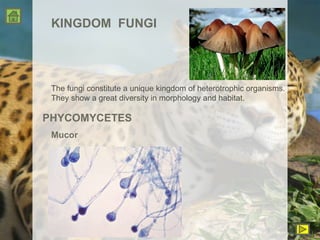
KINGDOM  FUNGI The fungi constitute a unique kingdom of heterotrophic organisms. They show a great diversity in morphology and habitat. PHYCOMYCETES Mucor
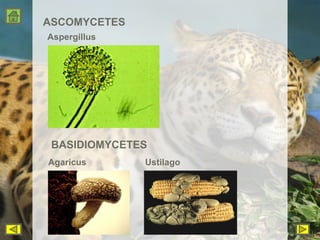
ASCOMYCETES Aspergillus BASIDIOMYCETES Agaricus Ustilago
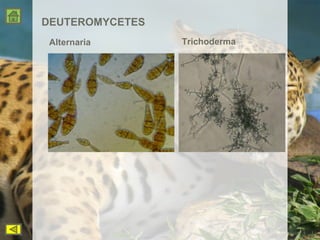
DEUTEROMYCETES Alternaria Trichoderma
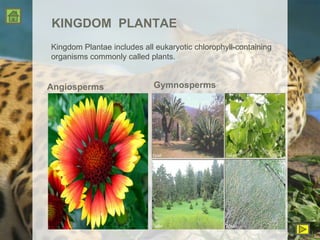
KINGDOM  PLANTAE Angiosperms Kingdom Plantae includes all eukaryotic chlorophyll-containing organisms commonly called plants. Gymnosperms
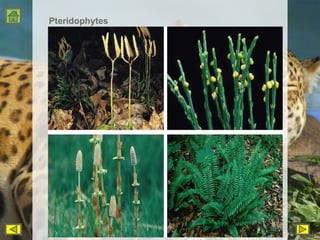
Pteridophytes
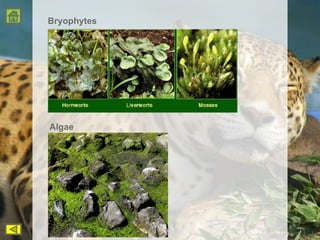
Bryophytes Algae
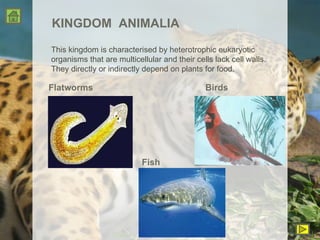
KINGDOM  ANIMALIA This kingdom is characterised by heterotrophic eukaryotic organisms that are multicellular and their cells lack cell walls. They directly or indirectly depend on plants for food. Flatworms Birds Fish
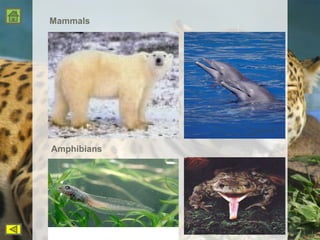
Mammals Amphibians
Done By: S.R.Narayana Pai XI-B

Kingdom classification