Chromosomal Abnormalities
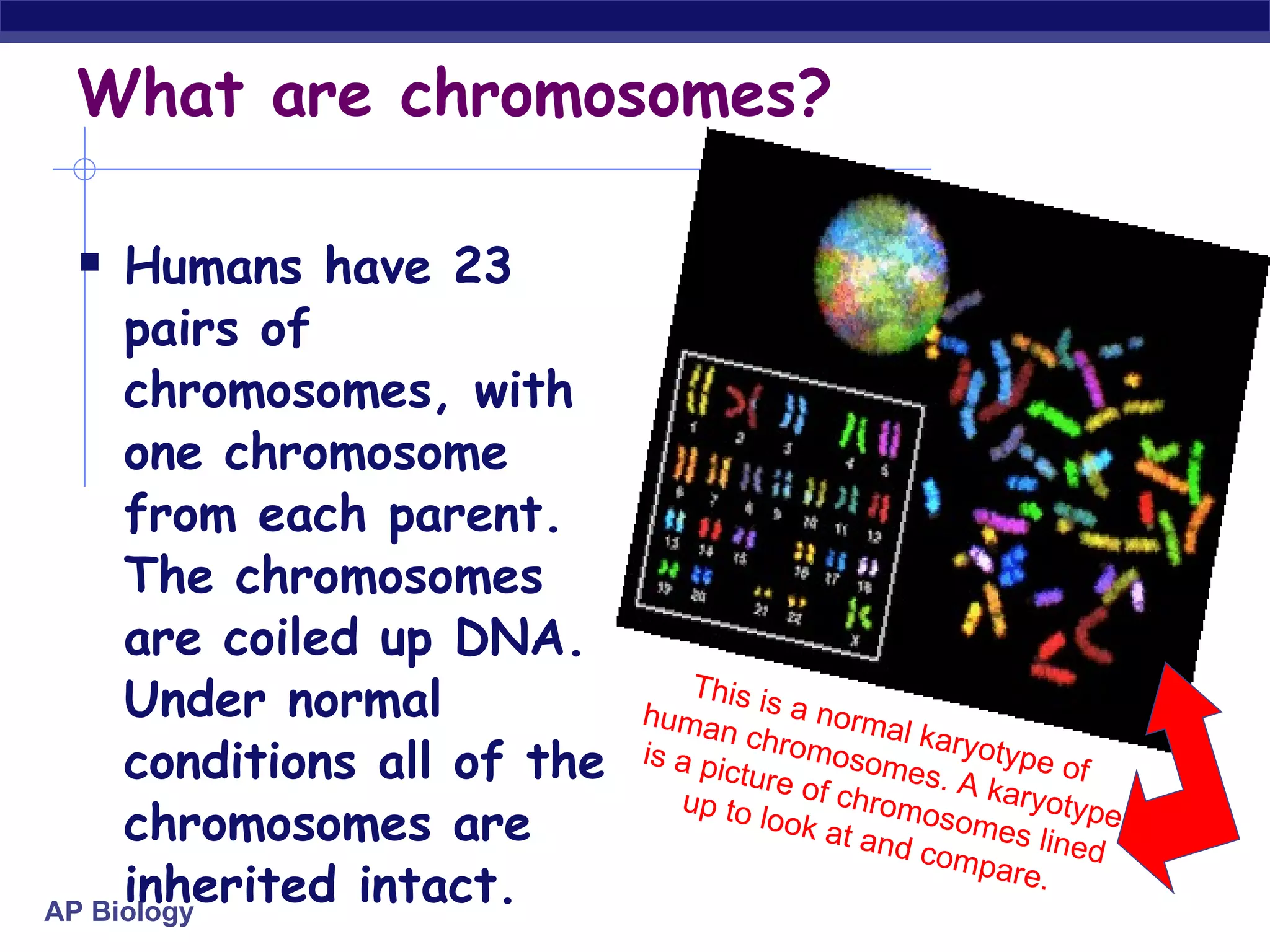
What are chromosomes? Humans have 23 pairs of chromosomes, with one chromosome from each parent. The chromosomes are coiled up DNA. Under normal conditions all of the chromosomes are inherited intact.  This is a normal karyotype of human chromosomes. A karyotype is a picture of chromosomes lined up to look at and compare.
Chromosomal abnormalities Incorrect number of chromosomes nondisjunction   chromosomes don’t separate properly during meiosis  breakage of chromosomes deletion duplication inversion translocation
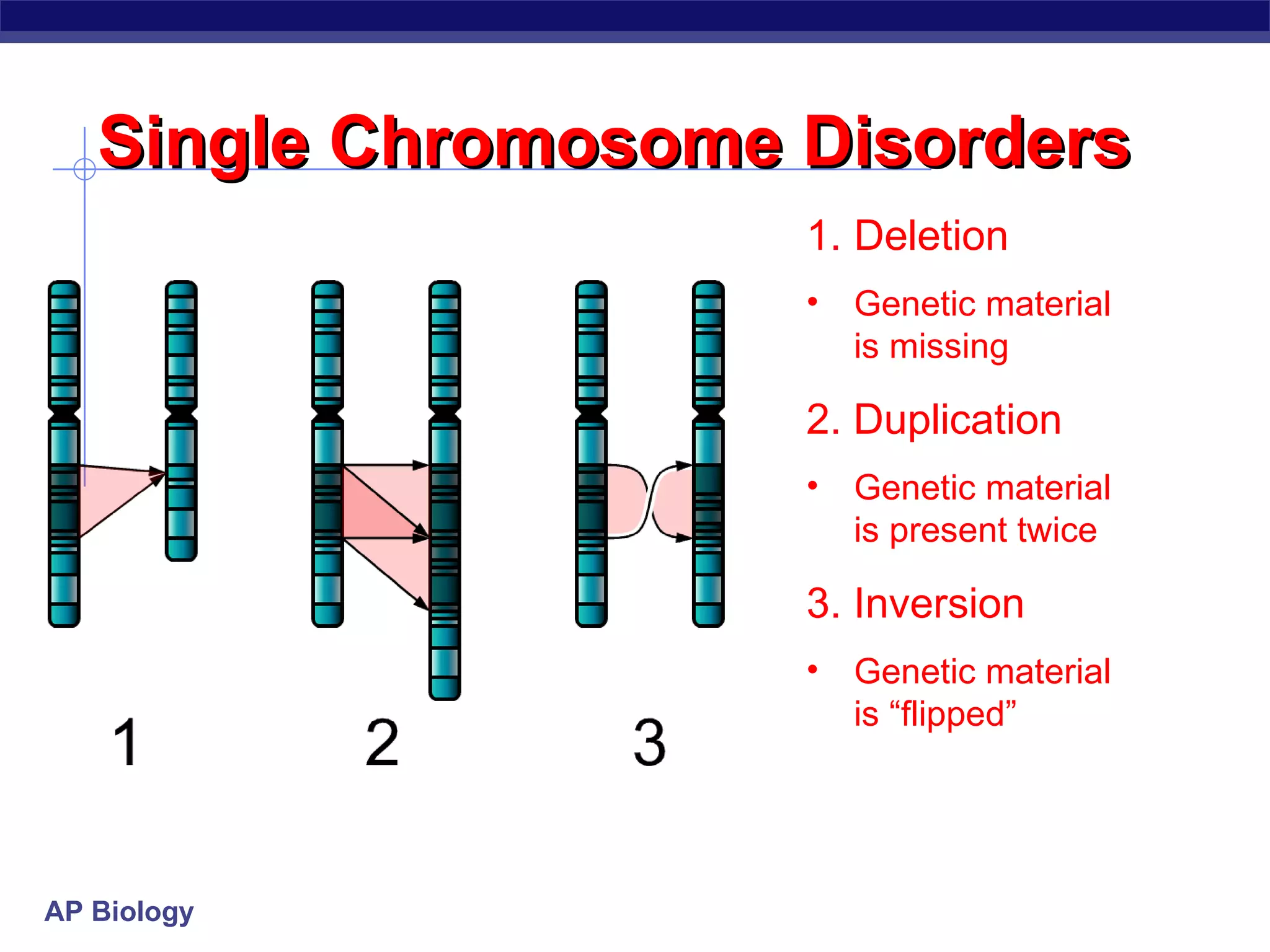
Chromosomal Disorders Chromosomal deletion : when cells go through meiosis, portions of the chromosome are lost. Chromosomal inversion : when cells go through meiosis, parts of the chromosome are flipped. Chromosomal translocation : when cells go through meiosis, parts of the chromosomes stick together and switch. Chromosomal non-disjunction : when cells go through meiosis the chromosomes don’t separate correctly and either too many or not enough are passed on.
Single Chromosome Disorders Deletion Genetic material is missing 2. Duplication Genetic material is present twice 3. Inversion Genetic material is “flipped”
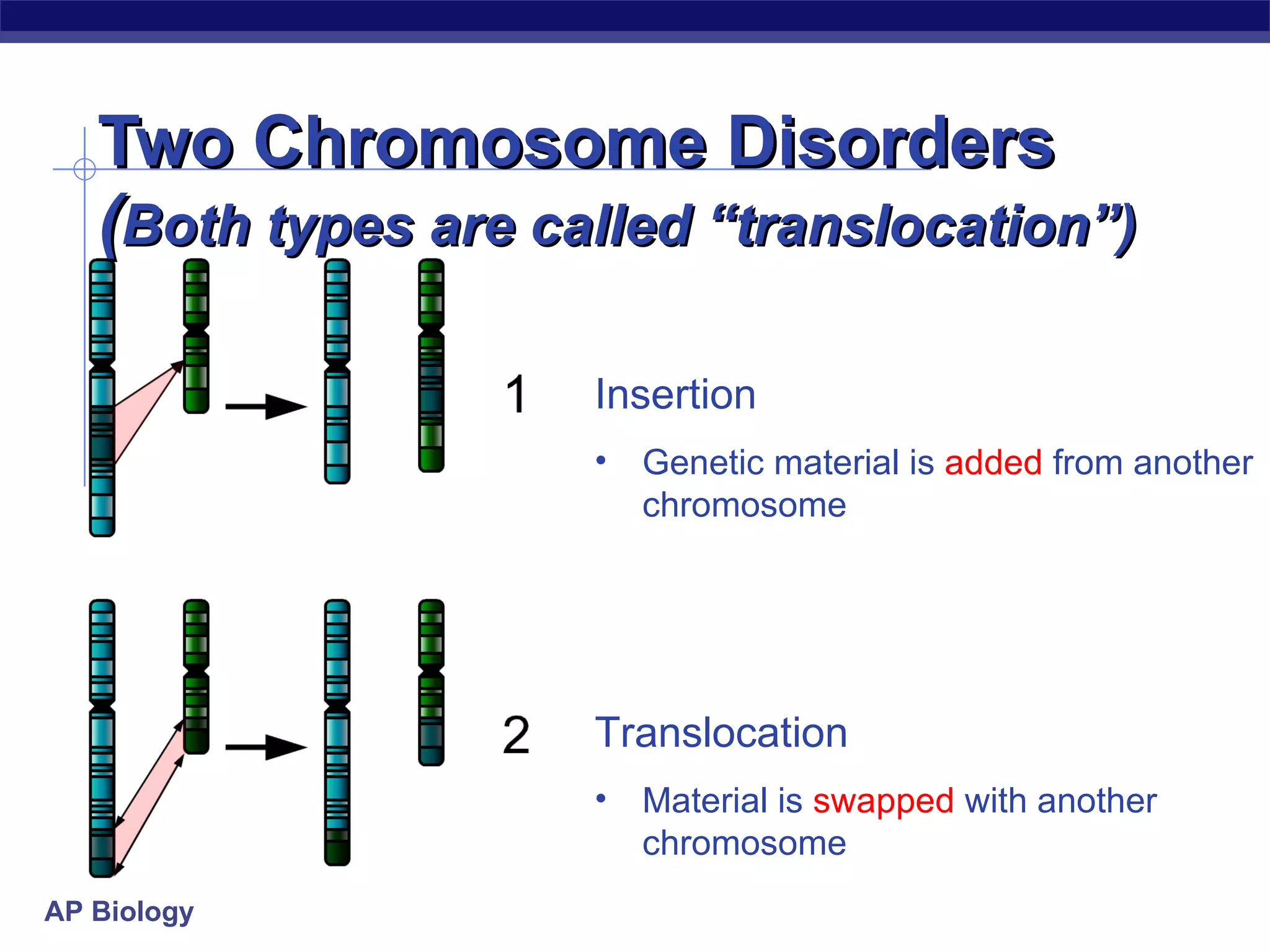
Two Chromosome Disorders ( Both types are called “translocation”) Insertion Genetic material is  added  from another chromosome Translocation Material is  swapped  with another chromosome
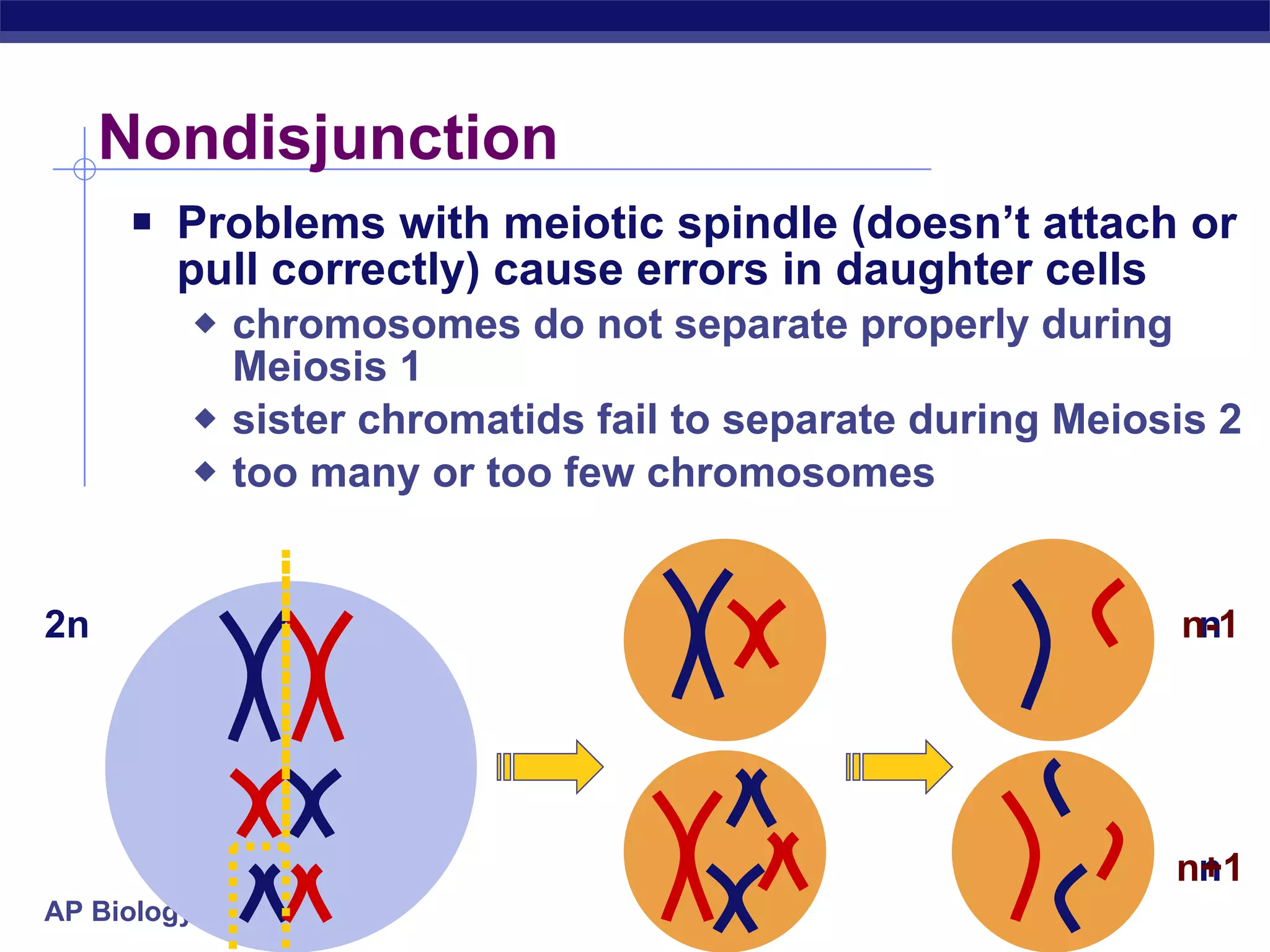
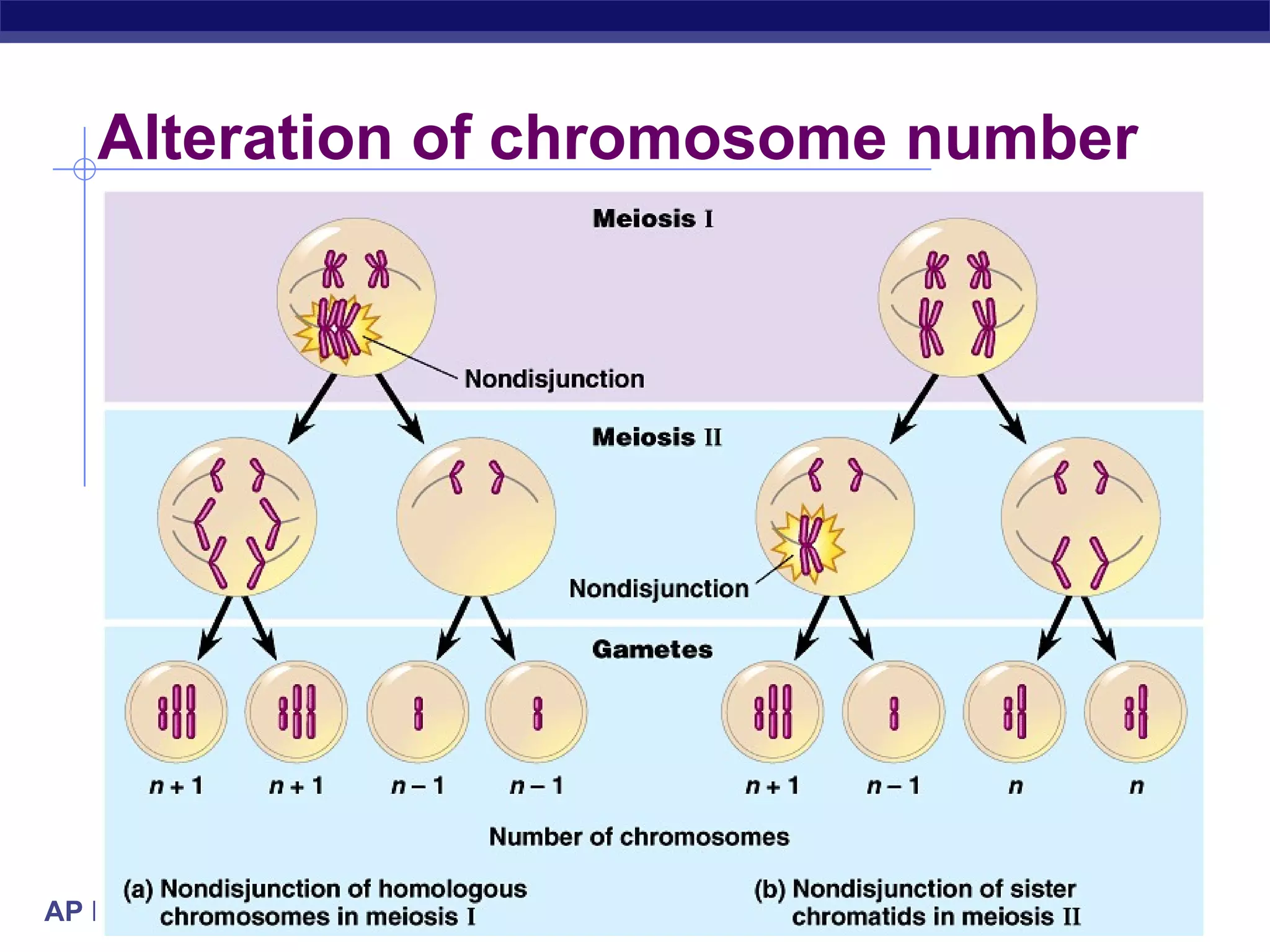
Nondisjunction  Problems with meiotic spindle (doesn’t attach or pull correctly) cause errors in daughter cells chromosomes do not separate properly during Meiosis 1 sister chromatids fail to separate during Meiosis 2 too many or too few chromosomes 2n n n n-1 n+1
Alteration of chromosome number
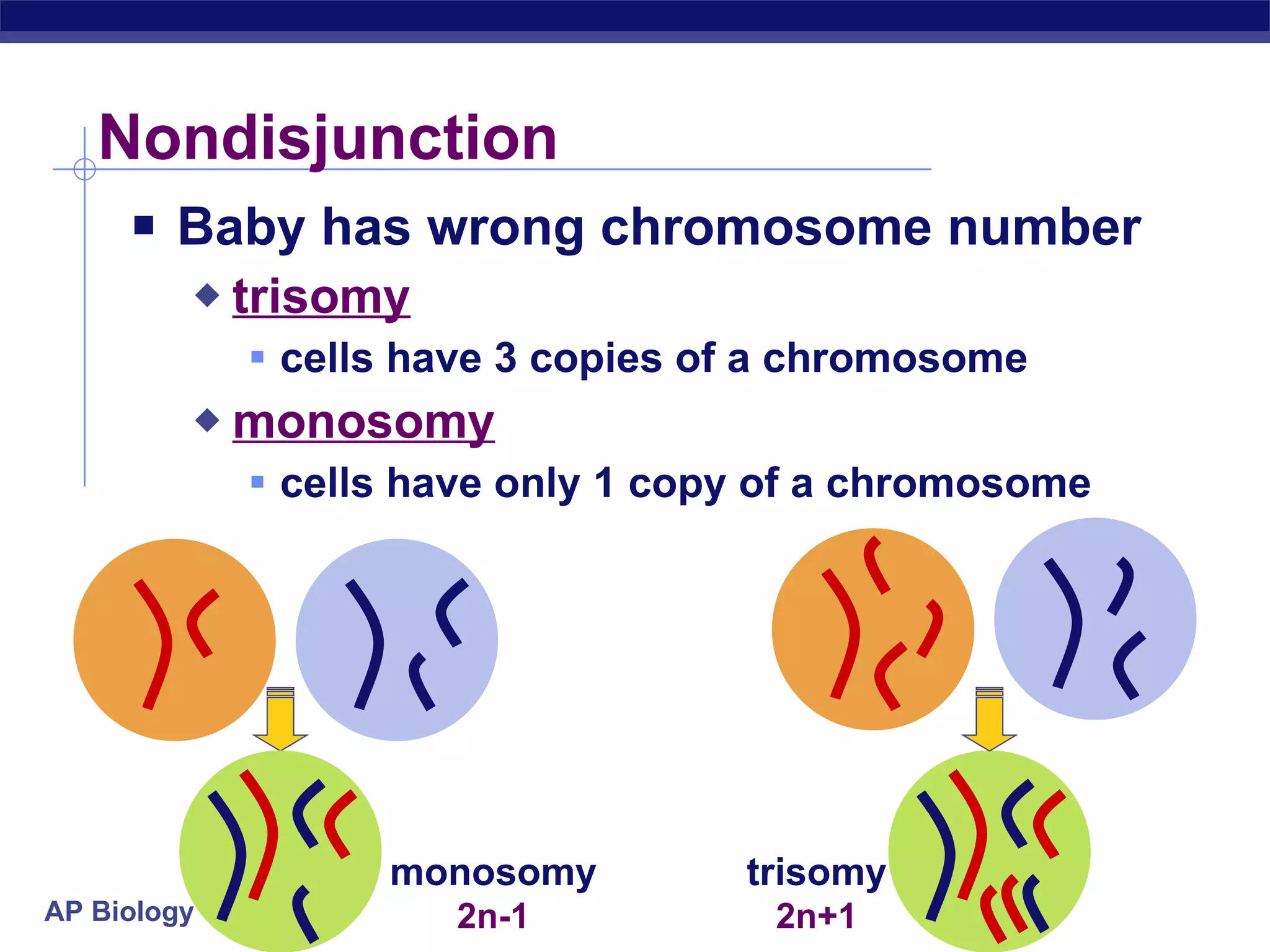
Nondisjunction  Baby has wrong chromosome number trisomy   cells have 3 copies of a chromosome  monosomy   cells have only 1 copy of a chromosome  trisomy 2n+1 monosomy 2n-1
Human chromosome disorders  High frequency in humans most embryos are spontaneously aborted alterations are too disastrous developmental problems result from biochemical imbalance Certain conditions are tolerated upsets the balance less, so child  survives characteristic set of symptoms is called a syndrome
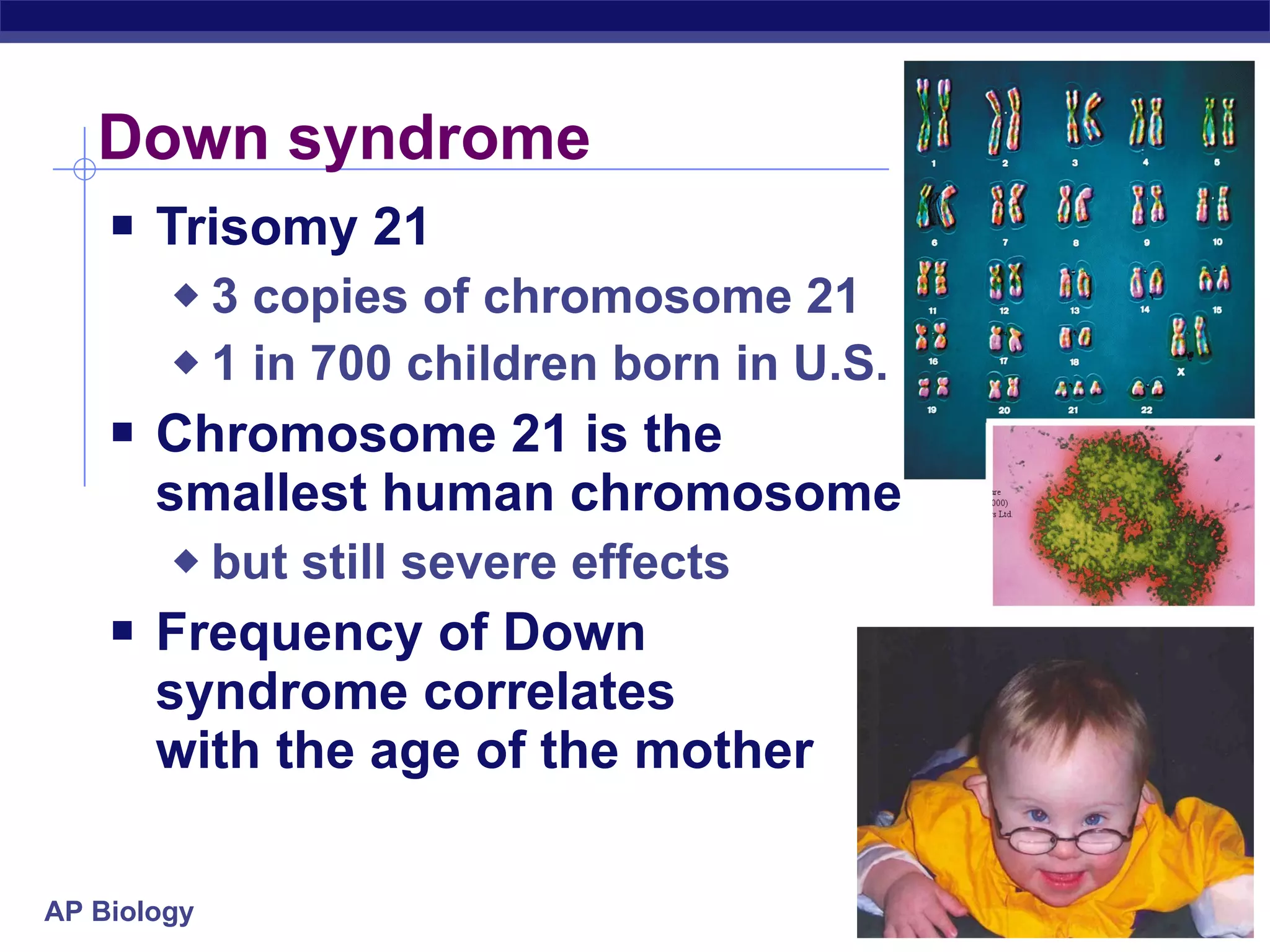
Down syndrome Trisomy 21 3 copies of chromosome 21 1 in 700 children born in U.S. Chromosome 21 is the  smallest human chromosome but still severe effects Frequency of Down  syndrome correlates  with the age of the mother
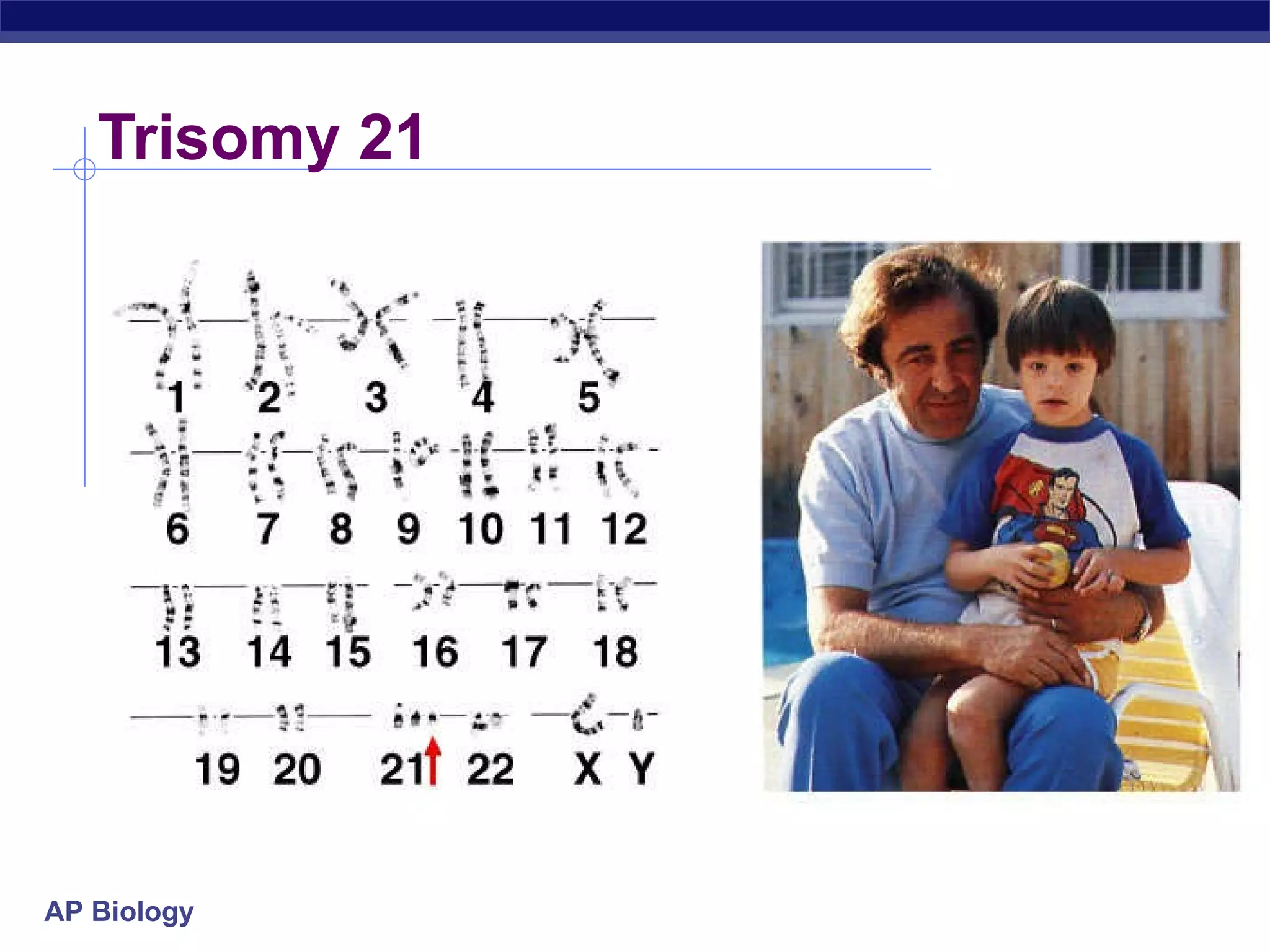
Trisomy 21
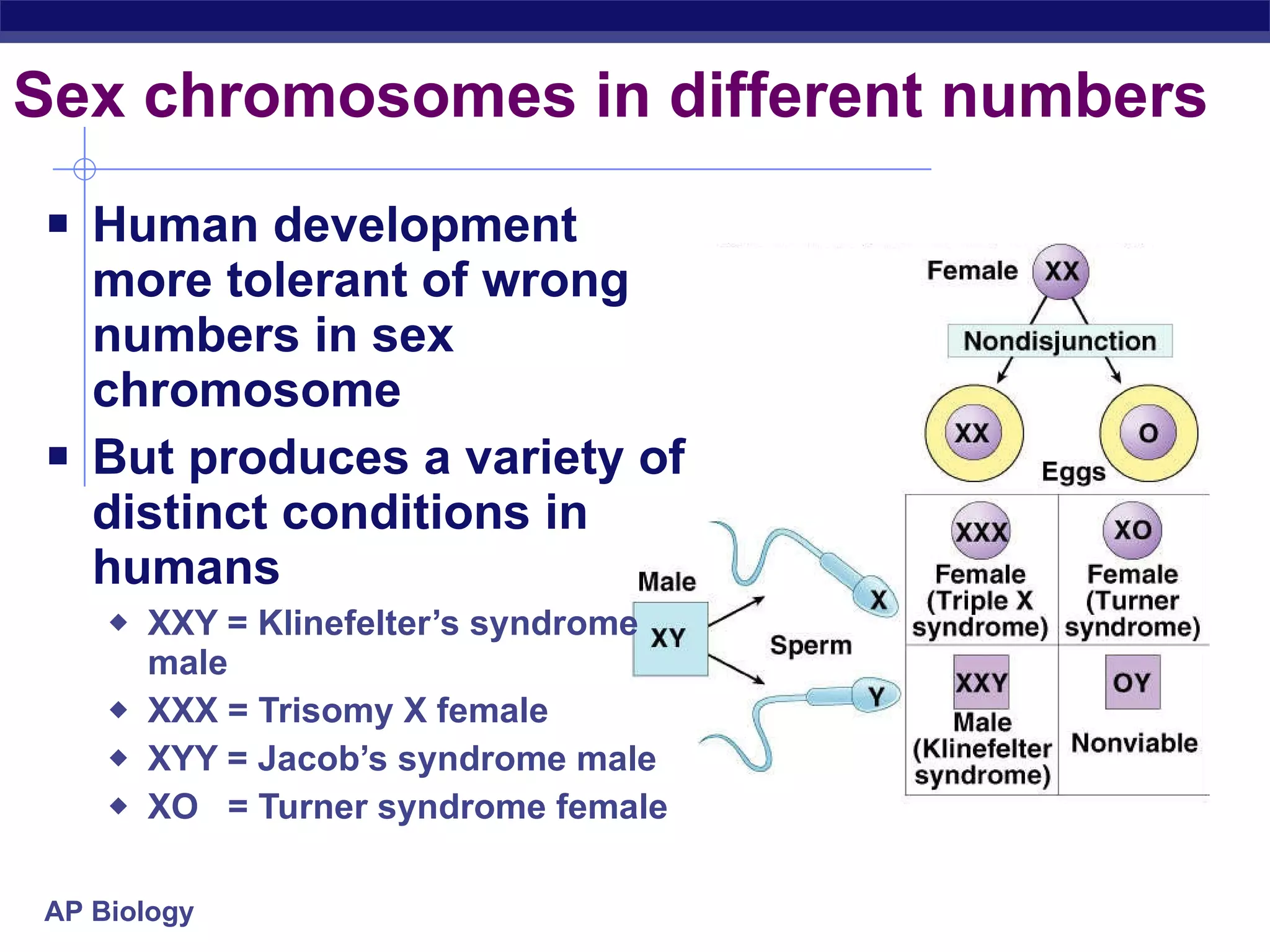
Sex chromosomes in different numbers Human development more tolerant of wrong numbers in sex chromosome But produces a variety of distinct conditions in humans XXY = Klinefelter’s syndrome male  XXX = Trisomy X female XYY = Jacob’s syndrome male XO  = Turner syndrome female

Chromosomal abnormalities

  • 1.
  • 2.
    What are chromosomes?Humans have 23 pairs of chromosomes, with one chromosome from each parent. The chromosomes are coiled up DNA. Under normal conditions all of the chromosomes are inherited intact. This is a normal karyotype of human chromosomes. A karyotype is a picture of chromosomes lined up to look at and compare.
  • 3.
    Chromosomal abnormalities Incorrectnumber of chromosomes nondisjunction chromosomes don’t separate properly during meiosis breakage of chromosomes deletion duplication inversion translocation
  • 4.
    Chromosomal Disorders Chromosomaldeletion : when cells go through meiosis, portions of the chromosome are lost. Chromosomal inversion : when cells go through meiosis, parts of the chromosome are flipped. Chromosomal translocation : when cells go through meiosis, parts of the chromosomes stick together and switch. Chromosomal non-disjunction : when cells go through meiosis the chromosomes don’t separate correctly and either too many or not enough are passed on.
  • 5.
    Single Chromosome DisordersDeletion Genetic material is missing 2. Duplication Genetic material is present twice 3. Inversion Genetic material is “flipped”
  • 6.
    Two Chromosome Disorders( Both types are called “translocation”) Insertion Genetic material is added from another chromosome Translocation Material is swapped with another chromosome
  • 7.
    Nondisjunction Problemswith meiotic spindle (doesn’t attach or pull correctly) cause errors in daughter cells chromosomes do not separate properly during Meiosis 1 sister chromatids fail to separate during Meiosis 2 too many or too few chromosomes 2n n n n-1 n+1
  • 8.
  • 9.
    Nondisjunction Babyhas wrong chromosome number trisomy cells have 3 copies of a chromosome monosomy cells have only 1 copy of a chromosome trisomy 2n+1 monosomy 2n-1
  • 10.
    Human chromosome disorders High frequency in humans most embryos are spontaneously aborted alterations are too disastrous developmental problems result from biochemical imbalance Certain conditions are tolerated upsets the balance less, so child survives characteristic set of symptoms is called a syndrome
  • 11.
    Down syndrome Trisomy21 3 copies of chromosome 21 1 in 700 children born in U.S. Chromosome 21 is the smallest human chromosome but still severe effects Frequency of Down syndrome correlates with the age of the mother
  • 12.
  • 13.
    Sex chromosomes indifferent numbers Human development more tolerant of wrong numbers in sex chromosome But produces a variety of distinct conditions in humans XXY = Klinefelter’s syndrome male XXX = Trisomy X female XYY = Jacob’s syndrome male XO = Turner syndrome female