Week 38                     •Ch. 17.2 pg 450

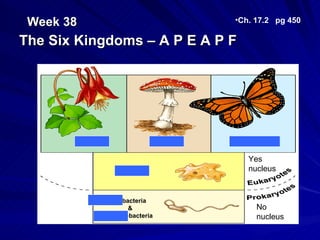
The Six Kingdoms – A P E A P F


                                 Yes
                                 nucleus


              Eubacteria
                  &                No
            Archaebacteria         nucleus
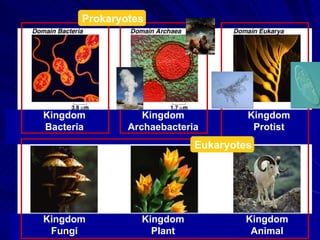
Prokaryotes


Kingdom           Kingdom            Kingdom
Bacteria       Archaebacteria         Protist
                            Eukaryotes


Kingdom          Kingdom            Kingdom
 Fungi             Plant             Animal
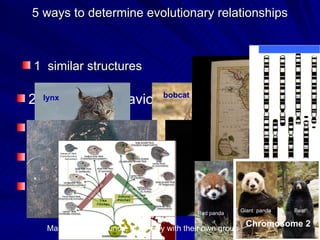
5 ways to determine evolutionary relationships


1 similar structures

                                   bobcat
2. breeding behavior
  lynx


3. geographic distribution

4. chromosome comparisons

5. biochemistry
                                                           Giant panda   Bear
                                            Red panda

   Make different sounds, mate only with their own group
                                                            Chromosome 2
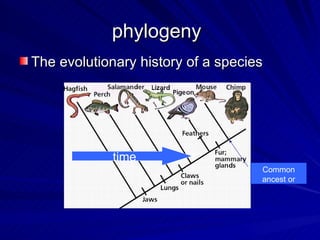
phylogeny
The evolutionary history of a species


             time
                                    Common
                                    ancest or
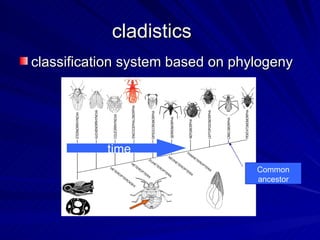
cladistics
classification system based on phylogeny


           time
                                  Common
                                  ancestor
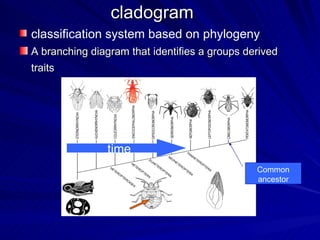
cladogram
classification system based on phylogeny
A branching diagram that identifies a groups derived
traits


                time
                                               Common
                                               ancestor
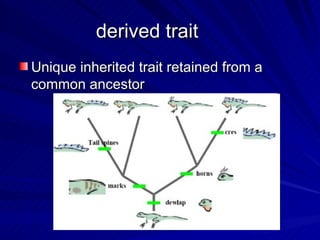
derived trait
Unique inherited trait retained from a
common ancestor
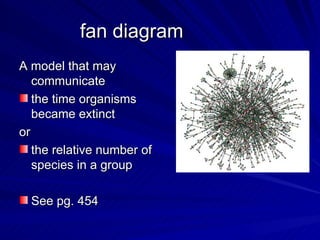
fan diagram
A model that may
   communicate
   the time organisms
   became extinct
or
   the relative number of
   species in a group

  See pg. 454
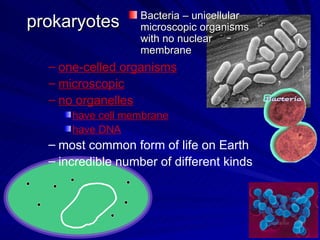
Bacteria – unicellular
prokaryotes        microscopic organisms
                   with no nuclear
                   membrane
  – one-celled organisms
  – microscopic
  – no organelles
      have cell membrane
      have DNA
  – most common form of life on Earth
  – incredible number of different kinds
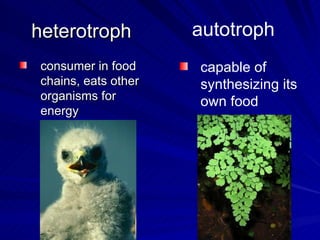
heterotroph          autotroph
consumer in food     capable of
chains, eats other   synthesizing its
organisms for        own food
energy
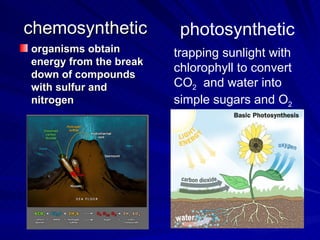
chemosynthetic           photosynthetic
organisms obtain        trapping sunlight with
energy from the break
                        chlorophyll to convert
down of compounds
with sulfur and         CO2 and water into
nitrogen                simple sugars and O2
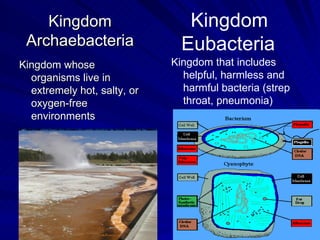
Kingdom                     Kingdom
 Archaebacteria                Eubacteria
Kingdom whose                Kingdom that includes
  organisms live in            helpful, harmless and
  extremely hot, salty, or     harmful bacteria (strep
  oxygen-free                  throat, pneumonia)
  environments
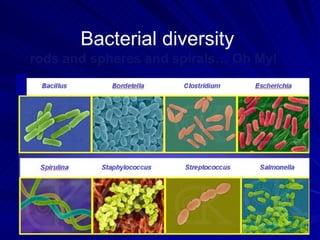
Bacterial diversity
rods and spheres and spirals… Oh My!
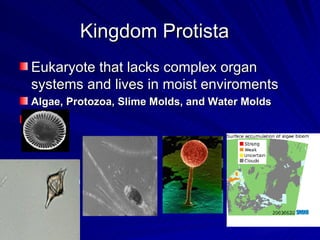
Kingdom Protista
Eukaryote that lacks complex organ
systems and lives in moist enviroments
Algae, Protozoa, Slime Molds, and Water Molds
Kingdom Fungi
Kingdom of heterotrophs that do not move
from place to place, absorbs nutrients
from the organic materials in the
environment
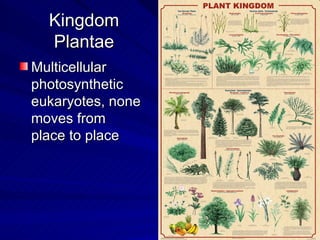
Kingdom
  Plantae
Multicellular
photosynthetic
eukaryotes, none
moves from
place to place
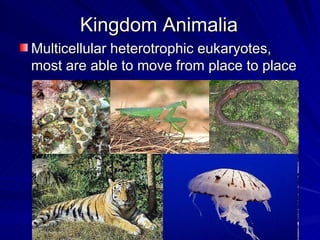
Kingdom Animalia
Multicellular heterotrophic eukaryotes,
most are able to move from place to place
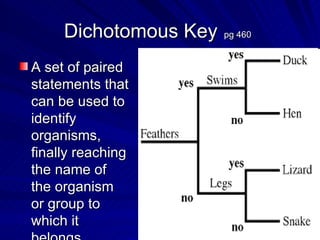
Dichotomous Key pg 460
A set of paired
statements that
can be used to
identify
organisms,
finally reaching
the name of
the organism
or group to
which it
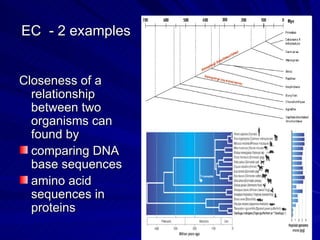
EC - 2 examples


Closeness of a
  relationship
  between two
  organisms can
  found by
  comparing DNA
  base sequences
  amino acid
  sequences in
  proteins
HW- Make a poster
     How are evolutionary relationships determined?

or

 Draw a cladogram and label what it shows


4 pts – title, illustrations show great care,
  descriptions show excellent understanding
3pt – as above, but satisfactory level work
And now the quiz….
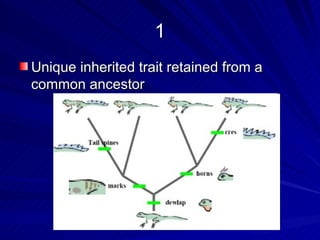
1
Unique inherited trait retained from a
common ancestor
2                           3
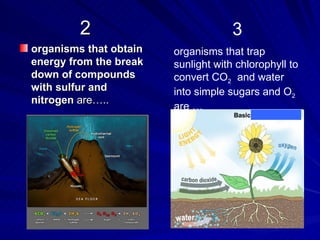
organisms that obtain   organisms that trap
energy from the break   sunlight with chlorophyll to
down of compounds       convert CO2 and water
with sulfur and         into simple sugars and O2
nitrogen are…..
                        are …
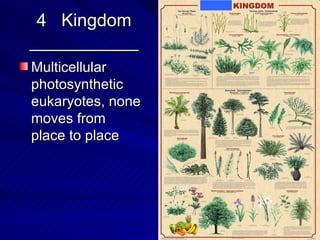
4 Kingdom
___________
Multicellular
photosynthetic
eukaryotes, none
moves from
place to place
5 Kingdom                       6 Kingdom
 ___________                     ___________
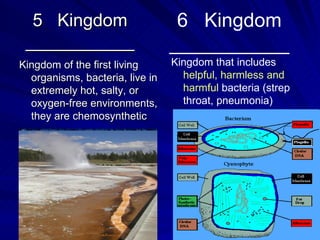
Kingdom of the first living      Kingdom that includes
  organisms, bacteria, live in     helpful, harmless and
  extremely hot, salty, or         harmful bacteria (strep
  oxygen-free environments,        throat, pneumonia)
  they are chemosynthetic
7
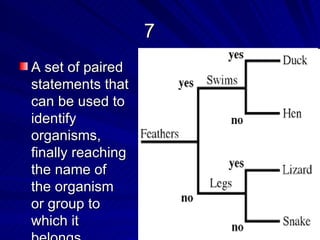
A set of paired
statements that
can be used to
identify
organisms,
finally reaching
the name of
the organism
or group to
which it
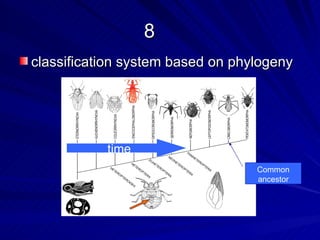
8
classification system based on phylogeny


           time
                                  Common
                                  ancestor
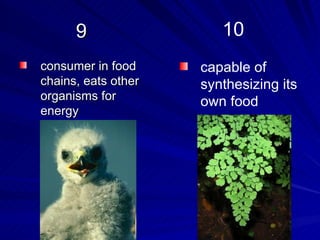
9                 10
consumer in food     capable of
chains, eats other   synthesizing its
organisms for        own food
energy
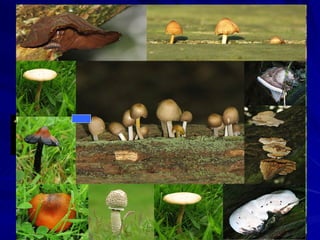
11
Kingdom of heterotrophs that do not move
from place to place, absorbs nutrients
from the organic materials in the
environment
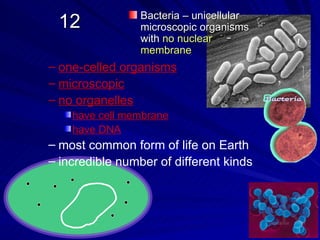
Bacteria – unicellular
 12              microscopic organisms
                 with no nuclear
                 membrane
– one-celled organisms
– microscopic
– no organelles
    have cell membrane
    have DNA
– most common form of life on Earth
– incredible number of different kinds
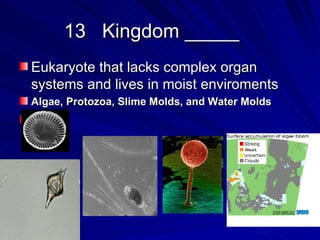
13 Kingdom _____
Eukaryote that lacks complex organ
systems and lives in moist enviroments
Algae, Protozoa, Slime Molds, and Water Molds
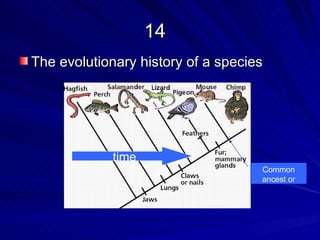
14
The evolutionary history of a species


             time
                                    Common
                                    ancest or
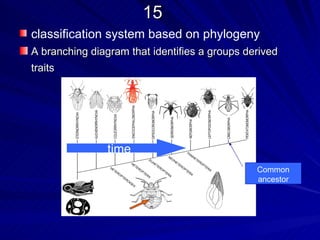
15
classification system based on phylogeny
A branching diagram that identifies a groups derived
traits


                time
                                               Common
                                               ancestor
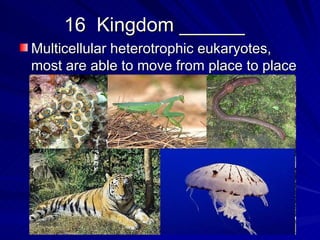
16 Kingdom ______
Multicellular heterotrophic eukaryotes,
most are able to move from place to place
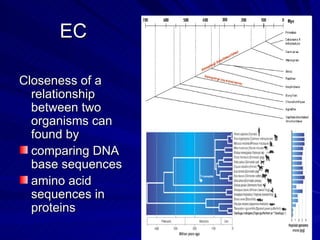
EC

Closeness of a
  relationship
  between two
  organisms can
  found by
  comparing DNA
  base sequences
  amino acid
  sequences in
  proteins
Mahalo!

B37 ppt the six kingdoms – a e p fp a

  • 1.
    Week 38 •Ch. 17.2 pg 450 The Six Kingdoms – A P E A P F Yes nucleus Eubacteria & No Archaebacteria nucleus
  • 2.
    Prokaryotes Kingdom Kingdom Kingdom Bacteria Archaebacteria Protist Eukaryotes Kingdom Kingdom Kingdom Fungi Plant Animal
  • 4.
    5 ways todetermine evolutionary relationships 1 similar structures bobcat 2. breeding behavior lynx 3. geographic distribution 4. chromosome comparisons 5. biochemistry Giant panda Bear Red panda Make different sounds, mate only with their own group Chromosome 2
  • 5.
    phylogeny The evolutionary historyof a species time Common ancest or
  • 6.
    cladistics classification system basedon phylogeny time Common ancestor
  • 7.
    cladogram classification system basedon phylogeny A branching diagram that identifies a groups derived traits time Common ancestor
  • 8.
    derived trait Unique inheritedtrait retained from a common ancestor
  • 9.
    fan diagram A modelthat may communicate the time organisms became extinct or the relative number of species in a group See pg. 454
  • 10.
    Bacteria – unicellular prokaryotes microscopic organisms with no nuclear membrane – one-celled organisms – microscopic – no organelles have cell membrane have DNA – most common form of life on Earth – incredible number of different kinds
  • 11.
    heterotroph autotroph consumer in food capable of chains, eats other synthesizing its organisms for own food energy
  • 12.
    chemosynthetic photosynthetic organisms obtain trapping sunlight with energy from the break chlorophyll to convert down of compounds with sulfur and CO2 and water into nitrogen simple sugars and O2
  • 13.
    Kingdom Kingdom Archaebacteria Eubacteria Kingdom whose Kingdom that includes organisms live in helpful, harmless and extremely hot, salty, or harmful bacteria (strep oxygen-free throat, pneumonia) environments
  • 14.
    Bacterial diversity rods andspheres and spirals… Oh My!
  • 15.
    Kingdom Protista Eukaryote thatlacks complex organ systems and lives in moist enviroments Algae, Protozoa, Slime Molds, and Water Molds
  • 16.
    Kingdom Fungi Kingdom ofheterotrophs that do not move from place to place, absorbs nutrients from the organic materials in the environment
  • 17.
  • 18.
    Kingdom Animalia Multicellular heterotrophiceukaryotes, most are able to move from place to place
  • 19.
    Dichotomous Key pg460 A set of paired statements that can be used to identify organisms, finally reaching the name of the organism or group to which it
  • 20.
    EC - 2examples Closeness of a relationship between two organisms can found by comparing DNA base sequences amino acid sequences in proteins
  • 21.
    HW- Make aposter How are evolutionary relationships determined? or Draw a cladogram and label what it shows 4 pts – title, illustrations show great care, descriptions show excellent understanding 3pt – as above, but satisfactory level work
  • 22.
    And now thequiz….
  • 23.
    1 Unique inherited traitretained from a common ancestor
  • 24.
    2 3 organisms that obtain organisms that trap energy from the break sunlight with chlorophyll to down of compounds convert CO2 and water with sulfur and into simple sugars and O2 nitrogen are….. are …
  • 25.
  • 26.
    5 Kingdom 6 Kingdom ___________ ___________ Kingdom of the first living Kingdom that includes organisms, bacteria, live in helpful, harmless and extremely hot, salty, or harmful bacteria (strep oxygen-free environments, throat, pneumonia) they are chemosynthetic
  • 27.
    7 A set ofpaired statements that can be used to identify organisms, finally reaching the name of the organism or group to which it
  • 28.
    8 classification system basedon phylogeny time Common ancestor
  • 29.
    9 10 consumer in food capable of chains, eats other synthesizing its organisms for own food energy
  • 30.
    11 Kingdom of heterotrophsthat do not move from place to place, absorbs nutrients from the organic materials in the environment
  • 31.
    Bacteria – unicellular 12 microscopic organisms with no nuclear membrane – one-celled organisms – microscopic – no organelles have cell membrane have DNA – most common form of life on Earth – incredible number of different kinds
  • 32.
    13 Kingdom _____ Eukaryotethat lacks complex organ systems and lives in moist enviroments Algae, Protozoa, Slime Molds, and Water Molds
  • 33.
    14 The evolutionary historyof a species time Common ancest or
  • 34.
    15 classification system basedon phylogeny A branching diagram that identifies a groups derived traits time Common ancestor
  • 35.
    16 Kingdom ______ Multicellularheterotrophic eukaryotes, most are able to move from place to place
  • 36.
    EC Closeness of a relationship between two organisms can found by comparing DNA base sequences amino acid sequences in proteins
  • 37.