Gatekeeper Regulates what comes in and out of the cell Main components: proteins and phospholipids The cell membrane is  selectively permeable Allows some things through without energy, but not everything
All cells have a cell membrane Functions :  Controls what enters and exits the cell to maintain an internal balance called  homeostasis Provides protection and support for the cell TEM picture of a real cell membrane.
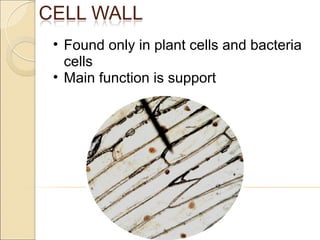
Found only in plant cells and bacteria cells Main function is support
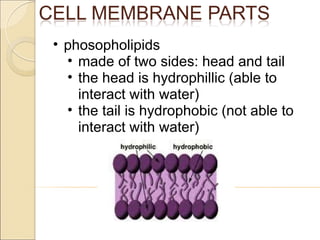
phosopholipids made of two sides: head and tail the head is hydrophillic (able to interact with water) the tail is hydrophobic (not able to interact with water)
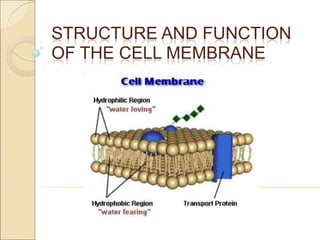
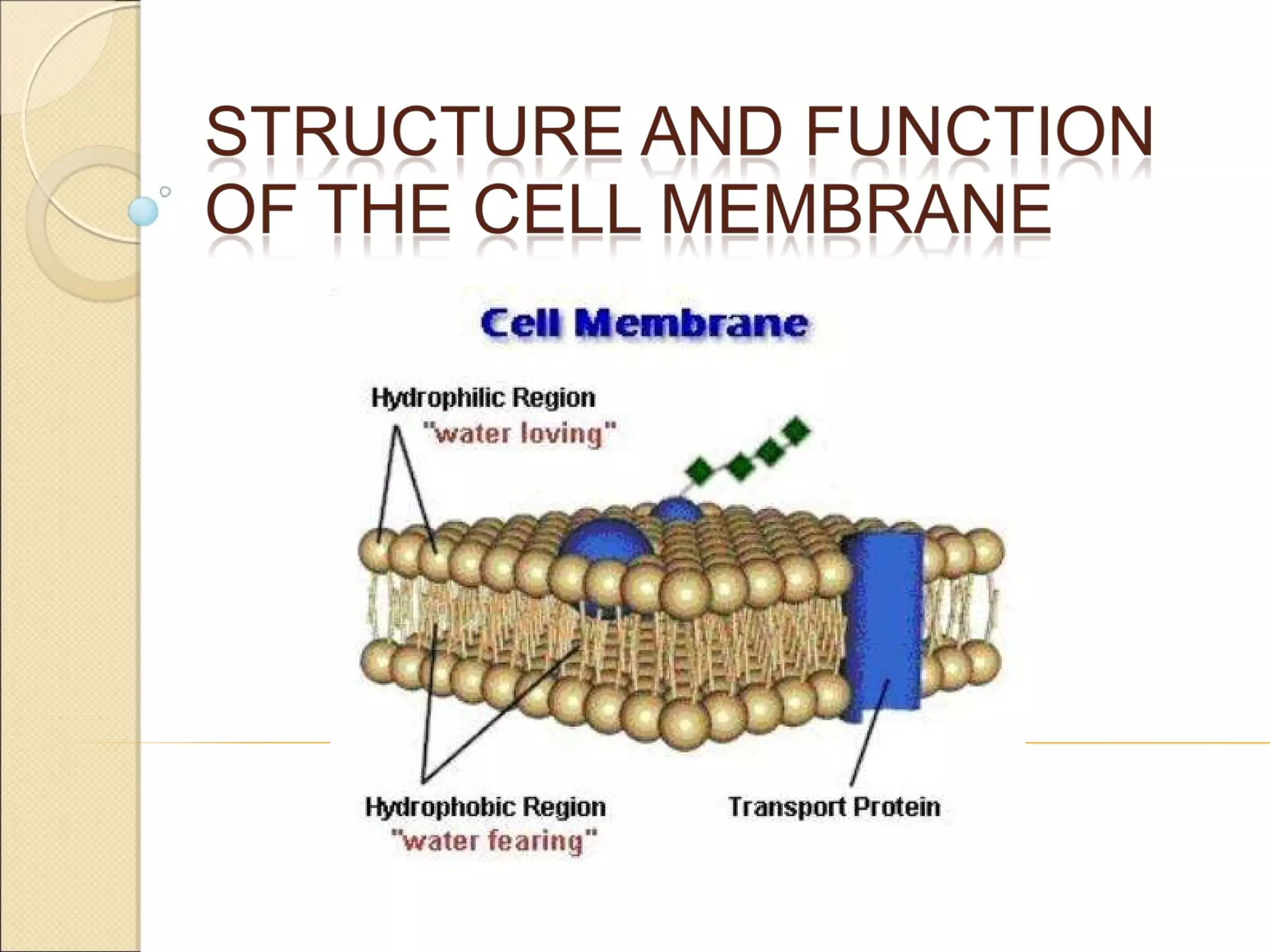
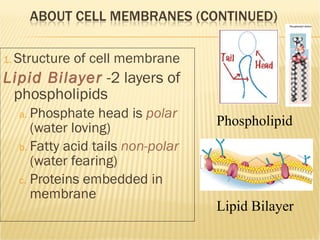
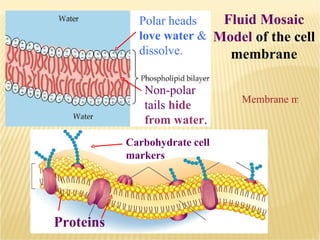
Structure of cell membrane Lipid Bilayer   -2 layers of phospholipids Phosphate head is  polar  (water loving) Fatty acid tails  non-polar   (water fearing) Proteins embedded in membrane Phospholipid Lipid Bilayer
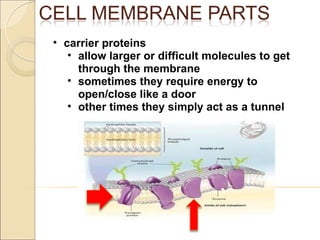
carrier proteins allow larger or difficult molecules to get through the membrane sometimes they require energy to open/close like a door other times they simply act as a tunnel
Proteins Membrane movement animation Polar heads  love water  & dissolve. Non-polar tails  hide from water . Carbohydrate cell markers Fluid Mosaic Model  of the cell membrane
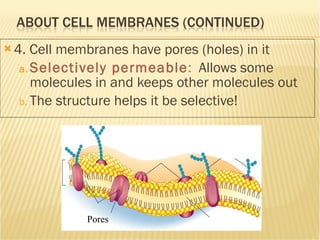
4. Cell membranes have pores (holes) in it Selectively permeable :  Allows some molecules in and keeps other molecules out The structure helps it be selective! Pores
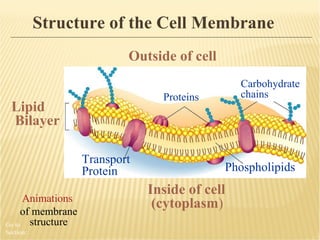
Outside of cell Inside of cell (cytoplasm ) Lipid Bilayer Proteins Transport  Protein Phospholipids Carbohydrate chains Structure of the Cell Membrane Go to Section: Animations  of membrane structure

Cell membrane structure

  • 1.
  • 2.
    Gatekeeper Regulates whatcomes in and out of the cell Main components: proteins and phospholipids The cell membrane is selectively permeable Allows some things through without energy, but not everything
  • 3.
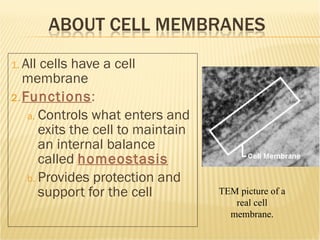
    All cells havea cell membrane Functions : Controls what enters and exits the cell to maintain an internal balance called homeostasis Provides protection and support for the cell TEM picture of a real cell membrane.
  • 4.
    Found only inplant cells and bacteria cells Main function is support
  • 5.
    phosopholipids made oftwo sides: head and tail the head is hydrophillic (able to interact with water) the tail is hydrophobic (not able to interact with water)
  • 6.
    Structure of cellmembrane Lipid Bilayer -2 layers of phospholipids Phosphate head is polar (water loving) Fatty acid tails non-polar (water fearing) Proteins embedded in membrane Phospholipid Lipid Bilayer
  • 7.
    carrier proteins allowlarger or difficult molecules to get through the membrane sometimes they require energy to open/close like a door other times they simply act as a tunnel
  • 8.
    Proteins Membrane movementanimation Polar heads love water & dissolve. Non-polar tails hide from water . Carbohydrate cell markers Fluid Mosaic Model of the cell membrane
  • 9.
    4. Cell membraneshave pores (holes) in it Selectively permeable : Allows some molecules in and keeps other molecules out The structure helps it be selective! Pores
  • 10.
    Outside of cellInside of cell (cytoplasm ) Lipid Bilayer Proteins Transport Protein Phospholipids Carbohydrate chains Structure of the Cell Membrane Go to Section: Animations of membrane structure