CONCEPT &
HIERARCHIC
AL
TAXONOMIC
CLASSIFICAT
ION
MODULE 4, WEEK 4
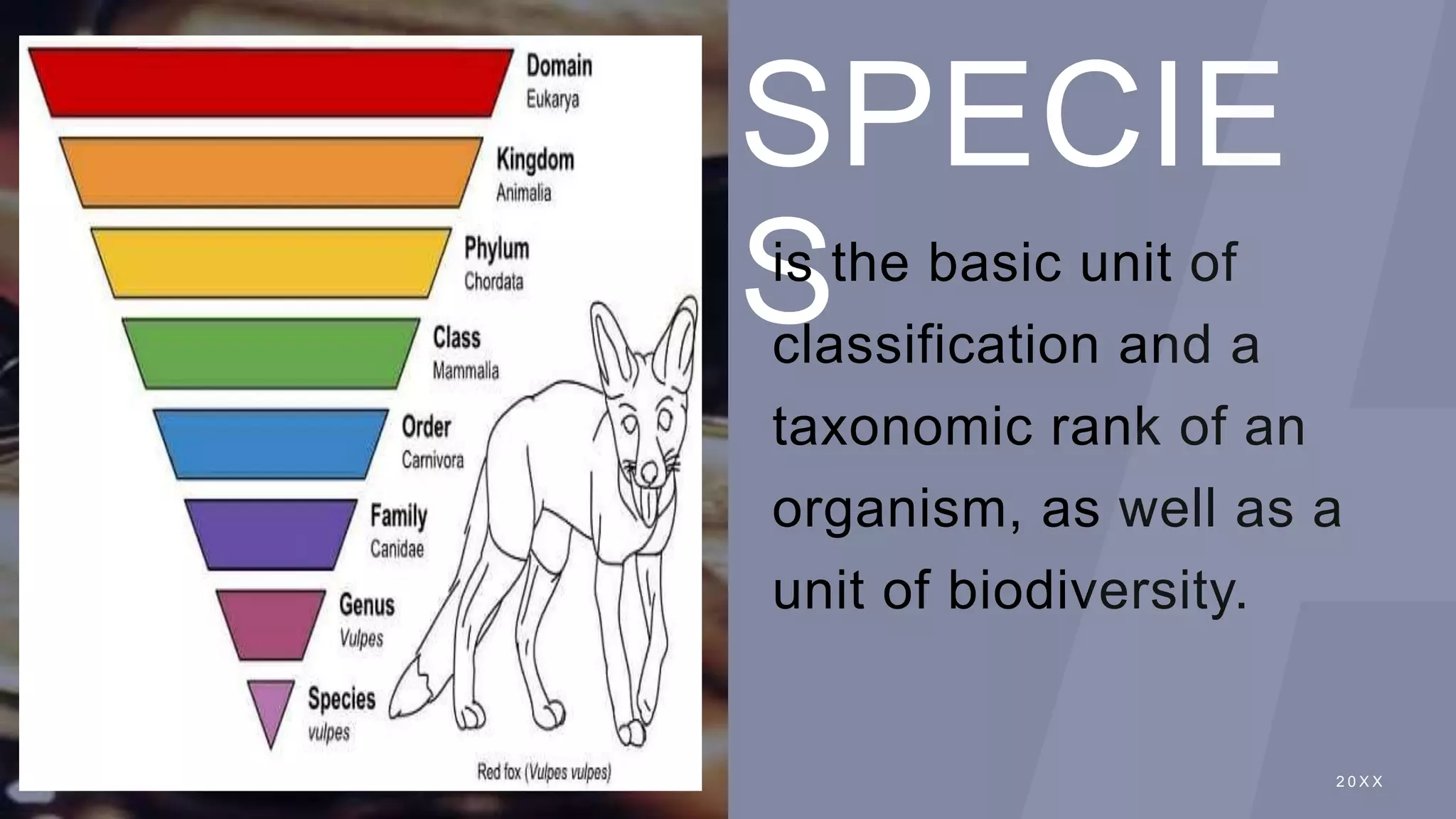
SPECIE
S
is the basic unit of
classification and a
taxonomic rank of an
organism, as well as a
unit of biodiversity.
2 2 0 X X
FOUR
DEFINITIONS OF
SPECIES
CONCEPT:
3 P R E S E N T A T I O N T I T L E 2 0 X X
1.
MORPHOLOGICA
L SPECIES
CONCEPT (MSP)-
Groups of organisms
that share identical
morphological
(physical structures)
characteristics.
Click to add photo
All organisms have
physical traits, and
they may have the
same morphological
structures but
belong to a different
species.
5 P R E S E N T A T I O N T I T L E 2 0 X X
LIMITATION
S:
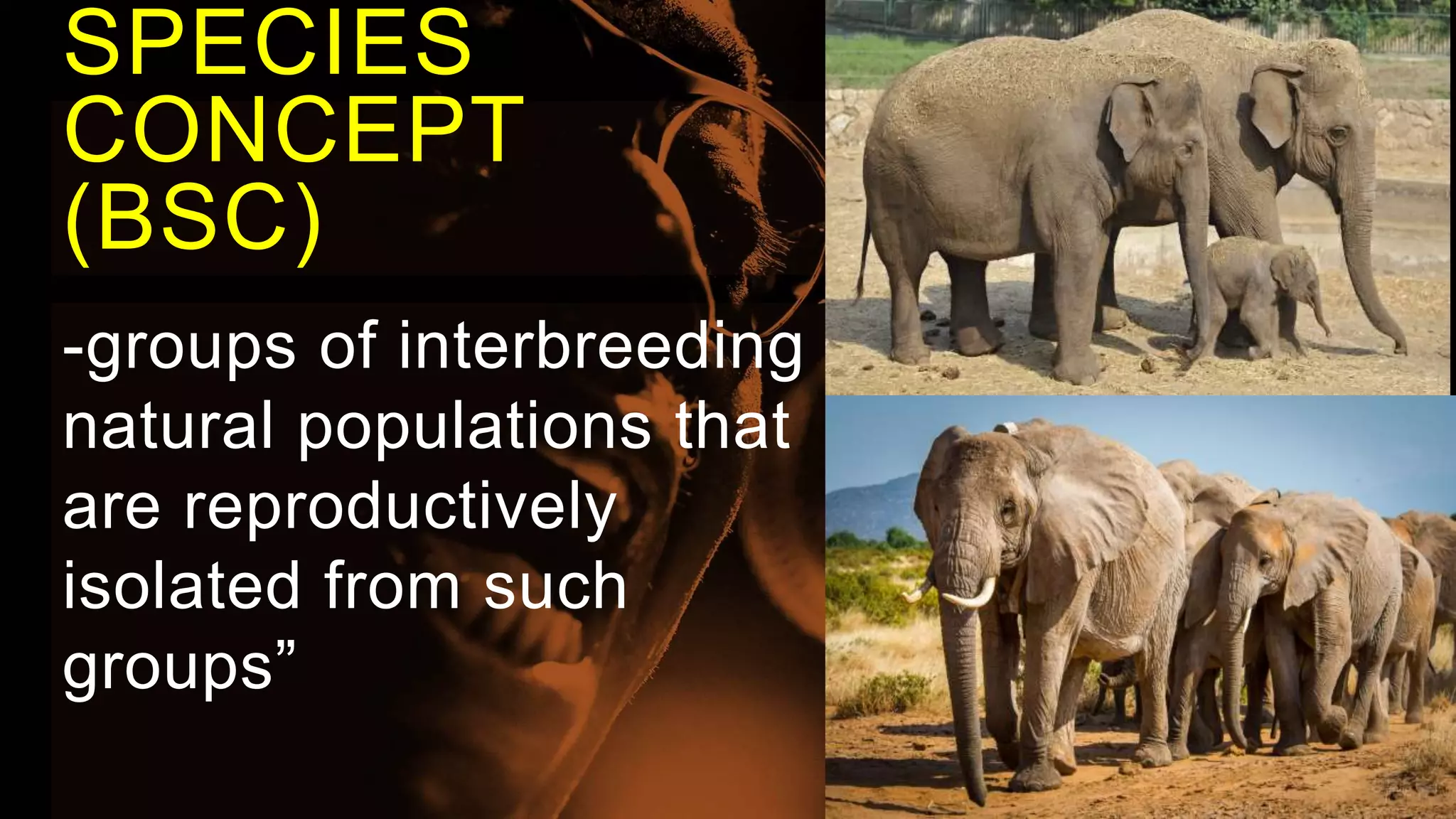
SPECIES
CONCEPT
(BSC)
-groups of interbreeding
natural populations that
are reproductively
isolated from such
groups”
Click to add photo
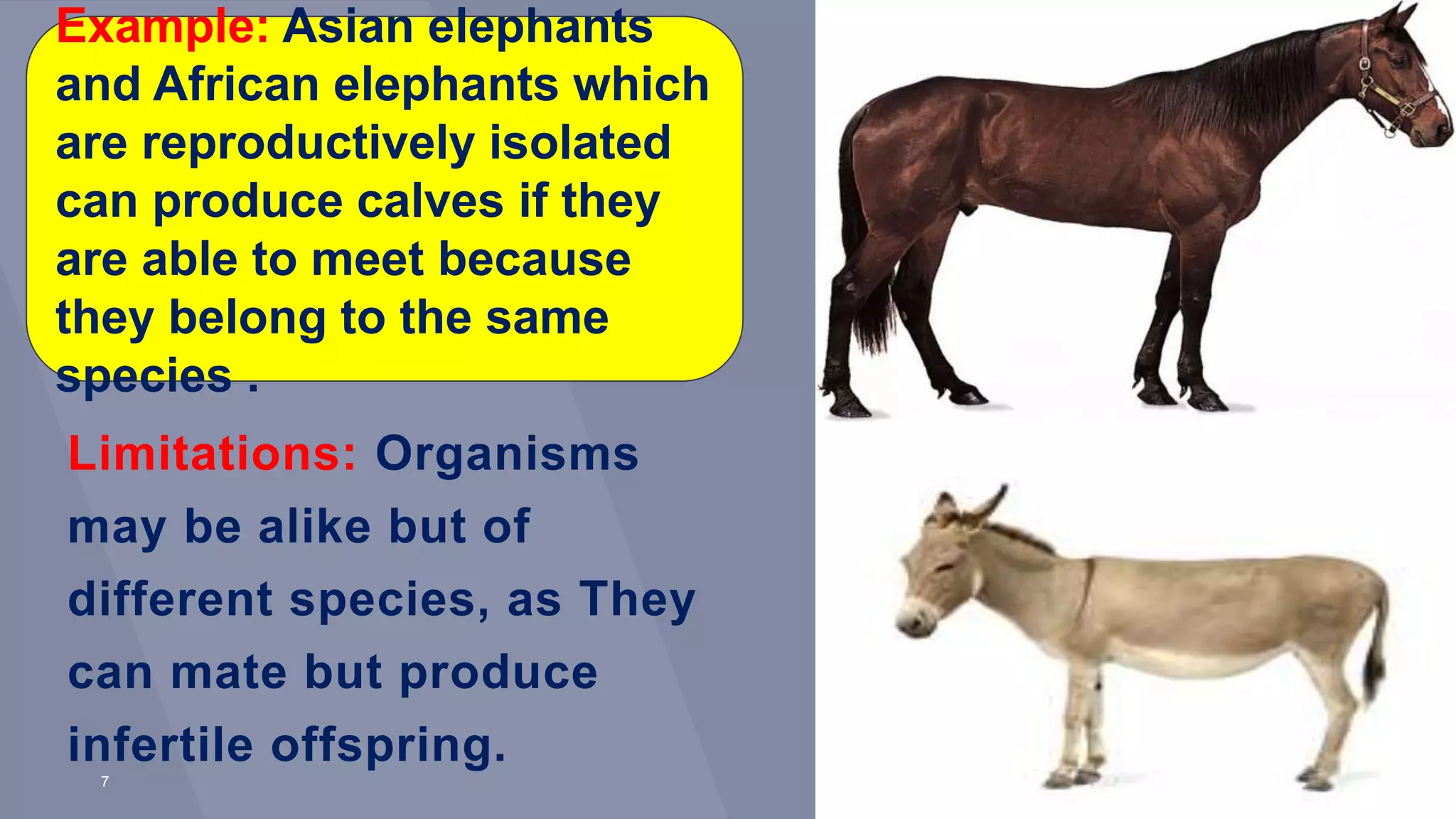
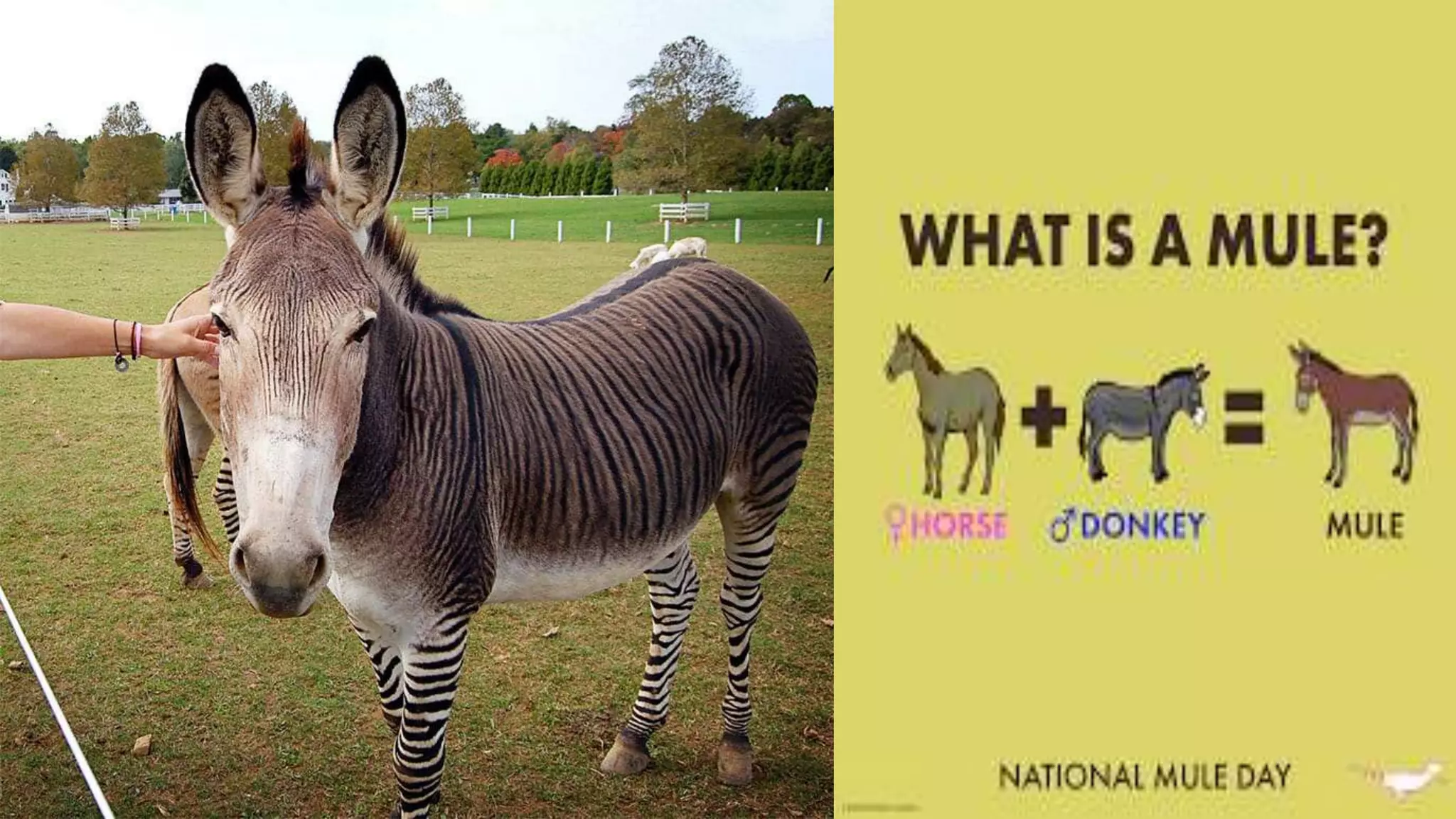
Limitations: Organisms
may be alike but of
different species, as They
can mate but produce
infertile offspring.
7 2 0 X X
Example: Asian elephants
and African elephants which
are reproductively isolated
can produce calves if they
are able to meet because
they belong to the same
species .
8 P R E S E N T A T I O N T I T L E 2 0 X X
SPECIES
CONCEPT
(TSC)
Aristotle and Carolus
Linnaeus thought of each
species as a set of
organisms that resemble
one another and are
distinct from other sets.
Click to add photo
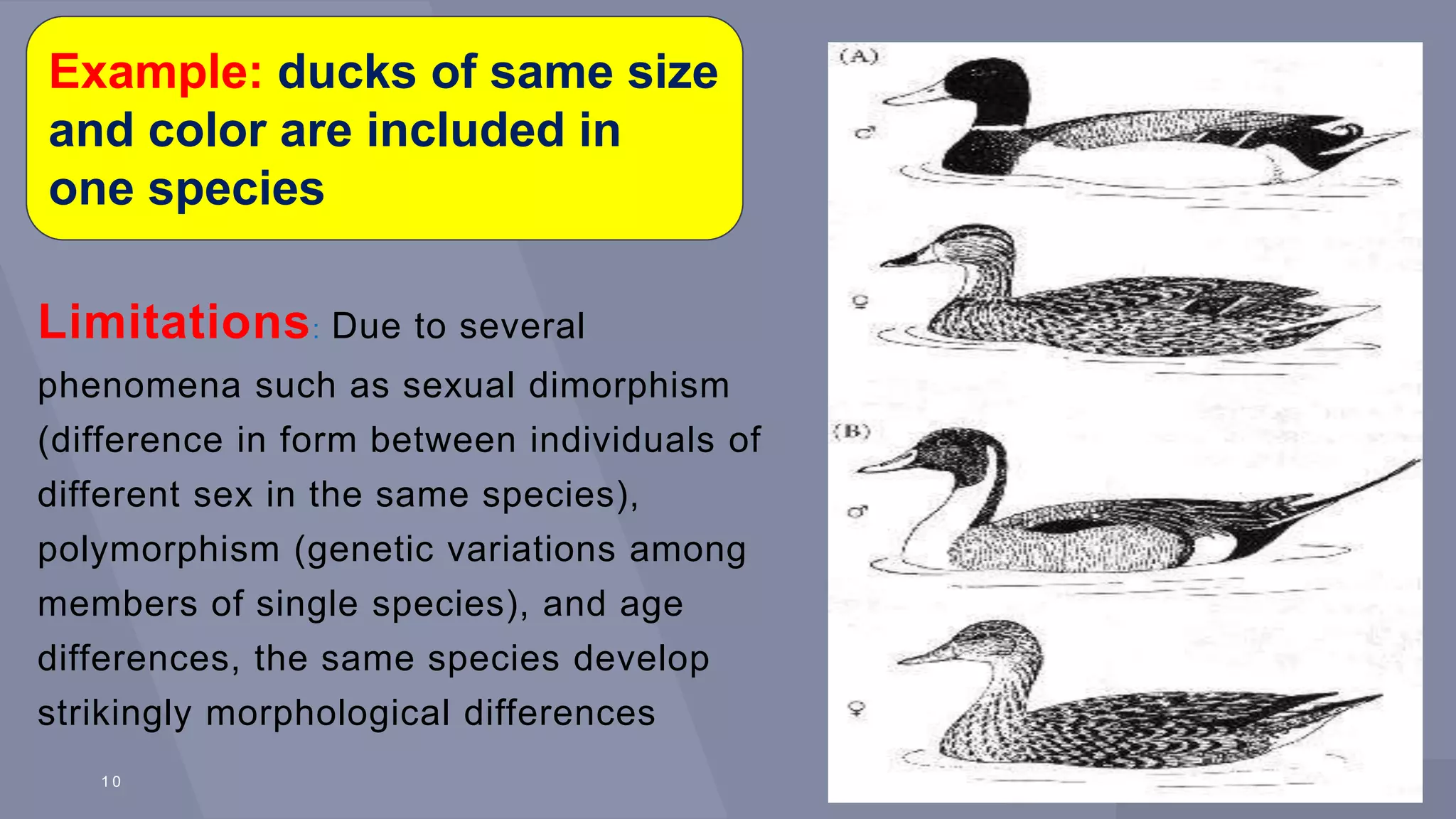
Limitations: Due to several
phenomena such as sexual dimorphism
(difference in form between individuals of
different sex in the same species),
polymorphism (genetic variations among
members of single species), and age
differences, the same species develop
strikingly morphological differences
1 0 2 0 X X
Example: ducks of same size
and color are included in
one species
4. NOMINALISTIC
SPECIES
CONCEPT (NSC)
believed that only individuals exist while species are man’s
creation. Organisms were only termed as species for the
sake of classifying closely-resembled individuals.
In 1859, together with Alfred Wallace, Charles Darwin
considered “species as the fundamental units of evolution”
which provided the most coherent and detailed definition and
since Earth is composed of huge biodiversity of living things.
We should be able to understand how they are related to one
another
Click to add photo
Taxonomy
deals primarily
with the
description,
identification,
nomenclature and
classification of
organism.
HIERARCHICAL
TAXONOMIC
CLASSIFICATION
Carolus von Linnaeus
“Father of Taxonomy”
Introduce Binomial nomenclature (two-part
name for species) and hierarchical
classification as an organized way of naming
and describing organisms and their relationship
to one another.
Click to add photo
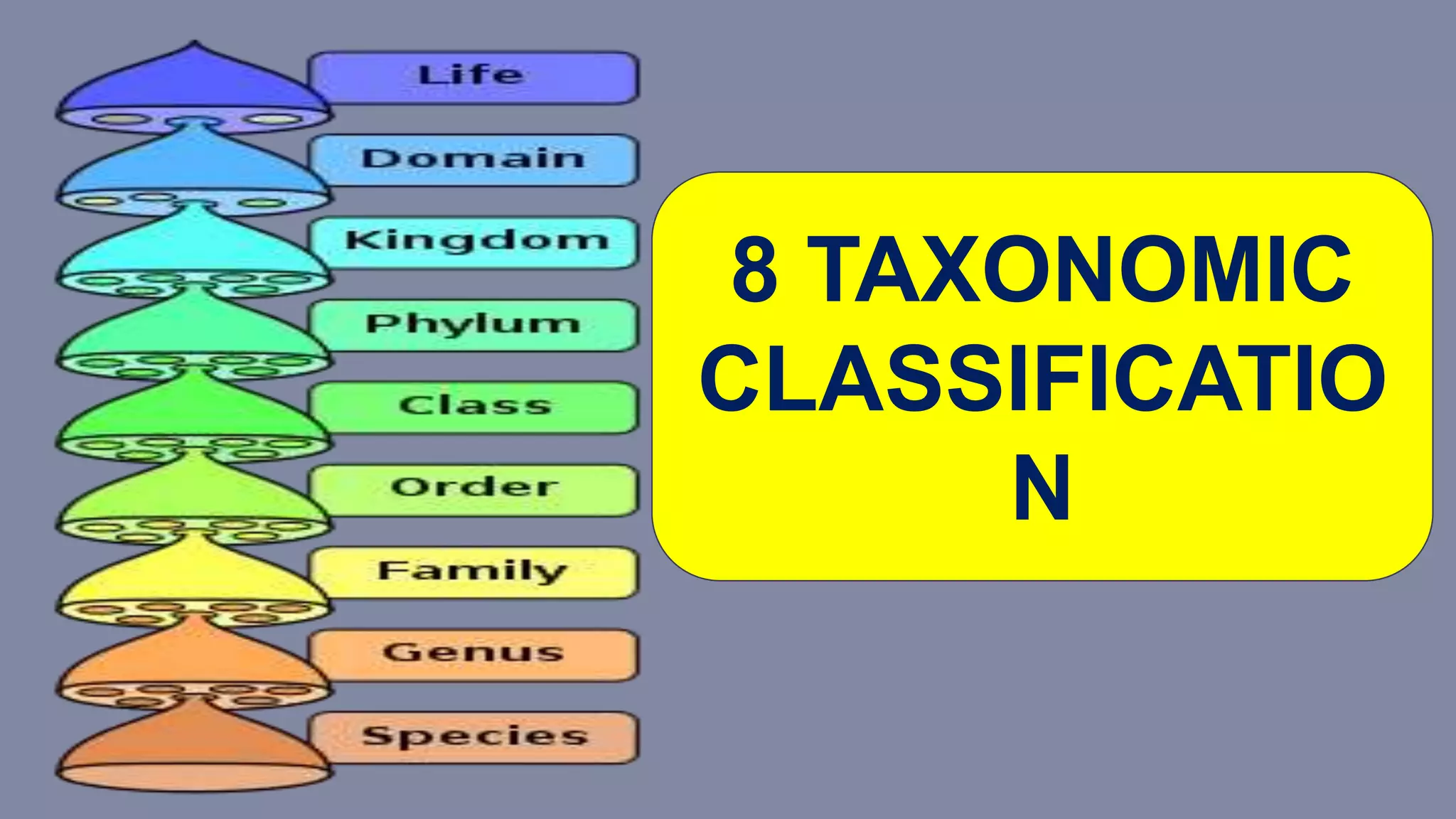
8 TAXONOMIC
CLASSIFICATIO
N
1 6 P R E S E N T A T I O N T I T L E 2 0 X X
1 7 P R E S E N T A T I O N T I T L E 2 0 X X
1 8 P R E S E N T A T I O N T I T L E 2 0 X X
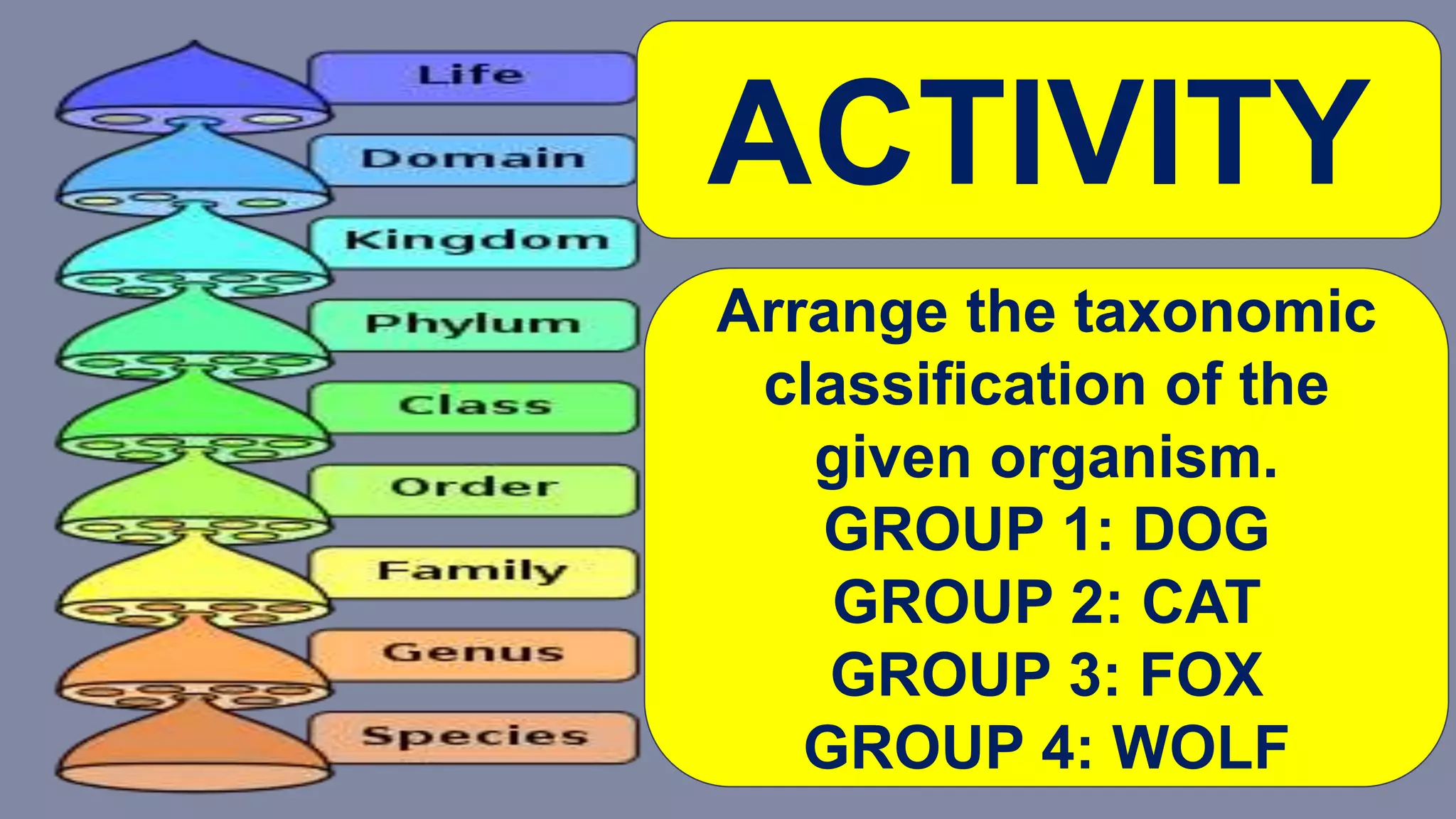
ACTIVITY
Arrange the taxonomic
classification of the
given organism.
GROUP 1: DOG
GROUP 2: CAT
GROUP 3: FOX
GROUP 4: WOLF

SPECIES CONCEPT & HIERARCHICAL TAXONOMIC CLASSIFICATION.pptx