TaxonomyThe science of classification
ClassificationThe process of putting things into similar groupsTaxonomyThe science of classifying organisms
History of classificationAristotle: 4000 BCBased on 2 groups: animal and plant1500 – 1700:Complicated and complexBased on common namesBased on long scientific definitions
Carolus LinnaeusEstablished present system for identifying and namingBased them upon structural similaritiesBinomial nomenclature: 2 name naming systemTaxa (pl.) or taxon: system of groupsA taxon is a category where related organisms are placed together
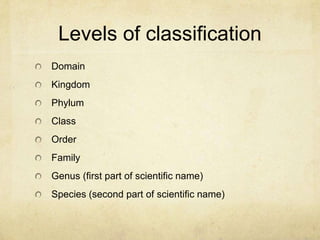
Levels of classificationDomainKingdomPhylumClassOrderFamilyGenus (first part of scientific name)Species (second part of scientific name)
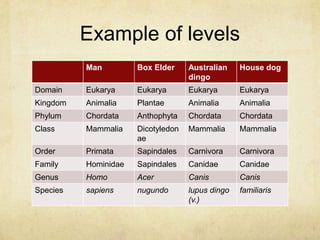
Example of levels
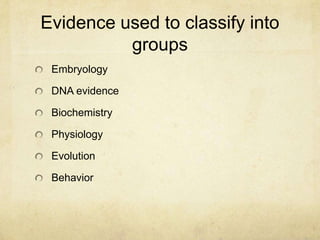
Evidence used to classify into groupsEmbryologyDNA evidenceBiochemistryPhysiologyEvolutionBehavior
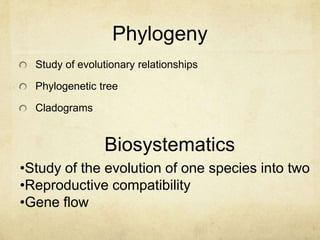
PhylogenyStudy of evolutionary relationshipsPhylogenetic treeCladogramsBiosystematicsStudy of the evolution of one species into two
Reproductive compatibility
Gene flowDomainsEukaryaProkaryaArchaebacteria
Kingdom MoneraProkaryotesAutotrophs or heterotrophsAnaerobic or AerobicAquatic, terrestrial, and in the airMostly asexualMostly non-motile
Kingdom ProtistaEukaryoticHeterotrophs or AutotrophsUnicellularMostly aquaticMostly asexualMotile or non-motileProtozoa, slime molds, algae
Kingdom FungiEukaryoticHeterotrophicUnicellular and multi-cellularMostly terrestrialAsexual and sexualNon-motileMushrooms, yeasts, molds, rusts, puffballs
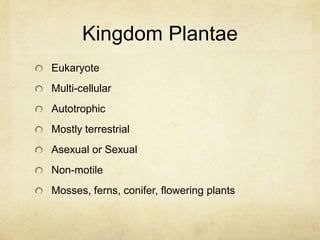
Kingdom PlantaeEukaryoteMulti-cellularAutotrophicMostly terrestrialAsexual or SexualNon-motileMosses, ferns, conifer, flowering plants

Classification