Respiratory System
of Insects
Muhammad Zeeshan Nazar
All insects are aerobic organisms
They get oxygen directly from environment
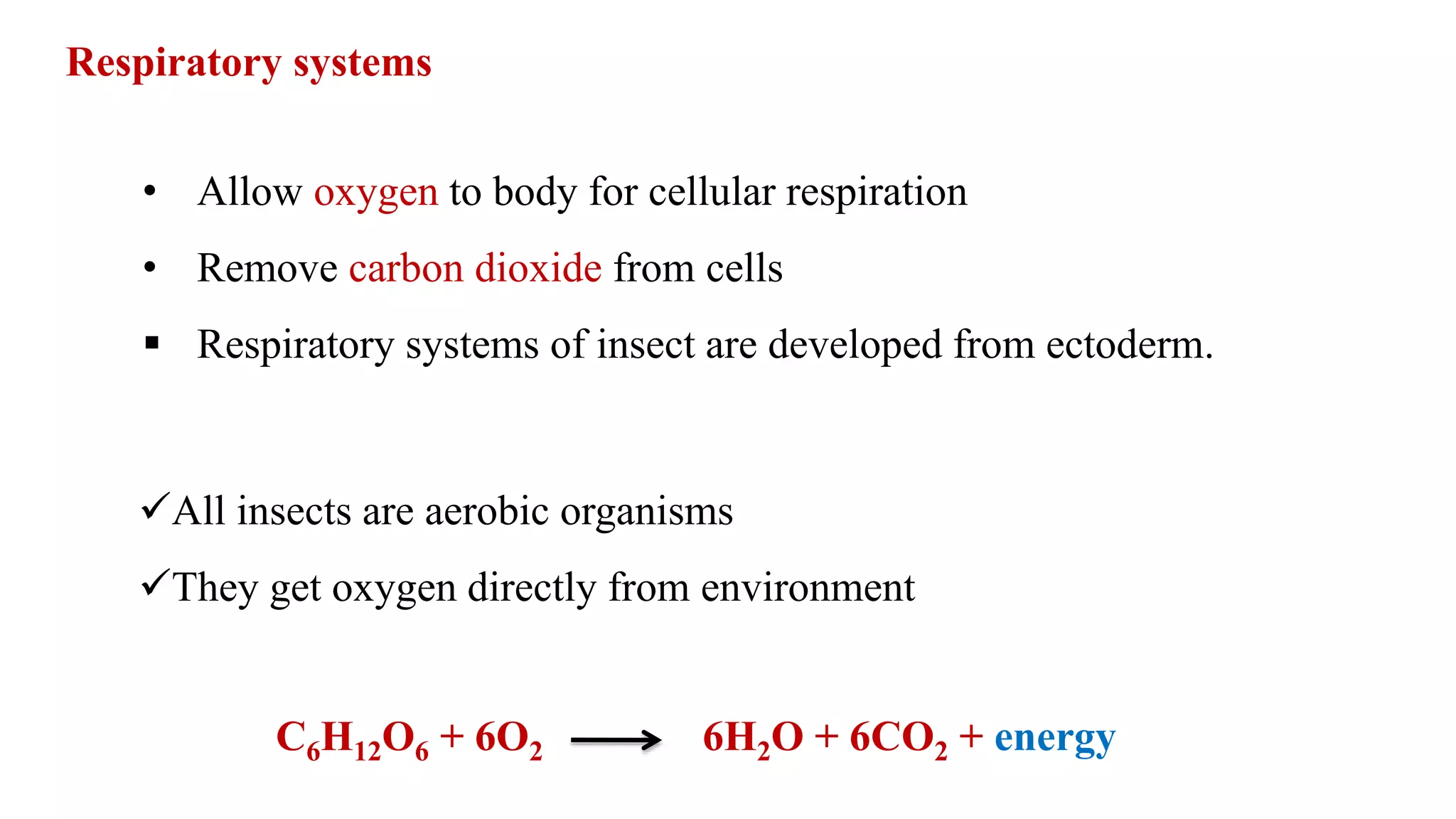
C6H12O6 + 6O2 6H2O + 6CO2 + energy
• Allow oxygen to body for cellular respiration
• Remove carbon dioxide from cells
 Respiratory systems of insect are developed from ectoderm.
Respiratory systems
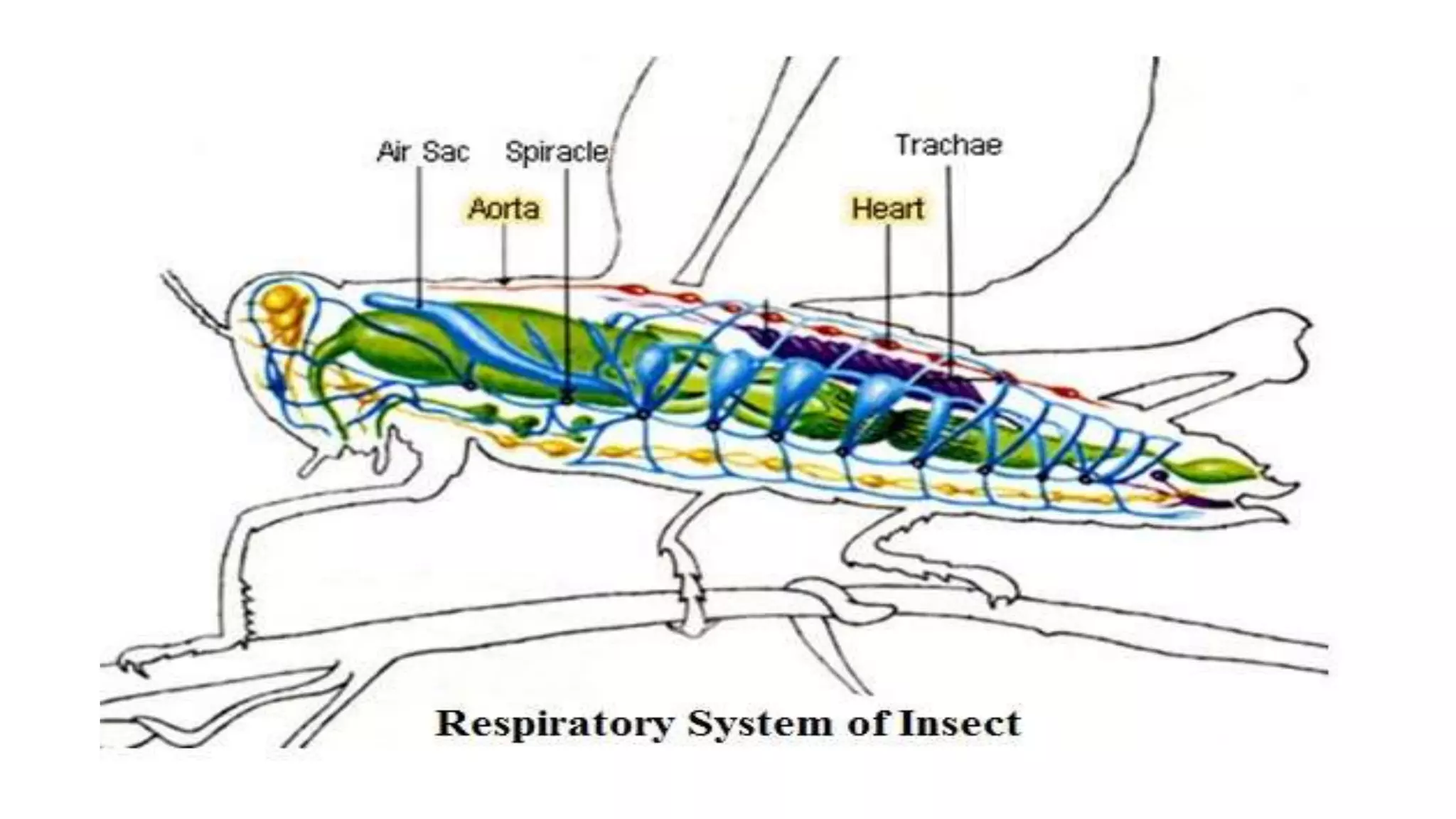
• Air enters into body through tiny holes spiracles
• Use to avoid water loss
• A cavity atrium or entrance is present
• Air passage is controlled by Valves
• Surrounded by peritreme.
Spiracles
 Elastic in nature
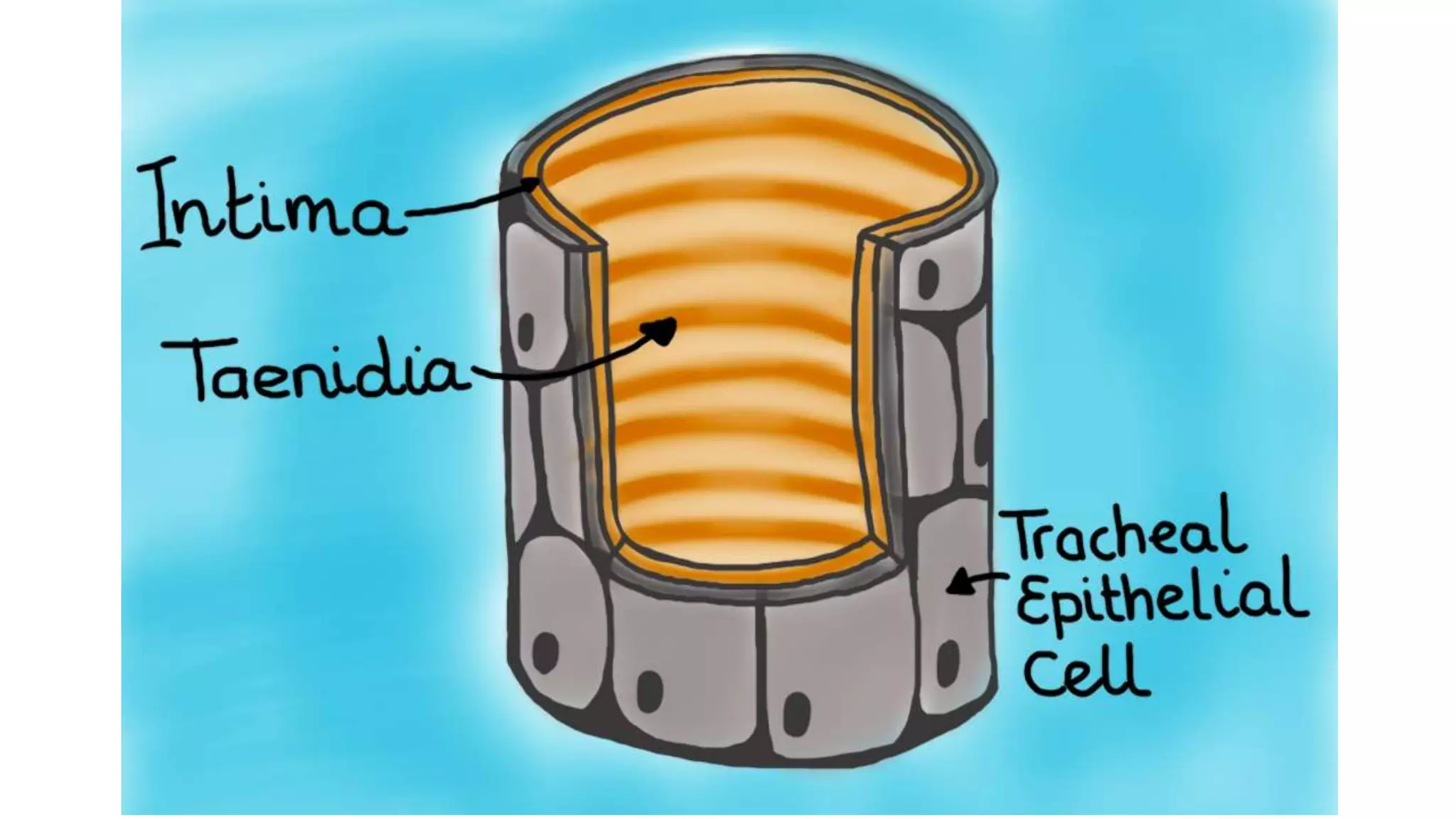
 Cuticular pipe like apparatus
 Thick, helical and thread like layer taenidia
 give flexibility
 Filled with air shows silvery appearance
Tracheae
Tracheoles
 The network of tracheae
 Diameter less than 1µm (0.2-0.3µm)
 Gaseous exchange
 Lie within each cell
 Its lining not shed down on molting
Air-Sacs
tracheae are expanded in many parts to make thin walled, collapsible
structure
 act as air reservoir
 shiny white vesicle, filled with air
 Assist flight by reducing gravity of insects
 Sound resonator of tympanic membrane
 Heat insulations
Number and Arrangement of Spiracles in Insects
In the developed embryo, 12 pairs of spiracles
According to number and position of spiracles, respiratory system is
classified as
1. Holopneustis Respiratory System
8 pairs of spiracle on first 8 abdominal segments
2 pairs found on metathorax and pro or mesothorax
Example: Dipterans and some Hymenopterans
2. Hemipneustic Respiratory System:
10 pairs of spiracle present; one or two pairs are non-functional.
Example: common in insect larva
3. Peripneustic Respiratory System:
Spiracles on abdomen and prothorax open
metathorax are close
Example: Neuroptera, Lepidoptera, Coleoptera, Mecoptera, and Hymenoptera
4. Amphipneustic Respiratory System:
Only 2 pairs of spiracles are open
On prothorax
Posterior abdominal segment.
Example : Dipteran’s larva.
5. Propneustic Respiratory System:
One pair of prothoracic spiracle is functional.
Example: most rare and found in some pupae of Diptera family.
6. Metapneustic Respiratory System:
Last abdominal spiracles pair is functional.
Example: 1st larval instars of aquatic Coleopetra, Family Culicidae.
7. Apneustic Respiratory System: ( Closed circular system)
All spiracles are closed
Respiration takes place through gills and general body surface
Example: Naiad of Mayfly, nymph of Ephemeroptera, Odonata and many
endoparasites (Hymenoptera).
Respiration in Aquatic Insects
Appendage permits liquefy oxygen from the water
Example: Larvae of mayflies and damselflies
 Gills are situated on lateral or posterior sides of abdomen
 leaf like in appearance
 Insects contact with water due to fanning actions
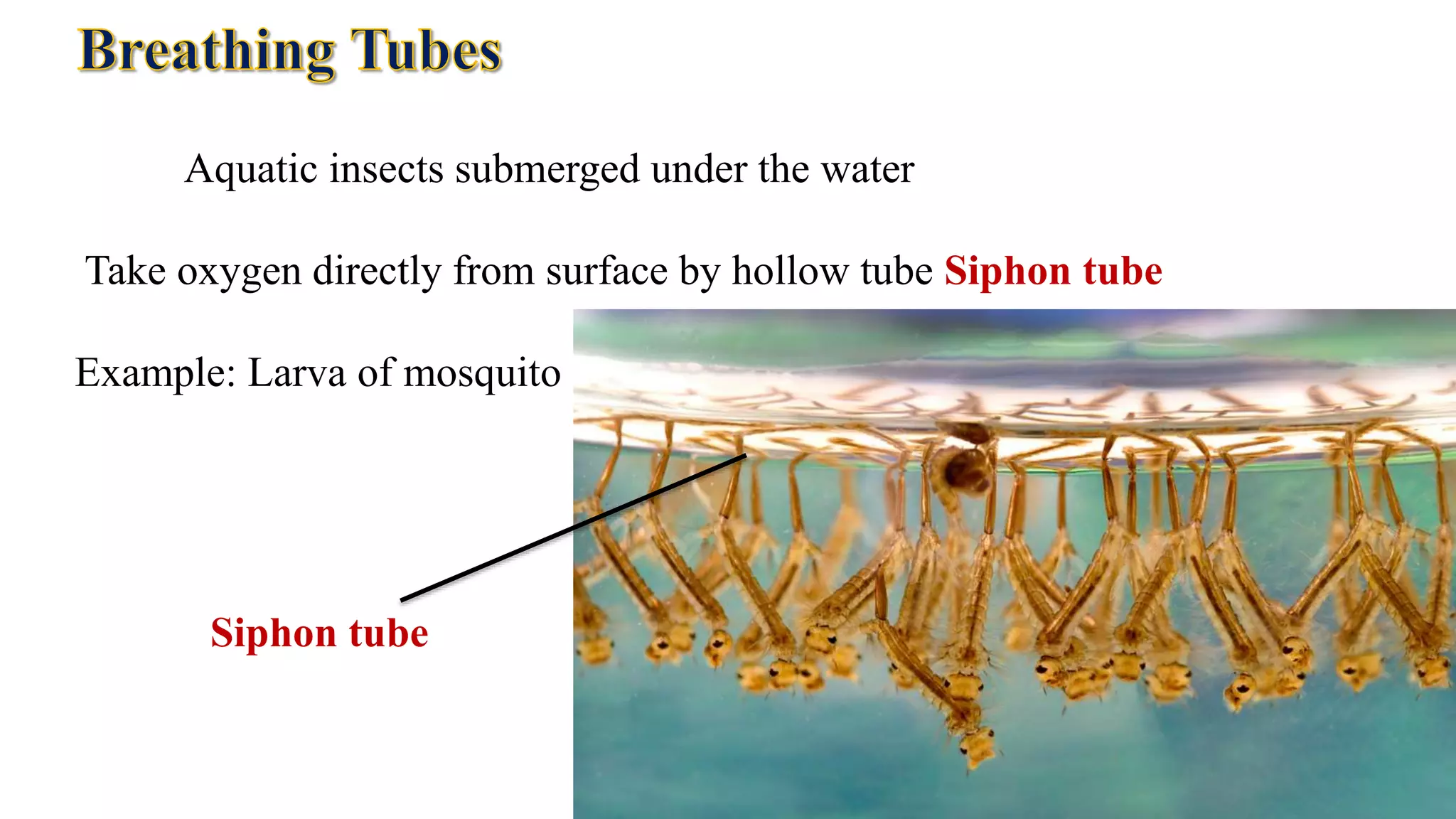
Aquatic insects submerged under the water
Take oxygen directly from surface by hollow tube Siphon tube
Example: Larva of mosquito
Siphon tube
Few aquatic insects have bubble of air
with them
• In diving Beetles it is prominent.
• Cover one or more spiracle
• Gives short-term supply of oxygen
Respiratory system of insects ppt

Respiratory system of insects ppt

  • 1.
  • 2.
    All insects areaerobic organisms They get oxygen directly from environment C6H12O6 + 6O2 6H2O + 6CO2 + energy • Allow oxygen to body for cellular respiration • Remove carbon dioxide from cells  Respiratory systems of insect are developed from ectoderm. Respiratory systems
  • 4.
    • Air entersinto body through tiny holes spiracles • Use to avoid water loss • A cavity atrium or entrance is present • Air passage is controlled by Valves • Surrounded by peritreme. Spiracles
  • 6.
     Elastic innature  Cuticular pipe like apparatus  Thick, helical and thread like layer taenidia  give flexibility  Filled with air shows silvery appearance Tracheae
  • 8.
    Tracheoles  The networkof tracheae  Diameter less than 1µm (0.2-0.3µm)  Gaseous exchange  Lie within each cell  Its lining not shed down on molting
  • 10.
    Air-Sacs tracheae are expandedin many parts to make thin walled, collapsible structure  act as air reservoir  shiny white vesicle, filled with air  Assist flight by reducing gravity of insects  Sound resonator of tympanic membrane  Heat insulations
  • 12.
    Number and Arrangementof Spiracles in Insects In the developed embryo, 12 pairs of spiracles According to number and position of spiracles, respiratory system is classified as
  • 13.
    1. Holopneustis RespiratorySystem 8 pairs of spiracle on first 8 abdominal segments 2 pairs found on metathorax and pro or mesothorax Example: Dipterans and some Hymenopterans 2. Hemipneustic Respiratory System: 10 pairs of spiracle present; one or two pairs are non-functional. Example: common in insect larva
  • 14.
    3. Peripneustic RespiratorySystem: Spiracles on abdomen and prothorax open metathorax are close Example: Neuroptera, Lepidoptera, Coleoptera, Mecoptera, and Hymenoptera 4. Amphipneustic Respiratory System: Only 2 pairs of spiracles are open On prothorax Posterior abdominal segment. Example : Dipteran’s larva.
  • 15.
    5. Propneustic RespiratorySystem: One pair of prothoracic spiracle is functional. Example: most rare and found in some pupae of Diptera family. 6. Metapneustic Respiratory System: Last abdominal spiracles pair is functional. Example: 1st larval instars of aquatic Coleopetra, Family Culicidae. 7. Apneustic Respiratory System: ( Closed circular system) All spiracles are closed Respiration takes place through gills and general body surface Example: Naiad of Mayfly, nymph of Ephemeroptera, Odonata and many endoparasites (Hymenoptera).
  • 16.
    Respiration in AquaticInsects Appendage permits liquefy oxygen from the water Example: Larvae of mayflies and damselflies  Gills are situated on lateral or posterior sides of abdomen  leaf like in appearance  Insects contact with water due to fanning actions
  • 18.
    Aquatic insects submergedunder the water Take oxygen directly from surface by hollow tube Siphon tube Example: Larva of mosquito Siphon tube
  • 19.
    Few aquatic insectshave bubble of air with them • In diving Beetles it is prominent. • Cover one or more spiracle • Gives short-term supply of oxygen