PRESENTED BY
BHAVNESH THAKUR
ROLL NO- CUHP18ZOO09
Circulatory system of
Insects
INTRODUCTION
There are two types of circulatory systemsin theanimal kingdom
In insects the blood flows through the body cavity (i.e., heamocoel)
irrigating various tissues and organs. It is known asopen type ofcirculatory
system.
Circulatory system doesnot carry oxygen along its circulation but it carries
nutrients, salts, hormones, metabolic waste
Also play crucial role in defence as it seal off wounds through clotting
reaction
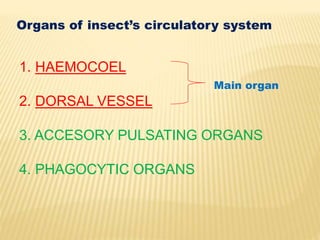
Organs of insect’s circulatory system
1. HAEMOCOEL
2. DORSAL VESSEL
3. ACCESORY PULSATING ORGANS
4. PHAGOCYTIC ORGANS
Main organ
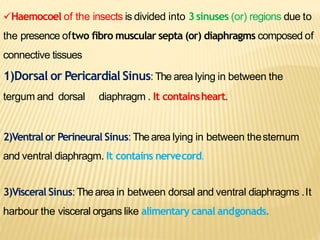
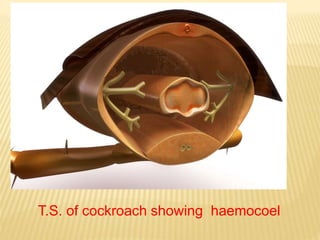
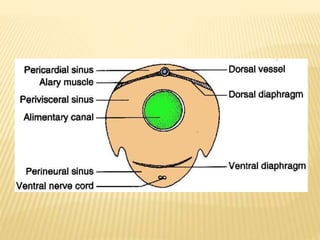
Haemocoel of the insects is divided into 3sinuses (or) regions due to
the presence oftwo fibro muscular septa (or) diaphragms composed of
connective tissues
1)Dorsal or Pericardial Sinus: The area lying in between the
tergum and dorsal diaphragm . It containsheart.
2)Ventral or Perineural Sinus: Thearea lying in between thesternum
and ventral diaphragm. It contains nervecord.
3)Visceral Sinus: Thearea in between dorsal and ventral diaphragms .It
harbour the visceral organs like alimentary canal andgonads.
T.S. of cockroach showing haemocoel
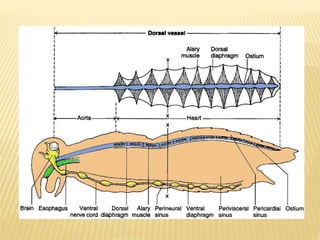
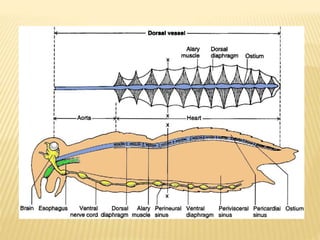
DORSAL VESSEL
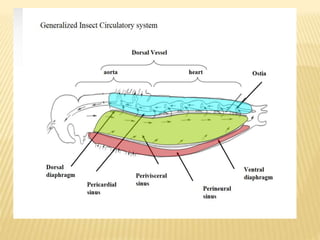
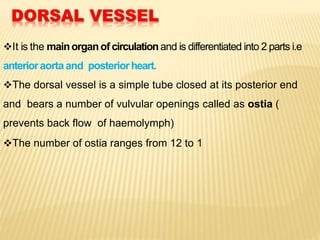
It is the mainorganof circulationand is differentiated into 2 parts i.e
anterioraortaand posteriorheart.
The dorsal vessel is a simple tube closed at its posterior end
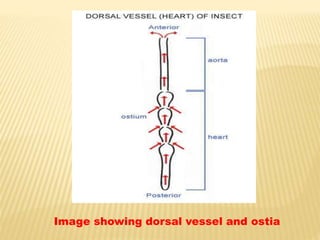
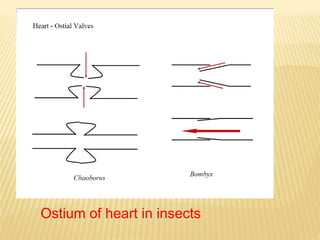
and bears a number of vulvular openings called as ostia (
prevents back flow of haemolymph)
The number of ostia ranges from 12 to 1
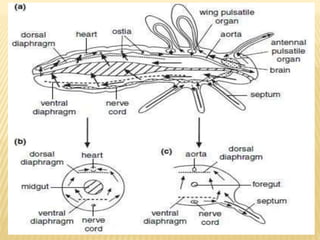
Image showing dorsal vessel and ostia
Ostium of heart in insects
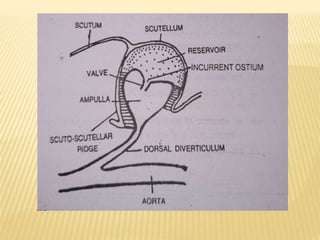
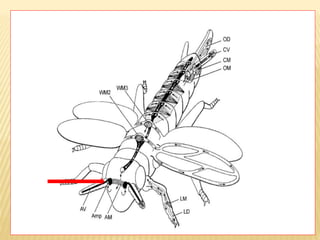
Accessory pulsatile organs
Insects consists of sac like, membranous structures which
are present at the base of the appendages such as wings,
legs and antenna.
They pulsate independently and supply adequate blood to the
appendages.
Function as accesory hearts which pump blood from sinuses
to respective appendage
They often beat at higher rate than dorsal vessel
Phagocytic organs
 These are triangular shaped sacs in anterior region of
abdomen
 Dorsal wall is formed of phagocytic cells while ventral is
formed by dorsal diaphragm while ventral wall from dorsal
diaphragm
 Heart open into phagocytic organs by excurrent ostia
 Lumen is filled with multinucleated cells
 Function of phagocytic organ is to filter haemolymph
Mechanism of circulation
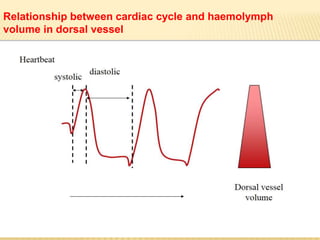
Cardiac cycle: ( systole & diastole)
Peristaltic wave originate at posteriormost end and Haemolymph
circulation take place from posteriorendtotheanteriorendinforward
direction.
Diastole is myogenic while systole is brought by contraction of
muscles of dorsal vessel
General circulation
Diastole (relaxation ) ostia open (blood go inside heart)
Systole (contraction) ostia closes( prevent outward flow of
blood from heart + forward movement of blood into aorta)
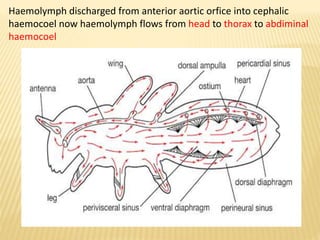
Haemolymph discharged from anterior aortic orfice into cephalic
haemocoel now haemolymph flows from head to thorax to abdiminal
haemocoel
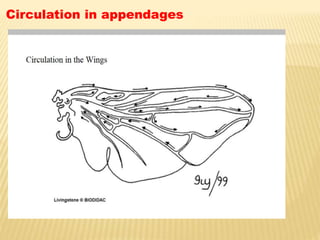
Circulation in appendages
Heart beat
Frequency ranges among insects from 14 beats/min to 150
beats/min
It is higher in preimaginal stage, freshly moulted insect
Pacemaker that initiate the heartbeat is located in posterior most
end of dorsal vessel
Relationship between cardiac cycle and haemolymph
volume in dorsal vessel
 circulatory sysytem of insects

circulatory sysytem of insects

  • 1.
    PRESENTED BY BHAVNESH THAKUR ROLLNO- CUHP18ZOO09 Circulatory system of Insects
  • 2.
    INTRODUCTION There are twotypes of circulatory systemsin theanimal kingdom In insects the blood flows through the body cavity (i.e., heamocoel) irrigating various tissues and organs. It is known asopen type ofcirculatory system. Circulatory system doesnot carry oxygen along its circulation but it carries nutrients, salts, hormones, metabolic waste Also play crucial role in defence as it seal off wounds through clotting reaction
  • 3.
    Organs of insect’scirculatory system 1. HAEMOCOEL 2. DORSAL VESSEL 3. ACCESORY PULSATING ORGANS 4. PHAGOCYTIC ORGANS Main organ
  • 4.
    Haemocoel of theinsects is divided into 3sinuses (or) regions due to the presence oftwo fibro muscular septa (or) diaphragms composed of connective tissues 1)Dorsal or Pericardial Sinus: The area lying in between the tergum and dorsal diaphragm . It containsheart. 2)Ventral or Perineural Sinus: Thearea lying in between thesternum and ventral diaphragm. It contains nervecord. 3)Visceral Sinus: Thearea in between dorsal and ventral diaphragms .It harbour the visceral organs like alimentary canal andgonads.
  • 5.
    T.S. of cockroachshowing haemocoel
  • 8.
    DORSAL VESSEL It isthe mainorganof circulationand is differentiated into 2 parts i.e anterioraortaand posteriorheart. The dorsal vessel is a simple tube closed at its posterior end and bears a number of vulvular openings called as ostia ( prevents back flow of haemolymph) The number of ostia ranges from 12 to 1
  • 10.
    Image showing dorsalvessel and ostia
  • 11.
    Ostium of heartin insects
  • 13.
    Accessory pulsatile organs Insectsconsists of sac like, membranous structures which are present at the base of the appendages such as wings, legs and antenna. They pulsate independently and supply adequate blood to the appendages. Function as accesory hearts which pump blood from sinuses to respective appendage They often beat at higher rate than dorsal vessel
  • 16.
    Phagocytic organs  Theseare triangular shaped sacs in anterior region of abdomen  Dorsal wall is formed of phagocytic cells while ventral is formed by dorsal diaphragm while ventral wall from dorsal diaphragm  Heart open into phagocytic organs by excurrent ostia  Lumen is filled with multinucleated cells  Function of phagocytic organ is to filter haemolymph
  • 17.
    Mechanism of circulation Cardiaccycle: ( systole & diastole) Peristaltic wave originate at posteriormost end and Haemolymph circulation take place from posteriorendtotheanteriorendinforward direction. Diastole is myogenic while systole is brought by contraction of muscles of dorsal vessel General circulation Diastole (relaxation ) ostia open (blood go inside heart) Systole (contraction) ostia closes( prevent outward flow of blood from heart + forward movement of blood into aorta)
  • 18.
    Haemolymph discharged fromanterior aortic orfice into cephalic haemocoel now haemolymph flows from head to thorax to abdiminal haemocoel
  • 20.
  • 21.
    Heart beat Frequency rangesamong insects from 14 beats/min to 150 beats/min It is higher in preimaginal stage, freshly moulted insect Pacemaker that initiate the heartbeat is located in posterior most end of dorsal vessel
  • 22.
    Relationship between cardiaccycle and haemolymph volume in dorsal vessel