Lecture no. 21
Structure and functions of secretary
(Endocrine) system in insects
R K PANSE
Assistant Professor
Entomology
 The endocrine organs and hormones together referred as
endocrine system.
 Endocrine organs produce hormones which travel in blood to
various organs of the body coordinating their activities.
 Endocrine system helps to coordinate behavior and regulate
growth, development, and other physiological activities.
 A hormone is a chemical signal sent from cells in one part of
an organism to cells in another part of the same individual.
 Hormones as chemical messengers and produced in very
small quantities.
 Hormones may cause profound changes in their target cells.
Their effect may be stimulatory or inhibitory or different
effects in each target.
Introduction
Endocrine Organs
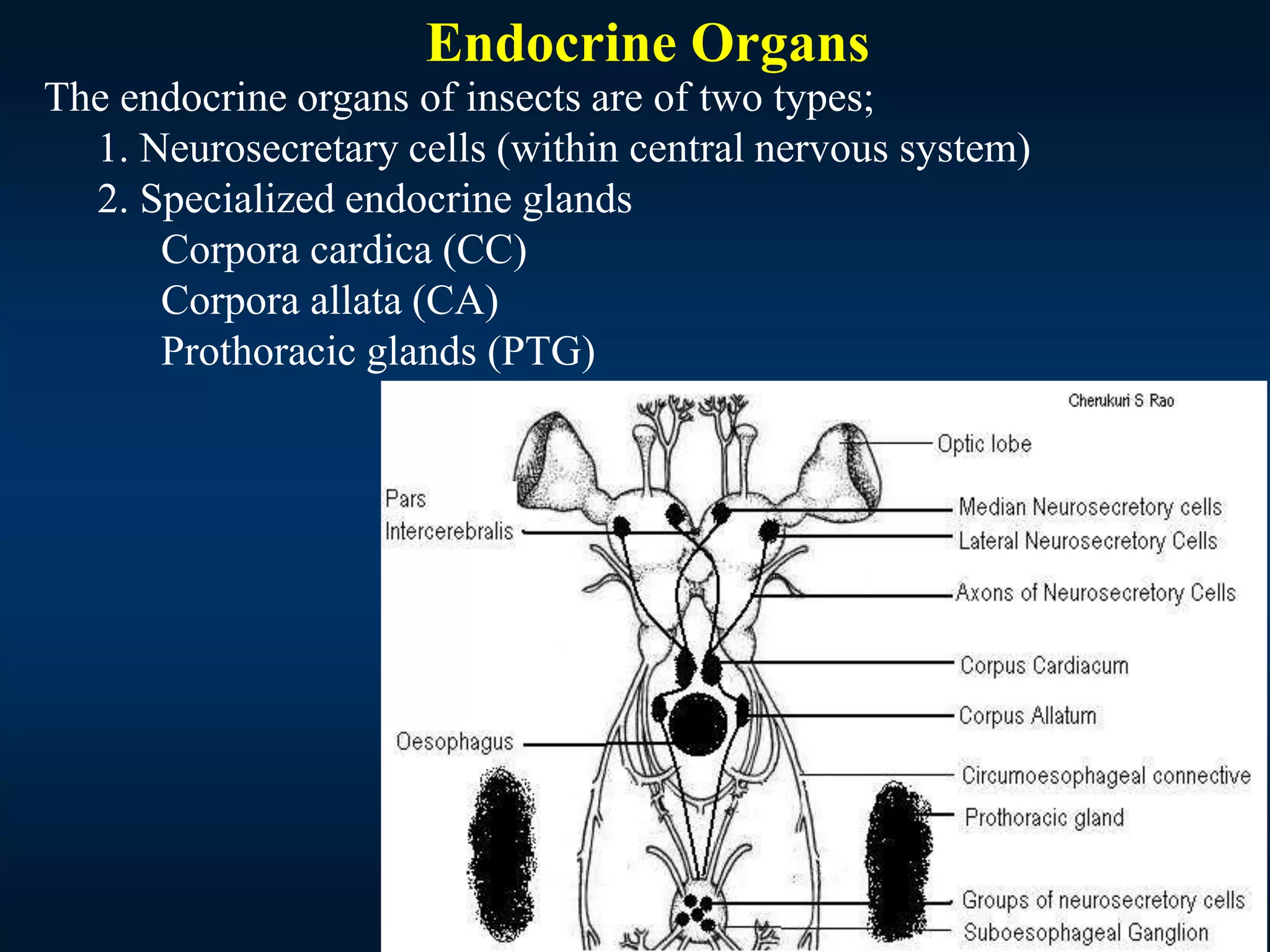
The endocrine organs of insects are of two types;
1. Neurosecretary cells (within central nervous system)
2. Specialized endocrine glands
Corpora cardica (CC)
Corpora allata (CA)
Prothoracic glands (PTG)
 Neurosecretary cells normally occur in the ganglia of the CNS.
 Two groups of NCC on each side of the brain.
One pair Median NCC and One pair lateral NCC
 The neurosecretary cells are modified motorneurons.
 The secretion is granular, synthesized in cell bodies and pass
down to axons.
 It is possible that the visible secretion is only a carrier to which
the smaller hormone molecule is attached.
 When hormone is finally released it becomes separated from the
carrier (protein) and is then free into blood.
 The endocrine activity of neurosecretary cells may take one of
two forms: the cells may either produce hormones which act
directly on effector organs, or they may act on other endocrine
organs, which in turn, are stimulated to produce hormones.
Neurosecretory Cells (NCC)
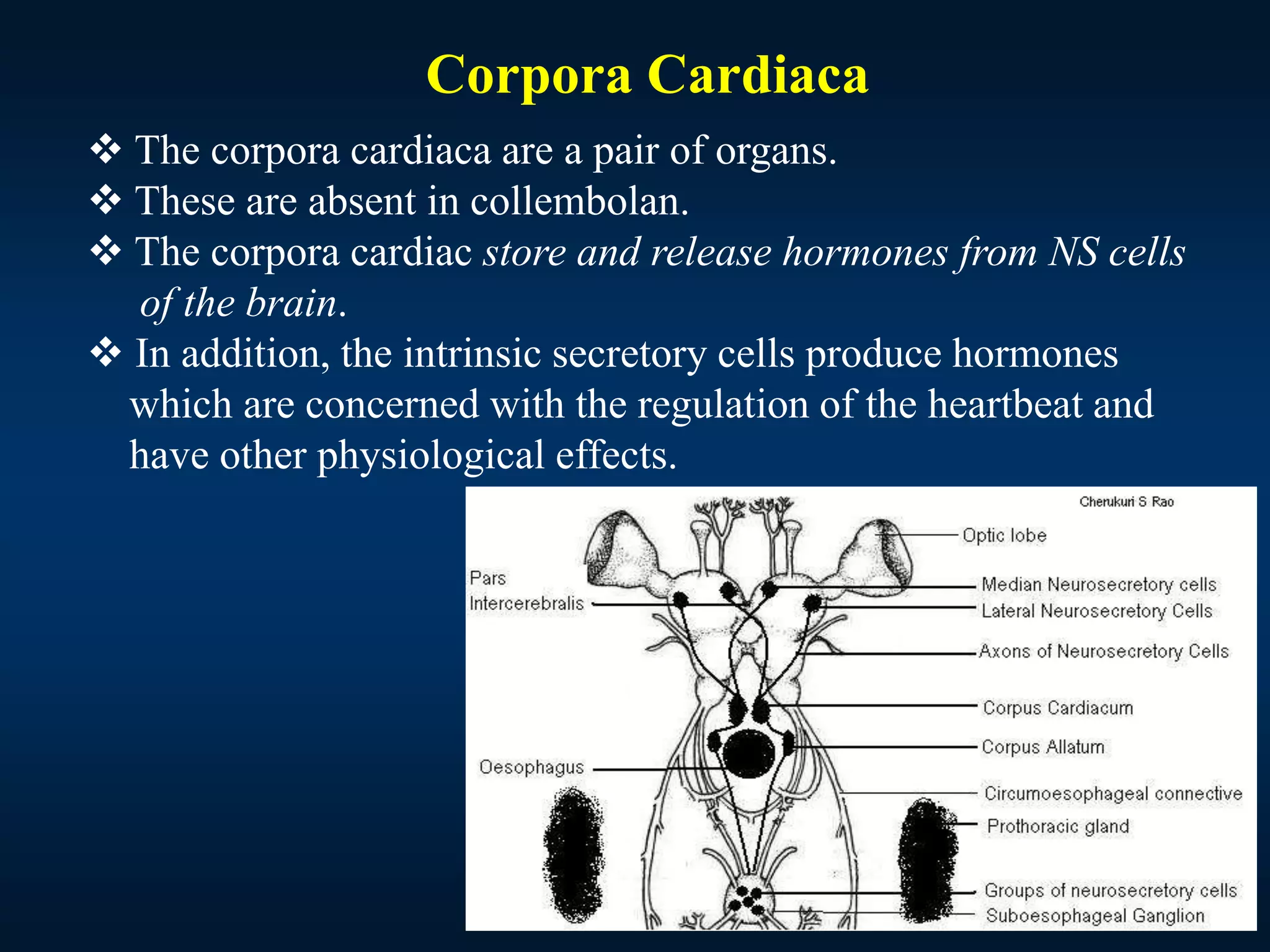
 The corpora cardiaca are a pair of organs.
 These are absent in collembolan.
 The corpora cardiac store and release hormones from NS cells
of the brain.
 In addition, the intrinsic secretory cells produce hormones
which are concerned with the regulation of the heartbeat and
have other physiological effects.
Corpora Cardiaca
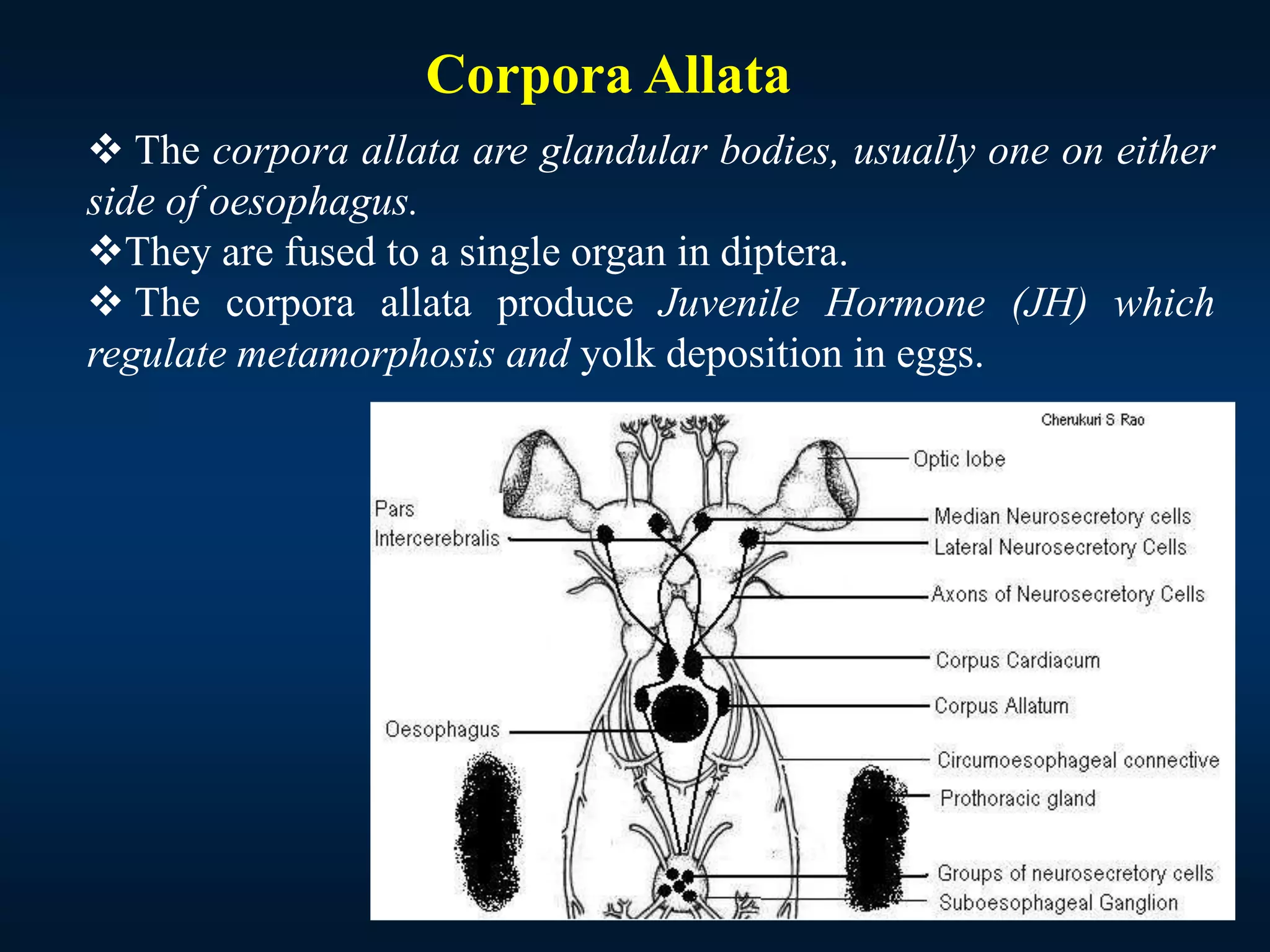
 The corpora allata are glandular bodies, usually one on either
side of oesophagus.
They are fused to a single organ in diptera.
 The corpora allata produce Juvenile Hormone (JH) which
regulate metamorphosis and yolk deposition in eggs.
Corpora Allata
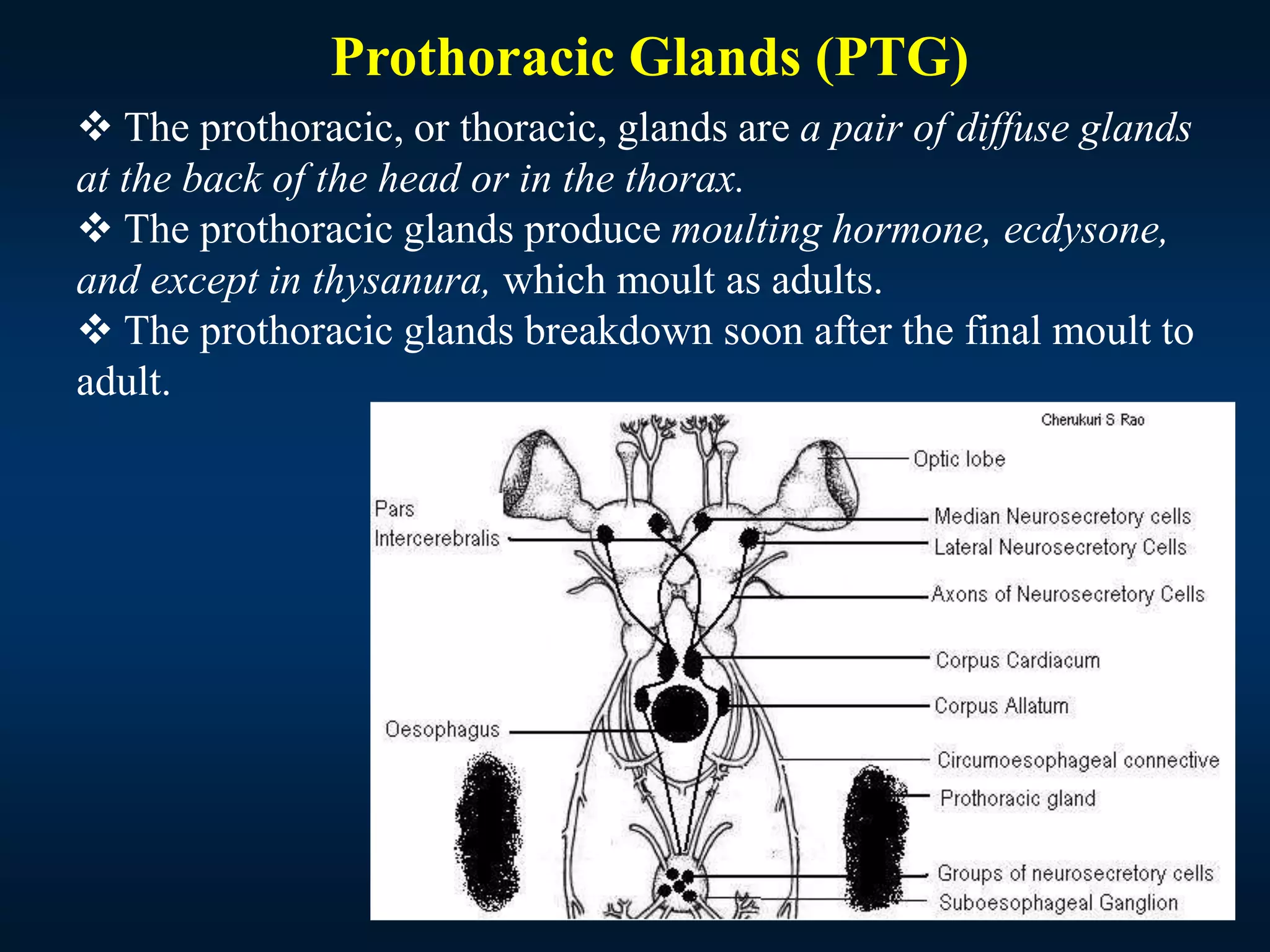
 The prothoracic, or thoracic, glands are a pair of diffuse glands
at the back of the head or in the thorax.
 The prothoracic glands produce moulting hormone, ecdysone,
and except in thysanura, which moult as adults.
 The prothoracic glands breakdown soon after the final moult to
adult.
Prothoracic Glands (PTG)
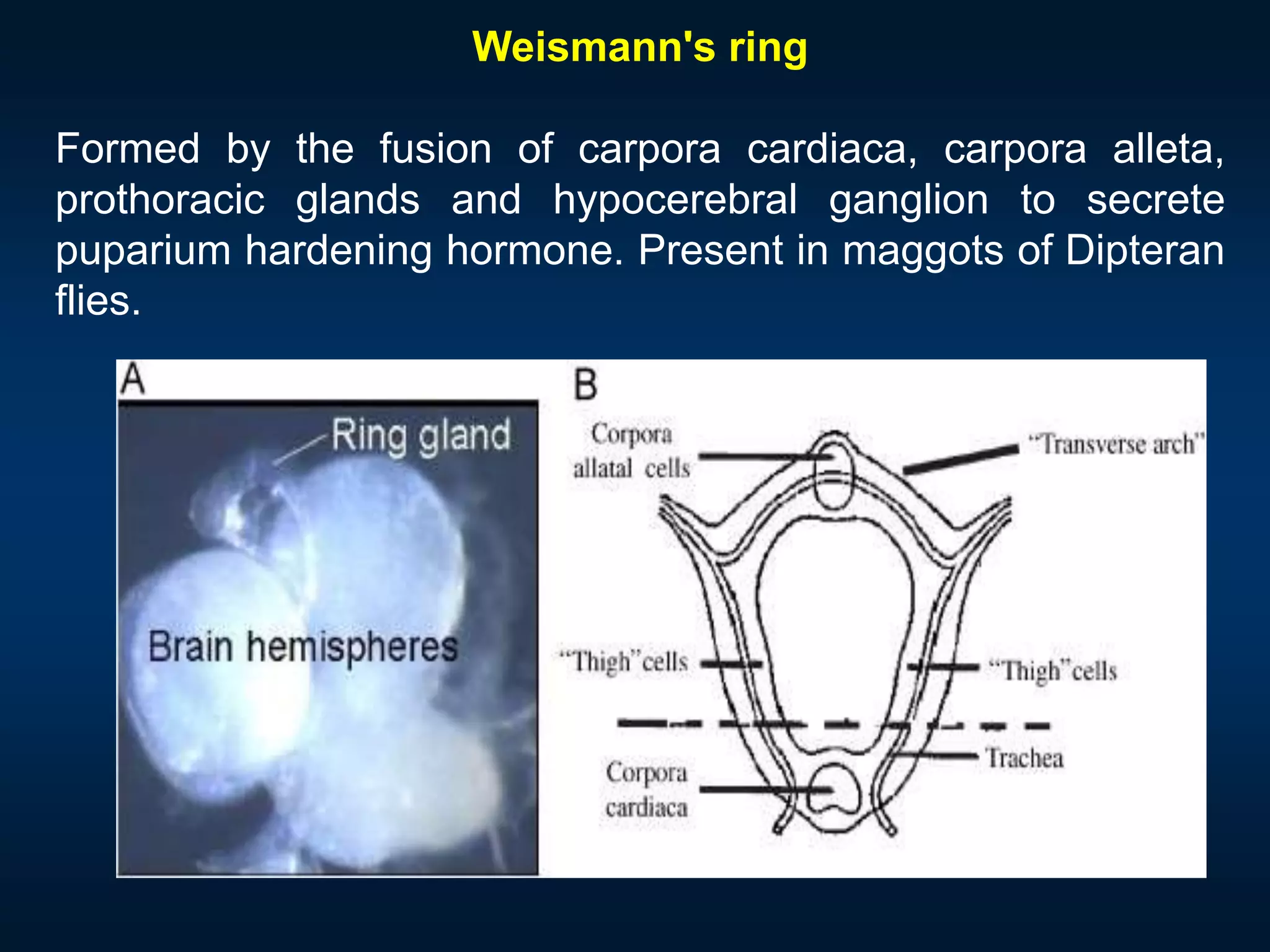
Weismann's ring
Formed by the fusion of carpora cardiaca, carpora alleta,
prothoracic glands and hypocerebral ganglion to secrete
puparium hardening hormone. Present in maggots of Dipteran
flies.
Hormones produced by endocrine organs in insect
 Brain hormone
 Prothoracicotropic hormone (PTTH)
 Molting hormone (ecdysteroids)
 Eclosion hormone
 Juvenile hormone
Function of Hormones
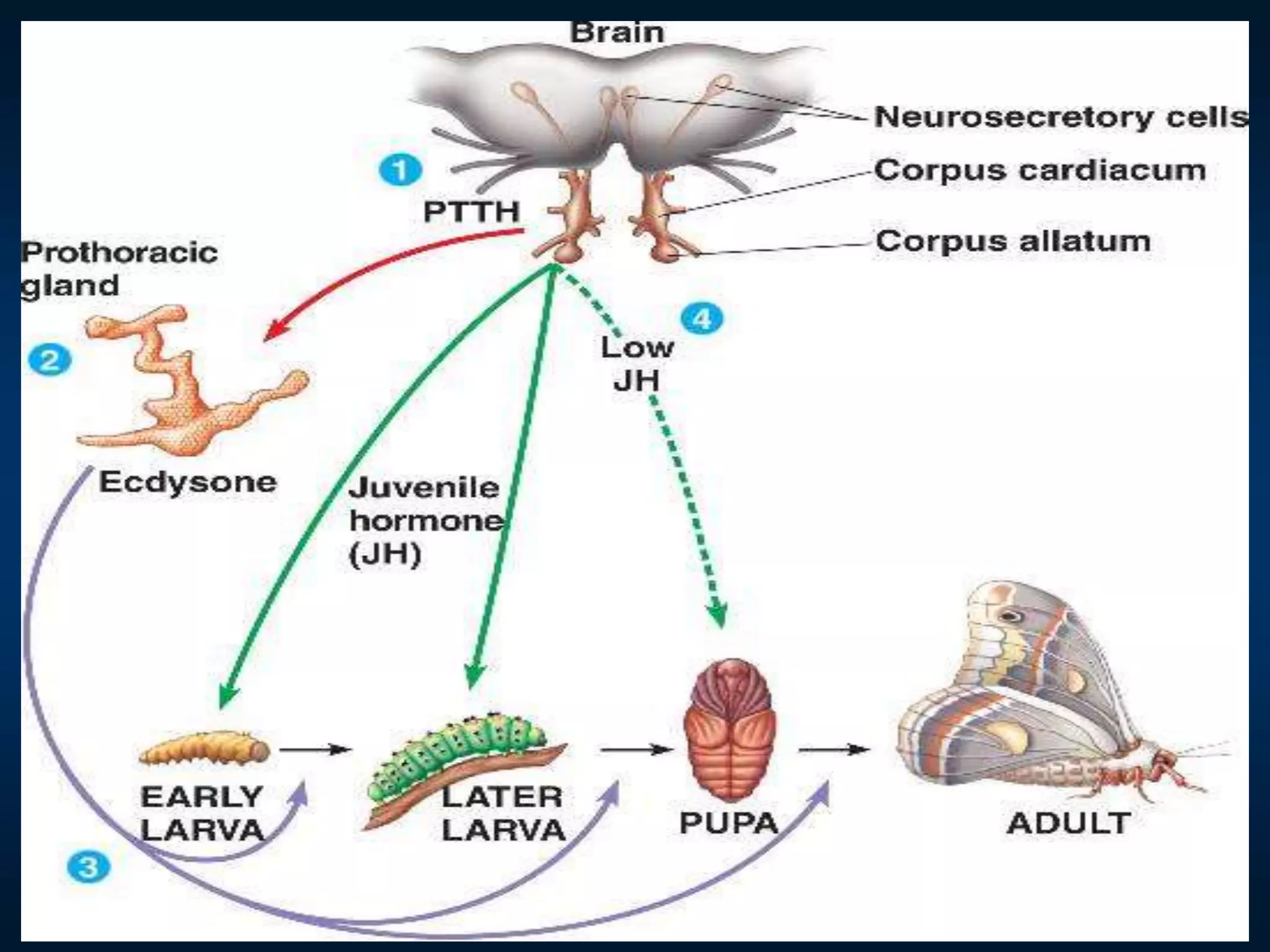
 Secreting brain hormone which triggers the CC to release
their store of prothoracicotropic hormone (PTTH) into the
circulatory system.
 This sudden "pulse" of PTTH stimulates the prothoracic
glands to secrete molting hormone (ecdysteroids).
 NCC in the ventral ganglia begin secreting eclosion
hormone. This hormone triggers ecdysis.
 In immature insects, juvenile hormone is secreted by the CA
prior to each molt. This hormone inhibits the genes that
promote development of adult characteristics (e.g. wings,
reproductive organs, and external genitalia), causing the insect
to remain "immature" (nymph or larva).
At sexual maturity in the adult stage, brain neurosecretory
cells release a brain hormone that "reactivates" the corpora
allata, stimulating renewed production of juvenile hormone.

Lec. 21 Structure and functions of secretary(Endocrine) system in insects.ppt

  • 1.
    Lecture no. 21 Structureand functions of secretary (Endocrine) system in insects R K PANSE Assistant Professor Entomology
  • 2.
     The endocrineorgans and hormones together referred as endocrine system.  Endocrine organs produce hormones which travel in blood to various organs of the body coordinating their activities.  Endocrine system helps to coordinate behavior and regulate growth, development, and other physiological activities.  A hormone is a chemical signal sent from cells in one part of an organism to cells in another part of the same individual.  Hormones as chemical messengers and produced in very small quantities.  Hormones may cause profound changes in their target cells. Their effect may be stimulatory or inhibitory or different effects in each target. Introduction
  • 3.
    Endocrine Organs The endocrineorgans of insects are of two types; 1. Neurosecretary cells (within central nervous system) 2. Specialized endocrine glands Corpora cardica (CC) Corpora allata (CA) Prothoracic glands (PTG)
  • 4.
     Neurosecretary cellsnormally occur in the ganglia of the CNS.  Two groups of NCC on each side of the brain. One pair Median NCC and One pair lateral NCC  The neurosecretary cells are modified motorneurons.  The secretion is granular, synthesized in cell bodies and pass down to axons.  It is possible that the visible secretion is only a carrier to which the smaller hormone molecule is attached.  When hormone is finally released it becomes separated from the carrier (protein) and is then free into blood.  The endocrine activity of neurosecretary cells may take one of two forms: the cells may either produce hormones which act directly on effector organs, or they may act on other endocrine organs, which in turn, are stimulated to produce hormones. Neurosecretory Cells (NCC)
  • 5.
     The corporacardiaca are a pair of organs.  These are absent in collembolan.  The corpora cardiac store and release hormones from NS cells of the brain.  In addition, the intrinsic secretory cells produce hormones which are concerned with the regulation of the heartbeat and have other physiological effects. Corpora Cardiaca
  • 6.
     The corporaallata are glandular bodies, usually one on either side of oesophagus. They are fused to a single organ in diptera.  The corpora allata produce Juvenile Hormone (JH) which regulate metamorphosis and yolk deposition in eggs. Corpora Allata
  • 7.
     The prothoracic,or thoracic, glands are a pair of diffuse glands at the back of the head or in the thorax.  The prothoracic glands produce moulting hormone, ecdysone, and except in thysanura, which moult as adults.  The prothoracic glands breakdown soon after the final moult to adult. Prothoracic Glands (PTG)
  • 8.
    Weismann's ring Formed bythe fusion of carpora cardiaca, carpora alleta, prothoracic glands and hypocerebral ganglion to secrete puparium hardening hormone. Present in maggots of Dipteran flies.
  • 10.
    Hormones produced byendocrine organs in insect  Brain hormone  Prothoracicotropic hormone (PTTH)  Molting hormone (ecdysteroids)  Eclosion hormone  Juvenile hormone
  • 11.
    Function of Hormones Secreting brain hormone which triggers the CC to release their store of prothoracicotropic hormone (PTTH) into the circulatory system.  This sudden "pulse" of PTTH stimulates the prothoracic glands to secrete molting hormone (ecdysteroids).  NCC in the ventral ganglia begin secreting eclosion hormone. This hormone triggers ecdysis.  In immature insects, juvenile hormone is secreted by the CA prior to each molt. This hormone inhibits the genes that promote development of adult characteristics (e.g. wings, reproductive organs, and external genitalia), causing the insect to remain "immature" (nymph or larva). At sexual maturity in the adult stage, brain neurosecretory cells release a brain hormone that "reactivates" the corpora allata, stimulating renewed production of juvenile hormone.