•Introduction to Respiration
•Respiration in Insects (General)
•Respiration in Insects (AkGrassopper as model)
•Reference
•Research Paper 2013
WHAT IS
RESPIRATION??
Refer to the process of obtaining
oxygen and delivering it to the cells
for cellular respiration and removing
carbon dioxide produced by cells
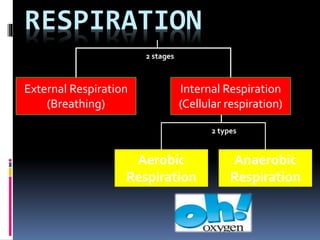
RESPIRATION
External Respiration
(Breathing)
Internal Respiration
(Cellular respiration)
Aerobic
Respiration
Anaerobic
Respiration
2 stages
2 types
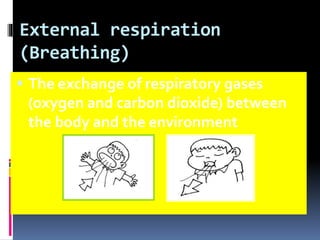
External respiration
(Breathing)
 The exchange of respiratory gases
(oxygen and carbon dioxide) between
the body and the environment
Internal respiration
( cellular respiration)
 A metabolic process which occurs in cells,
involves oxidation of organic molecules to
produce energy (in the form of ATP)
 Controlled by enzymes
 Two types :
1. Aerobic respiration
2. Anaerobic respiration
The respiratory
structure and breathing
mechanism of insects
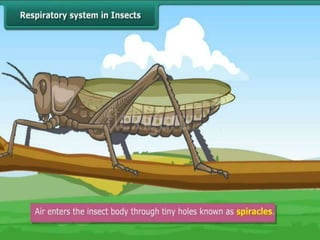
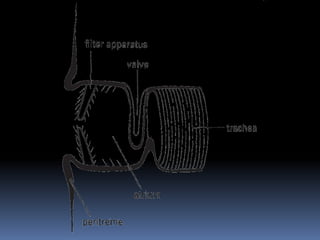
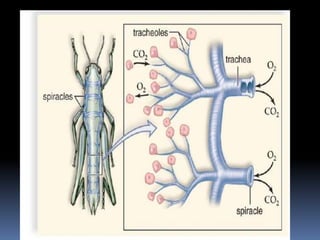
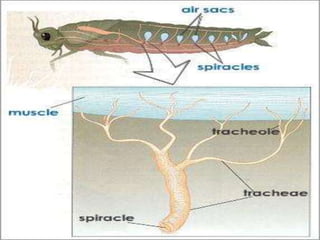
• Air enters into body through tiny holes spiracles
• Use to avoid water loss
• A cavity atrium or entrance is present
• Air passage is controlled by Valves
• Surrounded by peritreme.
Spiracles
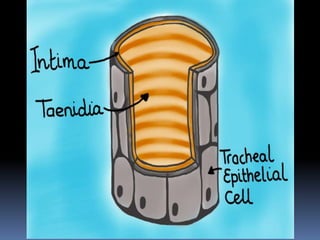
 Elastic in nature
 Cuticular pipe like apparatus
 Thick, helical and thread like layer taenidia
 give flexibility
 Filled with air shows silvery appearance
Tracheae
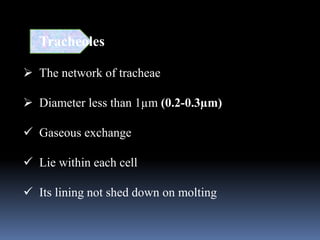
Tracheoles
 The network of tracheae
 Diameter less than 1µm (0.2-0.3µm)
 Gaseous exchange
 Lie within each cell
 Its lining not shed down on molting
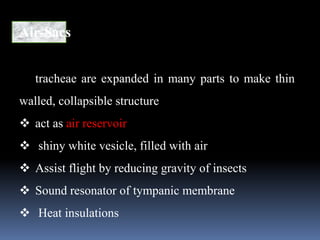
Air-Sacs
tracheae are expanded in many parts to make thin
walled, collapsible structure
 act as air reservoir
 shiny white vesicle, filled with air
 Assist flight by reducing gravity of insects
 Sound resonator of tympanic membrane
 Heat insulations
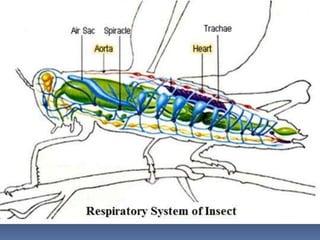
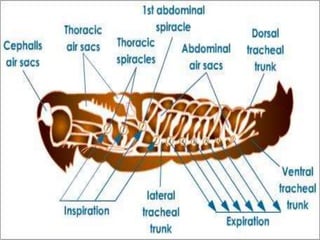
Respiratory System In grasshopper, the tracheal
system consists of 10 pairs of spiracles, located
laterally on the body surface. Of these, 2 pairs are
thoracic and 8 pairs are abdominal. The spiracles are
guarded by fine hairs to keep the foreign particles
out and by valves that function to open or close the
spiracles as required. The spiracles open into small
spaces called the atria that continue as air tubes
called the tracheae. The tracheae are fine tubes that
have a wall of single layered epithelial cells. The
cells secrete spiral cuticular thickenings around the
tube that gives support to the tubes.
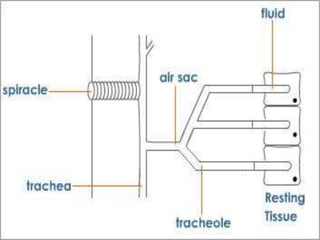
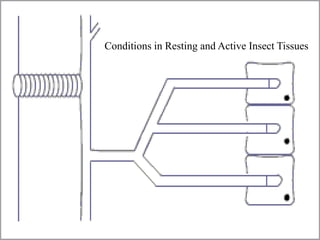
Conditions in Resting and Active Insect Tissues
The ends of the tracheoles are filled with fluid. This end enters into
the tissue. The ends of the tracheoles are also devoid of cuticle and
therefore the respiratory surface is very thin making the diffusion
of oxygen into the cells easy. As respiration occurs in the cell, the
products of respiration accumulate in the cell and this forces the
fluid in the tracheoles to enter the tissue. The exit of fluid creates
low pressure in the tubes and draws in more oxygen to the tissues
where it is needed.The carbon dioxide produced is detected by the
chemo receptors which make the muscles near the spiracles
contract. This pushes the air out. The last six pairs of spiracles are
involved in expiration of air.Thus, in grasshopper there is
ventilation or circulation of air as the oxygen-rich air is inhaled
through the first four spiracles and the carbon dioxide-rich air is
exhaled through the remaining six pairs of spiracles.
In insects, therefore, the respiratory system is independent of the
circulatory system.
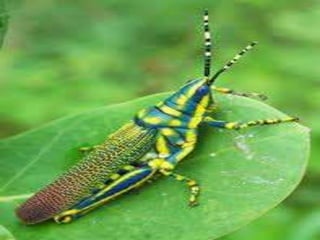
Respiration in Ak grasshopper &general

Respiration in Ak grasshopper &general

  • 3.
    •Introduction to Respiration •Respirationin Insects (General) •Respiration in Insects (AkGrassopper as model) •Reference •Research Paper 2013
  • 4.
    WHAT IS RESPIRATION?? Refer tothe process of obtaining oxygen and delivering it to the cells for cellular respiration and removing carbon dioxide produced by cells
  • 5.
    RESPIRATION External Respiration (Breathing) Internal Respiration (Cellularrespiration) Aerobic Respiration Anaerobic Respiration 2 stages 2 types
  • 6.
    External respiration (Breathing)  Theexchange of respiratory gases (oxygen and carbon dioxide) between the body and the environment
  • 7.
    Internal respiration ( cellularrespiration)  A metabolic process which occurs in cells, involves oxidation of organic molecules to produce energy (in the form of ATP)  Controlled by enzymes  Two types : 1. Aerobic respiration 2. Anaerobic respiration
  • 8.
    The respiratory structure andbreathing mechanism of insects
  • 11.
    • Air entersinto body through tiny holes spiracles • Use to avoid water loss • A cavity atrium or entrance is present • Air passage is controlled by Valves • Surrounded by peritreme. Spiracles
  • 13.
     Elastic innature  Cuticular pipe like apparatus  Thick, helical and thread like layer taenidia  give flexibility  Filled with air shows silvery appearance Tracheae
  • 15.
    Tracheoles  The networkof tracheae  Diameter less than 1µm (0.2-0.3µm)  Gaseous exchange  Lie within each cell  Its lining not shed down on molting
  • 17.
    Air-Sacs tracheae are expandedin many parts to make thin walled, collapsible structure  act as air reservoir  shiny white vesicle, filled with air  Assist flight by reducing gravity of insects  Sound resonator of tympanic membrane  Heat insulations
  • 20.
    Respiratory System Ingrasshopper, the tracheal system consists of 10 pairs of spiracles, located laterally on the body surface. Of these, 2 pairs are thoracic and 8 pairs are abdominal. The spiracles are guarded by fine hairs to keep the foreign particles out and by valves that function to open or close the spiracles as required. The spiracles open into small spaces called the atria that continue as air tubes called the tracheae. The tracheae are fine tubes that have a wall of single layered epithelial cells. The cells secrete spiral cuticular thickenings around the tube that gives support to the tubes.
  • 24.
    Conditions in Restingand Active Insect Tissues
  • 25.
    The ends ofthe tracheoles are filled with fluid. This end enters into the tissue. The ends of the tracheoles are also devoid of cuticle and therefore the respiratory surface is very thin making the diffusion of oxygen into the cells easy. As respiration occurs in the cell, the products of respiration accumulate in the cell and this forces the fluid in the tracheoles to enter the tissue. The exit of fluid creates low pressure in the tubes and draws in more oxygen to the tissues where it is needed.The carbon dioxide produced is detected by the chemo receptors which make the muscles near the spiracles contract. This pushes the air out. The last six pairs of spiracles are involved in expiration of air.Thus, in grasshopper there is ventilation or circulation of air as the oxygen-rich air is inhaled through the first four spiracles and the carbon dioxide-rich air is exhaled through the remaining six pairs of spiracles. In insects, therefore, the respiratory system is independent of the circulatory system.