RESPIRATION SYSTEM
IN
INSECTS
PRESENTED BY : ZAID ASIF
WHAT IS
RESPIRATION
???
Inhaling of oxygen
&
Exhaling of carbon dioxide
RESPIRATION IN INSECT
• An insect's respiratory system is the biological
system with which it introduces respiratory
gases to its interior and performs gas exchange.
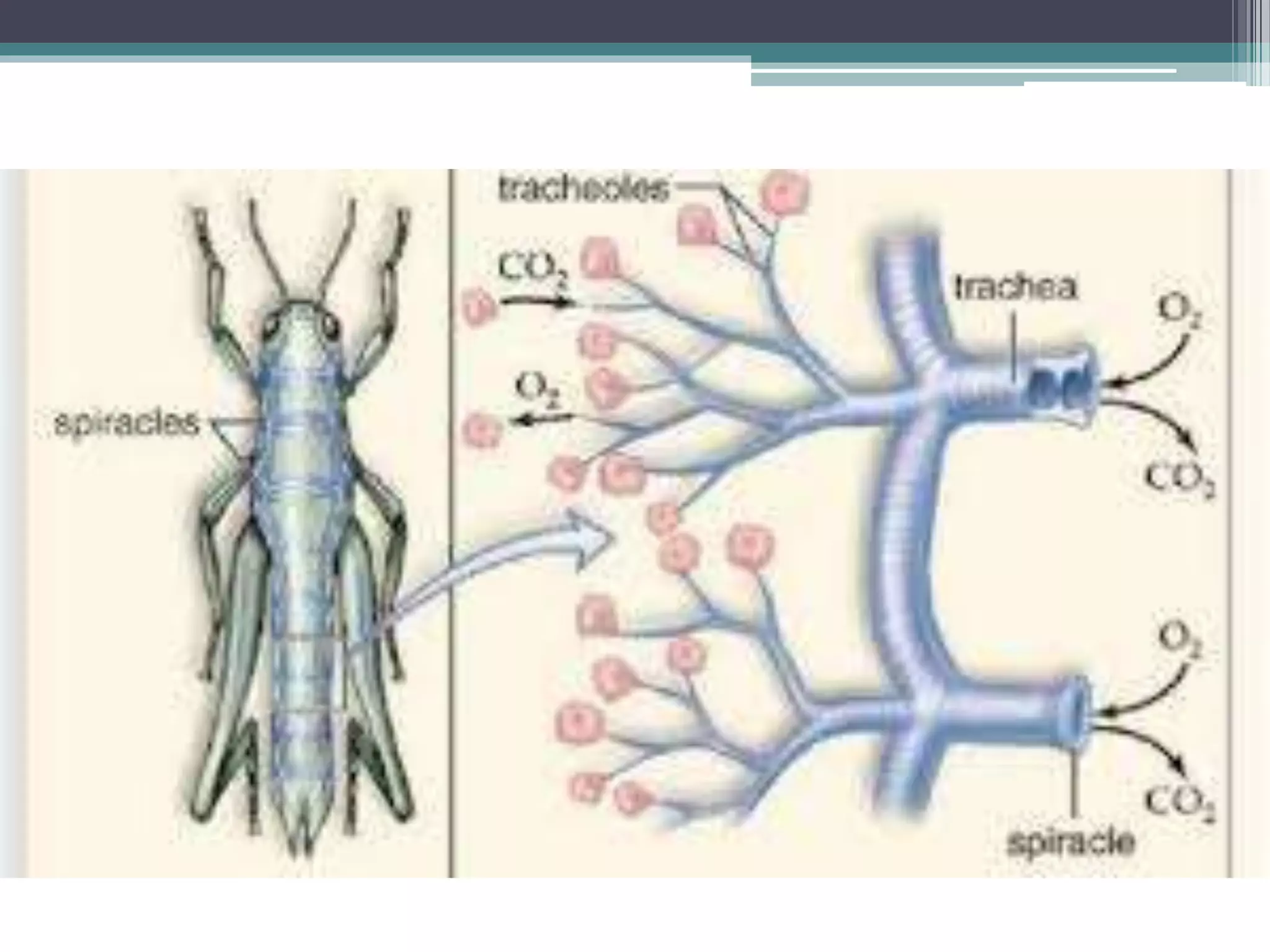
• Air enters the respiratory systems of insects
through a series of external openings called
spiracles.
FUNCTIONS
1. It is responsible for :
delivering sufficient oxygen to all cells of the
body.
Removing carbon dioxide that is produced as
a waste product of cellular respiration.
2. The respiratory system of insects is separate
from the circulatory system.
3. Respiratory systems of insects are developed
from ectoderm
RESPIRATORY SYSTEM CONSISTS OF;
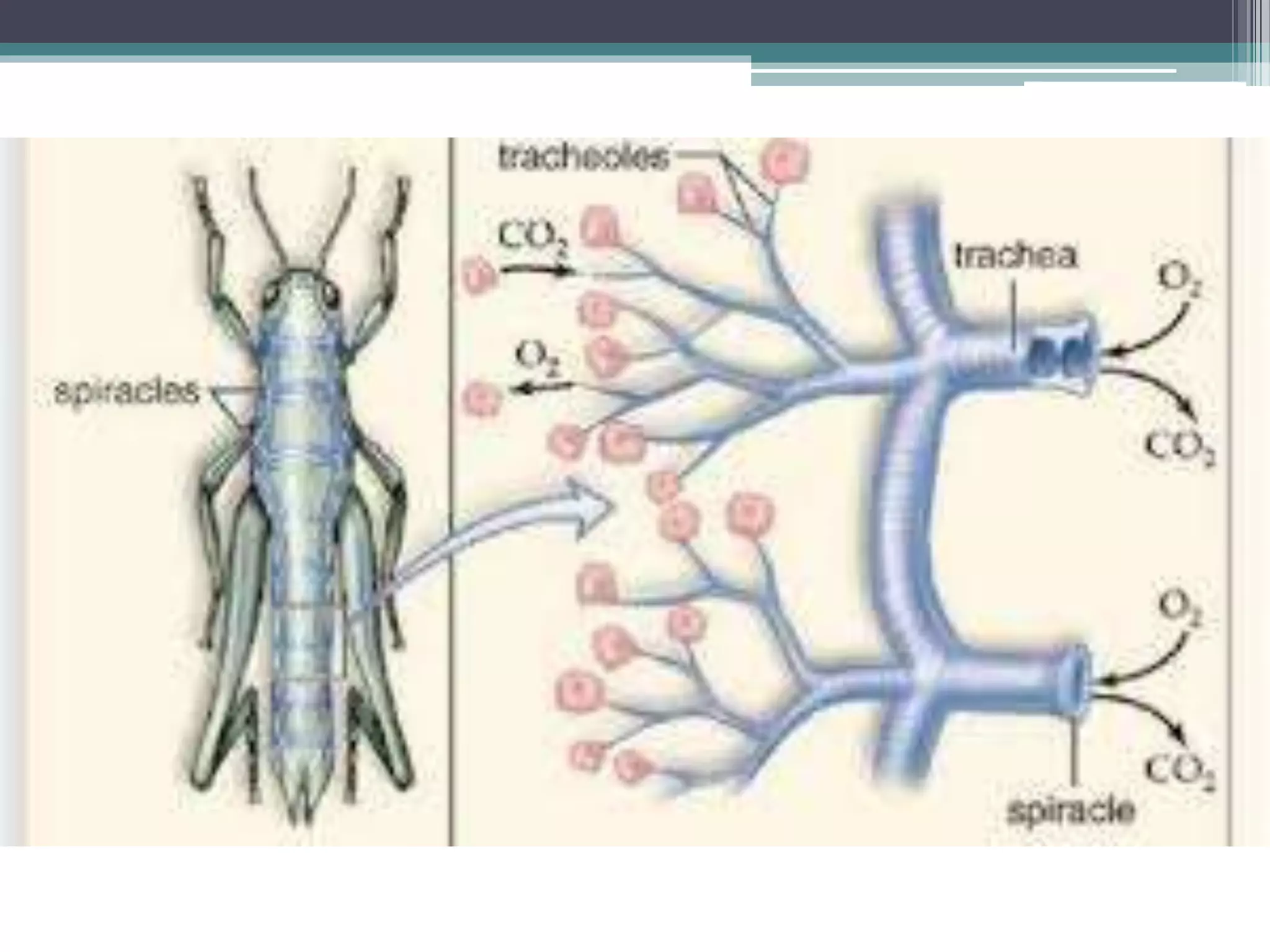
• SPIRACLES
• TRACHAE
• TRACHEOLES
• TRACHEAOBLAST
• AIR SACS
SPIRACLES
• Air enters into the body through tiny holes
are spiracles.
• Use to avoid water loss.
• Air passage is controlled by VALVES.
• Insects have about ten pairs of opening,
called spiracles in their exoskeleton.
• Controlled by central nervous system
TRACHEA
• The tracheae are the larger tubes of the tracheal
system.
• Ectodermal in origin
• Cuticular pipe like apparatus.
• Give Flexibility.
• Never become intracellular
TRACHEOLES
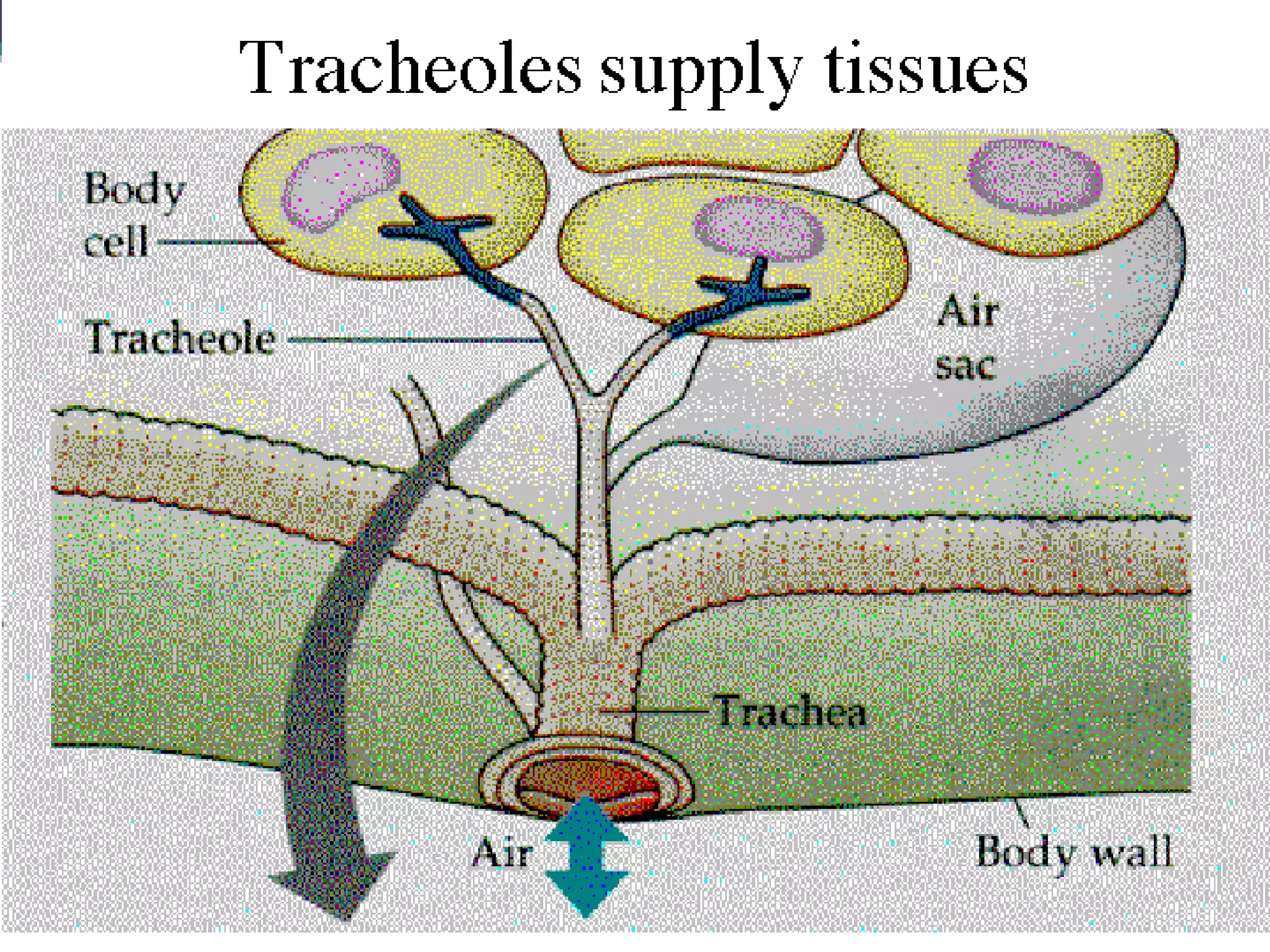
• The small network of tracheae.
• Diameter less than 1µm (0.2 µm – 0.3 µm)
• Gaseous exchange occurs across tracheole
• It can be intracellular.
TRACHEOBLAST
• The branches of tracheae, ends in
polygonal cells.
• Consists of cytoplasm and nucleolus.
AIR-SACS
• Balloon like structure acts as oxygen reservoir.
• Provide buoyancy to flying in aquatic insects.
• Allow growth of body.
• In dry environment, air-sacs allow an insect to
conserve water by closing its spiracles.
• Heat insulation & maintain body temperature.
CONCLUSION
• Instead of lungs, insects breathe with a network
of tiny tubes called tracheae.
• Air enters in the tubes through a row of holes
along an insect's abdomen.
• The air then diffuses down the blind-ended
tracheae.
• Since the biggest bugs have the longest tracheae,
they should need the most oxygen to be able
to breathe.
Respiration system in insects

Respiration system in insects

  • 1.
  • 2.
  • 3.
  • 4.
    RESPIRATION IN INSECT •An insect's respiratory system is the biological system with which it introduces respiratory gases to its interior and performs gas exchange. • Air enters the respiratory systems of insects through a series of external openings called spiracles.
  • 5.
    FUNCTIONS 1. It isresponsible for : delivering sufficient oxygen to all cells of the body. Removing carbon dioxide that is produced as a waste product of cellular respiration. 2. The respiratory system of insects is separate from the circulatory system. 3. Respiratory systems of insects are developed from ectoderm
  • 6.
    RESPIRATORY SYSTEM CONSISTSOF; • SPIRACLES • TRACHAE • TRACHEOLES • TRACHEAOBLAST • AIR SACS
  • 7.
    SPIRACLES • Air entersinto the body through tiny holes are spiracles. • Use to avoid water loss. • Air passage is controlled by VALVES. • Insects have about ten pairs of opening, called spiracles in their exoskeleton. • Controlled by central nervous system
  • 9.
    TRACHEA • The tracheaeare the larger tubes of the tracheal system. • Ectodermal in origin • Cuticular pipe like apparatus. • Give Flexibility. • Never become intracellular
  • 11.
    TRACHEOLES • The smallnetwork of tracheae. • Diameter less than 1µm (0.2 µm – 0.3 µm) • Gaseous exchange occurs across tracheole • It can be intracellular.
  • 13.
    TRACHEOBLAST • The branchesof tracheae, ends in polygonal cells. • Consists of cytoplasm and nucleolus.
  • 15.
    AIR-SACS • Balloon likestructure acts as oxygen reservoir. • Provide buoyancy to flying in aquatic insects. • Allow growth of body. • In dry environment, air-sacs allow an insect to conserve water by closing its spiracles. • Heat insulation & maintain body temperature.
  • 17.
    CONCLUSION • Instead oflungs, insects breathe with a network of tiny tubes called tracheae. • Air enters in the tubes through a row of holes along an insect's abdomen. • The air then diffuses down the blind-ended tracheae. • Since the biggest bugs have the longest tracheae, they should need the most oxygen to be able to breathe.

Editor's Notes

  • #10 The word ectoderm comes from the Greek ektos meaning "outside", and derma, meaning"skin.“ Intracellular means located cells within cells