Downloaded 352 times
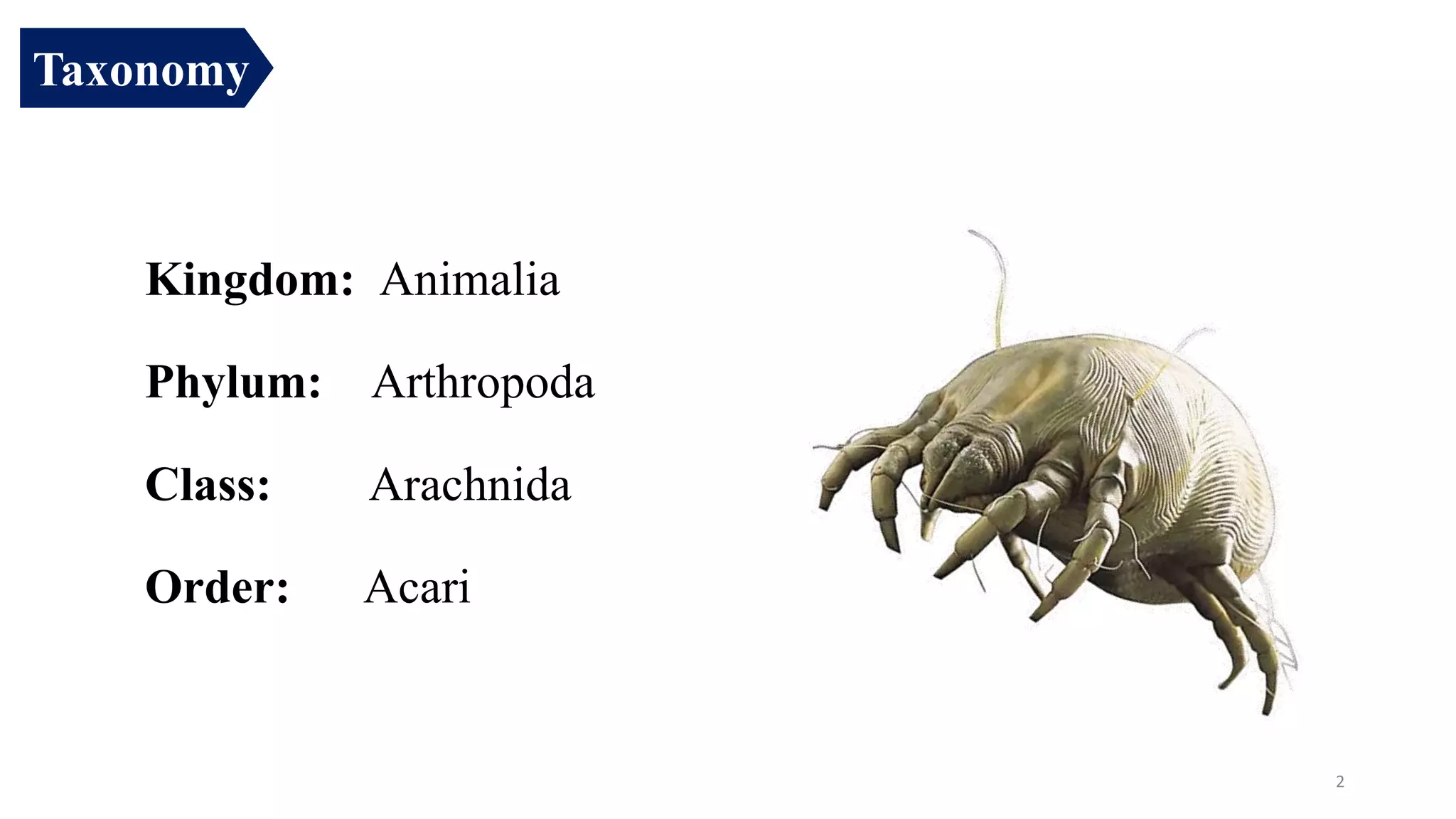
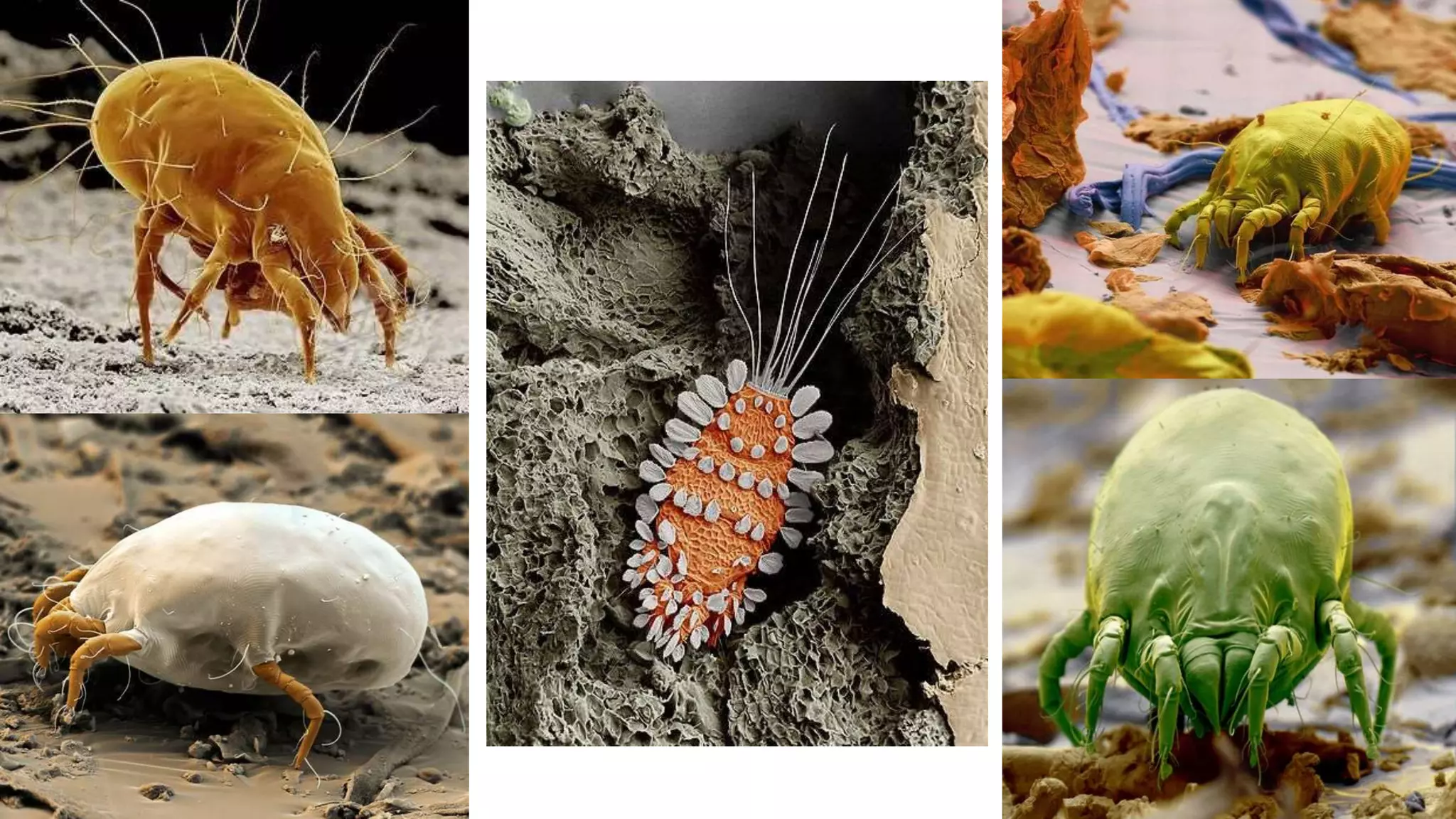
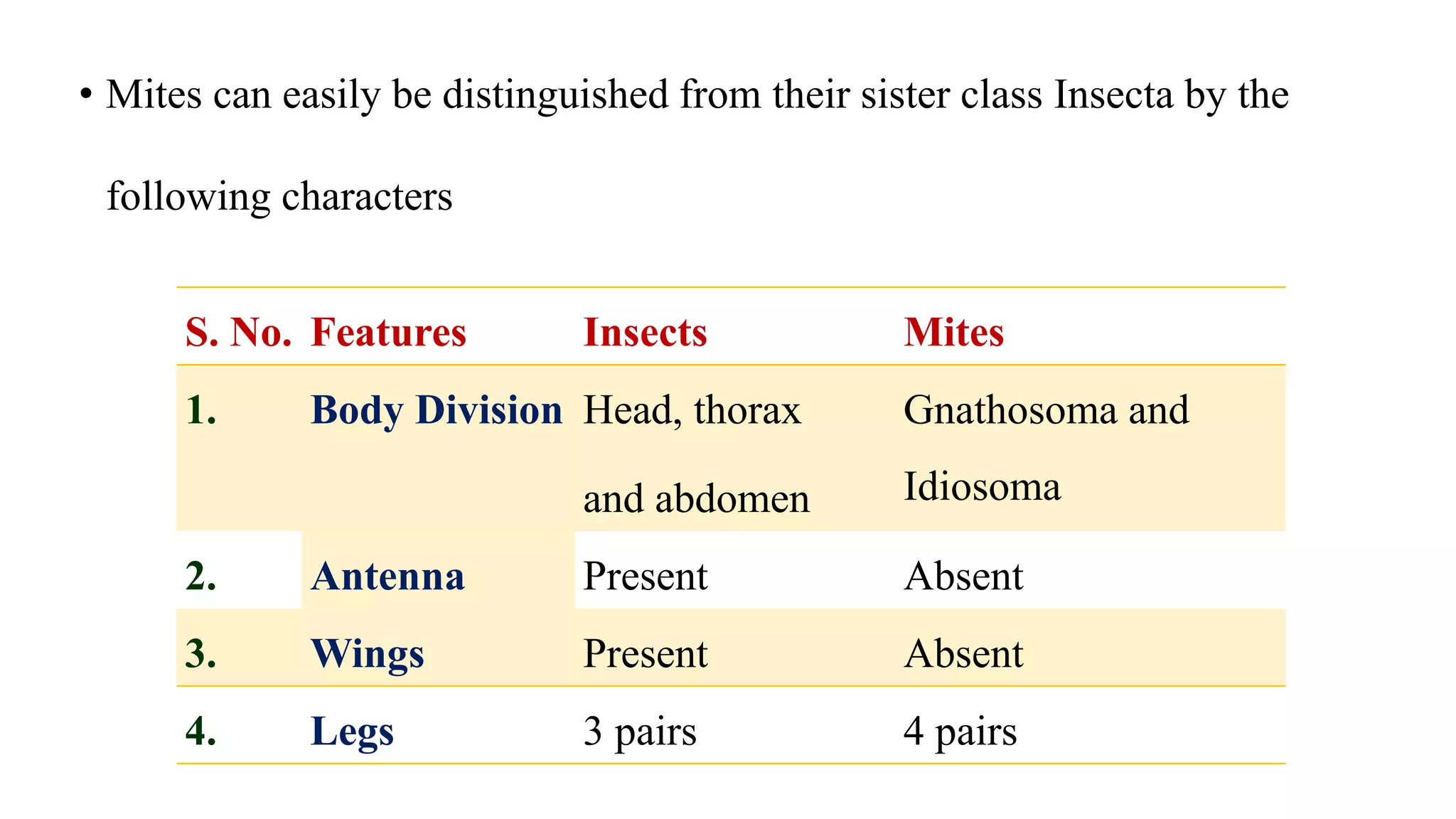
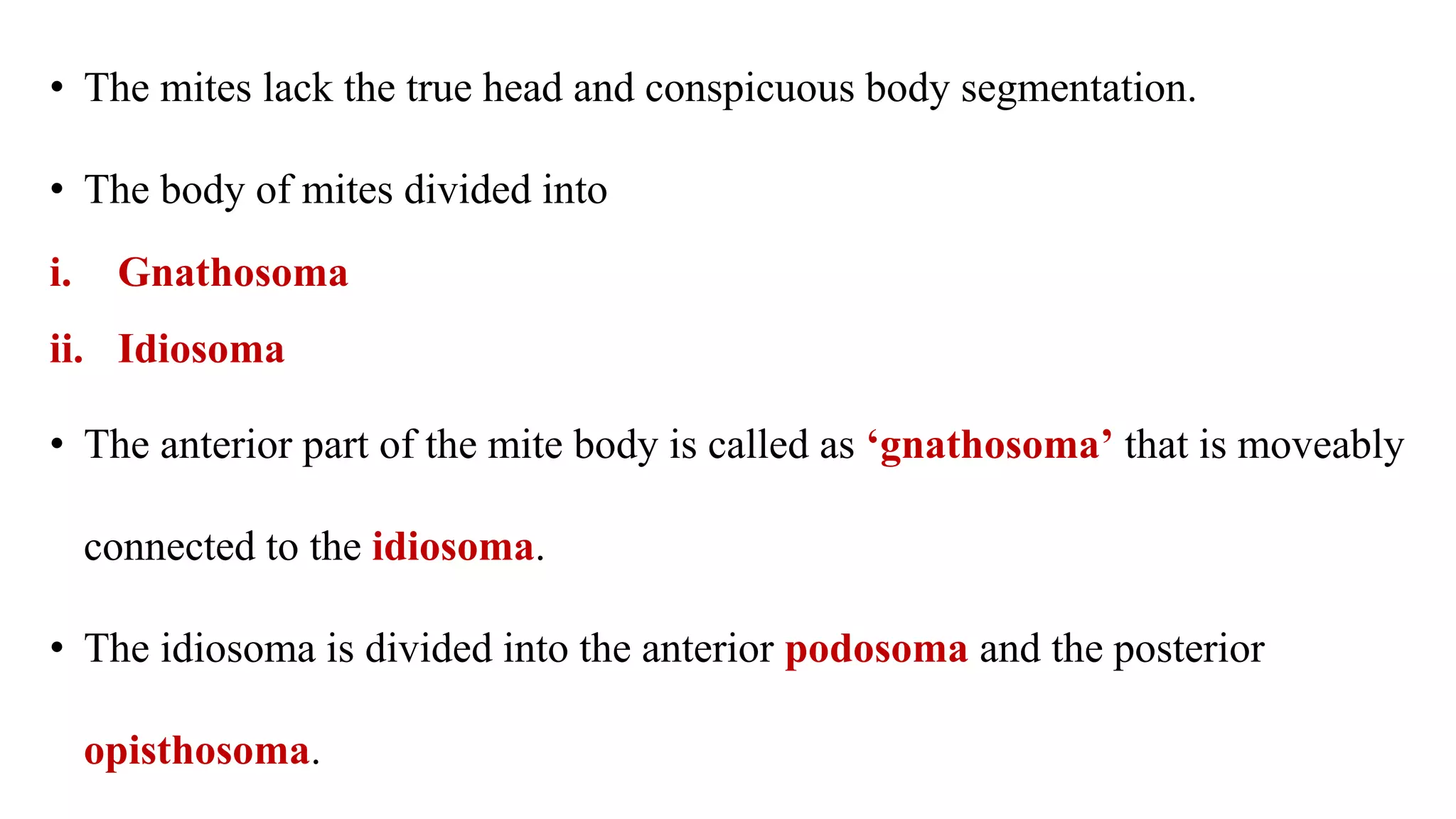
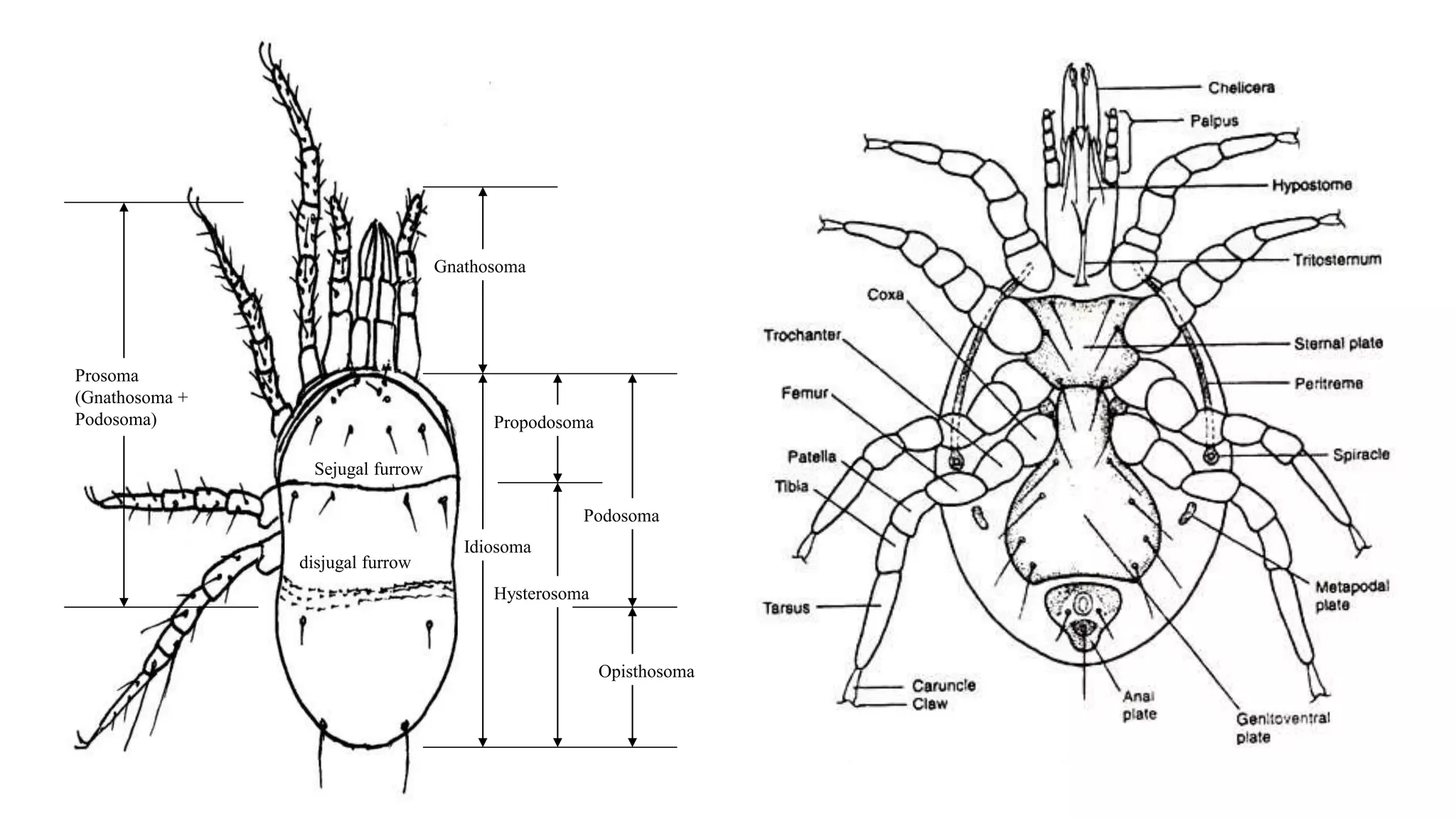

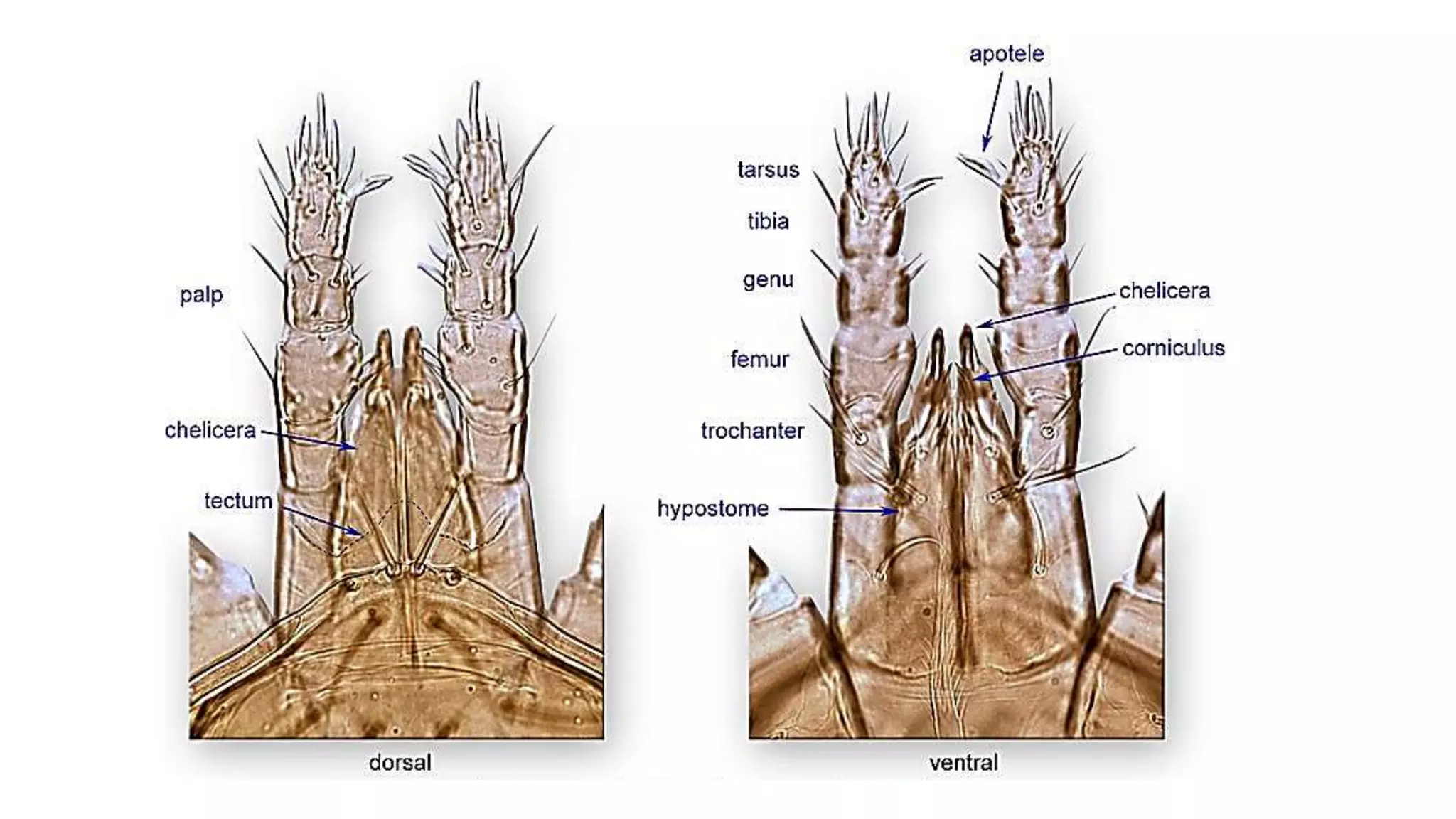





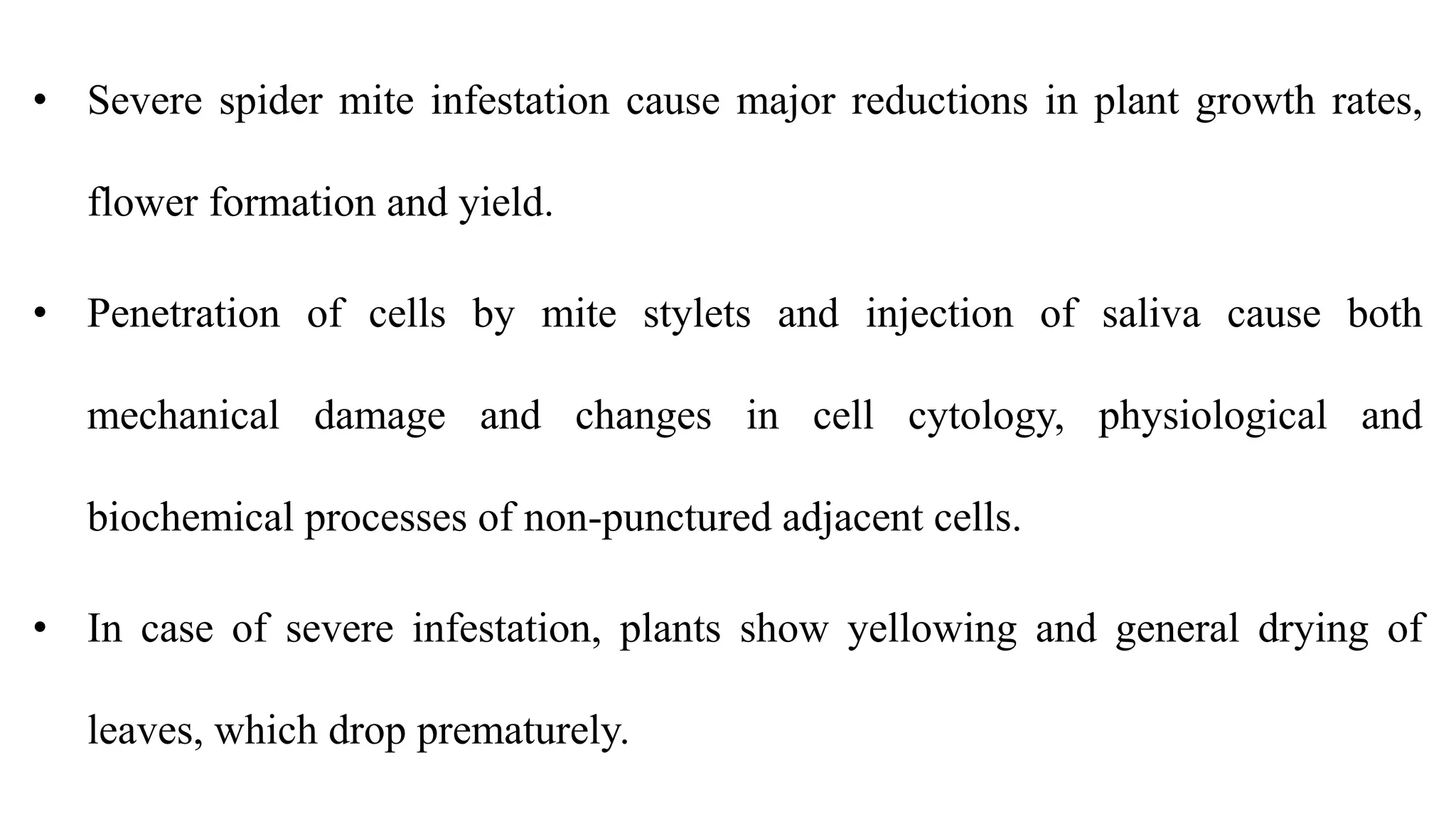
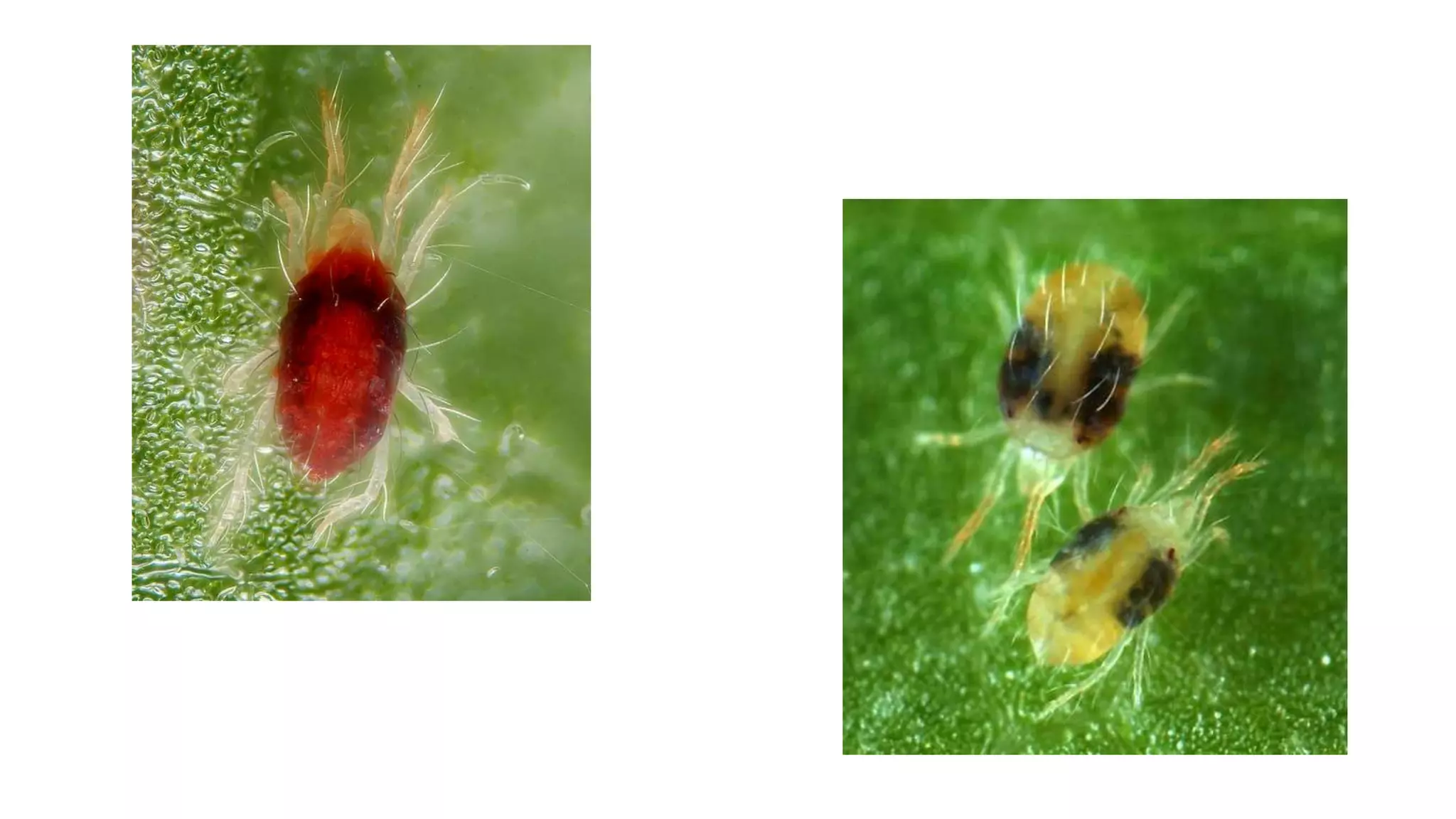
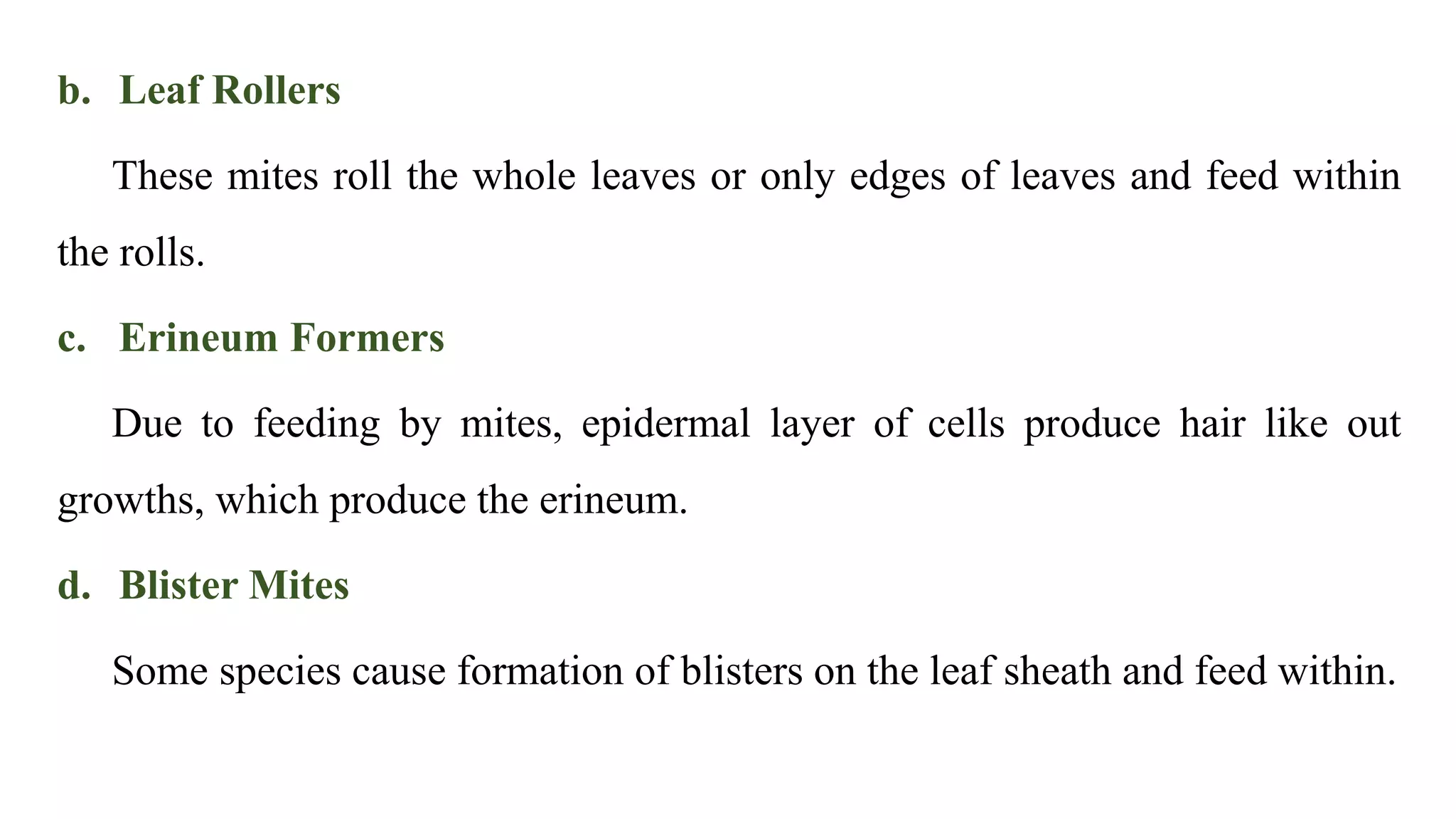
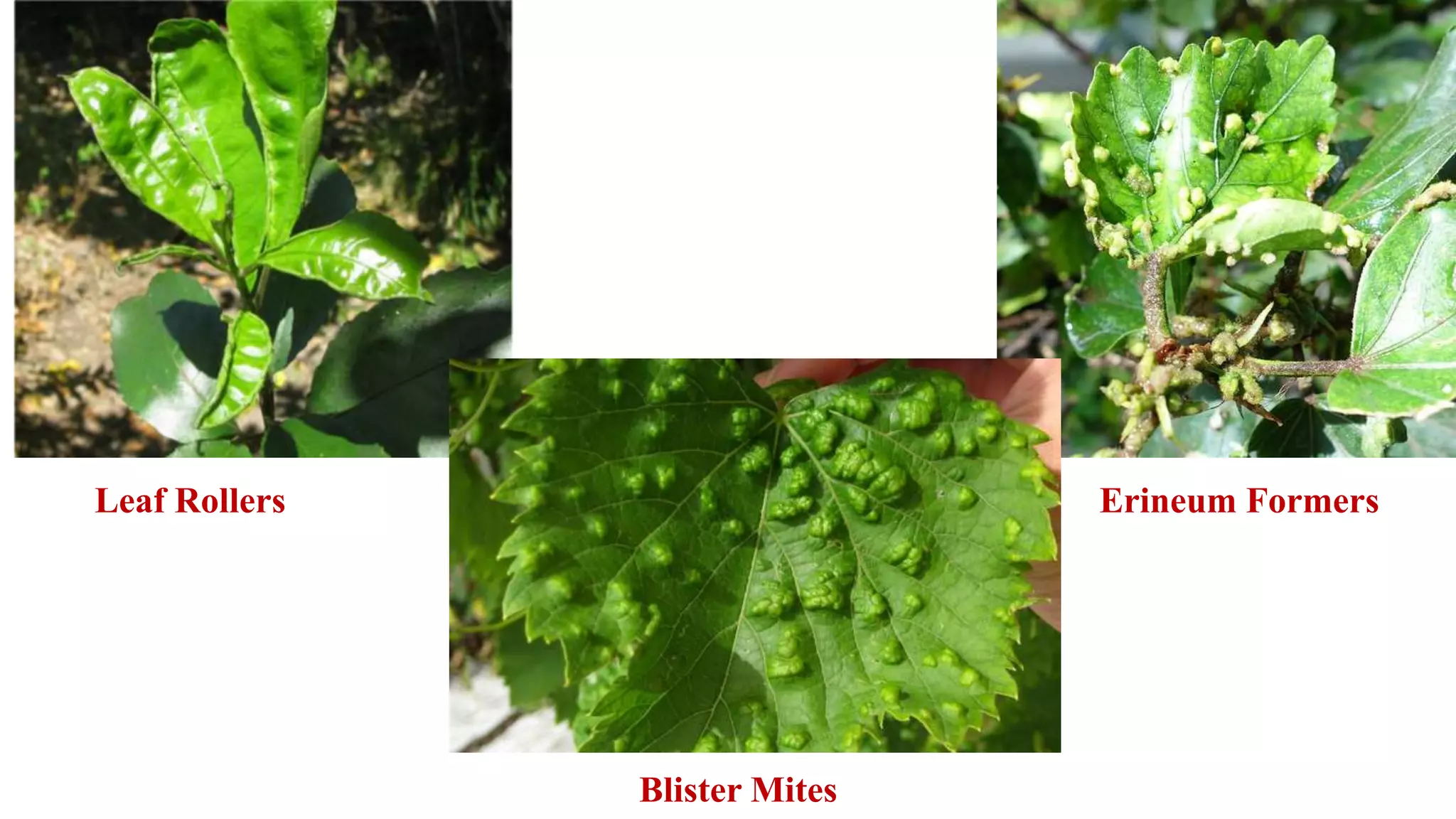
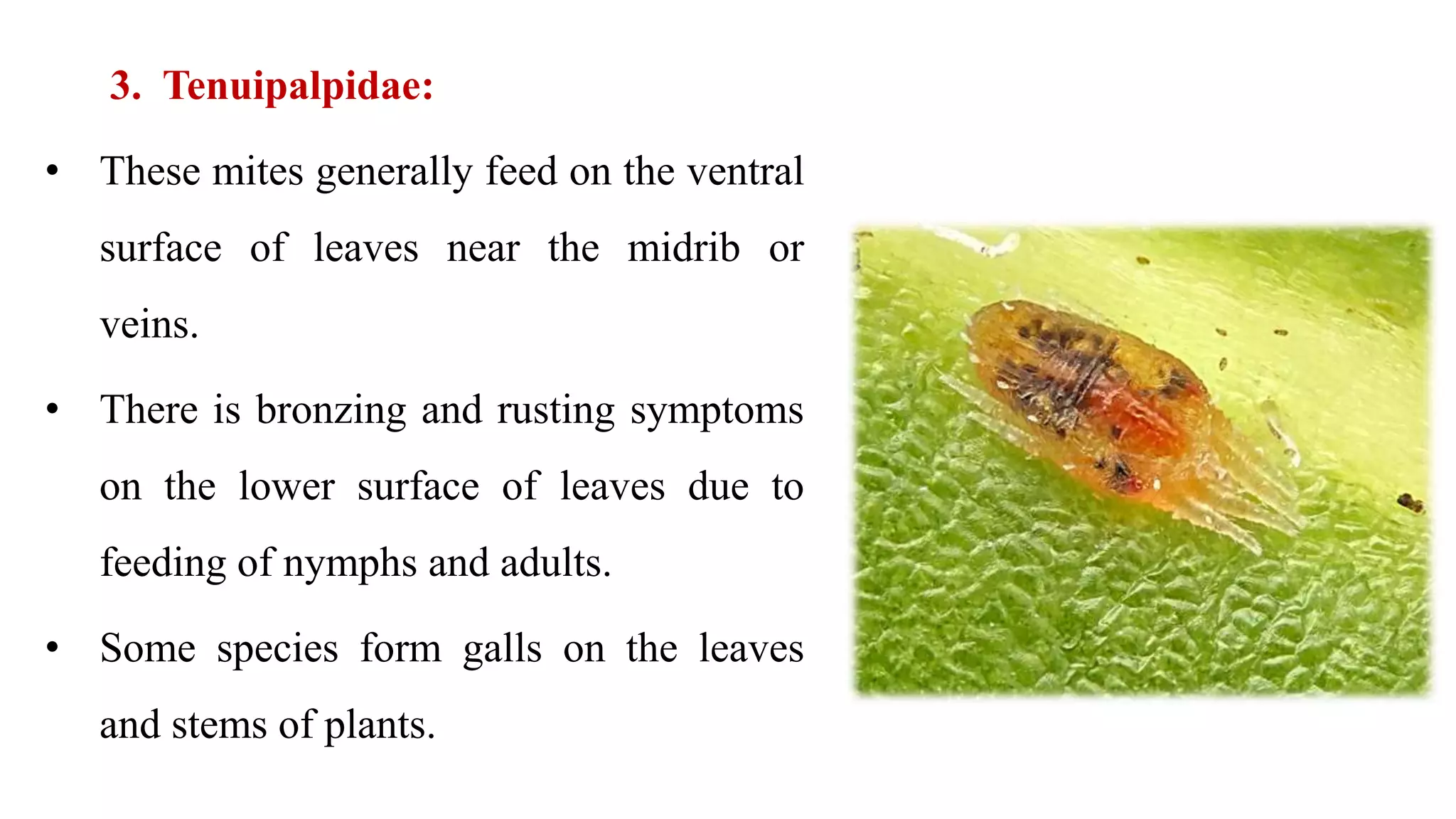
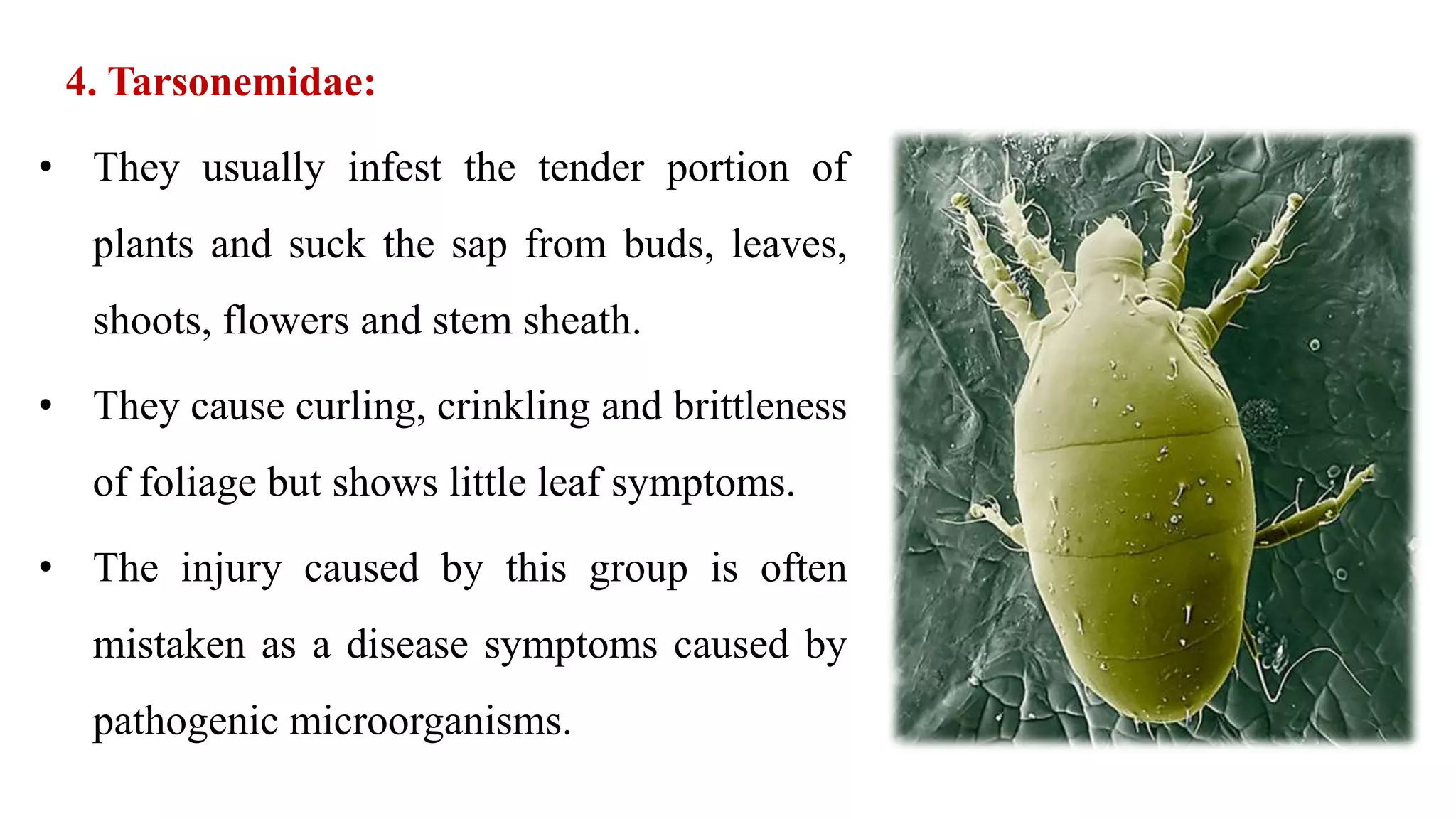
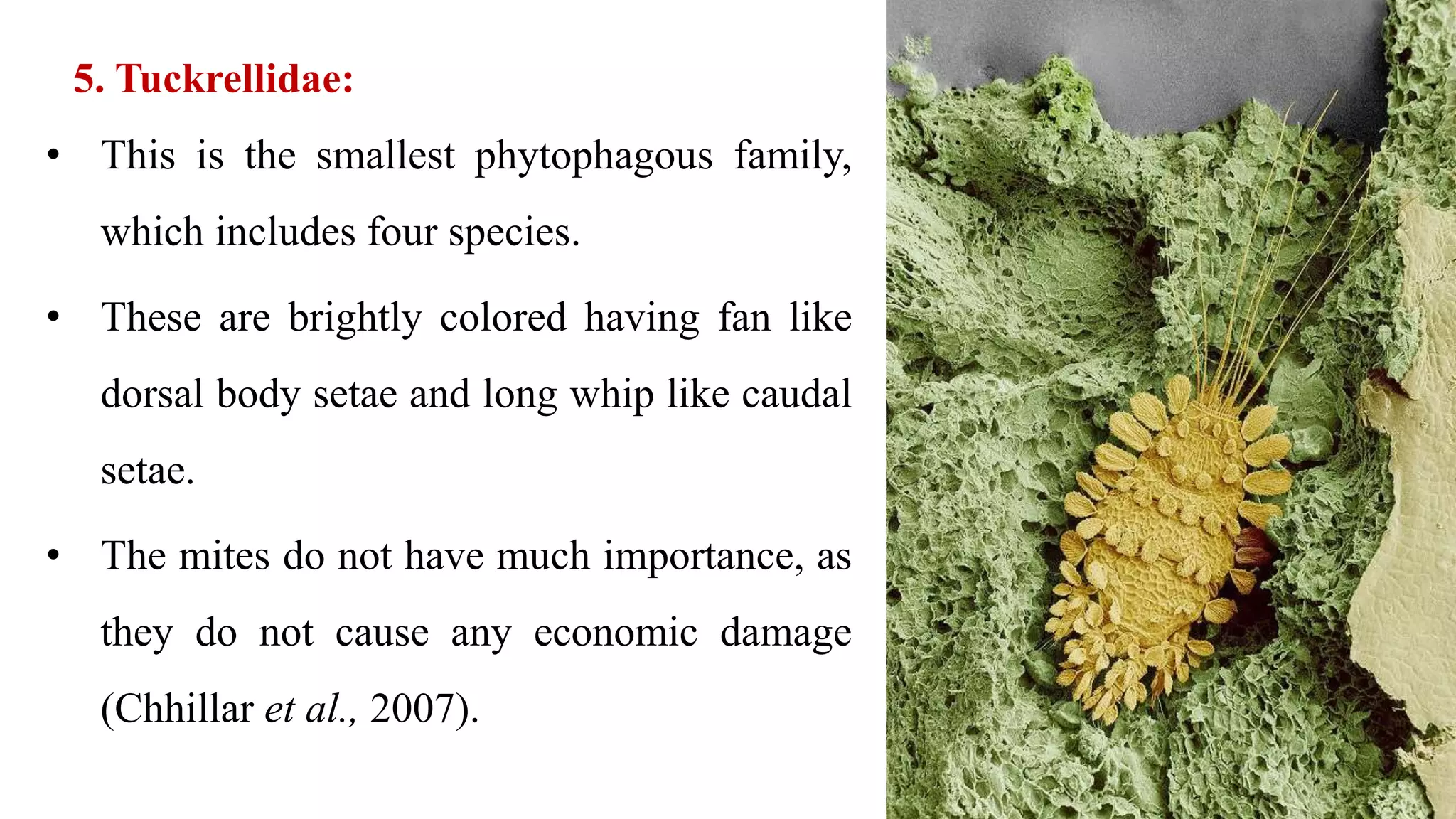

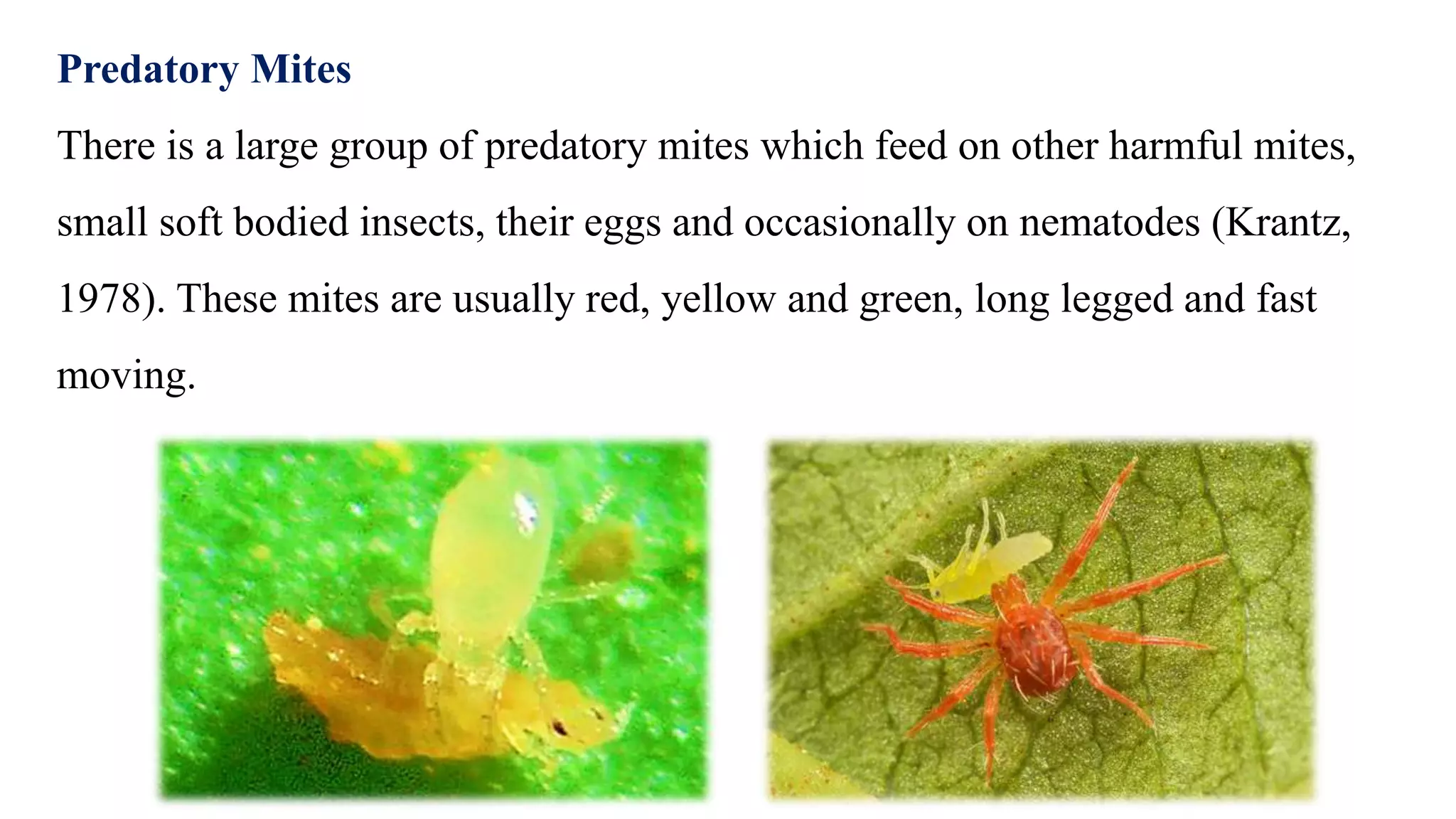
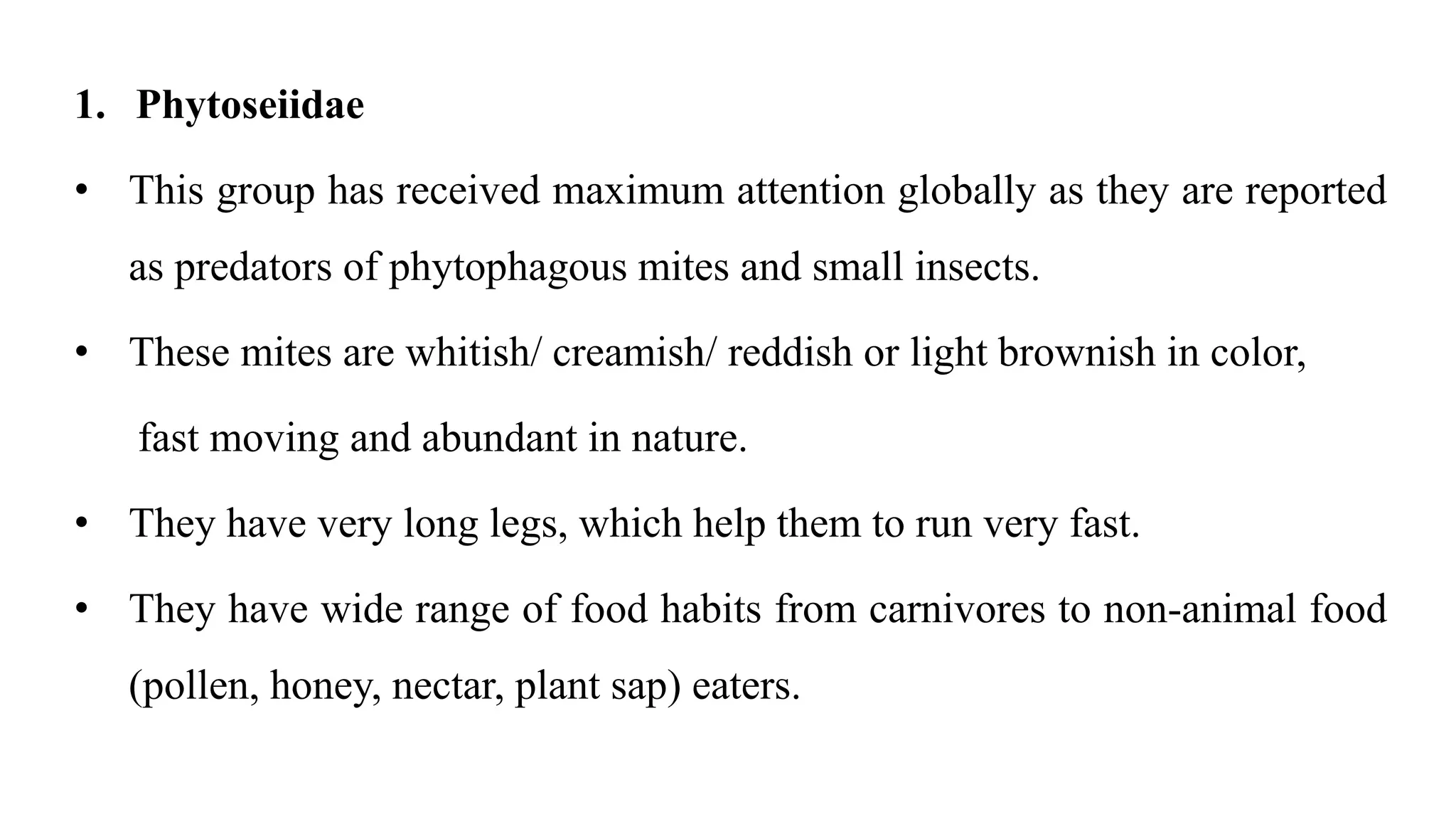
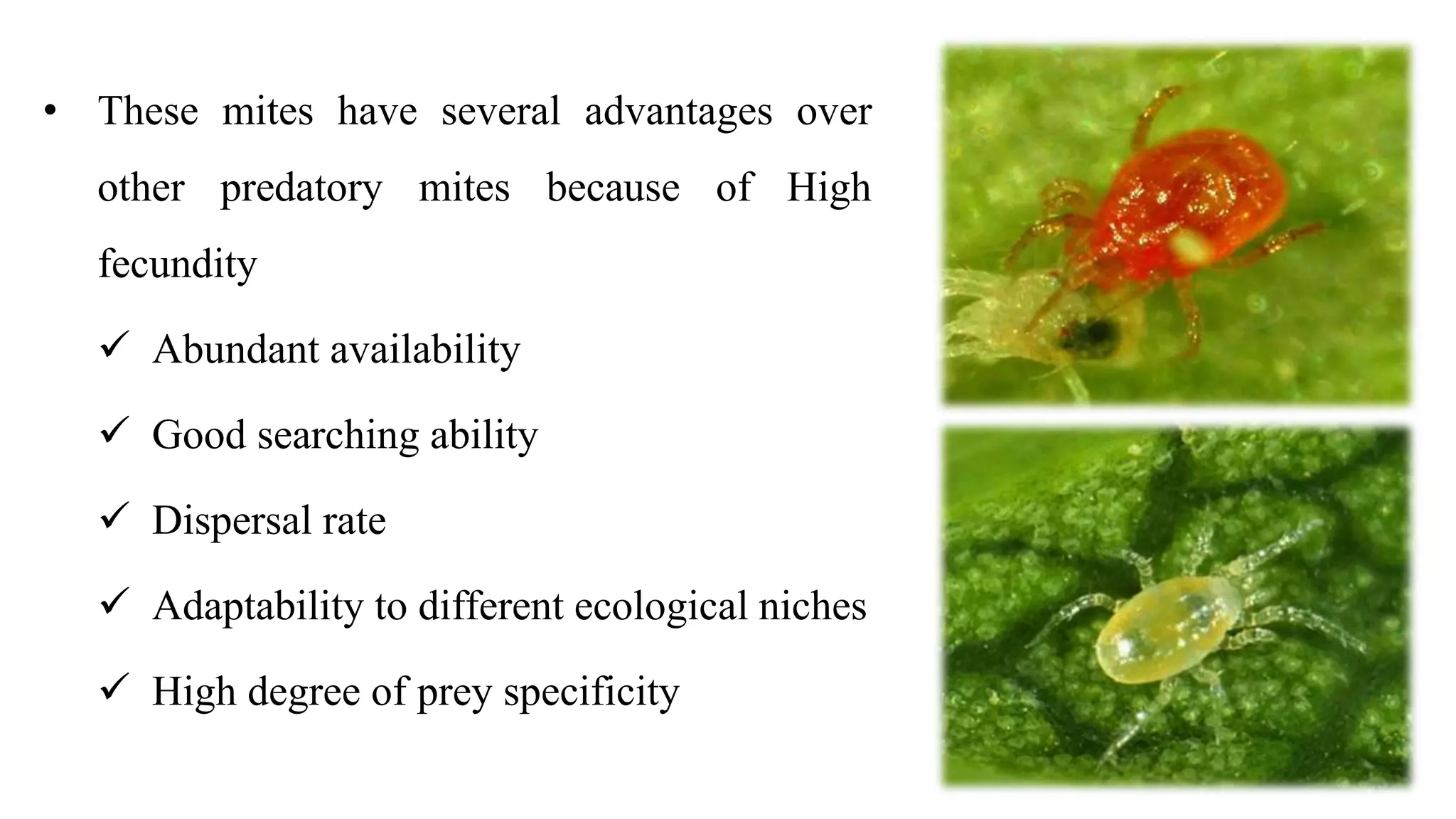
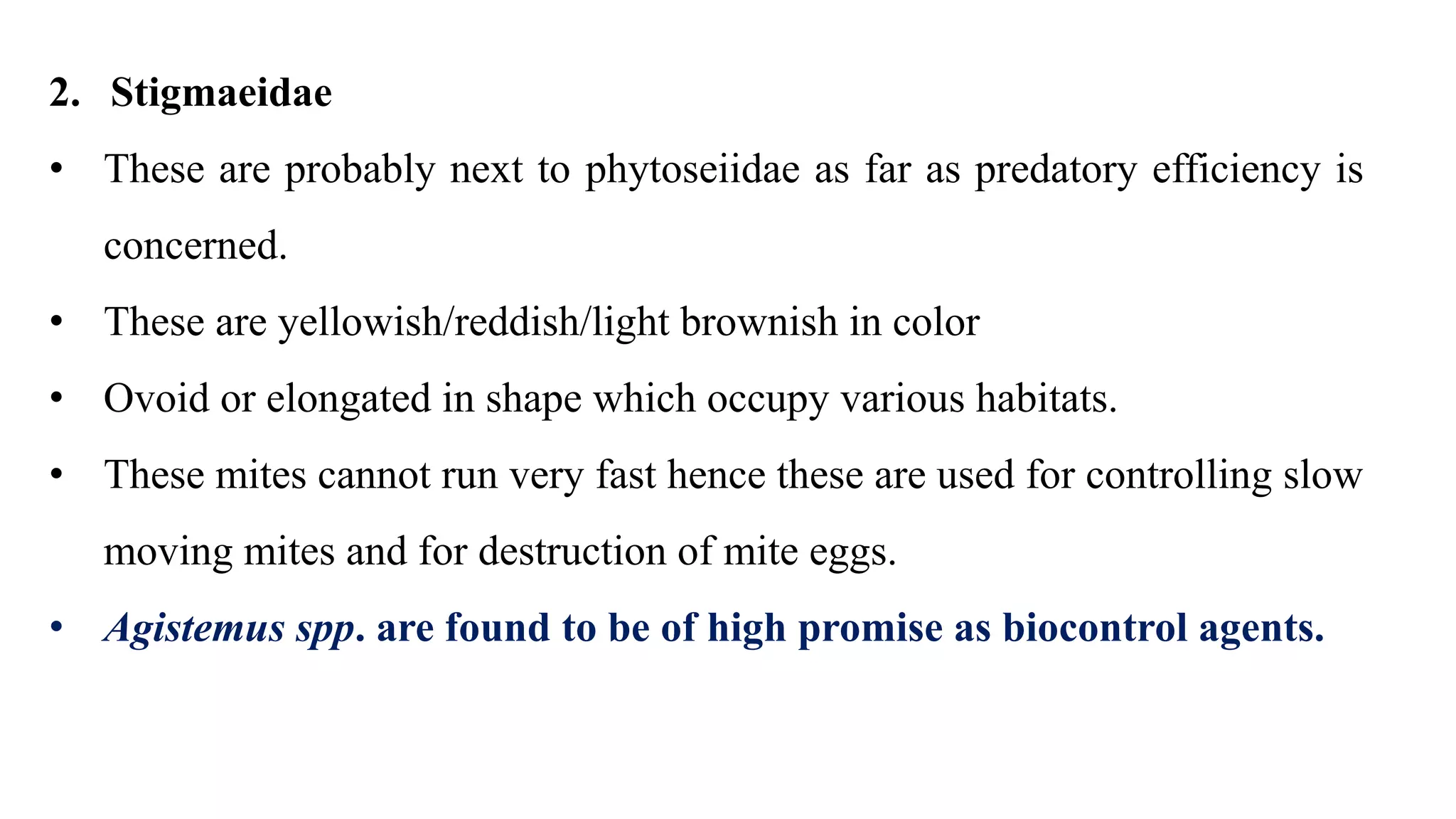
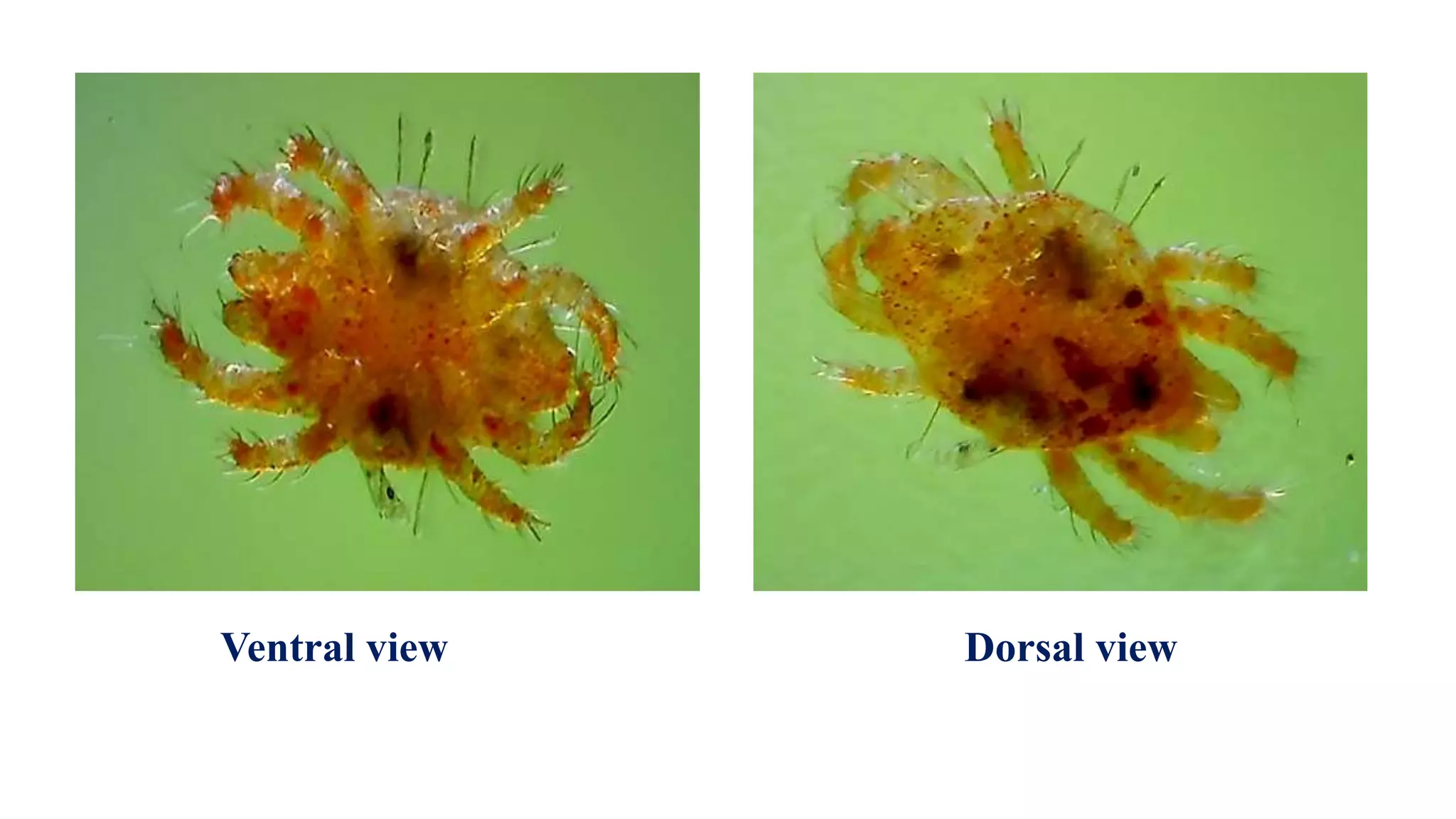
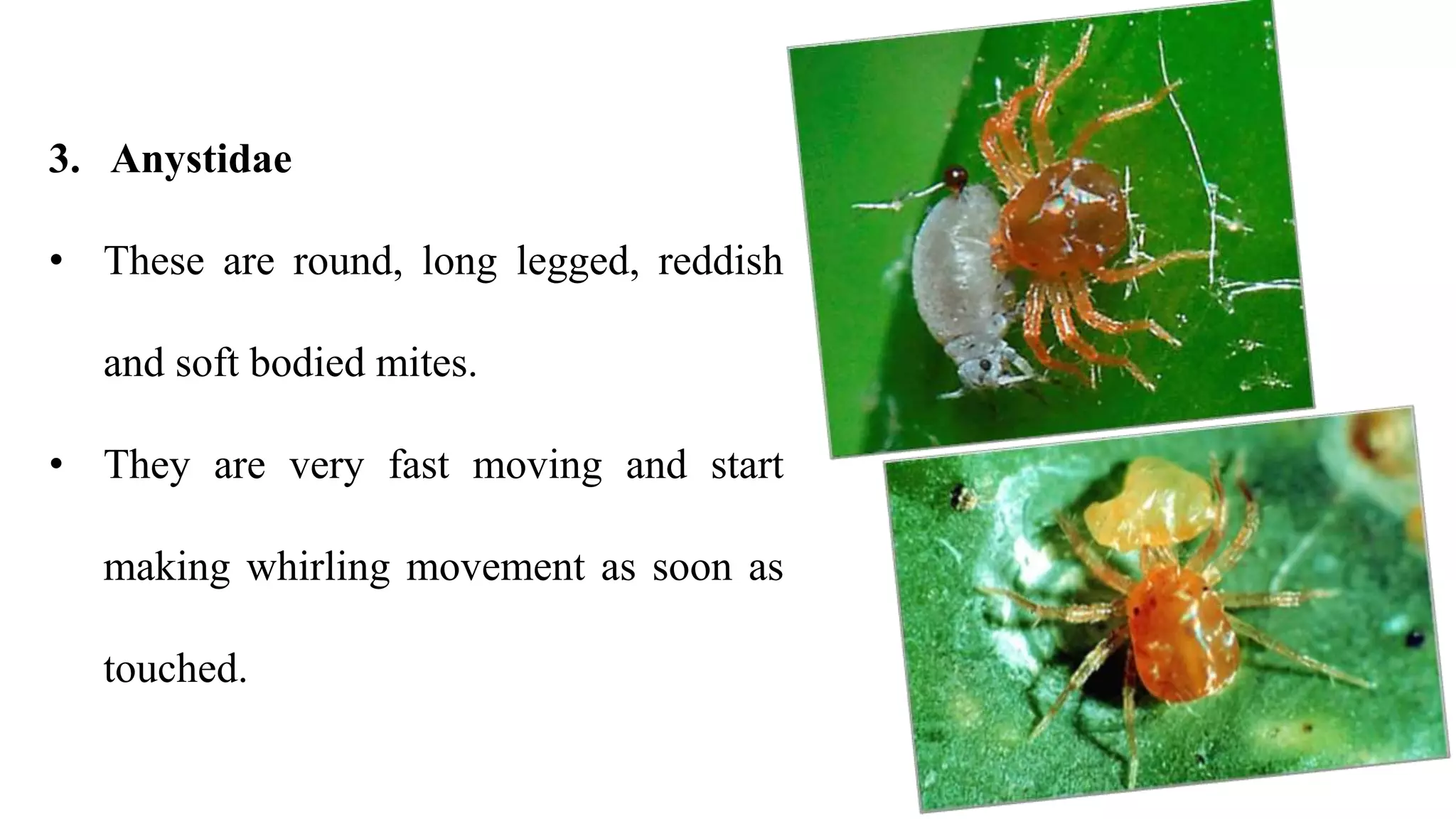
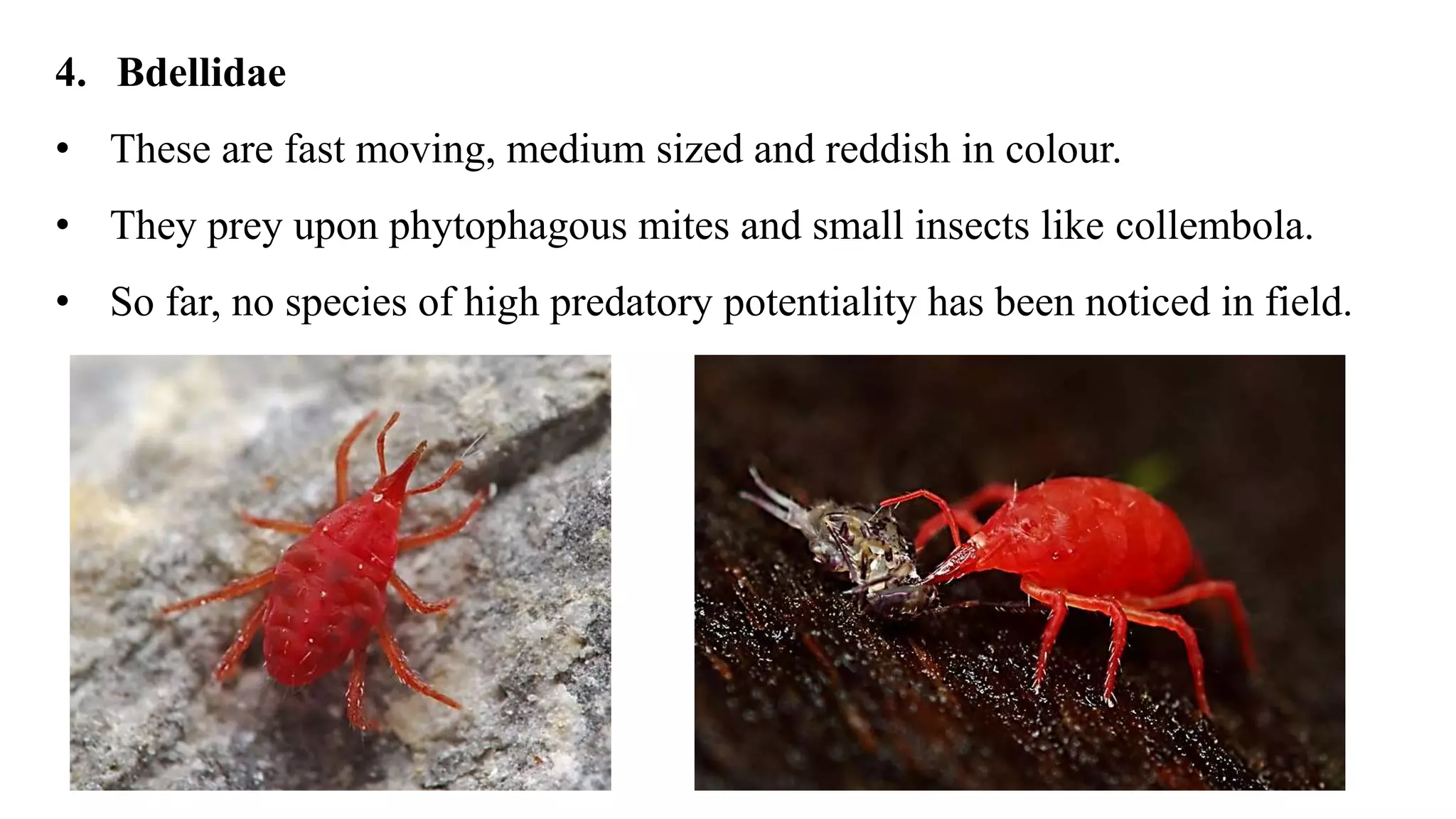
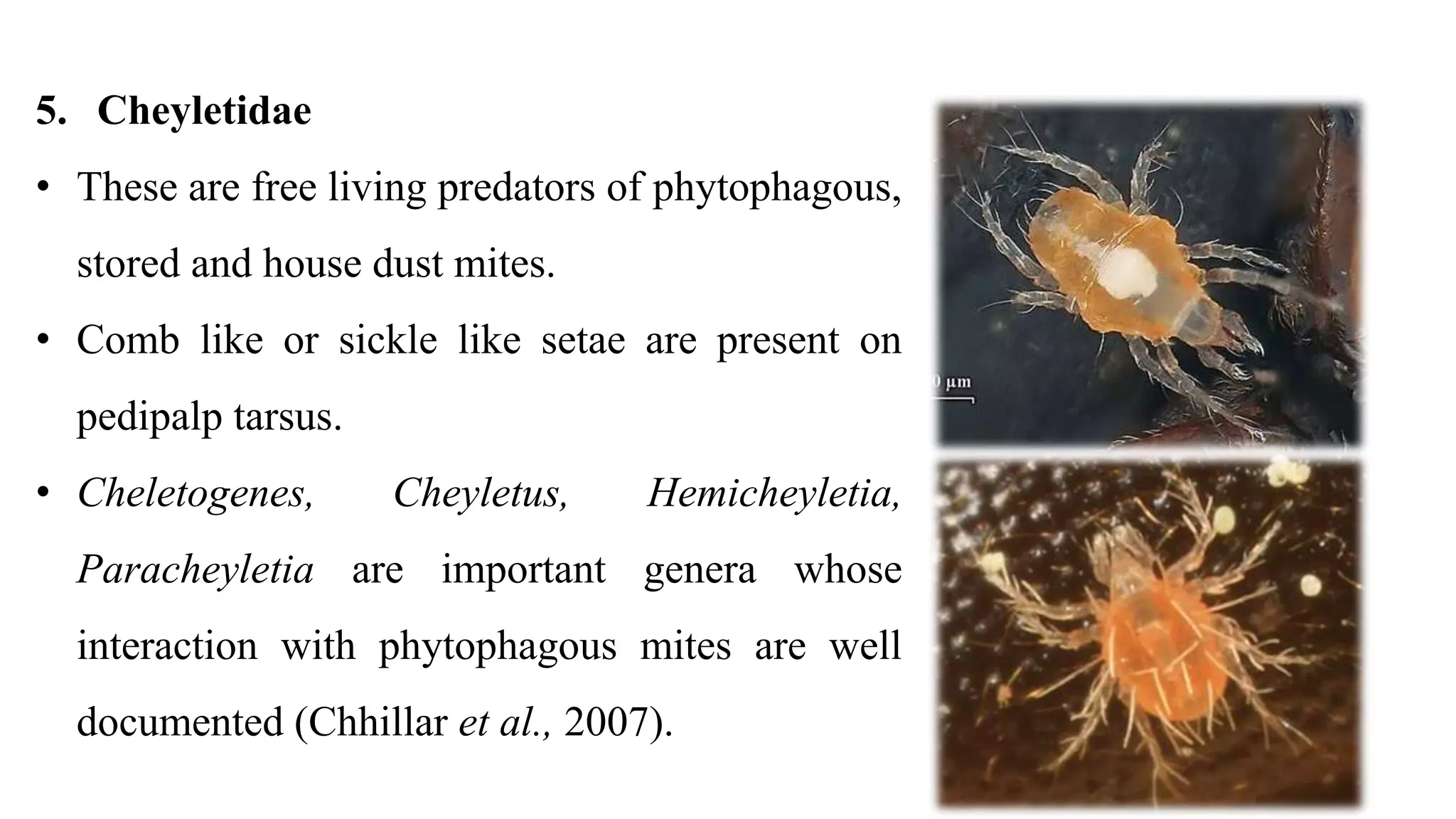
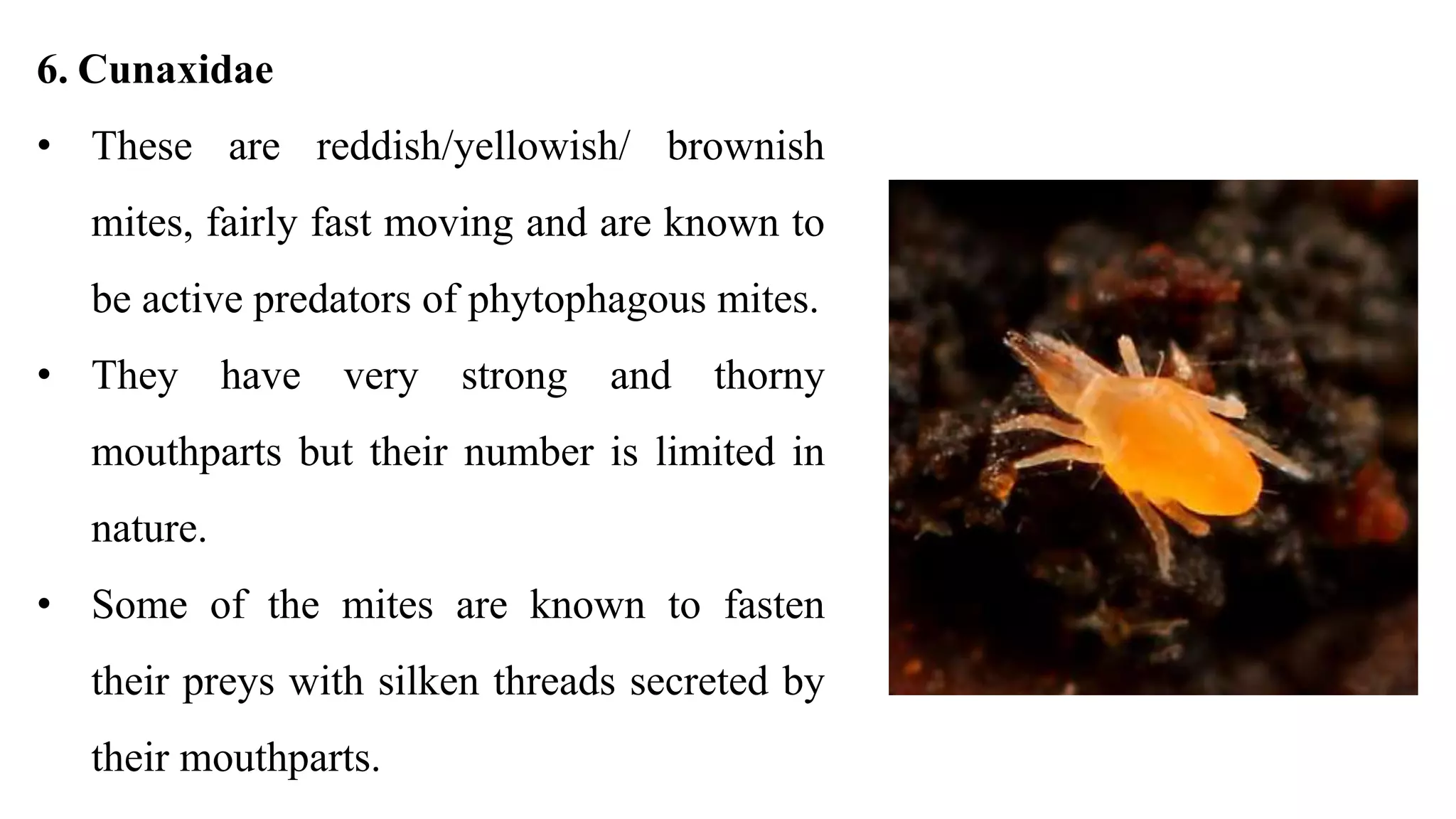






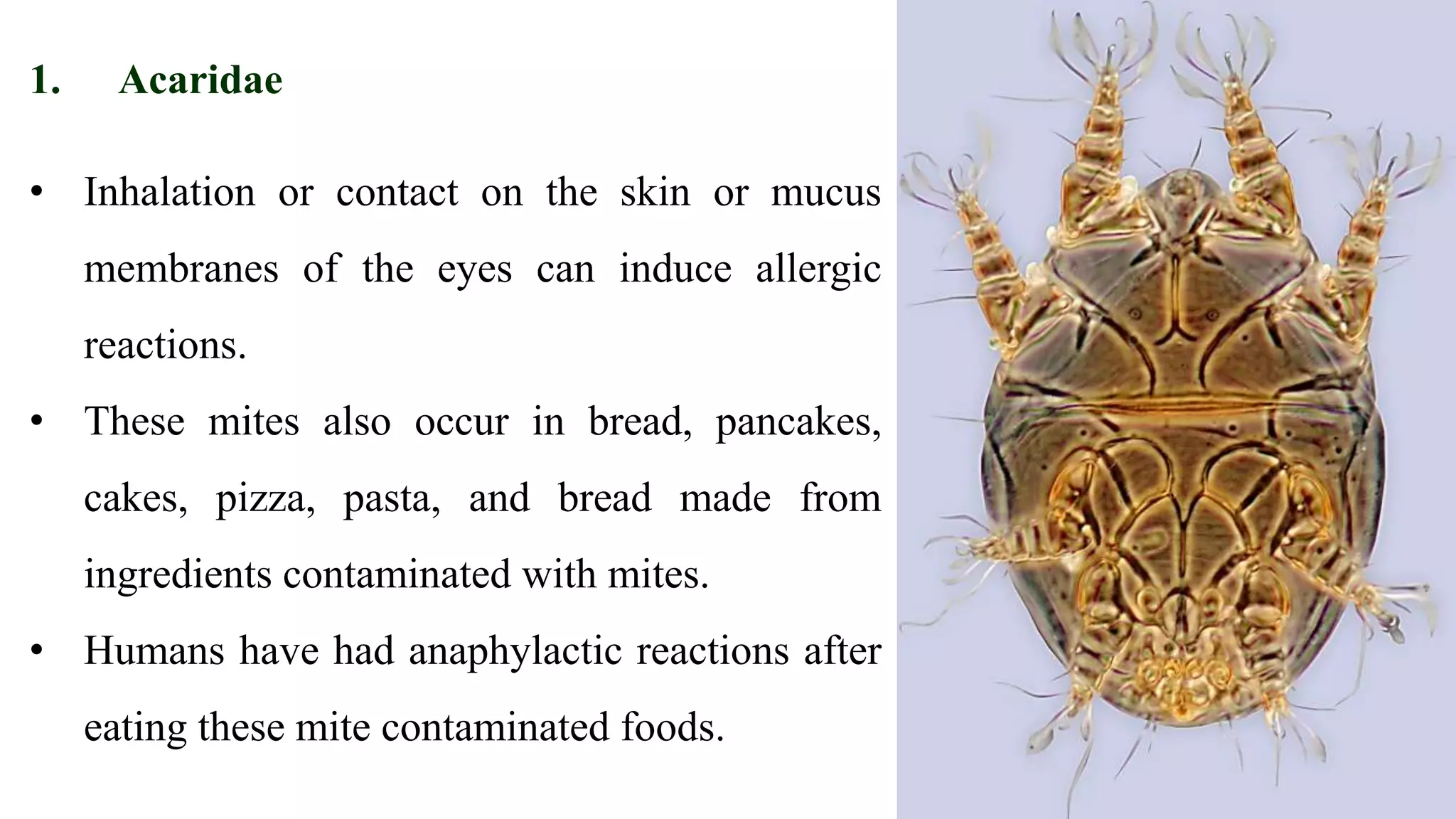
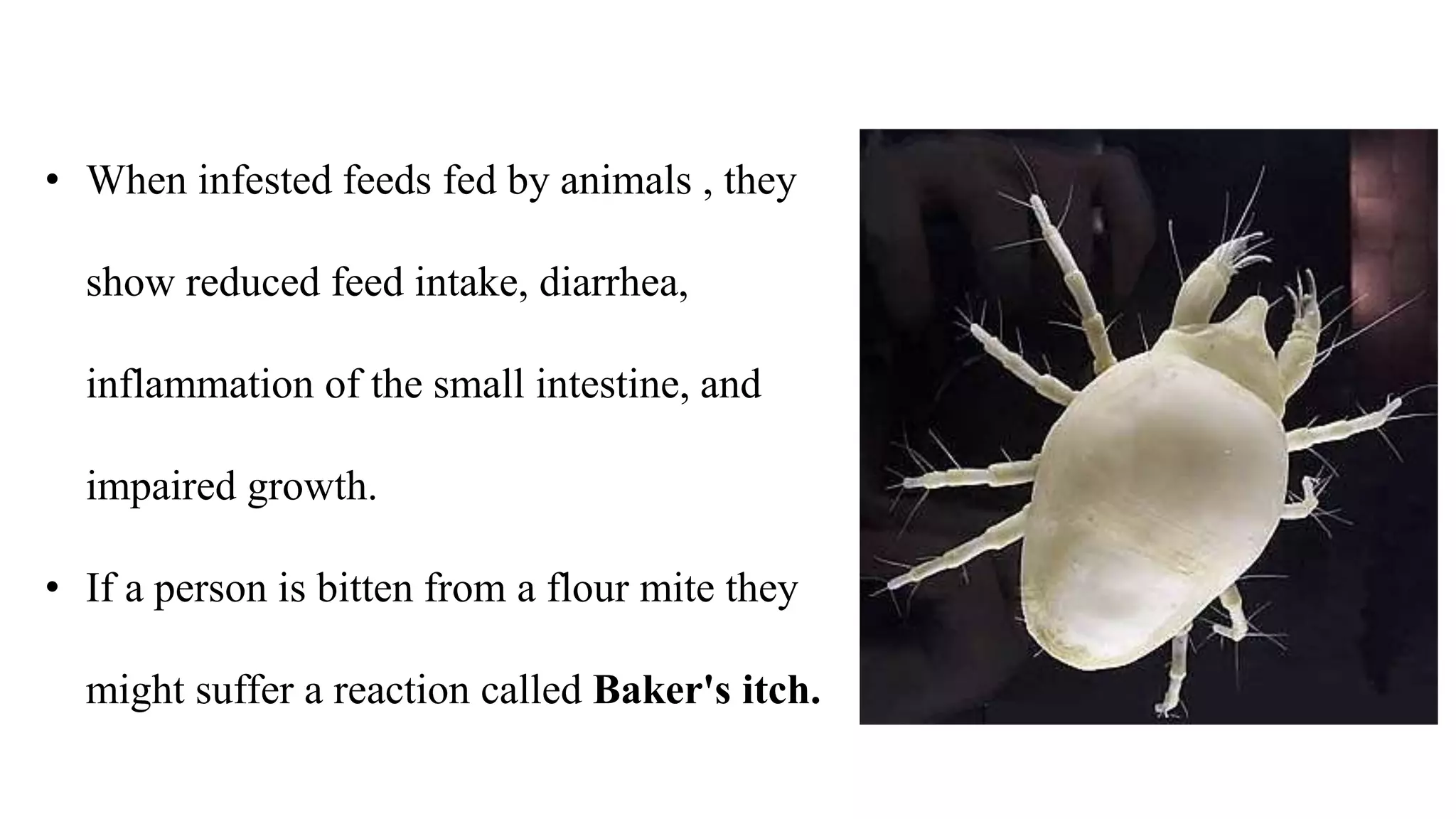

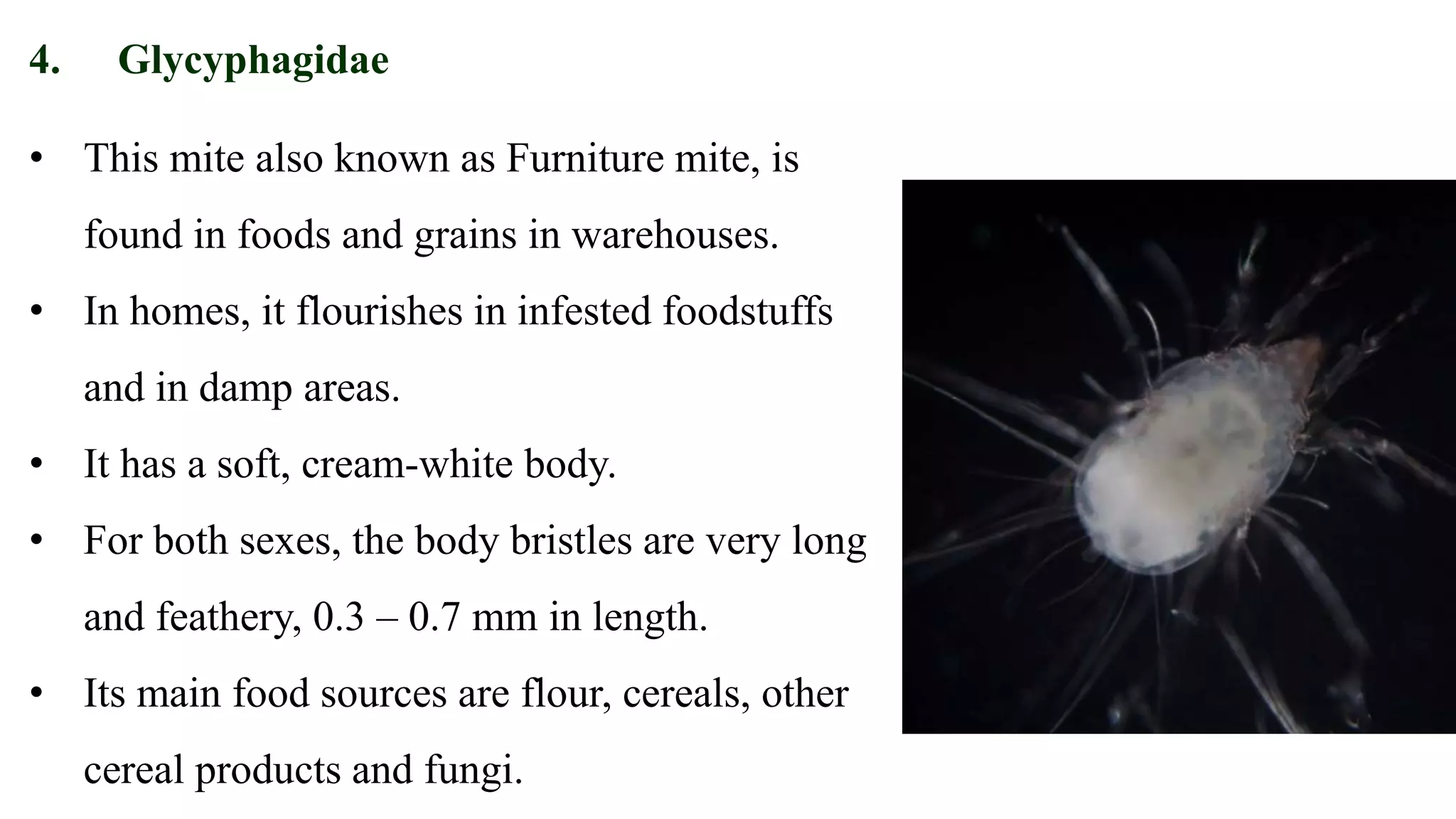




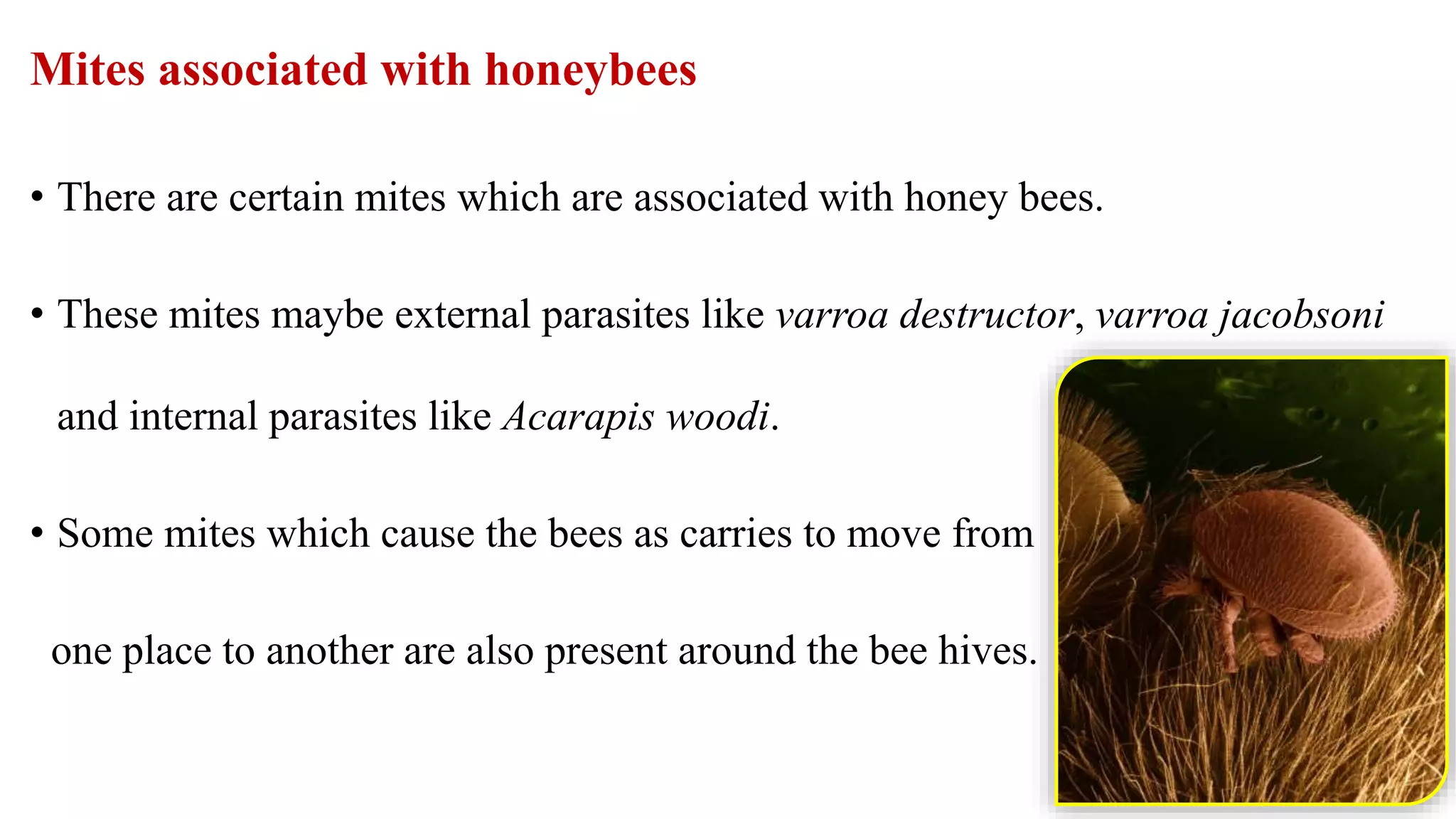

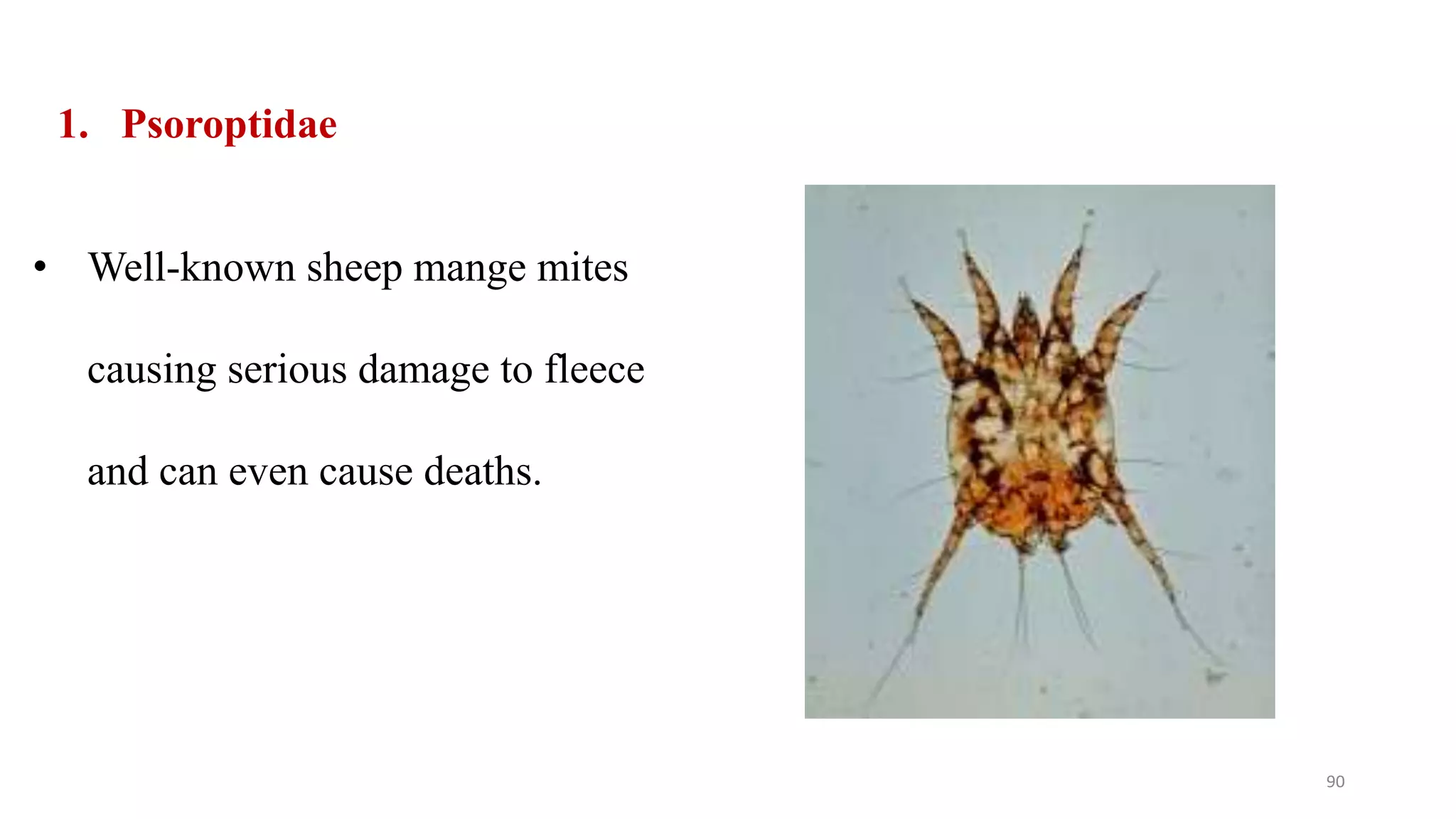
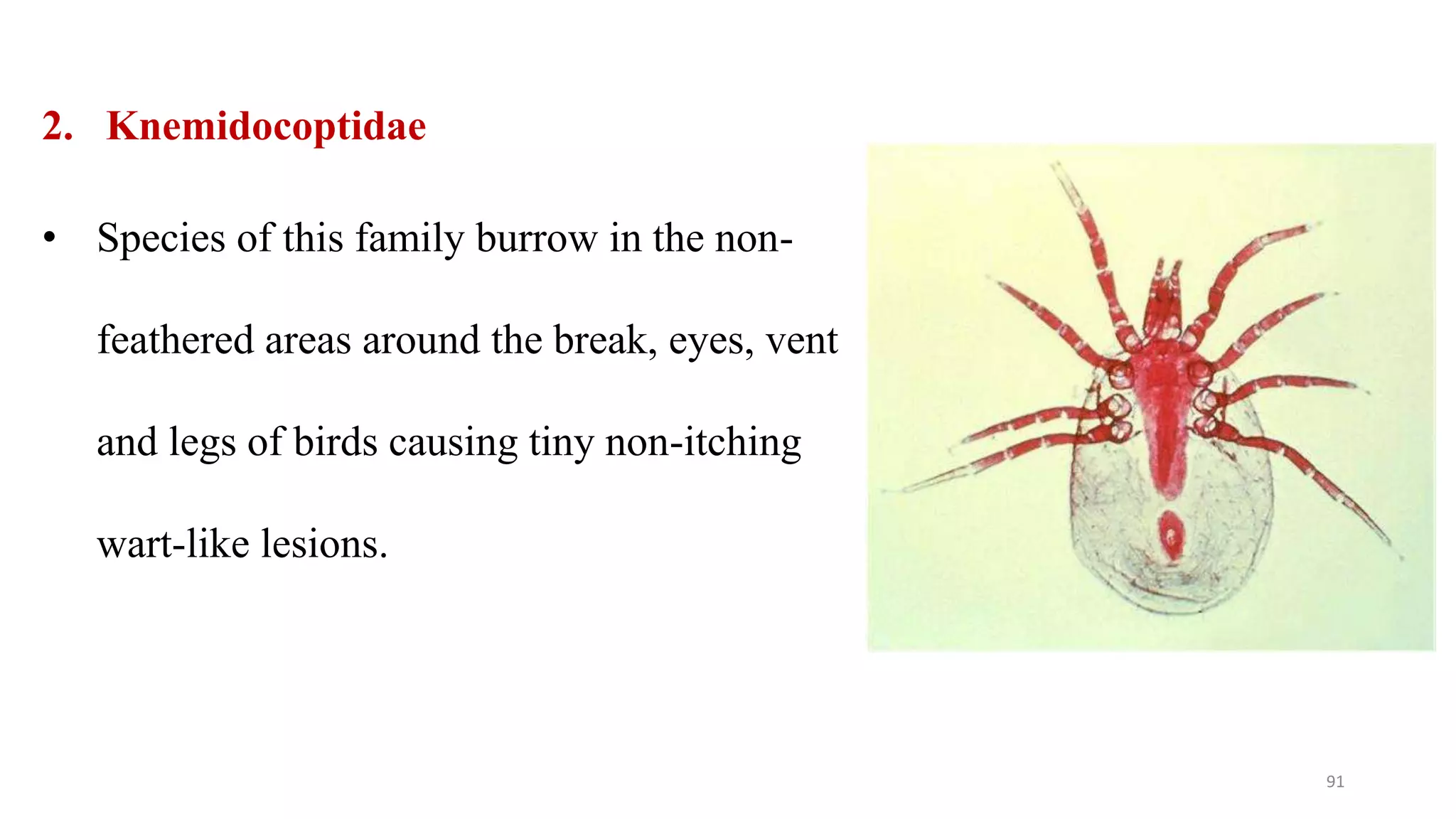

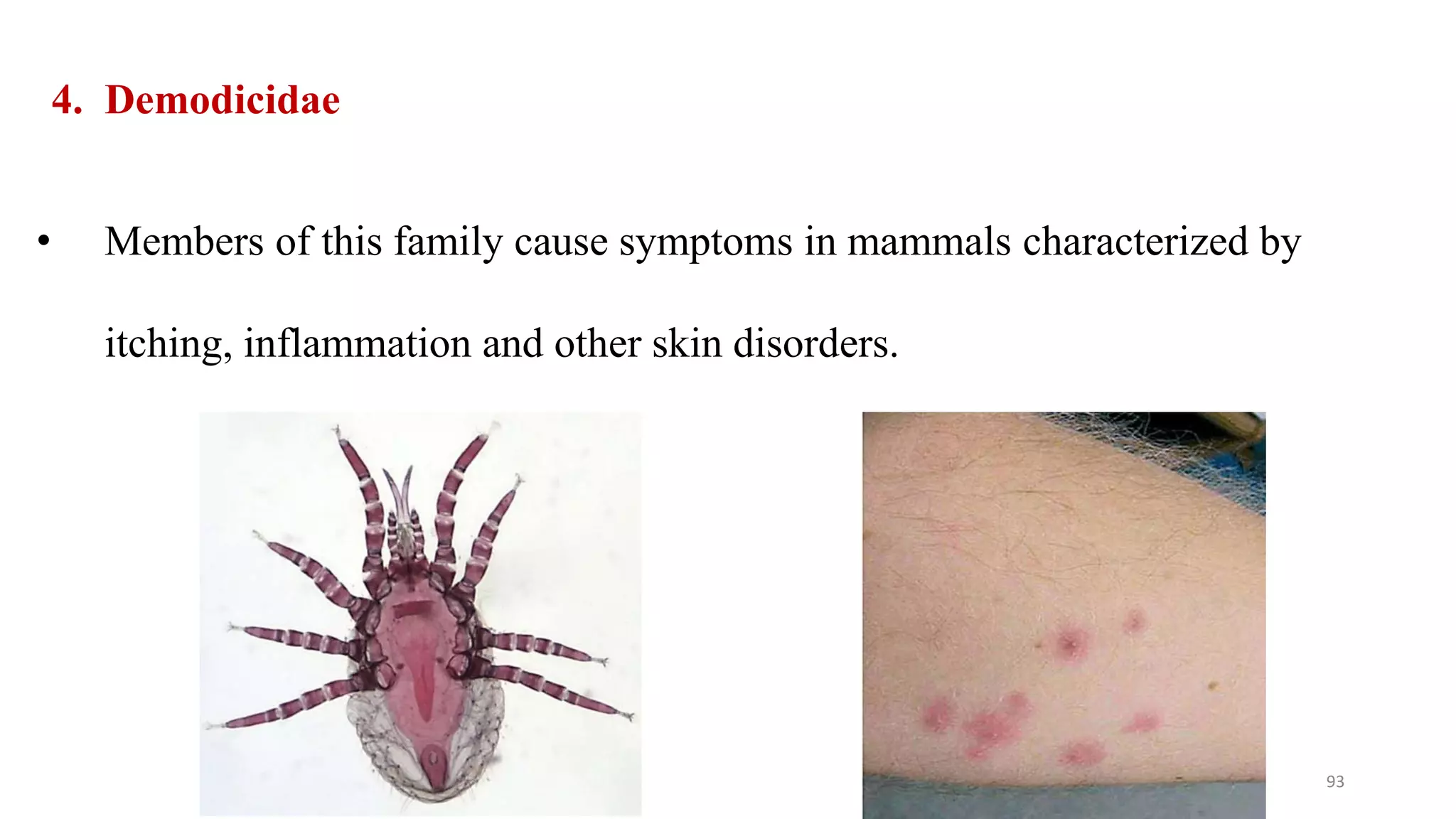



The document outlines the morphology, classification, and ecological roles of mites, highlighting their diversity as the second most varied group of organisms after insects, with around 54,617 species identified by 2011. It describes their minute size, varied habitats, developmental stages, and distinctive morphological features that differentiate them from insects, such as the presence of four pairs of legs and unique body regions. Additionally, it emphasizes the economic importance of both phytophagous and predatory mites, detailing their impacts on agriculture and ecosystems.


