University of Sulaimania
School of Science
Department of Biology
2nd Class Year
               Practical Entomology
                     2011-2012

           12th Lab.
Insects’ Respiratory Apparatus

                   Lecturer: Farhad A. Khudhur
Objective
• This Lab. making the students to be familiar
  with different insects respiratory apparatus.
• Students must know more details about the
  diversity in respiratory apparatus of aquatic
  and terrestrial insects.
Respiration
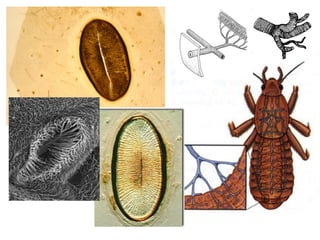
•   Tracheae – chitinous tubes
•   Tracheoles – fine, intercellular tubes
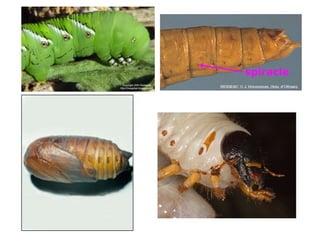
•   Spiracles – openings of tracheae
    – With closing device
    – Primitively 1 lateral pair/segment
    – Sometimes modified
       • Piercing
       • Telescoping
       • “Spiracular gill”
• Body Wall
    – Undifferentiated integument
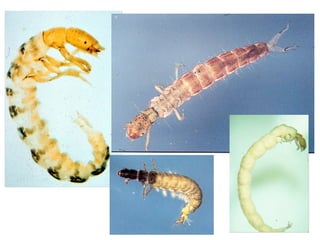
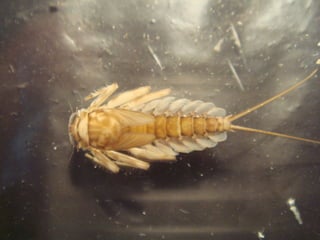
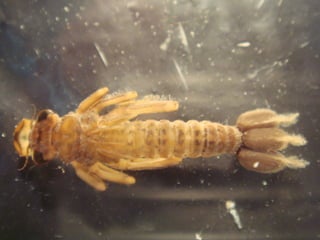
    – Tracheal gills
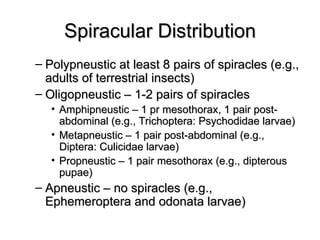
Spiracular Distribution
– Polypneustic at least 8 pairs of spiracles (e.g.,
  adults of terrestrial insects)
– Oligopneustic – 1-2 pairs of spiracles
   • Amphipneustic – 1 pr mesothorax, 1 pair post-
     abdominal (e.g., Trichoptera: Psychodidae larvae)
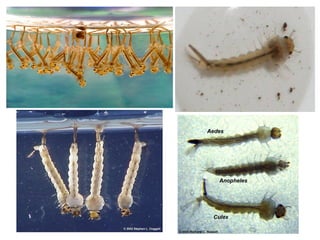
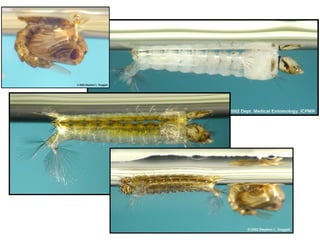
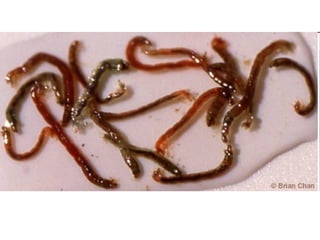
   • Metapneustic – 1 pair post-abdominal (e.g.,
     Diptera: Culicidae larvae)
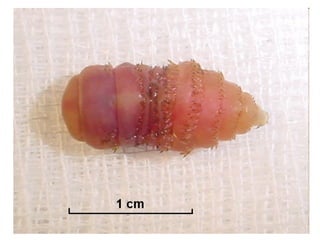
   • Propneustic – 1 pair mesothorax (e.g., dipterous
     pupae)
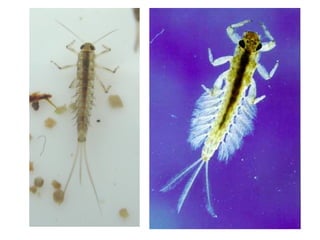
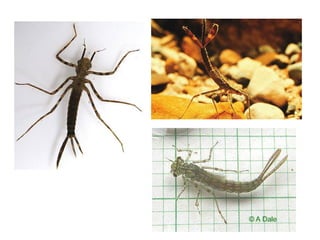
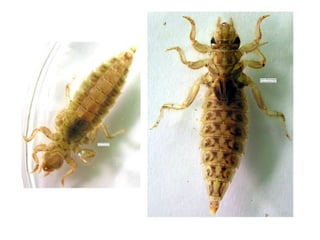
– Apneustic – no spiracles (e.g.,
  Ephemeroptera and odonata larvae)
References


• Gillot, Cedric. (2005). Entomology. 3rd          ed. Springer,
  Dordrecht., The Netherlands. 831 pp.
• Grzimek’s Animal Life Encyclopedia, 2nd edition. Volume 3,
  Insects, edited by Michael Hutchins, Arthur V. Evans, Rosser
  W. Garrison,
• Resh, Vincent H. & Cardé, Ring T. (2003). Encyclopedia of
  Insects. USA. Academic Press, Elsevier Science, 1266 pp.
• Elzinga, Richard J. (1997). Fundamentals of Entomology. 4th
  ed. New Jersey, Prentice-Hall, Inc. 475 pp.
• Gullan, P.J. and Cranston, P.S. (). The insects: An Outline of
  Entomology. 3rd ed. U.K. Blackwell Publishing Ltd. 505 pp.

Lab12 entomology (1)

  • 1.
    University of Sulaimania Schoolof Science Department of Biology 2nd Class Year Practical Entomology 2011-2012 12th Lab. Insects’ Respiratory Apparatus Lecturer: Farhad A. Khudhur
  • 2.
    Objective • This Lab.making the students to be familiar with different insects respiratory apparatus. • Students must know more details about the diversity in respiratory apparatus of aquatic and terrestrial insects.
  • 3.
    Respiration • Tracheae – chitinous tubes • Tracheoles – fine, intercellular tubes • Spiracles – openings of tracheae – With closing device – Primitively 1 lateral pair/segment – Sometimes modified • Piercing • Telescoping • “Spiracular gill” • Body Wall – Undifferentiated integument – Tracheal gills
  • 5.
    Spiracular Distribution – Polypneusticat least 8 pairs of spiracles (e.g., adults of terrestrial insects) – Oligopneustic – 1-2 pairs of spiracles • Amphipneustic – 1 pr mesothorax, 1 pair post- abdominal (e.g., Trichoptera: Psychodidae larvae) • Metapneustic – 1 pair post-abdominal (e.g., Diptera: Culicidae larvae) • Propneustic – 1 pair mesothorax (e.g., dipterous pupae) – Apneustic – no spiracles (e.g., Ephemeroptera and odonata larvae)
  • 18.
    References • Gillot, Cedric.(2005). Entomology. 3rd ed. Springer, Dordrecht., The Netherlands. 831 pp. • Grzimek’s Animal Life Encyclopedia, 2nd edition. Volume 3, Insects, edited by Michael Hutchins, Arthur V. Evans, Rosser W. Garrison, • Resh, Vincent H. & Cardé, Ring T. (2003). Encyclopedia of Insects. USA. Academic Press, Elsevier Science, 1266 pp. • Elzinga, Richard J. (1997). Fundamentals of Entomology. 4th ed. New Jersey, Prentice-Hall, Inc. 475 pp. • Gullan, P.J. and Cranston, P.S. (). The insects: An Outline of Entomology. 3rd ed. U.K. Blackwell Publishing Ltd. 505 pp.