Prepared by
Dr. S. Sumaiya
Respiratory system
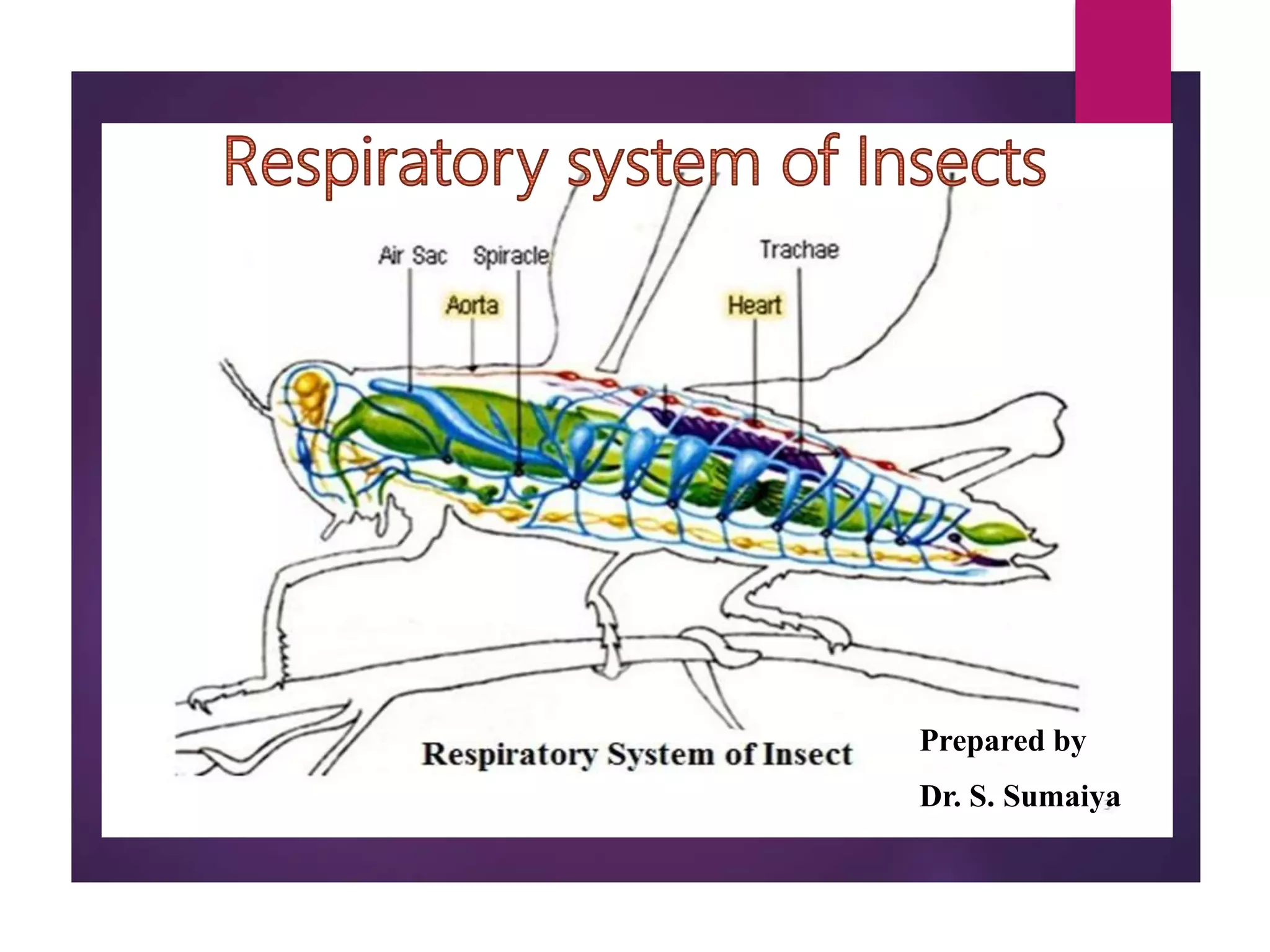
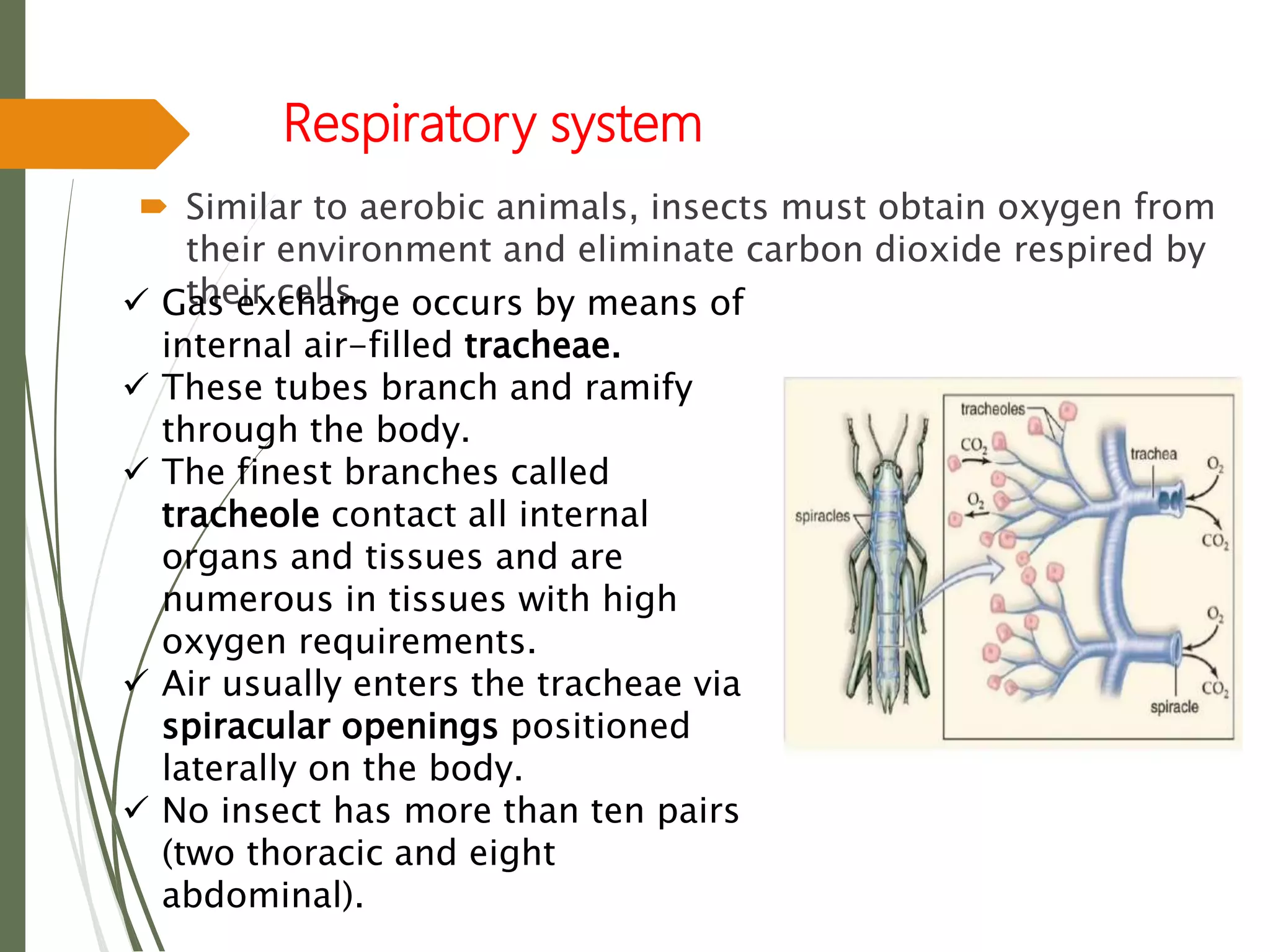
 Similar to aerobic animals, insects must obtain oxygen from
their environment and eliminate carbon dioxide respired by
their cells. Gas exchange occurs by means of
internal air-filled tracheae.
 These tubes branch and ramify
through the body.
 The finest branches called
tracheole contact all internal
organs and tissues and are
numerous in tissues with high
oxygen requirements.
 Air usually enters the tracheae via
spiracular openings positioned
laterally on the body.
 No insect has more than ten pairs
(two thoracic and eight
abdominal).
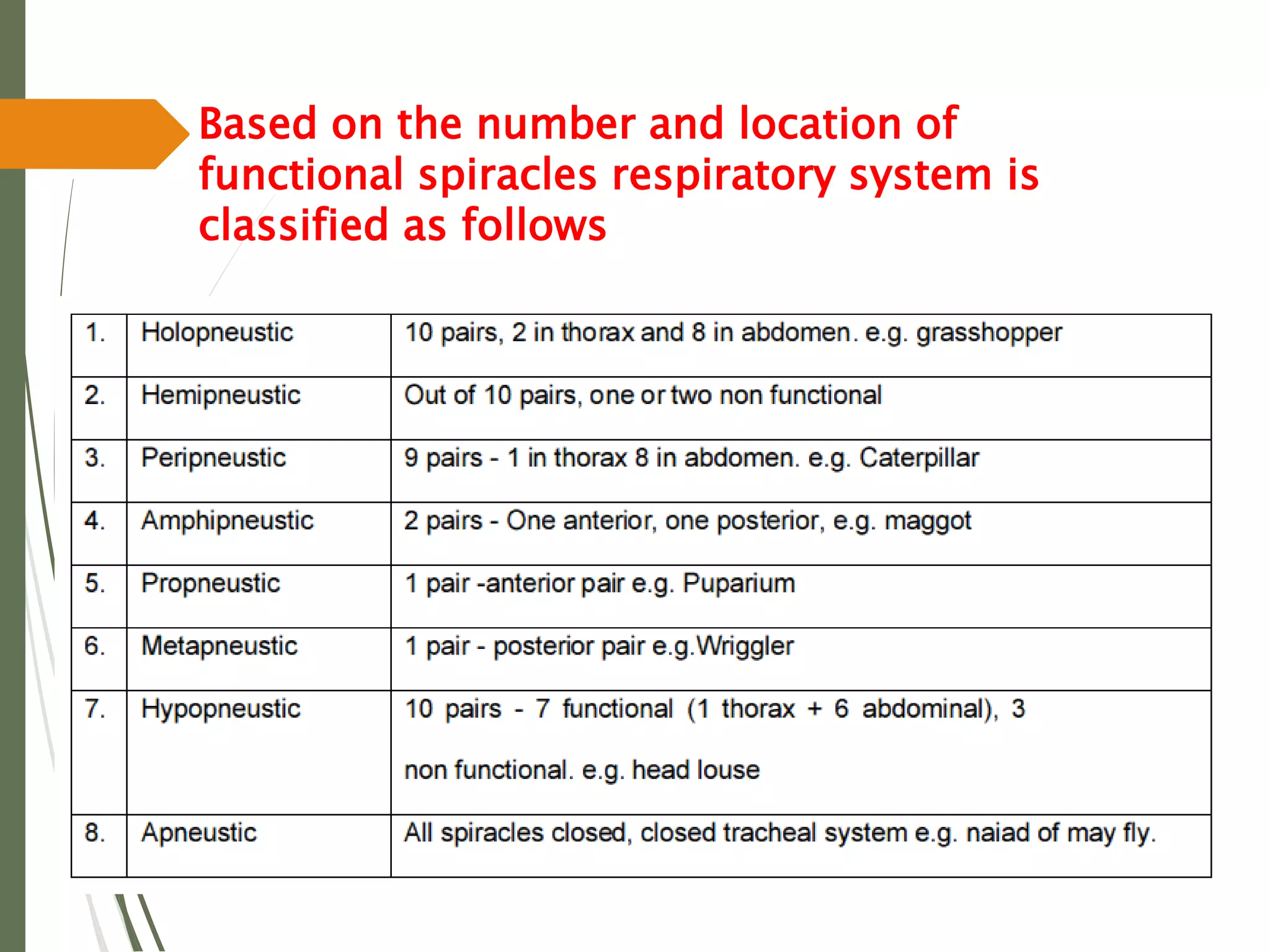
Based on the number and location of
functional spiracles respiratory system is
classified as follows
Organs of respiration
Spiracles
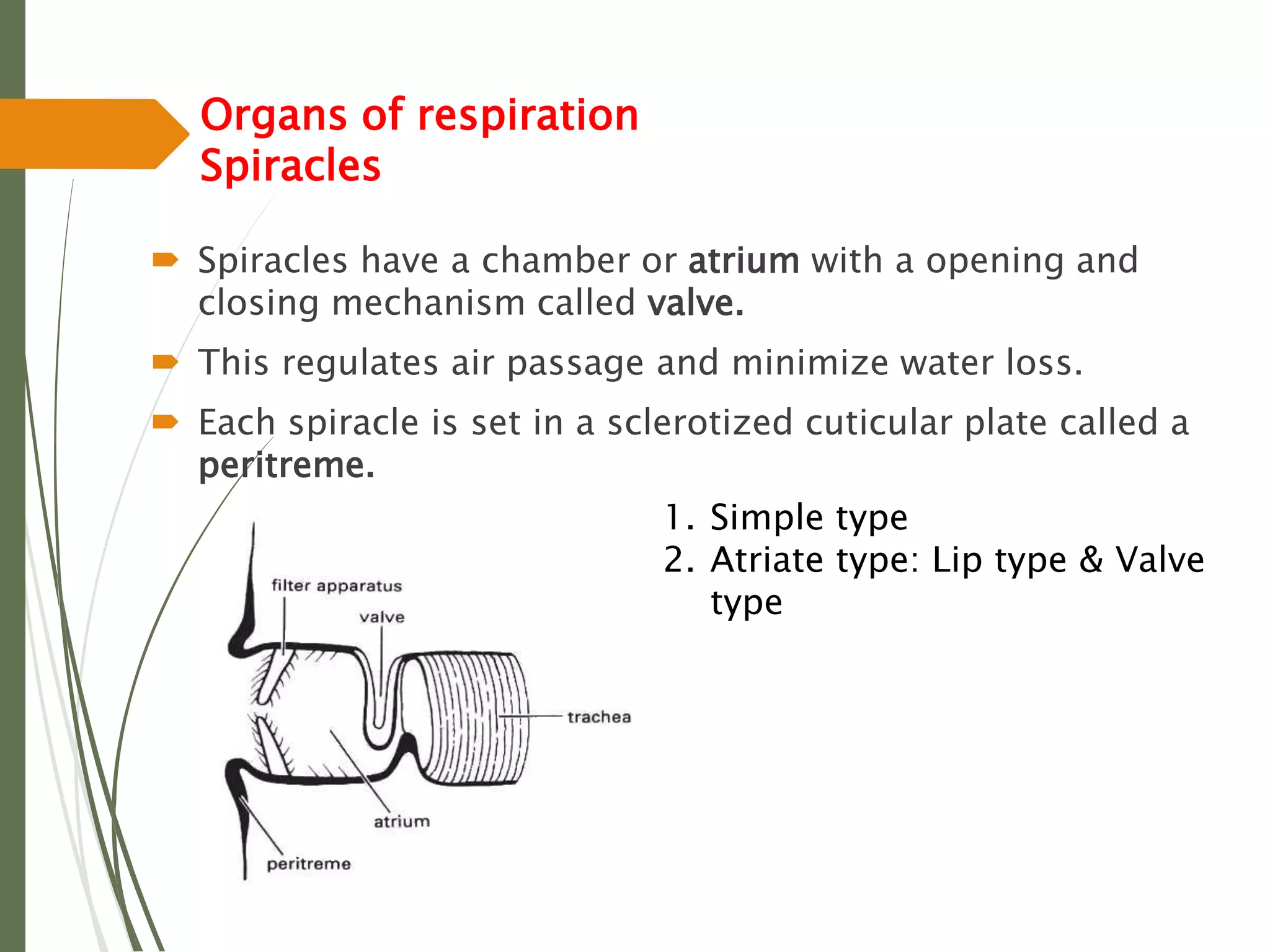
 Spiracles have a chamber or atrium with a opening and
closing mechanism called valve.
 This regulates air passage and minimize water loss.
 Each spiracle is set in a sclerotized cuticular plate called a
peritreme.
1. Simple type
2. Atriate type: Lip type & Valve
type
Tracheae
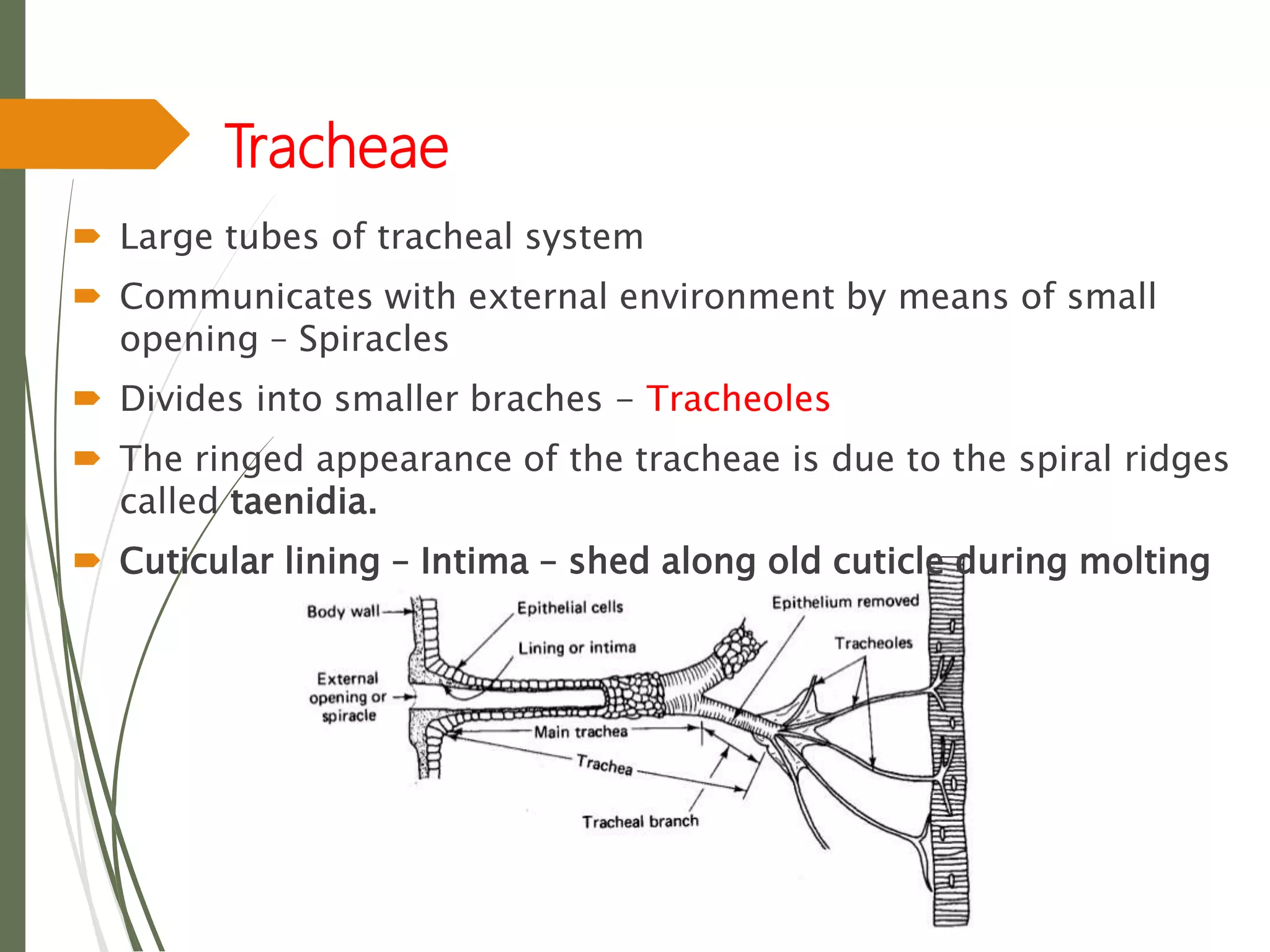
 Large tubes of tracheal system
 Communicates with external environment by means of small
opening – Spiracles
 Divides into smaller braches - Tracheoles
 The ringed appearance of the tracheae is due to the spiral ridges
called taenidia.
 Cuticular lining – Intima – shed along old cuticle during molting
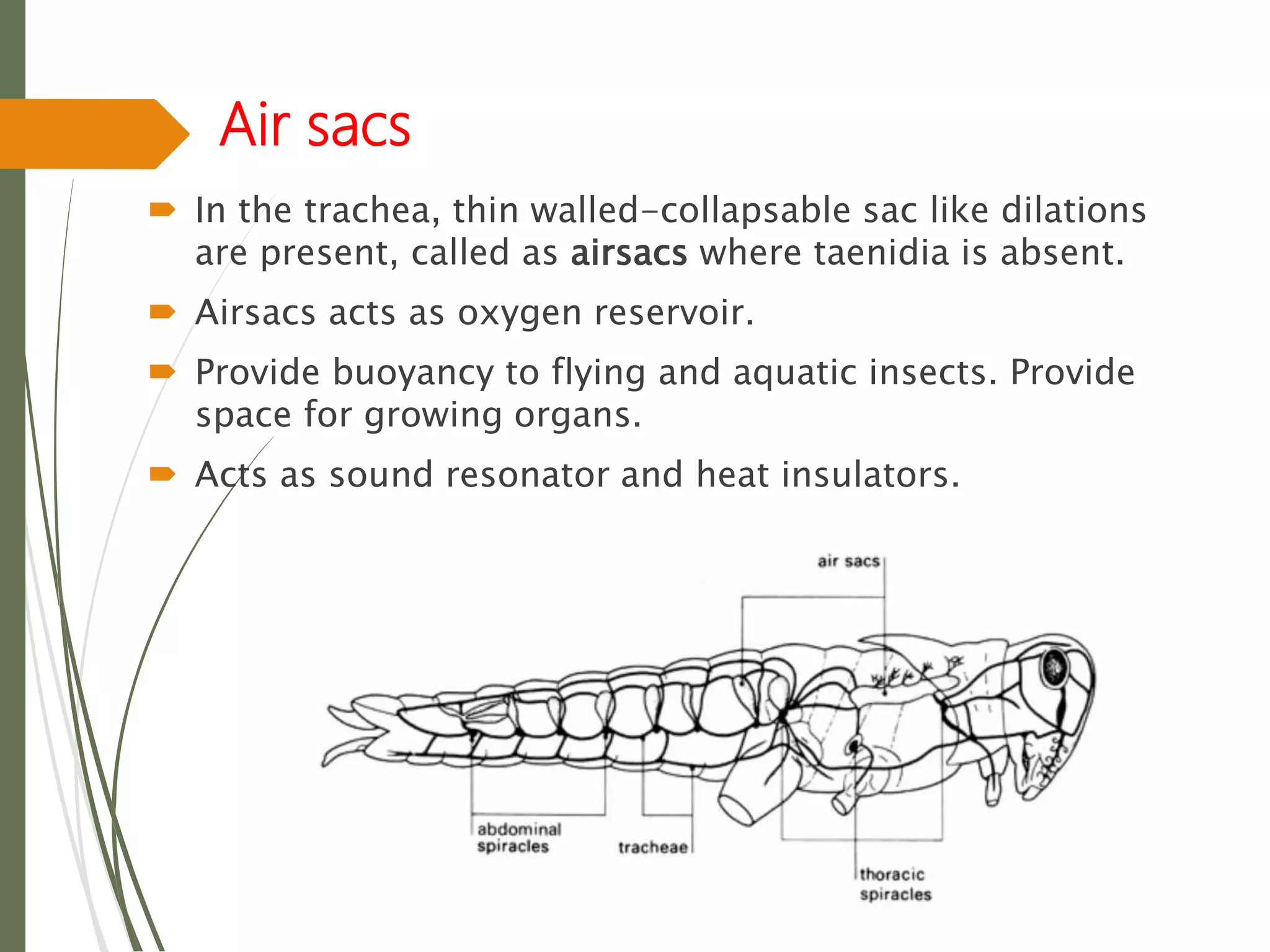
Air sacs
 In the trachea, thin walled-collapsable sac like dilations
are present, called as airsacs where taenidia is absent.
 Airsacs acts as oxygen reservoir.
 Provide buoyancy to flying and aquatic insects. Provide
space for growing organs.
 Acts as sound resonator and heat insulators.
Mechanism of respiration
 Oxygen enters the spiracle and passes through the
length of the tracheae to the tracheoles and into
the target cells by a combination of ventilation and
diffusion along a concentration gradient, from high
in the external air to low in the tissue.
 Where as the net movement of oxygen molecules in
the tracheal system is inwards (Inspiration), the net
movement of CO 2 and water vapour molecules is
outwards, (Expiration).
Types of Respiration
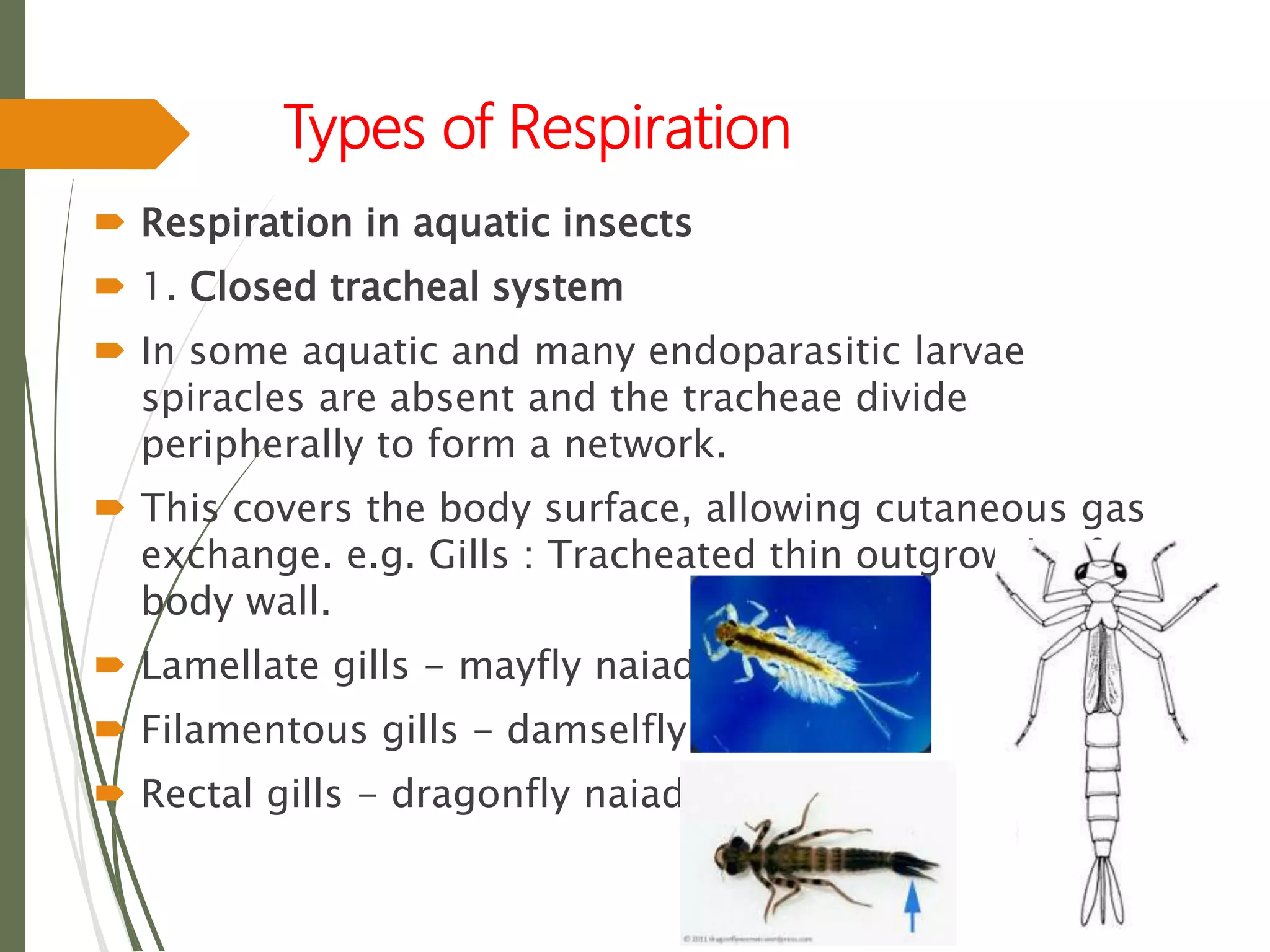
 Respiration in aquatic insects
 1. Closed tracheal system
 In some aquatic and many endoparasitic larvae
spiracles are absent and the tracheae divide
peripherally to form a network.
 This covers the body surface, allowing cutaneous gas
exchange. e.g. Gills : Tracheated thin outgrowth of
body wall.
 Lamellate gills - mayfly naiad
 Filamentous gills - damselfly naiad
 Rectal gills - dragonfly naiad
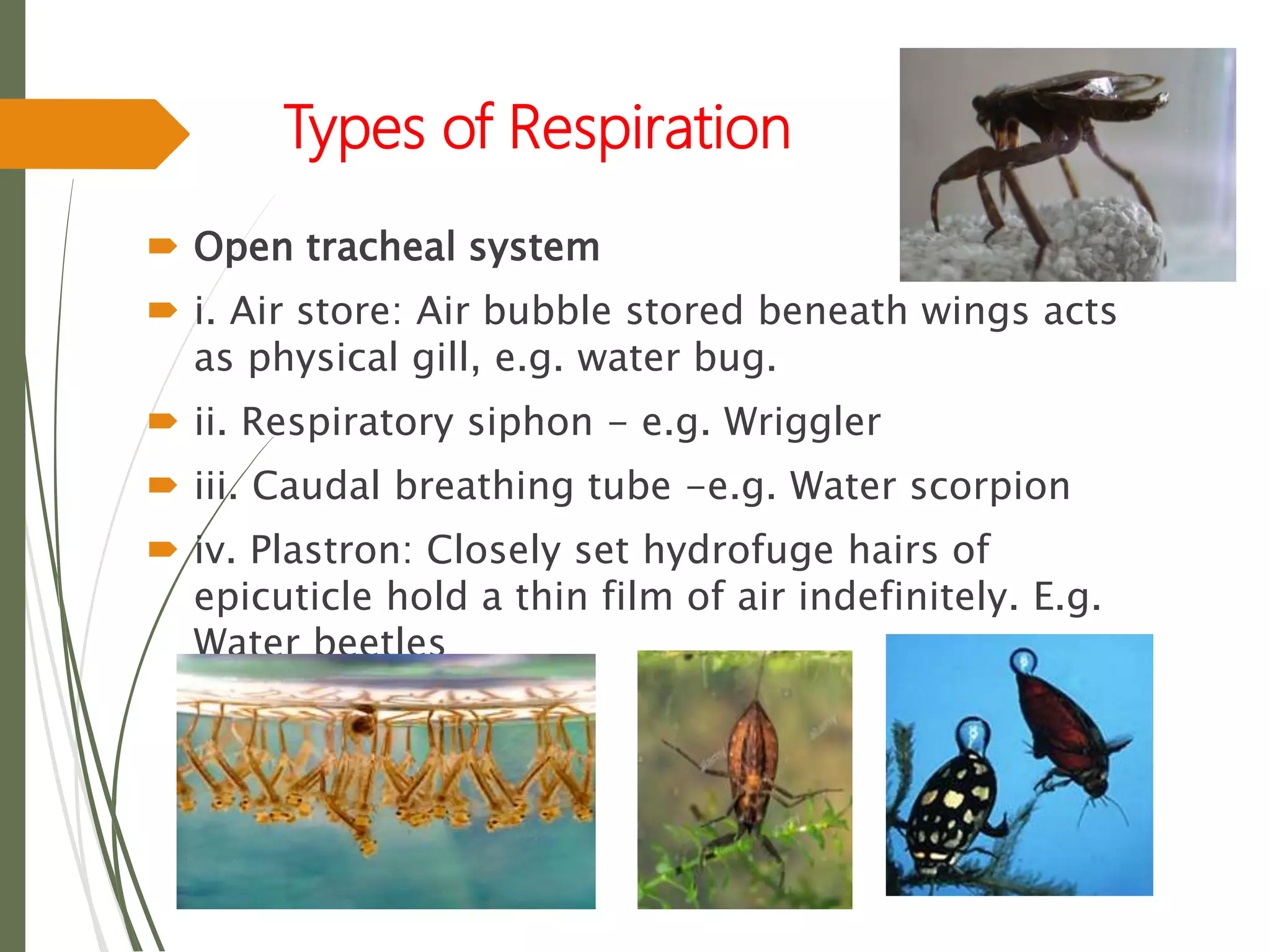
 Open tracheal system
 i. Air store: Air bubble stored beneath wings acts
as physical gill, e.g. water bug.
 ii. Respiratory siphon - e.g. Wriggler
 iii. Caudal breathing tube -e.g. Water scorpion
 iv. Plastron: Closely set hydrofuge hairs of
epicuticle hold a thin film of air indefinitely. E.g.
Water beetles
Types of Respiration

Insect respiratory system

  • 1.
  • 2.
    Respiratory system  Similarto aerobic animals, insects must obtain oxygen from their environment and eliminate carbon dioxide respired by their cells. Gas exchange occurs by means of internal air-filled tracheae.  These tubes branch and ramify through the body.  The finest branches called tracheole contact all internal organs and tissues and are numerous in tissues with high oxygen requirements.  Air usually enters the tracheae via spiracular openings positioned laterally on the body.  No insect has more than ten pairs (two thoracic and eight abdominal).
  • 3.
    Based on thenumber and location of functional spiracles respiratory system is classified as follows
  • 4.
    Organs of respiration Spiracles Spiracles have a chamber or atrium with a opening and closing mechanism called valve.  This regulates air passage and minimize water loss.  Each spiracle is set in a sclerotized cuticular plate called a peritreme. 1. Simple type 2. Atriate type: Lip type & Valve type
  • 5.
    Tracheae  Large tubesof tracheal system  Communicates with external environment by means of small opening – Spiracles  Divides into smaller braches - Tracheoles  The ringed appearance of the tracheae is due to the spiral ridges called taenidia.  Cuticular lining – Intima – shed along old cuticle during molting
  • 6.
    Air sacs  Inthe trachea, thin walled-collapsable sac like dilations are present, called as airsacs where taenidia is absent.  Airsacs acts as oxygen reservoir.  Provide buoyancy to flying and aquatic insects. Provide space for growing organs.  Acts as sound resonator and heat insulators.
  • 7.
    Mechanism of respiration Oxygen enters the spiracle and passes through the length of the tracheae to the tracheoles and into the target cells by a combination of ventilation and diffusion along a concentration gradient, from high in the external air to low in the tissue.  Where as the net movement of oxygen molecules in the tracheal system is inwards (Inspiration), the net movement of CO 2 and water vapour molecules is outwards, (Expiration).
  • 8.
    Types of Respiration Respiration in aquatic insects  1. Closed tracheal system  In some aquatic and many endoparasitic larvae spiracles are absent and the tracheae divide peripherally to form a network.  This covers the body surface, allowing cutaneous gas exchange. e.g. Gills : Tracheated thin outgrowth of body wall.  Lamellate gills - mayfly naiad  Filamentous gills - damselfly naiad  Rectal gills - dragonfly naiad
  • 9.
     Open trachealsystem  i. Air store: Air bubble stored beneath wings acts as physical gill, e.g. water bug.  ii. Respiratory siphon - e.g. Wriggler  iii. Caudal breathing tube -e.g. Water scorpion  iv. Plastron: Closely set hydrofuge hairs of epicuticle hold a thin film of air indefinitely. E.g. Water beetles Types of Respiration