Metabolism: The sum of the chemical reactions
            in an organism
A metabolic pathway is a sequence of enzymatically
catalyzed chemical reactions in a cell
Metabolic pathways are determined by enzymes
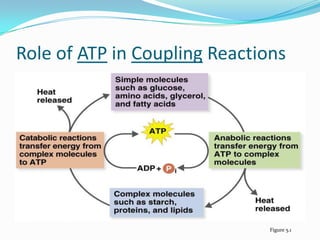
Catabolic and Anabolic Reactions
 Catabolism: Provides energy and building blocks for
  anabolism. (Break down)
 Anabolism: Uses energy and building blocks to build
  large molecules. (Synthesis)
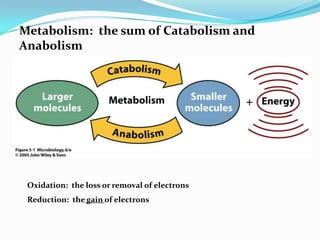
Metabolism: the sum of Catabolism and
Anabolism


 Oxidation: the loss or removal of electrons
 Reduction: the gain of electrons
Role of ATP in Coupling Reactions


                               Figure 5.1
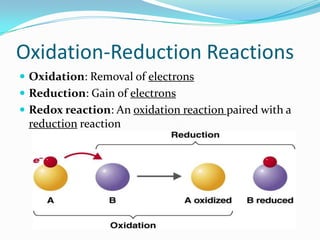
Oxidation-Reduction Reactions
 Oxidation: Removal of electrons
 Reduction: Gain of electrons
 Redox reaction: An oxidation reaction paired with a
 reduction reaction
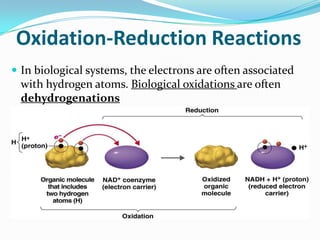
Oxidation-Reduction Reactions
 In biological systems, the electrons are often associated
  with hydrogen atoms. Biological oxidations are often
  dehydrogenations
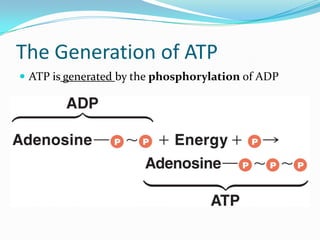
The Generation of ATP
 ATP is generated by the phosphorylation of ADP
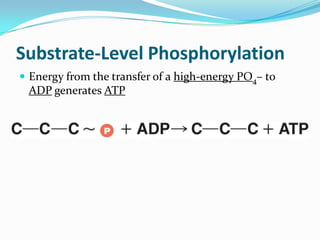
Substrate-Level Phosphorylation
 Energy from the transfer of a high-energy PO4– to
 ADP generates ATP
Oxidative Phosphorylation
 Energy released from transfer of electrons (oxidation)
 of one compound to another (reduction) is used to
 generate ATP in the electron transport chain
Carbohydrate Catabolism
 The breakdown of carbohydrates to release energy
    Glycolysis
    Krebs cycle
    Electron transport chain
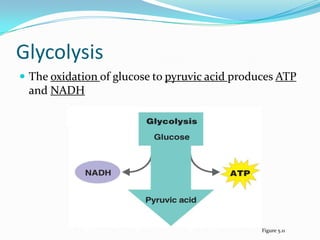
Glycolysis
 The oxidation of glucose to pyruvic acid produces ATP
 and NADH


                                                Figure 5.11
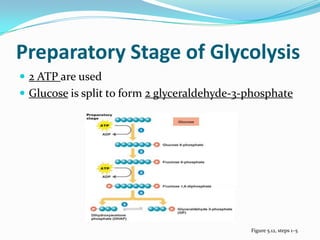
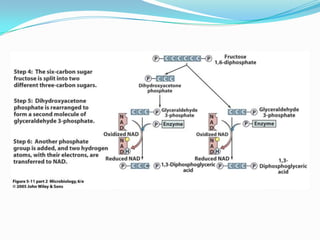
Preparatory Stage of Glycolysis
 2 ATP are used
 Glucose is split to form 2 glyceraldehyde-3-phosphate


                                              Figure 5.12, steps 1–5
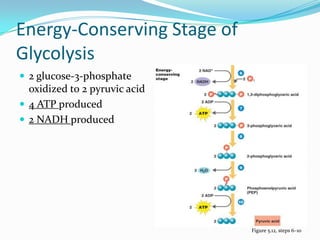
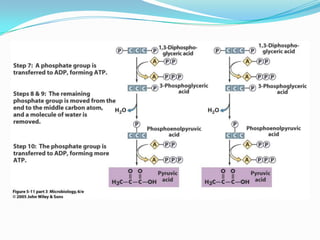
Energy-Conserving Stage of
Glycolysis
 2 glucose-3-phosphate
  oxidized to 2 pyruvic acid
 4 ATP produced
 2 NADH produced


                               Figure 5.12, steps 6–10
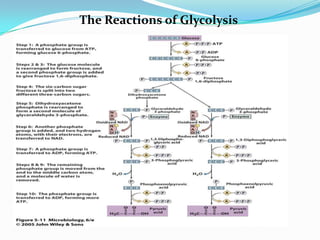
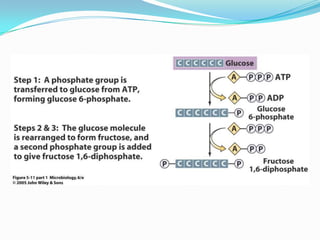
The Reactions of Glycolysis
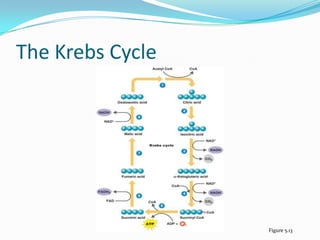
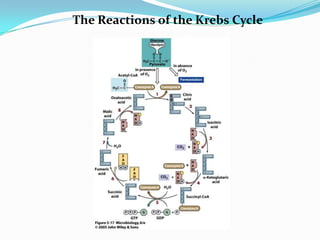
The Krebs Cycle
 Oxidation of acetyl CoA produces NADH and FADH2
The Krebs Cycle


                  Figure 5.13
The Reactions of the Krebs Cycle
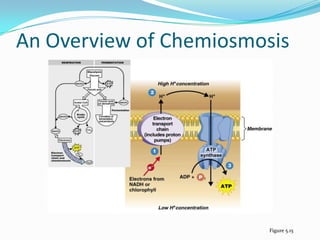
The Electron Transport Chain
 A series of carrier molecules that are, in turn, oxidized
  and reduced as electrons are passed down the chain
 Energy released can be used to produce ATP by
  chemiosmosis
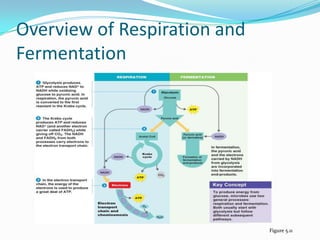
Overview of Respiration and
Fermentation


                              Figure 5.11
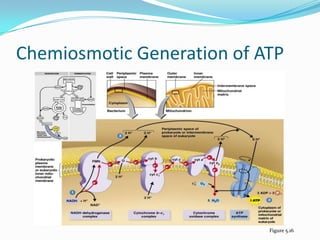
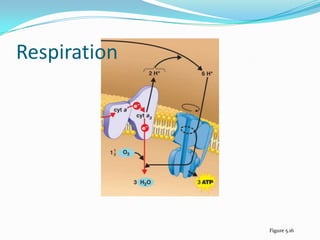
Chemiosmotic Generation of ATP


                            Figure 5.16
An Overview of Chemiosmosis


                         Figure 5.15
A Summary of Respiration
 Aerobic respiration: The final electron acceptor in
  the electron transport chain is molecular oxygen (O2).
 Anaerobic respiration: The final electron acceptor in
  the electron transport chain is not O2. Yields less
  energy than aerobic respiration because only part of
  the Krebs cycles operates under anaerobic conditions.
Respiration


              Figure 5.16
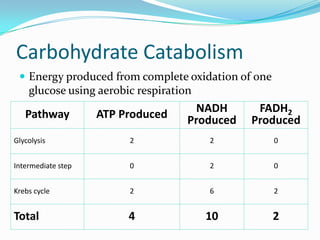
Carbohydrate Catabolism
  Energy produced from complete oxidation of one
    glucose using aerobic respiration

   Pathway          ATP Produced      NADH      FADH2
                                    Produced   Produced
Glycolysis               2              2           0


Intermediate step        0              2           0


Krebs cycle              2              6           2


Total                    4              10          2
Carbohydrate Catabolism
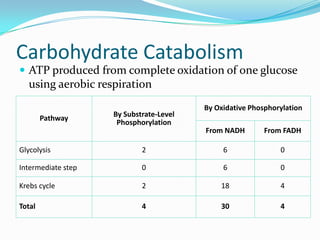
 ATP produced from complete oxidation of one glucose
   using aerobic respiration
                                         By Oxidative Phosphorylation
        Pathway     By Substrate-Level
                     Phosphorylation
                                         From NADH        From FADH

Glycolysis                  2                 6               0

Intermediate step           0                 6               0

Krebs cycle                 2                18               4

Total                       4                30               4
Carbohydrate Catabolism
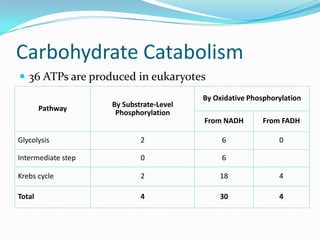
 36 ATPs are produced in eukaryotes
                                         By Oxidative Phosphorylation
        Pathway     By Substrate-Level
                     Phosphorylation
                                         From NADH        From FADH

Glycolysis                  2                 6               0

Intermediate step           0                 6

Krebs cycle                 2                18               4

Total                       4                30               4
Fermentation
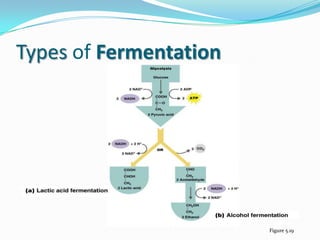
 One process by which pyruvate is subsequently
 metabolized in the absence of oxygen

 The result of the need to recycle the limited amount
 of NAD by passing the electrons of reduced NAD to
 other molecules

 Homolactic acid fermentation: pyruvate is
 converted directly to lactic acid, using electrons
 from reduced NAD

 Alcoholic fermentation: carbon dioxide is released
 from pyruvate to form acetaldehyde, which is
 reduced to ethanol
Fermentation
 Any spoilage of food by microorganisms (general use)
 Any process that produces alcoholic beverages or
  acidic dairy products (general use)
 Any large-scale microbial process occurring with or
  without air (common definition used in industry)
Fermentation
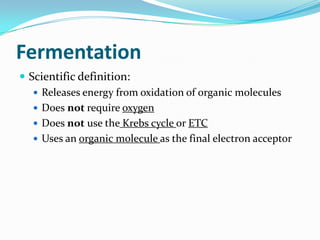
 Scientific definition:
    Releases energy from oxidation of organic molecules
    Does not require oxygen
    Does not use the Krebs cycle or ETC
    Uses an organic molecule as the final electron acceptor
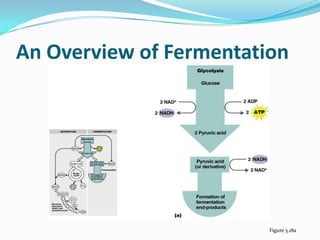
An Overview of Fermentation


                         Figure 5.18a
Types of Fermentation


                        Figure 5.19
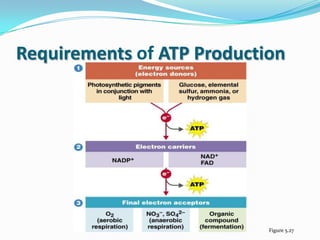
Requirements of ATP Production


                            Figure 5.27
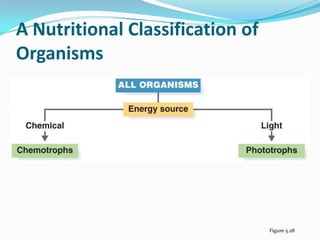
A Nutritional Classification of
Organisms


                                  Figure 5.28
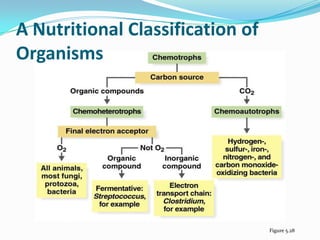
A Nutritional Classification of
Organisms


                                  Figure 5.28
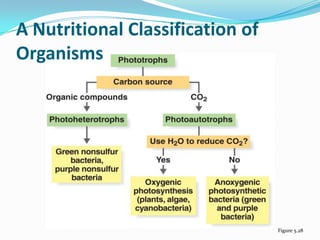
A Nutritional Classification of
Organisms


                                  Figure 5.28
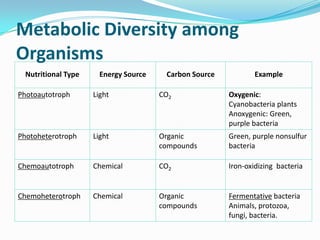
Metabolic Diversity among
Organisms
 Nutritional Type     Energy Source    Carbon Source           Example

Photoautotroph      Light             CO2              Oxygenic:
                                                       Cyanobacteria plants
                                                       Anoxygenic: Green,
                                                       purple bacteria
Photoheterotroph    Light             Organic          Green, purple nonsulfur
                                      compounds        bacteria

Chemoautotroph      Chemical          CO2              Iron-oxidizing bacteria


Chemoheterotroph    Chemical          Organic          Fermentative bacteria
                                      compounds        Animals, protozoa,
                                                       fungi, bacteria.

Chapter 2 energetics

  • 1.
    Metabolism: The sumof the chemical reactions in an organism A metabolic pathway is a sequence of enzymatically catalyzed chemical reactions in a cell Metabolic pathways are determined by enzymes
  • 2.
    Catabolic and AnabolicReactions  Catabolism: Provides energy and building blocks for anabolism. (Break down)  Anabolism: Uses energy and building blocks to build large molecules. (Synthesis)
  • 3.
    Metabolism: the sumof Catabolism and Anabolism Oxidation: the loss or removal of electrons Reduction: the gain of electrons
  • 4.
    Role of ATPin Coupling Reactions Figure 5.1
  • 5.
    Oxidation-Reduction Reactions  Oxidation:Removal of electrons  Reduction: Gain of electrons  Redox reaction: An oxidation reaction paired with a reduction reaction
  • 6.
    Oxidation-Reduction Reactions  Inbiological systems, the electrons are often associated with hydrogen atoms. Biological oxidations are often dehydrogenations
  • 7.
    The Generation ofATP  ATP is generated by the phosphorylation of ADP
  • 8.
    Substrate-Level Phosphorylation  Energyfrom the transfer of a high-energy PO4– to ADP generates ATP
  • 9.
    Oxidative Phosphorylation  Energyreleased from transfer of electrons (oxidation) of one compound to another (reduction) is used to generate ATP in the electron transport chain
  • 10.
    Carbohydrate Catabolism  Thebreakdown of carbohydrates to release energy  Glycolysis  Krebs cycle  Electron transport chain
  • 11.
    Glycolysis  The oxidationof glucose to pyruvic acid produces ATP and NADH Figure 5.11
  • 12.
    Preparatory Stage ofGlycolysis  2 ATP are used  Glucose is split to form 2 glyceraldehyde-3-phosphate Figure 5.12, steps 1–5
  • 13.
    Energy-Conserving Stage of Glycolysis 2 glucose-3-phosphate oxidized to 2 pyruvic acid  4 ATP produced  2 NADH produced Figure 5.12, steps 6–10
  • 14.
    The Reactions ofGlycolysis
  • 18.
    The Krebs Cycle Oxidation of acetyl CoA produces NADH and FADH2
  • 19.
    The Krebs Cycle Figure 5.13
  • 20.
    The Reactions ofthe Krebs Cycle
  • 21.
    The Electron TransportChain  A series of carrier molecules that are, in turn, oxidized and reduced as electrons are passed down the chain  Energy released can be used to produce ATP by chemiosmosis
  • 22.
    Overview of Respirationand Fermentation Figure 5.11
  • 23.
  • 24.
    An Overview ofChemiosmosis Figure 5.15
  • 25.
    A Summary ofRespiration  Aerobic respiration: The final electron acceptor in the electron transport chain is molecular oxygen (O2).  Anaerobic respiration: The final electron acceptor in the electron transport chain is not O2. Yields less energy than aerobic respiration because only part of the Krebs cycles operates under anaerobic conditions.
  • 26.
    Respiration Figure 5.16
  • 27.
    Carbohydrate Catabolism Energy produced from complete oxidation of one glucose using aerobic respiration Pathway ATP Produced NADH FADH2 Produced Produced Glycolysis 2 2 0 Intermediate step 0 2 0 Krebs cycle 2 6 2 Total 4 10 2
  • 28.
    Carbohydrate Catabolism  ATPproduced from complete oxidation of one glucose using aerobic respiration By Oxidative Phosphorylation Pathway By Substrate-Level Phosphorylation From NADH From FADH Glycolysis 2 6 0 Intermediate step 0 6 0 Krebs cycle 2 18 4 Total 4 30 4
  • 29.
    Carbohydrate Catabolism  36ATPs are produced in eukaryotes By Oxidative Phosphorylation Pathway By Substrate-Level Phosphorylation From NADH From FADH Glycolysis 2 6 0 Intermediate step 0 6 Krebs cycle 2 18 4 Total 4 30 4
  • 30.
    Fermentation  One processby which pyruvate is subsequently metabolized in the absence of oxygen  The result of the need to recycle the limited amount of NAD by passing the electrons of reduced NAD to other molecules  Homolactic acid fermentation: pyruvate is converted directly to lactic acid, using electrons from reduced NAD  Alcoholic fermentation: carbon dioxide is released from pyruvate to form acetaldehyde, which is reduced to ethanol
  • 31.
    Fermentation  Any spoilageof food by microorganisms (general use)  Any process that produces alcoholic beverages or acidic dairy products (general use)  Any large-scale microbial process occurring with or without air (common definition used in industry)
  • 32.
    Fermentation  Scientific definition:  Releases energy from oxidation of organic molecules  Does not require oxygen  Does not use the Krebs cycle or ETC  Uses an organic molecule as the final electron acceptor
  • 33.
    An Overview ofFermentation Figure 5.18a
  • 34.
  • 35.
    Requirements of ATPProduction Figure 5.27
  • 36.
    A Nutritional Classificationof Organisms Figure 5.28
  • 37.
    A Nutritional Classificationof Organisms Figure 5.28
  • 38.
    A Nutritional Classificationof Organisms Figure 5.28
  • 39.
    Metabolic Diversity among Organisms Nutritional Type Energy Source Carbon Source Example Photoautotroph Light CO2 Oxygenic: Cyanobacteria plants Anoxygenic: Green, purple bacteria Photoheterotroph Light Organic Green, purple nonsulfur compounds bacteria Chemoautotroph Chemical CO2 Iron-oxidizing bacteria Chemoheterotroph Chemical Organic Fermentative bacteria compounds Animals, protozoa, fungi, bacteria.