NITROBACTERIACEAE
Nitrification
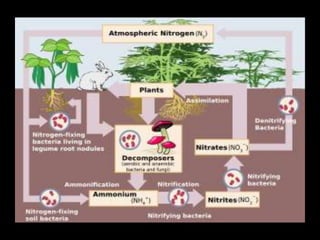
• The conversion of ammonium to nitrate is performed
  primarily by soil-living bacteria and other nitrifying bacteria.
  In the primary stage of nitrification, the oxidation of
  ammonium (NH4+) is performed by bacteria such as the
  Nitrosomonas species, which converts ammonia to nitrites
  (NO2-). Other bacterial species, such as the Nitrobacter, are
  responsible for the oxidation of the nitrites into nitrates
  (NO3-).It is important for the nitrites to be converted to
  nitrates because accumulated nitrites are toxic to plant life.
TYPES OF GENUS
• Nitrobacter
• Nitrospina
• Nitrococcus
• Nitrosipra
• There are currently four genera accepted in the
  family. The Nitrobacter is the primary type genus.
  The other genera are Nitrospina, Nitrococcus and
  Nitrosipra.
CHARACTERISTICS
• These are Gram-negative

• non-sporing non-acid fast rods, which may be pleomorphic
  or coccoid (Nitrobacter), some are slender rods
  (Nitrospina), cocci (Nitrococcus) or spiral to comma-shaped
  (Nitrosipra)

• They may be motile.

• They are characterised by their ability to use nitrite as the
  only energy.
• They are facultative or obligate lithoautotrophs.
• A lithoautotroph is a microbe which derives energy from reduced
   compounds of mineral origin.
• For lithoautotrophic bacteria, only inorganic molecules can be used as
   energy sources.
• They fix CO2 through the Calvin cycle but are not photosynthetic.
• They grow best in the dark around 28°C at pH between 7.6-7.8 and many
   grow mixotrophically than lithoautotrophically.
• A mixotroph is a microorganism that can use a mix of different sources of
   energy and carbon.
• They have all the enzymes of the tricarboxylic acid cycle or krebs cycle.
Nitrobacter
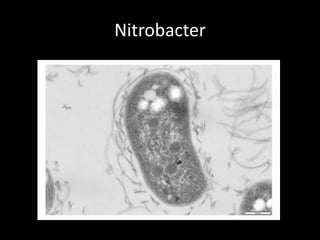
• There are currently three species recognized within this
  genus, N. winogradskyi, N. hamburgensis and N. vulgaris.

• They only differ slightly in morphology. They are
  pleomorphic rods, which most form coccoid and rod cells.
  They may be motile by a flagellum.

• Often the cells have a polar cap of flattened membrane
  vescicles. There are regularly arranged particles covering
  the inner side of the cytoplasmic and intracytoplasmic
  nitrite-oxidising membrane.
• The species are subdivided according to the GC content
  of   the   DNA,   DNA/DNA     homology,    serological
  characteristics and the patterns found of the
  membrane-bound proteins.
Nitrobacter
• Nitrospina: They are slender non-motile rods.
  There is only one species N. gracilis. They are
  obligate lithoautotrophs. They have glycogen-
  like storage inclusion bodies.
• Nitrosipra:   They       are   vibrio-like   to   spiral
  organisms. There is only one species N. marina.
  They grow preferentially mixotrophically rather
  than lithoautotrophically. Particles are arranged
  in rows on the membranes. There are glycogen-
  like storage deposits.
• Nitrococcus: The spherical motile cells have
 one to two flagellae. The marine species N.
 mobilis is the only species. The inner surface
 of the tubular membrane system is covered
 with     particles.    They    are     obligate
 lithoautotrophs.      There    are     present
 carboxysomes, poly-b-hydroxybutyrate (PHB)
 and glycogen-like storage materials.
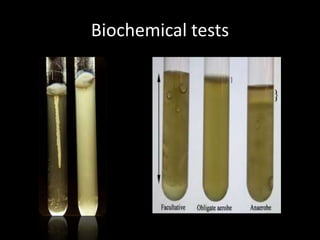
Biochemical tests

Nitrobacteriaceae

  • 1.
  • 2.
    Nitrification • The conversionof ammonium to nitrate is performed primarily by soil-living bacteria and other nitrifying bacteria. In the primary stage of nitrification, the oxidation of ammonium (NH4+) is performed by bacteria such as the Nitrosomonas species, which converts ammonia to nitrites (NO2-). Other bacterial species, such as the Nitrobacter, are responsible for the oxidation of the nitrites into nitrates (NO3-).It is important for the nitrites to be converted to nitrates because accumulated nitrites are toxic to plant life.
  • 4.
    TYPES OF GENUS •Nitrobacter • Nitrospina • Nitrococcus • Nitrosipra • There are currently four genera accepted in the family. The Nitrobacter is the primary type genus. The other genera are Nitrospina, Nitrococcus and Nitrosipra.
  • 5.
    CHARACTERISTICS • These areGram-negative • non-sporing non-acid fast rods, which may be pleomorphic or coccoid (Nitrobacter), some are slender rods (Nitrospina), cocci (Nitrococcus) or spiral to comma-shaped (Nitrosipra) • They may be motile. • They are characterised by their ability to use nitrite as the only energy.
  • 6.
    • They arefacultative or obligate lithoautotrophs. • A lithoautotroph is a microbe which derives energy from reduced compounds of mineral origin. • For lithoautotrophic bacteria, only inorganic molecules can be used as energy sources. • They fix CO2 through the Calvin cycle but are not photosynthetic. • They grow best in the dark around 28°C at pH between 7.6-7.8 and many grow mixotrophically than lithoautotrophically. • A mixotroph is a microorganism that can use a mix of different sources of energy and carbon. • They have all the enzymes of the tricarboxylic acid cycle or krebs cycle.
  • 7.
    Nitrobacter • There arecurrently three species recognized within this genus, N. winogradskyi, N. hamburgensis and N. vulgaris. • They only differ slightly in morphology. They are pleomorphic rods, which most form coccoid and rod cells. They may be motile by a flagellum. • Often the cells have a polar cap of flattened membrane vescicles. There are regularly arranged particles covering the inner side of the cytoplasmic and intracytoplasmic nitrite-oxidising membrane.
  • 8.
    • The speciesare subdivided according to the GC content of the DNA, DNA/DNA homology, serological characteristics and the patterns found of the membrane-bound proteins.
  • 9.
  • 10.
    • Nitrospina: Theyare slender non-motile rods. There is only one species N. gracilis. They are obligate lithoautotrophs. They have glycogen- like storage inclusion bodies.
  • 11.
    • Nitrosipra: They are vibrio-like to spiral organisms. There is only one species N. marina. They grow preferentially mixotrophically rather than lithoautotrophically. Particles are arranged in rows on the membranes. There are glycogen- like storage deposits.
  • 12.
    • Nitrococcus: Thespherical motile cells have one to two flagellae. The marine species N. mobilis is the only species. The inner surface of the tubular membrane system is covered with particles. They are obligate lithoautotrophs. There are present carboxysomes, poly-b-hydroxybutyrate (PHB) and glycogen-like storage materials.
  • 13.