PowerPoint to accompany


Foundations in Microbiology
          Fifth Edition

                                        Talaro
                                     Chapter
                                       8

    Copyright The McGraw-Hill Companies, Inc. Permission required for reproduction or display.
Microbial Metabolism: The Chemical
         Crossroads of Life
             Chapter 8
Metabolism

 The sum total of all chemical
reactions & physical workings
       occurring in a cell
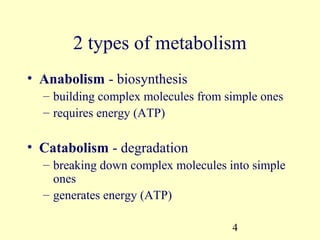
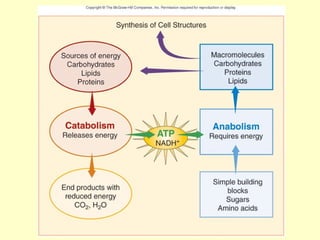
2 types of metabolism
• Anabolism - biosynthesis
  – building complex molecules from simple ones
  – requires energy (ATP)

• Catabolism - degradation
  – breaking down complex molecules into simple
    ones
  – generates energy (ATP)

                                     4
5
6
7
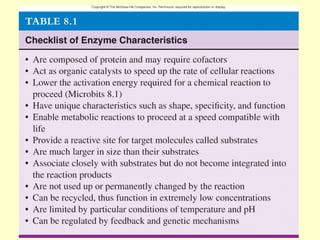
Enzyme structure
• Simple enzymes – consist of protein alone
• Conjugated enzymes or holoenzymes –
  contain protein and nonprotein molecules
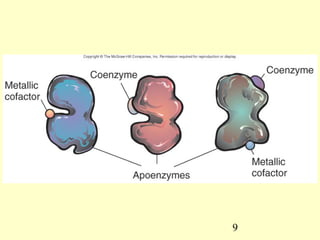
  – apoenzyme –protein portion
  – cofactors – nonprotein portion
     • metallic cofactors – iron, copper, magnesium
     • coenzymes -organic molecules - vitamins


                                            8
9
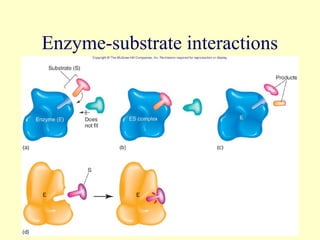
Enzyme-substrate interactions


                       10
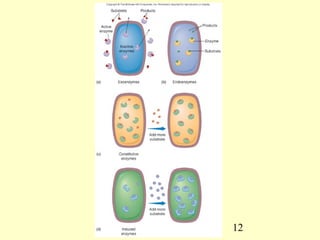
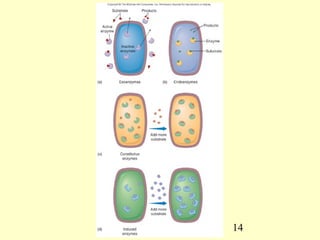
• Exoenzymes – transported extracellularly,
  where they break down large food
  molecules or harmful chemicals; cellulase,
  amylase, penicillinase
• Endoenzymes – retained intracellularly &
  function there


                                   11
12
• Constitutive enzymes – always present,
  always produced in equal amounts or at
  equal rates, regardless of amount of
  substrate; enzymes involved in glucose
  metabolism
• Induced enzymes – not constantly present,
  produced only when substrate is present,
  prevents cell from wasting resources
                                 13
14
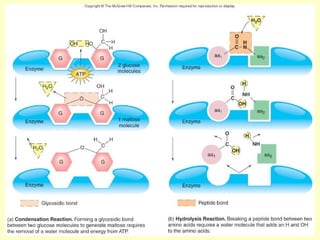
• Synthesis or condensation reactions –
  anabolic reactions to form covalent bonds
  between smaller substrate molecules,
  require ATP, release one molecule of water
  for each bond
• Hydrolysis reactions– catabolic reactions
  that break down substrates into small
  molecules, requires the input of water
                                  15
16
Transfer reactions by enzymes
1. Oxidation-reduction reactions – transfer of
   electrons
2. Aminotransferases – convert one type of amino
   acid to another by transferring an amino group
3. Phosphotransferases – transfer phosphate groups,
   involved in energy transfer
4. Methyltransferases – move methyl groups from
   one molecule to another
5. Decarboxylases – remove carbon dioxide from
   organic acids
                                       17
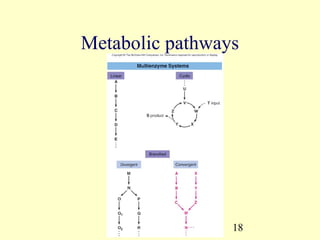
Metabolic pathways


                 18
Control of enzyme activity
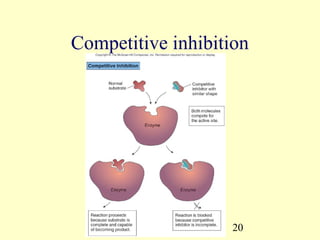
1. Competitive inhibition – substance that
   resembles normal substrate competes with
   substrate for active site
2. Feedback inhibition – concentration of product at
   the end of a pathway blocks the action of a key
   enzyme
3. Feedback repression – inhibits at the genetic
   level by controlling synthesis of key enzymes
4. Enzyme induction – enzymes are made only
   when suitable substrates are present
                                        19
Competitive inhibition


                   20
Energy –capacity to do work or
         cause change

• Endergonic reactions – consume energy
• Exergonic reactions – release energy


                                 21
Redox reactions
• always occur in pairs
• There is an electron donor and electron
  acceptor which constitute a redox pair
• The process salvages electrons & their
  energy.
• released energy can be captured to
  phosphorylate ADP or another compound

                                 22
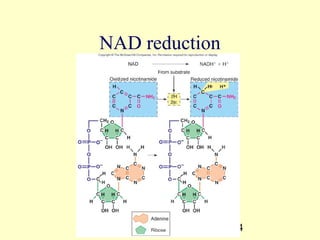
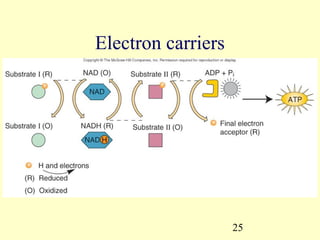
Electron carriers
• resemble shuttles that are loaded and
  unloaded with electrons and hydrogen
• most carriers are coenzymes, NAD, FAD,
  NADP, coenzyme A & compounds of the
  respiratory chain


                                23
NAD reduction


                24
Electron carriers


                    25
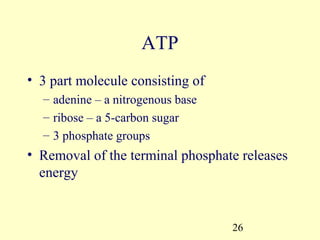
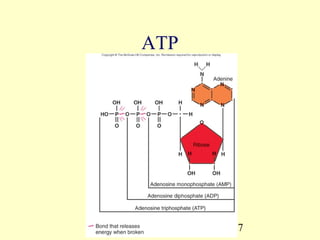
ATP
• 3 part molecule consisting of
  – adenine – a nitrogenous base
  – ribose – a 5-carbon sugar
  – 3 phosphate groups
• Removal of the terminal phosphate releases
  energy


                                   26
ATP


      27
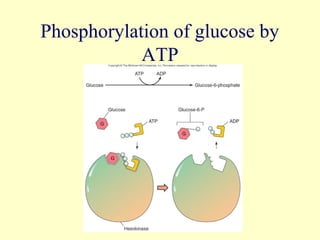
Phosphorylation of glucose by
            ATP


                       28
Formation of ATP
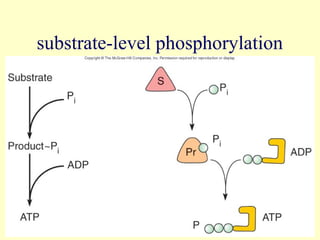
1. substrate-level phosphorylation
2. oxidative phosphorylation
3. photophosphorylation


                                     29
substrate-level phosphorylation


                        30
Catabolism of glucose
1. Glycolysis
2. Tricarboxylic acid cycle, Kreb’s cycle
3. Respiratory chain, electron transport


                                   31
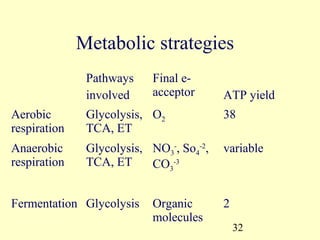
Metabolic strategies
               Pathways     Final e-
               involved     acceptor      ATP yield
Aerobic        Glycolysis, O2             38
respiration    TCA, ET
Anaerobic      Glycolysis, NO3-, So4-2,   variable
respiration    TCA, ET     CO3-3


Fermentation Glycolysis     Organic       2
                            molecules
                                              32
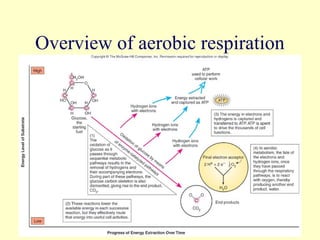
Overview of aerobic respiration


                        33
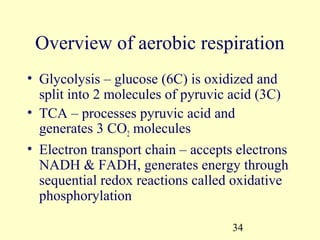
Overview of aerobic respiration
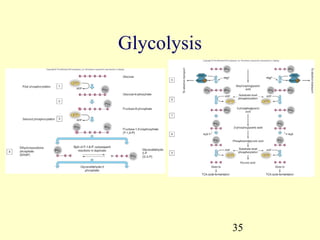
• Glycolysis – glucose (6C) is oxidized and
  split into 2 molecules of pyruvic acid (3C)
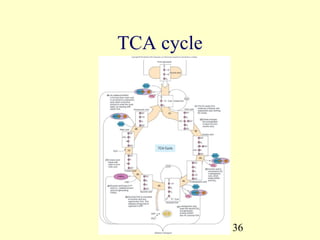
• TCA – processes pyruvic acid and
  generates 3 CO2 molecules
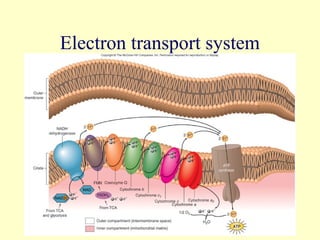
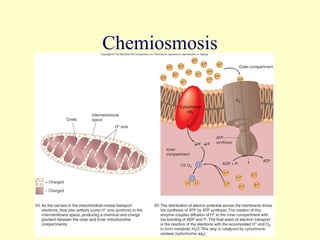
• Electron transport chain – accepts electrons
  NADH & FADH, generates energy through
  sequential redox reactions called oxidative
  phosphorylation

                                    34
Glycolysis


             35
TCA cycle


            36
Electron transport system


                     37
Chemiosmosis


               38
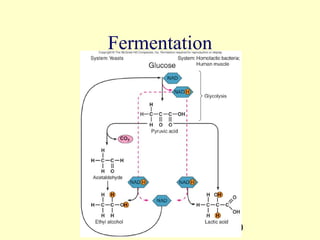
Fermentation
• Incomplete oxidation of glucose or other
  carbohydrates in the absence of oxygen
• Uses organic compounds as terminal electron
  acceptors
• Yields a small amount of ATP
• Production of ethyl alcohol by yeasts acting on
  glucose
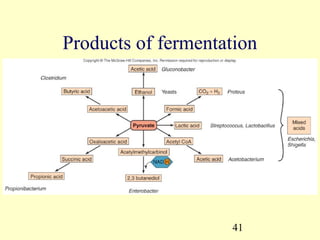
• Formation of acid, gas & other products by the
  action of various bacteria on pyruvic acid

                                        39
Fermentation


               40
Products of fermentation


                    41
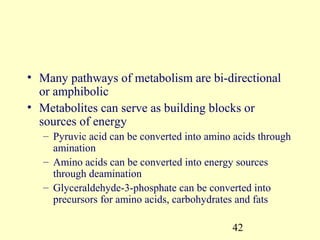
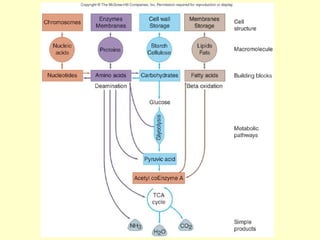
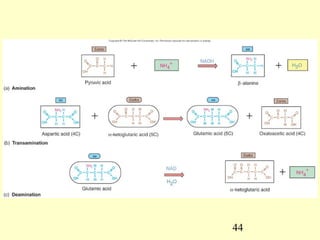
• Many pathways of metabolism are bi-directional
  or amphibolic
• Metabolites can serve as building blocks or
  sources of energy
   – Pyruvic acid can be converted into amino acids through
     amination
   – Amino acids can be converted into energy sources
     through deamination
   – Glyceraldehyde-3-phosphate can be converted into
     precursors for amino acids, carbohydrates and fats

                                             42
43
44

pharmaceutics

  • 1.
    PowerPoint to accompany Foundationsin Microbiology Fifth Edition Talaro Chapter 8 Copyright The McGraw-Hill Companies, Inc. Permission required for reproduction or display.
  • 2.
    Microbial Metabolism: TheChemical Crossroads of Life Chapter 8
  • 3.
    Metabolism The sumtotal of all chemical reactions & physical workings occurring in a cell
  • 4.
    2 types ofmetabolism • Anabolism - biosynthesis – building complex molecules from simple ones – requires energy (ATP) • Catabolism - degradation – breaking down complex molecules into simple ones – generates energy (ATP) 4
  • 5.
  • 6.
  • 7.
  • 8.
    Enzyme structure • Simpleenzymes – consist of protein alone • Conjugated enzymes or holoenzymes – contain protein and nonprotein molecules – apoenzyme –protein portion – cofactors – nonprotein portion • metallic cofactors – iron, copper, magnesium • coenzymes -organic molecules - vitamins 8
  • 9.
  • 10.
  • 11.
    • Exoenzymes –transported extracellularly, where they break down large food molecules or harmful chemicals; cellulase, amylase, penicillinase • Endoenzymes – retained intracellularly & function there 11
  • 12.
  • 13.
    • Constitutive enzymes– always present, always produced in equal amounts or at equal rates, regardless of amount of substrate; enzymes involved in glucose metabolism • Induced enzymes – not constantly present, produced only when substrate is present, prevents cell from wasting resources 13
  • 14.
  • 15.
    • Synthesis orcondensation reactions – anabolic reactions to form covalent bonds between smaller substrate molecules, require ATP, release one molecule of water for each bond • Hydrolysis reactions– catabolic reactions that break down substrates into small molecules, requires the input of water 15
  • 16.
  • 17.
    Transfer reactions byenzymes 1. Oxidation-reduction reactions – transfer of electrons 2. Aminotransferases – convert one type of amino acid to another by transferring an amino group 3. Phosphotransferases – transfer phosphate groups, involved in energy transfer 4. Methyltransferases – move methyl groups from one molecule to another 5. Decarboxylases – remove carbon dioxide from organic acids 17
  • 18.
  • 19.
    Control of enzymeactivity 1. Competitive inhibition – substance that resembles normal substrate competes with substrate for active site 2. Feedback inhibition – concentration of product at the end of a pathway blocks the action of a key enzyme 3. Feedback repression – inhibits at the genetic level by controlling synthesis of key enzymes 4. Enzyme induction – enzymes are made only when suitable substrates are present 19
  • 20.
  • 21.
    Energy –capacity todo work or cause change • Endergonic reactions – consume energy • Exergonic reactions – release energy 21
  • 22.
    Redox reactions • alwaysoccur in pairs • There is an electron donor and electron acceptor which constitute a redox pair • The process salvages electrons & their energy. • released energy can be captured to phosphorylate ADP or another compound 22
  • 23.
    Electron carriers • resembleshuttles that are loaded and unloaded with electrons and hydrogen • most carriers are coenzymes, NAD, FAD, NADP, coenzyme A & compounds of the respiratory chain 23
  • 24.
  • 25.
  • 26.
    ATP • 3 partmolecule consisting of – adenine – a nitrogenous base – ribose – a 5-carbon sugar – 3 phosphate groups • Removal of the terminal phosphate releases energy 26
  • 27.
    ATP 27
  • 28.
  • 29.
    Formation of ATP 1.substrate-level phosphorylation 2. oxidative phosphorylation 3. photophosphorylation 29
  • 30.
  • 31.
    Catabolism of glucose 1.Glycolysis 2. Tricarboxylic acid cycle, Kreb’s cycle 3. Respiratory chain, electron transport 31
  • 32.
    Metabolic strategies Pathways Final e- involved acceptor ATP yield Aerobic Glycolysis, O2 38 respiration TCA, ET Anaerobic Glycolysis, NO3-, So4-2, variable respiration TCA, ET CO3-3 Fermentation Glycolysis Organic 2 molecules 32
  • 33.
    Overview of aerobicrespiration 33
  • 34.
    Overview of aerobicrespiration • Glycolysis – glucose (6C) is oxidized and split into 2 molecules of pyruvic acid (3C) • TCA – processes pyruvic acid and generates 3 CO2 molecules • Electron transport chain – accepts electrons NADH & FADH, generates energy through sequential redox reactions called oxidative phosphorylation 34
  • 35.
  • 36.
  • 37.
  • 38.
  • 39.
    Fermentation • Incomplete oxidationof glucose or other carbohydrates in the absence of oxygen • Uses organic compounds as terminal electron acceptors • Yields a small amount of ATP • Production of ethyl alcohol by yeasts acting on glucose • Formation of acid, gas & other products by the action of various bacteria on pyruvic acid 39
  • 40.
  • 41.
  • 42.
    • Many pathwaysof metabolism are bi-directional or amphibolic • Metabolites can serve as building blocks or sources of energy – Pyruvic acid can be converted into amino acids through amination – Amino acids can be converted into energy sources through deamination – Glyceraldehyde-3-phosphate can be converted into precursors for amino acids, carbohydrates and fats 42
  • 43.
  • 44.