MIC 319
FUNDAMENTALS OF
AGRICULTURAL
MICROBIOLOGY

CHAPTER 2
CAUSES OF PLANT DISEASES
BY
SITI NORAZURA JAMAL
03 006/ 06 483 2132
norazura6775@ns.uitm.edu.my
OUTLINE

Abiotic
factors

nutrients, pesticide
exposure,
environment
pollution,
temperature,
moisture, & light.

Biotic
factors

fungi, bacteria,
nematodes, parasitic
plants & virus
ABIOTIC
FACTORS
1) Nutritional
abnormalities


Often nutrient abnormalities show up as
discoloration of foliage



Common discoloration symptoms include:



Yellowing
Chlorosis



Two types






Nutrient deficiencies
Mineral toxicity
Nutrient deficiencies


Plants require several
major (N,P,Ca,Mg) and
minor (iron,copper,Zn)
elements for normal
growth.



Deficiency or lack of any of
these essential nutrients
results in disease
symptoms in the plant.



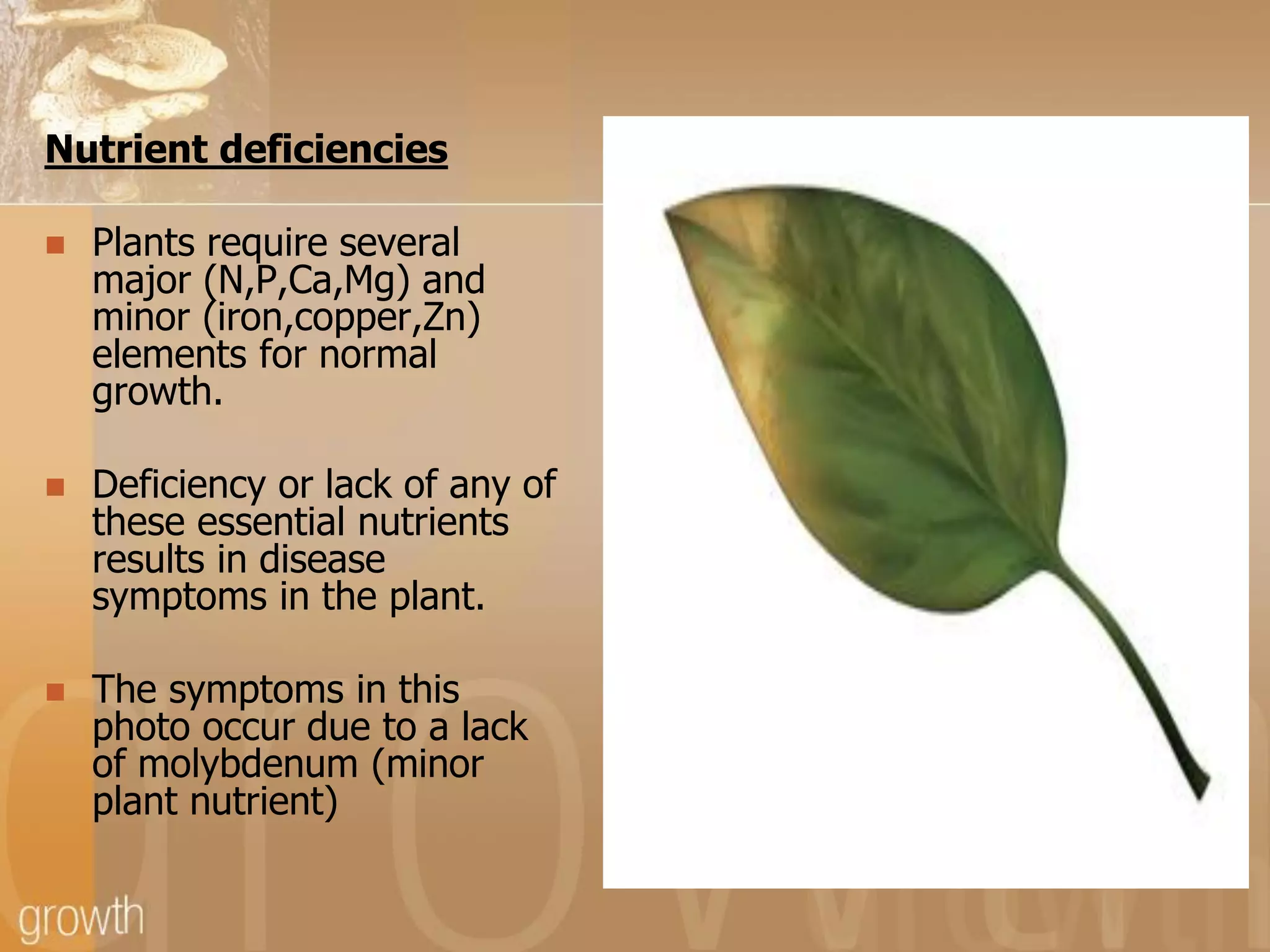
The symptoms in this
photo occur due to a lack
of molybdenum (minor
plant nutrient)
Mineral Toxicity


Presence of excessive
available amounts of
certain minerals in the
soil can lead to mineral
toxicity to the plants.



The extent of injury
depends on the mineral,
its concentration &
species of the plant.



The plant in this photo
has received excess
manganese, which has
proved toxic and led to
yellowing.
2) Pesticide Exposure
Some pesticides , if improperly used can
cause serious damage to plants.
 However, the most common type of
chemical injury to plants is due to soil
residue or spray drift of herbicides.
 Examples of pesticide toxicity are:





2,4-D damage to beans and tomatoes
Glyphose (Roundup) damage to fruit trees
The common
symptoms of
herbicide
exposure are
curling and
cupping
 This plant was
exposed to the
herbicide 2,4-D

3) Environmental
Pollutants
High level of fluoride in water or fluorine gas
in the air can cause symptoms like this.
 The damage is concentrated towards the
margins of the leaf where fluorine tends to
accumulate.
 E.g. Air pollution

Air pollution
 Certain chemicals such as O3, SO2 and NO2 are
released into the air from factories, power plants
and automobile exhausts.
 These chemicals can accumulate in the
atmosphere insufficient concentration to cause
damage to plants.
 Ozone damage appears in the form of chlorosis,
spots and bleaching of young leaves.




This common in certain regions of the country where there is a high
ozone concentration in smog

Some of the air pollutants responsible for acid rain
cause damage to vegetation in certain regions.


Ozone damage
on morning glory



Ozone damage or
marijuana leaves
4) Extreme Weather Conditions
Extreme of weather can also lead to plant injury.
Cold injury
 Low temperature, like frost or freeze can damage
the exposed or sensitive organs (buds, flowers,
young fruits) or may kill the entire plant.
 As the new branch tips began to expand, a period
of cold was severe enough to kill the growing tips.
Heat injury
 In this case the temperature was high enough and
damage the plant tissue
 When plants or plant parts are exposed to high
temperature for prolonged periods, symptoms of
scorching or scalding may develop.

5) High/low soil moisture
Due to excessive watering poor drainage or
flooding may cause plants to turn yellow
and be stunted.
 Potted indoor plants may show poor
development or root rots.
 At the other extreme, low moisture or
drought conditions can lead to poor
development, wilting and death of plants.

6) high/low intensity




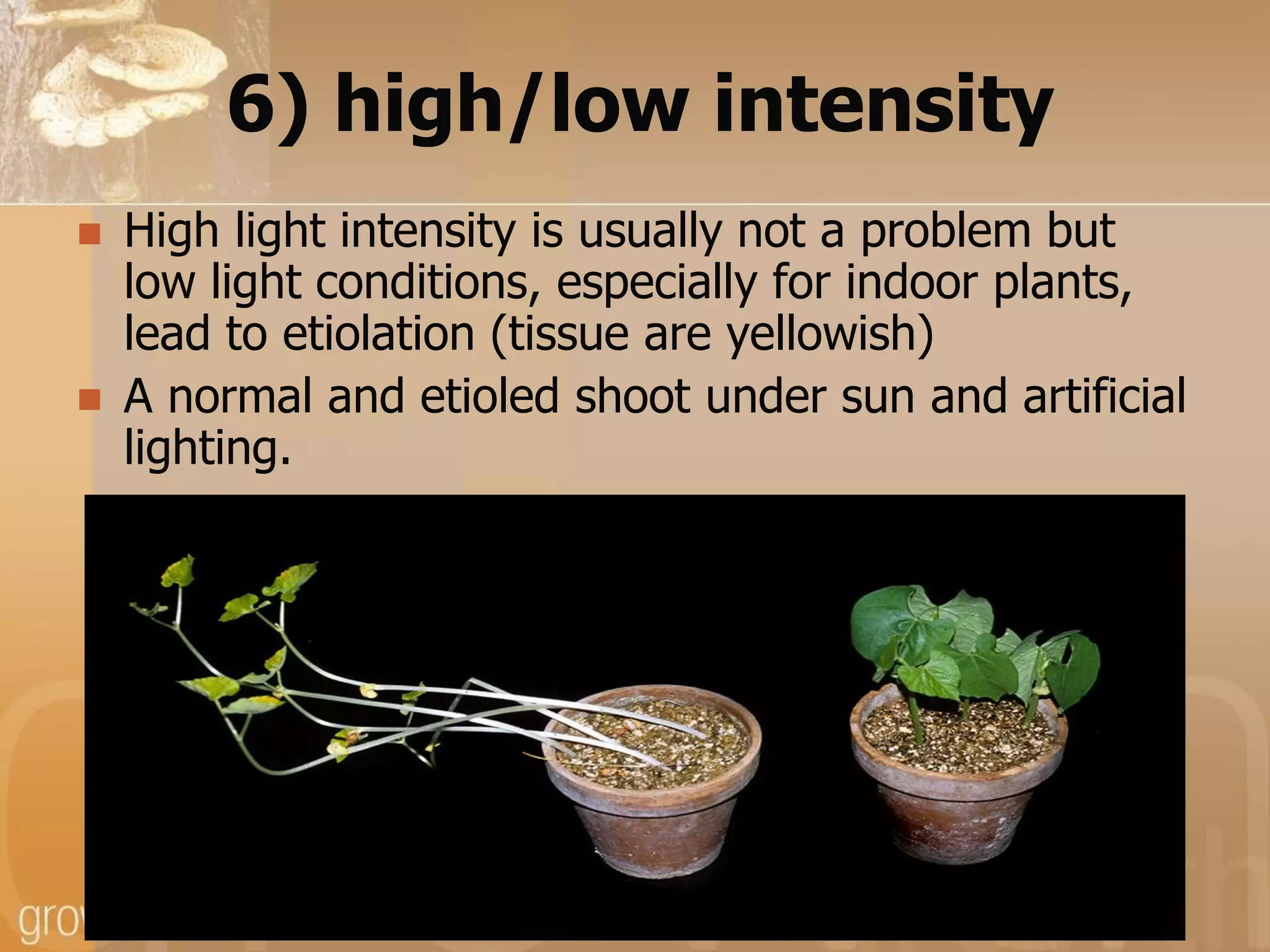
High light intensity is usually not a problem but
low light conditions, especially for indoor plants,
lead to etiolation (tissue are yellowish)
A normal and etioled shoot under sun and artificial
lighting.
BIOTIC
FACTORS
1)Fungi
Largest pathogen group
 More than 8000
pathogenic species
 Vegetative growth
through production of
hyphae
 Reproductive via spores

Fungal Hyphae




Some examples of plant diseases
caused by fungi:
brown rot of cherries, peaches and apricots; apple scab.
powdery mildew of roses, apples and other plants.
Brown rot

powdery mildew

(Monilinia fructicola)

(Triticum sp.)
2) Bacteria
About 200 pathogenic species
 Can be seen with a light microscope
 Simple, unicellular
 Reproduce by binary fission






Some of the commonly
encountered bacterial diseases
are:
crown gall of rose, grape, apple, cherry and
other ornamental plants
fire blight of apple and pear
Crown Gall

Fire Blight

(Agrobacterium tumefaciens )

(Erminia amylovora)
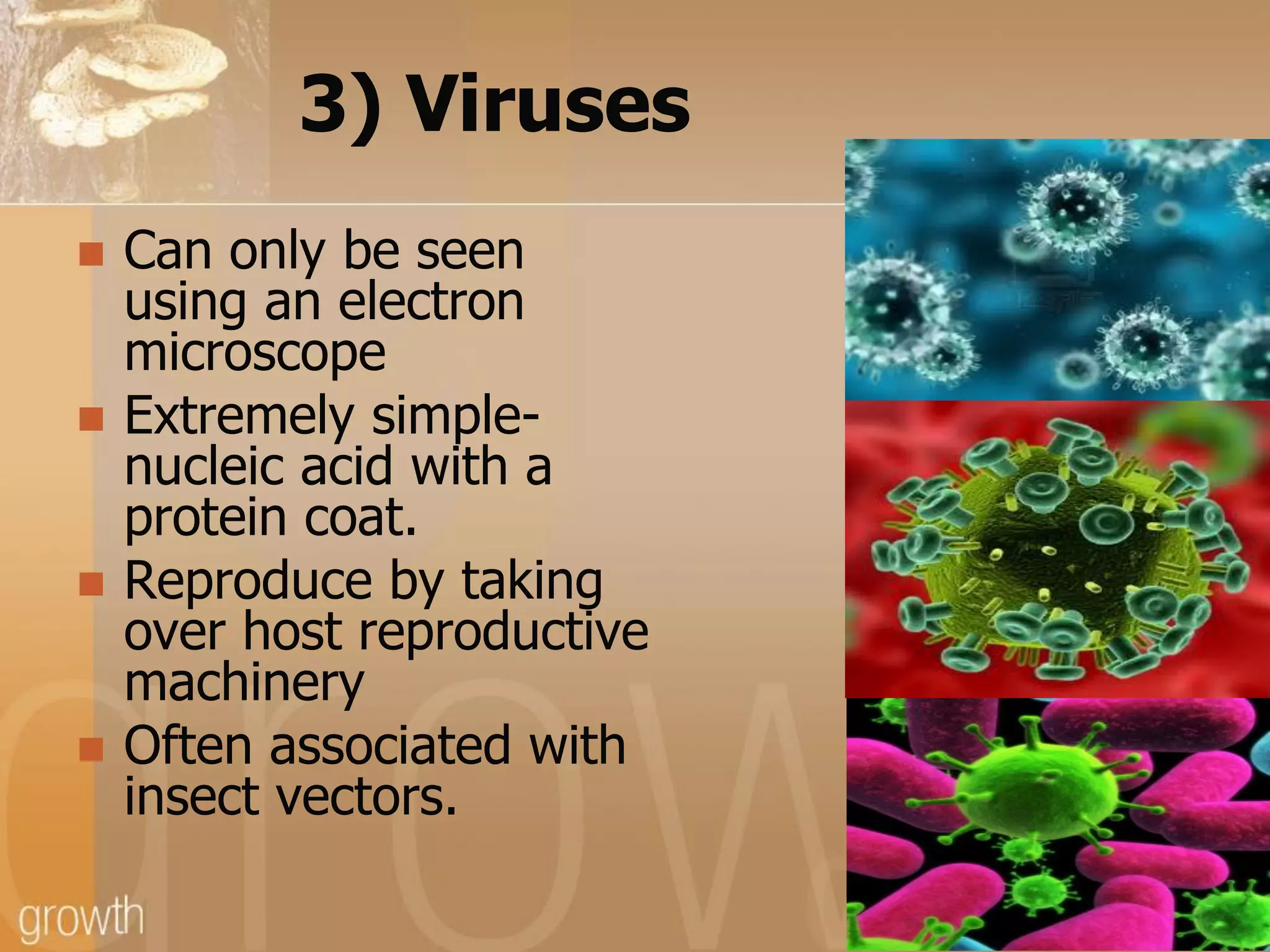
3) Viruses








Can only be seen
using an electron
microscope
Extremely simplenucleic acid with a
protein coat.
Reproduce by taking
over host reproductive
machinery
Often associated with
insect vectors.




Viruses can multiply only in a living host
cell and can often spread systemically
throughout the infected plant.
Viruses may be transmitted from
infected to healthy plants mechanically,
through grafts, or contaminated
propagating material; however, the
most important means of spread is by
insect transmission.
Viruses cause mainly two types of
symptoms: mosaics and leaf curls.
 Some examples:






rose mosaic
potato leaf roll
Rose mosaic

(Rose Mosaic Virus) (RMV)

Potato leaf roll (Polerovirus)
4) Nematodes
Parasite worms
 Very complex compared to other pathogens
 Usually seen only with a light microscope
 Reproduce by eggs.







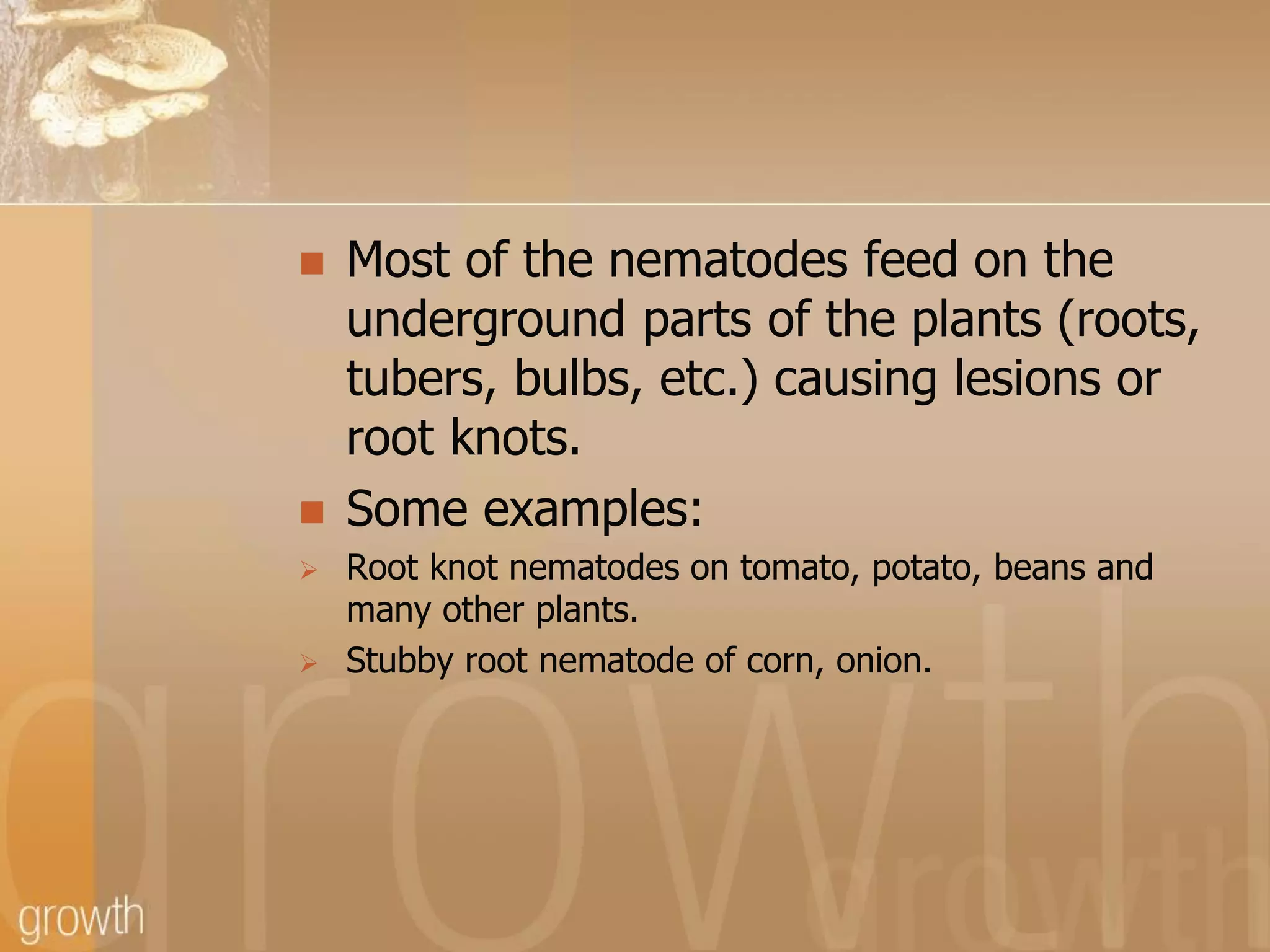
Most of the nematodes feed on the
underground parts of the plants (roots,
tubers, bulbs, etc.) causing lesions or
root knots.
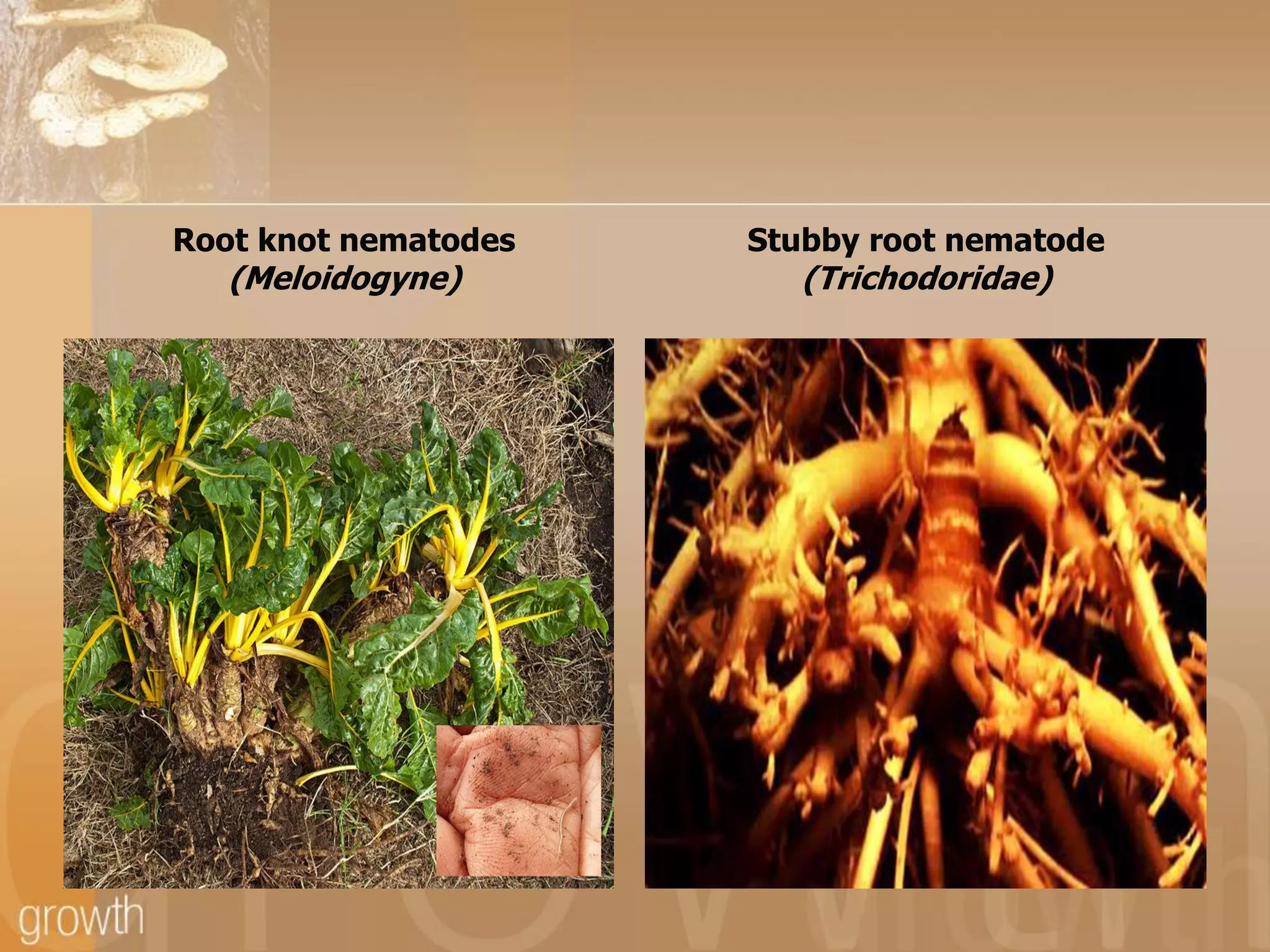
Some examples:
Root knot nematodes on tomato, potato, beans and
many other plants.
Stubby root nematode of corn, onion.
Root knot nematodes

(Meloidogyne)

Stubby root nematode

(Trichodoridae)
5) Phytoplasmas






A prokaryotic organism that lacks a cell wall and
survive in the phloem of plant
The helical phytoplasmas are known as
spiroplasmas.
Round or elongate
Usually seen only with an electron microscope
Reproduce by binary fission




Some of the commonly
encountered phytoplasmas
diseases:
aster yellows phytoplasma on carrots,
tomatoes, onions and lettuce.
Aster yellows
phytoplasma

causes of plant disease

  • 1.
    MIC 319 FUNDAMENTALS OF AGRICULTURAL MICROBIOLOGY CHAPTER2 CAUSES OF PLANT DISEASES BY SITI NORAZURA JAMAL 03 006/ 06 483 2132 norazura6775@ns.uitm.edu.my
  • 2.
    OUTLINE Abiotic factors nutrients, pesticide exposure, environment pollution, temperature, moisture, &light. Biotic factors fungi, bacteria, nematodes, parasitic plants & virus
  • 3.
  • 4.
    1) Nutritional abnormalities  Often nutrientabnormalities show up as discoloration of foliage  Common discoloration symptoms include:  Yellowing Chlorosis  Two types    Nutrient deficiencies Mineral toxicity
  • 5.
    Nutrient deficiencies  Plants requireseveral major (N,P,Ca,Mg) and minor (iron,copper,Zn) elements for normal growth.  Deficiency or lack of any of these essential nutrients results in disease symptoms in the plant.  The symptoms in this photo occur due to a lack of molybdenum (minor plant nutrient)
  • 6.
    Mineral Toxicity  Presence ofexcessive available amounts of certain minerals in the soil can lead to mineral toxicity to the plants.  The extent of injury depends on the mineral, its concentration & species of the plant.  The plant in this photo has received excess manganese, which has proved toxic and led to yellowing.
  • 7.
    2) Pesticide Exposure Somepesticides , if improperly used can cause serious damage to plants.  However, the most common type of chemical injury to plants is due to soil residue or spray drift of herbicides.  Examples of pesticide toxicity are:    2,4-D damage to beans and tomatoes Glyphose (Roundup) damage to fruit trees
  • 8.
    The common symptoms of herbicide exposureare curling and cupping  This plant was exposed to the herbicide 2,4-D 
  • 9.
    3) Environmental Pollutants High levelof fluoride in water or fluorine gas in the air can cause symptoms like this.  The damage is concentrated towards the margins of the leaf where fluorine tends to accumulate.  E.g. Air pollution 
  • 10.
    Air pollution  Certainchemicals such as O3, SO2 and NO2 are released into the air from factories, power plants and automobile exhausts.  These chemicals can accumulate in the atmosphere insufficient concentration to cause damage to plants.  Ozone damage appears in the form of chlorosis, spots and bleaching of young leaves.   This common in certain regions of the country where there is a high ozone concentration in smog Some of the air pollutants responsible for acid rain cause damage to vegetation in certain regions.
  • 11.
     Ozone damage on morningglory  Ozone damage or marijuana leaves
  • 12.
    4) Extreme WeatherConditions Extreme of weather can also lead to plant injury. Cold injury  Low temperature, like frost or freeze can damage the exposed or sensitive organs (buds, flowers, young fruits) or may kill the entire plant.  As the new branch tips began to expand, a period of cold was severe enough to kill the growing tips. Heat injury  In this case the temperature was high enough and damage the plant tissue  When plants or plant parts are exposed to high temperature for prolonged periods, symptoms of scorching or scalding may develop. 
  • 13.
    5) High/low soilmoisture Due to excessive watering poor drainage or flooding may cause plants to turn yellow and be stunted.  Potted indoor plants may show poor development or root rots.  At the other extreme, low moisture or drought conditions can lead to poor development, wilting and death of plants. 
  • 14.
    6) high/low intensity   Highlight intensity is usually not a problem but low light conditions, especially for indoor plants, lead to etiolation (tissue are yellowish) A normal and etioled shoot under sun and artificial lighting.
  • 15.
  • 16.
    1)Fungi Largest pathogen group More than 8000 pathogenic species  Vegetative growth through production of hyphae  Reproductive via spores 
  • 17.
  • 18.
       Some examples ofplant diseases caused by fungi: brown rot of cherries, peaches and apricots; apple scab. powdery mildew of roses, apples and other plants.
  • 19.
    Brown rot powdery mildew (Moniliniafructicola) (Triticum sp.)
  • 20.
    2) Bacteria About 200pathogenic species  Can be seen with a light microscope  Simple, unicellular  Reproduce by binary fission 
  • 21.
       Some of thecommonly encountered bacterial diseases are: crown gall of rose, grape, apple, cherry and other ornamental plants fire blight of apple and pear
  • 22.
    Crown Gall Fire Blight (Agrobacteriumtumefaciens ) (Erminia amylovora)
  • 23.
    3) Viruses     Can onlybe seen using an electron microscope Extremely simplenucleic acid with a protein coat. Reproduce by taking over host reproductive machinery Often associated with insect vectors.
  • 24.
      Viruses can multiplyonly in a living host cell and can often spread systemically throughout the infected plant. Viruses may be transmitted from infected to healthy plants mechanically, through grafts, or contaminated propagating material; however, the most important means of spread is by insect transmission.
  • 25.
    Viruses cause mainlytwo types of symptoms: mosaics and leaf curls.  Some examples:    rose mosaic potato leaf roll
  • 26.
    Rose mosaic (Rose MosaicVirus) (RMV) Potato leaf roll (Polerovirus)
  • 27.
    4) Nematodes Parasite worms Very complex compared to other pathogens  Usually seen only with a light microscope  Reproduce by eggs. 
  • 28.
        Most of thenematodes feed on the underground parts of the plants (roots, tubers, bulbs, etc.) causing lesions or root knots. Some examples: Root knot nematodes on tomato, potato, beans and many other plants. Stubby root nematode of corn, onion.
  • 29.
    Root knot nematodes (Meloidogyne) Stubbyroot nematode (Trichodoridae)
  • 30.
    5) Phytoplasmas      A prokaryoticorganism that lacks a cell wall and survive in the phloem of plant The helical phytoplasmas are known as spiroplasmas. Round or elongate Usually seen only with an electron microscope Reproduce by binary fission
  • 31.
      Some of thecommonly encountered phytoplasmas diseases: aster yellows phytoplasma on carrots, tomatoes, onions and lettuce.
  • 32.