Identification of virus


            Prepared by:
    Putri Shareen Binti Rosman
Types of viral infection
Acute infections
 -relatively short duration with rapid discovery.
 Most viruses that infect humans, such as those
 that cause routine respiratory infections (e.g.,
 cold viruses, influenza viruses) and
 gastrointestinal infections (e.g., Rotaviruses,
 Noroviruses),skin infection(e.g.,Varicella zoster
 virus) cause acute infections.
Types of viral infections
Persistent infections
 - Viruses continually present in the body.
 - Late complications following acute infections. Also
  known as latent infection.
  Eg:HSV-1(fever blister),HSV-2(genital herpes).
 Chronic infection
 - the virus can be demonstrated in the body at all
  times and the disease may be present or absent for
  an extended period of time.
 - Eg: hepatitis B (caused by HBV) and hepatitis C
  (caused by HCV).
Slow infections
 - are ones in which the infectious agents gradually
 increase in number over a very long period of time
 during which no significant symptoms are seen.
 - Eg: include AIDS (caused by HIV-1 and HIV-2)
 and certain lentiviruses that cause tumors in
 animals.
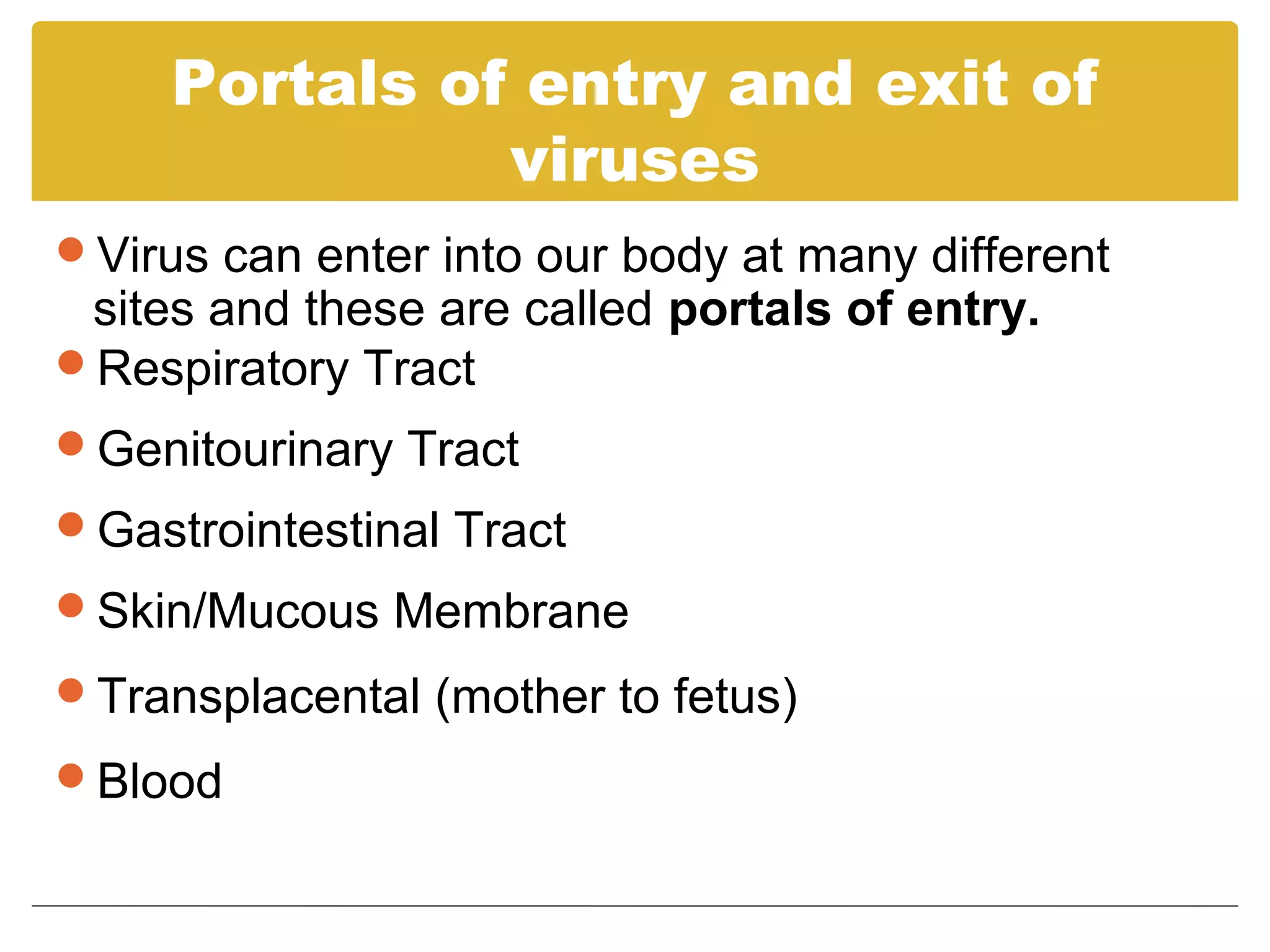
Portals of entry and exit of
               viruses
Virus can enter into our body at many different
 sites and these are called portals of entry.
Respiratory Tract
Genitourinary Tract
Gastrointestinal Tract
Skin/Mucous Membrane

Transplacental (mother to fetus)

Blood
Modes of Transmission

The mechanism for transfer of an
 infectious agent from a reservoir to a
 susceptible host.


                                          Dr.M.ElBashaar
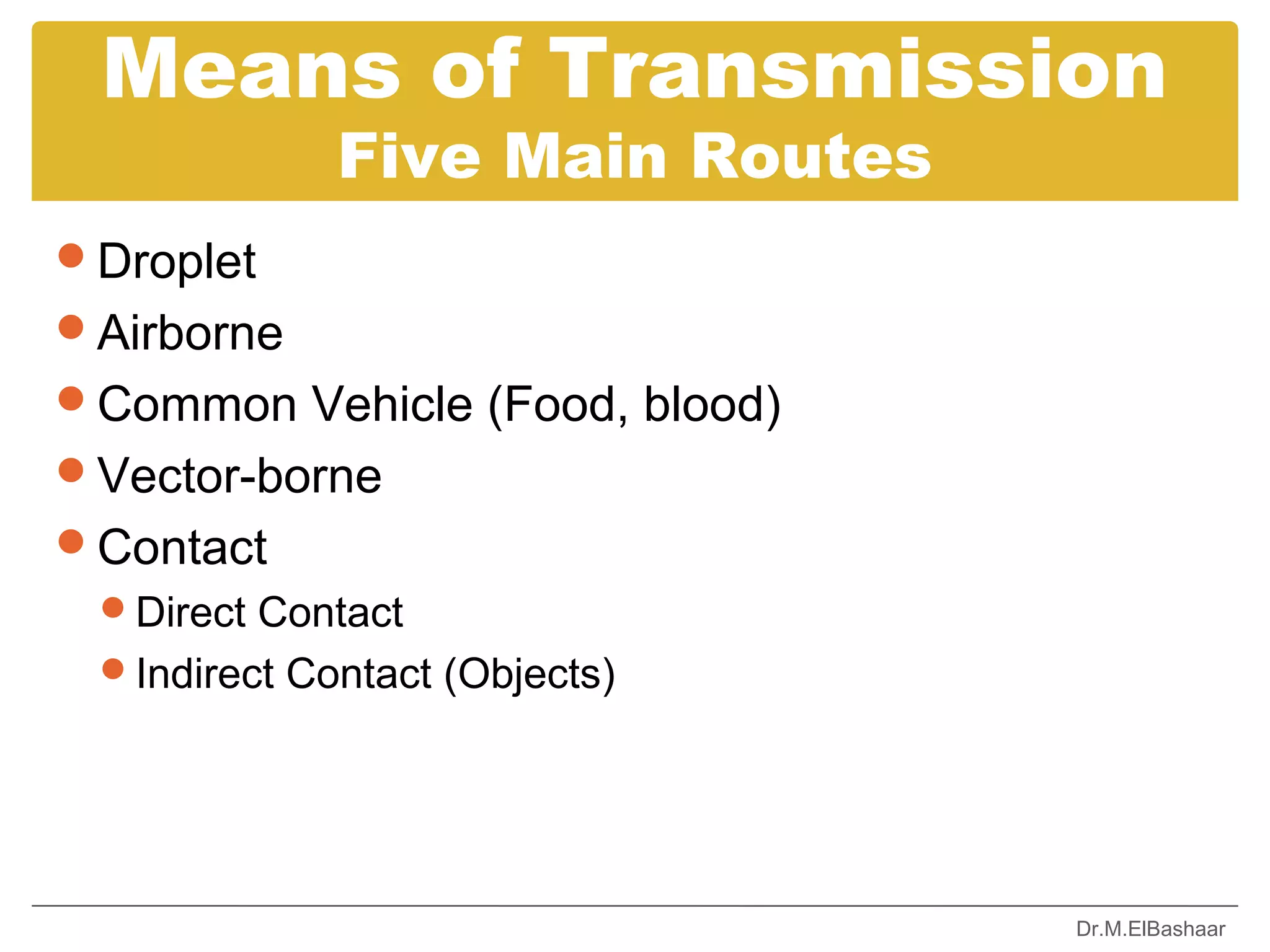
Means of Transmission
             Five Main Routes
Droplet
Airborne
Common Vehicle (Food, blood)
Vector-borne
Contact
 Direct Contact
 Indirect Contact (Objects)


                                Dr.M.ElBashaar
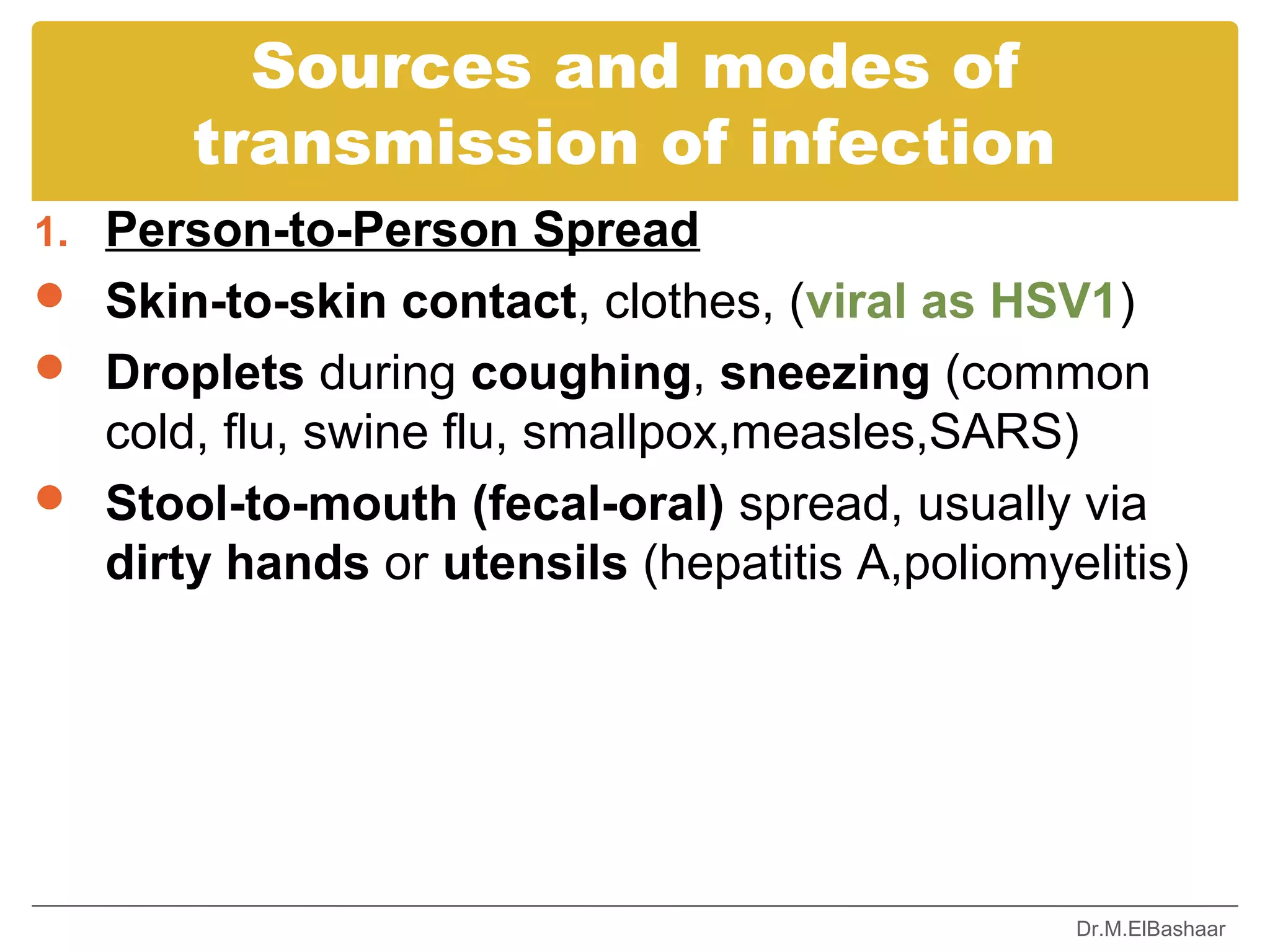
Sources and modes of
       transmission of infection
1. Person-to-Person Spread
 Skin-to-skin contact, clothes, (viral as HSV1)
 Droplets during coughing, sneezing (common
  cold, flu, swine flu, smallpox,measles,SARS)
 Stool-to-mouth (fecal-oral) spread, usually via
  dirty hands or utensils (hepatitis A,poliomyelitis)


                                               Dr.M.ElBashaar
Sources and modes of transmission of
                         infection

Sexually transmitted (gonorrhea, genital HSV2,
 genital warts (human papillomavirus – HPV).
Blood-to-blood contact by:
 contaminated needles, usually by drug addicts or health
  workers (hepatitis B, C, AIDS)
 blood transfusion (hepatitis B,C, AIDS, viral hemorrhagic
  fevers)
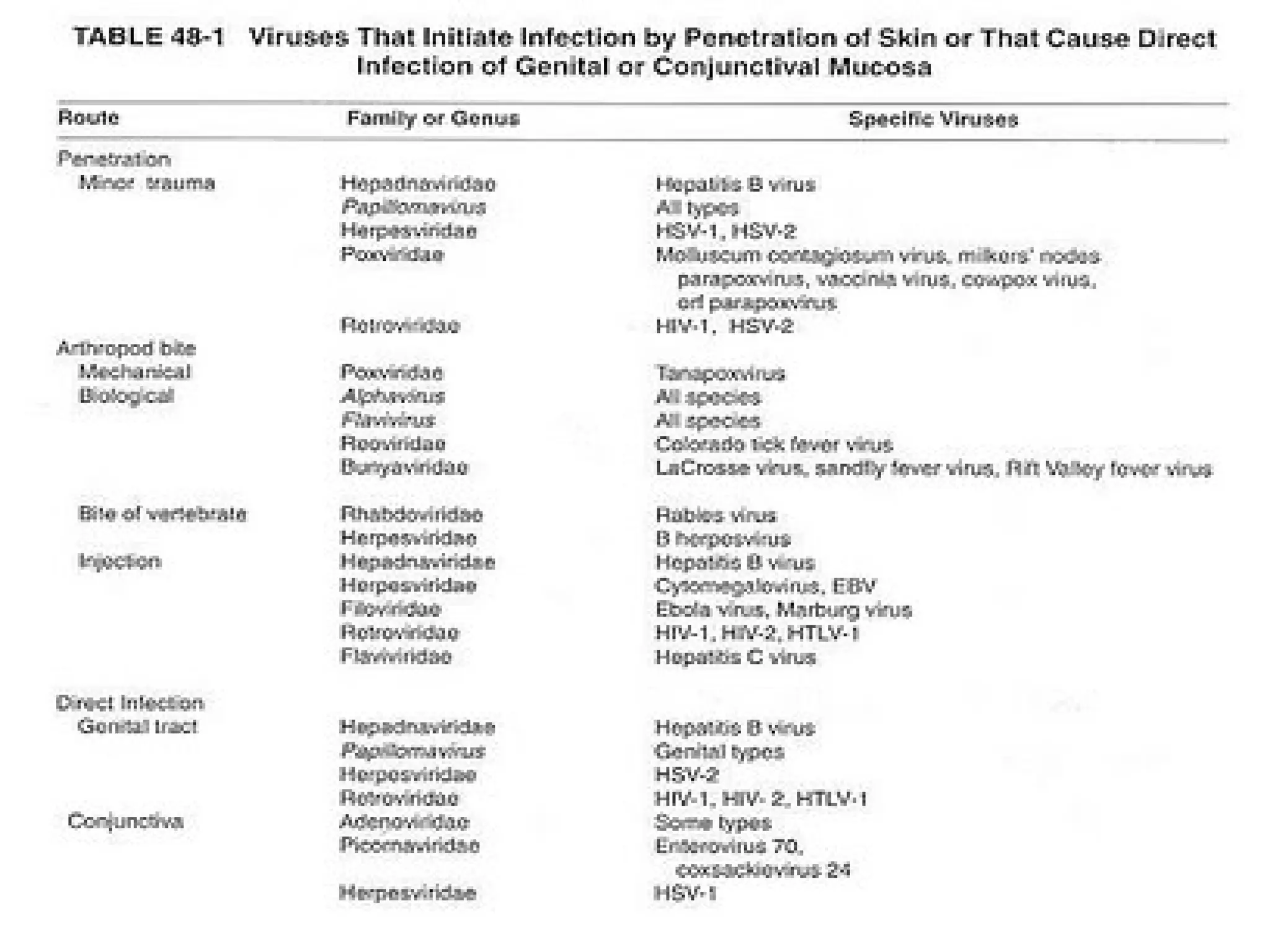
 Vectors: rabies anthropod:mosquitoes (Malaria,
  Dengue,Yellow fever)


                               Dr.M.ElBashaar
Sources and modes of transmission of infection

Spread from mother to fetus during pregnancy
 (hepatitis B, C, HIV, HSV-1, HSV-2, rubella, varicella,
 bird flu).
Food poisoning is an infection of the gastrointestinal
 tract caused by microbes from contaminated food:Eg:
 Enterovirus


                                                Dr.M.ElBashaar
Viral Diseases

Diseases caused by viruses has been known for
 thousand years ago.
Antibiotics are not effective in killing viruses
Certain viruses are also linked to cancer in human
 such as Hepatitis B (liver cancer),Epstein-Barr
 virus (Burkitt’s Lymphoma) and Human
 Papilomavirus (cervical cancer).
Important viral diseases

AIDS:Immune system failure
Common cold:Sinus congestion
Ebola:High fever,uncontrolled bleeding
Hepatitis A:Flu like symptom,swollen liver
Hepatitis B:Flu-like symptom,swollen liver.
Influenza (flu):Fever,chills,sneezing,body aches.
Mumps:Painful swelling of saliva glands
Polio:Fever,headachenstiff neck,paralysis
Rabies: Mental depression,madness,paralysis
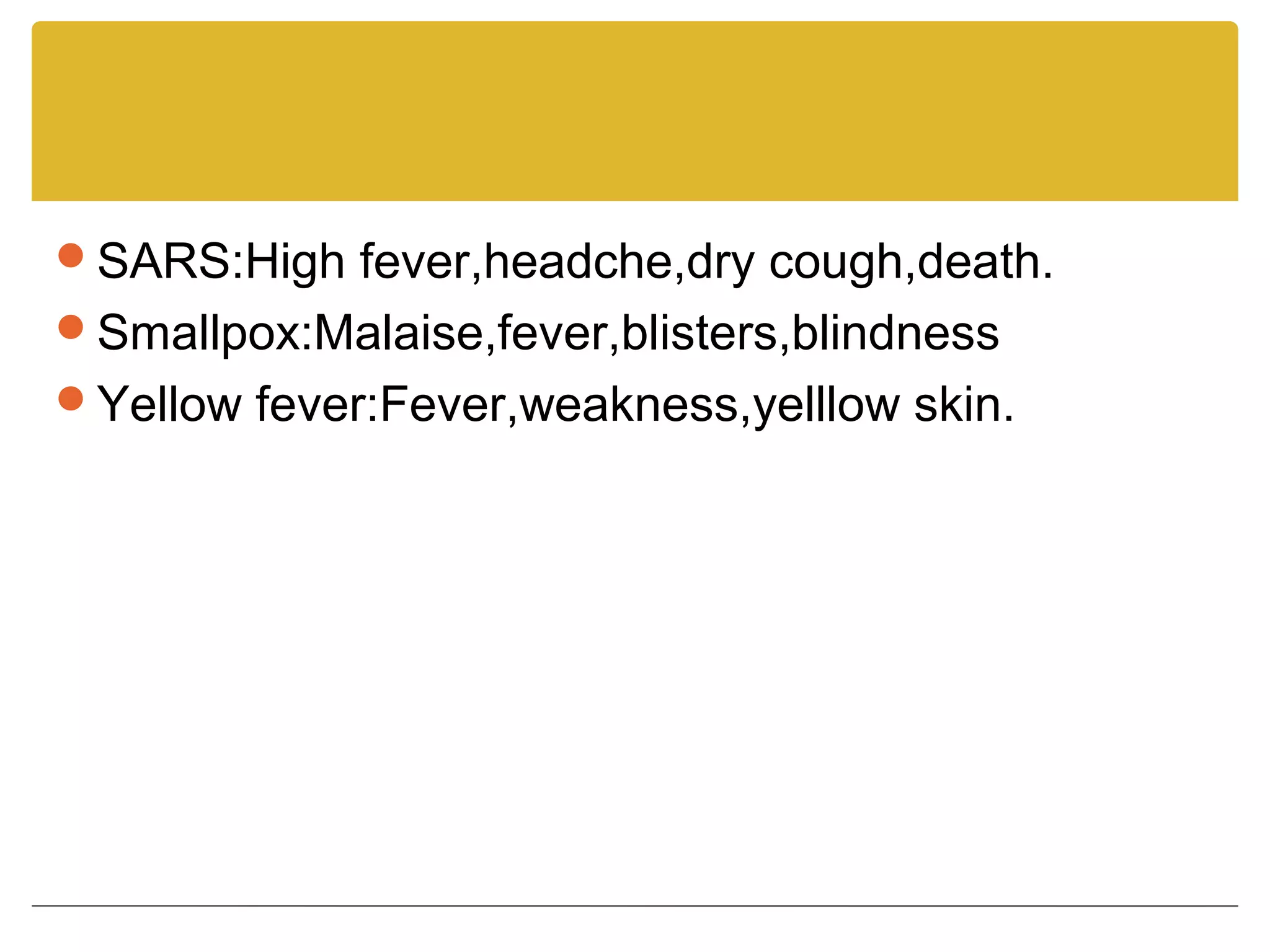
SARS:High fever,headche,dry cough,death.
Smallpox:Malaise,fever,blisters,blindness
Yellow fever:Fever,weakness,yelllow skin.
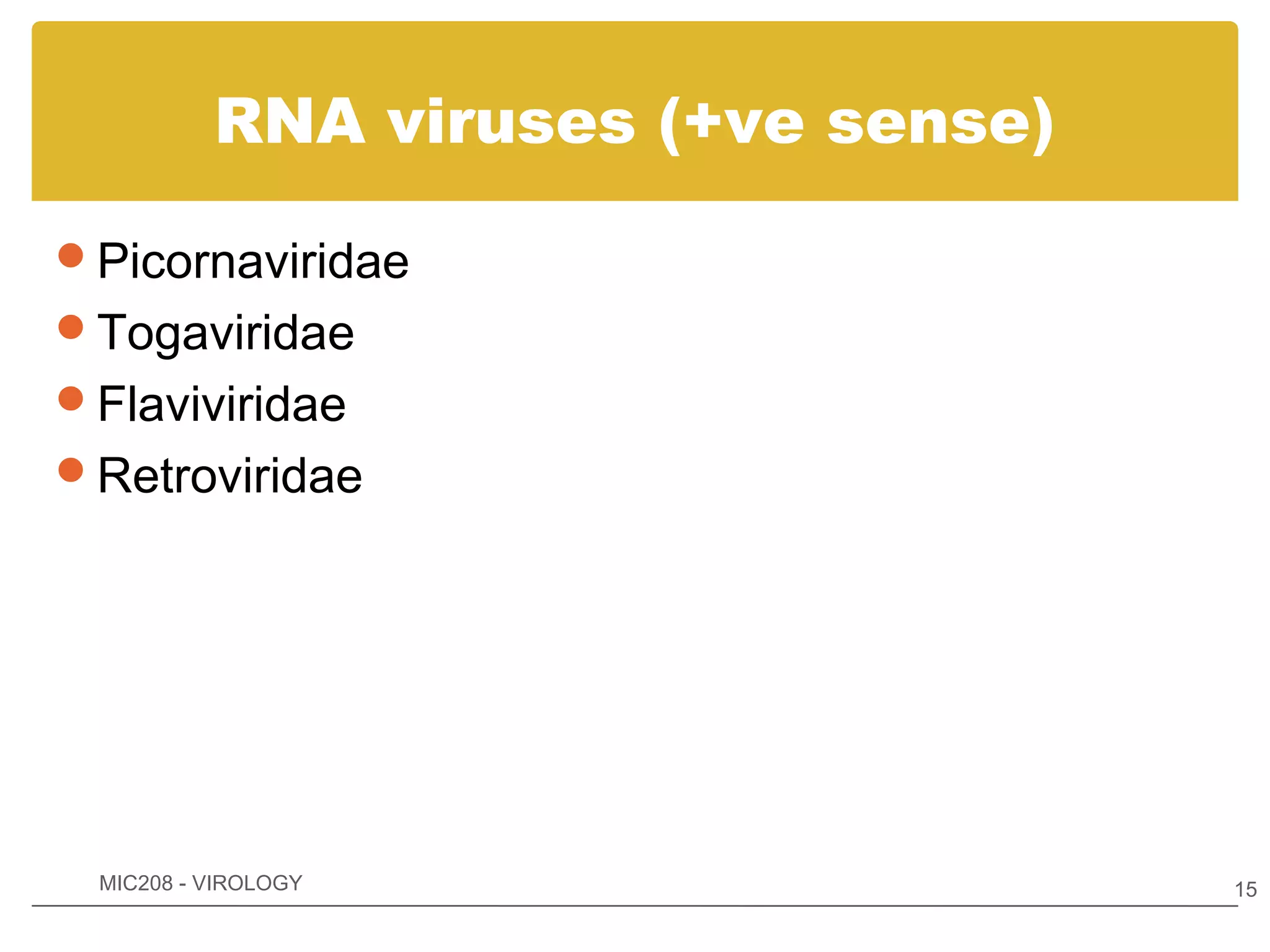
RNA viruses (+ve sense)

Picornaviridae
Togaviridae
Flaviviridae
Retroviridae


 MIC208 - VIROLOGY                  15
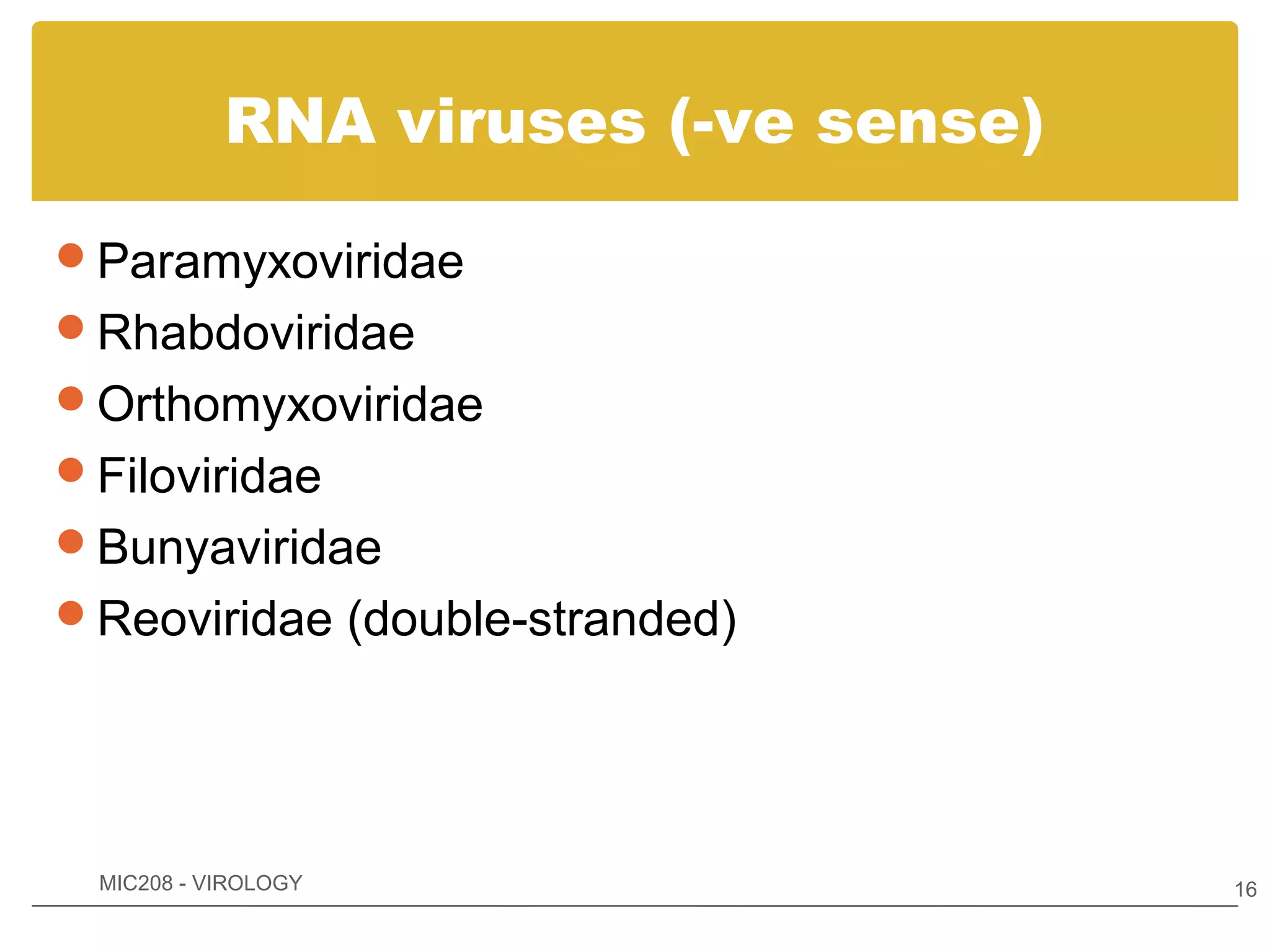
RNA viruses (-ve sense)

Paramyxoviridae
Rhabdoviridae
Orthomyxoviridae
Filoviridae
Bunyaviridae
Reoviridae (double-stranded)


 MIC208 - VIROLOGY                   16
DNA viruses

Double – stranded
•Adenoviridae
•Herpesviridae
•Poxviridae
•Papovaviridae
•Hepadnaviridae
Single – stranded
oParvoridae

 MIC208 - VIROLOGY                 17
Assignment 1

Per group have 4-5 per group = 16 groups
Presentation after CNY holiday
Each group have 5 minutes for presentation
Represent 5% marks for assessment
Explain the genome content, viral morphology,
 modes of transmission, infection in
 human,treatment.


 MIC208 - VIROLOGY                               18

Chapter 5 identification of virus

  • 1.
    Identification of virus Prepared by: Putri Shareen Binti Rosman
  • 2.
    Types of viralinfection Acute infections -relatively short duration with rapid discovery. Most viruses that infect humans, such as those that cause routine respiratory infections (e.g., cold viruses, influenza viruses) and gastrointestinal infections (e.g., Rotaviruses, Noroviruses),skin infection(e.g.,Varicella zoster virus) cause acute infections.
  • 3.
    Types of viralinfections Persistent infections - Viruses continually present in the body. - Late complications following acute infections. Also known as latent infection. Eg:HSV-1(fever blister),HSV-2(genital herpes).  Chronic infection - the virus can be demonstrated in the body at all times and the disease may be present or absent for an extended period of time. - Eg: hepatitis B (caused by HBV) and hepatitis C (caused by HCV).
  • 4.
    Slow infections -are ones in which the infectious agents gradually increase in number over a very long period of time during which no significant symptoms are seen. - Eg: include AIDS (caused by HIV-1 and HIV-2) and certain lentiviruses that cause tumors in animals.
  • 5.
    Portals of entryand exit of viruses Virus can enter into our body at many different sites and these are called portals of entry. Respiratory Tract Genitourinary Tract Gastrointestinal Tract Skin/Mucous Membrane Transplacental (mother to fetus) Blood
  • 6.
    Modes of Transmission Themechanism for transfer of an infectious agent from a reservoir to a susceptible host. Dr.M.ElBashaar
  • 7.
    Means of Transmission Five Main Routes Droplet Airborne Common Vehicle (Food, blood) Vector-borne Contact Direct Contact Indirect Contact (Objects) Dr.M.ElBashaar
  • 8.
    Sources and modesof transmission of infection 1. Person-to-Person Spread  Skin-to-skin contact, clothes, (viral as HSV1)  Droplets during coughing, sneezing (common cold, flu, swine flu, smallpox,measles,SARS)  Stool-to-mouth (fecal-oral) spread, usually via dirty hands or utensils (hepatitis A,poliomyelitis) Dr.M.ElBashaar
  • 9.
    Sources and modesof transmission of infection Sexually transmitted (gonorrhea, genital HSV2, genital warts (human papillomavirus – HPV). Blood-to-blood contact by: contaminated needles, usually by drug addicts or health workers (hepatitis B, C, AIDS) blood transfusion (hepatitis B,C, AIDS, viral hemorrhagic fevers) Vectors: rabies anthropod:mosquitoes (Malaria, Dengue,Yellow fever) Dr.M.ElBashaar
  • 10.
    Sources and modesof transmission of infection Spread from mother to fetus during pregnancy (hepatitis B, C, HIV, HSV-1, HSV-2, rubella, varicella, bird flu). Food poisoning is an infection of the gastrointestinal tract caused by microbes from contaminated food:Eg: Enterovirus Dr.M.ElBashaar
  • 11.
    Viral Diseases Diseases causedby viruses has been known for thousand years ago. Antibiotics are not effective in killing viruses Certain viruses are also linked to cancer in human such as Hepatitis B (liver cancer),Epstein-Barr virus (Burkitt’s Lymphoma) and Human Papilomavirus (cervical cancer).
  • 12.
    Important viral diseases AIDS:Immunesystem failure Common cold:Sinus congestion Ebola:High fever,uncontrolled bleeding Hepatitis A:Flu like symptom,swollen liver Hepatitis B:Flu-like symptom,swollen liver. Influenza (flu):Fever,chills,sneezing,body aches. Mumps:Painful swelling of saliva glands Polio:Fever,headachenstiff neck,paralysis Rabies: Mental depression,madness,paralysis
  • 13.
  • 15.
    RNA viruses (+vesense) Picornaviridae Togaviridae Flaviviridae Retroviridae MIC208 - VIROLOGY 15
  • 16.
    RNA viruses (-vesense) Paramyxoviridae Rhabdoviridae Orthomyxoviridae Filoviridae Bunyaviridae Reoviridae (double-stranded) MIC208 - VIROLOGY 16
  • 17.
    DNA viruses Double –stranded •Adenoviridae •Herpesviridae •Poxviridae •Papovaviridae •Hepadnaviridae Single – stranded oParvoridae MIC208 - VIROLOGY 17
  • 18.
    Assignment 1 Per grouphave 4-5 per group = 16 groups Presentation after CNY holiday Each group have 5 minutes for presentation Represent 5% marks for assessment Explain the genome content, viral morphology, modes of transmission, infection in human,treatment. MIC208 - VIROLOGY 18