MIC 319
FUNDAMENTALS OF
AGRICULTURAL
MICROBIOLOGY
Chapter 4
Diagnosis of Plant disease

By
Siti Norazura Jamal (Miss Azura)
03 006/ 06 483 2132
norazura6775@ns.uitm.edu.my
Objective
Identify common plant diseases cause by
microorganism
Observing the symptoms and sign
developed
Capable to relate Koch’s Postulate
principles
Outline
• Definition of symptoms and signs
• Categories of symptoms





Changes of colour
Death of cell necrosis
Hyperplastic formation
Hypoplasia

• Principle of Koch’s Postulates
Symptoms and
Signs
Symptoms : The visible response of a plant
to a causal agent over time.
Dead spot in leaves or bark
Unnatural colour or shape
Swelling on root or branches
Dead Spot on Leaves

Swelling on Branches
Symptoms and
Signs
Signs : The pathogen or its parts that seen on a
host plant
Observable structure of agent that cause the
disease
Fungal spores
Insects on plant
Fungal Spores

Aphids on Plant
Categories of
Symptoms
Symptom changes of colour
Symptom death of cell
Hypertrophy & Hyperplasia

Hypotrophy & Hypoplasia
Example of Plant
Disease Symptoms
Symptom Changes of Colour

Chlorosis
Etiolation

Mosaic
Chlorosis
Yellowing of leaves due to:
Loss of chlorophyll
pigment/lack of active
chlorophyll
Nutrient deficiencies

Toxicity of material
(pesticide)
Etiolation
Symptom of yellowing
& elongation of
stems/leaves
Due to the lack of light
(under dark condition)
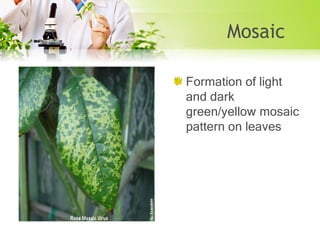
Mosaic
Formation of light
and dark
green/yellow mosaic
pattern on leaves
Symptom Death of Cell
Necrosis

General necrosis

Local necrosis

Soft rot

Leaf spots

Dry rot

Anthracnose

Vascular wilt

Downy mildew
Powdery mildew

Blight

Canker
General
Necrosis

Occur in the whole
plant that causes rot of
plant / tissue

Local
Necrosis

The necrosis sites are
limited
Only involved a part or
few plant cells / tissues
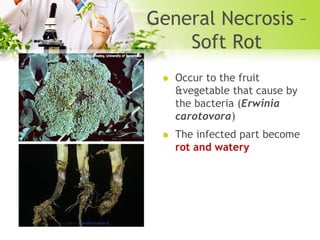
General Necrosis –
Soft Rot
Occur to the fruit
&vegetable that cause by
the bacteria (Erwinia
carotovora)
The infected part become
rot and watery
General
Necrosis - Blight
The fast and overall death
of plant tissue such as
shoot or leaves

Pathogens kill the cells /
tissues with which they are
in close contact and
become generally
distributed.
Example - Potato late
blight (Phytophthora
infestans)-fungus
Local Necrosis –
Leaf Spots
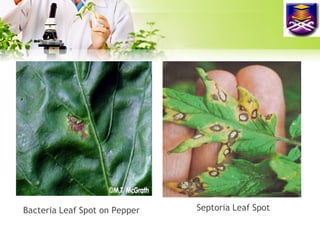
Spot of death cell or the presence of small
necrotic areas on leaves
Might caused by virus, fungal, bacteria, insect
bites, etc.
Example :
Bacteria leaf spot – Xanthomonas campestris pv.
vesicatoria
Septoria leaf spots - fungus
Bacteria Leaf Spot on Pepper

Septoria Leaf Spot
Local Necrosis Anthracnose
Normally infected by imperfect
fungi or Ascomycetes
Produces blackish lesions on fruits,
stem & leaf
Blackness being due to the presence
of dark spores, mycelium or both
Example –
Mango : Colletotrichum
gloeosporioides
Cucurbit : Colletotrichum
lagenarium
Necrosis –
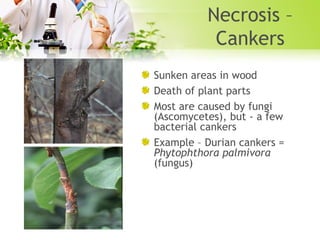
Cankers
Sunken areas in wood
Death of plant parts
Most are caused by fungi
(Ascomycetes), but - a few
bacterial cankers
Example – Durian cankers =
Phytophthora palmivora
(fungus)
NecrosisPowdery Mildew
The appearance of
powdery spots on the
leaves

Example - Powdery
mildew on cucurbit
=Erysiphe cichoracearum
(fungus)
Local Necrosis –
Downey Mildew

The occurrence of yellowish rectangular spot on the
leaves
Example – Downey mildew on cucurbit Pseudoperonospora cubensis, (fungus)
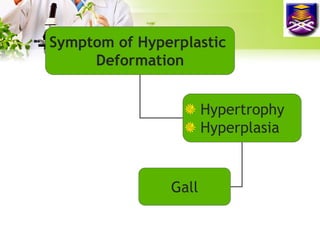
Symptom of Hyperplastic
Deformation

Hypertrophy
Hyperplasia

Gall
Hyperplastic Deformation : Abnormal outgrowths
of the plant host
Hypertrophy : Overgrowth of plant organ or plant
size because the increasing of cell sizes

Hyperplasia : Overgrowth of plant organ or plant
size because the increasing of cell numbers or cell
multiply rapidly.
Both gave the same results to the plant where the
size of plant tissue or plant organs increased than
usual (abnormal size)
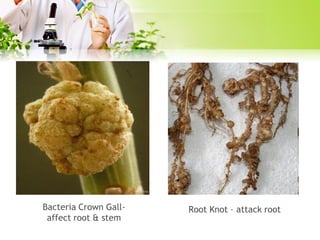
Gall
Localized swellings of plant organ
May caused by various pathogens such as bacteria,
fungi, nematodes and insects.
Examples –

Crown gall = Agrobacterium tumefaciens
(bacteria)
Root knot = Meloidogyne spp (nematodes)
Bacteria Crown Gallaffect root & stem

Root Knot – attack root
Witches' Broom
Appear as a cluster of small shoots
Curls
The leaves become
twisted and curled
Symptom of Hypoplasia

Retardation
Dwarfing
One or more members
of a plant are significantly
smaller than standard members
of their species
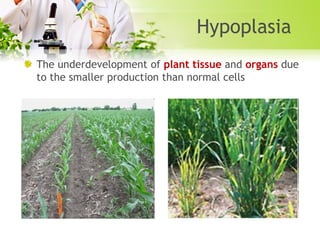
Hypoplasia
The underdevelopment of plant tissue and organs due
to the smaller production than normal cells
Hypotrophy : the under-development of
plant organ or plant size because the
reducing of cell sizes
Hypoplasia : the under-development of
plant organ or plant size because the
reducing of cell numbers
Principle of Koch’s Postulates
Principle of Koch’s
Postulates
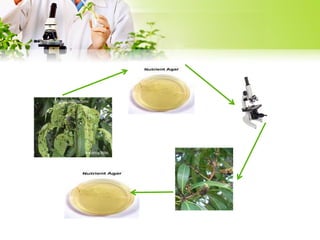
4 criteria designed to verify that the microorganism is
the causal agent for the disease.
4 rules / steps:
The suspected pathogen must be consistently
associated with the diseased plant
The microorganism must be isolated from the
diseased organism and grown in pure culture.
The cultured microorganism should cause disease
when inoculated into a healthy organism.
The microorganism must be reisolated from the
inoculated plant and grown in a pure culture. The
microorganism should have the same characteristic
with the original culture.
C4 mic319

C4 mic319

  • 1.
    MIC 319 FUNDAMENTALS OF AGRICULTURAL MICROBIOLOGY Chapter4 Diagnosis of Plant disease By Siti Norazura Jamal (Miss Azura) 03 006/ 06 483 2132 norazura6775@ns.uitm.edu.my
  • 2.
    Objective Identify common plantdiseases cause by microorganism Observing the symptoms and sign developed Capable to relate Koch’s Postulate principles
  • 3.
    Outline • Definition ofsymptoms and signs • Categories of symptoms     Changes of colour Death of cell necrosis Hyperplastic formation Hypoplasia • Principle of Koch’s Postulates
  • 5.
    Symptoms and Signs Symptoms :The visible response of a plant to a causal agent over time. Dead spot in leaves or bark Unnatural colour or shape Swelling on root or branches
  • 6.
    Dead Spot onLeaves Swelling on Branches
  • 7.
    Symptoms and Signs Signs :The pathogen or its parts that seen on a host plant Observable structure of agent that cause the disease Fungal spores Insects on plant
  • 8.
  • 10.
    Categories of Symptoms Symptom changesof colour Symptom death of cell Hypertrophy & Hyperplasia Hypotrophy & Hypoplasia
  • 11.
    Example of Plant DiseaseSymptoms Symptom Changes of Colour Chlorosis Etiolation Mosaic
  • 12.
    Chlorosis Yellowing of leavesdue to: Loss of chlorophyll pigment/lack of active chlorophyll Nutrient deficiencies Toxicity of material (pesticide)
  • 13.
    Etiolation Symptom of yellowing &elongation of stems/leaves Due to the lack of light (under dark condition)
  • 14.
    Mosaic Formation of light anddark green/yellow mosaic pattern on leaves
  • 15.
    Symptom Death ofCell Necrosis General necrosis Local necrosis Soft rot Leaf spots Dry rot Anthracnose Vascular wilt Downy mildew Powdery mildew Blight Canker
  • 16.
    General Necrosis Occur in thewhole plant that causes rot of plant / tissue Local Necrosis The necrosis sites are limited Only involved a part or few plant cells / tissues
  • 17.
    General Necrosis – SoftRot Occur to the fruit &vegetable that cause by the bacteria (Erwinia carotovora) The infected part become rot and watery
  • 18.
    General Necrosis - Blight Thefast and overall death of plant tissue such as shoot or leaves Pathogens kill the cells / tissues with which they are in close contact and become generally distributed. Example - Potato late blight (Phytophthora infestans)-fungus
  • 19.
    Local Necrosis – LeafSpots Spot of death cell or the presence of small necrotic areas on leaves Might caused by virus, fungal, bacteria, insect bites, etc. Example : Bacteria leaf spot – Xanthomonas campestris pv. vesicatoria Septoria leaf spots - fungus
  • 20.
    Bacteria Leaf Spoton Pepper Septoria Leaf Spot
  • 21.
    Local Necrosis Anthracnose Normallyinfected by imperfect fungi or Ascomycetes Produces blackish lesions on fruits, stem & leaf Blackness being due to the presence of dark spores, mycelium or both Example – Mango : Colletotrichum gloeosporioides Cucurbit : Colletotrichum lagenarium
  • 22.
    Necrosis – Cankers Sunken areasin wood Death of plant parts Most are caused by fungi (Ascomycetes), but - a few bacterial cankers Example – Durian cankers = Phytophthora palmivora (fungus)
  • 23.
    NecrosisPowdery Mildew The appearanceof powdery spots on the leaves Example - Powdery mildew on cucurbit =Erysiphe cichoracearum (fungus)
  • 24.
    Local Necrosis – DowneyMildew The occurrence of yellowish rectangular spot on the leaves Example – Downey mildew on cucurbit Pseudoperonospora cubensis, (fungus)
  • 25.
  • 26.
    Hyperplastic Deformation :Abnormal outgrowths of the plant host Hypertrophy : Overgrowth of plant organ or plant size because the increasing of cell sizes Hyperplasia : Overgrowth of plant organ or plant size because the increasing of cell numbers or cell multiply rapidly. Both gave the same results to the plant where the size of plant tissue or plant organs increased than usual (abnormal size)
  • 27.
    Gall Localized swellings ofplant organ May caused by various pathogens such as bacteria, fungi, nematodes and insects. Examples – Crown gall = Agrobacterium tumefaciens (bacteria) Root knot = Meloidogyne spp (nematodes)
  • 28.
    Bacteria Crown Gallaffectroot & stem Root Knot – attack root
  • 29.
    Witches' Broom Appear asa cluster of small shoots
  • 30.
  • 31.
    Symptom of Hypoplasia Retardation Dwarfing Oneor more members of a plant are significantly smaller than standard members of their species
  • 32.
    Hypoplasia The underdevelopment ofplant tissue and organs due to the smaller production than normal cells
  • 33.
    Hypotrophy : theunder-development of plant organ or plant size because the reducing of cell sizes Hypoplasia : the under-development of plant organ or plant size because the reducing of cell numbers
  • 34.
  • 35.
    Principle of Koch’s Postulates 4criteria designed to verify that the microorganism is the causal agent for the disease. 4 rules / steps: The suspected pathogen must be consistently associated with the diseased plant The microorganism must be isolated from the diseased organism and grown in pure culture. The cultured microorganism should cause disease when inoculated into a healthy organism. The microorganism must be reisolated from the inoculated plant and grown in a pure culture. The microorganism should have the same characteristic with the original culture.