E1 REACTION
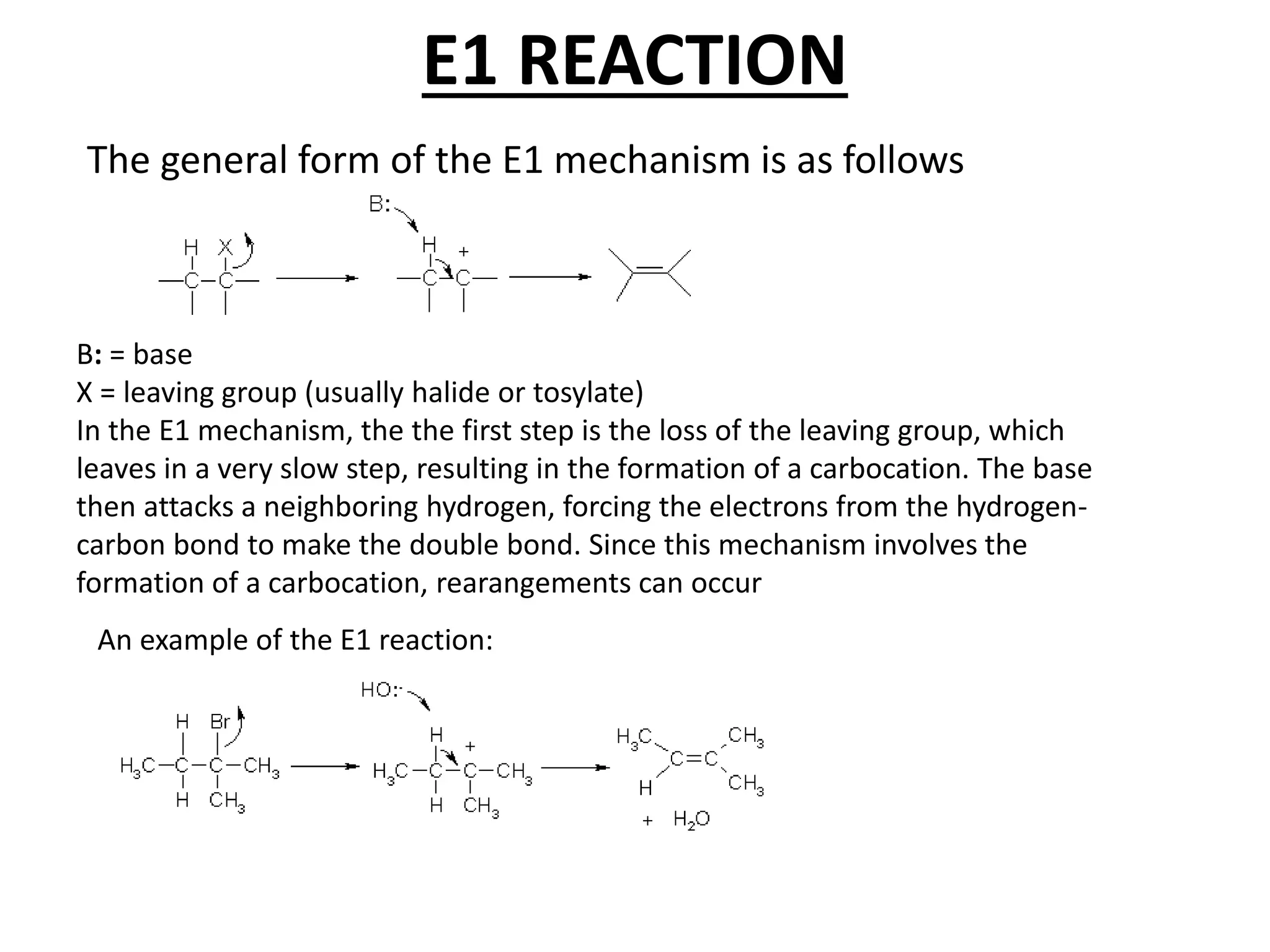
The general form of the E1 mechanism is as follows
B: = base
X = leaving group (usually halide or tosylate)
In the E1 mechanism, the the first step is the loss of the leaving group, which
leaves in a very slow step, resulting in the formation of a carbocation. The base
then attacks a neighboring hydrogen, forcing the electrons from the hydrogen-
carbon bond to make the double bond. Since this mechanism involves the
formation of a carbocation, rearangements can occur
An example of the E1 reaction:
E1 REACTION (Cont.)
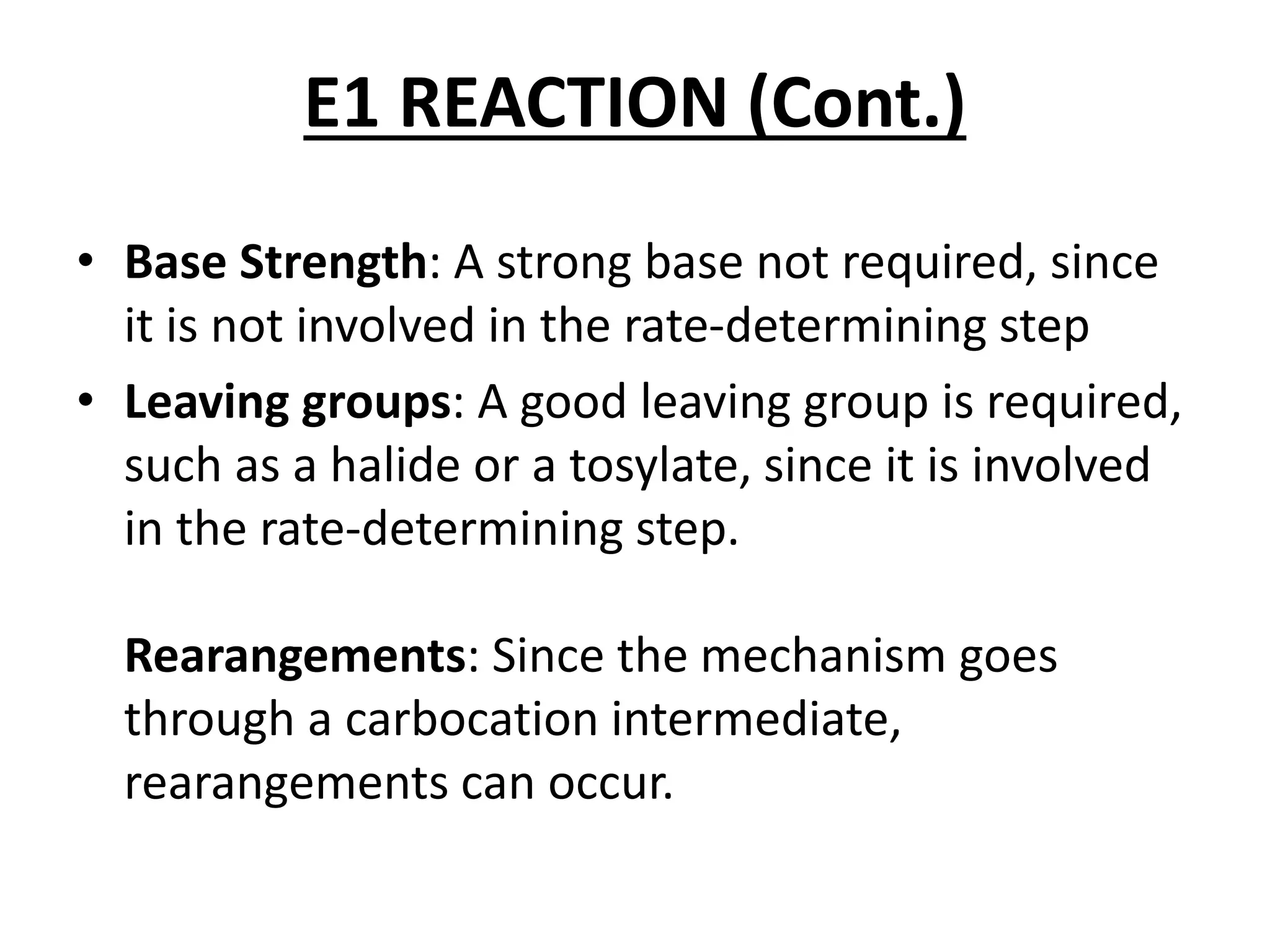
• Base Strength: A strong base not required, since
it is not involved in the rate-determining step
• Leaving groups: A good leaving group is required,
such as a halide or a tosylate, since it is involved
in the rate-determining step.
Rearangements: Since the mechanism goes
through a carbocation intermediate,
rearangements can occur.
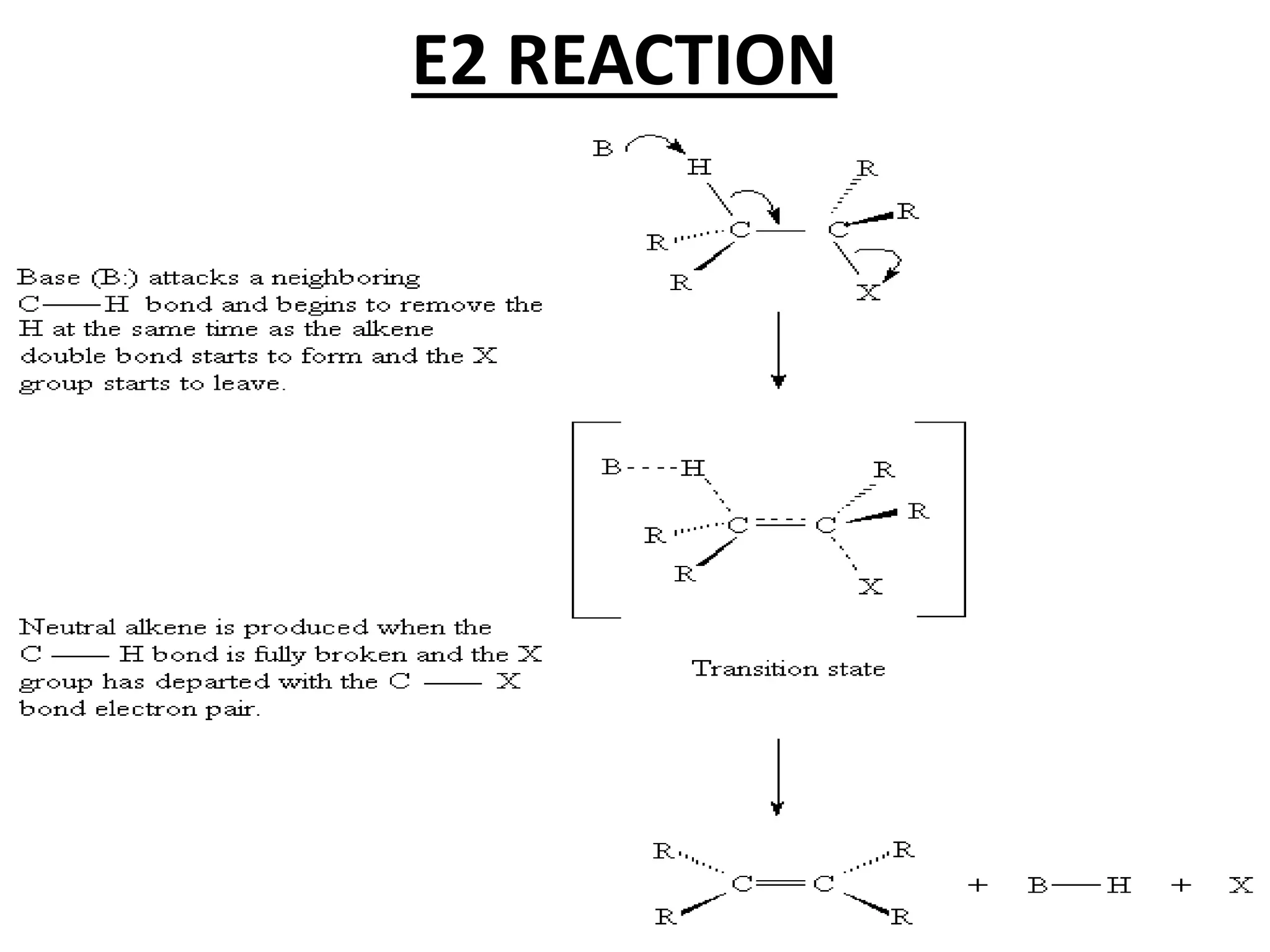
E2 REACTION
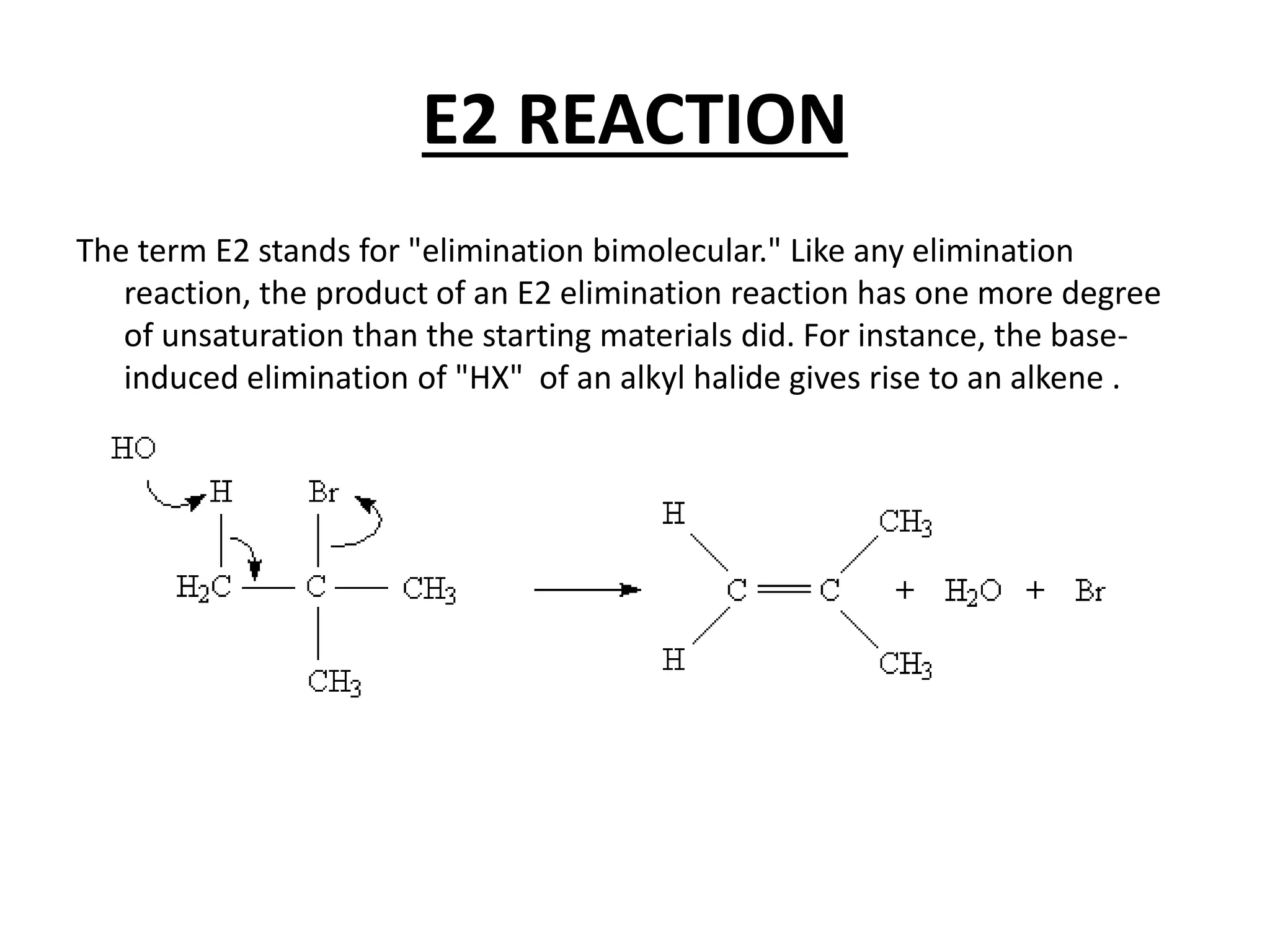
The term E2 stands for "elimination bimolecular." Like any elimination
reaction, the product of an E2 elimination reaction has one more degree
of unsaturation than the starting materials did. For instance, the base-
induced elimination of "HX" of an alkyl halide gives rise to an alkene .
E2 REACTION
SN1 reaction
The SN1 reaction is a substitution reaction in organic chemistry. "SN"
stands for nucleophilic substitution and the "1" represents the fact that
the rate-determining step is unimolecular.
Mechanism
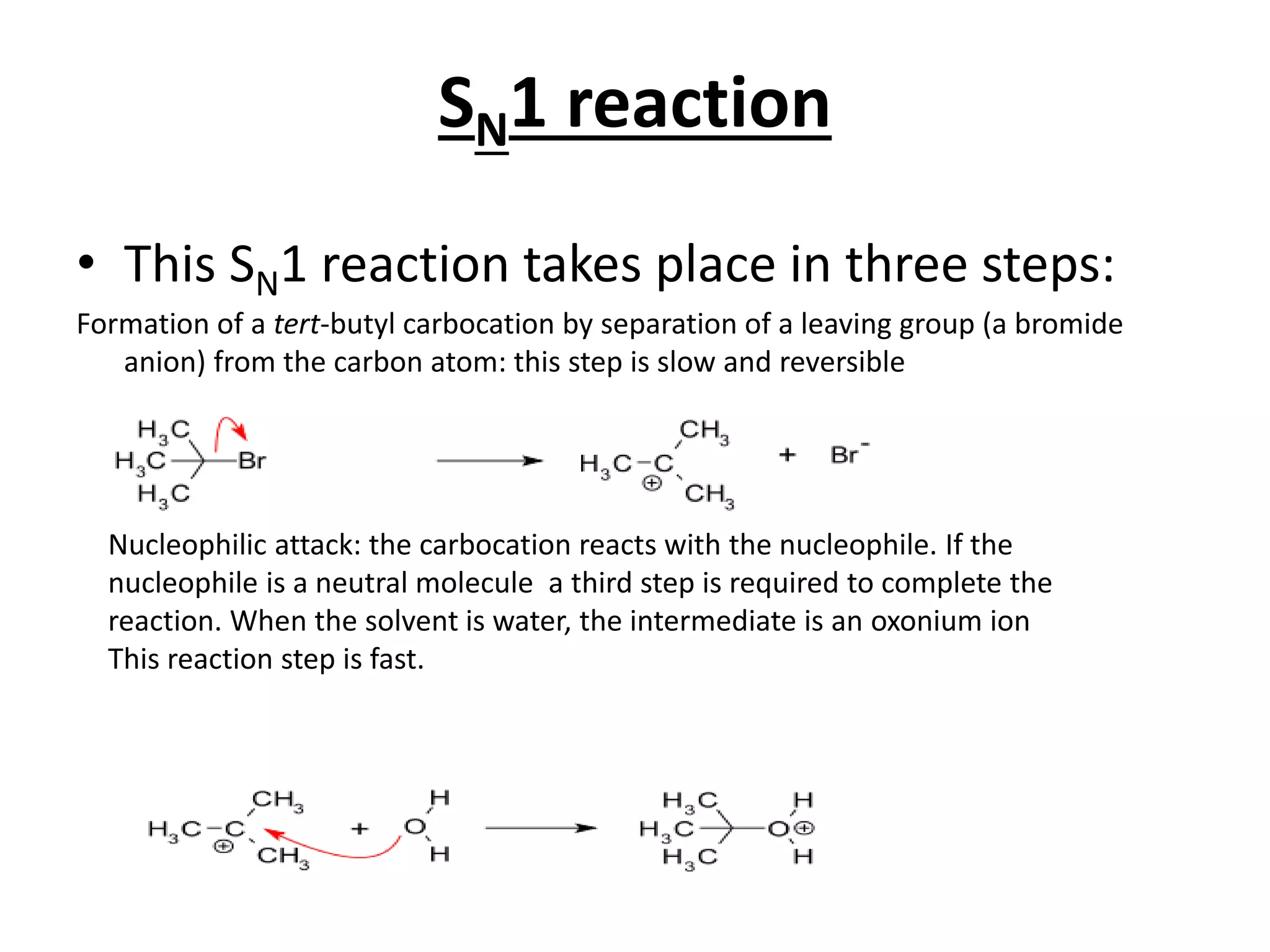
An example of a reaction taking place with an SN1 reaction mechanism is the
hydrolysis of tert-butyl bromide with water forming tert-butanol.
SN1 reaction
• This SN1 reaction takes place in three steps:
Formation of a tert-butyl carbocation by separation of a leaving group (a bromide
anion) from the carbon atom: this step is slow and reversible
Nucleophilic attack: the carbocation reacts with the nucleophile. If the
nucleophile is a neutral molecule a third step is required to complete the
reaction. When the solvent is water, the intermediate is an oxonium ion
This reaction step is fast.
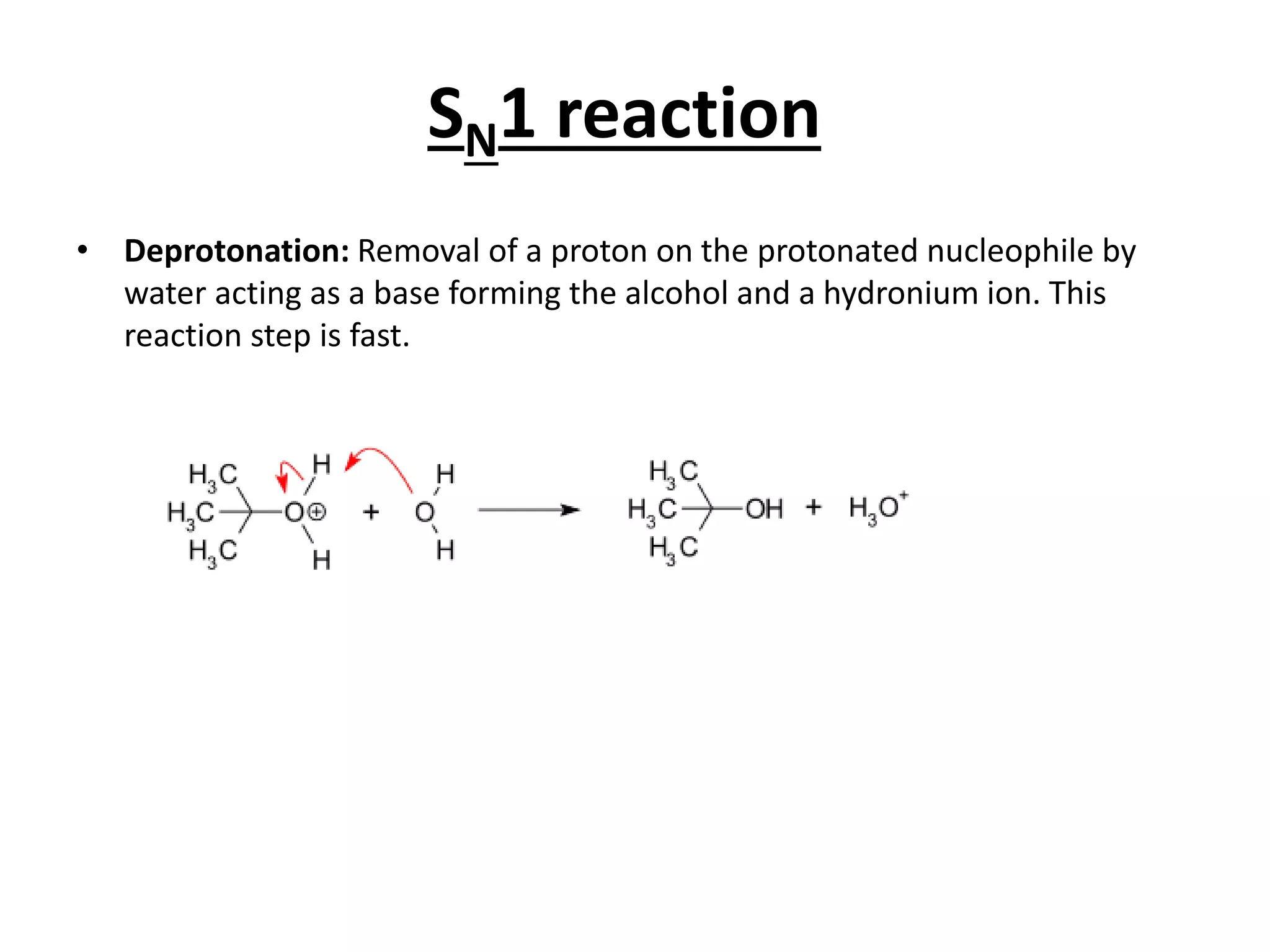
SN1 reaction
• Deprotonation: Removal of a proton on the protonated nucleophile by
water acting as a base forming the alcohol and a hydronium ion. This
reaction step is fast.
SN2 reaction
• The is a type of reaction mechanism that is
common in organic chemistry. In this
mechanism, one bond is broken and one bond
is formed synchronously, i.e., in one step. SN2
is a kind of nucleophilic substitution reaction
mechanism.
SN2 reaction
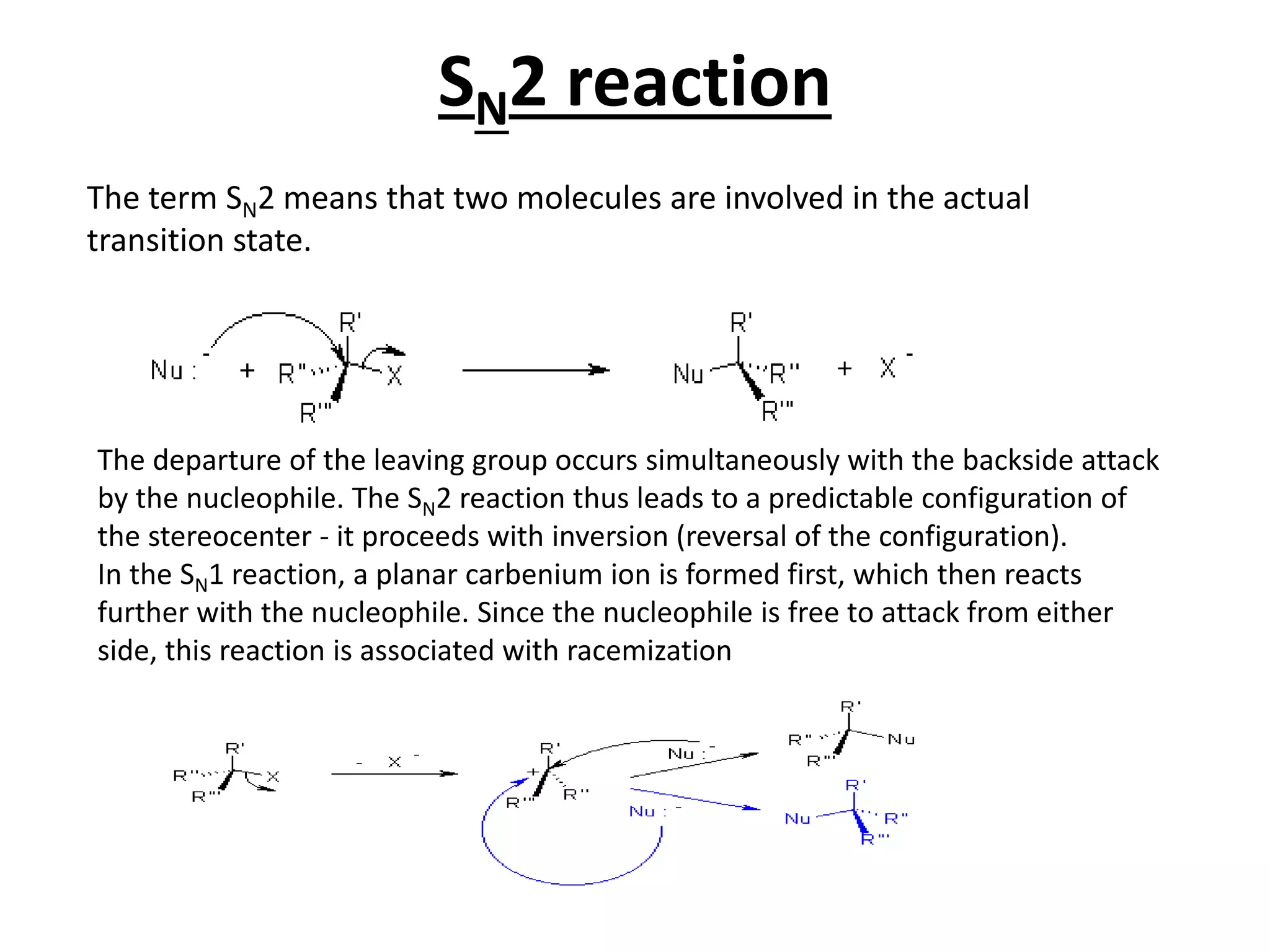
The term SN2 means that two molecules are involved in the actual
transition state.
The departure of the leaving group occurs simultaneously with the backside attack
by the nucleophile. The SN2 reaction thus leads to a predictable configuration of
the stereocenter - it proceeds with inversion (reversal of the configuration).
In the SN1 reaction, a planar carbenium ion is formed first, which then reacts
further with the nucleophile. Since the nucleophile is free to attack from either
side, this reaction is associated with racemization

E1, E2 and SN1,SN2 Mechanisms.

  • 2.
    E1 REACTION The generalform of the E1 mechanism is as follows B: = base X = leaving group (usually halide or tosylate) In the E1 mechanism, the the first step is the loss of the leaving group, which leaves in a very slow step, resulting in the formation of a carbocation. The base then attacks a neighboring hydrogen, forcing the electrons from the hydrogen- carbon bond to make the double bond. Since this mechanism involves the formation of a carbocation, rearangements can occur An example of the E1 reaction:
  • 3.
    E1 REACTION (Cont.) •Base Strength: A strong base not required, since it is not involved in the rate-determining step • Leaving groups: A good leaving group is required, such as a halide or a tosylate, since it is involved in the rate-determining step. Rearangements: Since the mechanism goes through a carbocation intermediate, rearangements can occur.
  • 4.
    E2 REACTION The termE2 stands for "elimination bimolecular." Like any elimination reaction, the product of an E2 elimination reaction has one more degree of unsaturation than the starting materials did. For instance, the base- induced elimination of "HX" of an alkyl halide gives rise to an alkene .
  • 5.
  • 6.
    SN1 reaction The SN1reaction is a substitution reaction in organic chemistry. "SN" stands for nucleophilic substitution and the "1" represents the fact that the rate-determining step is unimolecular. Mechanism An example of a reaction taking place with an SN1 reaction mechanism is the hydrolysis of tert-butyl bromide with water forming tert-butanol.
  • 7.
    SN1 reaction • ThisSN1 reaction takes place in three steps: Formation of a tert-butyl carbocation by separation of a leaving group (a bromide anion) from the carbon atom: this step is slow and reversible Nucleophilic attack: the carbocation reacts with the nucleophile. If the nucleophile is a neutral molecule a third step is required to complete the reaction. When the solvent is water, the intermediate is an oxonium ion This reaction step is fast.
  • 8.
    SN1 reaction • Deprotonation:Removal of a proton on the protonated nucleophile by water acting as a base forming the alcohol and a hydronium ion. This reaction step is fast.
  • 9.
    SN2 reaction • Theis a type of reaction mechanism that is common in organic chemistry. In this mechanism, one bond is broken and one bond is formed synchronously, i.e., in one step. SN2 is a kind of nucleophilic substitution reaction mechanism.
  • 10.
    SN2 reaction The termSN2 means that two molecules are involved in the actual transition state. The departure of the leaving group occurs simultaneously with the backside attack by the nucleophile. The SN2 reaction thus leads to a predictable configuration of the stereocenter - it proceeds with inversion (reversal of the configuration). In the SN1 reaction, a planar carbenium ion is formed first, which then reacts further with the nucleophile. Since the nucleophile is free to attack from either side, this reaction is associated with racemization