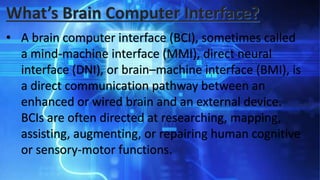
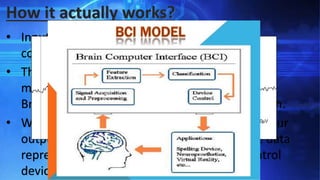
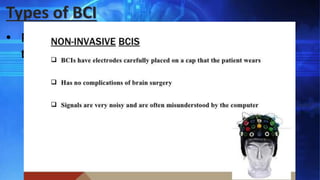
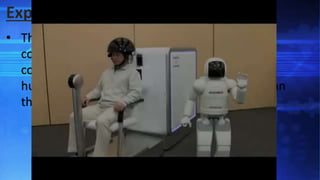
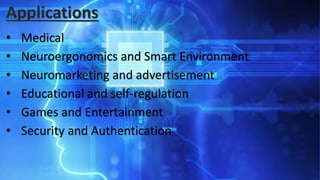
A brain-computer interface (BCI) establishes direct communication between the brain and external devices, aiming to enhance cognitive and sensory-motor functions. Research began in the 1970s, following significant discoveries in brain activity recording, and BCIs can be non-invasive or invasive, with various applications in fields like medicine, neuromarketing, and entertainment. The technology allows controlling devices through brain activity data, opening possibilities for innovative uses.








![Getting Started with Apache Spark: Big Data Made Simple [Free Meetup]](https://cdn.slidesharecdn.com/ss_thumbnails/apachesparkgettingstarted-260203175547-8361bcc3-thumbnail.jpg?width=640&height=640&fit=bounds)


