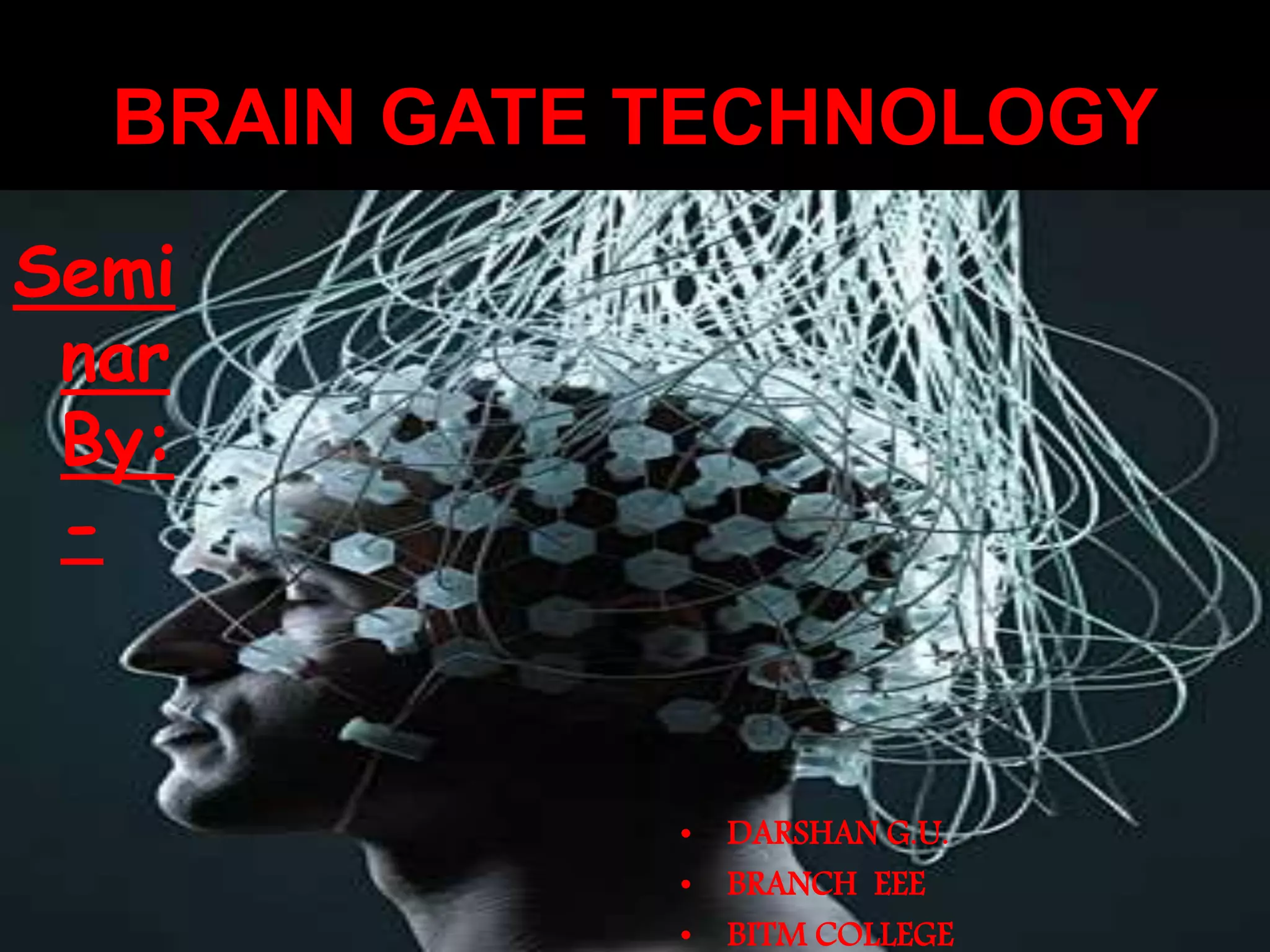
BRAIN GATE TECHNOLOGY
• DARSHAN G.U.
• BRANCH EEE
• BITM COLLEGE
Semi
nar
By:
-
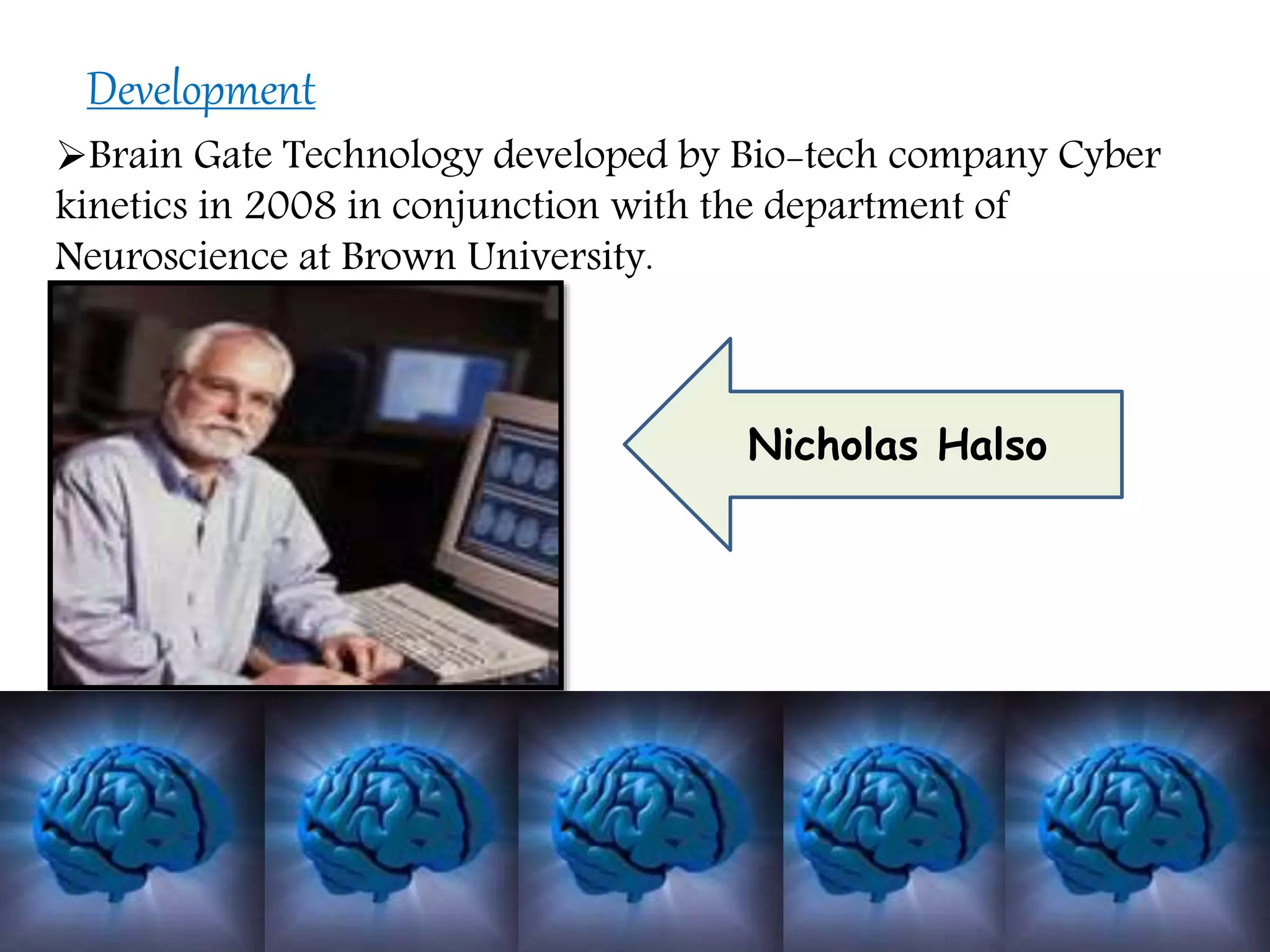
Brain Gate Technology developed by Bio-tech company Cyber
kinetics in 2008 in conjunction with the department of
Neuroscience at Brown University.
Development
Nicholas Halso
NEED OF BRAIN GATE TECHNOLOGY
• 300,000 Americans are spinal cord injured.
• 52% of spinal cord injured individuals are
considered Partial paralysis and 48% Total
Paralysis
• Approximately 15,000 new injuries occur each
year.
• 82% are male.
• 56% of injuries occur between the ages of 16
and 30
How it is possible to
read Brain Thought
The brain-machine interface analyzes
slight changes in the brain's blood
flow and translates brain motion into
electric signals.
Brain-Computer Interface
• A brain–computer interface (BCI) is a direct
communication pathway between a brain and
an external device computer interface (BCI).
• It’s also known as direct neural interface or a
brain–machine interface.
• Brain computer interface takes place as a result
of EEG
6
Brain Signals & Electroencephalogram
(EEG)
• EEG is a recording of the electrical activity of the brain directly from
the scalp produced by the firing of neurons within the brain.
• No EEG signal pattern is duplicated for any two distinct actions
How EEG Works ?
• Recordes patterns by placing small metal discs called electrodes on
the scalp in certain positions
• Each electrode is labeled with a letter and a number to indicate its
position.
7
7
How the Signal is Produced
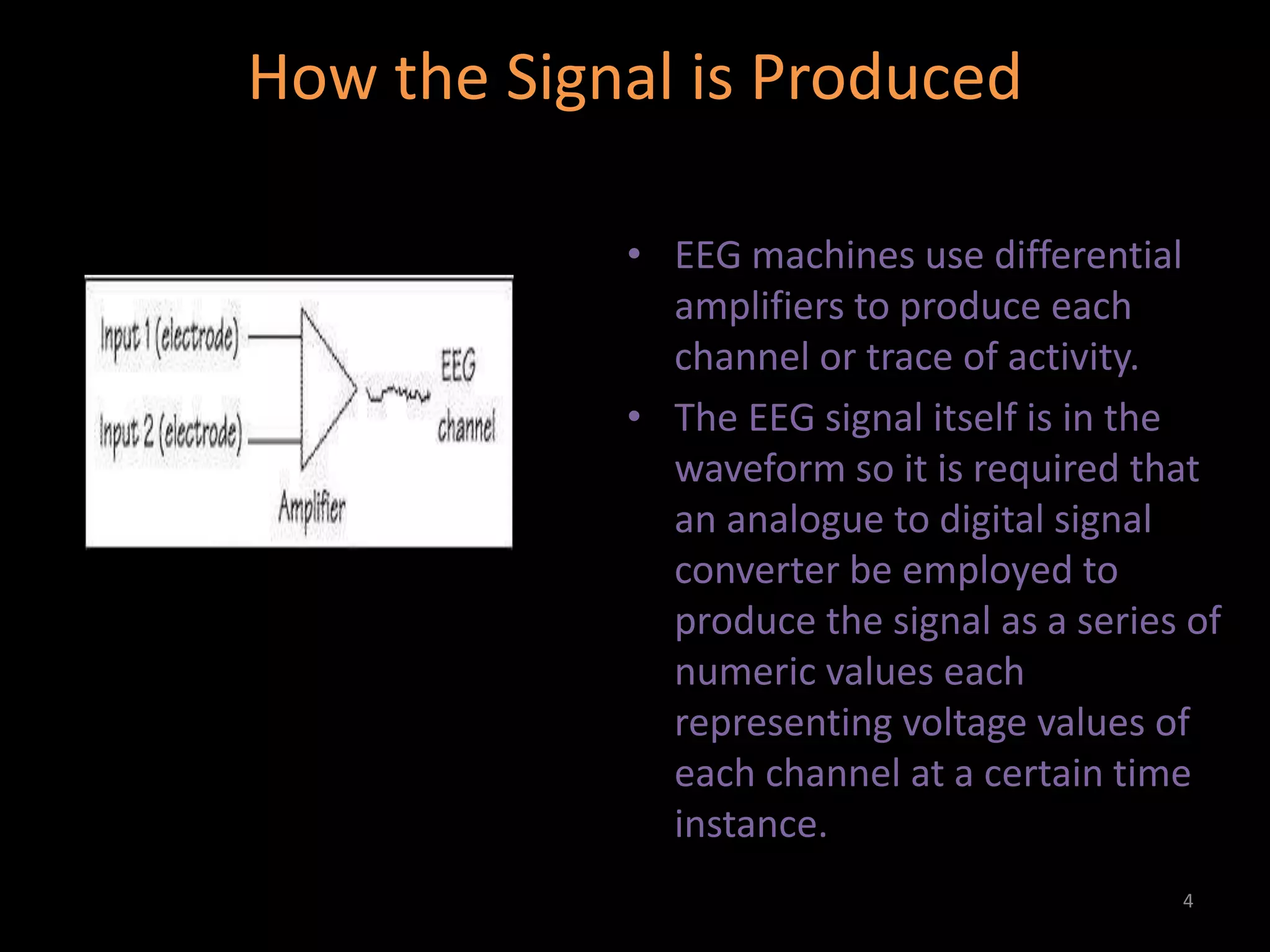
• EEG machines use differential
amplifiers to produce each
channel or trace of activity.
• The EEG signal itself is in the
waveform so it is required that
an analogue to digital signal
converter be employed to
produce the signal as a series of
numeric values each
representing voltage values of
each channel at a certain time
instance.
4
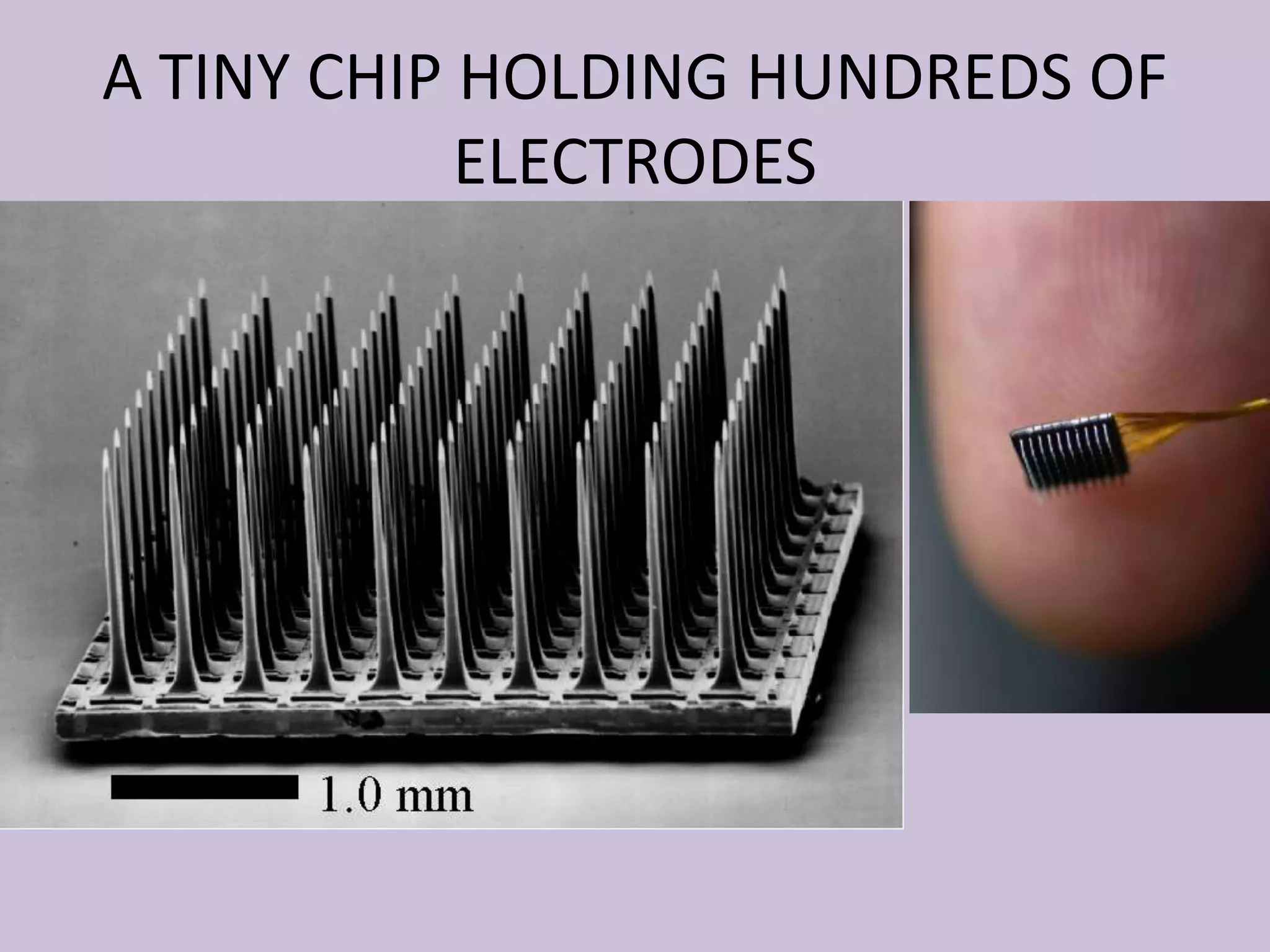
A TINY CHIP HOLDING HUNDREDS OF
ELECTRODES
A TINY CHIP HOLDING 100
MICROSCOPIC ELECTRODES
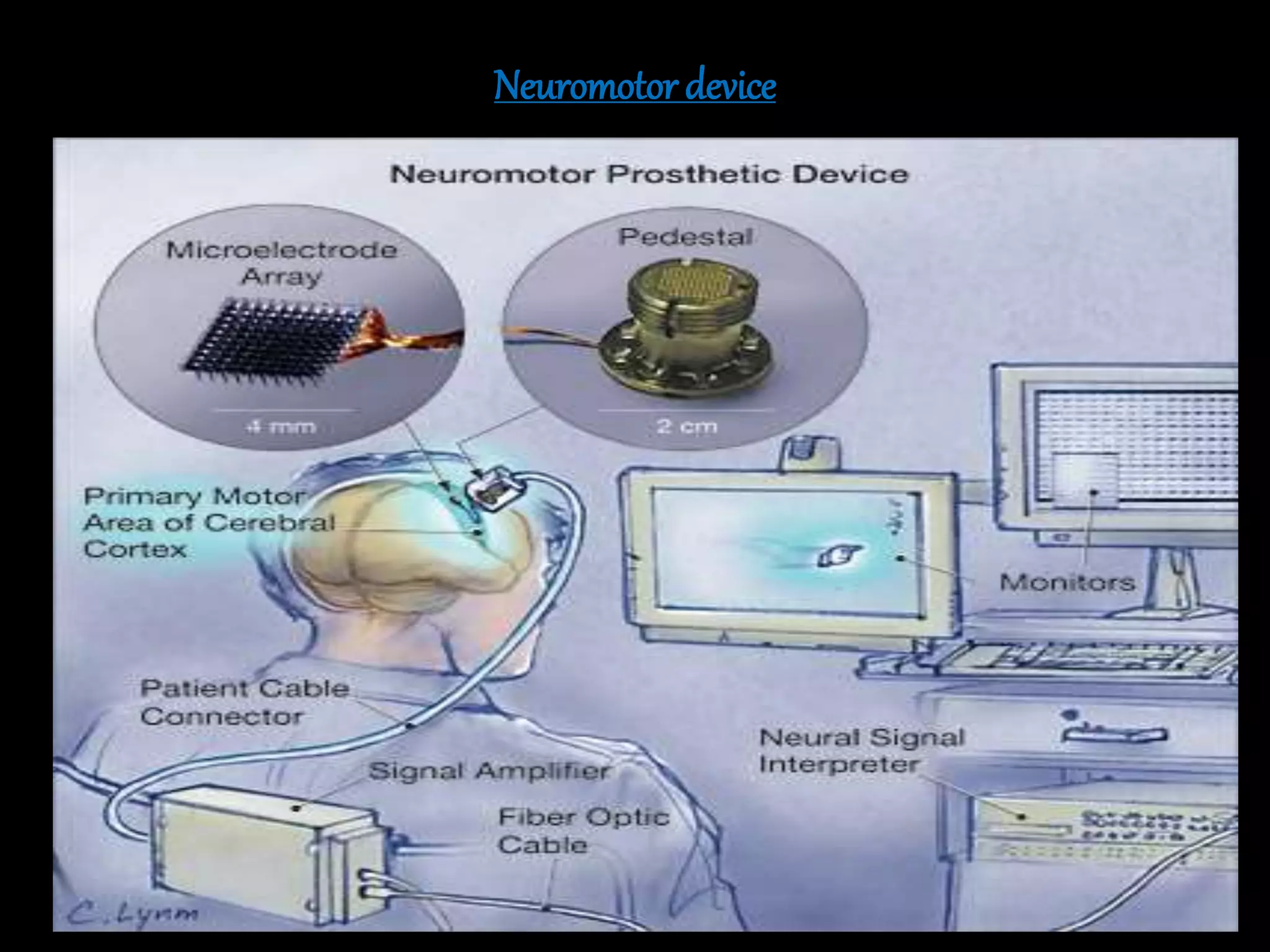
• The Braingate Neural Interface device consists of a tiny chip
containing 100 microscopic electrodes that is surgically
implanted in the brain's motor cortex. The whole apparatus is
the size of a baby aspirin. The chip can read signals from the
motor cortex, send that information to a computer via
connected wires, and translate it to control the movement of
a computer cursor or a robotic arm. According to Dr. John
Donaghue of Cyberkinetics, there is practically no training
required to use Brain Gate because the signals read by a chip
implanted, for example, in the area of the motor cortex for
arm movement, are the same signals that would be sent to
the real arm.
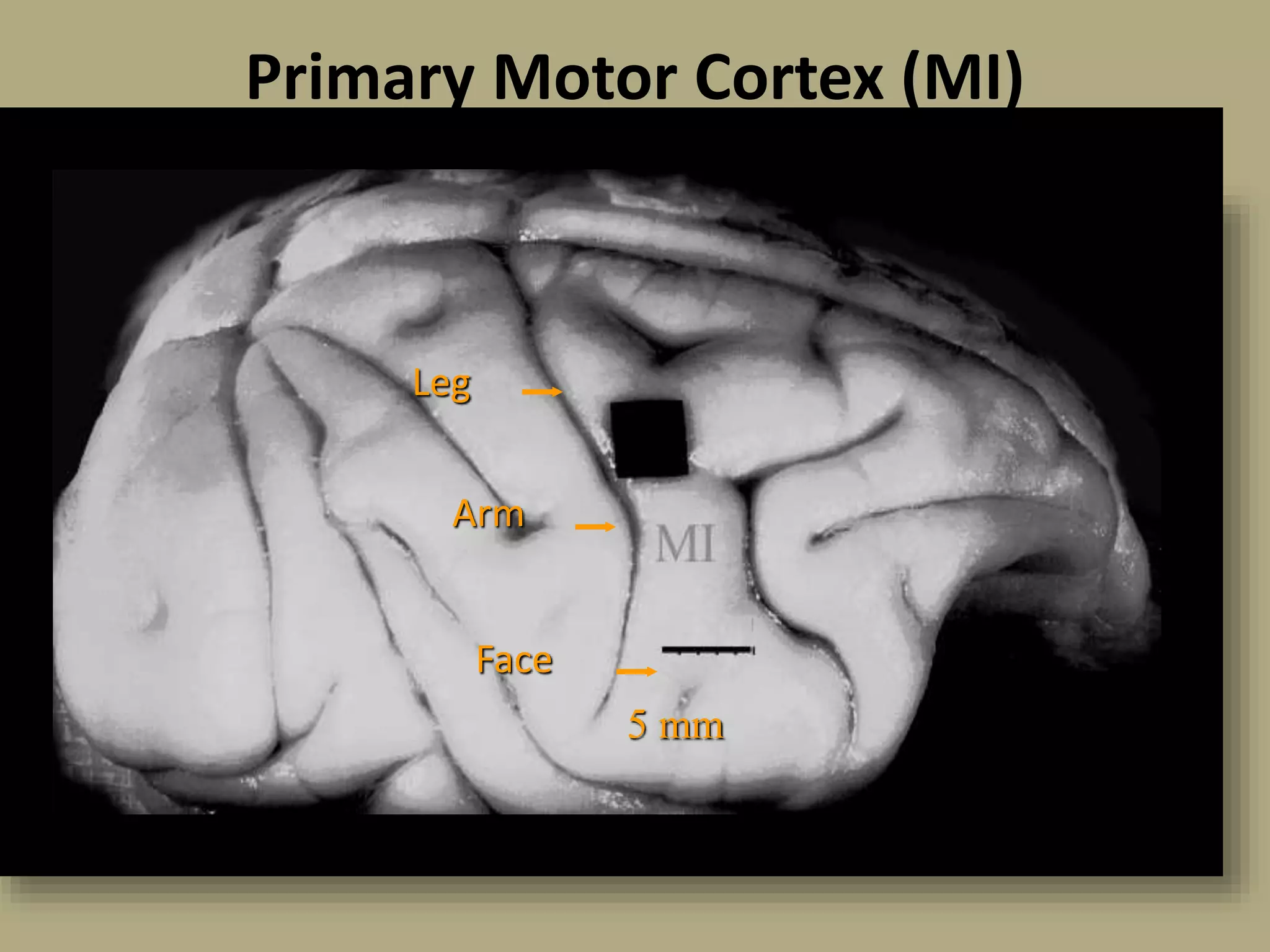
Primary Motor Cortex (MI)
Leg
Face
Arm
5 mm
WORKING
• The sensor of the size of a contact lens is implanted in
brain’s MOTOR CORTEX which control hand and arm
movements. A tiny wire connects the chip to a small
pedestal secured in the scull. A cable connects the
pedestal to a computer. The brain's 100bn neurons fire
between 20 and 200 times a second .The sensor
implanted in the brain senses these electrical signals
and passes signals to the computer through the cable.
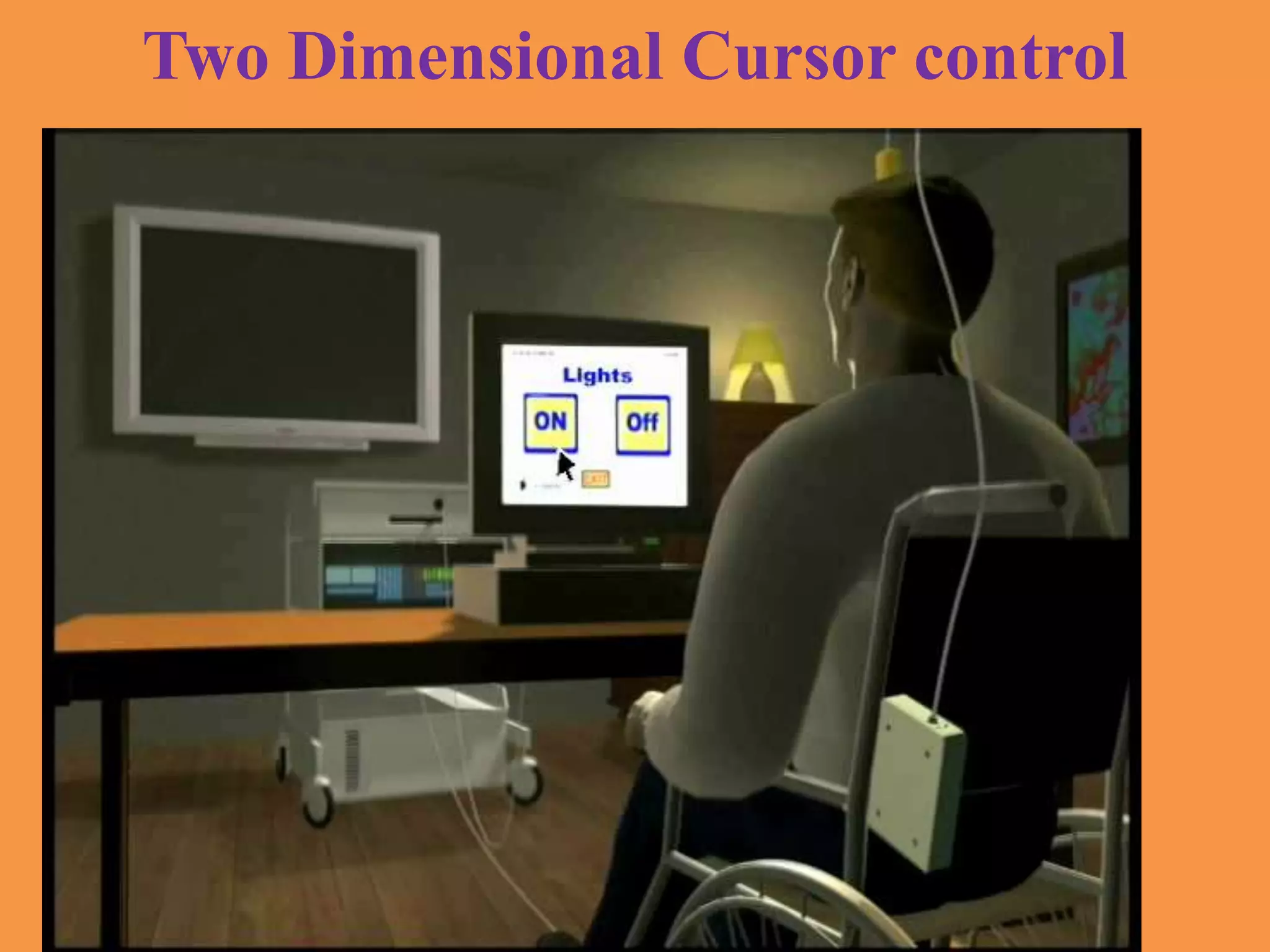
The computer translates the signals into a
communication output, allowing a person to move a
cursor on a computer screen merely by thinking about
it.
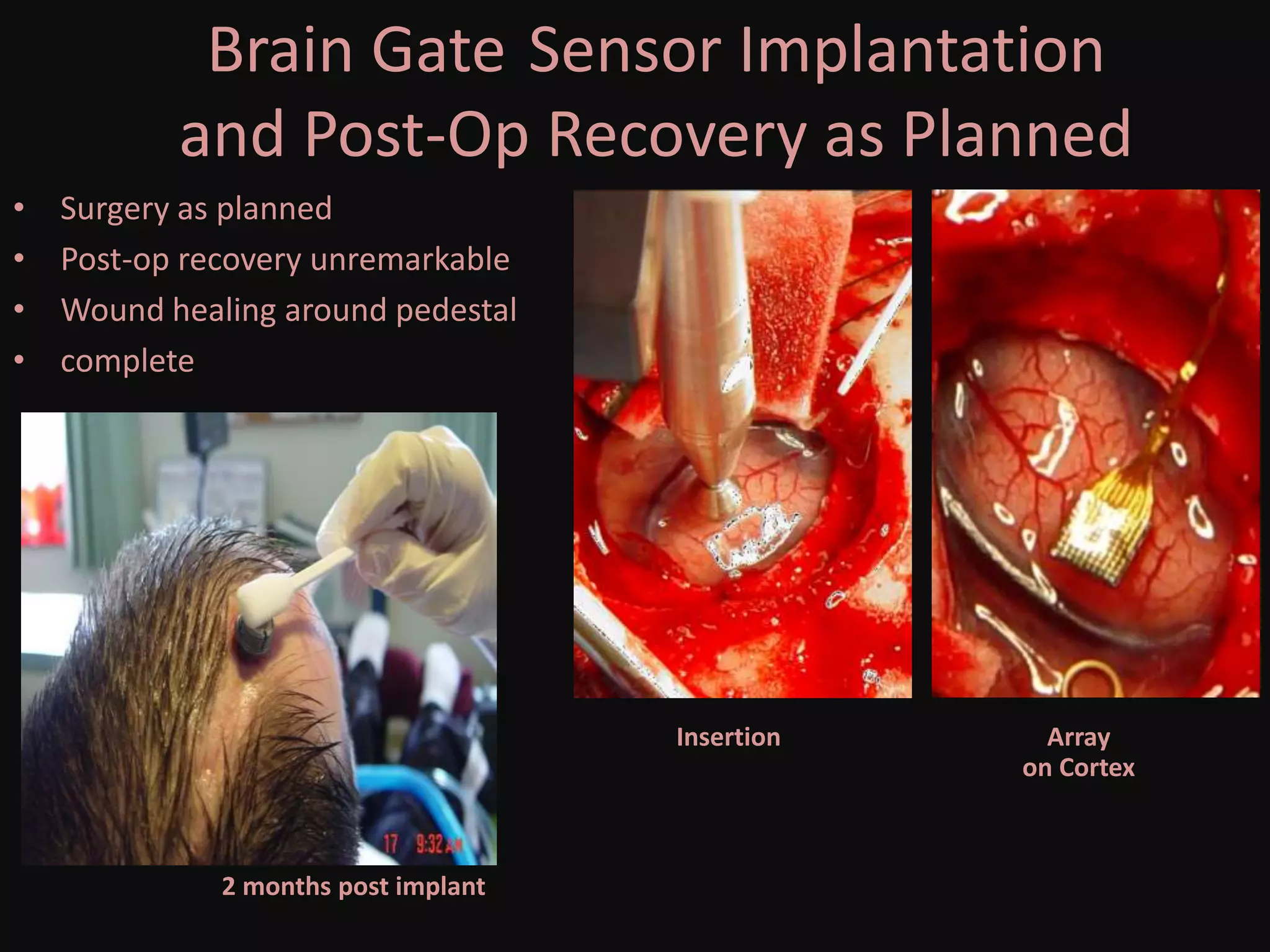
Brain Gate Sensor Implantation
and Post-Op Recovery as Planned
• Surgery as planned
• Post-op recovery unremarkable
• Wound healing around pedestal
• complete
Array
on Cortex
Insertion
2 months post implant
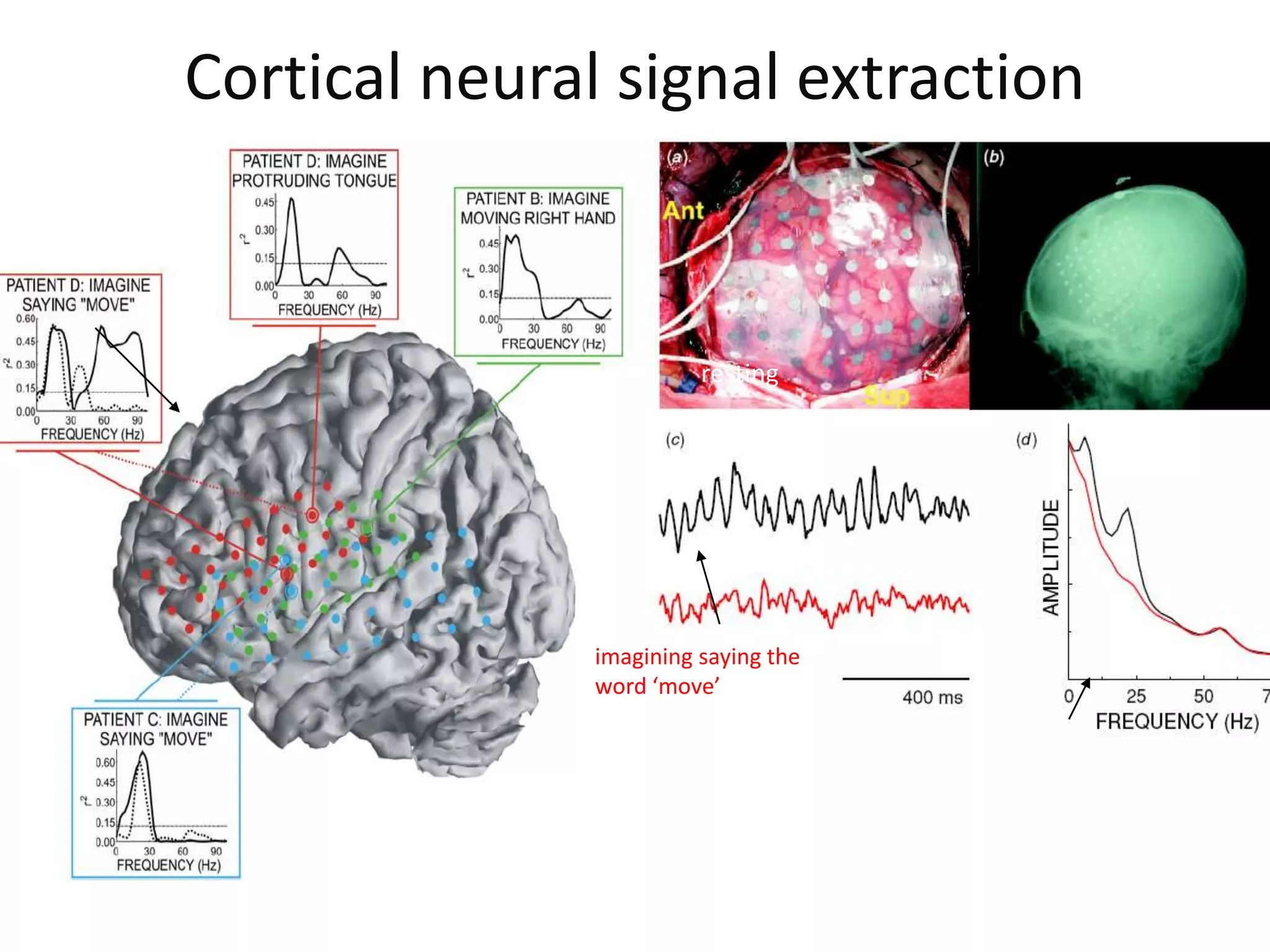
Cortical neural signal extraction
imagining saying the
word ‘move’
resting
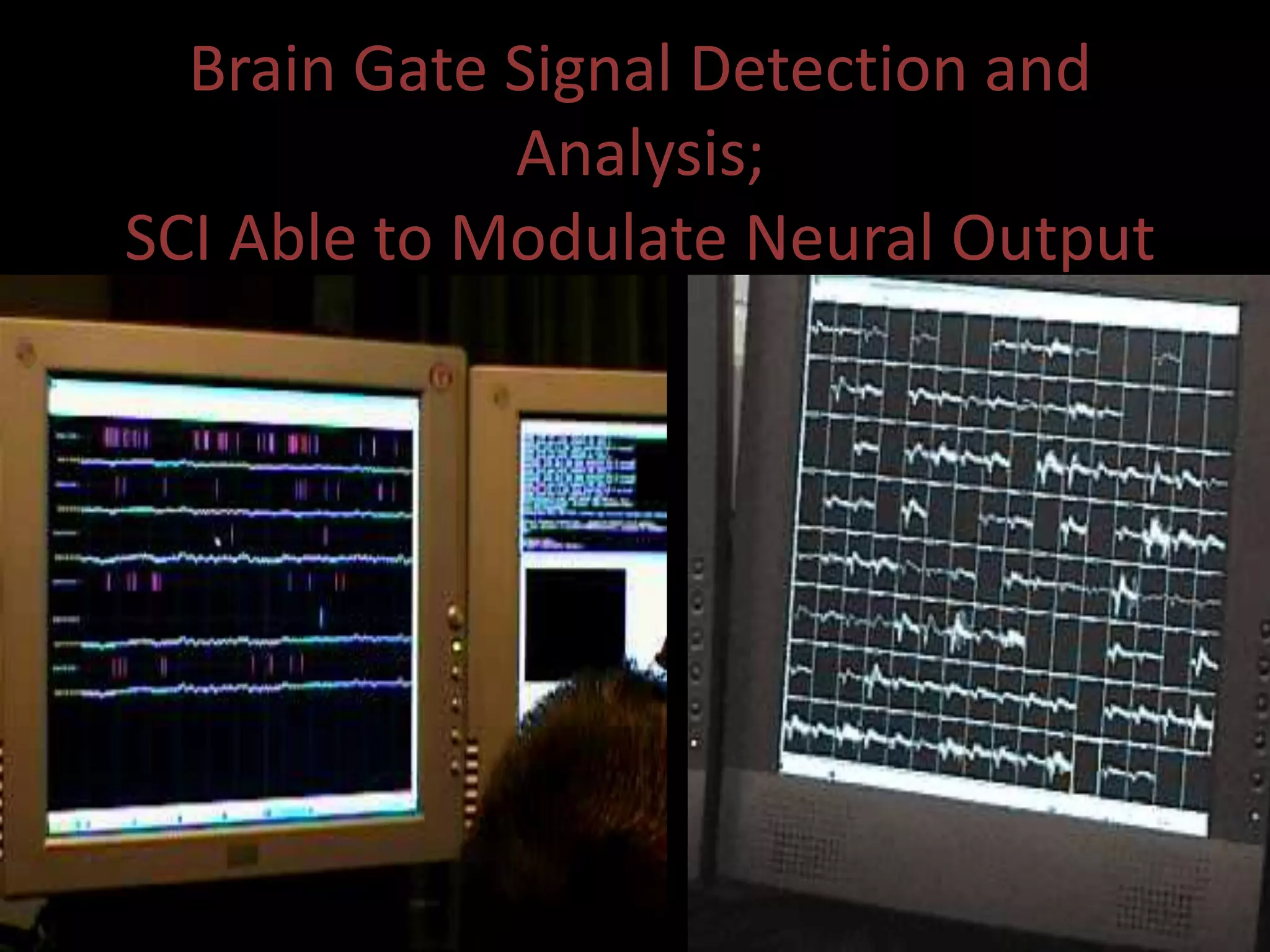
Brain Gate Signal Detection and
Analysis;
SCI Able to Modulate Neural Output
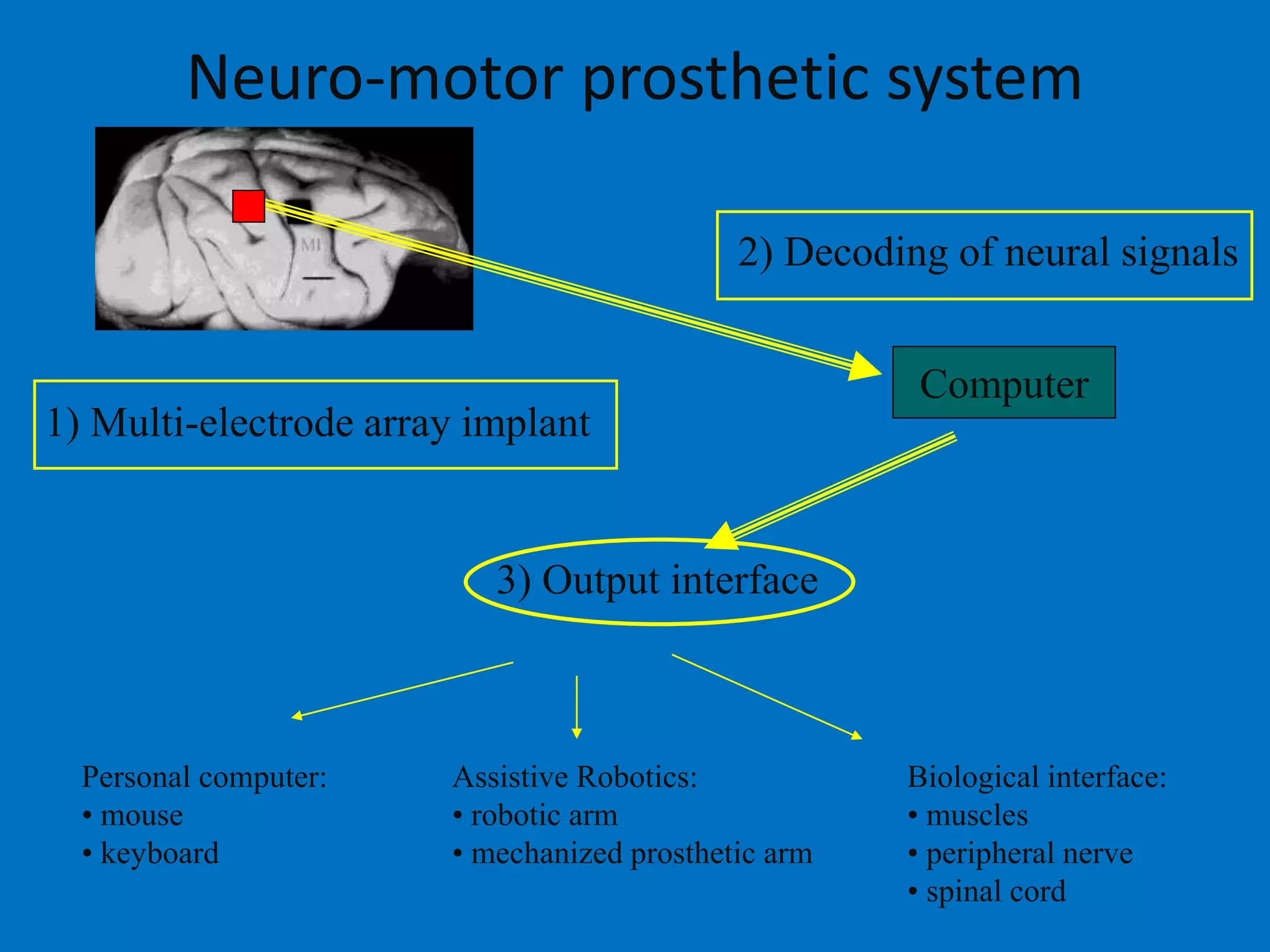
Neuro-motor prosthetic system
Computer
1) Multi-electrode array implant
2) Decoding of neural signals
3) Output interface
Personal computer:
• mouse
• keyboard
Assistive Robotics:
• robotic arm
• mechanized prosthetic arm
Biological interface:
• muscles
• peripheral nerve
• spinal cord
Neuromotor device
Two Dimensional Cursor control
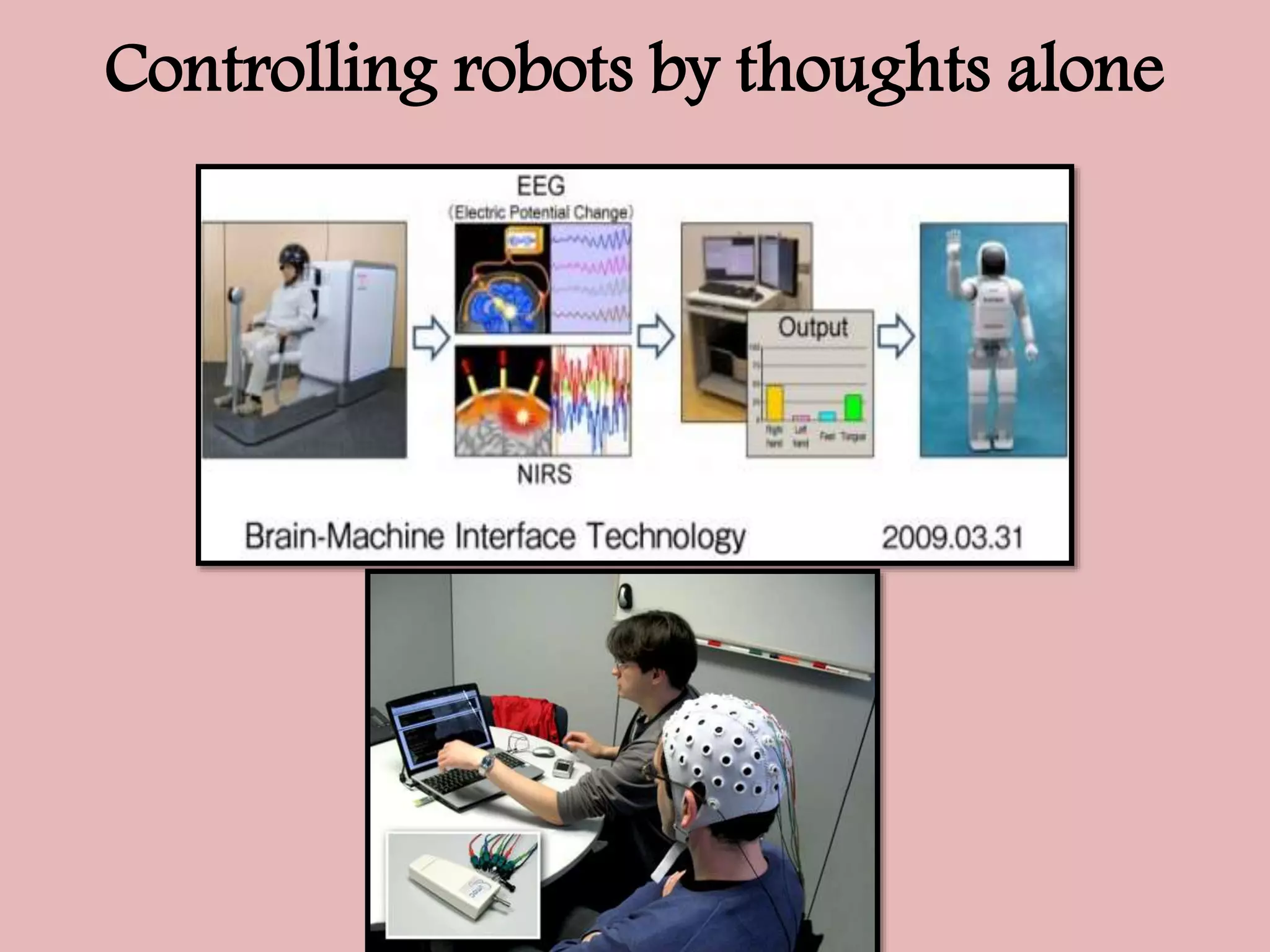
Controlling robots by thoughts alone
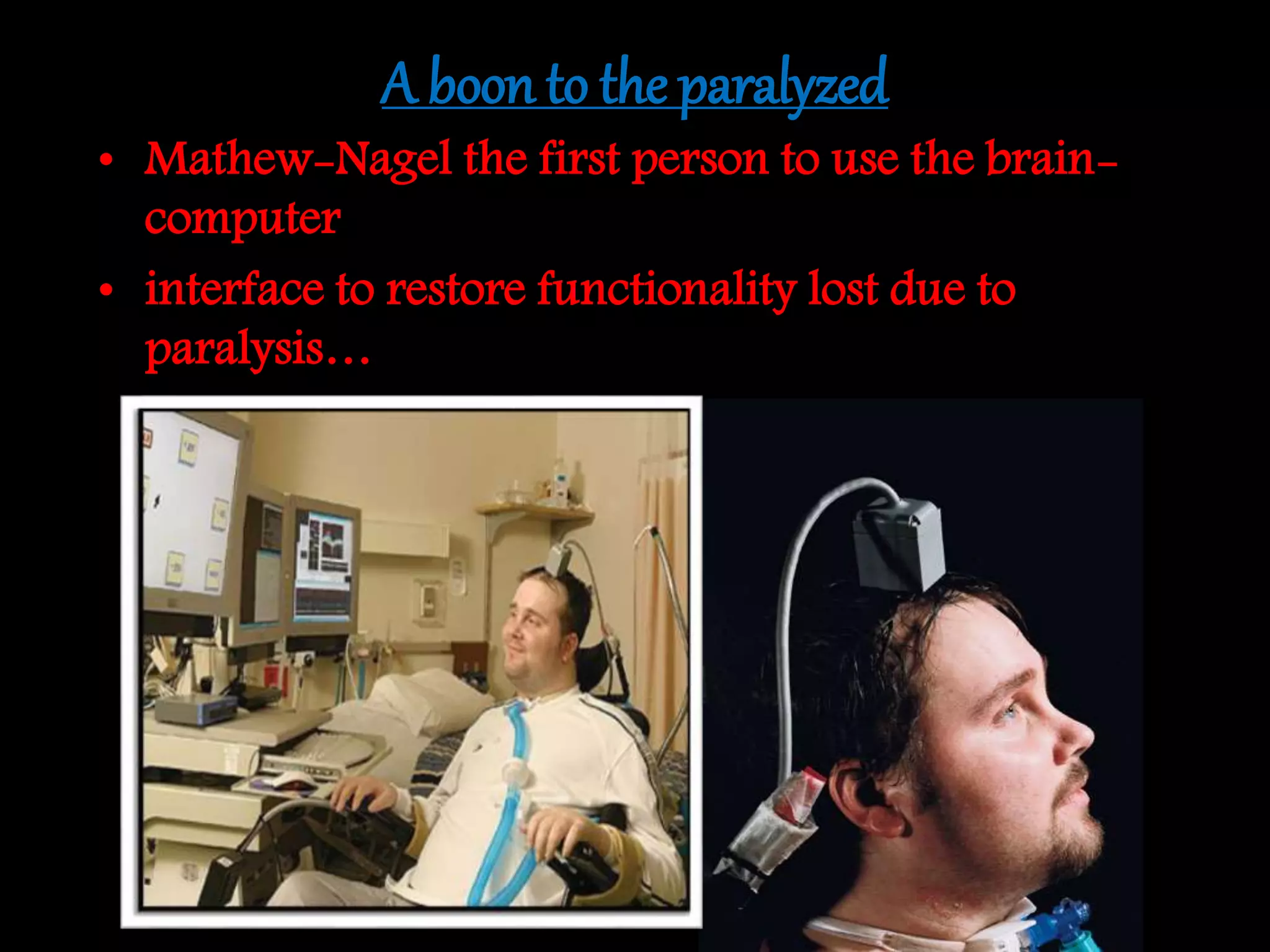
A boon to the paralyzed
• Mathew-Nagel the first person to use the brain-
computer
• interface to restore functionality lost due to
paralysis…
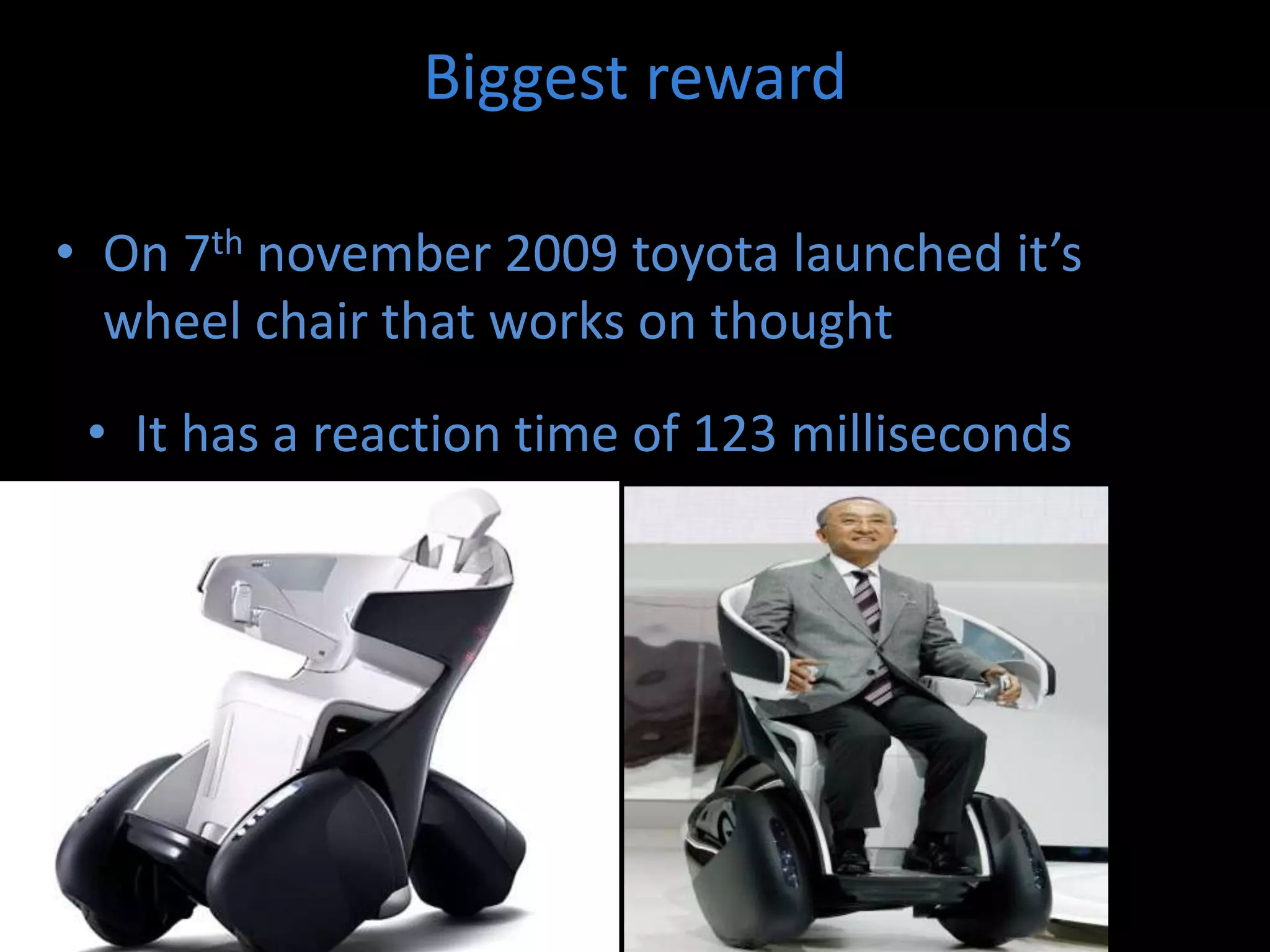
Biggest reward
• On 7th november 2009 toyota launched it’s
wheel chair that works on thought
• It has a reaction time of 123 milliseconds
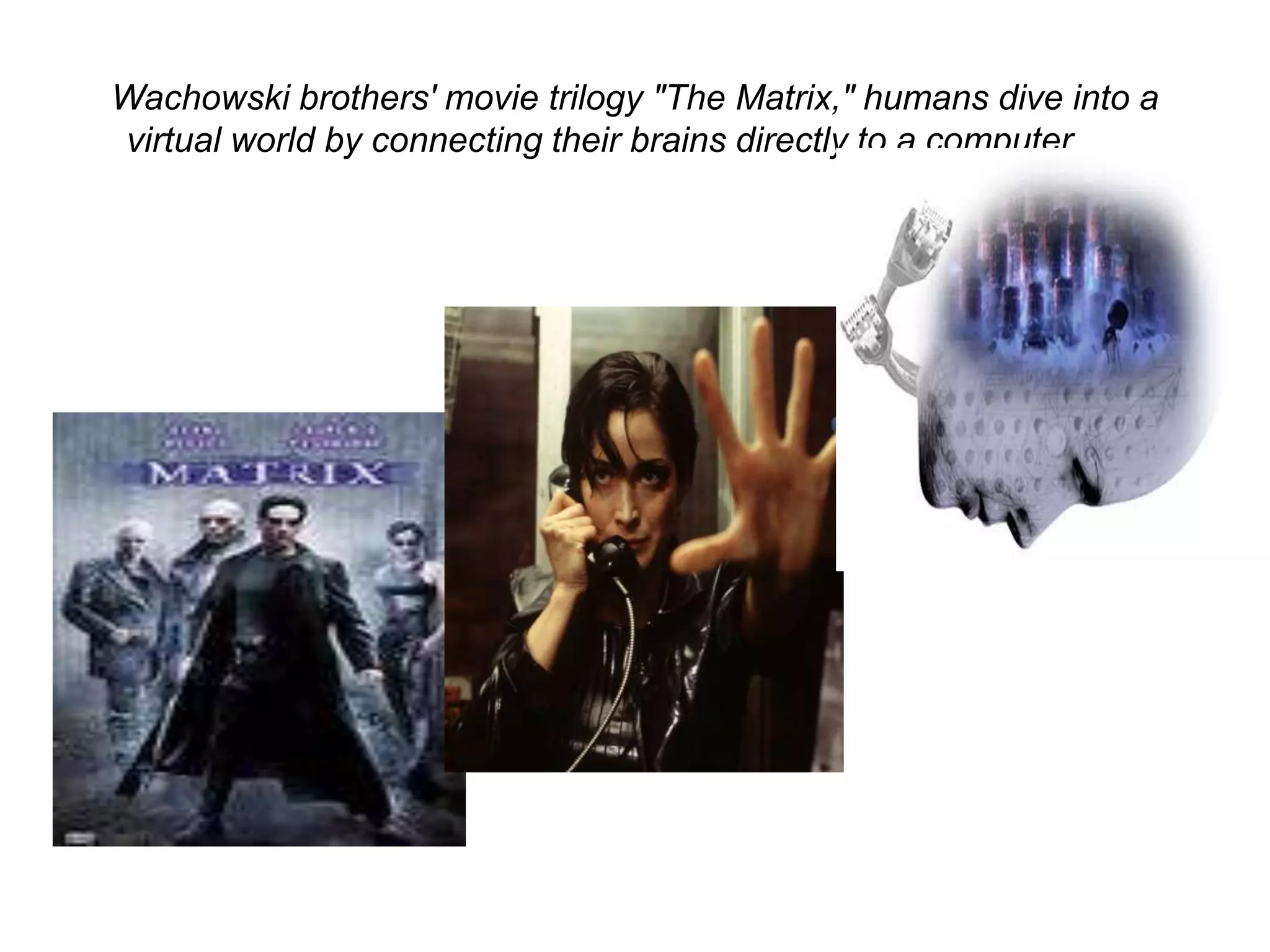
Wachowski brothers' movie trilogy "The Matrix," humans dive into a
virtual world by connecting their brains directly to a computer……
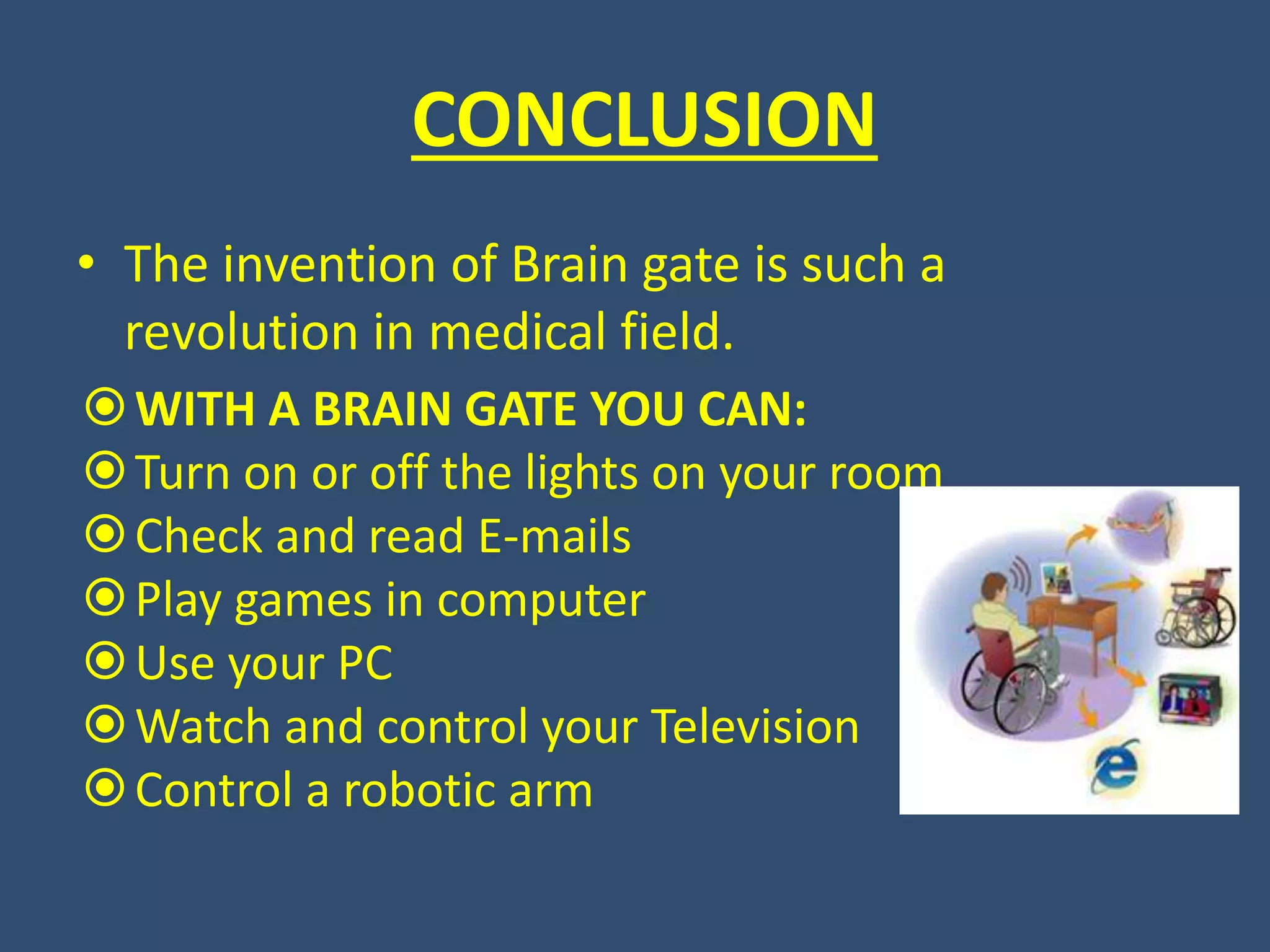
CONCLUSION
• The invention of Brain gate is such a
revolution in medical field.
WITH A BRAIN GATE YOU CAN:
Turn on or off the lights on your room
Check and read E-mails
Play games in computer
Use your PC
Watch and control your Television
Control a robotic arm
REFERENCES
• 1.Report on Brain Gate System by Vamsi
krishna reddy and K. Dhanya
2.D.V.R & DR.H.S. MIC COLLEGE OF
TECHNOLOGY KANCHIKACHARLA,
KRISHNA..”Mind control “journal by Cambridge
Consultants.
3.Annual report of cyber kinetics.
4.www.clinicaltrails.gov/ct2/show
THANK
Q
BRAIN GATE (in nutshell)

BRAIN GATE (in nutshell)

  • 1.
    BRAIN GATE TECHNOLOGY •DARSHAN G.U. • BRANCH EEE • BITM COLLEGE Semi nar By: -
  • 2.
    Brain Gate Technologydeveloped by Bio-tech company Cyber kinetics in 2008 in conjunction with the department of Neuroscience at Brown University. Development Nicholas Halso
  • 3.
    NEED OF BRAINGATE TECHNOLOGY • 300,000 Americans are spinal cord injured. • 52% of spinal cord injured individuals are considered Partial paralysis and 48% Total Paralysis • Approximately 15,000 new injuries occur each year. • 82% are male. • 56% of injuries occur between the ages of 16 and 30
  • 4.
    How it ispossible to read Brain Thought
  • 5.
    The brain-machine interfaceanalyzes slight changes in the brain's blood flow and translates brain motion into electric signals.
  • 6.
    Brain-Computer Interface • Abrain–computer interface (BCI) is a direct communication pathway between a brain and an external device computer interface (BCI). • It’s also known as direct neural interface or a brain–machine interface. • Brain computer interface takes place as a result of EEG 6
  • 7.
    Brain Signals &Electroencephalogram (EEG) • EEG is a recording of the electrical activity of the brain directly from the scalp produced by the firing of neurons within the brain. • No EEG signal pattern is duplicated for any two distinct actions How EEG Works ? • Recordes patterns by placing small metal discs called electrodes on the scalp in certain positions • Each electrode is labeled with a letter and a number to indicate its position. 7 7
  • 8.
    How the Signalis Produced • EEG machines use differential amplifiers to produce each channel or trace of activity. • The EEG signal itself is in the waveform so it is required that an analogue to digital signal converter be employed to produce the signal as a series of numeric values each representing voltage values of each channel at a certain time instance. 4
  • 9.
    A TINY CHIPHOLDING HUNDREDS OF ELECTRODES
  • 10.
    A TINY CHIPHOLDING 100 MICROSCOPIC ELECTRODES • The Braingate Neural Interface device consists of a tiny chip containing 100 microscopic electrodes that is surgically implanted in the brain's motor cortex. The whole apparatus is the size of a baby aspirin. The chip can read signals from the motor cortex, send that information to a computer via connected wires, and translate it to control the movement of a computer cursor or a robotic arm. According to Dr. John Donaghue of Cyberkinetics, there is practically no training required to use Brain Gate because the signals read by a chip implanted, for example, in the area of the motor cortex for arm movement, are the same signals that would be sent to the real arm.
  • 11.
    Primary Motor Cortex(MI) Leg Face Arm 5 mm
  • 12.
    WORKING • The sensorof the size of a contact lens is implanted in brain’s MOTOR CORTEX which control hand and arm movements. A tiny wire connects the chip to a small pedestal secured in the scull. A cable connects the pedestal to a computer. The brain's 100bn neurons fire between 20 and 200 times a second .The sensor implanted in the brain senses these electrical signals and passes signals to the computer through the cable. The computer translates the signals into a communication output, allowing a person to move a cursor on a computer screen merely by thinking about it.
  • 13.
    Brain Gate SensorImplantation and Post-Op Recovery as Planned • Surgery as planned • Post-op recovery unremarkable • Wound healing around pedestal • complete Array on Cortex Insertion 2 months post implant
  • 14.
    Cortical neural signalextraction imagining saying the word ‘move’ resting
  • 16.
    Brain Gate SignalDetection and Analysis; SCI Able to Modulate Neural Output
  • 17.
    Neuro-motor prosthetic system Computer 1)Multi-electrode array implant 2) Decoding of neural signals 3) Output interface Personal computer: • mouse • keyboard Assistive Robotics: • robotic arm • mechanized prosthetic arm Biological interface: • muscles • peripheral nerve • spinal cord
  • 18.
  • 19.
  • 20.
    Controlling robots bythoughts alone
  • 21.
    A boon tothe paralyzed • Mathew-Nagel the first person to use the brain- computer • interface to restore functionality lost due to paralysis…
  • 22.
    Biggest reward • On7th november 2009 toyota launched it’s wheel chair that works on thought • It has a reaction time of 123 milliseconds
  • 23.
    Wachowski brothers' movietrilogy "The Matrix," humans dive into a virtual world by connecting their brains directly to a computer……
  • 24.
    CONCLUSION • The inventionof Brain gate is such a revolution in medical field. WITH A BRAIN GATE YOU CAN: Turn on or off the lights on your room Check and read E-mails Play games in computer Use your PC Watch and control your Television Control a robotic arm
  • 25.
    REFERENCES • 1.Report onBrain Gate System by Vamsi krishna reddy and K. Dhanya 2.D.V.R & DR.H.S. MIC COLLEGE OF TECHNOLOGY KANCHIKACHARLA, KRISHNA..”Mind control “journal by Cambridge Consultants. 3.Annual report of cyber kinetics. 4.www.clinicaltrails.gov/ct2/show
  • 26.