Downloaded 484 times
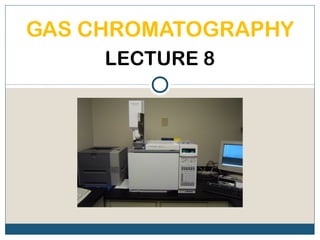
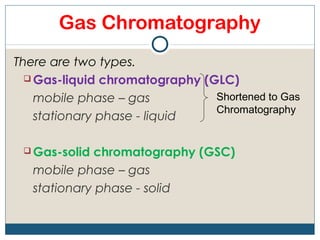
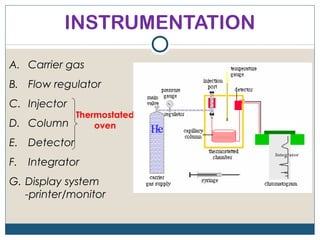
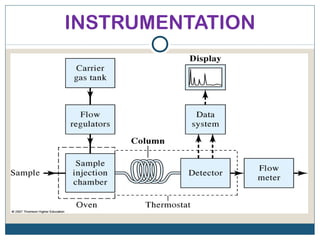
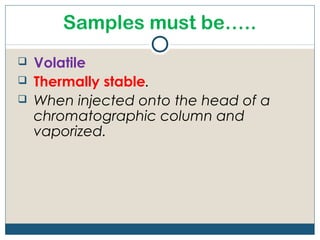
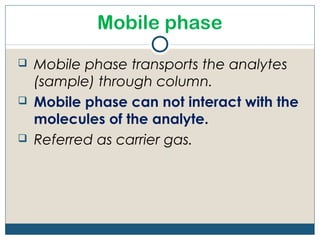
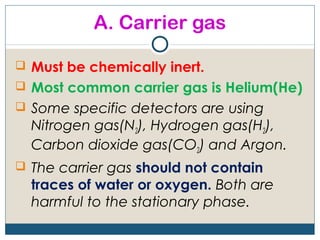
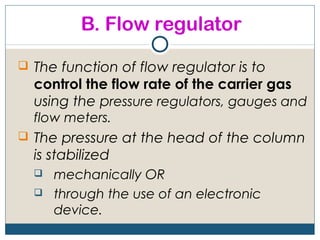
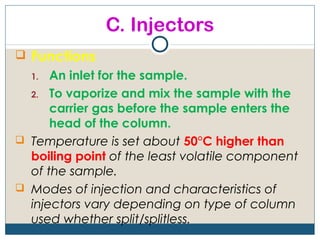
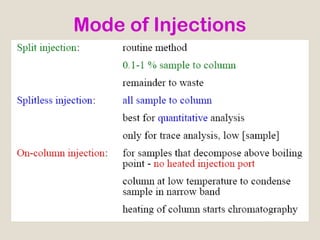
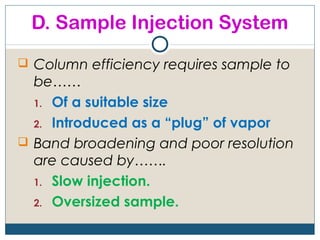
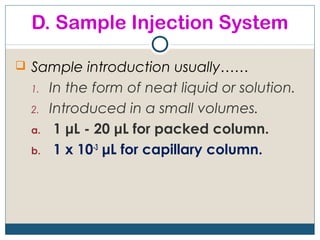
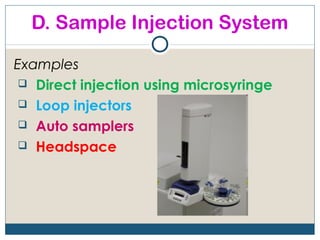
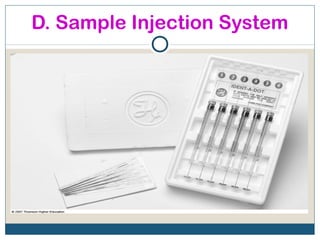
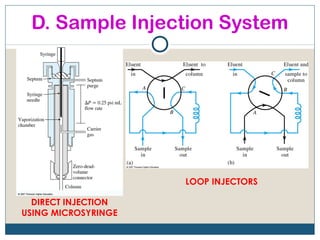
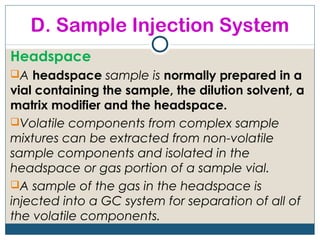
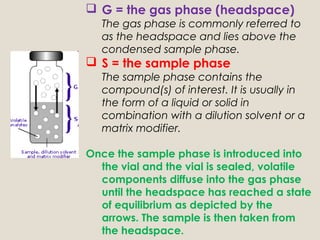
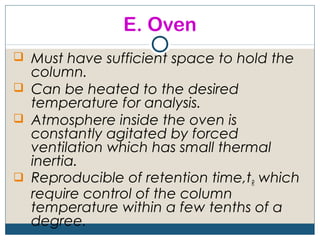
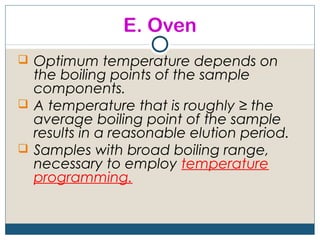
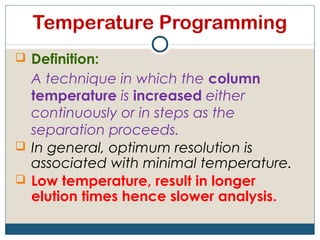
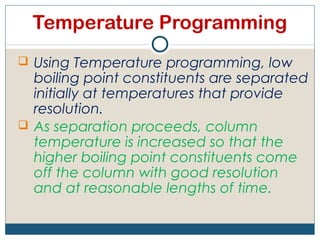
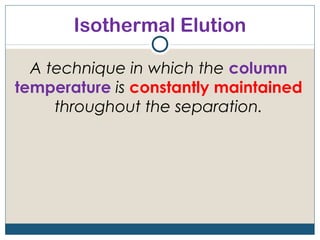
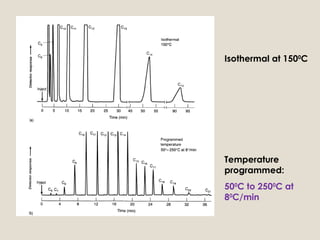
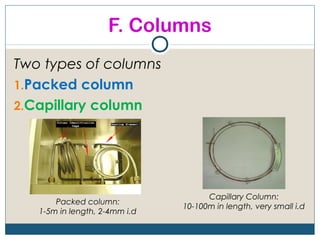
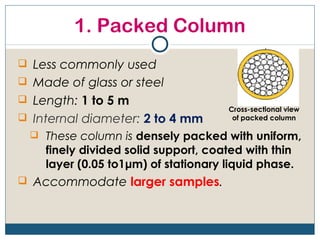
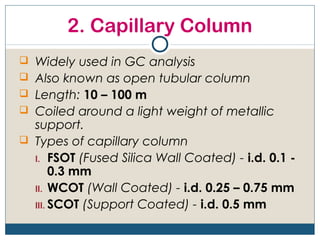
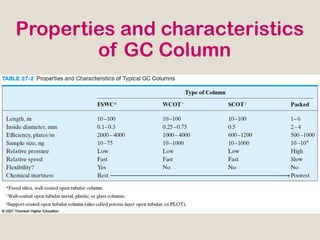
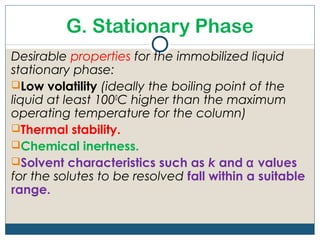
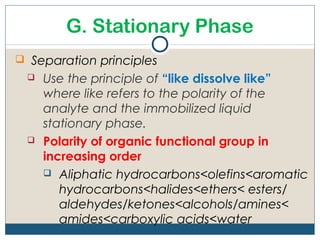
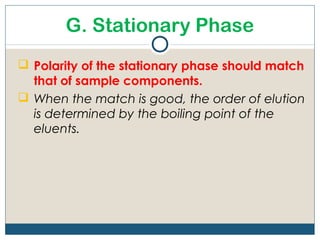
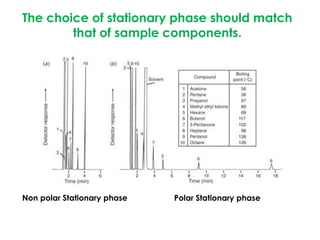
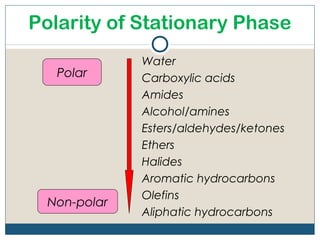
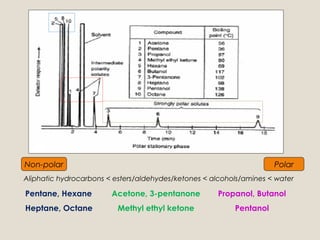
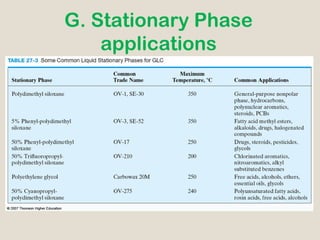
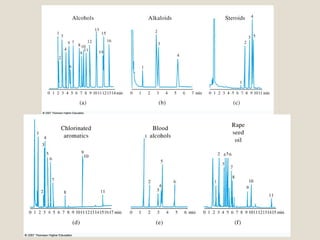
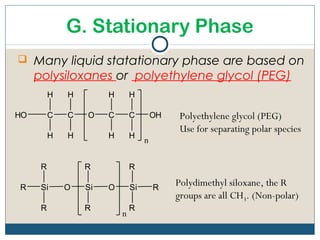
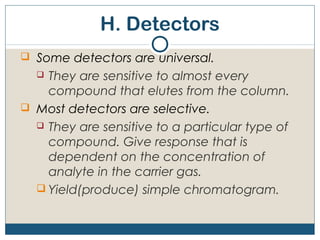
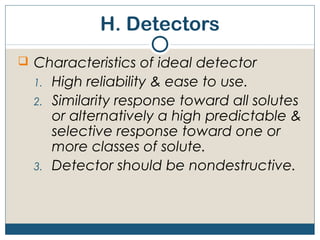
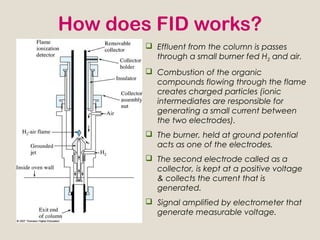
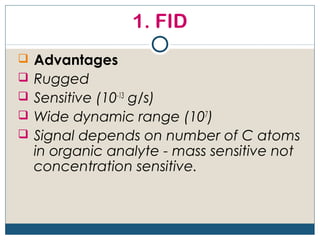
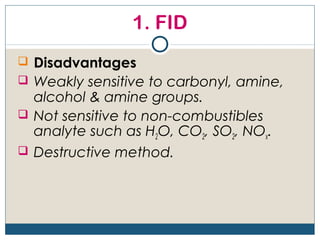
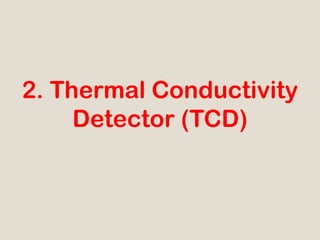
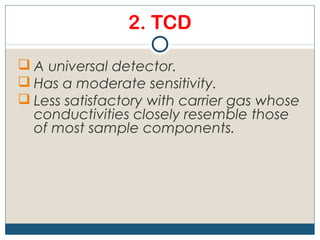
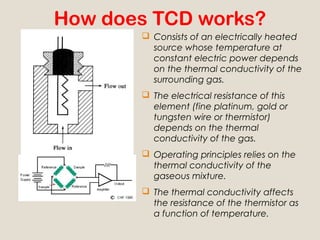
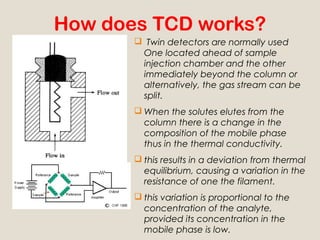
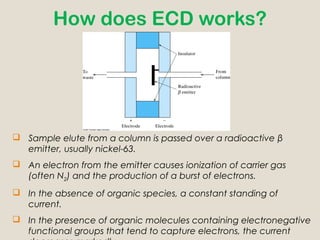
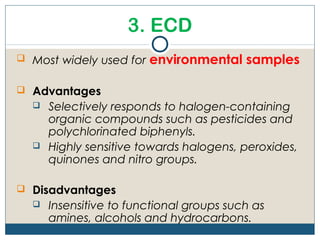
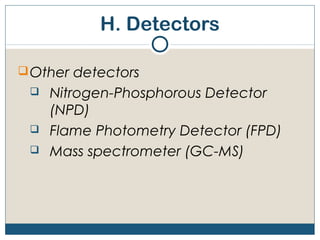
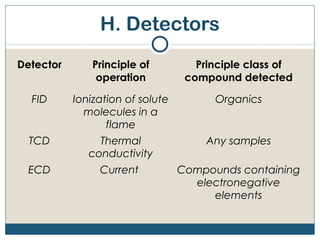

Gas chromatography is a technique used to separate components of a vaporized sample. It works by partitioning the components between a mobile gaseous phase and a stationary phase within a column. The sample is injected and vaporized, then transported through the column by the mobile phase gas. As the components pass through the column they are separated and detected. Common detectors include the flame ionization detector (FID), thermal conductivity detector (TCD), and electron capture detector (ECD). The FID responds to organic compounds, the TCD is universal but less sensitive, and the ECD selectively detects halogen-containing compounds.


![APPLICATIONS OF GAS CHROMATOGRAPHY [APPLICATIONS OF GC] BY Prof. Dr. P.RAVISA...](https://cdn.slidesharecdn.com/ss_thumbnails/appicationsofgc-prs-130615130914-phpapp01-thumbnail.jpg?width=640&height=640&fit=bounds)


![Gas chromatography [gc]](https://cdn.slidesharecdn.com/ss_thumbnails/gaschromatographygc-160604063334-thumbnail.jpg?width=640&height=640&fit=bounds)


![5G Explained! A High Level Overview [Introduction]](https://cdn.slidesharecdn.com/ss_thumbnails/5gexplainedahighleveloverview-260119165306-cc137a3e-thumbnail.jpg?width=640&height=640&fit=bounds)


