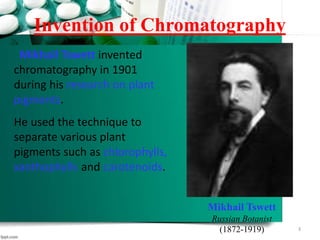
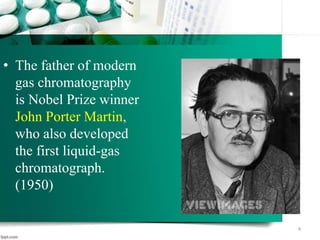
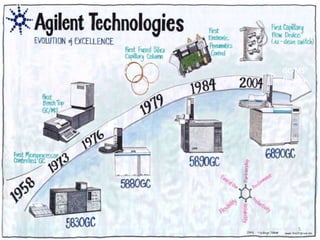
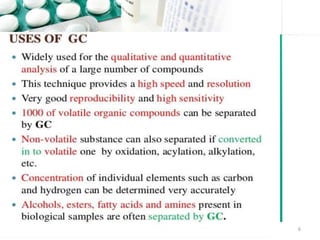
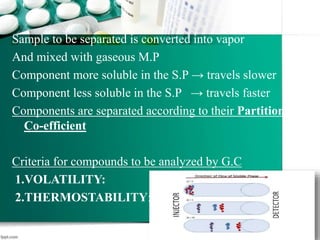
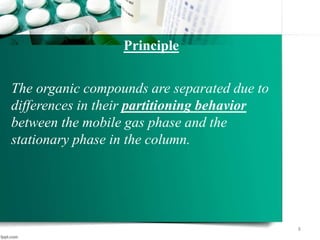
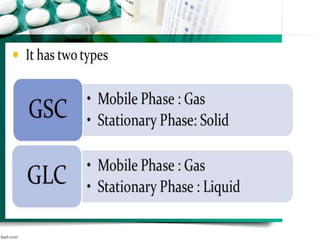
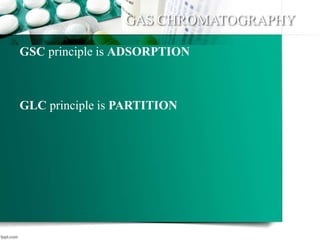
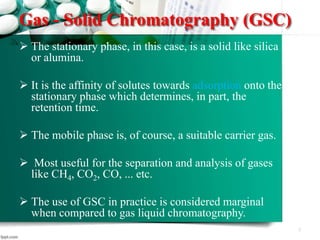
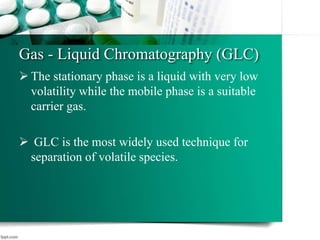
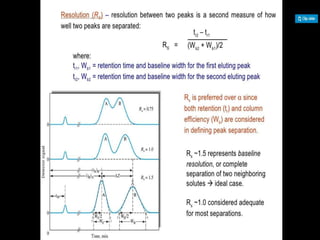
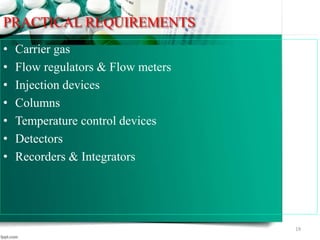
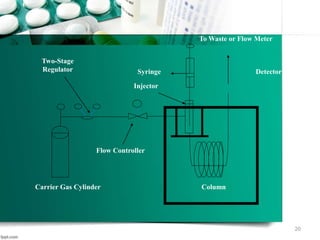
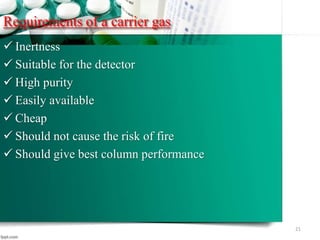
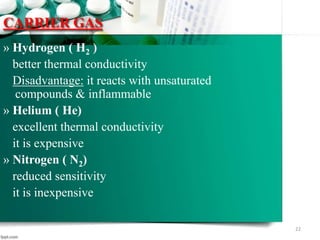
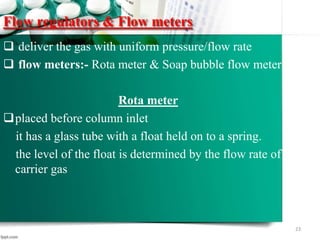
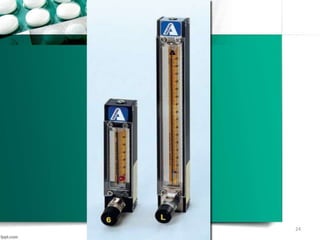
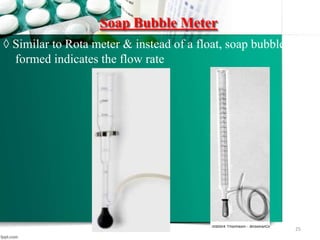
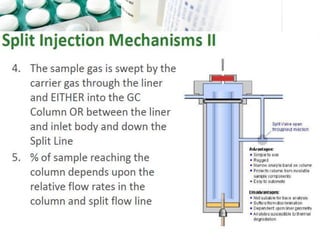
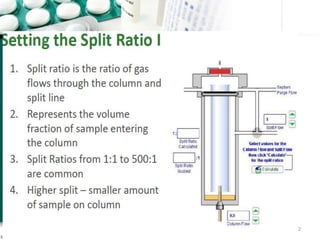
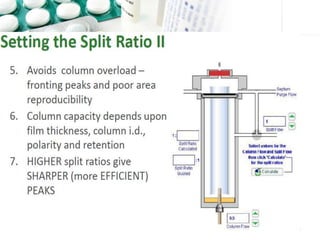
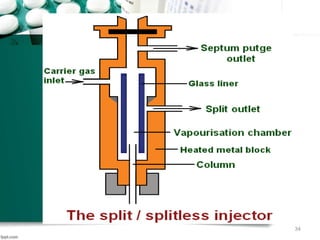
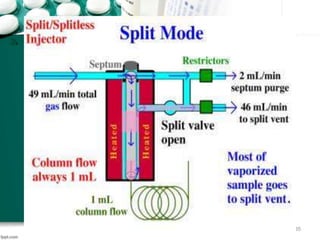
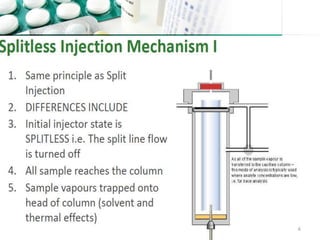
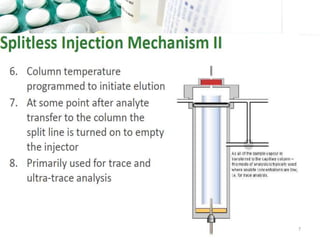
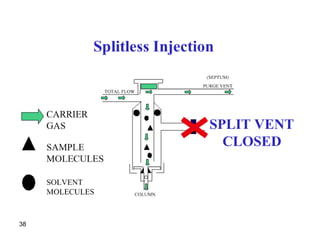
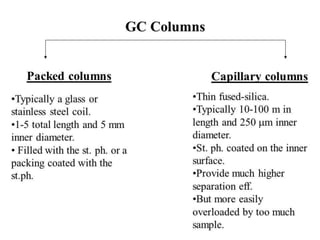
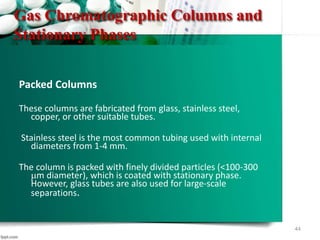
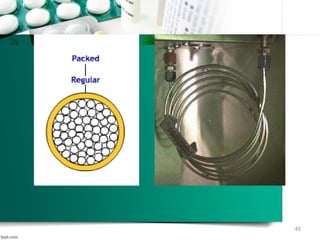
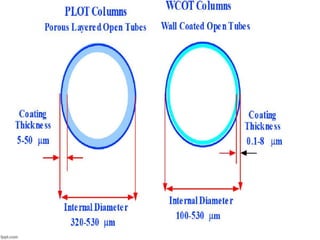
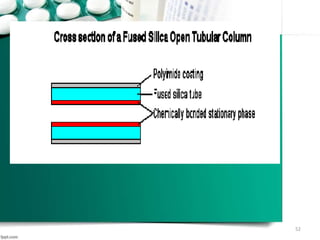
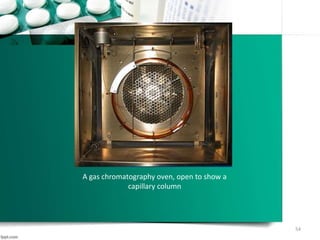
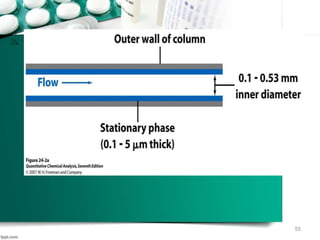
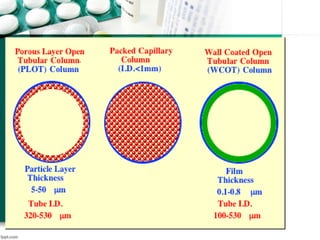
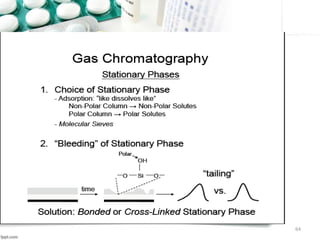
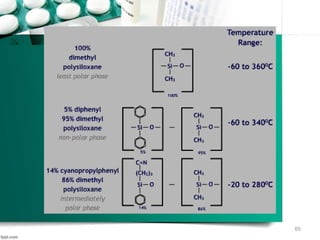
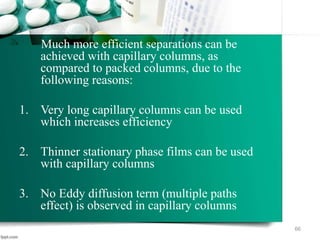
Gas chromatography is a technique used to separate components of a mixture. It was invented in 1901 by Russian botanist Mikhail Tswett. Key developments include John Porter Martin developing the first gas-liquid chromatograph in the 1950s. Gas chromatography-mass spectrometry allows identification of separated components. The technique works by vaporizing a sample and carrying it by a carrier gas through a column coated with a stationary phase, separating components based on how they partition between the mobile and stationary phases.






![THERMOGRAVIMETRY ANALYSIS [TGA] AS PER PCI[M.PHARM]](https://cdn.slidesharecdn.com/ss_thumbnails/49-191219085241-thumbnail.jpg?width=640&height=640&fit=bounds)


![APPLICATIONS OF GAS CHROMATOGRAPHY [APPLICATIONS OF GC] BY Prof. Dr. P.RAVISA...](https://cdn.slidesharecdn.com/ss_thumbnails/appicationsofgc-prs-130615130914-phpapp01-thumbnail.jpg?width=640&height=640&fit=bounds)
![Gas chromatography [gc]](https://cdn.slidesharecdn.com/ss_thumbnails/gaschromatographygc-160604063334-thumbnail.jpg?width=640&height=640&fit=bounds)


![Hypothalamus short ppt by Dr. Neha [PT].pptx](https://cdn.slidesharecdn.com/ss_thumbnails/hypothalamusbydr-260124145759-b9f94a93-thumbnail.jpg?width=640&height=640&fit=bounds)


