Techniques of chromatography Part 2
Techniques of chromatography OPEN-COLUMN CHROMATOGRAPHY PAPER CHROMATOGRAPHY (PC) THIN-LAYER CHROMATOGRAPHY (TLC) Gas chromatography HIGH-PRESSURE LIQUID CHROMATOGRAPHY  SUPERCRITICAL FLUID CHROMATOGRAPHY (SFC) ELECTROPHORESIS (Electrochromatography) High Performance Capillary Electrophoresis (HPCE):
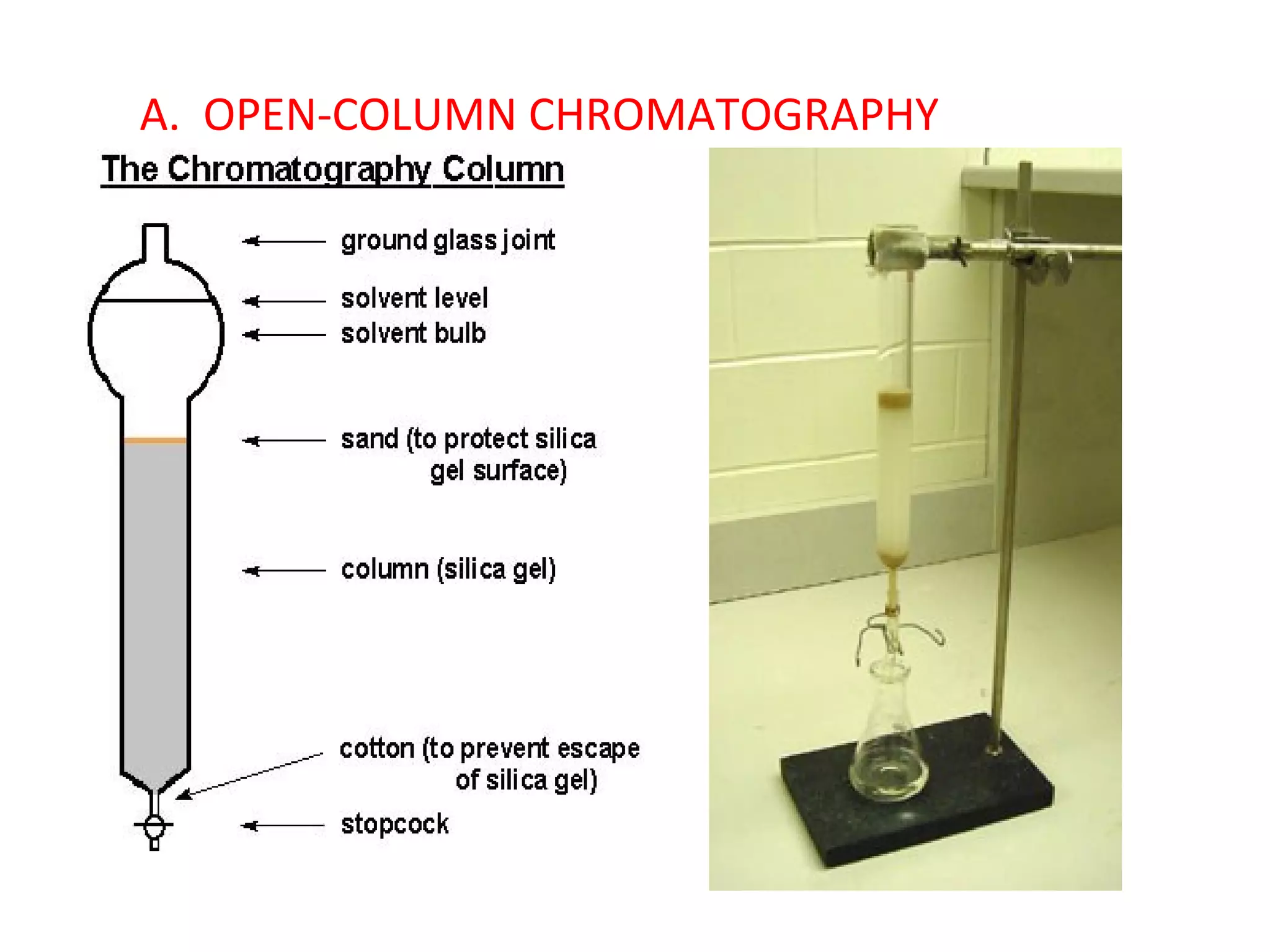
OPEN-COLUMN CHROMATOGRAPHY
 
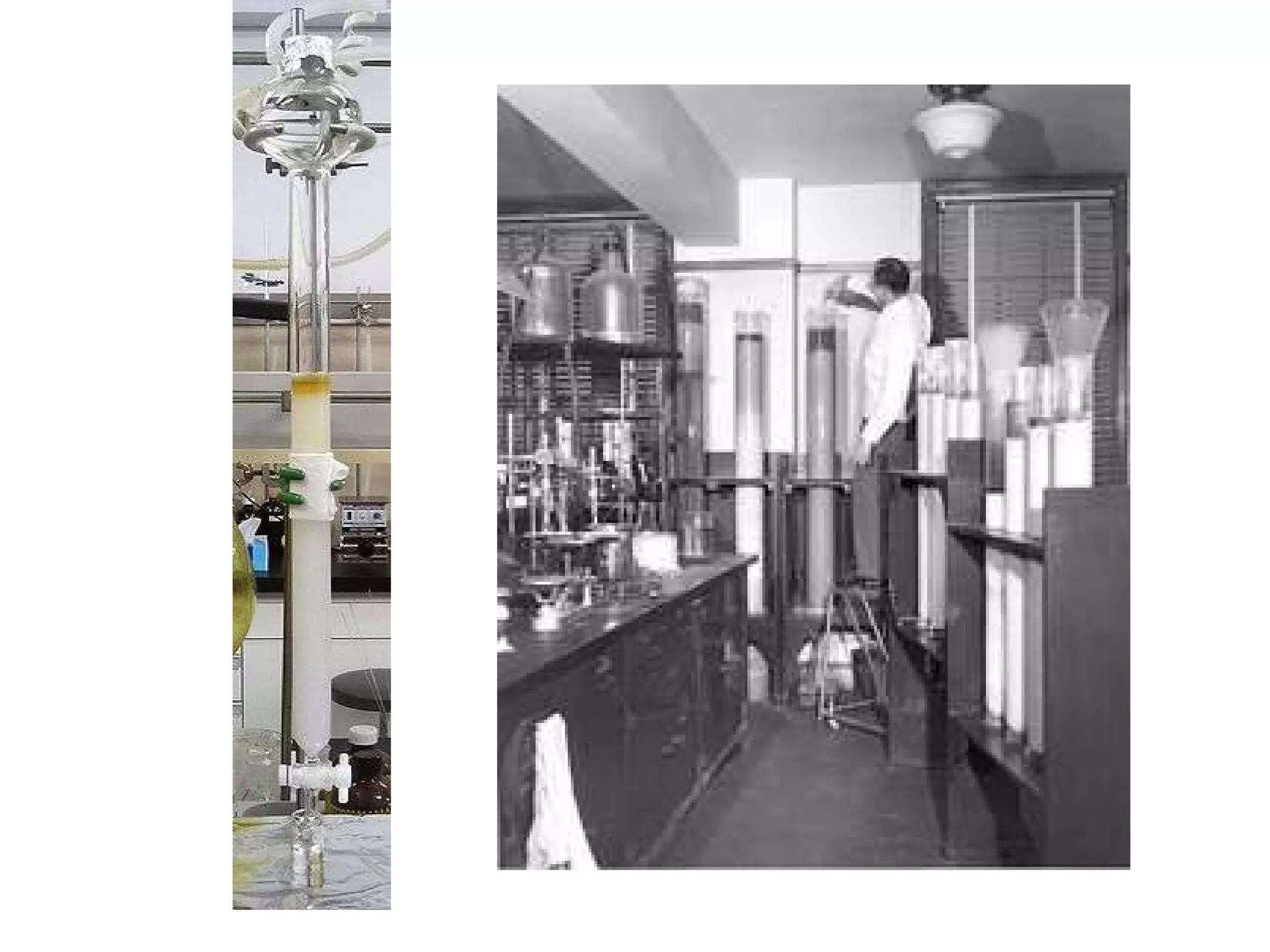
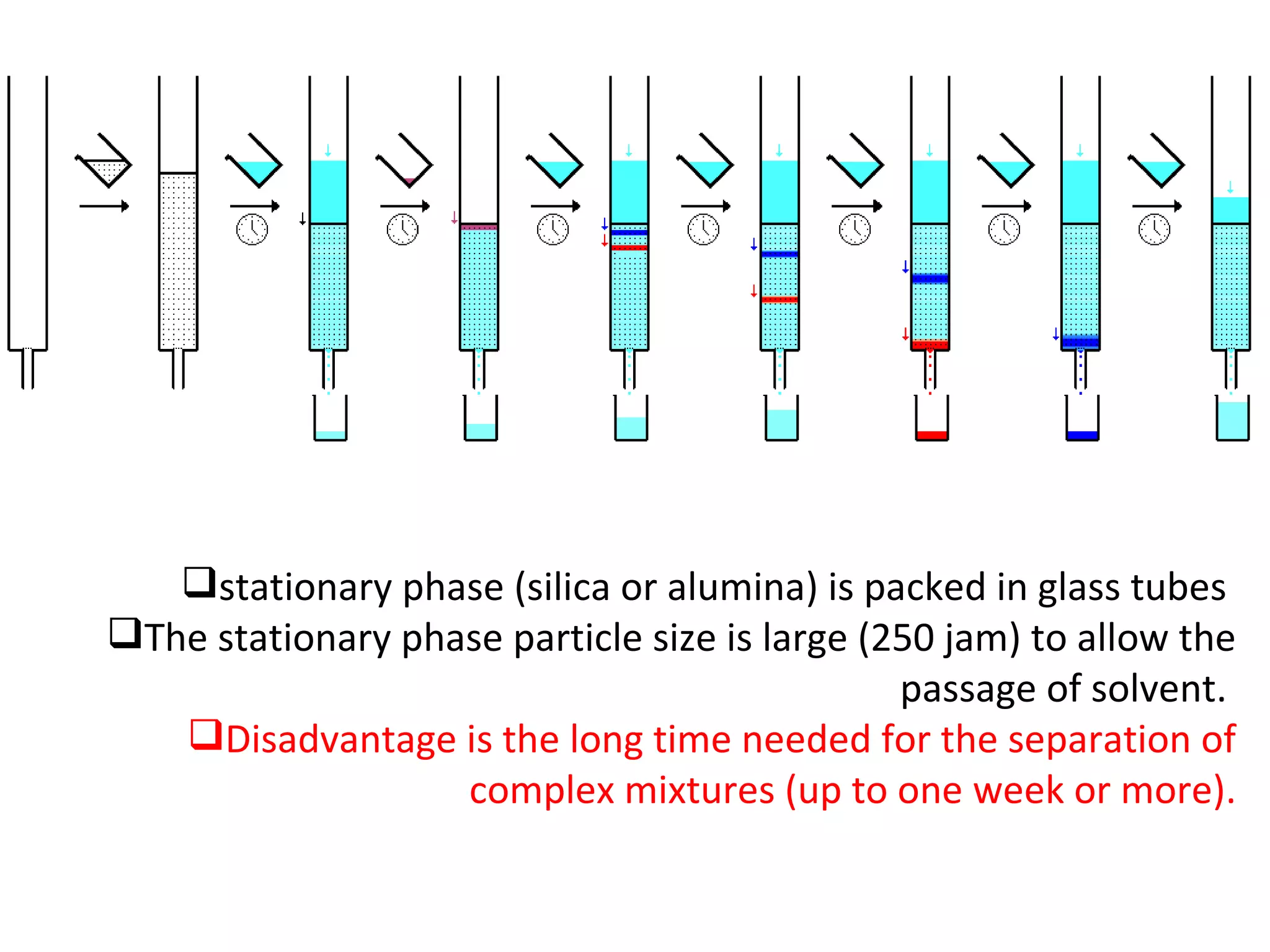
stationary phase (silica or alumina) is packed in glass tubes  The stationary phase particle size is large (250 jam) to allow the passage of solvent.  Disadvantage is the long time needed for the separation of complex mixtures (up to one week or more).
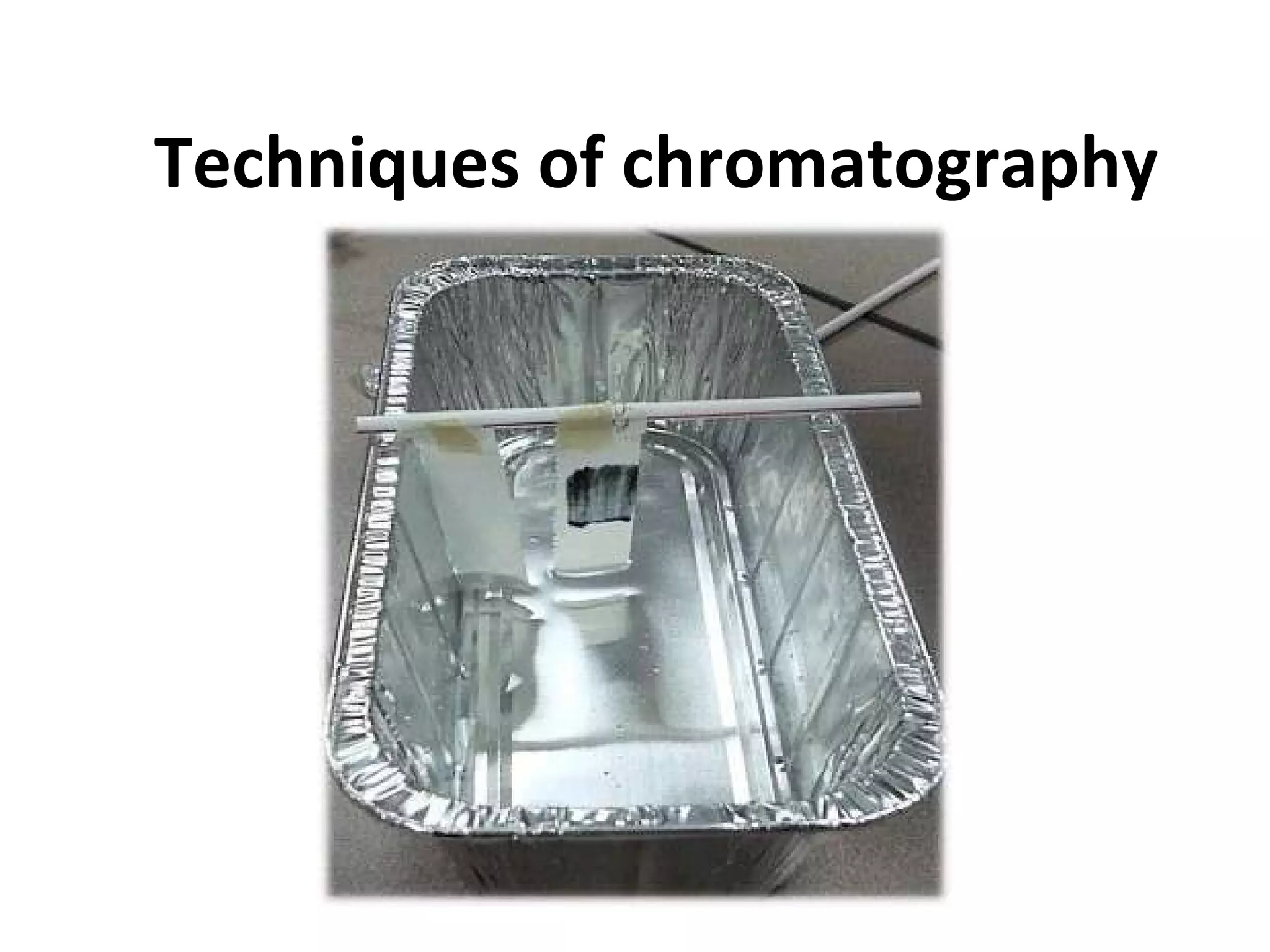
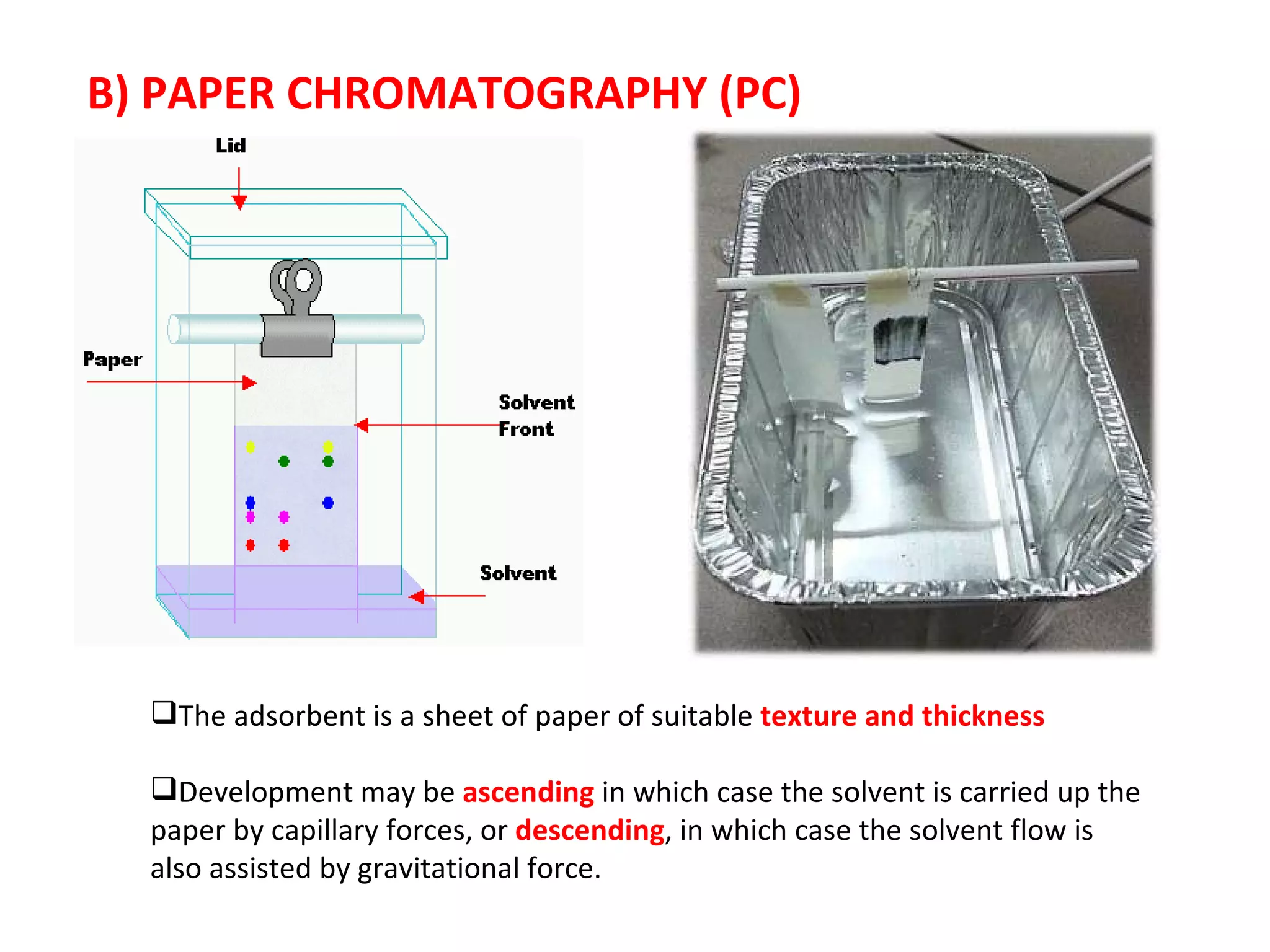
B) PAPER CHROMATOGRAPHY (PC) The adsorbent is a sheet of paper of suitable  texture and thickness Development may be  ascending  in which case the solvent is carried up the paper by capillary forces, or  descending , in which case the solvent flow is also assisted by gravitational force.
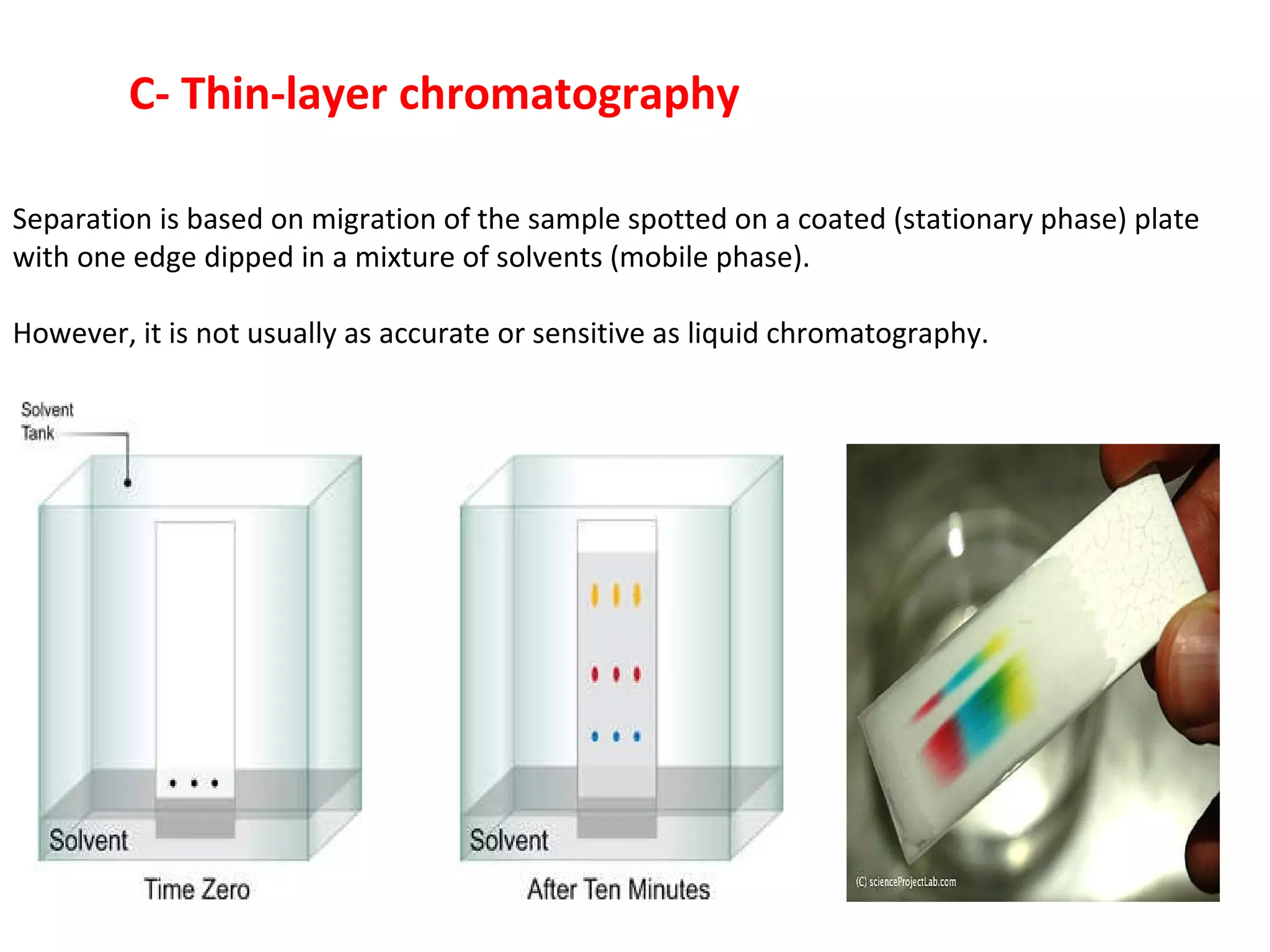
C- Thin-layer chromatography  Separation is based on migration of the sample spotted on a coated (stationary phase) plate with one edge dipped in a mixture of solvents (mobile phase).  However, it is not usually as accurate or sensitive as liquid chromatography.
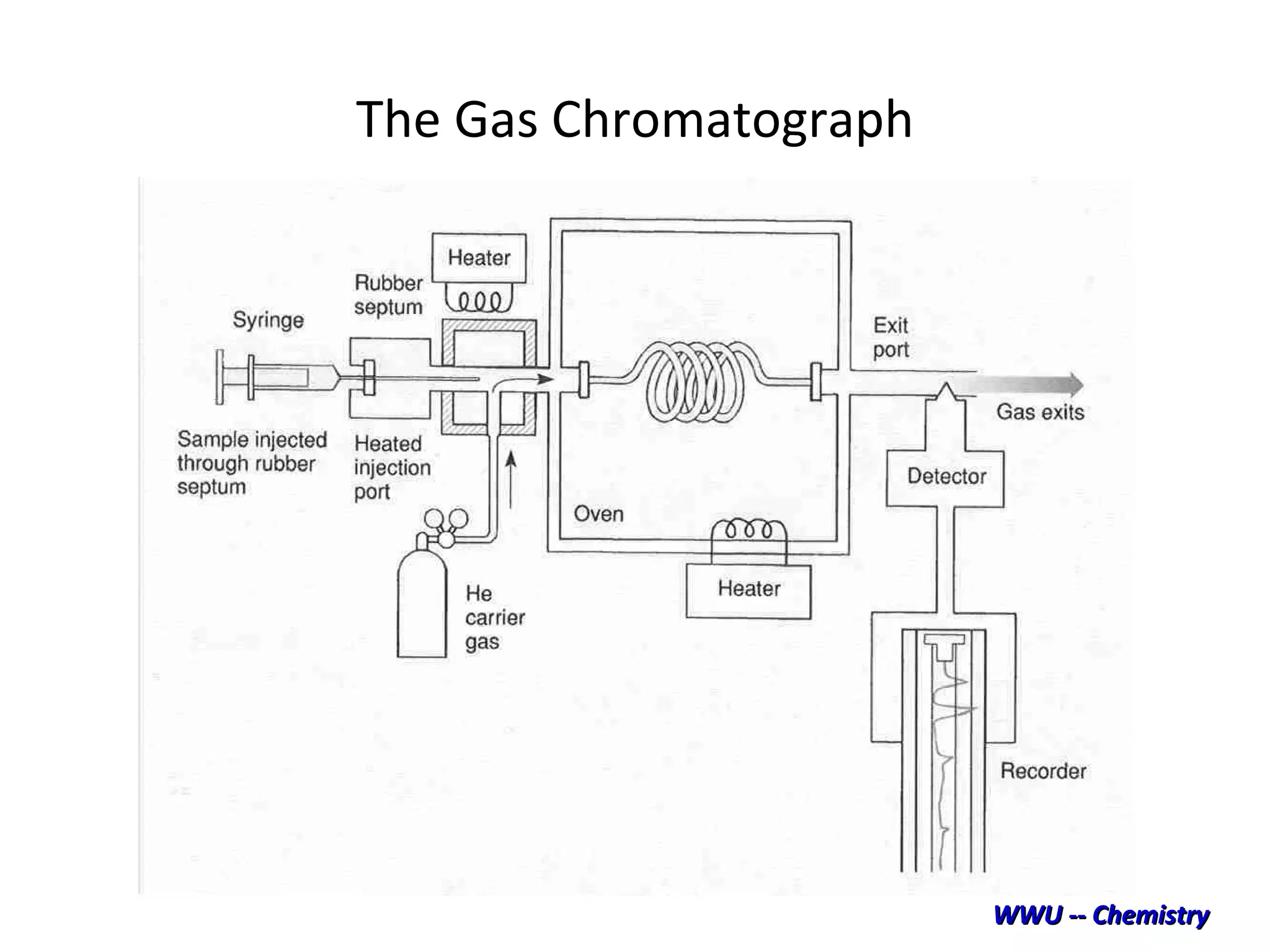
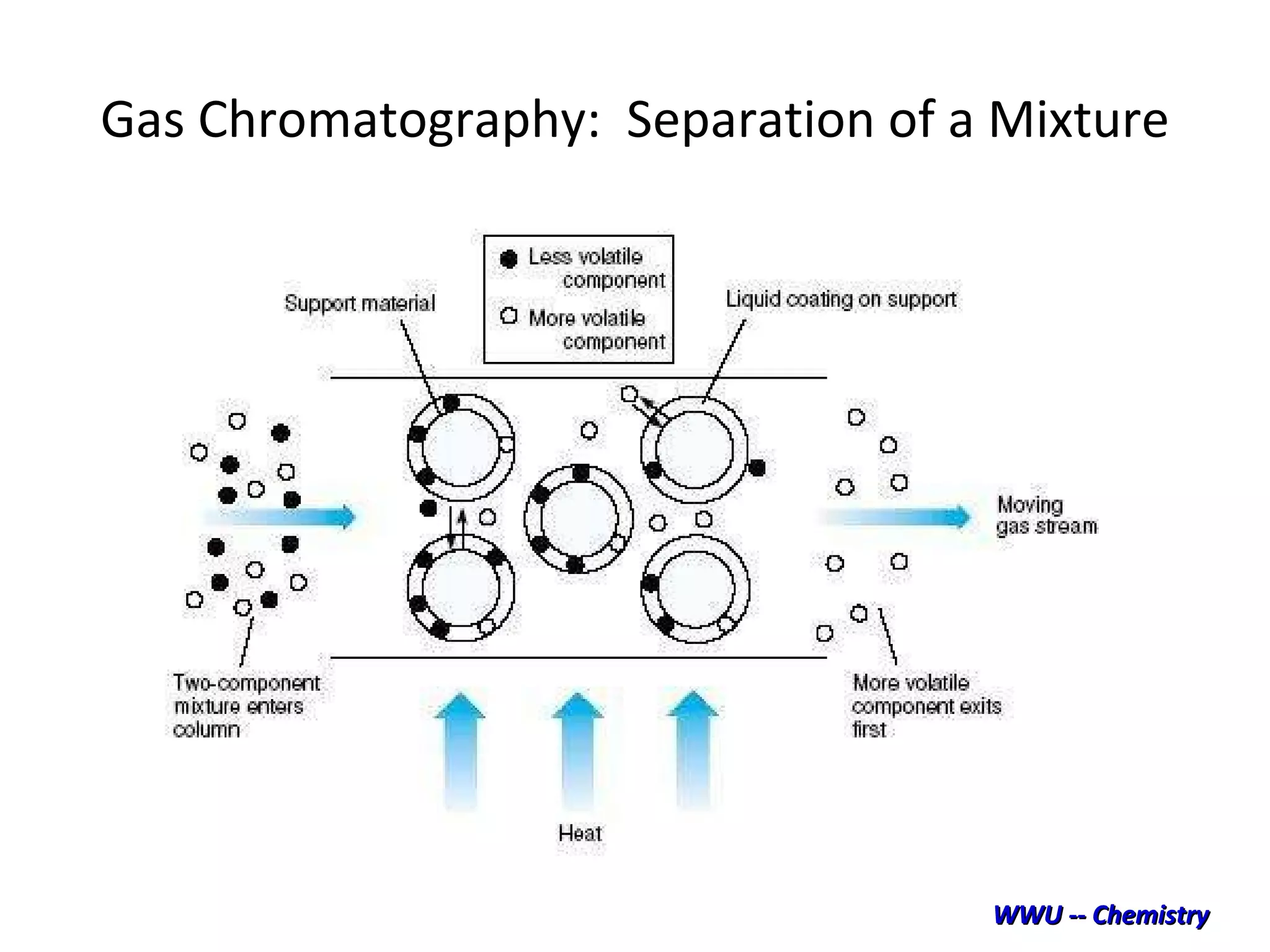
D- Gas chromatography Principle: A pressured gas flows through  heated tube  coated with liquid stationery phase or packed stationery on a solid support. The analyte loaded on the head of the column via  heated injection port , where it is evaporated.  The separation of a mixture occurs according the  relative time spent  in the stationary phase
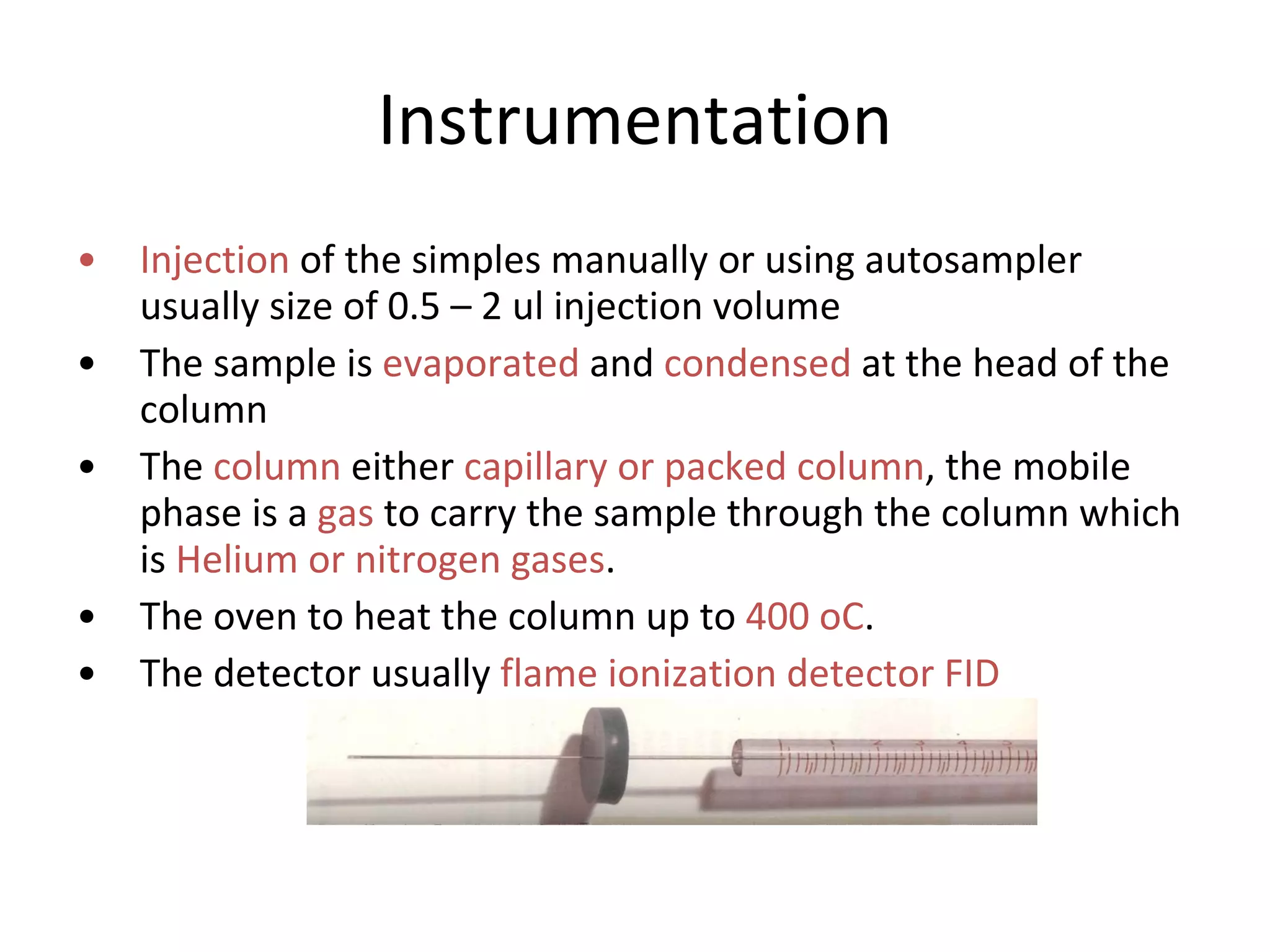
Instrumentation Injection  of the simples manually or using autosampler usually size of 0.5 – 2 ul injection volume  The sample is  evaporated  and  condensed  at the head of the column  The  column  either  capillary or packed column , the mobile phase is a  gas  to carry the sample through the column which is  Helium or nitrogen gases . The oven to heat the column up to  400 oC . The detector usually  flame ionization detector FID
The Gas Chromatograph WWU -- Chemistry
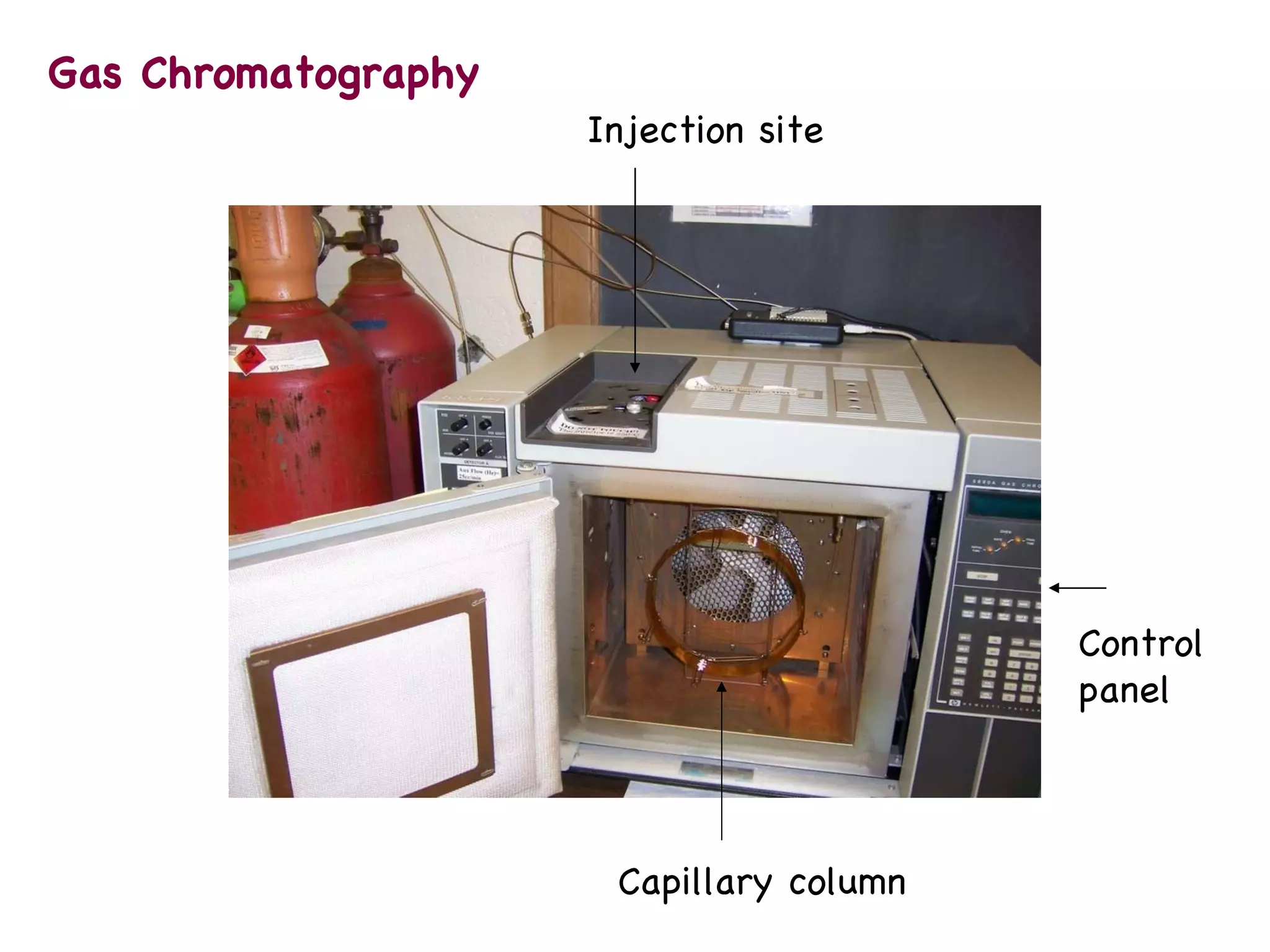
Gas Chromatography Capillary column Injection site Control  panel
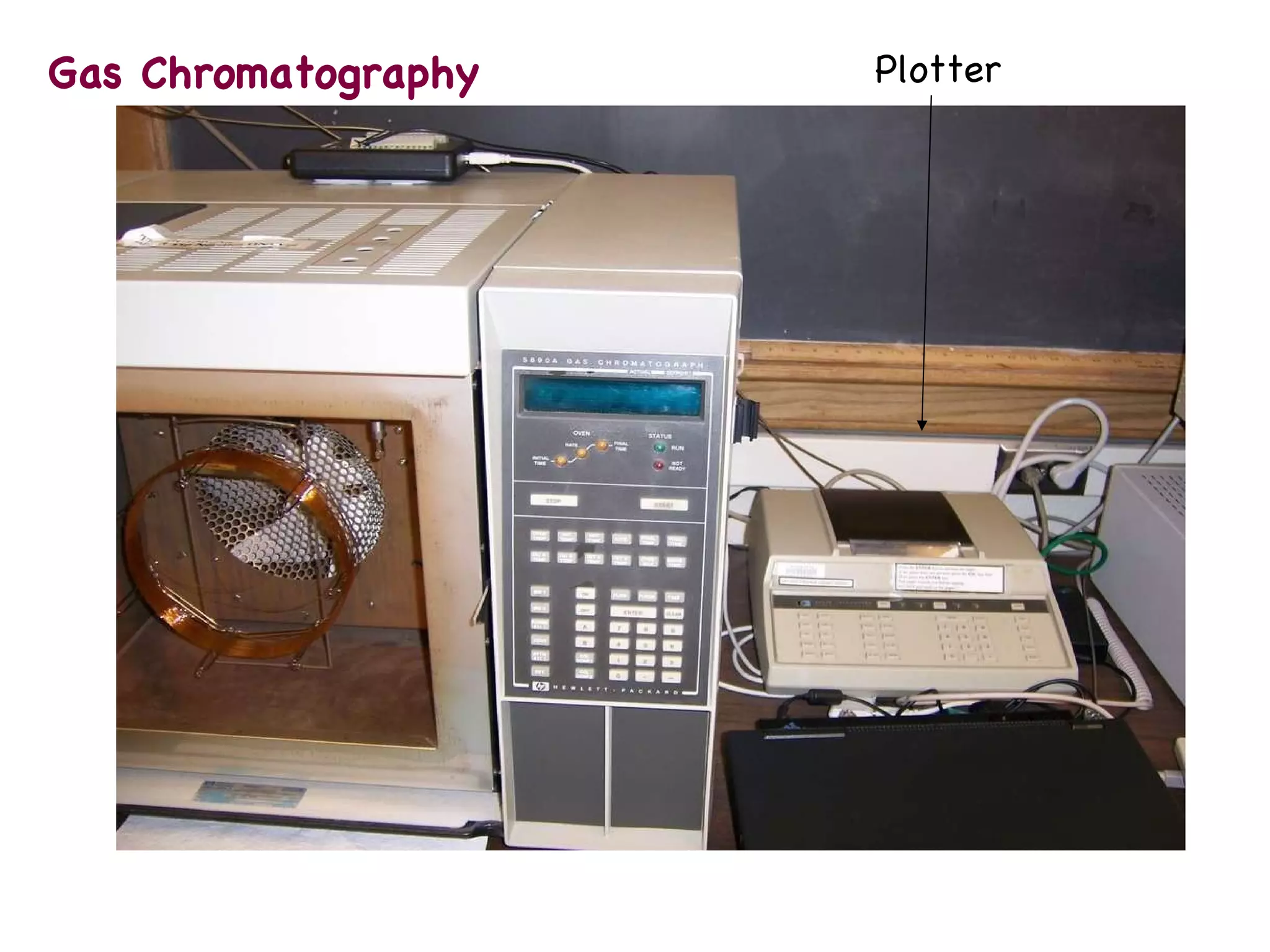
Gas Chromatography Plotter
Gas Chromatography:  Separation of a Mixture WWU -- Chemistry
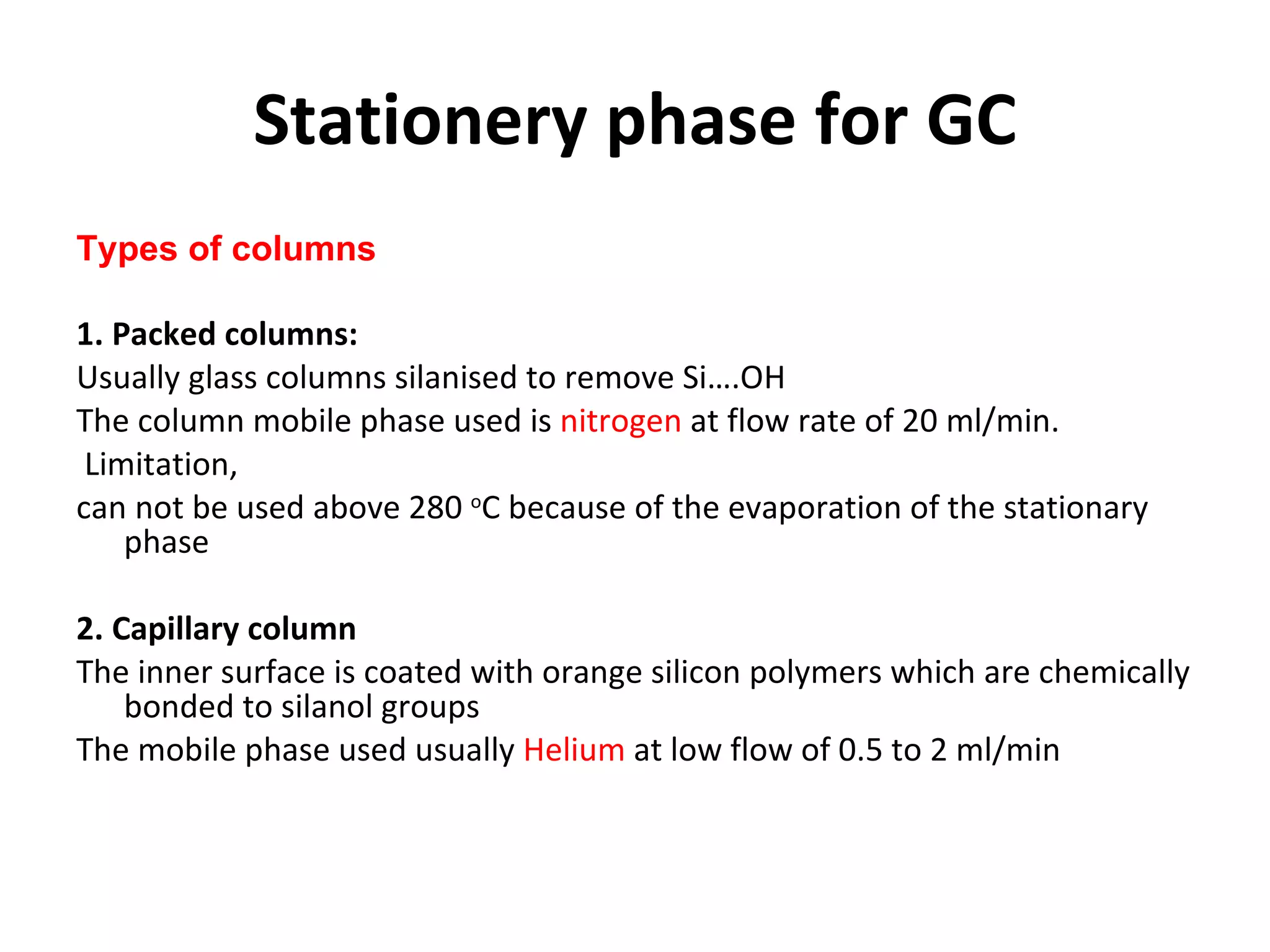
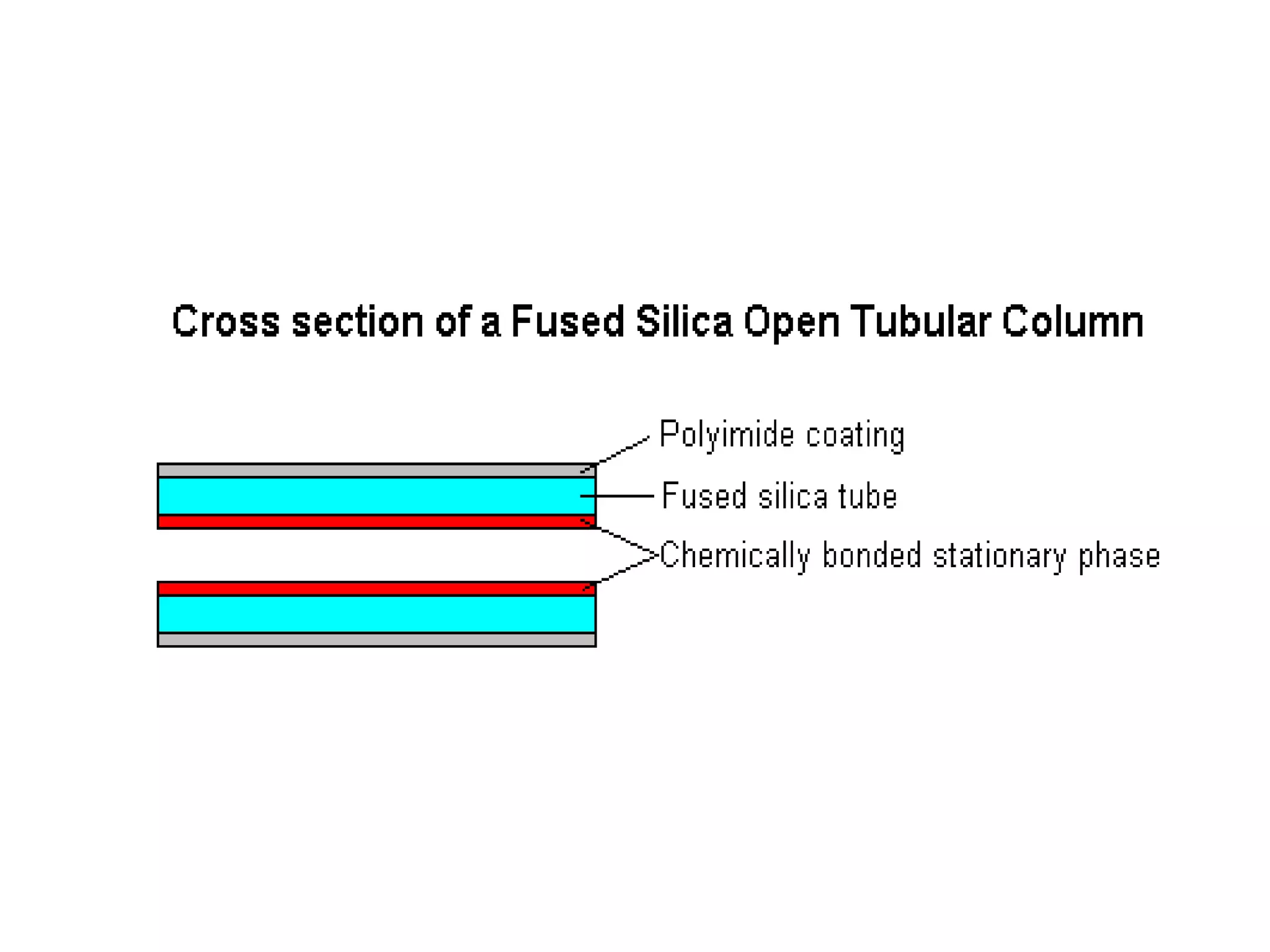
Stationery phase for GC Types of columns 1. Packed columns: Usually glass columns silanised to remove Si….OH  The column mobile phase used is  nitrogen  at flow rate of 20 ml/min. Limitation,  can not be used above 280  o C because of the evaporation of the stationary phase  2. Capillary column  The inner surface is coated with orange silicon polymers which are chemically bonded to silanol groups  The mobile phase used usually  Helium  at low flow of 0.5 to 2 ml/min
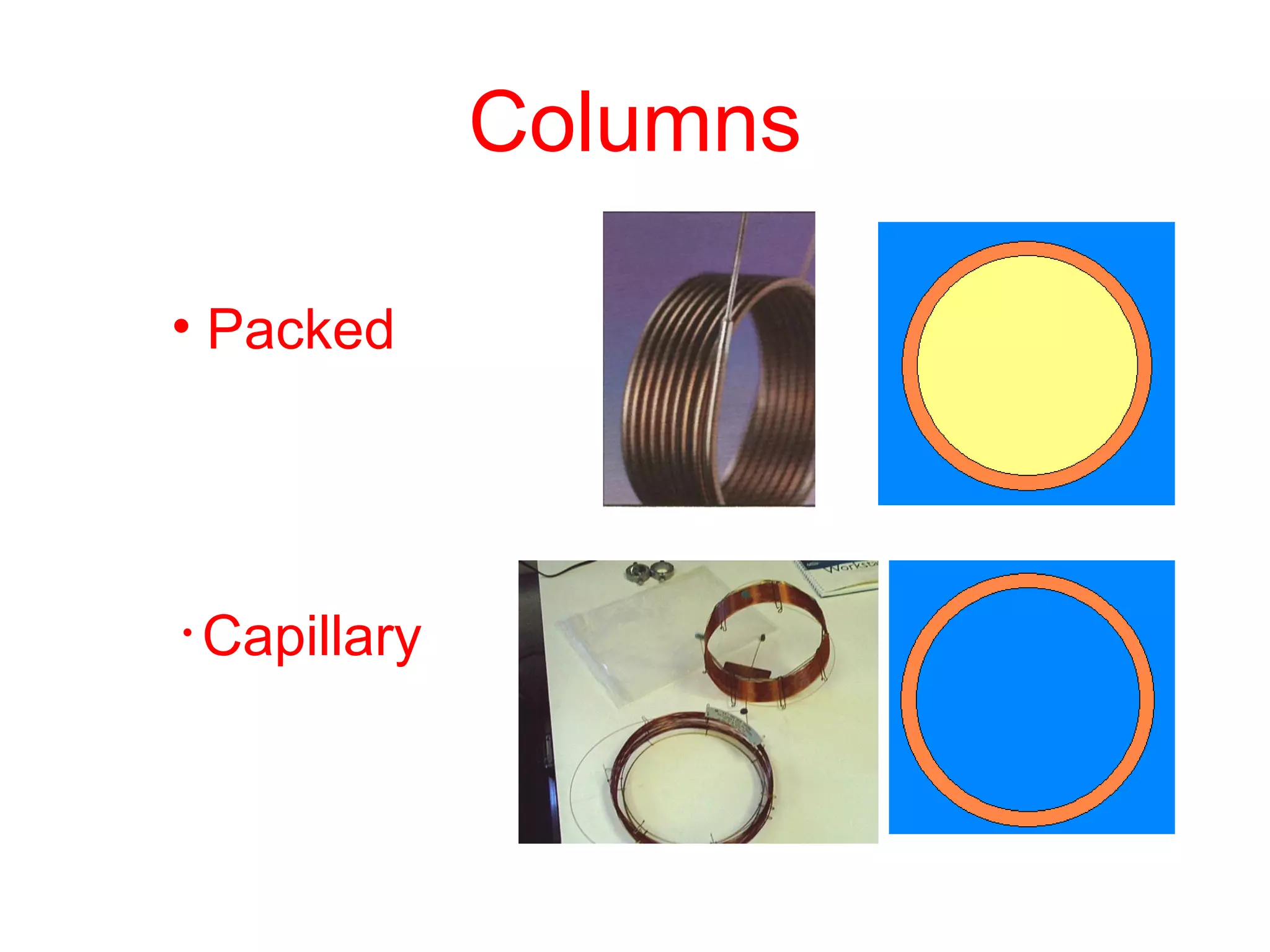
Columns Packed Capillary
 
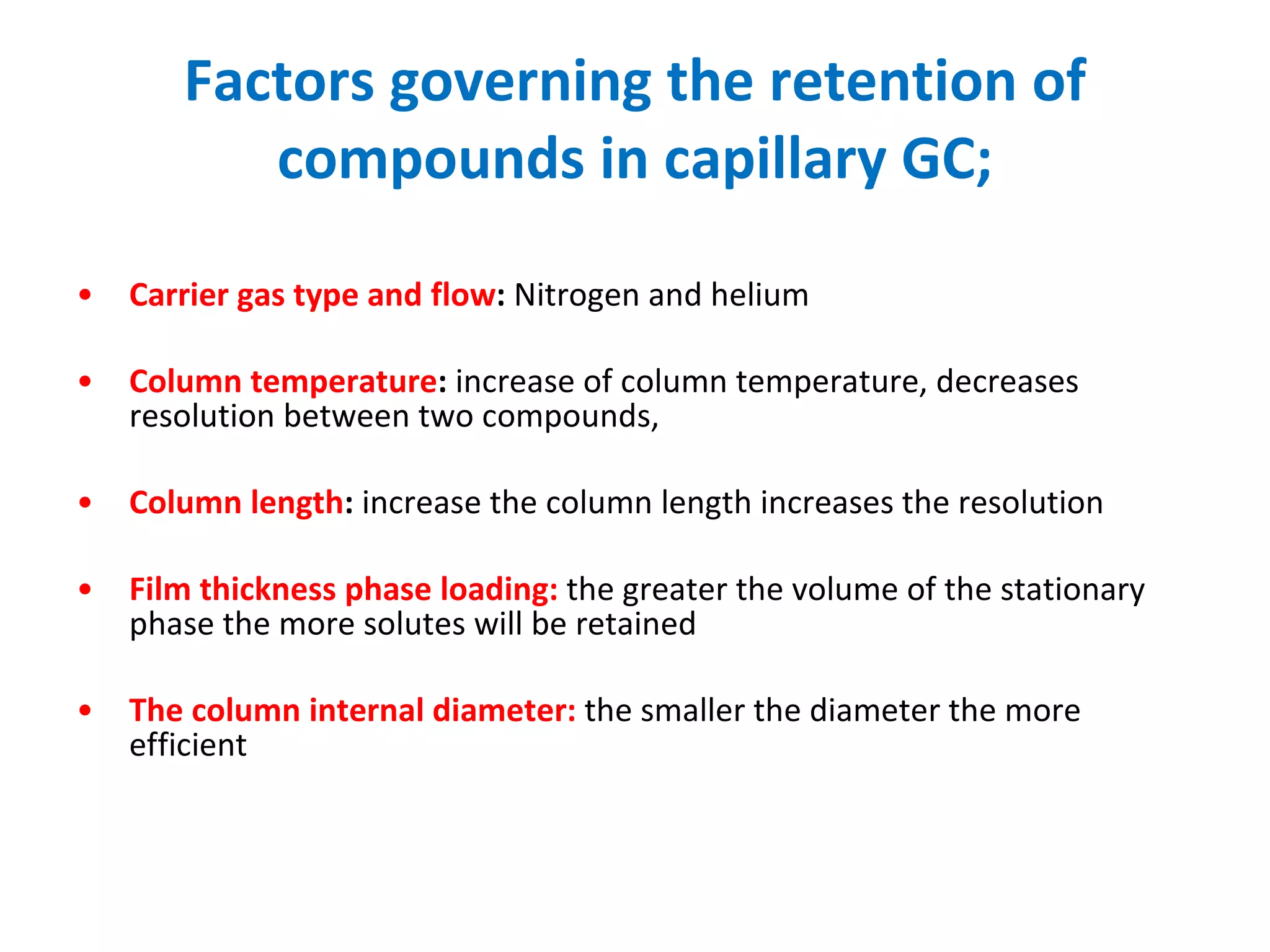
Factors governing the retention of compounds in capillary GC; Carrier gas type and flow :  Nitrogen and helium Column temperature :  increase of column temperature, decreases resolution between two compounds,  Column length :  increase the column length increases the resolution  Film thickness phase loading:  the greater the volume of the stationary phase the more solutes will be retained  The column internal diameter:   the smaller the diameter the more efficient
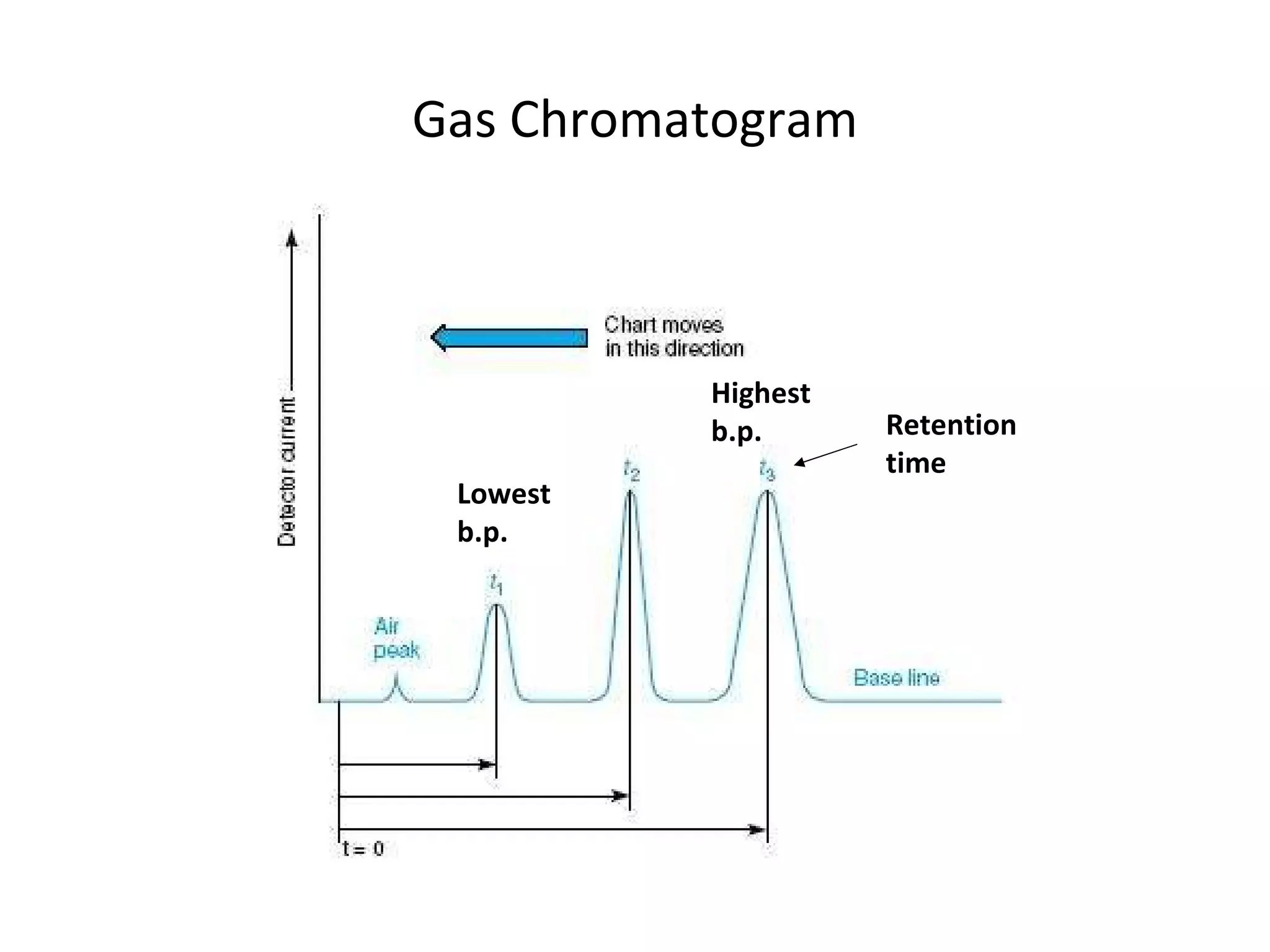
Gas Chromatogram Lowest b.p. Highest b.p. Retention time
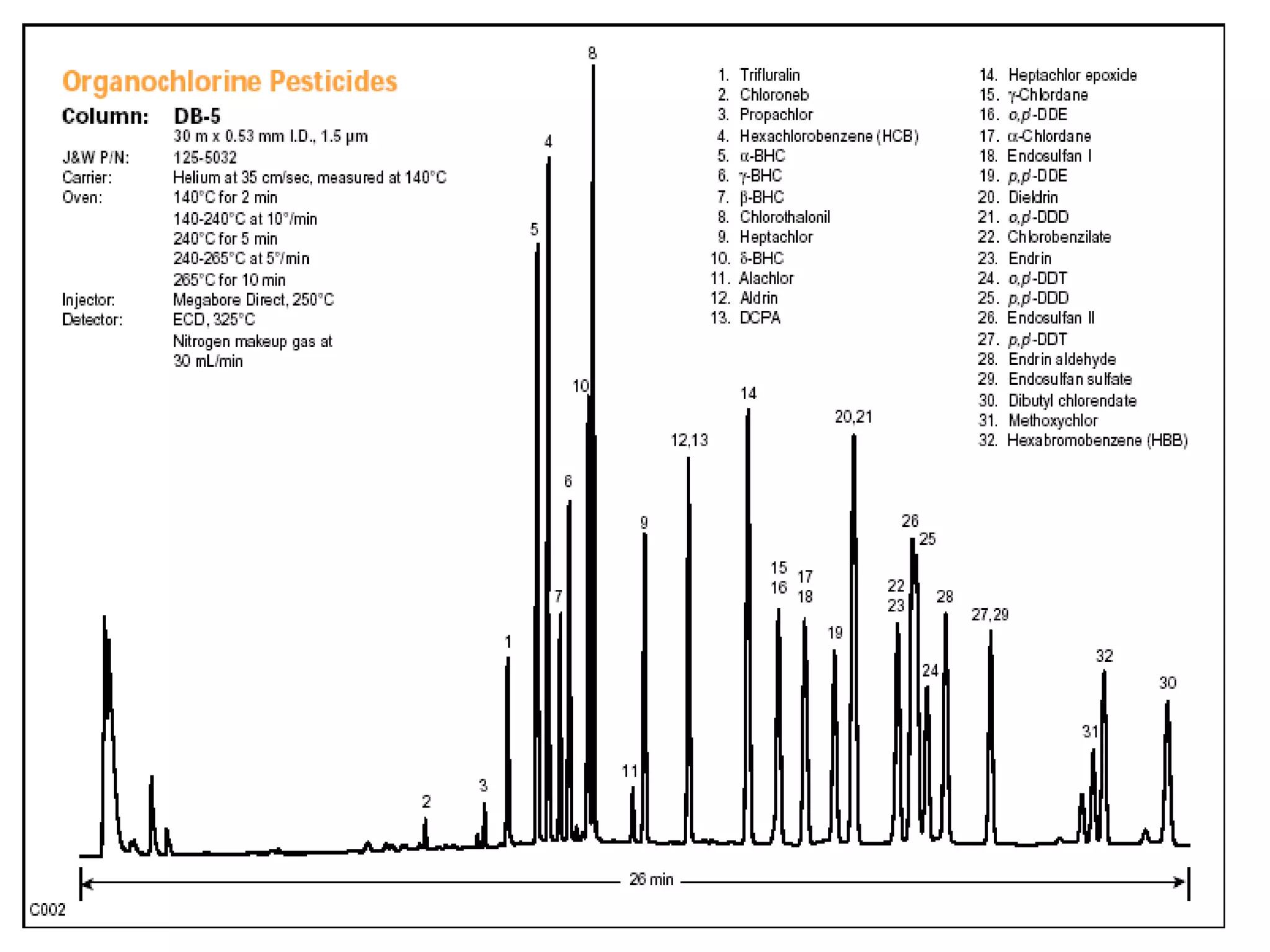
Chromatograms - 551.1
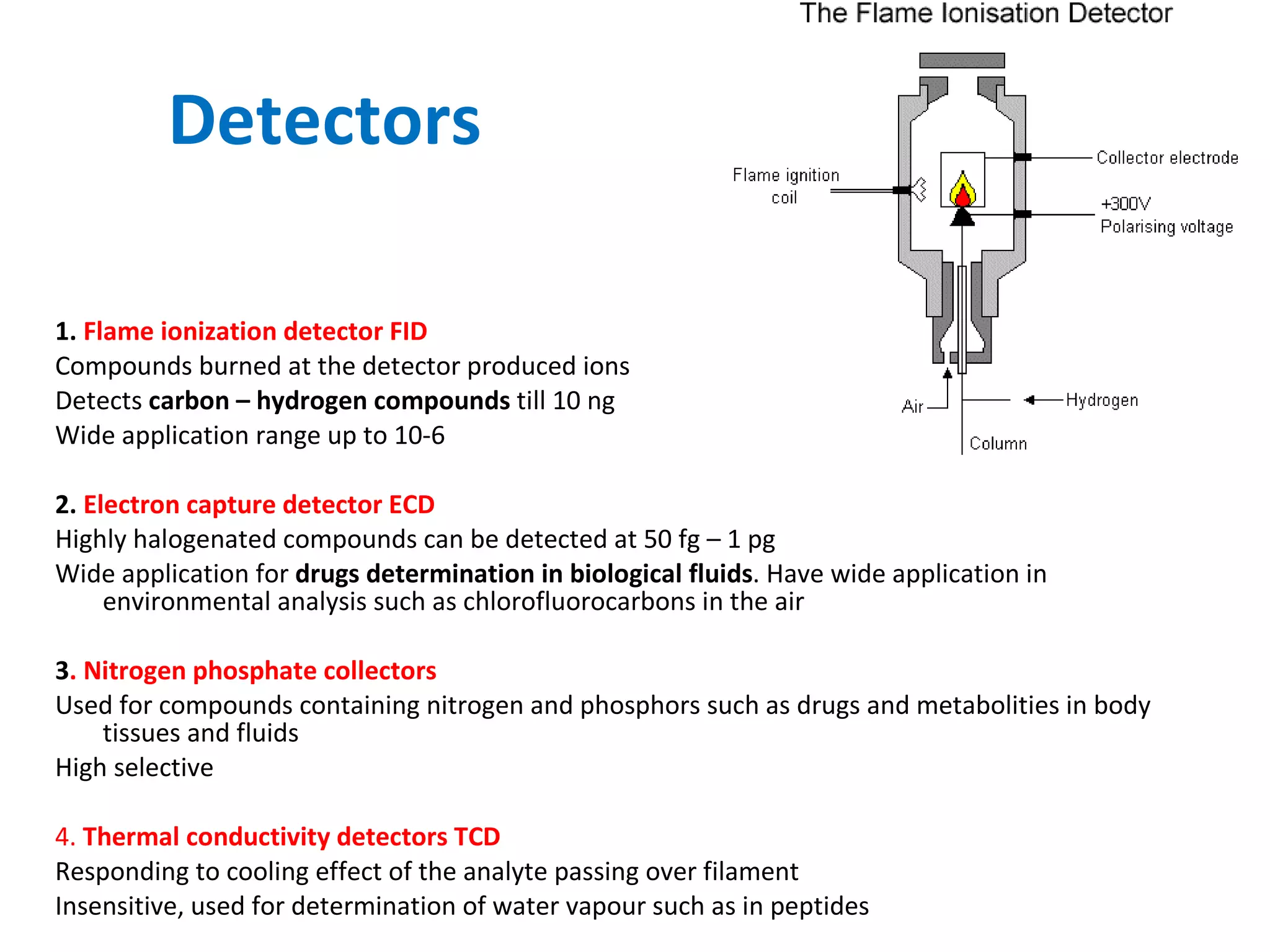
Detectors  1.  Flame ionization detector FID Compounds burned at the detector produced ions  Detects  carbon – hydrogen compounds  till 10 ng  Wide application range up to 10-6  2.  Electron capture detector ECD Highly halogenated compounds can be detected at 50 fg – 1 pg  Wide application for  drugs determination in biological fluids . Have wide application in environmental analysis such as chlorofluorocarbons in the air  3 . Nitrogen phosphate collectors Used for compounds containing nitrogen and phosphors such as drugs and metabolities in body tissues and fluids  High selective  4.  Thermal conductivity detectors TCD Responding to cooling effect of the analyte passing over filament  Insensitive, used for determination of water vapour such as in peptides
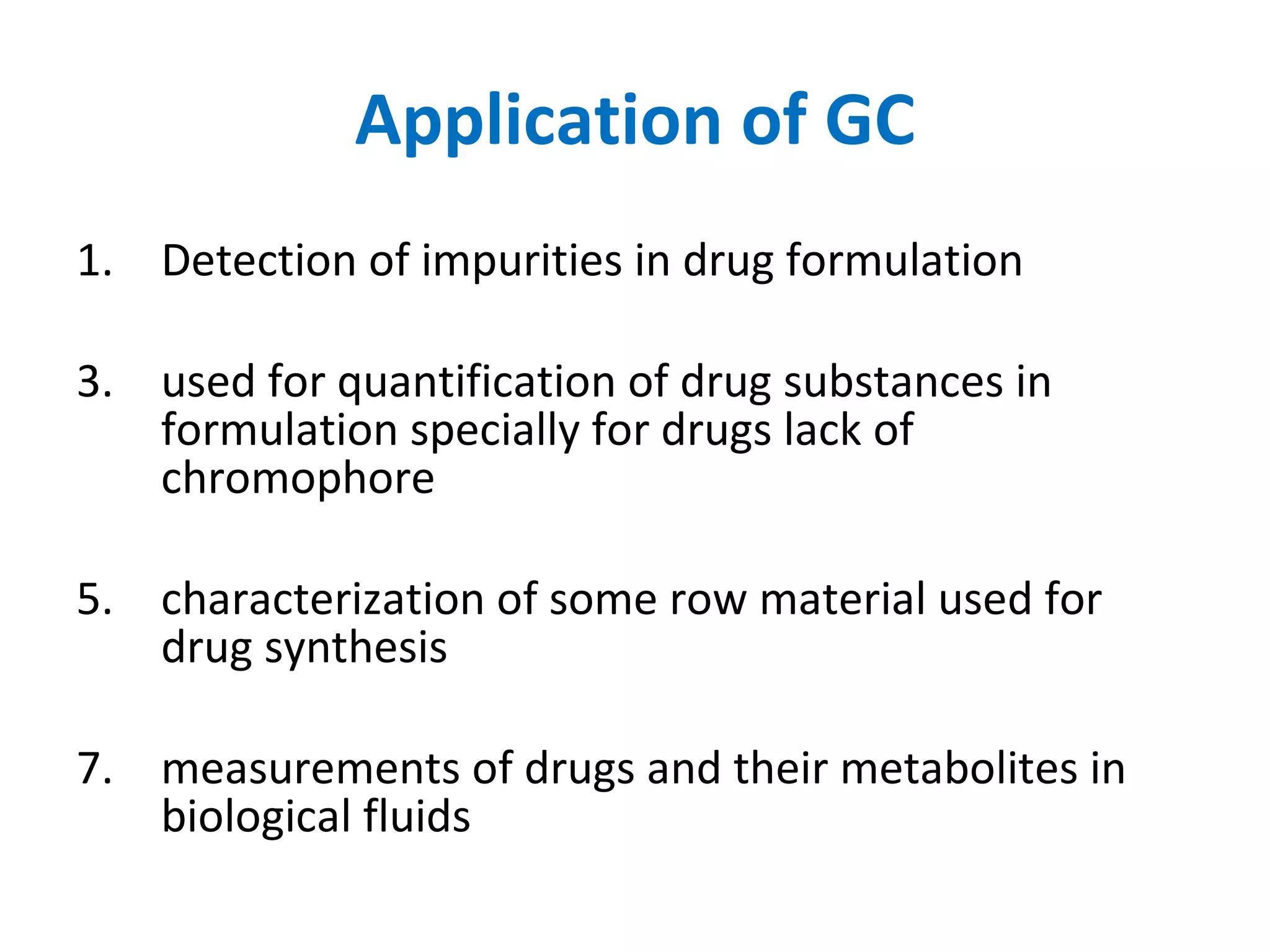
Application of GC Detection of impurities in drug formulation  used for quantification of drug substances in formulation specially for drugs lack of chromophore characterization of some row material used for drug synthesis measurements of drugs and their metabolites in biological fluids
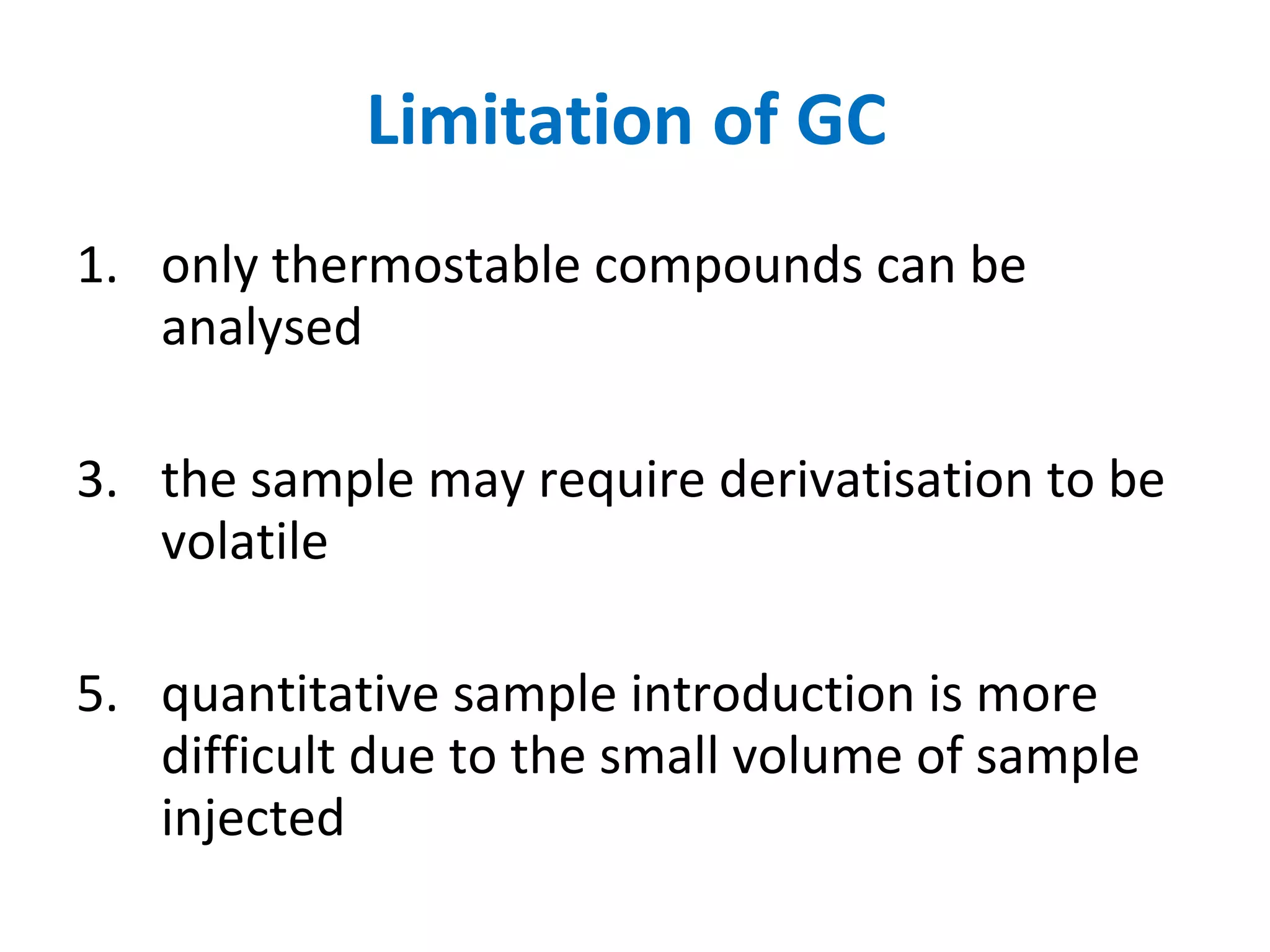
Limitation of GC  only thermostable compounds can be analysed  the sample may require derivatisation to be volatile quantitative sample introduction is more difficult due to the small volume of sample injected
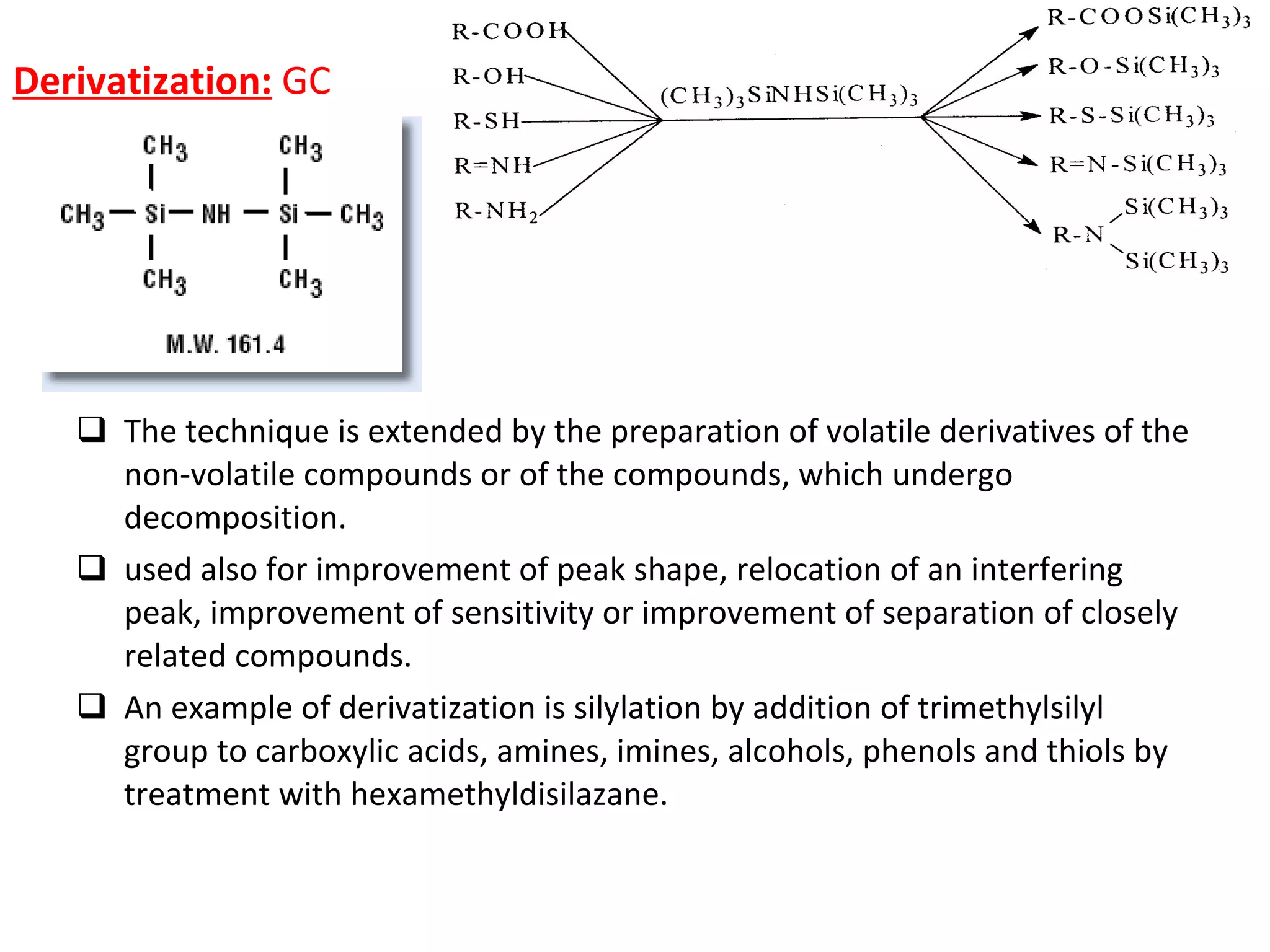
Derivatization:   GC  The technique is extended by the preparation of volatile derivatives of the non­volatile compounds or of the compounds, which undergo decomposition. used also for improvement of peak shape, relocation of an interfering peak, improvement of sensitivity or improvement of separation of closely related compounds.  An example of derivatization is silylation by addition of trimethylsilyl group to carboxylic acids, amines, imines, alcohols, phenols and thiols by treatment with hexamethyldisilazane.
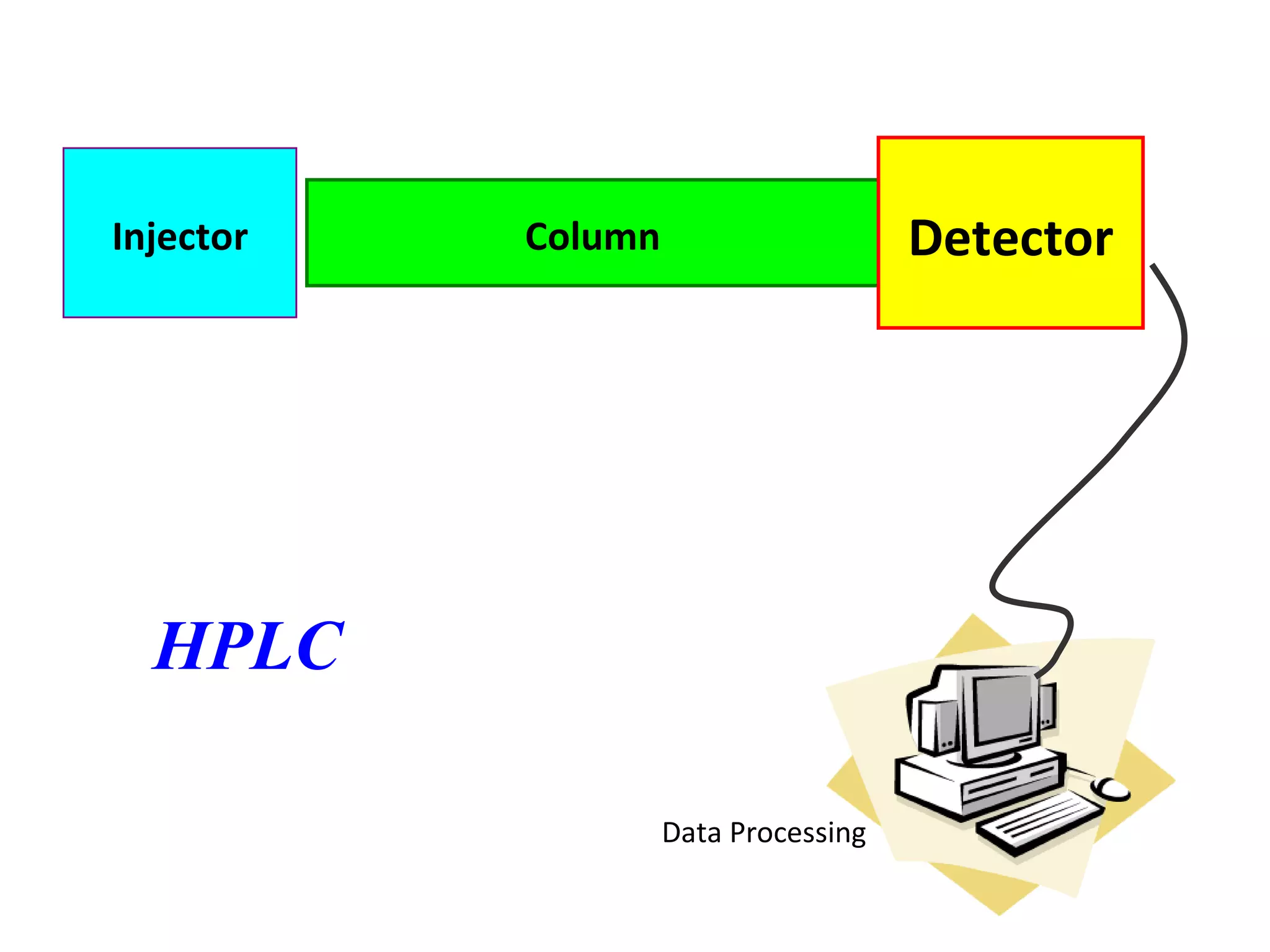
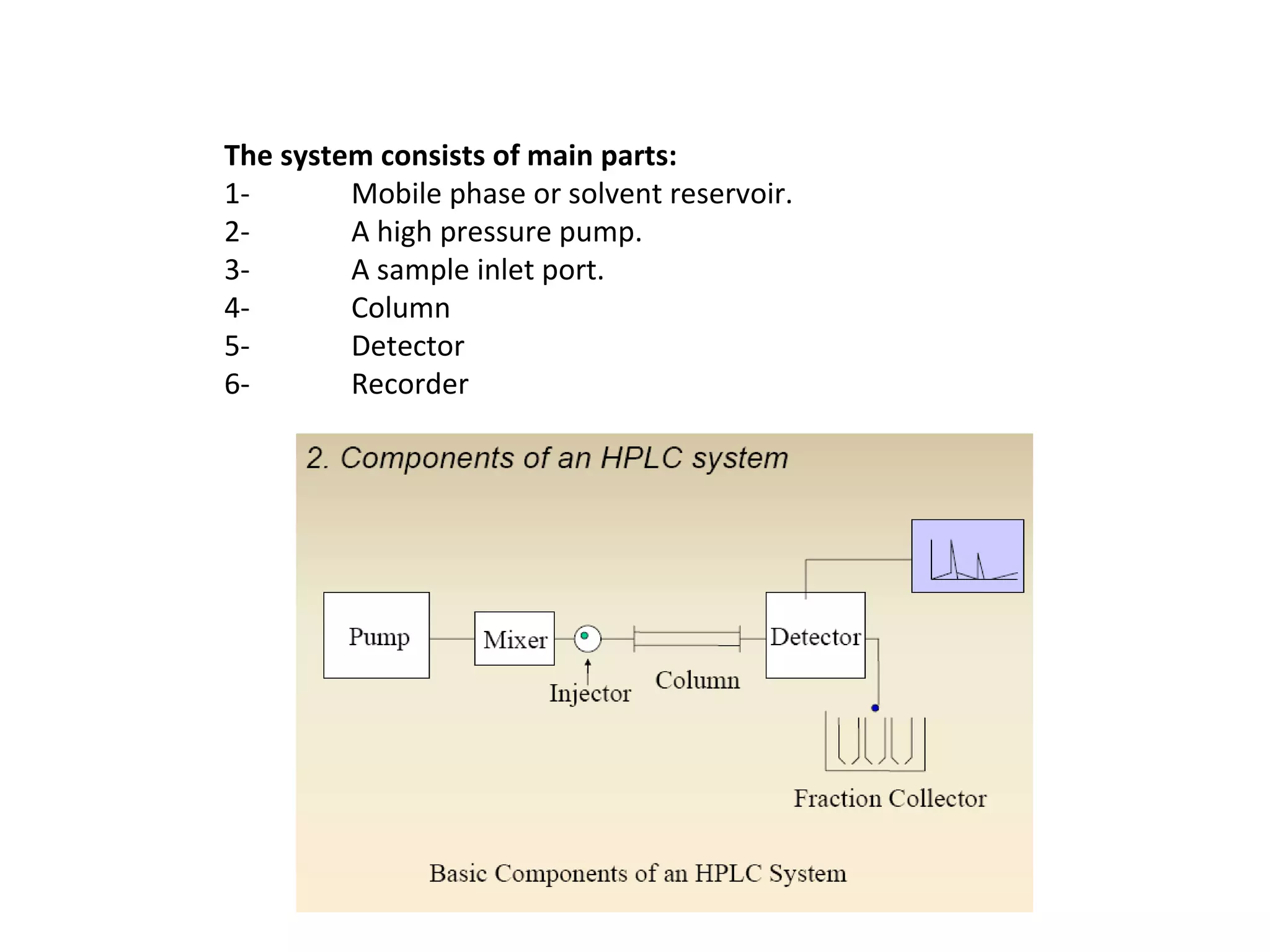
Column Injector Detector HPLC Data Processing
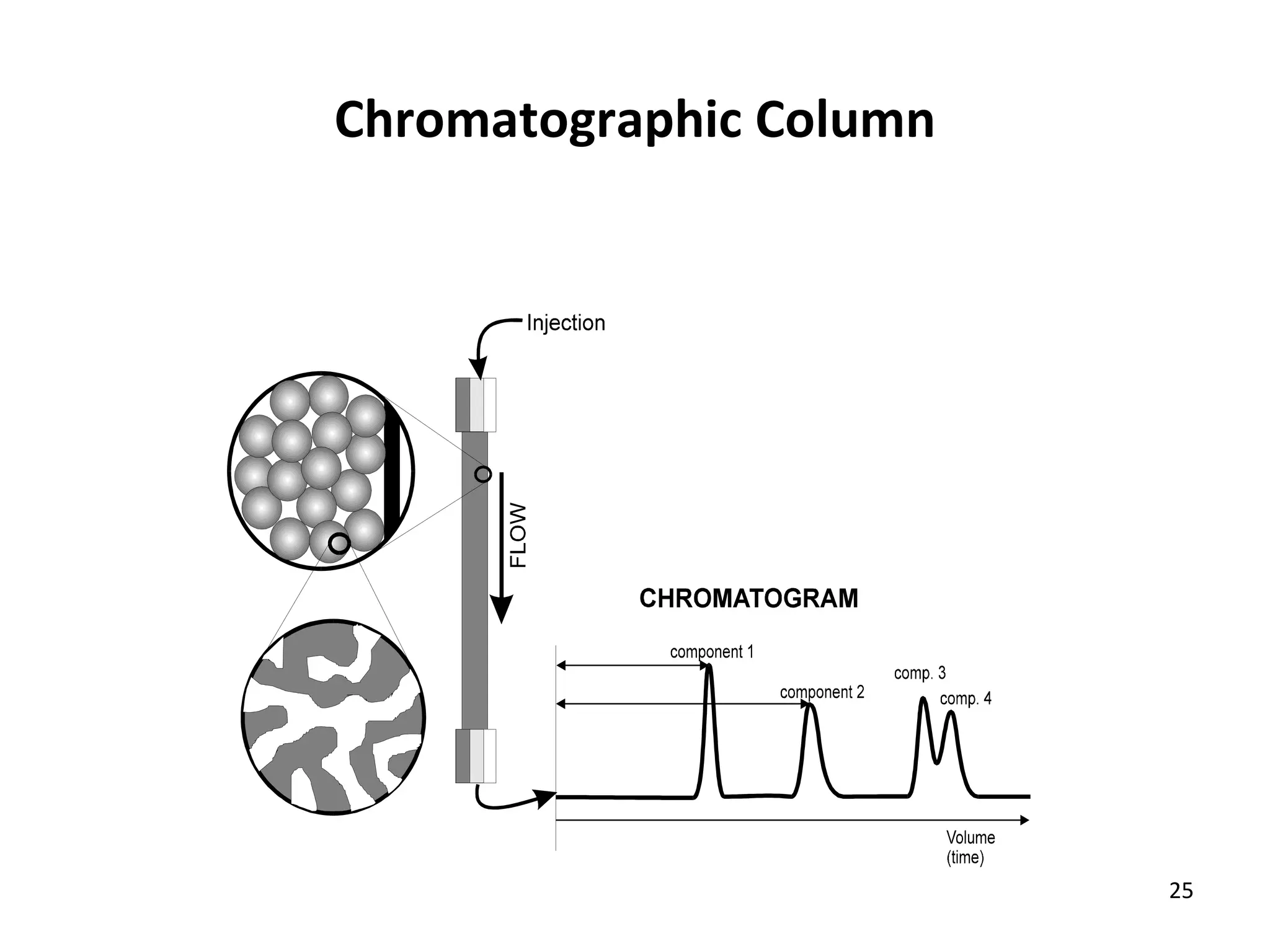
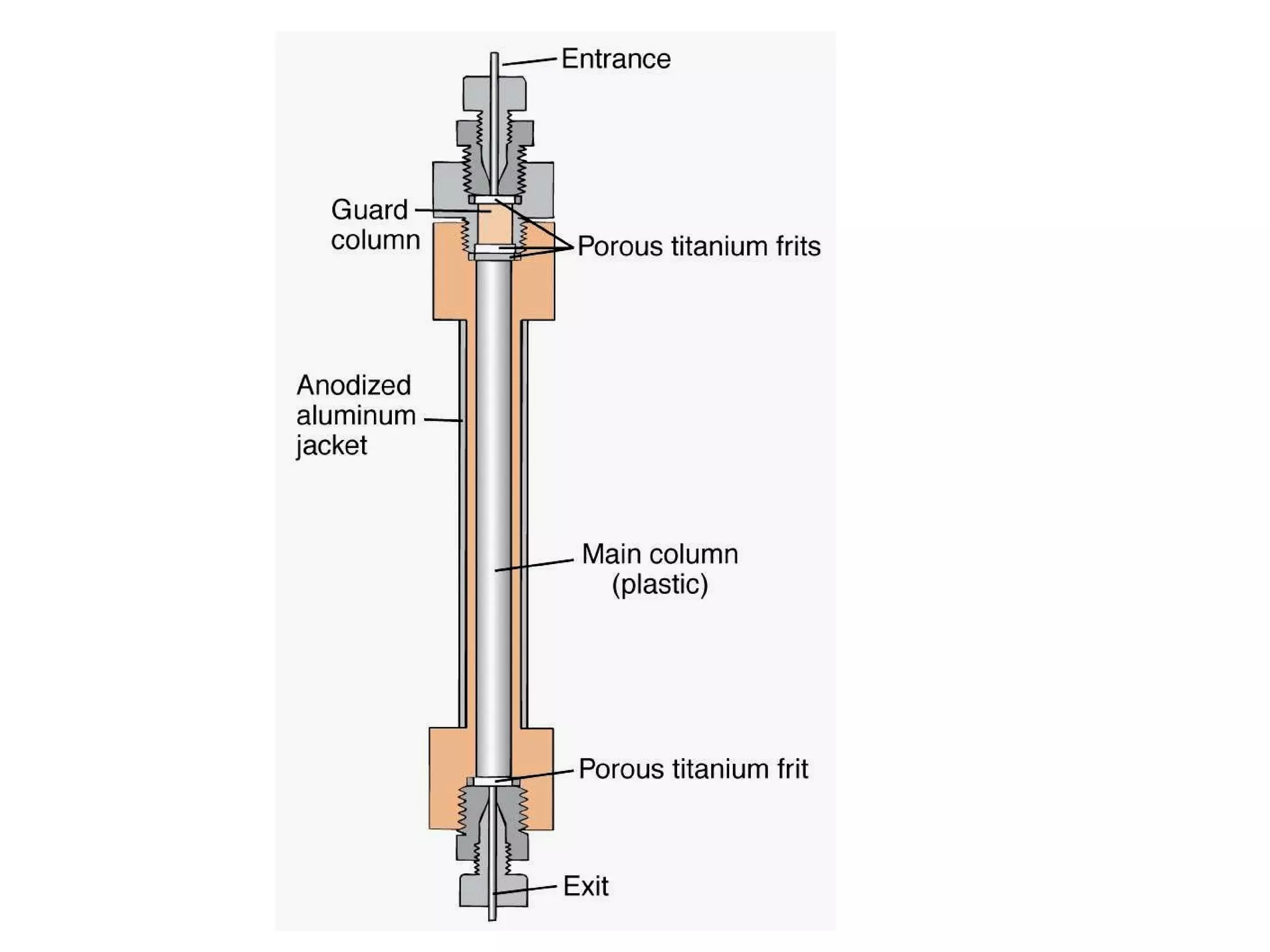
Chromatographic Column
The system consists of main parts: 1- Mobile phase or solvent reservoir. 2- A high pressure pump. 3- A sample inlet port. 4- Column 5- Detector 6- Recorder
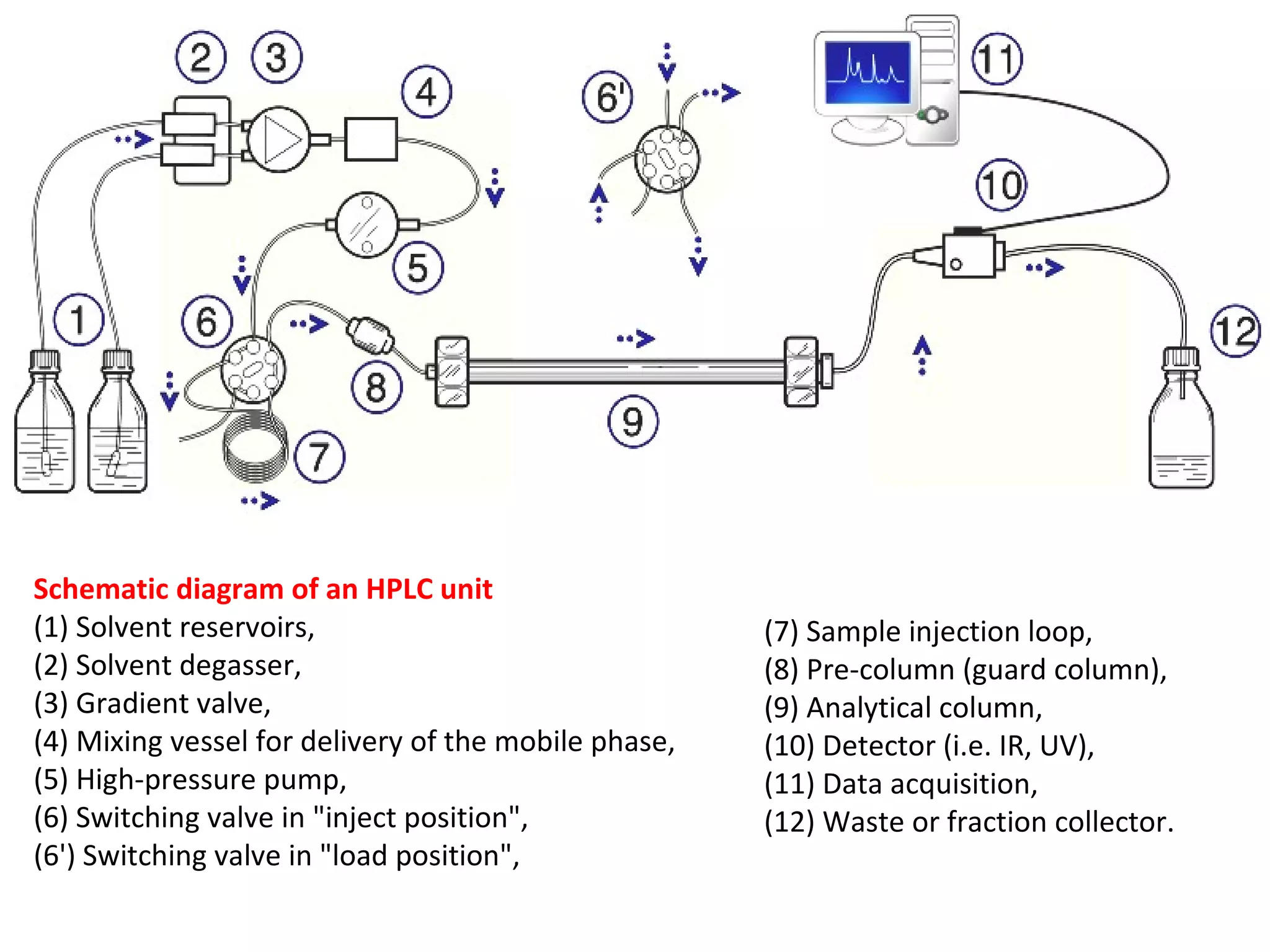
Schematic diagram of an HPLC unit (1) Solvent reservoirs,  (2) Solvent degasser,  (3) Gradient valve,  (4) Mixing vessel for delivery of the mobile phase,  (5) High-pressure pump,  (6) Switching valve in "inject position",  (6') Switching valve in "load position",  (7) Sample injection loop,  (8) Pre-column (guard column),  (9) Analytical column,  (10) Detector (i.e. IR, UV),  (11) Data acquisition,  (12) Waste or fraction collector.
The pump,  capable of maintaining  high pressures  draws the solvent (mobile liquid phase) from the reservoir and pushes it through the column.  The sample  is injected through a port into the high pressure liquid  carrier steam  between the pump and the column.  The separation  takes place on the  columns , which vary, from 25-100 cm length and 2-5 mm in internal diameter. Typical flow rates are 1-2 ml/min with pressures up to several thousand psi.  The column effluent  passes through a non-destructive  detector  where a property such as : UV absorbance,  Rl or molecular fluorescence  To increase the efficiency of separation, the mobile phase may be altered by changing its  polarity, pH or ionic strength . HPLC offers the advantages of speed, resolution and sensitivity.
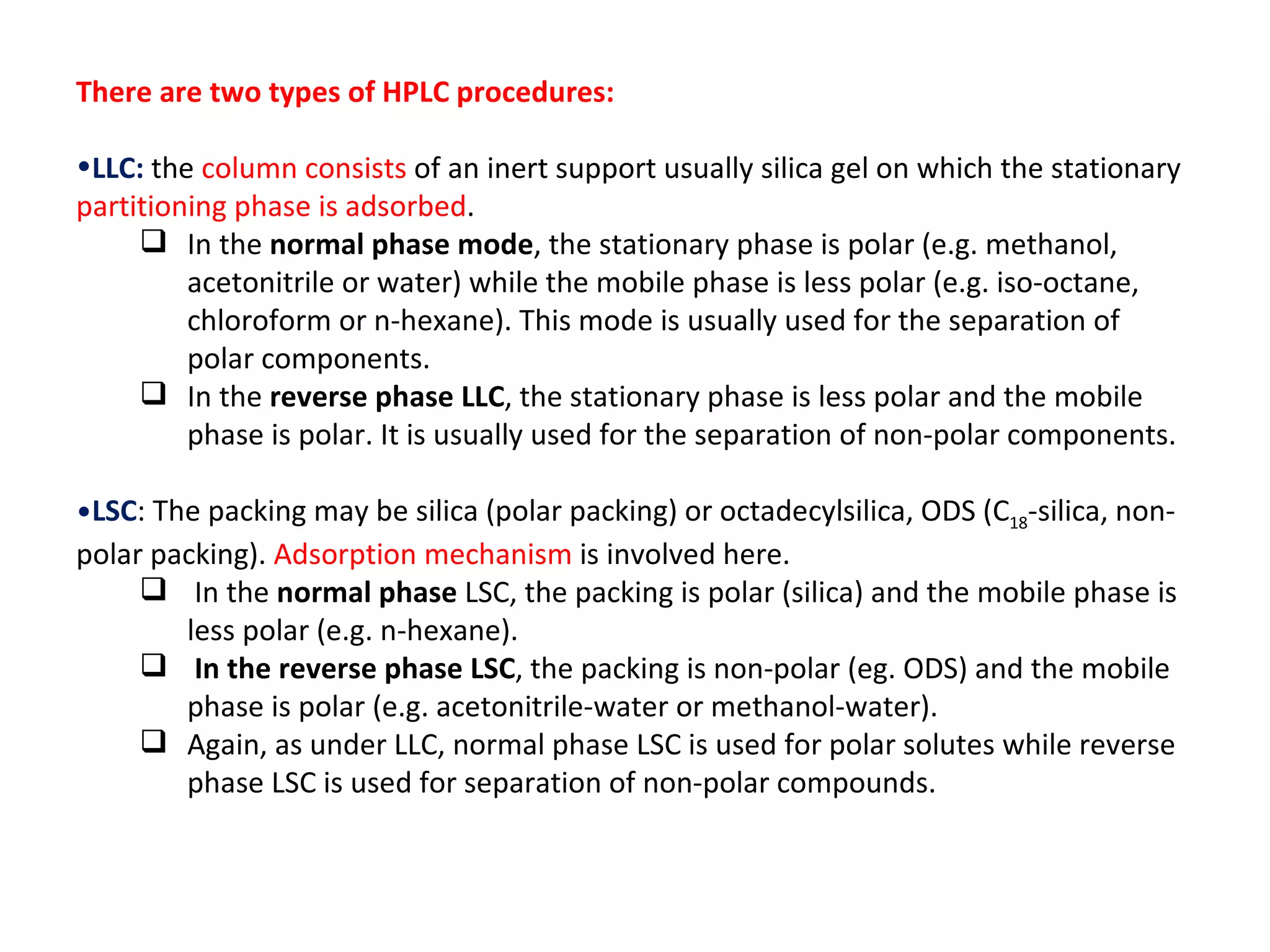
There are two types of HPLC procedures: LLC:   the  column consists  of an inert support usually silica gel on which the stationary  partitioning phase is adsorbed .  In the  normal phase mode , the stationary phase is polar (e.g. methanol, acetonitrile or water) while the mobile phase is less polar (e.g. iso-octane, chloroform or n-hexane). This mode is usually used for the separation of polar components.  In the  reverse phase LLC , the stationary phase is less polar and the mobile phase is polar. It is usually used for the separation of non-polar components. LSC : The packing may be silica (polar packing) or octadecylsilica, ODS (C 18 -silica, non-polar packing).  Adsorption mechanism  is involved here. In the  normal phase  LSC, the packing is polar (silica) and the mobile phase is less polar (e.g. n-hexane). In the reverse phase LSC , the packing is non-polar (eg. ODS) and the mobile phase is polar (e.g. acetonitrile-water or methanol-water).  Again, as under LLC, normal phase LSC is used for polar solutes while reverse phase LSC is used for separation of non-polar compounds.
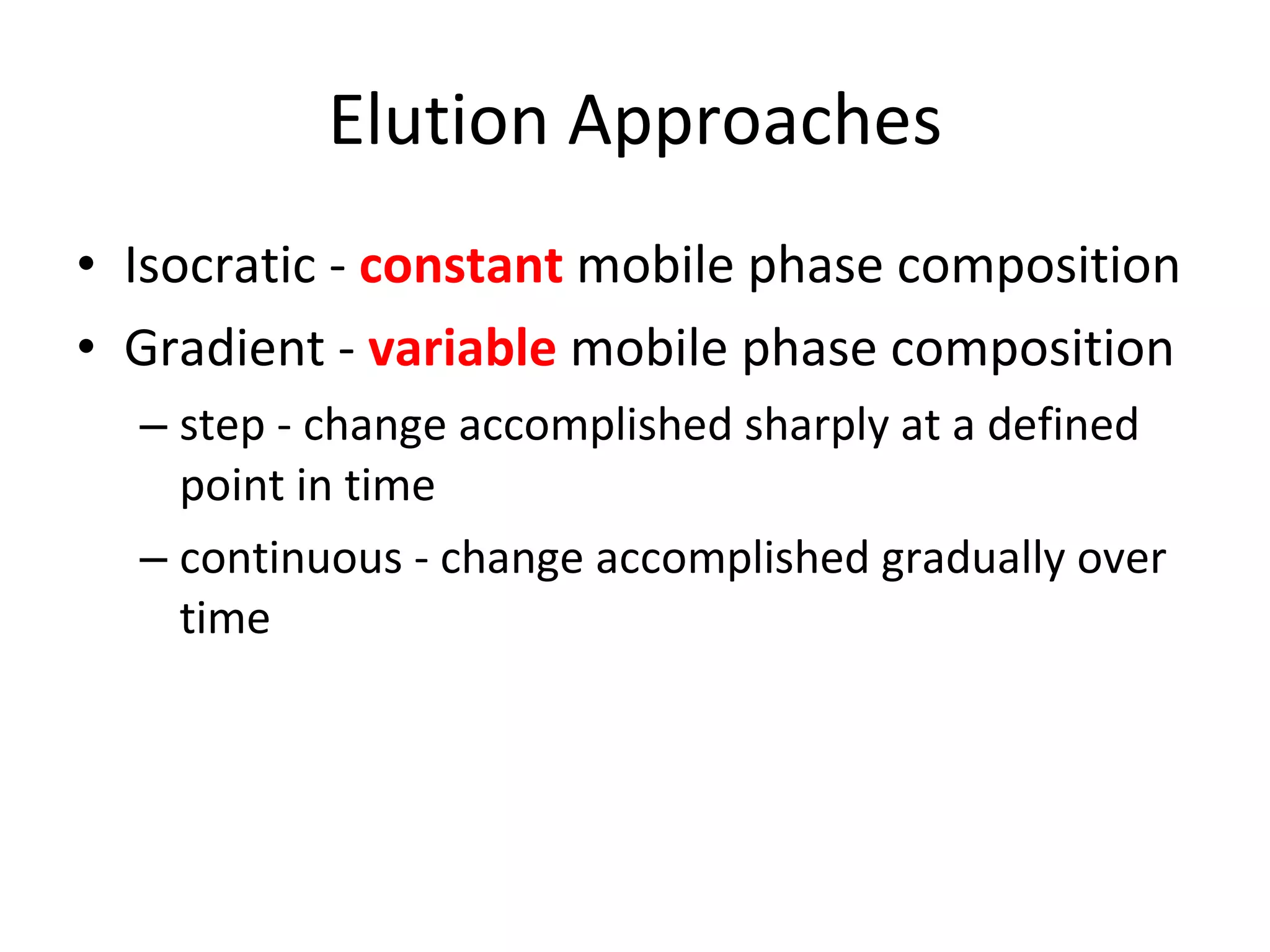
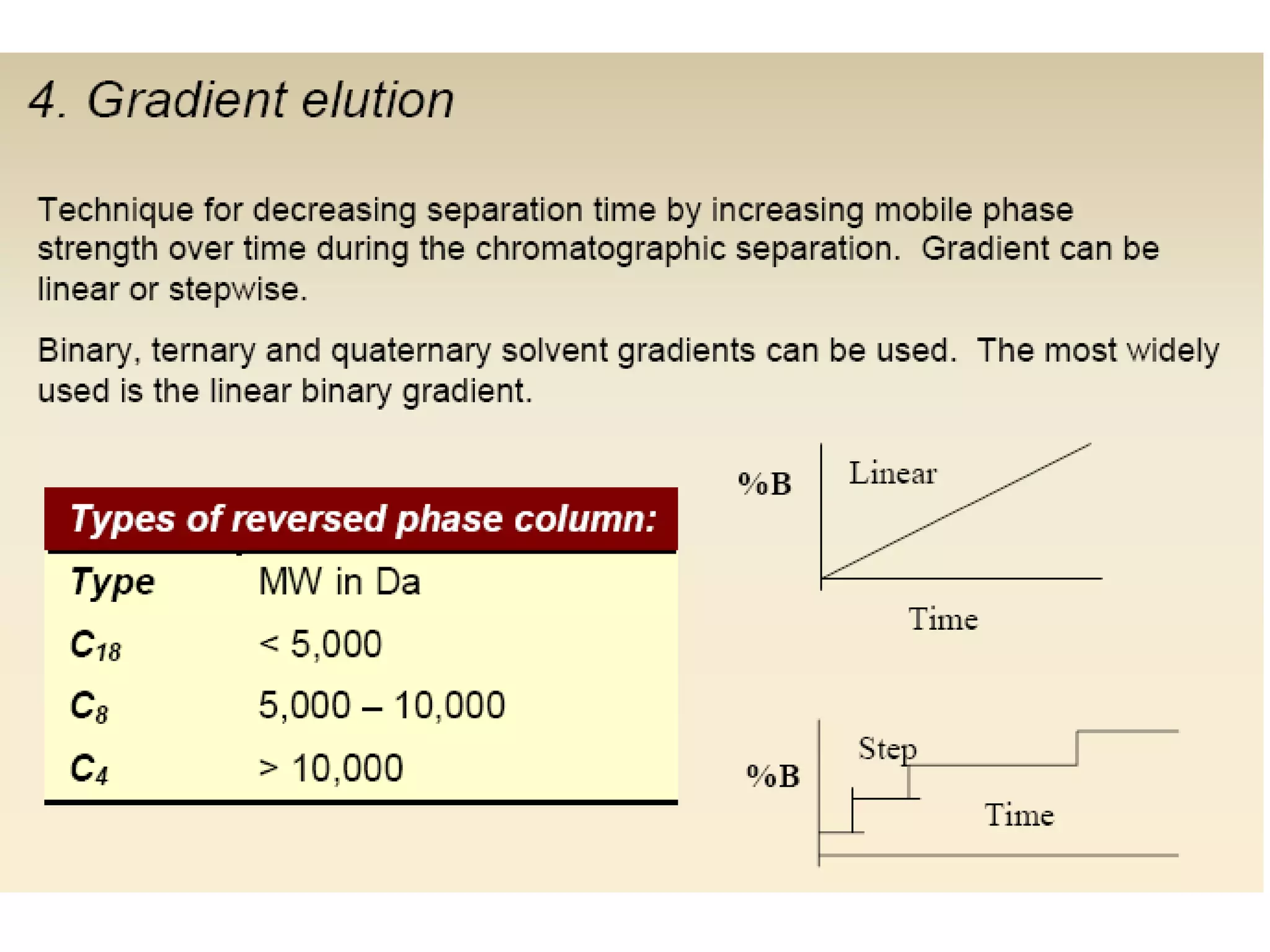
Elution Approaches Isocratic -  constant  mobile phase composition Gradient -  variable  mobile phase composition step - change accomplished sharply at a defined point in time continuous - change accomplished gradually over time
 
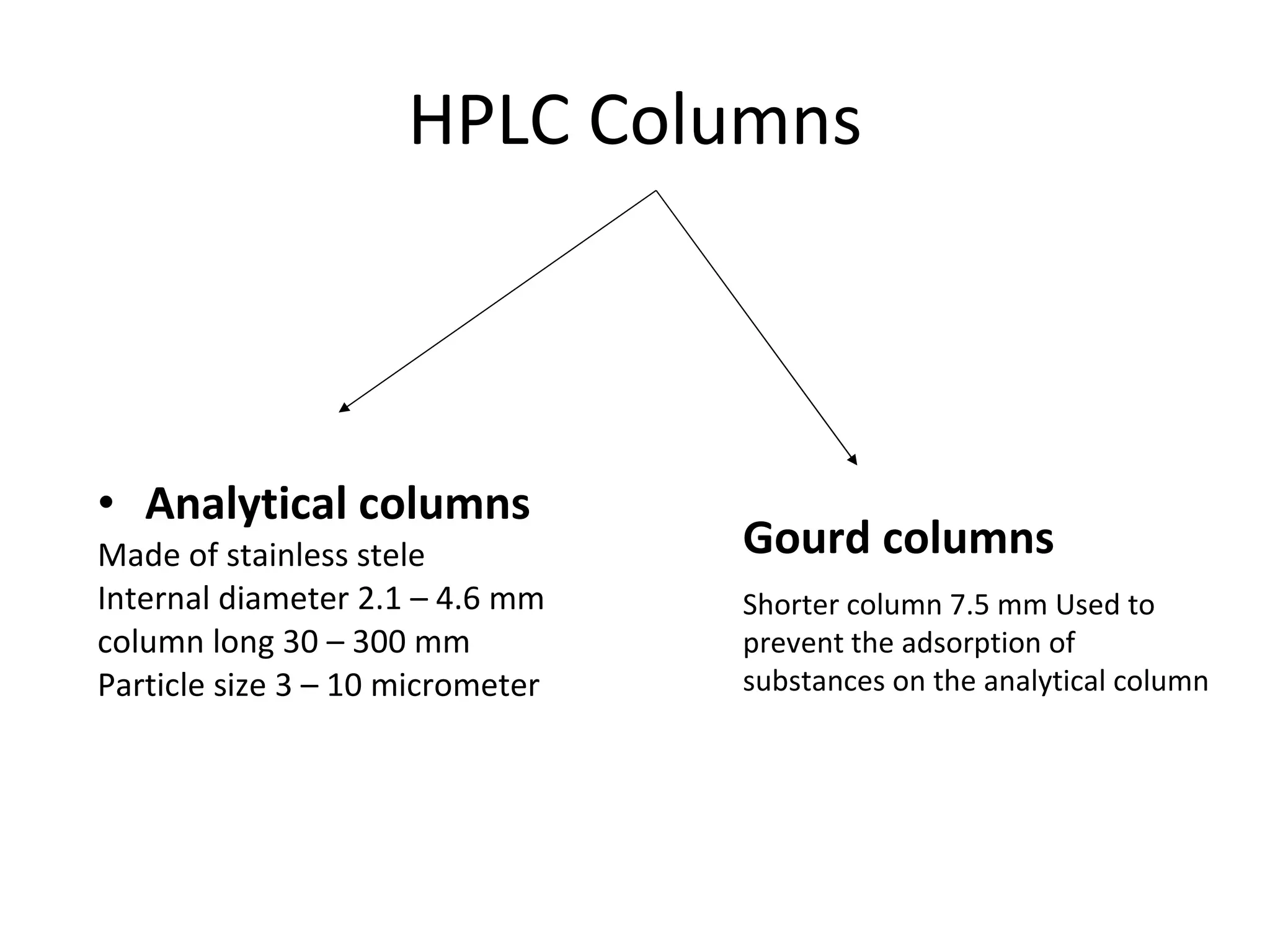
HPLC Columns Analytical columns  Made of stainless stele  Internal diameter 2.1 – 4.6 mm  column long 30 – 300 mm  Particle size 3 – 10 micrometer  Gourd columns Shorter column 7.5 mm Used to prevent the adsorption of substances on the analytical column
 
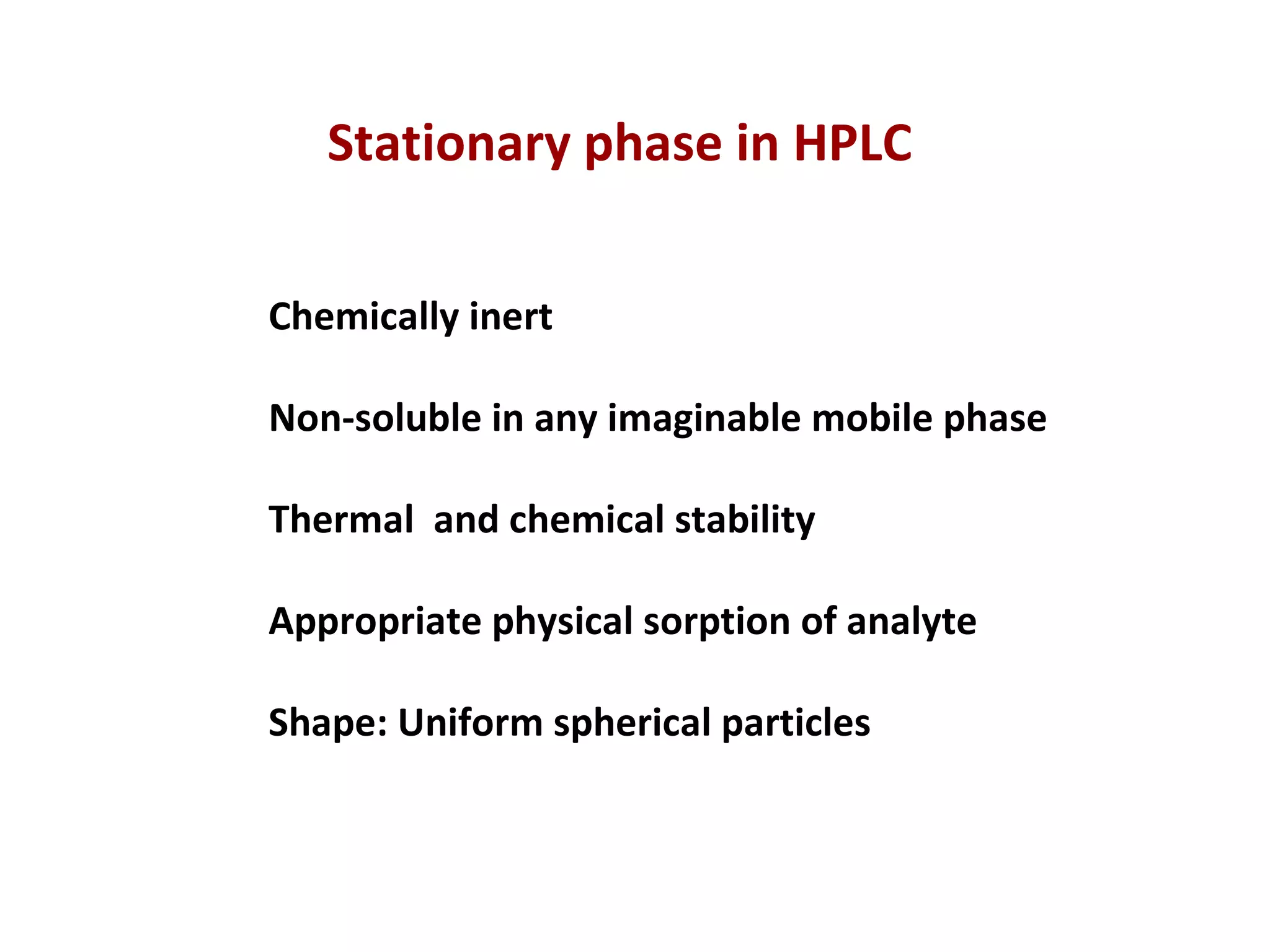
Stationary phase in HPLC Chemically inert Non-soluble in any imaginable mobile phase Thermal  and chemical stability Appropriate physical sorption of analyte Shape: Uniform spherical particles
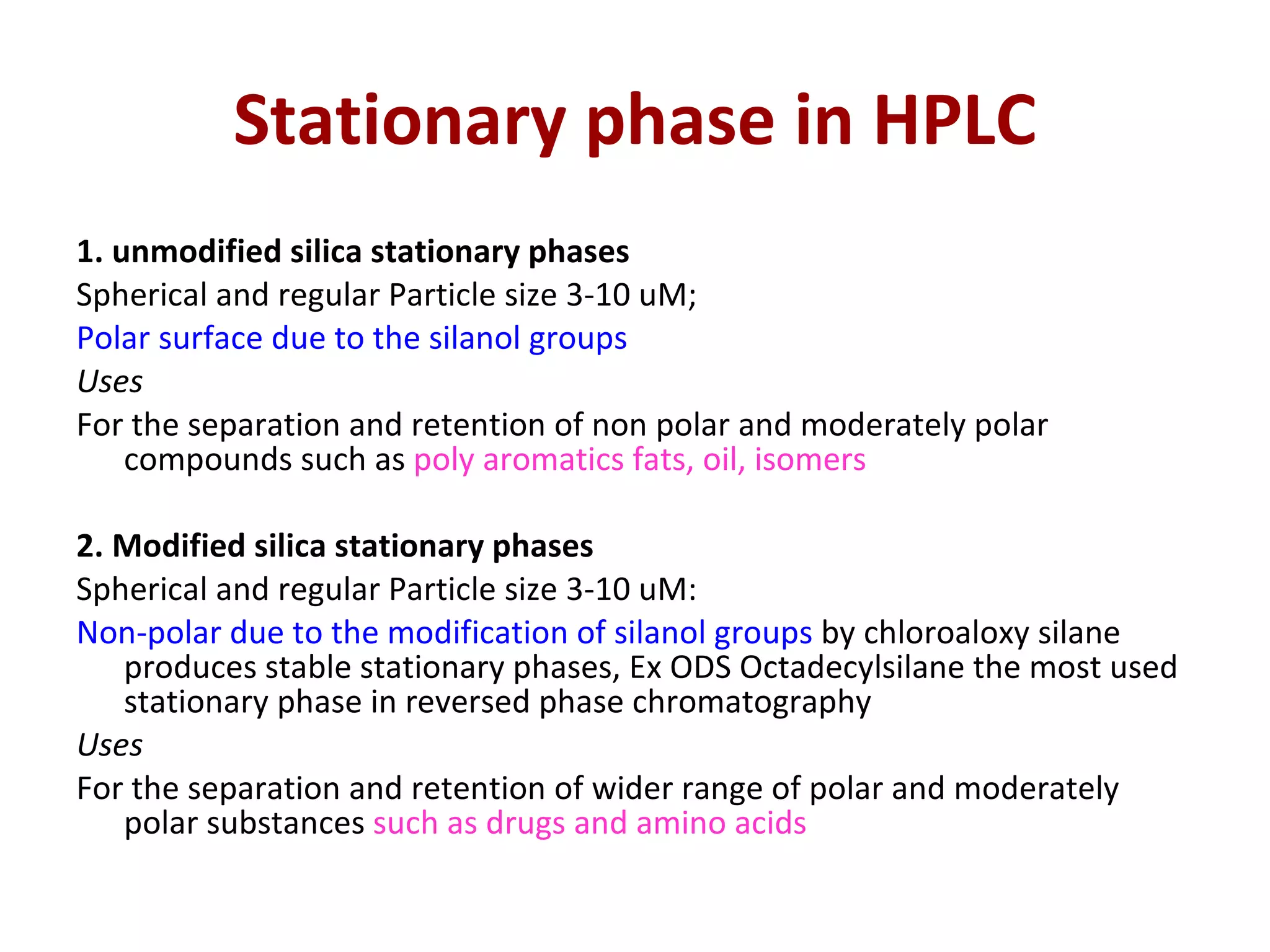
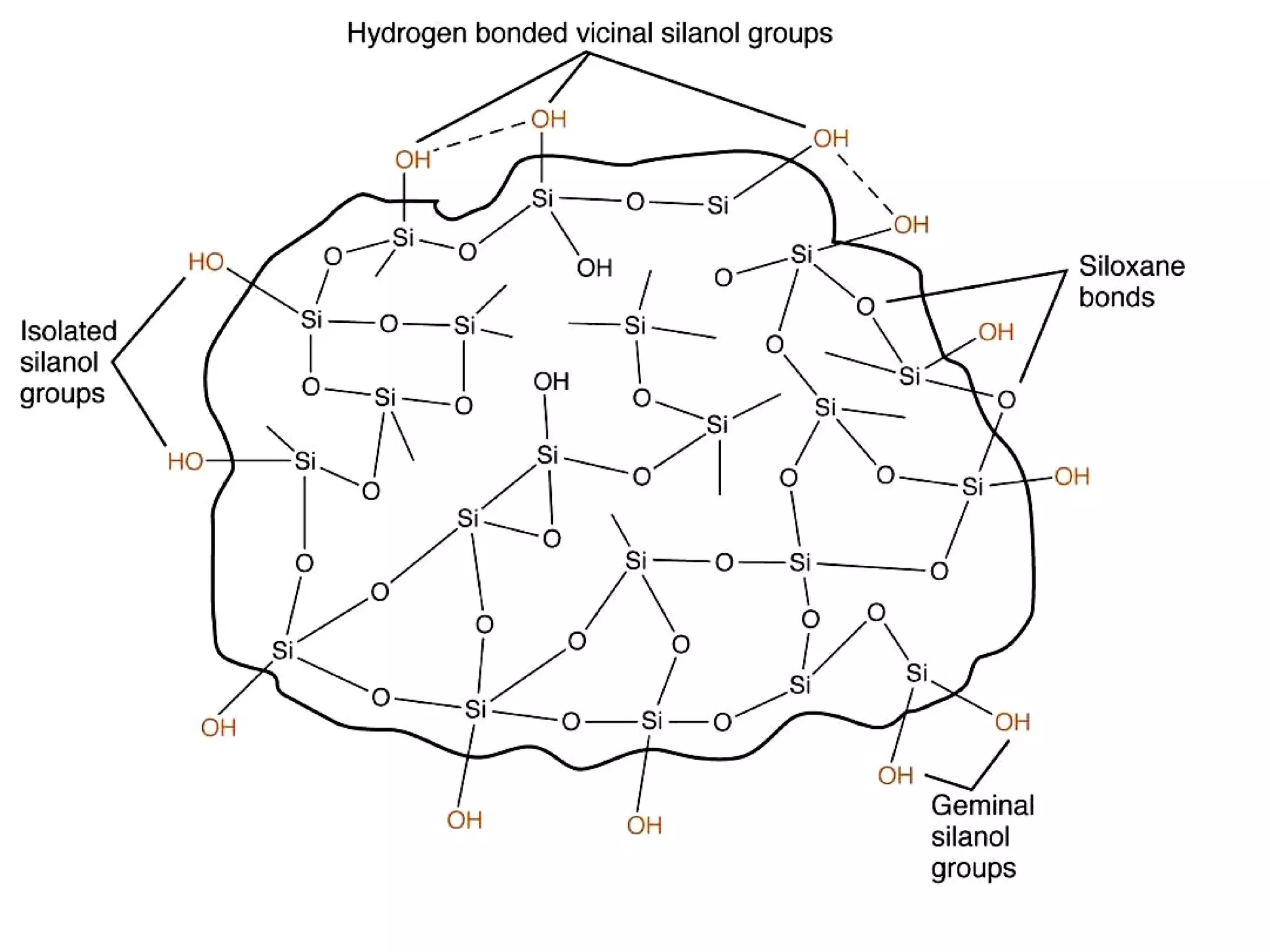
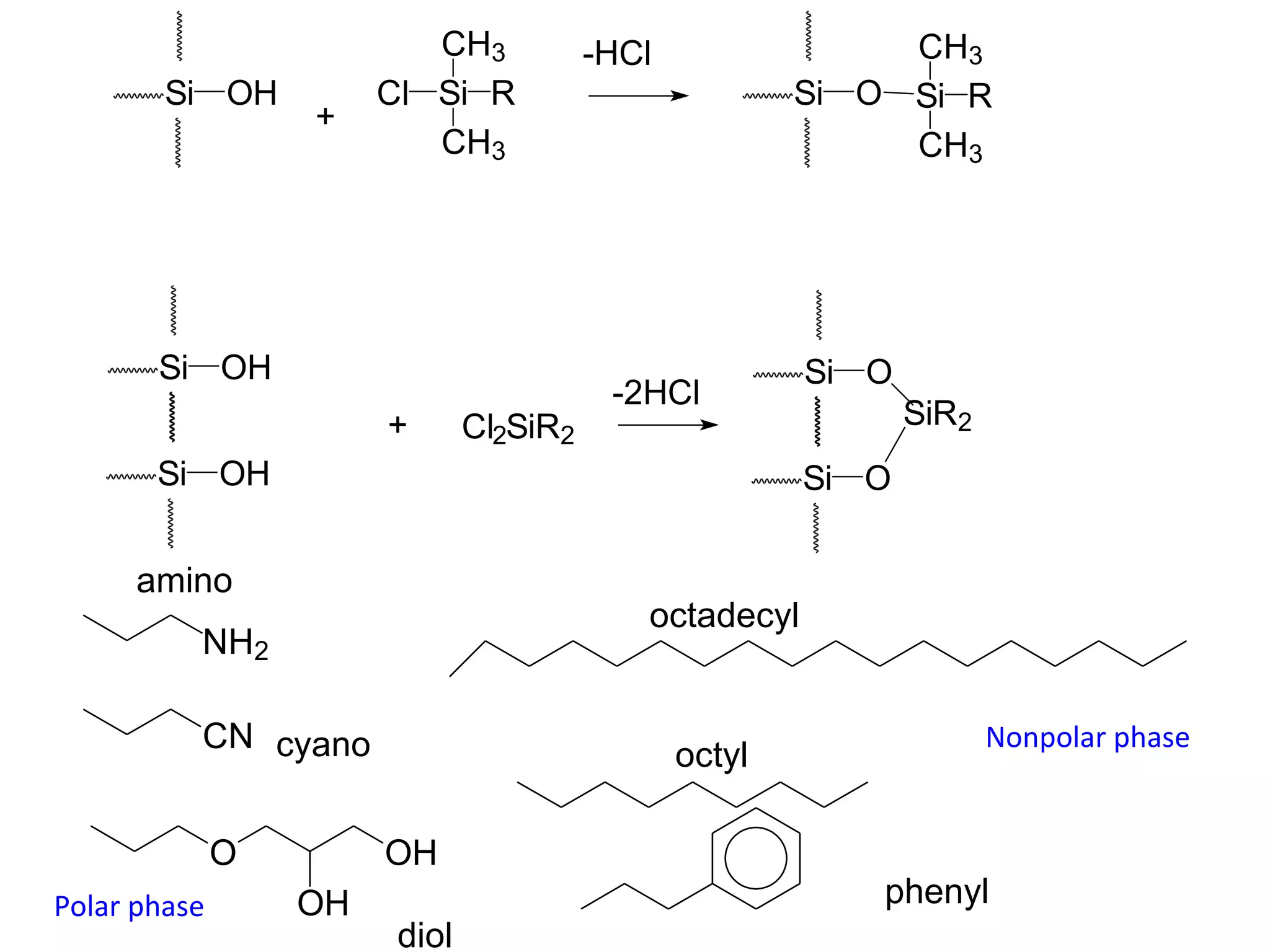
Stationary phase in HPLC 1. unmodified silica stationary phases Spherical and regular Particle size 3-10 uM; Polar surface due to the silanol groups Uses For the separation and retention of non polar and moderately polar compounds such as  poly aromatics fats, oil, isomers  2. Modified silica stationary phases Spherical and regular Particle size 3-10 uM:  Non-polar due to the modification of silanol groups  by chloroaloxy silane produces stable stationary phases, Ex ODS Octadecylsilane the most used stationary phase in reversed phase chromatography Uses For the separation and retention of wider range of polar and moderately polar substances  such as drugs and amino acids
 
Polar phase Nonpolar phase
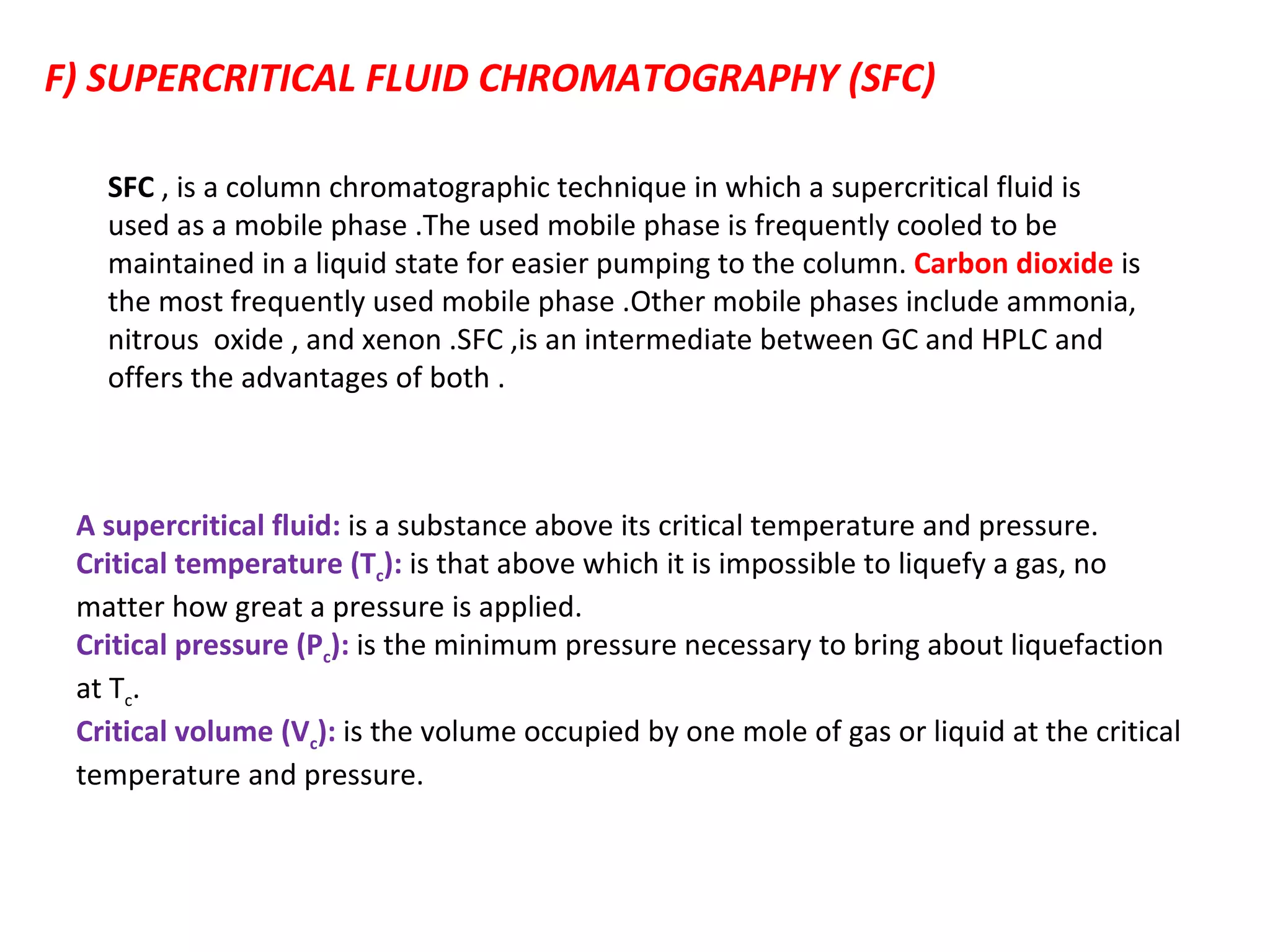
F) SUPERCRITICAL FLUID CHROMATOGRAPHY (SFC) A supercritical fluid:  is a substance above its critical temperature and pressure. Critical temperature (T c ):  is that above which it is impossible to liquefy a gas, no matter how great a pressure is applied.  Critical pressure (P c ):  is the minimum pressure necessary to bring about liquefaction at T c . Critical volume (V c ):  is the volume occupied by one mole of gas or liquid at the critical temperature and pressure. SFC  , is a column chromatographic technique in which a supercritical fluid is used as a mobile phase .The used mobile phase is frequently cooled to be  maintained in a liquid state for easier pumping to the column.  Carbon dioxide   is the most frequently used mobile phase .Other mobile phases include ammonia, nitrous  oxide , and xenon .SFC ,is an intermediate between GC and HPLC and offers the advantages of both .
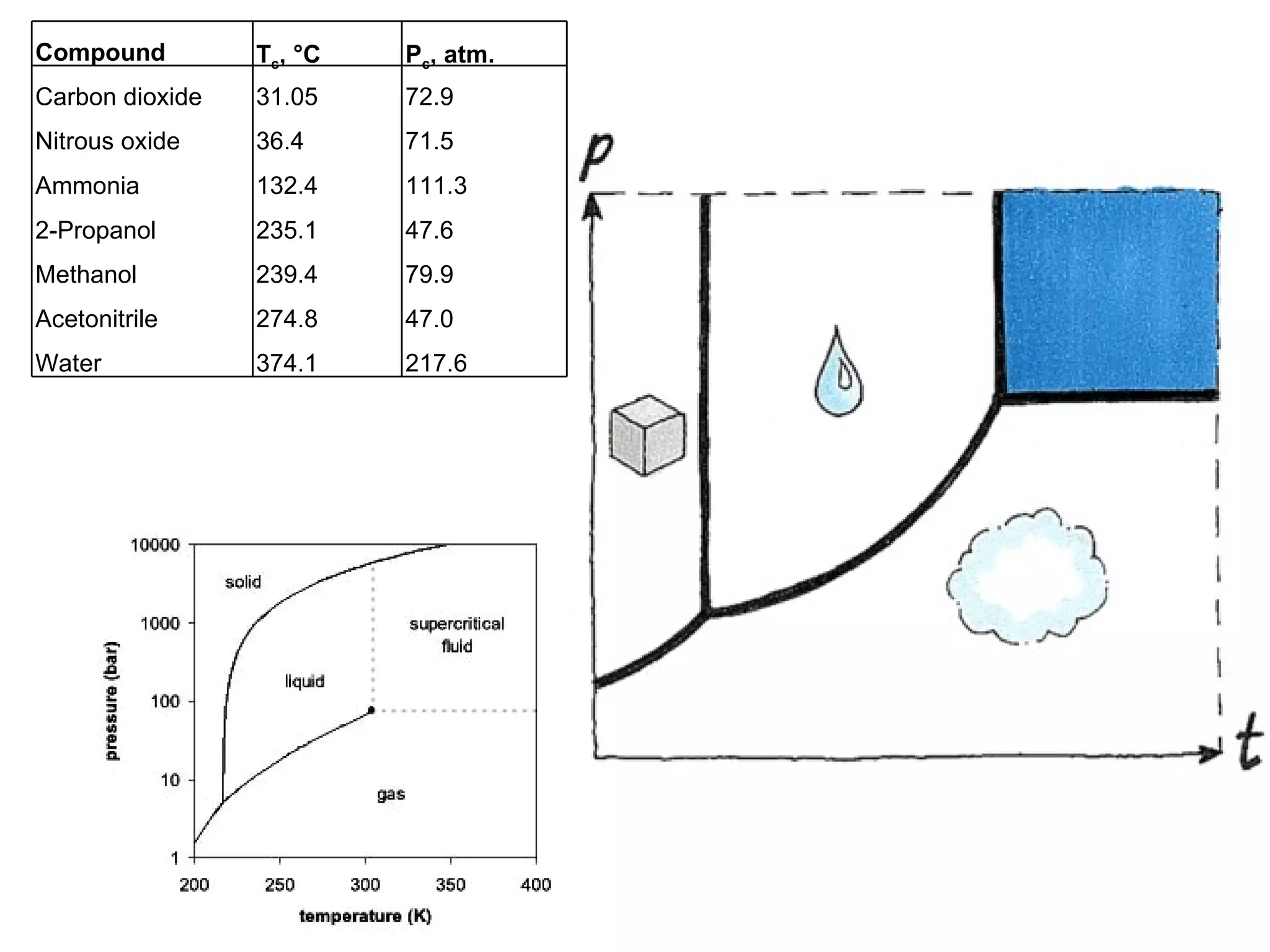
Compound T c , °C P c , atm. Carbon dioxide 31.05 72.9 Nitrous oxide 36.4 71.5 Ammonia 132.4 111.3 2-Propanol 235.1 47.6 Methanol 239.4 79.9 Acetonitrile 274.8 47.0 Water 374.1 217.6
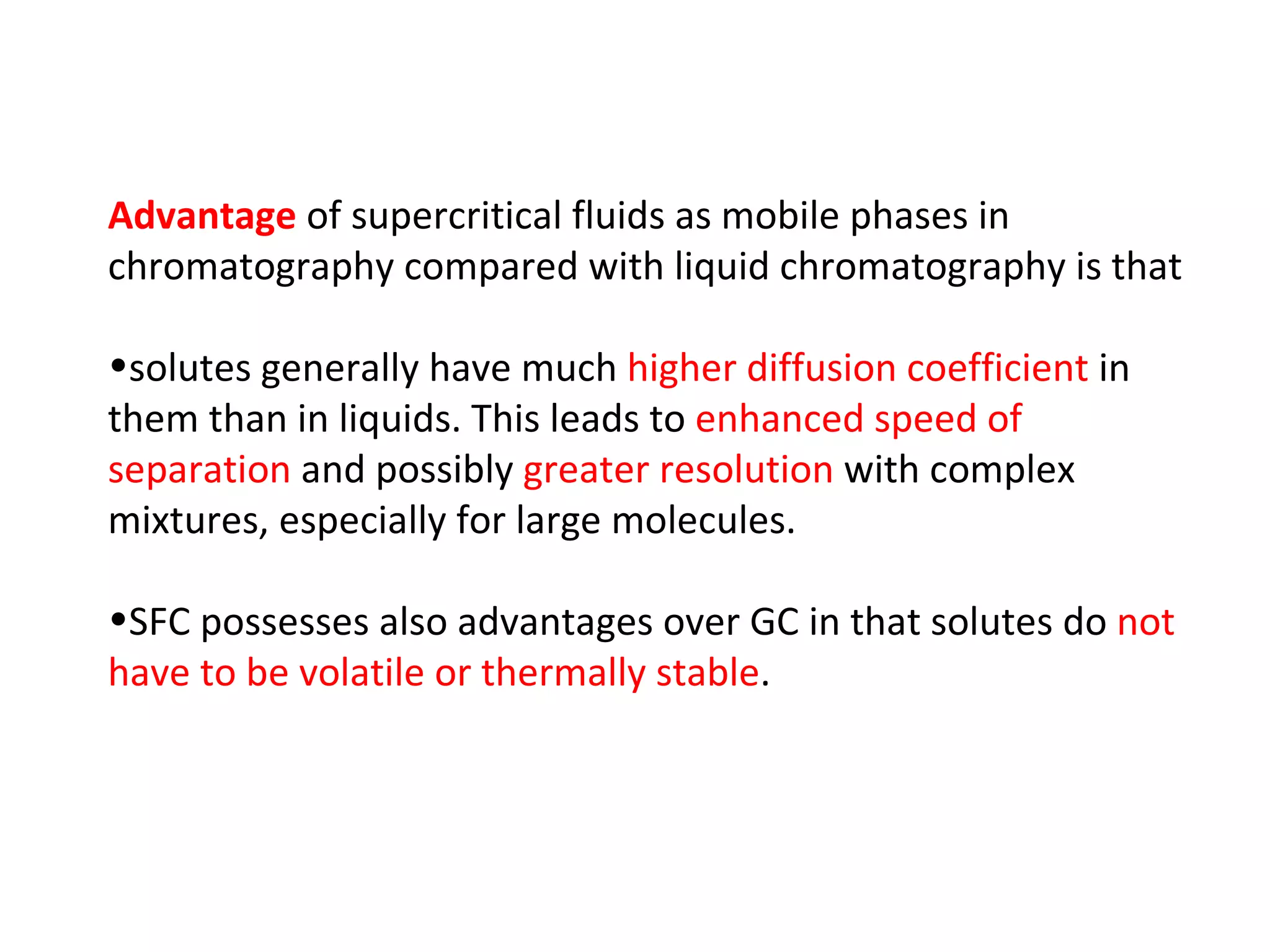
Advantage  of supercritical fluids as mobile phases in chromatography compared with liquid chromatography is that  solutes generally have much  higher diffusion coefficient  in them than in liquids. This leads to  enhanced speed of separation  and possibly  greater resolution  with complex mixtures, especially for large molecules.  SFC possesses also advantages over GC in that solutes do  not have to be volatile or thermally stable .
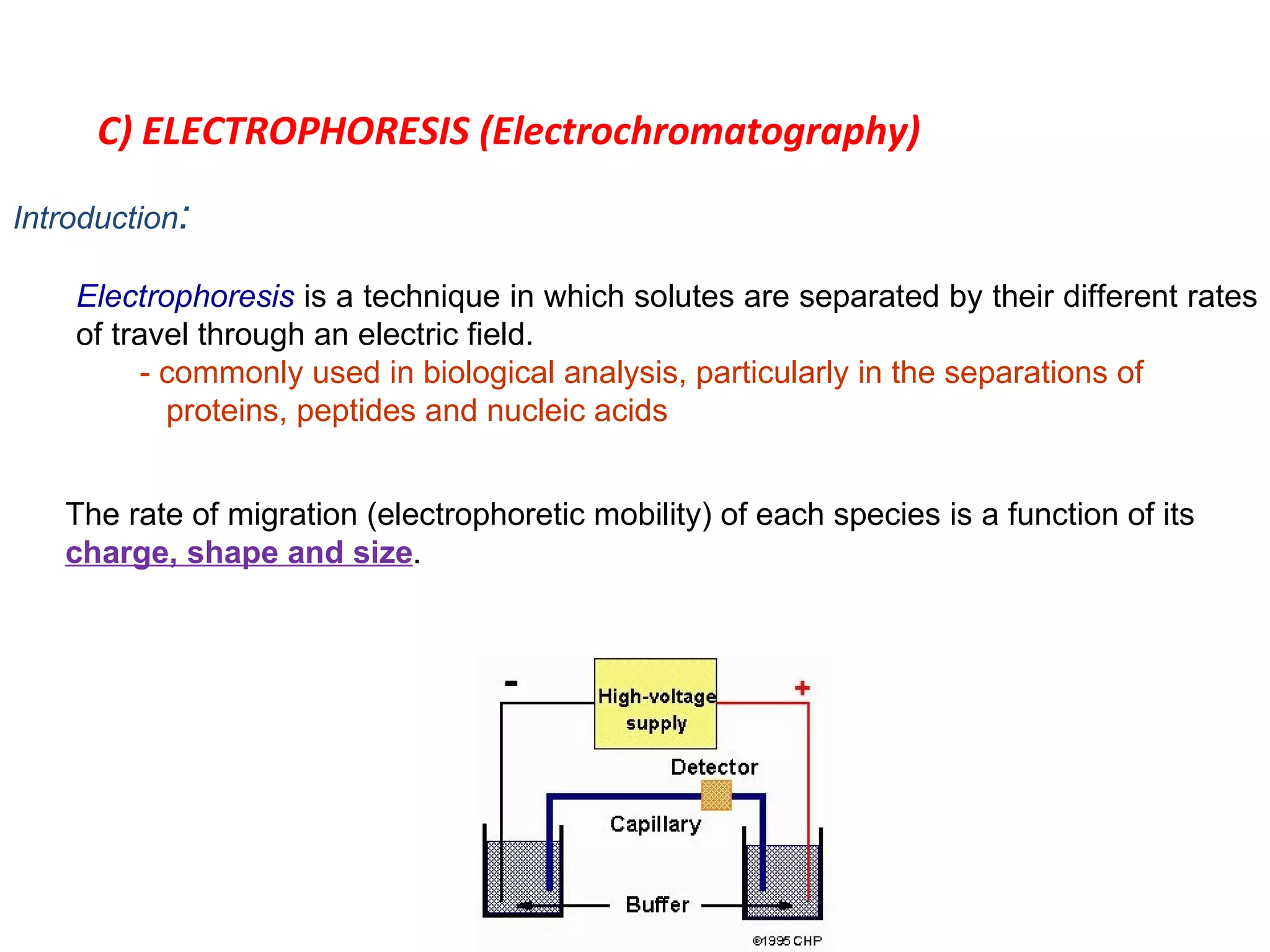
C) ELECTROPHORESIS (Electrochromatography) Introduction : Electrophoresis  is a technique in which solutes are separated by their different rates of travel through an electric field. - commonly used in biological analysis, particularly in the separations of    proteins, peptides and nucleic acids The rate of migration (electrophoretic mobility) of each species is a function of its  charge, shape and size .
 
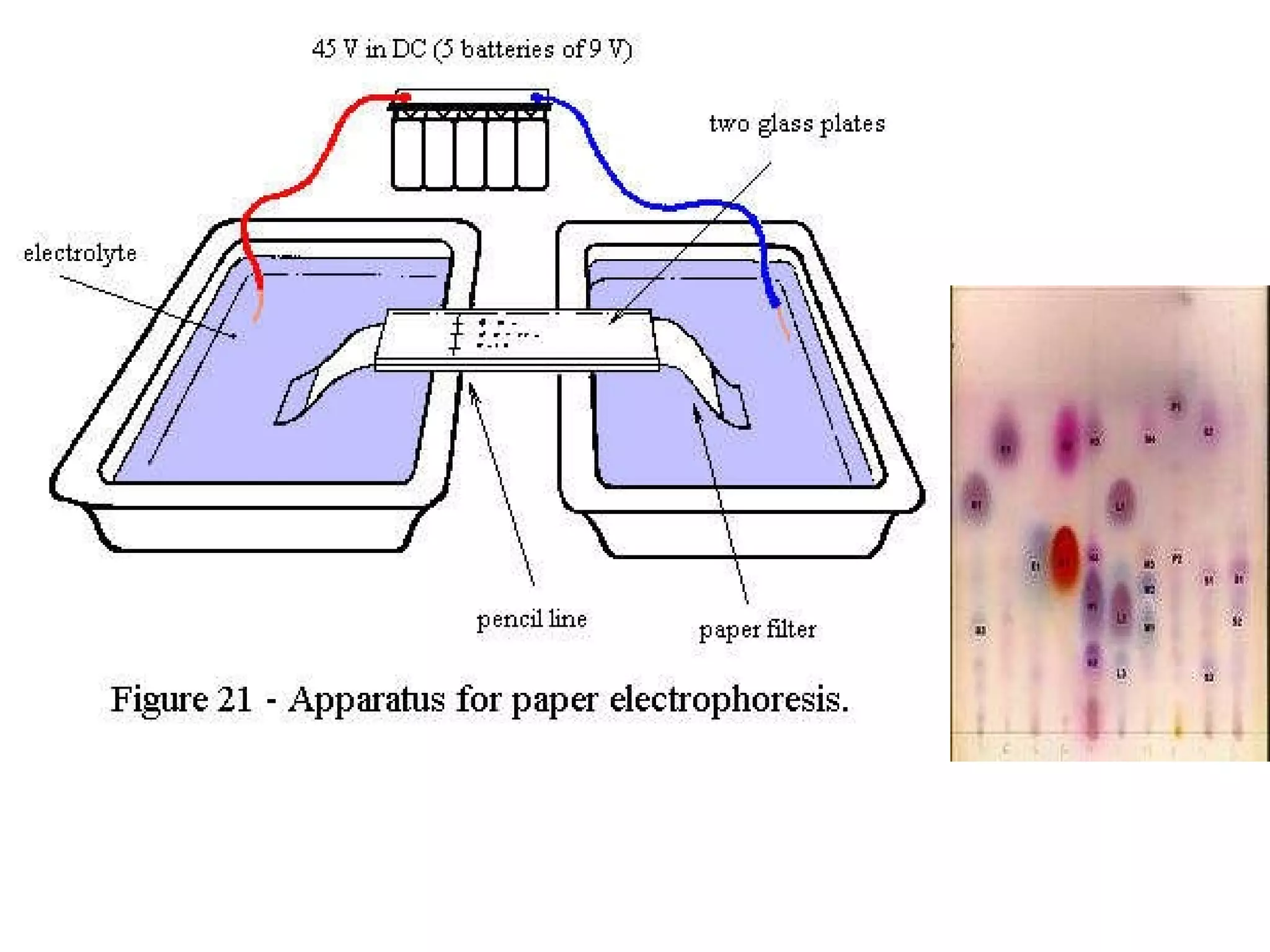
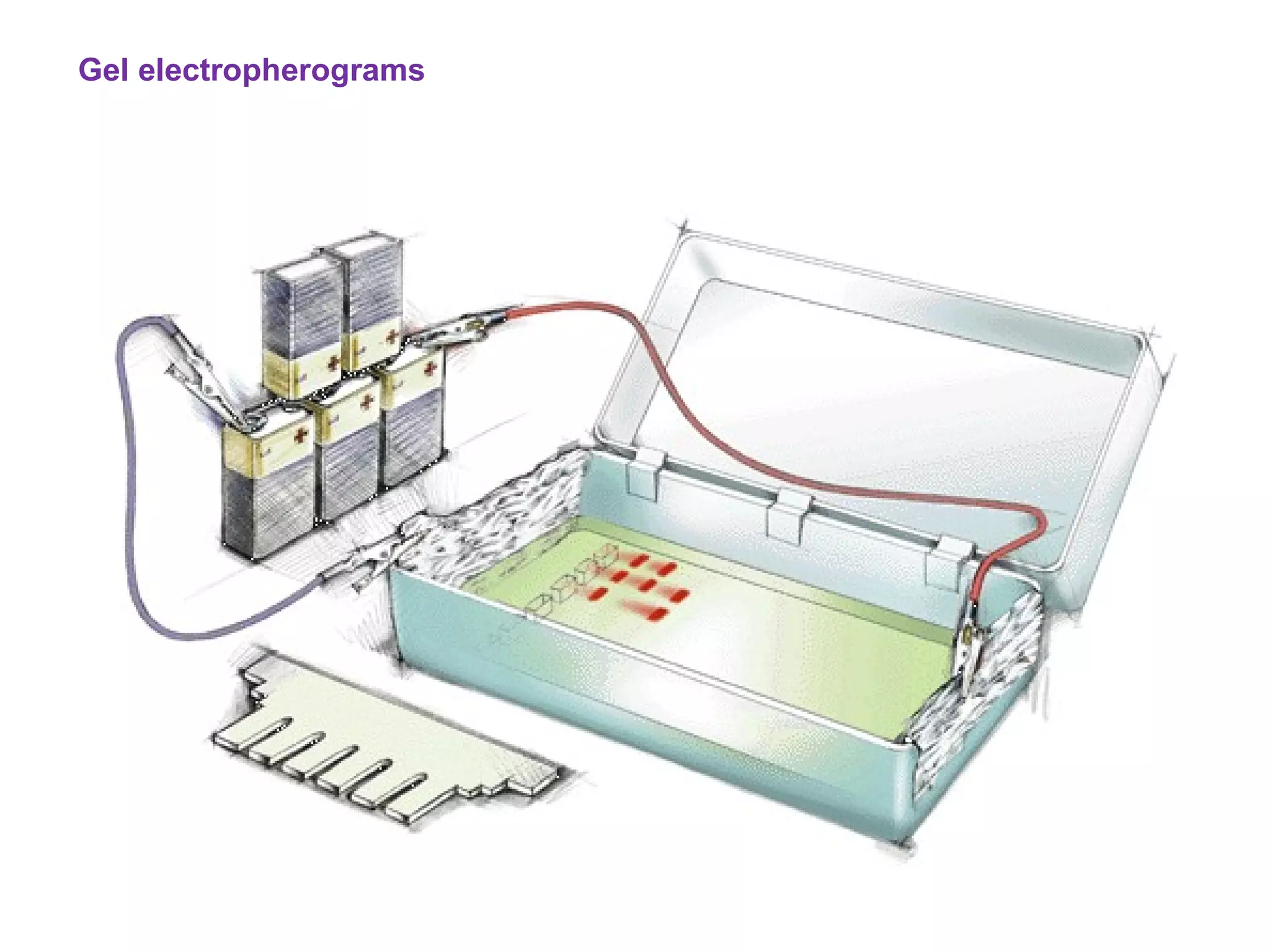
Gel electropherograms
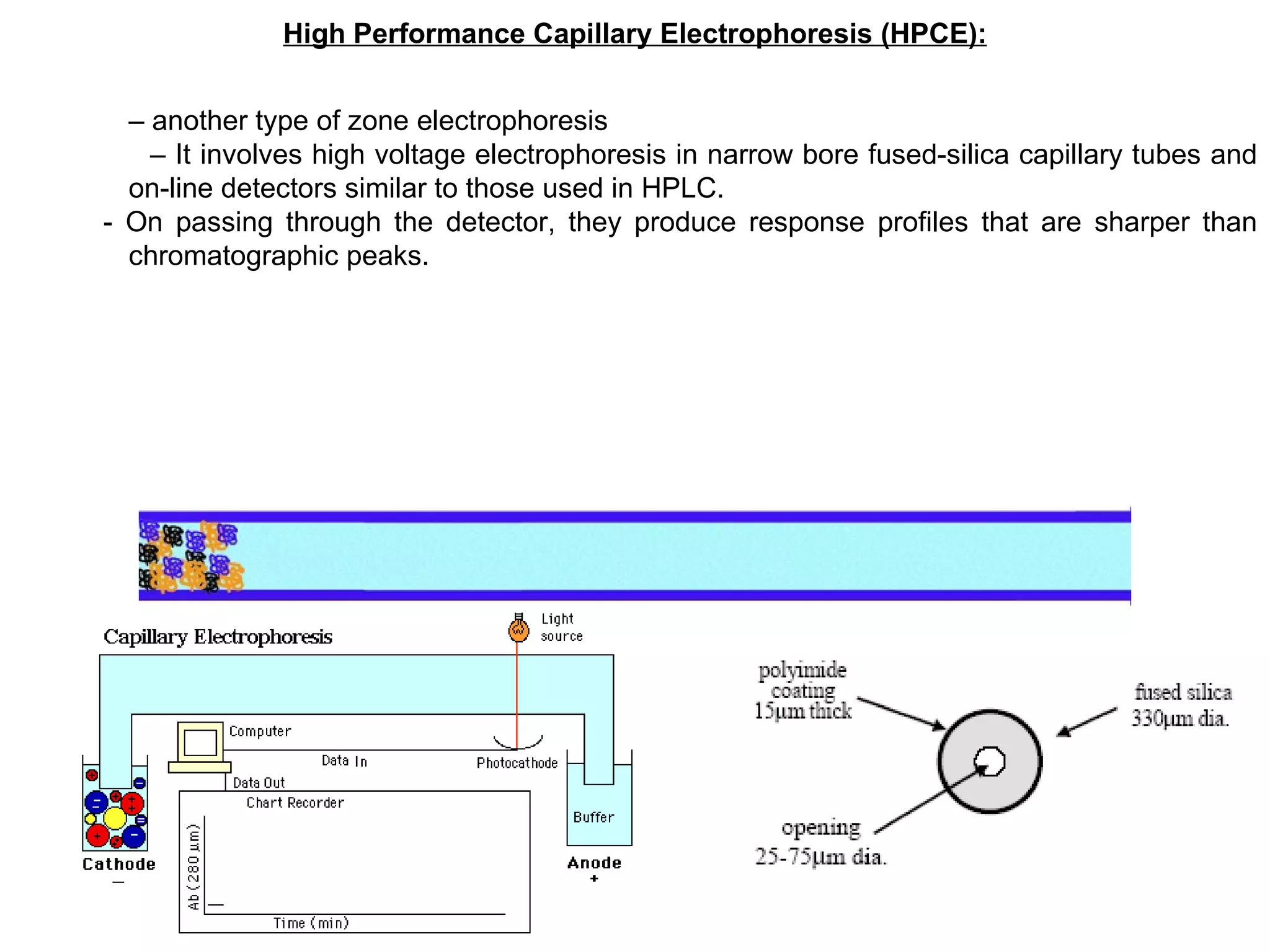
–  another type of zone electrophoresis –  It involves high voltage electrophoresis in narrow bore fused-silica capillary tubes and on-line detectors similar to those used in HPLC. - On passing through the detector, they produce response profiles that are sharper than chromatographic peaks.  High Performance Capillary Electrophoresis (HPCE):

Chapter 4 chromatography_b_2010

  • 1.
  • 2.
    Techniques of chromatographyOPEN-COLUMN CHROMATOGRAPHY PAPER CHROMATOGRAPHY (PC) THIN-LAYER CHROMATOGRAPHY (TLC) Gas chromatography HIGH-PRESSURE LIQUID CHROMATOGRAPHY SUPERCRITICAL FLUID CHROMATOGRAPHY (SFC) ELECTROPHORESIS (Electrochromatography) High Performance Capillary Electrophoresis (HPCE):
  • 3.
  • 4.
  • 5.
    stationary phase (silicaor alumina) is packed in glass tubes The stationary phase particle size is large (250 jam) to allow the passage of solvent. Disadvantage is the long time needed for the separation of complex mixtures (up to one week or more).
  • 6.
    B) PAPER CHROMATOGRAPHY(PC) The adsorbent is a sheet of paper of suitable texture and thickness Development may be ascending in which case the solvent is carried up the paper by capillary forces, or descending , in which case the solvent flow is also assisted by gravitational force.
  • 7.
    C- Thin-layer chromatography Separation is based on migration of the sample spotted on a coated (stationary phase) plate with one edge dipped in a mixture of solvents (mobile phase). However, it is not usually as accurate or sensitive as liquid chromatography.
  • 8.
    D- Gas chromatographyPrinciple: A pressured gas flows through heated tube coated with liquid stationery phase or packed stationery on a solid support. The analyte loaded on the head of the column via heated injection port , where it is evaporated. The separation of a mixture occurs according the relative time spent in the stationary phase
  • 9.
    Instrumentation Injection of the simples manually or using autosampler usually size of 0.5 – 2 ul injection volume The sample is evaporated and condensed at the head of the column The column either capillary or packed column , the mobile phase is a gas to carry the sample through the column which is Helium or nitrogen gases . The oven to heat the column up to 400 oC . The detector usually flame ionization detector FID
  • 10.
    The Gas ChromatographWWU -- Chemistry
  • 11.
    Gas Chromatography Capillarycolumn Injection site Control panel
  • 12.
  • 13.
    Gas Chromatography: Separation of a Mixture WWU -- Chemistry
  • 14.
    Stationery phase forGC Types of columns 1. Packed columns: Usually glass columns silanised to remove Si….OH The column mobile phase used is nitrogen at flow rate of 20 ml/min. Limitation, can not be used above 280 o C because of the evaporation of the stationary phase 2. Capillary column The inner surface is coated with orange silicon polymers which are chemically bonded to silanol groups The mobile phase used usually Helium at low flow of 0.5 to 2 ml/min
  • 15.
  • 16.
  • 17.
    Factors governing theretention of compounds in capillary GC; Carrier gas type and flow : Nitrogen and helium Column temperature : increase of column temperature, decreases resolution between two compounds, Column length : increase the column length increases the resolution Film thickness phase loading: the greater the volume of the stationary phase the more solutes will be retained The column internal diameter: the smaller the diameter the more efficient
  • 18.
    Gas Chromatogram Lowestb.p. Highest b.p. Retention time
  • 19.
  • 20.
    Detectors 1. Flame ionization detector FID Compounds burned at the detector produced ions Detects carbon – hydrogen compounds till 10 ng Wide application range up to 10-6 2. Electron capture detector ECD Highly halogenated compounds can be detected at 50 fg – 1 pg Wide application for drugs determination in biological fluids . Have wide application in environmental analysis such as chlorofluorocarbons in the air 3 . Nitrogen phosphate collectors Used for compounds containing nitrogen and phosphors such as drugs and metabolities in body tissues and fluids High selective 4. Thermal conductivity detectors TCD Responding to cooling effect of the analyte passing over filament Insensitive, used for determination of water vapour such as in peptides
  • 21.
    Application of GCDetection of impurities in drug formulation used for quantification of drug substances in formulation specially for drugs lack of chromophore characterization of some row material used for drug synthesis measurements of drugs and their metabolites in biological fluids
  • 22.
    Limitation of GC only thermostable compounds can be analysed the sample may require derivatisation to be volatile quantitative sample introduction is more difficult due to the small volume of sample injected
  • 23.
    Derivatization: GC The technique is extended by the preparation of volatile derivatives of the non­volatile compounds or of the compounds, which undergo decomposition. used also for improvement of peak shape, relocation of an interfering peak, improvement of sensitivity or improvement of separation of closely related compounds. An example of derivatization is silylation by addition of trimethylsilyl group to carboxylic acids, amines, imines, alcohols, phenols and thiols by treatment with hexamethyldisilazane.
  • 24.
    Column Injector DetectorHPLC Data Processing
  • 25.
  • 26.
    The system consistsof main parts: 1- Mobile phase or solvent reservoir. 2- A high pressure pump. 3- A sample inlet port. 4- Column 5- Detector 6- Recorder
  • 27.
    Schematic diagram ofan HPLC unit (1) Solvent reservoirs, (2) Solvent degasser, (3) Gradient valve, (4) Mixing vessel for delivery of the mobile phase, (5) High-pressure pump, (6) Switching valve in "inject position", (6') Switching valve in "load position", (7) Sample injection loop, (8) Pre-column (guard column), (9) Analytical column, (10) Detector (i.e. IR, UV), (11) Data acquisition, (12) Waste or fraction collector.
  • 28.
    The pump, capable of maintaining high pressures draws the solvent (mobile liquid phase) from the reservoir and pushes it through the column. The sample is injected through a port into the high pressure liquid carrier steam between the pump and the column. The separation takes place on the columns , which vary, from 25-100 cm length and 2-5 mm in internal diameter. Typical flow rates are 1-2 ml/min with pressures up to several thousand psi. The column effluent passes through a non-destructive detector where a property such as : UV absorbance, Rl or molecular fluorescence To increase the efficiency of separation, the mobile phase may be altered by changing its polarity, pH or ionic strength . HPLC offers the advantages of speed, resolution and sensitivity.
  • 29.
    There are twotypes of HPLC procedures: LLC: the column consists of an inert support usually silica gel on which the stationary partitioning phase is adsorbed . In the normal phase mode , the stationary phase is polar (e.g. methanol, acetonitrile or water) while the mobile phase is less polar (e.g. iso-octane, chloroform or n-hexane). This mode is usually used for the separation of polar components. In the reverse phase LLC , the stationary phase is less polar and the mobile phase is polar. It is usually used for the separation of non-polar components. LSC : The packing may be silica (polar packing) or octadecylsilica, ODS (C 18 -silica, non-polar packing). Adsorption mechanism is involved here. In the normal phase LSC, the packing is polar (silica) and the mobile phase is less polar (e.g. n-hexane). In the reverse phase LSC , the packing is non-polar (eg. ODS) and the mobile phase is polar (e.g. acetonitrile-water or methanol-water). Again, as under LLC, normal phase LSC is used for polar solutes while reverse phase LSC is used for separation of non-polar compounds.
  • 30.
    Elution Approaches Isocratic- constant mobile phase composition Gradient - variable mobile phase composition step - change accomplished sharply at a defined point in time continuous - change accomplished gradually over time
  • 31.
  • 32.
    HPLC Columns Analyticalcolumns Made of stainless stele Internal diameter 2.1 – 4.6 mm column long 30 – 300 mm Particle size 3 – 10 micrometer Gourd columns Shorter column 7.5 mm Used to prevent the adsorption of substances on the analytical column
  • 33.
  • 34.
    Stationary phase inHPLC Chemically inert Non-soluble in any imaginable mobile phase Thermal and chemical stability Appropriate physical sorption of analyte Shape: Uniform spherical particles
  • 35.
    Stationary phase inHPLC 1. unmodified silica stationary phases Spherical and regular Particle size 3-10 uM; Polar surface due to the silanol groups Uses For the separation and retention of non polar and moderately polar compounds such as poly aromatics fats, oil, isomers 2. Modified silica stationary phases Spherical and regular Particle size 3-10 uM: Non-polar due to the modification of silanol groups by chloroaloxy silane produces stable stationary phases, Ex ODS Octadecylsilane the most used stationary phase in reversed phase chromatography Uses For the separation and retention of wider range of polar and moderately polar substances such as drugs and amino acids
  • 36.
  • 37.
  • 38.
    F) SUPERCRITICAL FLUIDCHROMATOGRAPHY (SFC) A supercritical fluid: is a substance above its critical temperature and pressure. Critical temperature (T c ): is that above which it is impossible to liquefy a gas, no matter how great a pressure is applied. Critical pressure (P c ): is the minimum pressure necessary to bring about liquefaction at T c . Critical volume (V c ): is the volume occupied by one mole of gas or liquid at the critical temperature and pressure. SFC , is a column chromatographic technique in which a supercritical fluid is used as a mobile phase .The used mobile phase is frequently cooled to be maintained in a liquid state for easier pumping to the column. Carbon dioxide is the most frequently used mobile phase .Other mobile phases include ammonia, nitrous oxide , and xenon .SFC ,is an intermediate between GC and HPLC and offers the advantages of both .
  • 39.
    Compound T c, °C P c , atm. Carbon dioxide 31.05 72.9 Nitrous oxide 36.4 71.5 Ammonia 132.4 111.3 2-Propanol 235.1 47.6 Methanol 239.4 79.9 Acetonitrile 274.8 47.0 Water 374.1 217.6
  • 40.
    Advantage ofsupercritical fluids as mobile phases in chromatography compared with liquid chromatography is that solutes generally have much higher diffusion coefficient in them than in liquids. This leads to enhanced speed of separation and possibly greater resolution with complex mixtures, especially for large molecules. SFC possesses also advantages over GC in that solutes do not have to be volatile or thermally stable .
  • 41.
    C) ELECTROPHORESIS (Electrochromatography)Introduction : Electrophoresis is a technique in which solutes are separated by their different rates of travel through an electric field. - commonly used in biological analysis, particularly in the separations of proteins, peptides and nucleic acids The rate of migration (electrophoretic mobility) of each species is a function of its charge, shape and size .
  • 42.
  • 43.
  • 44.
    – anothertype of zone electrophoresis – It involves high voltage electrophoresis in narrow bore fused-silica capillary tubes and on-line detectors similar to those used in HPLC. - On passing through the detector, they produce response profiles that are sharper than chromatographic peaks. High Performance Capillary Electrophoresis (HPCE):

Editor's Notes

  • #16 Packed - As suggested by the term, it is filled with a coated inert solid support such as fire brick, alumina, and graphite with a specific mesh size. The coatings are called phases and for best results are chemically bonded to the support. Chemical bonding provides for longer column life and less bleeding (major source of background noise) contributing to lower sensitivity. Column dimensions 1/8” - 1/4” ID x up to about 6’ using glass or stainless steel. Advantages - higher capacity (higher conc). Disadvantages: low resolution and low S/N. Capillary - Here the phase (film) is coated on the inside diameter of the capillary wall with film thickness range of 0.1 to 5μ where the ticker film provides for better resolution but also allows for more bleed. Typical dimensions .25mm - .53mm ID x up to 60m made of fused silica coated with polyamide. Advantages: high resolution and better S/N. Disadvantages: low capacity and cost.
  • #20 Note peaks 15, 16 17 & 18 on the DB-5 column and note the same peaks on the DB-1701 column. This shows the need for confirmatory columns (columns with different phases) so that separation of the compounds can be verified.